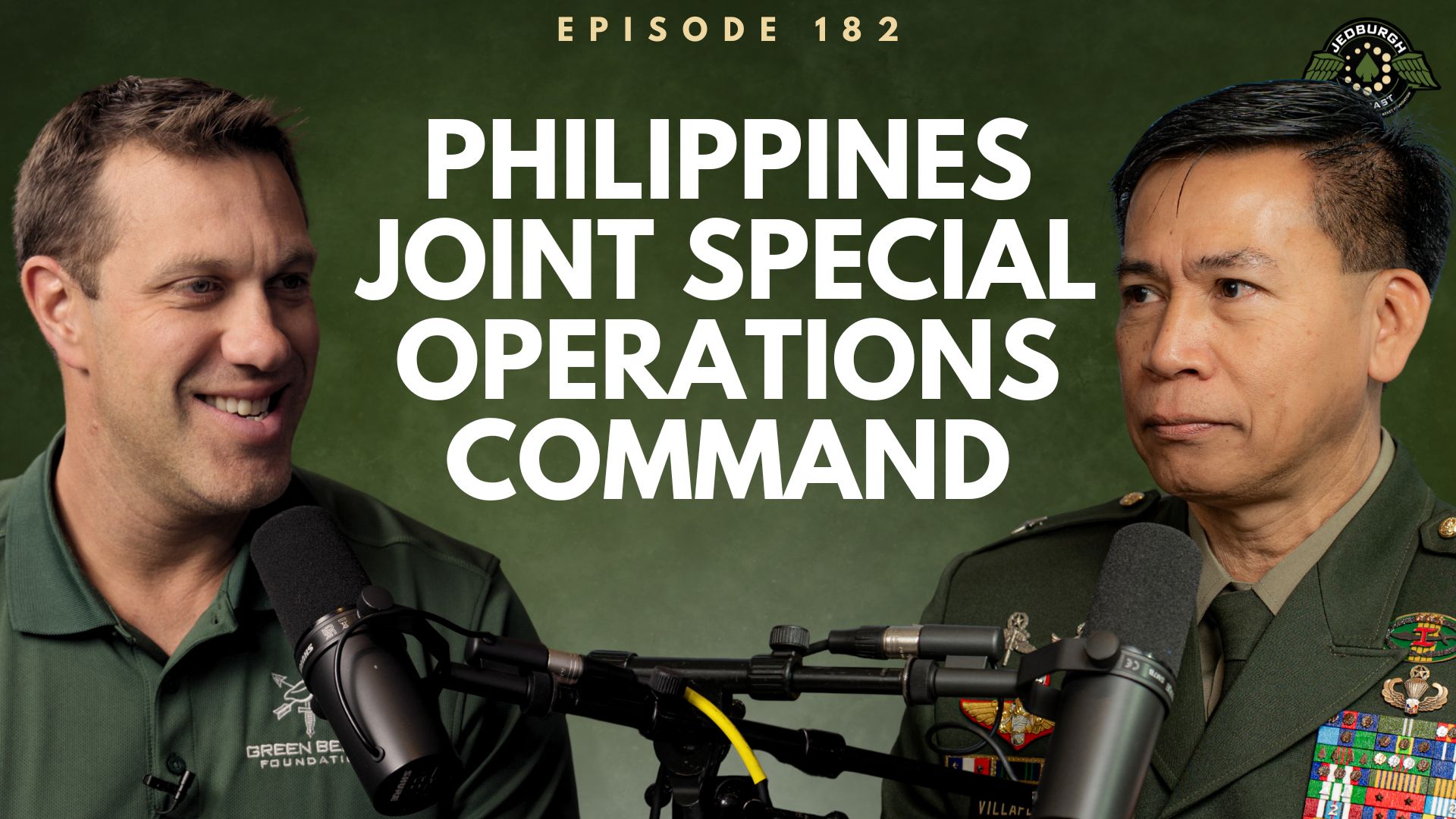
America is not the only nation in a fight for freedom, stability, and security. International threats are complex, the missions are critical, and the operators leading them must think globally while acting locally.
The Philippines is one of America’s longest strategic allies. From their geographical importance of World War II, to their front lines combating Chinese expansion in the Pacific, the military partnership between the United States and the Philippines is an important part of global stability.
At the heart of this collaboration, is the Joint Special Operations Command of the Armed Forces of the Philippines. A force that has been shaped by decades of counterinsurgency, counterterrorism, and close partnership with America’s Green Berets and Special Operations Forces.
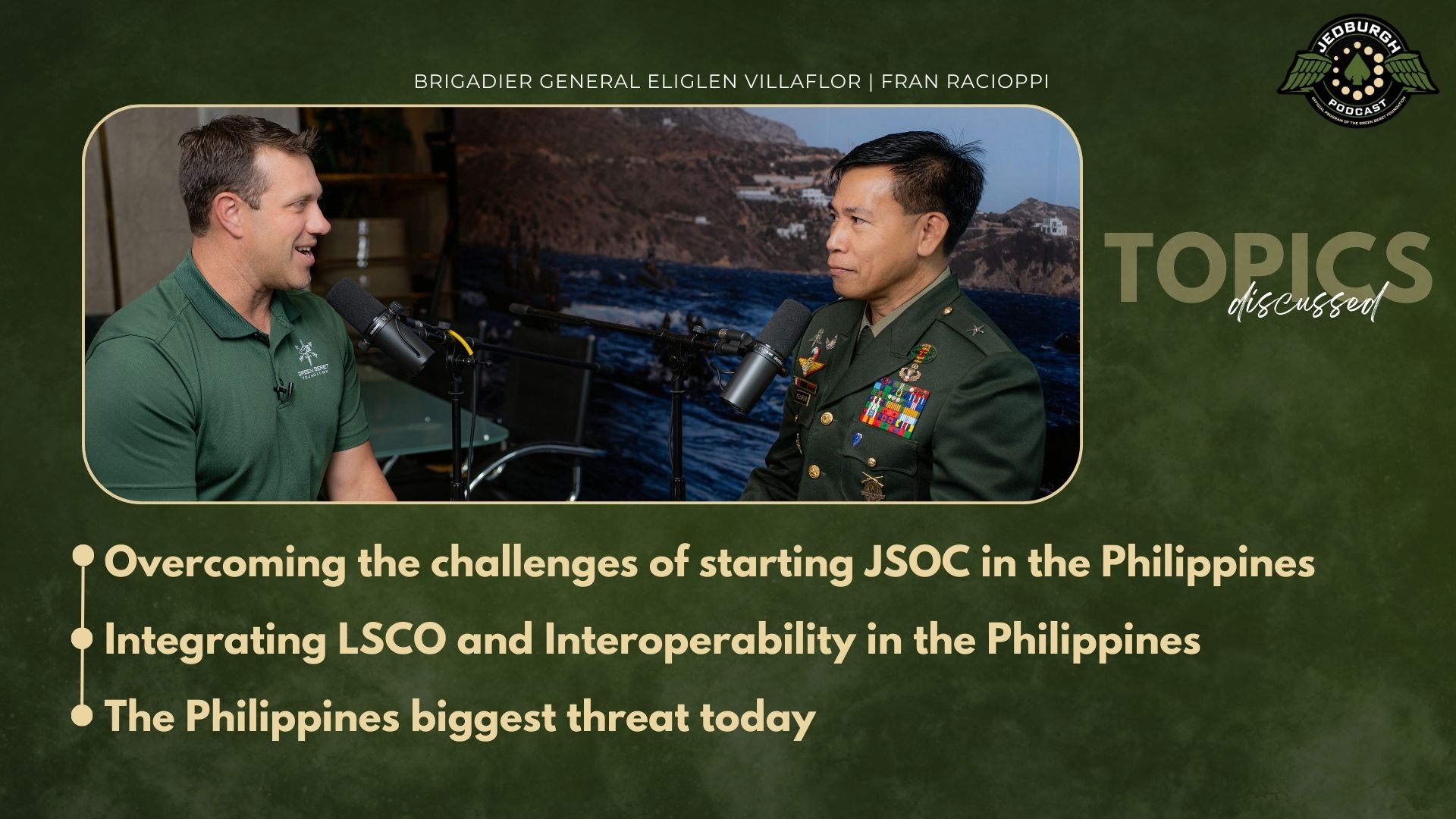
From the Global Special Operations Foundation Symposium in Athens, Greece, Fran Racioppi sat down with the Commander of Joint Special Operations Command of the Armed Forces of the Philippines, Brigadier General Eliglen Villaflor, to discuss the evolution of Special Operations in the Philippines, the lessons learned from years of conflict, and the country’s expanding role in regional and international security cooperation.
General Villaflor shared his perspective on leading through complexity, building true interoperability with partners like the United States, and preparing the next generation of Filipino Special Operators to face an ever-changing threat environment.
This episode is about partnership, professionalism, and the shared mission that connects Special Operations Forces around the world to defend freedom wherever it’s challenged.
Special thanks to the Global Special Operations Foundation for hosting us in Athens.
Follow the Jedburgh Podcast and the Green Beret Foundation on social media. Listen on your favorite podcast platform, read on our website, and watch the full video version on YouTube as we show why America must continue to lead from the front, no matter the challenge.
—
—
General Villaflor, welcome to The Jedburgh Podcast.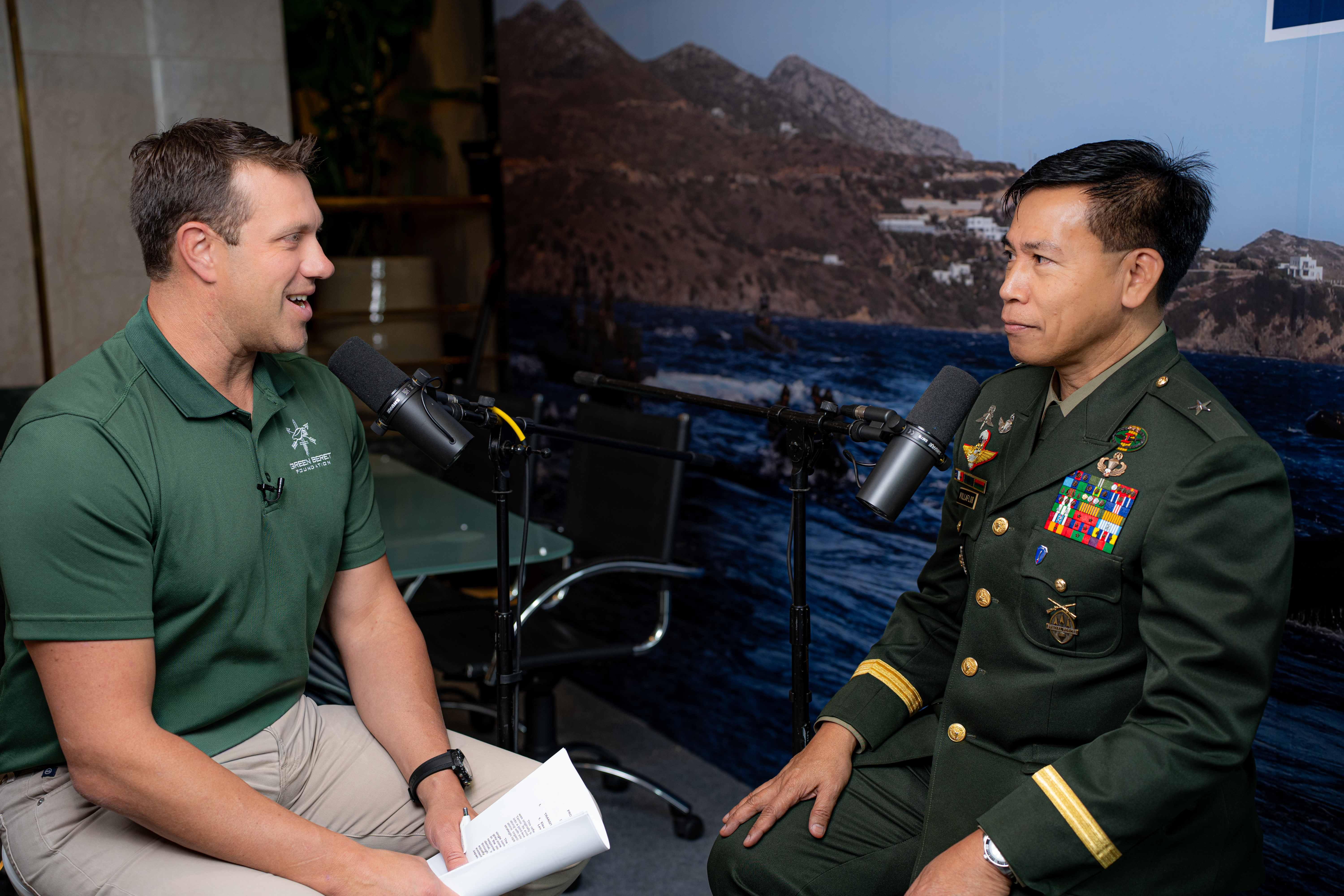
Thank you, Fran, and thank you for having me on this Jedburgh podcast. This is my first time being on a podcast.
I’m excited because we’re here at GSOF Europe 2025. We’re in Athens, Greece. We sequestered you for the next little bit to really dig into what’s going on with the armed forces of the Philippines. You’re the commander of their JSOC, their Joint Special Operations Command. Long-time partner of the US. On the show, we have spent the last five years talking about USSOF and what it means to be and serve in American special operations forces.
In so many of those episodes, we talk about this concept of buy with and through how America partners with their allies to develop capability across the world and then work together to go out and combat our mutual enemies. In that time, we’ve never had anyone representing a partner or an ally on this show. This might be your first on the show, but this is our first to sit down with an ally, and also one of America’s long-time most strategic allies in the Philippines. It is an honor, sir, to have you.
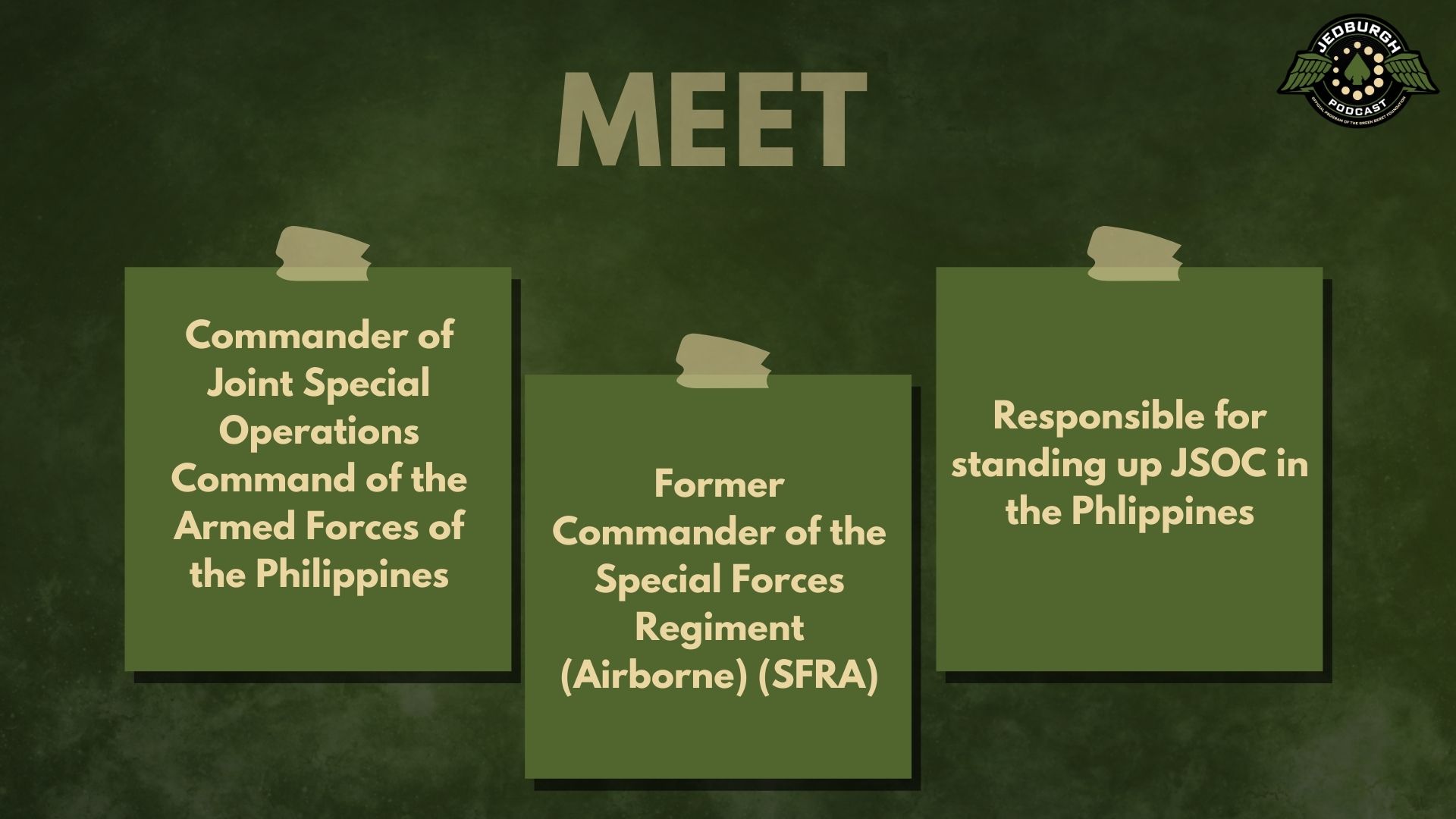
No, it’s an honor for me also and a privilege to be with you. As you’ve said, we’re a long-time ally. We have been a defense treaty partner with the US for more than 70 years. Lots of mystery, lots of trust, a relationship. Actually, we’re family.
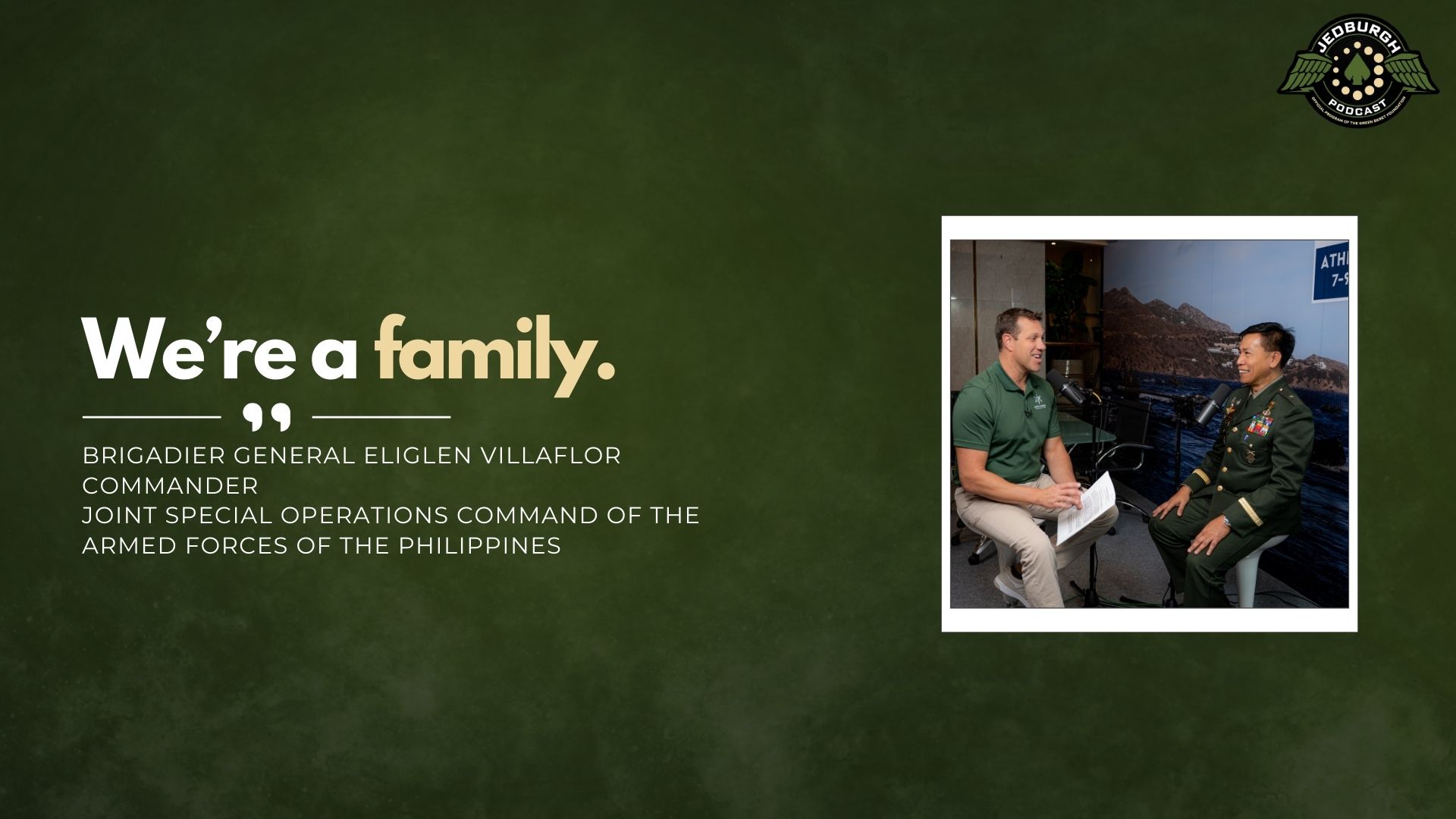
Let’s talk about the command that you sit in charge of today, and that’s the Philippine Joint Special Operations Command. What is the Philippines’ Joint Special Operations Command? How is it constructed, and what’s the mission?
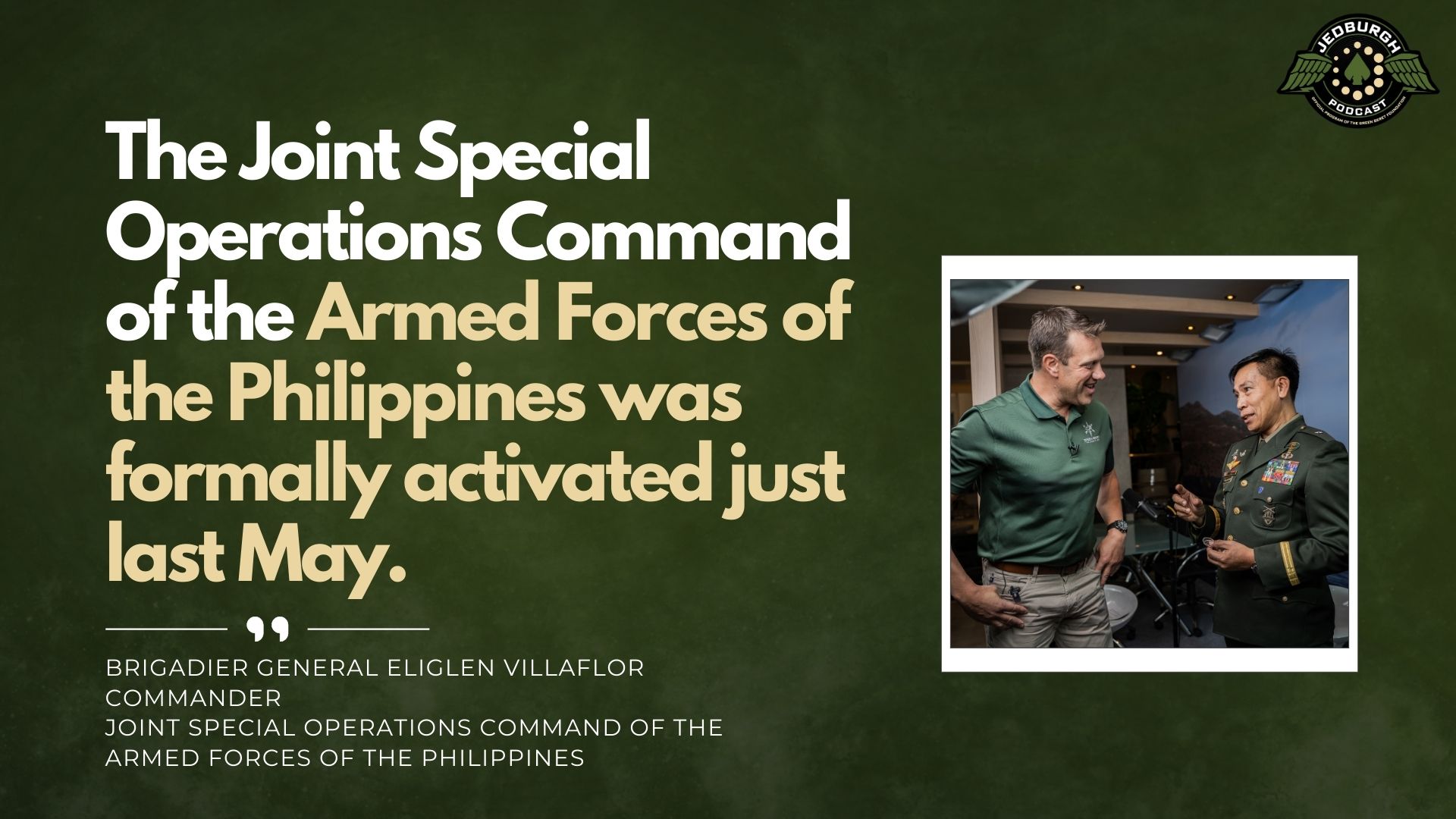
The Joint Special Operations Command of the Armed Forces of the Philippines was formally activated just last May. Like the Greek Armed Forces, the Hellenic Republic Armed Forces, and the Philippines, it was a single-service SOF. Since World War II, we’ve been combating communist insurgency, transnational terrorism, jihadists, separatists, but there’s no really joint command that was established.
We tried on the army side, but it was disbanded even before it became fully mature. In 2018, the Armed Forces of the Philippines, SOCOM, was established for the purpose of joining us, but the objective wasn’t achieved. With the strategic shift of our Department of National Defense of our country to be responsive to the comprehensive archipelagic defense concept, it led to the creation of JSOC. What’s JSOC?
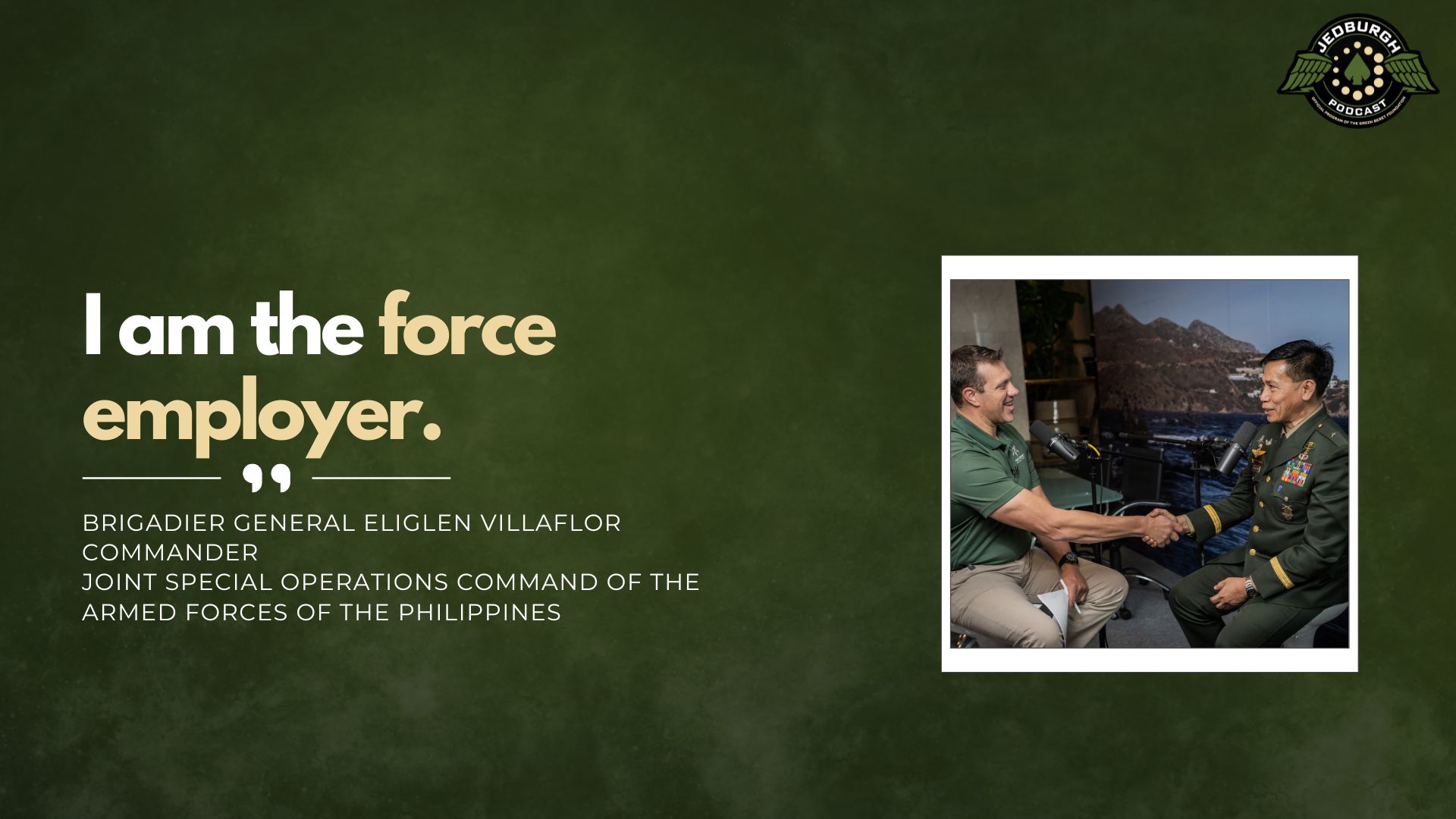
Basically, I’m an employee to execute the strategic objective of the Department of National Defense. I have attached special operations forces from the Navy, from the Army, from the Air Force, and from the Marines. SOF for major services are force providers. I am the force employer. I receive mission from the president, who is also the commander in chief, and from the chief of staff of the armed forces, we call him, he’s the chief of our defense. We execute strategic missions, high-profile, high-value missions.
As you’ve stood this command up, and you’re an army guy. You speak army, but now you’ve got to figure out how I’m going to speak Navy and bring in the Marines? What have been some of the biggest opportunities that you’ve seen over the last several months, but also some of the challenges when you bring together these disparate forces under a single commander?
Although I’m Army, I’m Special Forces, so operating on land, air, and water is not new to me. I’ve been operating with other major services, SOF, when I was a battalion commander in Southern Philippines, where the height of terrorism, Abu Sayyaf, and the ISIS group were operating. As a JSOC commander, although there’s a big opportunity for JSOC, challenges are always there.
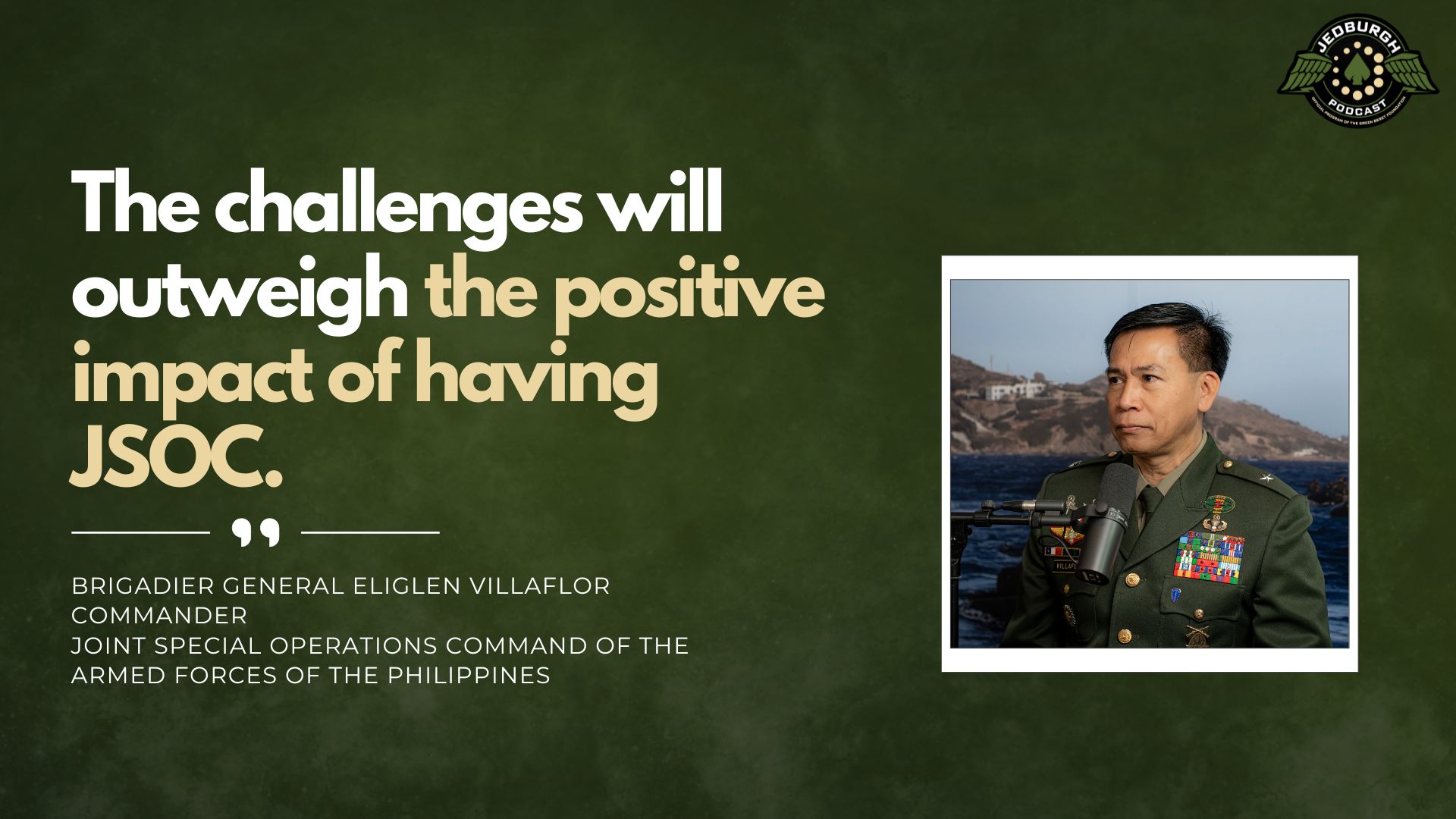
I also believe that it’s very common in all armed forces, especially that major services commanders tend to hold on to their major services of SOF, middle with the conduct of operations. The challenges will outweigh the positive impact of having JSOC. It’s just a matter of time. In every changing organization, there’s always a first resistance to change. Eventually, we will achieve that support and understanding towards the change.
You mentioned some of the operations that you’ve been a part of over your career. Historically, post World War II and as we’ve gone, I’d say over the last twenty-plus years, the Philippines, like the United States and much of the world, has been very focused on counter-terrorism operations.
We had a chance, you and I, to be on the panel earlier upstairs in front of all of GSOF with one of your colleagues from Poland, General Drumowicz, who is leading the Polish armed forces in their fight against the Russians and Russian aggression in Eastern Europe. We talked about the fact that counter-terrorism and terrorist groups have dominated so much of the landscape, especially since 9/11.
However, over the last several years, we have seen nation-states, global superpowers, and nations of great status are now demonstrating significant aggression across the world. For you, it’s been China and China’s push into what they term the South China Sea. You corrected me earlier, you have a different term for that area of the world, and also their intentions that they’ve made known to one day potentially reunify Taiwan with China.
You, as you’ve stood up the command, have had to now also shift a bit of your focus from CT, which does still exist, but now into what we’ve termed large-scale combat operations. How do we combat nation-states that are pure enemies? How have you started to change that mindset and integrate the large-scale combat operation reality into a multitude of forces that are coming together as one, by and large, have been very focused on counterterrorism?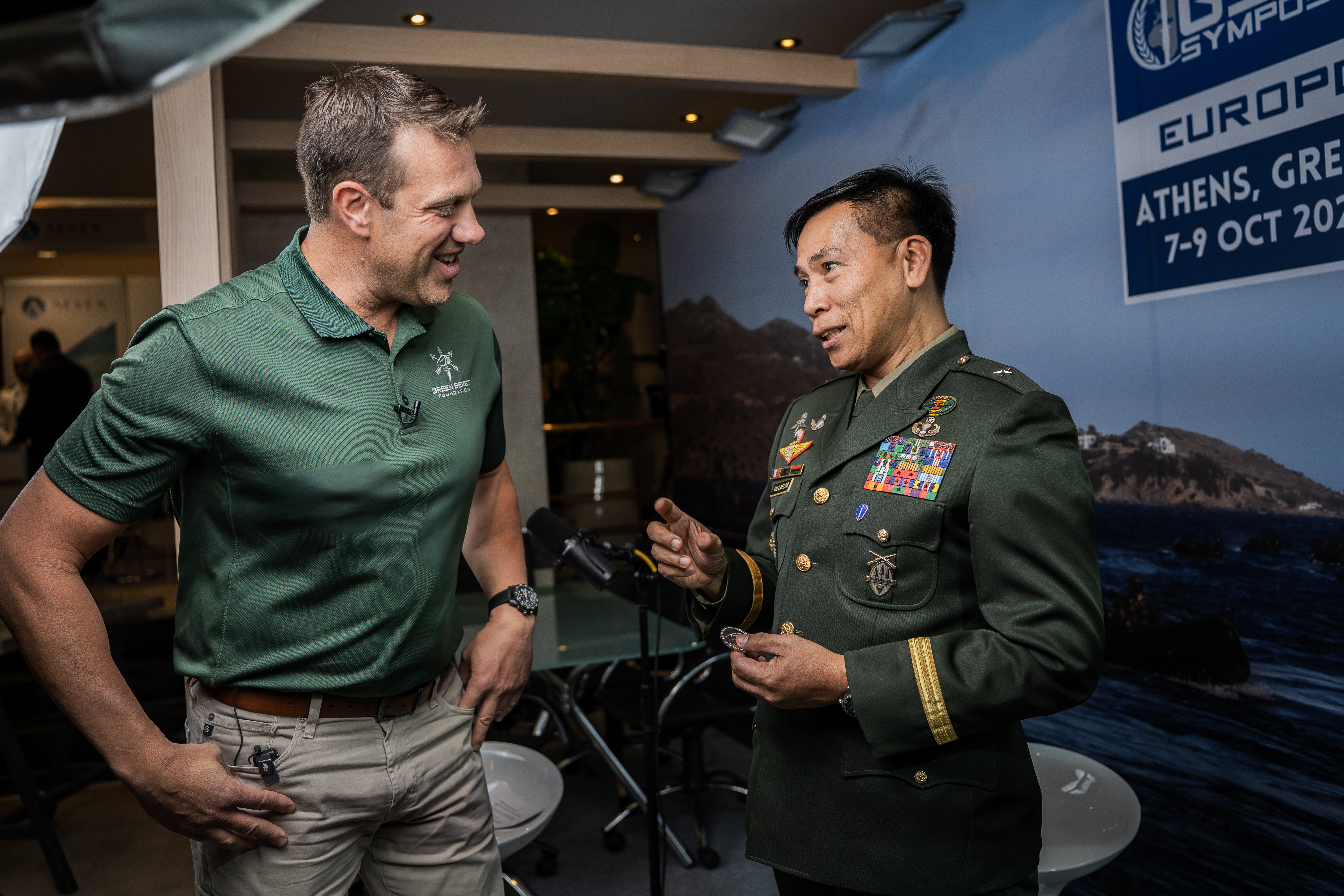
JSOC is not leaving behind the city effort. It’s still in our core competency. With the strategic shift of our defense department, we are compelled to perform mission essential tasks on internal security operations, and on conducting irregular warfare against adversaries. It’s good that we have our longtime ally, the US, helping us. Last year, I was able to speak with the former JSOC commander. He’s now the USSOCOM commander, Admiral Bradley.
I frankly admitted to him that Sir JSOC will become JSOC in a few months from now. Since I was a lieutenant, I’ve been confronting internal security operations, counterterrorism. The mission given to me is maritime domain awareness and territorial defense operations, which is very foreign to me. I asked for his help. I asked the US assistance on it, and I appreciate his reply. He said, “We are long-time partners. We can do a lot of coaching for you.”
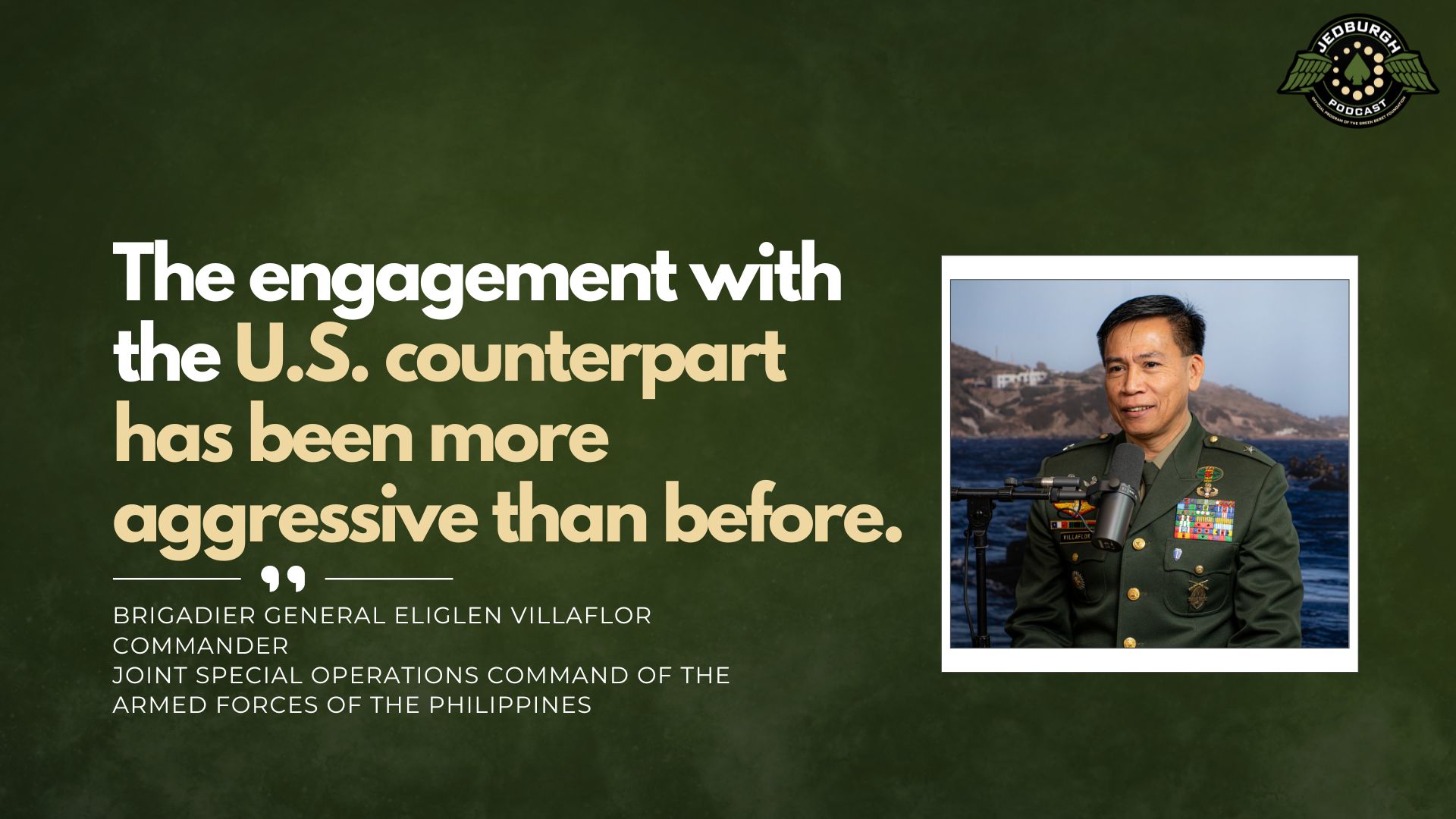
He used the word coaching, which I really like. It’s really happening since then until now. The engagement with the US counterpart has been more aggressive than before. Also, engagement with allied nations and partner nations. How do we prepare? How do we do? How are we doing what we are doing in preparing for a bigger scale? We engage in more bilateral exercises, multilateral exercises focusing on interoperability, jointness, and combined operations.
You brought up your conversations with Admiral Bradley, now the USSOCOM commander. What I think about is forums like this, Global SOFT Foundations, bringing everybody together to discuss interoperability. You referenced working over your career with American Special Operations Forces, and working with our partners is a key component. That’s really the core mission.
When we talked about counterterrorism, a lot of people will say to me, “You were a Green Beret, you kicked down doors.” It’s like, “No, I train others to kick down doors.” That’s our core mission. Our core mission is to work with other nations to achieve the combined goals of our nations. With that comes a lot of trust and respect. One of the unique aspects of all SOF that we see displayed here is that you can be a junior officer or junior non-commissioned officer, and you have a counterpart in another nation.

You’re going to meet each other and young in your career, and then you’re going to parallel track each other and run into each other time and time again, and eventually become generals and sergeant majors and build this relationship on a personal level that then helps achieve the strategic effect. Can you talk about the relationships that you’ve been able to build with foreign leaders to be able to, now, as you sit in command of JSOC, leverage those relationships to bring value to your organization?
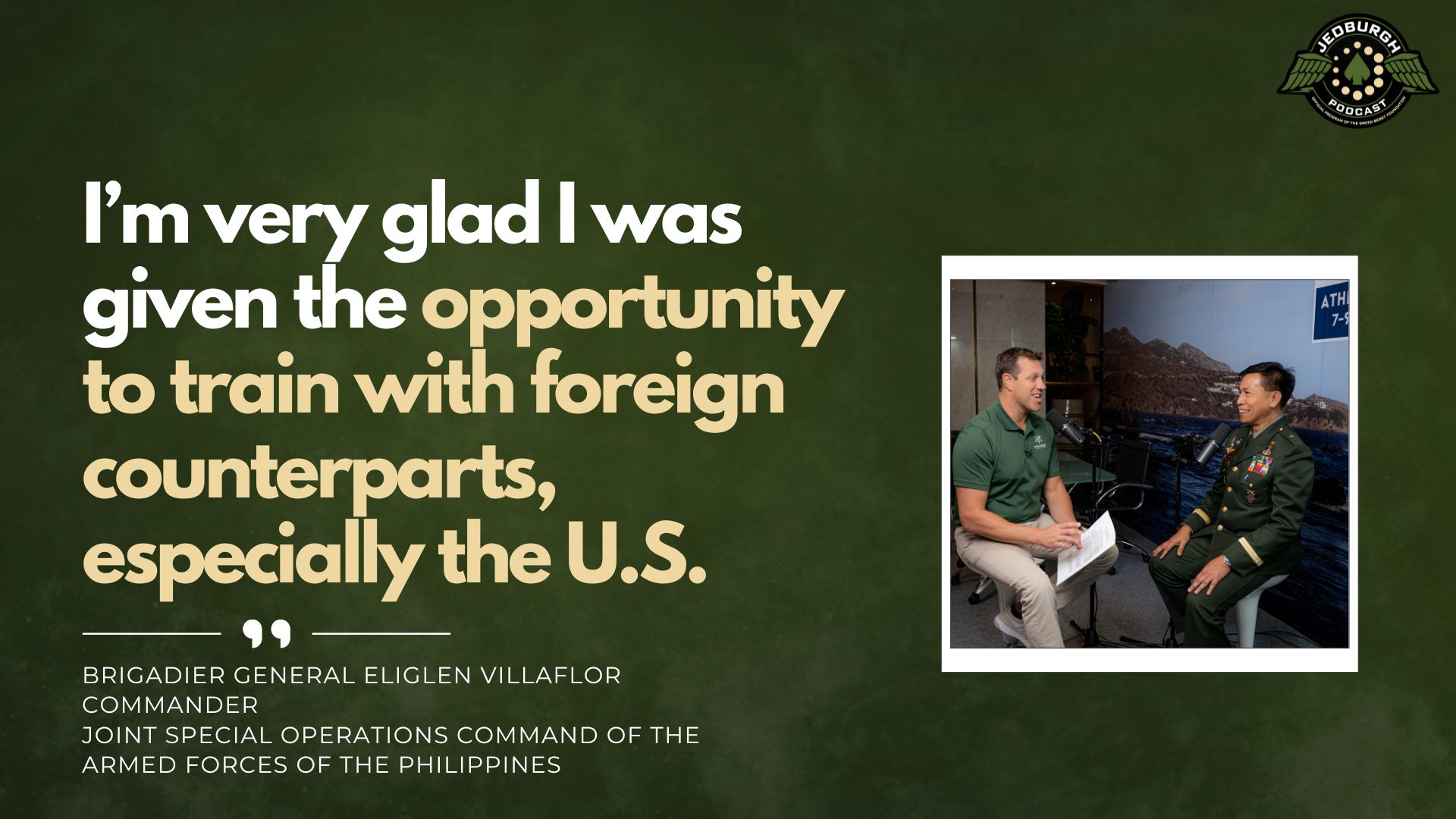
I’m just very glad that I had given the opportunity to train with foreign counterparts, especially with the US. When I was a captain, I was sent to Fort Benning. I had classmates from the US Army and more than twenty other guys from different parts of the world. As I go up my career, I have had other trainings and then participated in a forum like this, symposiums. You know what? I was able to meet a two-star general from the Greek Armed Forces. He knew my Greek classmates when I was in Port Benning.
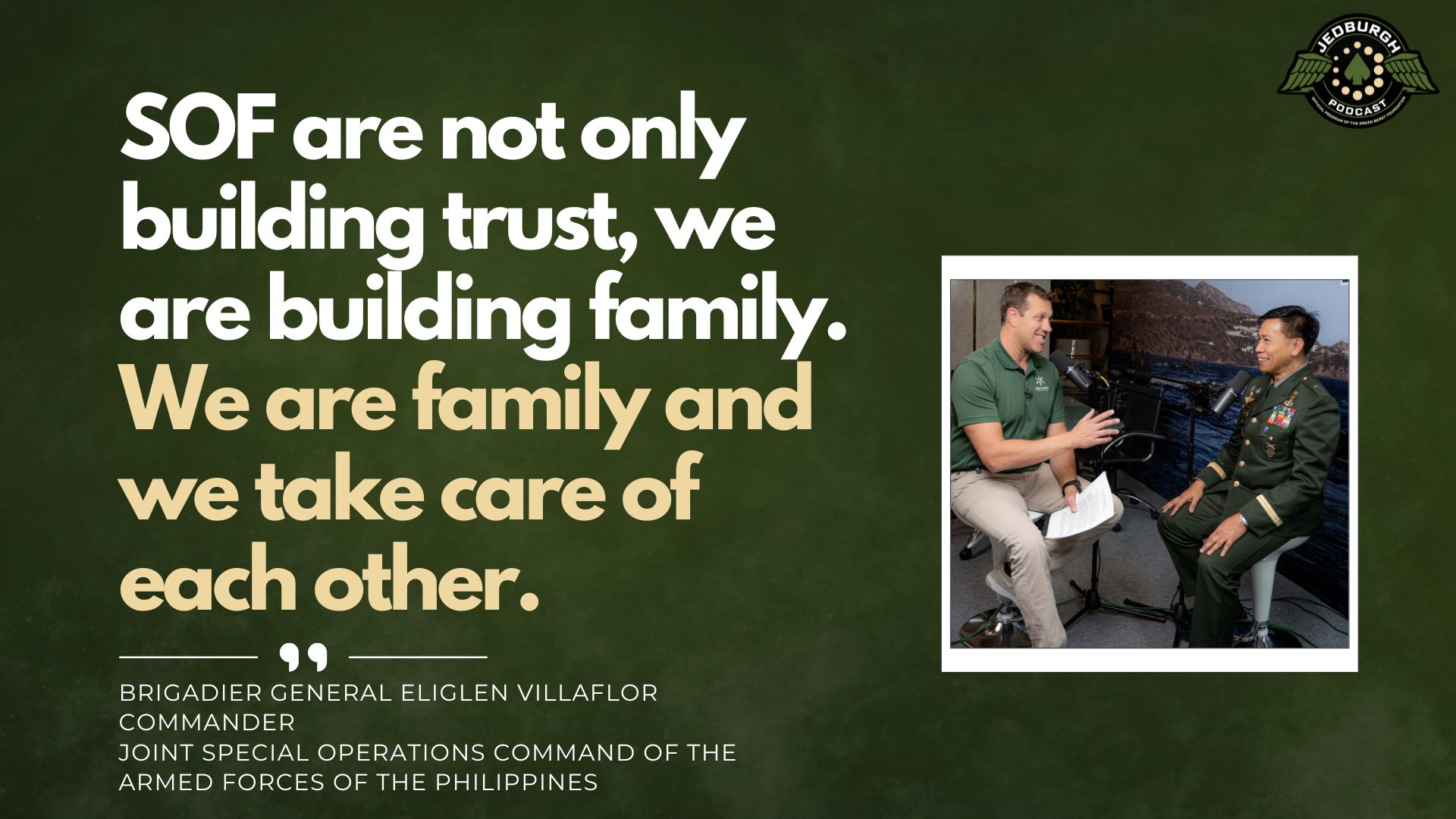
They became major generals, and we were talking to each other by phone. I ran through some of the guys whom I met long before. The barrier was immediately broken. It’s like we were long-lost friends, family. This relationship really builds trust. I would like to borrow the words of General Bryan Fenton, the former USSOCOM. He said, “SOF, I’m not only building trust, but we are building family. We are family. We take care of each other.”
You see that on display here and in all regions of the world that we operate in. Talk for a second about your career. Everybody’s got to make a choice when they decide to come into the military. I come from the US. Culturally, we have a very pro-military culture. I’m we call it 9/11 baby. 9/11 happened. I was a junior in college.
I had to decide, am I going to be a reporter or am I going to go follow these guys with beards and long hair riding horses through the desert of Afghanistan, changing the world? We all have this decision to make for various reasons, but I’m interested in your decision to join the armed forces of the Philippines. Also, what’s the culture in the Philippines around national defense and around joining the military in general?
It’s different. In the Philippines, people usually join the armed forces because they have a lineage of military history. Grandfather, father, or brother is from the military. Mostly, joining the armed forces is because of a very, shall I say, low economic status. In my case, I came from a big family, a brood of 13, and I was fatherless at the age of seven.
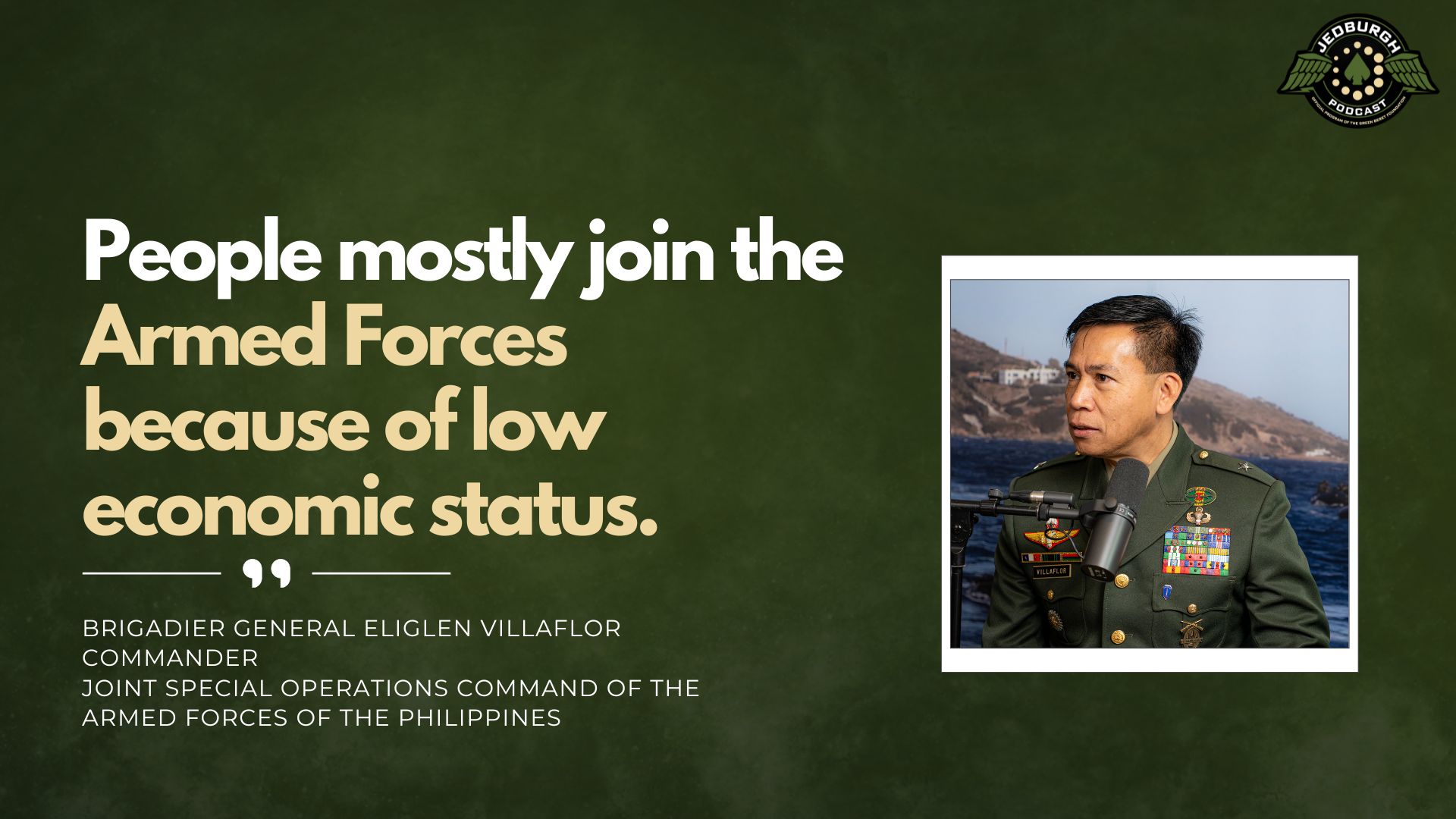
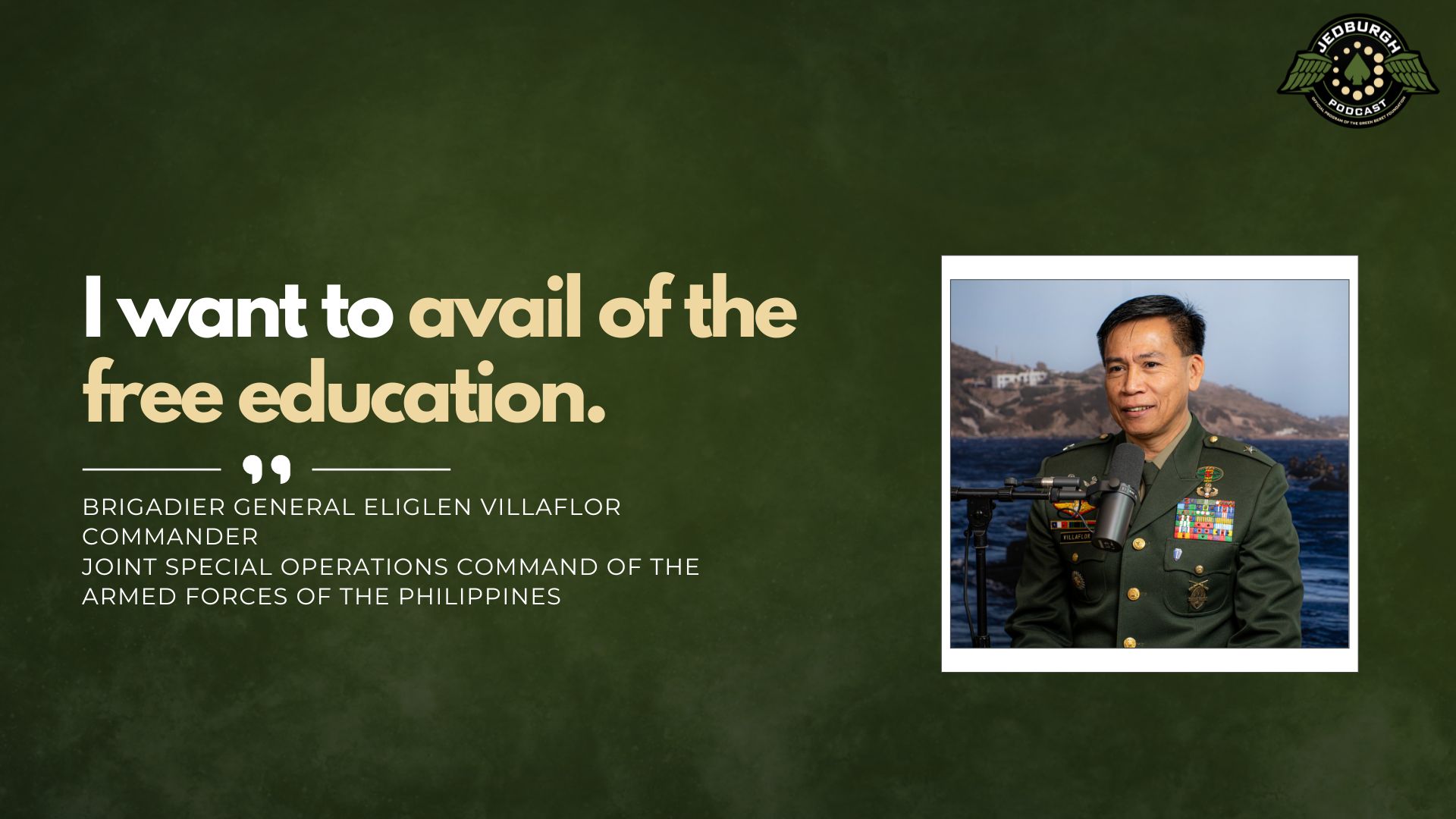
It’s my dream to be able to finish college because none of my older brothers and sisters were able to finish college. I tried for a scholarship, but it’s not enough. I saw the poster of the Philippine Military Academy. I was already in my second year of college, taking up engineering. It says there, “If you want free education, join the Philippine Military Academy.” That caption caught my attention, and I applied. I took the exam. I entered the academy.
When I was interviewed, “Why do you want to become a cadet?” I said, “I want to avail myself of the free education.” Maybe the military was so successful in brainwashing me. I learned to love the military, and it’s deep in my heart to pay back for what I received from the government through the Military Academy. Up to now, I’m still grateful. I had so many opportunities offered to me to leave the service for greener pastures, but I said, “No, I have to stick to the service and pay back to the government.”
Sergeant Major Mike Weimer he’s a Sergeant Major of the US Army. We’ve had a chance to build a great relationship with him over the years, and he calls it compliance to commitment. You join the army, and you’re compliant. They told me to dress this way. They tell me to cut my hair, shave my face, do this. You do it because someone tells you to do it. Over time, you do it because you’ll want to, and you do it because it’s the right thing to do. You’re completely committed to the cause.
That’s how it is.
What’s the culture of the armed forces of the Philippines? How would you assess that culture? I’ll put it in the context of the fact that we’ve got a bit of a generational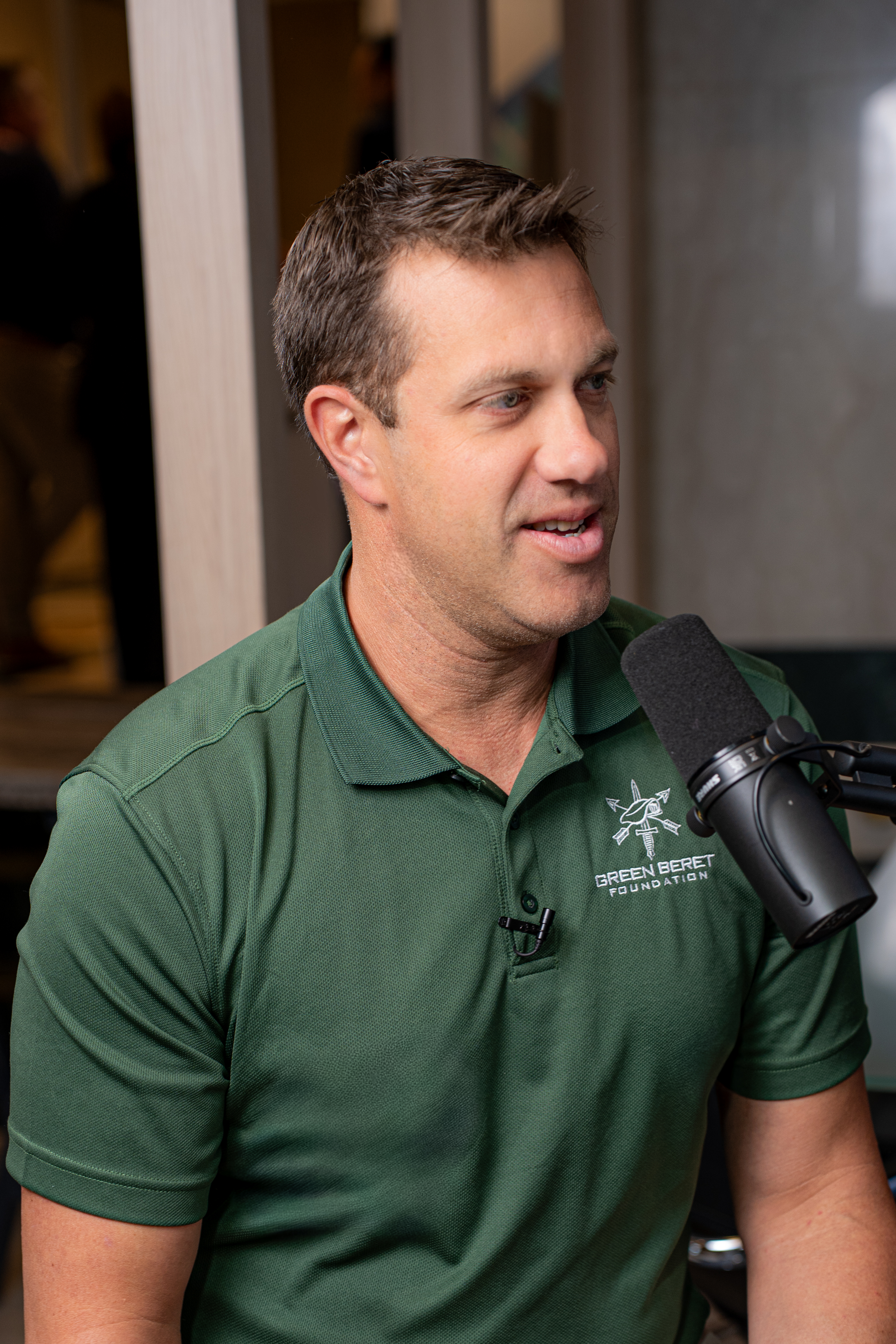 change that’s going on, especially within the US military, where we have three generations in the ranks right now. We have a generation of senior leaders who served before 9/11 and the global war on terror, and then led at the tactical and strategic levels during the bulk of their service in the GWOT.
We have people like me who came in for GWAT. They’re at retirement age right now, or they’re becoming senior leaders. You have a whole new generation of folks who, US perspective is that they weren’t even born on 9/11 when the world changed, especially for America. We’ve got to balance these three cultures, which are all very distinct. When you look across your formation, what do you see in the culture of the ranks, and how are you bringing up and really emboldening the next generation behind you to take the helm?
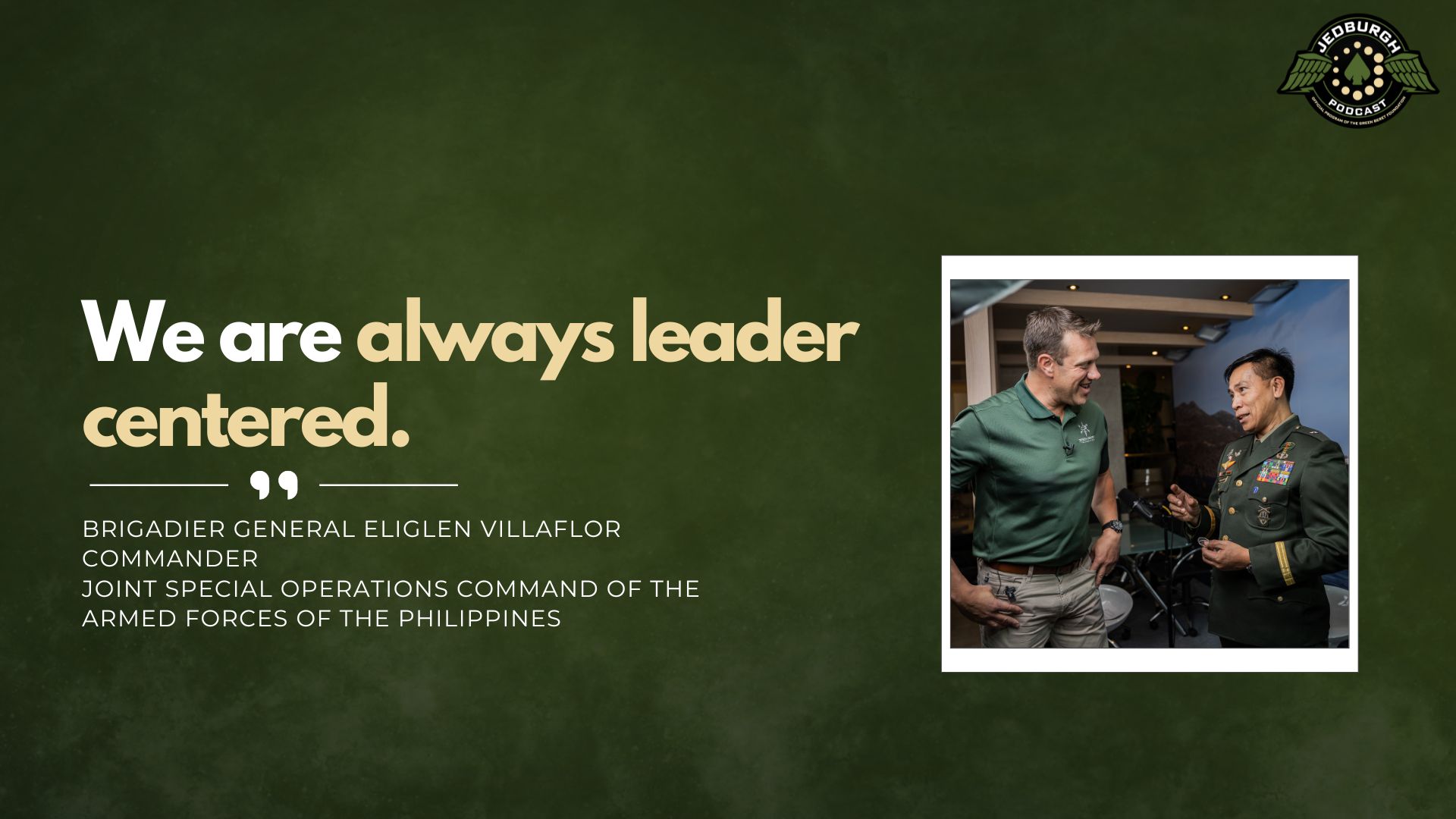
In the Philippines, the situation is not really like that. Maybe because of our culture as well. We are what you call a hierarchy. It’s always leader-centered. It goes down to the family also. We are patriarchal. What the father, what the leader says, is what is being followed. There’s also a lot of influence from the leader of the family, the leader of the organization. Somehow, the influence of social media has reached the consciousness of the Philippines, and maybe all over the world. The culture will change somehow.
Social media is impacting everyone in the world. For better or worse, I don’t know. It depends on where you fall on that. I want to ask you about interoperability. We talked a little bit on the panel, but interoperability gets thrown around a lot, especially in forums like this, where we walk through the showroom floor here, and you see technology of everything that you could imagine sitting over here.
At the end of the day, different countries have different capabilities. They favor different technologies over others. When we come together to operate as a combined force, nation with nation, we have to leverage our partners and our allies’ capabilities. How do you define interoperability? As you stand up JSOC and you solidify it, what are the capabilities that you’re looking for from other countries that are going to be able to enhance your mission?
We are now inculcating in our culture the word interoperability, not only with our allies, but also within the armed forces of the Philippines. We see to it that in our capability development program, we see to it there’s an office overseeing it, ensuring that what we buy, what we procure, is interoperable with other major services.
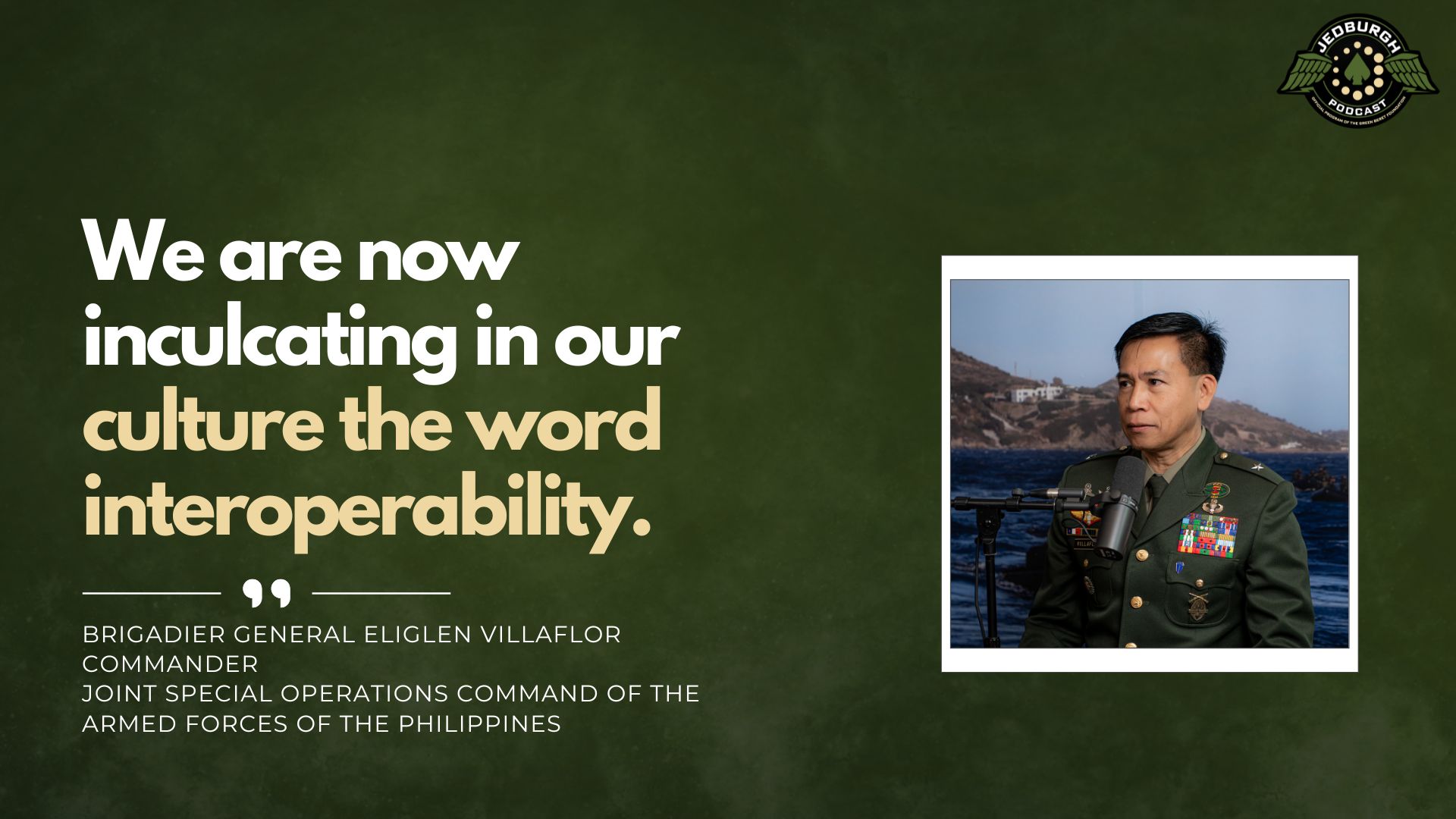
On the soft side, on our side, we see to it also that our capability development is interoperable with our allies, with our partner nations, especially the US. There’s a program by the US. It’s the Building Partners Capacity Foreign Military Support Program. We ensure that this equipment is interoperable with our allies, and also for training. We’ve never been so active in training as compared to before, right now, especially with the US.
What do you see as the biggest threat to the Philippines right now?
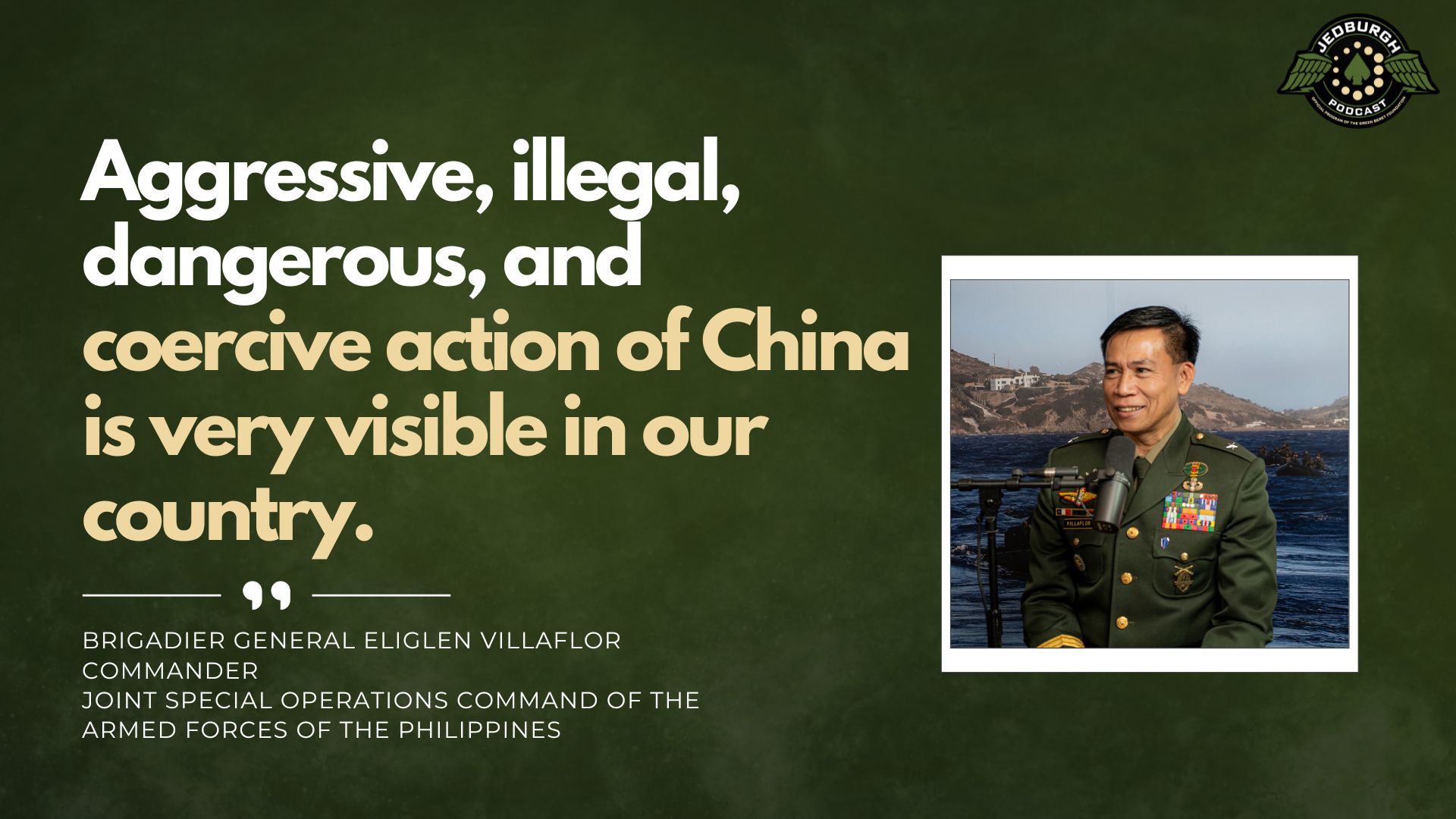
In the JU political theater, it’s China. The aggressive, illegal, dangerous, and coercive action of China is very visible in our country. They’ve been doing information operations and grace on tactics. Some of it we term United Front Works. They are infiltrating our government agencies, our communities, and our business sector. They’re everywhere. They are there. It’s good that SOF is also there to expose the support system used by China in our country.
One more question for you. As you stand in front of your formation as the JSOC commander, and you look at the threats posed by China, you look at the opportunities to bring interoperability in the air force to partner with allied nations like the US, you have a vision for the future. You have a vision for what JSOC is going to look like in 2, 3, 5 years, however long your term as the commander may last. What is that vision? What’s the call to action that you have for the soldiers within your formation, soldiers, airmen, Marines, sailors within your formation?
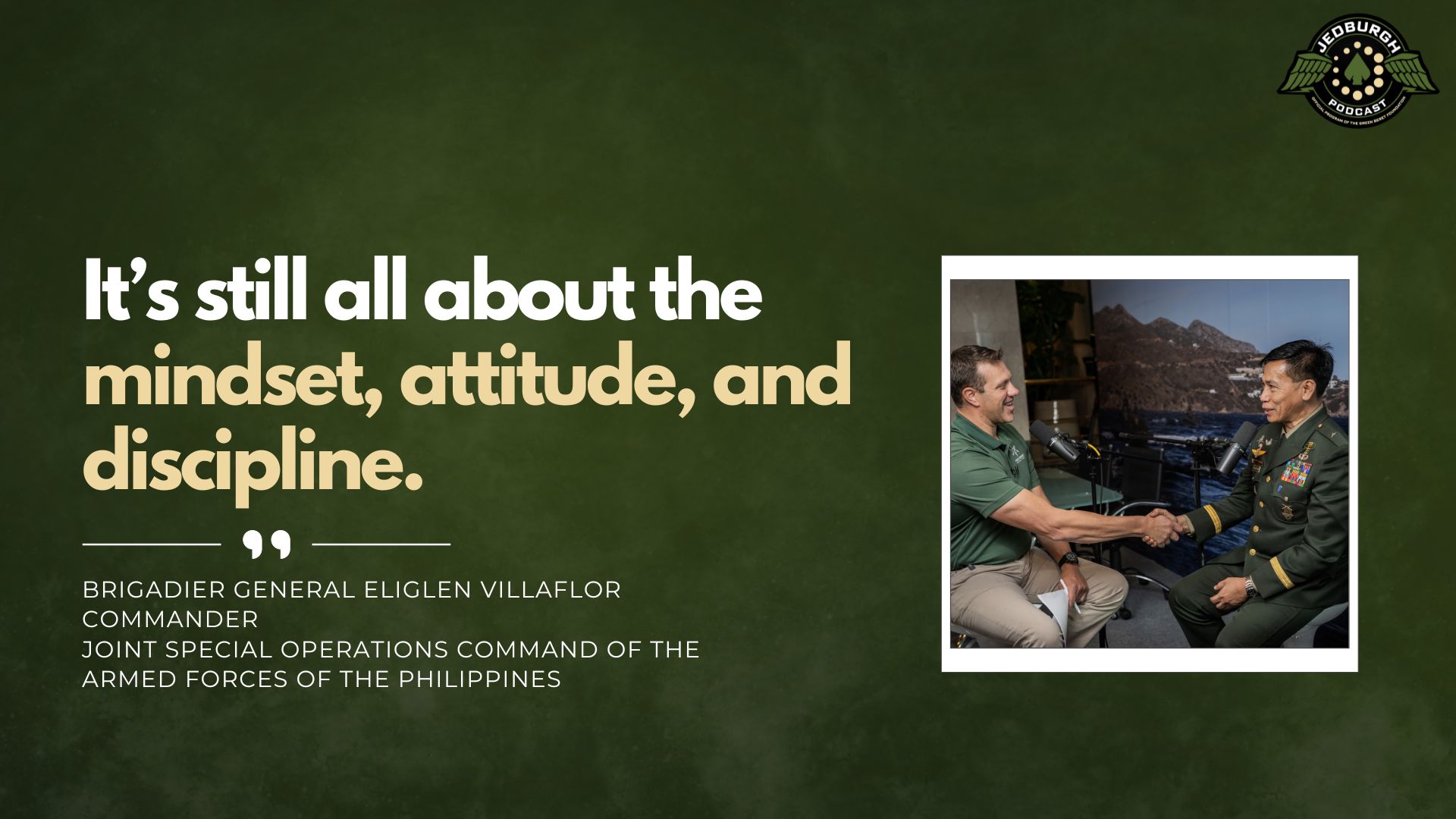
As I’ve said during the panel, it is always every commander’s dream to have the latest technology, to have the latest capability in your arsenal. I would like to emphasize to my men that it’s still all about mindset. It’s all about the mindset, attitude, and discipline, because even though you have all this technology, all this equipment, it’s still the human capital, still the person that operates this equipment. It’s still the mindset, the discipline that really counts on all of this. The special operations way.
Special Operations Force is truth number one. People are more important than hardware. It doesn’t matter what nation you’re from. That’s the reality. You’ve got to have good people.
That’s it, Frank. Thank you.
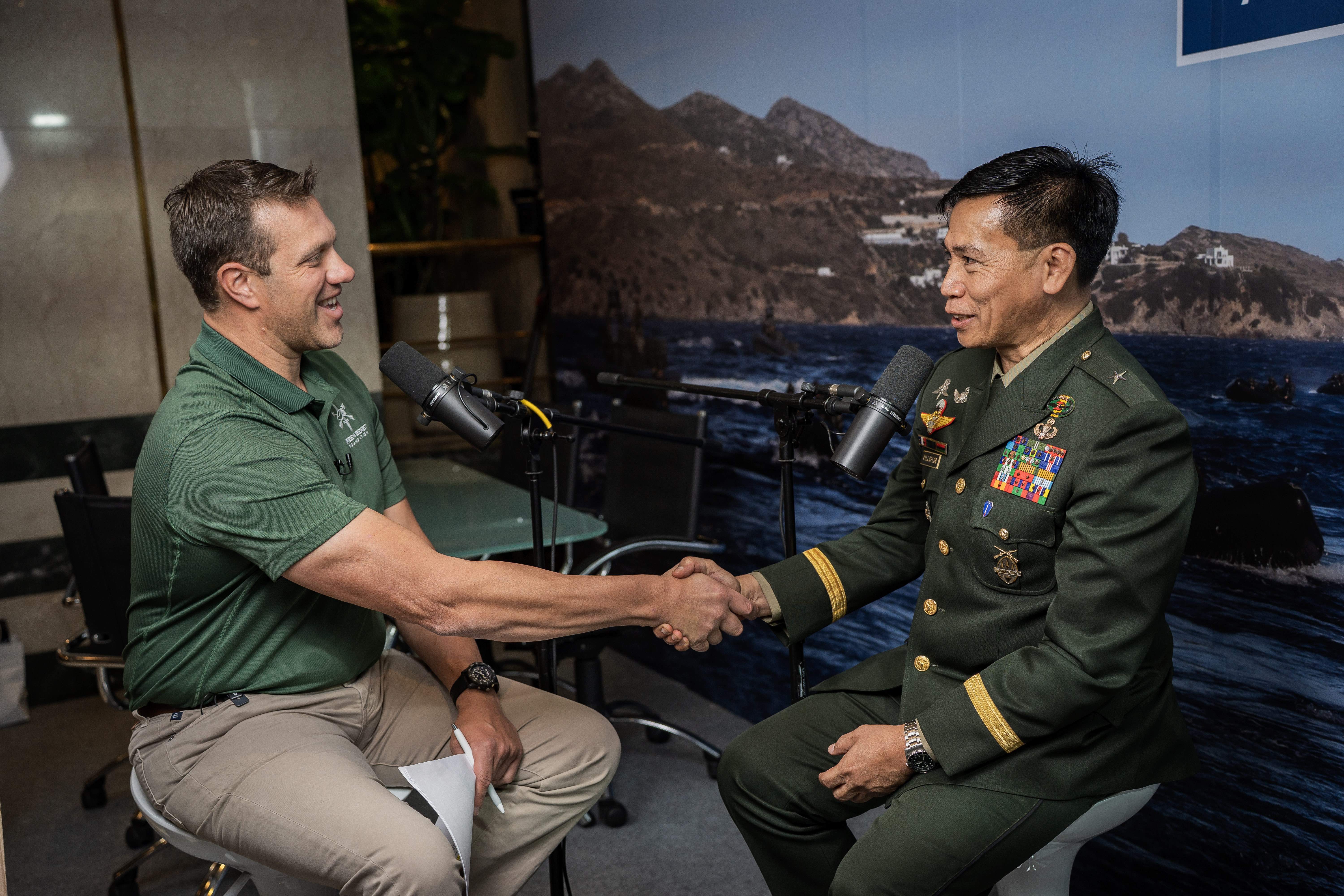
You can throw everything at it, but good people will operate. Good and bad equipment is better. That’s the reality of it. Sir, I appreciate you taking the time to spend with me here and talk about your vision for the organization. I also very much appreciate you sitting on the panel with me earlier today. We didn’t meet before today, but in true soft fashion, we hit it off in two seconds. I feel like when I come to the Philippines, I’m going to have a friend and a phone number that I can call, and you know that if you come to New York, you’d better look me up because I’m going to come find you and we’re going to spend some time together.
Thank you, Fran, for having me. It’s a pleasure.
Green Beret Foundation
P.O. Box 25138
New York, NY 10087-5138
Note: Please use USPS mail or priority mail. Do not use FedEx.
Green Beret Foundation
10205 US Hwy 15-501, Unit 26-8
Southern Pines, NC 28387-4301
Call: at: (844) 287-7133