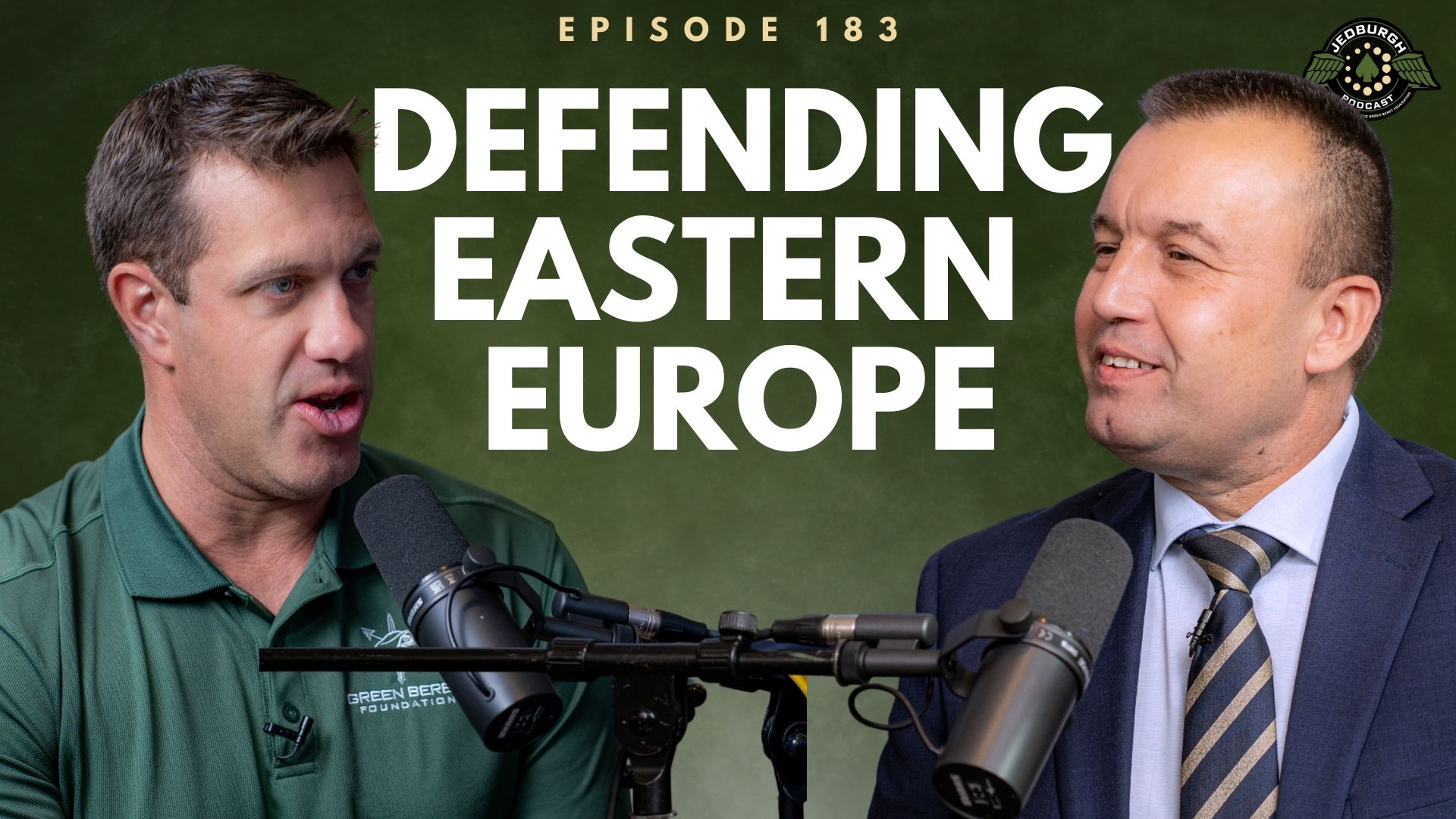
Romania is one of America’s key allies in the fight for Eastern Europe. Romanian Special Forces are critical to the success of that mission; and the partnership between United States Special Operations and our Romanian counterparts sits at the center of that strategy.
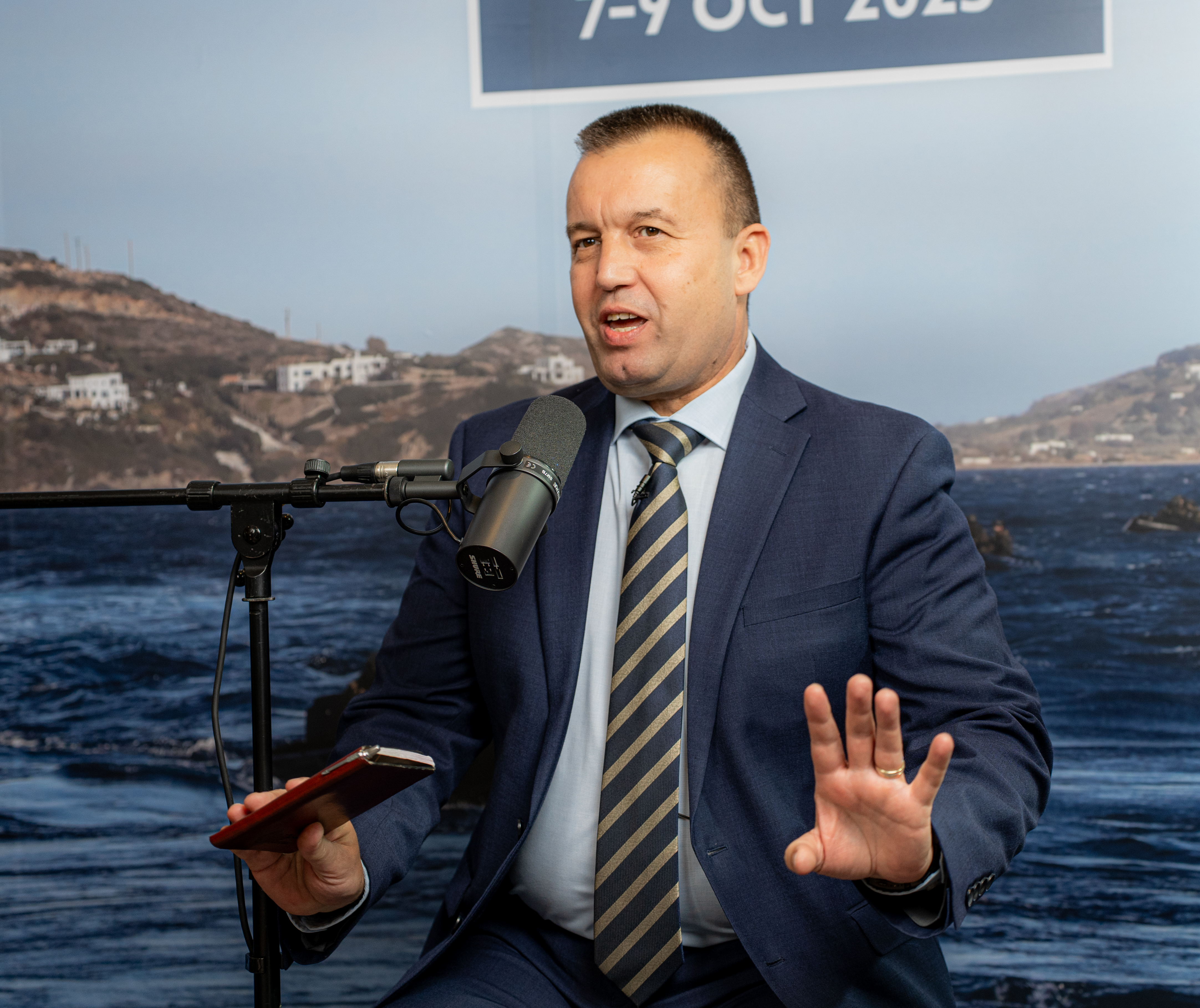
From the Global Special Operations Symposium in Athens, Greece, Fran Racioppi sat down with Major General Claudiu Dobocan, Commander of the Romanian Special Operations Forces, to discuss how Romanian Special Operations are combatting Russian aggression and holding the line in Europe.
General Dobocan shared his perspective on strengthening SOF partnerships, advancing interoperability, and building modern capabilities that allow allied forces to operate seamlessly together. He spoke about Romania’s place within NATO, the importance of trust and shared mission across borders, and the need for Special Operations units to remain agile and prepared for the full spectrum of emerging threats.
From combating hybrid threats to maintaining readiness alongside allied SOF elements, General Dobocan emphasized that success today depends on relationships, shared understanding, and the willingness to stand together in the face of uncertainty.
Special thanks to the Global Special Operations Foundation for hosting us in Athens.
Follow the Jedburgh Podcast and the Green Beret Foundation on social media. Listen on your favorite podcast platform, read on our website, and watch the full video version on YouTube as we show why America must continue to lead from the front, no matter the challenge.
—
‐‐‐
General Dobocan, welcome to The Jedburgh Podcast.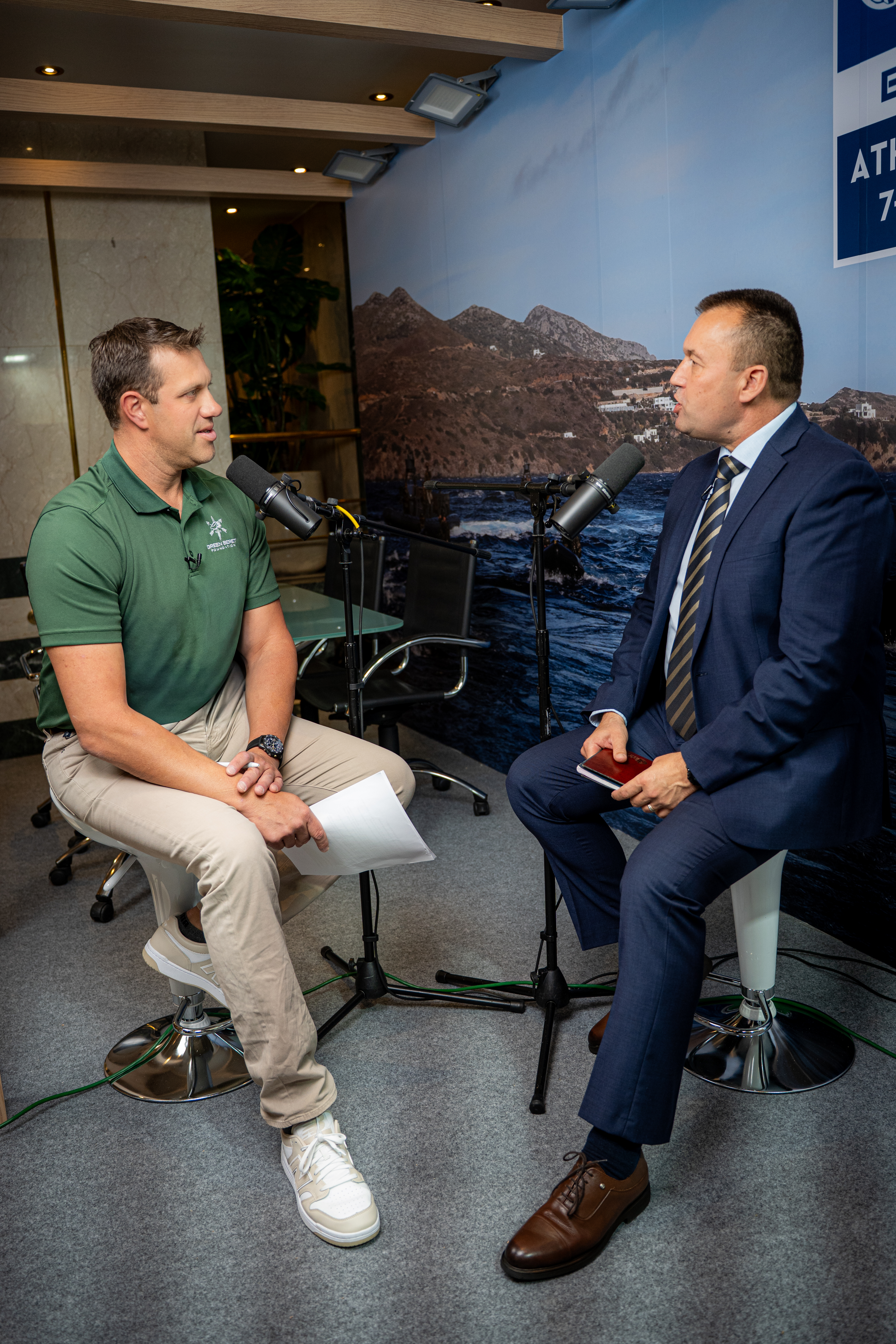
Thank you very much for having me. I go by CD in the community because a long time ago, when I used to attend some courses in the States, they would mess up my name so badly. I said, “Let’s stick to the CD.” Later on, Admiral McRaven said, “You are not a CD. You are high speed, so we’ll call you Blu-ray.” I still go by CD for my friends.
I’m used to having the last name of Racioppi. It gets wrong about 90% of the time. People say, “What’s your name?” I say, “Fran.” It’s very simple.
Fran Racioppi. That’s it. Not that bad.
We’re here at GSOF Europe in Athens. This is a great opportunity to bring the Global Special Forces community together and have some important conversations about interoperability and how we build relationships across each of our nation’s SOF leadership. This is also a great opportunity to get an inside look and lessons learned as to what’s happening in the various regions of the world.
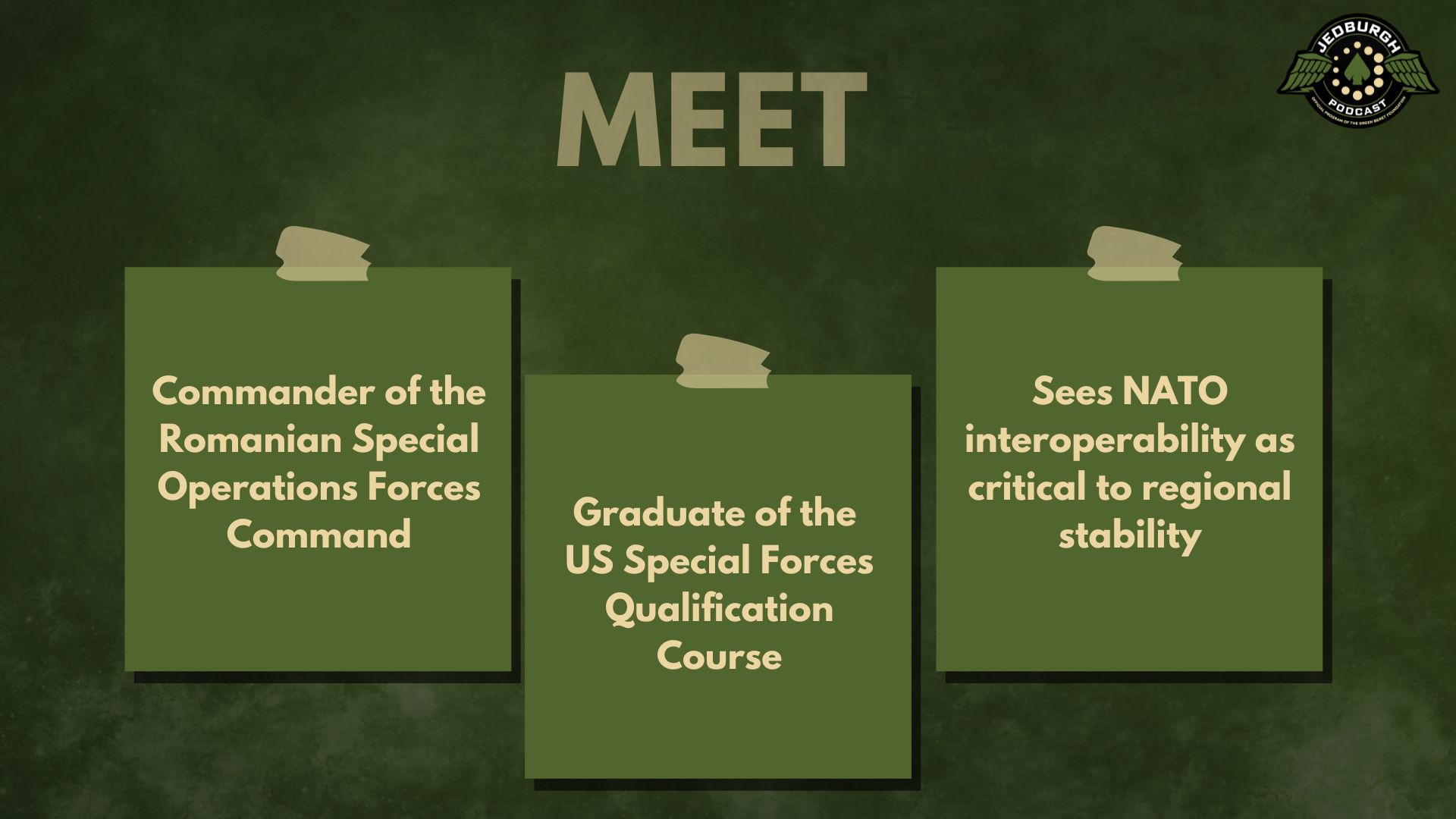
You command the Romanian Special Forces, a longtime ally of the United States. It’s an honor to sit with you because we have spent, on this show, close to 300 episodes for 5 years. We have covered the Special Operations community from the American perspective. Being an American, we always tend to put ourselves first. That’s the most important perspective. What SOF teaches you is that that is not the most important perspective because the perspective of our partners and our allies is oftentimes the most important perspective.
To be able to come here, sit down with yourself, and we’ve been able to sit down with a few other leaders from our allies as well, it is truly an honor because we haven’t had that opportunity to cover the perspective of what’s going on in the world from your angle. I appreciate you spending some time with me.
Thank you very much for the question. It’s open. Let’s hope we can focus on it a little bit. In terms of the US not being important, I will contradict you because the US is very important, especially in the SOF domain. We were created by the cooperation between the Romanian Ministry of Defense and the US SOCEUR. We had a lot of advisors in the beginning.
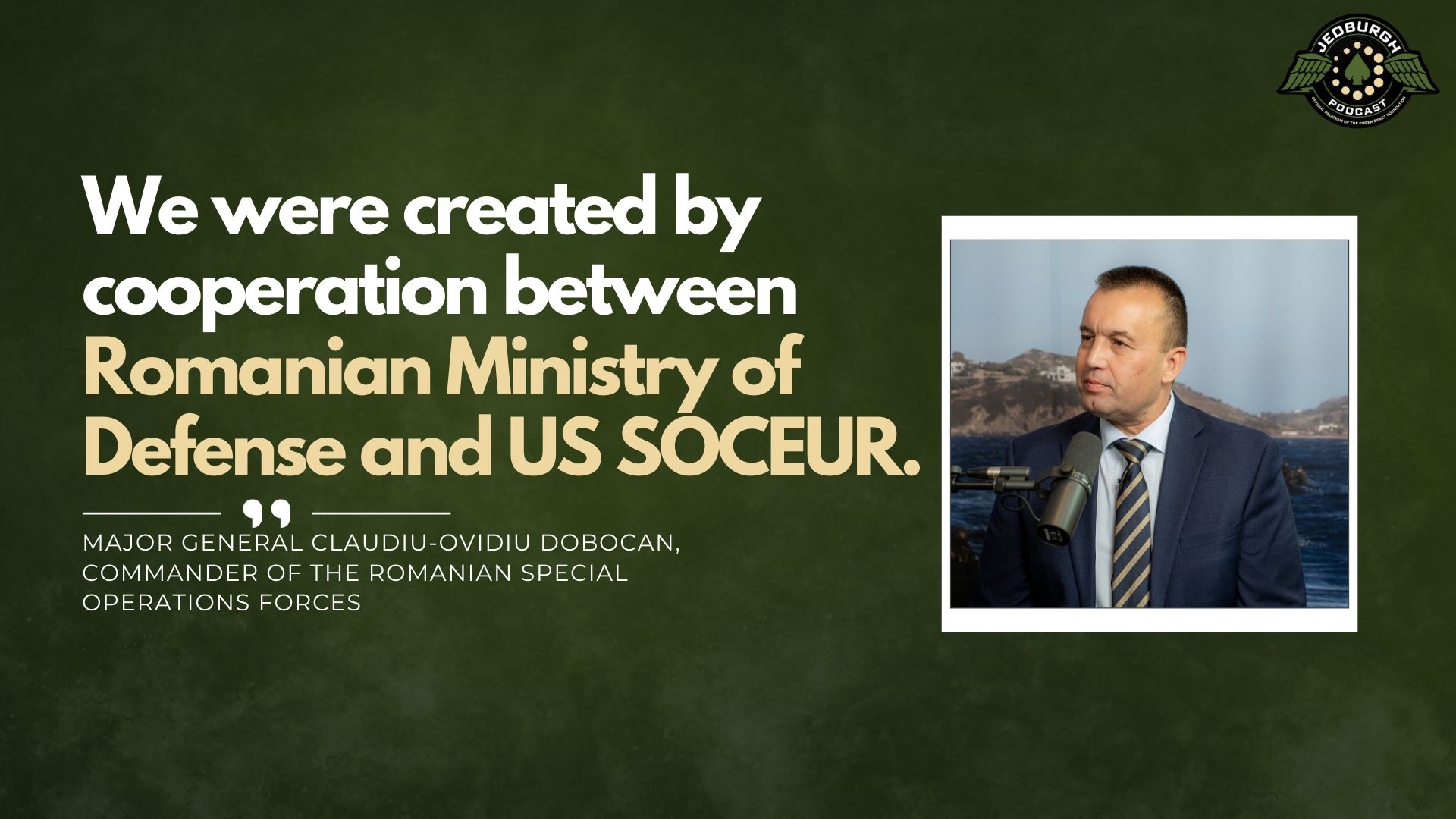
I myself am a graduate of the Q Course conducted in Romania with the instructors from the US Special Forces School. Later on, I attended other courses in the States and so on and so forth. Education, training, and material provided by the US at the beginning of our formation were critical for the inception. With that said, I’m going to move into the main question you had about interoperability and how that defines the situation with our neighbor.
Romania is situated in Southeast Europe. It’s a flash in the middle of the former Balkans problem set and the Ukrainian problem set. Also, to add to the complexity of the region, you get the frozen conflict, the Black Sea harassment, and so on and so forth. Romania is in a very peculiar position. It had to develop partners and capabilities to be able to create solutions for itself and then contribute to larger NATO formats or NATO security approaches.
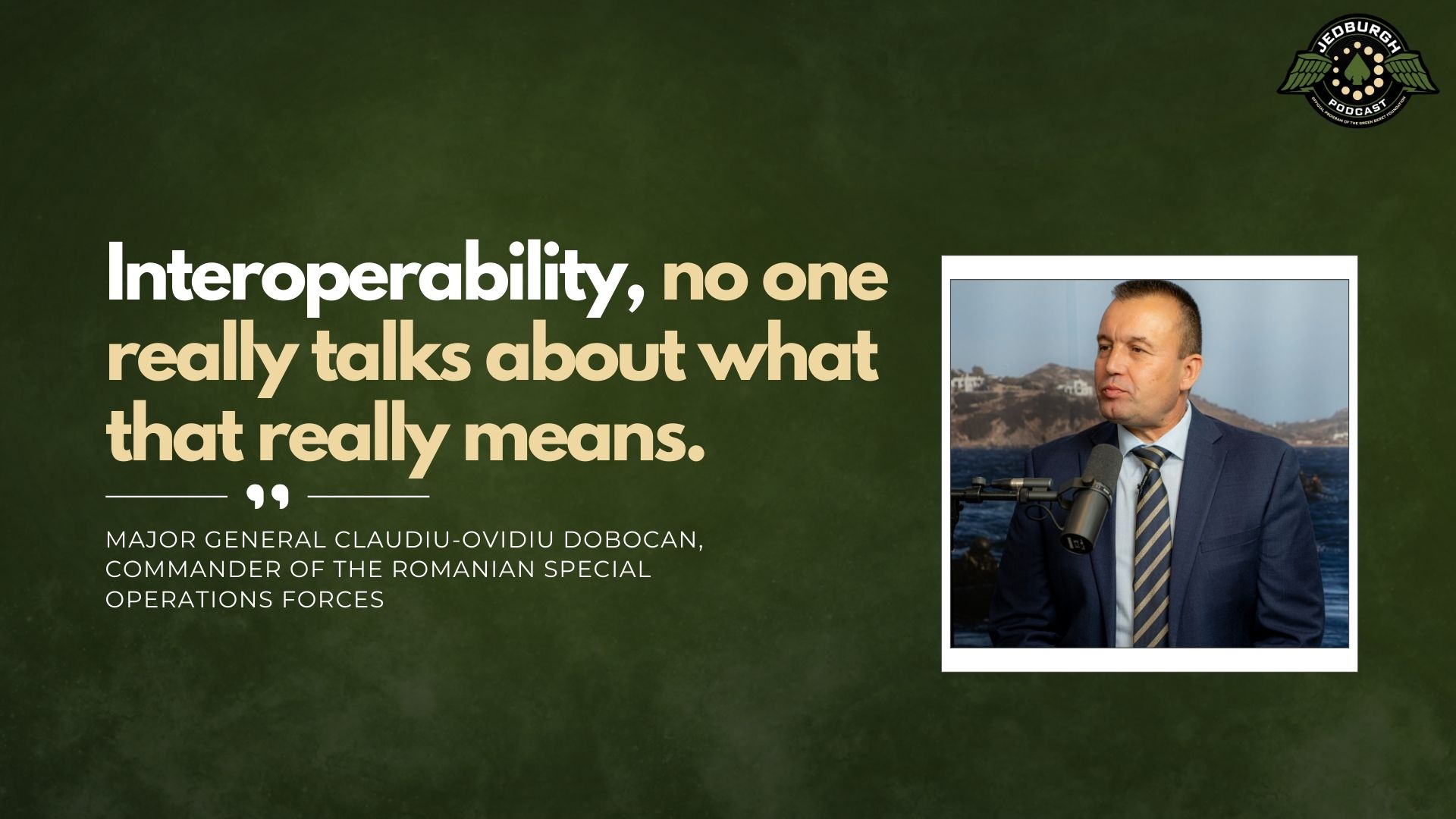
Your loaded question about interoperability is a very tricky one, but thank you for giving this question to the floor. With interoperability, nobody talks about what that means. If you look at the baseline of what you mean by interoperability, first of all, it is language. In reality, there are no problems if you talk about the US and Romanian Special Forces on the language side of the interoperability, but it’s not the same between the US forces and some Middle Eastern partners. You can go down the list, but I don’t want to name any countries that are doing their best to catch up with the language concern.
The second problem set that interoperability entails, but nobody talks about, is TTPs. If you went to the same course and the same schools, you have the same understanding of move left, cover right, or something like that. The baseline would be understood. If you are to operate with somebody you have not worked with before and who does not have the same baseline in TTPs, then you’re in trouble.
The third level is material. Is my rifle shooting the same ammunition as yours? Is the bandwidth of my radio similar to yours, so the two stations can connect to one another? Maybe yes, maybe no. We get into the complexities of the NATO formats. The fourth level of interoperability is that we have to talk about our concepts. If what I understand by deterrence is not the same as what you understand by deterrence, then we have a problem.
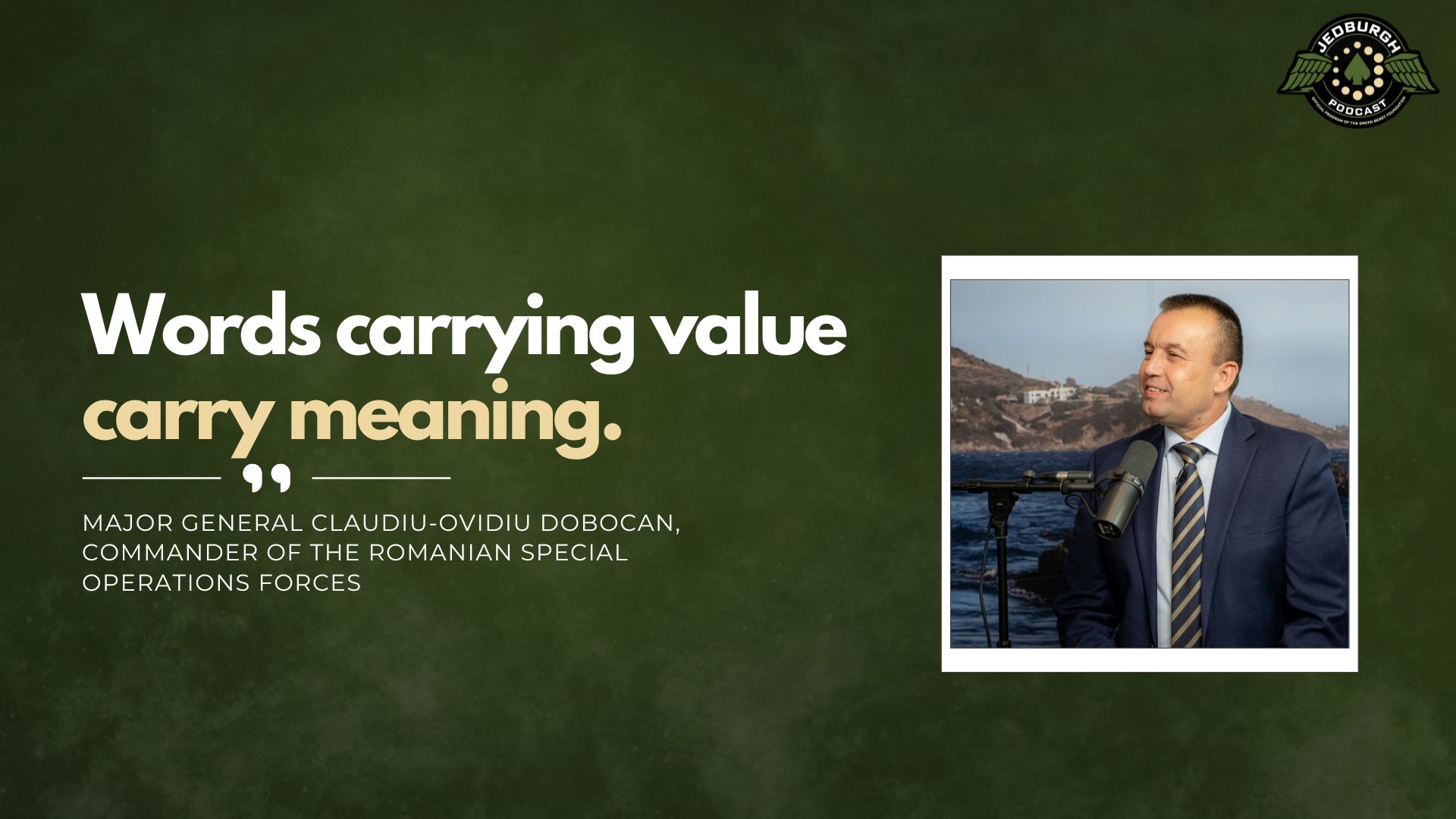
For example, when people say the Russian Federation has to be deterred in Ukraine, I don’t think the word is correct, because if the occupation has already started, you have to use the word coercion. Coercion means a Military instrument of state power, and so on and so forth. Concepts are very important because words carry value, meaning, and symbol.
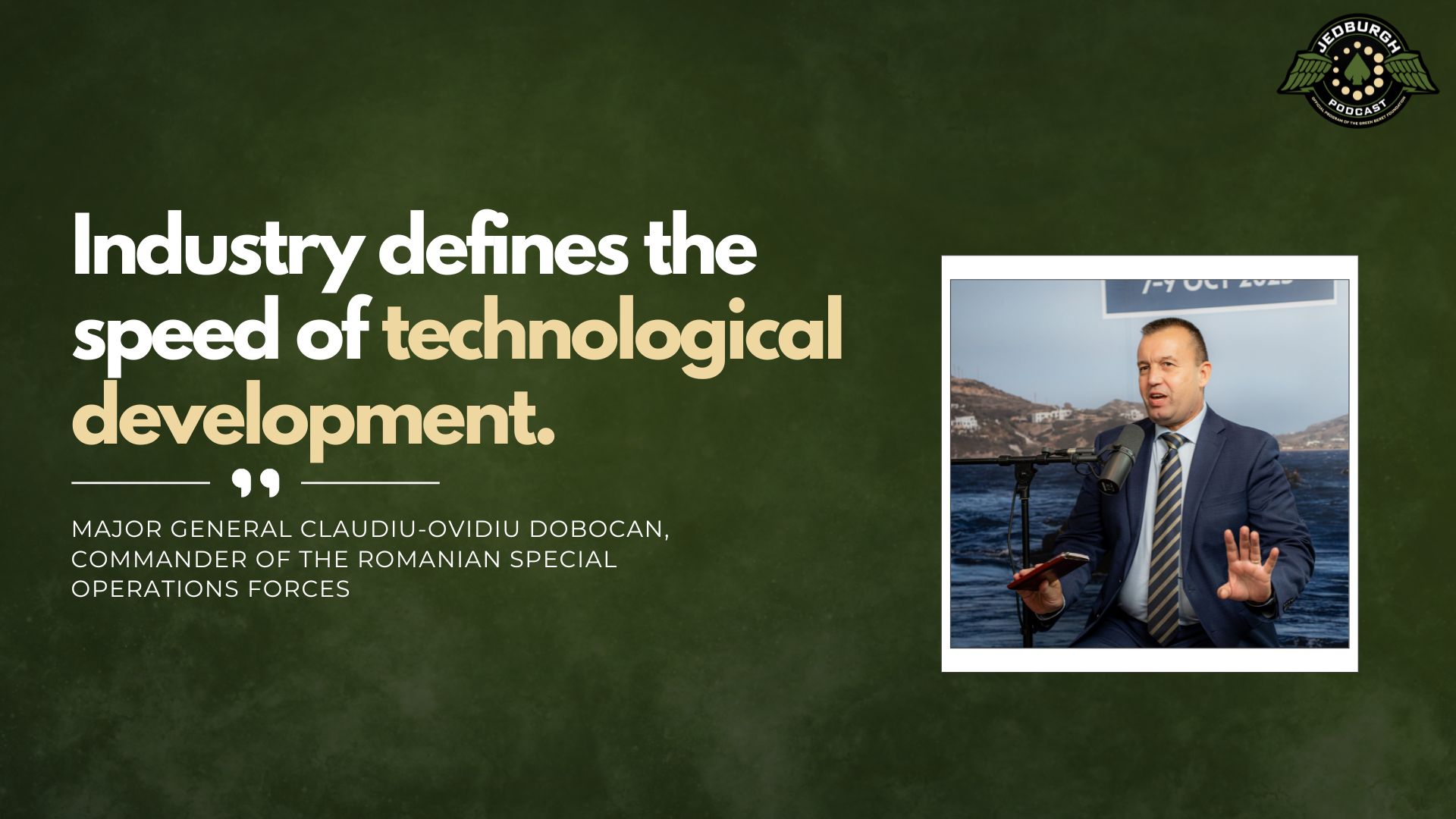
The fifth one is technology. If you talk about interoperability in the technology arena, then you realize we are starting to run into a lot of trouble. I’m going to explain why. The present is affected by our past. Afghanistan and Iraq were the great unifiers. The future doesn’t look as bright. Why? It’s because the industry defines the speed of technological development in many areas.
Since most of the technology develops with the state’s money, that information would be proprietary, and the technology would be restricted to a few nations, like Five Eyes or something like that. It is, in my opinion, that we’re good because we work together, but the future doesn’t look as bright because of the political industrial barriers to our sharing of technology.

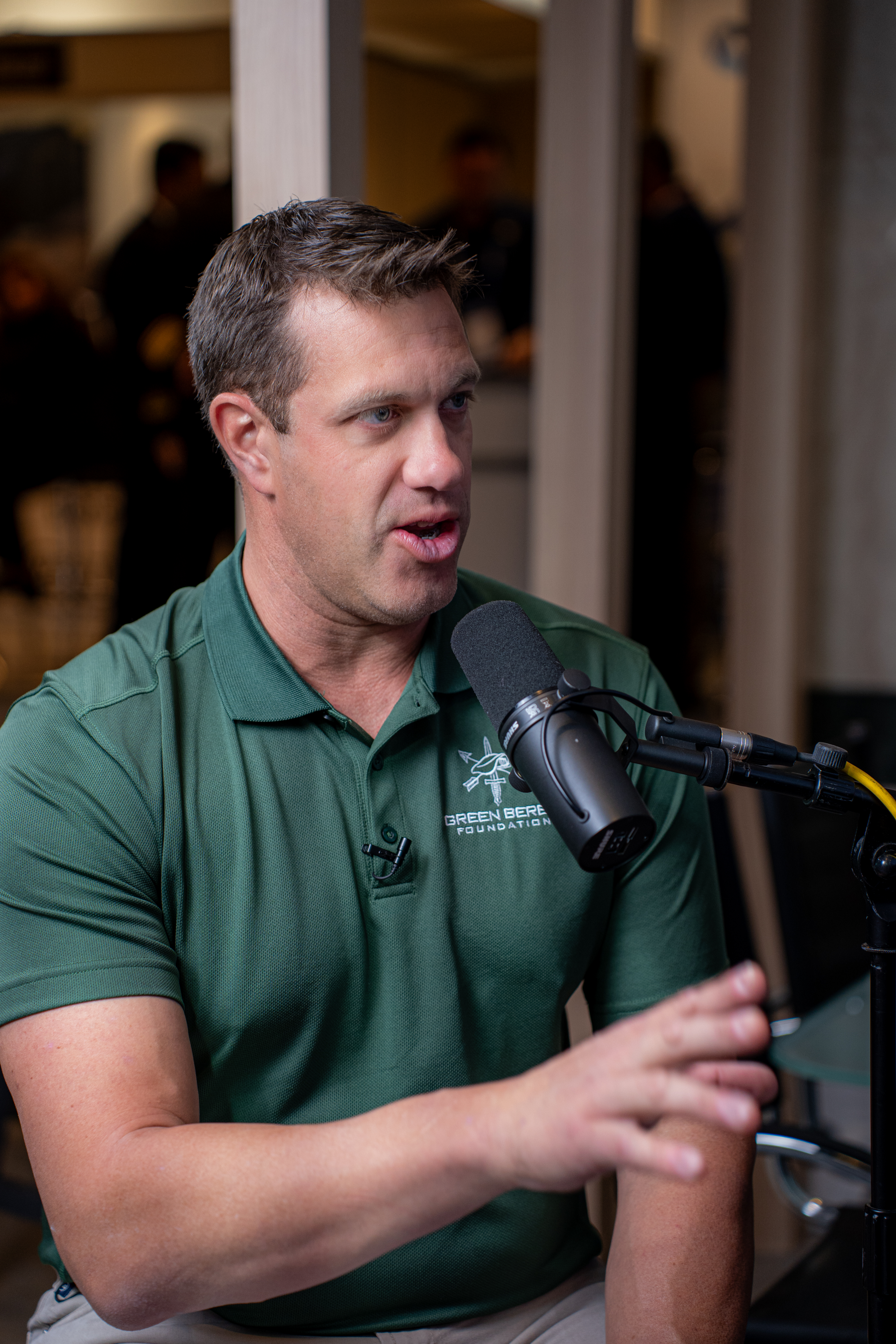 You brought up ten more questions in my head. I want to dig into a couple of them because I think they’re important. First, you talk about technology. We’ve seen rapid technological advancement in your area over the last couple of years. You’ve experienced the Russian invasion of Ukraine and the broader aggression across the region, as you outlined. Romania sits in the center of many of the regional conflicts.
You’ve seen firsthand some of these technological advancements in terms of drones, unmanned aerial vehicles, and how effective they have been targeting not only formations, but targeting down to the individual. When you look at technology, and we can walk the floors through land, sea, and air here, what is the technology that you think is critical for the Romanian Special Forces to be able to use to work with other nations in countering the Russian aggression within the area?
I do not see a very critical technology that I’m missing, but I cannot speak about the future that way. For example, in the last couple of years, the budget dedicated to the SOF has increased significantly. We’ve made conscious decisions on how to leverage the acquisition process into covering the gaps and potential requirements for the force for the future.
The technology moves at a pace or at a speed that no one can predict, but I will try and give you some of the predictions we think the technology will address. If you think about the Second World War and the immediate post-Second World War, we were talking about the maneuver approach to warfare that was built on industrial superiority.
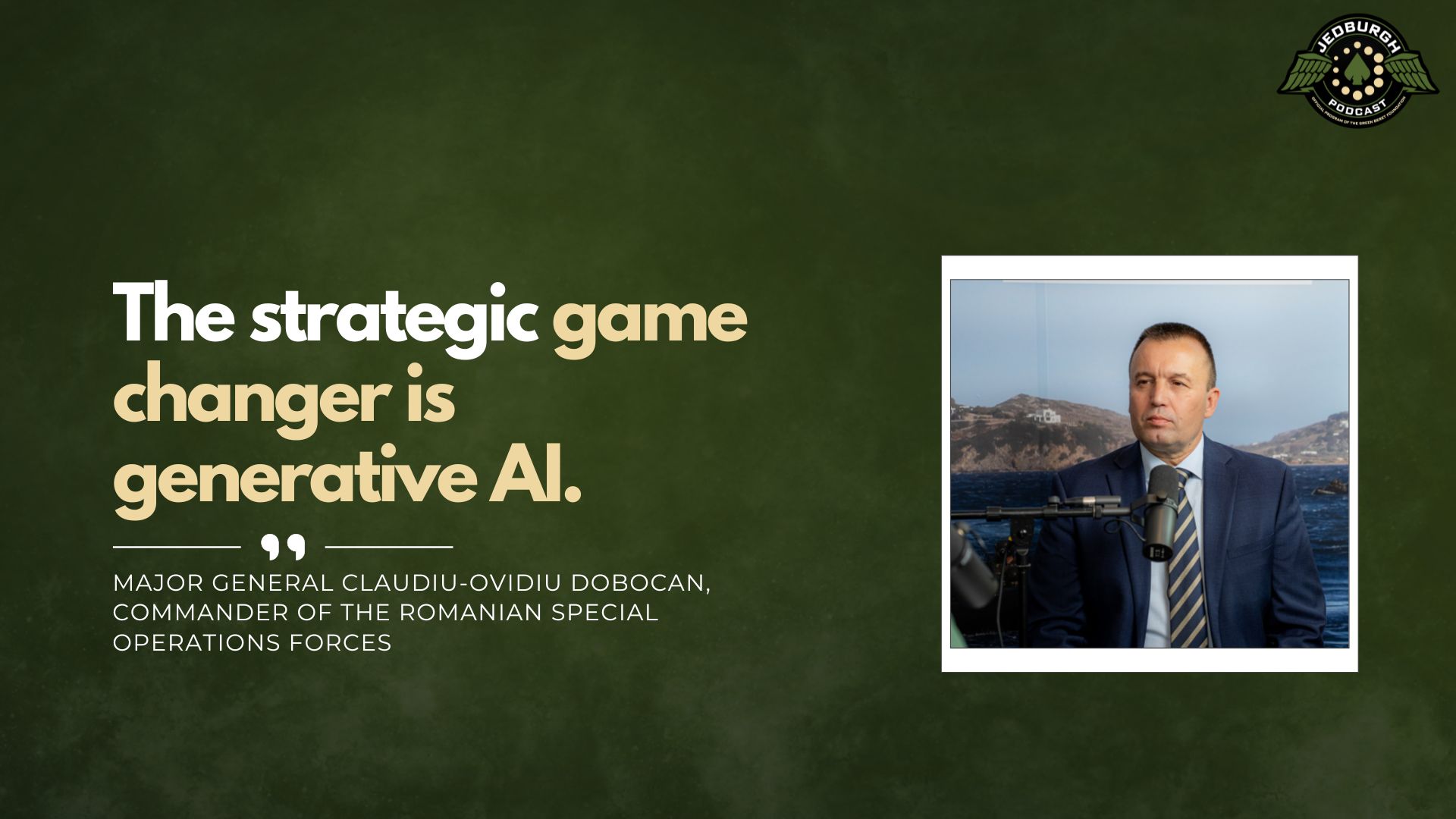
At that time, the maneuver and amassing of forces were the key tactics. Now, we are moving toward a swarming concept where drones seem to be important. It is my estimation that drones will be relevant but not critical for the future because they are most likely ammunition or another platform that carries a sensor. It does not do battle for you. It can disrupt or delay, but mostly as a tactic, not as a strategic game-changer. The strategic game-changer, which we have to understand, is generative AI. When the AI makes its own decision and uses the capabilities given by the autonomous drones, it will significantly affect the world landscape.
The term that we’ve heard time and time again is human in the loop, and the need for integration of AI to keep a human in the loop for decision-making processes. Do you think that there’s a world in which AI is making decisions and removing humans from that decision-making process?
I heard it at a conference. Human in the loop or human on the loop. Meaning, you are there to stop a decision that’s on the brink of being made by AI, or you stop the cycle of AI. You have to have a human moving a decision from one step to the other one. They’re different because if it’s the smaller influence of the person, you might have a tired person, a drowsy person, or somebody who will not look into what that means and will say they agree. If that person has to move the decision from one position to another position in the AI cycle, that will mean that person consciously decided to give the green light to AI.
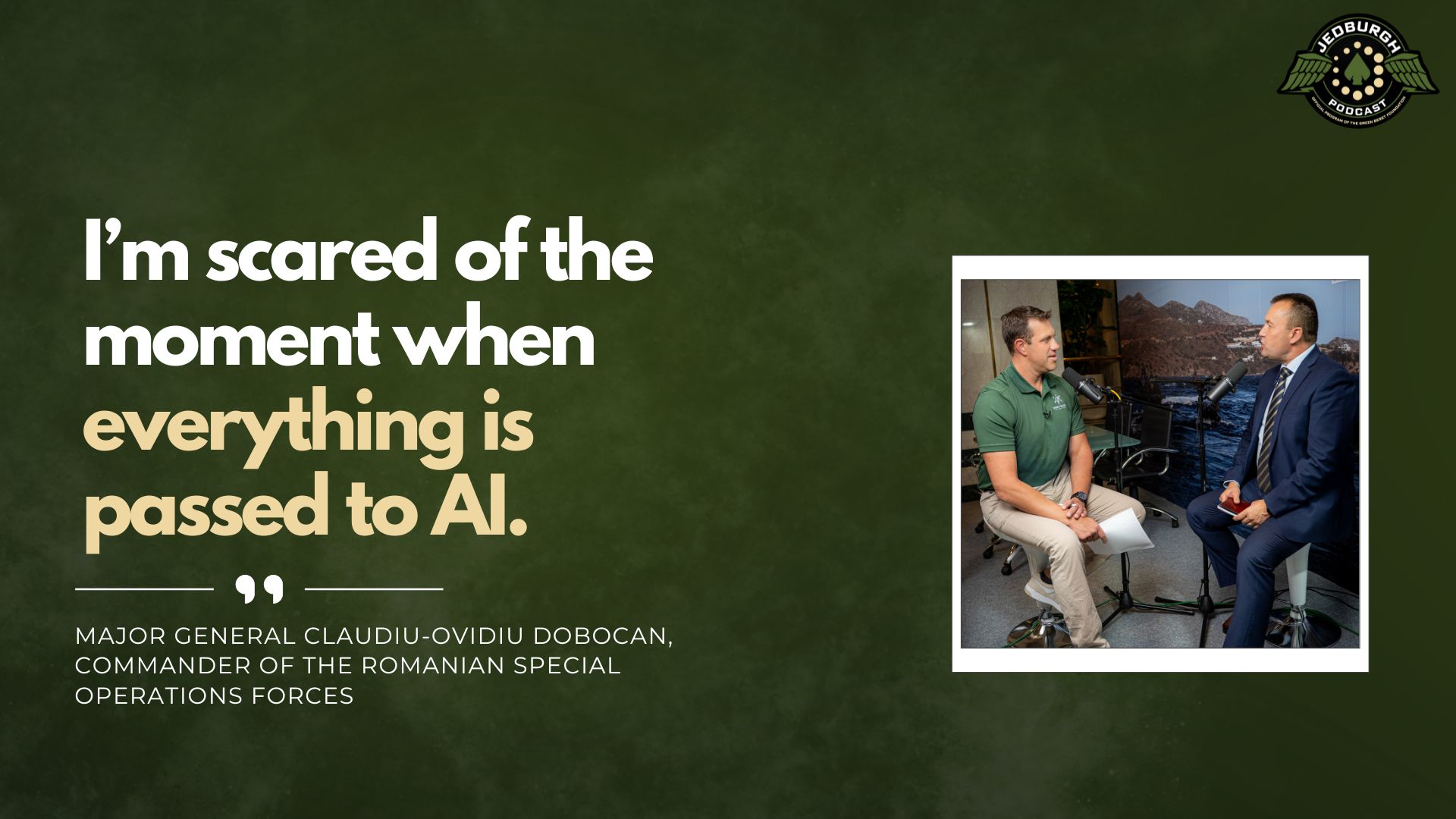
We have been doing this for many years in targeting. We have five people who can press a button and say, “The conditions are met. The plane is in the air.” That’s the primitive AI, if you remember, in targeting. In terms of the future where the generative AI will make its own decision, that scares me a little bit if it has access to all the equipment, and whatnot. That’s because then, whoever gets into the back door or the inner cycle of the AI, that person or entity will have control of the war. I’m scared of the moment when everything is passed to AI. Being in the South, we say humans are more important than software or AI. I do believe that.
You brought up the concept of massing forces in the context of World War II. That concept of massing forces permeated through the Gulf War, Iraq, and Afghanistan, to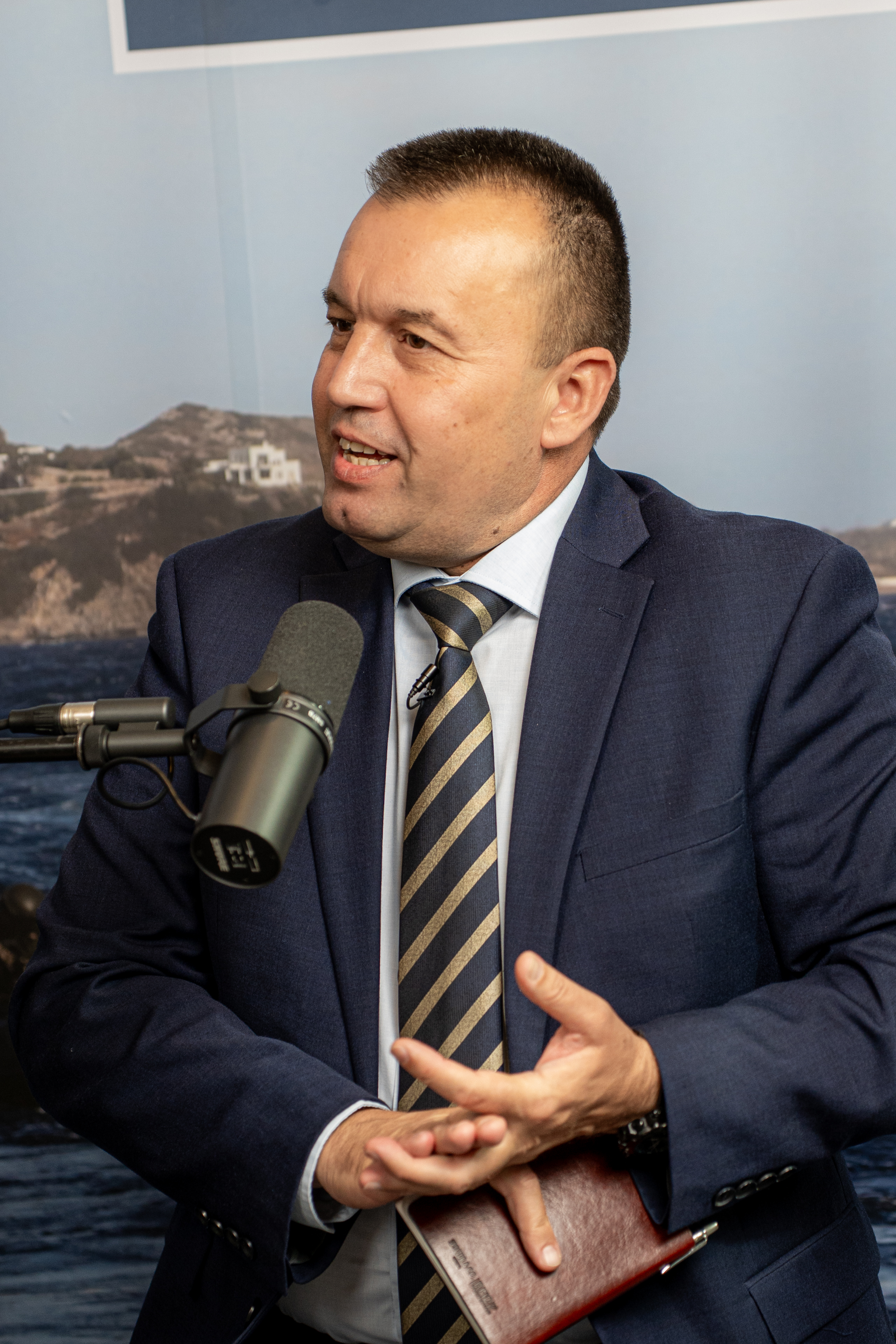 an extent. It was a little bit more expeditionary, especially in the early days. When we look at what we’re terming large-scale combat operations against near-peer enemies from nation state on nation state at the superpower level, our job in SOF is to prevent and push that day down the road. How long we can prevent that is what we’re out there to do.
When we look at massing forces, historically, allied nations have been able to mass forces on borders to be able to then conduct some sort of defense or invasion. When we look at the implementation of AI, large-scale combat operations, the ability to deep sensors through aviation platforms, and the integration of space and long-range precision fires, do you think future conflict will see the ability of nations to mass forces pre-conflict, or do you think it will become more expeditionary in nature?
In the history of mankind, I studied about 2,000 years of the history of tactics because I was passionate about something. I discovered that the tactics are only four, and they are used in a cyclical format. They change maybe every 200 or 300 years as soon as the new technologies or some edge comes up. I’m going to recap.
In the beginning, the tribes used to fight war in swarming formations. They would attack from all directions by surprise at night or something like that. When the tribe that received too many losses got smarter, what did they do? They moved to line warfare. They did not come with 2 or 3 guys. They came with fifteen lined up, so they would not be surprised from all directions. Let’s say the previous tribe found out that’s the new tactic, and they said, “Let’s group, amass, and break the fronts.” The next iteration was, “If we cannot bring too many people to amass forces, what will we do? We will envelop them.”
Let’s recap. The first tactic was swarming, line warfare, mass warfare, and maneuver warfare. Then, you get into the next cycle. The next cycle was armed recovery, like swarming. What you do is build ramparts to block them, line warfare, and amass. Then, you bring the tank to amass forces, break through the lines, and so on and so forth. The history is cyclical, not in terms of the tactics repeating. The tactics are repeating, but the equipment and weapon system changes.
If you look at drone warfare, everyone thinks that is the future. Think about the drones as the ammunition or the platform through which you will conduct your swarming. The swarming is the next step in the evolution of warfare, but the development of counter weapons will show that we will be moving very soon into a line-type of warfare.
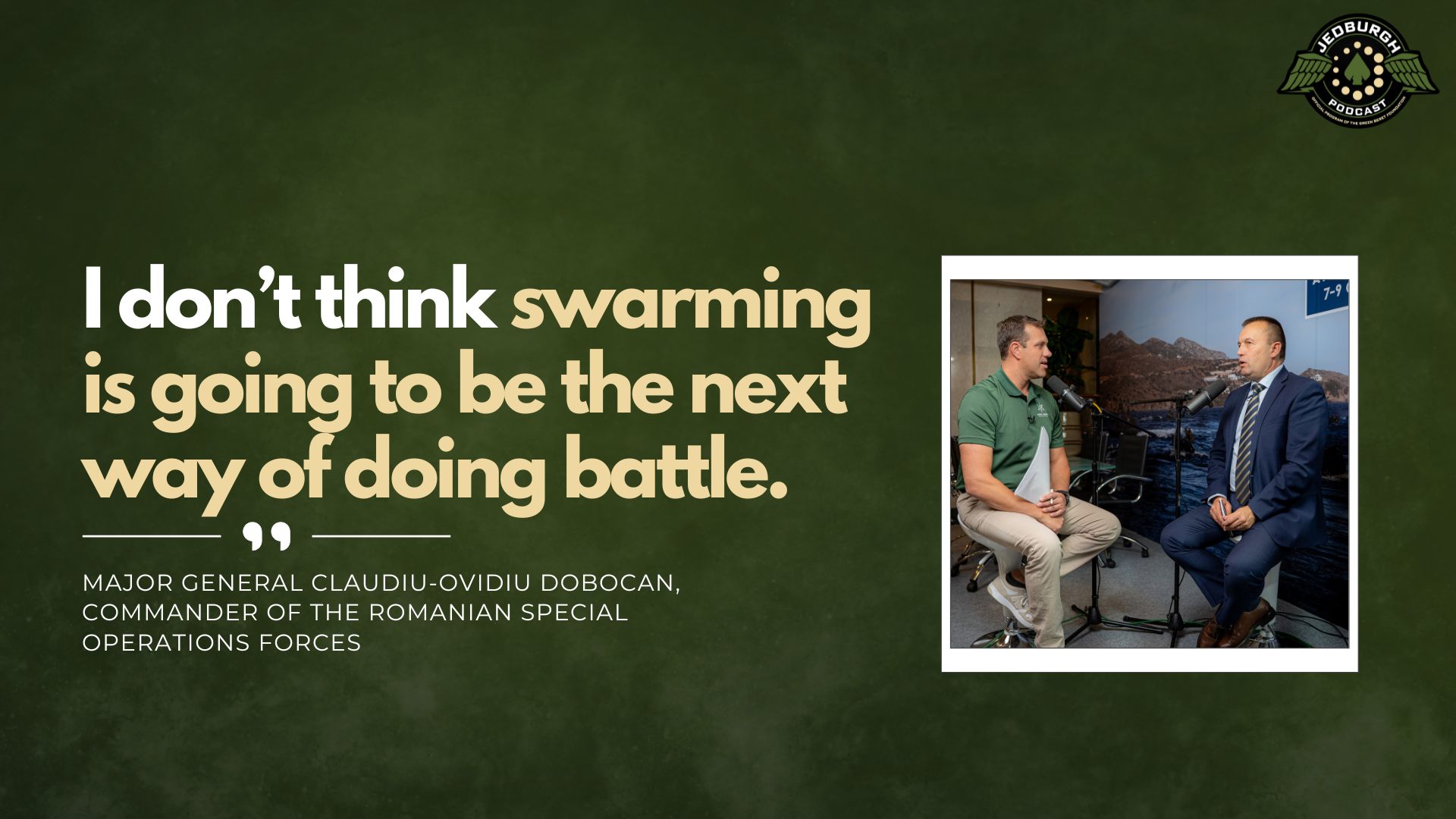
The standoff distance you’ll see will increase. As much as I can hit you from 50 kilometers, you’ll move all your forces 50 kilometers back, and you will try and find a weapon that shoots from 70 kilometers away. The standoff distance will increase. I don’t think swarming is going to be the next way of doing battle, maybe at the periphery.
I want to ask you specifically about the Romanian Special Forces. Romania has been a longtime ally of the United States. It is instrumental in both Iraq and Afghanistan. From your perspective as the commander of the formation, what is the mission of the Romanian Special Forces?
The mission is not what we do, but what we do for what purpose. We are legislative. We are written into the defense organizational law. The Romanian SOCOM is part of the strategic assets in the defense formations. That said, we are a strategic element, but we also build and develop capabilities to be used by the operational level commanders. We do have strategic assets.
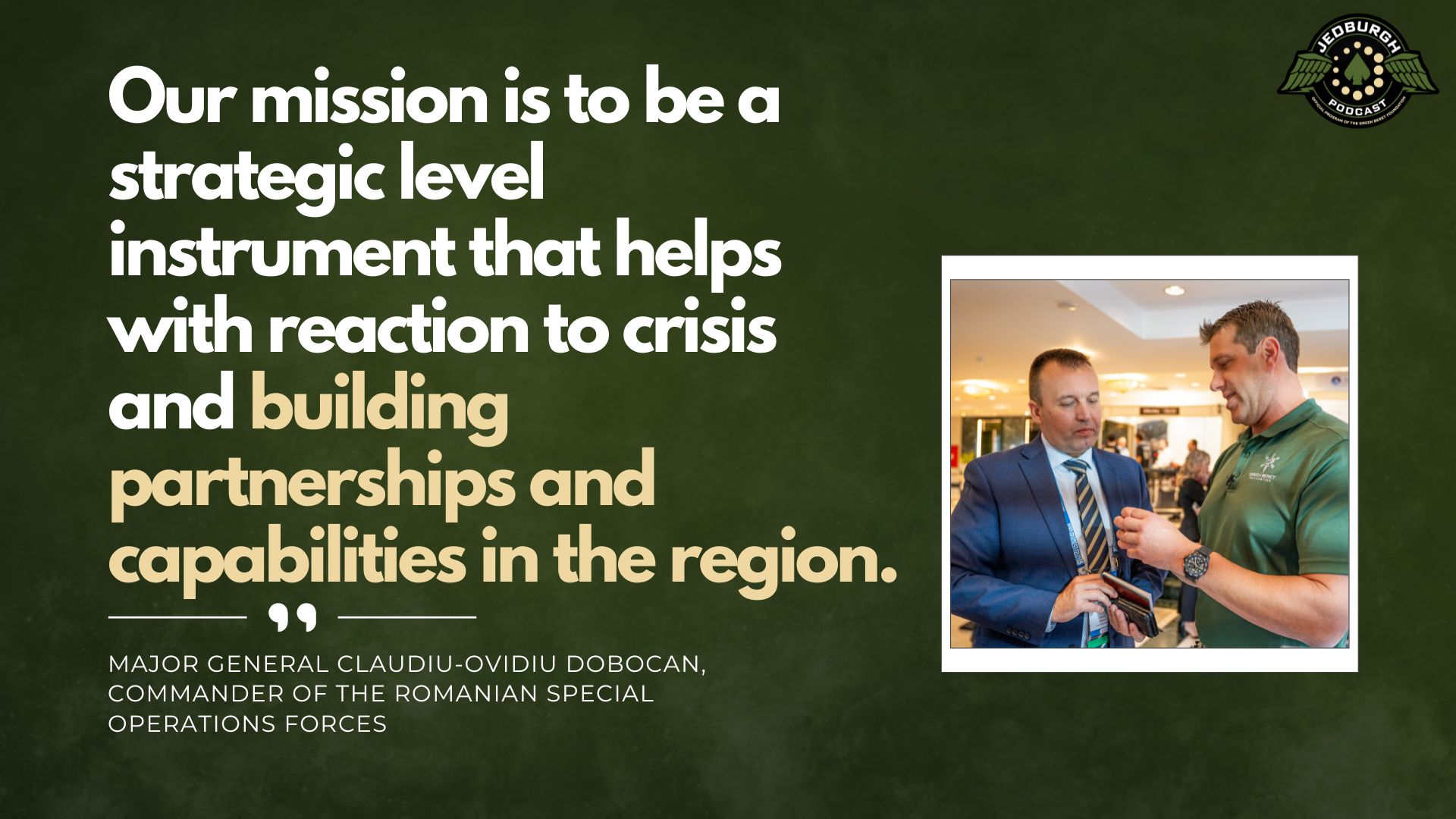
In terms of what we do conceptually, that is special reconnaissance, Military assistance, direct action, and commercial warfare. The reality is that the mission types do not define our mission, so to speak. Our mission is to be a strategic-level instrument that helps with the reaction to crises and building partnerships and capabilities in the region. If we’re in a conflict or something like that, we have the regional partners around us that can help solve any crisis. That would be a short definition of what we do.
We all have a choice to make when we decide to become a soldier. I made the decision in the post 9/11 world. 9/11 was my junior year in college. I had to decide, “Do I want to go be a reporter in the middle of nowhere in America, or do I want to go follow these guys with beards and long hair riding horses through the desert of Afghanistan?” That’s what my calling was. Why did you join the Romanian Army and then ultimately want to serve in Special Forces?
I joined a long time ago in ‘91. I signed up for the Army Academy, like your West Point. I became an infantry graduate. I signed up for Airborne school, and I served my first three years of my career in a special mission unit. It was mostly focused on sabotage and reconnaissance-type units.
You have an LRS unit.
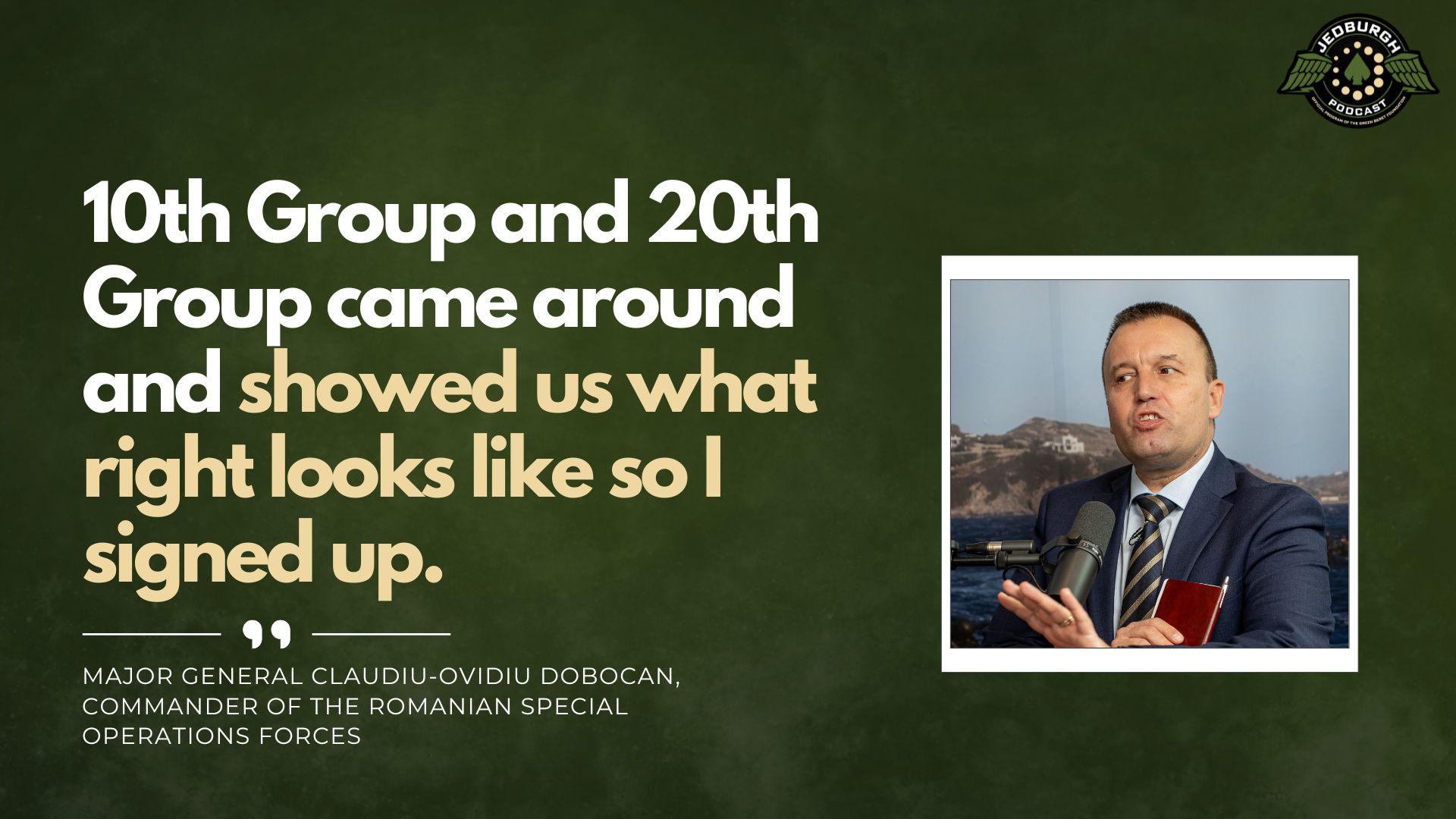
Later on, I moved into an airborne battalion, and then I signed up for Special Forces and so on and so forth. In reality, 9/11 accelerated my transition toward the Green Berets because before that, we did not understand that model. We didn’t have the reference. After 2001, the 10th group and the 20th group came around and showed us what the right looks like, so I signed up.
What is the value, in your perspective, of the NATO alliance? We’ve heard a lot about defense spending from various countries and meeting certain minimum thresholds. At the end of the day, to the war fighter, that doesn’t matter. What matters is the alliance that’s built from the relationships that we build as leaders. How important is the NATO alliance to regional stability?
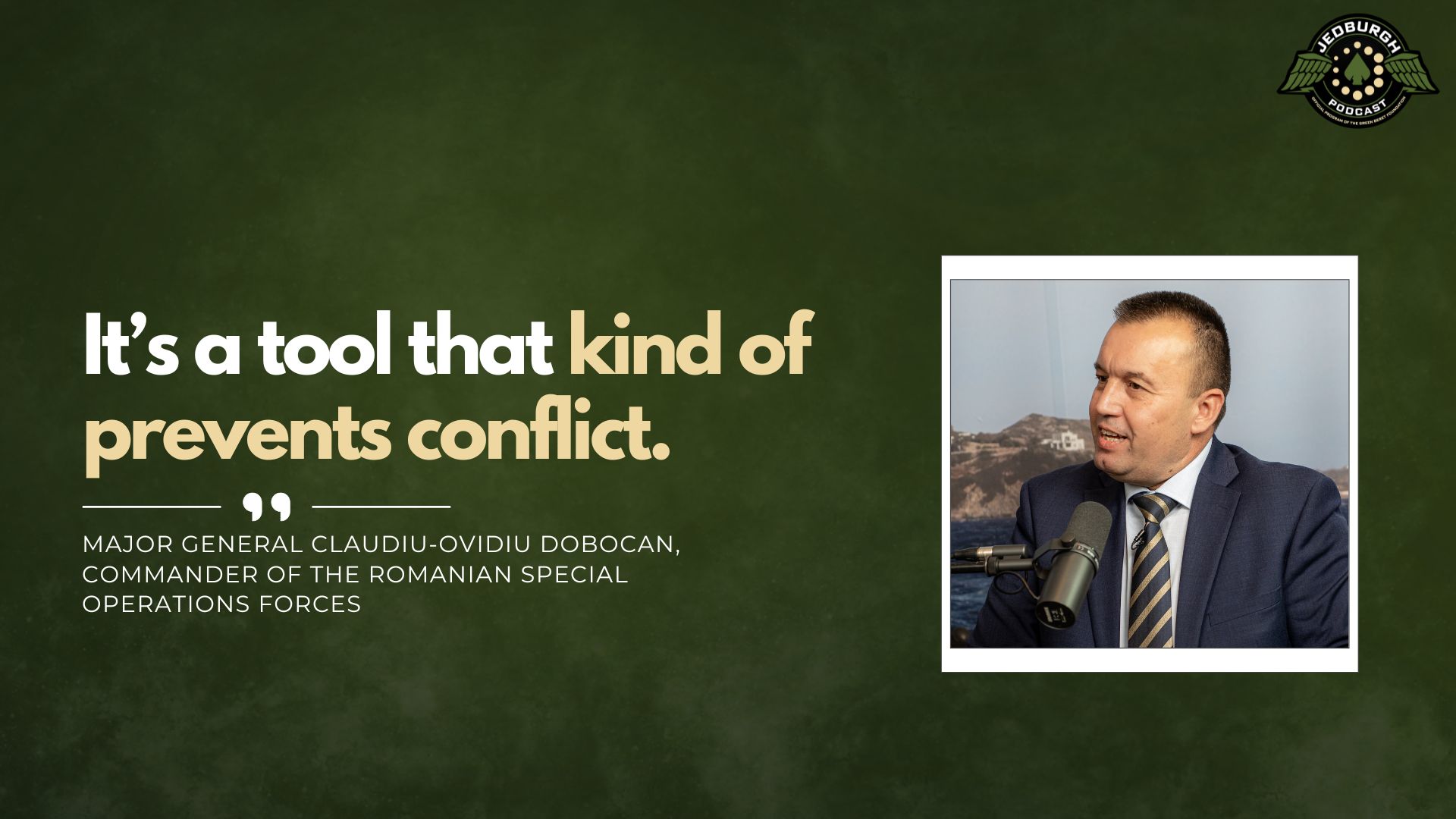
With the NATO alliance, if you think about the foundational documents and the role, it was initially and later on built on collective defense. In the last couple of years, you’ve heard of deter aggression and collective defense. It’s a tool that prevents conflict. NATO also has one of its missions, which is crisis management. Meaning, you are trying to deter and trying to do something. If there are crises outside of your region or outside of the area of responsibility, you have to go and support.
The third mission is cooperative security. This is the one I like best because it allows you to reinvent yourself as the alliance. If it’s peace, then at the periphery, you build new capabilities and new friends. If the friends are in trouble, you activate more toward crisis management and so on and so forth. Nowadays, you hear that collective defense is important. In my opinion, all three missions are important in NATO.
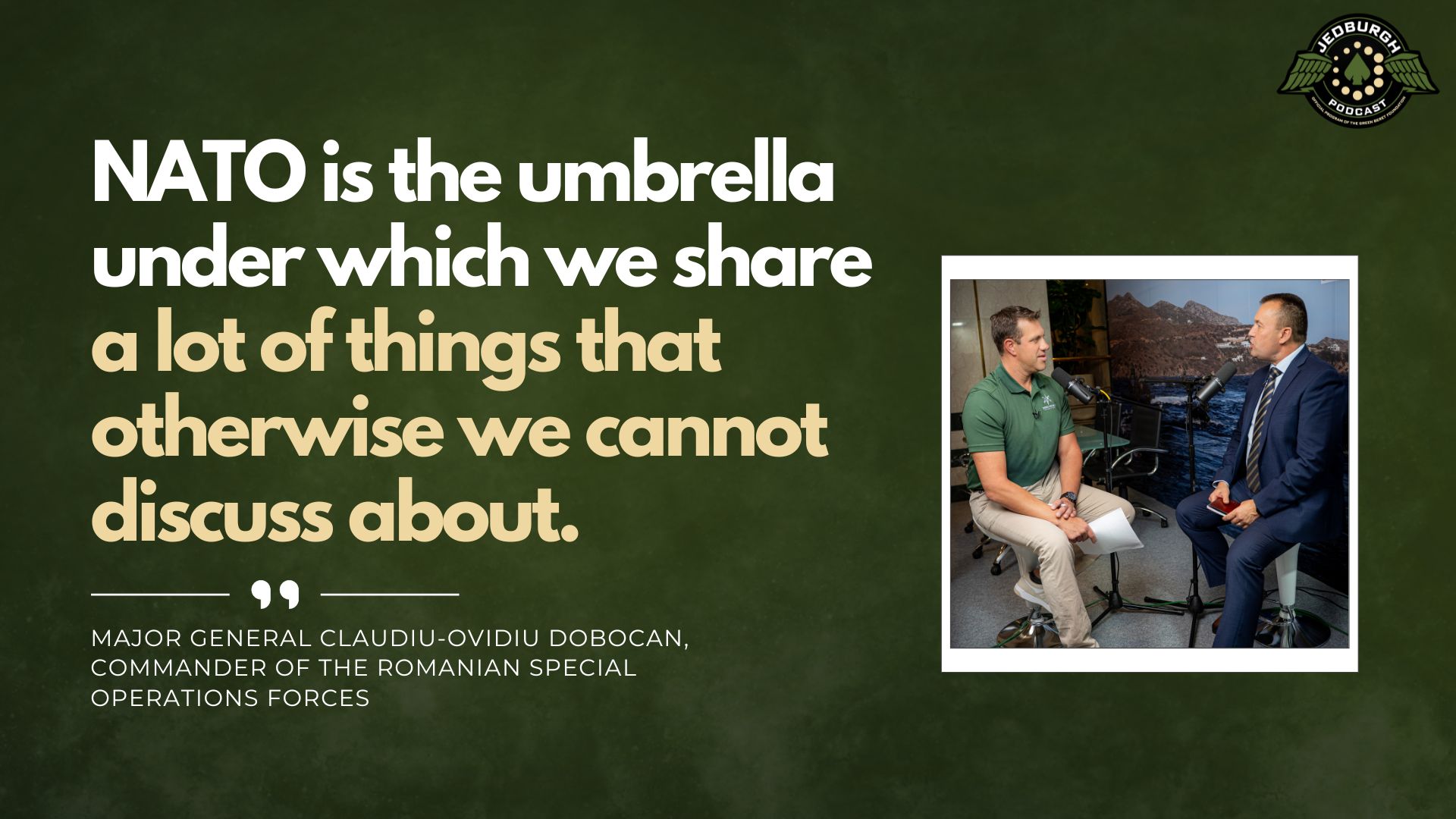
Why is NATO important to me? I’ll say it from a SOF perspective. I served in the NATO SOF Coordination Center from 2008 to 2011. At that time, we had no common standards and no reference book, but NATO helped us all talk to one another. At that time, there were 27 nations. Now, we’re over 30, and we’ve got to a level playing field. We were happy to exchange tactics, techniques, and procedures. You have to realize that SOF doesn’t share, unless they have the authority to do so. NATO is the umbrella under which we share a lot of things that we cannot discuss otherwise.
 You mentioned a commonality. NATO has been able to establish some commonality. Earlier in the conversation, you talked about interoperability and the lens of communication, material, and TTPs. NATO has done a lot of work. We’re going to sit down with the folks from NATO Diana to talk about innovation.
What are some of the areas where NATO has done some great work in creating that interoperability and bringing us from interoperability in terms of, “Can you and I talk to each other and share information,” to, “Here’s my platform? Go ahead and use it, and give it back to me when we’re done.” Those are two different levels of interoperability.
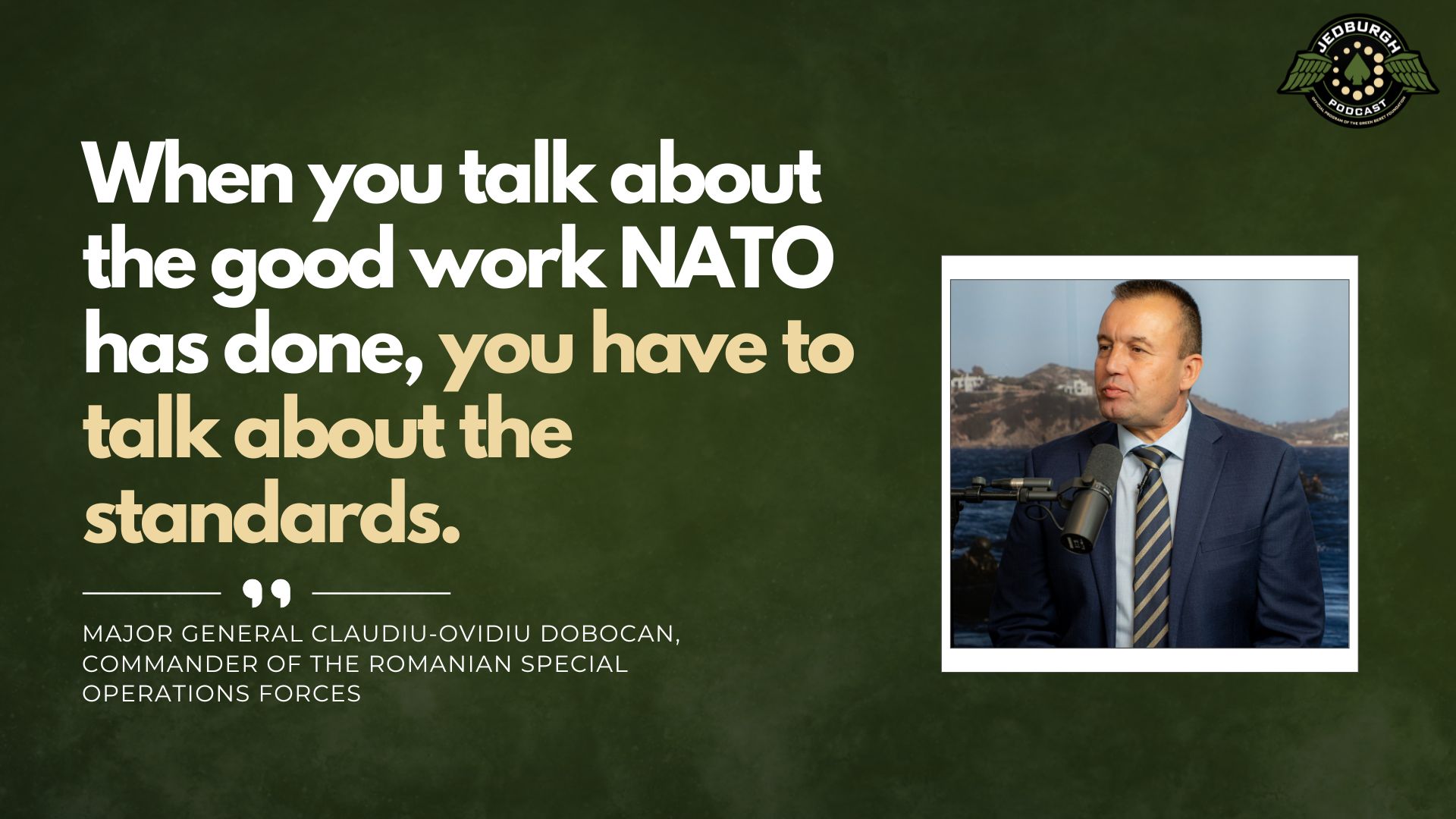
Correct. When you talk about the good work NATO has done, you have to talk about the standards. Meaning, there is a volume. It’s called Allied Command Operations Standards for Special Operations. It has eleven chapters, if I’m not wrong. Seven of them talk about the standards applicable to all the joint functions. Meaning, command and control. What is the minimum you have to have for command and control? For intelligence, what is the minimum you do? You have to be able to exchange.
The first bible of the SOF community was written by the NSCC under Admiral McRaven’s leadership. In reality, to be able to have a reference book, what is it that you have to have and do to be able to be interoperable? Later on in 2011, early 2012, the checklist was published, which is Volume 11 of the same Allied Command Operations for SOF standards.
In reality, the foundational documents were done by the NATO SOF Coordination Center, NSCC. Without them, the successes in operations in Afghanistan and Iraq could not have happened. Since NSSC standardized the things, the industry was brought along to start building some of the systems that will enhance the standards. NATO changed the standards again by elevating some of them, the qualitative ones, including new requirements, like directed energy or something like that. That’s the first part of the question. The second part was?
I think you got it all. I have one more question for you. Then, we have to get you to your next event. Certainly, we’ve spent a lot of time throughout this entire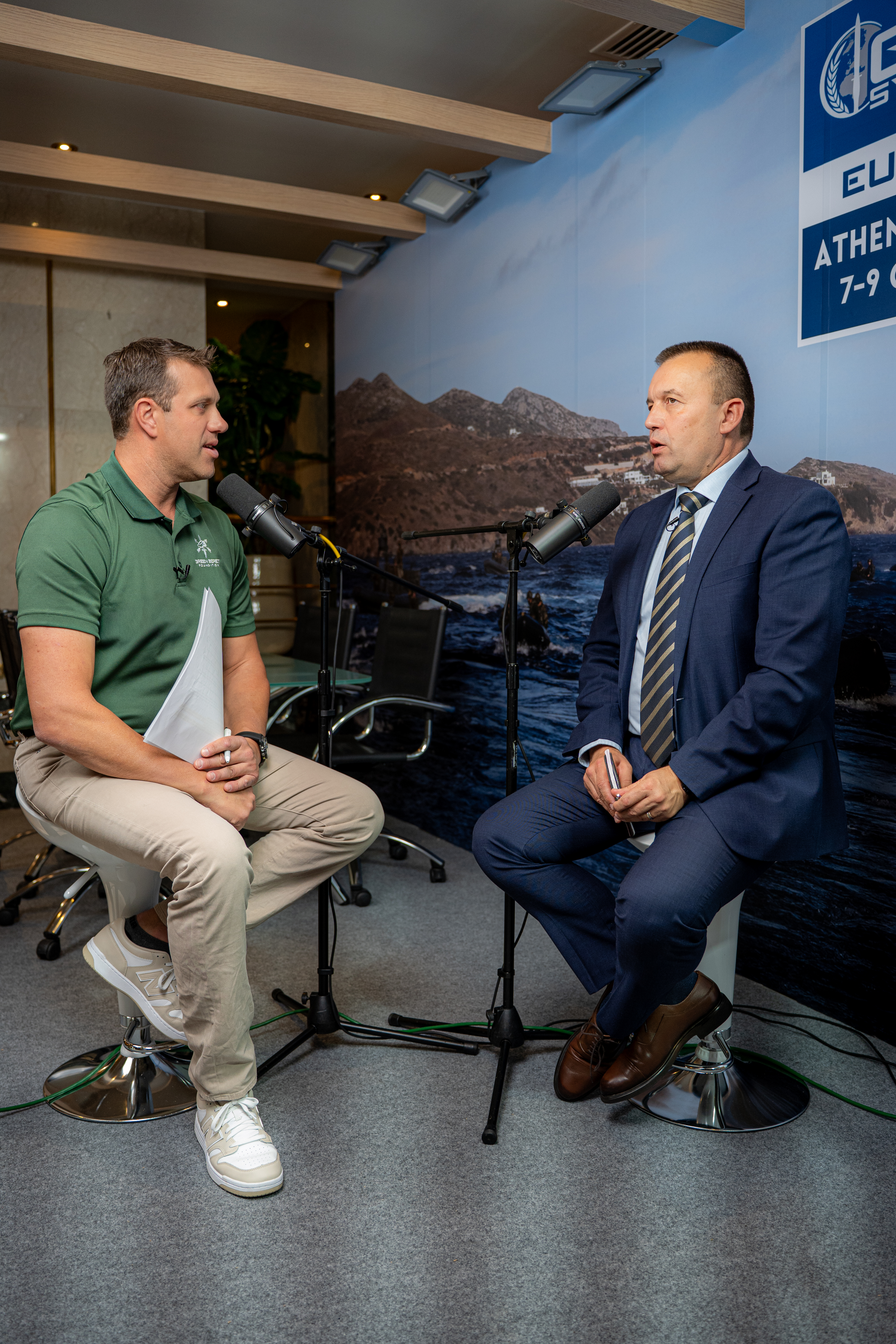 conference talking about the situation in Ukraine. You border Ukraine. It’s front and center to you. It’s front and center to the troops that serve under your command.
Culture is a big conversation that we’re having in the US Military. Where are we today? Where have we come from? Where do we want to be tomorrow? You’re seeing all levels of leadership within the US Military. You’re putting that in the forefront. Here’s a two-part question. When you look at your formation, what do you see in terms of the Romanian culture within the Special Operations units? What’s your vision and your guidance to your teams as you face a very real threat in your region that has the possibility at any moment to go from status quo to creating a broader global conflict?
I’ll go back to 2013 when Romanians SOF had a study in which the students of a planning course said that Crimea would be taken over, attacked, or subverted by the Russian interest because Russia cannot afford to lose the warm-water port of Sevastopol, the capacity to fix or refurbish submarines, and so on and so forth.
When you hear in 2014 that nobody had predicted the occupation of Crimea, I disagree with that because I heard similar topics being discussed in Lithuania and Poland. Everybody’s in agreement, like, “We notified the right people that this will happen,” because the analysis was one thing, and the intelligence was a different thing.
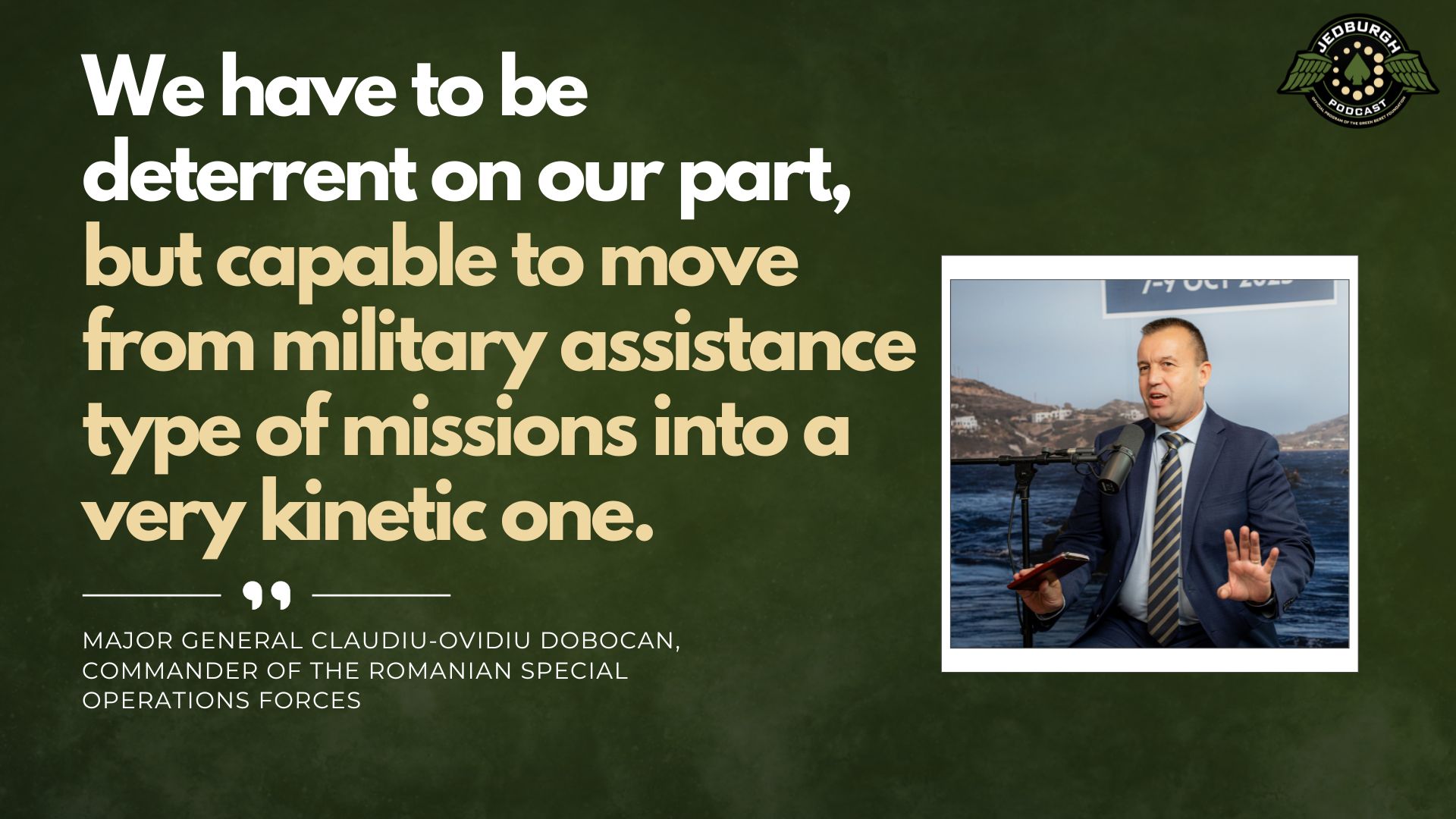
Romania, Poland, Lithuania, and the Baltic countries were all privy to how Russia has fought for 300 to 400 years. We are always fearful of repeating the aftermath of the Second World War. We are conscious that we have to be deterrent on our part, but capable of moving from a Military system type of mission into a very kinetic one. I cannot share with you details of the endowment, but we are looking at the full spectrum of ammunition equipment to be able to operate kinetically at the maximum level.
 What’s your guidance? What’s your vision for your unit? What do you want them to look like in five years?
If I’m being honest, with how the formation is doing, I’m very proud of them. I would not want them to change, but to add special tactics capability. I also want them to be able to embrace the new technologies that appear, and maybe have better connectivity with the industry to be able to leverage what the industry is offering on our terms, not on the industrial terms.
In the whole of NATO, we are subverting the requirements process, which is very good. It’s like, “These are my needs.” You publish a tender, and then some people or companies compete to fix that. I don’t like when we move to the discussion where, let’s say, a company comes, and they’re like, “This is the technology. Buy from me because it’s the best.” The Military instruments have to dictate the requirements.
We are hoping the financial incentives or the cooperation will create trust in the industry. You should talk to the SOF because they will give you the best feedback. Sometimes, you will lose some money because you invest in a project and nobody buys it, but SOF will be the first one to tell you, “Please don’t do that because you’re wasting time and money.”
They’ll give you honest feedback. If it can be broken, find a SOF guy. They’ll break it. I appreciate you taking a few minutes to talk to us. Getting a firsthand look at what’s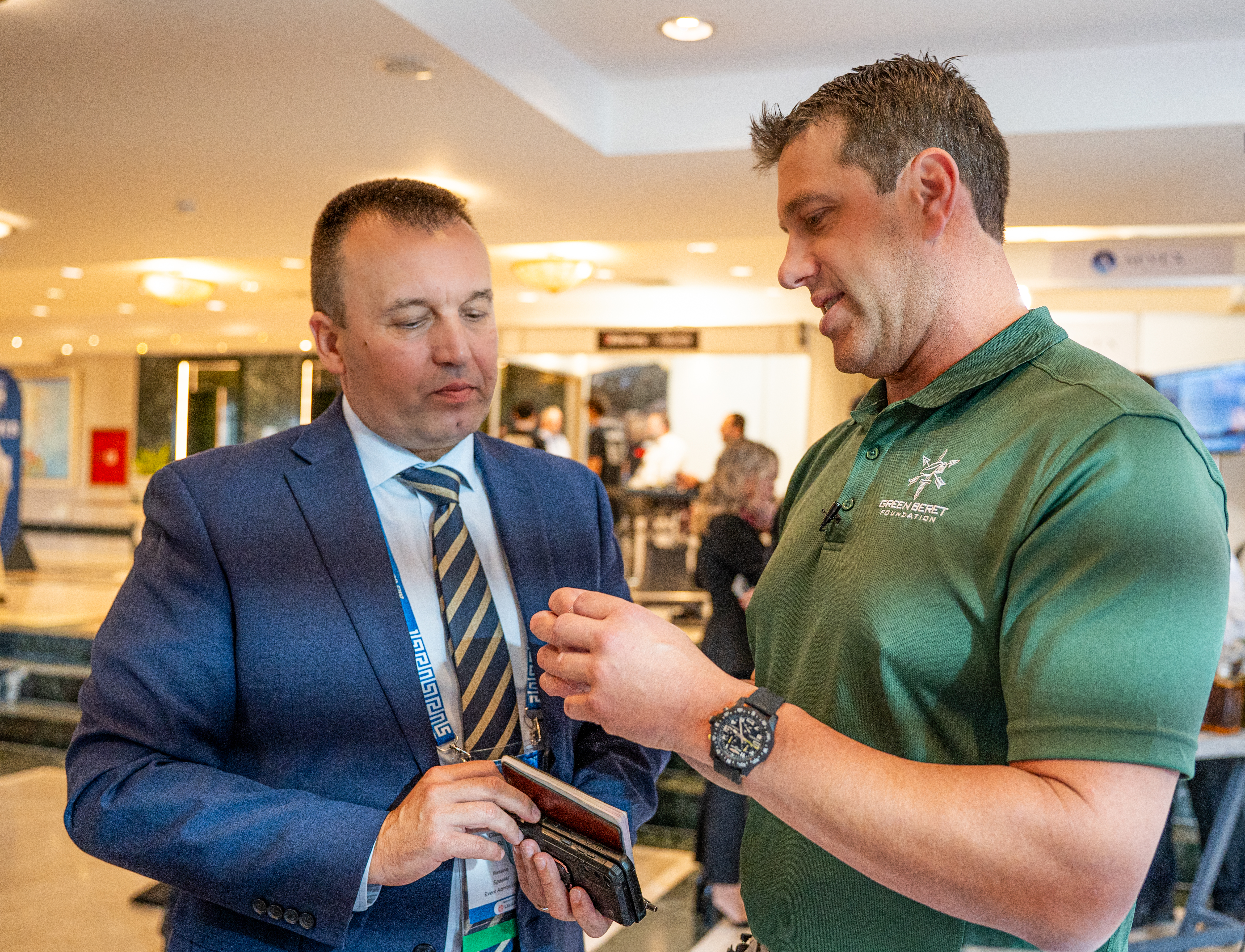 going on in these various conflict regions of the world is important to the stories that we’re telling. Romania has been a strategic ally of the United States.
I personally have never been to Romania or served with them. Hopefully, one day, I’ll get to go, but I have a lot of friends from the 10th Group who have been. Everybody I’ve ever met speaks very highly of the organization that you run and the partnership that they have with you. As I came here, every single one of our American leaders came to me and asked me if I was going to be sitting down with you. That’s a testament to your leadership, the friendship, and the partnership that you’ve built with our nation’s leaders. I thank you so much.
Thank you very much for the opportunity. I look forward to inviting you to Romania. Hopefully, you get to see Bucharest, but not only Bucharest. You should come to the countryside because we’re a very diverse country. I am looking forward to having you there.
Thank you so much.
Thank you.
Green Beret Foundation
P.O. Box 25138
New York, NY 10087-5138
Note: Please use USPS mail or priority mail. Do not use FedEx.
Green Beret Foundation
10205 US Hwy 15-501, Unit 26-8
Southern Pines, NC 28387-4301
Call: at: (844) 287-7133