Modern warfare is no longer defined by who has the biggest force, but by who can adapt the fastest. The battlefield is changing in real time through artificial intelligence, autonomous systems, cyber capabilities, and the speed of information. But even in the most advanced operating environments, victory still comes down to disciplined leaders, trusted teams, and soldiers prepared to make decisions under pressure when everything is on the line.
The responsibility for America’s rapid response to any crisis belongs to the Army’s XVIII Airborne Corps.
From their headquarters at Fort Bragg, NC, Fran Racioppi sat down with Lieutenant General Greg Anderson, Commanding General of the XVIII Airborne Corps, to discuss how he is preparing America’s Contingency Corps for combat in an increasingly dangerous world.
Leading more than 80,000 soldiers across the 3rd Infantry Division, 10th Mountain Division, 82nd Airborne Division, and 101st Airborne Division, and other subordinate commands, LTG Anderson explains how the Corps balances readiness, speed, and innovation while maintaining the fundamentals that have always defined military success.
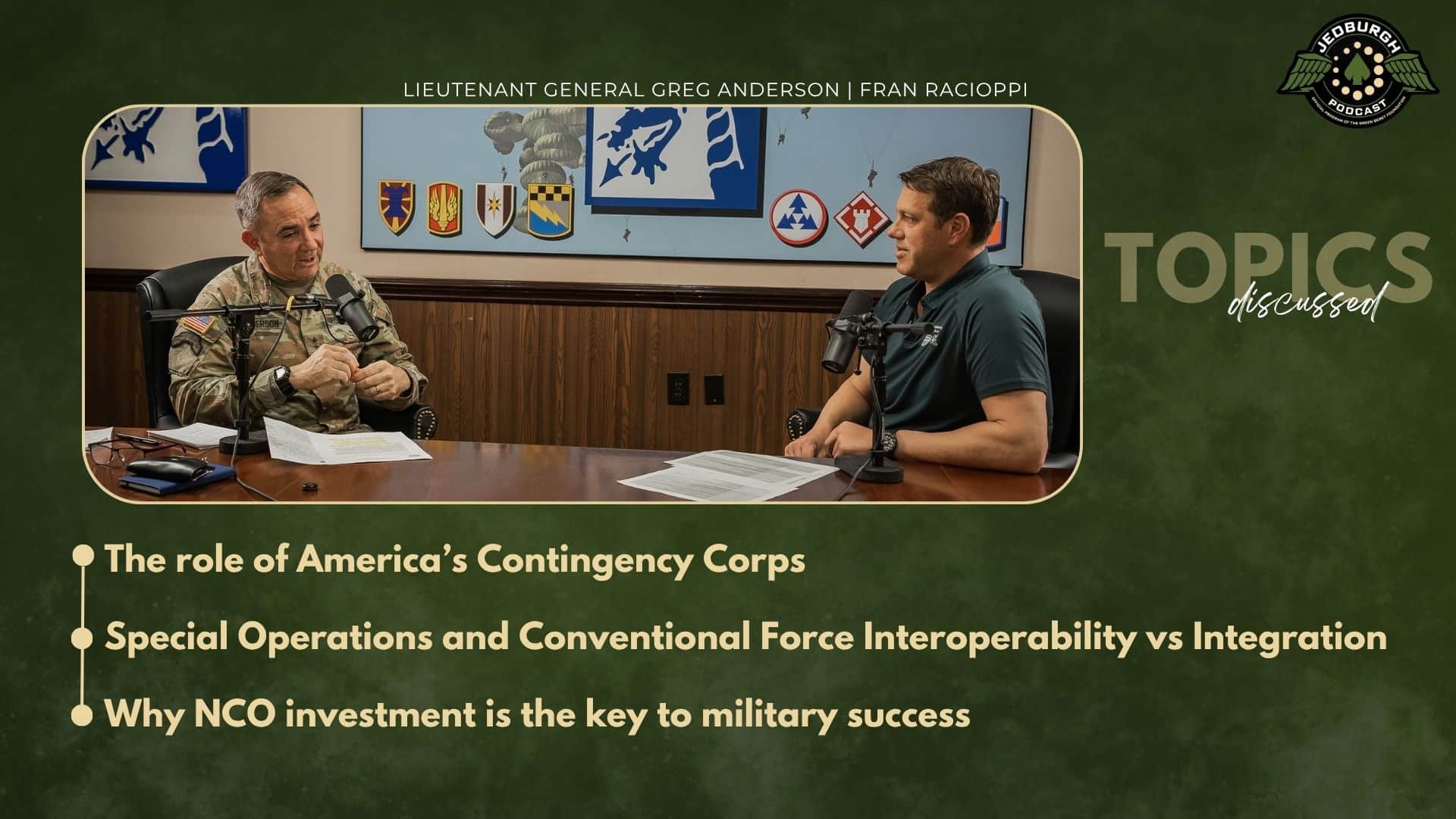
Our conversation explores the role of Noncommissioned Officer, the importance of mastering the basics, and why leadership development remains America’s greatest asymmetric advantage. We also discuss the integration of conventional and special operations forces, the concept of compound warfare, and the difference between interoperability and true integration on the battlefield.
LTG Anderson breaks down the Corps’ push toward innovation through initiatives like the Joint Innovation Outpost and experimental exercises that incorporate artificial intelligence, machine learning, and data-driven decision-making into operational planning. But even as technology changes warfare, he makes one thing clear; there must always be a human in the loop.
The Jedburgh Podcast is brought to you by OneBrief; enabling military leaders to make innovative, informed and deliberate decisions faster than ever before. Superhuman command wins wars.
Follow the Jedburgh Podcast and the Green Beret Foundation on social media. Listen on your favorite podcast platform, read on our website, and watch the full video version on YouTube as we show why America must continue to lead from the front, no matter the challenge.
—
—
General Anderson, welcome to the Jedburgh Podcast.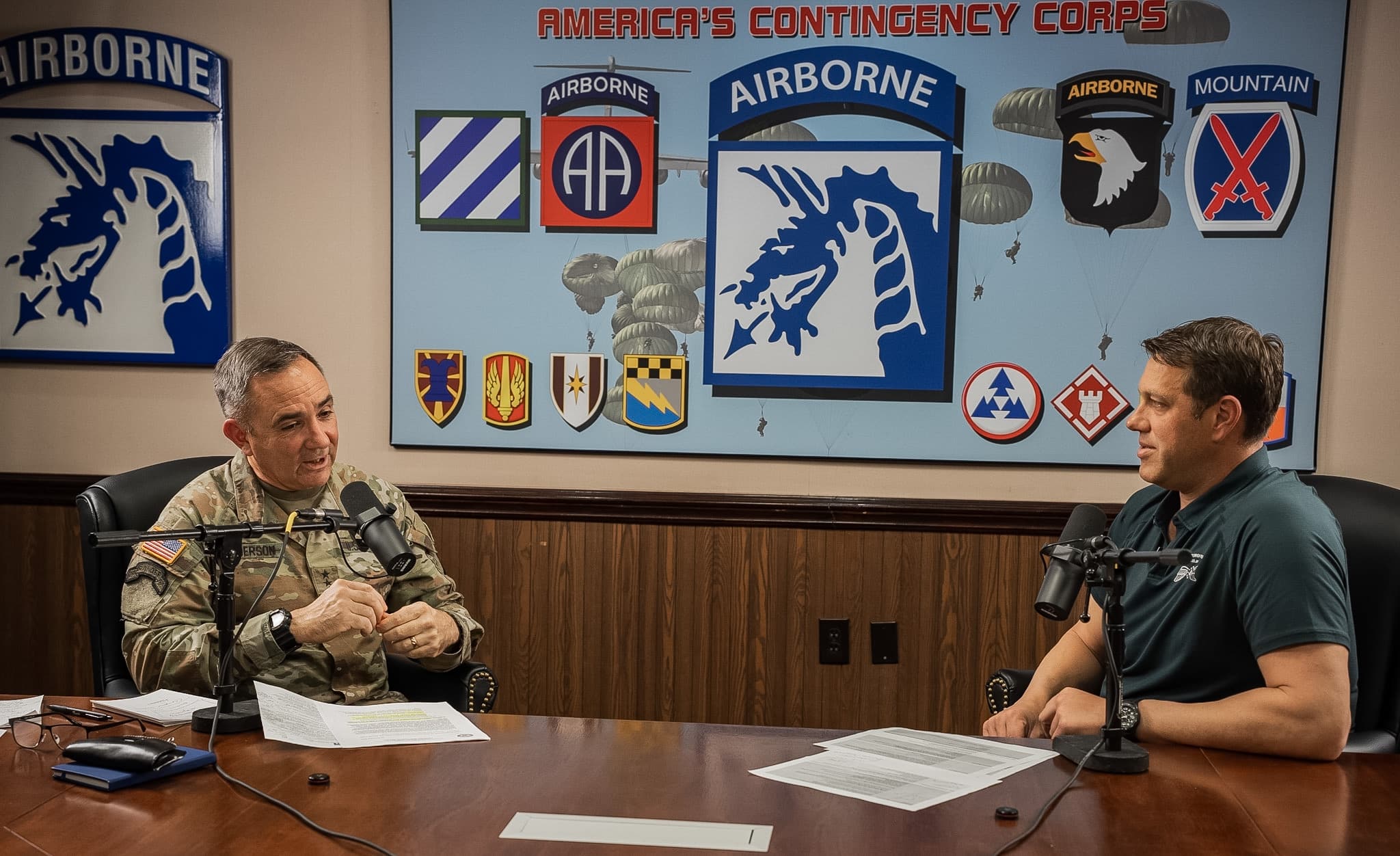
Thanks, Fran. It’s good to be here. Thank you for coming to Fort Bragg.
It’s the home of everything.
It’s the center of the universe.
It is the center of the universe, the home of everything. We’ve got what we’re here to talk about, America’s contingency force is based here. In addition to my home at USASOC and Special Operations Command, we got to give them the shout out. Before we get going, definitely a special thanks and a shout out to General Ferguson, the USASCO Commander for linking us up.
One of the biggest topics that’s on everyone’s mind now, especially in the SOF Community as we enter into this large-scale combat operation time of our army, of our military is, where does SOF fit in? You’ve had the opportunity throughout your career to serve in the conventional army and serve in SOF at all levels of command. General Ferguson informed me that there was no better person to talk to about how SOF and the conventional forces not only achieve interoperability, but true integration. We came here to the center of everything that talks about it with you.
I’m excited to talk about. It’s something I do think about a lot in the SOF and conventional integration, joint force integration, and multi-domain integration. As we look at large-scale combat operations on the horizon against picking adversaries. Our ability to integrate not just by action, but by design. It’s going to be critical to enable our future success.
I want to start with where you sit now. You’re the commander of the XVIII Airborne Corps. What is the XVIII Airborne Corp? When we say, it’s America’s contingency force, what does that actually mean?
We are the global contingency response for the Department of War. We’re composed of four divisions, the 3rd Infantry Division, 10th Mountain, 82nd, 101st and 7 brigades worth of enablers from fires, intelligence, logistics, and medical. It’s a tremendous 80,000 soldiers in an incredible formation. Additionally, you have a corps headquarters that is trained to fight at the operational and joint level of war. We’re ready to go. The vision as I came in to take command of this incredible formation, what a true blessing and honor.
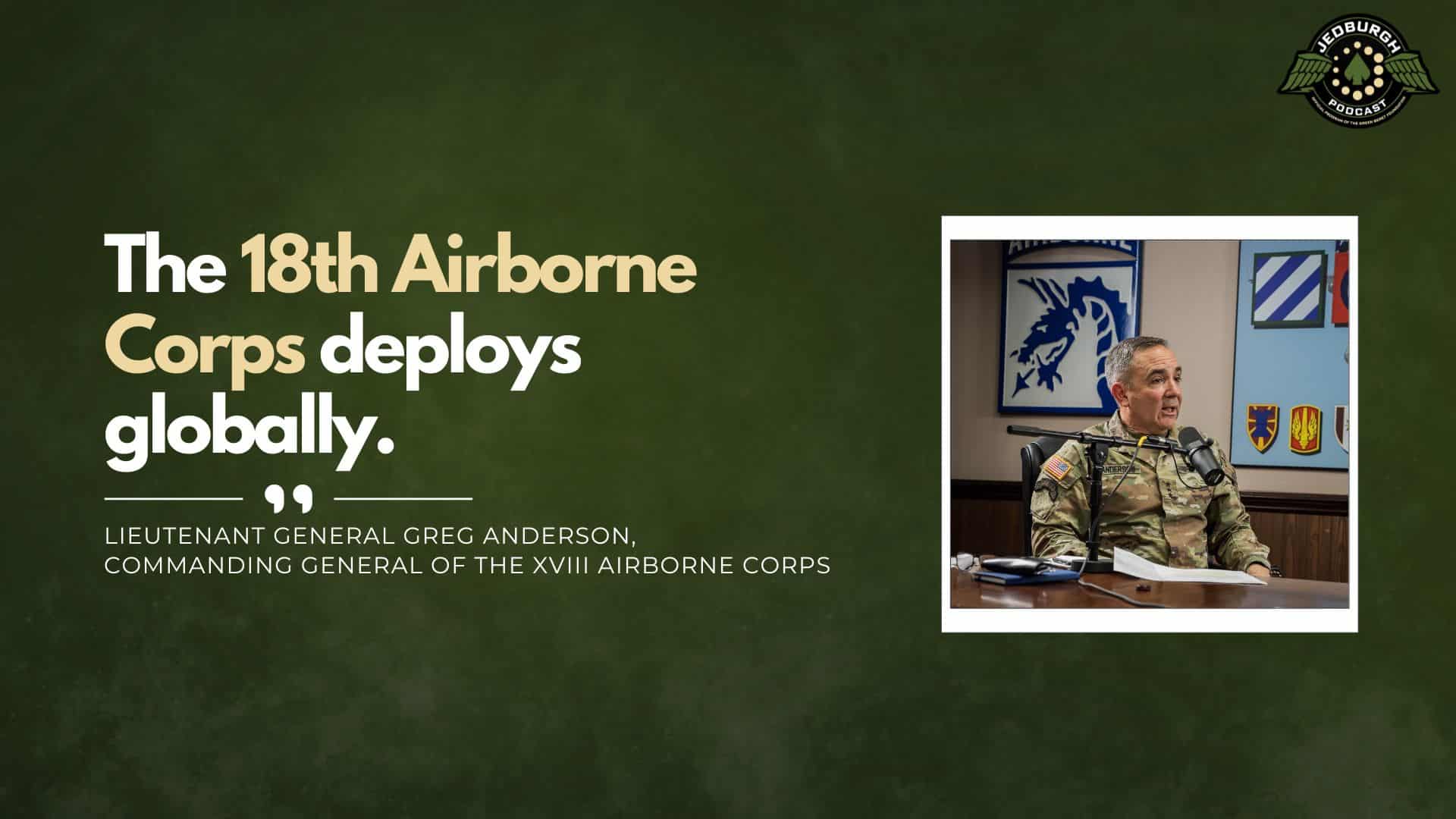
To sum up what we do, it’s the vision statement. Without advanced warning the XVIII Airborne Corps deploys globally, forms a seamless joint and coalition team and deters or defeats the adversary. Tall order. We’ve got to be able to do it on a little to no notice. We’ve got to form teams in an hour sequences. We’ve got to be able to understand the threat and conflict across the depth and breadth of the planet. There’s a lot that’s been asked of us. In fact, we’re contributing significantly to two of the joint forces that’s fighting forward now in Iran, on the Southern border and within South camp. You can play the role we play in providing forces but also being able to fight that force. Our mission is simple to state but demanding to execute: without warning, the XVIII Airborne Corps must deploy globally, build a seamless joint and coalition force, and deter or defeat any adversary. It’s a tall order—and we must be ready to do it with little to no notice.
That’s an interesting dynamic because in so many of our conversations with the special forces units, the Green Berets primarily, we talk about regional affiliation and the importance of how the groups are regionally affiliated. You have to become a master and an expert in that region. What you’re asked to do is be ready to go anywhere in the world to do almost anything. When you look at training and you look across each unit patch.
Each one of these are vastly different units as well. They bring different capabilities from the mechanized infantry of 3rd ID to Airborne of the 82nd Airborne Division, the 101st Air Assault and the White Infantry capabilities of the 10th Mountain. They all require specialized training, different training, and collective training because they have to be able to work together. They got to go anywhere in the world to do anything from large-scale combat operations to counter terrorism. When you look at the training planes and you sit down with those division commanders. You’re saying, “How are you going to get ready?” What are you looking for?
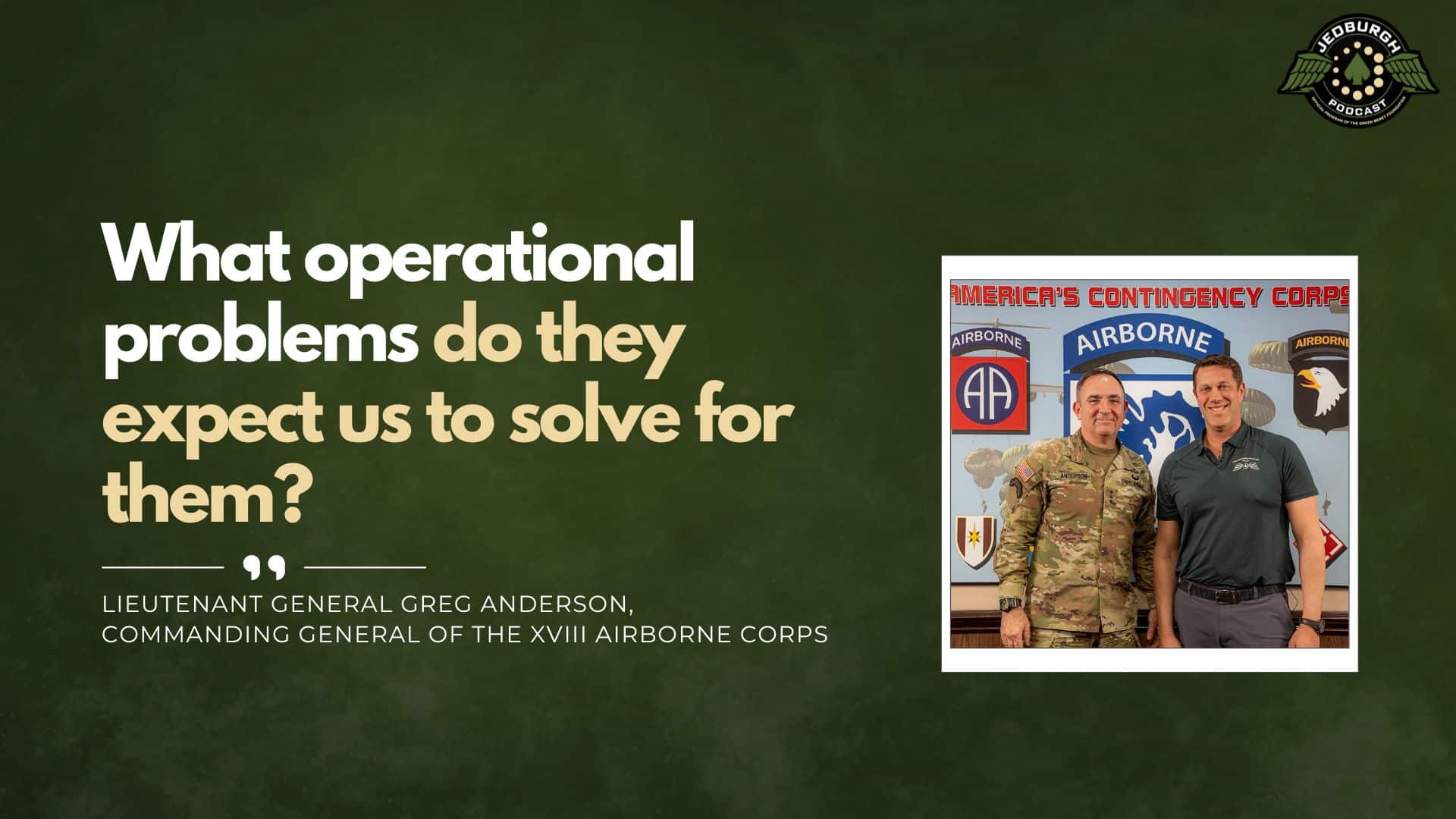
There’s two ways to look at it. Both ways are okay. In fact, in theory, you want to use both ways. Where am I going with this? One is war plants. In terms of the global command, wherever we go in the globe, whatever combatant commander, we are going to support. What are their plans for us? What operational problems do they expect us to solve for them? If we understand that, we can then start building training, development, requirements, and refine planning or even Innovation. You may be asked to do something we’re not used to doing. “You better solve it now, so we can execute the plan we’ve been allocated against.”
That assumes that the plans exist and the plans are in enough detail to allow you to do that. That’s not always the case. What’s the other way to hedge your bets and be prepared for the unexpected? I have come to believe in many years of service that there are three enduring pillars. I talked to my commanders about these all the time. One is, build teams. Every level, build a team that you commit to. That you have trust with. That you can communicate effectively with. That you understand and know their strengths and weaknesses and they know yours.
A team survives adversity and they survive tension, pressure and stress. With lack of a team, you see their formation start to crack and fall apart. Everything is about the team for me. The second pillar, mastery of basic skills. Fundamentals and basics. I’m talking about the company level all the way through individually. Can you do your tasks without conscious thought? Can you do it at night? Can you do it while you’re under the stress of combat in the danger of the mission?
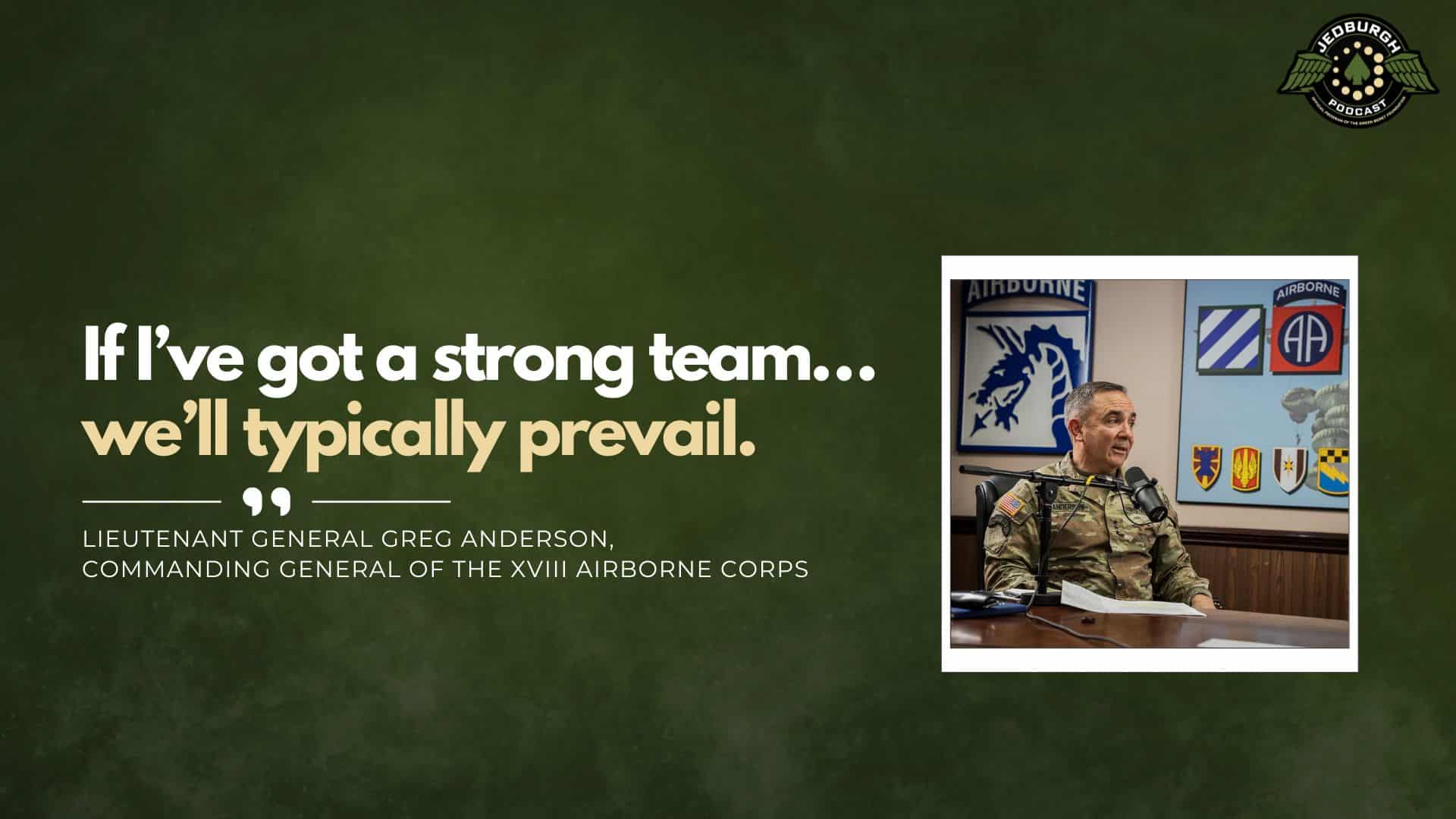
Lastly, have we developed our leaders to be able to critically think through problems? Imagine if we don’t know our mission, we don’t know what we’re going into and we haven’t prepared for it. If I’ve got a strong team that’s got the basics right and leaders that can think through problems. We’ll typically prevail. Those are the overriding factors as we tackle this global mission.
The leader development piece is one of those pillars that separates the US military from everybody else. We’ve done a good job throughout our alliances with foreign militaries in their development of their NCO course. When we look across our force and our army, specifically. You look at leader development. You’re a general and I was an officer. We tend to get unarmed with the officer side of things, but that’s where I’m going to ask you about the NCO side of things.
That’s where the rubber meets the road. That’s where the work is getting done. That’s where the culture of the army falls on. More importantly than the culture. That’s where the readiness of the army comes from, is the NCO Corps. When you look at the corps and all these different capabilities. What are you looking for in those senior NCOs?
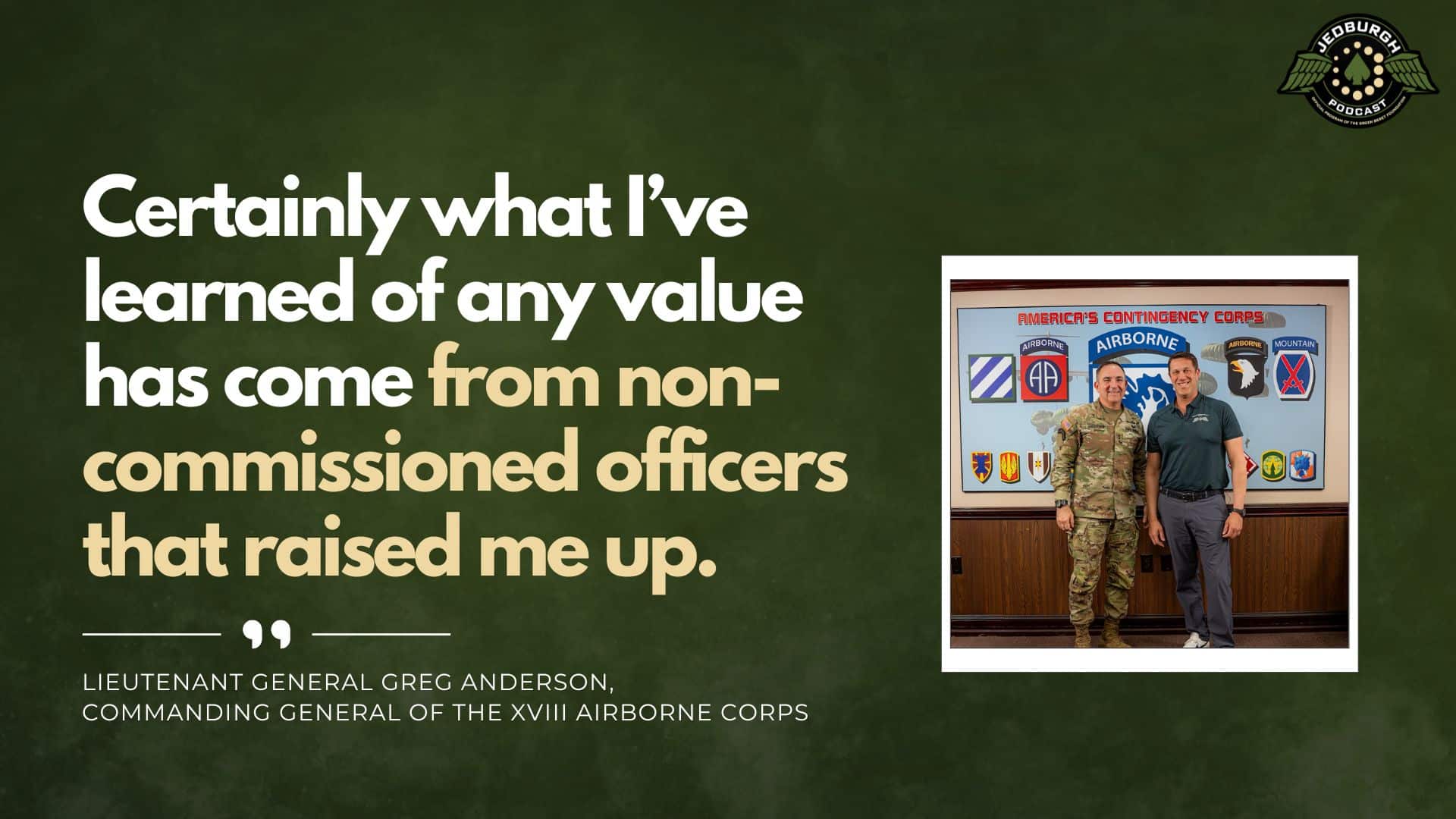
I’ve a few notes out there that I’ve written where I attribute about 99% of what I’ve learned. Certainly, what I’ve learned of any value have come from non-commissioned officers that raised me starting as a junior lieutenant all the way up at every echelon. Their investment in me and watching how they do business in their ruthless pragmatism, their expertise, their zealous adherence to standards and fundamentals, left a profound impact on how I do business.
I certainly wouldn’t be here without those NCOs. Countless and dozens of them. As I look back now, I’ve seen our NCO corps in a different light because NCOs run our army. They run everything. They’re the center of our army’s universe year. We need them everywhere, and we don’t have as many as we want. What does that create? What that creates for us is a constant movement within the NCO Corps. You see them rushing to feel requirements in the train based and the recruiting base. You name it. The SFABs and other demands that are NCOs.
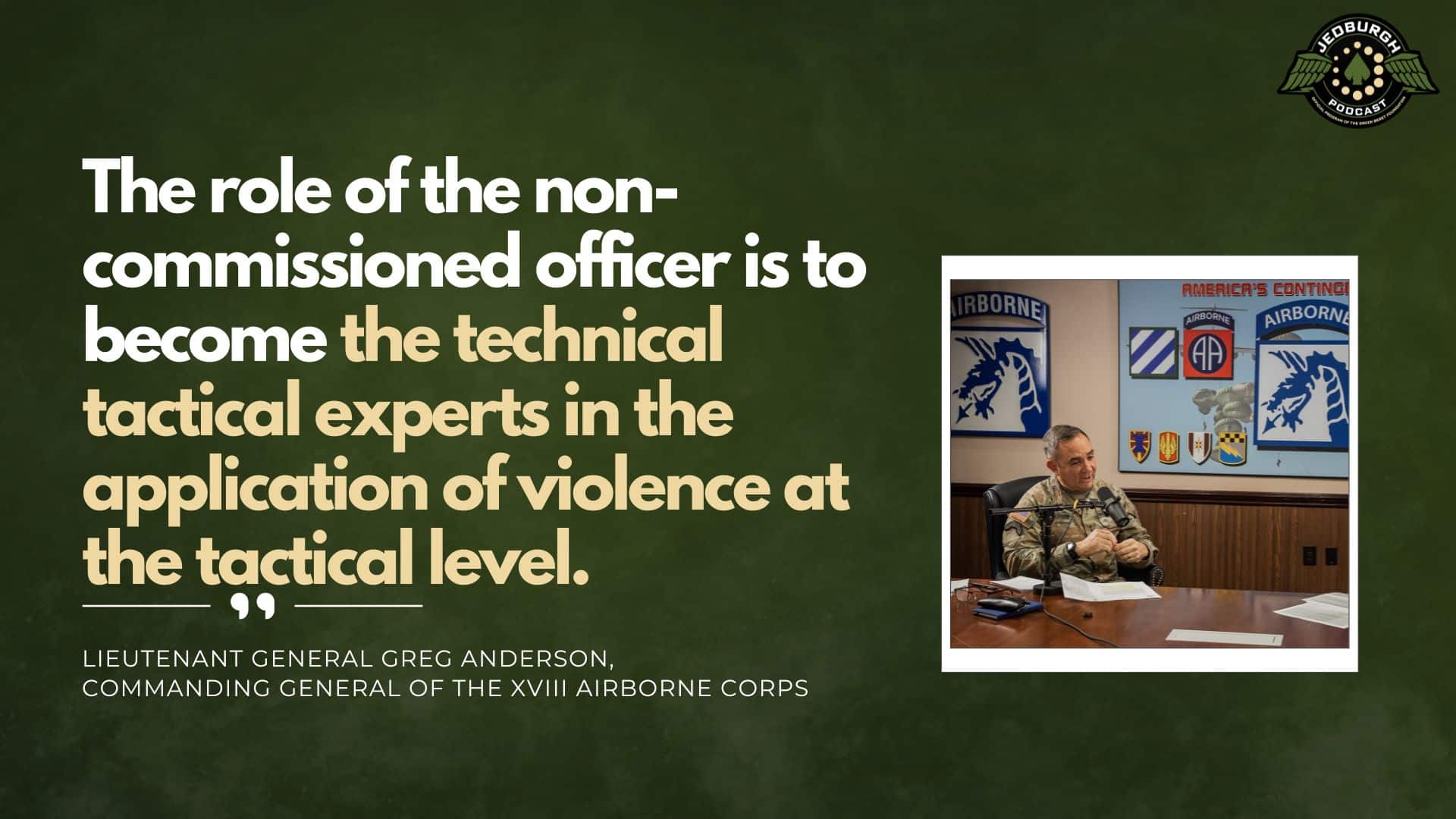
What I have noticed is a degradation in their tactical and technical expertise of what we need them to do. For me, first and foremost, the role of the non-commissioned officer in the army and what I’ve learned from the best is to become the technical tactical experts in the application of violence at the tactical level. No one should be able to do it better than they. When they walk in the room, they’re the experts and there’s no argument.
If you have an NCO Corps that could do that, whatever their role is in their units, whatever their MOS is, we will have operational mastery. To get there, they’ve got to do their own training and operations. You don’t empower somebody that should own it. I’ve never truly believed in that word empowering. The NCO is to quote, a generalization. The sergeant is the army, period. What are we doing to allow the NCO Corps to get to that point where they are the true experts? They are the army. They own training and operations.
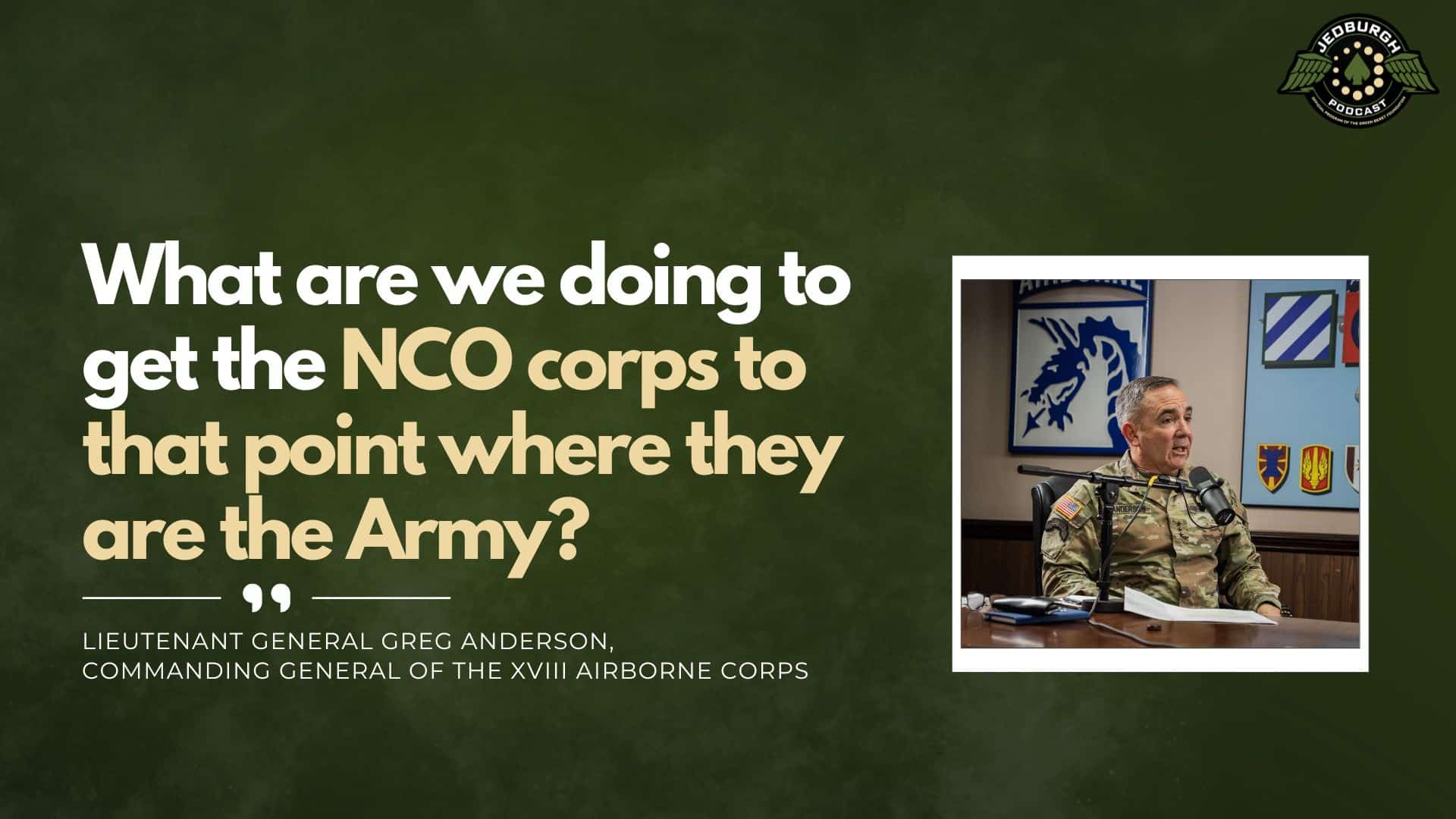
There’s one thing I’ve also learned. If they own training and they own how everything’s run, they’ll own the battlefield but the Ops is not true. Basics, fundamentals, training management, this division of labor between the NCO Corps and the Officer Corps is big time commander officer business to get this correct. If the NCO quarter doesn’t stabilize to build the expertise, then we ought to reframe and relook at things and say, “Are we building the NCO Corps that we need to win the next battle?” That’s how I approach it in XVIII Corps. That’s where we’re moving out on.
We’re coming out of a period of time now where we had twenty plus years in the global war on terror. All of the 9/11 generation, my peers and I who joined post 9/11 came in and that 2001, ’02, ’03, and ’04 era are now senior leaders. We understood what counter and terrorism and counter insurgency meant. When we look at the globe, counter-terrorism operations still exist, but the threats that exist are much different.
We’re seeing in each one of the combatant commands very different types of warfare being fought. Whether it be in the European theater with Ukraine and Russia or in the Middle East with Iran or be on the Southern border and Narcotics missions that are down in South America. I was fortunate to spend a time at SOC Africa and we still have the Africa operations which are much more of an operation of influence and who’s going to maintain SOF power throughout the African region.
We have all these different types of missions and operations going on that we have to address but we can’t do it the way we fought the last war. We have to look forward. There has to be innovation. You’ve been a huge proponent of innovation. On the way here, we drove by the joint innovation outpost. Can you take a second and talk about what is the joint innovation outpost? How are you as the corps commander pushing the importance of innovation down to all the subordinate units?
Thanks for that. We think about innovation and the ability to adapt here all the time. It’s nothing I brought to the corps. The corps had this culture for several years, several generations of leaders that have come in here who have seen that as a contingency core. You’re going to go as you are. There is an urgency. The industrial base is not going to start producing things that you need when you’re on the NR timeline. It’s too late. You either have it or you don’t. You’ll be put into typically phase zero of a conflict where you’re going to have to learn and figure things out and adapt quickly.
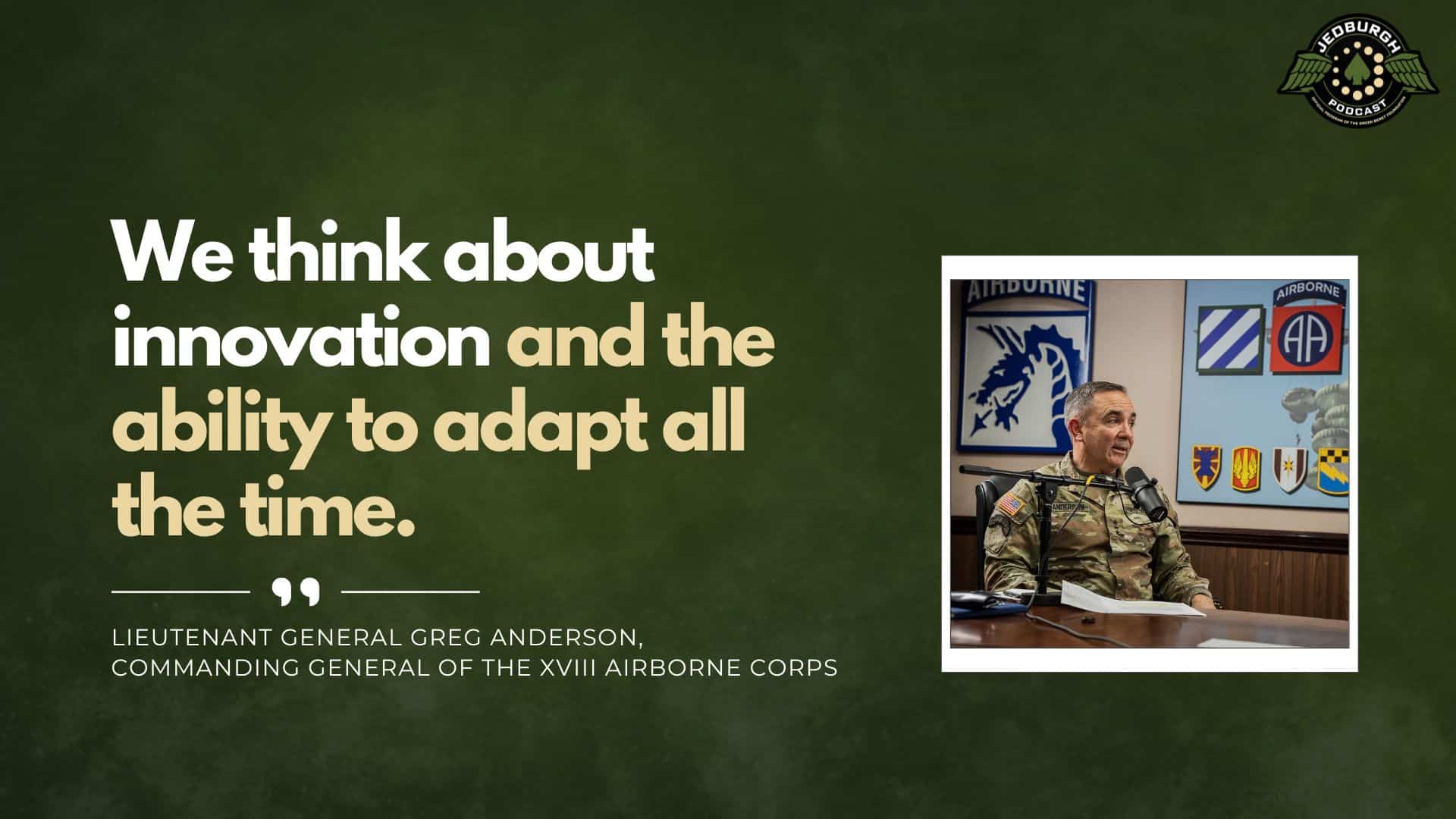
This mindset of solving your own problems, some self-reliance, seeing and understanding the environment, learning about your enemy and then being able to change how you do things. Whether the tools you use, how you organize or how you think is critical. The other piece is combat is the ultimate Darwin episode here. Darwin says it’s not the strongest species that survives. It’s the species that can adapt the fastest and survive. Combat puts that on light speed. The corps understand both of those things. Innovation becomes front and center. Whether we learn about another conflict going on overseas like Ukraine. Pick a conflict or others before that.
We think through in detail the kinds of scenarios we could be put against and how have the tools, processes and elements of warfare changed and how do we need to change. Whether we learn through experimentation, simulations, exercises, planning or events. It all becomes very important. This culture has been here for a while for those reasons. When I showed up, I decided to put the structure of innovation into a campaign plan format. Meaning we would go into planning detail out a longer time horizon, in some cases, three years out and work our way back in.
All the things we wanted to learn, we have to fix this learning objective for mission command. Where there’s a fire issue, we’ve got a fix. We’ve got a link between these two organizations. We’ve got to get better predictive logistics. You name it, on and on. We started moving out in this world to JOP. I have some great teammates that come from our army leadership who saw XVIII Corps on a plan for innovation. They’re not just experimenting and moving through us. They’ve got plans in motion and they’re going to assess these plans or programming experiments against it. They have a culture of innovation down there.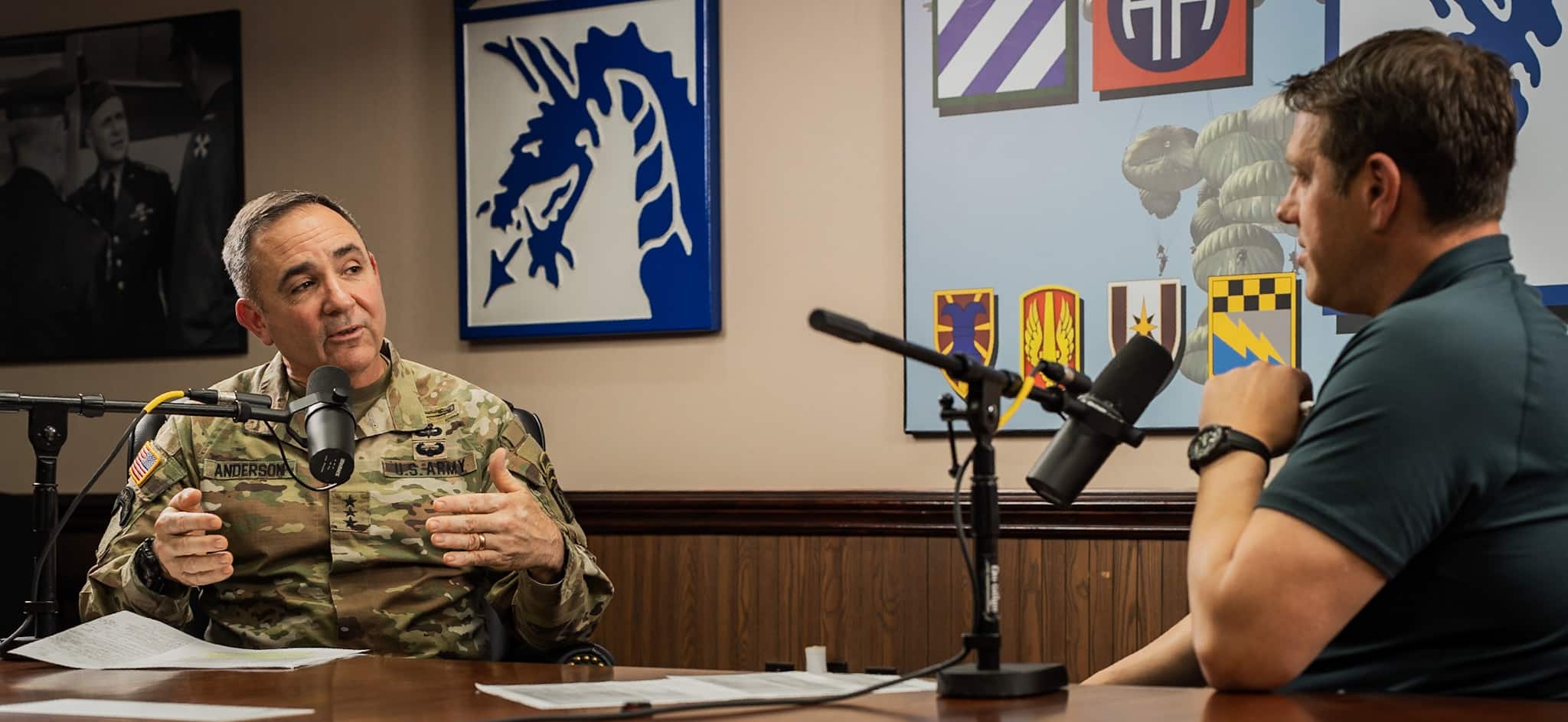
Why don’t we bring a capability of acquisitions, contracting, some resources as well and pair up with that culture of innovation in that plan and see what happens? This JOP was created in December of 2005. It’s not even FOC or fully operationally capable and it is producing all kinds of goodness from counter UAS to UAS employment to how we’re developing our own mission command networks. The things that we’re doing on the logistics side and then we’re still taking advantage of our classic soldier innovation. As that comes up, we move it right into production lines through contract. It’s an incredible resource and it’s just getting started.
Even maybe more broadly, how has the army shortened that acquisition timeline through innovation, though? We’ve realized it and you brought up Ukraine, but Ukraine has been a perfect example of where we don’t have the time anymore to say, “We’re seeing this on the battlefield. We need to innovate on it. In 36 months, we’re going to deploy.
Army leadership has known for a while now that our traditional acquisition processes interface with industry is not going to be the answer for how fast evolution on the battlefield is occurring. You take a look at the Ukraine example and how fast both the Russians and Ukrainians are evolving, UAS and counter UAS, electronic warfare. How they use censors, how they communicate, how they use data to make decisions. You’re seeing both sides evolve with the timeline weeks and months in some cases.
If you’re on a five-year procurement plan and in the rules, which govern our outdated acquisition processes for a lot of things. Maybe not for everything, but for some things. It’s outdated, then they’ve come to realize, “We need to look for things.” When they saw the plan and the culture down here, the army leadership came all in and was like, “Let’s experiment their processes.” Part of innovation is not just tech. It’s a process.
How are you getting feedback on what’s working and what’s not?
In terms of the JOP? In the most recent case, counter UAS. We’re looking at ways to build an operational level framework for counter UAS to division and corps level. We’re doing things within the JOP and the industry against a framework. We’ll build a framework for how we’re going to take down small UAS and how we’re going to integrate sensors and shooters and connect all that stuff. We then invite partners to come in. Some partners will bring in sensors. Some bring in software, frangible 556 rounds at the very point ended defense. It’s all integrated against a framework that we integrated because the operational problem is mine.
It’s not an industry to figure out. I own the operational problem. I own the risk. I’m the one who’s going to drive what we need but I don’t know what industry knows. I don’t know what science is and what is out there. They come and they’ve been coming. They’re helping us integrate and solve that. The benefit is, they know what their customer wants. We’re pretty clear on what we need. There’s not a lot to take the guesswork out of. That’s one way to do it. The other one is our Scarlet Dragon series, which has been going on for about since 2021.
Again, it’s an operational problem to how we use advanced computing data centric decision making through advanced computing large language models and machine learning to allow us to make and distribute fashion to make decisions more informed and faster than our opponents. That was a series of questions, experiments and tests. It’s evolved. Frankly, in 2021, we’ve evolved from basic decision dominance.
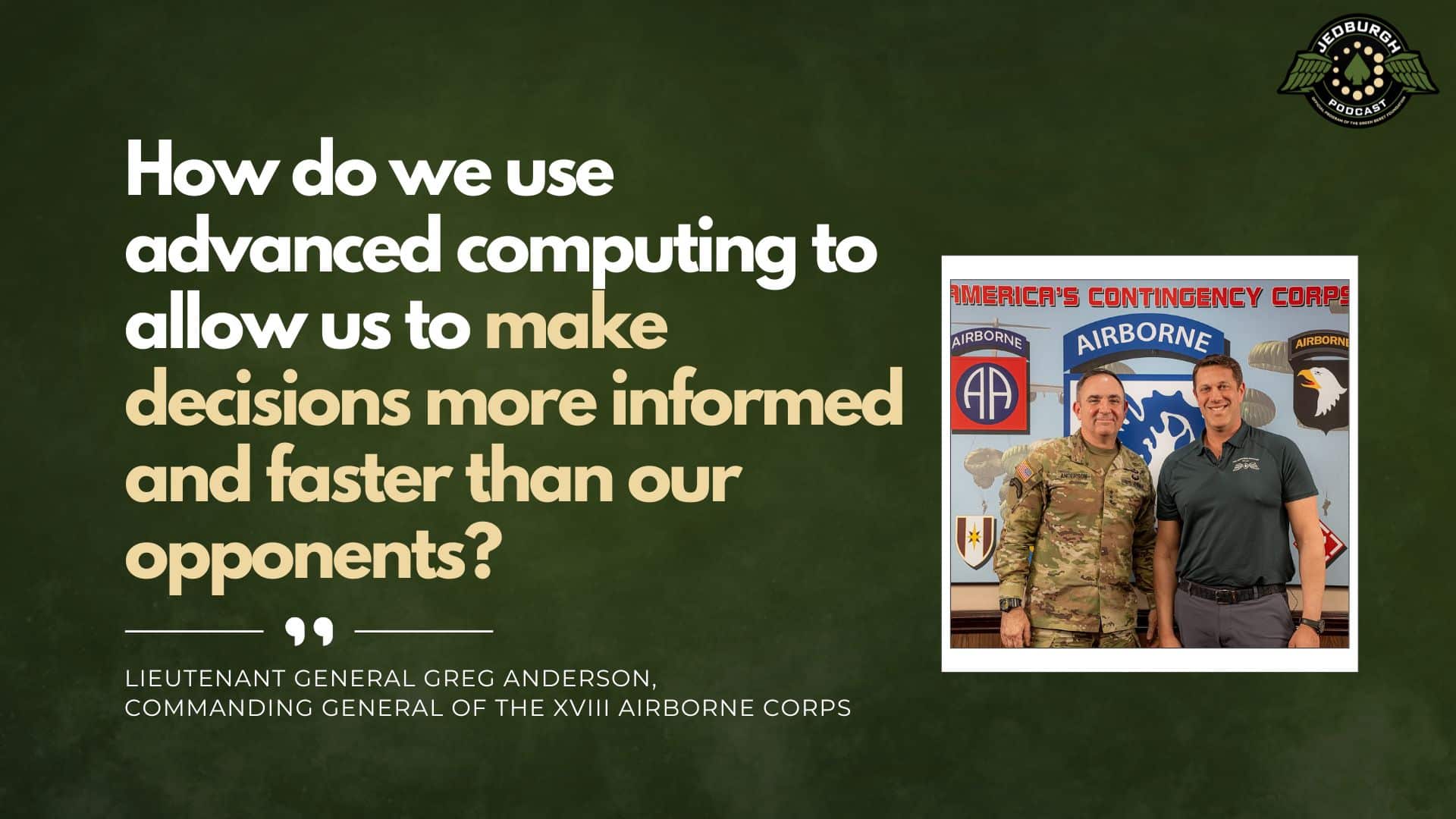
Now, I’m starting to see model development and our algorithms and how we’re using predictive modeling to what I call adaptation dominance. I want to make decisions faster than you. I’m going to evolve and adapt faster than you. I’m using data and machine learning to help me do it. These things that JOP is front center on, as well as the building on the legacy of some of the things that were started here years ago.
When we look at AI integration because we’re hearing a lot about it. We’re seeing it on very best battlefields as well. Do you think there ever becomes a point where there’s not a human in the loop?
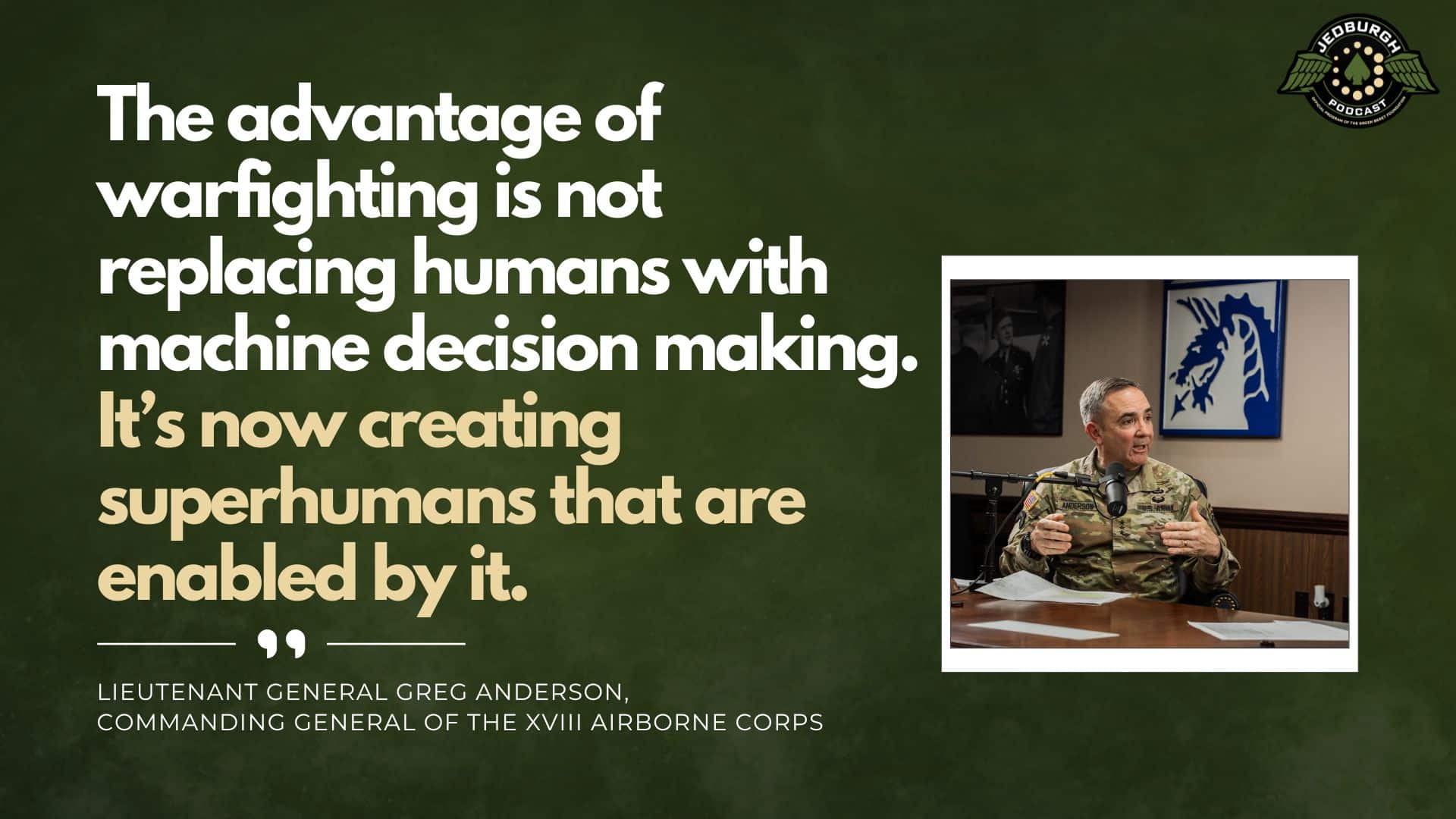
For some very basic sensors, like we send things out to find and detect. They’re probably applications where you don’t need a human loop. Anything that’s linked to a decision and there’s lethality or lives at risk. As far as I can see out into the future, I see humans in the loop. I see the advantage of war fighting is not replacing humans with machine decision-making. It’s now creating super humans that are enabled by our ability to make sense of all the information coming in and then weed out what’s not important. The advantage in warfare isn’t replacing humans with machine decision-making. It’s creating super-enabled humans who can make sense of vast amounts of information and focus on what truly matters.
Focus on what’s important. Now, we’re making smarter decisions faster than you. That is where we’re going as a core and where it’s going to be appropriate. The judgment of humans especially with lives on the line and the risk associated with that. From everything I can see and what we’ve tested, still it’s best with the human and the loop.
You started going down the path of the discussion about interoperability and integration. I tell you we’re going to bring it up here, but I mentioned the global war on terror and for the better part of the last twenty plus years, those of us who were fortunate to serve in Special Operations. We got used to fancying ourselves, is how I’ll put it, at the tip of the spear. It felt like everything revolved around them for better or worse.
I don’t think that I won’t opine either way if that was truth or not. You certainly had a lot of people who I served with who felt that way. Now, we’re entering into and we are in a period of time where our conventional forces are front and center on the battlefield. They have to be. They need to be the capabilities that are brought by the units under your command. The capabilities that we saw even in the early days. I was in 4th ID and my time as a mechanized infantry platoon was the best time I ever had.
I’ve got two sons in 4th ID now. They’re loving it.
I loved it. I had the opportunity to deploy as a young lieutenant, as a platoon leader in 2005 to Iraq. There was no other place I’d rather be than in that. We used it for everything it was built for back then. I have a very strong allegiance and affiliation to the conventional army and understand at a very concrete level what the conventional army can bring to combat and bring to war fighting. Also, how important they are to our campaign plans. When you look at integration versus interoperability. How do you define those?
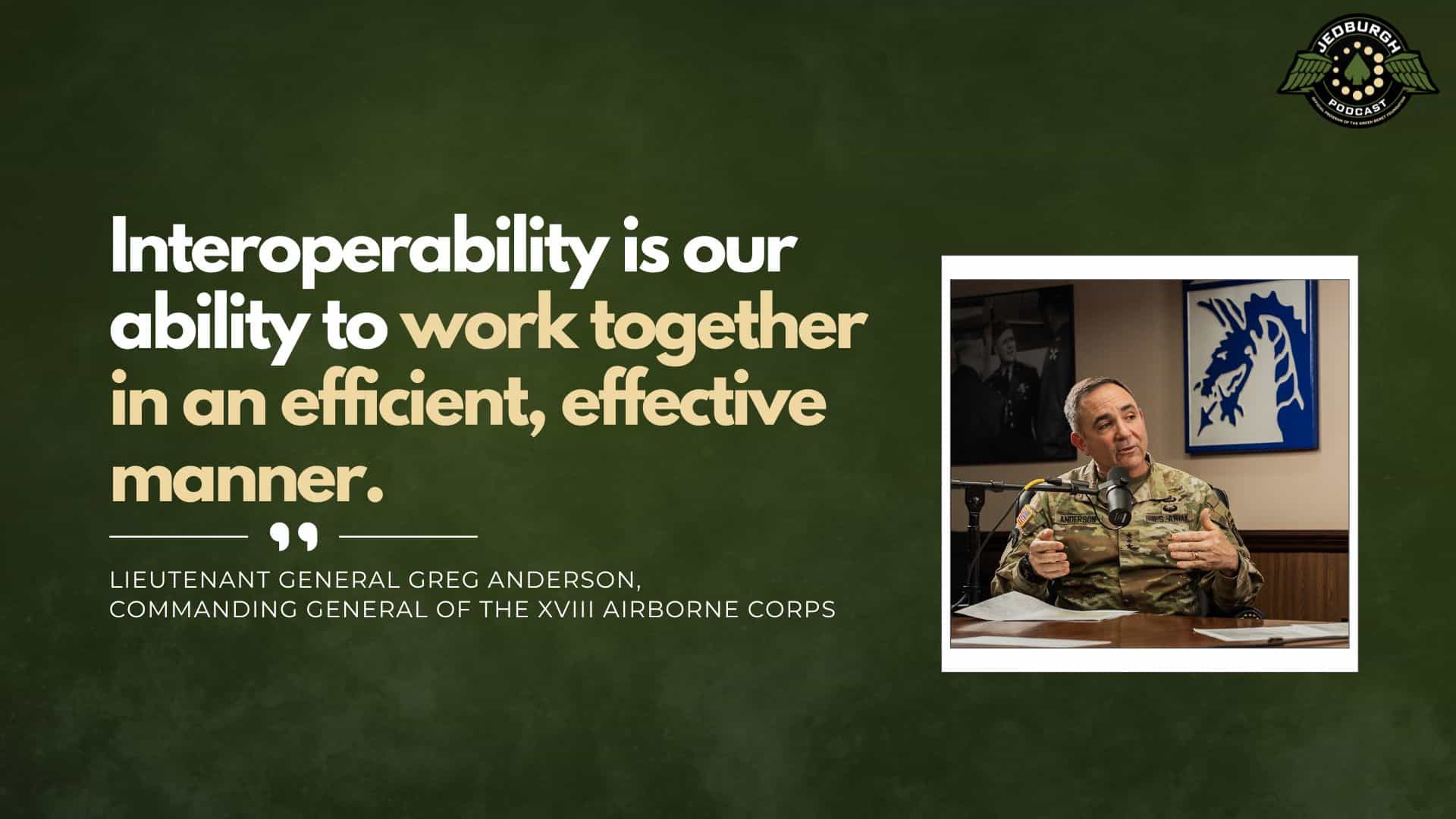
They’re very different and a lot of people use them interchangeably, which is something I’m hoping we can get some more discussion on across the field here. Interoperability obviously is our ability to work together and to interoperate in a very inefficient and effective manner. Think about our lessons in the GWOT, Iraq and Afghanistan, where we needed to be able to talk to each other. We need to be able to deconflict fires together or ISR or we need to be able to share information.
If you’re moving across one boundary to another, be able to plug in with the unit that owns that terrain. SOF units have done this brilliantly for many years, but there’s an interoperability
That’s how I generally look at it. For me, warfare is first and foremost, an intellectual exercise. You have to understand every single mission. Every single operation is going to be different. There’s no one size fits. All there’s no, “This is the way we did it.” There’s no perfect task organization or blending of capabilities that’s going to address every problem that you solve. That’s why in our mission or our planning process. You don’t organize tasks until after you’ve got your concept of operations down and you know exactly what you’re trying to do.
At that point, you are now ready to integrate what you’ve designed. To me, that’s the big difference. Planning should drive integration. When you do that, you’ll integrate. You’ll use these components that you’re integrating. Whether it’s space, cyber, SOF, conventional, some coalition, or other joint capability from the maritime or air components. You’ll be able to bring all that stuff together and it will be sustained over the course of your operations. Getting that space is very important. For us to think that we were interoperable in the GWOT, which means we’re interoperable now.
It doesn’t mean you can integrate now because again, it’s, what are you trying to do? In this case, SOF and conventional. What does SOF bring to the fight? What does the conventional bring to the fight? How do we want to use these capabilities together to achieve the end? The end may always be changing. It takes constant adjustment. The end in phase zero, SOF may be the lead. In phase three, decisive operations, if it’s in LSCO, the conventional side may be the lead. Let the planning and the design bring that out. Coming in with solutions to problems that you haven’t thought through will put us at a disadvantage.
How do you get the tactical level leader? I’m saying the most basic tactical, the platoon leader, the platoon sergeant, the team leader, and the team sergeant to understand, as you said, they’re the primary versus the supporting and when that has to shift. These plans that you’re talking about when we truly talk about integration. These are strategic level concepts and planned at the operational level. At the end of the day, those tactical level leaders have to be the ones who talk and work together.
We’ve got a lot of work to do before you even get to that level. I’ve talked to some audiences and my stuff about this all the time. When the military is employed by our national leadership, they will have strategic objectives outlined for us. Achieve this objective and here’s your mission. What are we typically do then? We go into tactical planning. We form all these tactical sequences and we’re trying to take an abstract strategic objective. We’re trying to then apply a bunch of physical, mechanical actions to it, but there’s a lot of thought between those two.
What’s the system of the adversary and the environment you’re up against? What resources do you need? How are you going to team on this going? Who’s coming with certain capabilities or not? All of this has to be flushed out and operational design to then know and an approach so that you then know how you’re going to conduct your tactical actions. Often, we’ll go through straight to tactical actions and we’ll have to go back and do the operational level work. Anyways, we’ve seen it throughout our history. Not just a history of armies everywhere. The military is everywhere. It’s replete with it.
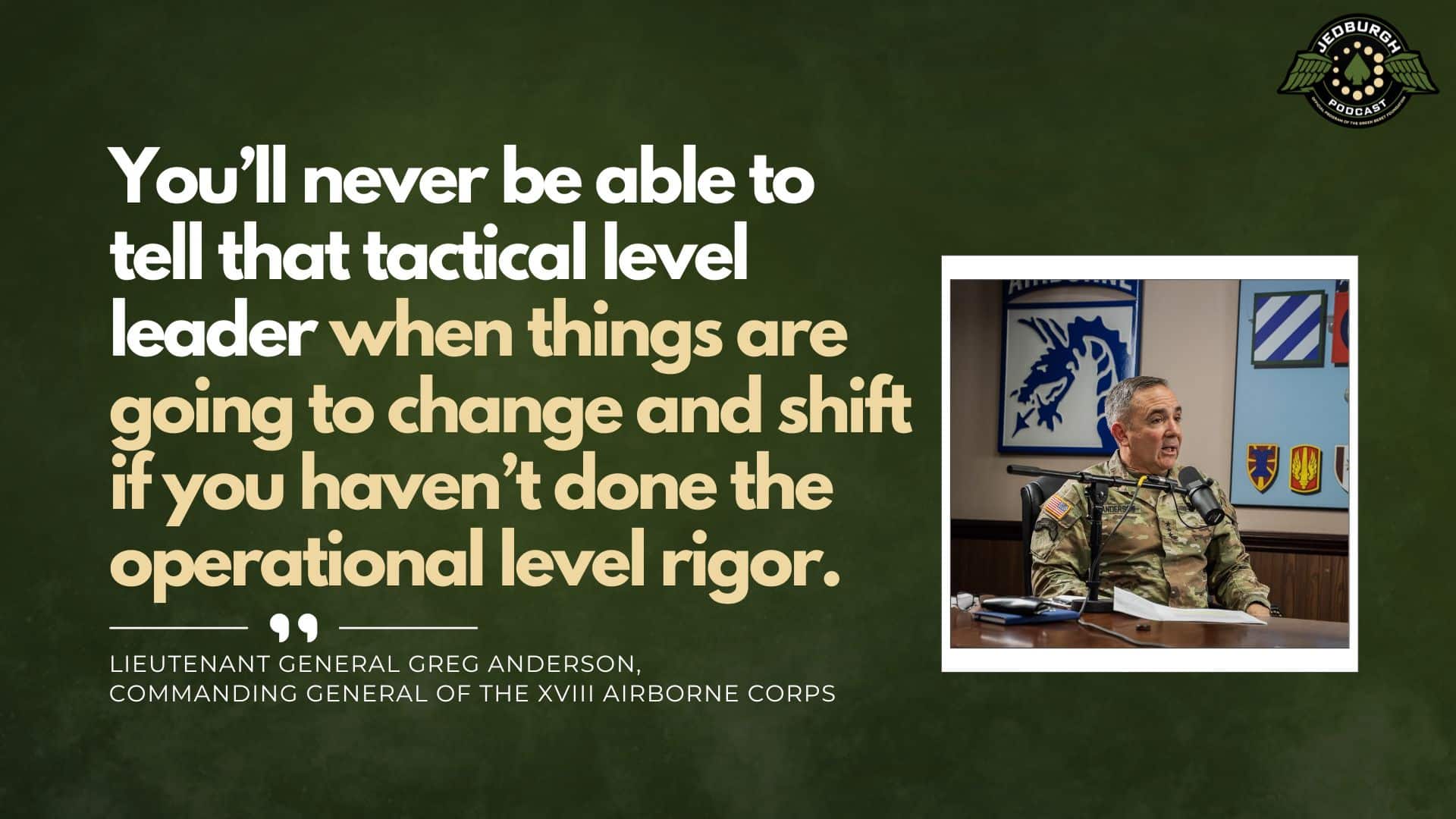
You’ll never be able to tell that tactical level leader when things are going to change and shift if you haven’t done the OP and get on my level. You’ve done the operational level rigor in the planning, but that requires to then set the field for them to operate. They understand the mission and how it links back to the strategic objectives. They understand the environment that they’re operating in.
They understand the resource constraints they are under, and the enemy system that they’re going to be up against, then you start unleashing their initiative. They can operate within that. If we look at the SOF teams or platoons, at the tactical level, that’s the space they want to be in and that’s where we want them but it’s not easy. It’s a lot of hard work that goes into building those things.
The term compound warfare has been front and center for you over the last couple of years and taking this conversation to step further because this truly becomes how those units work together. There’s a lot of historical vignettes but you can even think back to the Jedburgh’s. At the start of the D-Day invasion and the night before D-Day. You have these three main teams. They start parachuting in. What was their mission? It was to disrupt the enemy, prevent the enemy, and the Germans from massing and getting forces to the beaches in Normandy so they couldn’t reinforce the beaches to allow for the conventional force to come in and it ceased to rain. How do you define compound warfare in today’s fight?
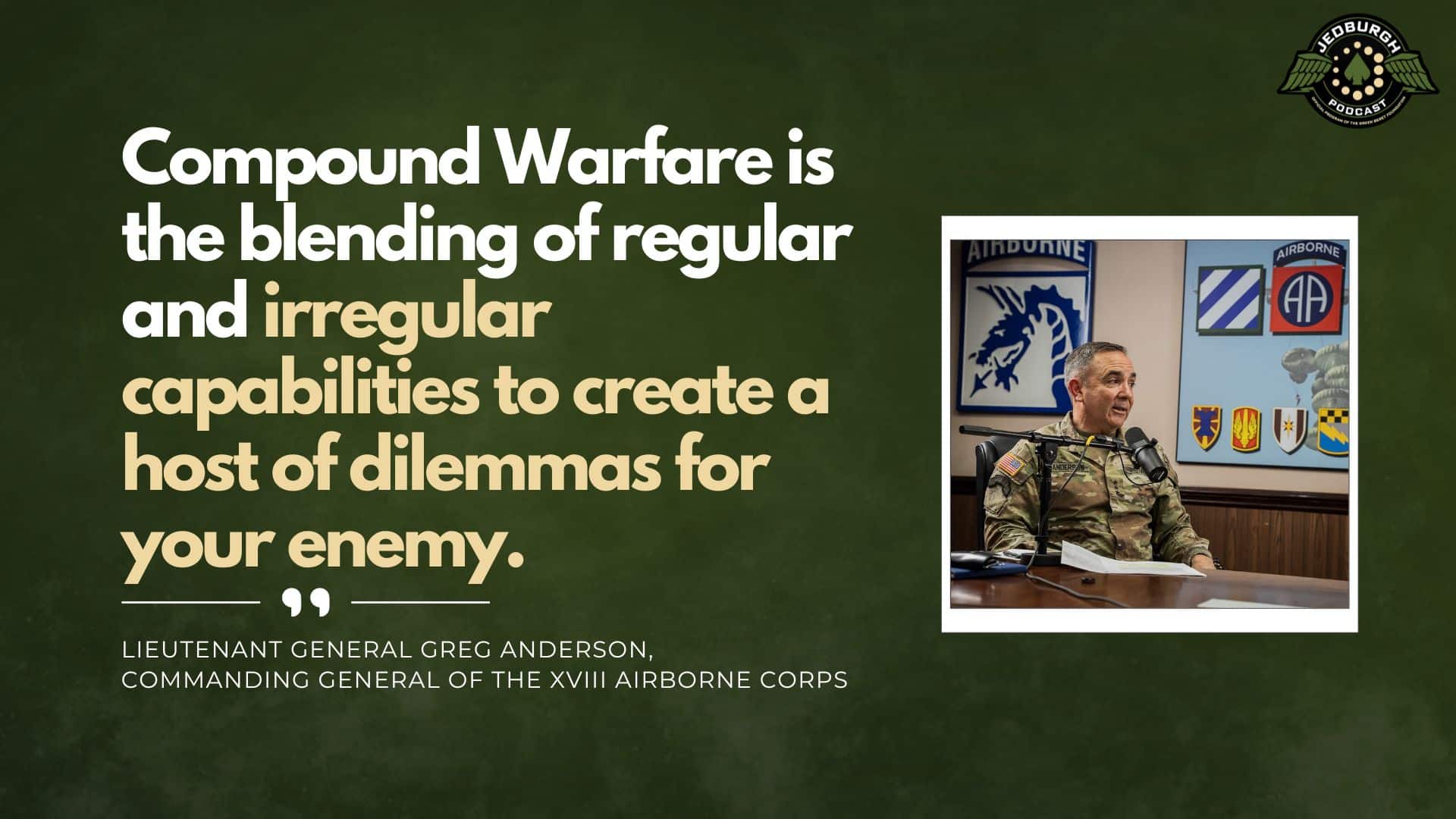
I don’t think I define it any differently in the classic case of compound warfare. That’s the blending of regular and irregular capabilities to create a host of dilemmas for your enemy. The core of it is, if you have an irregular threat, what do the army typically do when there’s an irregular threat? They spread out wide area security. If you spread out your formations and capabilities out while you’re also facing a conventional threat. They can mask you and cause you problems. You said all kinds of history shows how presenting those multiple dilemmas of, “Do I spread out or do I mask?” That is a very difficult problem in Jedburgh right now. They created that for the Germans across Europe while the conventional armies were putting all kinds of pressure on them.
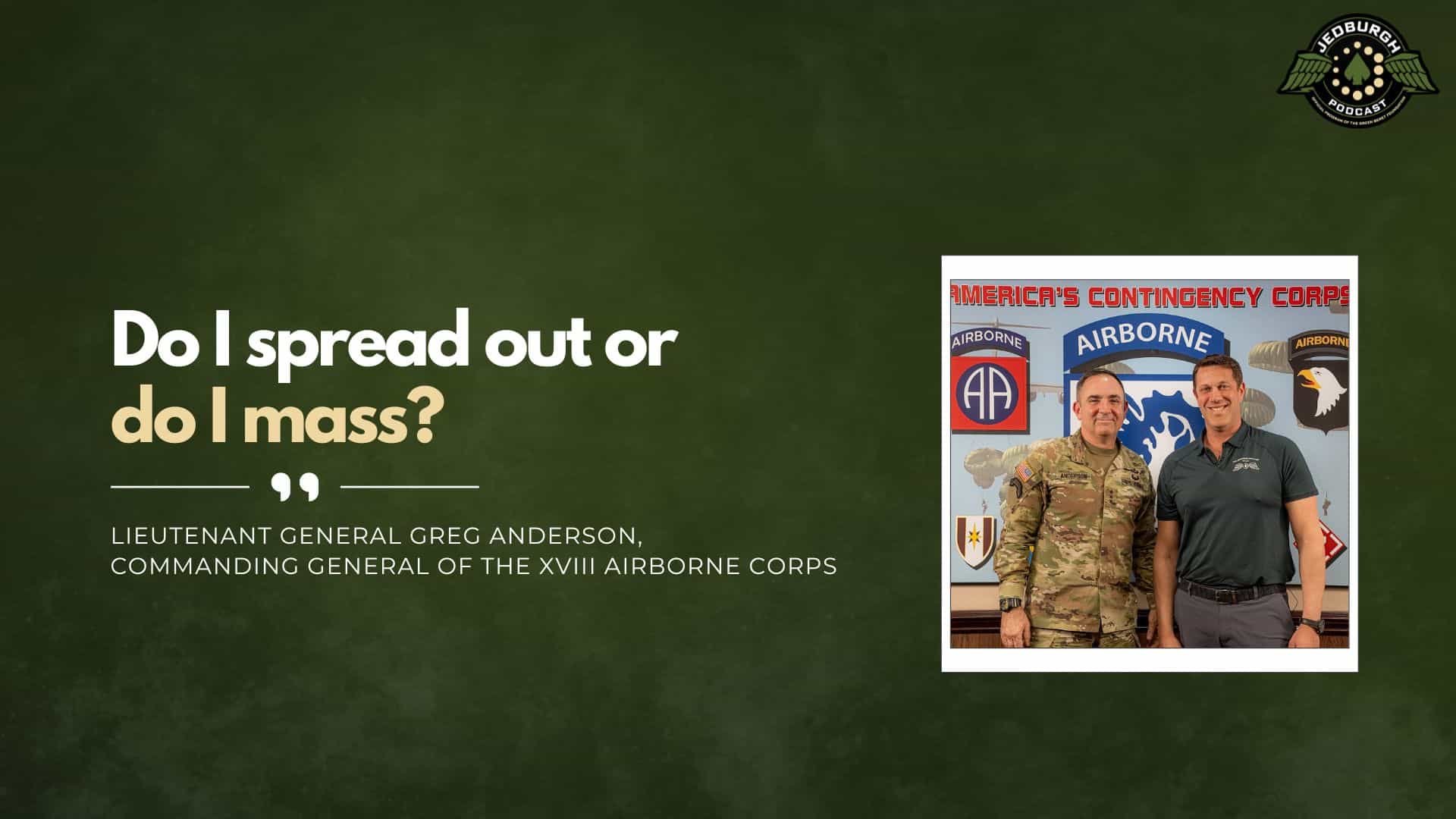
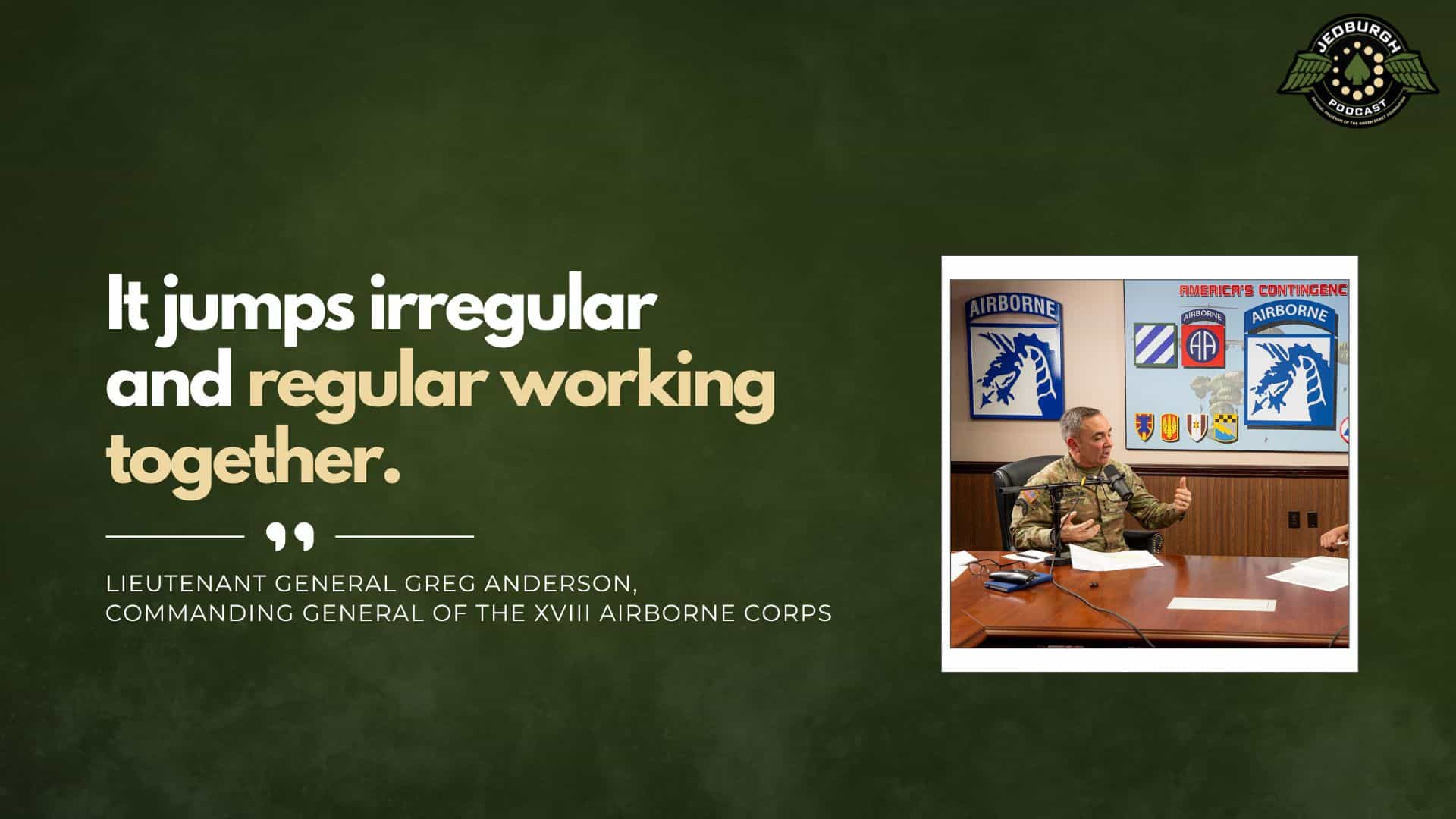
To me, when we look at the potential of SOF and conventional forces on the US side in a large-scale combat operation, it jumps irregularly and regularly working together but this goes back to the design thing. Can we design our operational approach over time? It takes time to build networks and gain access. All the things that a SOF needs to be able to harness unconventional regular forces. It’s got to come on the back of hard planning and integration of some thought, war gaming, all of that piece. I would tell you how we think about it.
It’s not going to happen overnight, but we can foresee and forecast areas of the world that we may be called to go fight. This may be 5 years from now or 15 or 20 years from now. If we can imagine ourselves being asked to fight a certain enemy or pick an enemy, you should look through to see what are the regular and irregular components of a campaign against that enemy. It will help your plan. It will think about what it would do for the SOF side. “I have to build these networks to do this. I have to put these capabilities in to do this. I have to develop leaders, language, skill sets and familiarity to do these things.”
I need to then be able to work and understand the conventional plan. The things I do, whether it’s in the rare area protecting something or in the enemy area going after critical targets of value. All that’s central to a design that contributes to the decisive act of the conventional force, the defeat of the main body whatever the problem is. Again, it won’t happen if you put forces together and go to a CTC exercise.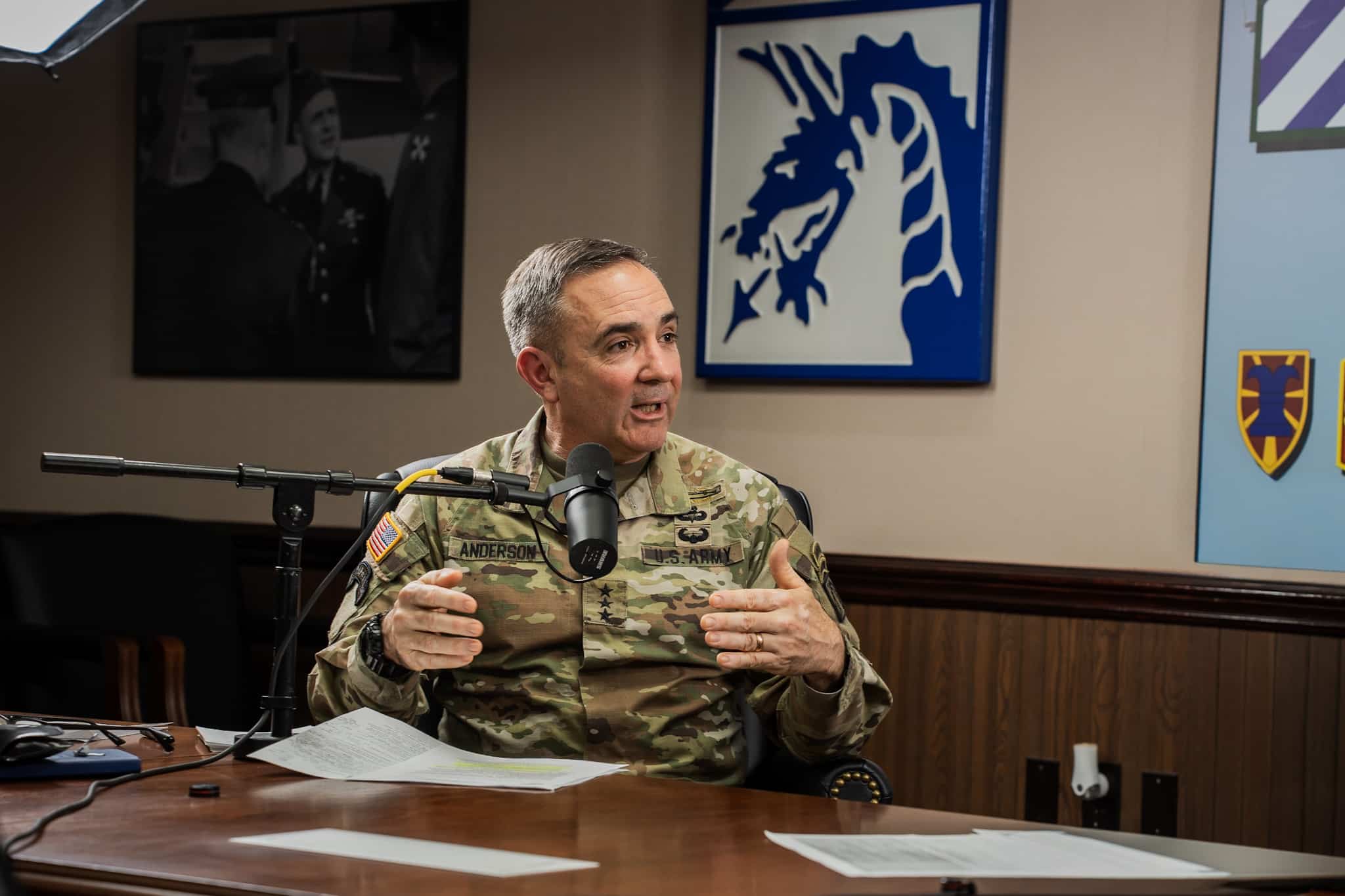
It won’t happen if you come together and we just discussed this in the historical case or LPD. We’ve got to then figure out how we want to use it and apply that model in some of the conflicts that we see out on the time horizon. That’s where I would encourage us to go because again, there’s only so many places and so many enemies that we would go up against. We should start putting some work against those sets. There are only so many places we’re likely to fight and only so many adversaries we’re likely to face. We should be investing our effort in preparing for those realities.
I have two more questions for you that are going to harness your experience as a three-star General. I frame it like that because it’s important. For those who don’t truly understand, what does it mean to become a general officer? They take away your branch insignia and they tell you, “You have a wealth of experience now. We’re going to ask you to apply that wealth of experience.” Which now leads to forethought because their expectation is that you are going to use your past experiences over however many decades to now at a very high-level shape where the army goes.
There’s been a lot of conversations that have quite honestly frustrated me over the last several months when conflicts have now arisen in various areas of the world. People said, “Why didn’t we do that when we went into Iraq? Why didn’t we do that when we went into Afghanistan?” My comments have been, “We didn’t have the technology. We didn’t have the resources. We didn’t have a lot of the capabilities that exist many years ago that make it look much easier now.”
The other side of that coin is you talk to folks who are retired or out, who look at the operating environment and say, “It’s a lot harder to be a war fighter and to engage in the business of war fighting today than it’s been in the past.” In your perspective, is it harder to conduct warfighting now than it has been in the past?
It certainly is more complex. When it gets down to the danger, when you’re at the smallest tactical level and you’re closing with an enemy that’s shooting at you and you’re shooting back. Fundamentally, that’s just dangerous and is difficult if you were fighting another enemy in another battlefield. I don’t think that piece is difficult if that has changed the basics, the fundamentals, the physicality, the fears, the emotions of all of that, the loss and the stress. All that remains.
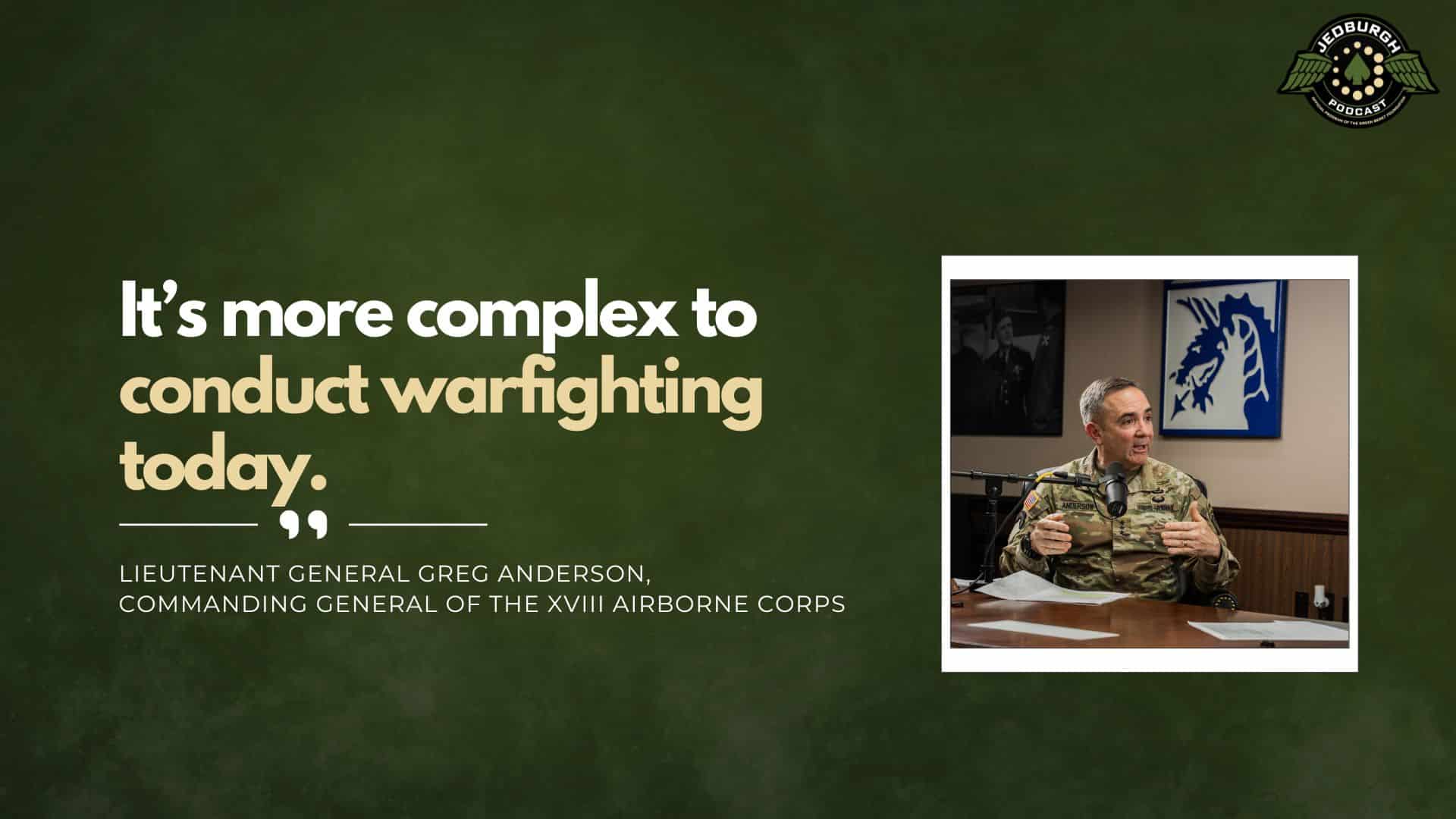
The complexity, though, of different variables, different capabilities and different constraints and things, especially in the speed, in the tempo and the lack of the absolute dependency on logistics that may or may not be there. There’s so many more dimensions now that make it more difficult. I see them way more clearly now as a general debate. They probably were there anyway. When I was a younger officer, I didn’t appreciate it.
ƒnWhat I’ve come to realize, my role as a general is not to solve the problem. My role as a general is not to be the hero that comes in far from it. My role is to think and understand the problem we’re trying to solve. Once I’ve been making the decision on how we’re going to get after that prompt. Can I set the field for the colonels, majors, captains and sergeants to win it for us? Can I get them in the right relationships, set the right resources, the right to reign, the right rules and timelines to enable them to win?
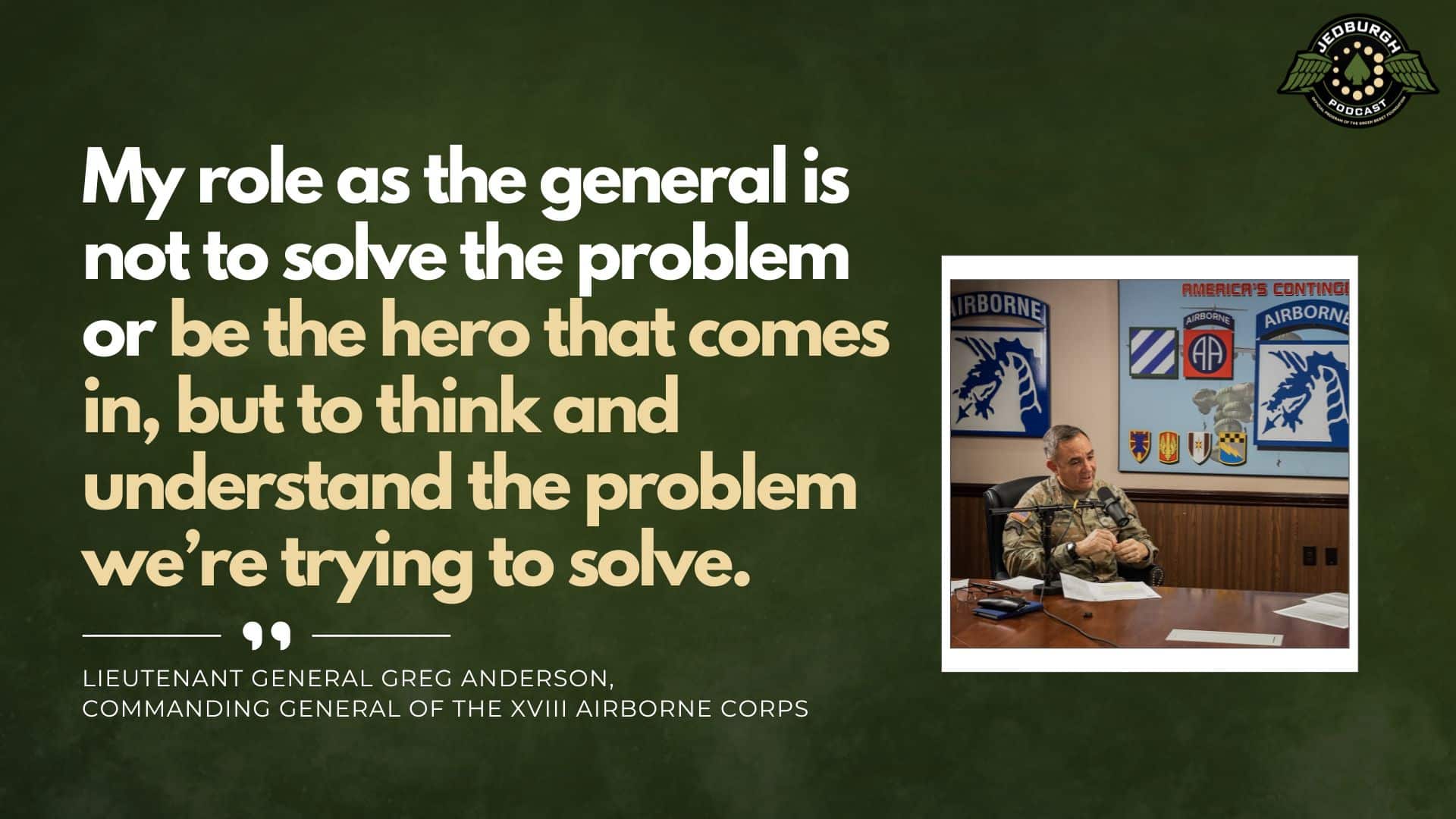
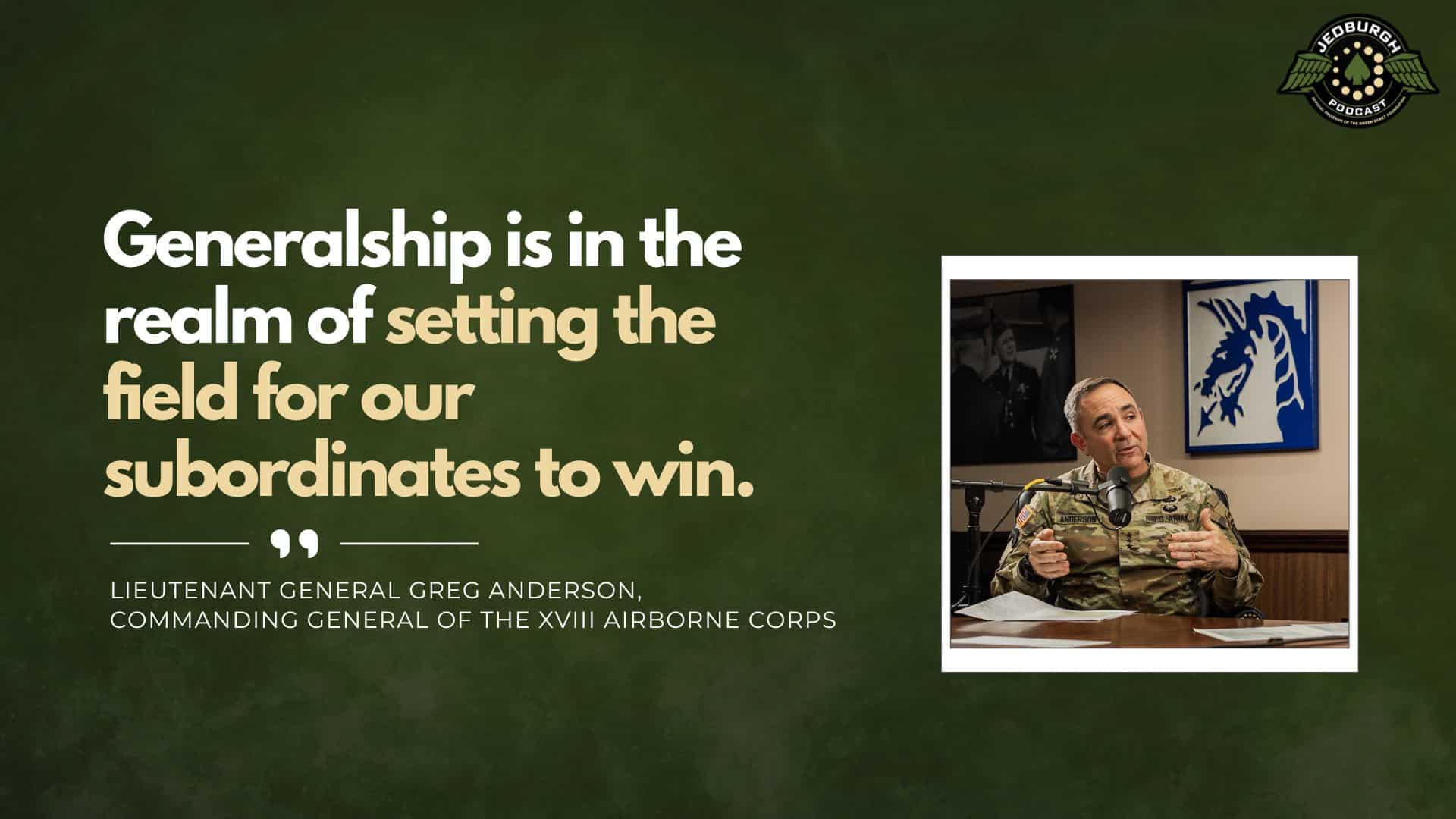
That’s where I put all my thoughts as a general. That’s a fundamental shift for when I was a battalion commander or a brigade commander or company commander and combat. I don’t know if that helps you and I answered it all. To me, generalship is in the realm of setting the field for our subordinates to win.
It does answer a question. You look at the operating environment. Technology has changed a lot of things in warfare. I remember going to leer slick. I was in the last level. It had just become our slick at that point, but they were still teaching the leer slick PLI. It was like you’re crawling on your belly through the woods and maintaining a long-range column. You can’t do that now. You’re going to get spotted. You’re going to get identified. Technology has changed so much. In a lot of ways, it is different.
We got to learn and adapt. Again, back to that point, faster. How do you encourage that? In an army, we also have to be compliant and standards driven. We have certain techniques, tactics and procedures, but then you got to be able to adapt the same time. You’ve got to do both. You can’t pick one or the other and develop and people to operate. Those things is the long-term hedge against an uncertain future for the military. They train their people. They’re going to carry us.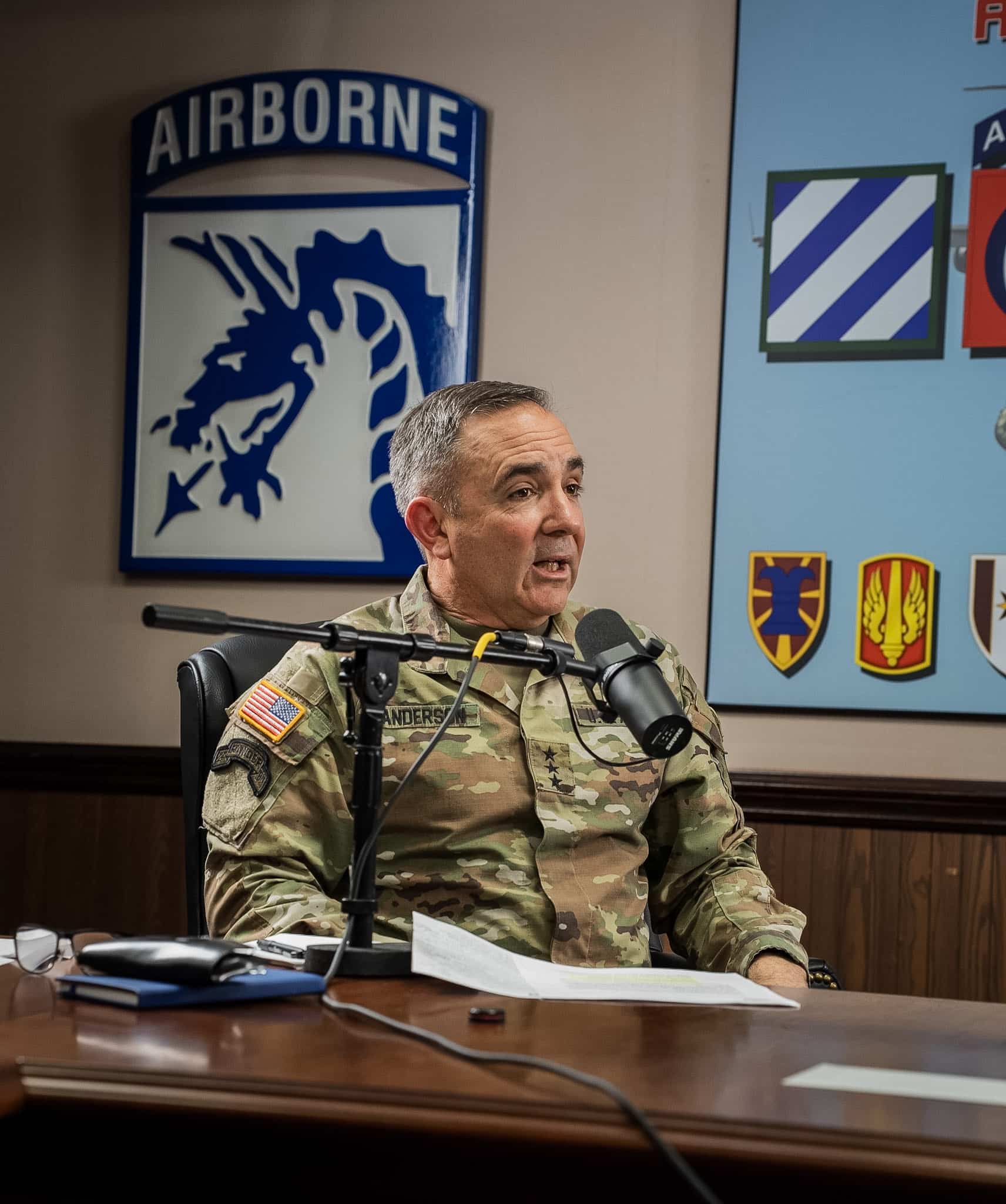
There’s a clear number one strike. No one comes close in terms of the quality of our people. Frankly, that’s what this campaign plan is. It’s about structure and all that stuff. It’s about optimizing all of the talent in human capital that we have here. Putting that to work against these problems that matter and then they are crushing it. We have to give them and assume some risk with that. assume risk now is way better than assuming risk in combat when you validated through this process. You can be able to go in and solve harder problems on other days for you when you’re going to need it.
The people are what matter most in any organization. That’s about it in the SOF truth. People are more important than hardware but it applies not only in the army and in the military but as a business owner now. We see it every day in my business. You got to have good people. You have to have the right people in the right place. They’re going to carry you forward. The army has gone through an evolution in the post-GWOT period.
We’ve seen a decline in our recruiting numbers. We’ve seen numbers come back up. We’ve seen an evolution of the culture over the last decade and even two decades. Within three decades, you’ve seen multiple iterations of what army culture looks like, how it’s changed and how it’s continuously being assessed. When you look across your formation now at the core level and you see these subordinate units. You see those soldiers, officers, and NCOs in the ranks. What do you see?
I see a lot. All good and bad. I see the greatness of our nation here. I see our young men and women coming forward to serve something greater than themselves. That’s why I still say it, to be honest. There’s a purpose that’s there in our people. That purpose and the fulfillment you get from serving someone else, and we all know what that’s like. You talked about contributing to happiness and growth and an overall life fulfillment. They already sensed and saw that.
Now, if we’re not allowing them to drive, understand and explore that purpose and we should make sure they are constantly reminded of what they are contributing to something like this, then shame on us as leaders. I try to get around to be able to communicate that to them. I’m humbled by their intelligence, their courage, their energy, their love of just being Americans and being free and an amazing time in their life. They’re willing to trust you. They’re willing to go. It’s an invincible force we’ve got talent, energy, and potential. That’s what I see when I see them.
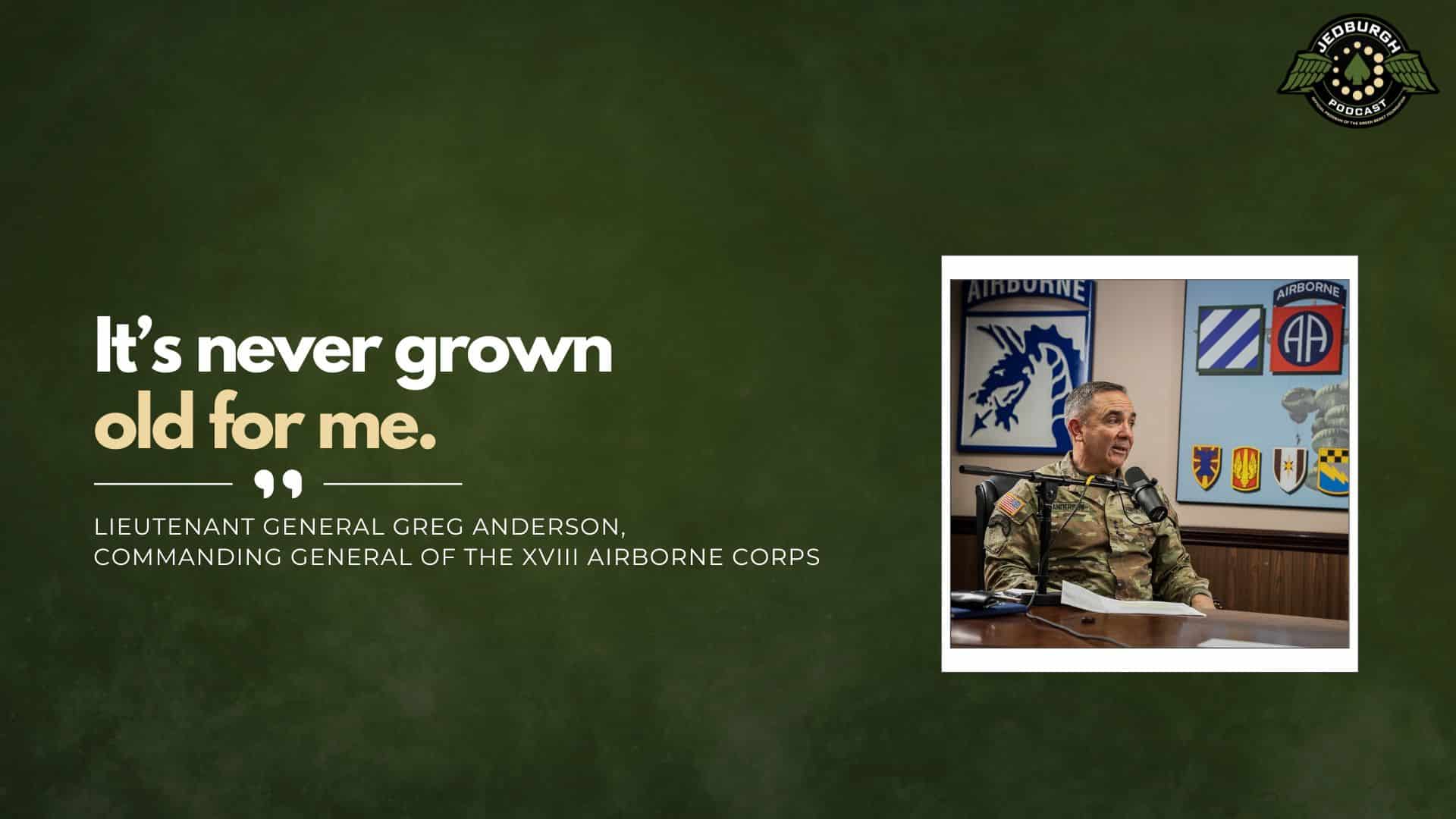
Obviously, a lot of laughs. They’re funny. We have a lot of good times. This is a human thing. This is a human business, human relationships. Be authentic. They’re authentic back to us. I tell you. You just create. We often forget that sometimes. We come enamored with tech, whatever the priorities are, or whatever problem we’re trying to solve. Sometimes, you got to take a step back and just say, “Look at the people I’m with. This is what I get to do with these people.” It’s never grown old for me. As long as I’ve been in the army, from day one to now. That part of the army hasn’t changed and I loved it. We spend so much time focused on technology and solving problems that we forget to appreciate the people beside us. In the end, they’re what make the mission worthwhile.
The last question is a test question. The Jedburgh’s in World War II had to do three things every day to be successful. I say the Jedburgh’s had to do it but we could say any soldier has to do these three things. They got to be able to shoot, move and communicate. Those are core tasks, their habits, and their foundation.
One of the pillars you mentioned was that you have to master the basics. Whenever I talk about Special Forces and people are like, “What was it like to be an SF?” I tell them one simple thing, “There’s nothing special about Special Forces. You do the basics better than everybody else and you see that in your core here because these units are held to a different standard than a lot across the army. When you wake up every day, what are the three things that you do every day to set conditions for success in your world?
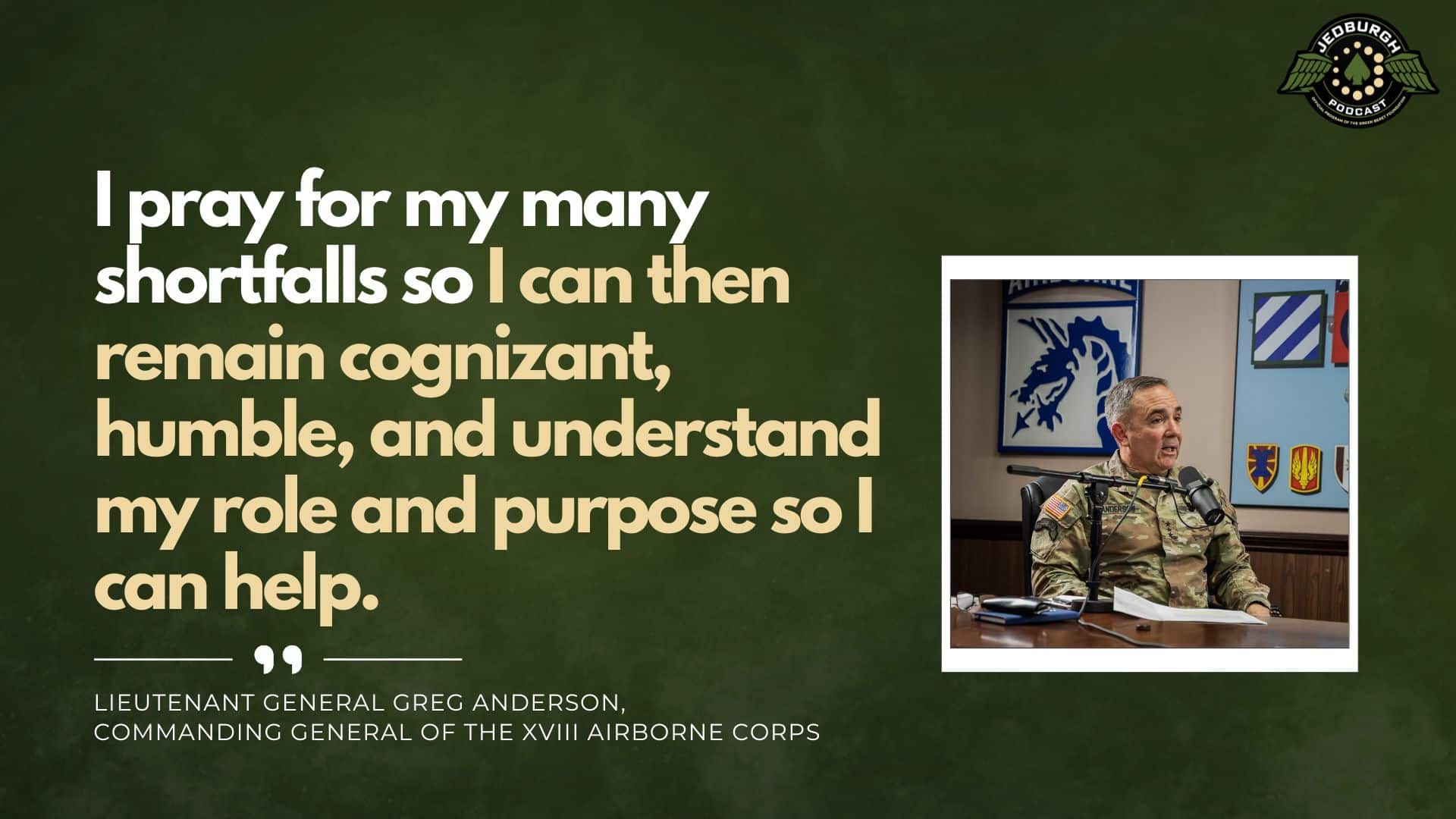
They pay me to exercise judgment and maybe make some decisions, but I have to have judgment. I understand them. That’s my role. It’s to see, learn and make sense of it and then make a determination based on what I’m learning and seeing what people are talking to me about. I have to be balanced. I found that my balance comes from a few things. One is my own health and fitness. I do PT every day. It’s sacrosanct to me. I pray every day. I pray for many shortfalls so that I can then remain cognizant and humble and understand what my role and purpose is here and what I can do to help. I pray for that. I spend time with my wife and family every day. That balance is me to then, hopefully, exercise good sound judgement.
Balance is all good. PT, pray, and family time. Sir, I appreciate you taking time to sit down with us. The world is certainly an extraordinary and at times, crazy place.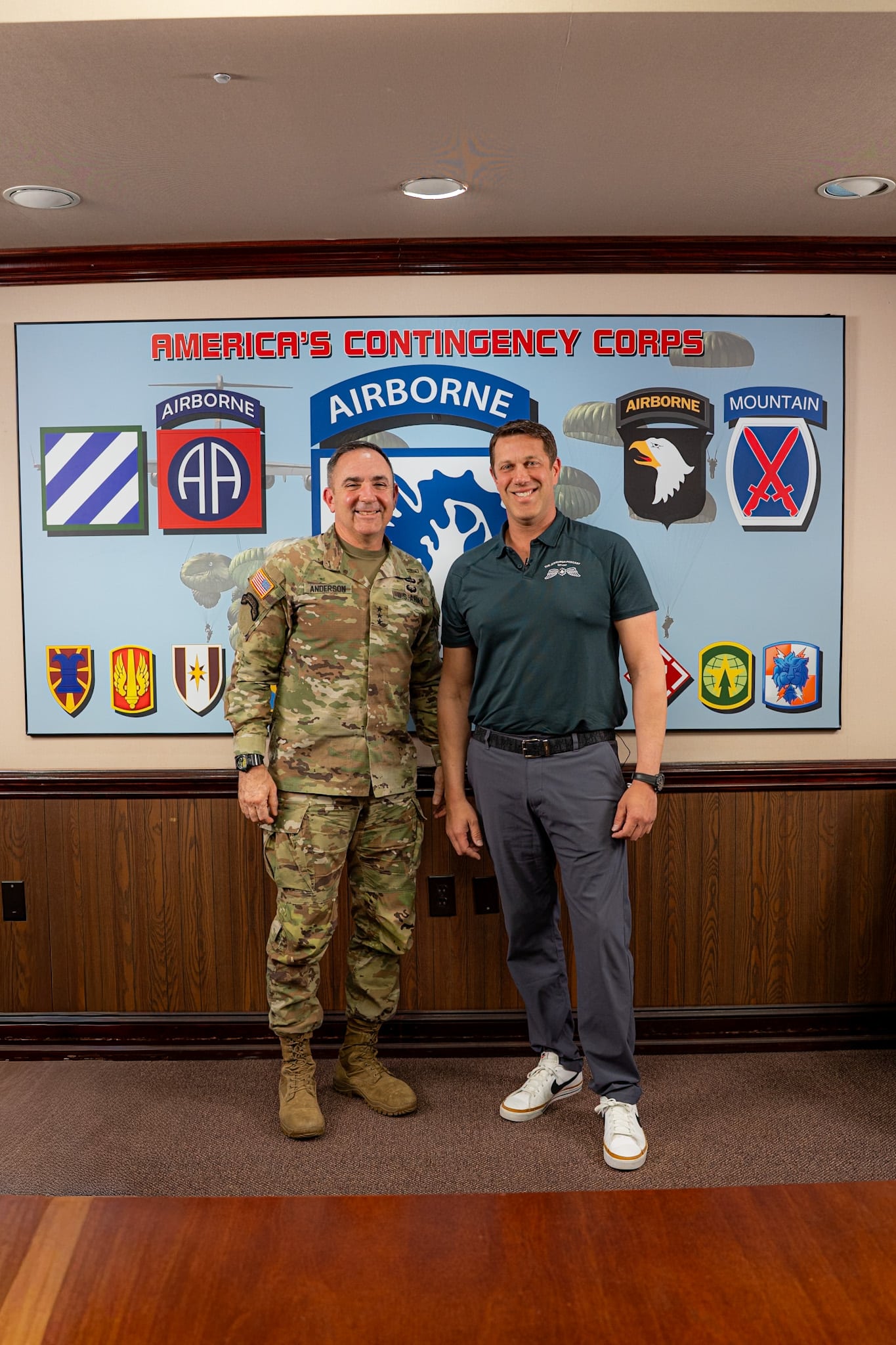
Fran, thank you. It’s great to spend some time with you. Thank you very much.
Thank you.
Green Beret Foundation
P.O. Box 25138
New York, NY 10087-5138
Note: Please use USPS mail or priority mail. Do not use FedEx.
Green Beret Foundation
10205 US Hwy 15-501, Unit 26-8
Southern Pines, NC 28387-4301
Call: at: (844) 287-7133