
18
#213: America’s Naval Superpower – Master Chief Petty Officer Of The Navy John Perryman
Wednesday November 18, 2026


America’s ability to project power anywhere in the world begins at sea.
An aircraft carrier moves an airfield across an ocean. A submarine disappears beneath the surface while maintaining nuclear advantage. Destroyers defend a fleet, strike targets hundreds of miles away, and protect the sea lanes that connect the global economy. When access disappears, bases become vulnerable, or a crisis erupts thousands of miles from American shores, the United States Navy can arrive without asking for permission.
The US Navy may have the most sophisticated hardware on the seas, but the sailor is the most important weapon system.
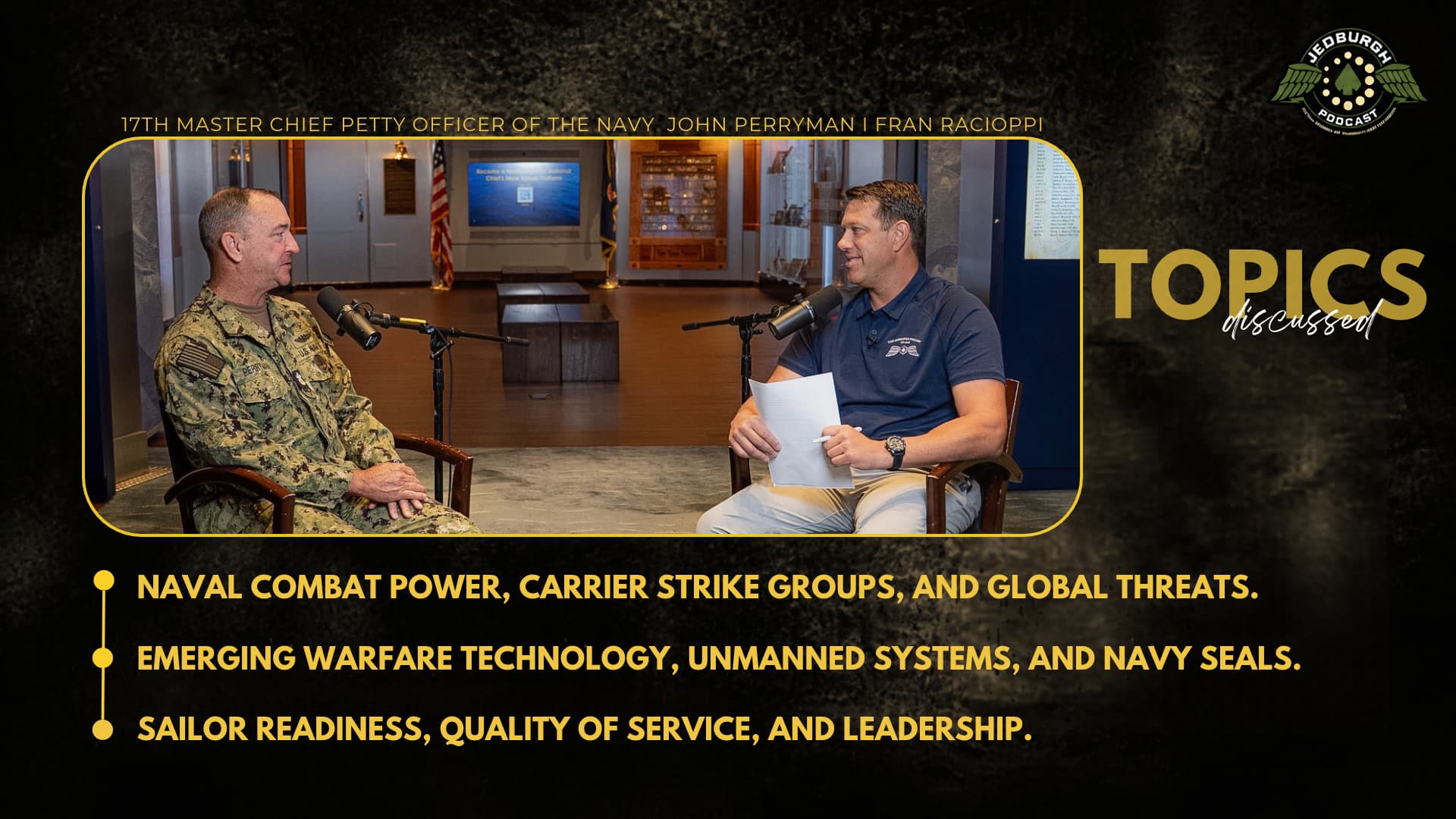
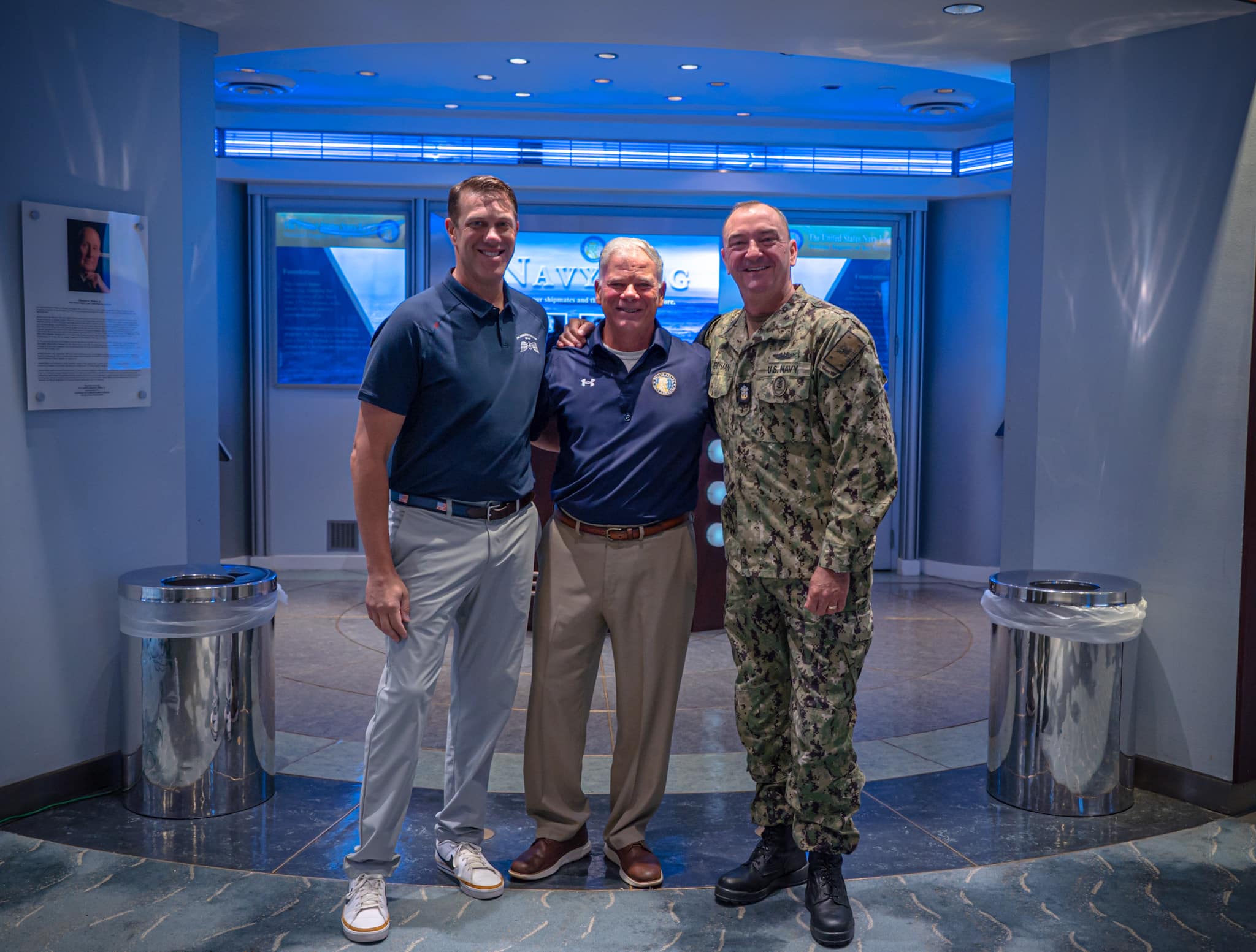
From the Delbert D. Black National Chief’s Mess at the United States Navy Memorial in Washington, D.C., Fran Racioppi sat down with Master Chief Petty Officer of the Navy John Perryman, the 17th MCPON, to examine the sailors, technology, and combat power behind America’s largest projection of combat power.
Today’s Navy is asked to operate across nearly every domain of modern warfare. From sea, to subsea, land, air, space and cyber, the speed of warfare is forcing the Navy to learn faster than ever before. Naval Special Warfare is redefining the role of the SEALs beyond two decades of counterterrorism. Unmanned systems are expanding above, on, and below the water. And emerging capabilities like directed energy could fundamentally change how ships defend themselves in the next war.
And our adversaries are not waiting. China remains the pacing threat. The Middle East threatens global mayhem. Russia seeks an old World Order. And Latin America remains too close to home to allow instability. The Navy must be capable of fighting globally, alongside the joint force and America’s allies, without building itself for only one enemy or one battlefield.
For MCPON Perryman, that readiness starts long before a ship ever sails. It means improving how sailors are trained, how they live, where they work, and ensuring they arrive at the fleet prepared to contribute on day one. Because the most advanced carrier, submarine, aircraft, missile, or unmanned system in the world is only as capable as the people trusted to employ it.
Technology may determine what the Navy can do. Sailors will determine whether it wins.
Follow the Jedburgh Podcast and the Green Beret Foundation on social media. Listen on your favorite podcast platform, read on our website, and watch the full video version on YouTube as we show why America must continue to lead from the front, no matter the challenge.
—
Listen to the podcast here
#213: America’s Naval Superpower – Master Chief Petty Officer Of The Navy John Perryman
—
Power Projection And The Modern U.S. Navy
Master Chief Petty Officer of the Navy Perryman, welcome to the Jedburgh Podcast.
Thank you very much for having me. I’m excited to be here.
I want to give a quick shout out to where we are. We’re in front of the chief’s mess. I thought this was a great setting to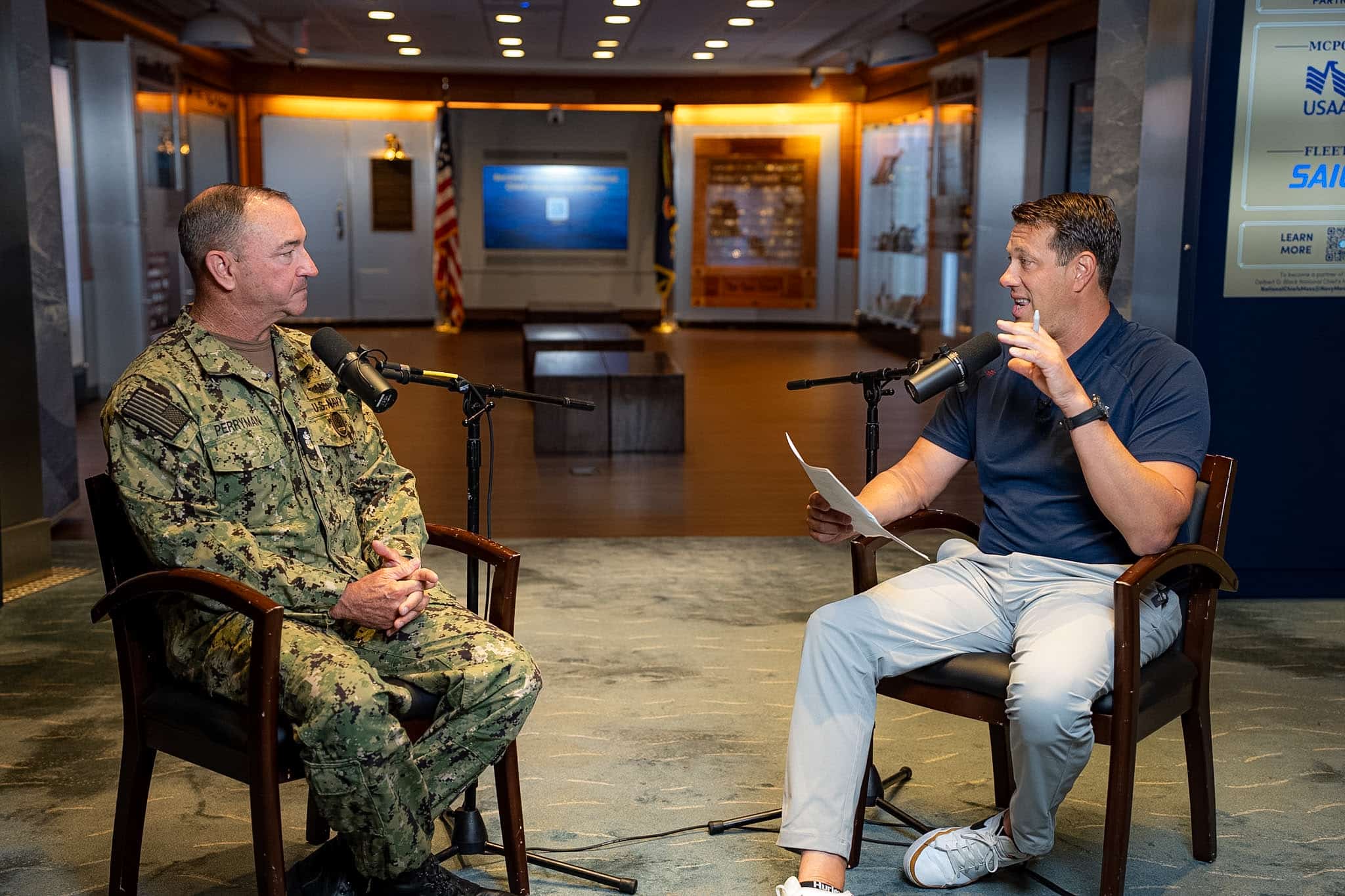
To your point on the Navy Memorial, Admiral Nowell, who’s the CEO, they’re a super supportive group. We do multiple events here a year. This is the Delbert D. Black National Chiefs Mess behind us, an effort that they’ve started in the last year or so. I’m also very excited to be here, and I’m very appreciative of their willingness to let us do it here.
You also served across all levels of command, including as the Fleet Master Chief for US Fleet Forces Command. You have had the opportunity to understand what it means to be an entry-level sailor sitting at the bottom of the ocean, to now being in charge of the strategy that sits behind who our Navy is, what it needs to be in the future, and most importantly, what type of sailor we need to take us into the future and win wars. In your words, what’s the role of the Master Chief Petty Officer of the Navy?
When I think about my job, my job is to ensure, to your point, that I helped the Navy identify the knowledge, skills, and abilities we need of our sailors, to be able to execute our missions globally, and then help the organization think through what are the things we have to deliver for that sailor so they can do that. That spans the gamut from ensuring they have good barracks, access to medical care for our married sailors, child development centers, and then do we have our technical training and how we build a sailor throughout their career correct? That’s how I think of my job. My job is to advocate for the things that I believe sailors and families need to be successful in our organization.
Quality of life always comes up.
It does.
We had a chance a few months ago to sit down with your counterpart, the Sergeant Major of the Marine Corps, Carlos Ruiz, where quality of life has been at the top of his list. The same for Sergeant Major of the Army, Mike Weimer. Soldiers, sailors, Marines, airmen, we’re asking them to do tough stuff. Living on a submarine under the ocean, living on an aircraft carrier for eight months, the Ford was a year plus is hard.
What we can’t have is those folks to come home and be in barracks that aren’t up to standard, have problems at home because their families aren’t taken care of. When you look at quality of life for the soldiers. What are the top priorities that you have that you’re advocating for when you sit down and look at resources?
Prioritizing Quality Of Service For Sailors
One of the things I’ve tried to do since I’ve got into office is start calling it quality of service and not just quality of life because it’s an integral quality. I view quality of service as the combination of quality of life and quality of work. I have to have both of those things. I have sailors who enjoy coming to work every day. You have to love it. Sailors do want good barracks. They want good galleys. They want access to medical care for them and their families and reasonable timeframes.
They also want to work in hangars on piers or on bases that look like we’re the richest country in the world with the most powerful military in the world. Sometimes when I talk with Congress, I remind them those two statements are not obvious when you drive around a lot of our bases. We don’t look like we’re the richest country in the world with the most powerful military in the world. Those working conditions matter for sailors as much as their off-duty conditions.
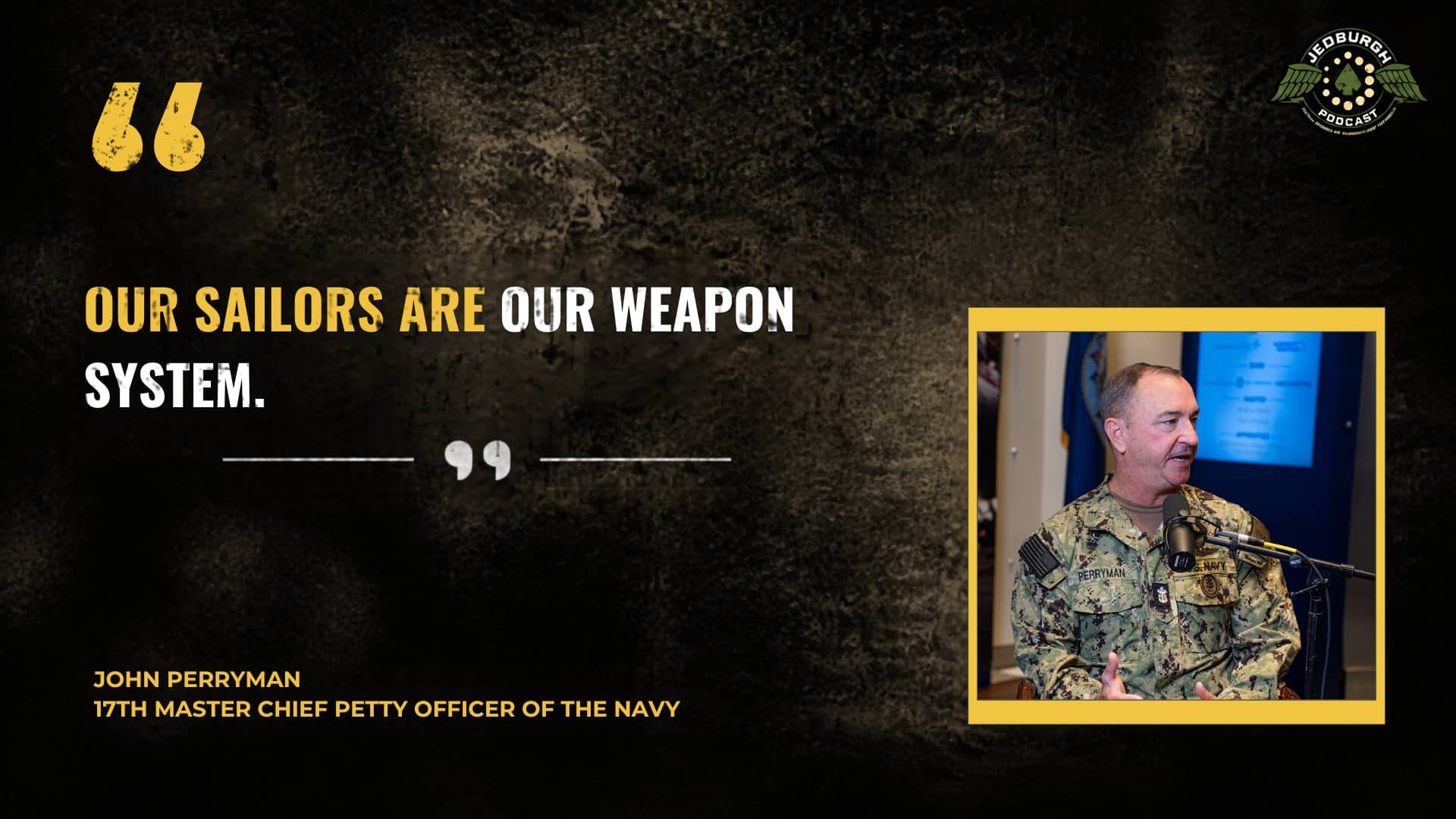
They can’t do anything in and of themselves. The Abraham Lincoln Aircraft Carrier has 5,000 sailors on it. Making that thing come to life and operate. When you finally start to think of the sailor as the weapon system, you start to prioritize these things that maybe we wouldn’t prioritize before in the quality of life and quality of work lane.
When you think about, and you look out to the force, you look out to the Fleet, and you see the incoming sailors that you visit for basic training. You go out to Abraham Lincoln or Ford. What are the characteristics that you think make an important sailor?
I get some versions of this question a lot. Usually, my team tells me sometimes I talk too much. I’ll try to be brief. For sailors coming into the Navy, the most important quality you can have is that you’re willing to do it. 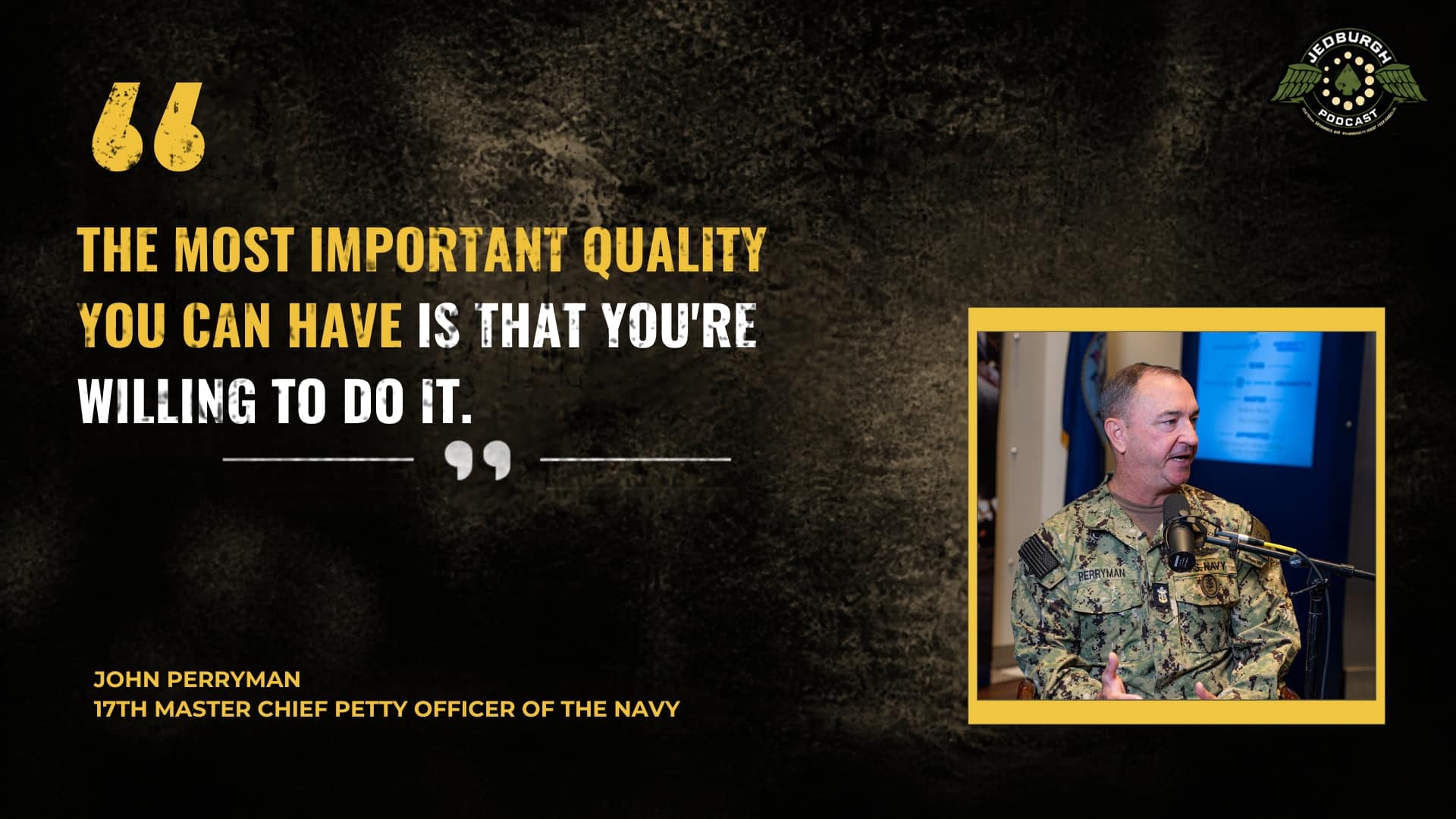
It’s always been our job to take what society gives us and turn it into what we need in our respective services. Having the drive and willingness to serve. The next most important thing is being willing to try to be better every single day. Wake up today and try to be a little bit better than you were yesterday. If you have the drive to serve and you’re willing to put the work in, everything else takes care of itself.
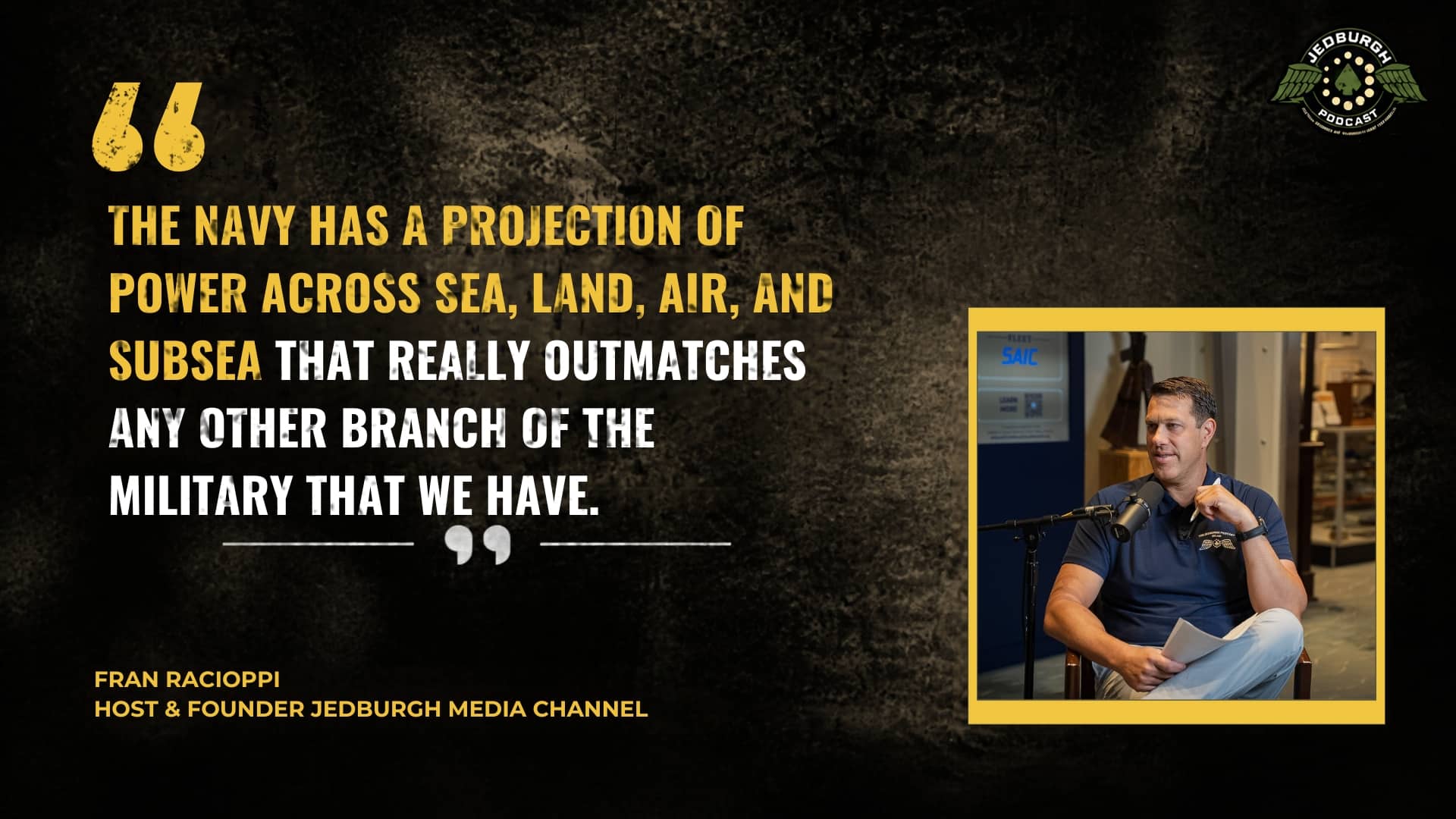
I don’t want to make Mike Weimer upset at the SMA, but I’m going to say it and he can beat me up later. When we look at the dynamic force that the Navy is, don’t get me wrong, the Army does a lot of things. The Navy has a projection of power across sea, land, air, and subsea that outmatches any other branch of the military that we have. When you then look at the Navy in itself and you say, “There’s a lot of jobs in the Navy.” There was a guy in here with his son.
It’s so dynamic. The responsibility to maintain readiness across a complex globe that faces various challenges is tremendous. When you look across the fleet and you see that we have to be competent in the maritime domain, the air domain, the land domain, and now the space and cyber domain. How are you prioritizing what you put resources into?
Budgeting And Strategic Priorities For A Global Fleet
It’s something the CNO has been working on since he became the CNO.
Probably all the CNOs.
Quality of service is the combination of quality of life and quality of work.
That’s true. One of the things the CNO has done, though, is he’s focused our budgeting process based on how he views the priorities to deliver a global Navy. Step one in that budget is what he calls the foundry. That’s shore infrastructure, because we spend 50% of our time on our basis. You need a strong foundry. That includes how I bring sailors in, train them, take care of them, how I build ships, how I do maintenance. He views that and strategic deterrence as a core.
That is readiness for our ships and parts. After that, you get into what we view is the kill chain. When you’re operating a global Navy and you’re thinking about conflict, the most important thing is counter targeting, and then you get into targeting, fires, and logistics. When we’re building our budget in the Navy, that’s how we’ve been thinking about it to make sure we get the readiness at the appropriate levels across all of the many different mission areas we have. While not just, as the CNO says, marking in time, putting money in places that will deliver improved combat power and sustained combat power over the years to come.
It’s interesting. Generally speaking, the culture in the Navy is very good. If you look at the last 8 to 10 months, there is no Navy in the world that could have gone from Southern Spear to Absolute Resolve to Epic Fury. Nobody can do that. The only way you can pull things like that off is with a pretty good culture. Now, does that mean we don’t have areas we’re trying to improve? We are.
One of the things, we are trying to instill more of a warrior ethos into it, but it’s an incremental change. It’s not a monumental change that we’re trying to make, because it’s largely present in what we do every single day. It’s obvious by the success that our sailors have had throughout my time in the Navy and especially obvious in the last ten months or so.
We’ve seen a shift in the utilization of the Navy. Through the global war on terror, which was the vast majority of our career spent there, we saw a lot of blending of forces, and due to necessity, right or wrong. We had to get forces into Iraq and Afghanistan, specifically in the SOF world. There was a perspective like, “We’ll throw a SOF unit at it.” Whether that’d be an ODA, a MARSOC team or a SEAL platoon. You’re like, “We’re not all the same. We do things differently.” You had a blending on it.
We’ve seen now the Navy make this shift from, “We’re out here at sea doing our thing,” to, “Now we are at the forward edge of the combat environment,” to include a blockade that as of yesterday was deemed to be able to go on indefinitely. How has the Navy made that mental shift? Probably what I’m talking about is more of the surface warfare portion of the Fleet.
It goes to something you said about, wanting to upset SMA Weimer.
We can upset him.
If you go back to when our constitution was written. The founding fathers knew if you wanted to be like a true power, you needed a navy, which is why in the constitution it says, “You will have a Navy.” The way the boss talks about it is that the Navy brings a differentiated value to the joint force. To some of your comments earlier, that is unique in the joint force. What you’re seeing now is that differentiated value used to maximum effect for the first time in a long time. When Epic Fury kicked off in the Middle East and we slowly lost our access basin and oversight.
One of the things you get from a Navy is, “That’s sovereign territory and I can do cyclic flight ops off a carrier indefinitely,” provided I can sustain it. The Navy’s always been operating globally, protecting sea lines of communication. We’ve been nonstop the whole time, but Epic Fury does show some of the differentiated value the Navy brings to the joint force in that we’re expeditionary. We’re mobile. We’re sovereign territory. Our dependency on ABO is maybe a little bit less and is very beneficial to the joint force in times like this.
Carrier Strike Groups And Strategic Deterrence
When you go out to the Fleet and you see these guys at sea on the front edge of this thing, there’s an excitement on their face.
Yes. You know this from your time in the military. The worst part in a sailor or any military member’s life cycle is getting ready for deployment. Nobody likes getting ready for deployment, but then you get out there on deployment and you’re doing the thing you signed up to do and executing a mission on behalf of your country. People take a lot of pride in that.
Our sailors, regardless of what their rating is, because I don’t have anybody out there that I don’t need out there. Everybody has a very important job that makes that whole machine run. 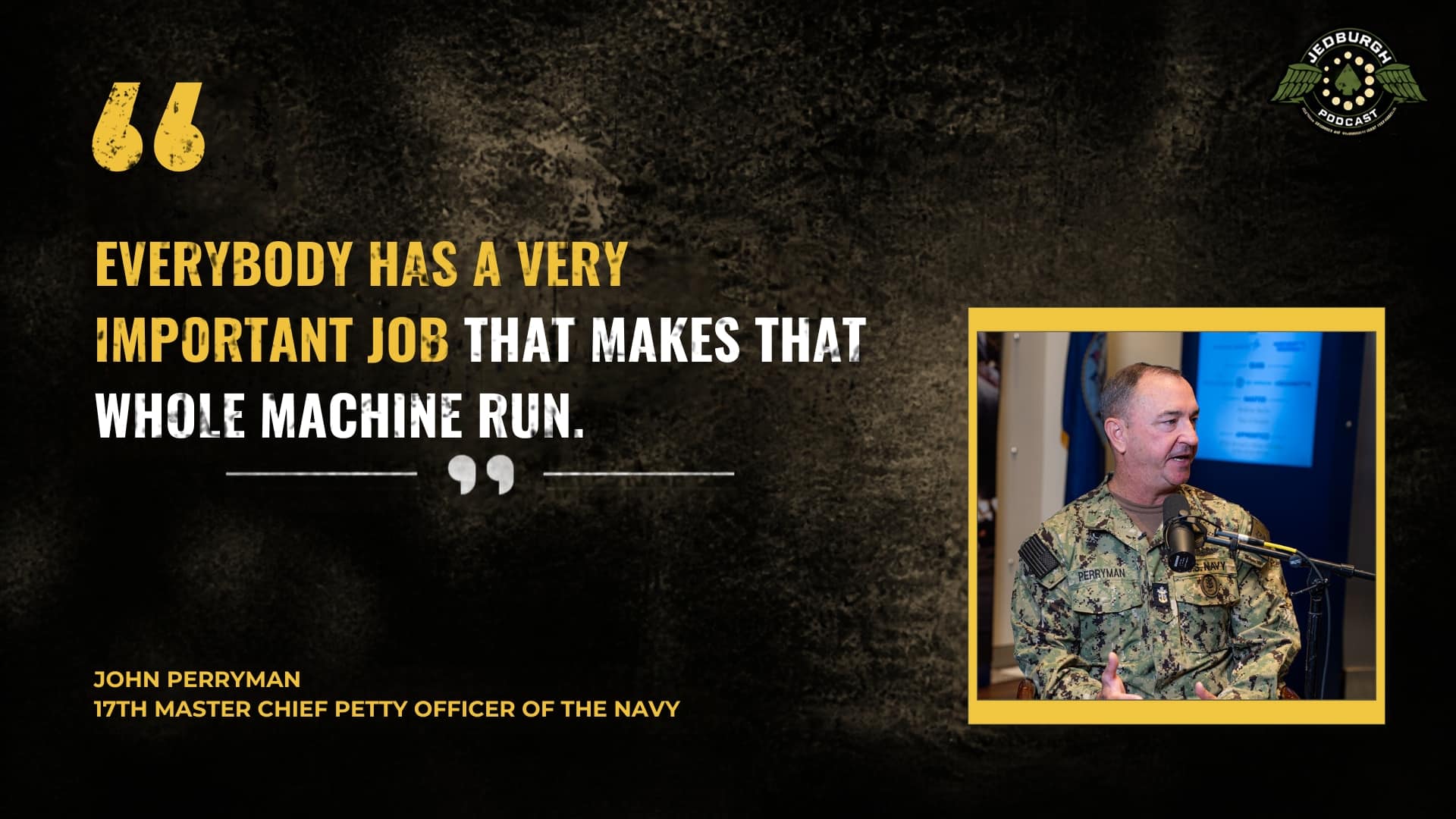
There’s a couple of capabilities that the Navy has that certainly no other branch has, but also other countries have but not like we do. China has an aircraft carrier, but they don’t have the Ford and soon to be, the John F. Kennedy. Other countries have submarines, but they don’t have Ohio class submarines in their Fleet. I forget what the replacement to the Ohio class is.
It’s Columbia class.
These capabilities bring tremendous strategic deterrence and strategic capability to national defense strategy. In your perspective, what does the carrier strike group bring to the national defense strategy? What does it say to both our allies and our adversaries who see this carrier group coming off their shores?
Again, what the carrier strike group brings to the national defense strategy is a pretty unique set of capabilities that are at the disposal of our national command authority. They can generally be anywhere in the world in two weeks. The carrier itself is nuclear powered, so it doesn’t need any gas. It has a very robust set of capabilities, not just in the air wing with its strike package, but with the escort DDGs that bring land attack. The things we can do in the information space from cyber or space effects.
The carrier strike group is this very capable instrument of national power that has a bunch of different ways it can be employed based on what we need. It’s a very capable package. It reassures our allies when there’s a carrier strike group off their coast if somebody’s starting to act like they may want to get a little brave with what they’re doing. I do think our strike groups give our adversaries pause because to your point, China has carriers. Some of our allies have carriers.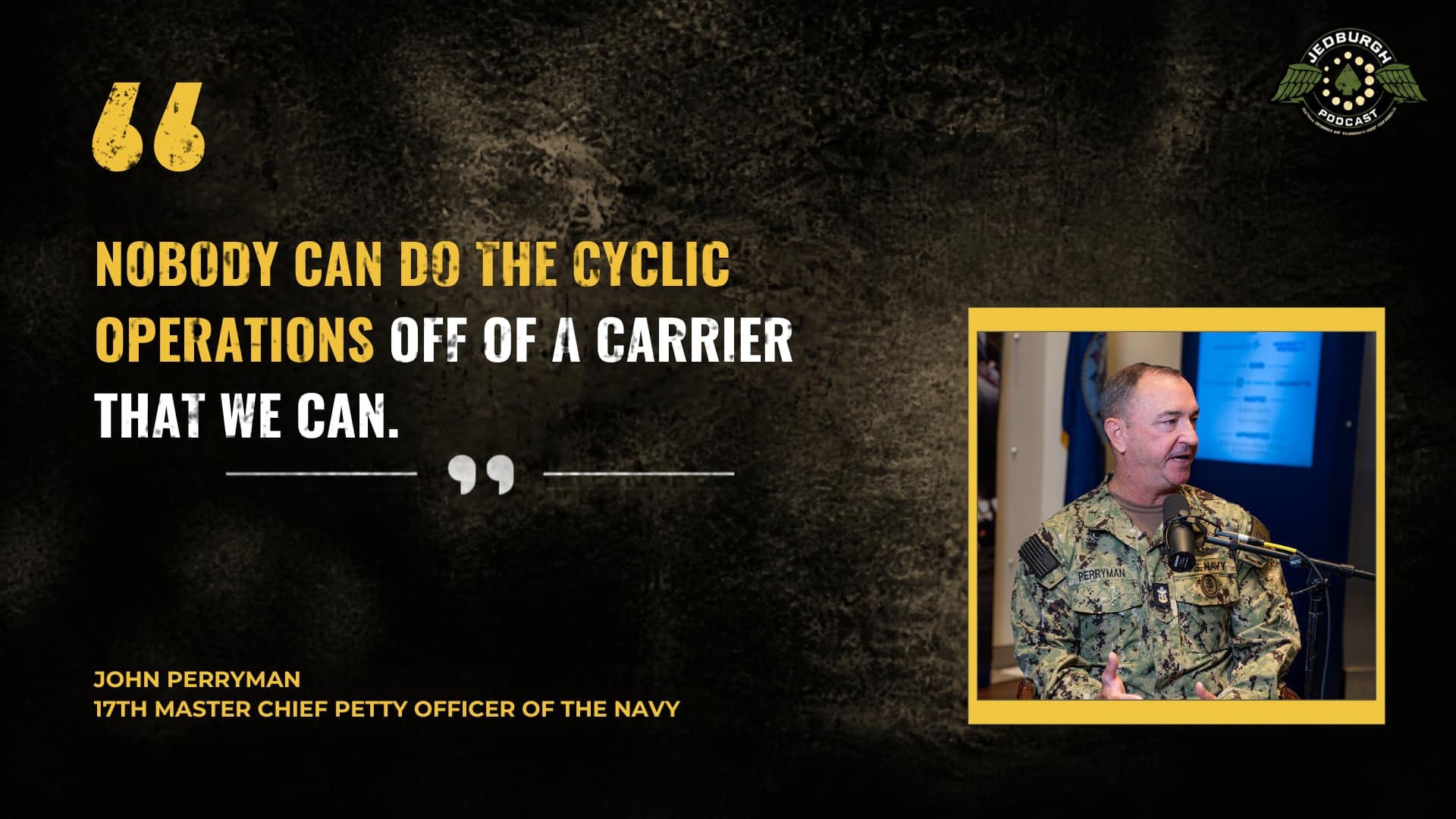
We’ve seen that utilization just out of the Ford. They showed up off the coast of Israel for the situation in Gaza. Israel all of a sudden is like, “Uncle Sam is here.” You can take a deeper breath in Tel Aviv after that, and then roll down to South America and somebody gets ripped out of their bed one night and taken to New York. Go out to Iran and you were in a heavy, large scale combat operation deploying a tremendous amount of firepower out there along with Abraham Lincoln.
One of the things the CNO is working on too, is helping the Navy and the Joint Force think of different packages it could use from the Navy that is something less than the carrier strike group. The carrier strike group has a lot of capability. If you could think of General Donovan down there in South Com, what he needs on a day-to-day basis is not a carrier strike group.
We’re doing some work inside of the Navy to think what are tailored packages we could present to combatant commanders that give them the capability they need without having to go all the way to a carrier strike group, which is, in a lot of cases, way more capability than is needed in that theater at that time.
Can we talk about submarines?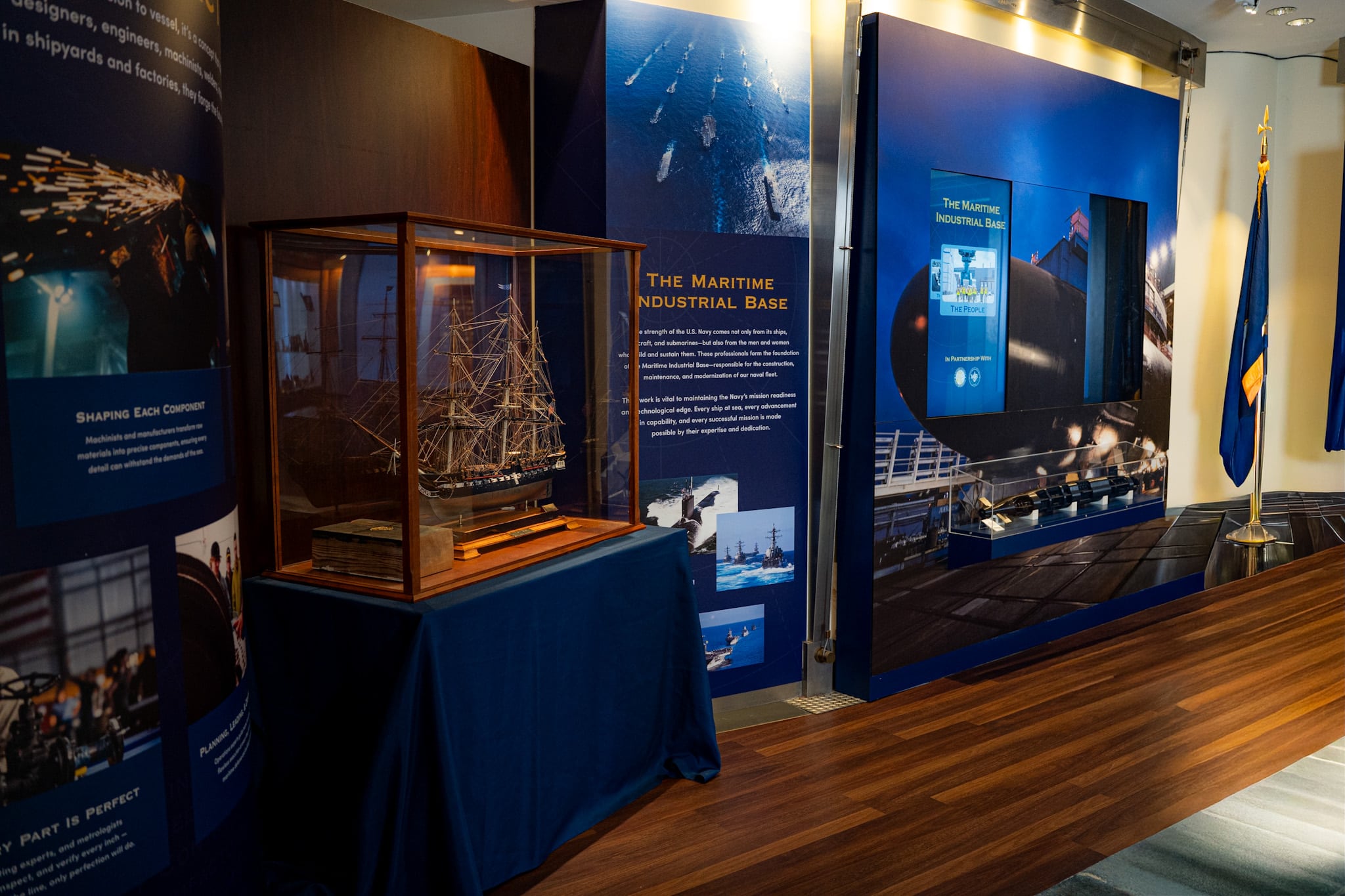
The most important quality you can have coming into the Navy is a genuine willingness to do it. You have to have the drive and the heart to serve.
I love talking about submarines. I love everybody in the Navy, but especially submarines. I do enjoy submarines.
What is life like on a submarine?
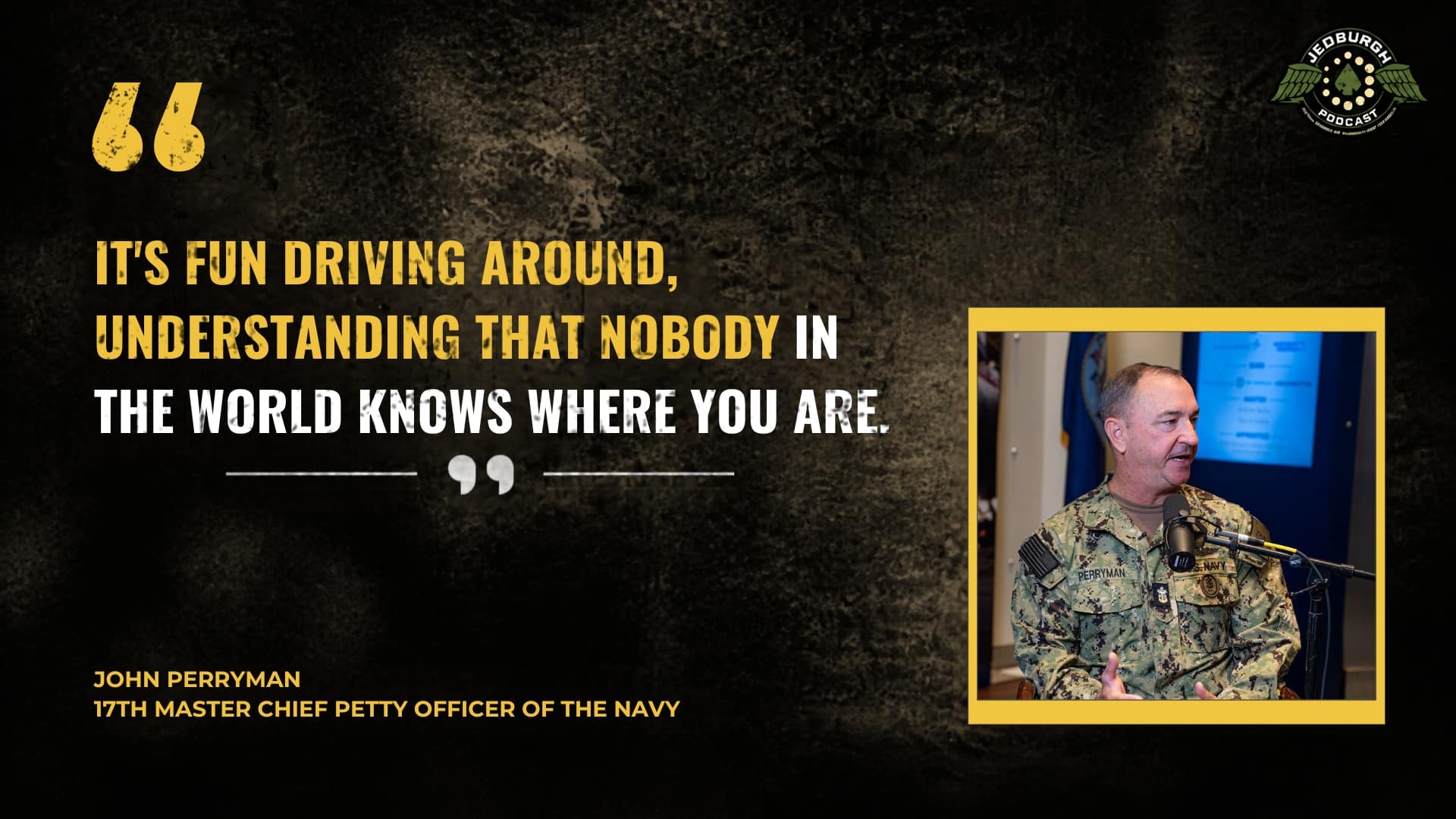
It’s interesting. They’re larger than people think so a Virginia class submarine is about 374 feet long and about 34 feet in diameter. That’s a football field. Three stories high, so they’re pretty substantial. By the time I get done putting all the equipment I need in there, it’s like the Genie in Aladdin, phenomenal cosmic power. You’re down there, and it’s about 130 or 140 people. I love being down there because it’s very small. You get to know everybody very well.
There’s different cultures within the Navy itself when you look at the Top Gun pilots, then you have guys like yourself who are content going underwater several thousand feet for months at a time. Living on a destroyer is probably somewhere in the middle of those things. From your position, how do you go about identifying with the various cultures that exist and the different proficiencies that folks have?
Broadly, the culture throughout the Navy is relatively similar. There are minor differences when you go from community to community, but they’re not as large as most people think they are, especially the enlisted side. What I expect enlisted sailors to do at an air squadron, do maintenance operations on airplanes and make sure that airframe is as capable as it should be. That’s no different than what I expect from sailors on DDGs or submarines.
The one difference is enlisted people on surface ships and submarines do a lot more operating of equipment than in most of aviation, but I don’t find the cultures to be all that different. There’s some minor difference. When you’re locked in a tube, and nobody can see you, we’re probably a little bit more lax on uniform stuff than maybe a surface ship. There’s those kinds of things. Culturally, it’s not that different. I haven’t found out from the enlisted side.
Naval Special Warfare In Modern Conflict
I want to talk about the SEALs for a minute. Our brothers, but our rivals. 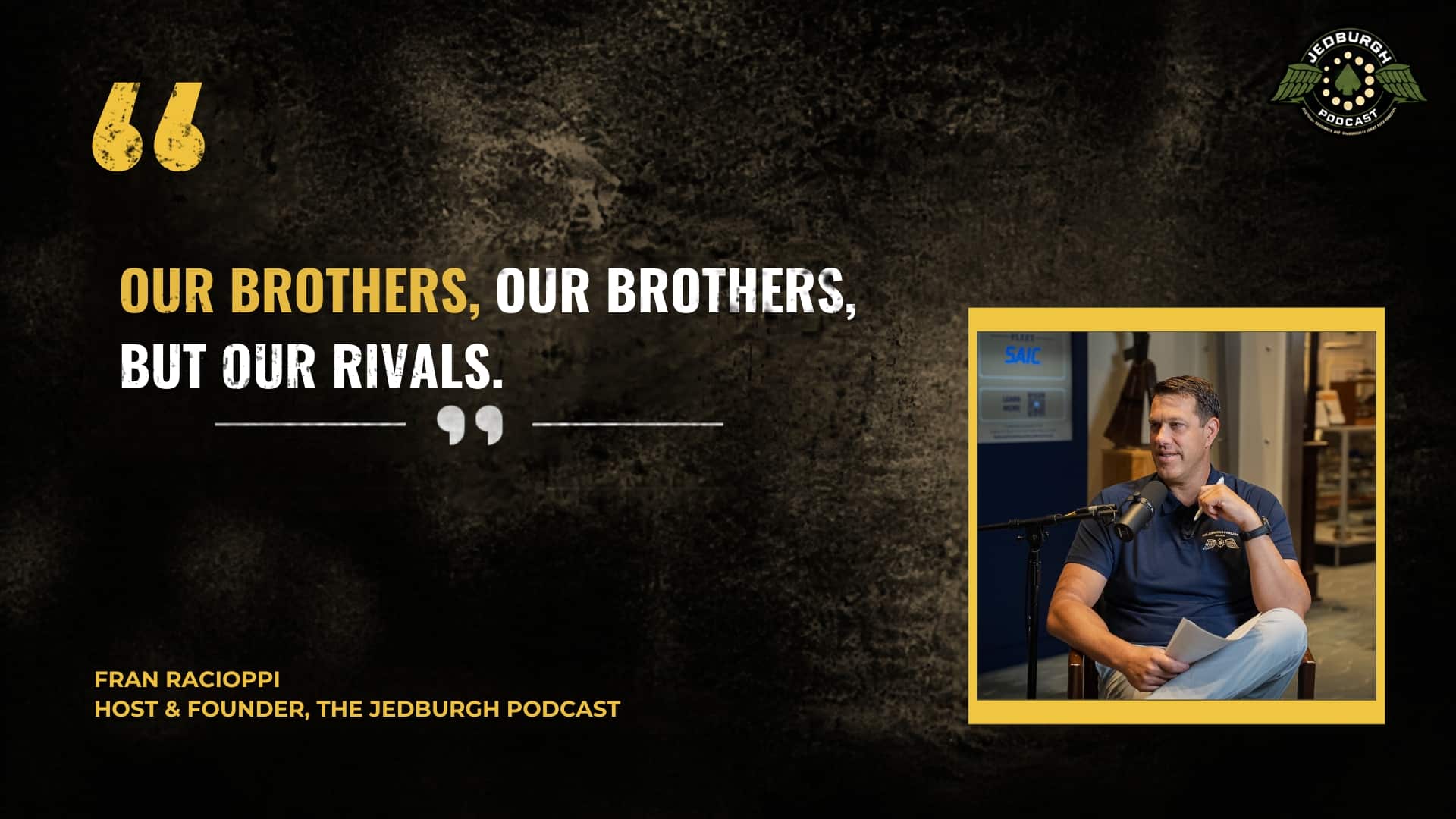
I was able to learn a tremendous amount about how that community operates, the capabilities that they bring, what the task unit organically has, the augmentees that come to it, and how that works. I’m very fortunate to have done that. The SEALs have been a paramount force within the Special Operations Command. They’ve carried a significant load alongside the Army Special Forces and MARSOC throughout the global war on terror. Now, we look into these large-scale combat operations where the Fleet Navy is front and center. We’re struggling with that in SF.
They’re like, “The Navy and Air Force are over there. You stay at Fort Campbell.” There’s a lot of frustration over there. When you look at the utilization of the SEAL community and the Naval Special Warfare in large-scale combat operations, how are you viewing how they’re going to be employed?
The current SEAL commander and his force master chief are working through what the re-bluing of Navy SEALs look like in the post-counterterrorism world. I’ve been very pleased with the work they’re doing in that realm. They’ve always operated with the submarine force, some unique capabilities inside of the SEALs where they’ve operated with us. They’re doing some very interesting work in unmanned space for us.
We’re working on what that looks like as we scale this into the future. There’s good work being done there. They’re critical in enabling some things to happen where maybe you’re not the main effort anymore, but they do bring some very significant and unique capabilities that enable the broader and bring their full combat power to bear. I’ve been pretty happy with the work they’ve been doing in that area. They’re re-blue.
When we use them, it’s synonymous with Army Special Forces units over and over again.
To your point, though, it isn’t. I think SOCOM with Admiral Bradley. Through his dog initiative and unmanned, I do think it’s an interesting question for the larger SOF community. What does SOCOM look like in the future?
That’s the conversation like we had last Army Special Operations Commander and Sergeant Major General Ferguson and CSM Waldo, was, where is SOF? Where is SF in this large-scale combat operations fight? What does the utilization look like? How are you taking deep sensor capabilities? That’s changed.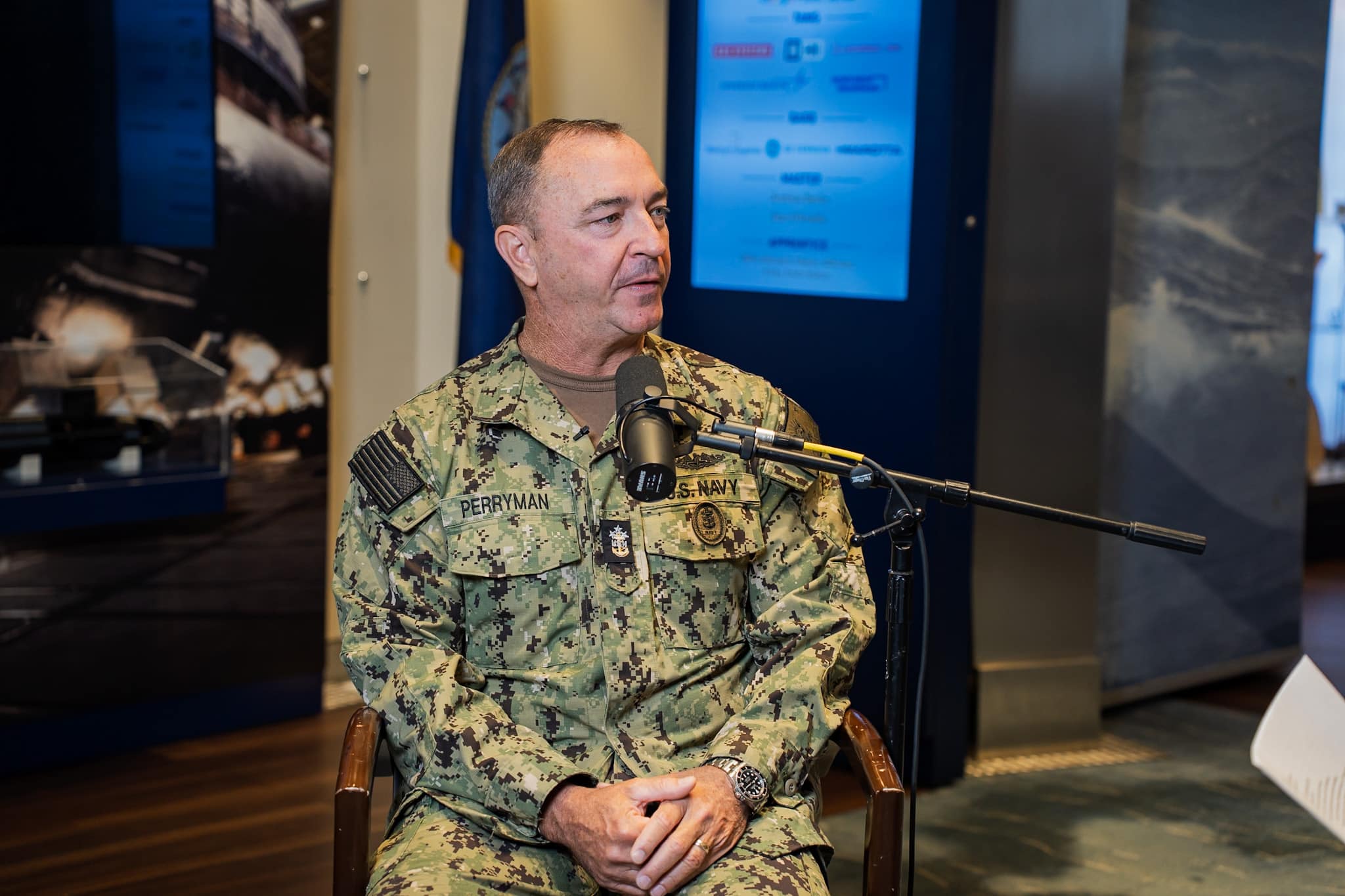
A lot of the days of being able to drop an ODA behind enemy lines, per se, to link up with an indigenous force and be undetected by enemy capabilities. Those are dwindling significantly. Those areas of our ability to operate are dwindling significantly. I’m sure the SEALs face the same thing in the maritime domain being able to infiltrate from a couple of clicks out and get onto a beach. It’s not as easy as it used to be with advanced technologies. Correct.
That’s all true, which is why we creatively use unmanned technology and focusing on things like counter targeting, like counter scissor tea, which is such an important enabler across all of the war fighting functions to get anything to work.
When you think about the research and development that goes into the capabilities of the Navy 5 years, 10 years, or 20 years down the road, acquisition always is that nasty word that everybody has to use. I saw the defense industrial base saying, “Give us ideas on how to streamline the contracting procurement process, the acquisition process, because we have to be able to get things to the force faster.” That’s easily usable and not quite at times so expensive.
Rapid Innovation And Future Defense Technologies
We have seen in the combat environment in the Middle East, here are some capabilities, specifically in the defensive capabilities of the fleet has been tremendous. My question is, who are the people who are thinking of these things that are like 10 years, 20 years down the road? Whoever thought, “We’re going to need some integrated capability to protect an entire carrier strike group from, 50, 70 incoming missiles?” We’re going to knock them all down before they hit the rocket booster, initiation coming off of the land.
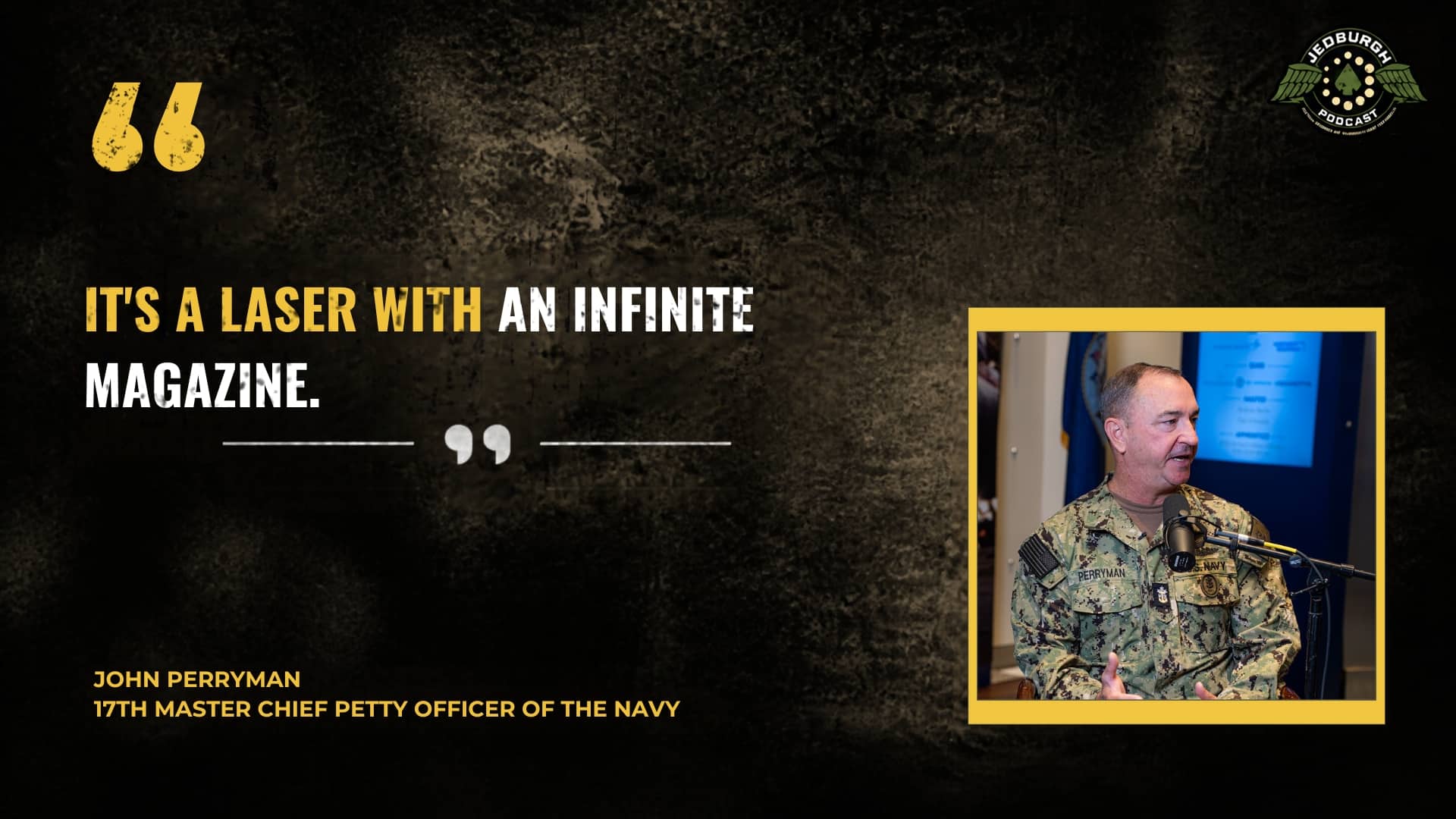
Get the laser.
You got this thing with an infinite magazine. All of my cells on my ships can be just filled with offensive capability, not defense. There’s a lot of work being done at the Naval Postgraduate School. There’s a lot of people trying to think about the future and what are the right trajectories to be on without homing in on a point solution in the future.
How rapidly are you getting lessons learned from the field or the sea? We call the field in the army, but you’re a proverbial field. How are you getting those lessons back and how rapidly is that happening to advance innovation?
We have to be sure we create a joint force that is capable of meeting the majority of the challenges we think we’ll face globally with some excess capacity.
In the last several years, we’ve gone from updating TTPs and programs in our ships from taking a year to being able to turn it around in less than a day. Not only doing that on the tactical edge, but then getting those things back to our certification organizations. The next strike groups going out there are already training on those new TTPs with our certifying groups. They know how to execute when they get into the theater. It is very rapid.
The drone and unmanned capabilities, we’ve primarily talked about them in terms of the air, but the sea-based capabilities are getting more and more advanced. They started as those that looked like little toy boats. Now there’s reports and even our adversaries have some capabilities in there and subsea capabilities with unmanned vehicles. How are those unmanned platforms reducing our standoff capabilities that we’ve enjoyed freedom of maneuver for decades?
We have to figure out how to use them, and what are their proper roles, especially for someone like the US Navy. We have to be able to defend against them. Those are very location-specific problems that because we’re a blue water global navy, we’ve got more room to maneuver in that space than let’s say ground forces in Ukraine do.
We are actively working on it and thinking about what is our unmanned kit going forward, what’s reasonable for us to expect to have, and then how do we defend against what an adversary may have. The Pacific Ocean is like the four Atlantic oceans. We just had this tyranny of distance when it comes to this stuff that is a little bit more difficult problem than some people realize in unmanned space.
Navigating Global Threats And Regional Superpowers
You mentioned the nuances and the complexity of the various global domains that you have to operate in. We’ve seen over 3 or 4 times probably in the last 10, 15, 20 years, this push that we need to be Pacific focused. The shift to the Pacific. We’re going to get everybody out there. Let’s build capability out there, then we get sucked in the Middle East, then we have a land war in Europe that we didn’t expect since World War II.
South America has become a focus now with drug boat interdiction and counter narcotics. You have to prepare a force to be globally capable. Now, you have some luxury of the Ford deployed capabilities and the various Fleets deployed in Ford environments. When you look across the world and you assess these regional threats, what do you view as the largest threat?
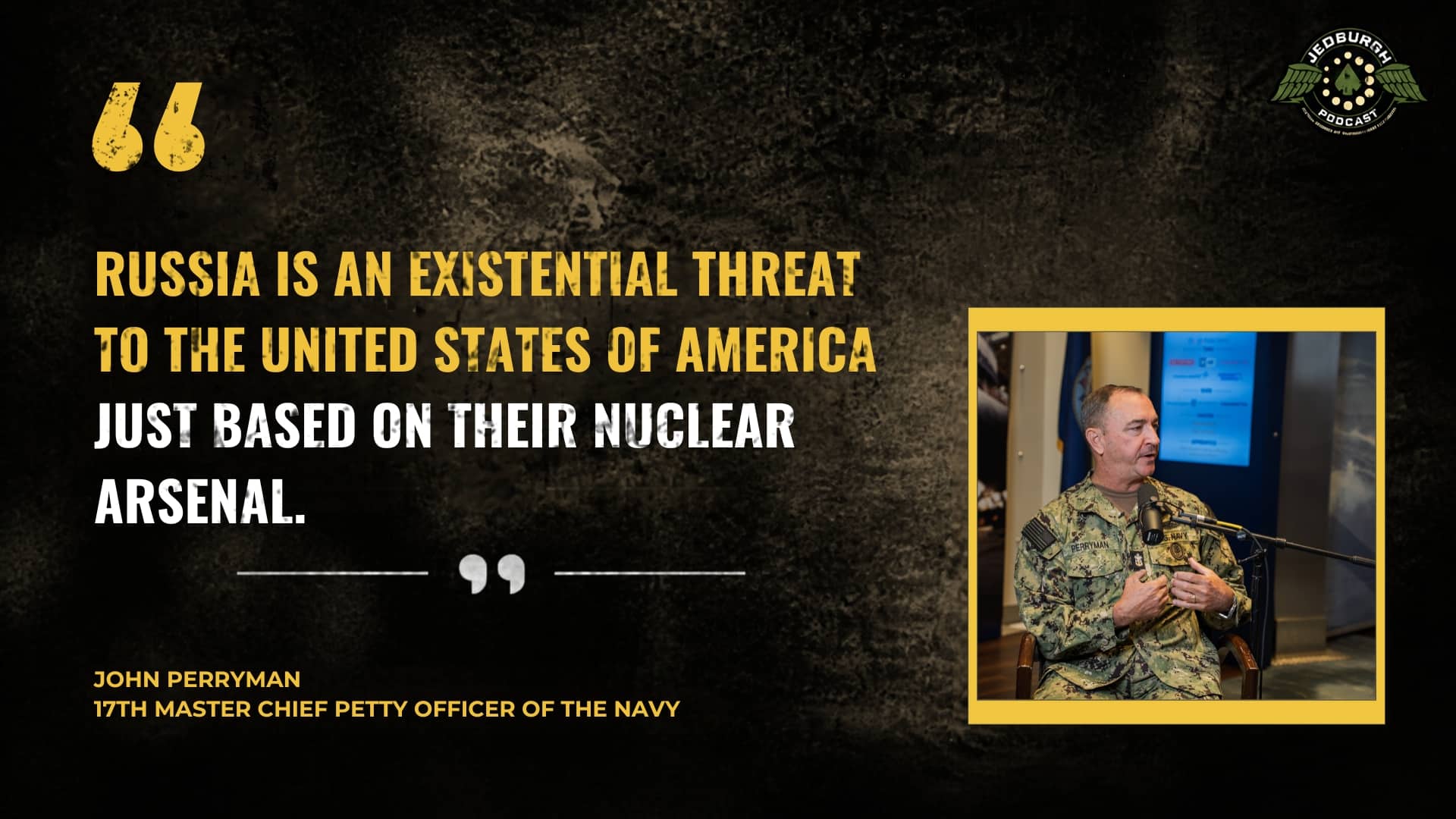
Given your point about, every time I’m going to focus on the Pacific, I get pulled somewhere else. We have to be able to think through what we think are the kill chains we’re going to need in the future? Regardless of what our adversary is. China’s helpful because they’re a pacing threat, so they help us think about those things.
The thing we have to be sure we do is create a joint force that is capable of meeting the majority of the challenges we think we’ll face globally with some excess capacity, and understand we’ll need some offset and tailored capabilities to deal with a higher consequence, low probability event. I know that’s a non-answer. China is the pacing threat, but I just worry if we get too focused on them, I’ll build a Navy that’s tuned to try to stop an invasion of Taiwan and won’t be ready to do the operations like we’ve had to do over the last ten months.
Our NATO allies and even our non-NATO allies have naval capabilities. How does our Navy integrate and work across our allies and our partners?
It depends on which one you’re talking about. There are some partners where we’re definitely much more interoperable with. There are others that we’re trying to bring along to be more interoperable. We do have a very good understanding of what each one is good at in their current states. We spend a lot of time working with them, trying to bolster what they’re good at and then build extra capability so we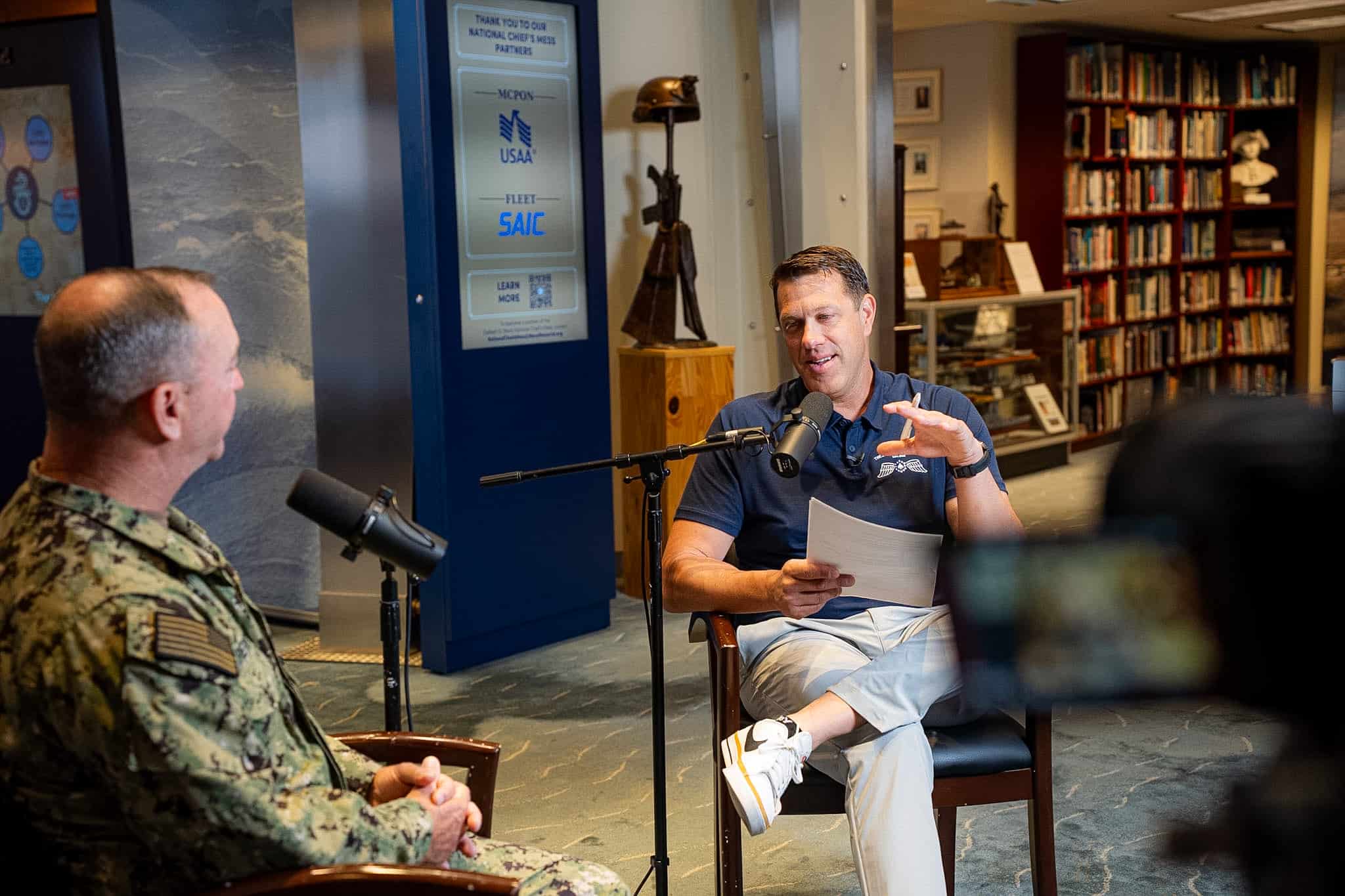
You’ve been in the role for a year. Presumably you have about three years left. Where do you want the Navy to be in three years?
That’s a good question. Where I want the Navy to be is in a better spot than it was. One of the things I’m working on to make sure is different when I leave the Navy is how we train an enlisted sailor. We’re very much locked in a 1960s industrial age way in which we train sailors. There’s a much more effective way to do that. I deliver a sailor to the fleet who is ready on day one to do meaningful work without a lot of extra work added on by the gaining command. If we can get to a point where I’ve done that, our sailors will be happier because they’re more capable.
The fleet receiving them will be much happier because they have to do less things to get them ready to start at apprentice level tasks. I’d like to see significant improvements in some quality of service stuff, which we’ve made some pretty good investments in 2026. If we can continue those, we’ll be in a much better place with those as well. I’m pretty happy with the way we operate. Exhibit A is Epic Fury.
This is a test question, but this is the last question. 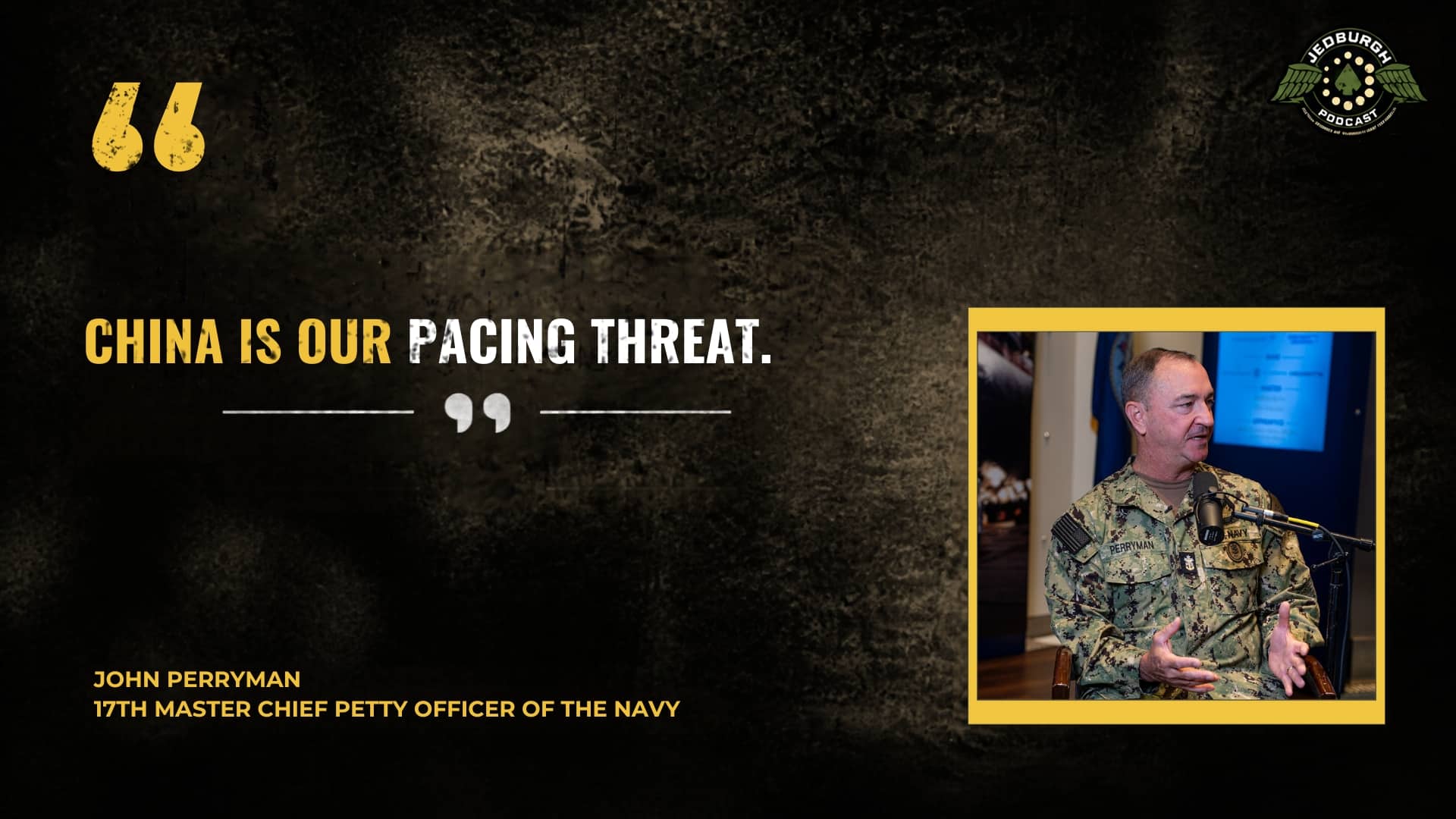
They could focus their efforts on more complex challenges like subversion and sabotage to prevent the Germans from reinforcing the beaches. There are habits that every leader has that set the conditions for success in their world. What are the three things that you do every day to set the conditions for success in your world?
Personally, one of the things that is very important for a leader to do every single day is to try to learn something new every day. It’s said another way is to be a lifelong learner. You can never as a leader get to the point where you assume everything. If you do that, it’s not good. You’re not setting conditions for people who work for you to be successful on a day-to-day basis. Being a lifelong learner is very 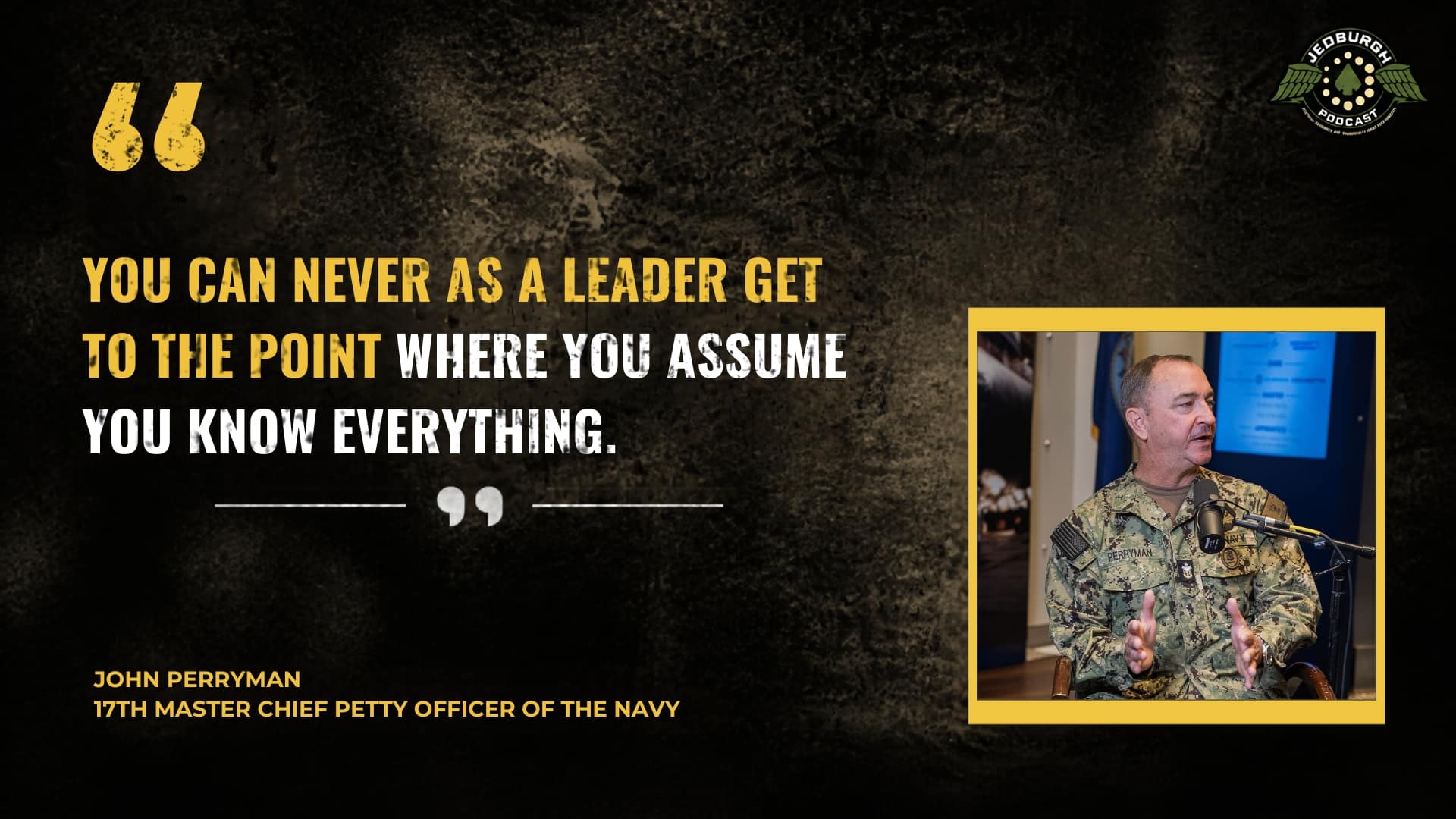
Coupled with that is you have to give yourself time to think. Too often for our very senior leaders, they get locked into like, from 07:00 to 18:00 every day. It’s like meeting and meeting. If you don’t have time to think about things, then you’re also not in a very good spot. The other thing you have to be good at as a leader thinking through how to lead organizations is thinking through how you get input and accept feedback.
If you’re a lifelong learner and you give yourself time to think and you’ve devised a very good way for anybody in the organization to give you feedback, then you’ve probably set three pretty good foundational things that can help you lead an organization.
Lifelong learner, time to think, and how you get feedback. It doesn’t matter what branch you’re in or what you’re doing after because these are things that I struggle with now running my own company, with time to think of being like the big one. I had a general say that to me when I was a general’s aide. I was like, “What the hell are you talking about? ‘We just need time to think?’ That’s crazy.” As you get older and take on more responsibility, you feel like you have no idea what’s going on when you need to know the most about what’s going on. That is, you don’t have time to process that information.
A lot of my best thinking is when I’m working out in the morning, because the day hasn’t started. I do think, to your point, you have to figure that out, because the more senior you get, y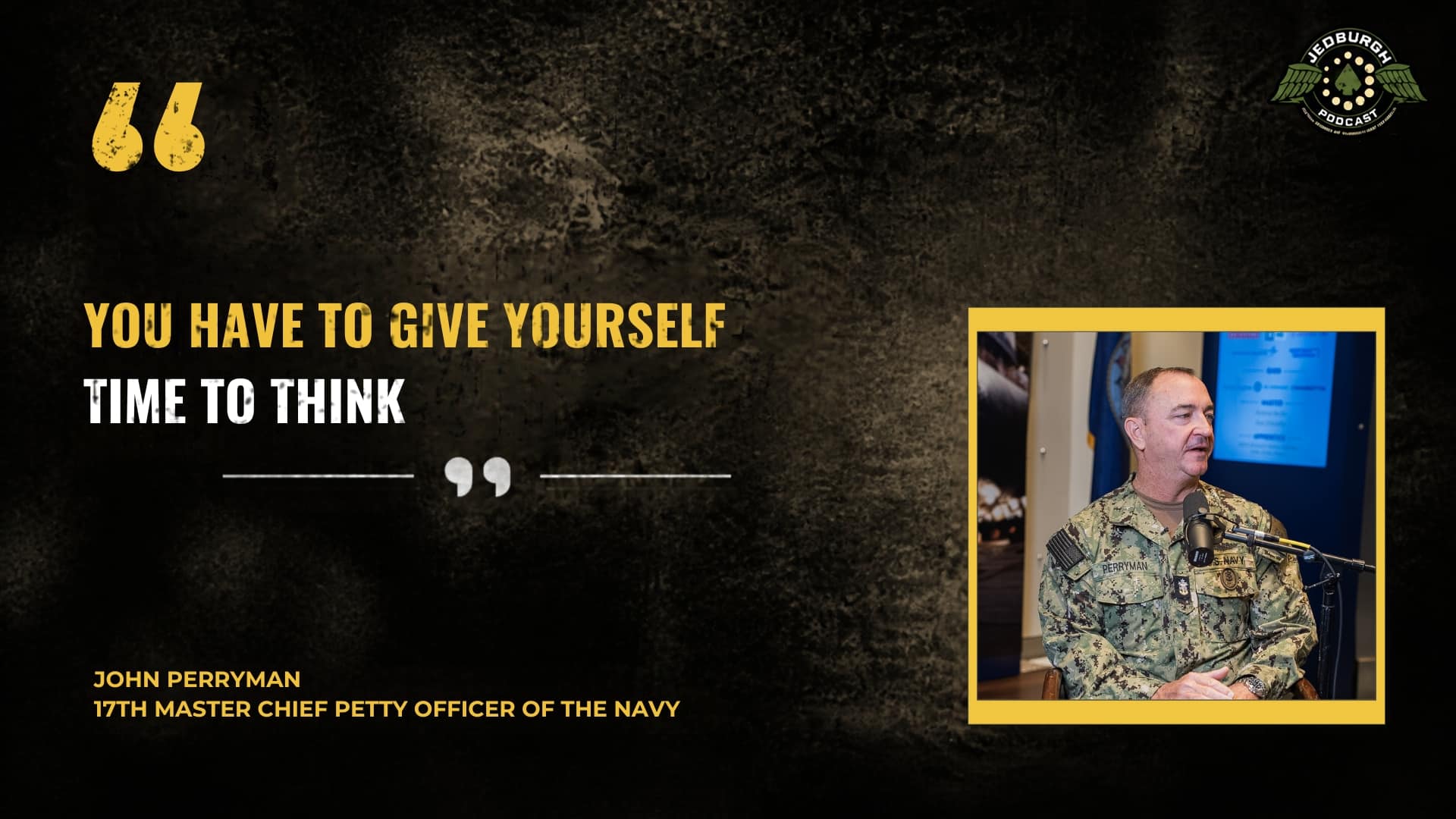
I agree with you.
Hopefully, I passed the test.
It is very important for a leader to try to learn something new every single day. You can never get to the point where you assume you know everything.
You passed the test. We had three guys getting into a fight, Civil affairs and PSYOPs. First SFC. The CA commander gave his and the outgoing PSYOPs commander was like, “Those sucked. You need to do it again.” It was crazy. I never had that happen but those guys were funny. I appreciate taking the time to sit down with me. Special thanks to the Navy Memorial here in DC for opening up their space and sharing this with us, and allowing us to sit down with you. The Navy is paramount.
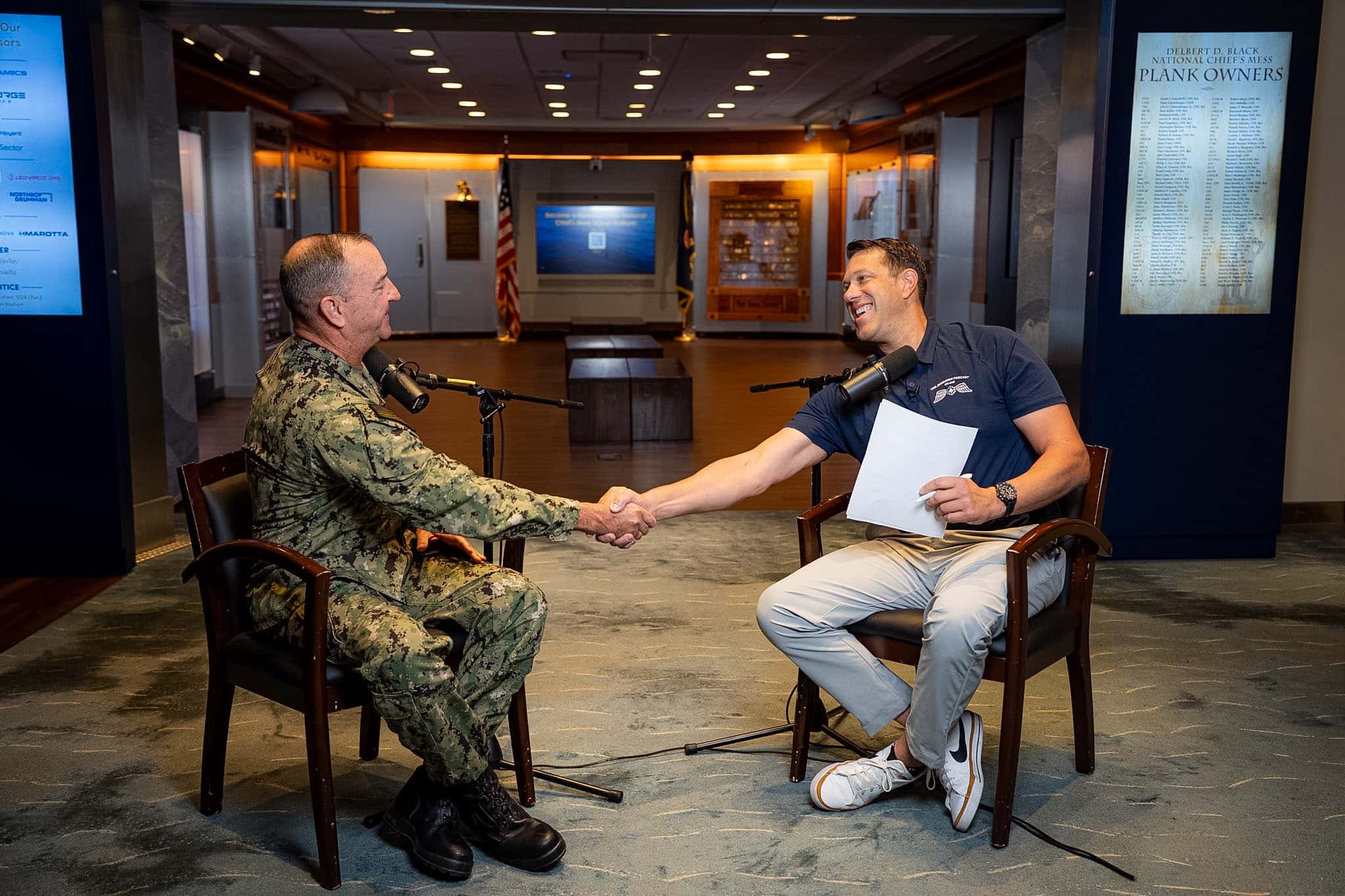
Thank you very much for having me. To your point, it does take our entire joint force. Which services in the limelight changes based on what we’re doing, but I’m incredibly proud to be a sailor, but also to work with all my joint force teammates in the building and throughout my career. I very much appreciate what you and the show do every day to highlight the things that our military leaders and different organizations are doing. I’d also like to thank the Navy Memorial for letting us do it here. Thank you very much.
Thank you.
Important Links
- John Perryman
- The Jedburgh Podcast on YouTube
- The Jedburgh Podcast on Apple Podcasts
- Green Beret Foundation


