Who’s more important? The operators on the ground or the aviators in the sky? It’s hard to seize the objective without boots on the ground; but if you can’t get to the objective in the first place, there’s no mission at all.
The reality is that operators need aviators and aviators need operators. Green Berets and the pilots of the 160th Special Operations Aviation Regiment share bonds that transcend their MOS and their mobility platform.
Live from the 2nd Annual Stars and Stripes Classic, I sat down with Chairman of the Green Beret Foundation retired Lieutenant General Ken Tovo and Chief Warrant Officer Sean McCormick to talk about what it takes to build true interoperability between air and ground units, and why there is no such term as “more important.”
Chief McCormick served as a lead pilot in the 160th SOAR after a career in 75th Ranger Regiment; he also served as General Tovo’s pilot while the General was the USASOC Commander. Their partnership and friendship provides a rare perspective on the leadership, trust, and relentless commitment that define Special Operations.
Together, they shared how those experiences shaped their understanding of teamwork, mission focus, and the ability to take on any challenge. They also share an unknown secret about GBF’s upcoming POW/MIA recovery missions with Project Recover.
The Stars and Stripes Classic is more than a lacrosse game. It’s a moment to honor the warriors who always step forward, the families who support them, and the community that preserves their legacy through the Green Beret and Navy SEAL Foundations. Special thanks to the Premier Lacrosse League for hosting another thrilling game.
Follow the Jedburgh Podcast and the Green Beret Foundation on social media. Listen on your favorite podcast platform, read on our website, and watch the full video version on YouTube as we show why America must continue to lead from the front, no matter the challenge.
—
‐‐‐
General Tovo, Chief McCormick, welcome to The Jedburgh Podcast.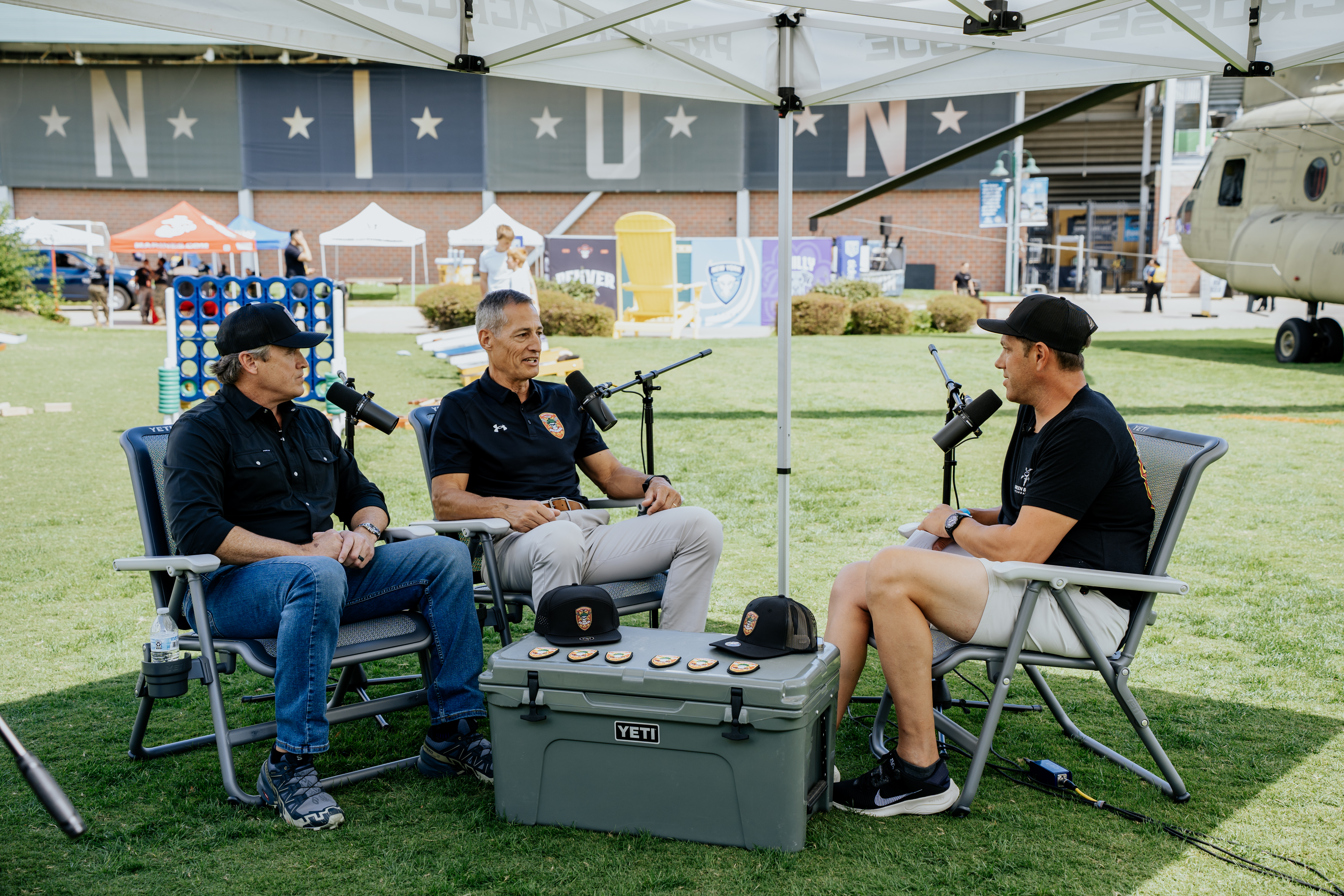
Thanks.
Thank you.
Happy to be back.
You’re a real regular on the show.
I’m a repeat offender.
Sean, your first time on The Jedburgh Podcast.
It is. It’s an honor to be here. Thank you for having me, especially sitting next to General Tovo.
Thanks for being a loyal fan.
Thank you.

I know you’ve been watching a number of episodes for quite a long time. We’ve known each other for several years now. You guys have known each other for quite a long time. That’s going to be the focus of our discussion here and something that’s come up in a lot of different conversations. Sir, you had the opportunity to serve as the USASOC commander, where you presided over our ground forces, our Green Berets, our Rangers, but also the 160th Special Operations Aviation Regiment.
We have been absolutely fortunate to build a great relationship with the 160th for both the foundation and through the podcast and had the opportunity to go up in an MH-47, go out to the range, see the Little Birds which you used to fly, conduct some live fire training, and have a great conversation with their commander, Steve Smith, and probably the top pilot in all of the US Army, at least when we look at the amount of deployments that he has had.
We sat down with their chief warrant officer there, too. That was an absolutely incredible conversation to talk about what it means to fly in these aircraft that sit behind us, and then the air-to-ground integration. As the Green Beret Foundation, we are very focused on our guys on the ground who sit in the back and hop out of these things, but we don’t get there without the aviation component. I wanted to start there. We can also start with your relationship, because Sean, you used to fly for the General.
I did. I had the unique opportunity after my time in the 160th, flying the MH-6 Little Bird at the company level for ten years. I had the opportunity to then go into the fixed-wing community, and down there at USASOC Flight Company at Fort Bragg. I was very fortunate to be able to serve the last four years of my career in that unit and be able to fly General Tovo and General Beaudette during their commands there. It was a great honor, a great experience, and there were a lot of good stories about that.
It takes a special pilot to fly that aircraft, because, correct me if I’m wrong, it’s the oldest C-12 in the Army fleet.
It was at the time. They got rid of it after you and me retired, but they have a newer one now.
Thank goodness. I don’t know if this is true, but I’m told it was a confiscated drug trafficking plane. I think General Brown, heavy, big in the aviation community at the time, who was USASOC commander, somehow finagled a C-12 for USASOC.
A little bit of nostalgia back in that one.
On one hand, I’m sorry to hear that the plane is no longer a part of the fleet. On the other hand, God bless them for getting a new plane. I’m sure the current USASOC commanders and the USASOC flight detachment are appreciative of having a newer aircraft.

Sir, let’s talk about the importance of that integration, because as you commanded both of these units, getting them together and understanding interoperability is critical. How do you define that? From a leadership position, when you look at these two very different, distinct units, when they bring the fight to the enemy, they’re doing it together. What does that look like?
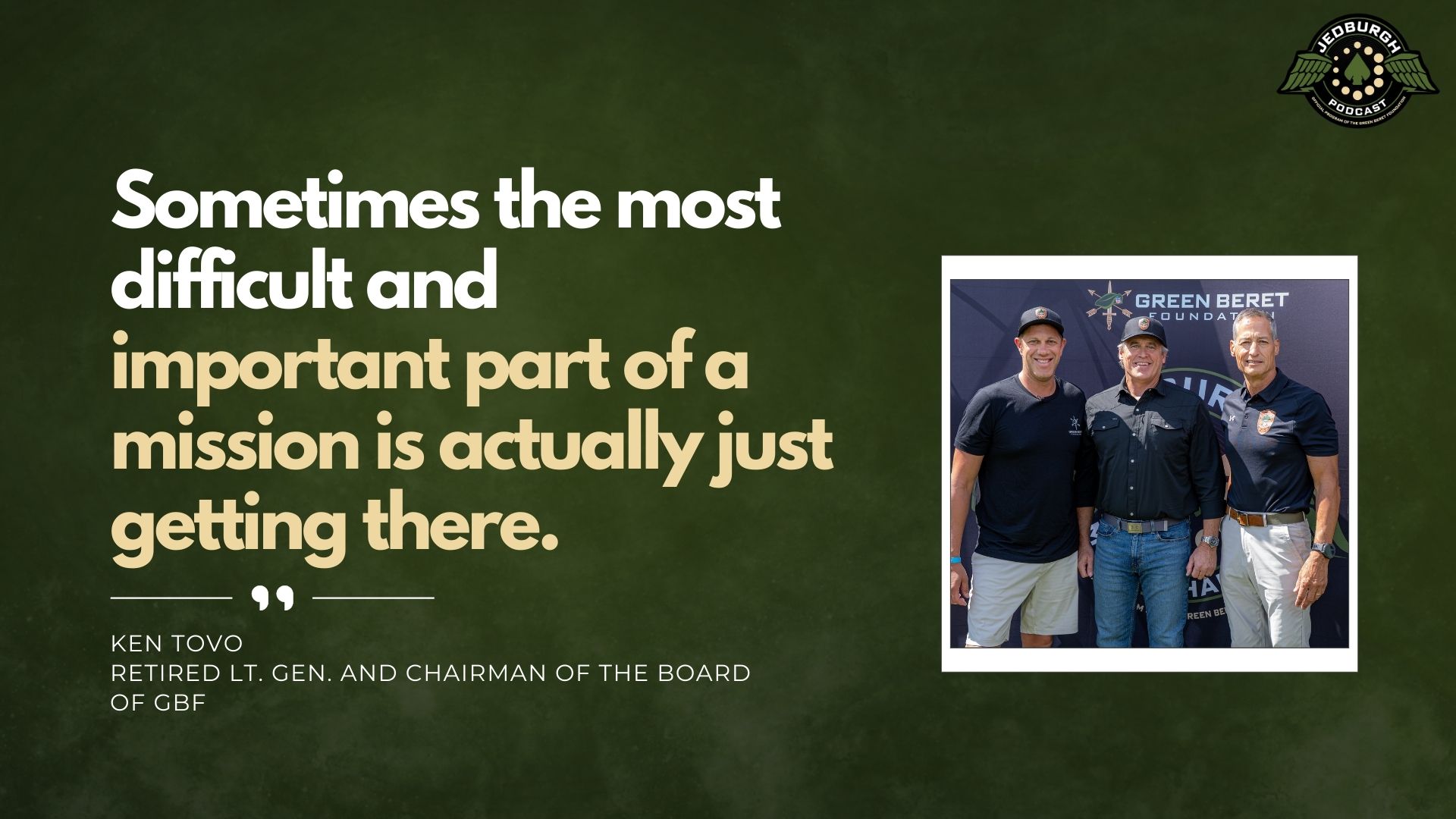
All of our SOF tribes, as we call them, have their own culture and their own capability set. When the team is optimized, all those pieces and parts have a role. The linchpin changes depending on the mission profile. Sometimes, the most difficult and important part of a mission is getting there. In that kind of a mission, that’s the 160th. They’re the key players. We’ve got our Air Force Special Operations Community that supports as well.
When you’re talking in the tactical realm, it’s usually the 160th that’s getting special operators to the X or infilled into a denied area or wherever they have to go. It’s all about trust. The ground folks trust that the aviators are professional and ready to do the mission. If they tell you that there are some challenges and you might want to think about this or that, they trust us to defer to their experience.
Planning is front and center. They harp on planning as a Green Beret, but I would say that when you look at the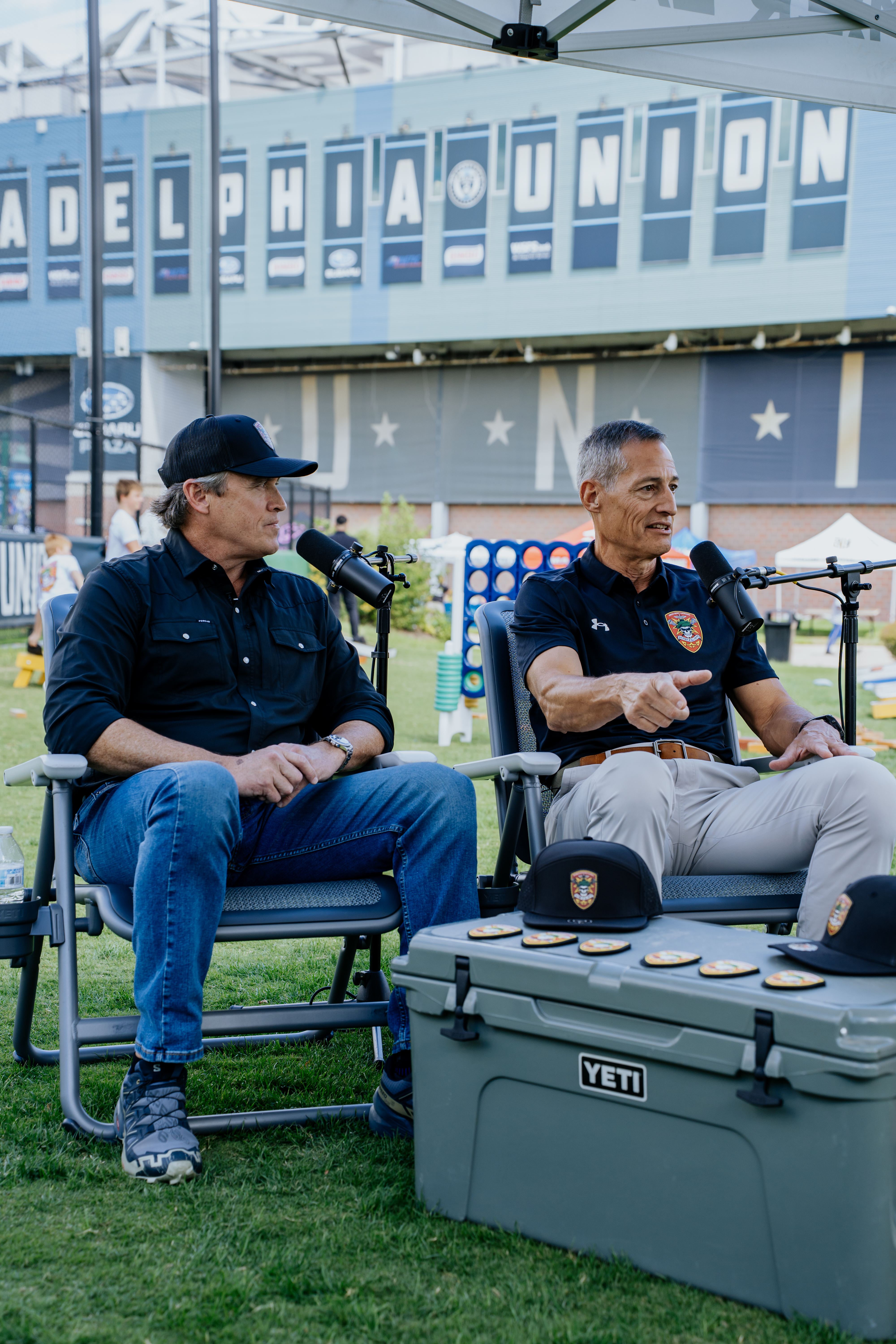
With the interoperability, getting the ground force to the target, in many cases, I’ll speak personally about that, doing the forward LNO job. A unique thing that the 160th does is that we put a representative at each of our supported customers at their base. That’s where you work, and that’s where you live. That’s highly important. That’s something we’ve been doing since the late ‘80s and early ‘90s.
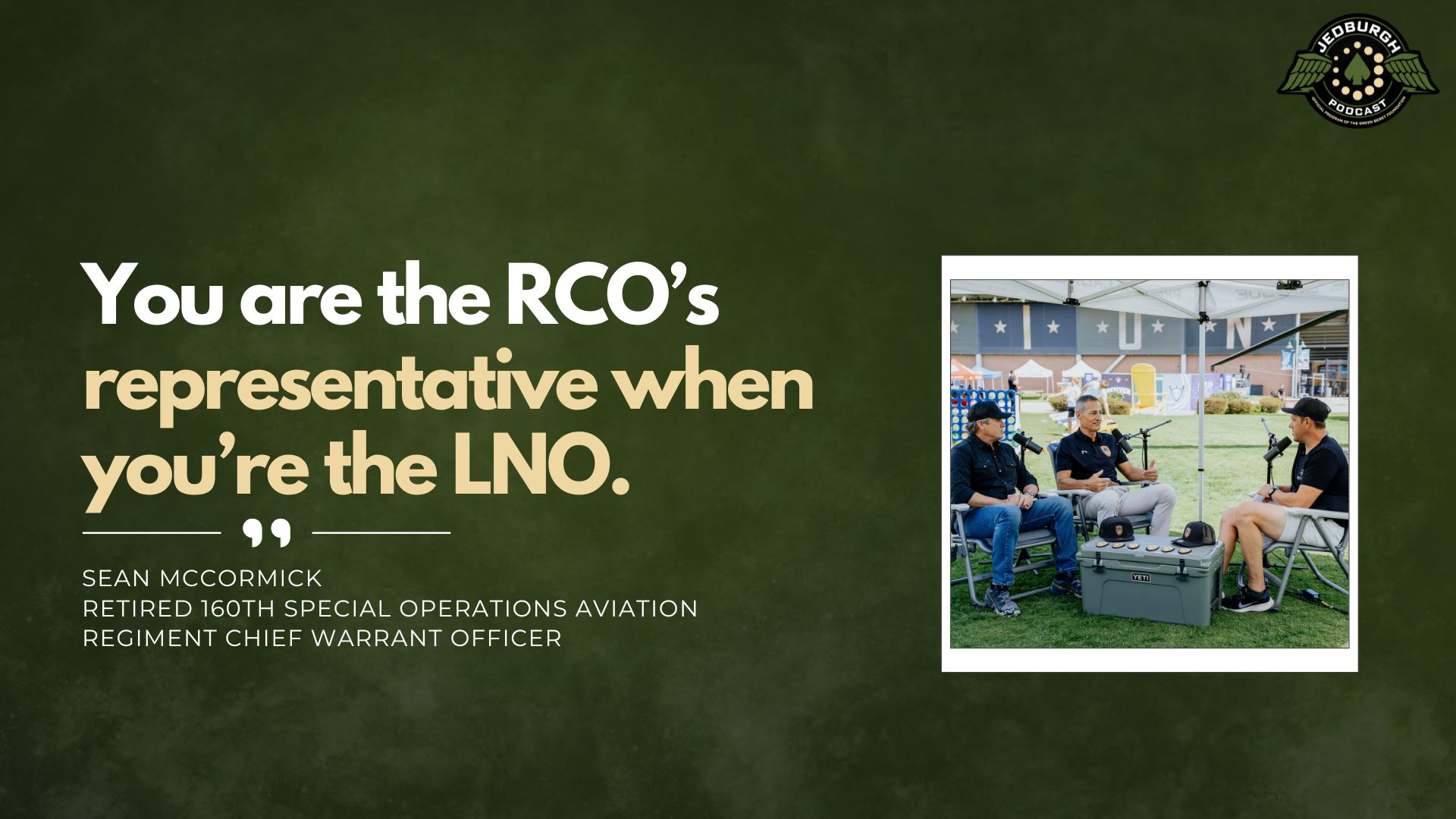
That customer can come face-to-face with me and say, “This is what we’re looking to do.” I can start doing the first cut on figuring that piece out. After that, I’ll be closely engaged with our S-3, taking it right to the S-3, taking it right to the battalion commander, or sometimes the RCO. You are the RCO’s representative when you’re the LNO. A huge first step is relationship building, being able to talk face-to-face with the ground force.
Probably the three most challenging years I ever did in the Army were as that LNO, because you’re not only making sure that you’re able to support the customer as best that you can, but you also have to keep in mind that you’re trying to do what’s best for your left and right limits in the aviation community. We have a lot of rules and regulations, as you guys are well aware. We’re trying to keep within those limits and keep within the commander’s intent. I enjoyed doing it. It was very challenging, but effective.
After I left uniform, one of the things I was doing in the commercial world was a little bit of senior mentor work. I participated in several exercises that were primarily designed on the aviation side to qualify FMC pilots in planning and leading an operation. It was a ground element to some SF-supported units, but it was incredible to watch the incredibly high-stress training environment they put those guys through to earn the qualification to be the lead planner.
General Tovo was right. If you give us a week to plan a mission, we’re going to take a week. If you give us 30 minutes, we’ll take 30 minutes, but we’re going to plan and rehearse as much as we possibly can before that mission takes place.

The level of proficiency and specialization is incredible. It’s interesting because on our special forces teams, we have our specializations in our various MOSs, but we also spend so much time cross-training. As a pilot, you can fly various aircraft, but I specifically asked in our conversation, Pete Sullivan, the question of, “Why don’t you fly everything?” They said, “You can’t be an expert if you do more than one thing.”
You would see in the Little Bird community from time to time an MH-6 guy going to be an AH-6 guy or vice versa.
The lift versus the attack version of the same aircraft.
Correct. It certainly is possible, but it’s a full-time job switch. You are switching aircraft. As Pete mentioned, and Colonel Smith, we
We’re sitting here at the second annual Stars and Stripes Classic. Our Green Berets are going to take on the Navy SEALs here in a couple of hours under the lights. It’s at Subaru Park here, south of Philadelphia. These two teams are coming together. It’s brotherly love. We’ve got the rivalry. We had the coaches on earlier. We have both coaches from West Point and the Naval Academy. They’re bringing their rivalry to fruition here, although their players are quite a bit older, as we joked about, than what they’re used to at the academies. What we’re looking at is more experience.
More experience and more season.
Maybe less experience in lacrosse, but more experience in other things since their playing days. Both sides of the field tonight are men of character who have gone through very rigorous assessment and selection processes. Whether they earned their Trident or they earned their Green Beret, they have to live up to that every day. You ran, each of you, complex organizations built on people of character. In your definition, your own perspective, what do you look for when you build these teams, and you need people to come in and operate at an elite level?
It’s interesting. You talk Green Berets, Navy SEALs, and 160th. They’ve all got their own culture. Each of them is looking for something a little bit different in the attributes they assess for and select against. At the core, SOF is about an ethos of mission accomplishment. It’s about getting the job done. No excuses. In the 160th, it’s on time, on target. It’s also a commitment that when I put you in, I’m going to get you out. In the ground forces, it’s about, “We’re going to get the job done one way or another.”
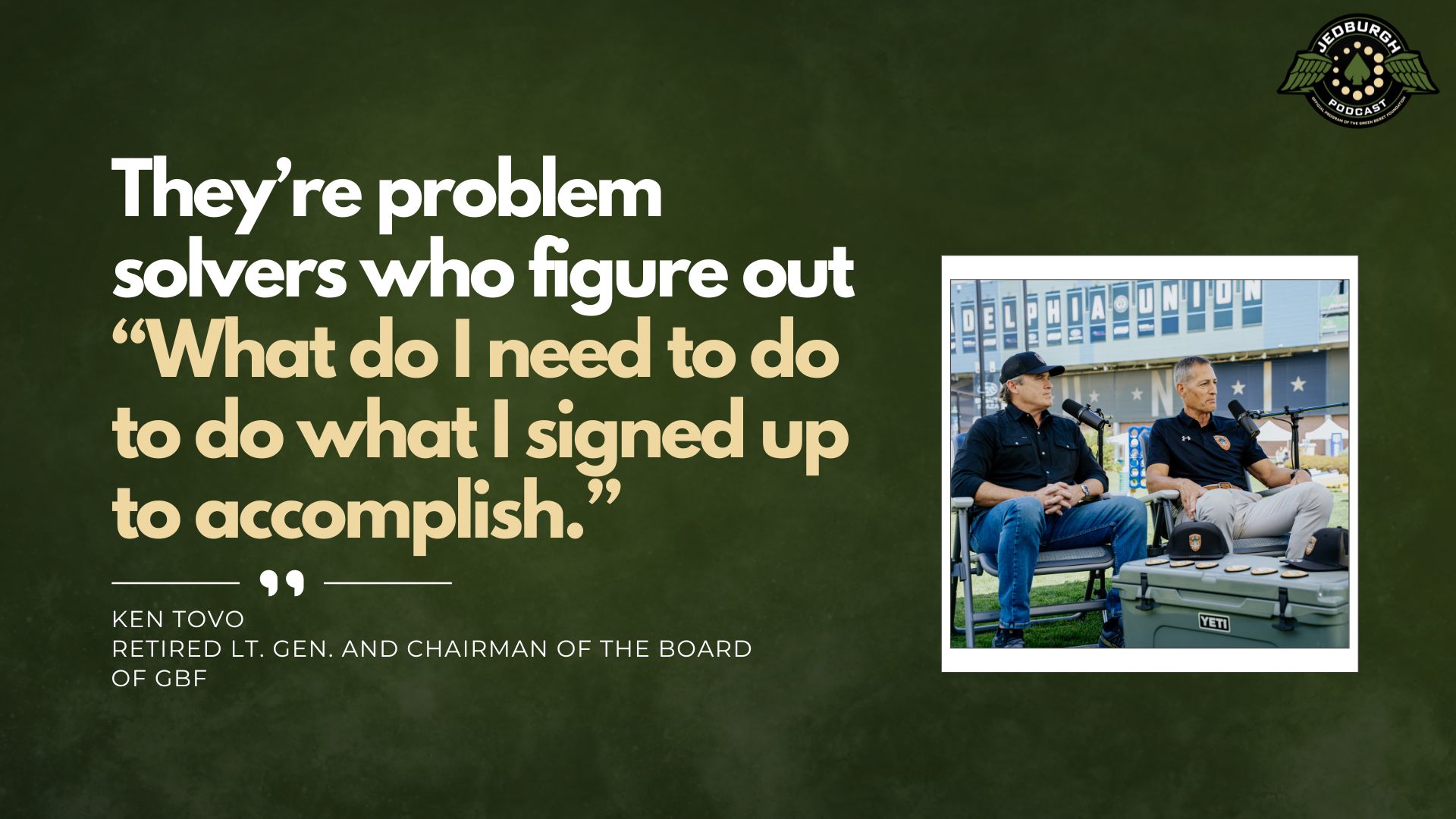
It doesn’t matter if we don’t have all the resources we wanted, the weather turned bad, something happened, or the enemy situation changed. The ethos is to get the job done. When you’re looking for the kind of person who can be a part of any of these cultures, you’re looking for somebody who isn’t looking for excuses and isn’t looking to point the finger at anybody else. They’re problem solvers who figure out, “What do I need to do to accomplish what I signed up to accomplish? How do I get the job done?” There’s no excuse. The mission has to be accomplished.
What comes to mind for me is, “Night stalkers don’t quit.” That’s something that many times, we associate with being on the objective, and certainly, that is the case. Also, it’s like General Tovo said. It’s being in those planning cells, grinding it out for weeks, months, or sometimes years to execute a mission, doing it, and having that mindset that no problem is too big. No matter what the challenges are associated with that mission, we will find a way to accomplish it.
The NSDQ, I said that on the objective, you’re one minute inbound. There’s no turning back. You’re going. You’re committed. You know that no matter what happens, you’re going to accomplish the mission. Sometimes, it looks better than others. Sometimes, it can be a little ugly, but you are going to accomplish the mission. You will not leave anybody on the objective at the end of the night.

We all have our sayings. We have our mottos. We think about “Night Stalkers don’t quit,” and the NSDQ. Your explanation of that is spot on. I know, not having served in the Special Operations Aviation Regiment, that’s something that when I look at that organization, what comes to my mind is exactly what you said. No matter what’s going to happen, these guys are going to be there. You think about an organization like the 160th, which has been perpetually deployed since its inception. All of our SOF forces have, in some capacity, but our special forces groups have, by and large, rotated. They’re bigger.
You have a smaller footprint, a smaller organization that has been deployed, the first guys in Afghanistan. I’ve had
For those who don’t speak fluent Latin, it’s to free the oppressed. It speaks to the central purpose and operating methodology of Green Berets, which is that we are focused on an indigenous force. It’s about helping a partner force accomplish what their goals and objectives are that are aligned with the US objectives. It’s hard to work with a partner force if they want to go left and you want to go right. Generally, we pick our partner forces in places where we are trying to help them achieve a set of objectives and goals that are similar or at least close, almost aligned with US objectives. You look at the early days of Afghanistan that you just mentioned.
We had Fifth Group on the ground working with the Northern Alliance. They both wanted the same thing. It was to overthrow the Taliban. In the end, most of the heavy lifting is done by the partner force. The Green Berets are there to support the indigenous force. They’re trying to accomplish objectives through the partner. The motto captures the spirit of the fact that when Green Berets are operating, sometimes, we’ll do things unilaterally, but by and large, 99% of the time, we’re working through a partner force to accomplish whatever our mission is. De oppresso liber highlights that. It comes from the roots of our unconventional warfare focus, which was to go into Eastern Europe back then and help those countries overthrow Soviet oppression.

We’re having the opportunity in this year’s game to honor our predecessors of MACV-SOG, Green Berets’ Vietnam mission. We’re going to have a couple of former operators who served in MACV-SOG. They are going to come down over and sit down with me. They’re going to share what it was like to live that mission. They are unsung heroes of a generation that came after our founders of the regiment who served on those Jedburgh teams that we’ve talked at length about over the last couple of years, but a group who suffered a lot of loss and carried a tremendous amount of the burden of the Vietnam conflict, most of which the public doesn’t know about.
Even in our own community, a lot of what MACV-SOG did is not even part of history because it’s been classified until fairly recently. Any Green Beret worth his salt understands a lot of what Green Berets were doing in Vietnam, working with the Montagnards, the indigenous programs that we had. Everybody understands there was this thing called MACV-SOG, a joint force that was doing the highly classified and high-risk, high-danger missions. A lot of it’s just bits of legend and lore. Since declassification, they’re starting to get some books out and some more information.

From a Green Beret Foundation perspective, we’re honored to be able to honor and acknowledge the legacy of MACV-SOG at this game because people should know about it. As you mentioned, the small teams going into denied territory generally suffered over the course of the years, 100% casualties. Almost everybody was at least wounded once or twice. The KIA rate was significant, 50%, if I recall correctly. It was a tough place to be. Everybody knew it, but they fought to be at the sharp, pointy end of the spear, doing the hardest missions in support of the nation.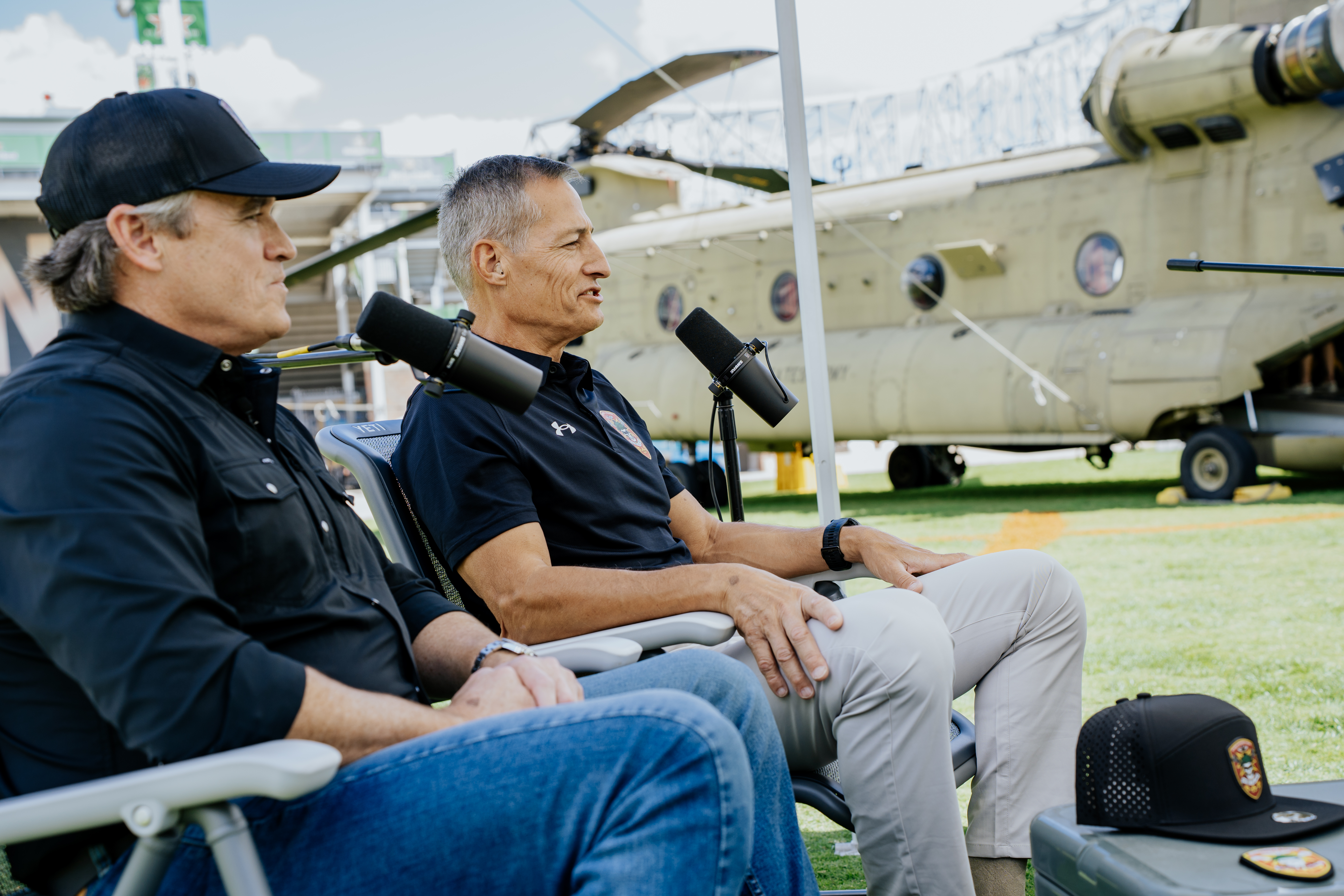
The foundation has made that commitment. They made the commitment to Green Berets of all generations to support them through all the various programs that exist. At this point, where we have a generation in the Vietnam era who is aging and has requirements, now is the time for us to make a full effort.
One of the unique things about the Green Beret Foundation as a nonprofit is that we do support the active force and the veteran force. We’re not picking any one generation to support. If a 1950s Green Beret came to us for support that fit our mission profile, we’d support him and his family. We don’t get a lot of those calls. Most of those guys have passed away at this point. We do a fair amount of support for the Vietnam era and a lot of the veterans since then. We focus on the active force as well as their families.
One of the unique things about the Green Beret Foundation as a nonprofit is that we support both the active-duty force and the veteran force, without focusing on any single generation.
We got a lot of work to do. We had Charlie on here, the President and CEO of the foundation. We had Project Recover on as well, where we were able to discuss and have the announcement that the Green Beret Foundation and Project Recover are going to work together to bring home those who have been lost and never returned in Vietnam. I believe the number is 58.
It is 58. I was talking to him as we were doing the transition. He was telling me that 58 Green Berets are yet to be found in Vietnam from that era. Probably a significant number of them are MACV-SOG, based on mission profile, I would imagine. We’re excited by that partnership and to be able to contribute. It’s all part of the Green Beret Foundation’s approach to continue to help the legacy of the regiment.

We’ll take a pilot with us, too.
It’s funny that I walked up and saw Derek Abbey. I had no idea you were interviewing him. He and I have a meeting set up. He was going to tell me you’re the newest team member for Project Recover, which I’m extremely proud of.
Get you a C-12, you guys will be all right.
I can’t wait to start working with Project Recover and doing some hard work, going out there, digging, and looking. That perseverance that Derek was talking about, in relationship building, they’re doing a big trip now with Vietnam, to start that relationship with them. It’s huge, so maybe we’ll bring some more SOF back from Vietnam.
Serendipity of life is interesting, right?
That’s the way it works. It’s a small community.
Sean and I knew each other from when I was at USASOC. He was my pilot. We reconnected after I retired. I’m out doing yard work,
Yes, I bought the house in the same neighborhood.
He bought a house in the same neighborhood. We got together. We’re golf buddies now. It’s because I was out in my yard doing. Otherwise, I would never have known that he was there and vice versa.
General Tovo has been known to employ some psychological operations during a golf, around a golf. He definitely has the advantage there. I’m starting to catch on to some of those tricks I’m aware of. He’s always looking for an edge to win, as he should be.
Sean is particularly vulnerable to the psychological tricks of a Green Beret.
I appreciate you taking the time to sit down with me. We’re going to kick this game off here in a couple of hours. We’re looking forward to it. We’re going to get some retribution on those SEALs.
That is in the plan. I talked to the players at our dinner. Every one of them who had played in 2024, and it’s about 50/50 new players,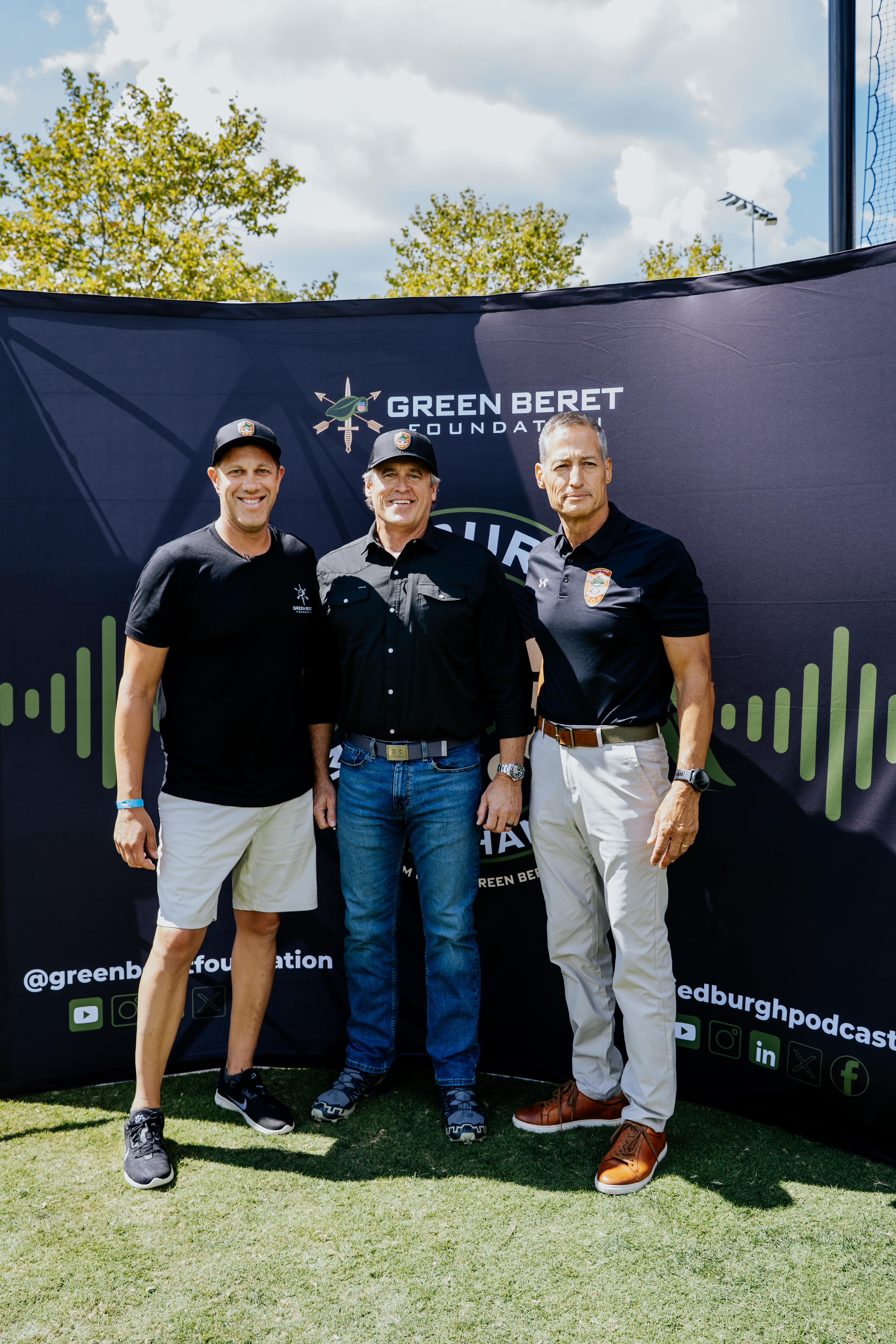
You gave your guidance. Let’s not let it get down to the last two minutes. Let’s put it away early. They’re taking it too hard.
Don’t waste the first 98% of the game. They did a great job in 2024. I was proud of them for the grit. We were down five or six at halftime, and they didn’t let it get them down. They came out strong in the second half. As I said, we just ran out of time. We’ll get them.
We’ll be on the sidelines.
You’ll be yelling.
Thanks.
Thank you.
Green Beret Foundation
P.O. Box 25138
New York, NY 10087-5138
Note: Please use USPS mail or priority mail. Do not use FedEx.
Green Beret Foundation
10205 US Hwy 15-501, Unit 26-8
Southern Pines, NC 28387-4301
Call: at: (844) 287-7133