Communication is the backbone of every military operation. How well our forces talk to each other across air, land, sea and space is what sets the American military apart from everyone else. Without communication leaders can’t lead, and militaries can’t win.
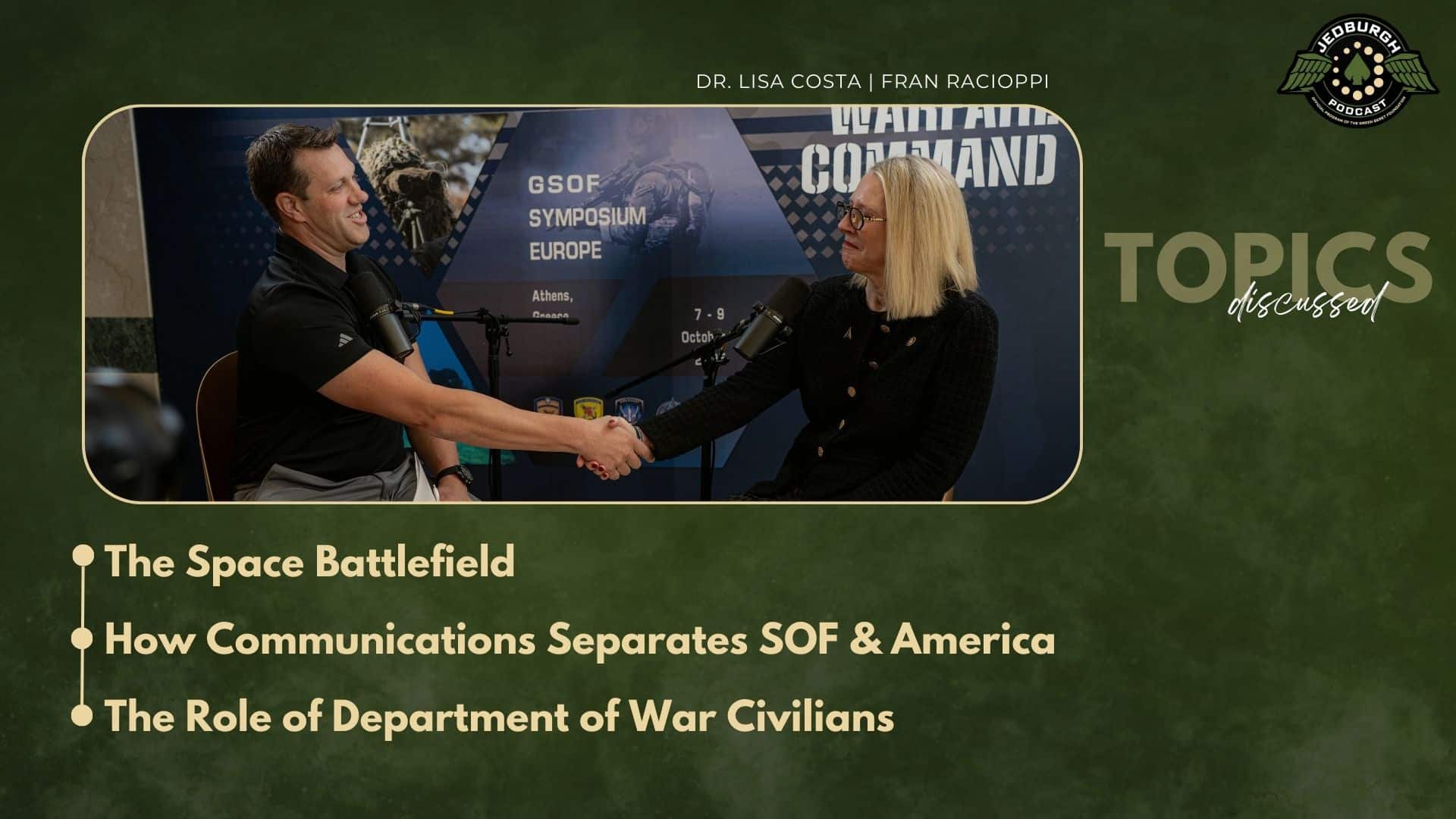
From the Global Special Operations Symposium in Athens, Greece, Fran Racioppi sat down with Dr. Lisa Costa, a leading technologist, former Chief Information Officer for U.S. Special Operations Command, and the first Chief Technology and Innovation Officer for the U.S. Space Force, to discuss how innovation, cyber, and modernization are reshaping Special Operations across all domains.
Dr. Costa brings decades of experience at the crossroads of defense, technology, and strategic innovation. From running one of the Department of Defense’s largest IT enterprises supporting elite global SOF operations to spearheading digital transformation efforts in the Space Force, she has helped architect the future of how our forces fight, communicate, and adapt.
She addressed the evolving threat landscape, including cyber attacks, space domain challenges and why staying ahead through technology, data, and innovation is no longer optional. She emphasized the importance of agility, integration, and forward-thinking capability as the bedrock of a modern force ready for tomorrow’s missions.
This discussion is about building advantage through technology, strengthening alliances across domains, and protecting America by ensuring the force evolves with the threat.
—
—
Lisa, welcome to the Jedburgh Podcast.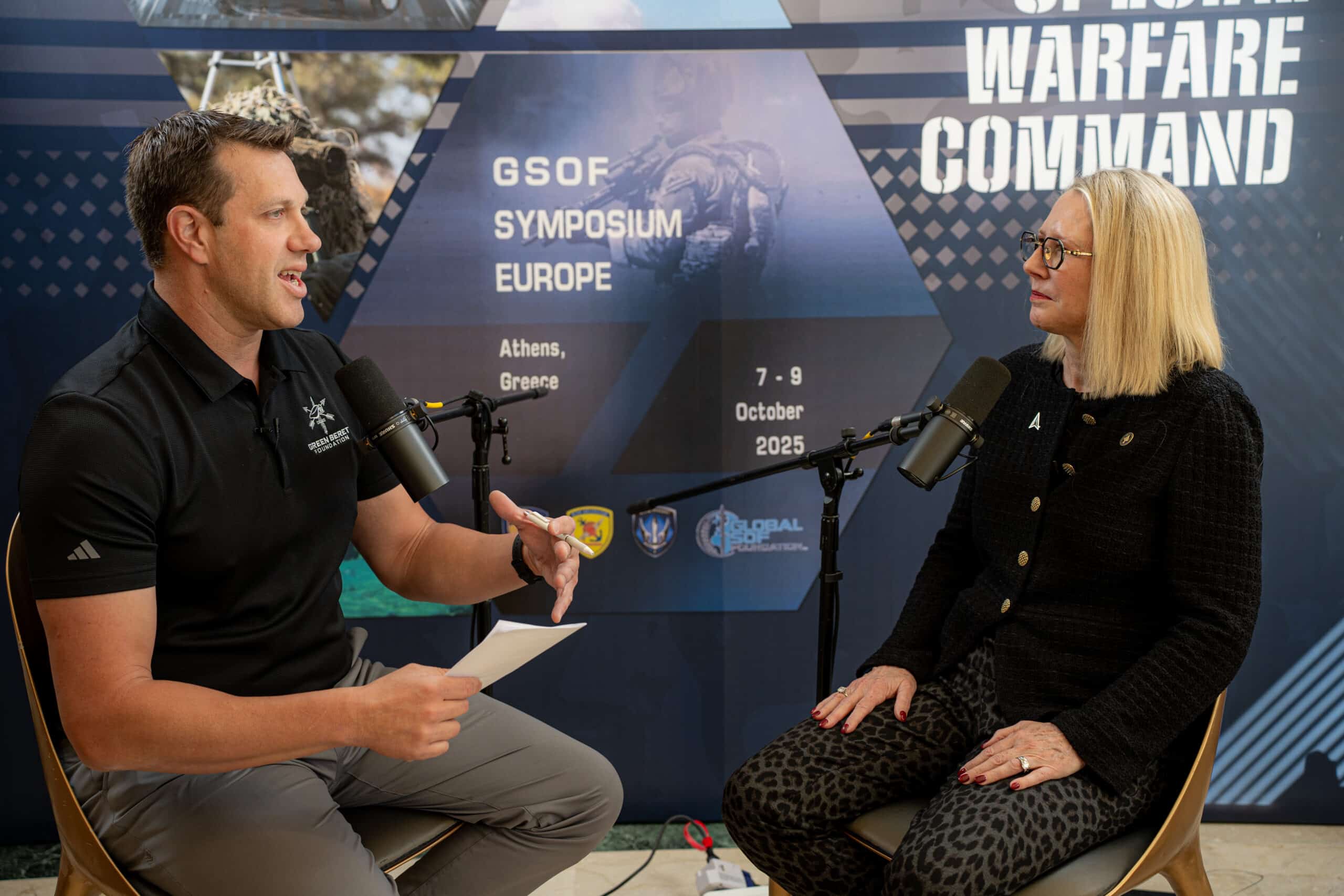
Fran, thanks so much for having me. It is an honor.
We have got the last day of the conference, but what an incredible opportunity to bring together the Special Operations Forces leaders from so many of our European allied countries, as well as many of our partners. We even had a chance, not only to talk with some European partners, but brought it out.
We had the Philippine JSOC commander here. I sat down with him for a little bit, but to have the chance to be able to see what our partners and our allies are doing across the world with their respective SOF forces has been amazing to sit through the panels. Also, to see some of the advancing technology.
You have been critical to advancing technology in both SOCOM and the Space Force, which we got to talk about. You are wearing both pins here. We are going to go super deep on what is happening with innovation and technology at SOCOM, and why it matters and also the Space Force. As a first on the Jedburgh Podcast, we never talk to anybody who served in space.
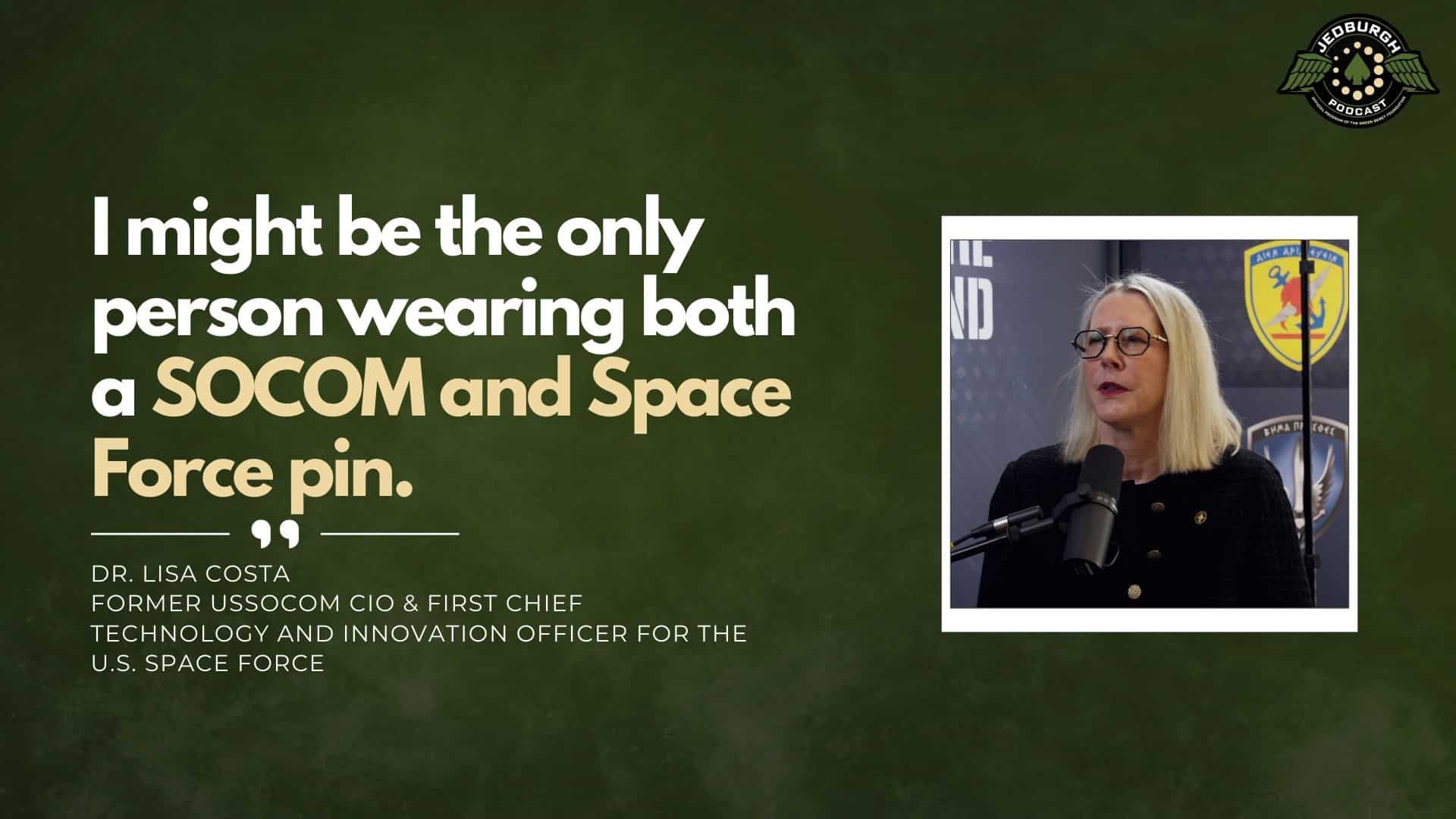
There you go. That is because we are an incredibly rare breed. I do not know, but I might be the only person wearing both a SOCOM and a Space Force pin.
That is guaranteed.
I would be a unicorn.
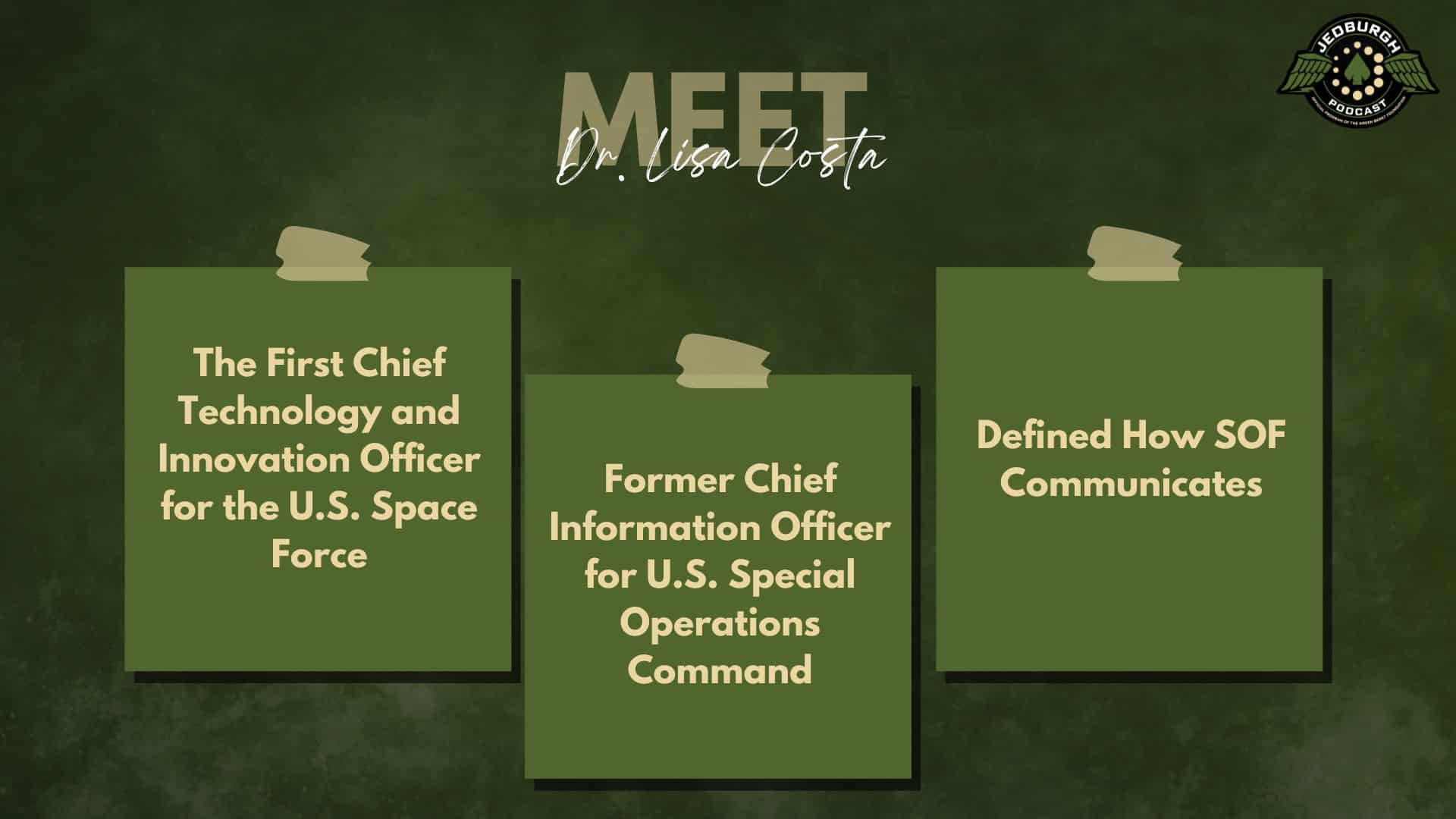
You served as the Chief Technology and Innovation Officer at the Space Force and also the Chief Information Officer at SOCOM. Can you talk for a second about those roles? Why are they important? Also, you are a civilian. Not a uniformed Department of War member. What are those roles and why are they important to both of those respective organizations?
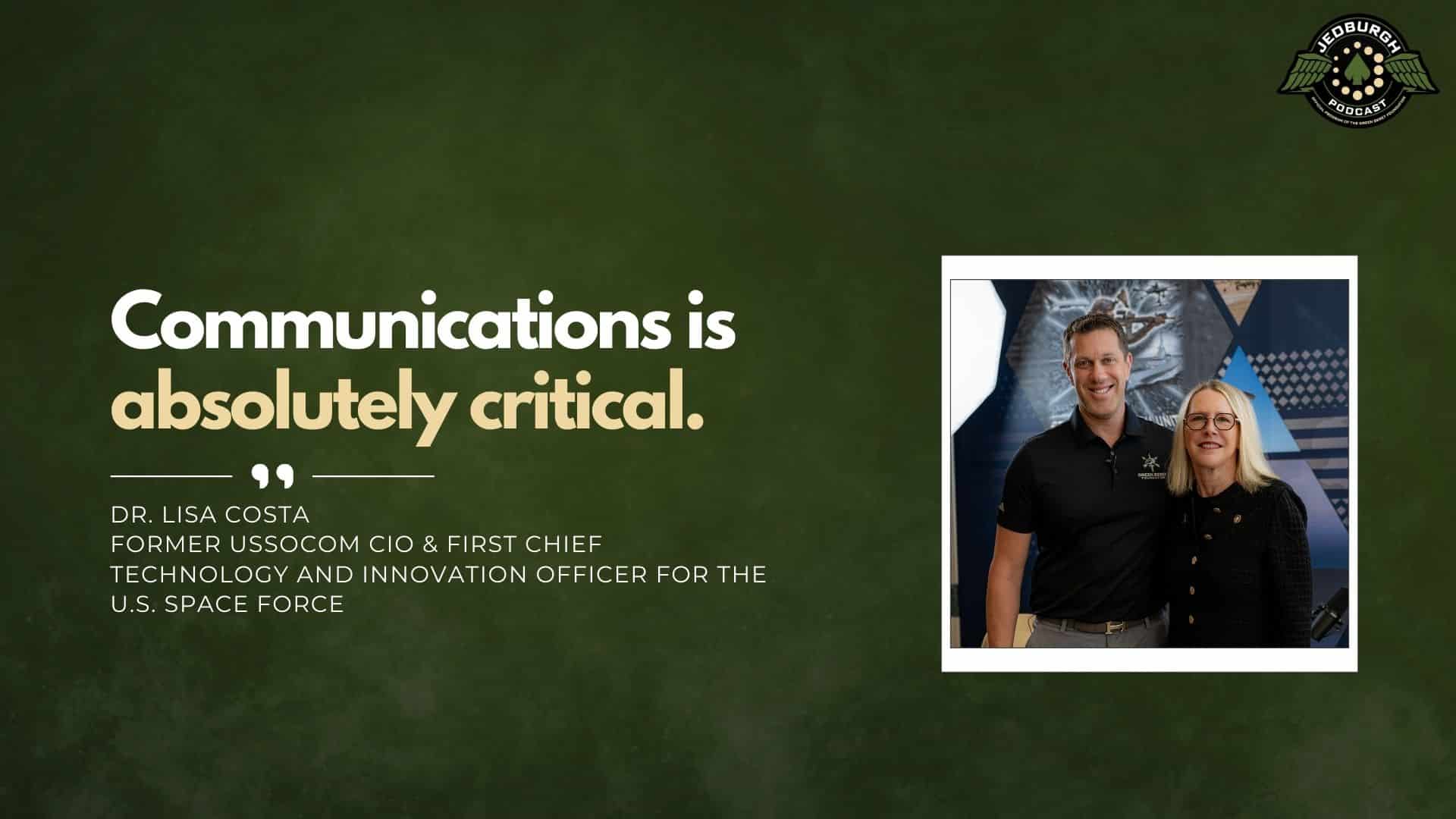
Anybody who knows the history of SOCOM knows that you move, shoot, and communicate as a military. Communication is absolutely critical. You can go back through Desert One and Somalia, and many of our failures have been because of communications issues. I am glad that communications have been covered here at the GSOF Europe conference. It is critical that we not only be able to talk to our different services.
That was the issue in Mogadishu. We had folks from the Air Force. I was there on the command floor at SOCOM and CENTCOM, running between the command centers when that was happening. To see the inability of our Air Forces not being able to talk to our ground forces was heartbreaking. It was unfolding in front of your eyes.
That is why that role in SOCOM is critically important. Any of our signals, intelligence people, or any of our comms people are critical to the current fight and no-fail missions because it is all about no-fail missions and bringing our people home. In Space Force, it is a little different. We do not necessarily have guardians up in space.
We are focused on making sure that we are providing total coverage of position, navigation, timing and communications to the forces and to the other services. It is ground, sea, air and I like to say satellite to submarine. From that perspective, it is very similar. At SOCOM, as the J6 and the CIO, you own satellite-to-submarine communications. In the Space Force, you are responsible for ensuring that the signal is up, running, and it is not being spoofed.
What you have seen over your career is an incredible evolution of what communications architecture looks like. If we go back not that far, we are talking about hand and arm signals to be able to communicate with our guys on the ground or between our guys on the ground. Now, just before we started, we were talking about technology that is sitting here on the floor. You can have a conversation with somebody, and through earpieces, it can isolate who you are trying to talk to and drown out everybody else.
Talk for a second about the evolution of what you have seen in communications, where we have gone in a 30-year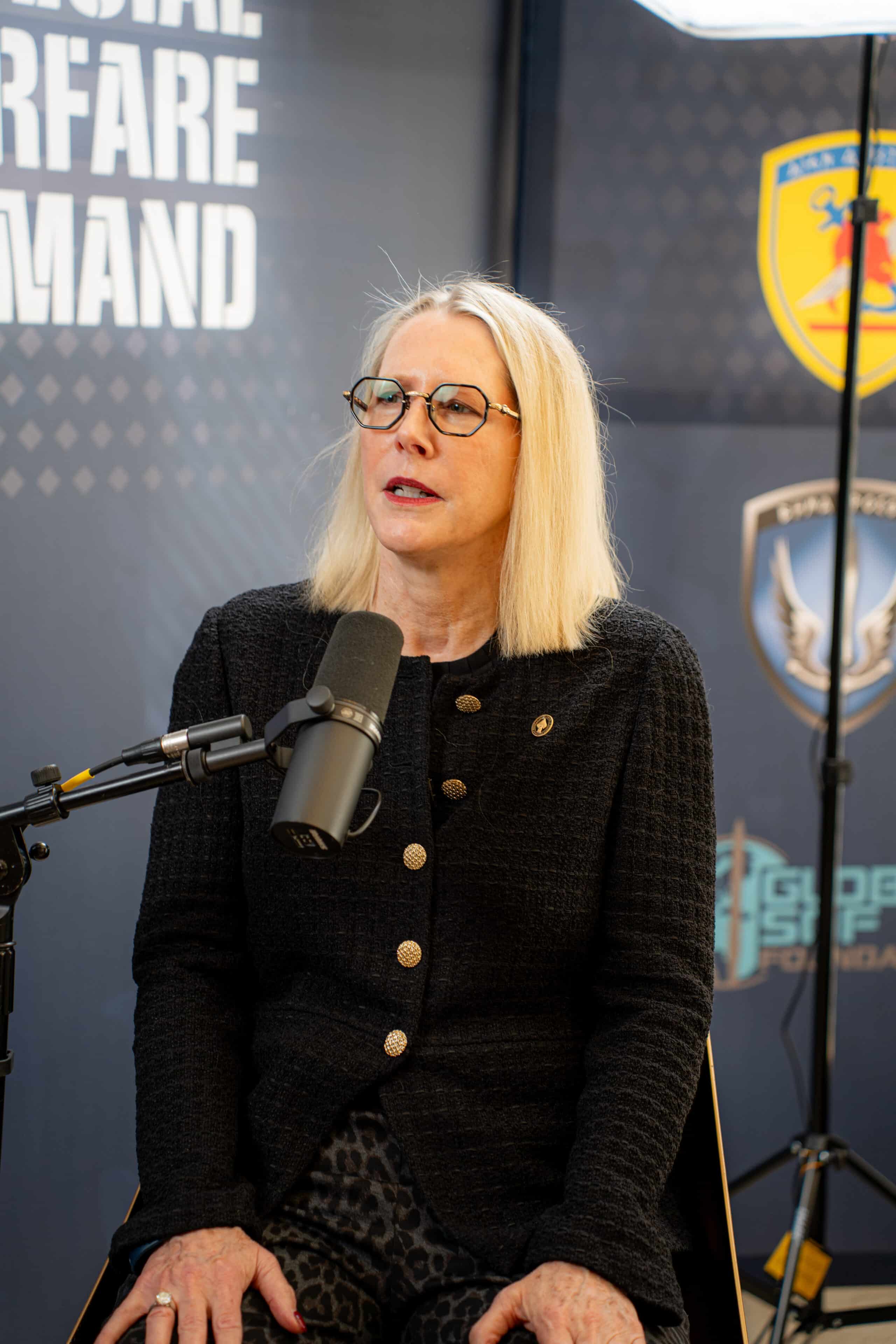
It has changed incredibly. I was giving birth in 1991 when Norm Schwarzkopf was doing Desert Storm and all of the televisions were on in the hospital watching.
Desert Storm was the first time we saw live warfare.
I got a call. I was still in the hospital. “Can you put satellite communications in, and can you design a communications architecture for the Middle East, because we think we’re going to be there a long time?” I was like, “Give me a couple of weeks to heal up, but sure.” My son ended up growing up around a lot of assaulters, snipers and EOD guys. Putting that first communications capability in. You go to Al Udeid, you would just think you were in DC. It is incredibly sophisticated. The platforms are incredible. We have got wireless capability.
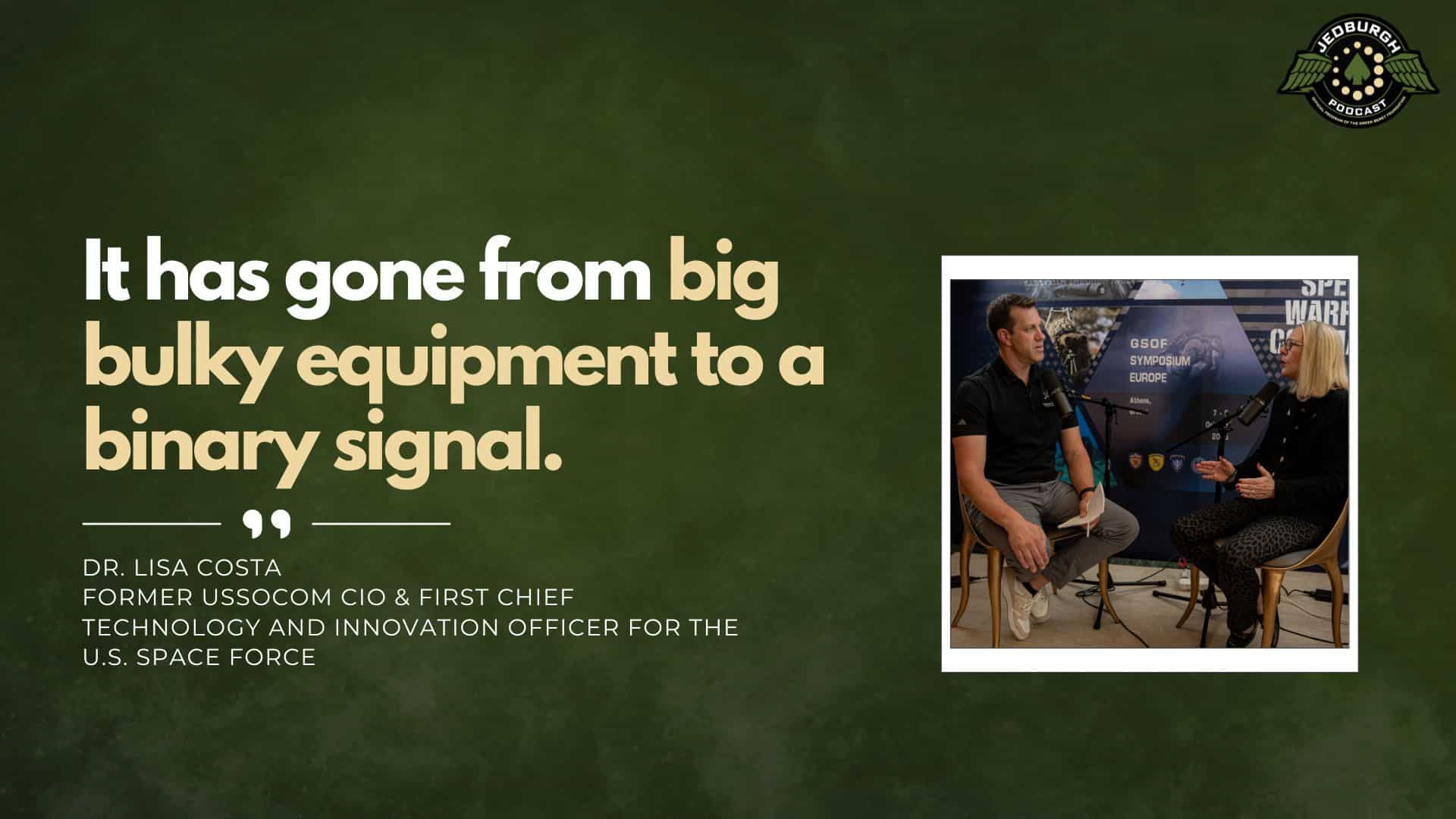
I am a huge fan of low-earth-orbit direct to cell phones without a terminal. I can send a message directly to an ATAC. It has gone from big, bulky equipment to where sometimes they only need a binary signal. I need to know somebody is alive. Do not hit this place. To be able to give, for example, a Marine Raider an ATAC that can hit a button that says, “I’m alive, don’t strike here.” It’s critically important. It was not done 20 or 30 years ago.
I want to talk about your roles as a civilian in the DoD and SOCOM, and now the Department of War. We spend the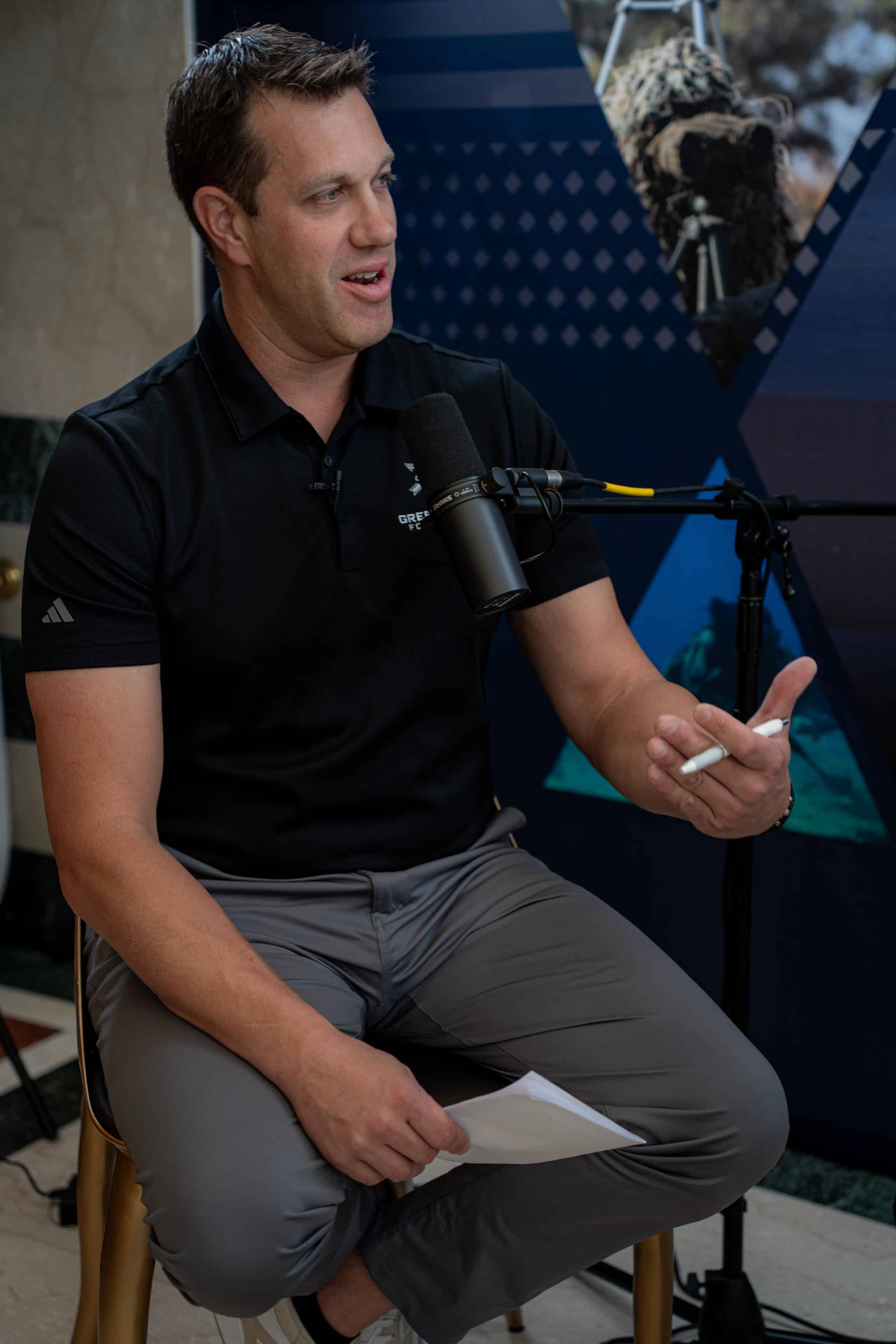
That is a great question because it differs based on the mission, and it differs based on the service and the leadership, and what skills are needed to bring to bear to the mission. On 9/11, at 11:00 at night, I had a call from the SOCOM command center saying, “Ma’am, can you be in the Donovan room at 7:00 AM to receive a mission?” I said, “You know I’m a civilian, right?” They were like, “We know. We’ll take care of it.” I said, “No problem. I am going to be there.” It does not matter. I just wanted to let you know.
I got a mission to establish SOCOM’s ability to track moving things. Prior to 9/11, the intelligence community was only able to track stationary items, a building, or maybe a ship that went from one port to another port, but not while it was in transit. For the old timers, it was order, battle, and BE number or Basic Encyclopedia number. I could not track moving things like people, money, goods and services, logistics, etc. It was my job to figure out how to do that. We did that with AI, and we built the largest data repository outside of the national capital region. It became the basis for six other well-known cells around the community.
As a DoD civilian, people operate in all sorts of roles. At the executive level, they serve as project managers and staff augmentees. What is that relationship like between the DoD civilians and the uniform?
It is all about the culture. SOCOM understands and relies on its civilian staff. They are part of the force. Civilians work out. After 9/11, everybody was going to do PT because people were passing out. They were working until they were punched drunk and passed out. With civilians, it was contractors and military. You are going to work out and get sleep. You are going to take care of yourself because this is going to be a long war.
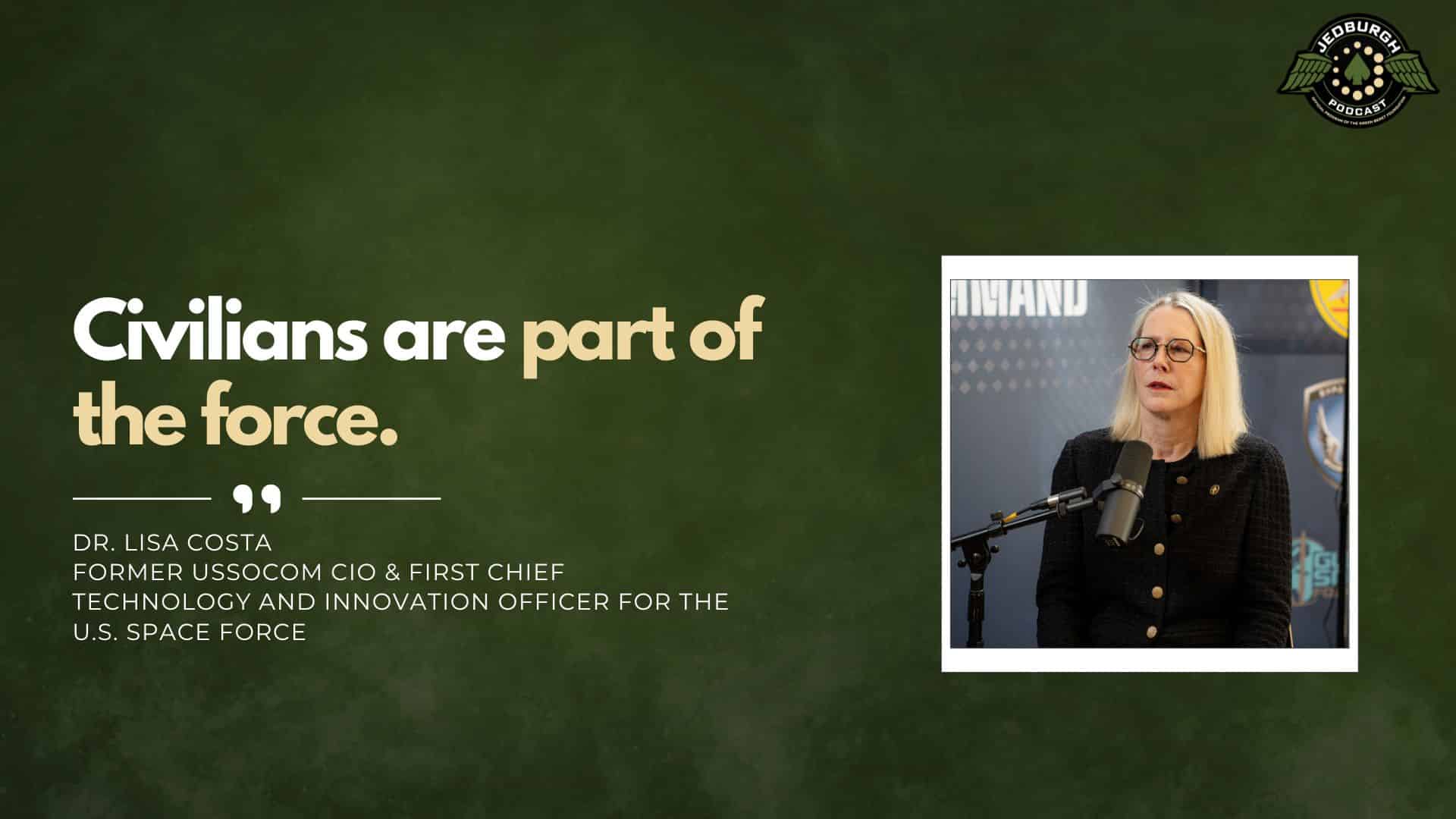
You go to other services, and sometimes those leaders have not had that experience. One of the examples I would give to them is, did you know that at one point in Afghanistan, over 70% of the force was civilian that was deployed? They were always surprised by that. They also have this understanding or thinking that there are some things that are inherently government. That is true. When you are at war and you are in the middle of things, I am not asking somebody if they are wearing a uniform or not. Everybody is part of the fight.
When you are at war, it does not matter if somebody is wearing a uniform or not. Everybody is part of the fight.
I want to ask you about the direction we are going on the next battlefield. We have a couple of terms that are being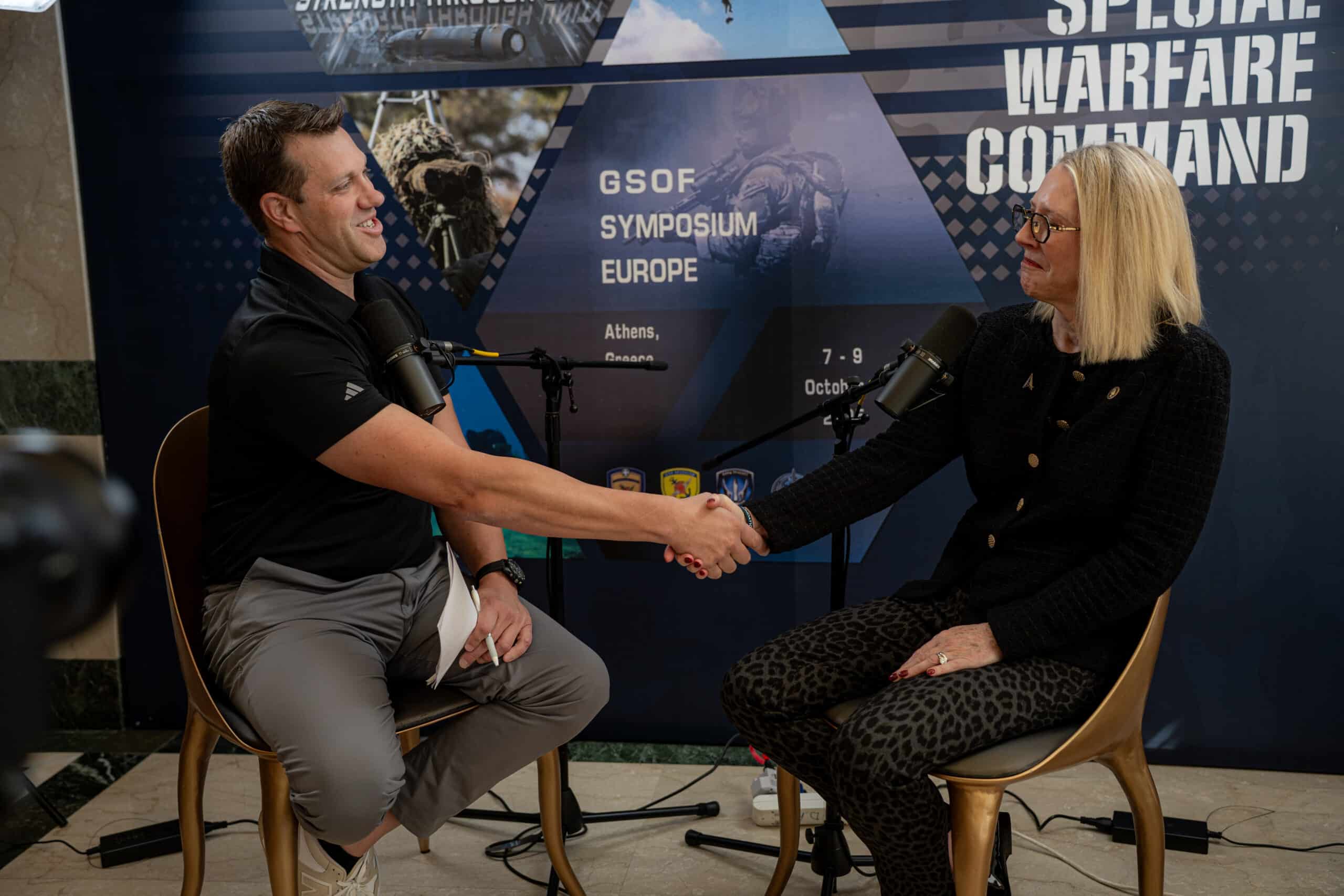
You talked about 9/11. We, as a military and the 9/11 generation of soldiers, know a lot about CT, counterinsurgency, counterterrorism operations, prosecuting point targets, and precision strike type capabilities. What we look at now, as we were focused on our CT mission, we do know that there were adversaries in the background building capability, primarily the Russians and the Chinese. We now find ourselves in a lot of ways in this inner world war period, this pre-World War II period of nation-state on nation-state potential, a great superpower challenge.
We have aggression in both the Indo-Pacific region from the Chinese, and we have land warfare here in Europe that we have not seen since World War II. Large-scale combat operations are a much different animal than counter-terrorism operations. Where do you see special operations injection into large-scale combat operations? How do they support it? How are they supported by the conventional force in that mission? The NPS question.
I feel like I have two bookends in my career. I helped with two startups in the DOD. The first one, I was at Readiness Command when it became SOCOM in 1987, and worked at SOCOM at the very beginning, and then I helped stand up the Space Force. When you think of SOCOM’s role, what I would say is the things that were developed from a TTP perspective, especially the technology innovation and the ability to bring in industrial solutions very quickly, and expertise also.
Let us not forget that being able to bring in PhDs to solve real hard problems is something that should not be given up just because we are moving into a different phase of warfare. There are a lot of solutions that still apply. The baby should not be thrown out with the bathwater. You do not want to fight the last war, but then again, you do not want to give up that exquisite knowledge that you have developed. What I would say, though, is one of the things we lost over the 24 years of fighting CT was our real talent in deception, counter-deception, denial and deception.
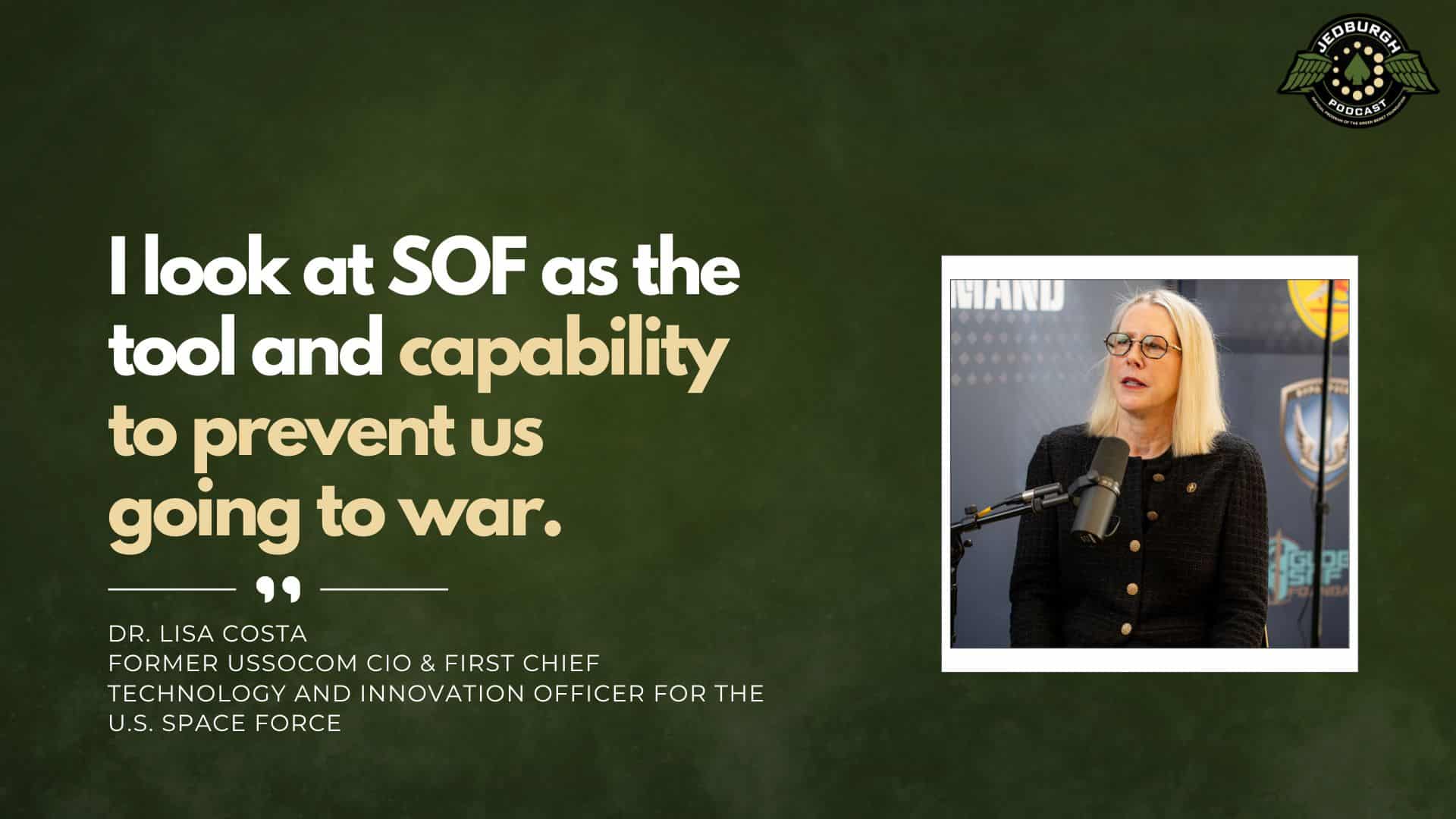
That is something we need to bring back into the entire force, not just SOF. I look at SOF as primarily the tool, the capability to prevent us from going to war. That is what you want to use. Not after the first shot has been fired. I look at SOF as being very exquisite. I do like John Braga’s triad of cyber, space, and SOF together, enabling one another and being able to capture the high ground, but you also have to capture the low ground too. Subsurface again to satellite. I have used SOF, having a role in every critical moment of warfare.
We know that the job, as you mentioned, of SOF is to keep the decision makers of our adversaries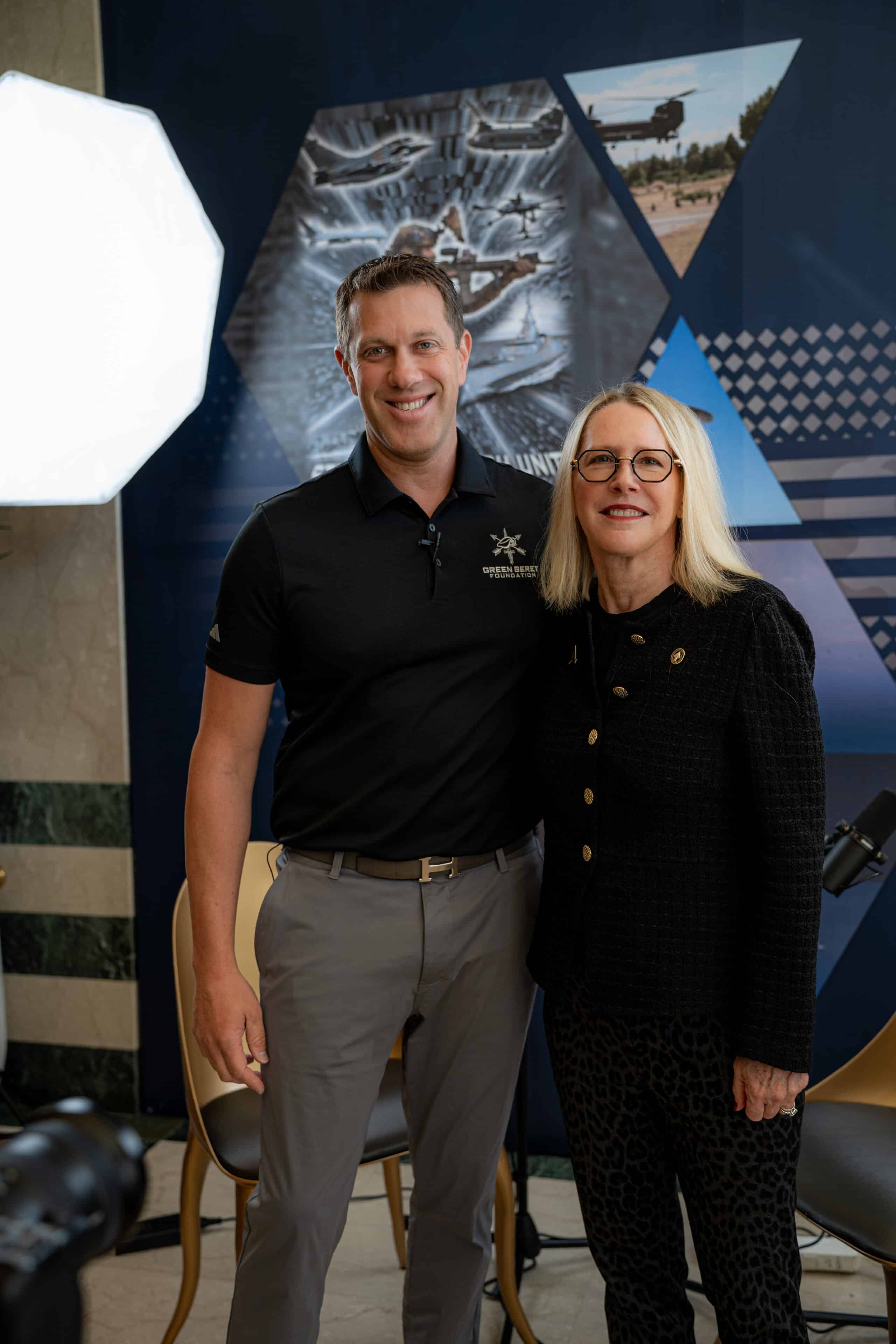
It is the whole SOF-enabled space. Adversaries have direct energy weapons that can take out LEO. Taking out those directed energy weapons would be a good thing for SOF to do. We have space-enabled SOF. We have got SATCOM and position navigation and timing, which is critical. Now we also have space-enabled GMTI or Ground Mobile Tracking Indicators, and air intelligence and air mobile tracking intelligence.
Not having to have that logistics tail for large drones, because you have to have refueling, and you have to bring them down. Having that constant dwell and that constant look is critical from space. That is a space-enabled SOF capability. Cyber is everywhere. We have this term cyber, and we think about it as cybersecurity, but it has grown and taken over the entire Internet of Things. The internet of space things, the internet of battle things, and the internet of commercial things. It is controlling that entire domain and being able to take advantage of the data that is being produced across that entire spectrum.
That is how I see the triad working together. I have always said the best battle space is the one we never have to put a boot into. That is what you are going to see in the future. Us holding back our blood and treasure for only those very unique and specific things that need to be executed. There is going to be a lot more autonomous capability controlled by AI. It is not just about airborne drones. It is about space-based assets. It is about sea-based assets and being able to manage them simultaneously to a commander’s intent. The commander wants to do this. This is the end state. AI, figure out the best way to do it.
I want to ask you more about that battlefield. We do not have to put people into the battlefield that is very realistic now is the moon. There has been a lot of discussion over the last couple of years, and not only discussion, but action by both the US and China as to who can potentially occupy the South Pole of the moon first. When you look at an organization like the Space Force, who controls that battle space? Why is a battlefield like the moon so important?
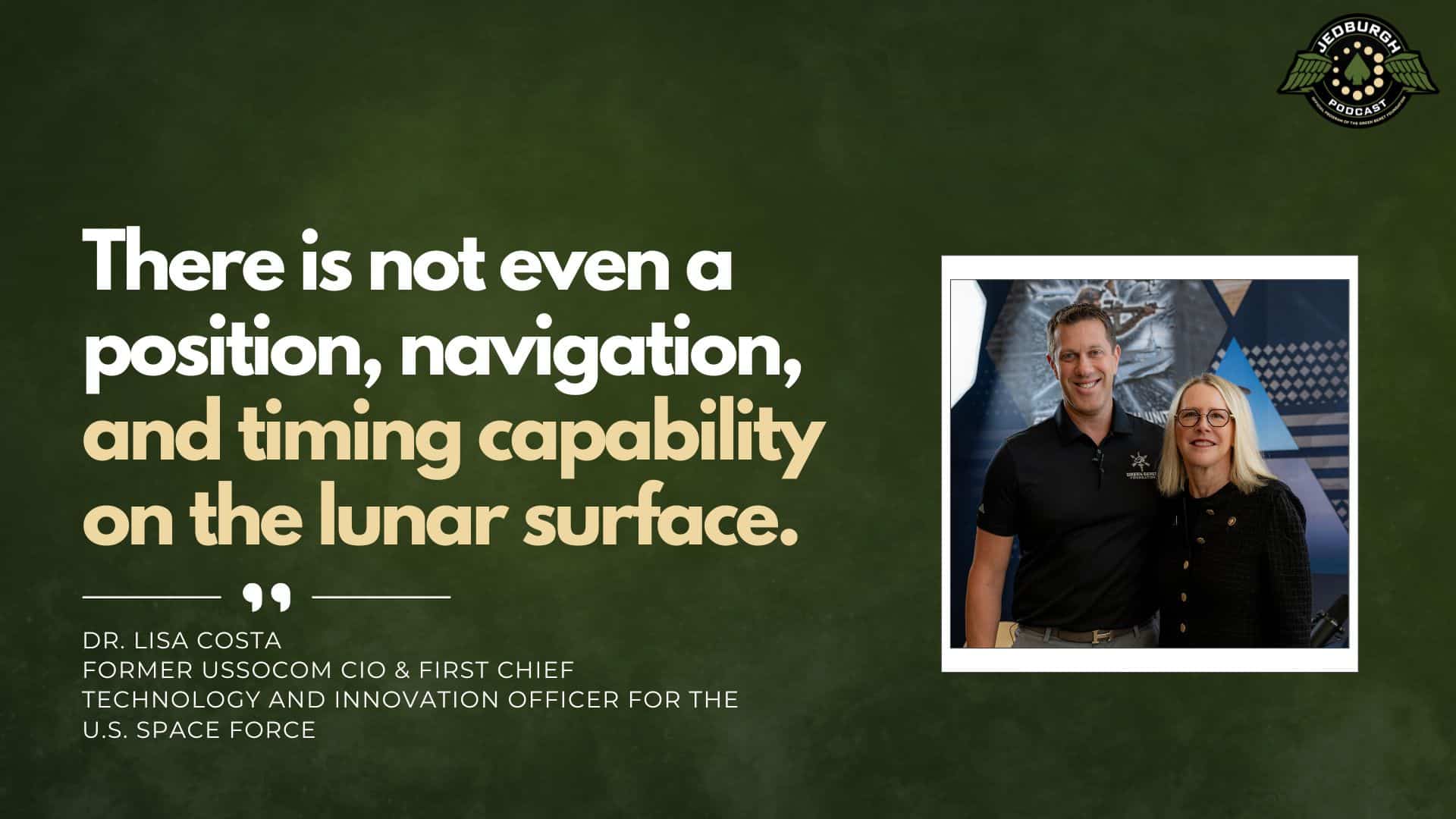
I would say it is not just the moon. It’s Lagrange points. Points in space that provide special types of capabilities to hide in plain sight or perform certain capabilities that you want to perform. You have to remember, there is not even a position, navigation, and timing capability on the lunar surface. I believe the last administration tasked the Department of Commerce to come up with a GPS capability and a timing capability for the lunar surface.
There is no standard. What is so important about an event like this, like NATO getting together, is that we have a number of partners who have been to the lunar surface like Japan, India, Italy. We need them to be using their standards. We need to be interoperable with them. We do not want to force them into a position where they have to partner with China in order to execute capability on the lunar surface.
It is important that our policymakers tackle the hard changes that need to be made regarding ITAR and EAR and other restrictions so that space partners who would be our allies are using the same types of equipment, so we can communicate with one another. We can help each other refuel if necessary. It is very important. In the 1960s, there was a space agreement that was signed, but no one is following it except for the allied nations. I think we need to revisit that.
What did it say? I am not familiar with it.
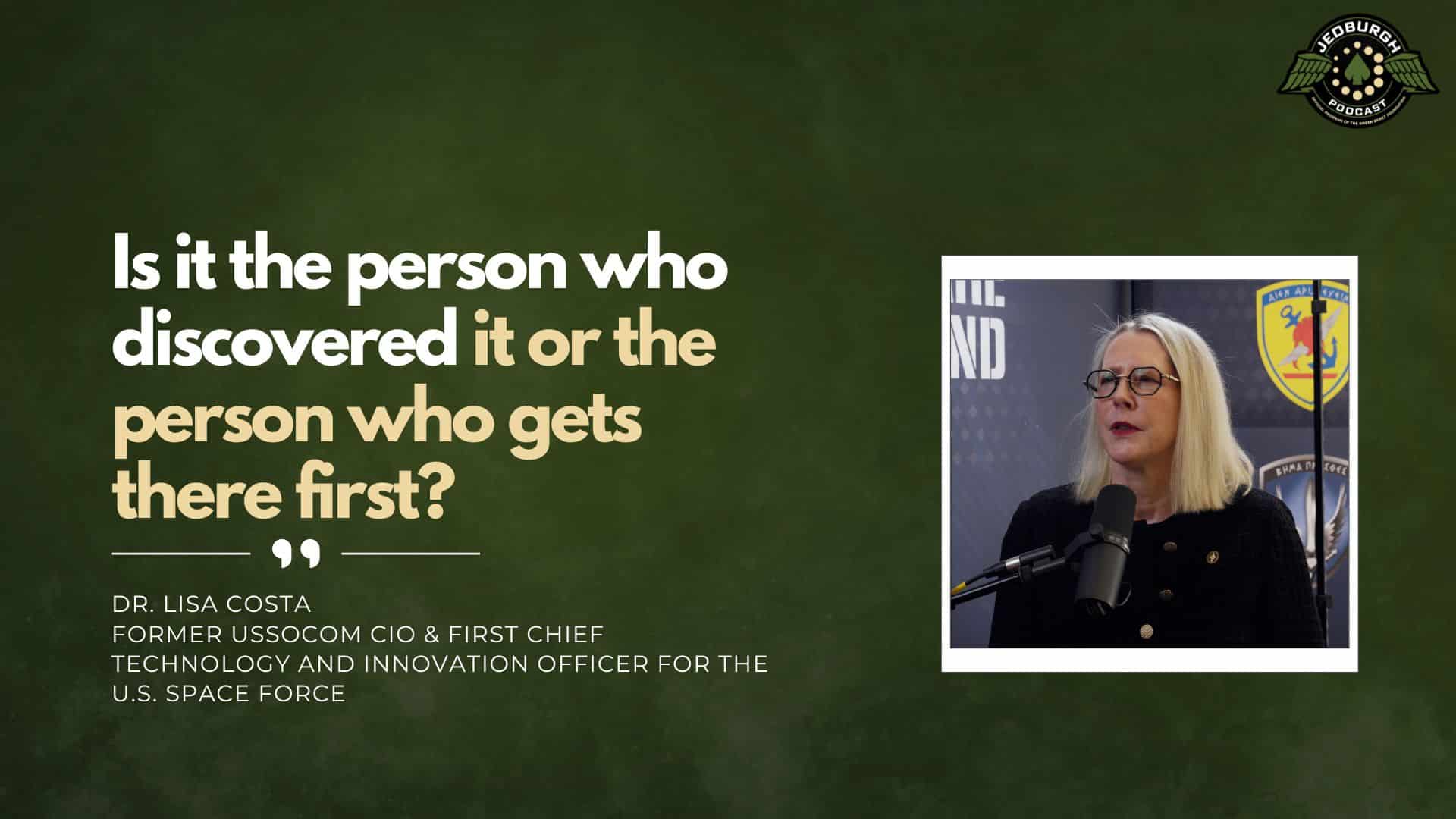
It said we would not weaponize space and it was open to everyone. Believe it or not, the fastest-growing degree program in the United States is space law. Who owns what? If a flag is planted, does it have to be a human who plants it or an autonomous vehicle? Are we using sea-based or maritime-based rules of salvage that have been proposed? There are a lot of questions about, “I discovered an asteroid, and it has got a lot of lithium and helium-3 on it. I want to mine that.” Is it the person who discovered that, or is it the person who gets there first?
Why do people care about the South Pole of the lunar surface?
There are a lot of benefits to communication, capabilities and being able to have a continuous presence there. A lot of people are very interested in having that ability to always be up from a communications perspective. That is incredibly beneficial. It also is an area that does not get bombarded with space weather the way some of our LEO, NEO, and GEO satellites experience. Solar flares and things like that.
You always want to have a PACE plan in place. That is part of the PACE plan. It becomes a hopping-off point. If you want to go to Mars, you have got to get to the moon. You have got to refuel. You have got to create fuel. Maybe you do not have to escape the bonds of the Earth. Maybe you are escaping very low gravity levels that are on the lunar surface.
Which takes a lot less.
A lot less power. You are able to create water there, you are able to create fuel, etc.
It makes me think about the definition of warfare, because being here in a military-centric conference, a lot of our conversations primarily focus around military related issues. One of the things that we have to keep in the back of our mind is that warfare comes in a variety of different ways. You think about the elements of national power of DIME or Diplomatic, Informational, Military, and Economic.
We look at our adversaries, we have to think about how we are at war with this country now? Are we in a military war with China? Possibly a gray war certainly through some of our proxies. Are we fighting military to military? No. Are we in an economic war with China? I would argue yes. It is certainly an informational war, the same as with Russia.
Russia is certainly leading much more towards an informational and a military style proxy war that we are in with them. When you look at the threats that America faces across the DIME spectrum, what do you see as the biggest wars that we are fighting? Whether they be diplomatic, informational, military, or economic.
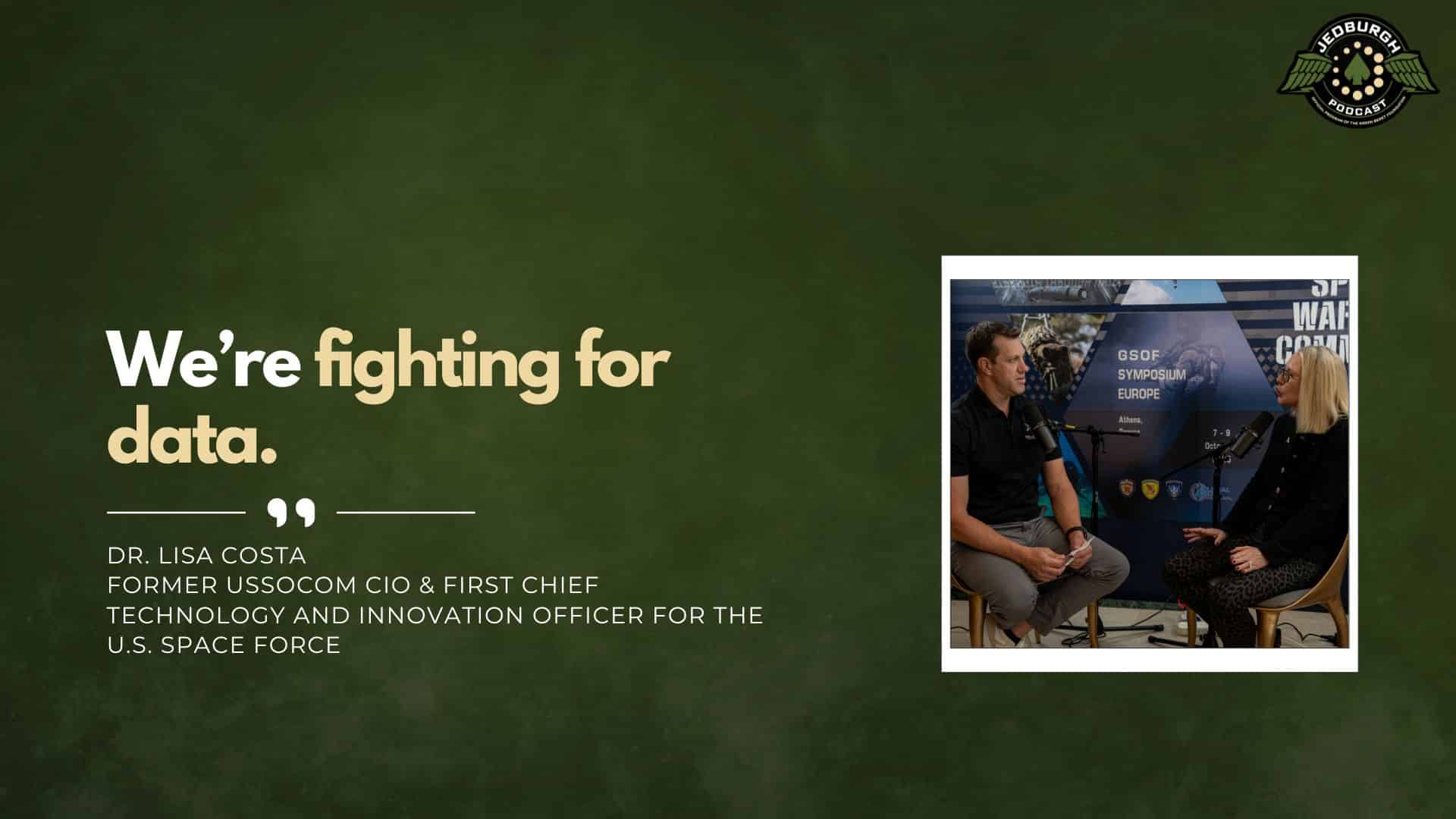
It is all about information. All of it is about information. Even from a cyber perspective. Even the monetary information, it is about data. We are fighting for data so that we can characterize our adversaries, understand them better, and identify what it is that they are trying to achieve. What are their levels of effort? What are their avenues of executing those levels of effort? We are in a war, and it is no longer that gray. It is darn near dark gray.
Who else would we allow to put cyber injects into our critical infrastructure and know that they are there and not declare war? That is a challenge in this new modern era, where there are no good definitions of what warfare is in these different DIME fill arenas. Things that would have been a trigger of, “This is war,” and, “We declare war,” are not well defined in cyber, data and financial. That is the challenge that we face, which is not understanding when we are at war and miscalculating. An escalation that could cause miscalculation.
How do we combat this information?
That is challenging, especially in this AI arena. Let me tell you, the attacks are so sophisticated. I cannot express to people the threat not only to companies, where we were worried during COVID. There was a huge ramp-up in ransomware. That is nothing compared to what we are seeing in terms of precision influence, going after specific individuals with highly tailored information about their personal data. It is good because they are using AI.
Now, all of the things that we would look for, like misspellings and bad grammar, are not there because they are using AI. Things look completely legitimate. If you click on anything in your email, you are at risk. If you are scanning a QR code, do not do it. It is the number one surface attack vector for injecting malware. You have all the challenges associated with AI like prompt injection attacks and data poisoning attacks. Make sure that you invest in trustworthy AI.
I work with Seekr, which is an AI company that is focused on ensuring that there are foundational models trained on your own data, because people are going to do what they are going to do. When they want to use AI, if it is not available to them on NIPRNet, SIPRNet, or JWICS, they are going to go out there and use their phone and use ChatGPT and put information in there that they should not be using. We have got to invest. There was a drone imperative that SecWar Hegseth put out, there needs to be an AI imperative that says DoD CIO and CDAO need to work together to put AI in the hands of every single DoD individual and make it safe and secure.
How are you defining AI in this?
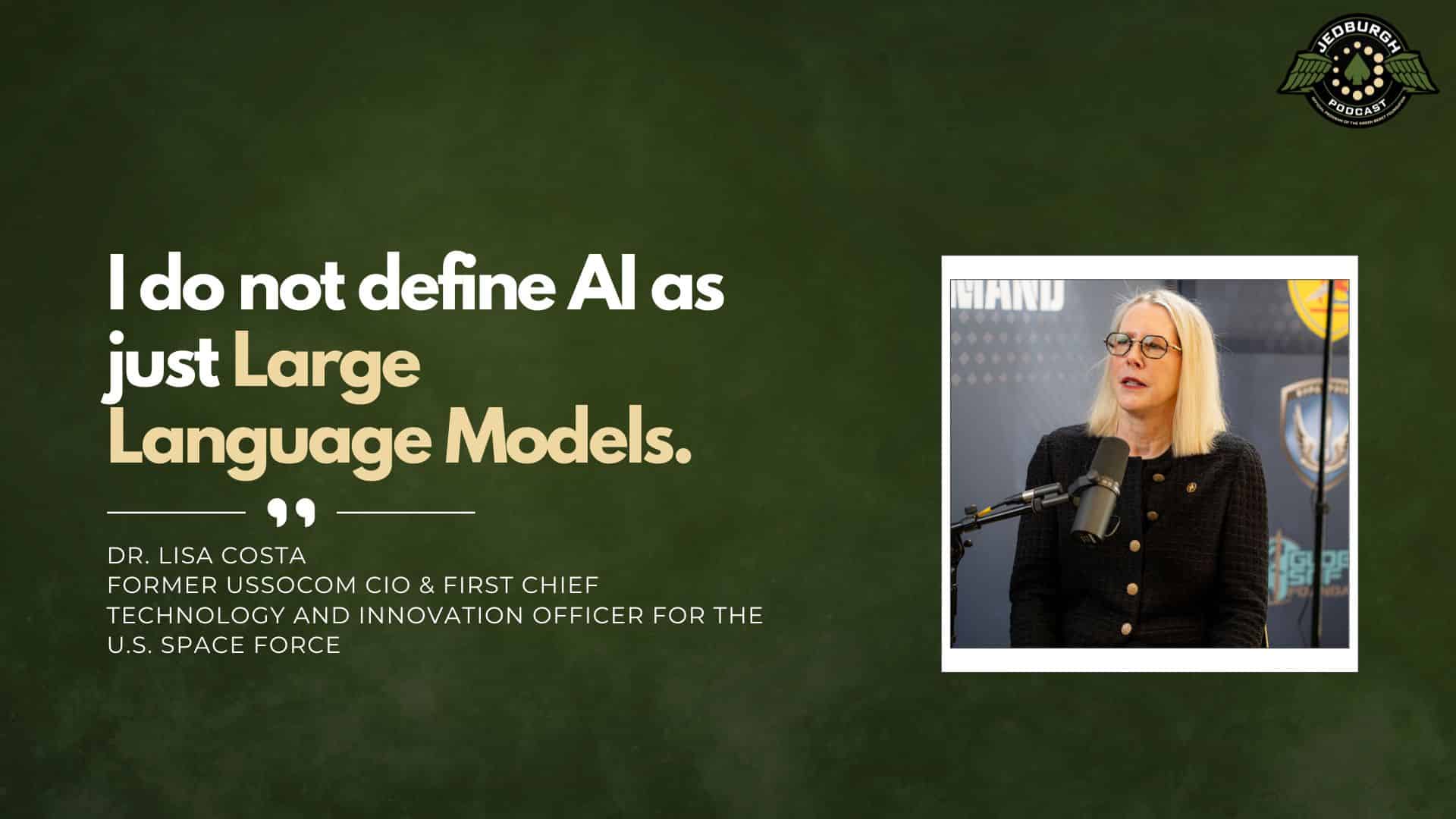
I do not define AI as just large language models. People think of it as ChatGPT, and that is it. No. I was writing AI 30 years ago for SOF. A lot of capability was developed during the global war on terror that we should not lose. LLMs are just a very small branch on the tree of what is called AI. There is reinforcement learning, but then there is also unsupervised learning. When you have unsupervised learning, you have to have really good data.
A lot of people like to say in DoD and the IC, “We have got too much data.” I have said for many years, “No, you do not. You do not have too much data because when you have the right AI system, you do not have enough data or you do not have enough of the right data.” I am here at this conference with Babel Street, which is a third-party data aggregator. Over 150,000 sources in multiple languages.
The data that we need for AI in the DoD cannot just come from government sources. It has to be augmented by the broad Internet of Things. I would caution people that when they think they have too much data, they are going to find that when they implement a good AI system that is trustworthy, they are not going to have enough of the right data.
When you think about the application of AI, where does human interaction with the AI become paramount? Where is it not needed, specifically with respect to decision-making?
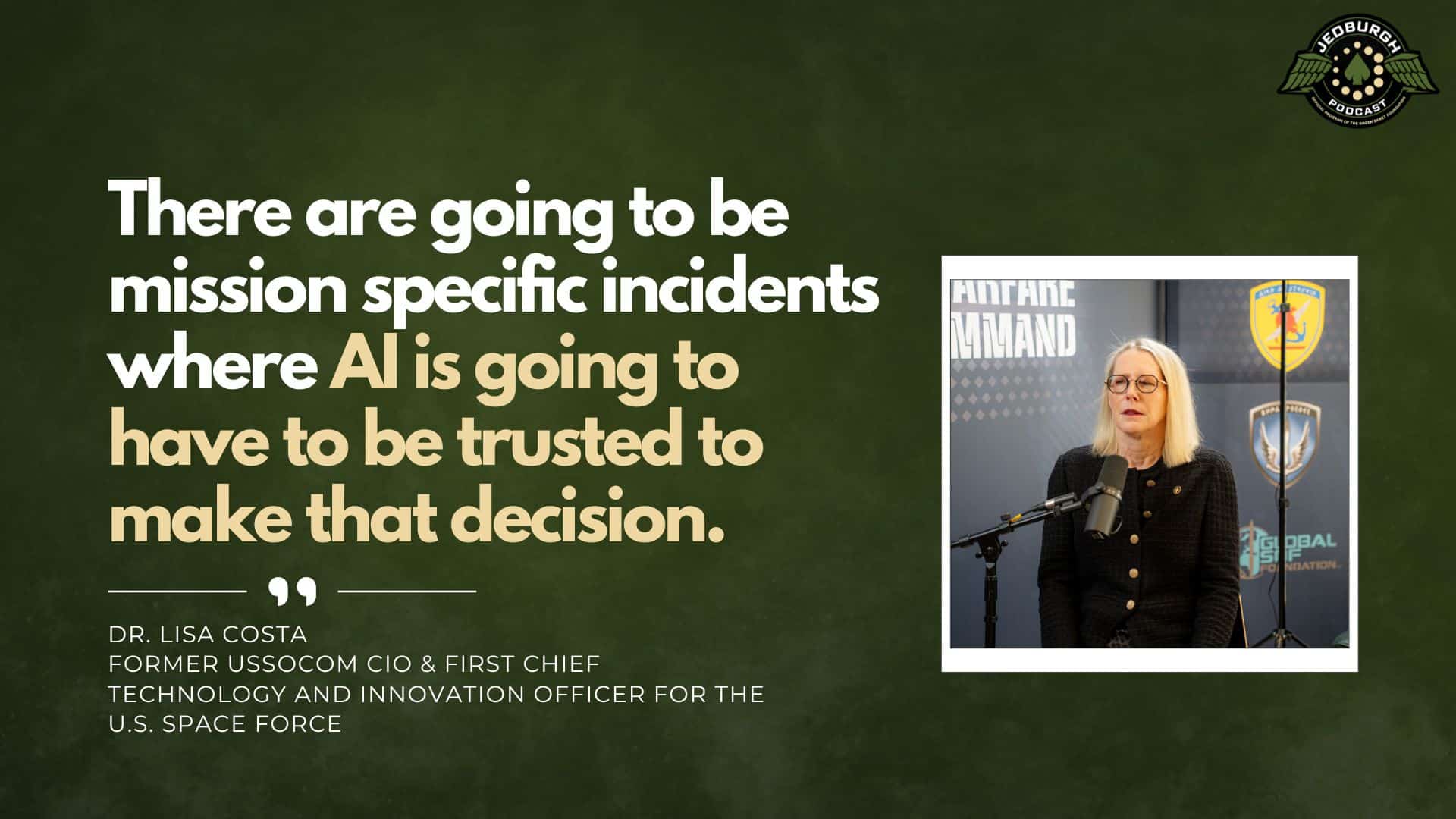
We all love to say we are going to use ethical AI. We all say we are going to only do human-in-the-loop. That is incredibly naive. We have the Golden Dome kicking off. I will tell you that if we attempt to use human-in-the-loop to shoot down hypersonic vehicles with kinetic payloads, that is a fool’s journey. There is not enough time to react. There are going to be mission specific incidents where AI is going to have to be trusted to make that decision. That is why it is so important that the AI we implement is trustworthy. We must understand the data that it is coming from. It can’t be a black box, either from the data or from the algorithm perspective.
How do you create guardrails around its weaponization?
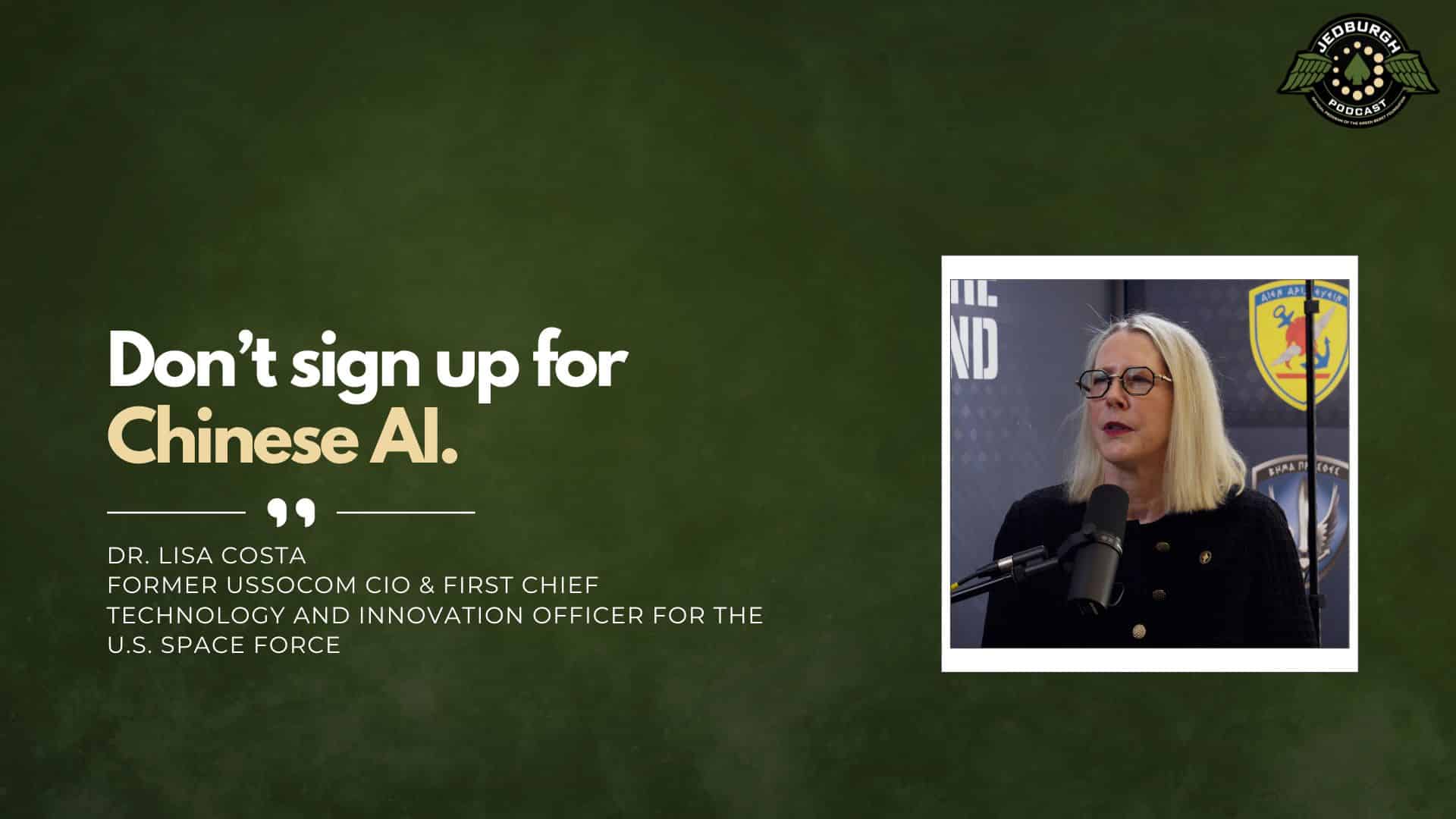
The first thing is, do not sign up for Chinese AI. The number of people who have downloaded DeepSeek and are putting information in there. DeepSeek is a Chinese AI capability. A great example of being at war financially. Look at what happened to the stock market on the day that the Chinese announced DeepSeek. The stock for AI companies tanked. They lost a huge amount of their value. It only took a few days to figure out that the claims that DeepSeek was making were false. It only costs a certain amount of money to make it.
That was the last training round. It was the same amount of money that OpenAI used. They stole data from OpenAI. They stole algorithms from a number of US companies. It is important that people understand they are being targeted when they are downloading TikTok and any Chinese app and capability, but TikTok is transitioning.
All this comes back to the technology and the innovation timelines that it takes to develop and field technology. We have seen over the last couple of years rapid innovation, especially in a battlefield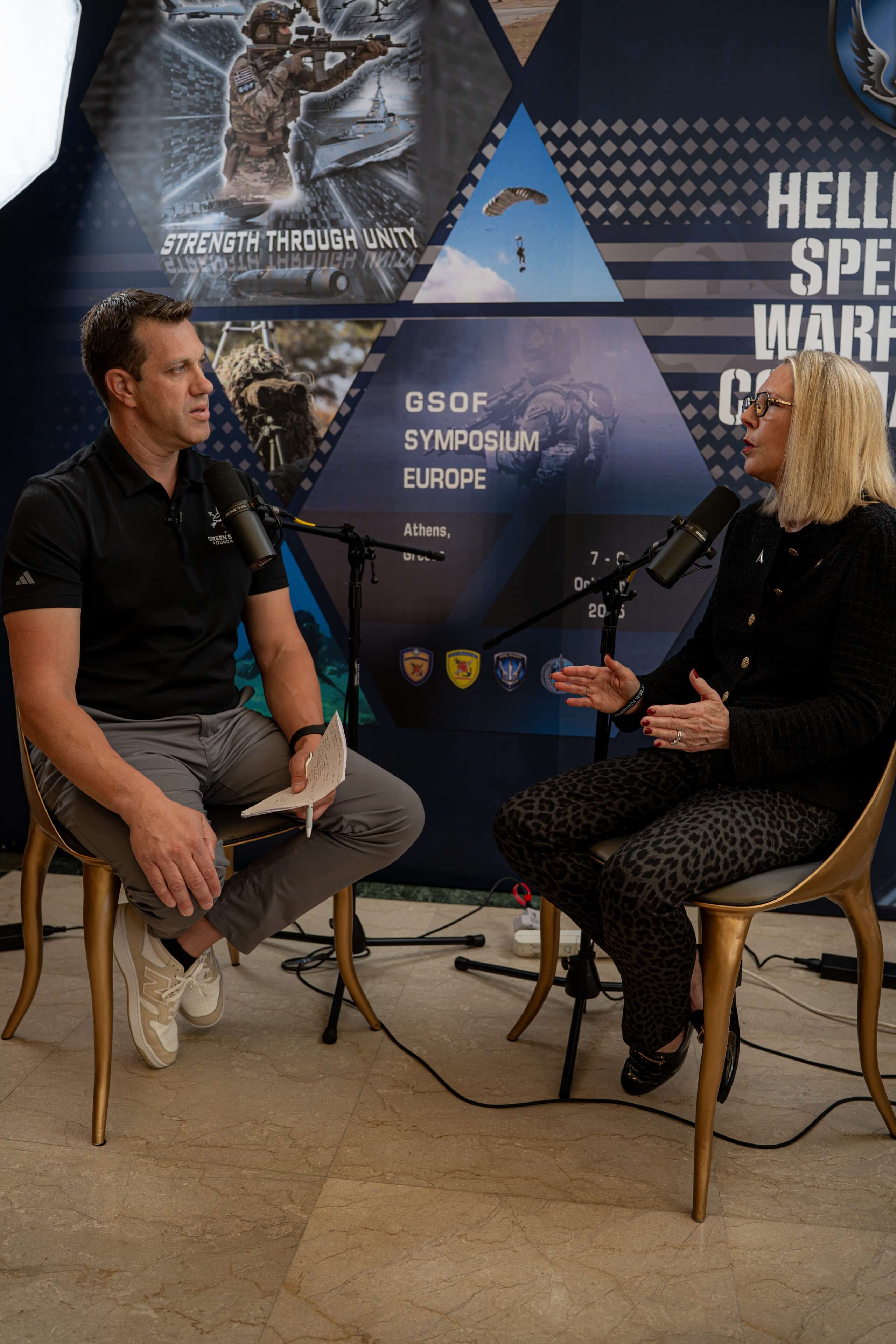
That’s rapidly advancing. One of the challenges that we often face within the US government is the time to technology. How long is it going to take us to decide we want the capability, identify the requirements, put it through a procurement process, get a bunch of companies to go through a competitive bid process, down-select that competitive bid process, run a minimum viable product on a prototype, and develop the thing?
By the time you field it, it is coming into the hands of the operator. The operator is going, “I can’t even use this anymore. It is a paperweight. It is in my hand receipt.” We cannot even use it. How do we advance the time to technology and fix, mitigate, and change some of the procurement challenges that exist and the red tape that is in the government by then?
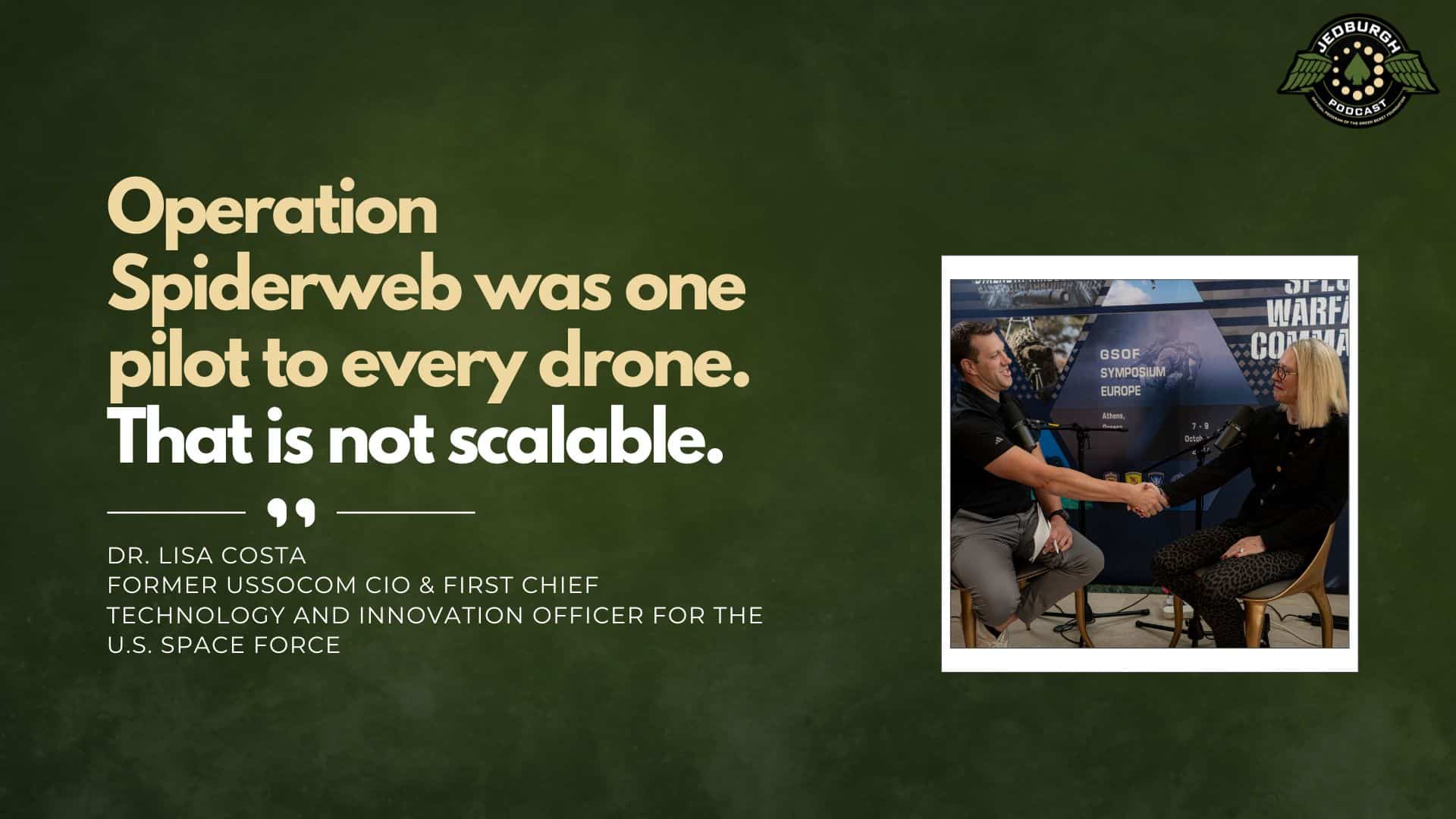
SecWar’s imperative on drones and putting it into the hands of users down to the lowest level is a good example of what we should be doing. We should be doing that with AI as well. Let me go back to Ukraine. Ukraine is doing incredible things, but I will point out that Operation Spiderweb was one pilot to every drone. That is not scalable. You cannot have a thousand pilots and a thousand drones. I need one pilot for a thousand drones, and they might be multi-domain. We have to invest in multi-domain operations, again, coales around.
We are going to create a commander’s intent, an end objective, and the human and the AI are developing different COAs and adjusting on the fly and communicating between air, ground, sea components to ensure the outcome. That is where you are going to see more gamification of warfare, and you are going to see more citizen-based warfare where there is a lot of citizen-based prototyping and capability developed and then put into the hands very quickly of our operators.
What do you mean by citizen-based?
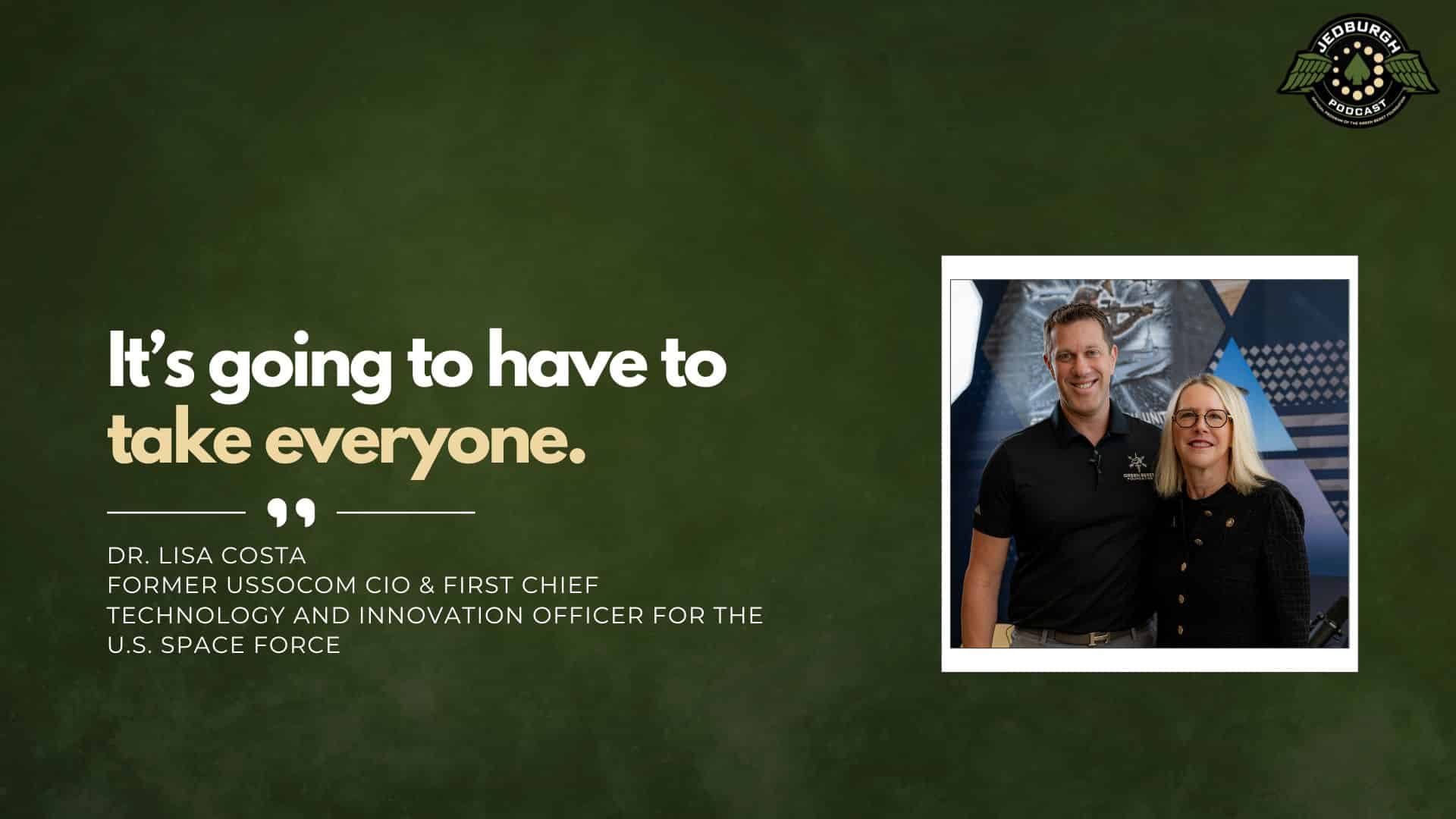
We have got sixteen-year-olds writing code. We have got sixteen-year-olds using additive manufacturing for ruggedization of SOF, ATACs and things like that. You are going to see much more of that sort of warfare like in Ukraine. The number one producer of pharmaceuticals in Ukraine prior Russia’s attack became the number one drone producer nearly overnight. They converted their facilities. You are going to see that level of innovation. You roll up your sleeves, get your hands dirty, by citizenry, because we have a lot of talented individuals. They do not necessarily want to or can serve in the military, but their talents can be used, and it is going to have to take everyone.
Technology innovation at the ground level, in my layman’s terms, and I would classify what you are talking about as being at the ground level. The everyday person level. A lot of people have many good ideas. We have a YouTube channel. I get to hear about them all the time from people’s comments. We call them YouTube warriors.
At what point does the ground-level innovation to combat real challenges on the battlefield outpace our willingness to use that capability? There are some incredible capabilities out there that are highly kinetic, highly destructive, and can change the battlefield, and are being used against us, our partners, and allies. The question is, are we willing to use that capability in return?
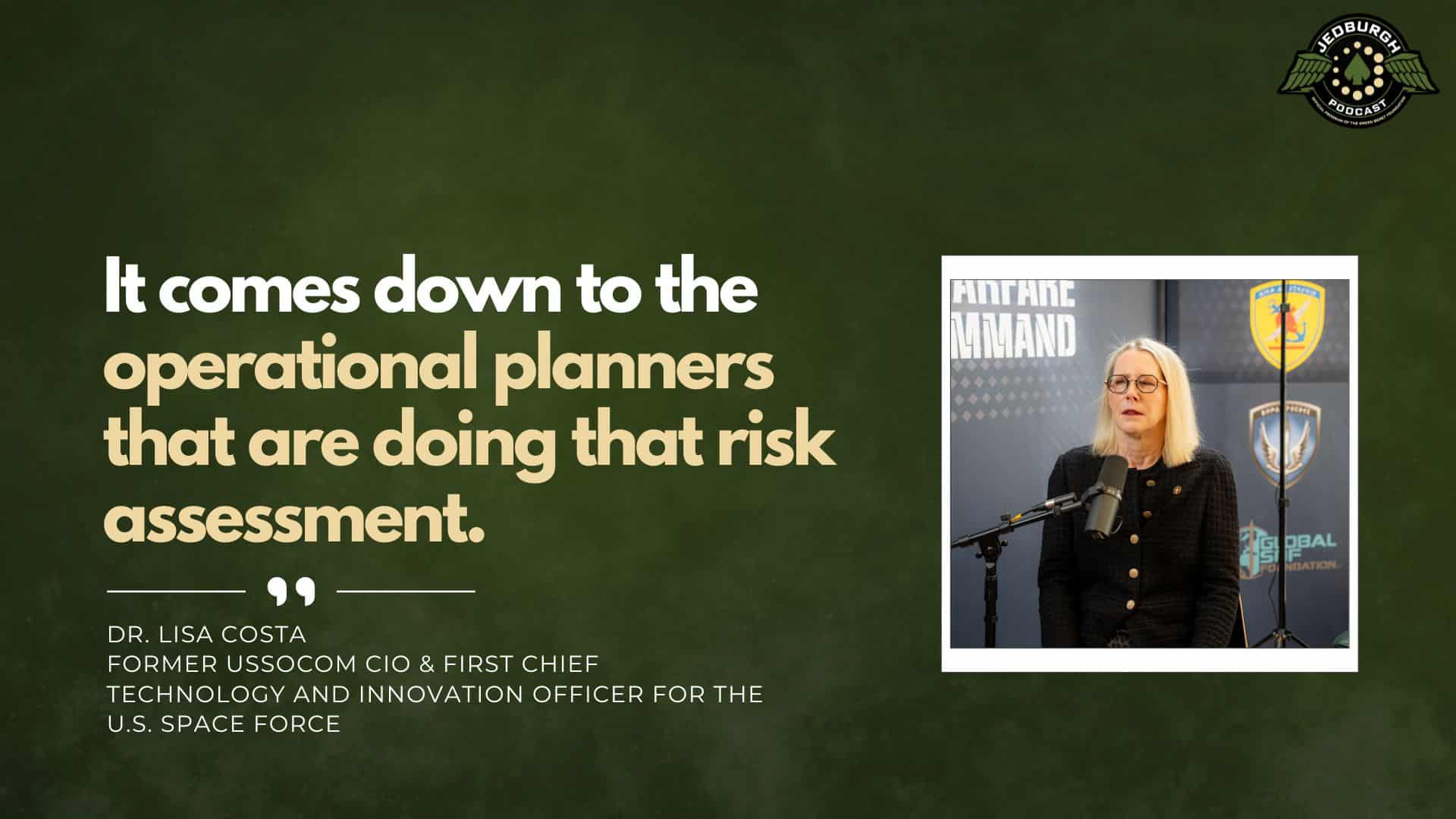
It depends on the existential threat. What is the impact of not using them? What is the impact of using them? It is all about risk. When it comes down to making that decision, it is about the operational planners who are doing that risk assessment and understanding what we are exposing by using the capability or not using the capability. I also want to say that I emphasized investing in a capability that allows an operator to just give a command.
I want to emphasize that the command does not have to be typed in. It can be spoken. As an example, I am going to do an ISR activity. Instead of telling it twenty steps to collect in this circle at this rate, at this revisit rate, at this whatever, and going through twenty steps. The real value you are going to see over the next eighteen months is an operator saying, “Show me all camouflage tanks within the 5-mile radius or identify any potential hypersonic vehicles before launch.” That is where we are going to be able to take things out left of launch.
Being able to verbalize that and have all of the multi-domain assets focused on that. By the way, this was added to the SOCOM BAA. There was a revision to it that came out indicating what is needed in future AI. Voice-to-operation automatically is exactly what is in that new BAA language. I think that is what you are going to see. I also think you are going to see small units invest the resources more quickly, and then it will move up to the higher, larger unit level.
How does that then come into play when we talk about who is best positioned to advance technology at a rapid scale? For example, let’s talk about space. Space was commanded by NASA for decades with all aspects of space with the work. NASA built their space shuttles. They ran that program. There were contractors who built the rockets and all that stuff. Primarily, the innovation was led by government agencies.
With the shutdown of the space shuttle program, organizations like SpaceX have come into play. We have seen Boeing and Jeff Bezos’s company. All the billionaires have said, “We’re in a space race now.” At what point is it more effective for the government to say, “This commercial private organization can do this better than we can, and we’re just going to buy it from them?”
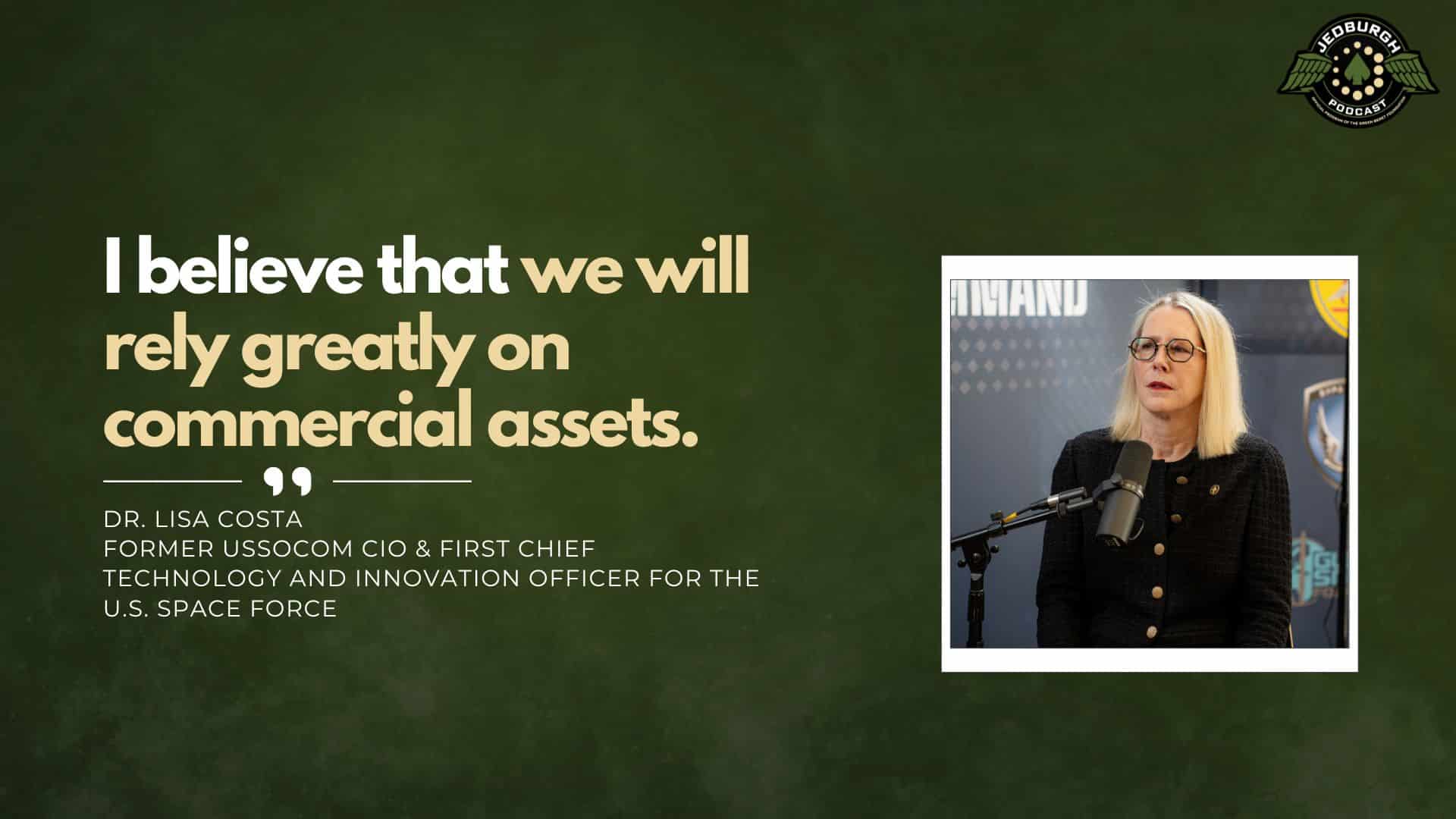
Space was a benign environment. On my first day at Space Force, I said, “How do you plan to do irregular warfare in space?” The answer was, “Ma’am, we don’t even know how to do irregular warfare in space.” That is okay. It was a brand-new service. They have made huge strides, but I wholeheartedly believe that more so than anywhere. Except maybe even cyber, though. We rely on commercial cyber quite a bit in the US government, but I believe that we will rely greatly on commercial assets.
Now the question is, what needs to be different about commercial assets? Look at Starlink in Ukraine. They did a great job of responding very quickly to Russian jamming, but it was reactive. We, in the military, tend to be very proactive. We spend a lot of money upfront against attacks that were five years ago and spend the last 35% of the budget on that last 2% of the requirements. That is a completely different model.
It is okay if we adapt and become a little less risk-averse and be a little more commercial in some areas, but not all. We have hybrid solutions that are government and commercial assets and not just US commercial assets. There are many other partner nations with assets up there. The same way that we have conducted irregular warfare for centuries, for millennia on the ground. We are in the land of Thermopylae, where the first irregular warfare was conducted, or at least written down.
We are now needing to do that in space. It is just a different domain. I will say it is a hard domain. Not unlike maritime. The first relationship that I signed formally, as a memorandum of understanding and as a Space Force was with the Naval Research Lab. Why? It’s because they have been doing optical comms for decades. It’s a very difficult environment, with different salinity levels and extreme temperatures. We deal with the same types of environments in space. There is a lot we can learn from one another. It’s important we don’t try to recreate the wheel.
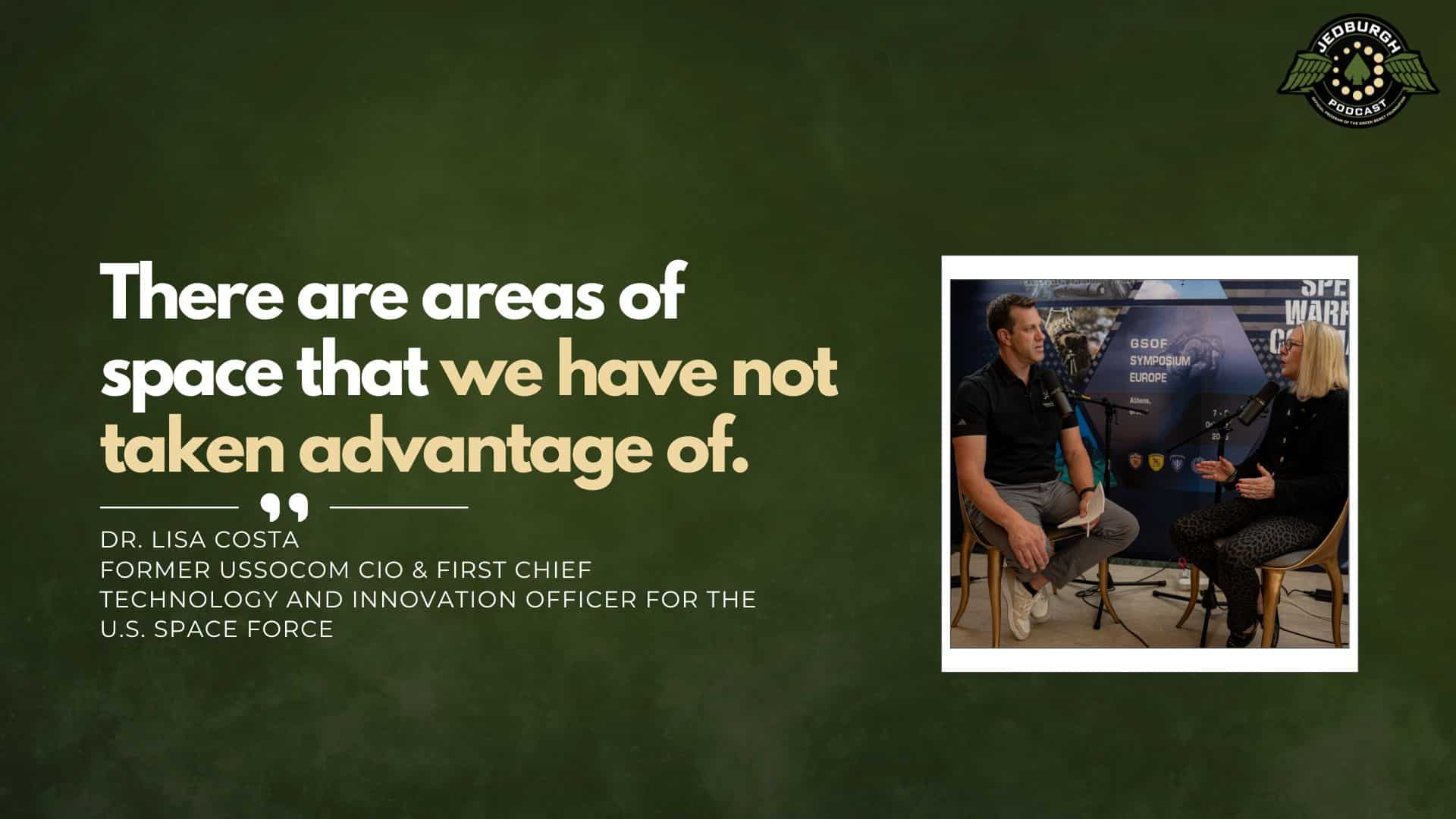
Let me just say, too. There are areas of space we have not taken advantage of. For example, Very Low Earth Orbit or VLEO. No one has taken advantage of that. Scientifically speaking, it is a little more difficult because you still have the drag of gravity. You need more fuel. You need performance characteristics that you do not have in LEO. There is this whole area between our atmosphere and you go to space, where there is an opportunity to be had.
What is that distance?
Ask me a harsh question. I know the answer, but not right off the top of my head. There are a lot of basic science questions. If you ask basic scientists, what are they going to do? They are going to say, “You need to just fund us more for us to do research.” I am like, “Let’s put stuff up there and figure out what survives, and figure out what does not survive.” New propulsion capabilities are very critical.
We have been using the same fuel mixtures that we have been using since the beginning of the space program, when we were only putting up three lifts per year. Now, we are doing at least one a day. We do not even know what the impact is. This stuff is highly caustic and highly toxic to people. Having new propulsion capabilities and new power capabilities, that is the same challenge SOF has always had. Make it smaller, lighter, or last longer. The same need in space.
What does the next 3 to 5 years look like in terms of the evolution of the battlefield when we look at our adversaries and the application of innovation and technology?
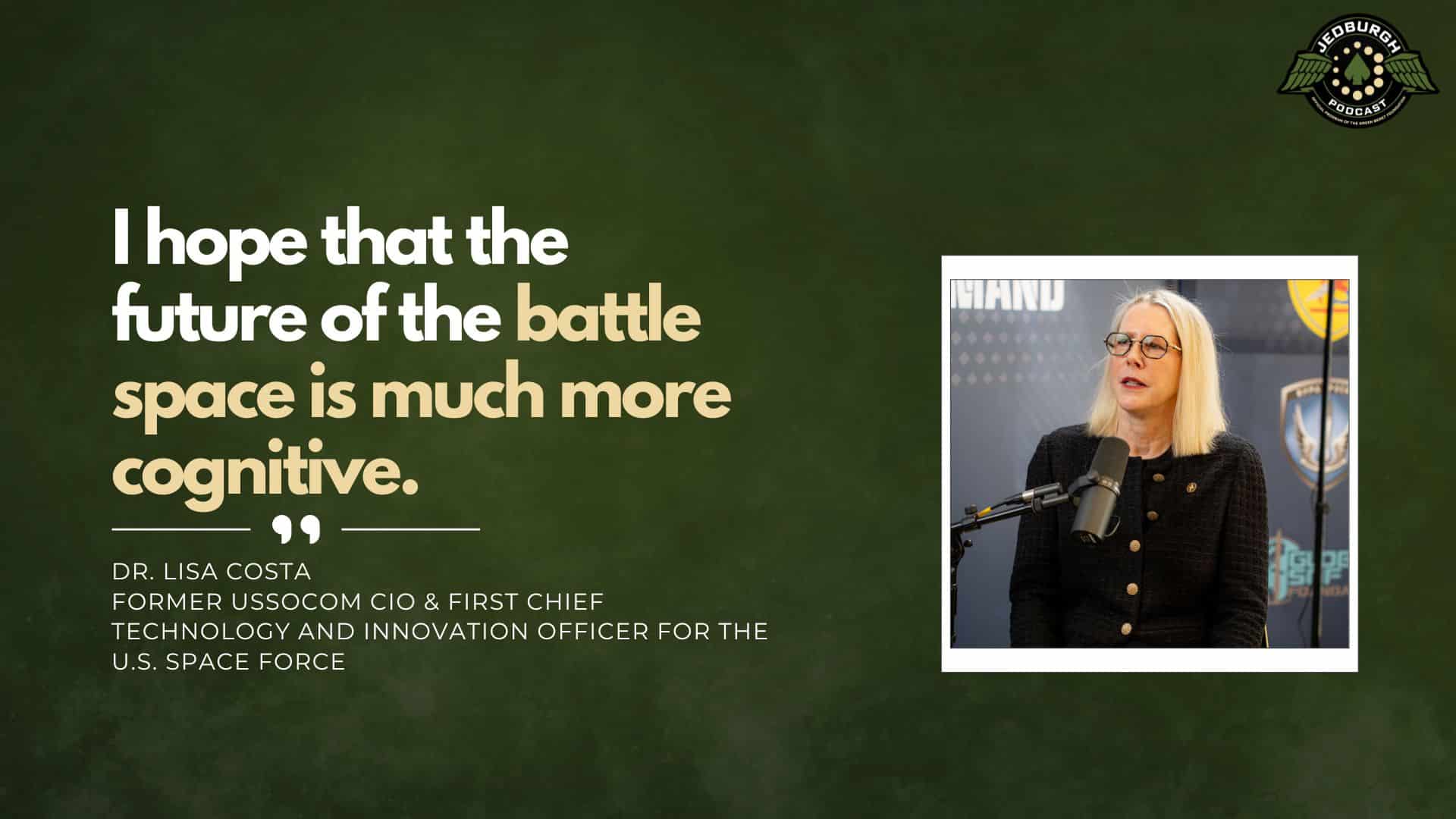
I hope that the future of the battle space is much more cognitive. Again, I am highly driven by mission. I always have been. The ultimate incentive for me as an individual has always been to bring our people home safely to their mothers, wives, sisters, and brothers. The environment in which we do not necessarily have to put people in harm’s way is the environment I hope that we develop and control. Make no mistake.
I do a lot of education to the conventional force about special operations. The conventional force tends to think of special operations as people who are very muscle-bound but are not very bright. I do not know where that comes from because these are some of the smartest people I have ever met in my life. We have Navy SEALs going to Stanford. We have Green Berets going to MIT. These are brilliant people, but it is not about the education.
Right after 9/11, I led a cell that was multidisciplinary, meaning I had snipers, breachers and assaulters. I had PhDs from every DOE lab, a bunch of FFRDCs, and academia. I always put the operator in charge of a project, not a PhD. Why? I will give you this one story. We are planning an operation. Lives are at stake. Time is always criticality. Some PhDs came out and said, “We’ve got a problem. There’s a comms device. We’ve got to get rid of it.”
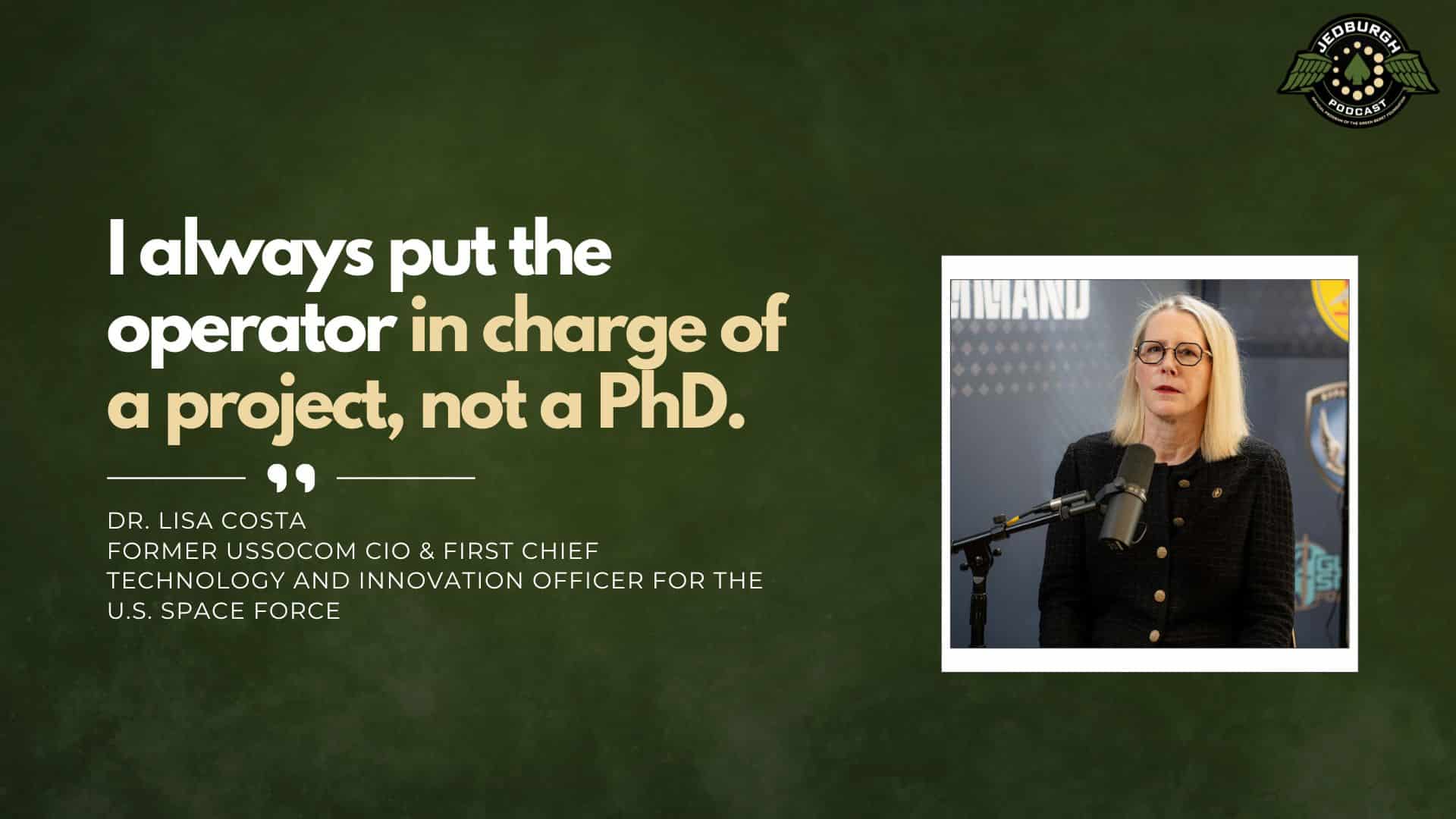
Our solution is to write some software or do a close-in inject and we can take it out. How long is that going to take? Six months. We may not get approval to use it. An enlisted assaulter said, “Ma’am, can I just shoot that?” I said, “Yes, you can. Twelve sets solution. We’re going in.” Having these different groups of individuals is critically important to think differently.
That is why we take all opinions on an ODA. Sometimes, the junior Bravo might have the best decision or the best opinion or idea on something that is going to help the commander make a more educated decision.
You never know when you are going to need a guy who rode a horse when he was a kid.
That’s true. We are only a couple of days after the first guys dropped in. I appreciate you taking some time to join us. I learned a lot here about where we are, where we are going, and what innovation and technology looks like from your level. We cannot predict the future battlefield. If you talk to any of our leaders who sit in roles now, they will tell you, “One of the things we are the worst at is predicting what the next fight is going to be.” I know that we have to be prepared for everything.
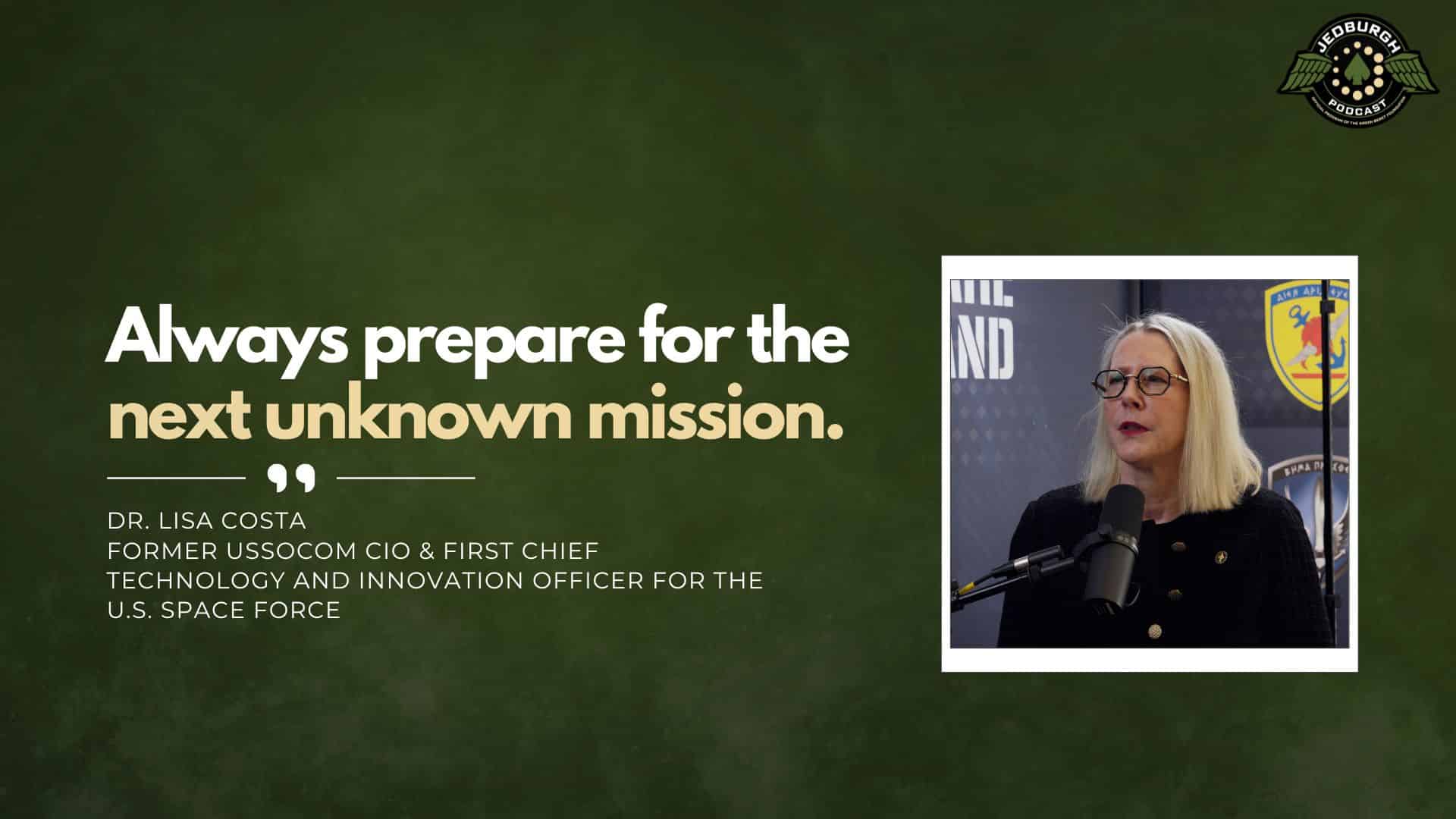
That is a great point. I will end it on that. I was always taught in SOF to always prepare for the next unknown mission. Investment in tech has to be about open systems that are not niche, that allow me to pivot very quickly. That is an important guideline for the rest of the force. Fran, it has been an honor and pleasure. Thank you for all you do for all of our vets. I appreciate it. This has been fantastic.
Thank you so much.
Thanks so much. Bye.
Green Beret Foundation
P.O. Box 25138
New York, NY 10087-5138
Note: Please use USPS mail or priority mail. Do not use FedEx.
Green Beret Foundation
10205 US Hwy 15-501, Unit 26-8
Southern Pines, NC 28387-4301
Call: at: (844) 287-7133