The speed of innovation has long been the difference between military success and failure. Countries and militaries that rapidly develop, deploy and evolve technology thrive. Those who lag…flounder. America, NATO and the world order are being challenged…and innovated against…at a faster pace than ever before.
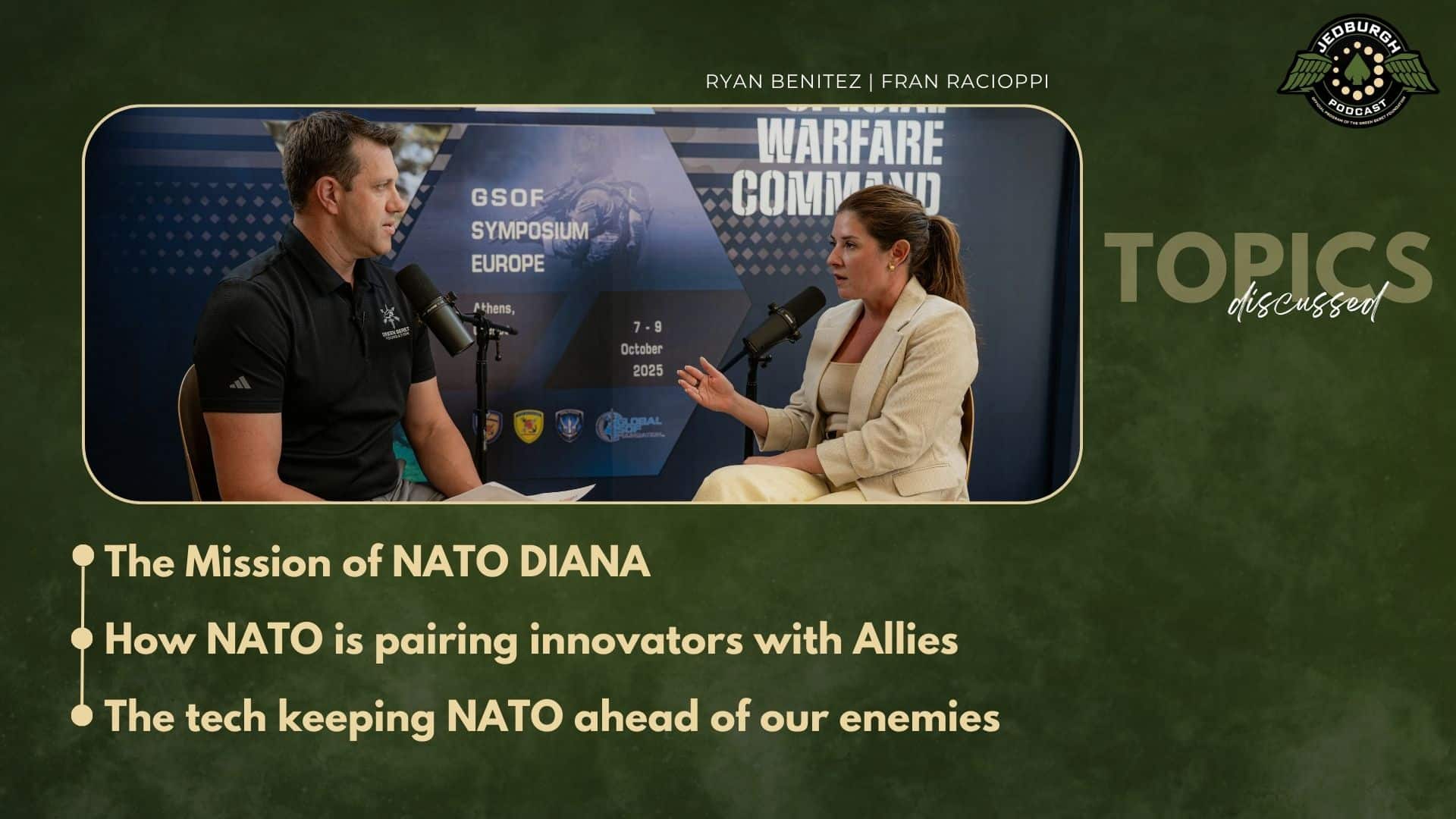
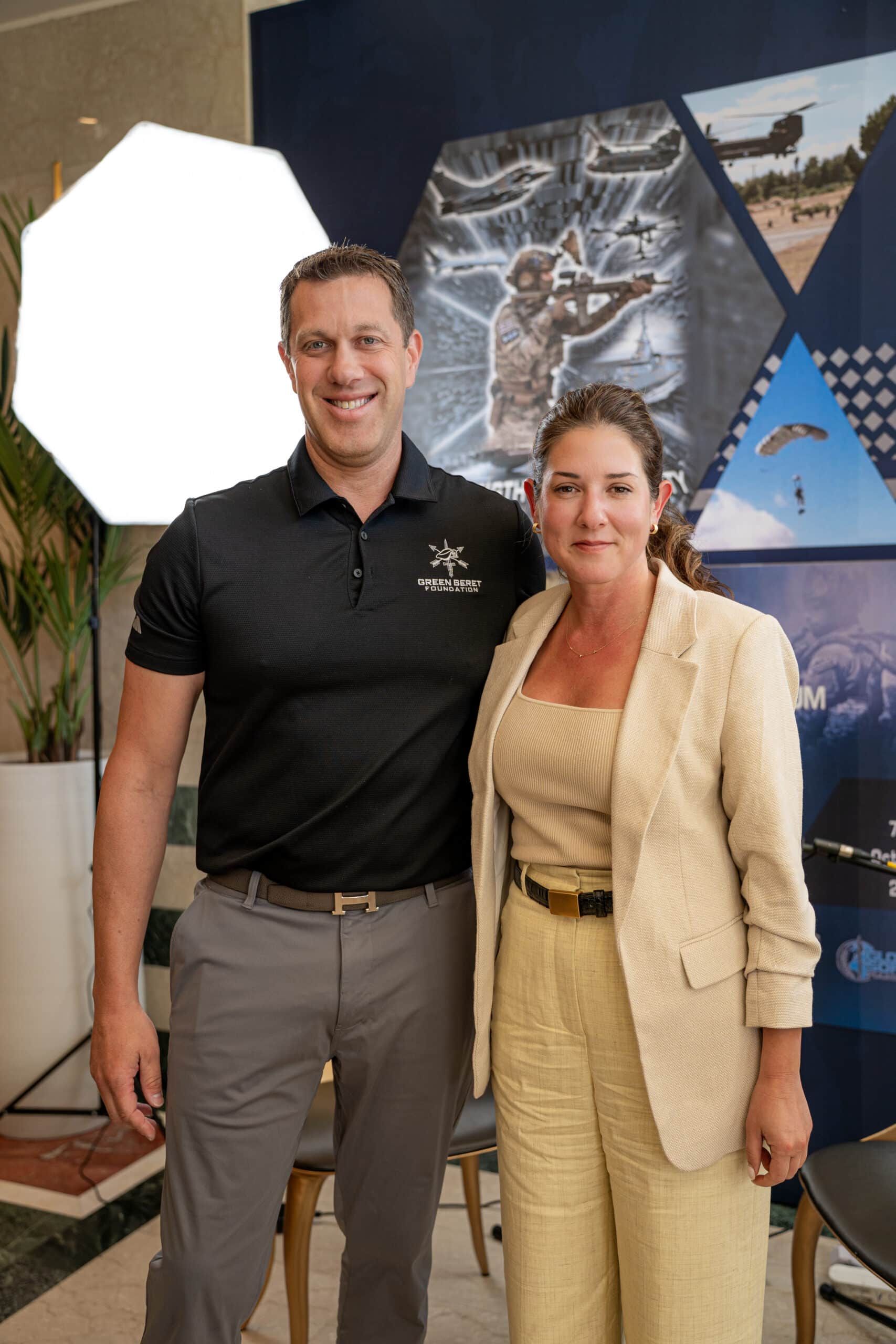
From the Global SOF Symposium in Athens, Greece, I sat down with Ryan Benitez of NATO DIANA to talk about how innovation, technology, and rapid capability development are shaping the future of defense across the Alliance.
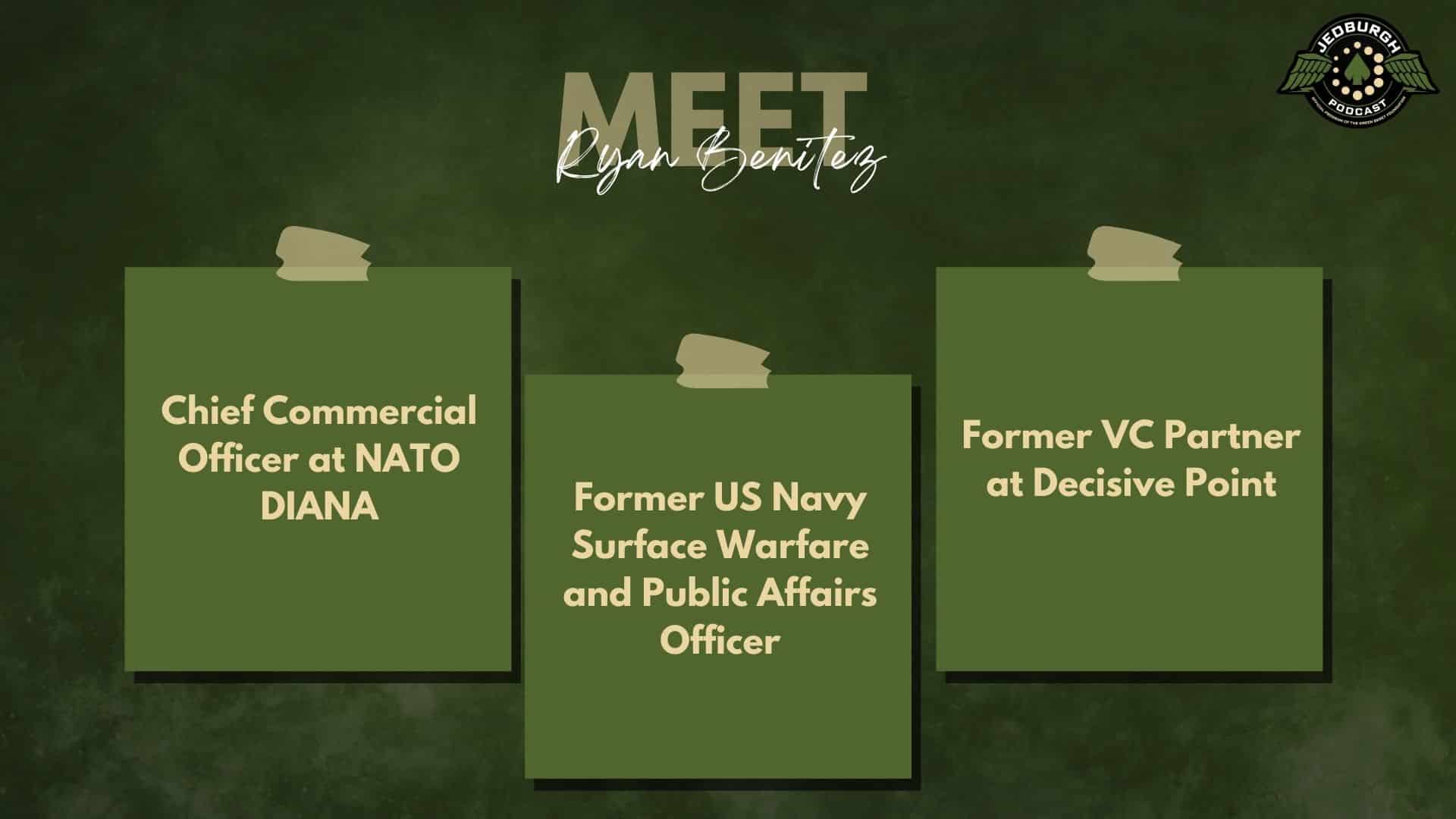
As the DIANA’s Chief Commercial Officer, Ryan explains her work inside one of NATO’s most forward-leaning organizations. DIANA, the Defence Innovation Accelerator for the North Atlantic, connects startups, researchers, and industry leaders to solve some of the most urgent challenges facing allied militaries.
From emerging technologies to dual-use solutions, DIANA is helping NATO move faster, stay adaptable, and maintain an edge in an increasingly competitive global environment.
Ryan also shared how her experience in the Navy and Venture Capital informs her approach to modern innovation, why collaboration between nations and private industry is more critical than ever, and how DIANA is empowering new ideas that can redefine readiness, resilience, and operational effectiveness to not only keep pace, but move faster than our enemies.
Follow the Jedburgh Podcast and the Green Beret Foundation on social media. Listen on your favorite podcast platform, read on our website, and watch the full video version on YouTube as we show why America must continue to lead from the front, no matter the challenge.
—
Ryan, welcome to The Jedburgh Podcast.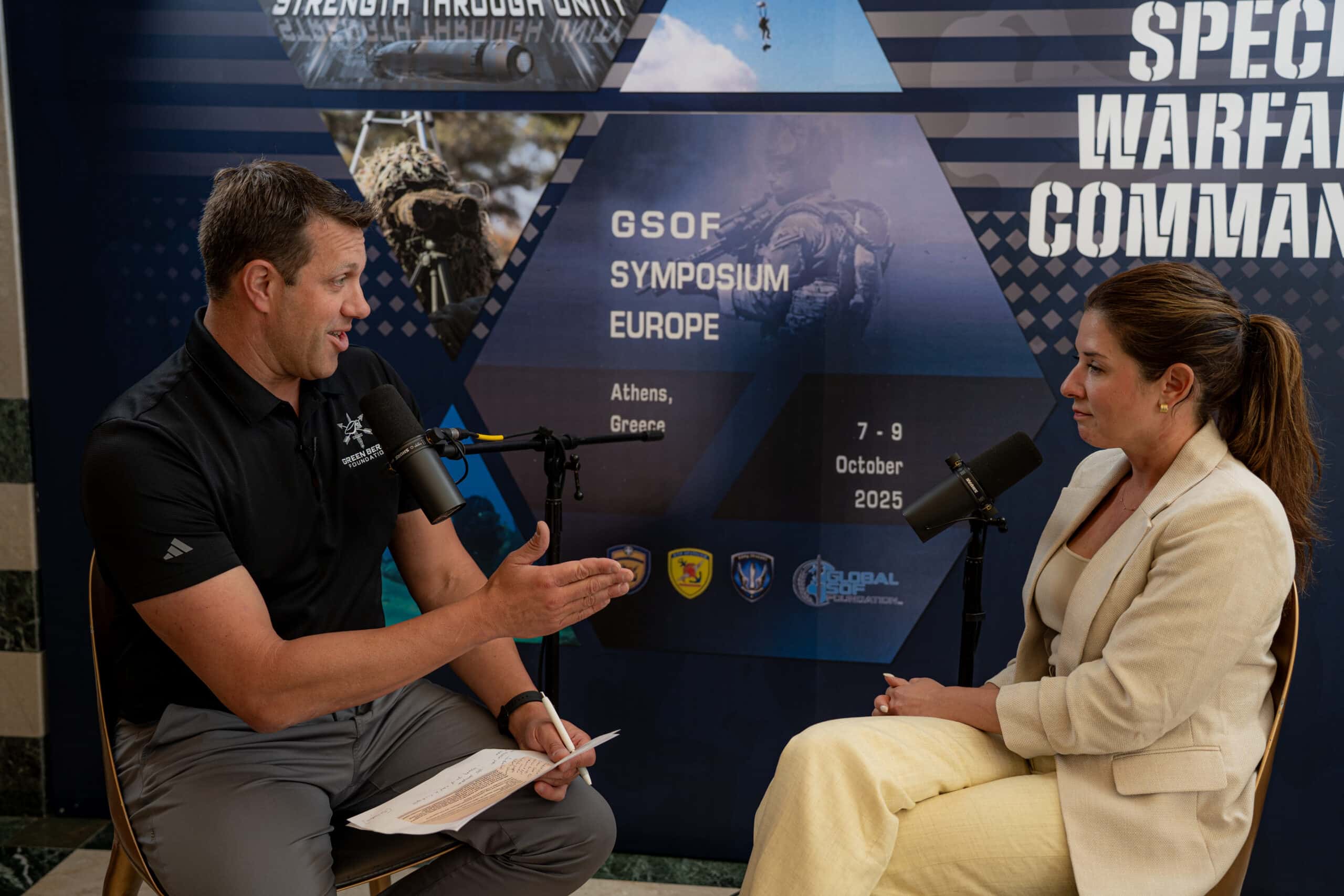
Thanks for having me.
We’re here, we’re in the lobby, last day of GSOF Europe, where we’ve had an incredible opportunity to see what not only our NATO partners are doing, but our partners and allies from across Europe and all the way into the delegation from the Philippines was here. I had a chance to sit down with them with the JSOF commander from the Armed Forces of the Philippines, and really talk about how innovation is affecting the various militaries and the challenges that they face with their adversaries who tend to be our adversaries across the world.
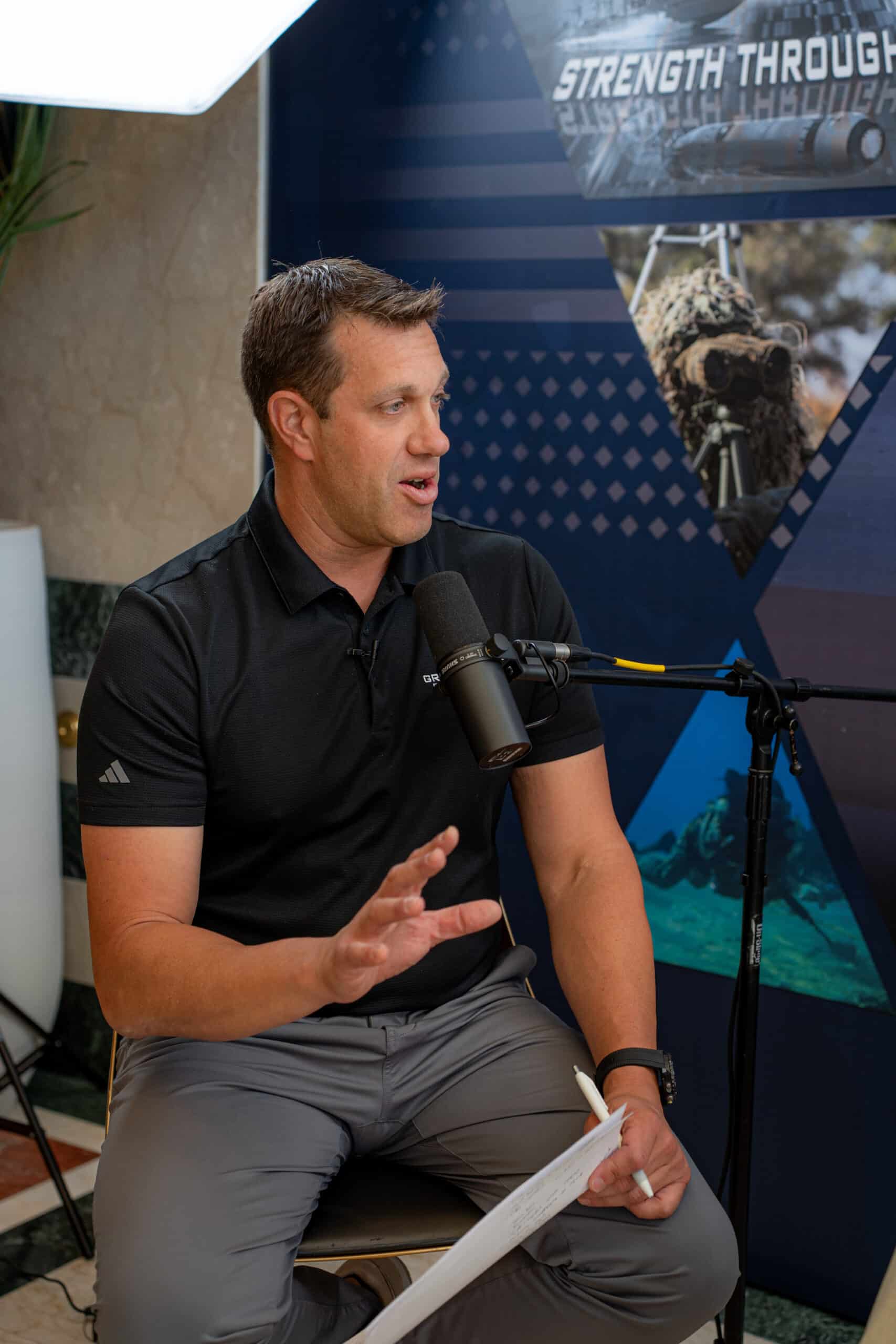
You spent nine years as a Surface Warfare Officer in the Navy. I won’t hold that against you. We’ve had a few Navy folks on. Now you’re the Chief Commercial Officer at NATO DIANA, the Defense Innovation Accelerator for the North Atlantic. NATO, front and center in today’s fight. We see NATO conversations all the way from President Trump through Secretary Hegseth to many of the conversations we’ve had on this show with various senior leaders within NATO.
Really, in my mind, an important organization, but critical organization when we talk about the strategic effects of the United States and how do we achieve our aims across the world. We can’t do everything, so these partnerships and these alliances make it critical to do so, and it’s been like that for 80 years or so at NATO. Can you talk for a second about what is NATO, Diana, and what’s your role there?
Sure. Absolutely. As you mentioned, NATO DIANA, Defense Innovation Accelerator of the North Atlantic, quite a mouthful if you can get the acronym right. We were actually stood up at the NATO Summit. We were chartered at the 2021 NATO Summit, and we’ve very quickly opened our doors in 2022. It’s very rapid stand-up. We have a headquarters office in London, and we have two satellite offices, one in Estonia, and one in Halifax.
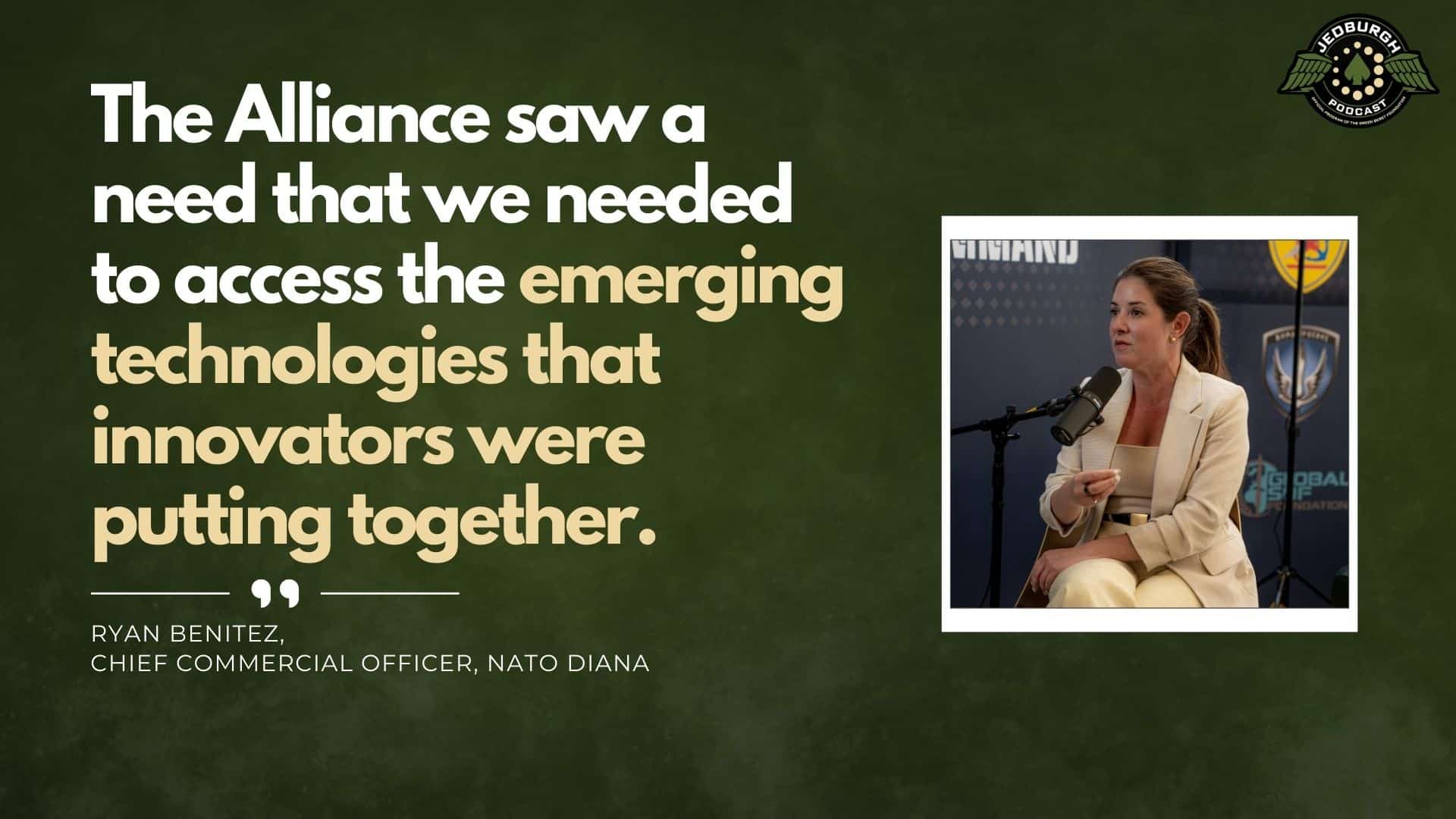
Overall, I think the alliance saw need that you we needed to access the emerging technologies out that innovators were putting together and we need to also protect those sensitive technologies within the alliance and so that was a core of the Mandate for DIANA. You have to think about us as a startup within NATO, almost. Year one, we started out supporting 44 companies. Year two, 74.
Now we’re going to be at full operating capacity so we’ll be supporting 150 companies, at least every year, and then we’ll be doing some rapid iteration outside of our normal cycle. It’s an accelerator. We have a footprint of 20 sites across the NATO, 180 test centers across NATO, so we really done a great job building out this core structure and foundation to give these mission driven innovators and startups what they need to succeed as a dual use startup.
Jack of all trades.
Yes, very important to our mission on The Jedburgh Podcast, because they actually let us go talk to everybody. You then went into venture capital, and you’re looking at early-stage investment into companies that have some product or technology that may advance whatever it is we’re talking about, but specifically here for defense.
When you look at these companies and you said you’re working to scale up to 150 companies and you talk about backing them, what are they doing? What are their primary some of the examples of things that they’re producing? What level of backing are you giving them? Is it purely financial, or are there other aspects that you’re supporting them in?
Yeah, absolutely. I’m only four months into this gig, and so I think coming in with the VC lens has been actually quite helpful into this role. Companies that come into NATO DIANA, they get non-dilutive funding. I want to emphasize that DIANA is a NATO body. That works to our advantage. Our superpower there is that we have the brand of NATO behind us. We can act as a neutral third-party convener to bring together special operators, for example, across the alliance that want to come to the table and iterate.
They’ll come with a requirement?
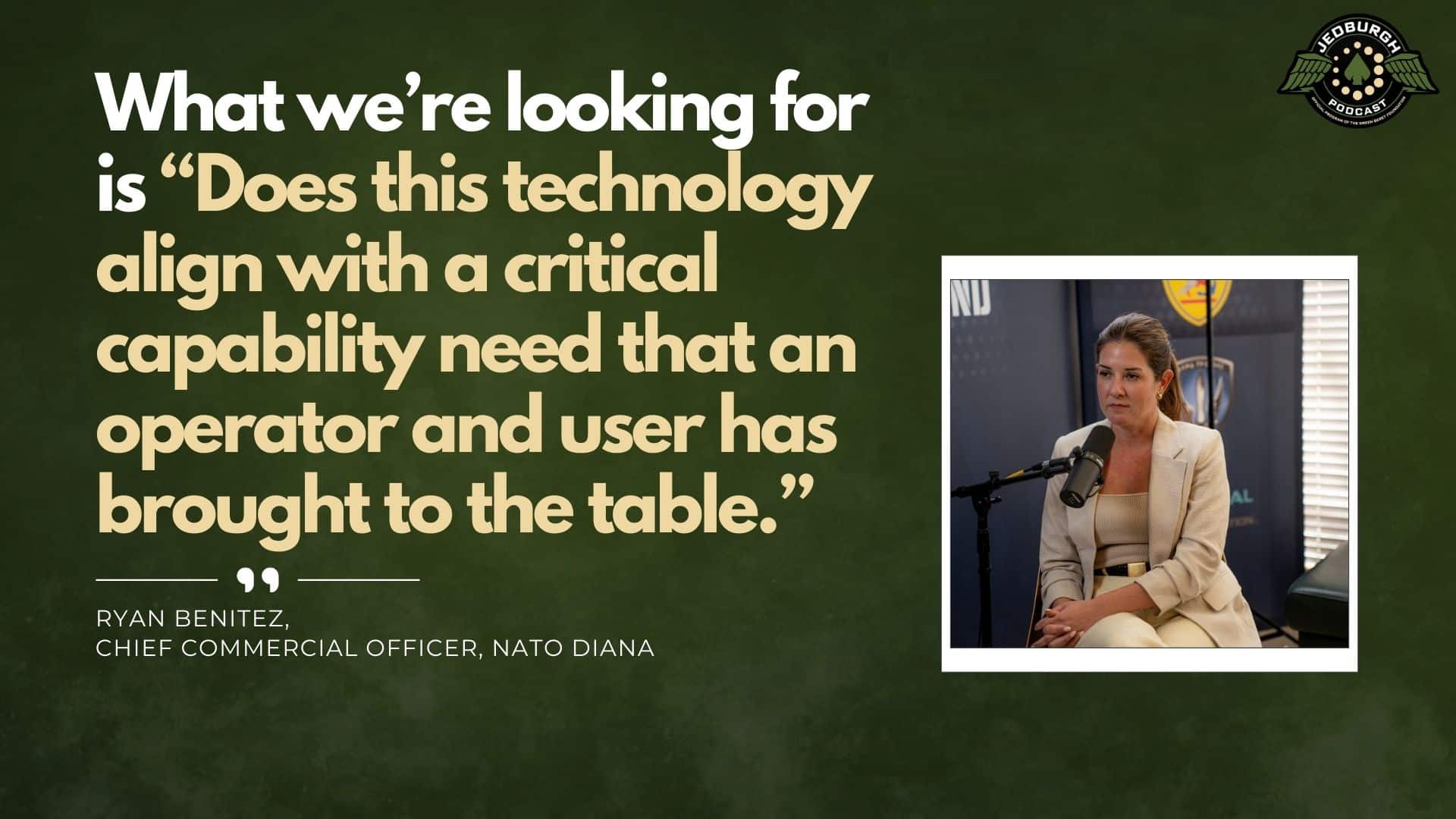
They’ll come with a requirement. What we’re looking for, number one, is, does this technology align with a critical capability need that an operator, end-user has brought to the table? Taking a step back, also, NATO DIANA as an agency is different than a lot of the divisions you might see at NATO HQ. That’s because we have a board and the 32 nations sit on our board. We have one representative from each nation. We have to make sure that we’re fielding the right technology to meet the various nations out there within NATO. We look for a capability alignment. At the early stage, as any former VC would know, team is everything.
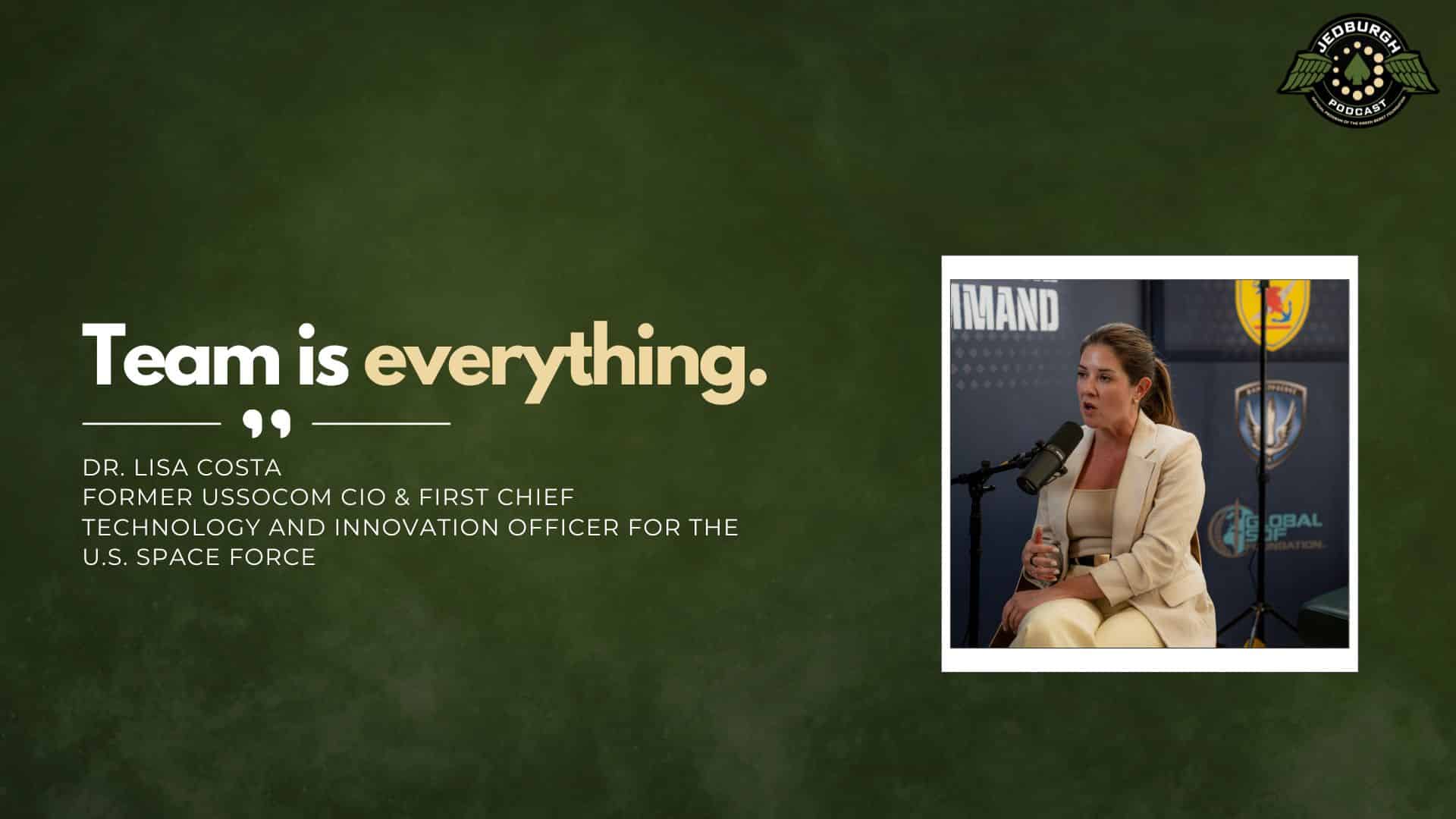
Is it going to be the right team to execute? We all know that former veterans make great founders, actually, I’m sure you’ve had a few on here, but can the team execute? Do they have that growth mindset? Once they come in, we’re already thinking about that transition pathway ahead of time. What operational exercise are we going to put them into? How are we going to help them test for interoperability amongst the allies?
I think it’s a huge advantage also for the US and the Department of War as well, because they’re able to look at a lot of the companies in NATO DIANA. Usually, it’s at least about 20% US companies historically, to be honest. These companies are able to look at and test for interoperability, which is a huge value-add for any NATO ally, especially the US too.
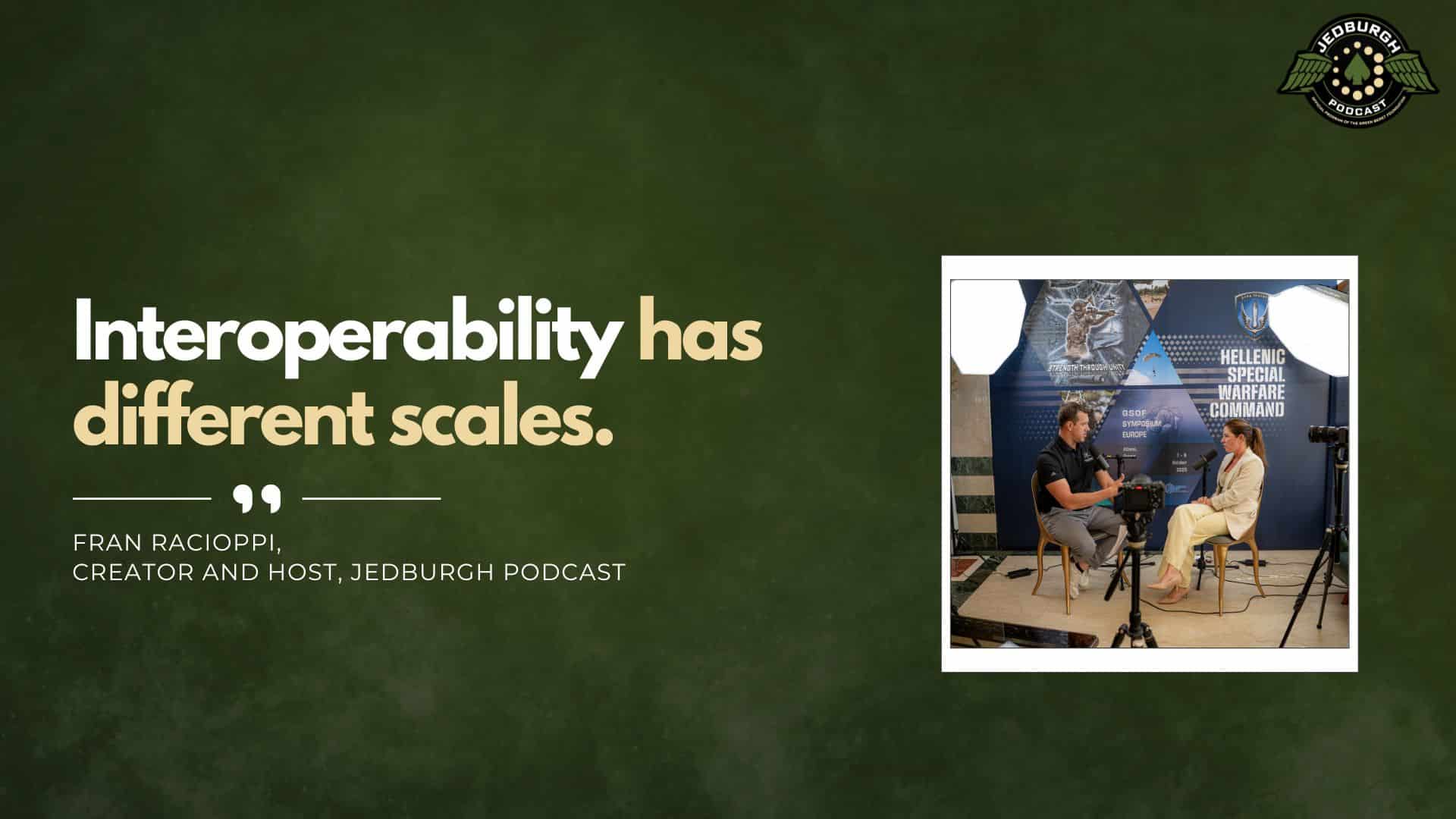
Interoperability is one of those buzzwords that comes up in a lot of conversations, especially in a forum like this, when you bring everyone together. Interoperability has different scales. We can say that we’re interoperable if our nations can speak to each other and can communicate with each other. That’s vastly different than being interoperable and saying, “I have this weapons platform,” or this ISR platform in your region, you have a need for it, I’m going to give it to you, you’re going to use it and give it back to me when you’re done.”
Yeah, so I’ll give you just an example of this specifically. We just had six of our startups at REPMUS. I don’t know the acronym for REPMUS, but it’s a large Portuguese naval exercise, but many of the nations attend, including the US. Companies go in and our startups there were able to adapt on the fly, and demonstrate that they could meet NATO stanags, which are the regulations for interoperability.
There’s a new one, STANAG 4817, for unmanned systems. We got a company there, they came in not being able to meet that standard, they quickly rewired their system and demonstrated that to the whole community of allies there. I think that’s what we unlock at DIANA at the early stage of development for some of these critical technologies.
You said that countries will come in with some requirement and then you have to validate is that requirement is something that is actually needed and can be sourced at this time. When you look out at the NATO alliance and the capabilities that exist, what gaps do you think exist in the technology that you’re now looking to fill?
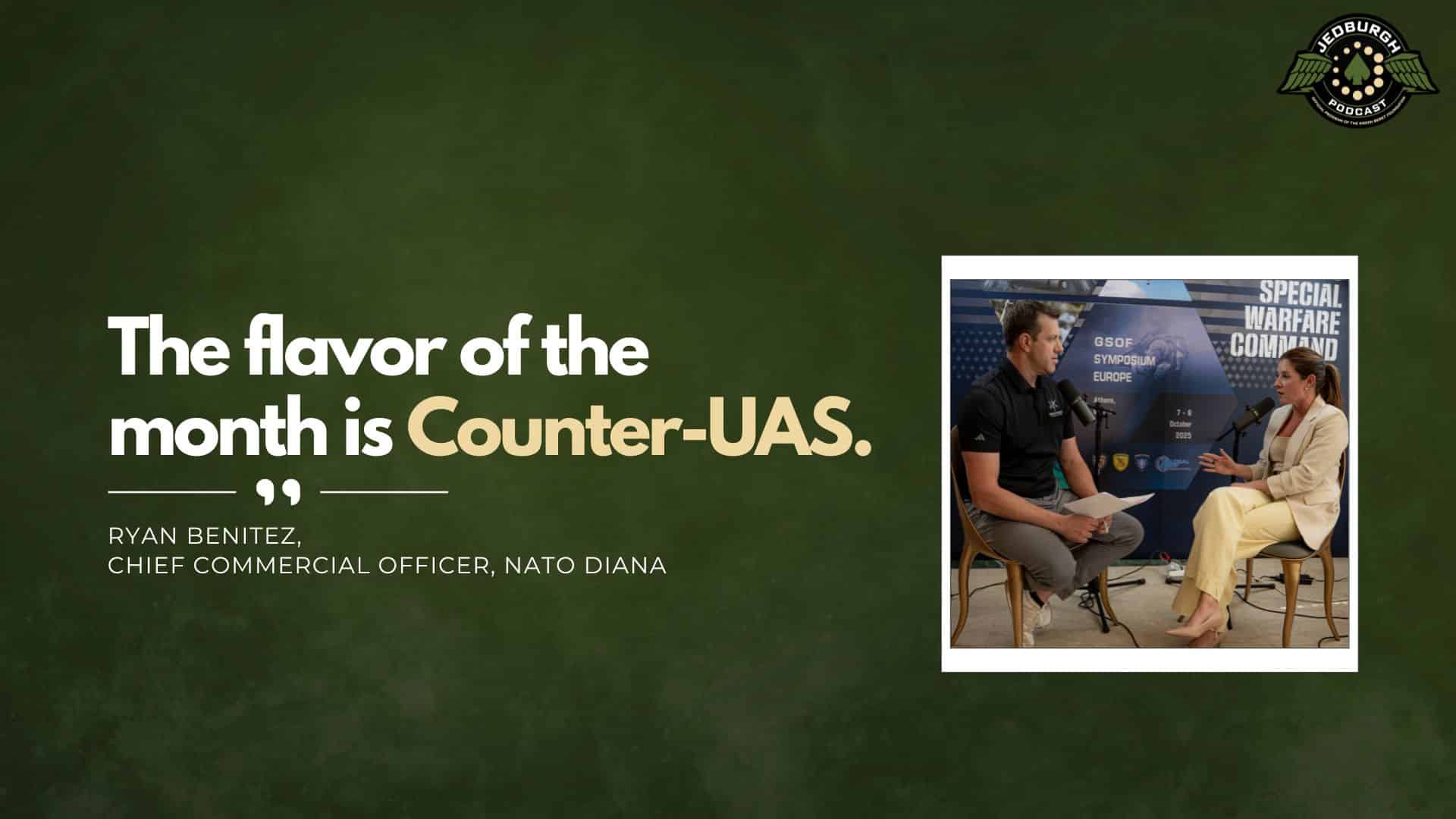
The flavor of the month right now is counter-UAS.
The flavor of the last couple of years.
I think that’s top of mind. Integrated Air Missile Defense is top of mind. We’re thinking about some of these capabilities in a different way. It’s hard to find a startup that’s doing Integrated Air Missile Defense at an early-stage startup. However, how do we think about pairing various emerging startups together to deliver the same effect that a legacy IAMD system would do, or that a legacy frigate would provide? I think we’re thinking about effects-based capabilities in that sense. That is innovation in itself and that’s one thing that DIANA can bring to the table when we look at the gaps or the long lead times for these legacy systems.
Speed of technology is critical in innovation. There are two components to that. Number one is how quickly we can identify the requirement, develop the technology, field the prototype, and then get it out into testing. The other piece of that is how do we now get it through the procurement cycle of a nation in order to scale it and integrate it into the force?
We know that in the US, that process has become quite long and cumbersome and there’s a lot of efforts right now to try to modify that, although I would argue that
I just spoke about this on the panel here at GSOF. When you hit an acquisition barrier, it can have significant impact. What we have done at DIANA, and this is fairly new, so this is maybe about three months old, this funding authority that we have. We call Rapid Adoption Service, essentially. Not only is DIANA finding the best companies throughout the alliance, doing the down-select, giving them non-dilutive funding, but also to facilitate rapid adoption, we have this service. Once you’re a DIANA portfolio startup, you’ve satisfied competitive down-select.
What does that allow us to do? That allows us to work with any NATO nation out there that says, “I have money, I have a need, I’m looking for this capability.” We can then put a NATO DIANA company directly on a prototyping contract without competition. That in itself is one way that we are overcoming some of these barriers.
NATO nations, depending on the nation, they have longer lead times for acquisition. They can come to us, essentially wire transfer us the funding, and then we will put that startup on a prototyping contract. Now you might say, “What happens after the prototyping?” That’s where we can just do a direct handoff with NATO procurement for production.
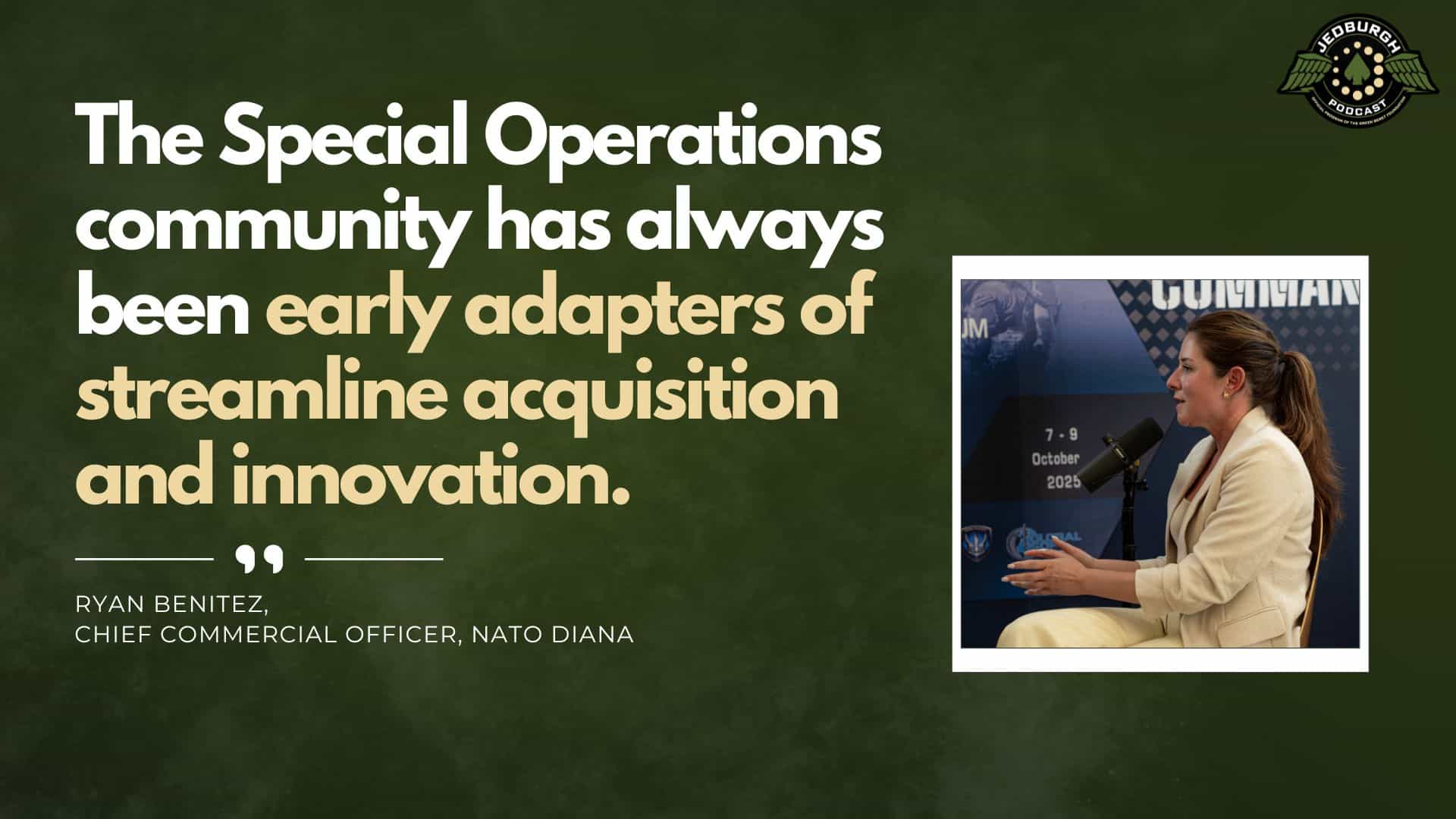
This is all new and I want to really highlight, I can’t go into the specifics of our first success story of this, but it is the Special Operations community that has closed our first example of this. As you know, the Special Operations community has always been early adopters of streamlined acquisition and innovation. That’s why I came out here for this. I think we’re going to see more examples of us being able to rapidly facilitate prototyping across NATO.
The country with the requirement is providing the funds. Certainly, the countries will have to go through whatever process they have to allocate those funds to be able to do that.
Right. That in itself could be a barrier, but like we said, it’s going to vary nation by nation. We are NATO, so most nations do have that direct transfer capability with NATO.
What countries do you think from an innovation standpoint, are leading the rest of the alliance?
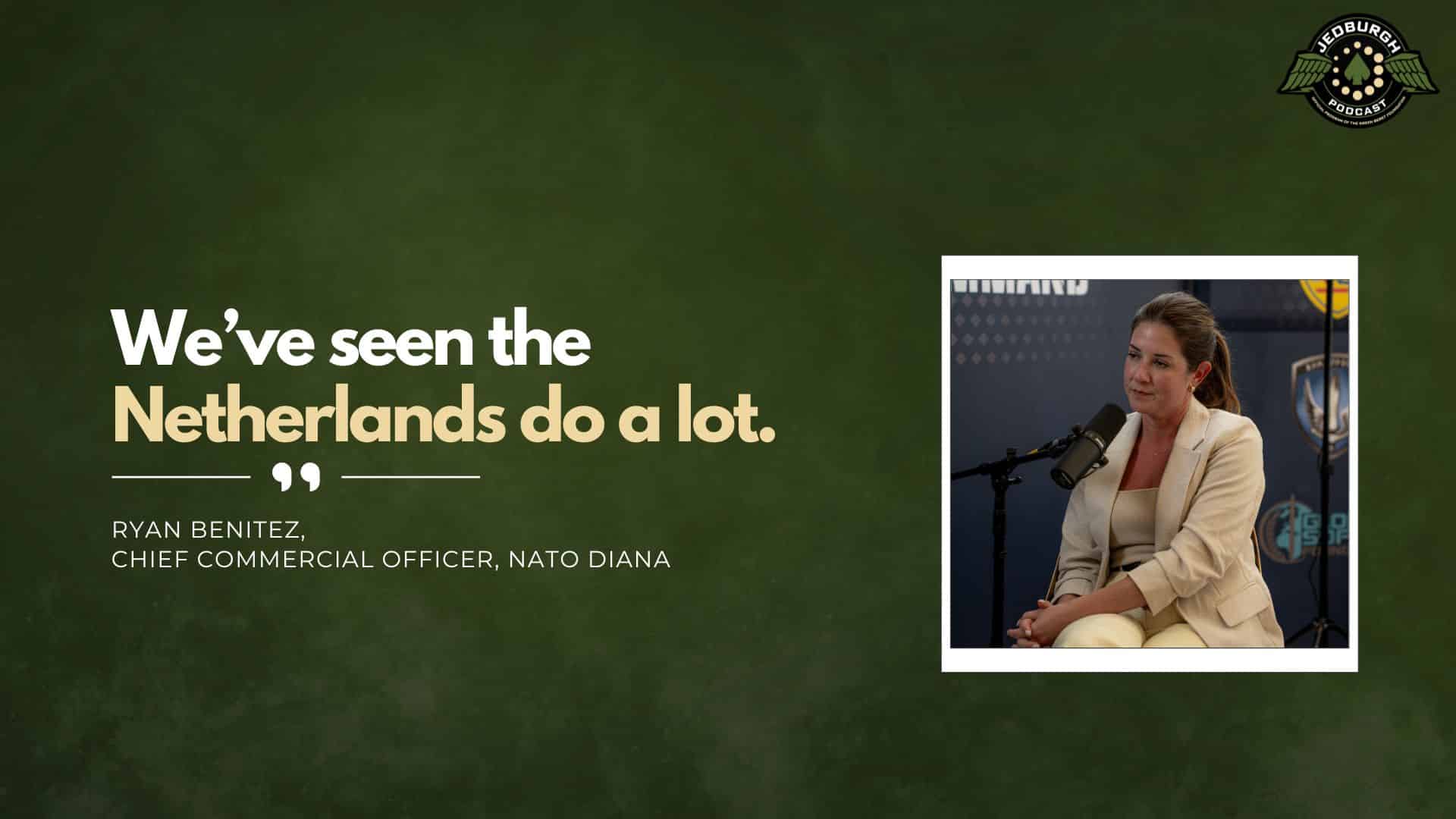
I think we’ve seen the Netherlands do a lot. They came in really quickly. They like to test with a lot of our startups and put them directly on contract. I think you’re looking at, especially nations that might have less of a traditional defense industrial base. You look at the US, we’ve got all these primes here, and most of the primes have presences across Europe. There are some nations that there’s less of that large defense prime presence. They’re really turning to some of the emerging technology capabilities and other ways of doing things for innovation purposes. I think we see a lot of companies doing that, especially towards the East as well.
How do you convince a country that it is a better idea to get involved with a program like this, look at a smaller early-stage company who might meet that requirement than going to a big defense manufacturer? Especially when you have resource-constrained countries who may not be willing to lose money. One of the big things in VC is, you got to be willing to lose what you put in.
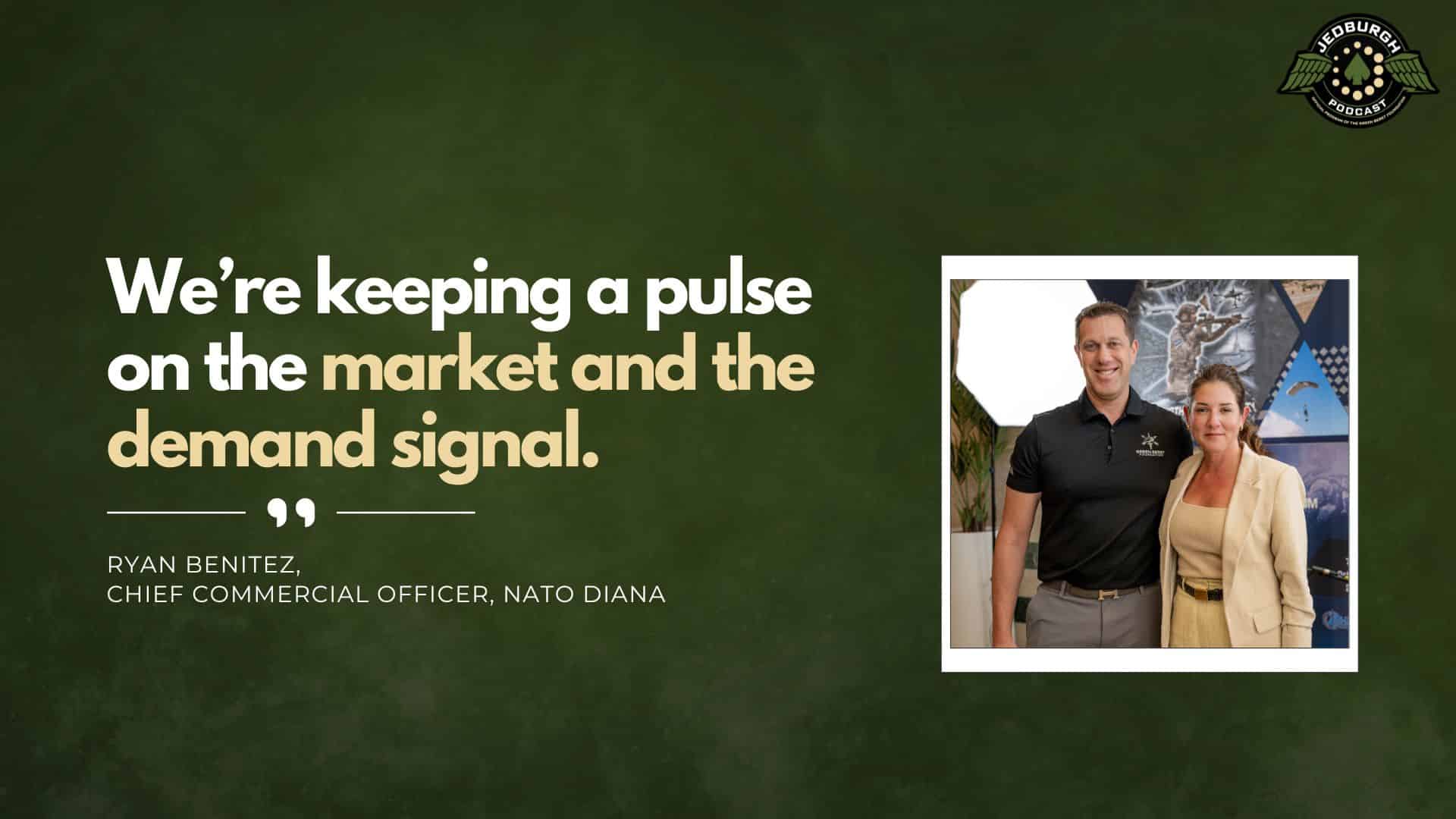
Some nations are naturally more risk-averse than others and so they might still choose to go down that pathway. I think what I would say is that within DIANA, we have a couple of superpowers. One is, we’re keeping a pulse on the market, the demand signal. We get thousands and thousands of applications. We’re really able to develop a pattern of recognition of what is novel, what is state-of-the-art. We have a great relationship with the venture capital community. Usually, the venture capital community that’s investing in defense, it’s nice to know where they’re placing their bets as well, because they usually have a defense background. We bring access to that type of assessment for some of those nations.
How many nations are coming forward and getting involved?
Thirty-two nations.
Thirty-two have a seat on the board. How many are coming with requirements?
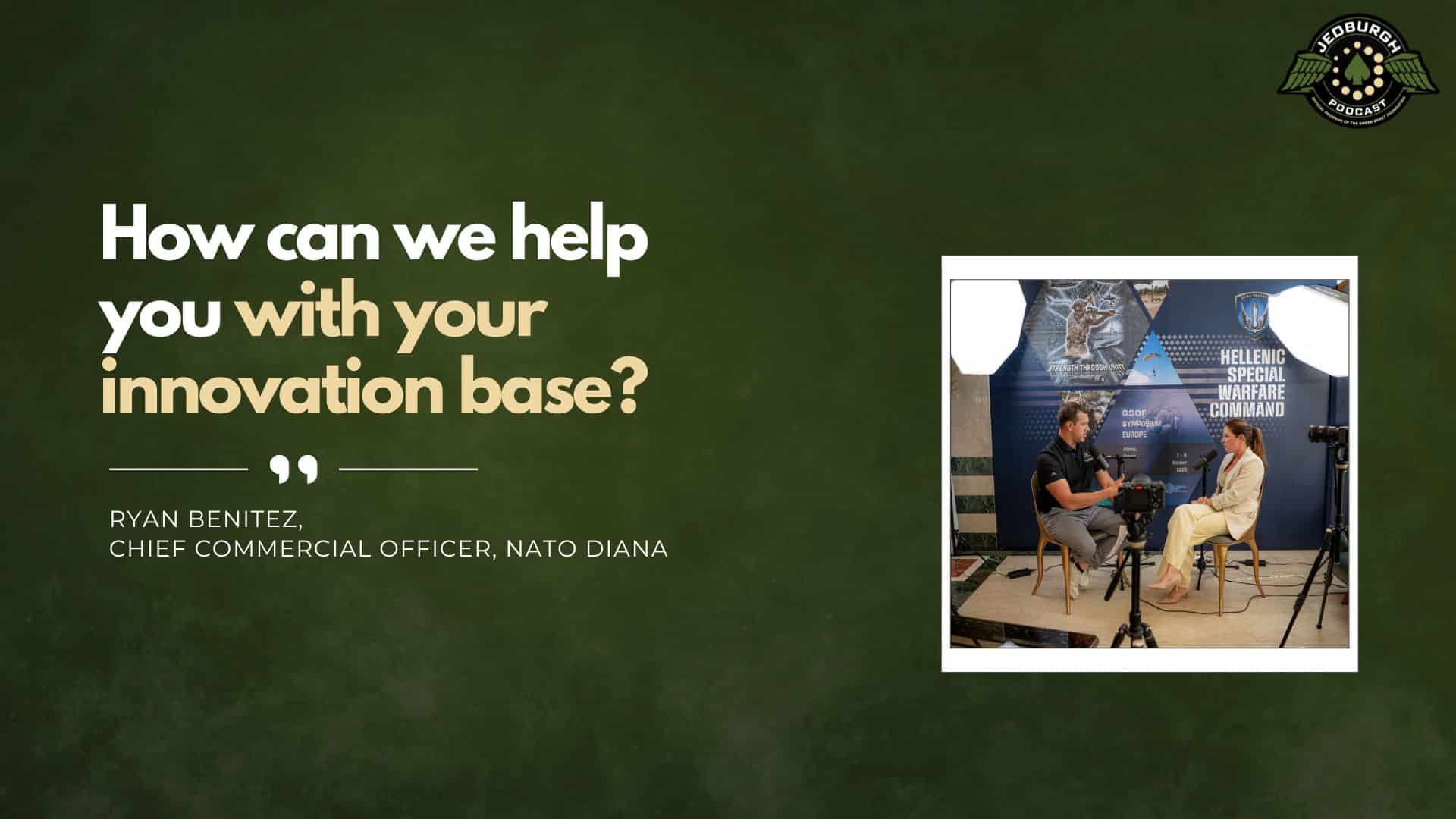
A lot, I would say. The majority. There are a few nations out there that are less active. Now that we are up at full operating capacity, we get out, we proactively recruit, we proactively look at who wants to iterate with us, where we can get out on a range and test. There are other ways for us to bring some of those nations to the table and work with them on how we can help you with your innovation base? How can we help you send more companies, develop and grow more companies that will be right for NATO DIANA?
As you look across the market and the industry to see what’s out there and then also analyze our adversaries, where do you think NATO’s behind our adversaries?
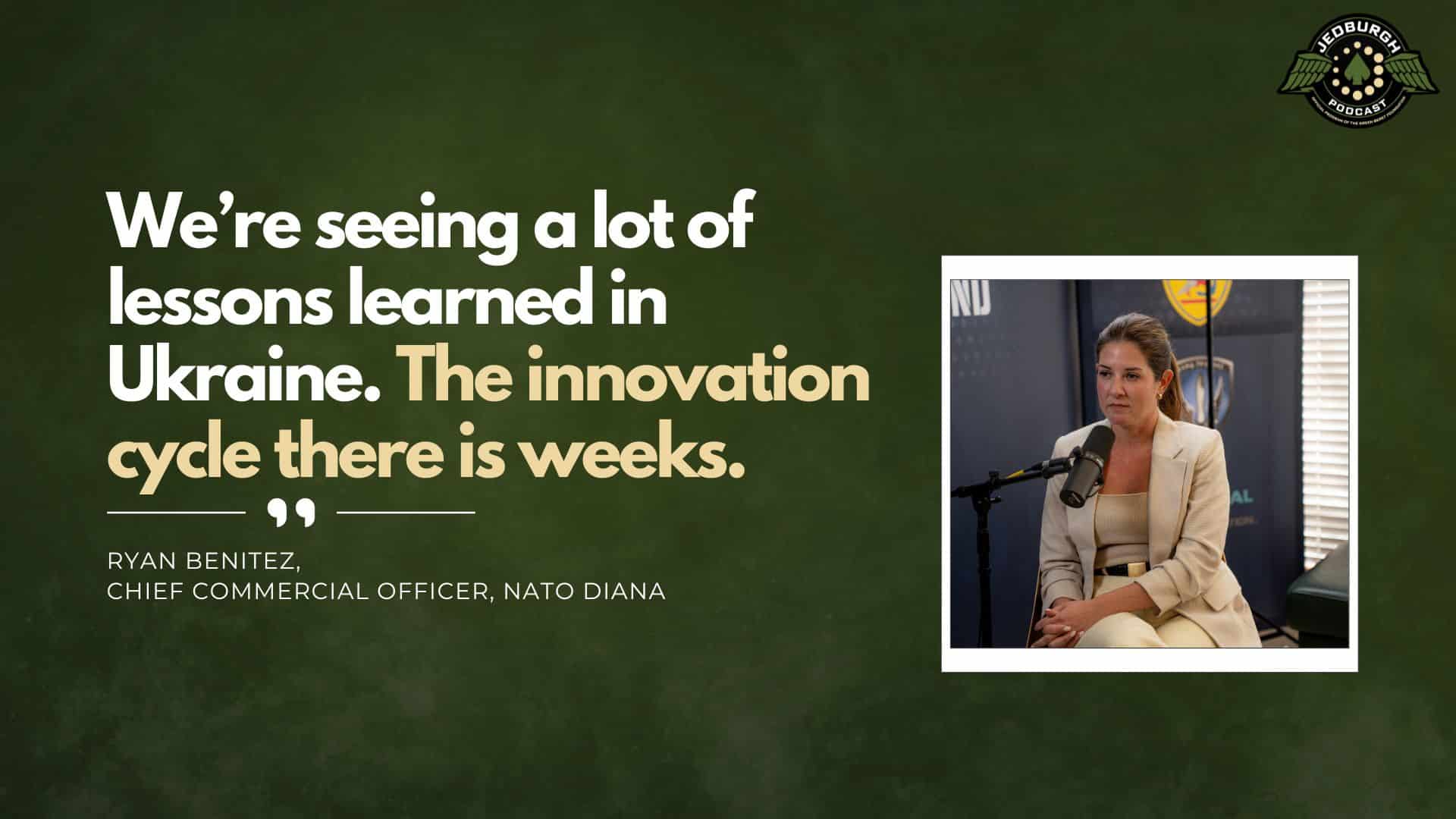
I like to always think we’re ahead. As I mentioned, I think we’re seeing a lot of lessons learned on Ukraine. The innovation cycle takes weeks. We’re going to have to be able to forward deploy low-cost attritable systems, manufacture at scale. We don’t have time to bring things back to be fixed, to bring things back for large adjustments.
I think being able to really be closer to the front lines, forward manufacturing, lower-cost attritable unmanned systems. I already mentioned the two capabilities I think where we need to spend a lot of focus on how we can get more innovative in solving the problem set of air missile defense and counter-UAS.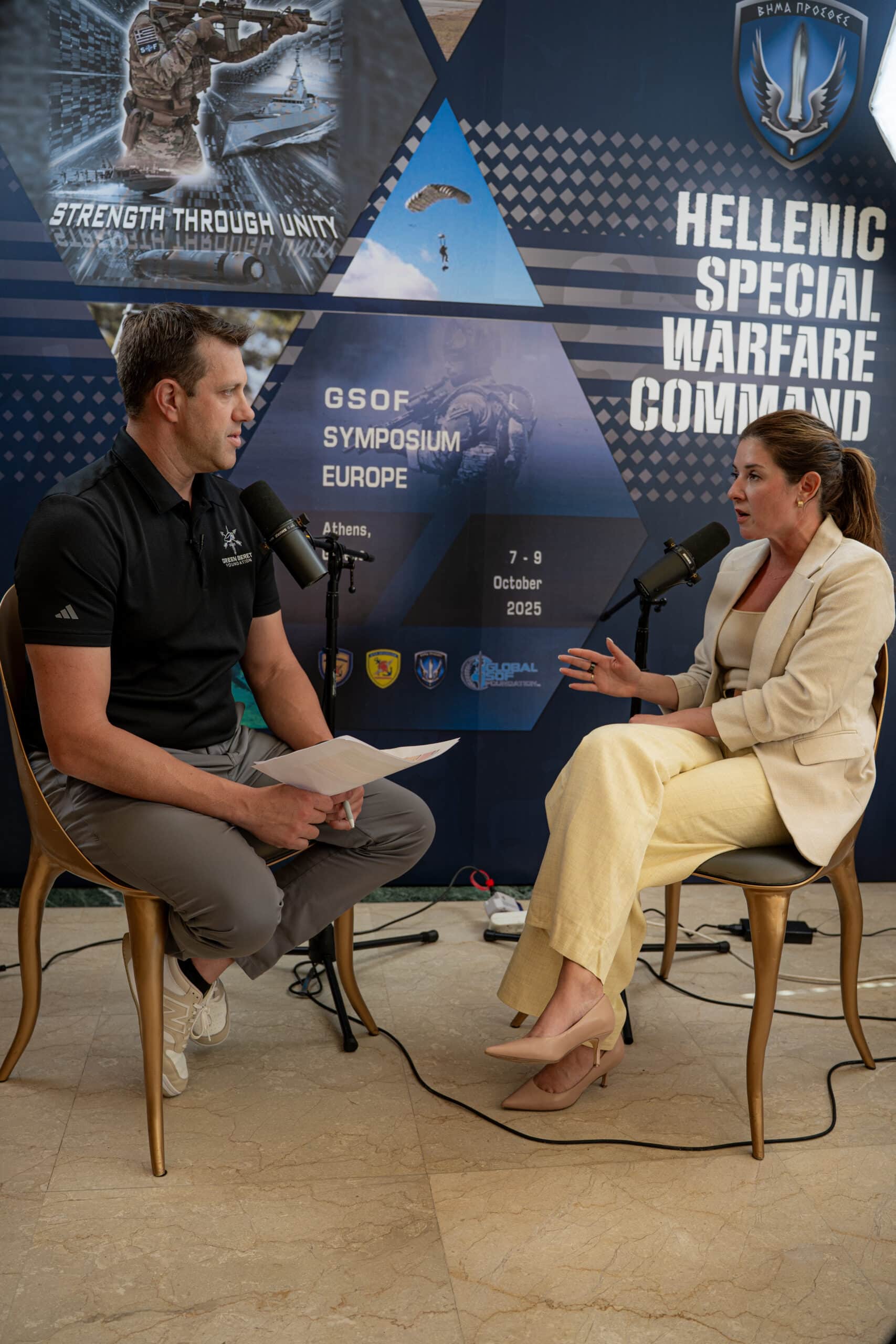
I think when we look at assessing NATO’s capabilities and the countries of NATO against our adversaries, you almost have to make it a policy question more than a capability question. You’ll hear people get up, and I rightfully agree with this, that the US military, especially our European allies, are the most advanced militarily than any other nation in the world, especially our adversaries like the Chinese and the Russians. When you look at how much more quickly they can field things and our adversaries’ willingness to use them, that’s where NATO and the US may tend to lag our adversaries.
I think it’s scary. We’ve seen Russia’s ability over the past couple of years to really ramp up and scale their own production of drones, and they’re getting more tech-savvy. The good thing is, I do think there’s been a mindset. There’s been a reset. The NATO summit, there’s a new mindset. We’re going to be up to 5% spending. I think 1.5% of that has to be spent on innovation.
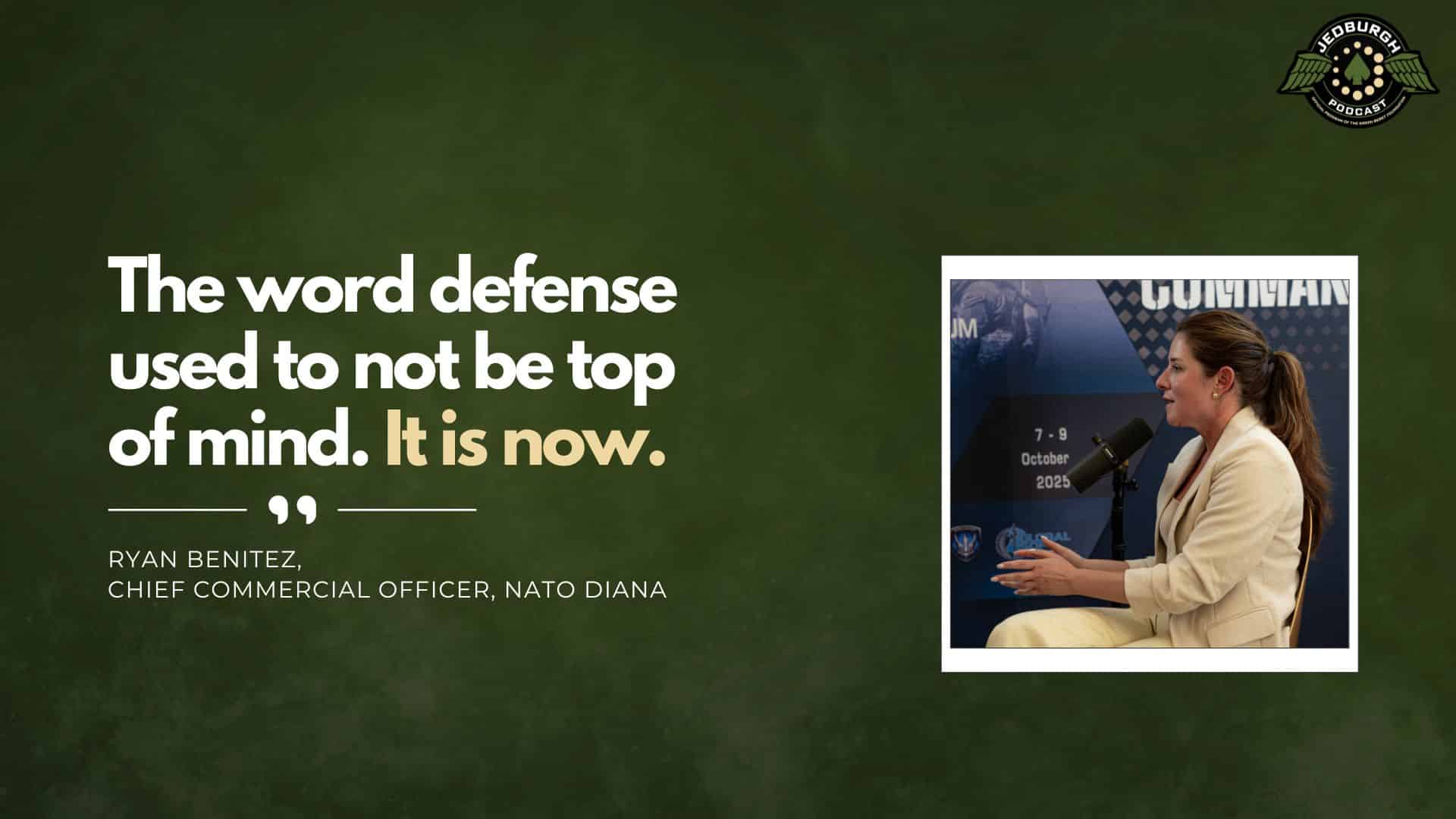
I think that the countries, especially along the Eastern border, live this every day. I think the word defense used to not be top of mind for some of these nations and it is now. It’s an acceptable word, especially in the venture capital community in Europe as well. Before it was like, “No, we’re not going to think about defense.” We’ve seen that shift. I do think from a timing perspective, we’re headed in the right direction.
Yeah, because it’s Russia doesn’t have better drones than the US, but can they field them at a faster rate and have a willingness to use them in ways that the US is not? Possibly. China doesn’t have better aircraft carriers, but they can build them at a faster rate and deploy them faster. Is it a capability gap, or is it a willingness gap? That’s what you have to start to look at.
That makes it challenging when you’re trying to advance and field these capabilities because yes, we want to stay ahead, but at the end of the day, what is the litmus test that allows us to actually field some of this technology? In a way, that makes a difference on the battlefield. When you look at emerging technologies across NATO, how would you define readiness? What does the readiness of NATO look like?
I think NATO has its own processes. You have the Council of National Armaments Directors, you’ve got the various force planners. They’ve had the system that they’ve used for years, and I think that there’s a strong foundation there. The important thing is what we need to do is make sure that we’re aligning with what they’re working on at NATO HQ with the Council of Armaments Directors and these force planners.
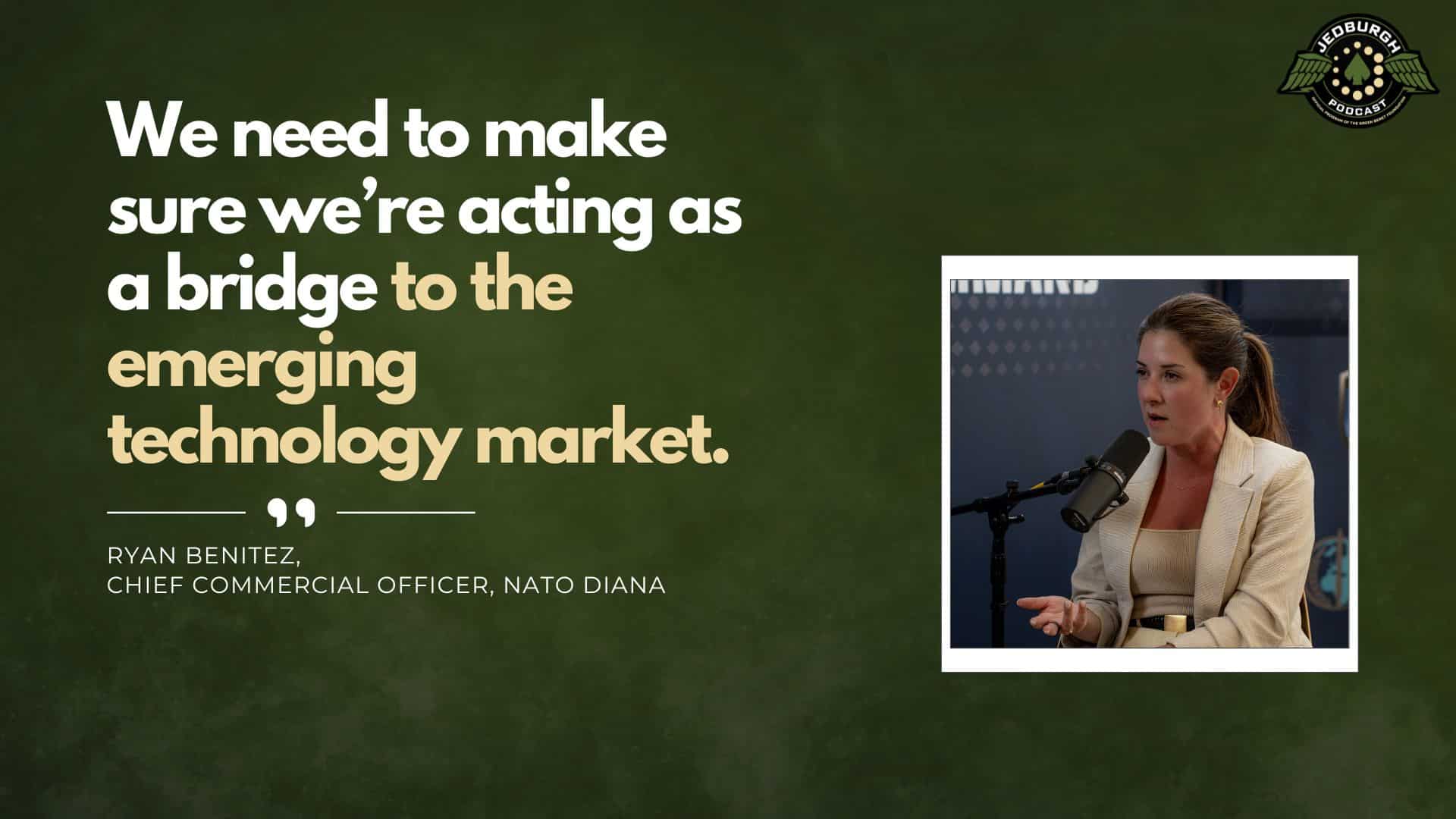
Let’s make sure that we’re acting as a bridge to the emerging technology market, so that we’re translating those legacy needs into needs that might resonate with the startup, the emerging tech community. It’s important not to lose sight also of what’s on the horizon. We have to always be looking ten years down the road.
We can’t be just distracted by this counter-UAS crisis that we’re facing right now, if you’ve been reading the headlines. It’s really about what are the emerging technologies on the horizon? We got to pay attention to quantum, biosecurity, and then what do we need now? What are the higher technology readiness levels now that we need to field? Where I sit, we’re trying to act as a bridge for that.
I had a chance before this to sit down with Lisa Costa, who was the Chief Innovation Officer at the US Space Force and also held a Chief Information Officer position at SOCOM. I asked her the same question I’ll ask you, because I think it’s important and you just brought it up. When you look down the road 5, 10 years from now, what does that battlefield look like in terms of technology, and how does the advancements in AI and unmanned systems compare to today’s human-centric battlefield?
I think when the Ukraine conflict started, we actually thought that maybe it would be a little bit more advanced and then we saw some legacy tactics.
Trench warfare?
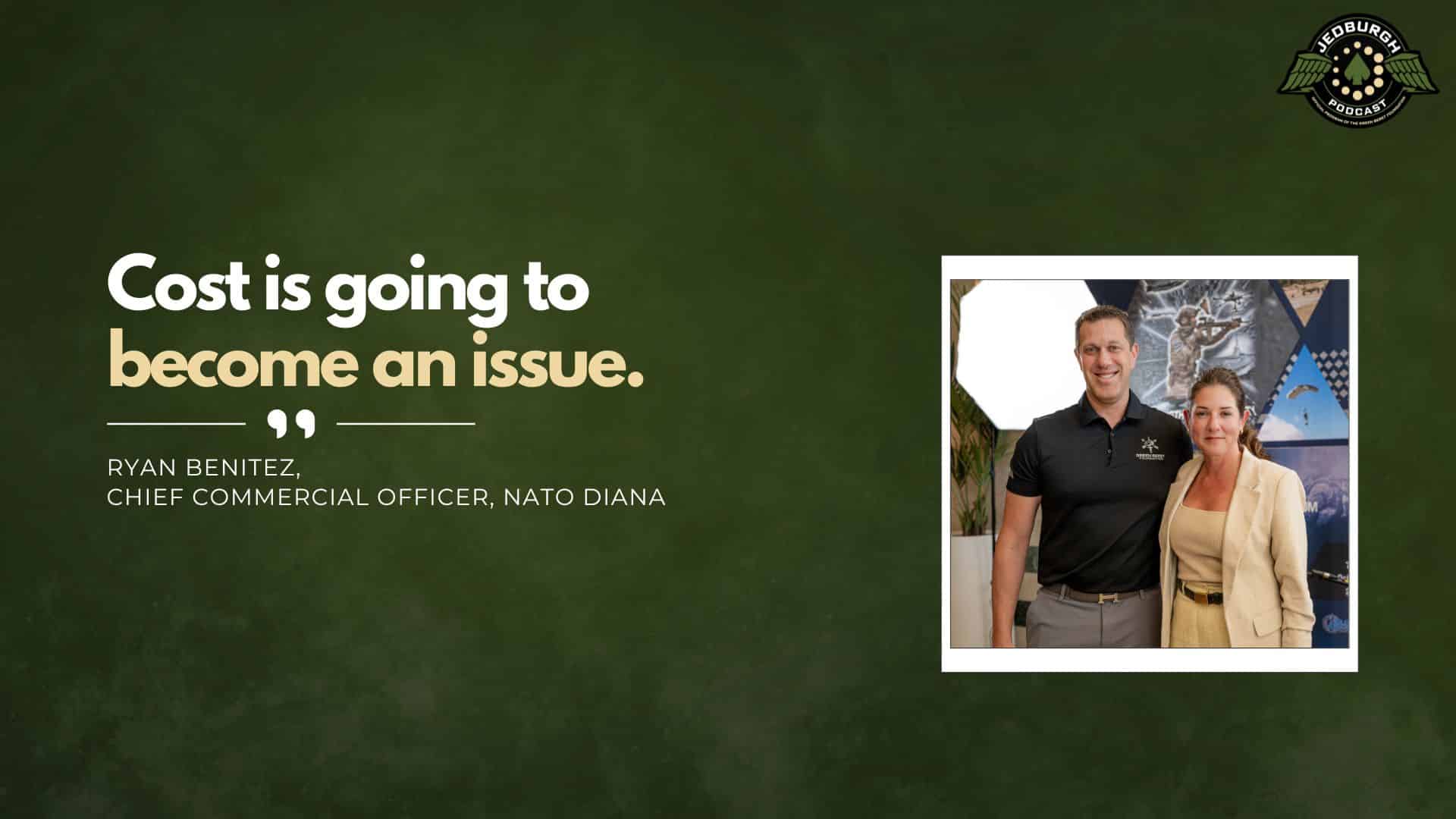
Yeah. I think we were surprised by that, at least I was. I think looking into the future, cost is going to become an issue. We’ve got to develop low-cost. It’s going to have to be, as I mentioned, forward-manufactured, quickly fielded. The electronic warfare domain, space and cyber, they are already critical areas that we operate in, but I don’t think that’s going to change.
I think figuring out how we also hand in hand look at our own critical infrastructure and resilience in urban areas and pair that with thinking about what does this look like in the battlefield? What does this look like in urban areas? We’re seeing drones being intercepted and falling down onto civilian populations now. I think looking into the future, we’re going to have to be like, “We’re on the forward battlefield, but how do we think about defending critical infrastructure as well?”
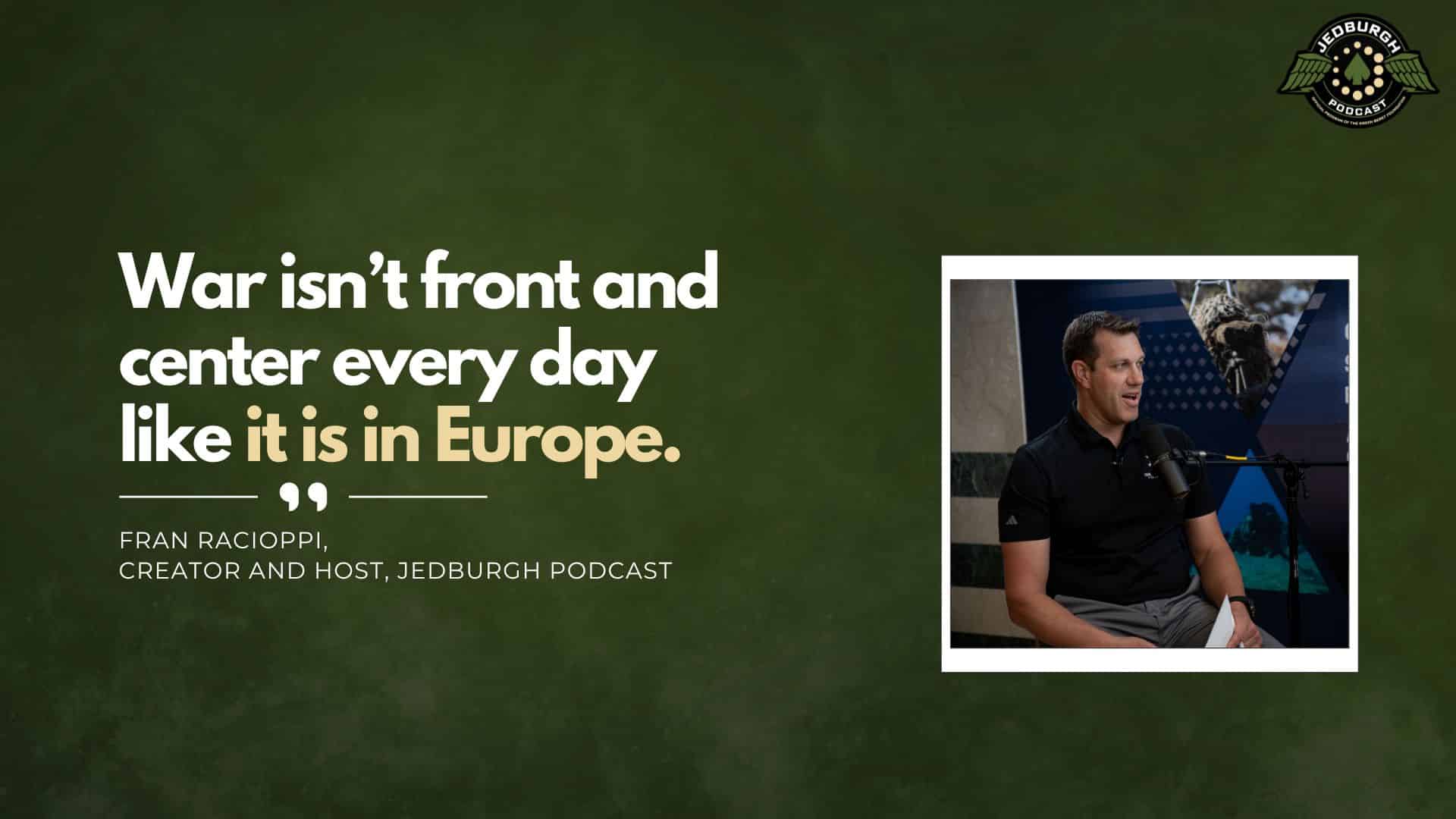
You’re talking about denial of service attacks. You cut the power, you cut the water. A war half a world away, especially for us as Americans who are insulated by oceans and generally friendly partners to our North and our South, war’s not necessarily front and center every day like it is in Europe. However, cut the power, cut the water through a cyber-attack or sabotage, now we’re going to have real problems.
When we look at the effects on the US populace and what’s really going to affect and put a nation at war, I come back to denial of service attacks. Have they leveraged the battlefield of today, wherever that may be? A lot of things to think about when we talk about innovation and where it might be applied. All right, so what’s next for DIANA? You got to scale up to 150 companies. How are you going to do that?
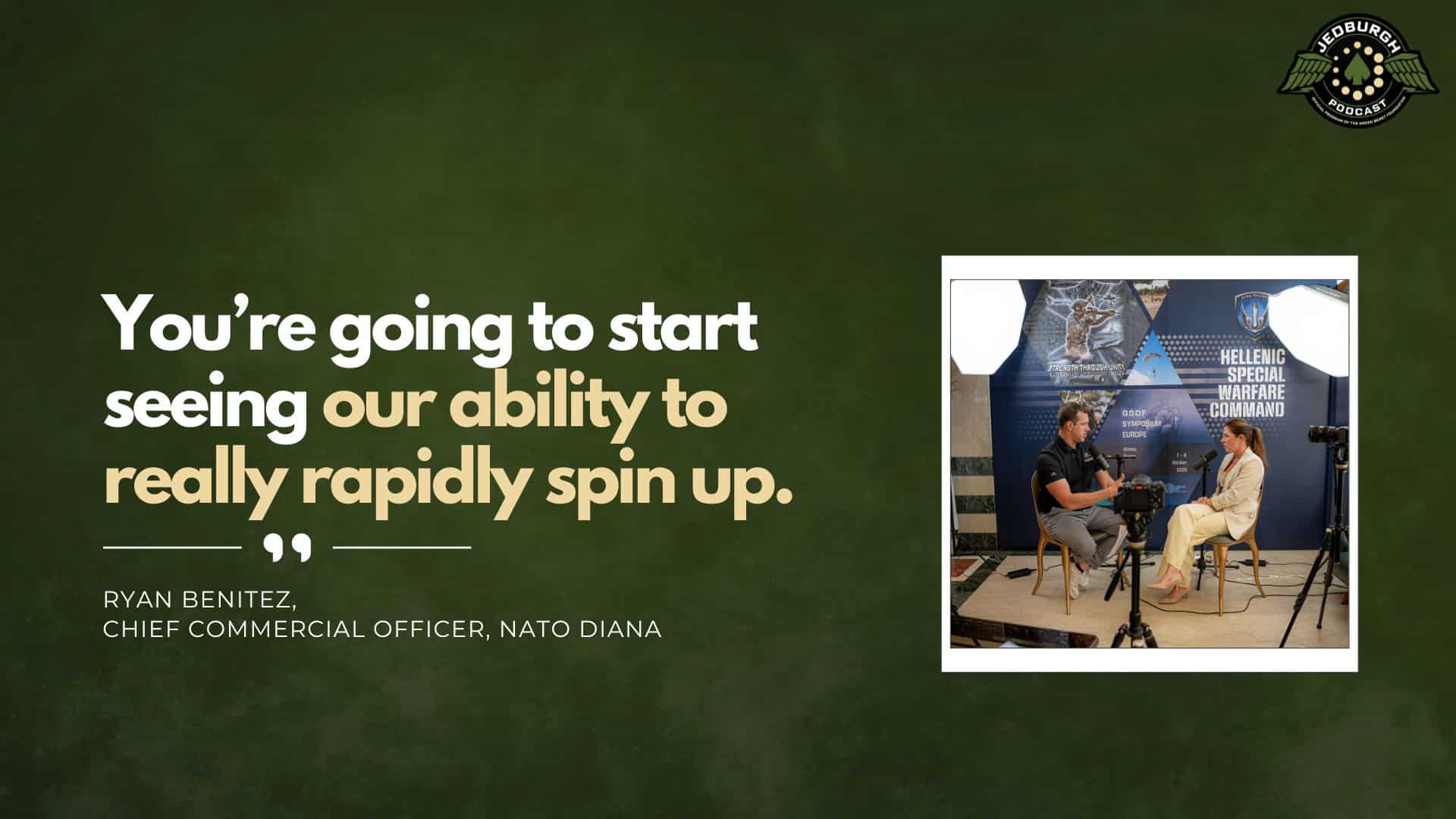
We’re already scaled up. As I mentioned, we got 20 sites across the alliance and we’ve got 180 test centers. We’re fully scaled to support our core program. As I mentioned, DIAN,A we’ve been given a lot of leeway in how we want to innovate and how we want to begin fielding technologies. What I think you’re going to start seeing is our ability to really rapidly spin up, just like that, and do a two-month rapid iteration with warfighters, with operators.
I’m going to look heavily to the Special Operations community to come to the table and iterate, get things demoed, fail fast or succeed fast. I think you’re going to see some rapid spin-ups out of us off-cycle. The venture capital community, we are chartered to stand up a trusted capital database. One of the pillars of NATO DIANA is to protect.
How do we make sure that all of these hundreds of startups coming through NATO DIANA that are getting fielded have access to the trusted capital that they need to succeed? NATO DIANA is going to lead the way on how do we bring these capital providers into a high-trust environment so that, number one, they understand the demand signal from NATO from across the alliance. Number two, companies coming in through DIANA have access to that capital. The government can’t fund alone and I think where the magic happens is where private capital begins to see value in some of these capabilities.
There are a lot of winners coming out of DIANA. You’re going to see more, and as I mentioned, I think the special operation community is going to be the early adopter of a lot of the technologies and an early adopter of NATO DIANA’s streamlined pathways for getting tech fielded out to the warfighter.
Awesome. All right, we’ve got to follow up on that.
Yeah, absolutely.
Appreciate you taking the time to sit down with us.
Thank you so much. Thanks for having me.
Green Beret Foundation
P.O. Box 25138
New York, NY 10087-5138
Note: Please use USPS mail or priority mail. Do not use FedEx.
Green Beret Foundation
10205 US Hwy 15-501, Unit 26-8
Southern Pines, NC 28387-4301
Call: at: (844) 287-7133