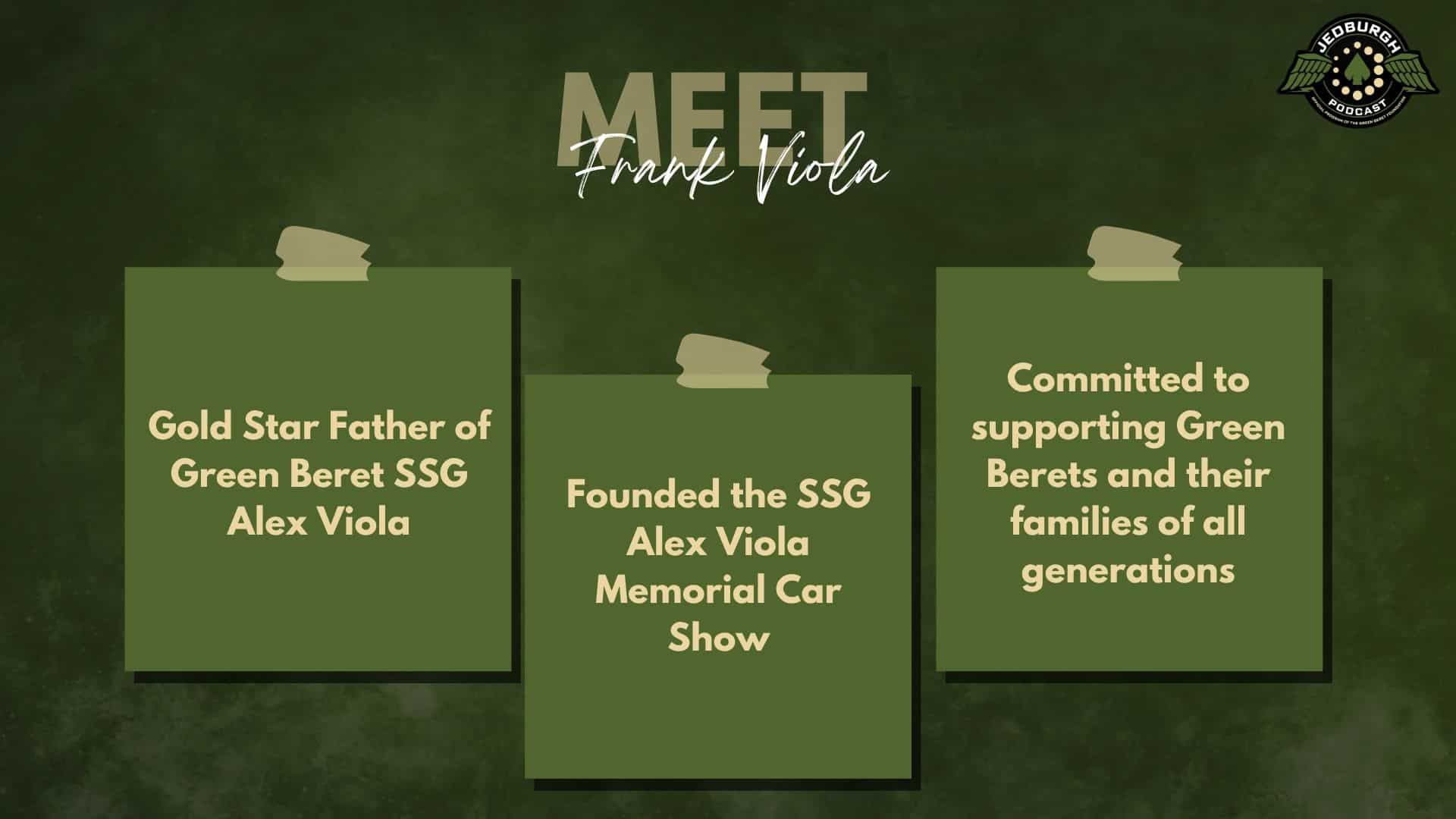
Cars aren’t just a mode of transportation. They’re a passion. An image. A lifestyle. For many families, they are the bond that brings together father and son. For Frank Viola, cars are the legacy of his son, Green Beret SSG Alex Viola.
Alex graduated as a Green Beret in 2011 and then went on to get his Combat Dive Certification. In September 2013, his team deployed to Afghanistan as a part of Operation Enduring Freedom. On November 17, 2013 Alex lost his life to an Improvised Explosive Device (IED) while on dismounted patrol.
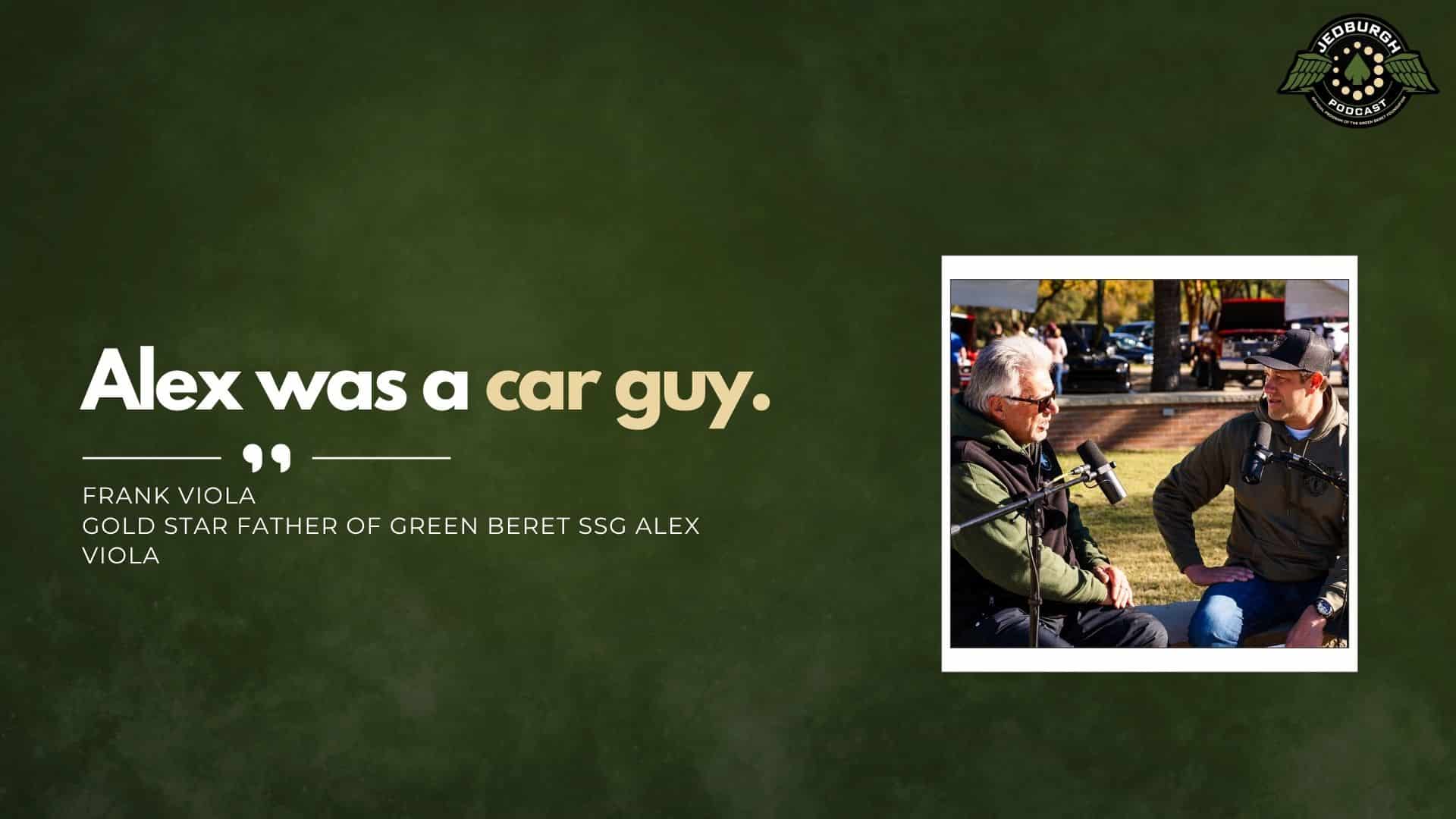
After the loss of their son, Frank and his family faced the unimaginable challenge of how to move forward. The answer came from something Alex loved deeply: cars. Alex was a true car guy, and restoring vehicles with his dad was one of the ways they spent time together.
What began as a simple idea to honor Alex’s memory turned into the SSG Alex Viola Memorial Car Show. The first event was held in freezing weather with modest expectations, but the community showed up, raising twenty thousand dollars that first year alone.
Today the event has grown into something far greater than anyone imagined. Nearly four hundred cars fill the lot each year, and the show has raised nearly seven hundred thousand dollars to support charitable causes, including the families of Green Berets through the Green Beret Foundation.
Host Fran Racioppi sits down with Frank Viola to share how this fundraiser is more than impressive horsepower and jaw-dropping donations. It’s a powerful story of resilience, community, and how one family’s determination not only honors a fallen hero but has also remarkably reunited their own distant family members and created a new, unbreakable bond with Alex’s former Green Beret teammates.
The Jedburgh Podcast is brought to you by OneBrief; enabling military leaders to make innovative, informed and deliberate decisions faster than ever before. Superhuman command wins wars.
Follow the Jedburgh Podcast and the Green Beret Foundation on social media. Listen on your favorite podcast platform, read on our website, and watch the full video version on YouTube as we show why America must continue to lead from the front, no matter the challenge.
—
‐‐‐
Frank, welcome to The Jedburgh Podcast.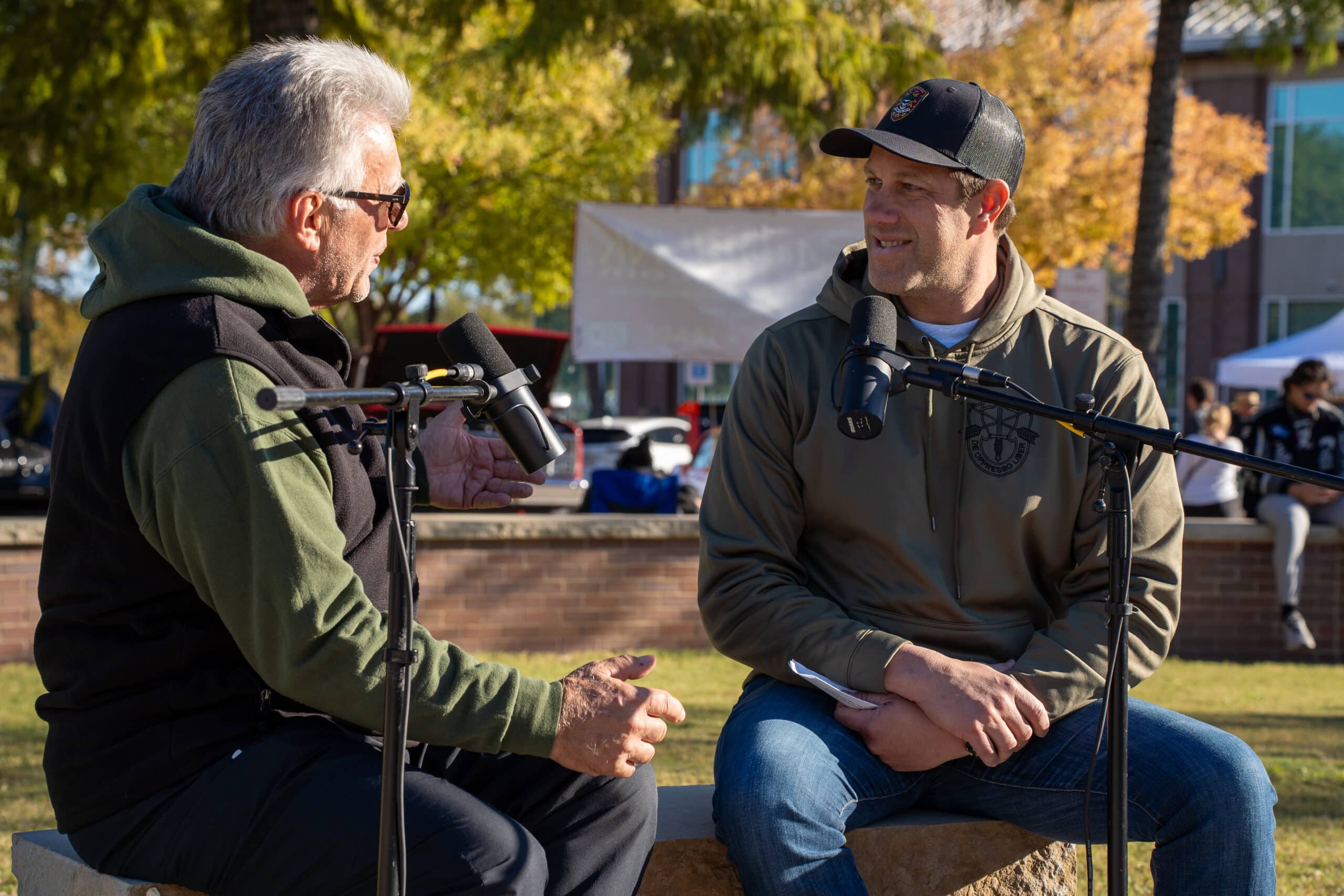
Thank you. Nice to be here.
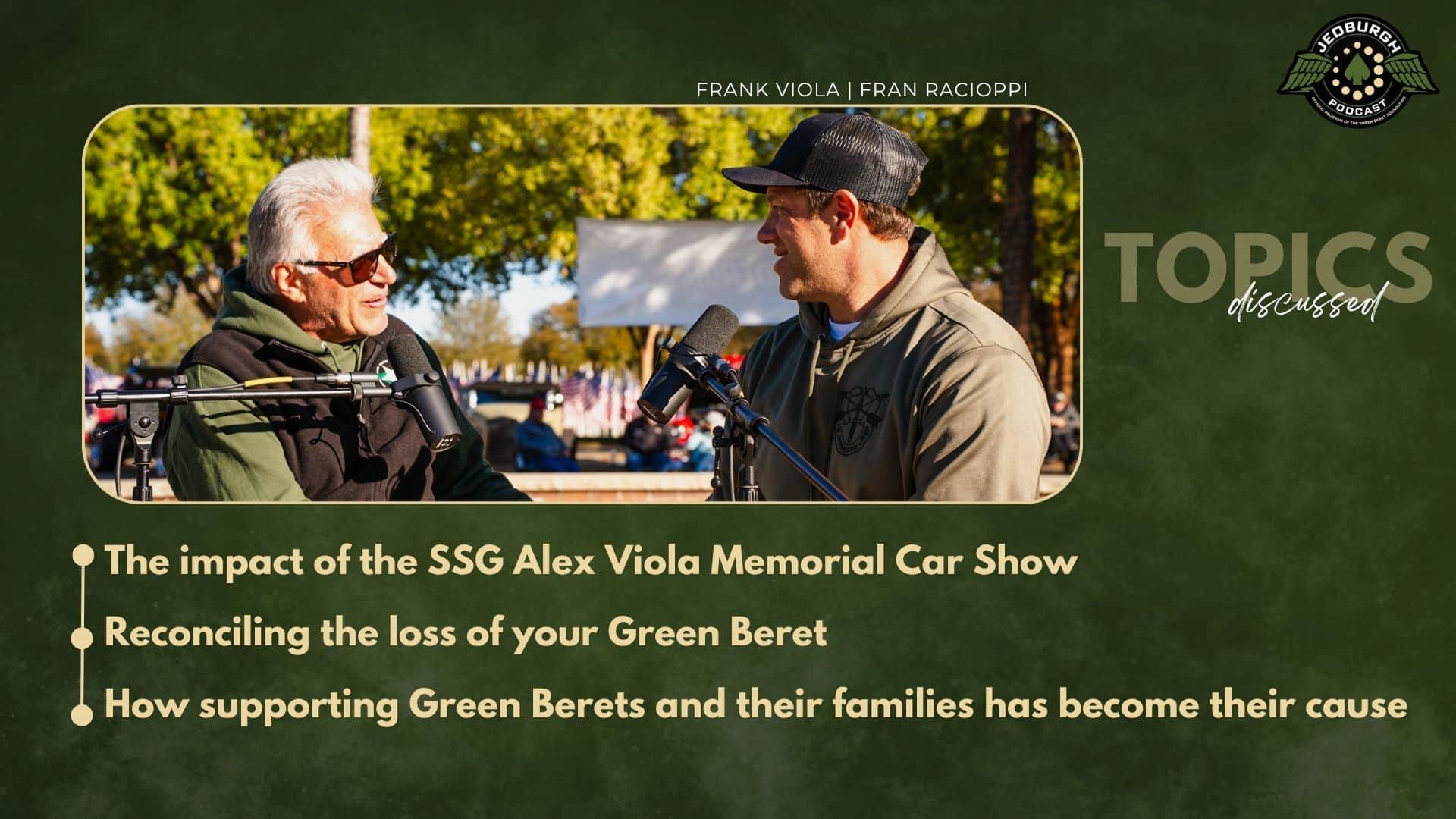
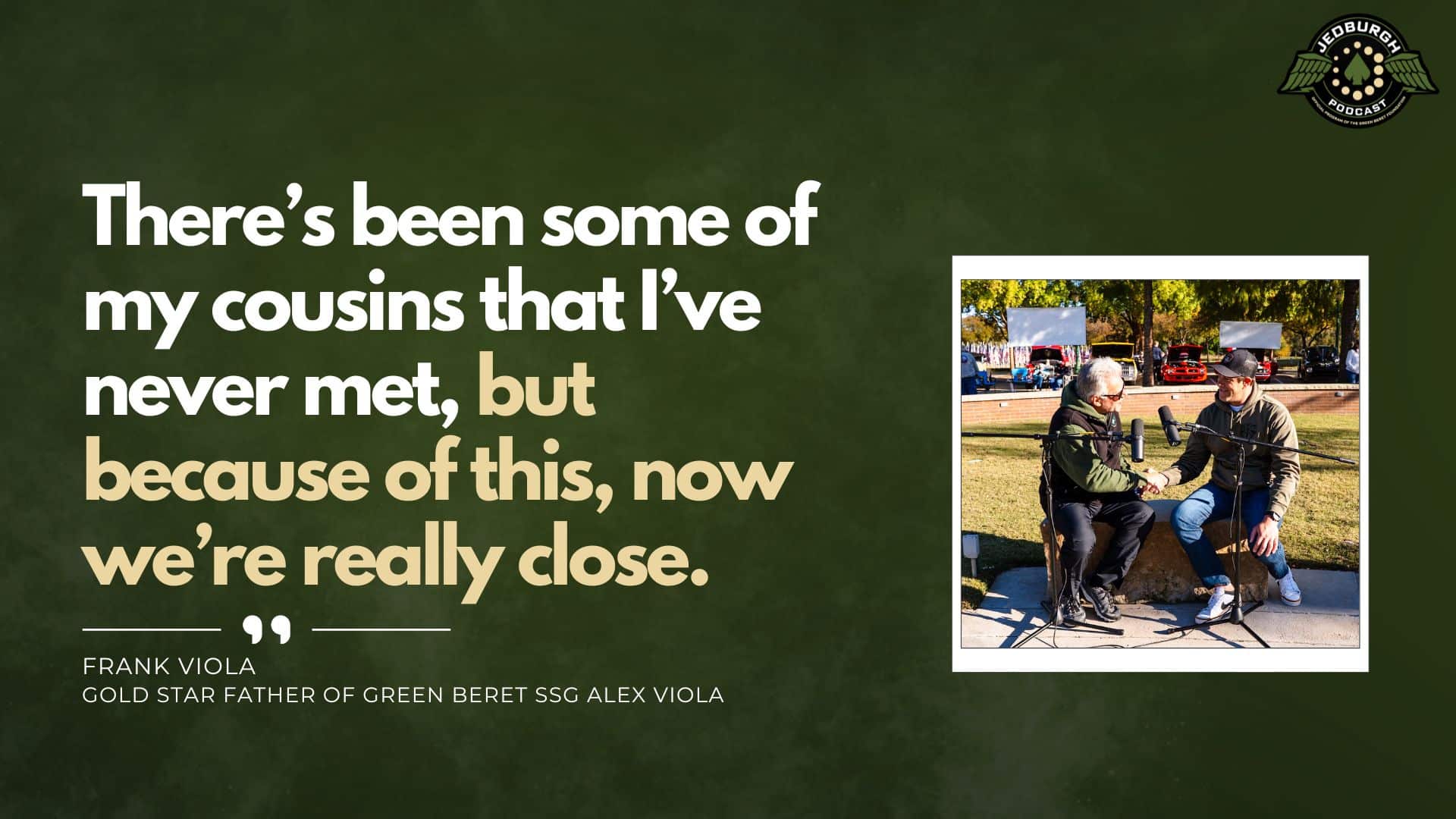
Beautiful day in Keller, Texas. We’re here at the annual Staff Sergeant Alex Viola Memorial Car Show. Your son, Alex, one of our Green Berets who paid the ultimate sacrifice in defense of our country, truly an honor to be here with you to share not only this experience but also share the story of Alex.
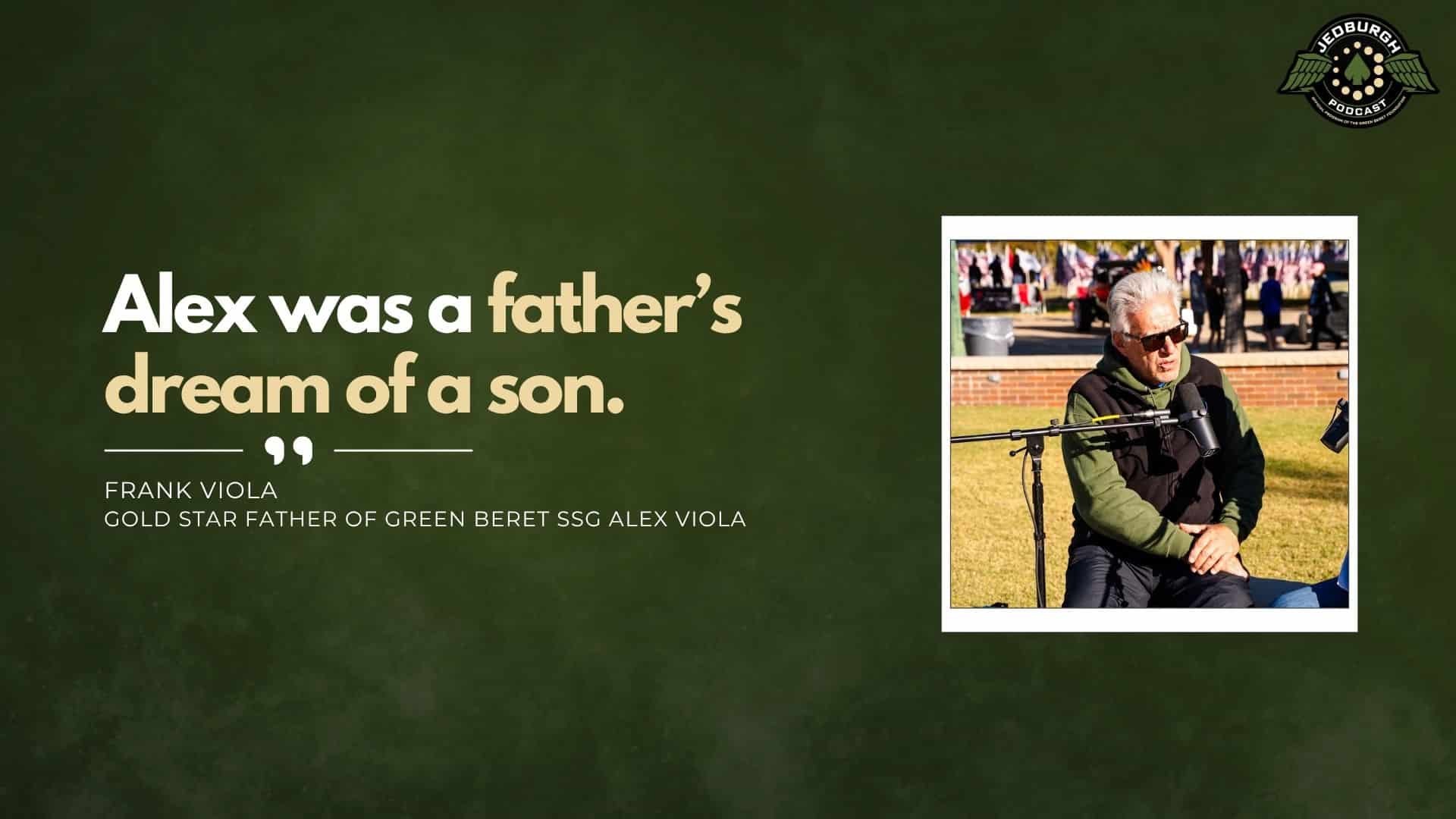
Yeah, thank you. Thank you. It’s a pleasure to be here, and I appreciate the opportunity to tell Alex’s story. It’s like, where do you begin? Alex is a father’s dream of a son, and he went through a lot of things as a child. At nine years old, he developed some muscular disease, lost all his muscles, he was atrophying, and that was a terrible time for us as parents, just watching him just losing all his muscle control.
It got to a point where he couldn’t go to school anymore, we had to home-school him. This went on for about a year, and it was after about a year, his eye, which was the first sign of something wrong, lost all muscle control, was starting to open up. The first thing that he wanted was a pair of rollerblades, which was just amazing to Peggy and I as parents because he couldn’t walk well, and we debated that for a while and finally got him the rollerblades. He became a little hockey star, and by the time he got to high school, he was a captain of the team, fastest ice skater, and just the leading scorer. From a kid that couldn’t even walk at one point to becoming a hockey star was just incredible. From a kid who couldn’t even walk at one point to becoming a hockey star—it was just incredible.
How did that happen? How did he get it all back?
It’s hard to tell. We went to hospitals everywhere. He was admitted, they took muscle biopsies, and they couldn’t determine what he had. Every test came back negative. It was about a year later that he just started to show signs that he was recovering, and he just got stronger and stronger. We never knew what it was that he had. Doctors couldn’t tell us. As I said, from there he just was just into working out, exercising, and just getting into the best condition that he could.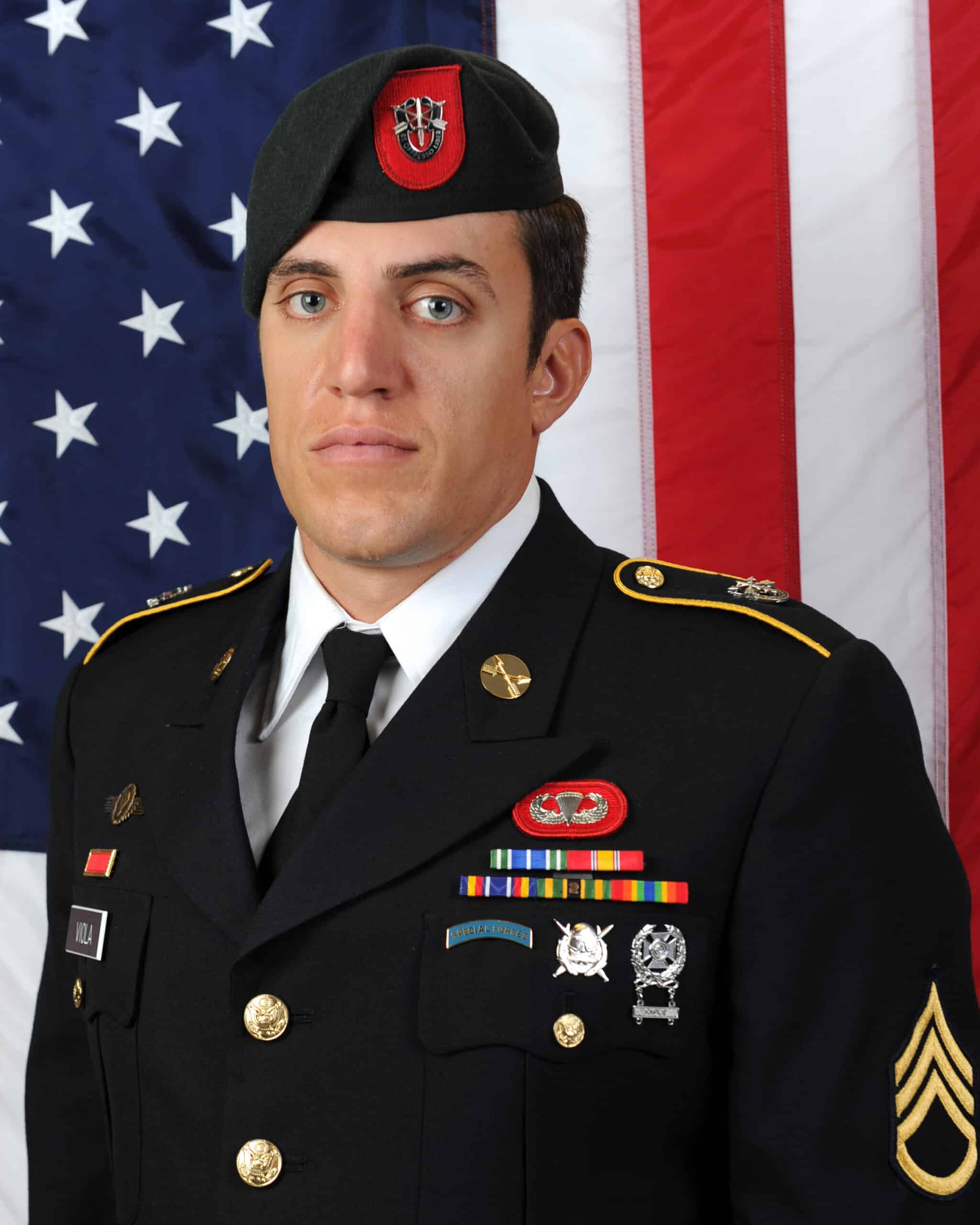
Of course, since he was a little kid, his eyes was always on Special Ops. He wanted to do something for his country, and it was just amazing because he was a little kid when he started talking that way. Towards the end of high school, he wanted to go right into the service at that point, but we persuaded him to go into college. He graduated from the University of North Texas with a Mechanical Engineering degree.
At the same time, while he was going to college, he was working out with a Navy SEAL that he became friends with. He got into the best condition that he could. He was in workout competitions raising money for different SEALs or different Special Operators that lost their lives. He did a lot of that, he did work with the Green Beret Foundation, the Special Operations Warrior Foundation.
Actually, he enlisted into the Navy first, and he ended up going through OCS up in Newport, Rhode Island, became graduated number one in his class for physically and academics. He was accepted into BUD/S, so he moved to San Diego, went through BUD/S, got injured a week before Hell Week, but continued on, and he tore a muscle, one of his muscles in his back, and so he didn’t make it.
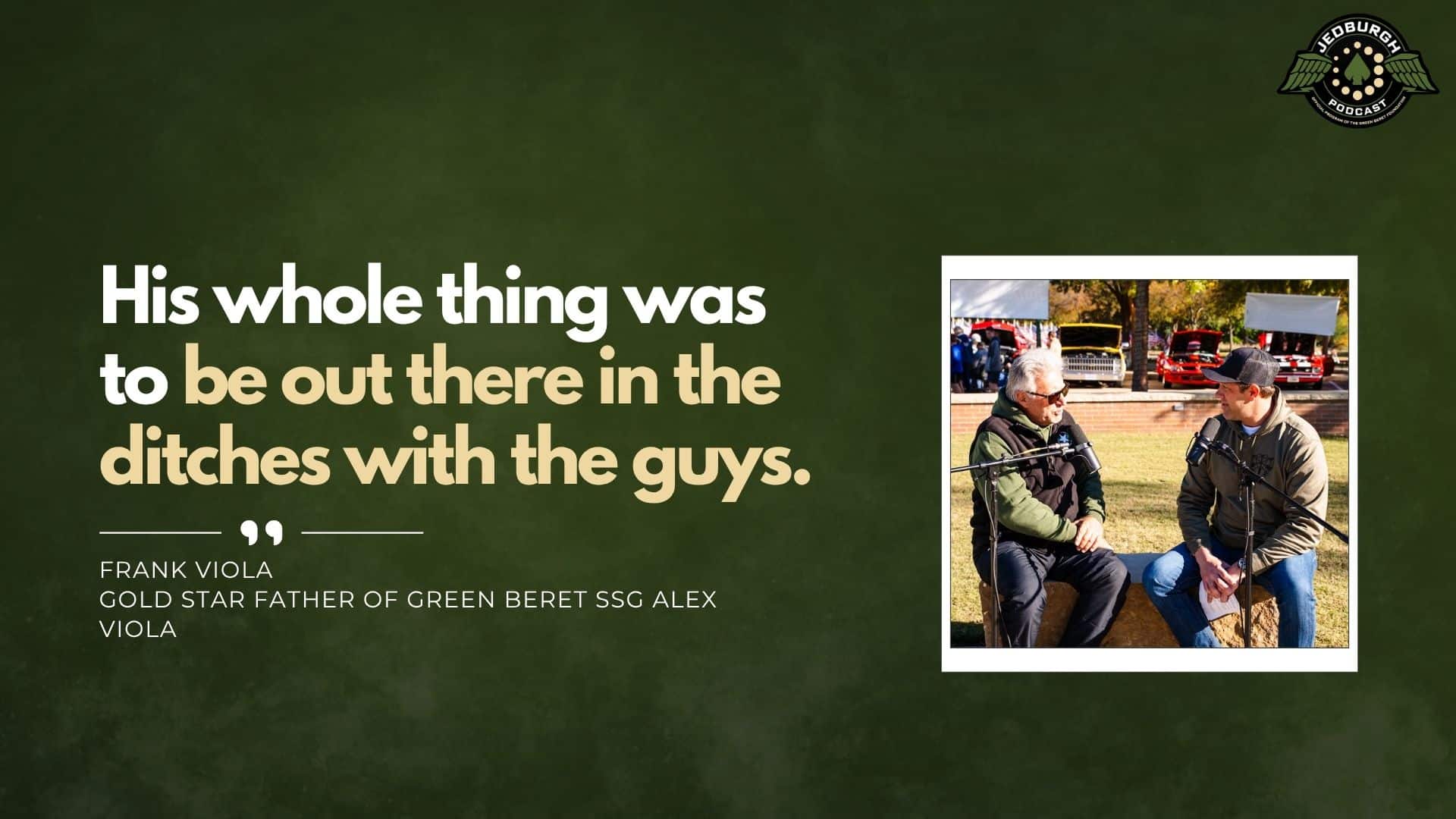
He was just totally frustrated and he did not want to be on a boat someplace. His whole thing was to be out there in the in the ditches with the guys. That’s what his whole goal was. He transferred from the Navy, went into the Army as an enlisted guy, went through Q-Course, got his Green Beret, then went on to become a combat diver as well. That was it. We lost Alex five weeks into his first deployment into Afghanistan. From there, we had to do something for our sanity. My wife and I decided that we’re going to do a car show in his honor and raise money for the two organizations that he supported.
Why a car show?
Alex was a car guy, I was a car guy, and Alex just loved hanging out with me at car shows, working on cars and doing that. At twelve years old, he asked me if he can get a car or when is he going to get a car? I said, ” when you turn 15 we’ll get a car, and then we’ll work on it and have something for you for when you’re 16.” Three years go by, the day he turned sixteen, he was looking through the paper at that time, he found this ’68 Chevelle.
He bought it with his own money, brought it home, and we just started tearing into it and it took a few years, but it was the best years of my life spending it with him building this car. He sold the car when he went into the service and so a car show seemed to be natural for us and something that was a great vehicle for him and to honor him and raise money for a good cause.
The first year, you told me earlier you expected 40 cars. You got way more than 40 and it’s really grown ever since.
We started out, we had no idea what we were doing. I’ve attended car shows but never ran a car show of any kind. We ended up pulling this thing together, decided to do it here in Keller because he was a Keller boy and we felt it was the right place to do it. We started a car show. Our expectations were very low or probably non-existent. A lot of people don’t go to these first car shows.
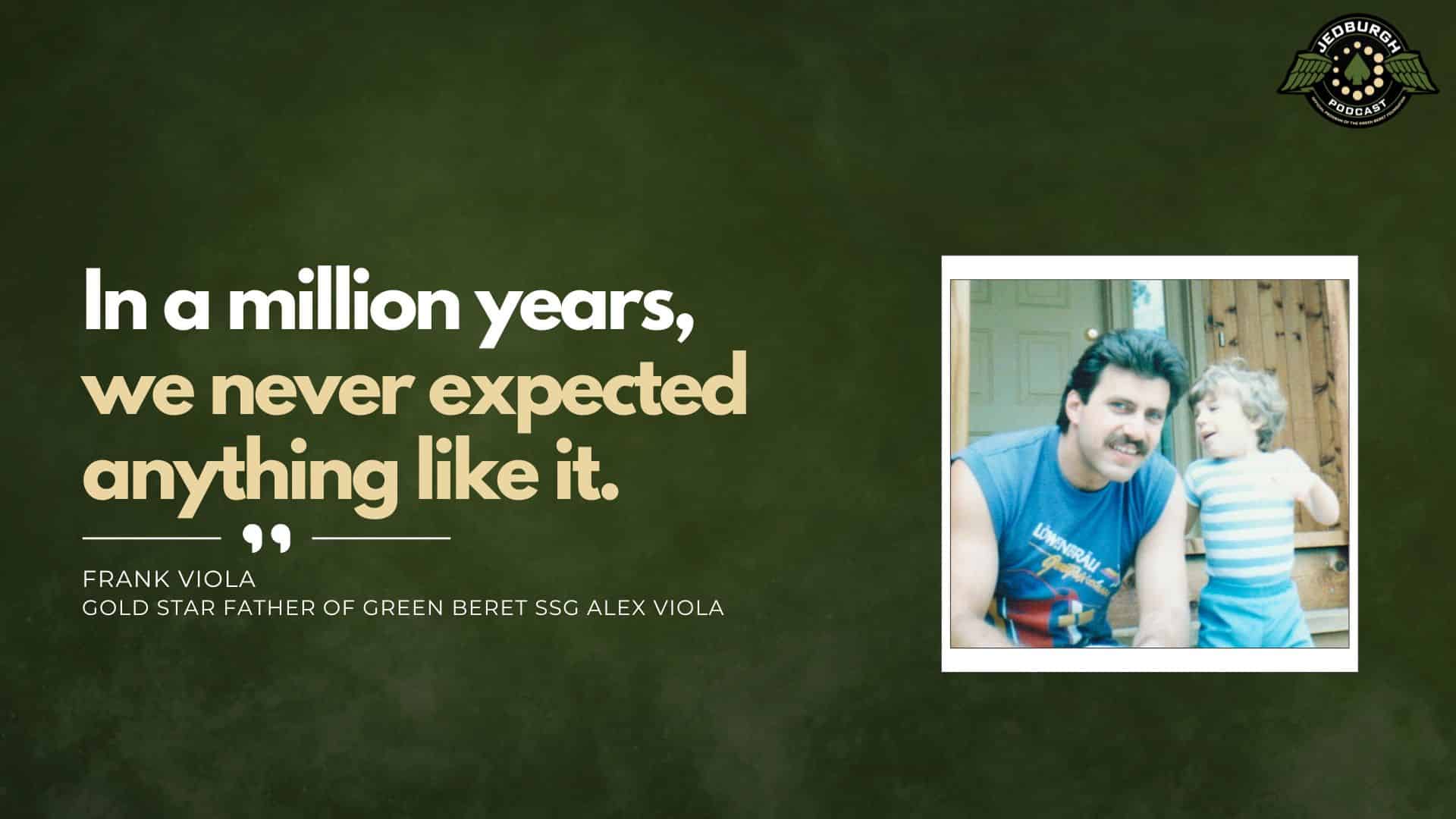
We thought maybe 40, 50 cars, raise a few hundred dollars, and that would be our day. It was colder than you can imagine. It was November 21, it was like bitter cold, like in the 30s. None of our tents and canopies showed up, we had just nothing but boxes. To our surprise, we had 186 cars show up, freezing cold weather, and we raised $20,000 our first year. We never in a million years expected anything like it and it’s been growing ever since.
We’ve had such support from our dear friends as well as the community. We ended up with an air show, which we didn’t expect, and we had F-16s doing flyovers after a couple of years. We have a morning air show with a few different groups of different retired military planes and so on. Now we’re up to well over 300 cars, closer to 400, and we have raised, over the last few years, on average around $110,000, $120,000 every year. To date, we have raised and donated $700,000, and we’re hopefully going to do a lot more than that over the next few years.
You said your goal was $1 million.
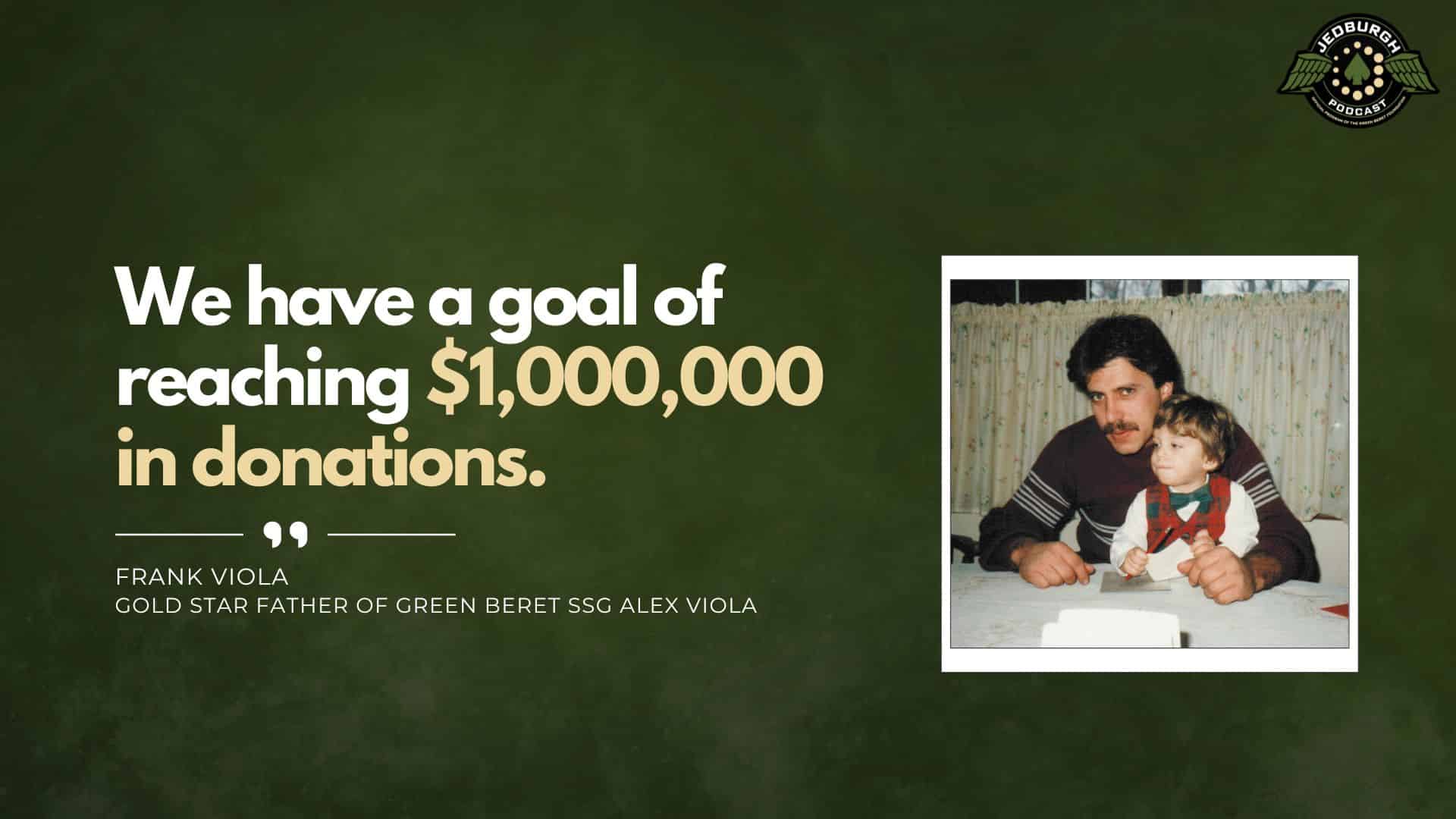
It is. We had to set a goal. We’re obviously not getting any younger. I wouldn’t say health issues, but we are concerned about our future and so we want to do a lot of things. We have a goal of reaching $1 million in donations, and I think with the help of our car club and all the supporters around the town, we can get there in the next few years.
One of the most important parts of these types of events is it brings everybody together. We suffer loss as Green Berets and as Green Berets, we also have this idea in our head that’s always to create opportunity from challenge. One of the things that has been really a byproduct of the loss of Alex has been the family that has been brought back together. Your family in one respect, but also his teammates. We walk around here today when we stood up on the stage earlier for the opening ceremonies, there’s twelve of his teammates still coming every year here representing. In your view, in your perspective, what has the loss of Alex done for your family to bring them together, as well as the team itself?
It’s just an incredible few years. Not to get too deep into it but my dad had a big falling out with his family several years back, decades ago. My dad was one of those hard-headed guys that just literally said, “We’re moving out. We’re moving away from family,” and so we did. We moved 500 miles away from family and really lost touch with a lot of them because of whatever happened, which we don’t even know what happened between my dad and his family.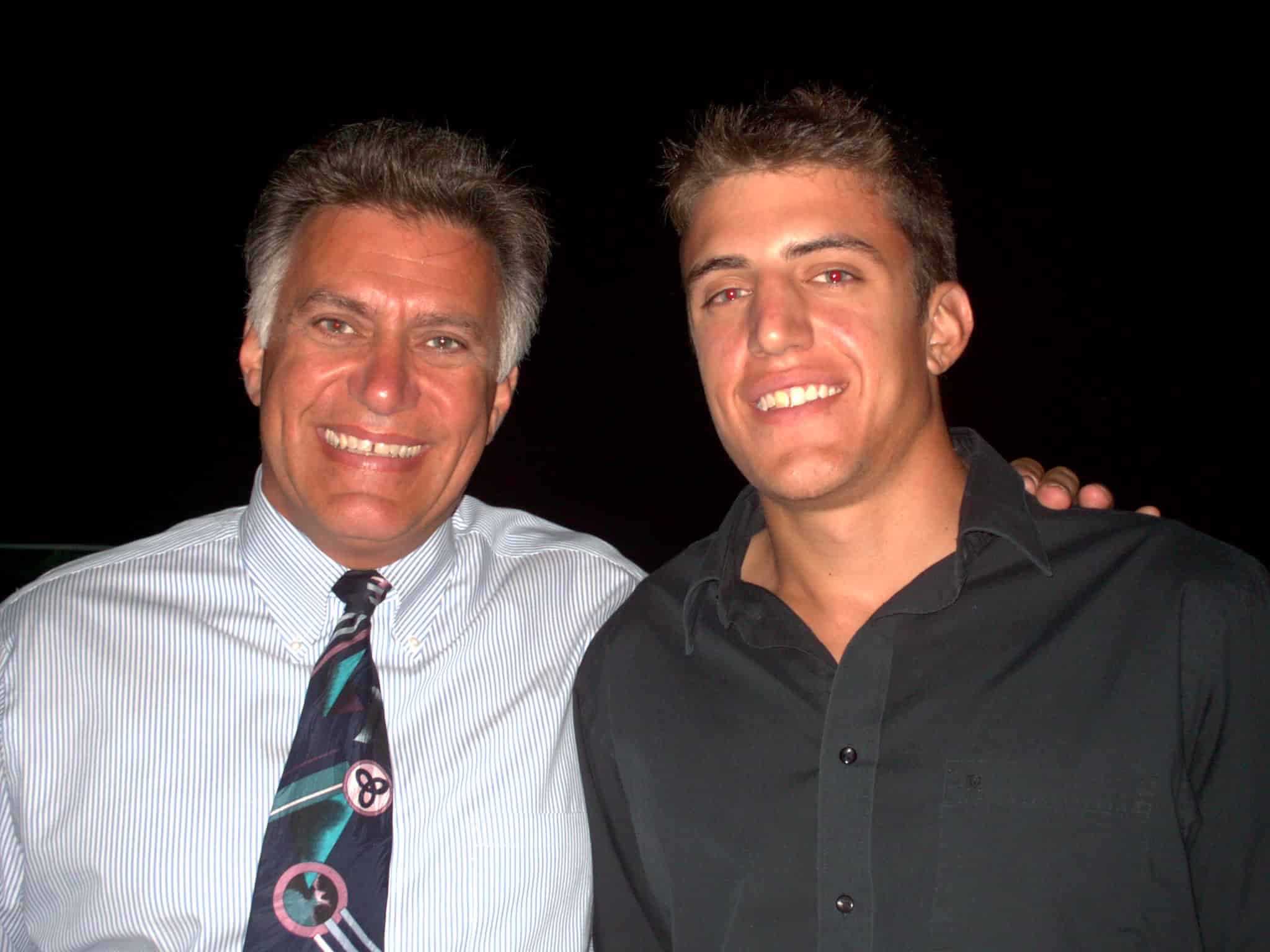
It was a few years back, one of my cousins got wind of our show through different means, and he and his four brothers decided that they’re going to come out here and support us, especially in honor of Alex. They surprised us, they came down here, and my dad hadn’t seen them in 40 years. The conversations started with the cousins and next thing you know, my dad said when he goes back home, he lived in Florida, he’s going to contact his brother.
He had 2 left out of 9 family members. Two of them were left. He did, and they got back together. Since then, all of our family, the cousins, everybody from that side of the family have been coming to the show in support of us and support of Alex. Alex’s friends come out every year in support of our cause and just to honor Alex. His college buddies all come out every year at the show to do the same thing.
We’ve had just so many of our nieces and nephews that come out each and every year to work our show. They work merchandise, they work raffles. We have probably anywhere between 35 to 40 family members from just that side of the family that come out every year. It’s just incredible. It’s just such a great thing and like I said, there’s been some of my cousins that I never met because of this, that now we’re really close, we talk to each other all the time. It’s really from Alex. It’s brought together so many different groups and I think it’s been the best thing that’s ever happened to our families. The worst thing and the best thing.
You’ve embraced Alex’s team. You said there’s many of them here and they fill a specific purpose here at the event.
We didn’t meet his team until after their deployment was up. We had lost Alex in November, but we didn’t meet the rest of the team until March or April in that timeframe. Since then, they come out and see us all the time. They don’t wait for the car show. They come out just to visit every now and then, and it’s been, I think, therapy for both Peggy and I as well as the guys. I think this thing helped us all.
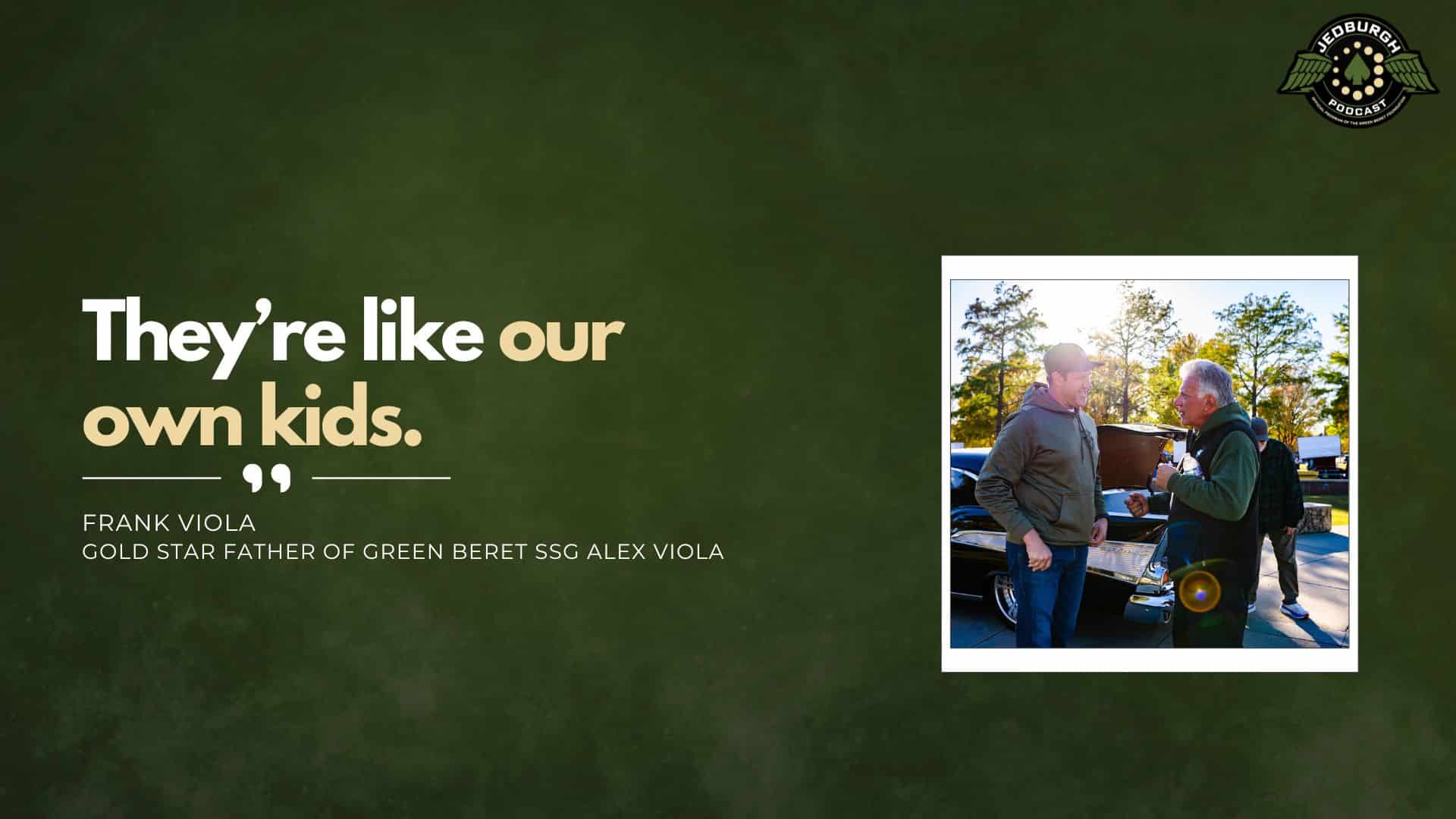
The guys, like I said, now it’s like we’ve adopted them. They’re like our own kids, and they come out every year and they come out early just to help me get this thing together and so much that goes into our show. They come out early every year. They are just unbelievable. I can’t say enough good things about them. They’re just thoughtful, they’re very considerate, they’re helping all the time, they don’t like to even see us lift a finger.
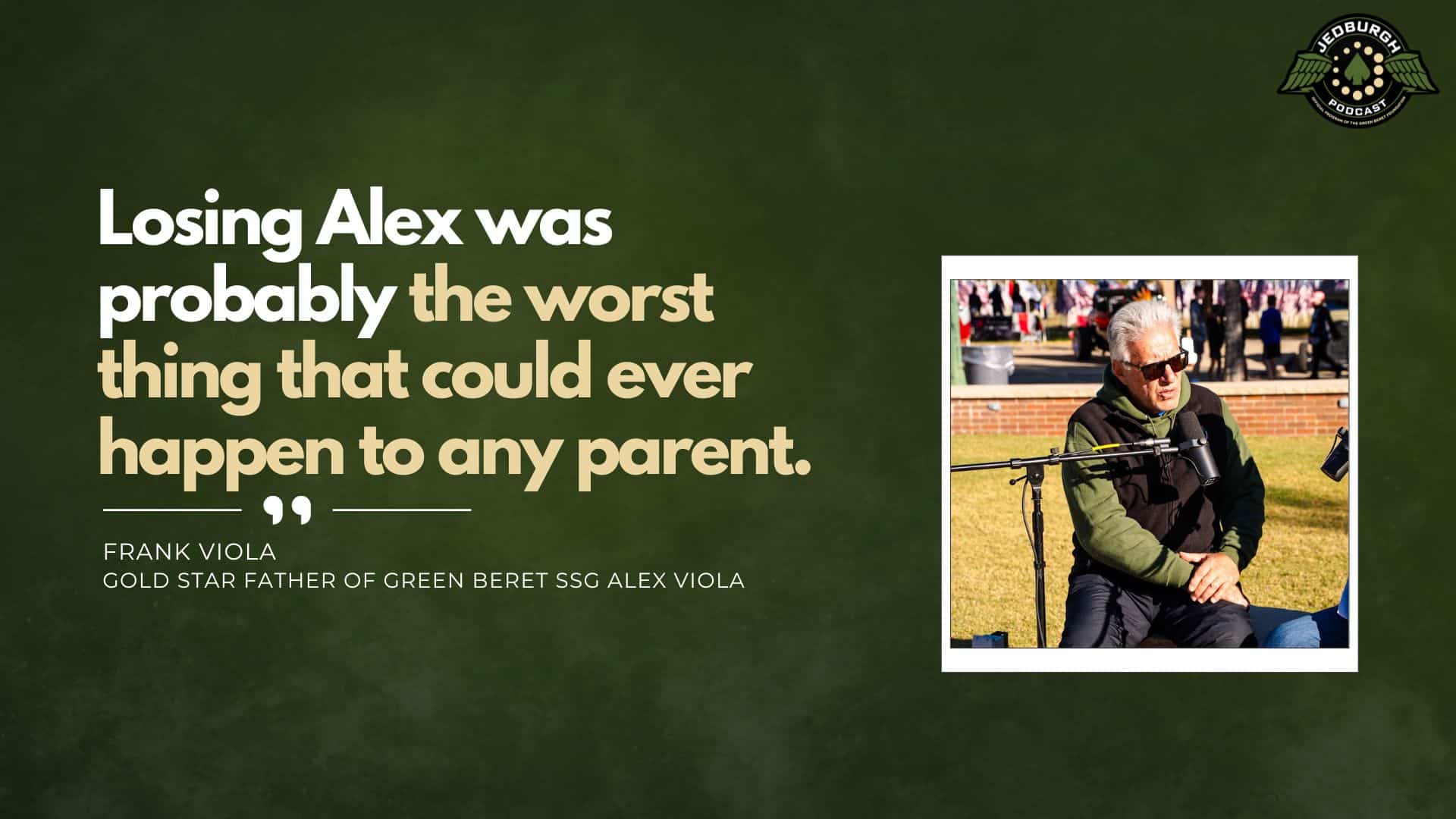
When they got back from their deployment, many of them split up and went different directions. This is a reunion for them now. They come out every year and they use our house as the meeting place and they hang out in our backyard. It’s a nice backyard so they are there by the fire there and they sit there and talk for hours and hours and just catch up. As I said, losing Alex was probably the worst thing that could ever happen to any parent. Losing a child is just unnatural, but what we’ve gained from that is not only the eleven sons, but the community, the new friends that we’ve made, the car clubs. Sometimes it’s just hard to process all that.
When we first started talking about the car show, obviously they wanted to be involved in everything. One of the guys with his wife was at the at the table, and I’m putting together a registration form, a judging form, and they kept asking, “What can we do? We want to help. We want to be part of it,” and so on. The light bulb went off. I said, “How would you like to recruit the other guys and be our judges?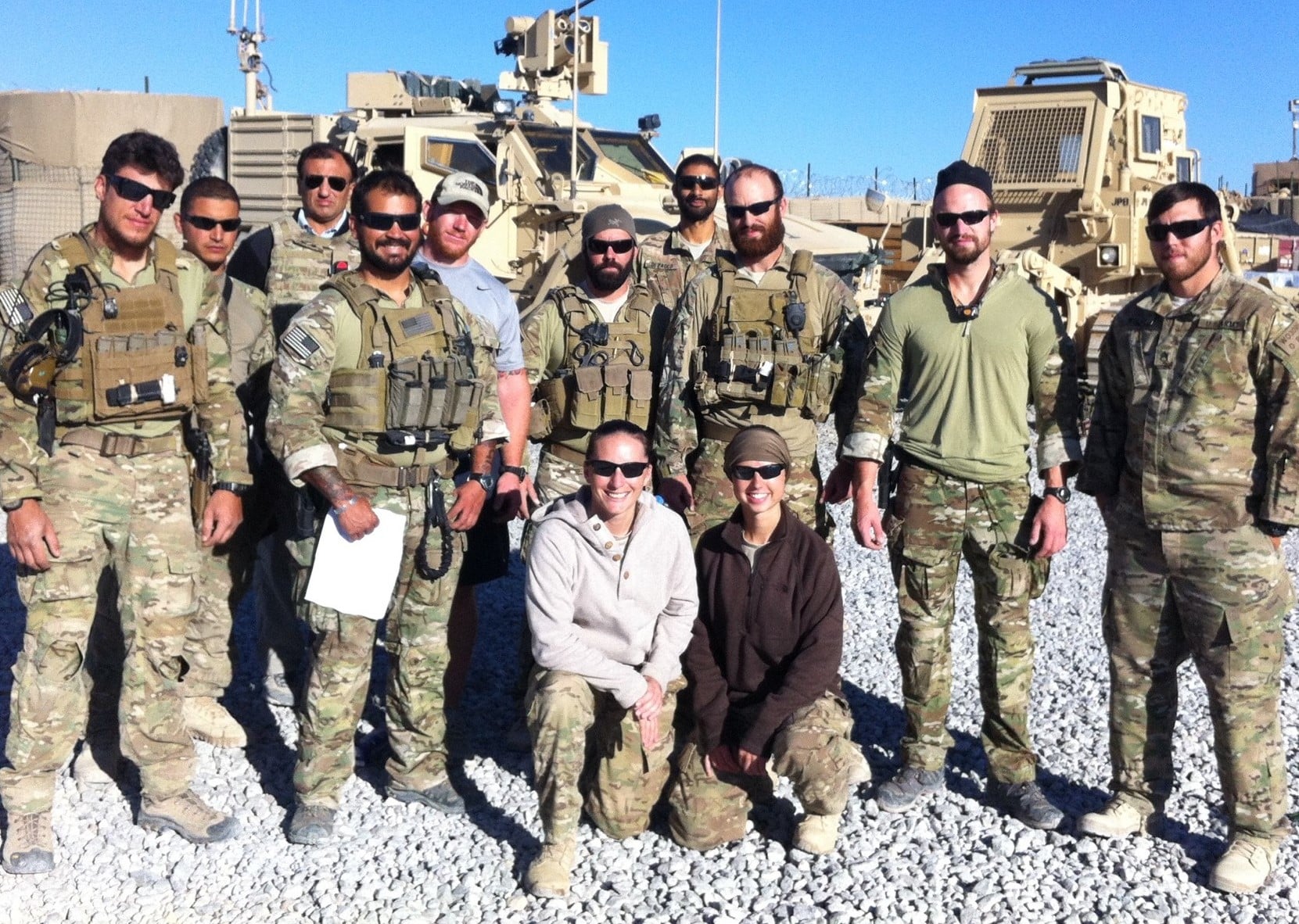
“Well, we don’t know anything about cars,” this that whatever, and I said, “You don’t have to. I really just want you guys to have your day, pick your favorite cars, and that’s it.” They take it so seriously, they’re very organized as a Green Beret as what you’d expect. They set the rules and so on, so they go out and they’re actually probably judging at this point right now. Yeah, we love it. They’re a big part of what we do.
The reaction from the spectators and the car owners has been just off the charts. We take it for granted that we know members of the US Army Special Forces because we see them all the time, but a lot of these people don’t. They just eat that up. They just love meeting them and talking. I said, “Being the judges is like the best thing that could have happened because not only are we getting the cars judged and we have our awards that we cars that we can award, but you’ve also made their day.”
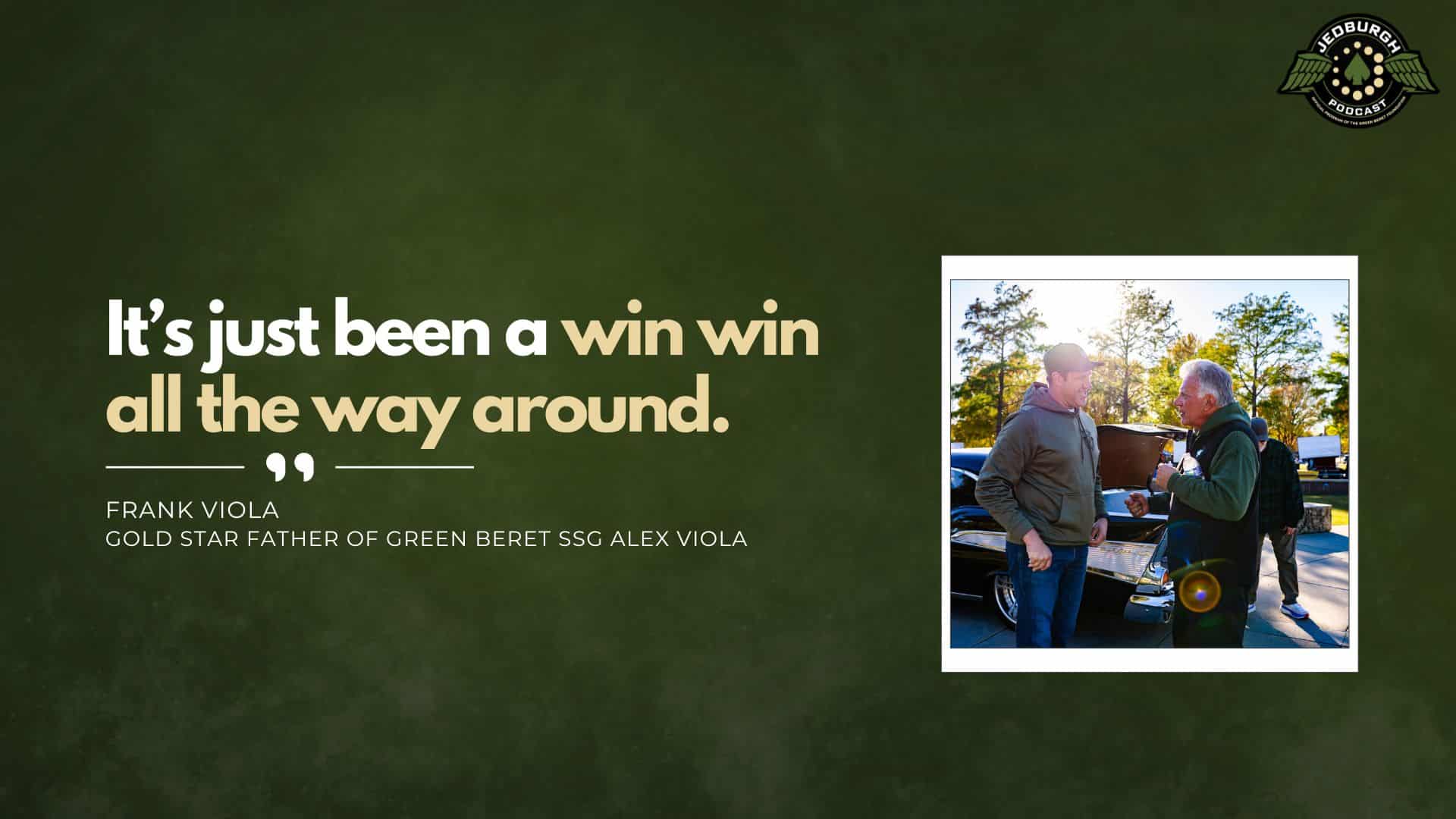
“These people are just so happy and ecstatic that you guys are out there talking to them.” It’s just been a win-win all the way around, and I think that’s probably one of the reasons why we have such large crowds is for those guys and the support. As I said, it was never part of the plan, it just happened, and sometimes that’s the best way.
Almost 400 cars this year. You have the silent auction that’s going on, have the live auction. One of the items in the live auction went for over $16,000.
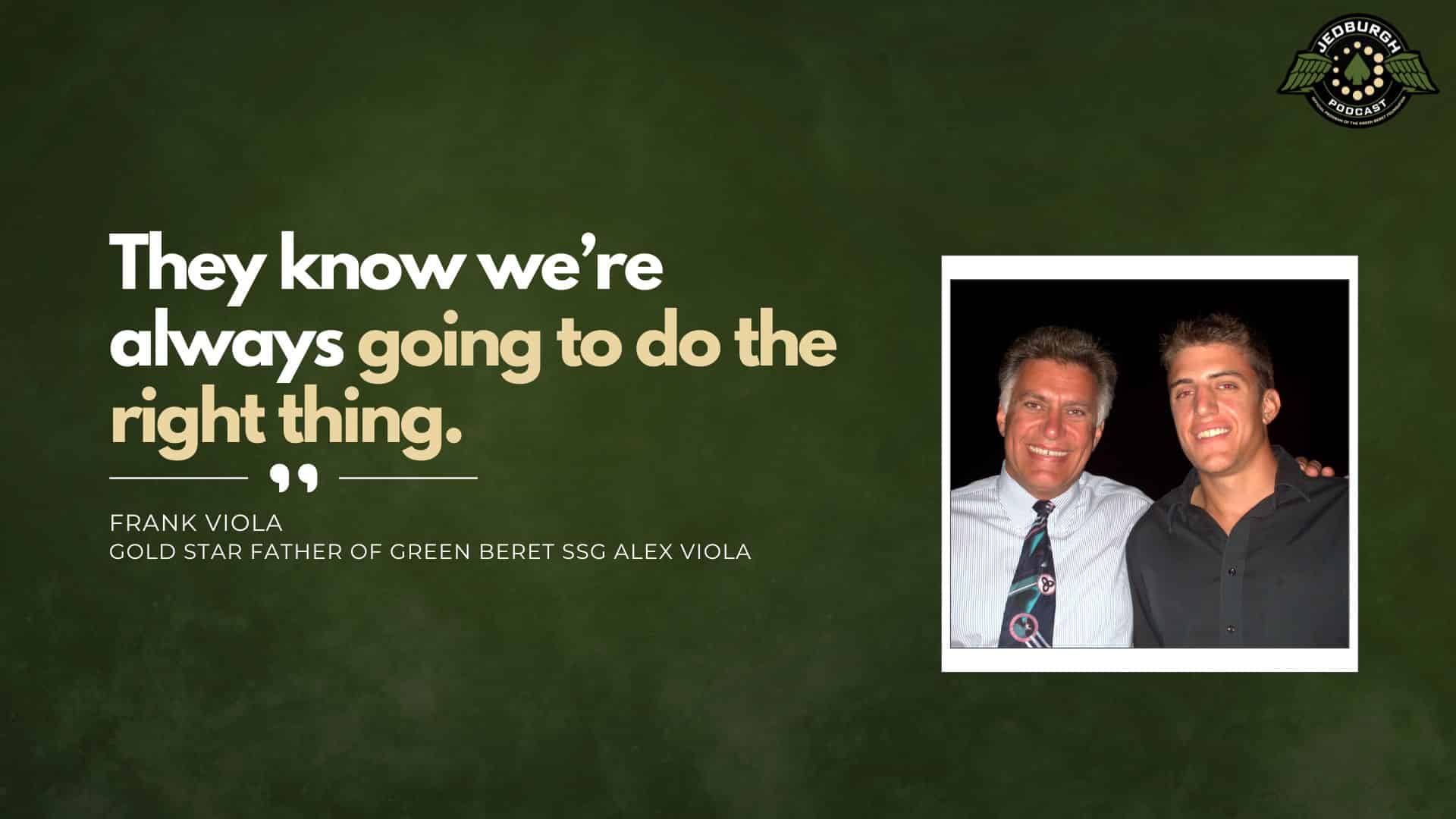
They turned around and handed it to my wife and I. Yeah, it’s just the generosity, I think there’s a lot of trust there. They know that we’re always going to do the right thing, that all the money goes to exactly where we tell them. I think that’s a big part of it. I think all that with the guy just contributes to the success of the event.
There are a lot of organizations that are out there that are representative of our Special Operations community, veterans in general. You’ve made a distinct and concerted effort to support Green Beret Foundation and Special Operations Warrior Foundation, which you mentioned was a result of Alex being involved in those organizations. Also, you’ve continued your relationship with them and you’ve built that out. In your perspective, what sets those two organizations apart and why is working with them so important to you and the foundation?
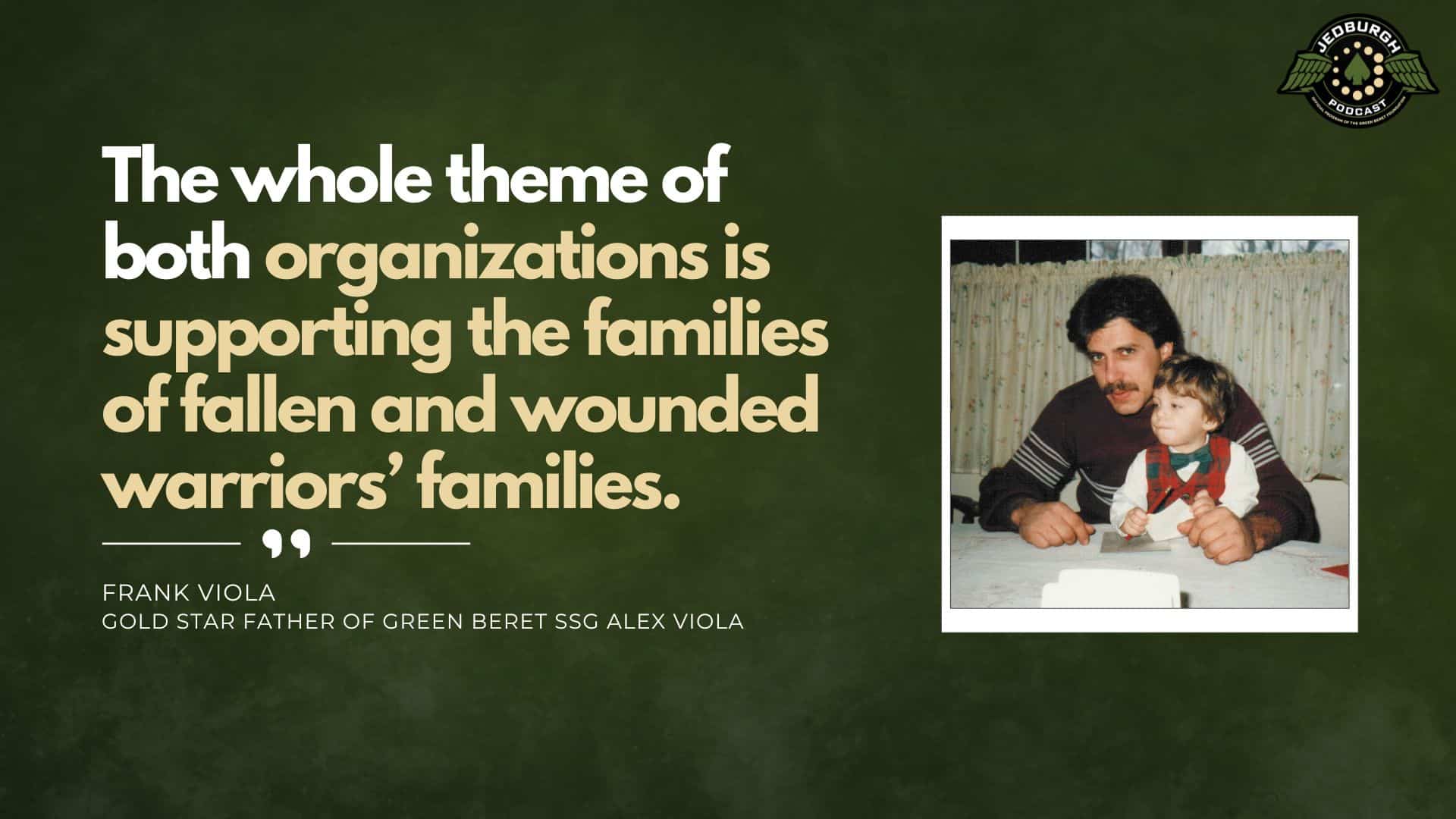
They’re different in some ways and very common in others. The whole theme of both organizations is supporting the families of fallen and wounded warriors’ families. They both do such great things. The SOWF’s forte is really putting kids through college. Whether you’re a Green Beret or a Navy SEAL or whatever, they put those kids through college or from preschool all the way up through college.
The Green Beret Foundation fills all the gaps that the government doesn’t necessarily pay or take care of. The end result is just helping those warriors that really protect our freedoms. They’re doing things that prevent us from having to do them. We owe them a great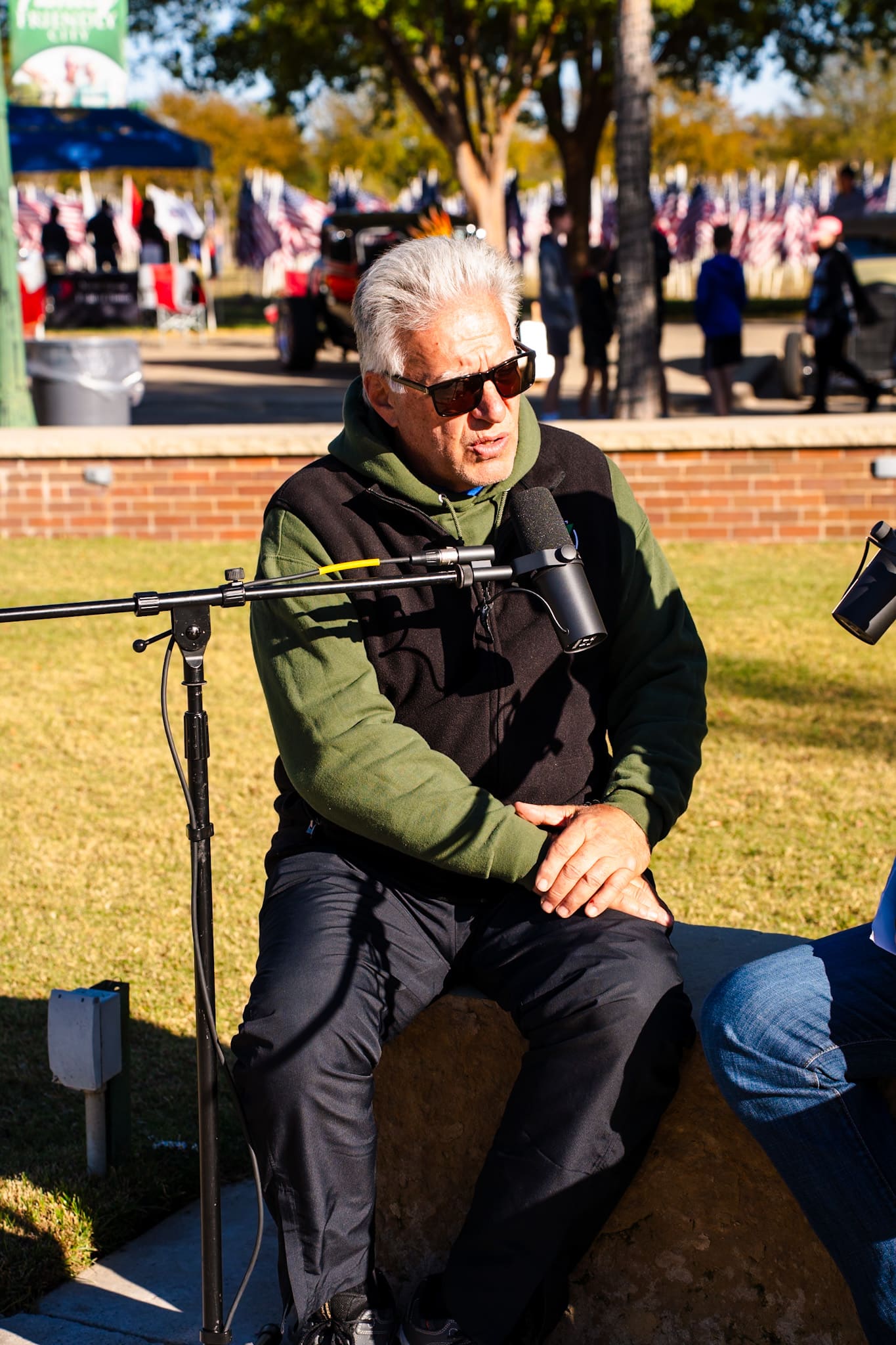
You have about $300,000 left to raise to hit your goal. You look forward to this every year. I think you and I first connected in 2025.
Yeah, it was right after the last one.
We’ve really been looking forward to getting out here. What’s your advice to those who are looking to become a Green Beret? So many people in your situation, and rightfully so, walk away from the military and they don’t want much to do with it and the pain, the loss is too much. You’ve embraced this community.
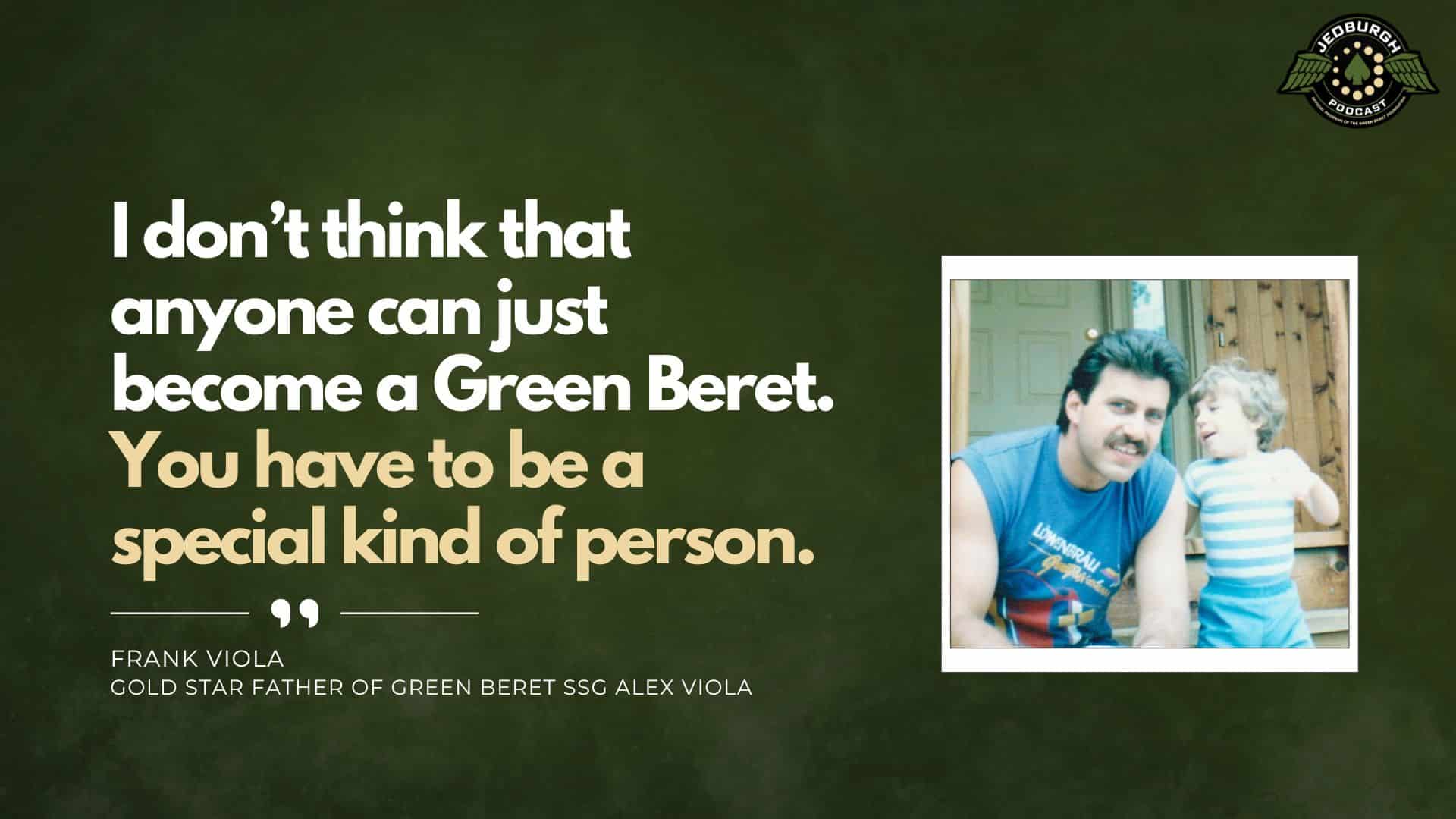
I look at it a little differently. I don’t think that just anyone can become a Green Beret. You have to be a special person with probably ten times stronger will and determination than the average person. I know for Alex, a kid that literally lost most of his muscles and couldn’t walk at one point, but his determination and perseverance is just I just don’t even know where he came from. I don’t think just anyone can become a Green Beret. You have to be a special kind of person, with probably ten times the will and determination of the average person.
He had the drive. I’ve never met anybody with such drive and determination as Alex until I met the rest of the Green Berets. I always thought Alex was very unique, just unlike everybody else. He was, until I met the rest of the guys. I realized, “There’s a common thread that runs through these guys.” I don’t want to downplay the other soldiers or anything like that but they’re a special character.
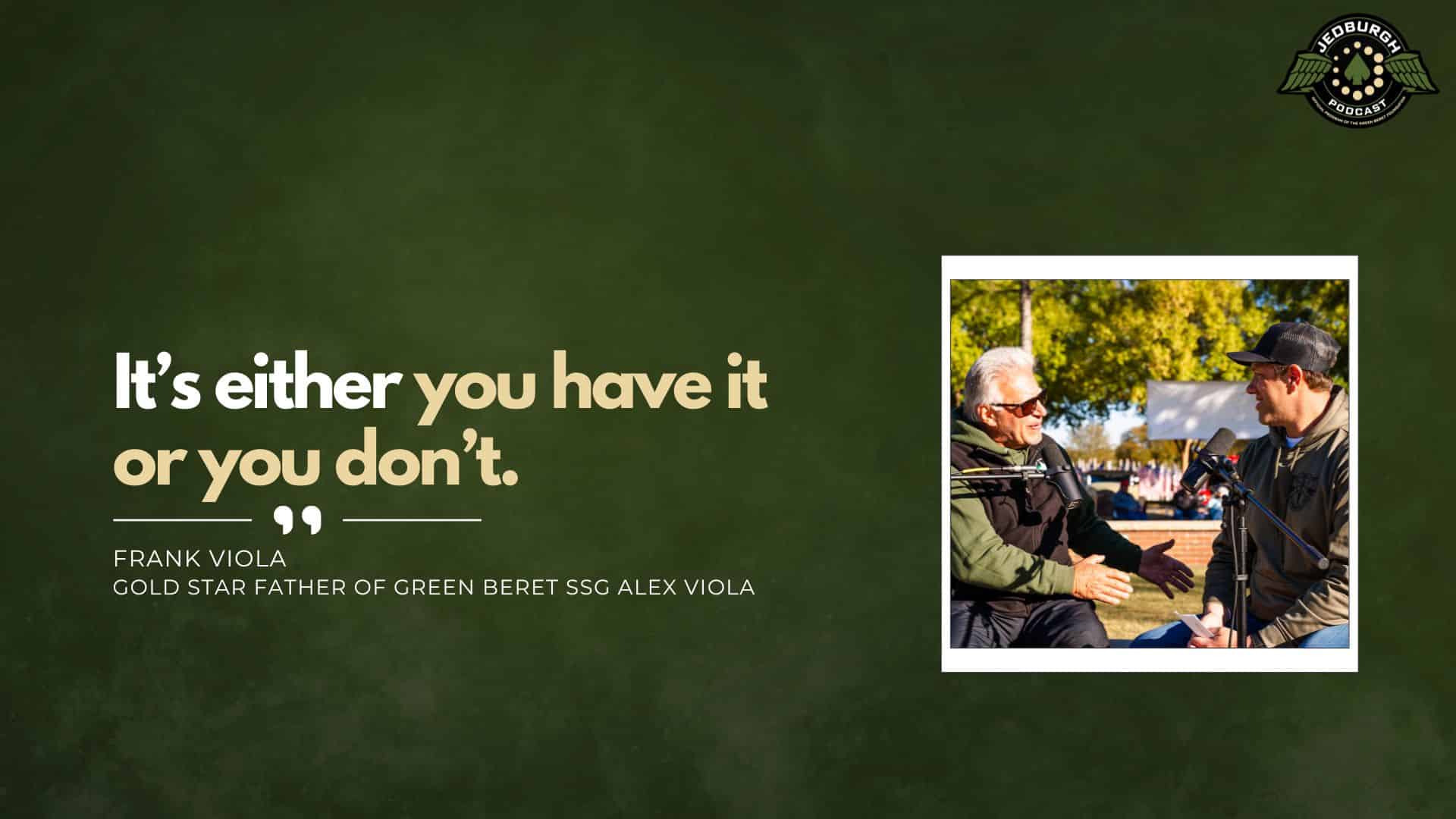
I don’t know if this necessarily applies, but I always look at the Green Berets as something like the Japanese had the Samurais. They had their military but they had Samurais you just a different type of warrior. My advice, it’s either you have it or you don’t, because you’re going to be put through some pretty severe physical and mental tests. We all know that if 100 guys apply to be a Green Beret, you might get 20 of them. You have certain people that are built for that and certain people that are not. And that’s how I look at it. Now I may be wrong, but that’s how I always look at you guys.
I agree with you. Frank, it’s been an honor to come here and spend this day with you. Really, truly an absolute impressive setup that’s here. The turnout was truly amazing. As I mentioned when I had the chance to address the crowd earlier, I’m from the Northeast. Love it. It happens to be warmer in the Northeast than it is down here now. We always remember not only Alex, but everyone else who lost their life for their country, and we’re going to do our best to keep that going.
There truly is nothing more American than coming down here to Texas, having the car show, honoring Alex and his service, and seeing the impact that your family has had on the community. Thank you for all the support to Green Beret Foundation. We couldn’t be more honored to be partnered with you and share in this experience.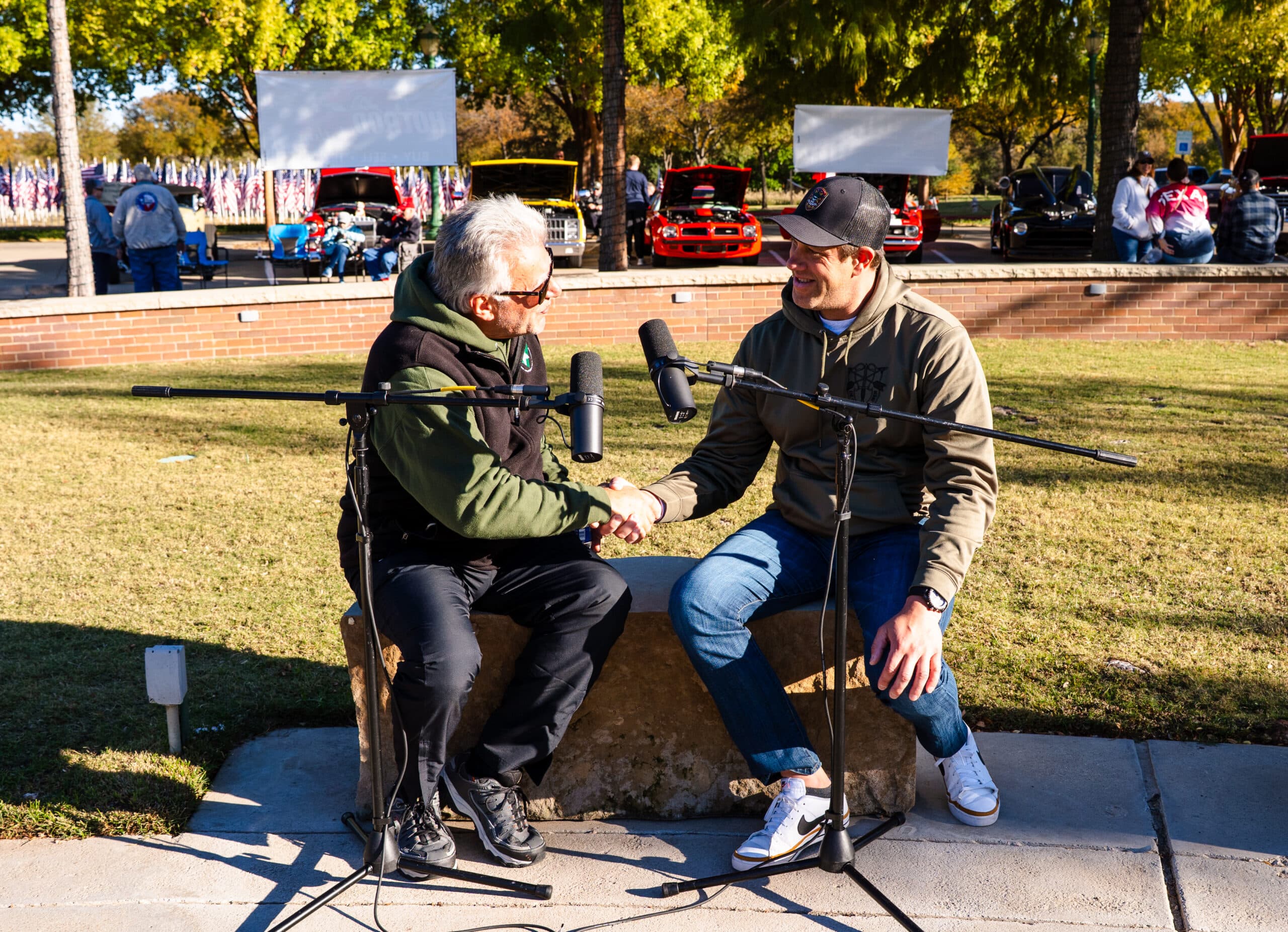
I feel very privileged to be able to do that. We’re going to continue doing what we do because that’s just the way my wife and I are. Of course, we want to always remember not only Alex but everybody else that lost their life for their country, and so we’re going to do our best to keep that going.
Awesome. Thank you.
We’ll see you next year. I really appreciate it. It’s been an honor to be with you, and I’m so happy that you guys came out today. Thank you for that.
Green Beret Foundation
P.O. Box 25138
New York, NY 10087-5138
Note: Please use USPS mail or priority mail. Do not use FedEx.
Green Beret Foundation
10205 US Hwy 15-501, Unit 26-8
Southern Pines, NC 28387-4301
Call: at: (844) 287-7133