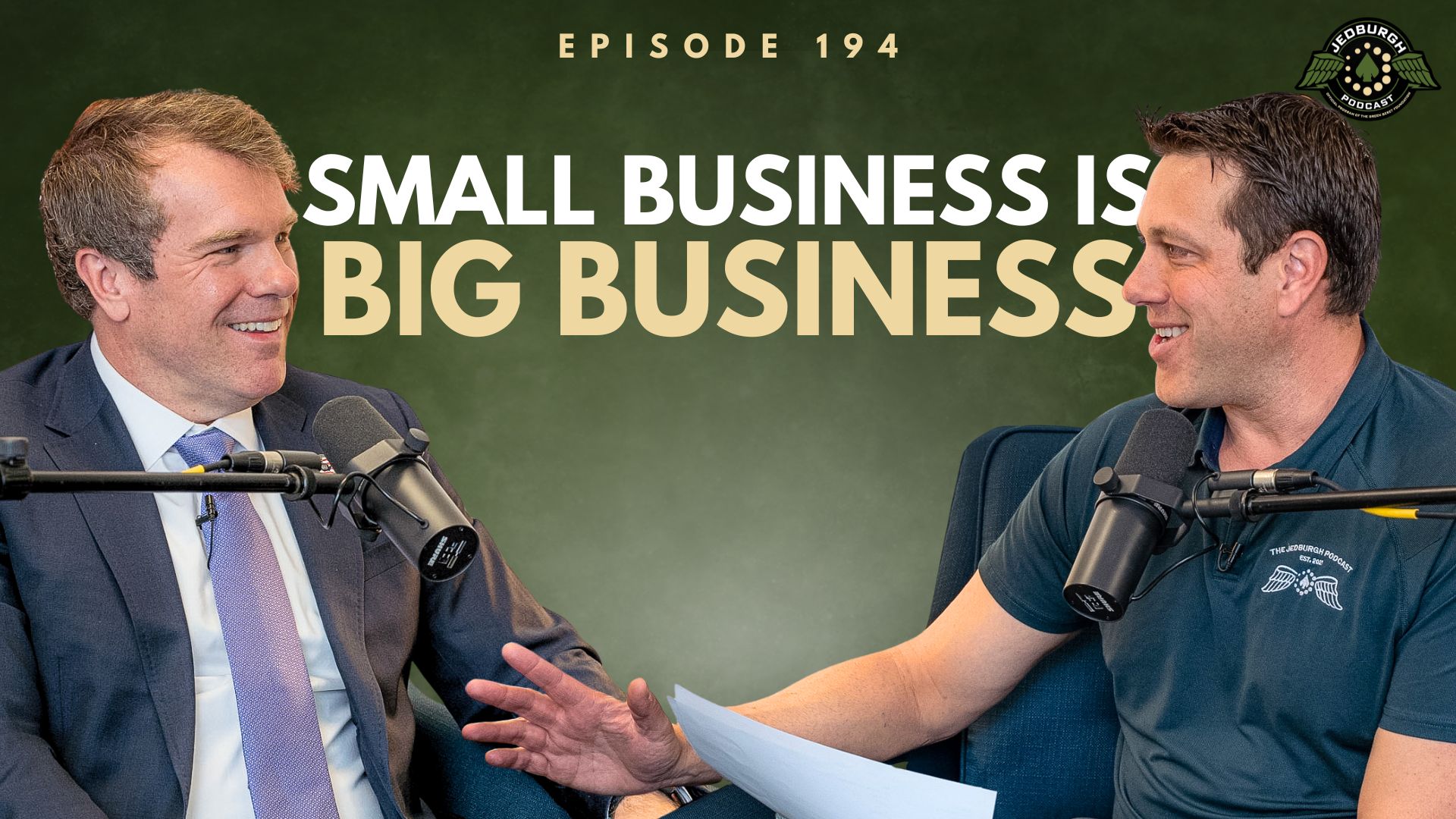

99% of all US businesses and almost 46% of American employees are, or work for, a small business. Although a small business is defined as having less than 500 employees, American small businesses are responsible for over 88% of net job growth. That means that America’s economy, and the world’s economy, rest on the backs of small businesses.
The Small Business Administration plays a critical role in the success of small businesses; including those owned and operated by American Veterans. From business planning, strategy design, funding and specialty certification programs the SBA is one of the primary pillars creating and supporting economic impact.
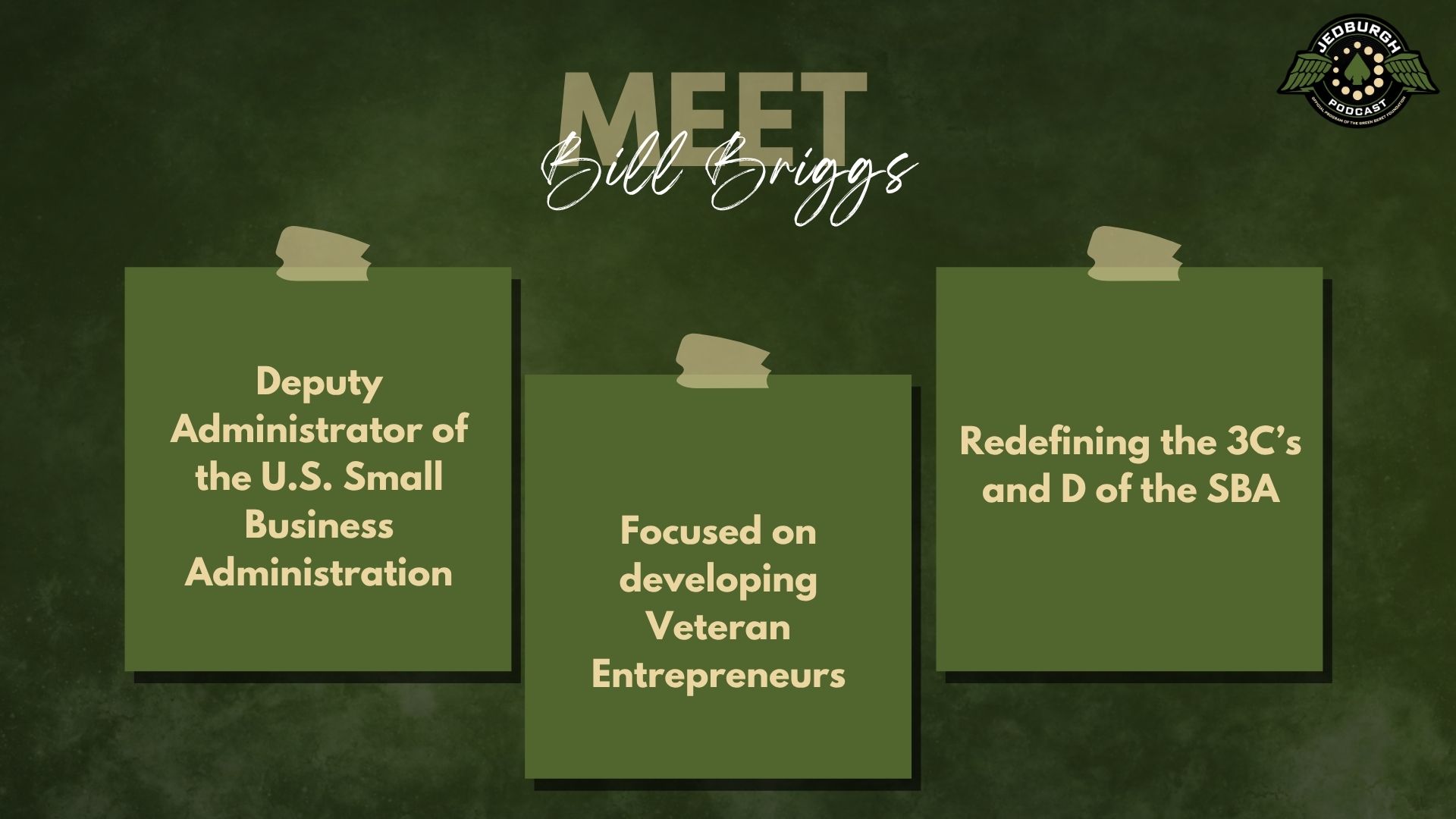
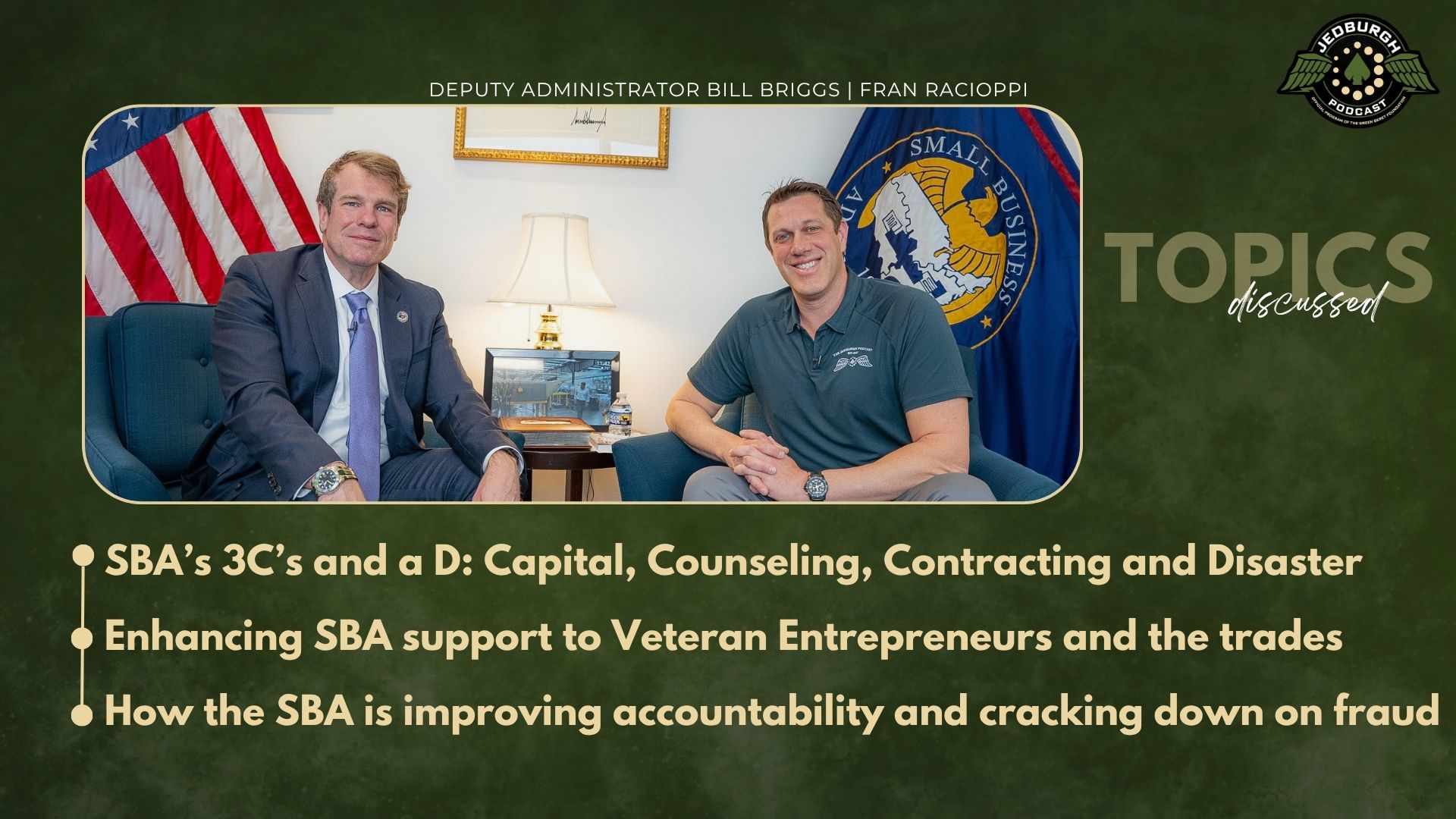
In this episode, I sat down with Bill Briggs, Deputy Administrator of the U.S. Small Business Administration, to break down the SBA’s 3C’s and a D: Capital, Counseling, Contracting and Disaster. Deputy Administrator Briggs explained the real challenges business owners face, especially around cash flow, capital access, and navigating competitive marketplaces. He shared the history of the SBA and its grounding in the Small Business Act of 1953, when the post war period identified that small businesses are not only important to the global economy, but they are crucial to America’s national defense.
200,000 service members transition each year from the military into the civilian sector. Some will start businesses as entrepreneurs. Others will enter the workforce. All will need counseling, support and a system designed to give Veterans access to opportunity and the chance to succeed post service.
Finally, we address how the SBA is improving accountability, cracking down on fraud, and ensuring programs are delivering real results for those they are designed to support.
This conversation is about turning service into opportunity. The SBA is ensuring Veterans are not left to figure it out on their own by delivering resources, programs, and pathways to follow their dreams.
The Jedburgh Podcast is brought to you by OneBrief; enabling military leaders to make innovative, informed and deliberate decisions faster than ever before. Superhuman command wins wars.
Follow the Jedburgh Podcast and the Green Beret Foundation on social media. Listen on your favorite podcast platform, read on our website, and watch the full video version on YouTube as we show why America must continue to lead from the front, no matter the challenge.
—
—
Deputy Administrator, welcome to the Jedburgh Podcast.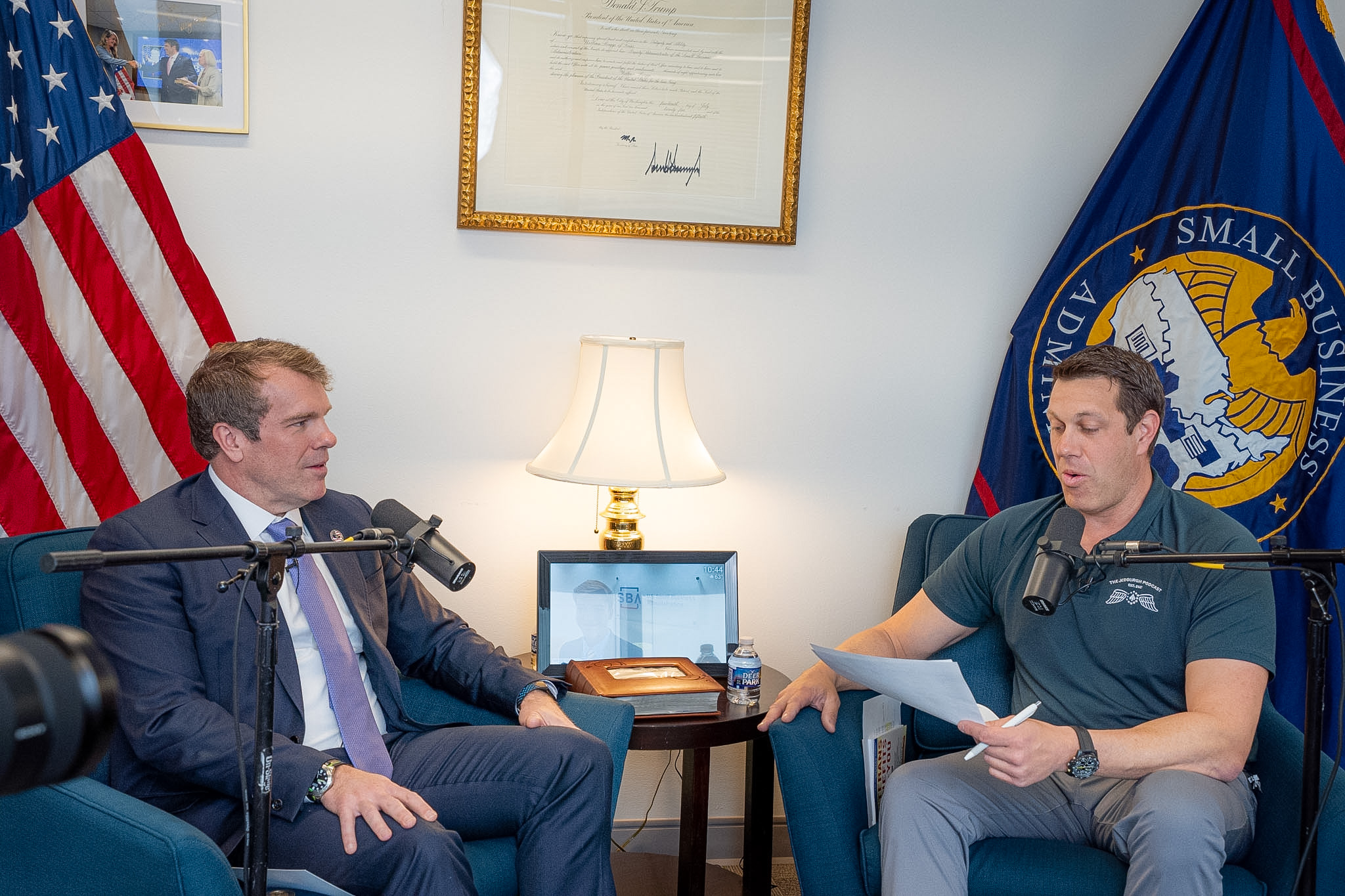
Thank you for having me.
It is an exciting opportunity here to come sit down with you. Much of the US economy is driven by small businesses. We are going to get into numbers. We are going to talk about how more than 99% of firms in the United States are small businesses. Nearly 50% of the workforce works for small businesses. We are at a time right now where small businesses drive our economy, and they have for a long time. To be able to come here, sit down with you, and talk about the impact on an economy that has been booming for years now is important.
We have to understand where we are going. Some of the changes that you and the administrator have made over the last year or so, as you have come into your positions here within the SBA, help to support small businesses and continue to drive the economic engine of our country and, really, the world. We have to understand it. It is going to all tie back in to our veterans because our veterans are so front and center and have been since the World Wars, when they come home, and they build industry and manufacturing.
The 2025 SBA report shows there are 36.2 million small businesses in the United States, 99% small businesses, 62.3 million people, or almost 46% of all private sector employees. Small businesses are defined by fewer than 500 employees, and they are accountable for almost 89% of net job growth. We just saw today that 178,000 jobs were added in March to the US economy. The top states are California, Texas, and Florida. They really span so many different industries. Why are small businesses the backbone of the American economy?
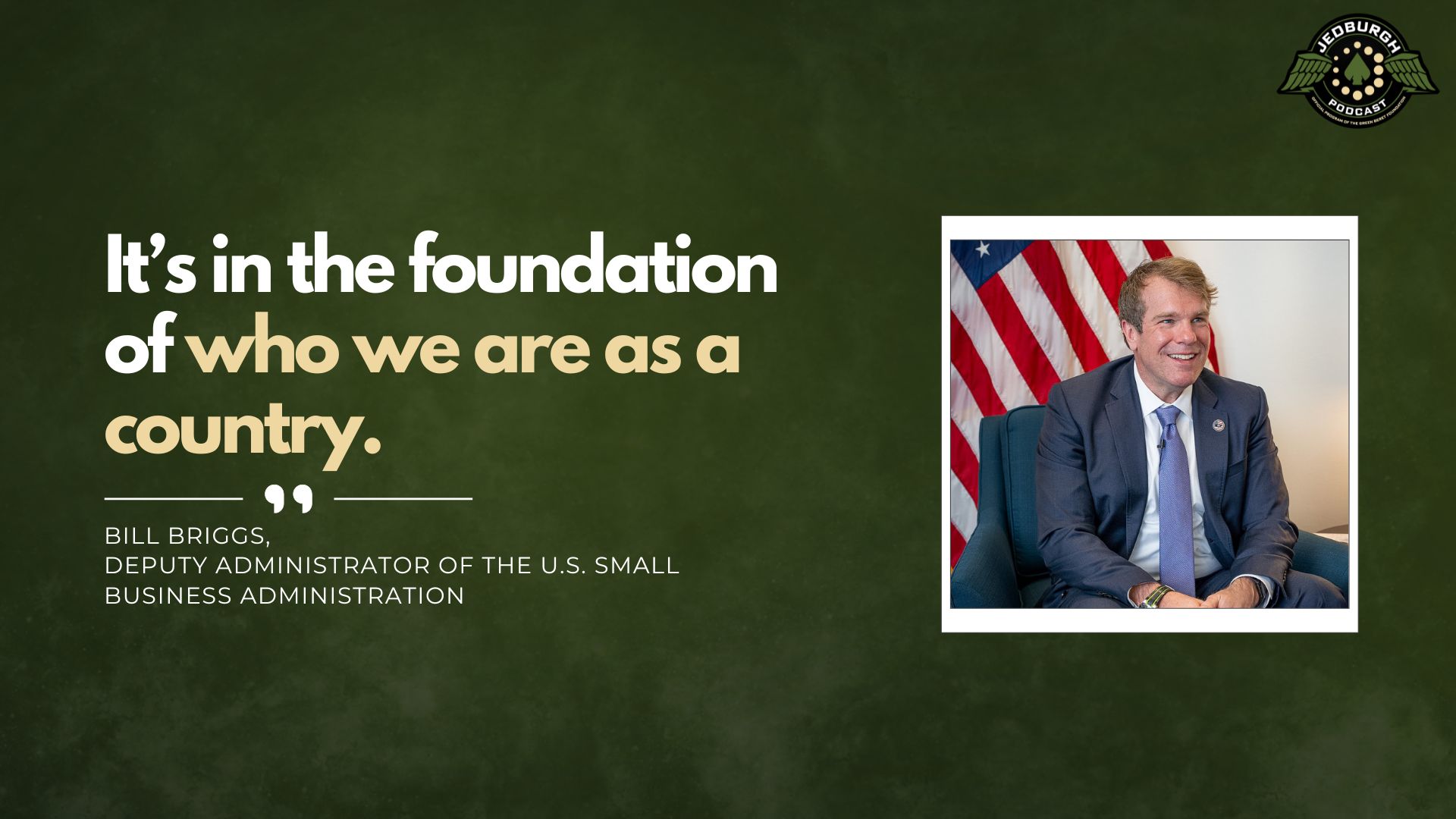
As you just said, with all those wonderful statistics, President Trump often says small business is big business. In addition to all those great statistics, I think two out of three new jobs come from small businesses. When we are looking at that great number of 178,000 new jobs created in March of this year, you have got to remember that a lot of those jobs are probably coming from small businesses, and new and innovative things are where our country really grows. It is in the foundation of who we are as a country.
People will say to me, “What was it like being a Green Beret? That had to be really hard.” I tell them every single time that being a Green Beret 10 out of 10 days was easier than running my own business and being an entrepreneur. It is, hands down, the hardest thing that I have ever done. Your team here at the SBA is experiencing that and interacting with those businesses every day. Can you talk for a minute about the dynamics of your team, the construct of those who work at the SBA, where they come from, and why they are in this position to advise people like me who woke up one day and said, “I have got to start my own business?”
It always starts at the top. Administrator Kelly Loeffler is one of the most successful entrepreneurs of our time. She has bought and sold many companies, but she started out on a farm with her family. She always tells this story. Entrepreneurship is really who she is and what she is about. The political leadership that she hired almost exclusively had run, managed, or worked in some version of business. Usually, they are in the C-suite with a background in finance.
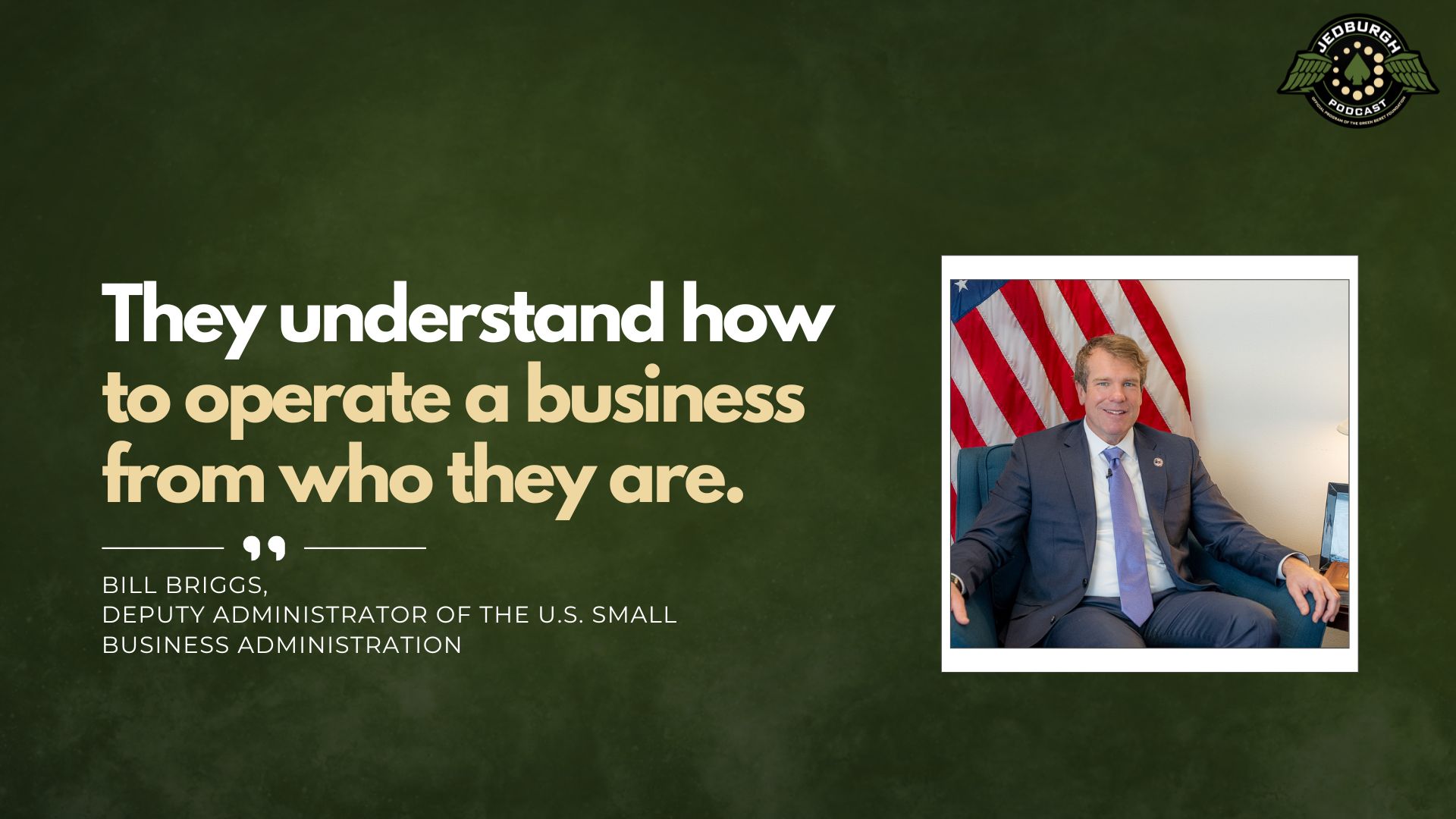
They understand how to run and operate a business based on who they are. That is where the leadership starts at the top in terms of people who have owned and operated businesses over the course of their careers, with a long time in the private sector. You have some folks with extensive experience in government, like me. This is my fourth presidential appointment. I understand many of the nuances and just some of the procedures, and how to get things done.
You combine those two forces, and we are just going forward. Our career staff here, many of them have worked for decades at the SBA. They understand how our programs can help and assist small businesses, especially as they are starting to grow and expand. We do four things at the SBA. I always remind folks that we provide access to capital through our loan programs.
We provide counseling through our Small Business Development Center and network of partners. We set federal government contracting standards for small businesses. Finally, in the event of disasters, we provide low-interest loans to small businesses, nonprofit organizations, including religious groups, individuals, and renters.
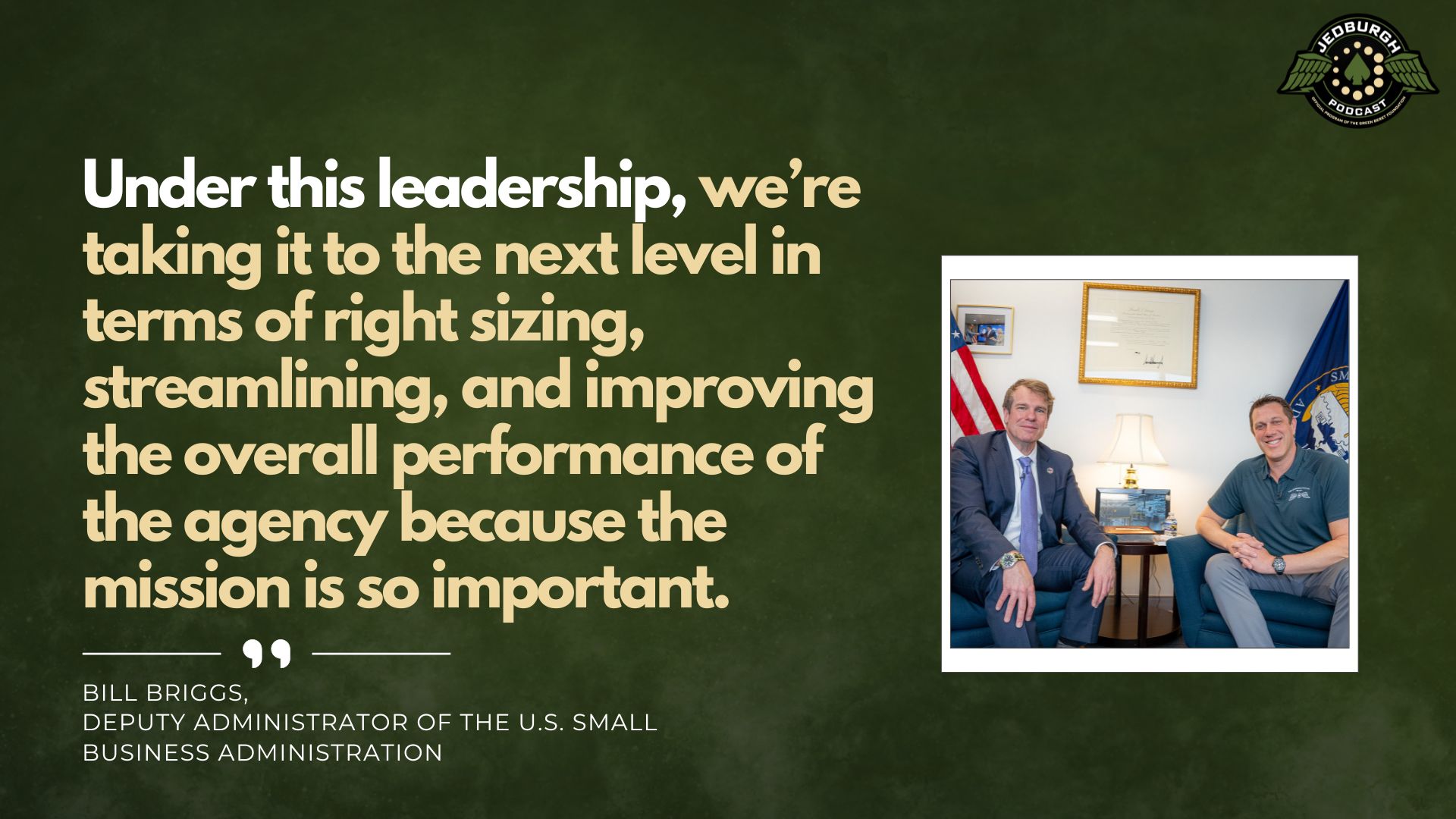
Last year, when the Texas floods hit, we went down there, and we ultimately made over $30 million in low-interest loans that last 30 years to help these communities recover. Everybody who works at the SBA is in one of those fields, and they are very specialized and know what they do. Under this leadership, we are taking it to the next level in terms of right-sizing, streamlining, and improving the overall performance of the agency because the mission is so important.
I want to ask a little bit more about the four initiatives.
We call it three C’s in a D. Capital, Contracting, Counseling, and Disaster.
Let us dig into those a little bit more because they are all important. We talk about access to capital. Cashflow is critical. I have a question here that’s like, what’s the biggest challenge that you see in the business? They say most businesses fail within the first five years. For my business, which is a security integration company, we provide access control, CCTV, and fire alarm systems. We do security consulting. We do facility consulting. We do facility management operations. Ninety percent of our clients are government clients. We have like three private sector clients.
Private sector clients pay the bill quickly. Government can take 30 days, 60 days, or 90 days. We got, I’ll call it, held out, but we were delayed in some payments out of some major government organizations for six months or eight months due to factors outside of our control. Big government entities sometimes do not move quickly on big infrastructure projects. You have to be able to weather the storm. When we talk about access to capital, what are those initiatives that you have that are helping these businesses?
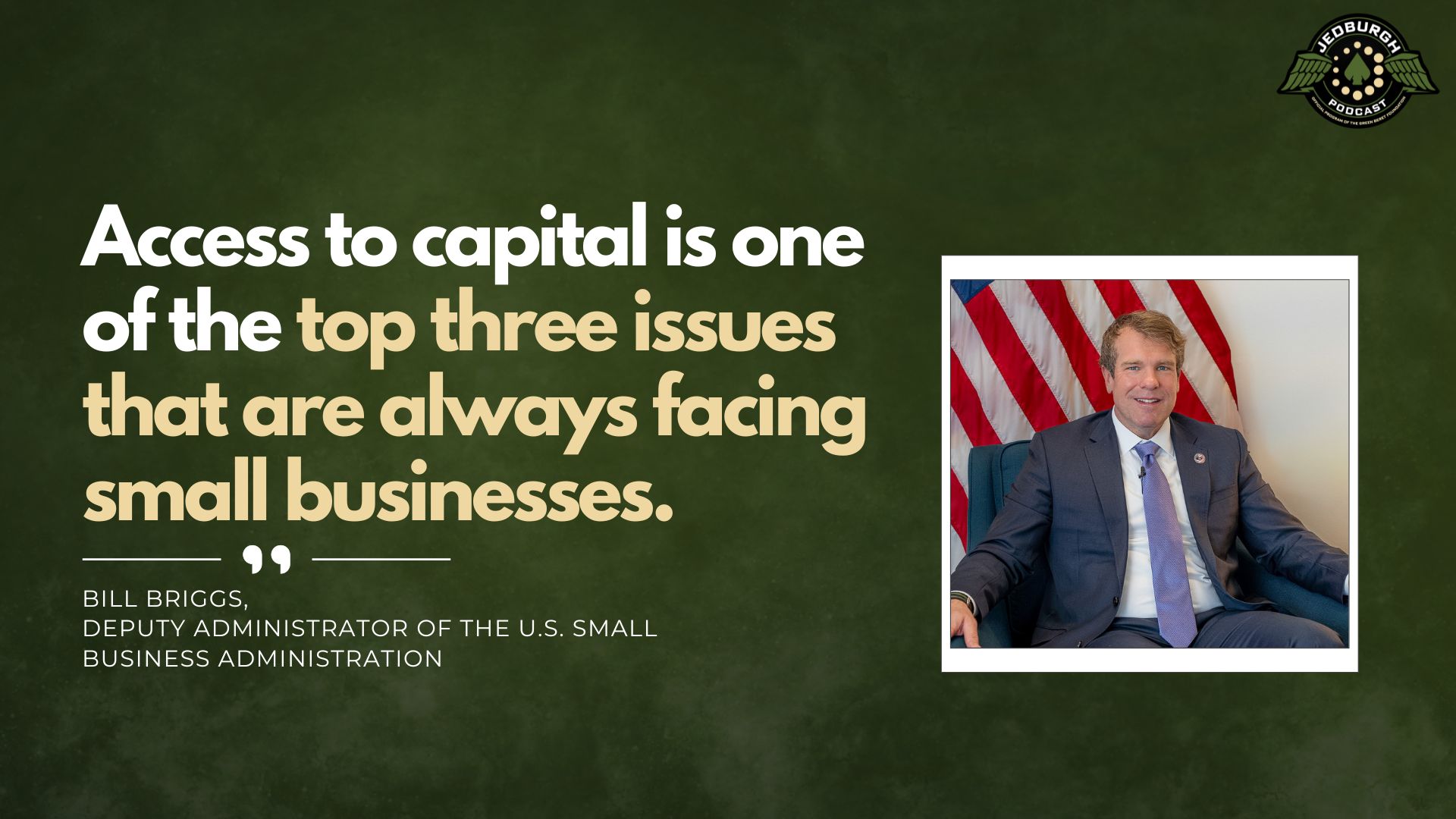
Access to capital is one of the top three issues always facing small businesses. Probably the most pressing issues are workforce development, talent, and finding an accountant who can do the job well. Access to capital is just right up there always. It makes sense whether you are credit qualified to actually have the capital to grow and expand, but also just cashflow issues, as you talked about. One of the things we are trying to do in our programs is address the issue of large primes, making sure that they pay their smaller contractors in a reasonable amount of time.
You were familiar with this issue. It’s part of what we’re doing. At the core of our program, we are really known for our flagship loan programs. We never make a bad loan good, meaning a loan that would not be made otherwise because it does not qualify on its merits. Particularly with small businesses, the guarantee ultimately makes a lender more comfortable making that loan. It provides a level of comfort that says, “You went on the merits, and this is a cushion to make it go over.”
It does not take a situation with a loan that should never be made and make it. That is what we do. Last year, we had a record year in terms of putting out capital to small businesses. We deployed over $100 billion between all of our capital access programs, including our loan program and our investor-backed small business investment company funds. That’s what we want to do.
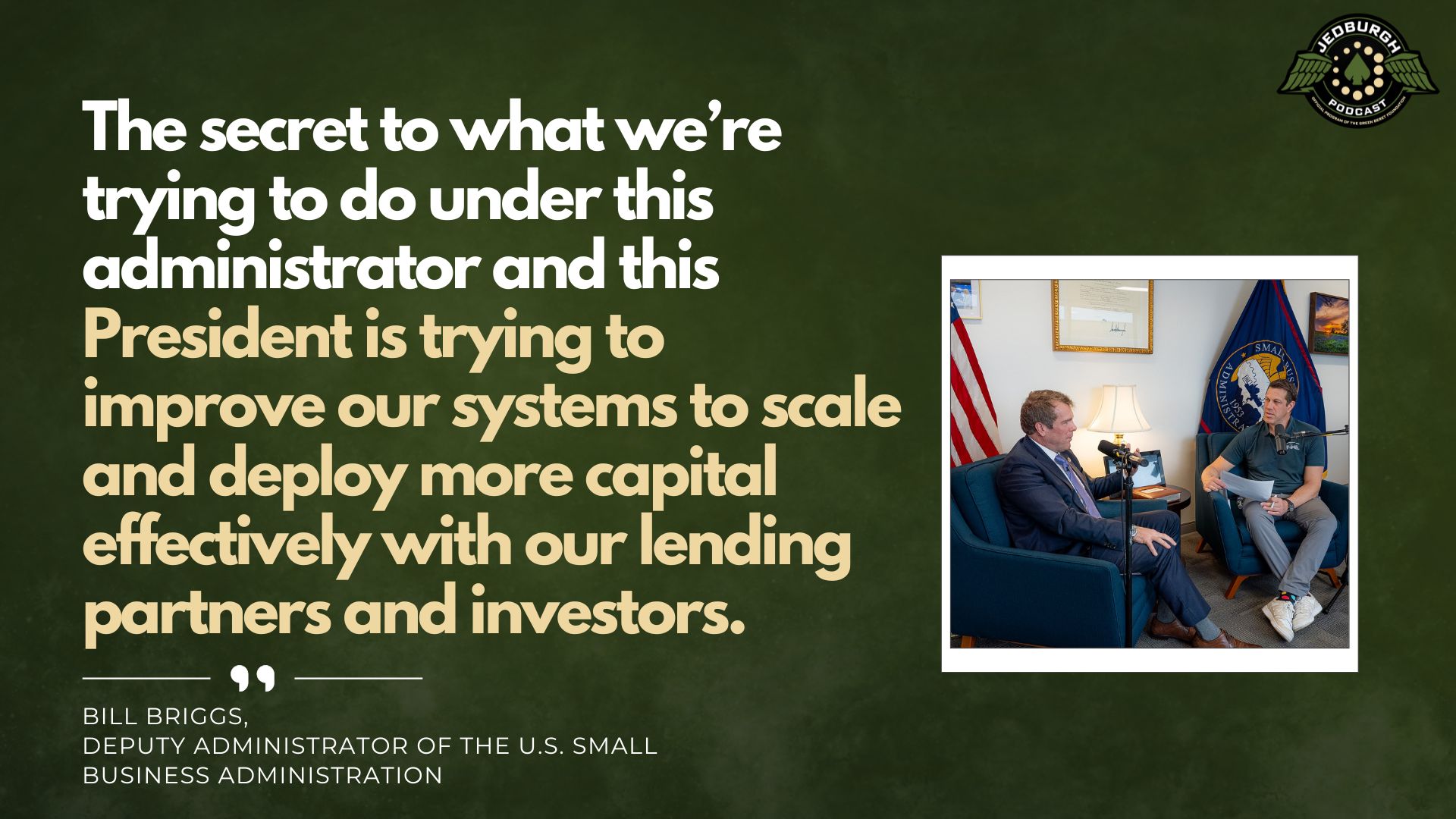
The secret of what we’re trying to do is that this administrator and this president are trying to improve our systems to scale and deploy more capital effectively with our lending partners and our investors. I tell people, “That’s the secret.” We are trying to improve our operations so we can do it more effectively and have a better experience for our lenders, partners, and small business owners. That is our focus.
The second C is the counseling. I spent thirteen years in the Army. Before that, I was in college on the men’s rowing team. I studied broadcast journalism, so I did not have to take a math class because that was definitely not my favorite class coming out of high school. When I got out of the Army, I had that transition story where I said, “I have got to talk to one person a day.” I took it to where I could talk to three people a day. I live in Colorado.
I talk to someone on the East Coast in the morning and to someone in the middle of the country. In the afternoon, I’m going to get advice from somebody on the West Coast. I would talk to people, and they’d say, “What do you want to do?” I’d figure out where they worked and a lot of the consulting firms. I would find ten jobs that were open in ten locations. I would think that I was very prepared for this conversation, and I would say, “I want to do ten jobs in these ten locations.”
One day, a former Fifth Group guy said, “Man, I cannot help you.” I said, “What do you mean you cannot help me?” “You just told me that you’ll do ten different jobs in 10 different locations. I do not know how to call. I do not know how to advise you.” It was at that moment that I realized, the second you talked about leadership, and you talked about finance, that there is leadership in finance. Yes. Is there finance in leadership? Yes, but those are two different things.
When you come out of the Army, you are an expert in leadership and organizational design. You know how to get people to do the thing that they may otherwise not want to do because they want to. You do not know what a balance sheet is. You do not know what an income statement is. As I went to all of these interviews, I found I did not know anything about business.
As I discussed with Secretary Collins, I leveraged all of the VA programs with VR&E and the GI Bill to get a business degree and an MBA, so that I could try to understand some of those hard skills. Many people, whether they are veterans or they are starting a business, need to understand from a counseling perspective how to actually do this. Can you talk for a second about those SBA resources? I have downloaded the business plans and written them myself.
[One of the ways that we have the whole office that provides what we call entrepreneurial development, which is our counseling. It is primarily delivered through both our small business development centers, which have 1,000 locations across the country, and a ton of online information. These are free or low-cost resources available to most people. They can help with a business plan. They can explain, “Here is the cashflow statement or a balance sheet.” That basic language every small business owner needs before they walk into a bank and try to get a loan.
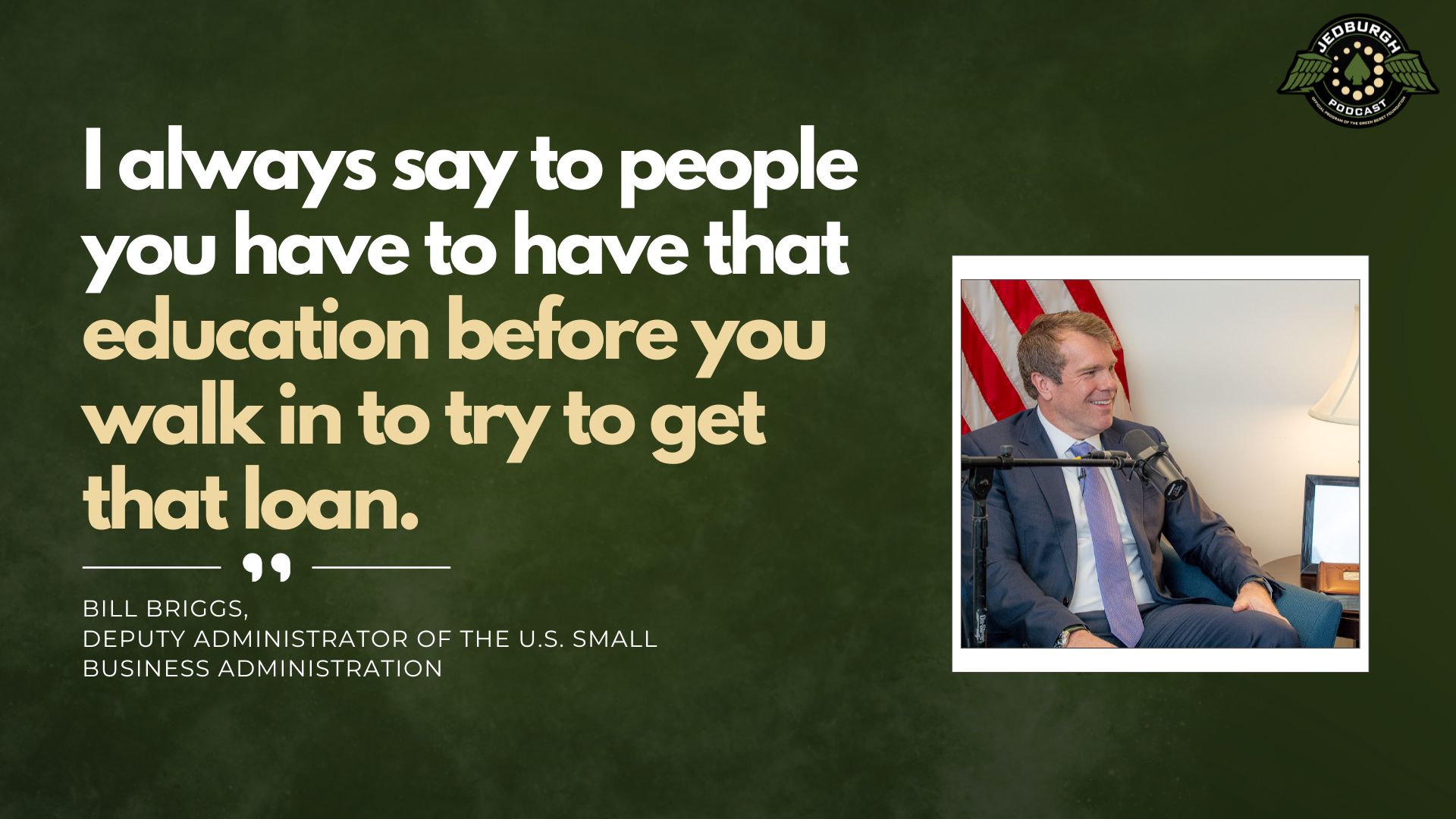
We also have our Veterans Business Outreach Center, which is specifically tailored toward the veteran community. It is essentially the same content, but it is in a veteran supportive environment led by veterans for veterans. We have better success in that regard. That’s how important our veterans are to us. I would say to people, “You have to have that education before you try to get that loan. The most dangerous thing you could do is actually get a loan and get enough rope to hang yourself by getting in trouble and in debt that you cannot get out of. If you defaulted on a government loan, that is not a good thing.”
We are working at the SBA on reaching a potential small business owner earlier in the process to plant the seed. You need to start planning this. You need to start measuring twice and then cutting once. You need to think through your business plan, your market strategy, who your resources are, and how you are going to build out that team that is going to help you. I often say to people, “You go into business for yourself, but you do not go into business by yourself. It is like the military, where you have a whole group of folks supporting you, whether in the military who are supporting military infrastructure.”
Same thing with a small business. There is a whole group of people who you might pay to help you, like your accountant, but then there are informal advisors and networks who can give you that counseling and perspective you are going to have to have to succeed. That is where our small business development centers come in. They can provide that counseling. They have seen it all before. More importantly, they know somebody.
If they do not know what they know, somebody else in the economic development ecosystem can really help them. We are trying at the SBA to make those resources available, particularly to our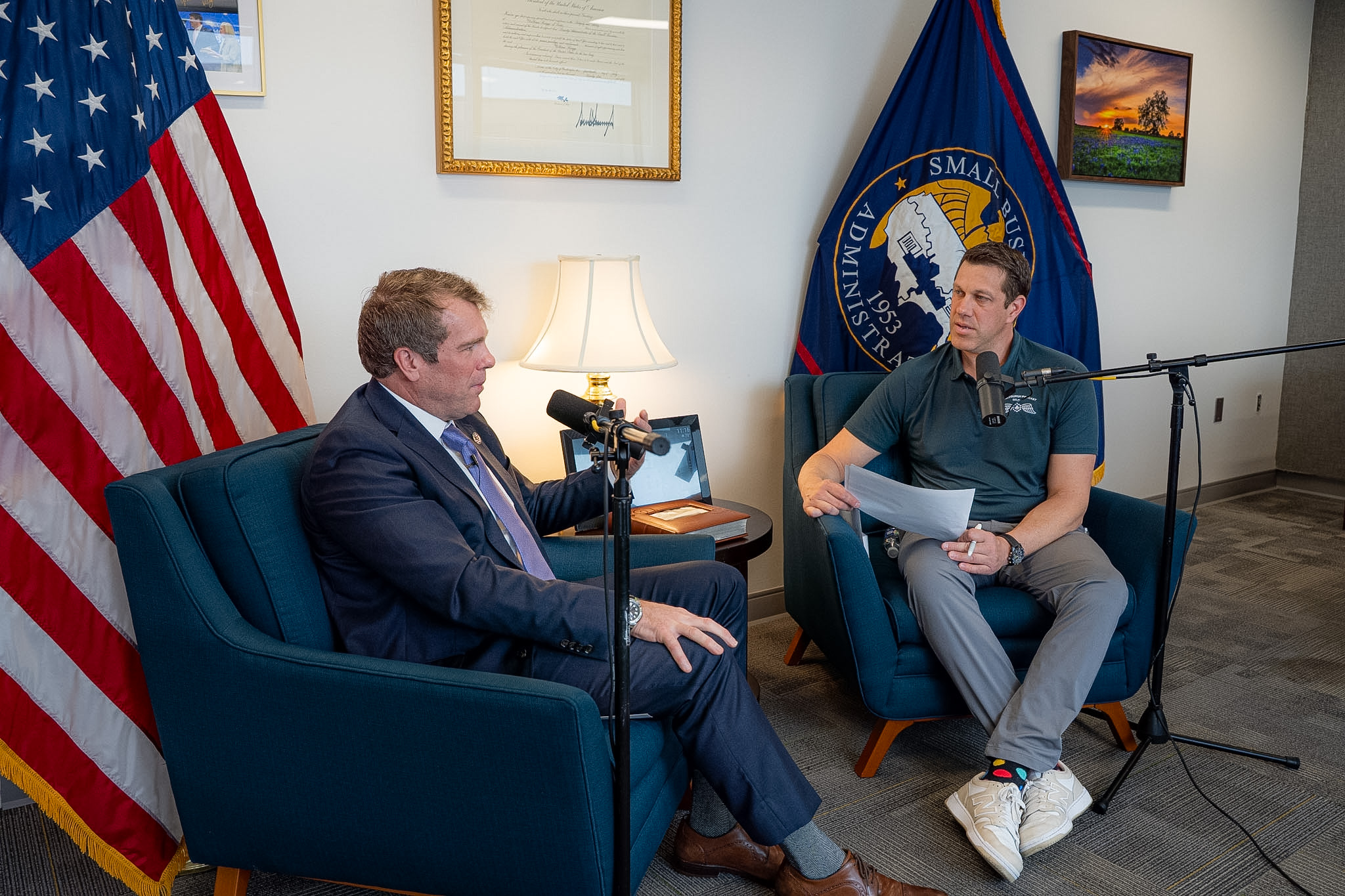 veterans, and plugging in with the VA, the Department of Labor, and the Department of War to make sure our veterans, military spouses, or military fighters know how to access those resources when they can.
One of the largest resources, at least in my mind, the SBA provides is your third C, this access to government contracts. When COVID happened, my company shut down, I lost my job, and had a new son. March 17th of 2020, my son was born, and I lost my job two days later. I could not go anywhere. I sat there and said, “What am I going to do?” I had formed an entity to do some public speaking a couple of years ago, so I tried to transition this EIN number into a business. I went to the SBA website and started filling out documents.
I was filling out the forms. Do you know what I was filling out at that time? I have tremendous knowledge of what I was filling out, but it was all the forms to get certified as a service-disabled veteran-owned business. At that time, it was run by the VA, but it has since been fully transitioned over to the SBA. I got certified as a veteran-owned business. I started realizing, “There are all these set-asides for these various certified businesses.” The SBA runs those access programs to put percentages around it.
Five years later, the majority of my business is focused on the opportunities generated by these programs that provide access to federal, state, and local contracts for veteran-owned businesses. Minority and women-owned businesses have the same thing. When we look at the development of those contracting standards for those various groups, what are you looking at, and how are you tailoring those to open up those opportunities?
First thing, we have various certification programs at the SBA. When Administrator Loeffler came in, there was a backlog of 2,700 veteran certifications that had been languishing for years. The previous team had pushed those aside against the law in favor of DEI. Administrator Loeffler came in and said, “No, we are getting this backlog done right now because of folks like yourself. It is so important that they get that certification and have access to those set-aside contracting opportunities that the federal government provides.”
There is a massive, multi-billion-dollar market for service-disabled veterans and veteran-owned businesses. Congress created those set-asides for a specific reason because it recognized that veterans have contributed so much to our country. In terms of the process, we are making it simpler and more streamlined.
We are leveraging technology to make it easier to take the required information and speed up the certification process. You will need your information from your DD214 and the basic information about your business, your NAICS code, and all of that to get certified. You have to register on SAM.gov, which is the System for Award Management. Those are probably all the things you went through.
I did not know what I was filling out. Now we leverage this stuff every day.
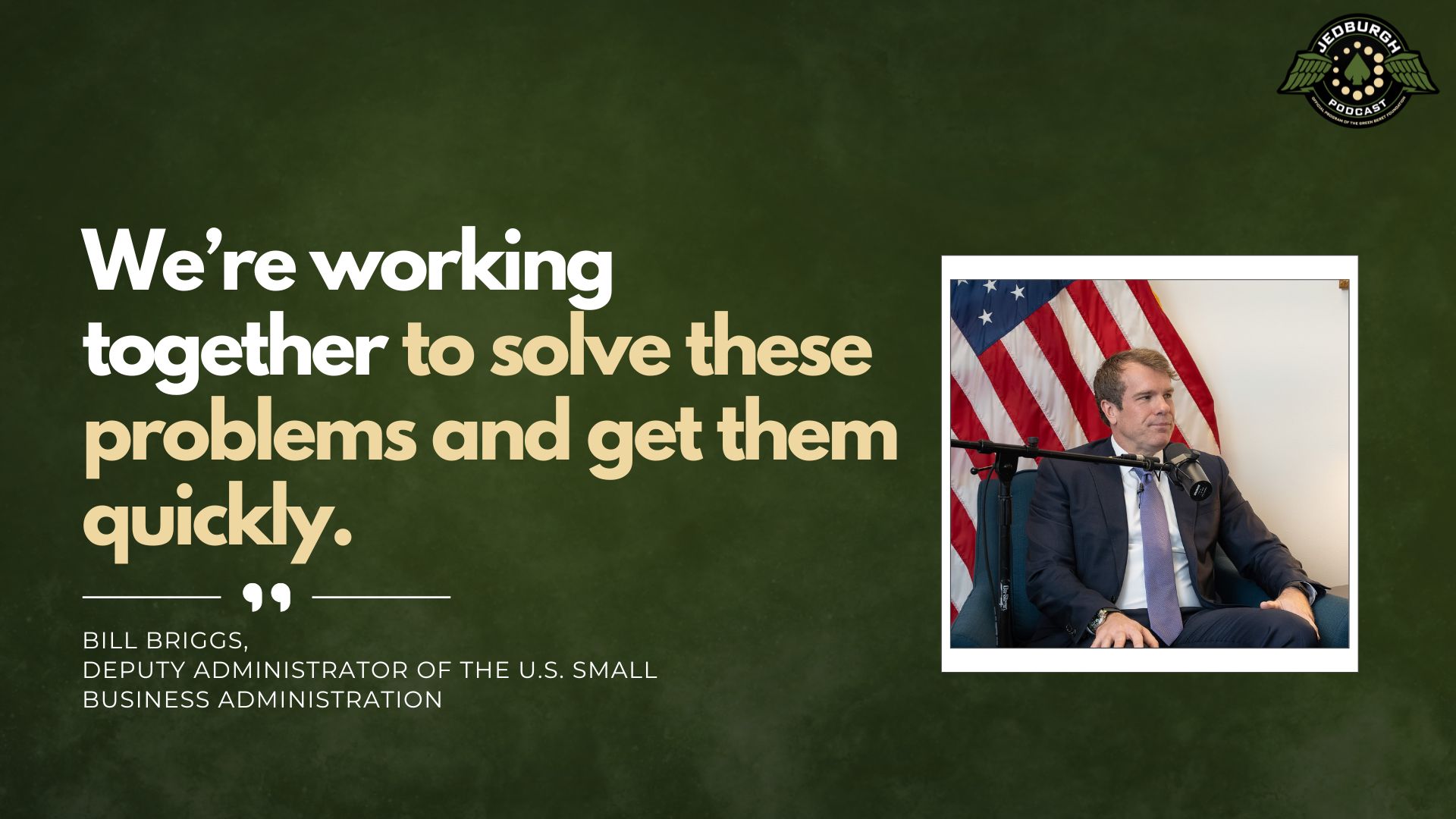
I mean, it’s a process. We are making it much better, but there is still a process. That process is to ensure that we are transparent and that our veterans are appropriately benefiting, so that there is no fraud or misuse of these programs. It’s doable not just in SBA but across the whole of government. There is a recognition, particularly with this administration, that we are working together to solve these problems and get at them quickly. We have the technology and the smart people who have built these incredible systems. We leverage some of that private sector intelligence to help us really make our government systems work that much better.
I’ll say even in the last five or six years, they have come a long way. The access to understand what is out there has gotten a lot better at the federal level and even at the state and local levels. We have put a lot of focus on the state and local level, especially in the Northeast region. Now we are starting to go after a lot more of the federal opportunities. Being able to easily go to those platforms and understand what is out there has gotten a lot easier.
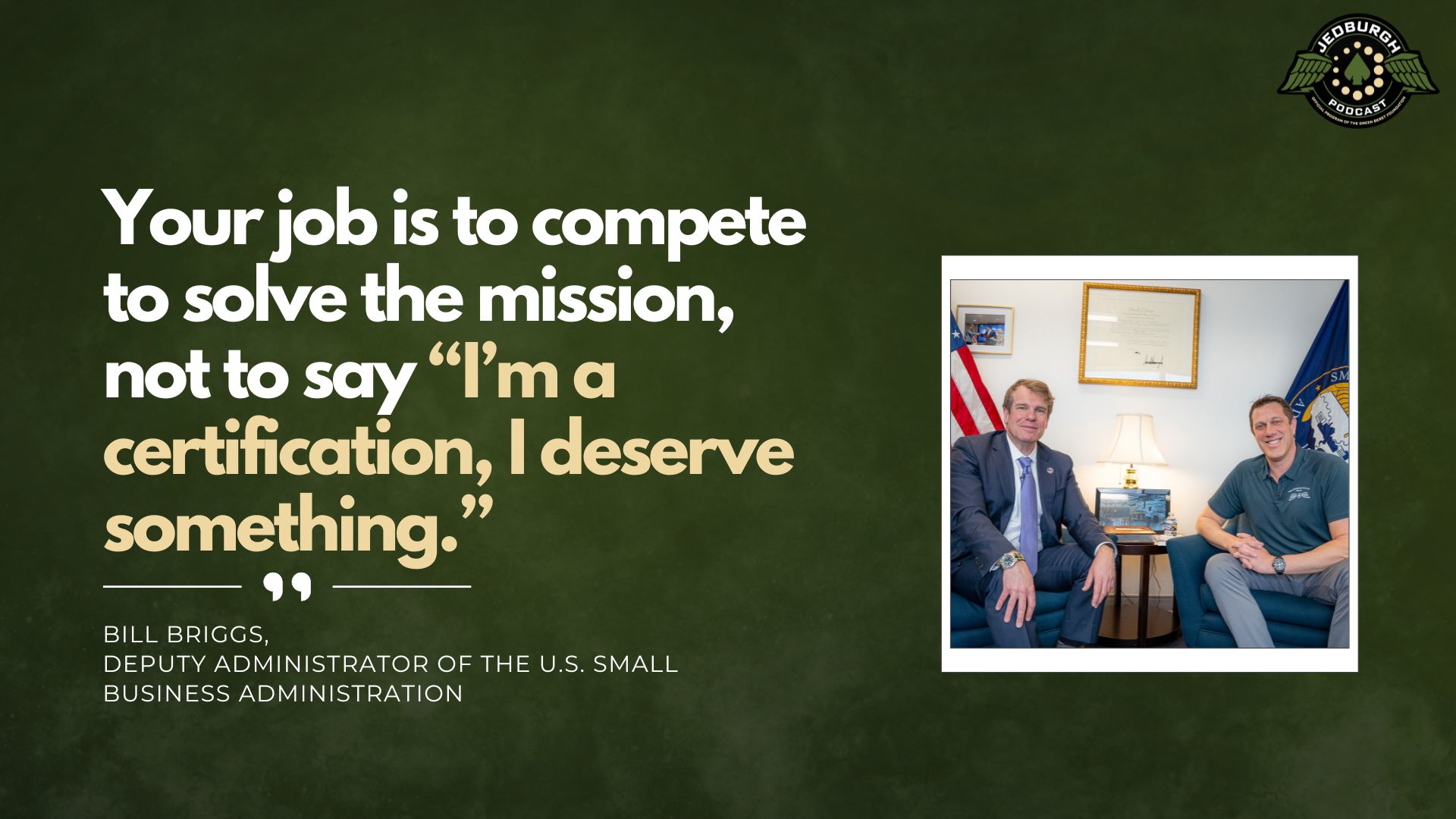
The certification matters because it provides for the set-aside, but you are competing against other veterans. You have to understand what mission you are solving for, particularly with the federal government. You do not lead with, “I am a service-disabled veteran-owned business.” You lead with, “I can solve your challenge, and I can meet the mission.” That’s the message. By the way, I’m that. That is something I always try to talk to federal government contractors and say, “Your job is to compete to solve the mission, not to say I am a certification and I deserve something.”
That is important. I tell my team that all the time. I tell other veteran-owned businesses and transitioning veterans that just because you are a veteran or SDVOSB does not mean someone is throwing you bags of cash or giving you a job.” You might get a seat at the table. It is like going to selection or earning your Green Beret.
You go to the Q course, you graduate, you put your beret on, and now you are going to show up on day one on your team. All that has been done is give you the opportunity to sit in the team room, to sit at the table, and to compete. Now you have to earn it. Now you have to prove that you are actually able to do what you say you can do and do it at a high level.
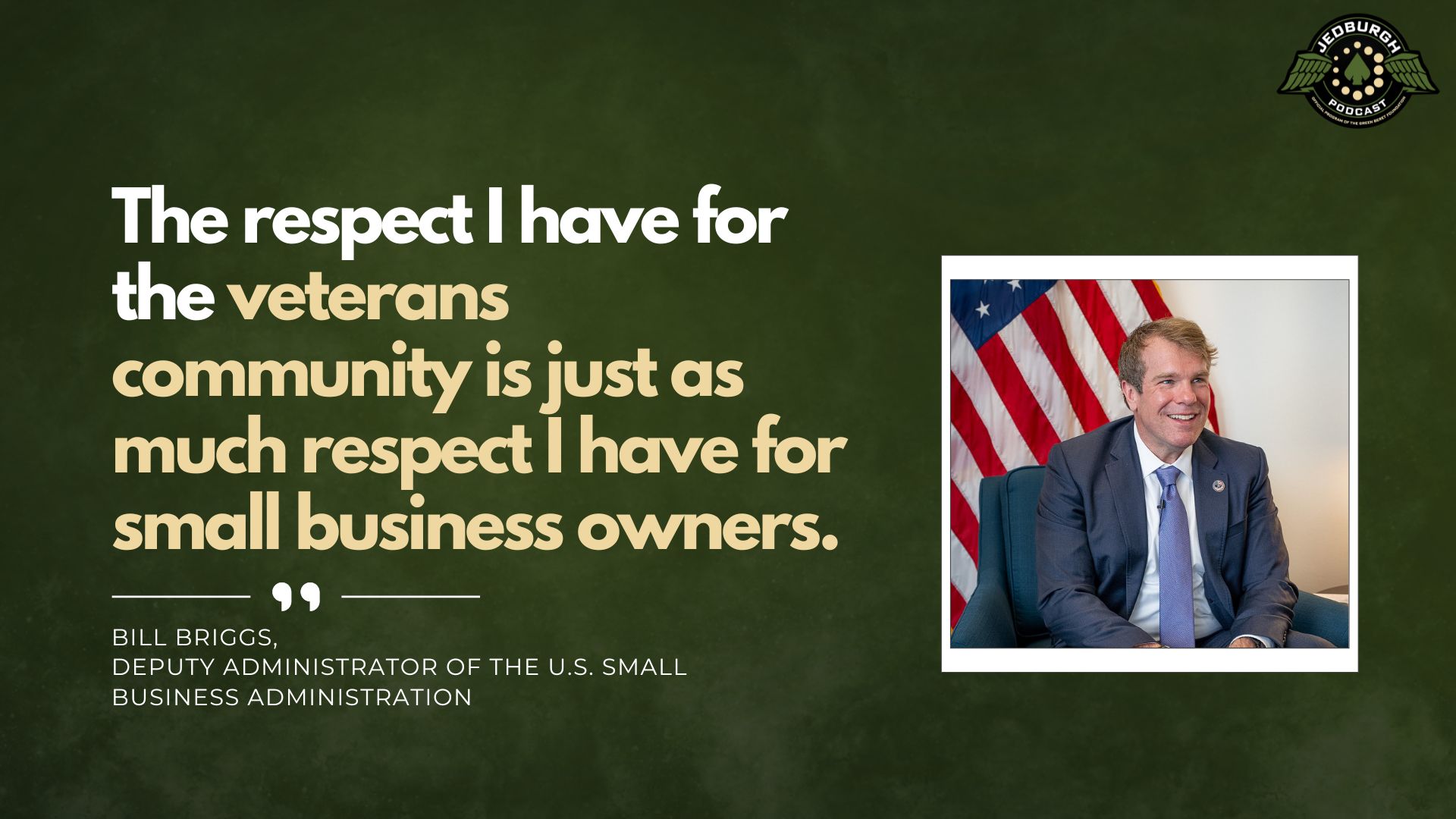
That is where you talked about earlier, how challenging it can be. I have just as much respect for small business owners as I have for the veteran community because it takes the same grit, perseverance, and adaptability. You are going to have to adapt and overcome many challenges as a small business owner. Those skill sets you learn in the military are extremely valuable as an entrepreneur. Some days it is going to be rough. It will be rough as an entrepreneur. There will be many days you will be banging your head against the wall and going, “Why are we doing this?” I know from the military that happens quite often.
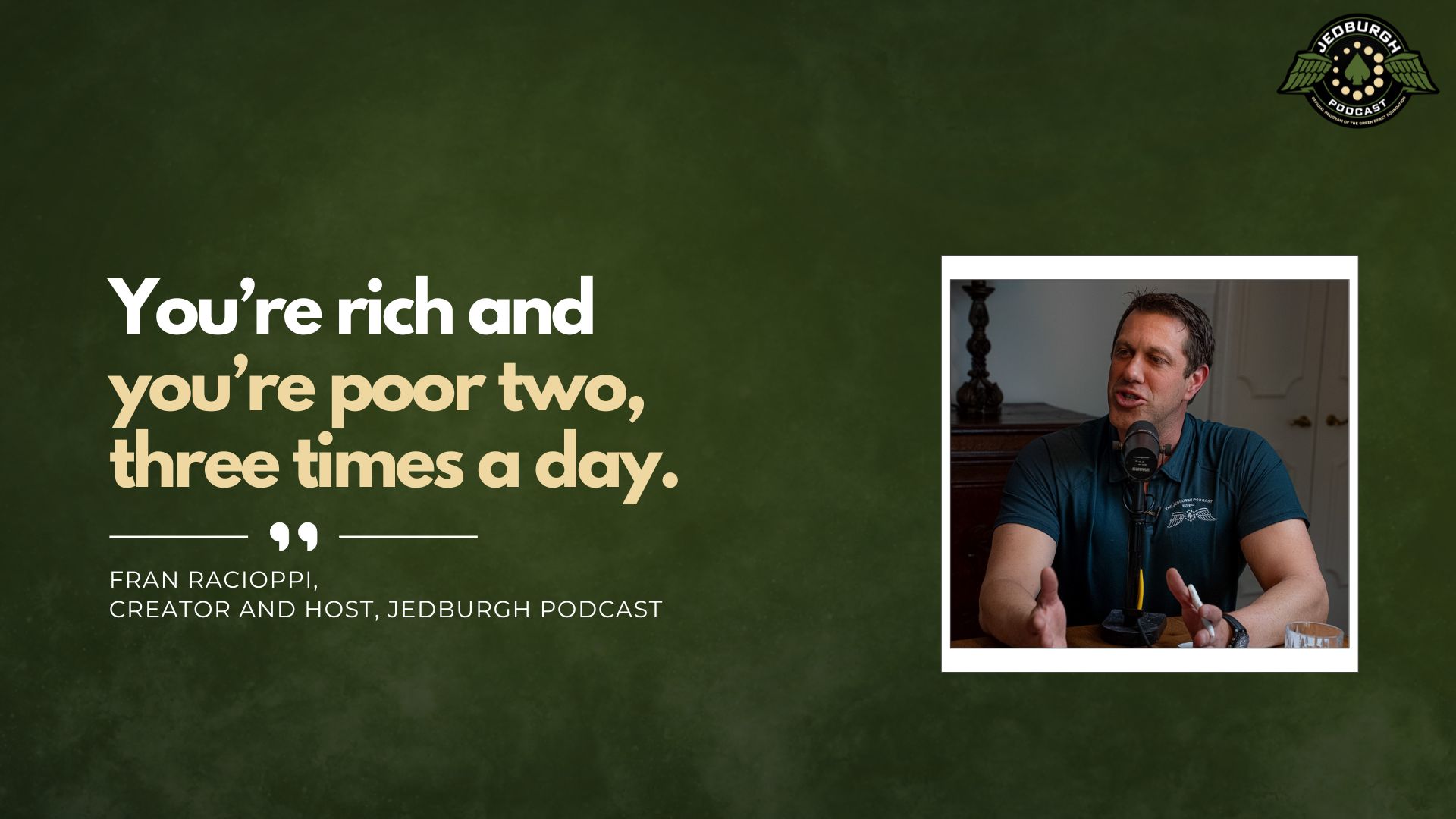
You go through the evolution seemingly every day. You are rich, and you are poor. Two or three times a day, you have a tremendous strategy that is going to explode your business and get you everything you have ever dreamed. By 4:00, you are ready to shut it down and move on. You are looking on LinkedIn for job openings.
Over time, you get better and smarter. A lot of successful entrepreneurs have failed at businesses a few times before they finally hit something that worked. Even if they failed at those businesses, they have learned something about running a business and served them well when they found the right product or service that really hit the market.
You see that evolution as the company grows, everything does not feel like it is the first time. It’s like, “I did this before, and now it is not quite so hard.” The fourth piece is the D, the disaster loans and disaster support. You were front and center with that during COVID, with having to implement and develop the PPP program. When you look at the SBA’s ability to support the unforeseen, how are you developing those programs, and what is out there to help?
One of the things I learned during the COVID era is that people care about a lot of things, but they really remember who shows up during a disaster when they need you. They make sure that we’re going through our respective confirmation processes. The number one question was what we are going to do about the disaster program. Before we came on board, there were some hurricanes that hit the southeastern part of the country. Small businesses in Georgia and North Carolina were not able to get disaster funds for over three months.
Congress was outraged because the disaster team had not given a heads-up that more funding was needed to see this. We are on top of this. Every day I am talking about disaster and making sure that we are ready to deploy and improving constantly. We are assuming something is coming with tabletop exercises and making sure the funds are there, and the teams are trained continually. We cannot mess up this disaster function. Usually, when a disaster hits, the president, in certain instances, will declare a disaster.
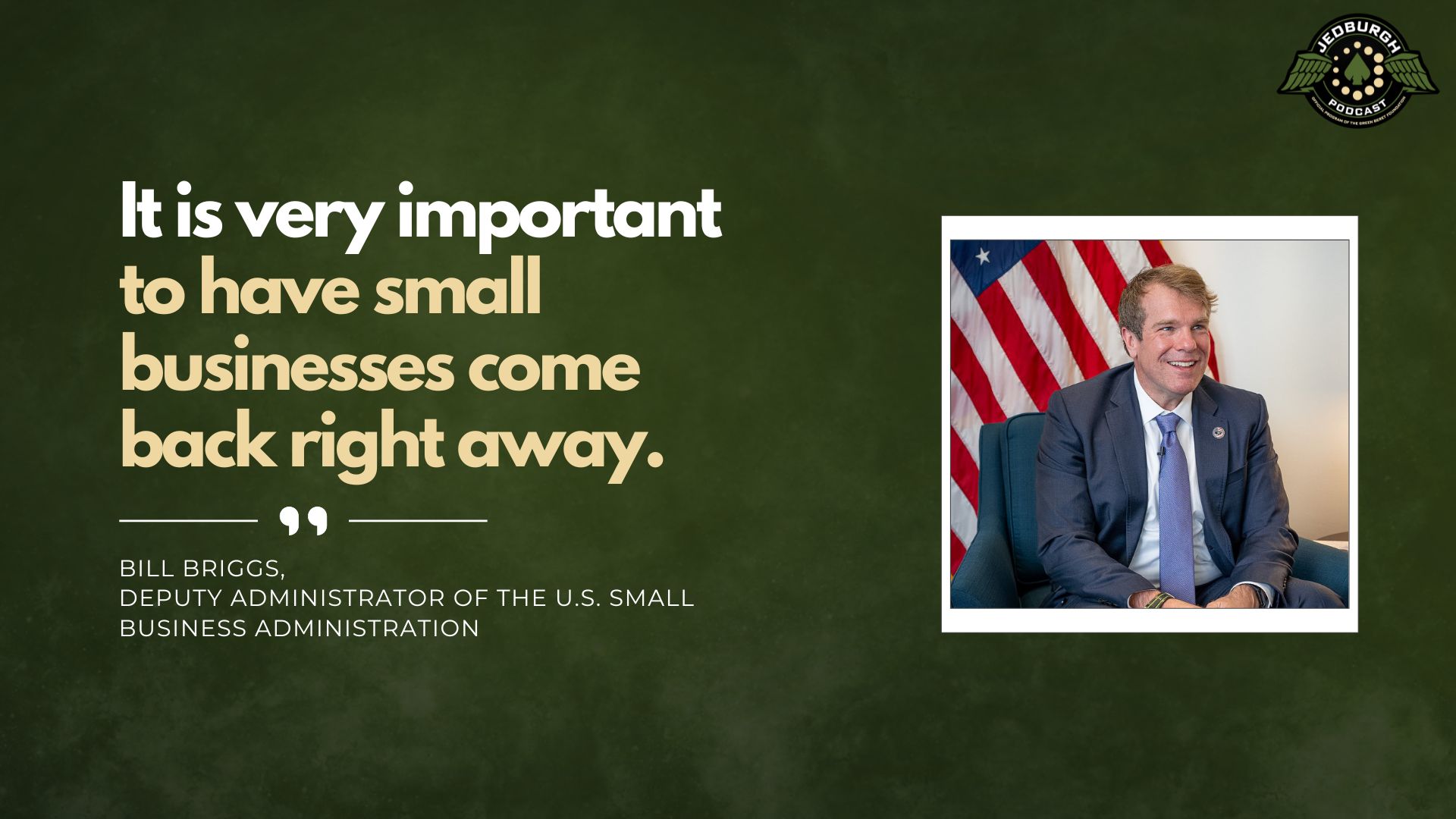
FEMA, which is run by the Department of Homeland Security, will go down, and we will work with them. FEMA helps a lot with the immediate recovery and response. The SBA’s role is a longer-term recovery. After the immediate rescue or stabilization, the SBA’s role is to help with the longer-term recovery. Data shows it is very important to have small businesses come back right away. If you have a shop that has been flooded or damaged in a fire, those institutions need immediate capital to start over again.
Otherwise, they might not come back. We take our mission very seriously to get those funds to the people as soon as possible and make sure our systems are always ready to go. It is like a quick response. It’s just a mission that I personally and I know this administrator take very seriously, and we are very proud of what we have done so far. The first week I came to this job after I was confirmed, I had a welcome reception.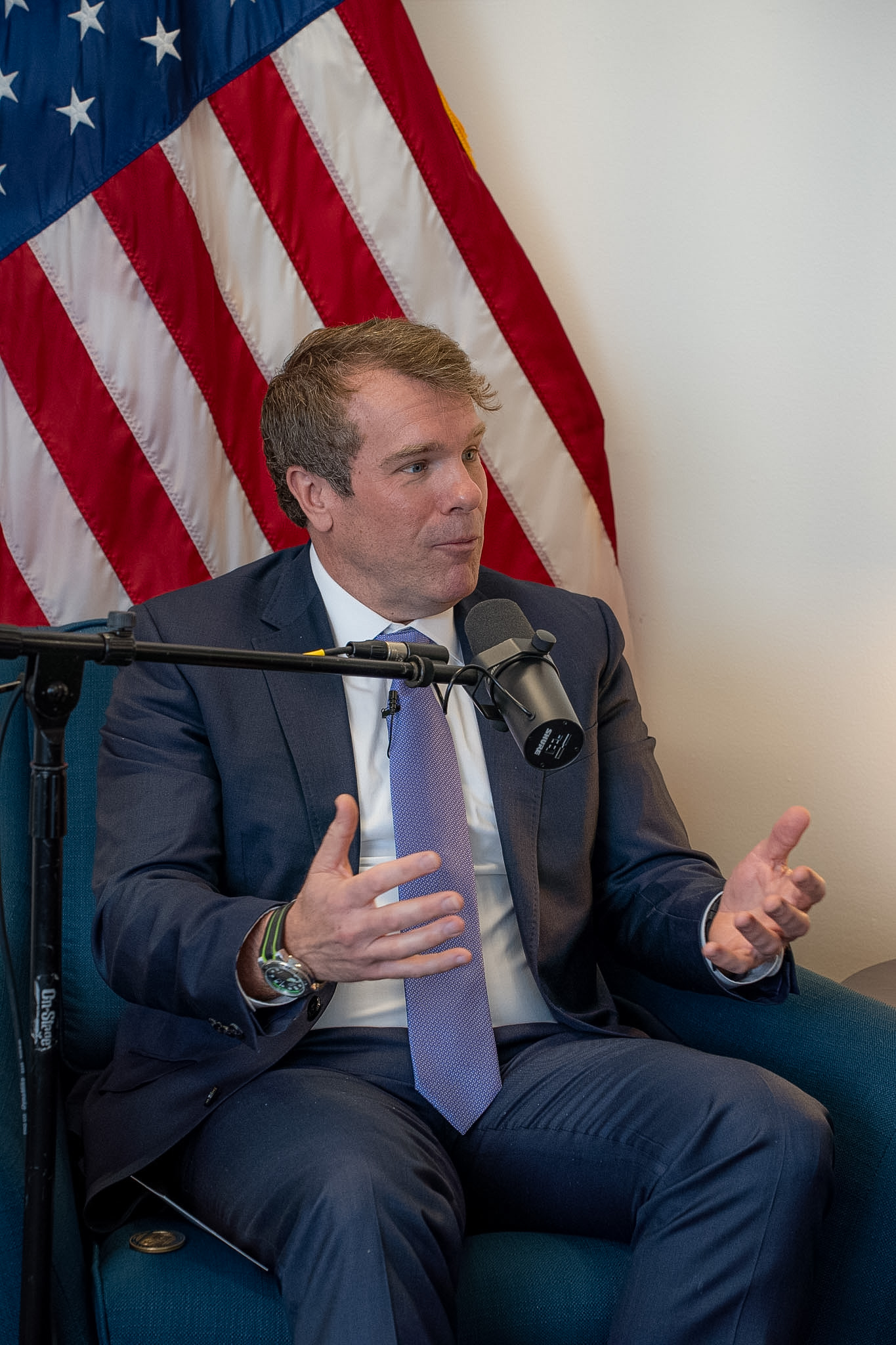
I was driven immediately to the airport and went down to Texas. Those July 4th Texas floods last year unfortunately killed those kids at the camp. I went down there that day, and the next day was spent with people who had just seen people pass away or drown in front of them. It just reinforced the importance of what we do as part of disaster response. We can make some mistakes here and there, but we cannot get disaster wrong. It is so crucial that we support our small businesses in those times of need.
I do not think people fully understand the impact that the SBA has on the American economy and on those businesses. You shared this with me earlier, but I am going to bring it up here because I think it is important to tie it back to where the SBA started. You shared with me the Small Business Act from 1953.
It says in section two that “The preservation and expansion of such competition is basic not only to the economic well-being but to the security of this nation. Such security and well-being cannot be realized unless the actual and potential capacity of small businesses is encouraged and developed.” The SBA and the Small Business Act were put in place as a national security element. Talk for a second about the formation of the SBA, the intent originally behind it back in the 1950s, and how that has evolved.
A good analogy is the Office of Strategic Services that later became the CIA. The SBA had a similar thing. There used to be something called the Small War Plants Commission that was formed immediately after World War II. They recognized that returning veterans could build small manufacturing firms and that these veterans needed counseling. They needed government-guaranteed loans, and they needed federal contracts.
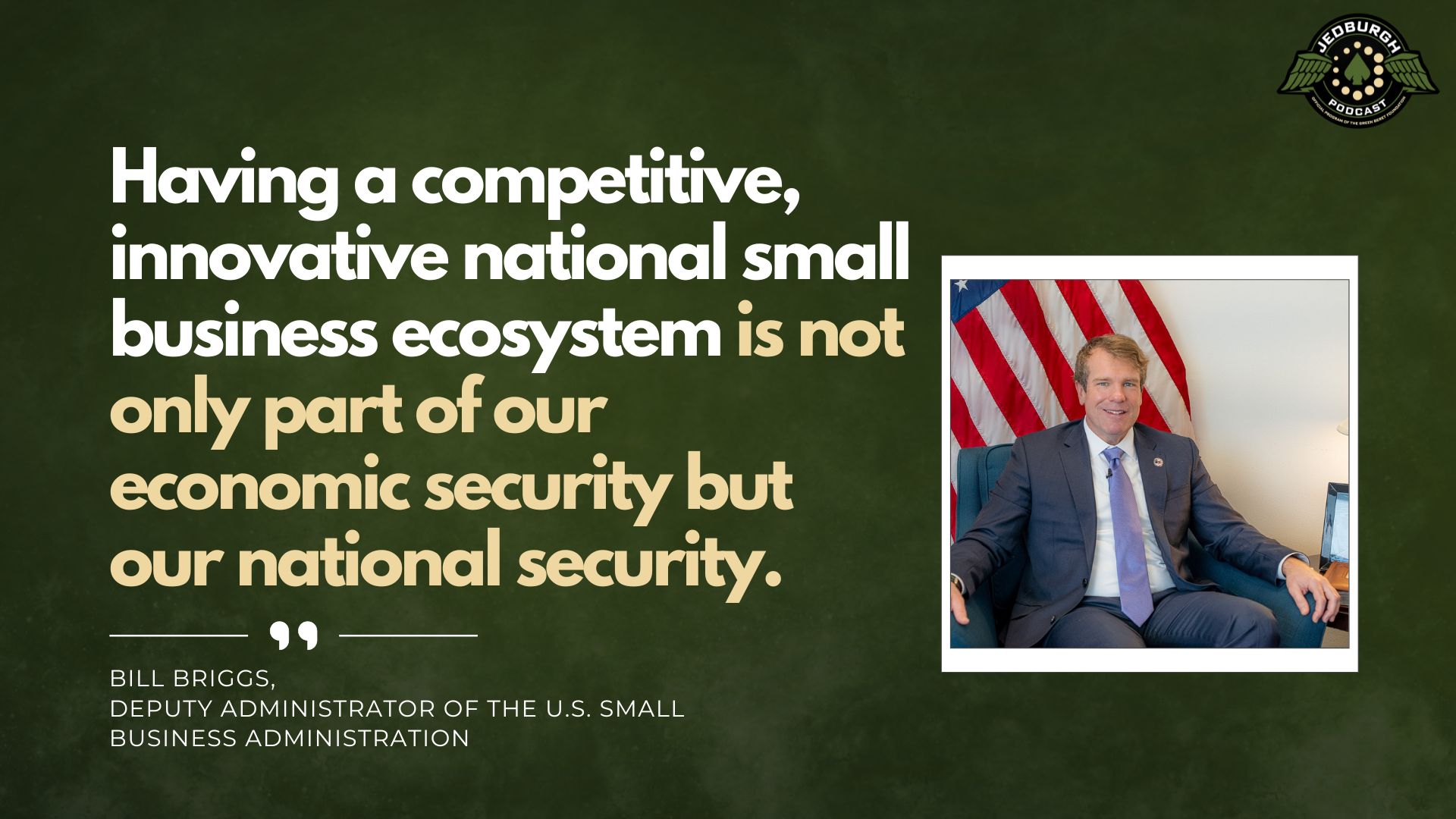
The Small Plants War Commission provided that. In 1953, under President Eisenhower, he expanded this to all small businesses. The thought was still the same. There is a national security element to this. Having a competitive, innovative national small business ecosystem is part of our national security. One of the focuses we are doing under Administrator Loeffler is really focusing on our defense industrial base and making sure that our manufacturing sector in America is strong and vibrant. It is part of our national security to defend our country.
There are some initiatives right now that have been announced and are going into effect within the next 30 days. The SBA and the Department of War have really partnered to empower small businesses. We are seeing that with the Iran conflict and how much of the defense industrial base is actually powered by small businesses.
The Made in America loan guarantee has been formally announced over the last couple of months. There is the SBA’s International Trade Loan Program, but the goal is to reshore American manufacturing jobs with a 90% federal guarantee. Can you talk about that program, the partnership with the Department of War, and how it is helping?
That program is part of the whole initiative that Administrator Loeffler has had from day one, which is our Made in America manufacturing initiative. This is part of the President’s onshoring agenda to bring back both industry and American jobs here for a variety of reasons. Supply-chain resiliency that being among those.
This initiative with the loan program says to lenders, “We will insure up to 90% of that loan in the event of a default. We will guarantee up to 90% of it,” which is a good deal if you are going to make loans to these types of specific companies for manufacturing. We also have something with a grocery guarantee because we want food production.
We are trying through a whole other bunch of initiatives, including an onshoring portal where there are over a million US-based suppliers and producers listed, to bring back American manufacturing. One of our specific focuses is on the defense industrial base. I am having weekly conversations with folks over at the Department of War in the Office of Small Business Programs, but also in the Office of Strategic Capital, which is sort of like a very large venture fund that is investing in innovative, high-tech businesses.
We are working on critical technology initiatives with the Office of Strategic Capital. When I go out and talk to lenders and small business investment funds, I say that our priorities are manufacturing, critical technology, and food production. Those are our key areas where we really see the need to have capital deployed. Almost all of our efforts are focused on the defense industrial base, growing manufacturing to ensure a strong nation in general.
Some other initiatives over the last year have been put out from the administration, primarily President Trump’s Working Family Tax Cuts, which have included 100% expensing on factory equipment, no tax on overtime, and no tax on tips. Today, as we enter tax season, some of those numbers are coming out in terms of what benefits folks in that into those industries have had. There is a 20% small business deduction. Also, the SBA has waived loan fees for small manufacturers in the fiscal year 2026. There is about $100 billion in estimated red tape that has been removed through the various initiatives. What effect are you seeing on the economy right now?
The jobs report clearly shows that the economy is working. In terms of manufacturing, we just spent some time talking about that. There is the ISM manufacturing index, which is an index of economic activity in the manufacturing sector. You are looking for that number to be above 50. Last month it was 52.4, and it is now 52.7. That means a positive growth in economic activity in the manufacturing sector. Construction and manufacturing showed strong job growth. Our economic agenda is centered on fair trade, tax cuts, deregulation, and energy dominance.
In all of those things, what SBA is doing is also one of the departments and agencies, and with that Giant Working Families Tax Cut bill, it spurs the economy for economic growth. That is why you see consumer confidence is still high, and you are seeing positive news with job growth and the ISM. I spent a lot of time talking with the Working Families Tax Cut in California, and I walked into a sandwich shop and talked to a tipped employee.
I asked, “Did you know about no tax on tips?” He said, “No, I did not know that.” I asked, “Have you filed his taxes?” He said, “Not yet. What is this?” I’m like, “Your first $25,000 on tip income is excluded now.” He said, “What?” The owner did not know. I said, “Did you know there is no tax on overtime?” “I did not know that.” I said, “You should probably call your accountant on that one.”
What I say to everybody about the Working Families Tax Cut, and particularly with manufacturers, is that expensing provisions so that they can buy new equipment this year and write off the 100% of the cost is a positive cashflow impact, and the cashflow statement shows that there is something for everyone in the Working Families Tax Cut bill. There is stuff for veterans and tremendous opportunities.
That’s what it was designed to do, is ultimately help Americans of all stripes, all backgrounds, regardless of what you do, benefit from these policies. We’re seeing that. The Treasury Secretary the other week talked about how refunds are up 10% year over year, that there is no tax on tips or overtime or social security, 25% of those people of refunds are claiming some of those deductions. We’re seeing the impact. It’s nerdy, and I’m giving you a lot of statistics. Trust me, there is an impact, and people are feeling it in their pocket, and that’s what we want, and that was the intent.
It’s great to go out there and see that. The administrator went to a manufacturing facility recently, or I think one of our regional administrators, and they had a new piece of manufacturing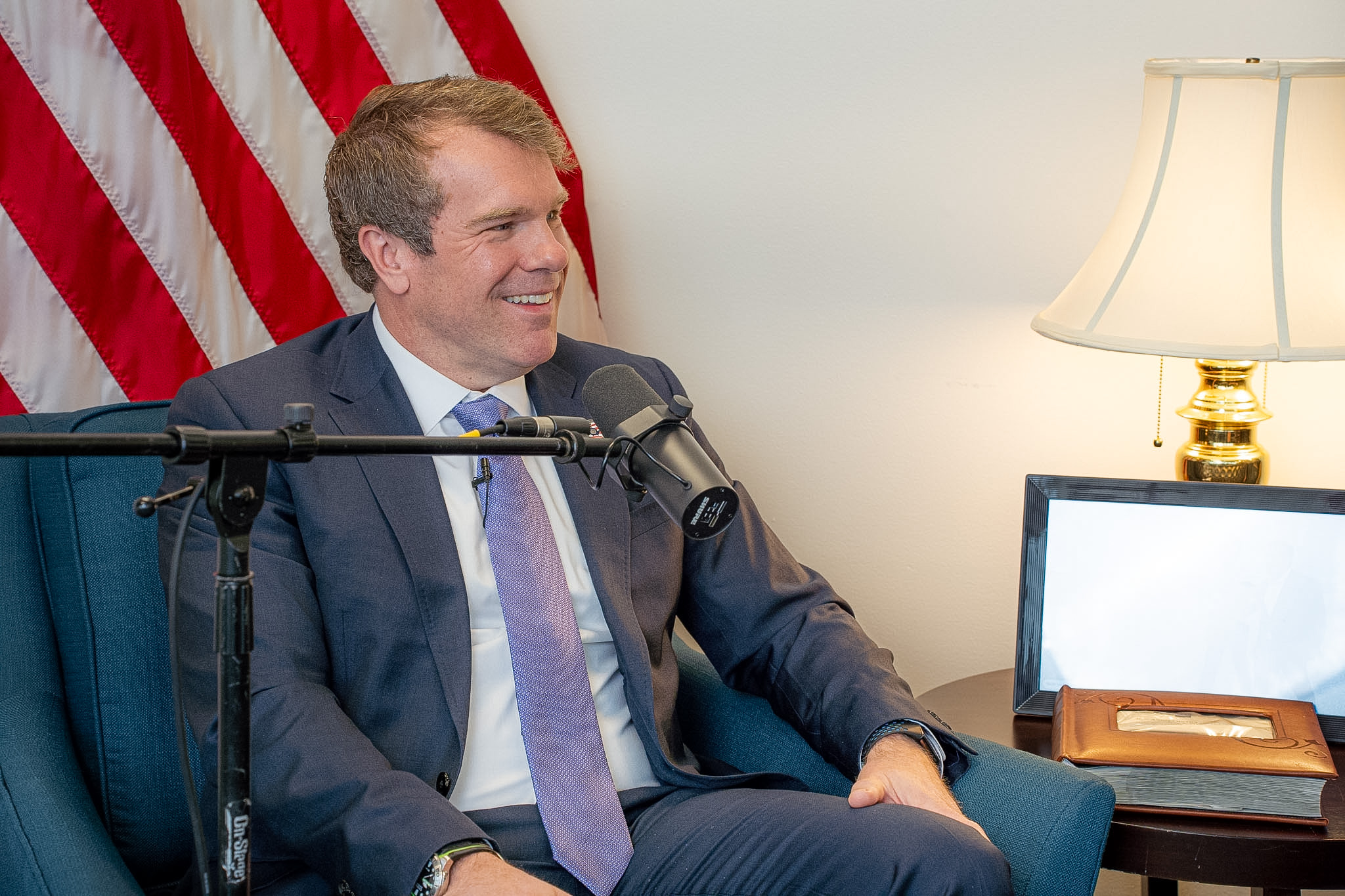 equipment that they specifically bought because of the Working Families Tax Cut. They have a sign that says, “We purchased because of the Working Families Tax Cut.” That’s great, and that’s exactly what it was designed to do. That’s what Congress passed it for, and that’s going to really help a lot of these small manufacturers grow and expand, and we’re excited about it.
One of the other initiatives that’s front and center for the SBA, but the administration writ large and Vice President Vance has taken the lead on the identification and elimination of fraud. We saw in the early days of the administration, Elon Musk and the Doge efforts. Now the agencies are taking this on as things have solidified within the administration. The SBA is now aggressively cracking down on some of the fraud that’s been identified. Can you talk a little bit about the initiative to identify fraud, where it has come from, and then what you’re doing to identify and end it?
The vice president is leading this task force on fraud. He’s just doing an amazing job. SBA is proud to be part of departments and agencies that are part of that group. Since day one, this administrator has been in, and she said and testified in her confirmation hearing in mine as well. Remember, I said we were asked about a disaster. The second thing we were asked about was fraud.
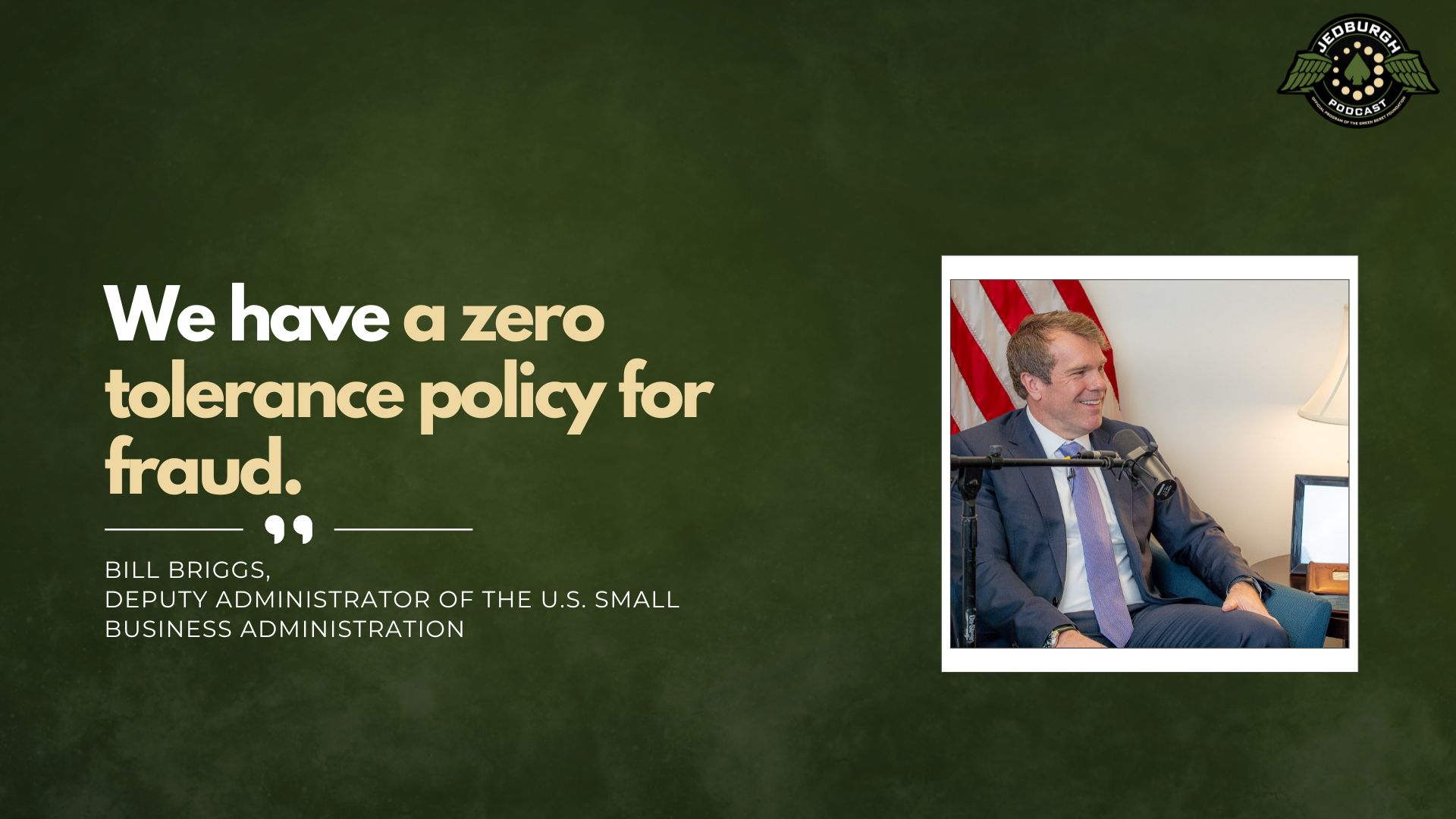
We have a zero-tolerance policy for fraud. We have learned the lessons from the COVID era, and we are cracking down hard and bringing folks to justice who tried to rip off the taxpayers. We hear it from folks when we go out, and we meet them, and we say, “These fraud stories are just awful.” People are really taking from the government benefits and resources that aren’t theirs.
It creates this incredible distrust, and it’s not fair to people who work hard and play by the rules and pay their taxes. We’re not going to sit here and know this president and take it. The vice president is leading this task force. It is aggressively moving. It’s shocking to me how fast they are moving, how quickly the initiative is going. There are all sorts of coordination going on in terms of law enforcement, with data sharing, and we’re sharing our part in what we know in our programs.
We’re continuing everything we do, whether in our COVID EIDL programs or our government contracting programs, to crack down on fraud, abuse, and waste. We take it seriously. The people who have abused our programs should be scared because we’re angry and we’re focused on making sure that one, they cannot do this again, and two, they’re brought to justice.
It’s taxpayer money. With the programs that are being developed by the SBA, that taxpayer money has to be deployed in the right way.
For the right reason. It’s just so important that you work hard, all these small business owners work hard, and then they have to pay their taxes. We’re very proud of the Working Families Tax Cut, but they still have to pay some taxes. To see some of the people who are just abusing the system, or states that are allowing the abuse of the system, is unconscionable. We’re not going to stand for it. This administrator and this president are like, no. The vice president is doing great work with the task force. We’re proud to be a part of it. I expect that there’s going to be a lot of progress in the near future.
You come from a long line of military service members within your family. You shared with me, and the book is here commemorating the 75th anniversary of D-Day, your trip there. You mentioned to me that both your grandfathers were involved in the D-Day and post-D-Day efforts in World War II and the invasion of Normandy and France. You have a brother as well. Two brothers are now serving in the military. The veteran community is near and dear to your heart. You yourself have served this nation. Why is service so important to you and your family?
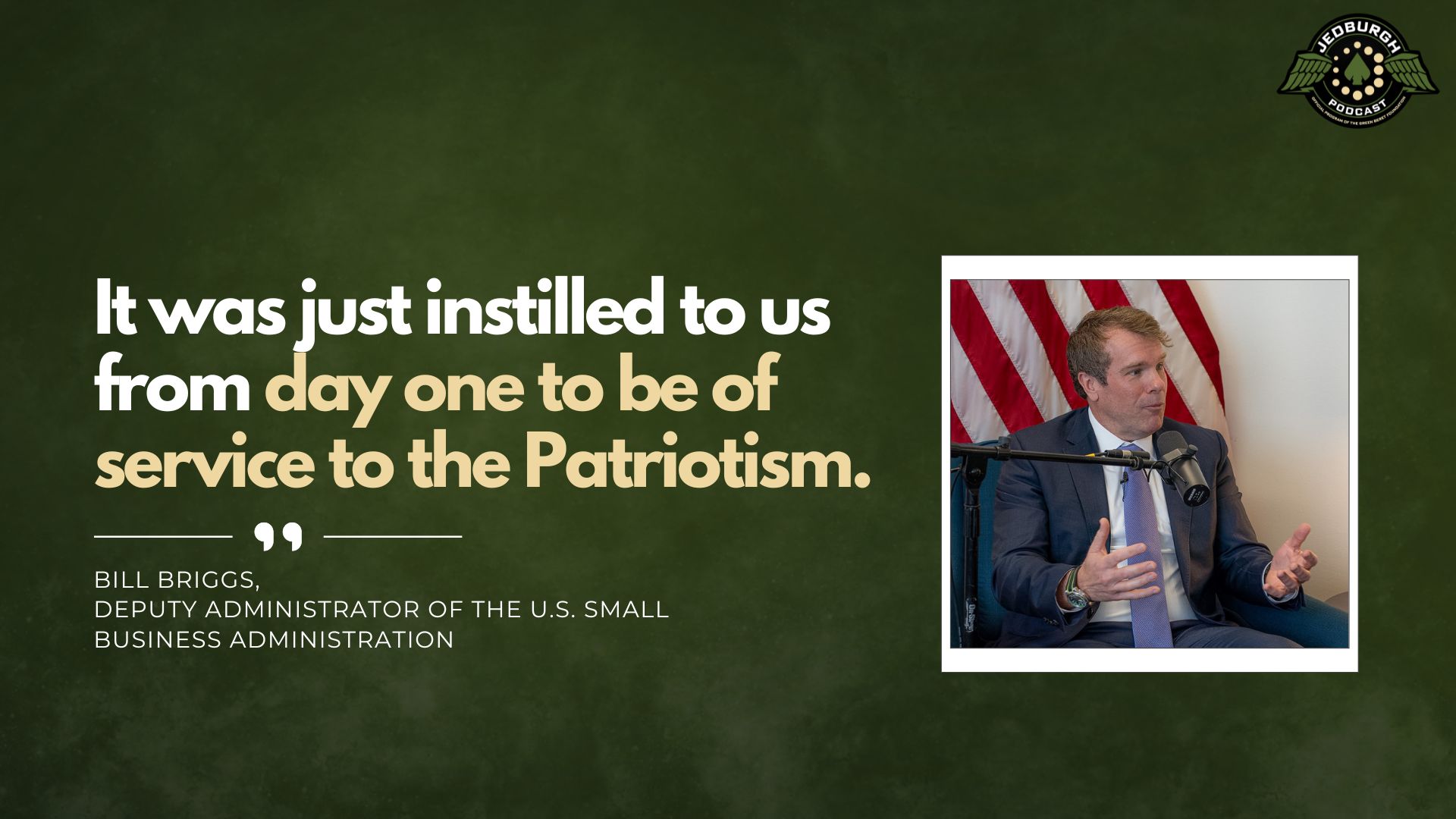
It’s just who I am from day one. I grew up hearing stories and understanding what my grandfathers did. My mom was a nurse in the Army. It was just instilled in us from day one to be of service to patriotism. When we were young, we would go to military sites or battlefields or whatever. It was part of just who we were, about learning what folks have sacrificed for this country. Over my time in service, this is my fourth presidential appointment. I’ve had the opportunity to travel the world and to see what our veterans have done, our military, folks in the military have done.
It’s just my honor to serve them. I cannot explain it too much other than it’s something I feel very deeply. The best thing is when I combine both my love for veterans, my honor and respect for them, as well as my honor and respect and love for entrepreneurs and what they do. When I can help them, my team knows this. I’m always like, “Are there veterans? Can we do something with veterans or something?” I’m always trying to have that angle because I understand how much both sacrifice and how important they are to the fabric of this nation. I truly believe that.
We met a few months ago now at the premiere of Sheepdog the movie. Stephen Graham and his team spent fourteen years researching the veteran transition, challenge, opportunity, and struggle from all angles. That of the service member. That of the family, the children, the spouses, parents, and the VA embedded themselves in the VA for months. Spent time with caregivers, administrators, really understanding what it looks like to transition out? What’s that next chapter look like?
Everyone’s service in the military is different, which means that everyone’s transition is going to be different. Same for entrepreneurs. Their journey to where they are is different. No two are the same. They just face similar challenges and opportunities, but they’re different. 200,000 soldiers transition out of the military every year. Service members transition out of DOD every year. That’s a tremendous number of folks who are coming into the workforce at all levels.
The two, three-year service members who are still young and going forward to figure out what they want to be when they grow up. The 35, or 40-year senior non-commissioned officer or general officer who’s going out to also figure out what they want to be when they grow up. There’s a lot of human capital coming into the workforce.
With experiences that you cannot replicate. A sense of perspective. Our conversation with Steven and my summation of Sheepdog was its perspective, and you gain a perspective being in the military, and the same as entrepreneurism. Veterans own over 1.6 million businesses in the US, employing about 3.2 million workers in veteran-owned businesses, and that’s about over 4% of the US businesses.
The SBA, as you mentioned, has 31 centers for veteran business centers for counseling and 68 district offices with veteran representation. We talked a little bit about, we talked lot about the veteran opportunities that the SBA has, but where do you see, from your perspective, veterans succeed and also where veterans struggle in their transition to become entrepreneurs?
I’ve seen this up close. One of my brothers left the military, and I saw his transition process. This is something we’re focused on with the Department of Labor, VA, and the Department of War. As we’re talking about entrepreneurship, the earlier we can talk to somebody before they go through those 72 hours of ever being thrown at you, and hear all your benefits and resources.
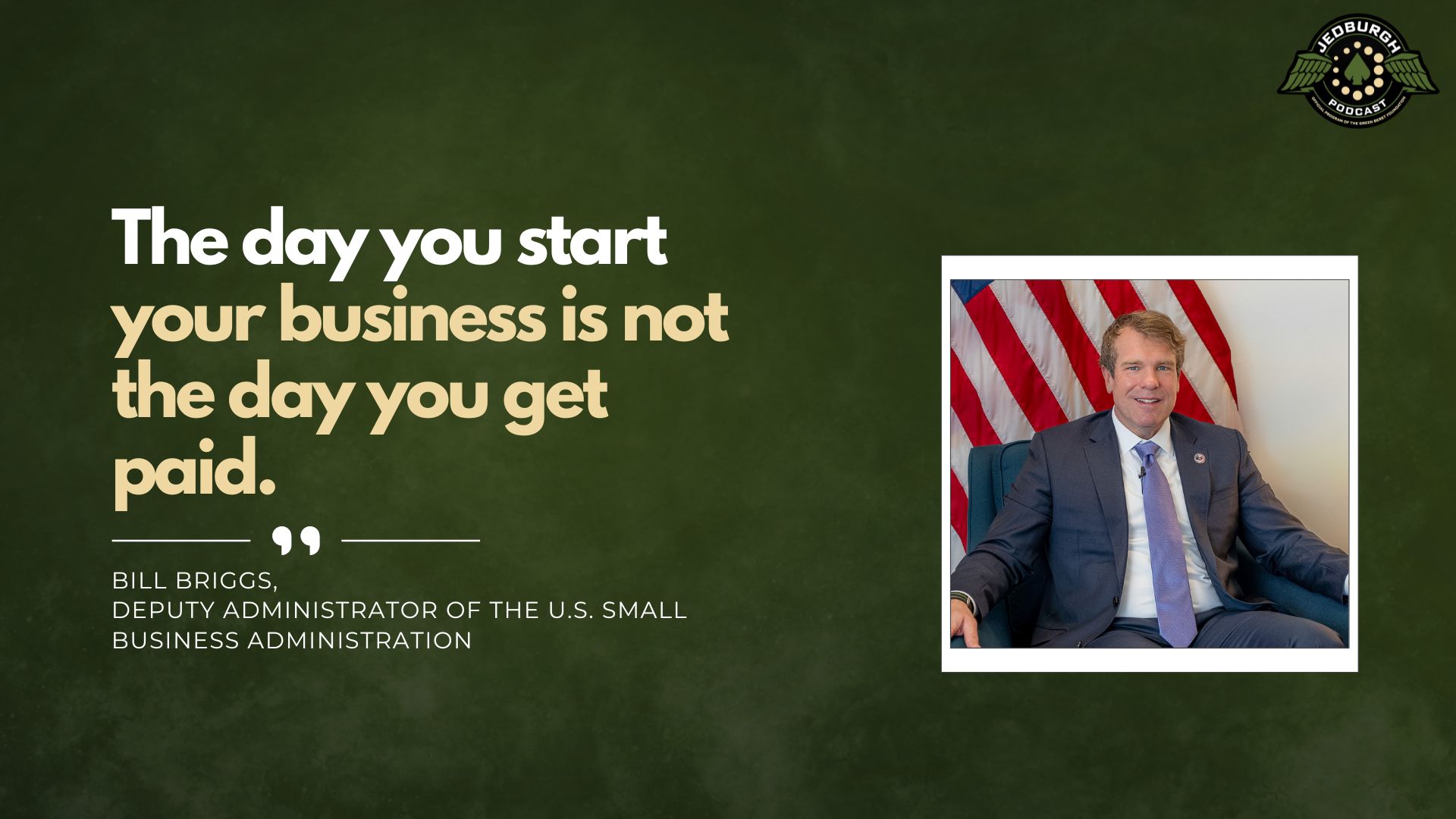
That person is just thinking, “I want to get out.” When can you have a conversation? “Plant that seed of entrepreneurship where they can begin thinking and planning before they ever open up a business, and then hopefully get paid at some point.” The day you start your business is not the day you get paid.
It could be quite a long time.
It could be. It’s usually a year. What we’re doing with our veteran business outreach centers, I’ll be very clear, we’re overhauling the whole thing. We came in here, and we have a former CEO, who was the vice chair of the Texas Veterans Commission. He’s a great Texan. I’m from Texas, I love Texans, but we love everybody. He’s doing a great job.
He came in here, and he said to the administrator, “Look, we have to right-size this, we have to rethink how we’re delivering these services, we have to put measurement on outcomes, and we have to get much more involved in the ecosystem of the transition process overall. “ That is what we are doing.
We’re coordinating with VA, we’re coordinating with the Department of Labor, which runs TAPS, and the Department of War to just make sure that SBA is much more part of that discussion and the resources available to them. The Veteran Business Outreach Centers, or VBOX, we have 31. What we’re doing is changing them and trying to establish essentially more mini ones to meet veterans where they are, not only geographically but also where they are in their life cycle.
You talk about the Sheepdog and folks who are along different transition points in that movie. It’s a great movie. We’re trying to meet them there and make sure they get the resources. If you’re a veteran, you do not need to go to an SBA VBOK only. You can go to any small business development center or any SBA office and receive those resources.
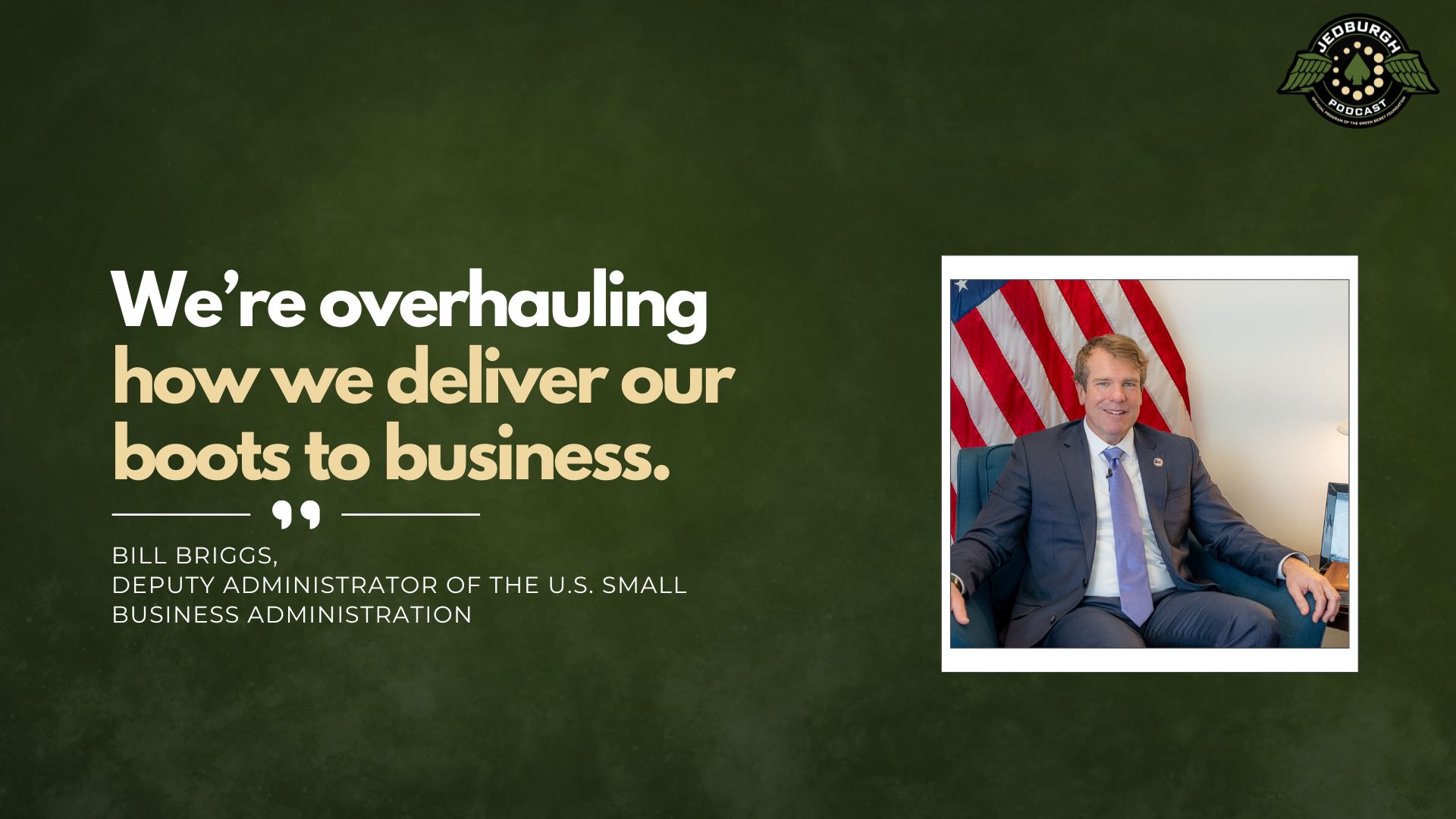
What the VBOKs are is just a more comfortable environment, and you might find people who are more familiar with your experience. That’s the point of those outreach centers, but we’re overhauling how we deliver what’s called our Boots to Business. That’s the primary resource we provide to small or potential small business owners, about counseling and guidance on how to run their businesses.
That is primarily what the SBA does. We’ve done over 200,000 over the last nineteen years, I believe. We do every, I think we have 26 in the next few. There’s always a Boots to Business session somewhere in the country, and there are resources online as well. That’s our primary education method. One of the things we’re also trying to do is reach military spouses. You might be aware of the military spouse unemployment issue. That’s been elevated at the Department of War.
As I said, as we’re part of that ecosystem of DOW, of VA, of the Department of Labor, and we’re looking at transition issues. We’re trying to insert ourselves intelligently in those discussions while also streamlining our resources and making them much more impactful for veterans and their families.
When I sat down with Secretary Collins from the VA, one of the key points we talked about was where the VA comes in to take over for the Department of War. In the past, and honestly, it wasn’t that long ago, your service in the Department of, at that time, DOD and the Department of War, now it ends. Everyone’s journey comes to an end for different reasons. The Department of War, yes, they have a responsibility to you, but the reality is that when your service is complete, the most honest song in the history of the world is the Army song.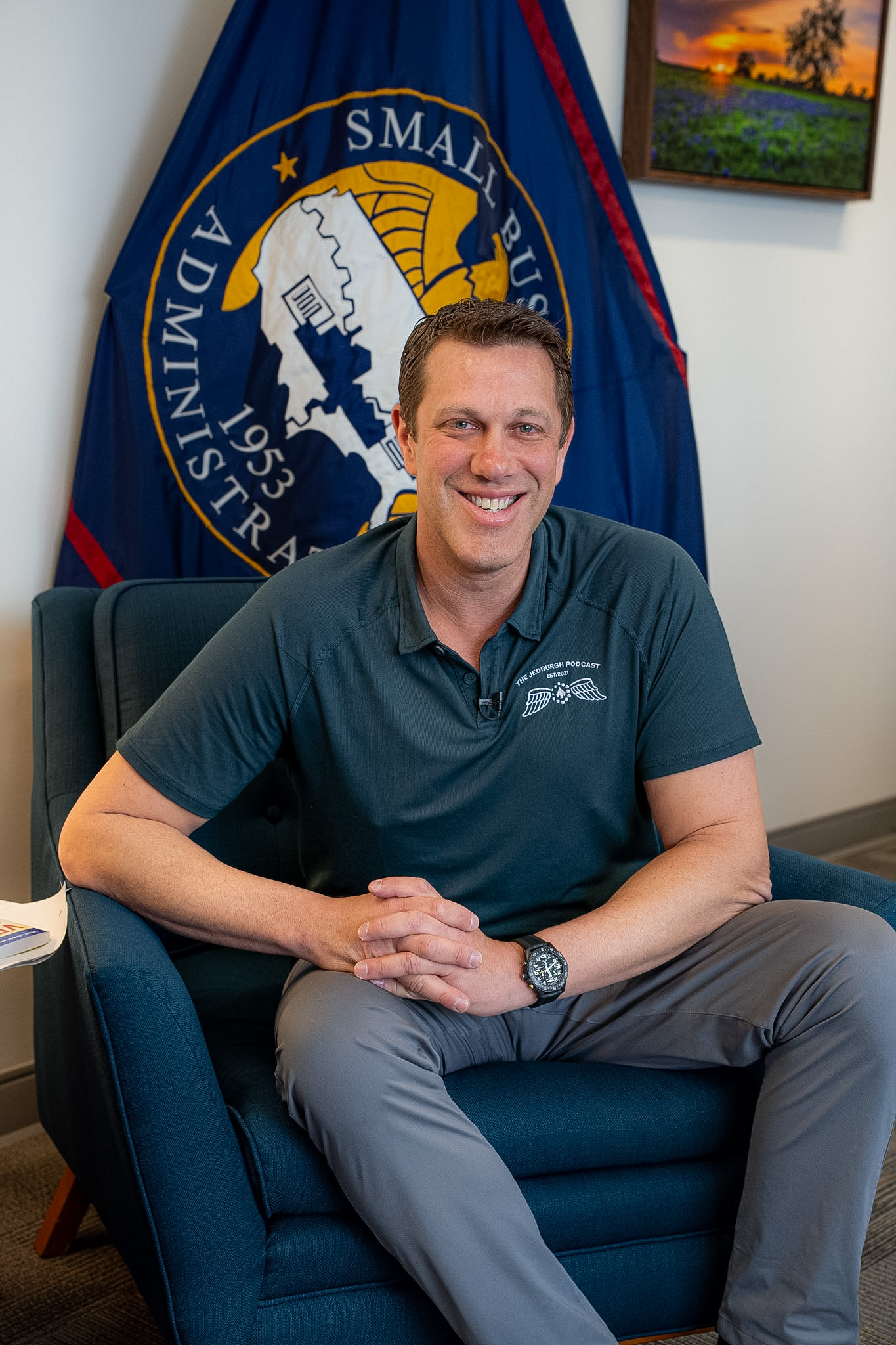
The Army Keeps Rolling Along. In three years, nobody remembers you in a unit. That’s just the reality of the situation. That’s where the other organizations step in. To me, streamlining that transition is, I think, where focus needs to be applied. I got out now, and I cannot believe it’s gone that fast. It’s been ten years. I didn’t know anything.
Before we sat down, you shared with me this book written by Paul Lawrence, who’s the undersecretary and was previously the undersecretary at the VA for benefits, and is now the deputy at the VA, and we want to have him on, so Dr. Lawrence, open invitation. He wrote this book, Veterans Benefits for You: Get What You Deserve. These resources are out there. I remember not knowing anything about the VA health care.
I didn’t know the VA had a health care program for veterans, like for someone like me, who was late 30s, had some ailments, was going to go through the VA disability program, but I did not know that that could be your health care until I went into, I think it was the DAV office to get my transition paper signed. For some reason, the sun was at the right angle, and the wind blew, and the guy just off the cuff mentioned, “The health care system at the VA,” because I was terrified that in two days, three days, I was going to have no healthcare.
I looked over and said, “What do you mean by the VA healthcare system?” He’s like, “You have free healthcare at the VA, you just have to go there and get a card.” That changed my life. It changed my whole perspective because you have all these fears when you get out. My point is organizations like the SBA, the VA, the Department of Labor, partnering with the Department of War to create that seamless transition in a meaningful way, I think, is what is going to take our military veterans and take that capital, human capital pool of 200,000 people every year and successfully transition them into the civilian sector.
We need that talent pool. We saw post-massive conflict, World War II, Vietnam, veterans come back and drive this country. We have Vietnam veterans who are still sitting in Congress many decades later. They answered the call. We’ll have 9/11 and post-9/11 veterans who are doing the same thing. We’ve seen that. We have a talent pool now that is transitioning out of the military, who is that 9/11 generation? The folks who answered the call on 9/11 and the years after, and their twenty years are up.
Like that’s it. That pyramid gets smaller every year, and more and more are getting out. Now I believe it is incumbent upon SBA, Department of Labor, and the VA to now embrace those folks, help them get to that point where they’re ready, and to successfully contribute to the economy. If we do that right, we’re going to reduce veteran suicide. We’re going to eliminate veteran homelessness. Things that we don’t need and, quite frankly, should not have.
I agree with you so much, and I know Secretary Collins talked about the transition stuff with you as well on that, and we are certainly from SBA’s perspective looking at that. Again, when I mentioned how to reach not veterans but folks who are serving right now, before they’re leaving in a year or two, that’s the time to talk to them, maybe about entrepreneurship and plant that seed. When they’re not so focused on getting out and trying to make a giant life transition, there’s less stress, maybe.
It cannot be when you have the checklist, and you’re going to get it signed so you can get your clearing paper.
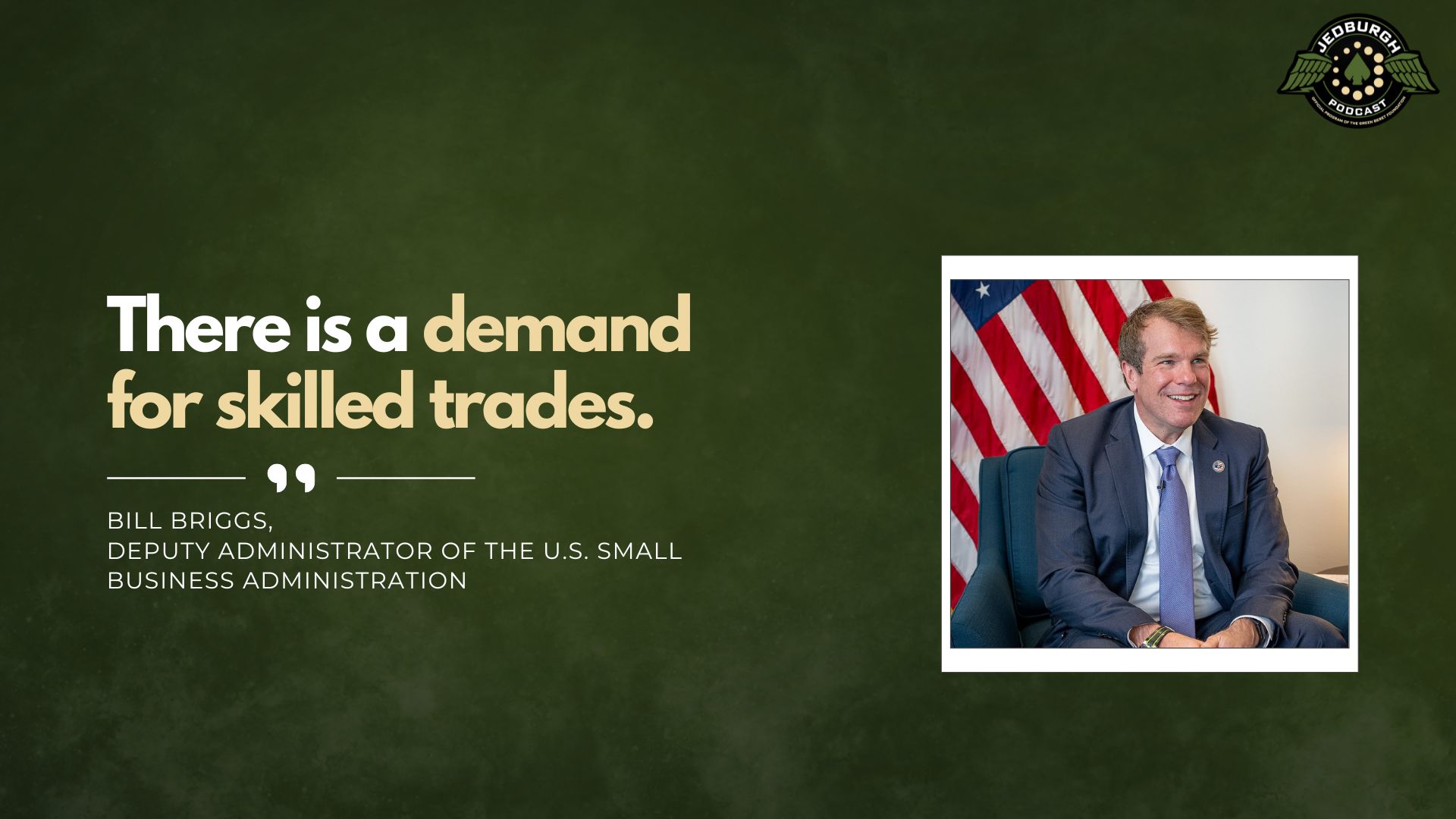
You’ve got to think a little bit. You’ve got to do that planning for that business. Your experience is also very demonstrative. It’s like you got out, and then you found your way after a few years to entrepreneurship and owning a business. It wasn’t overnight. That’s what we find too with a lot of veterans. There is a tremendous opportunity here to take people who are transitioning from the military, and particularly those who work in skilled trades. There is a demand for skilled trades.
One of the things we’re working on is the Department of Labor is on skilled trade, workforce development. You asked me about capital access challenges. The one thing the administrator and I hear every time we go out is about workforce development. It’s like, I talked to Dr. Lawrence about this. It is ready-made to have veterans who have those disciplines, the adaptability, all the skills they’ve learned in the military, the values they’ve developed, and transition them into where there is a need for people who can work in skilled trades, work in manufacturing, elsewhere, who can contribute.
We’re trying to do that as part of that process and not just say, “Small business can be something you might want to own your own small business.” Look at manufacturing, look at the trades. There’s a tremendous opportunity there. We’re trying to get better at that. Our focus is to make sure we’re part of that conversation earlier with the other departments and agencies.
Also, there’s a lot of like, “SBA,” a lot of times you just go around and remind folks who run those departments and agencies, “We have resources too. Consider us as well.” I’m proud of that progress. We have a lot more to do. It’s not perfect, but we are certainly aware we need to get better at that, and we are focused on doing that.
I’ve gone through the evolution. I got out and said, “I got to work at a consultancy,” or “I got to go to one of these big names, and I didn’t get the job.” I worked at Merrill Lynch as a financial advisor because I thought, “This is going to be my career. It was not for me.” If I hadn’t had that opportunity, honestly, this show would not exist, because I would have never met the owner of Jersey Mike’s, who funded this show for the first two years.
Many of the relationships I have come from that experience there, both in the security business. I went, and I was the chief security officer at Snapchat, because I thought big tech was where I wanted to be, even though I was on the physical security side. Part of that ecosystem was important. I ran this crazy cannabis company up and coming in LA. That was crazy until it wasn’t. Honestly, the happiest I’ve been. My ten-year journey has been running and owning my own business.
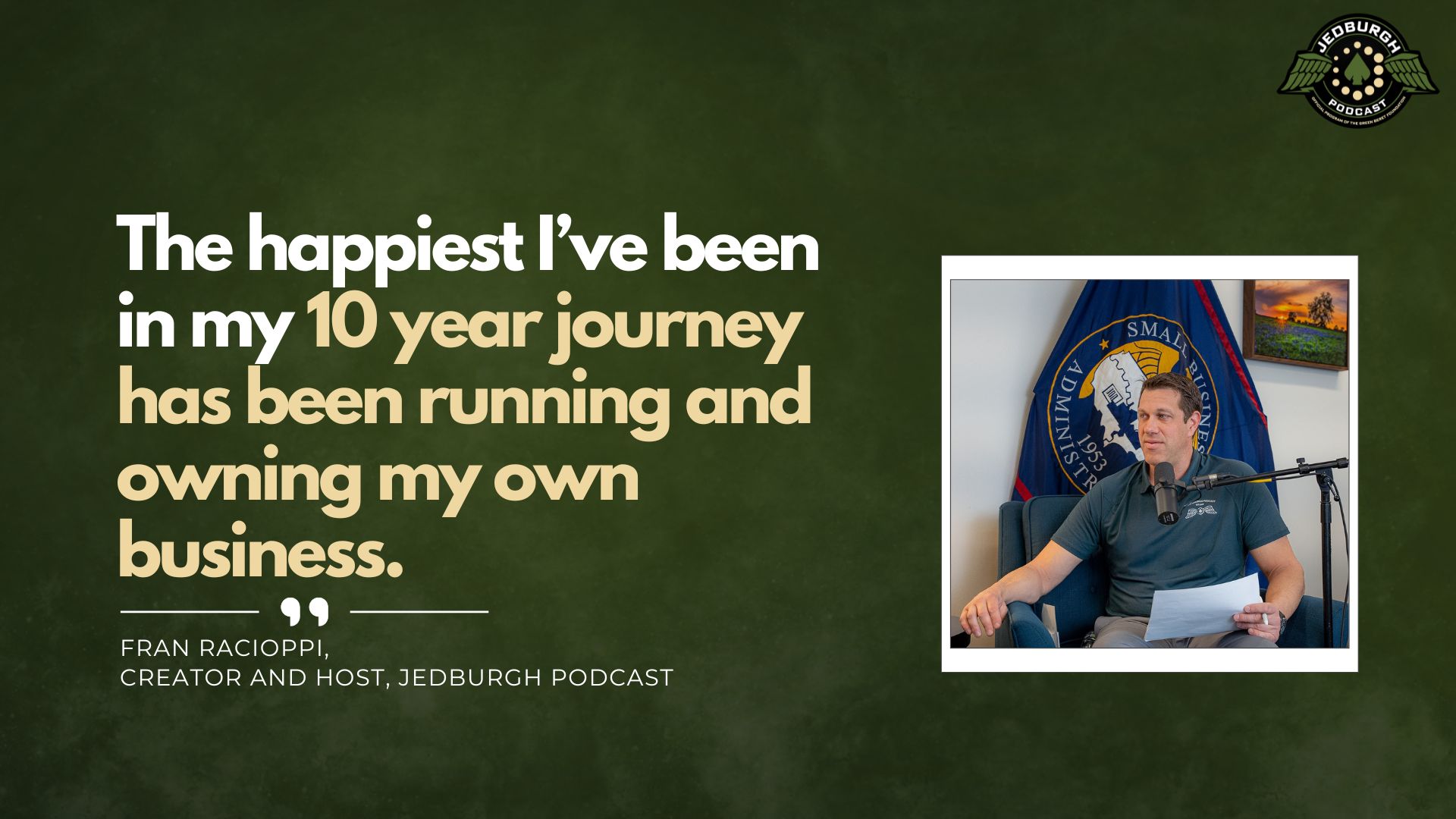
I’ve never worked harder. I’ve never had more foreseen and unforeseen challenges. Every day I tell somebody, like, “I saw that coming,” or “I did not see that coming.” You gain these experiences, but we’re a trade. We’re low-voltage electricians. We install fire alarms, security cameras, access control panels, and we pull cable. We cannot hire enough people, and we’re looking for veterans with those skills every day. For veterans out there, shameless plug for us. If you’re in those trades and you need a job, me because we got one.
They can be trained up quickly. They have other talents where they can adapt quickly, even if they don’t have their electrician’s license yet. You can get that quickly, in a relatively short time, and train them up. That’s what we’re trying to say. Work with folks like you who understand their background. That is the conversation we’re trying to have right now and really drive. To your point about Jersey Mike’s, that’s also what I love about entrepreneurs. The community and how they give back consistently.
All successful entrepreneurs give back, and they give back in ways that the smart ones give back more than they ever make, and they know that. In many ways, not just through direct funds, but also through other ways too. That’s why small businesses are so important, really, because it encourages and help the community and others grow, because your success is ultimately tied to their success in some way. You’re going to eat Jersey Mike’s the rest of your life, I bet. Peter Cancro did not care if we never sold one sandwich.
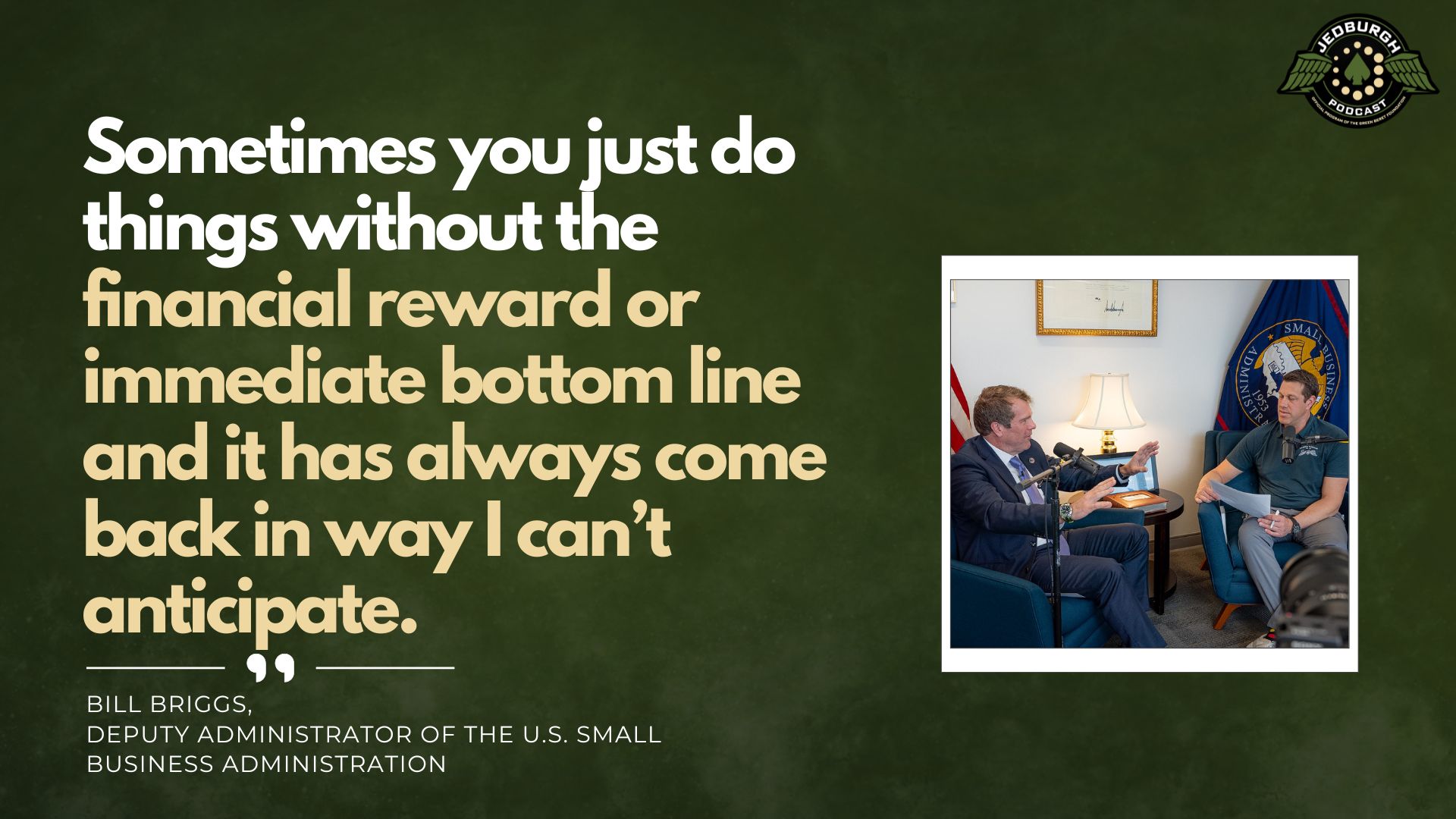
Just loved the platform, loved me and what we were doing, and said, “I’m going to invest, and I’m going to help you get started. Good luck.” What I have learned running my own businesses is that sometimes you just do things without the financial reward or the immediate bottom line. It has always come back in ways I cannot anticipate. It just puts energy out there that comes back and rewards you.
That’s been my experience in small business and entrepreneurship. I know many entrepreneurs feel the same way, and the question is, how can I give back, especially if I’ve been blessed and I’ve achieved some financial success? That’s what it’s all about. That’s why I would encourage any veterans tuning in to really consider their trades.
There is a tremendous demand there. Consider manufacturing, but also entrepreneurship, over time. I do not want to put pressure too and say you have to own your small businesses the first day. That might not be realistic for a lot of reasons. It’s demanding. Just like it took fourteen years to make Sheepdog.
Over time, when the movie comes out, and it’s a success, and everybody sees the success, they don’t see the fourteen years of work. It does take time, but entrepreneurship is ultimately a pathway for many veterans, and they have it. They’re overrepresented among small business owners as compared to the rest of the population. I truly believe it’s because the skills they learn in the military set them up for success. The tenacity, the perseverance, the adaptability, and the teamwork.
Last question. You’ve had an opportunity to serve in government. You’ve run businesses. You understand what it takes to be focused and be successful. The Jedburghs in World War II had to do three things to be successful. Core skills, core skills, they need to be able to shoot, move, and communicate. If you can do those core skills in whatever you do, you can focus on the bigger challenges that come your way every day. What are the three things that you do every day to set the conditions for success in your world?
Every day I wake up, and I pray in some formal way. I begin the day with God. It helps me remind me that if everything goes wrong that day, I still have God in my life. I came to my faith later in life, and it’s really helped me, particularly after the COVID era. That’s the first thing I do. I eat healthy, and make sure I have a lot of protein in the morning. I’m one of those people who, like, I realized I had to fuel myself the right way. I just try to dress nicely.
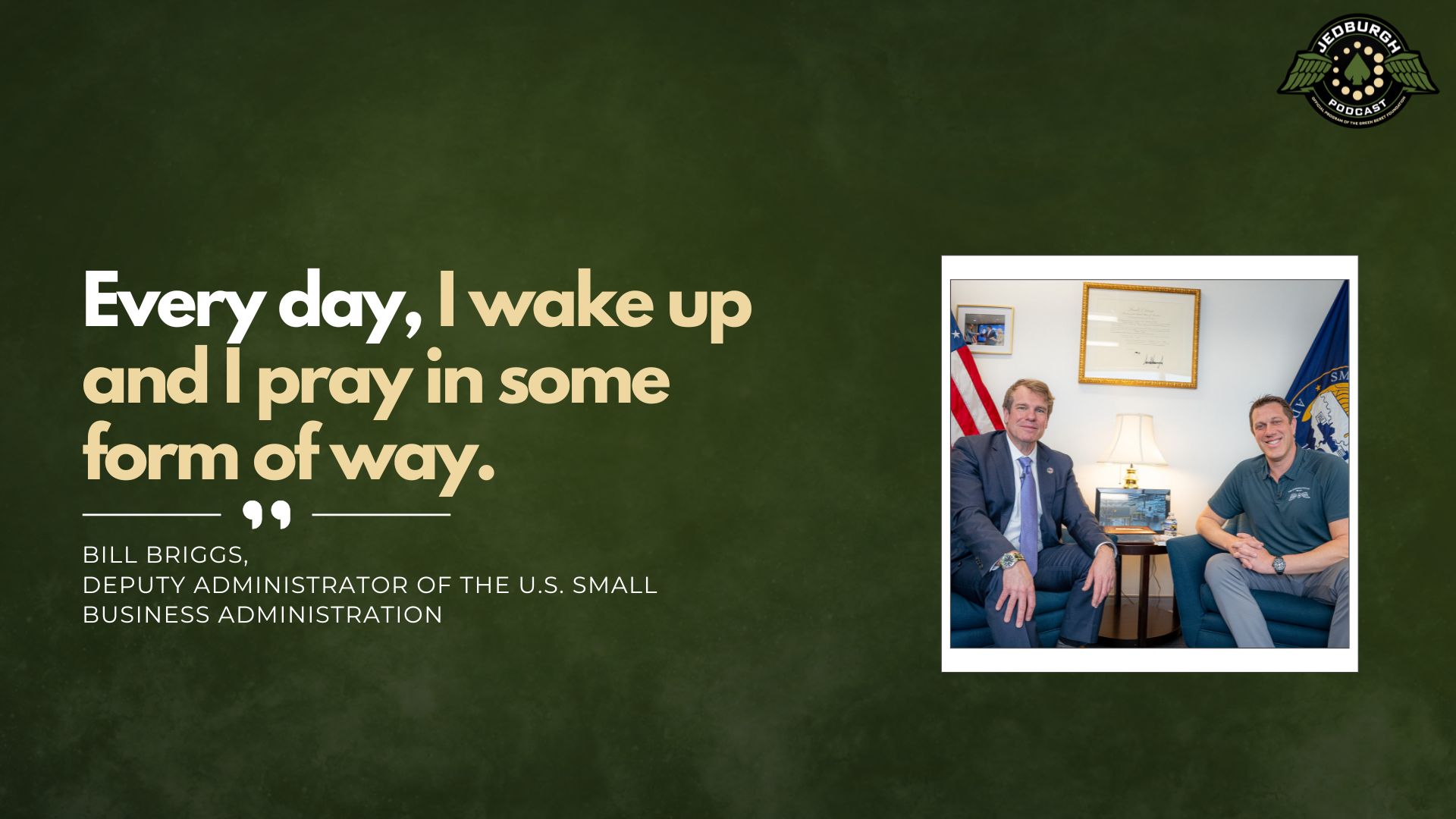
As I always try to, like in the military, how you present yourself in uniform. This is my uniform in my way. I’m proud to represent the Small Business Administration. I’m proud to represent the president and the administrator of this country in my own way. I want to make sure that I look right doing that and that I’m presenting myself. Those are the three things I do every day. Pray, eat well, and try to make sure my appearance is tight.
Look good, feel good. That is a very important mindset to have. Administrator Briggs, thank you for your time.
Thank you, Fran. This is awesome. I hope you come back and get to talk to Kelly as well.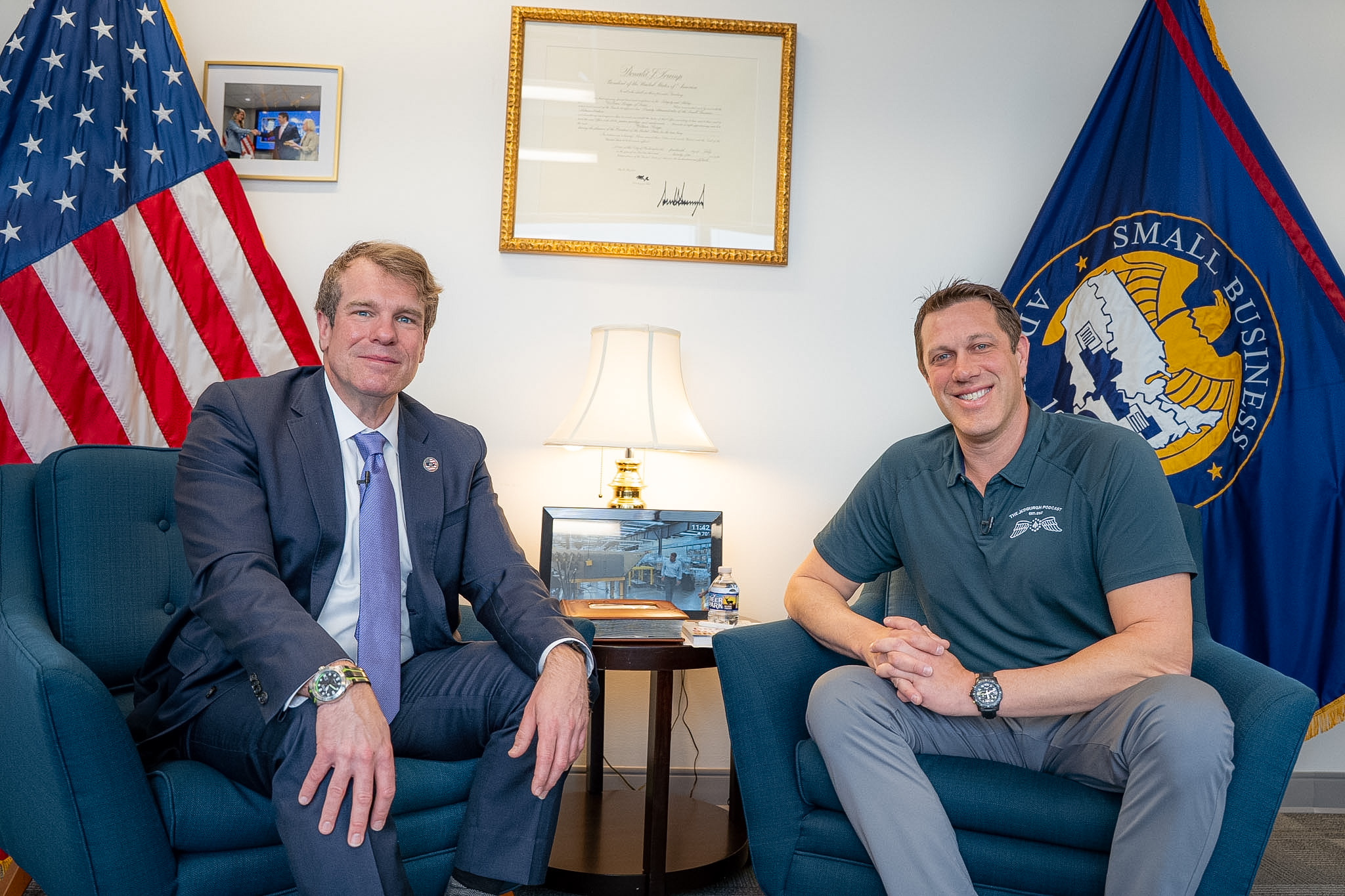
We would love to. That would be great. Thanks for hosting us.Thanks for giving us such an inside look into everything that you’re doing here, supporting our veterans, supporting our entrepreneurs on both. Without the SBA, honestly, I do not know where I’d be.
That’s awesome. I’m glad to hear it. Thank you for your success and for what you’ve done. It’s really important. Your small business is just as important, too, for a lot of reasons. If anyone needs help, feel free to reach out to me. Call my office. You can find me online. I’ll help in any way I can, and I’ll point you to the right person. I’ll do what I can. I really care about our veteran community and what they’ve given, and it’s my honor to be of service. Thank you.

Green Beret Foundation
P.O. Box 25138
New York, NY 10087-5138
Note: Please use USPS mail or priority mail. Do not use FedEx.
Green Beret Foundation
10205 US Hwy 15-501, Unit 26-8
Southern Pines, NC 28387-4301
Call: at: (844) 287-7133