Green Berets are built over time. Special Operations Truth #3: SOF cannot be mass produced. America’s most elite warriors are developed through experience, through leadership, and through the responsibility of developing others. This is the job of the Special Forces Noncommissioned Officer.
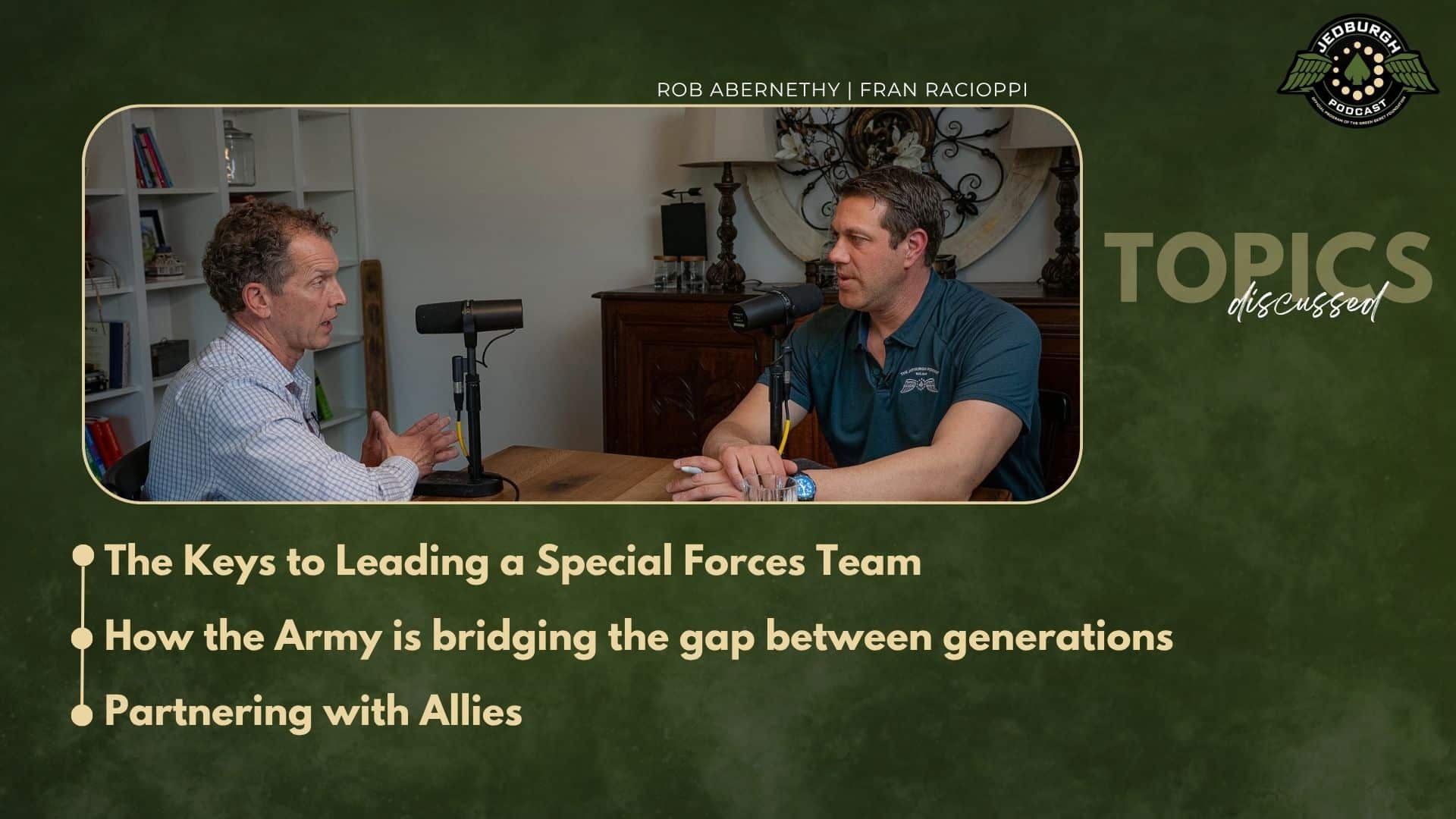
In this episode, Fran Racioppi sat down with retired Command Sergeant Major Rob Abernethy to dissect the evolution of the Green Beret NCO, and their officer counterparts, to show how that development shapes the effectiveness of Army Special Operations and national strategy.
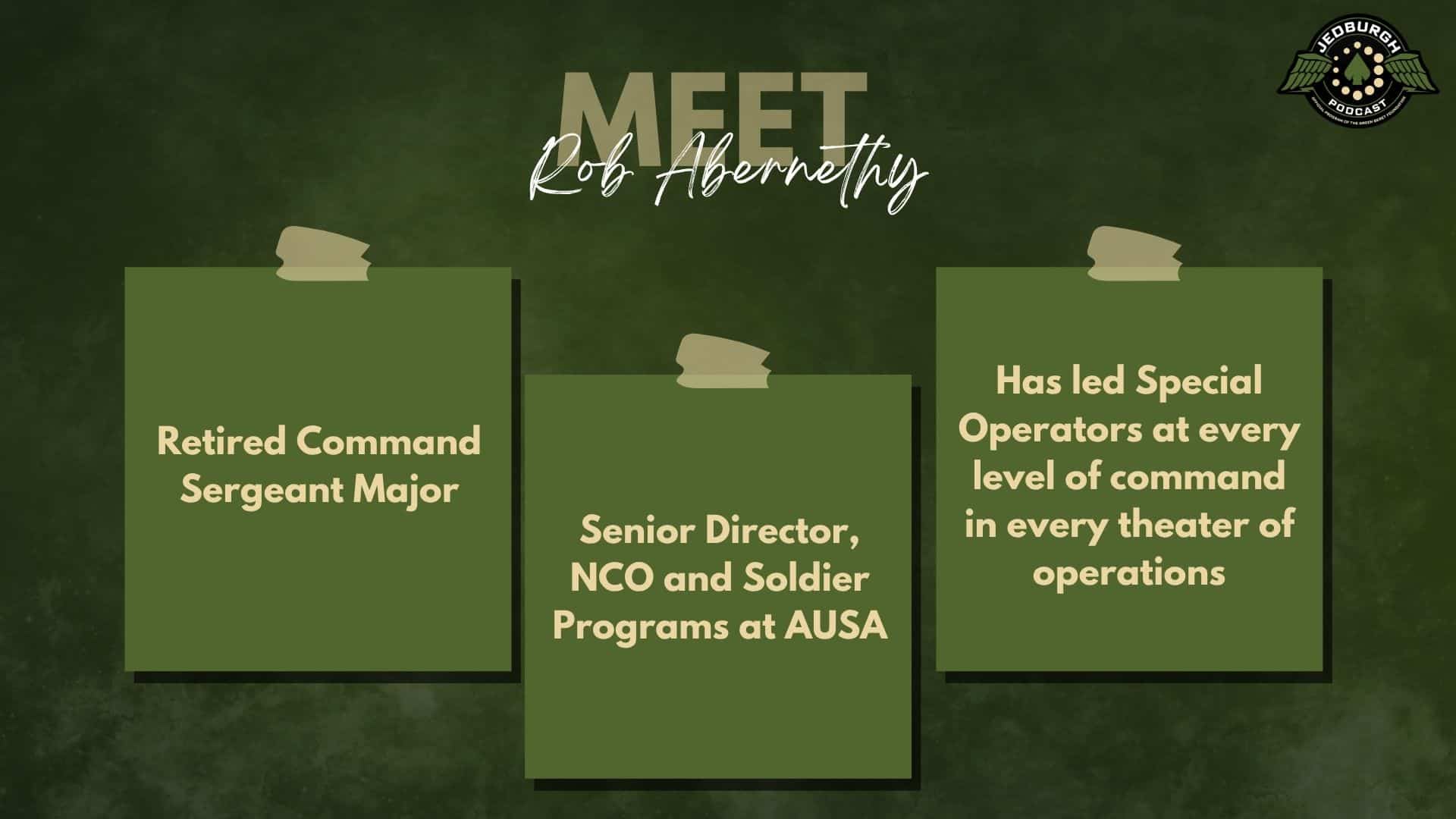
CSM Abernethy served nearly four decades in the Army and across special operations from a junior 18E communications sergeant, to the Command Sergeant Major of US Army Special Operations Command and United States European Command. Rob breaks down the role of the NCO as the backbone of the Regiment, the importance of regional alignment in building partner forces, and where Special Forces fits into military strategy from the pre-9/11 period, through the Global War on Terror and into today’s Large Scale Combat Operations.
We also explore the rapid evolution of technology and the challenge of integrating new tools without losing the fundamentals of leadership and warfighting. From artificial intelligence to modern battlefield systems, Rob emphasizes that technology must support the force, not replace the mindset that defines it.
Finally, after retiring as one of the longest serving Green Berets in the Army, CSM Abernethy shares his perspective on transition after service and his current role continuing to develop soldiers through his work at AUSA.
This is a conversation about leadership, evolution, and the responsibility to prepare the next generation of Green Berets for the fight ahead.
The Jedburgh Podcast is brought to you by OneBrief; enabling military leaders to make innovative, informed and deliberate decisions faster than ever before. Superhuman command wins wars.
Follow the Jedburgh Podcast and the Green Beret Foundation on social media. Listen on your favorite podcast platform, read on our website, and watch the full video version on YouTube as we show why America must continue to lead from the front, no matter the challenge.
—
—
Rob, welcome to The Jedburgh Podcast.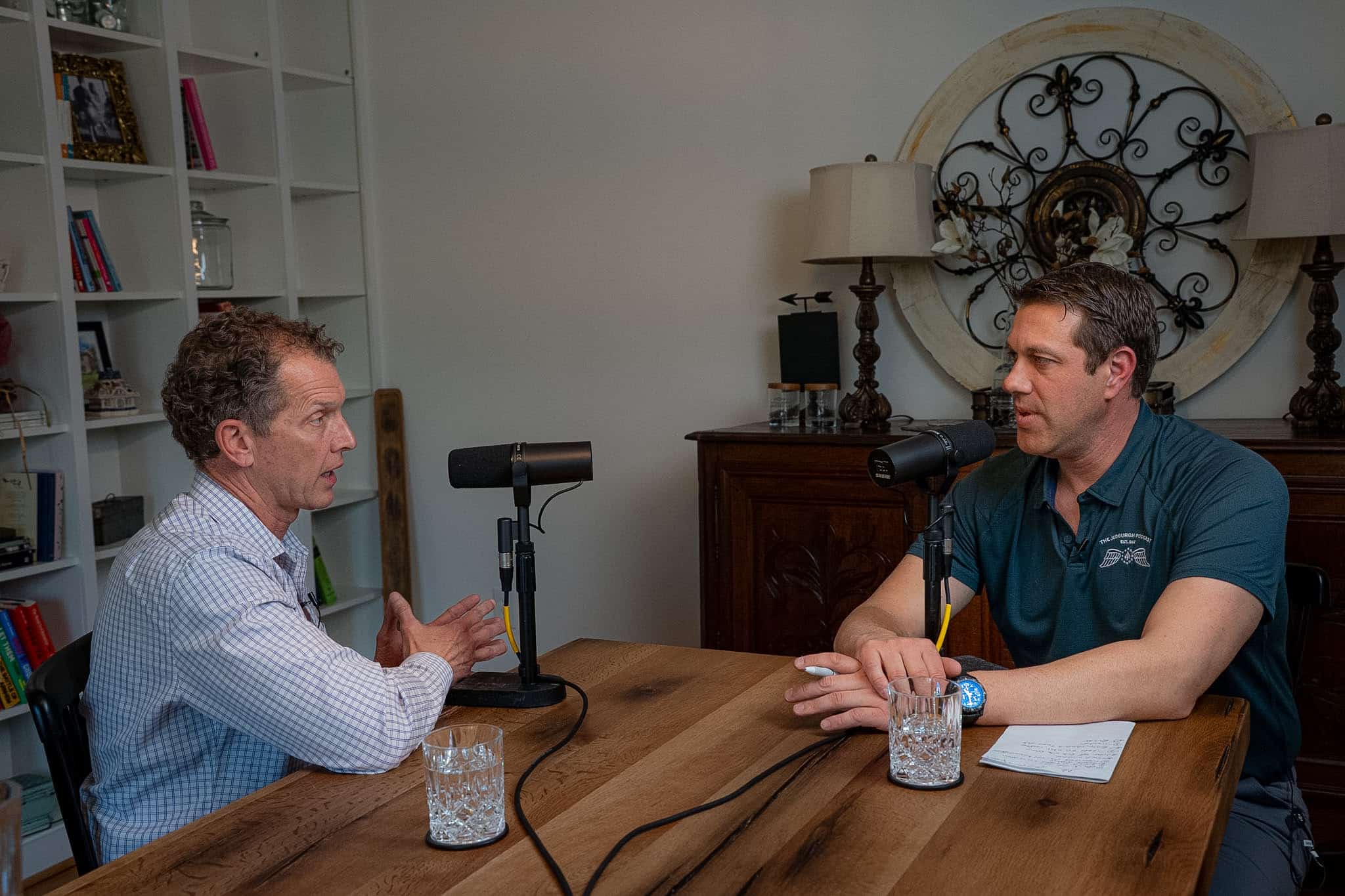
I am really happy to be here. I know we have been trying to do this for some time now, but we finally made it happen.
This has been years in the making.
Maybe not years, but maybe about a year or so.
It has. I’m super excited. A lot has transpired since we first started talking about doing this. Primarily, in fact, you retired from the army.
That is right. You might notice my hair is a little bit longer. It is probably out of standard right now. As a matter of fact, my current boss, who is our former Sergeant Major of the Army, Dan Dailey, was having this conversation with me just the other day. He is like, “Rob, are you going to get a haircut?” I said, “Sergeant Major, I am no longer in the army. I am going to let my hair grow for a little bit.” As long as I still have it.
SMA Dan Dailey, who is a very good friend of not only The Jedburgh Podcast, but myself having been my first battalion, Sergeant Major. Not only does he have the same haircut that he had as a battalion Sergeant Major, but he looks exactly the same and probably runs the same pace.
He does not run quite the same pace, but he was a beast when he was out there running for sure, but he has the same fantastic attitude for all about supporting the soldiers, supporting folks and everything else, as you all know, because he was your sergeant major and first sergeant for so many years ago, but just a fantastic human being. The reason why he has the same haircut is that he does it himself. He does not know how to do anything else. Of course, it is going to be the same. He is going to hate that I said that.
He is a good man, but that is funny. I am going to keep him away from my hair. You had a very long and progressive career throughout your time, not only in the Army, but specifically in Army Special Forces and as a Green Beret. Everybody I talked to about the opportunity to come and sit down with you. There are a lot of people looking forward to hearing this episode, hearing what you have to say.
I am sure you know it deep down somewhere, but there is a regiment of folks who have looked up to you for a very long time and have been influenced and led by you and a lot of your peers for the last greater than 30 years. What I want to focus on is the discussion of the evolution of the Green Beret. What does it mean when you come into this organization, whether that be as a junior enlisted NCO or whether you come in as a young captain and officer, because your paths evolve.
You evolve as an operator, as a soldier, as a Green Beret, and you evolve as a person. From the roles that you held from a junior 18 echo on the team to a senior, to a team sergeant and a company and battalion sergeant major, to the USASOC sergeant major, and then the EUCOM sergeant major. You went from the most tactical level.
Where does the wire plug into the radio? What does it mean to shape strategy for an entire combatant command, arguably one of the most important combatant commands when we look at our allies and NATO? What it looks like to maintain the world order that has been in place since World War II. When you think back to being that young 18 echo walking into the team room, you just donned your Green Beret, your head is held high, your chest out, what does it look like when you first start?
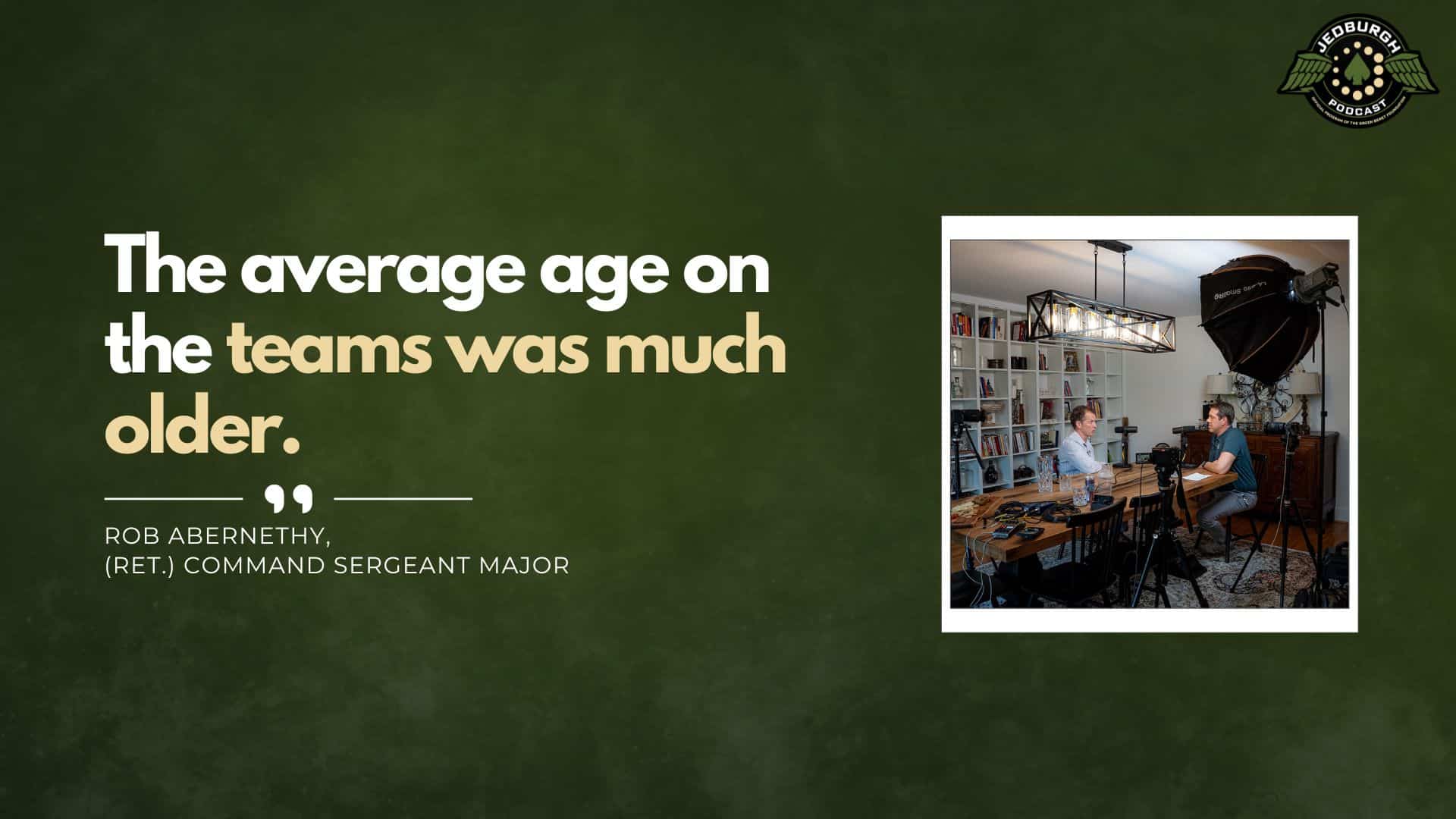
I would say that my experience is probably different than a Green Beret that is graduating today stepping into the team room for sure. I know one thing that was drastically different back then than it is now is the average age on the teams was much older. I remember stepping into my first team, which was in the third special forces group at Fort Liberty in early 1992. The next closest guy to me in age was about 31 years old. When I walked in, I was 23. I used to give people a hard time for being in their 30s. You are so old now.
Granted, they would break it off on me on a regular basis because they are all in fantastic shape. They are at the peak of their lives. They are in the prime of their life for sure. Coming in there, a little bit overconfident, I would say maybe even a little cocky coming into the team room, but I was humbled very quickly. That has changed quite a bit, probably for all the right reasons. The age demographic has gone down on the teams.
We have a much more diversified crew that is entering into team rooms nowadays in terms of being fed by the eighteen X-ray programs on initial entry or in-service recruits. That was not the case when I came into SF. When I came in, you had to be an in-service recruit, E4 promotable, before you could even go to special forces assessment selection.
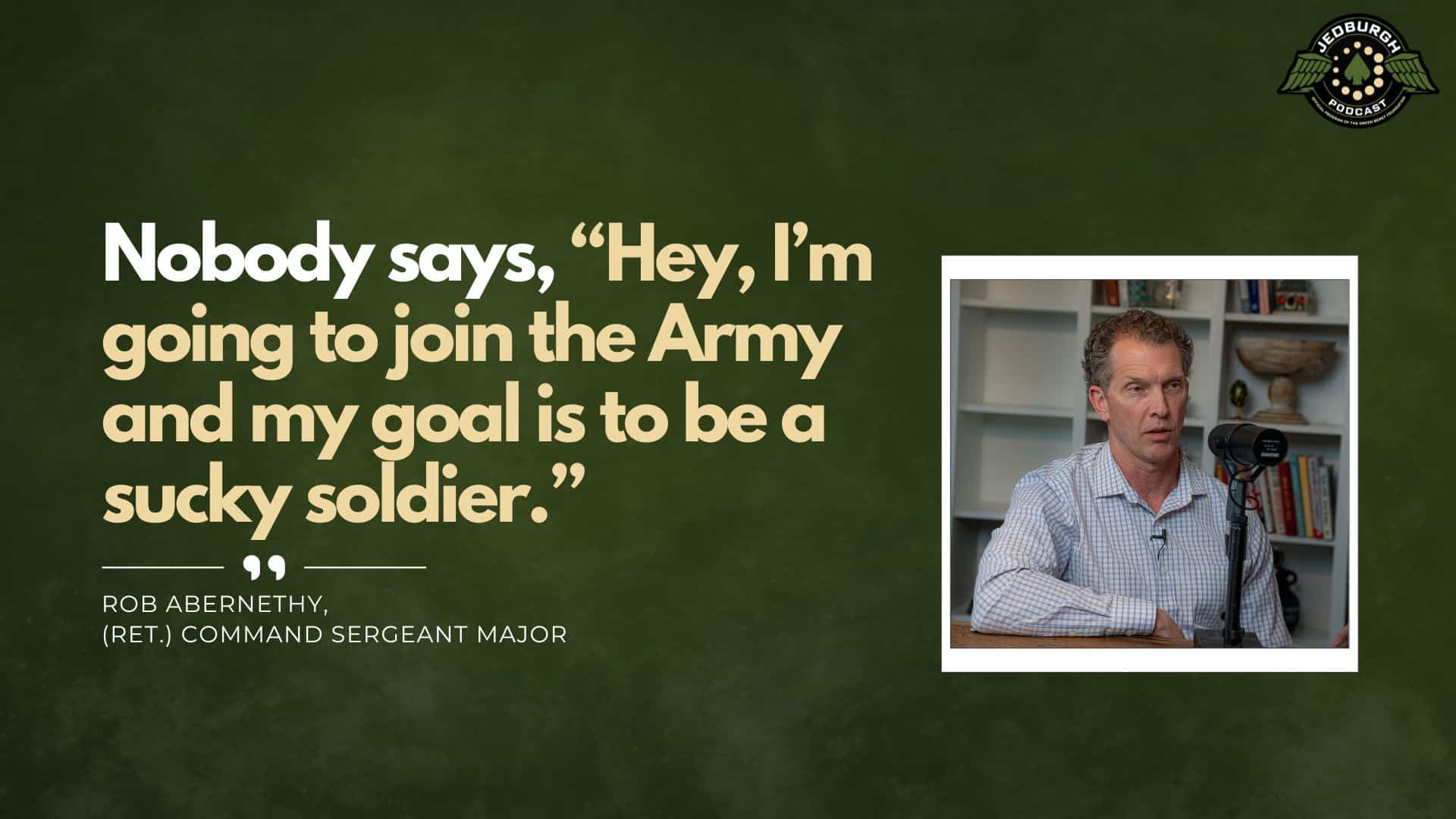
That said, I think what is still the same is what I mentioned earlier, that confidence that really comes from a point of pride. Everybody joins the army, and nobody says, “I am going to join the army and my goal is to be a sucky soldier.” I think everybody wants to be all they can be. You have that opportunity in the army, broadly speaking, and all of us kind of walk this path and say, “I am going to do this, and I am going to do that.” In some cases, some folks say, I want to get into the special operations community. “I want to be a Green Beret.”
They start charting off a path. To arrive at that point when that was a goal you might have set for yourself years before you ever actualized it, it is huge. You actually jump on that beret, enter that team room, enter that company area, and then meet folks that have been doing it for years. They are like legends. You have so much to learn from each of those. That is the thing that is still the same, I believe.
You spend time as a junior on the team. You have got to learn, you have got to absorb. There are periods of time when you have to keep your mouth shut. There are periods of time when you are going to be asked to share your opinion. From your perspective, why is that aspect of being on a special forces team so important? It translates to later on, even post-service, it translates throughout your career. I want to talk about it here because a lot of people think, “You were in the army, so you just have to sit there and be told what to do.” In special forces, yes, but no.
Absolutely, because I think everybody that enters into that team room, they already come with a well of experience themselves, especially think about my own experience and folks that came in at the same time as me, they have already spent 4, 5, 6, sometimes 8, 10 years doing something else in the Army before ever stepping in. They all have different varying levels of education that they kind of come in with. The qualification course itself gives you that confidence, or continues to put more wind in the sails of your confidence.
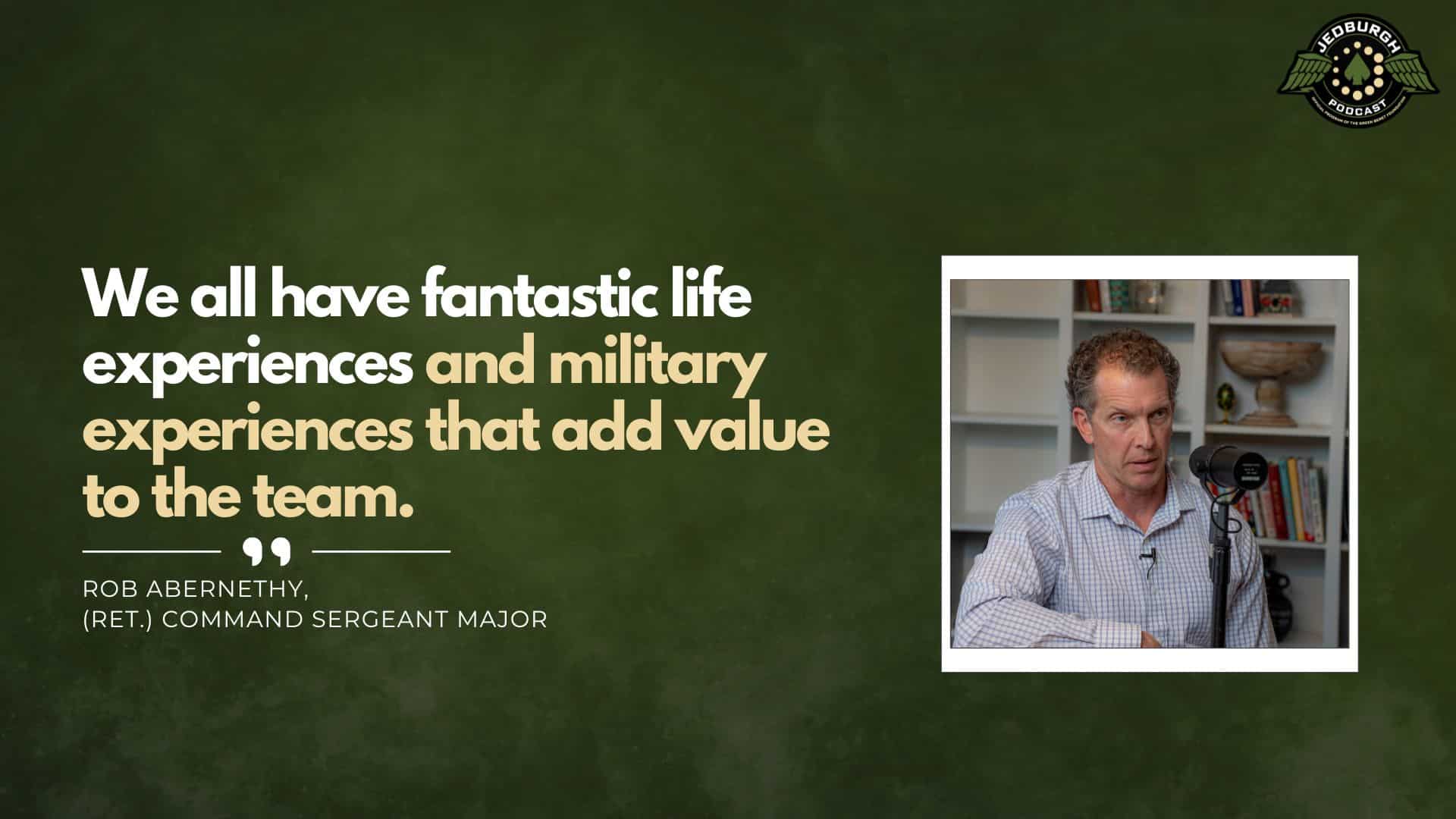
That way, you come into the team room with opinions. Smart people sit back and listen and pay attention for a long time before just offering up stuff. They do the research for sure. The great thing is we all have fantastic life experiences and military experiences that add value to the team and to the decision-making that is done on the team, which oftentimes is done in a very collective way.
Even today, with 18X rays coming into the force and feeding into team rooms, they too bring lots of fantastic experience, especially that experience that they gathered before coming into the military themselves. They have advanced degrees. I am sure you have seen all the numbers and everything else. They are bringing a lot into it. Having that ability to be confident, and tap into that experience, and then raise your hand and know that you are not going to get figuratively shot in the face for raising your hand and saying, “I have something to offer here.”
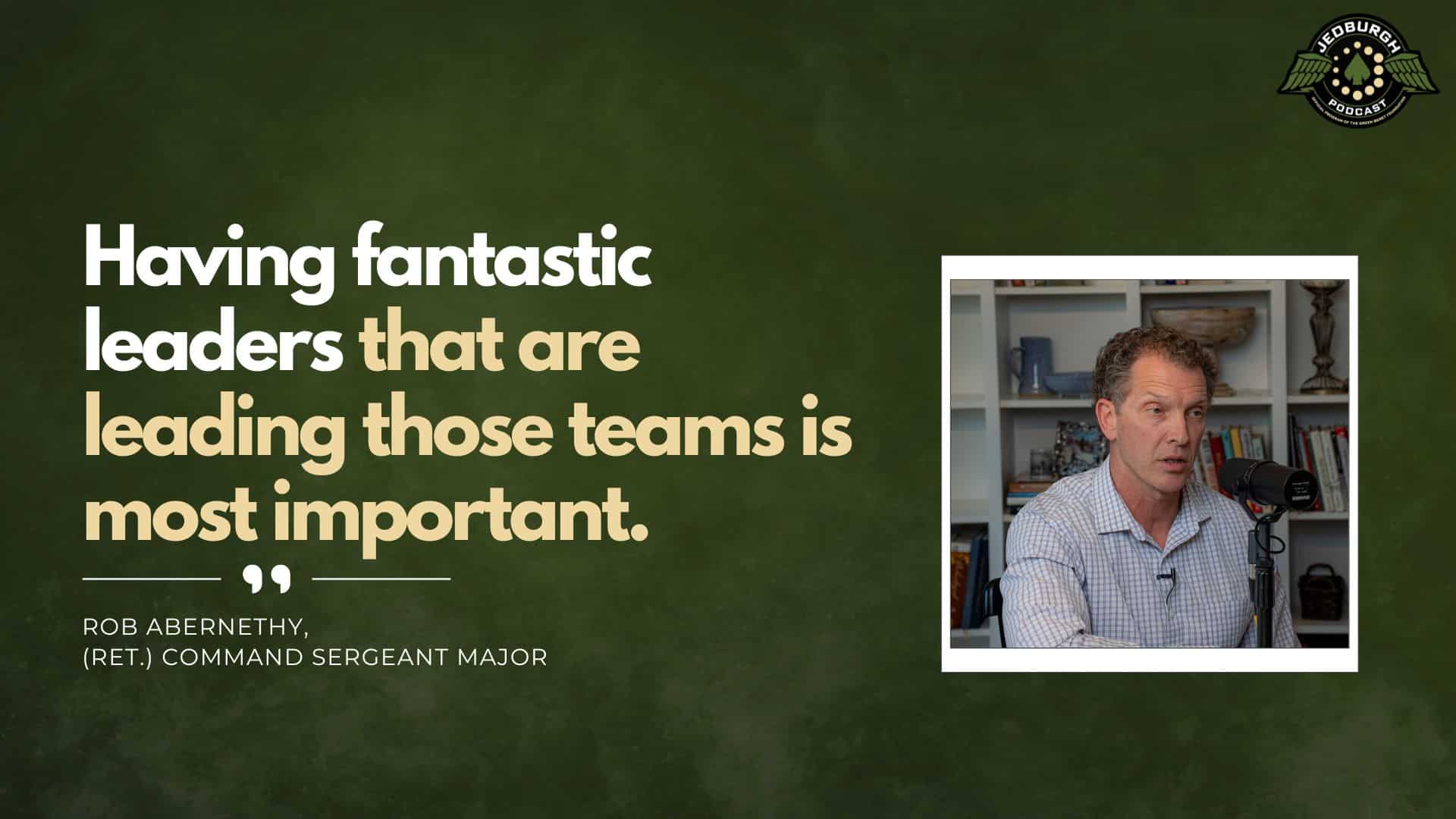
Most importantly, having fantastic leaders that are leading those teams, those team sergeants, team leaders, warrant officers that are leading the teams, turn to you with open ears, open eyes, and saying, “What do you have to say, Rob? We want to listen to you.” That is really what you enter into when you get into a team, a very inclusive environment where people want to listen. They want to hear your opinion.
How does that change when you become the senior 18 Echo or the senior 18 Delta?
That is a really good point. As a matter of fact, when I came into the team, my very first team, I came in there shortly after another 18 Echo had entered the team. Both of us graduated from the Q course at basically the same time, but he was a senior to me. Senior to me in grade, senior to me in time and service, somebody that I consider to be a friend, but at the same time, he was the senior 18 Echo, and I was the junior 18 Echo.
Now and then, he had to kind of put me in my place a little bit. They gave me very valuable lessons because knowing when to turn it on and when to be able to turn it off is something that not everybody has. He helped me to actually find that skill. The point that I was trying to make is that as you start to grow, you learn as a young guy, and this is true in every walk of life.
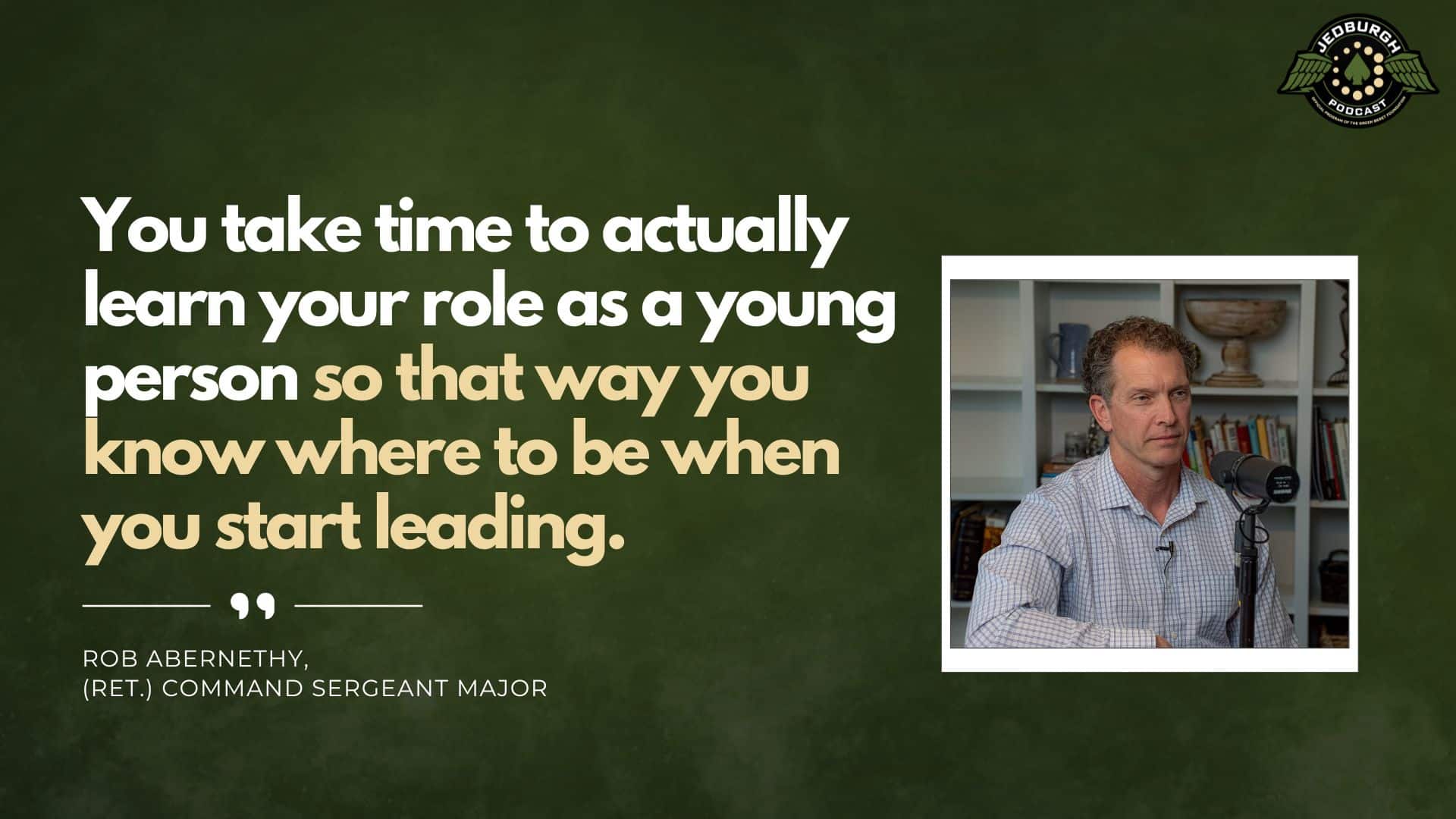
You take time to actually learn your role as a young person. That way, you know where to be when you start leading. As you step up from junior to senior, that is not a big gap. When you go from a senior position to either an 18 Fox Intel Sergeant position, or you become the team Sergeant, now there is much more responsibility on your plate. That is exactly where all of your experiences really kind of come to the fore, where you can actually say, “Now I know how to lead this team or lead this company or lead this battalion as you continue to ascend in rank.”
I want to talk about the team sergeant role for me. It is critical to have the right team sergeant. I was very fortunate, both as an infantry platoon leader and as a detachment commander, to have a platoon sergeant and a team sergeant who were very deep in their years in service, but also understood their role to not only lead and manage that team, but to develop me. I will ask you about the officer role in a minute, but that is a really critical component of that position.
When you step into this role as the team sergeant, you talked about how when you started, people were a bit older than they are today. I saw that in the evolution of my decade or so in SF was my team sergeant was in his late 40s, mid to late 40s. By the time I got out, we had team sergeants who were in their early 30s, early to mid-30s. There was a big gap between that. That was a big change. From your perspective, what is the importance of the role of the team sergeant, and what does an effective team sergeant look like?
There is no doubt. The team sergeant position is one of the most critical positions on the team. You could probably even say the most critical position on the team, especially to have the right person there with the right experience. As you mentioned, even today, team sergeants typically are going to be the folks who are a little longer in years. They are going to be probably one of the oldest, if not the oldest, people on the detachment.
That comes with a lot of life experience and military experience as well. A team leader should be able to come in who has less time in the military, definitely jumping into their first team. Much less time in special forces. A lot of officers like to leverage that experience, lean on that experience to help the entire detachment be successful.
To your point, we have to grow team sergeants methodically. I was one of those young team sergeants that you mentioned that only just hit my 30s. Next thing you know, I am a team sergeant out in Okinawa, and my teammates, many of them, were actually older than I was. It was tough for me to actually come into that role as a team sergeant because I had less experience.
Over time, what you do is you kind of build confidence with the team. That confidence is built through established trust and confidence in your ability to do the job. On day one, you are already working at a deficit because who is this young guy? They have only been in special forces for this number of years. How is this person going to lead us? You have got to get past that and get in there and do it.
On the other hand, though, it is that experience that actually gives you the confidence to step into the role, to be competent at what you do. That is what we have to do. That spreads in all directions. That spreads through and with the warrant officer on the team, the assistant detachment commander, the detachment commander, all the other leaders that are on the team, because in my mind, everybody on the ODA leads in some way or form. That is what we have got to do is get into the boat, pick up our paddles, and row together.
When you look at the responsibility of the team sergeant to develop that young captain who comes on the team, what is their responsibility to develop the officer?
You want that officer to be successful. First and foremost, the officer’s success is really the team’s success, and the team’s success is based on the officer’s success. The first team that I mentioned that I was on in Okinawa, the team leader who kind of came in, he and I had a very early conversation in terms of roles and responsibilities, and really focused on focus areas, and broadly to put it more broadly. What we really wanted to focus on as the team sergeant is to focus on the day-to-day operations, get all the training and everything set up.
I really wanted that team leader to understand our role and responsibilities, his attachment, what we had to actually do there in the theater, and make sure that he was confident with the team’s ability to do the job and then broadcast that outward. I was more inward focused as the team sergeant and the team leader was more outward focused as the team leader to go out and almost sell and promote.
I do not know if those are necessarily the right words, but sell and promote the team’s ability to do any job that the battalion commander needed us to do at any given time. To some extent, I think that actually worked out for us. I was a team sergeant right after 9/11, and we were the team that was selected to go into the Southern Philippines very early on after 9/11 to do initial assessments and everything. Some of that was based on the battalion commander’s confidence in our ability to go out and do the job on our own. We went out there and did that.
The team leader had a lot to do with that as well, in terms of selling and promoting what this team could do. Our confidence as a team sergeant needs to be projected through the team leader as well to go out and do exactly that. I feel funny saying we should not be doing sales jobs necessarily as folks. We should just kind of demonstrate, but you know the deal. You do not get an opportunity to, you do, you demonstrate your capabilities day in and day out. You do not necessarily get the visibility from the leadership that you probably need. That is what the team leader would do.
Teams take on a persona.
No doubt.
That persona is reflective of the team sergeant and the team leader. You can see from the outside that we will elevate it here to look at a perspective of a company sergeant major, a company command leadership, or battalion command leadership, where you served as well. You know what a team’s capabilities and dynamics are by their personality.
When you look at that, and you are the one now who is assessing, “I have got to pick a team to go to X, Y, and Z. I have got to pick a team to go do the thing that is going to require us to have the utmost confidence in.” Maybe we are not going to talk to these guys every day. Maybe we are not going to be able to verify what they are telling us is actually happening, but we are going to make decisions at the strategic level based on what they are telling us.
We are going to go, we are going to deploy, and we are going to have two teams sit and co-located with us, and we are going to ask them every day what they are doing. When you looked at those teams and you had to make those decisions in your role, leading a battalion, what were you looking for?
It is something that, as leaders, we pay attention to every single day because special forces is unique in that small detachments can deploy anywhere across the globe by themselves to go out and represent the great USA and the army and our military and do big stuff with a small number of folks. I take that to be a lot of responsibility. Selecting those teams, as a company leadership or battalion leadership, you have to have a lot of confidence in them.
One of the things that I paid attention to, maybe unfairly, and I will come back to why I paid attention to this, because I learned this lesson as a team sergeant myself, is that the administrative stuff makes a difference. It shows a level of commitment and attention to detail by team leadership if they are taking care of the little things. You have probably heard before, we have all heard it, if you can do the little things well, I could probably count on you doing the big things very well as well.
Conversely, teams that did not pay attention to the little things were sloppy with many things, and I did not feel like I could actually trust them to do those little things. Going back to my own experience as a team sergeant, I remember we had a battalion commander who came in one time, and as a team sergeant, we were slacking on our admin stuff a little bit. We were cool guys. We wanted to get to the range and go out and shoot every day because that is what we needed to do.
That is what we had to be good at. I did not need to be good at NCOERs and awards and all that administrative minutiae. No, that is not my job. My job is to go out and shoot, not just be good enough at shooting. I have to be an expert shooter as an individual and as a team. Our battalion commander thought differently.
As a matter of fact, the battalion commander shut the range down for the entire company because all the team sergeants, our team leadership, each one of the teams was lacking on the admin side of the house. My team leader and I went right back to it and said, “We are not getting back to the range until we get this stuff squared away. Let us figure this stuff out.” We did, we got it all figured out. The lesson I learned from that is that those little things absolutely matter.
I took that on myself as a company sergeant major and as a battalion sergeant major, and really, every position beyond that is to pay attention to the little things. The little things absolutely matter because you know when they are focused on those little things and not just focused on them, but spectacularly doing those little things, then I know I can trust them to go out and do the big things that we need them to do all by themselves. I do not have to have them even checking in with me every single day.
A lot of guys will rise to that.
They will start to see it around them, too. This whole competition from one ODA to the next is healthy because they see other folks who are actually taking care of that stuff. Sergeant majors are having meetings with all the team sergeants, company commanders are having meetings with the team leaders, and we are having those conversations in those tight circles to include in the training meetings on who is doing the right things. It is not necessarily about showing other folks up. It is really about raising everybody’s standard from a low baseline to a high baseline. That is really what it is all about. If you get everybody up to here, then it is easy for us to reach a little bit higher.
People must understand that being in special forces really is not all about having cool stuff and being special. It really is about doing the basics better than anybody else to a higher standard without compromise. That has to be instilled not only in the leadership of a team or a company or a battalion or even a group, but it has to permeate the mindset of every single person in the organization. When everybody lives by that, now you have an entire organization that operates at a different level.
You are exactly right. The things that we love to do, like go to the range and shoot, and not just shoot at a base level, but shoot fantastically, shoot at an expert level. We should actually take that to everything that we do. PT. We should not just shoot for the minimum standard. We should be shooting for the max every single day. How we wear our uniform and how we present ourselves in our work environments day in and day out.
We should not just shoot for the minimum standard. We should be aiming for the maximum every single day.
We should not just accept the baseline standard. We should actually excel above that. Literally everything that we do should be shooting for expertise and not necessarily being satisfied with the bare minimum. If we apply that standard, I think that other folks actually see it inside the organizations in which we live.
Importantly, folks from outside the organization see our professionalism and see that we truly are shooting for expertise with everything that we do, because sooner or later, those folks are going to be in charge of the army, and they are going to be holding our fate to some extent in their hands. That is important. What we do day in and day out matters. You are under the microscope.
If you look at anyone who does anything, you can be a professional athlete, you can be a business leader, you can be a professor. Whenever you are in these positions of increased responsibility, you are always going to be viewed and watched and under the microscope of everyone. People must understand that you have to live up to that.
People are going to talk. They are going to say, “Those guys, they do not wear headgear when they go into the shop.” You know what matters later on. Everyone must understand that. One of the things that separates being in the special forces from other organizations within the Army and even in the broader military is the regional alignment.
We, as an organization, have spent decades being very focused on regional alignment. Probably to some extent, during the global war on terror and for operational tempo reasons, we probably strayed from that a little bit. There is a push now to really reinvigorate the regional alignment. From your perspective, why is regional alignment for special forces so important?
Let me back out of that for just a second. Upfront, I will say it is extremely important. Now let me back out and have a broader comment about the Army. In my experience over at Army Europe and then at US European Command, I think there is so much usefulness in having regional astuteness because, one, you know the environment in which you are going to operate. You have sometimes personal relationships that absolutely matter. You have organizational relationships that matter.
You have networks that are already connected that you can plug into easily, and that all matter. This is a difference, as Jim Collins has said, “It is going from good to great.” Whether it is the broader army or the military apparatus, or even all the way down to a team in special forces, the more astute you are to an environment in which you are going to operate, the better you are going to be fundamentally. I think there is great utility in doing that.
The special forces have come a long way to maintain that regional alignment and, really, that regional expertise. At the end of the day, it would be great if the broader army or anybody else inside the military, if they had questions, could lean on our expertise as Green Berets because we have been there for so long. We have so much understanding of the environment. We can actually help to facilitate others to do well in those environments as well.
There are just so many useful things that can actually come from having a great understanding of the environment. I, for one, believe not only special forces should be doing it, but really the broader military should do it as well. The fact that we are getting much more heavily into understanding language and investing in that. We turned that corner after 2010. We have always had a language requirement.
I went to Arabic when I came out of the Q course years ago, and we did a decent job, but it was mostly focused on an individual basis to maintain that language. After a while, I went to another group that did not require Arabic language training any longer, and I did not have any motivation to maintain it necessarily.
Wrong on me, I probably should have, but now institutionally, Special Forces Command is really focused on maintaining those languages. It is a language requirement now, and I think that is helpful too, because I think language gives you something that is a little deeper in terms of understanding the fabric of a culture. There is utility in that. Maintaining the language requirement is, I think, good.
Maintaining regional alignment is great because we could always, later on if needed, as we did during GWOT, be fungible and go to the sound of the guns if needed and do other things there, but always snapping back and being experts at our region, experts at operating in environments where we are actually aligned.
The relationship piece is a big differentiator, too. When you work with these allies, partner nations over and over again, you develop a personal relationship. It is like we talk about in my security company every day. People do not give contracts to people they do not know.
They do not trust.
We can call people all day long and say, “We are a security integrator. Are you looking for a partner for this project?” They are going to tell us no, they are going to hang up the phone, they are not going to reply to the email until we build a relationship with them, until we do something with them. Until we do a small project. Maybe it is not, maybe we lose money.
Hopefully not a lot, but maybe we break even on something, and that is going to lead to a bigger project and then a bigger project and a bigger project. You heard me on the phone before we started. That relationship that we have with one of our strategic partners as a company started from a $500 job. We do millions a year with them now because they know us, they trust us.
That happens in the military, that happens with our allies, with our partners. As we look across, and we are in a constant state of evaluation, I guess, as a country, as to how we interact with our partners and our allies, remembering that, I think, is really important. We are seeing that today, even with the Iran conflict, our relationship with the Israelis is. The ability to operate truly as a joint combined force.
Fran, what you are saying is that it just comes down to trust. It is human nature for us not to trust folks that are not vetted, right? As soon as you actually establish that trust, you just know whether it is at an individual level or even an organizational level. I can trust that First Battalion, Third Special Forces Group is going to come in here because organizationally, I have dealt with that organization. I know their organizational culture.
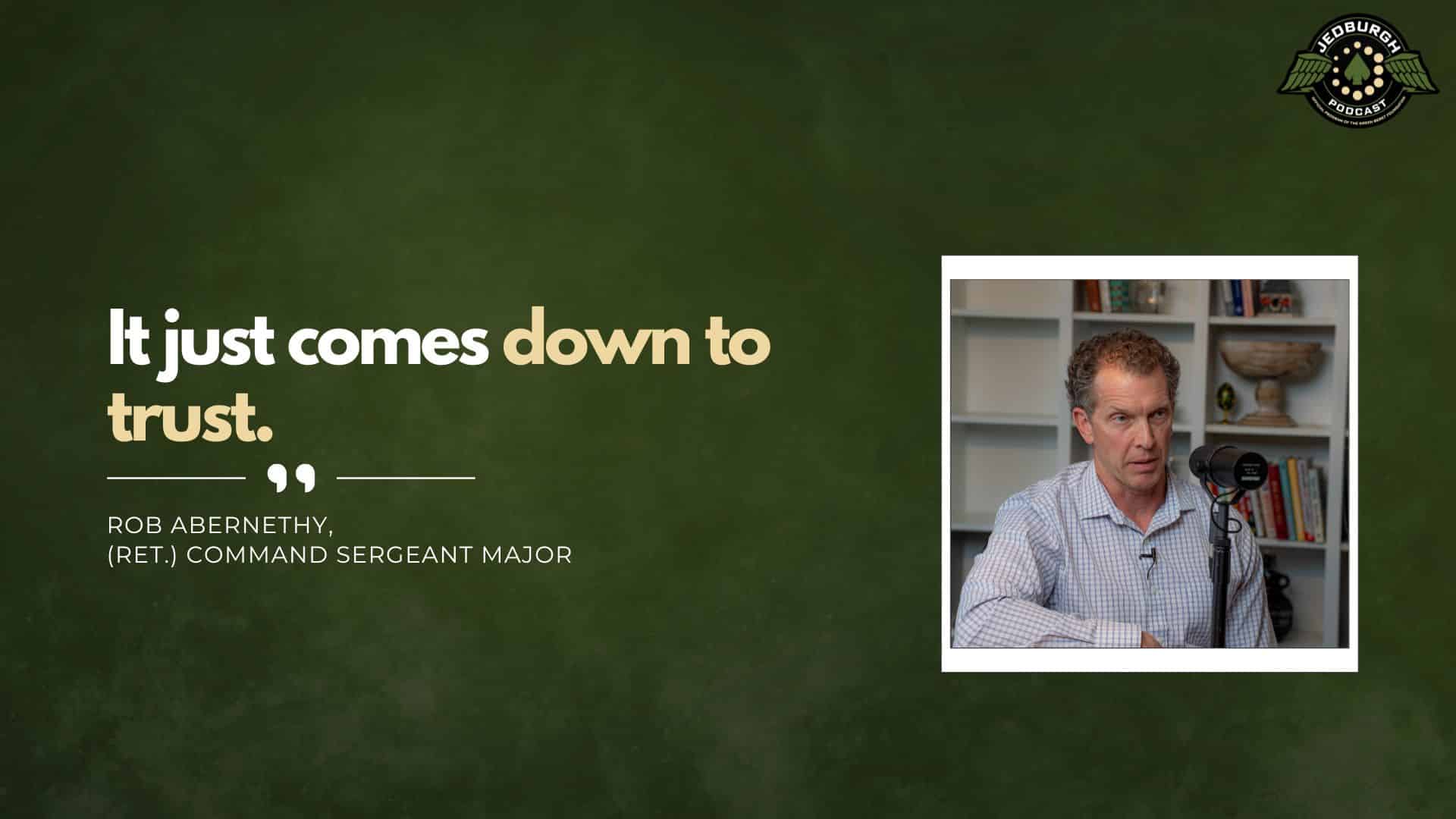
I know how they act and respond to situations. I can trust them to go out and do this thing. That is the key to how trust is established. Trust is established by building confidence, and that confidence is established by building demonstrated competence. Competence equals confidence, which then leads to trust. Once we get to trust, there are no questions asked.
Just like you were talking about earlier with your company, right? There are no questions asked, you are just boom, you are just getting it. That is what we have to be able to do. It all starts with competence, which circles right back to the comments we were talking about earlier. Everything we do in all situations matters. People are watching and establishing that competence, with all the things that we do, whether it is in training or not, makes a big difference.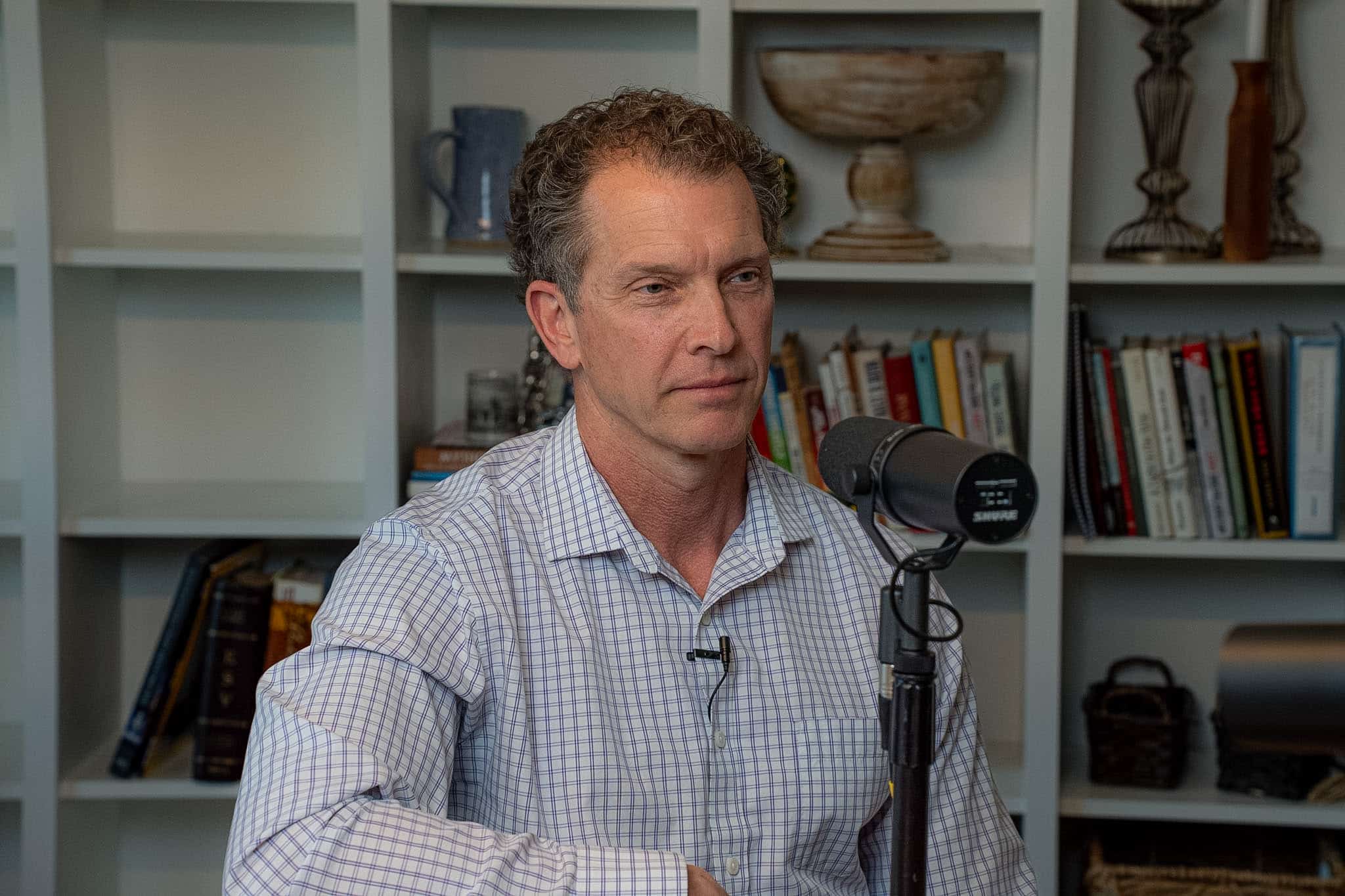
The Department of War, the Special Forces Regiment, has evolved tremendously throughout your career. There are three generations in the military right now. It will quickly be down to two generations, I believe in my mind. Right now, you have at the most senior leadership level, you still have pre 9/11 leaders at the strategic level. Thirty or thirty-five years, like that, is it, the army. Everyone’s time in the army comes to an end at some point for a variety of reasons.
That generation is fairly rapidly coming out of the ranks. You have the 9/11 generation, my peers, we saw 9/11, we jumped on board, and that became the global war on terror generation. Now you have a generation of soldiers who were born after 9/11. The job of army leaders right now, and you lived that over the last couple of years, is how do you bridge the gap? How do you bring those three generations together?
How do you transfer knowledge from the pre-9/11 generation, the GWOT generation, to this generation that, in a lot of ways, until the last month or so, really benefited from our generation’s almost doing too good a job in that we have not had that major attack on US soil? We have not had some of the events that we have had in the past. We will talk in a minute about the rapid evolution of technology since the invasion of Afghanistan, from what we are seeing today. The job of senior army leadership right now is to bridge that gap. How are they doing that?
They do it in a very collaborative way. There is, at least it has been my experience, even some of the most senior leaders in our army. I would say more broadly speaking, in the military as well, to take advantage of listening to younger folks in their formations. As a matter of fact, now, because there is so much changing and changing so rapidly, we almost need it. We almost need to have those conversations with younger folks in our formations to be able to figure out where this thing is going, because we just do not know.
It is just advancing so quickly. Those conversations are, at least, I know what is going on in my last headquarters, US European Command, where I, and at the time, the deputy commander, would spend a lot of time in our formations doing town halls and having some discussions. Just understanding everything from personal challenges to day-to-day challenges.
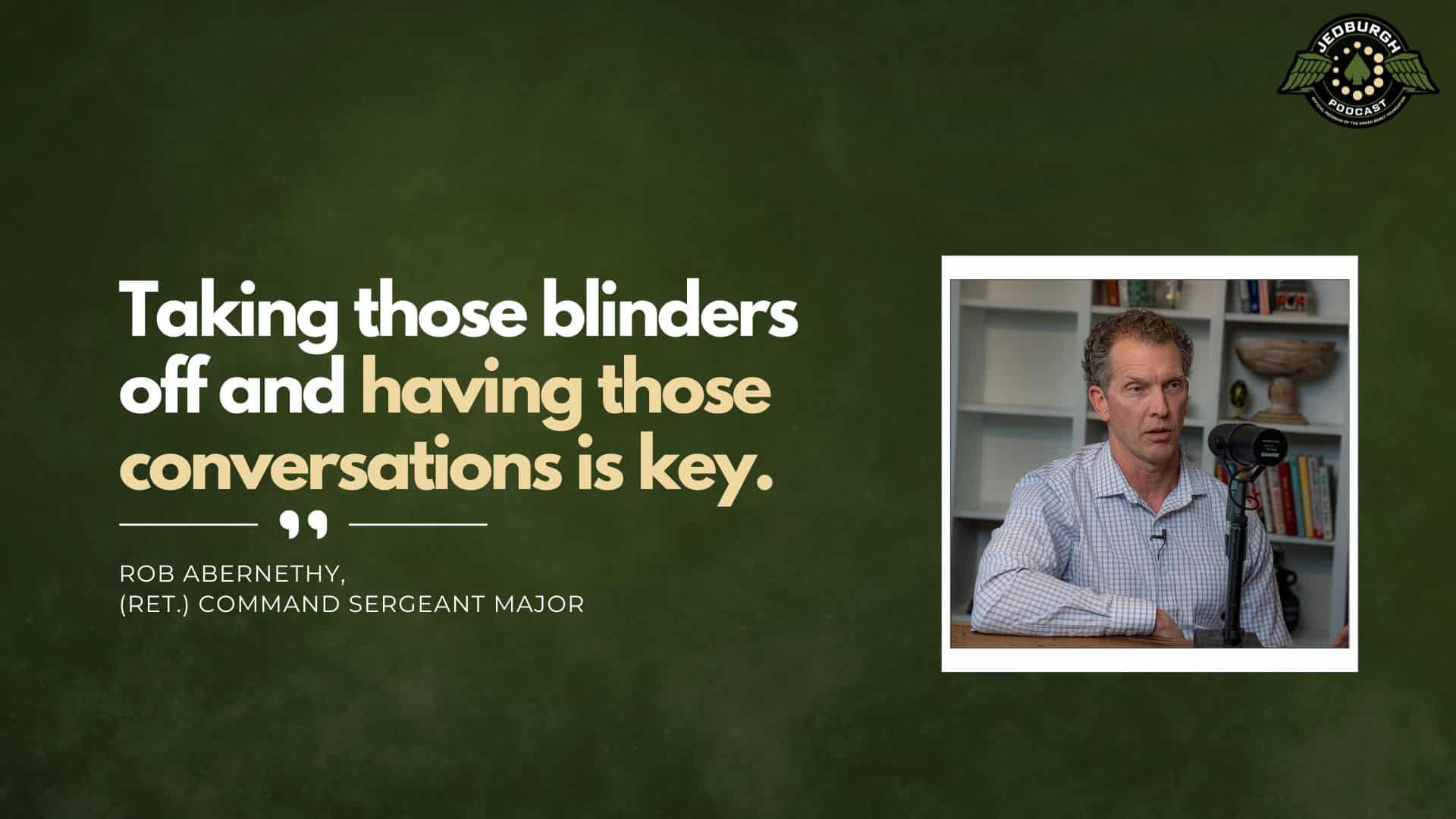
At the same time, what are we doing? Let us talk operational stuff. How are things actually advancing from an operational perspective? Are there new things that we could be doing that we are not necessarily seeing right now? It is very easy to get your blinders on and get comfortable trotting down the same path you have been trotting down for a long time.
Taking those blinders off and having those conversations is key. That is one way. That is a one-way conversation. What are we doing to also be able to transfer the experience that long tenured experience that we have, like a guy like me, more than 38 years in the service, came in the early ‘90s, dealt with a lot of stuff, pre-9/11 transition through post-9/11 into GWOT, and a couple of different theaters and everything else. It was just fantastic to see all that.
The transfer, some of that stuff off to younger folks, has to happen through storytelling. You have got to be able to sit down and have those conversations, tell the stories, and do it in a way that actually matters. My own experience is that before 9/11, we did not have all the training resources that we got after 9/11. We were much leaner and had to be much more creative about doing training scenarios.
We were much more focused on doing J-sets and foreign internal defense, and not all the things that we were doing post 9/11. That generation, like yourself, that came in post 9/11, that got to do the things that are associated with GWOT against a different mission set than would be the natural mission set for special forces, was fantastic.
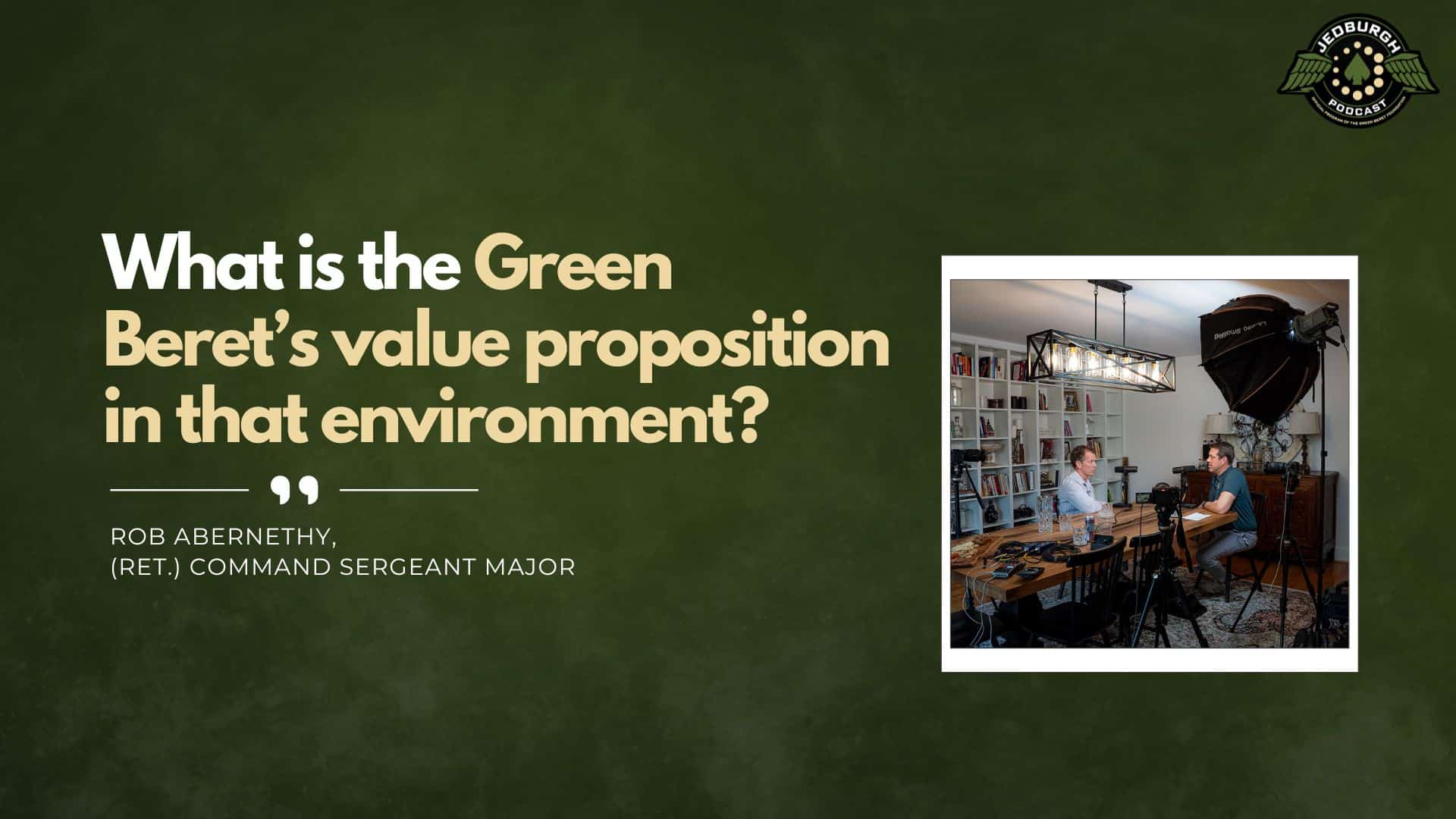
We are kind of shifting, maybe not back to the same old point, but to a point that looks very similar to that, but maybe a little bit different for whatever large-scale combat operations are going to actually throw for us, right? What is the Green Berets value proposition in that environment? We are still trying to kind of figure that stuff out.
Also, I think the Green Berets that were in after 9/11, especially in the early years, in the early 2000s, and came up through and got to see all the things that we were doing in both Iraq and Afghanistan, and now we are having to shift back to a J-set op tempo. It is different for them. A lot of them are trying to figure that out. There is value in that, though.
Helping them to understand the value in it is probably a senior leader’s responsibility in terms of having those conversations through telling stories about their own real-world experiences that they might have had before 9/11 themselves. It goes back to what we were talking about a little bit earlier, relationships. Those relationships are absolutely going to matter as one thing.
Also, the development and definition of what the culture is. We have been fortunate to sit down with the Sergeant Major of the Army, Mike Weimer, numerous times. The most recent conversation we had with him was a couple of weeks ago, and we brought in retired Sergeant Major Rick Merritt.
He told me about it.
Rick was great, but they really broke down. This concept that you enter the army, you enter, and you are a warrior, and your task is war fighting. This concept of being a warrior is a lifestyle. What are we asking our soldiers, whether they are in special operations or they are in the conventional army, what we are asking them to do at the end of the day is really develop a mindset and live a lifestyle that is committed to the profession of war fighting.
I thought that was a very nuanced thought process. The SMA will talk about this concept of compliance to commitment, where you come into the Army, and they are like, “Hold the bag over your head, and you hold the bag over your head because somebody told you to do it.” Eventually, down the road, you realize, “I hold the bag over my head because it is good for me.” Whatever that bag may be.
When we look at how we are actually bridging that gap, how are we getting this younger generation to understand the importance of what they are doing and why it matters? Why does it matter to the army? Why does it matter to the US as a country and the protection of our national security? That concept of developing a culture around this warrior mindset becomes really important.
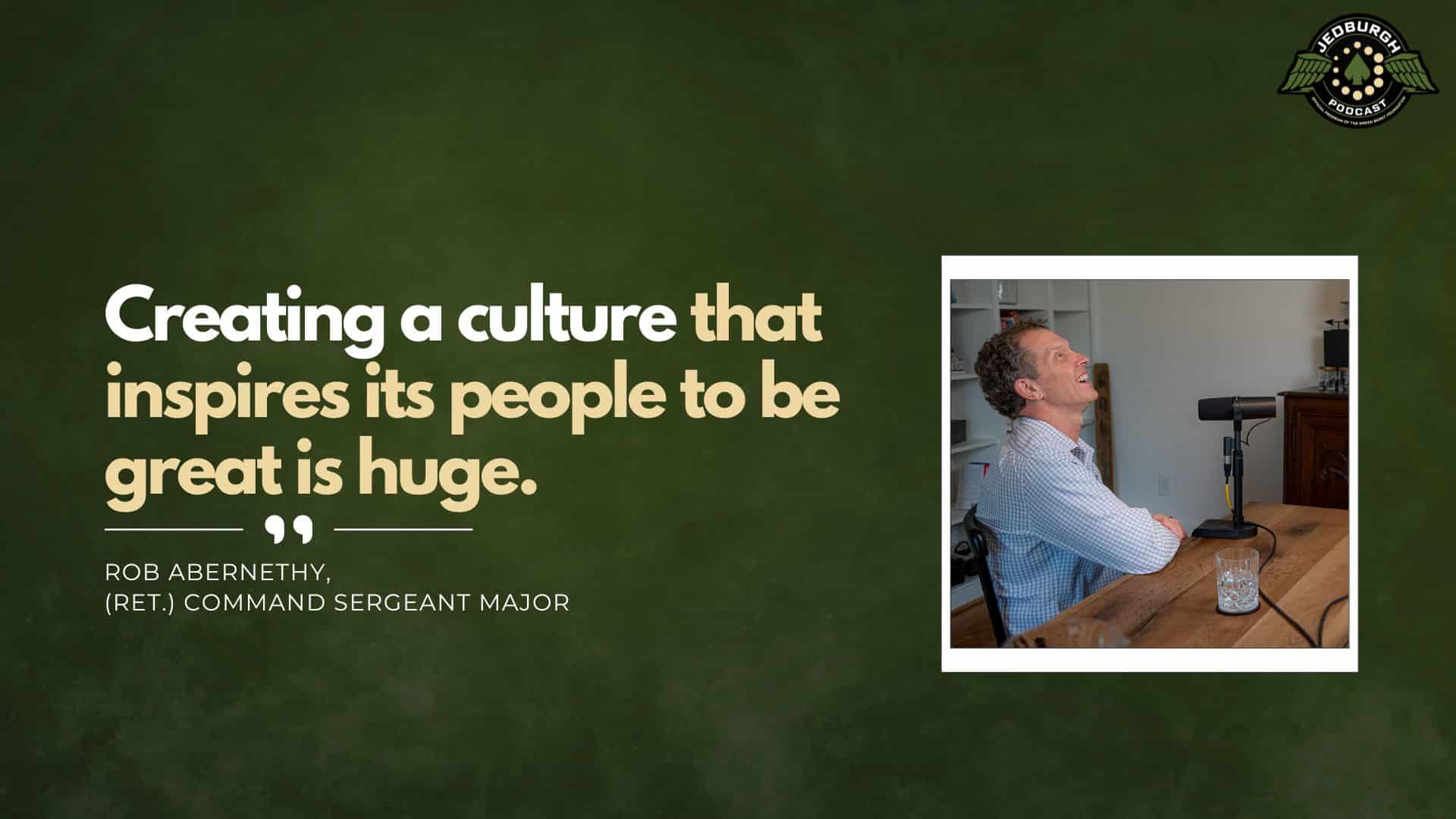
I completely agree. The thing that I might add to that is creating a culture that actually inspires its people to be great, which is huge as well. When you are in an organization that truly inspires and not only just inspires, but encourages greatness, that is when you get to tap into that resource that you cannot tap into 9:00 to 5:00 or from six in the morning until 5:00 in the afternoon when we actually have our soldiers in formation. Through institutional training and organizational training, we can get so far.
The third leg in that stool is, what are you doing on your own time? What are you doing to actually make yourself an expert? I just remember my own experience as a young 18 echo out of learning Morse code, trying to get better at Morse code, and talking about antenna theory. I was geeking out about a lot of that stuff. I spent a lot of my own time, including being a ham operator, to be really not just good enough, but great. People around me were all aspiring to be great in their own fields as well. Creating a culture that actually inspires people to greatness is huge, but that all goes back to the culture that we are talking about.
That translates to when guys get out, a majority of my company are SF guys, and we are asking them to do things they have never done. We are asking the guy who is an 18 Delta National Guard, a guy who spent a career in the postal service, to be a low-voltage electrician and put in alarm panels and cameras. The number of times he calls me late at night because he is up researching stuff and teaching himself about fire alarms, when three months ago, you did not know anything about them. Now, guys are calling him from the job asking him what to do.
He knows how to do it. It translates, and it is important, and to the point about standards. They set a new standard. Even having spent and having been fortunate to spend the amount of time that I did at three years on an ODA as a detachment career, which is unheard of. The fact that even in my own company, I am motivated to work harder because of the guys that are around me, because I see that they are committed.
They do not know everything about what we are asking them to do. We have got another guy who was a Sergeant Major, and now he is doing business development for us. I wake up every day motivated because it is a race to see who gets the first chat message to somebody in the morning, and what they are going to throw out there that we have got to figure out today. It makes your organization better. It really does.
Especially in just amplifying this point, you really see it in terms of individuals’ behaviors and what they are doing past 5:00 in the afternoon, because if they are still spinning, and spinning in a positive direction, in a positive way about making themselves better, then you know you have got the right person. Not all professions actually push in that direction. As warriors in our army, we should absolutely be striving for excellence with everything that we do, regardless of where we sit. Does not matter if you are in the infantry, if you are in sustainment, or in special forces. I need all of you to be experts.
In the words of General Jim Linder, when guys would leave at 5:00 or 6:00 in the afternoon, he had a very simple question, are you only working half a day? I have heard him say that. I would always tell him, “No, sir, they are just going home to work from home for the rest of the day.” I want to talk a little bit about what we are seeing today. We are seeing the present day in conflict with Iran.
Some capabilities that, if we look back to the days of pre-9/11 invasion into Afghanistan and the days after 9/11 and the invasion into Iraq, it is a different military, it is a different army. We can talk about the culture, we can talk about the quality of the guys, which we know we have spoken at length about the evolution of them, but people matter, and relatively, what we were recruited for. Twenty years ago is what we are recruiting for today, and there is a little bit of spin on it.
Our capabilities and our technology have rapidly evolved. Somebody said, and it made me very angry a couple of weeks ago, they said, “I do not understand. Why did we not just do this when we went into Iraq?” I said, “These things did not exist when we went into Iraq. These capabilities that we have in the Air Force, the Navy, and the Army did not exist back then.”
In your last roles, you were at the strategic level, where you were at the forefront of understanding how we as a military prepare for what is termed large-scale combat operations, that LSCO environment. I do not think anybody truly understood some of the capabilities and the advancement that we have. When you look at the technology that we have as a military today, and you see it employed in some of the ways that we have seen it employed over the last month or so. How do you assess that capability?
The capability is phenomenal. It is really a kind capability in terms of what our US military can actually do at scale very quickly. I hate to say it, but, honestly, some of the things that we are doing. It is tremendous. As we operate, always when we go into these ventures as a joint force, first and foremost, and then beyond that, with our allies to our left and right, 9 times out of 10. That brings great power.
Let me go back to just operating as that joint force and in a multi-domain environment and being able to synchronize things, and the way that we do as quickly as we do. As I said before, it is just unmatched, and it is truly impressive. That is when you know you have got something that is really going good because now you can actually synchronize very quickly, respond very quickly, get new information, introduced into that OODA loop, if you will.
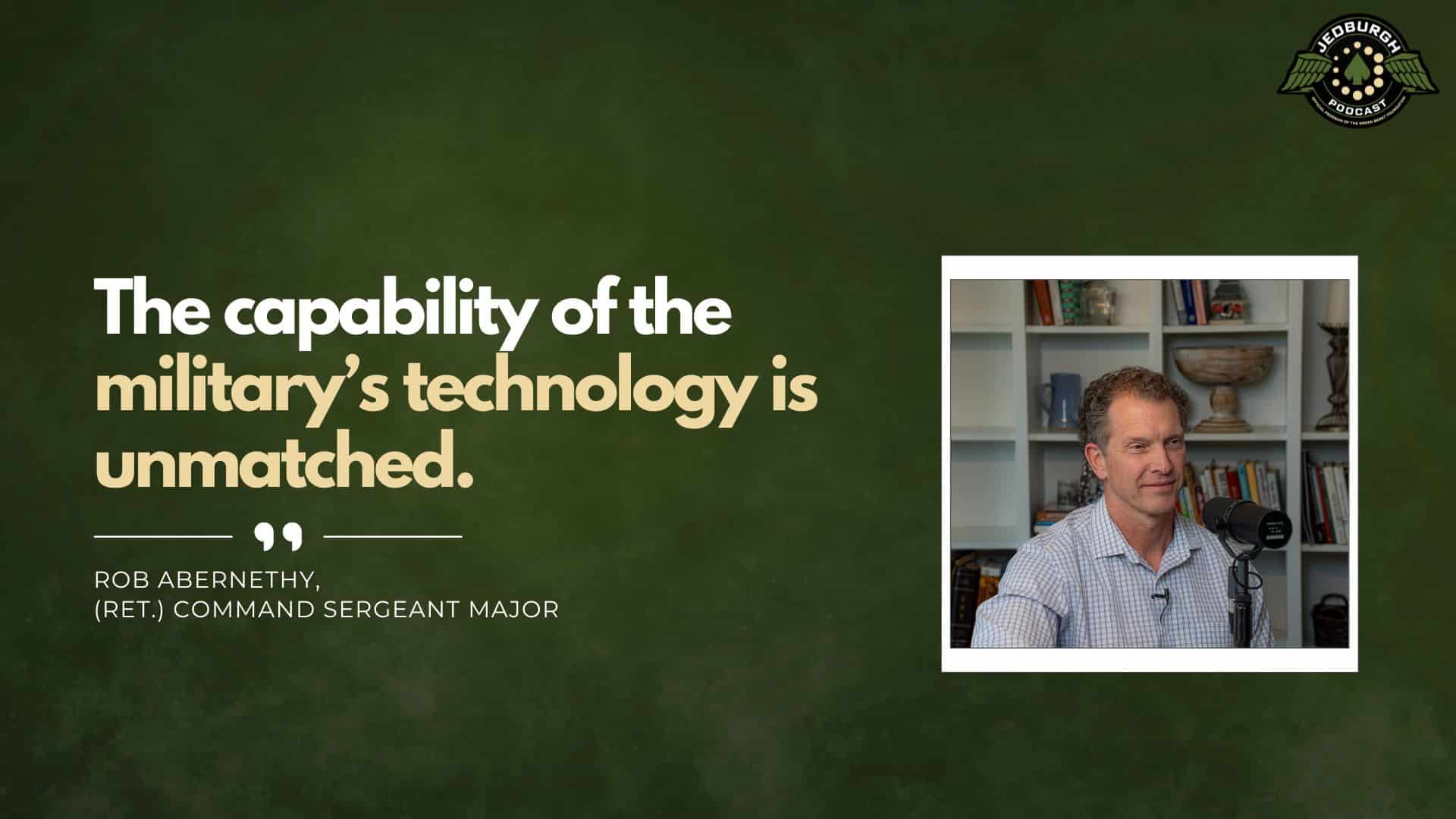
That now has you slew in another direction, move very quickly in that direction, and continue to actually offer effects there as well, both kinetically and non-kinetically. It is just tremendous. As you mentioned, we have advanced a lot in just the last two and a half decades since 9/11. At the same time, it has still a relatively short span of time when you think of our military over all the evolution that has gone on through the military since its inception.
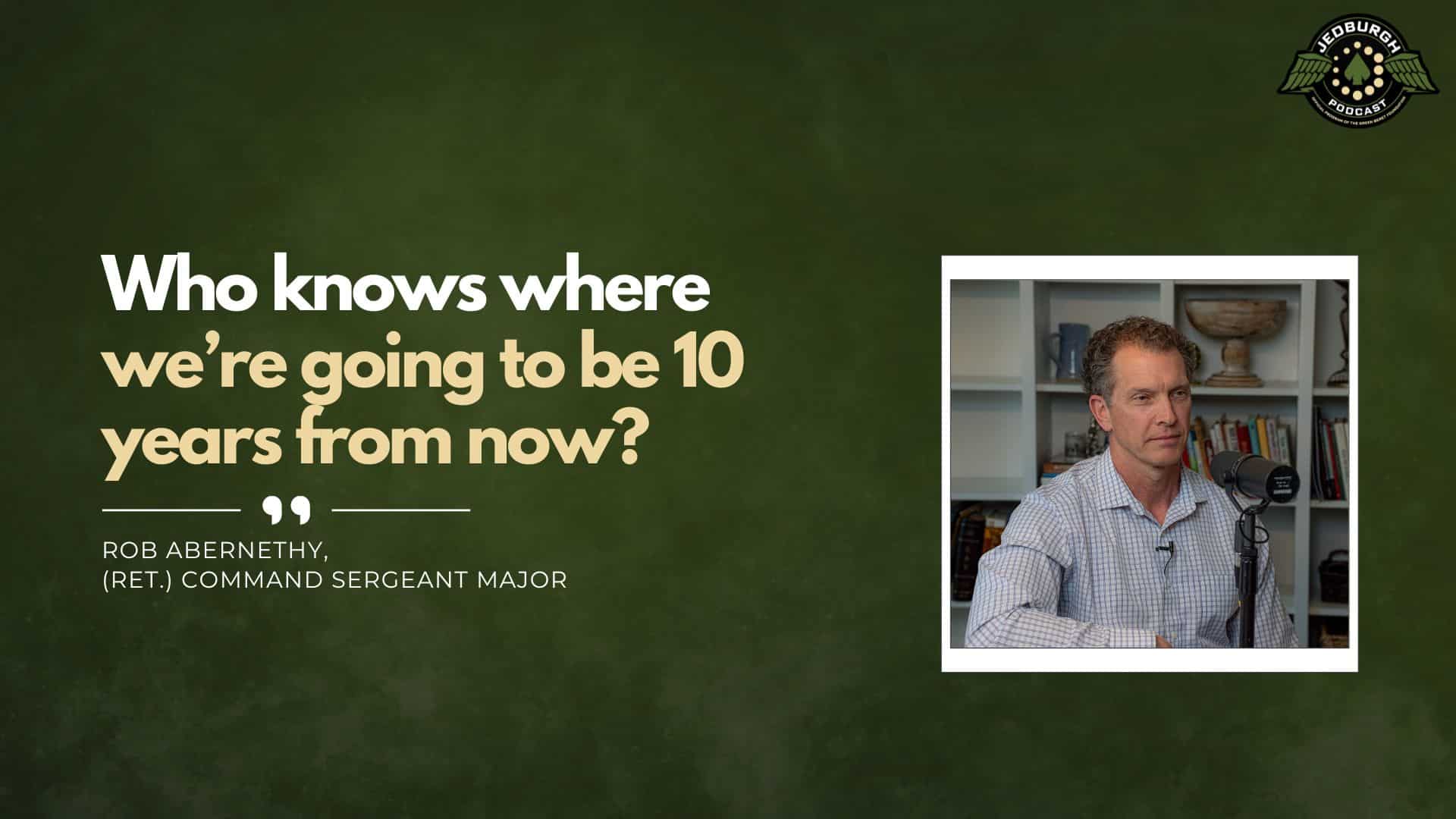
Who knows where we are going to be ten years from now? That is what I think about, especially with quantum computing coming in. AI obviously is something that people are leaning in on heavily as well and being able to not have just a descriptive look at data, but really a prescriptive look and even a predictive and prescriptive look of where we need to be going and be able to do that very quickly by offering tools that AI can leverage AI to actually give us to do exactly that. The other thing that when I think about this is, what is the human potential beyond that?
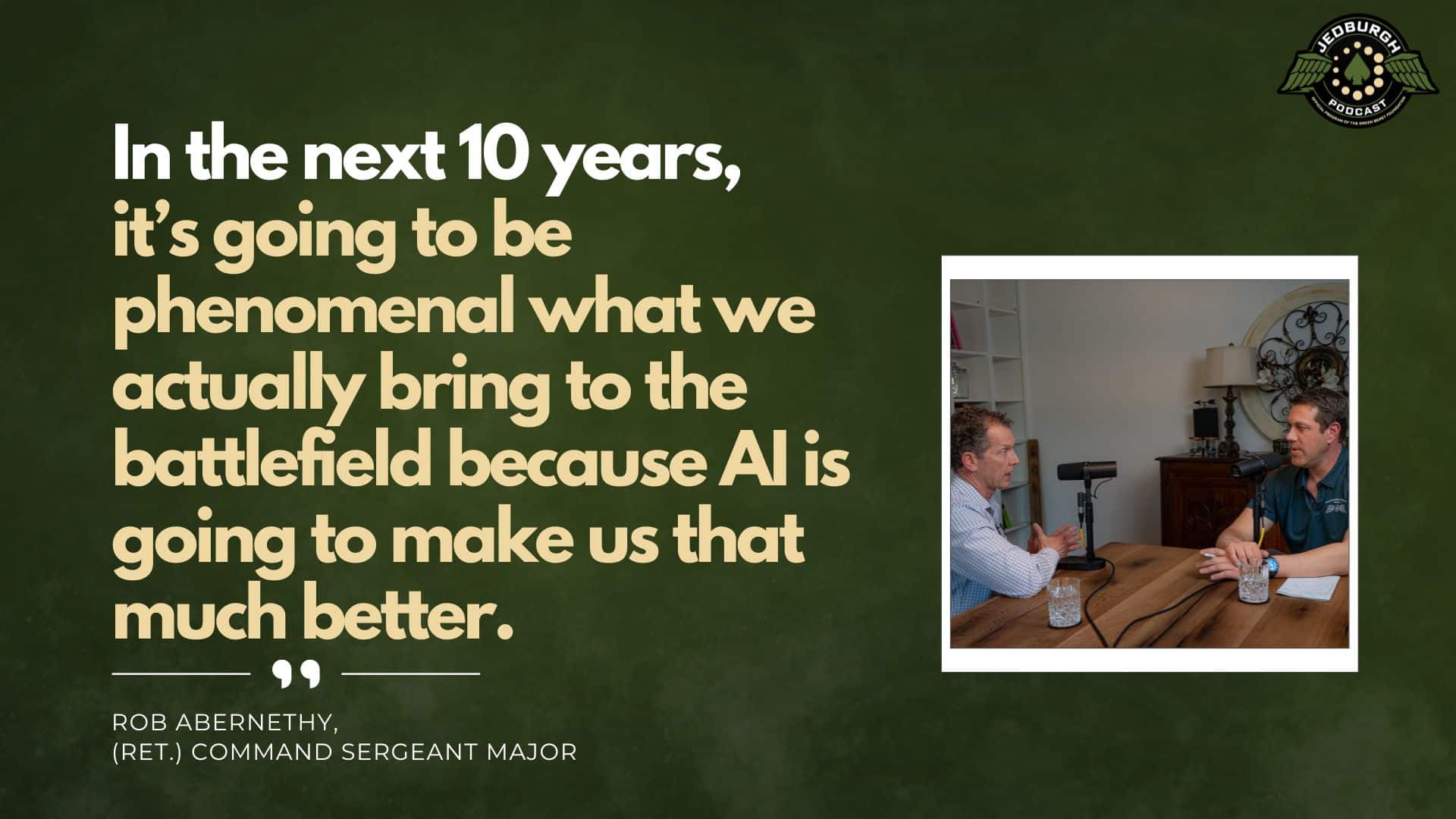
If AI is doing all things for us that we would normally do, listed one through 10, we never had time as human entities to get through 11 to 20. Now we have opportunities to do that. In the next ten years, it is going to be phenomenal what we actually bring to the battlefield because AI is going to make us that much better. Do not make the mistake that for the fact that we still have to have an army that is large and robust with all the tools that we have, which is enhanced by AI, to do what we have always done, be on the ground, protect the people, fight on the ground, and be able to leverage that as well.
At the end of the day, you can achieve a lot through the Navy and the Air Force, but you have to take in the whole ground. Soldiers have to take in the whole ground. That is right. Marines have to take the whole ground. We are seeing that start to creep into some of the discussions today when we look at the Iran conflict. By the time this goes out, who knows where we will be with respect to that? Those capabilities have to exist.
One of the things that has fascinated me over the last couple of weeks and every day, seemingly, I will read a report, or I will see something on some other technology, and I will just say, “How did we think about that? How do we stay ahead?” That is probably my question to you is who is thinking about these things? Who is staying ahead? What is that thought process that goes through our innovation cells within the Department of War that says, “This is the capability we are going to need and 3, 5, 10 years to stay ahead of the adversary.
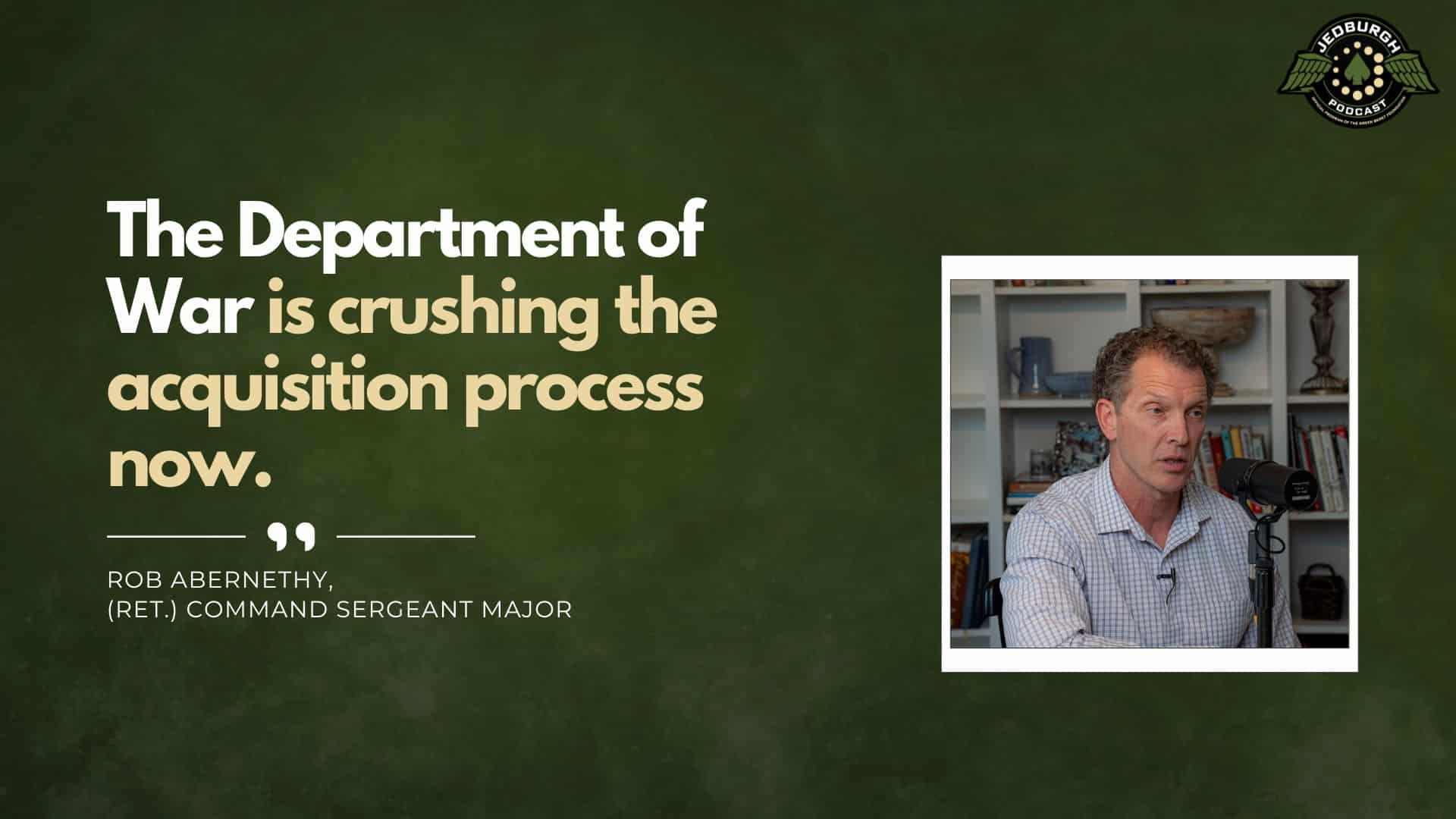
I do not know this to be fact, but I will speculate a little bit here, just my read of the environment is one, the Department of War is crushing the acquisition process now and really closing the gap between industry and the military services. By doing so, that gives you have an opportunity through experimentation to come up with new innovative ways to do things.
More than that, and importantly, we are also crushing the gap between senior leadership and things that go on at the tactical level where senior leaders like General Donahue, I remember specifically at 18th Airborne Corps and even now today in his current position, is all the time working things to bring young people with great ideas into conversations to think about how can we do things differently?
Having that intersection between industry, young folks that are on the ground that are operating this thing at a tactical level, at an operational level, with the army or the other services, all kinds of coming together at the same time to answer those questions for here. Importantly, figuring out where we need to be for tomorrow as well. There are all kinds of goodness in that. We did not necessarily see that before. To some extent, you have seen that, maybe even to a large extent, seen that in special operations formations.
SOCOM has always been one entity that would take ground-up feedback to get new innovative ways to solve problems for the organization. It was not necessarily the case in the big services, the army specifically, there was a lot of bureaucracy there. There were ways to do it, but it was very bureaucratic. We are crushing that now. We are getting ourselves closer and closer to industry. That is just big industry and small as well. There is great utility in that.
What do you think the biggest threat is to the US?
That is a loaded question. I do not know if I have a great answer for that. The greatest threat, the threat that we are focused on right now, obviously, is China and the nexus and everything that kind of surrounds China with Russia, Iran, and others. I think that is something that we have to continue to pay attention to. That is big.
We have to pay attention to nuclear threats that are out there as well. That is obviously one of the reasons why we are in Iran right now to make sure that bad people who might want to gain control of nuclear material do not pose threats to ourselves or our allies. We have to pay attention to that for sure. We just have to pay attention to ourselves.
This country, in my opinion, this is my humble opinion, has been very divisive for way too long. I would love to find ways to get leadership together to get ourselves back on a positive path. I do not know how we get there, but it would be great to actually get in that space. My kids will let us know that we are running out of time because we are almost there. They are getting anxious.
You spend a tremendous amount of time serving overseas. A lot of that time was spent in the European theater. There is a lot of conversation on all sides about our relationship with the European allies. My opinion is that our relationship with the European allies is critical, always has been critical, always will be critical to the protection of America and the world order as we understand it. What is your assessment of our current relationship with our European allies, and where does it need to go?
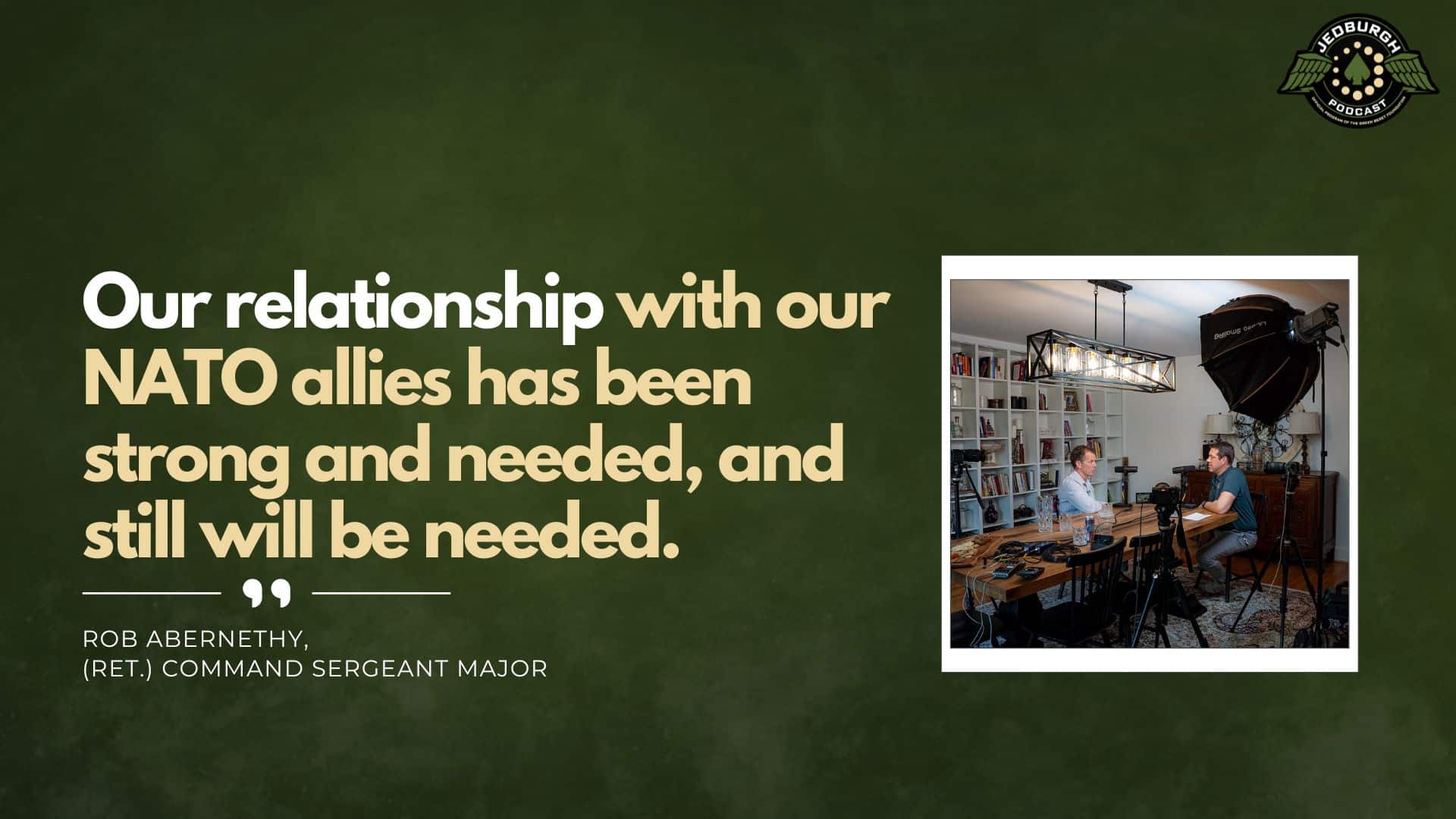
First and foremost, I agree with your opinion. My opinion is the same. I think that our relationship with our NATO allies has been strong and needed, and still will be needed. It has been fantastic. Living there for the last eight years in two different positions, one at Army Europe and then for the last three years at US European Command, I can definitely speak to my own personal relationships with senior leaders, both officers and enlisted, throughout the NATO alliance.
Those relationships matter. The nations in Europe that are part of NATO work diligently to get better. Obviously, in the last several years, they have been working even faster because they understand that they need to be better, and they are working to actually get a whole lot better. These relationships are something that we have got to continue to pour energy into because I think the collective protection that comes with being part of this alliance matters to everybody that is actually inside of it, including the United States. There is great utility in being a positive leader inside NATO and remaining connected to NATO.
Your transition journey has just started. The transition journey is just like everyone’s military service is different for everybody. We go through stages in our transition. When we first get out, and you are out a couple of years, you are out a decade. Everybody kind of looks back on their service in different ways. You are at the outset of that, and you will evolve as you move down that road. When you look back on your 38 years of service, how do you remember that today?
I remember it in stages. That is nearly four decades of service. I would probably break it down into decade chunks, if you will. Most of it is kind of pre-9/11, kind of post 9/11, as I was growing up from being a team sergeant up to battalion leadership and then beyond that. Culminating in the last few years that I had at a very senior level.
Through all that time, one thing remained consistent. This is just for me speaking personally, is that my desire to be good myself, to be an expert and lead by example through that. At the same time be serving and being able to make sure that I never forget where I came from and find a way each and every day to serve those who are at the ground level.
Do that through positive relationships that are built and nurtured through time. That is something that has been a consistent thing through my entire career. If anybody says that I had any success in my career, I would give credit to that success by just being surrounded by good people, and I personally just being good to them. That absolutely makes a big difference.
You think about transition. For me, I did not plan on staying for 38 years. The Army and SOCOM had a different plan for me. I honestly planned to get out at about twenty years of service and had an RV, no home, and a solid plan to do that. Life happened, and I ended up with 38 years. A lot of that was based on having a lot of respect for some very senior leaders who asked me to come in and do a job for them.
I could not tell them no. I am humbled to actually do that job for you, and I am just not going to quit. Before you know it, you end up at 38 years. Just retired, as you know, I think, officially on 1 November last year. I am early in my journey of transition into the civilian sector, still working on growing out a little bit of hair here. It will not get too crazy. I will not let it get much crazier than it is right now, unless my wife has her way, so we will see.
What are you most looking forward to?
I have young twins that you hear in the background that are six years old now, and giving them a lot of my attention. I have three older boys whom I am very proud of. All of them have actually served in the army themselves. My first wife and I split up after a number of years, and I spent a lot of time away from them and did not get to give them as much attention as I probably could and should have.
Now I think I am going to have the luxury to give these kids a whole bunch of attention and look to see what they are going to be doing and watch them actually grow. At the same time, I am excited about being back on this side of the Atlantic and closer to my older boys and getting closer to those relationships as well. Simply said, I just want to get close to the family that is people who are closest to this flagpole.
You have got a new opportunity at AUSA. Great partnership, association of the US Army between them and us. Certainly leveraged our relationship with the CSA, SMA Daly, but really great organization and great spot for you to be, and excited to see you over there and continue to build our relationship between QBF and AUSA and us on The Jedburgh Podcast. I am glad you are going over there because we have a trusted friend over there.
At the end of the day, whether it is AUSA, and I am humbled and proud to actually be part of that team, still serving the army, just doing it from a different foxhole. That is great. AUSA, like GBF, like others in this space, we all exist for different reasons, but there is a lot of common ground there, too, and it is really taking care of our folks. I am glad to be working in a place where I can help to take care of our folks.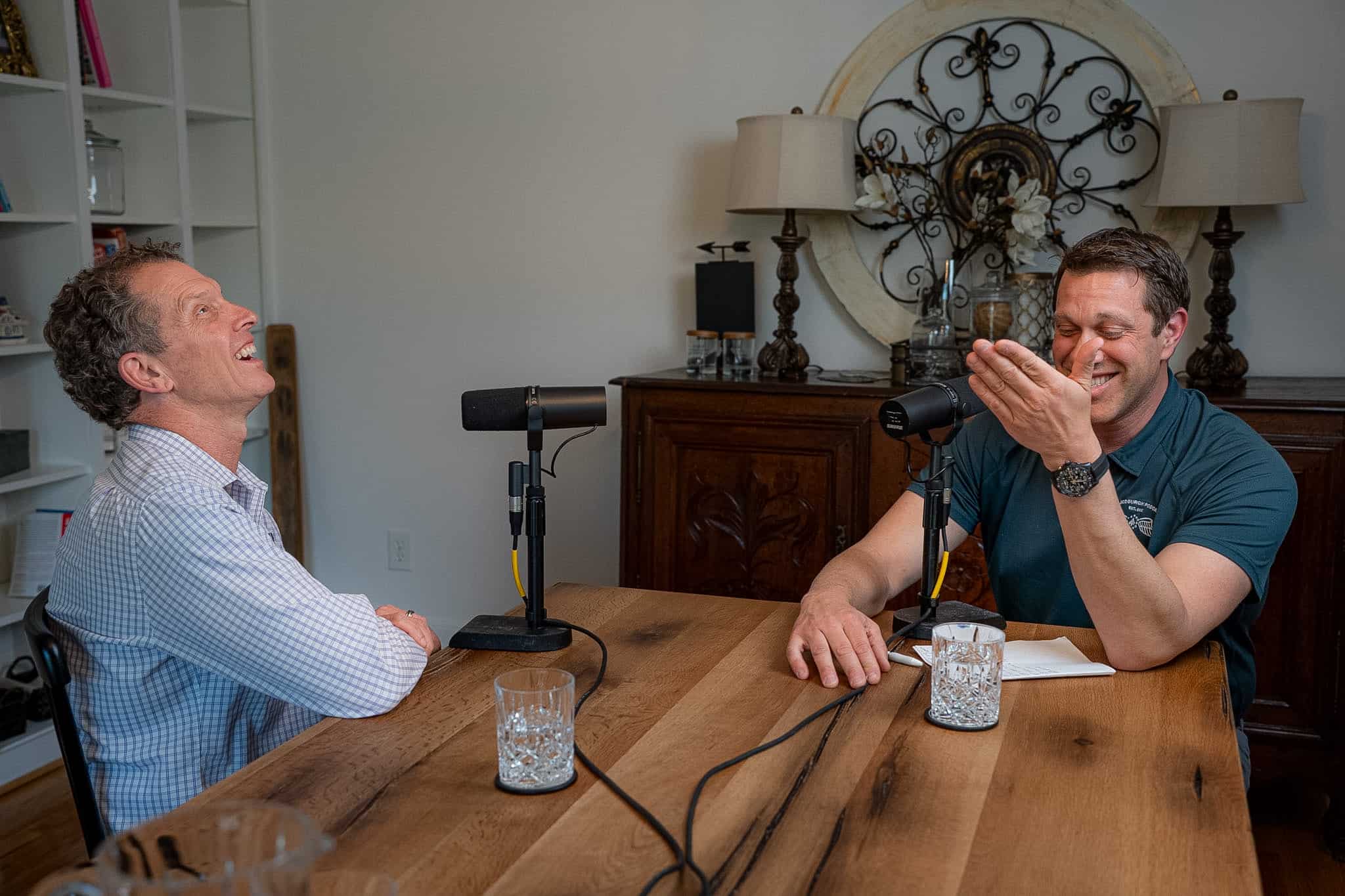
I said, GBF has enlisted the help of your wife to lead the Steel Mags program. We are going to sit down with her in short order, and she is going to do great things, really leading a program that is very important to the spouses of our operators, our Green Berets who are out there. I look forward to her success and working with her and working with you. Thanks for inviting us to your house and thanks for spending time with us. You have got decades and decades of experience, but.
At the end of the day, a leader’s job is to leave the next generation better than we were when we went in. I can tell you that you certainly did that. For all of us who served under you and around you, you said earlier, there are legends within the force, and you were certainly one of them. I appreciate everything you have done for all of us.
Thanks, Fran. I appreciate those comments. I do not feel like I deserve them, but I really do appreciate you taking the time to actually come and spend a little bit of time with me and my home here. You are welcome back anytime.
Thank you.
Green Beret Foundation
P.O. Box 25138
New York, NY 10087-5138
Note: Please use USPS mail or priority mail. Do not use FedEx.
Green Beret Foundation
10205 US Hwy 15-501, Unit 26-8
Southern Pines, NC 28387-4301
Call: at: (844) 287-7133