The United States Military Academy at West Point is the foundation of the US Army. Along the cliffs, through the halls, and on the fields America’s best and brightest are trained to lead not just soldiers, but America. But behind the tradition and pageantry, West Point understands that athletics of any level create disciplined warriors prepared to lead in any situation.
In this episode, I sat down with Tom Theodorakis, Director of Athletics at West Point, to discuss how one of the most respected athletic programs in the country directly supports the mission of the United States Military Academy and helps develop the next generation of Army leaders.
With more than 30 Division I programs and over 1,200 cadet-athletes, Tom explains what makes Army West Point different from every other program in college athletics. Cadet-athletes are not just balancing Division 1 sports and rigorous academics; they are simultaneously preparing to become officers in the United States Army where they will lead soldiers and shape national security strategy for decades to come.
We discuss the demanding reality of being a cadet-athlete, the recruiting process, and what it takes to attract elite competitors to an institution built around service before self.
Tom also addresses the realities behind funding Army athletics, correcting the misconception that the program is fully government funded, and explaining how external support and partnerships help sustain the mission of Army West Point Athletics.
Finally, we discuss the opportunities available to cadet-athletes after graduation, including pathways to world-class and professional athletics, and most importantly serving as officers in the United States Army.
The Jedburgh Podcast is brought to you by OneBrief; enabling military leaders to make innovative, informed and deliberate decisions faster than ever before. Superhuman command wins wars.
Follow the Jedburgh Podcast and the Green Beret Foundation on social media. Listen on your favorite podcast platform, read on our website, and watch the full video version on YouTube as we show why America must continue to lead from the front, no matter the challenge.
—
—
Theo, welcome to The Jedburgh Podcast.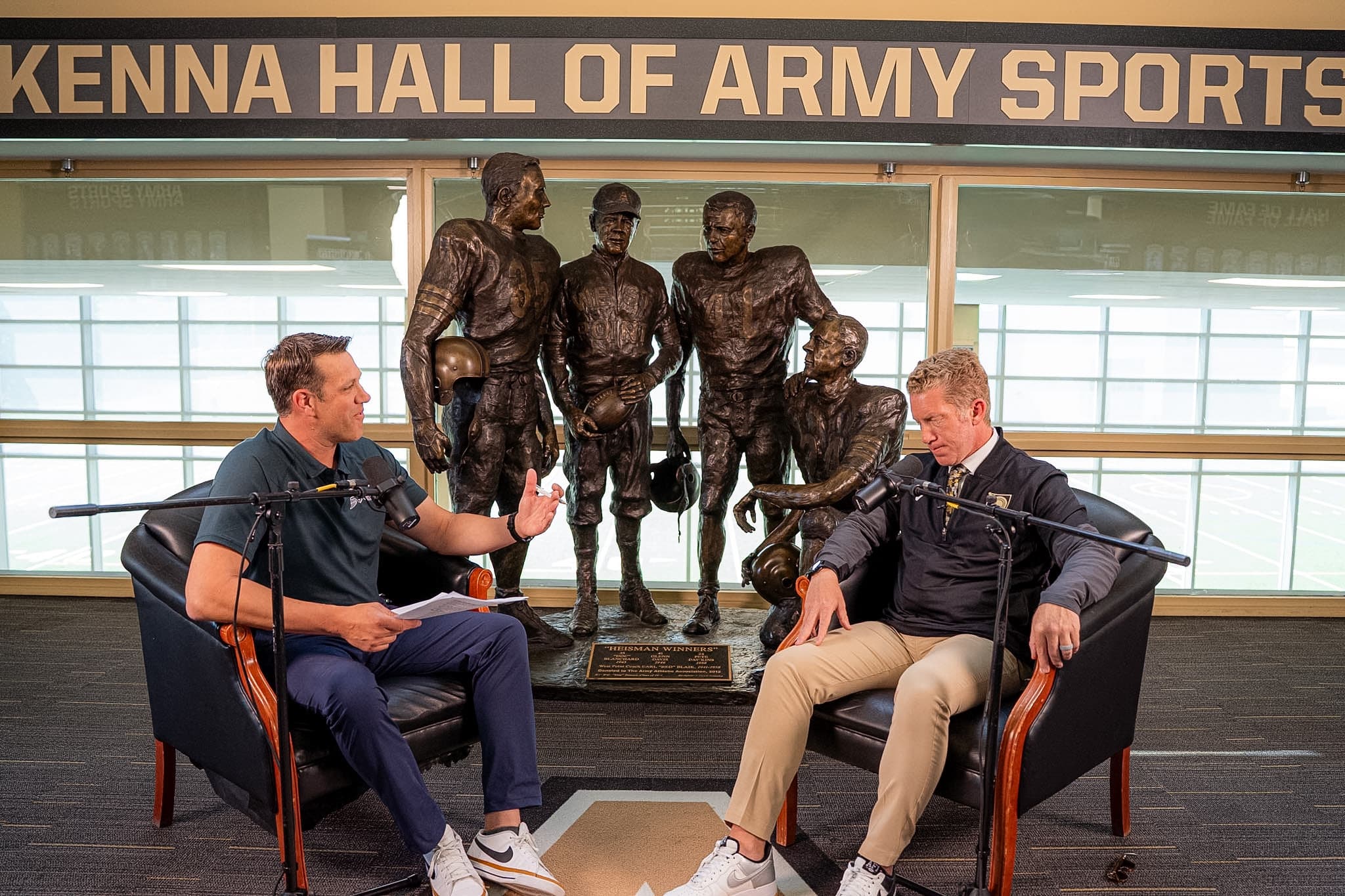
Thank you for having me.
Thanks for having us. We are here. We are in the hall of fame at West Point. The fields are on both sides of us. Really, the practice field. We have got the stadium. It is under renovation for a significant amount. We had a chance to walk around for a little bit before we sat down and started having a conversation.
You are surrounded.
I cannot get out of it. Being an OCS guy, I do not know what to do right now because I have West Point in my face in every direction.
You have three Heisman Trophy winners behind you and Red Blaik, our all-time winningest football coach.
You serve as the 31st athletic director here at West Point in the United States Military Academy. This is the home of Army athletics. This is the home of the Army. It pains me a little bit to say that as an officer candidate school graduate, but it is what it is. This is where it starts for so many who go out into our ranks, especially, obviously, not in the officer corps.
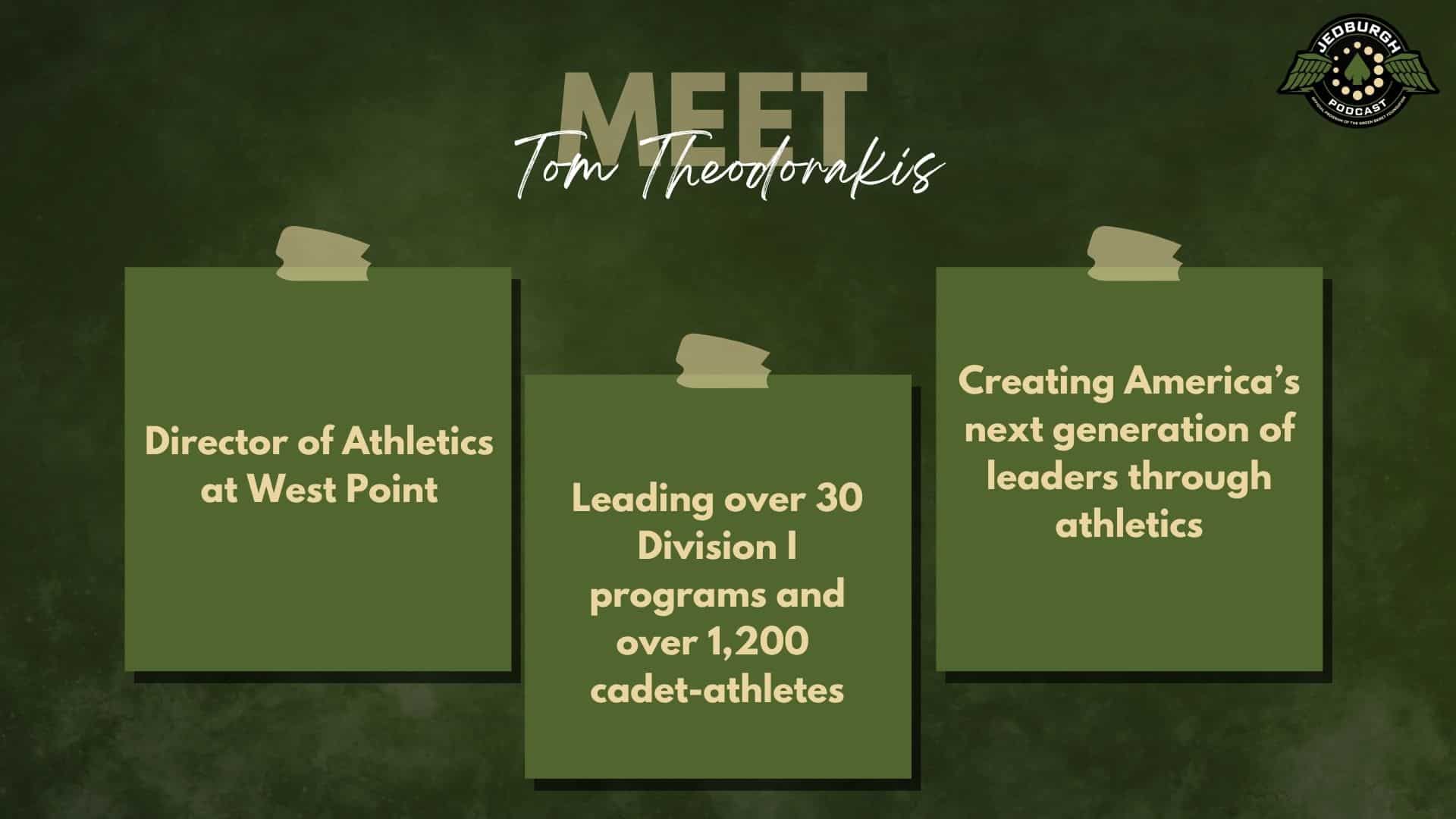
There are lessons learned that come out of this institution, whether you play athletics or not, that shape our nation, shape our national security strategy, and also shape our business and our economy because so many of our veterans and so many of our West Point leaders get out when they leave service and do amazing things. We were talking about just a few minutes ago, how we have got two alumni who own NHL teams who were in the Stanley Cup four years in a row. There are amazing things that they do. From your perspective, you sit here in this chair. What does it mean to be the athletic director of West Point?
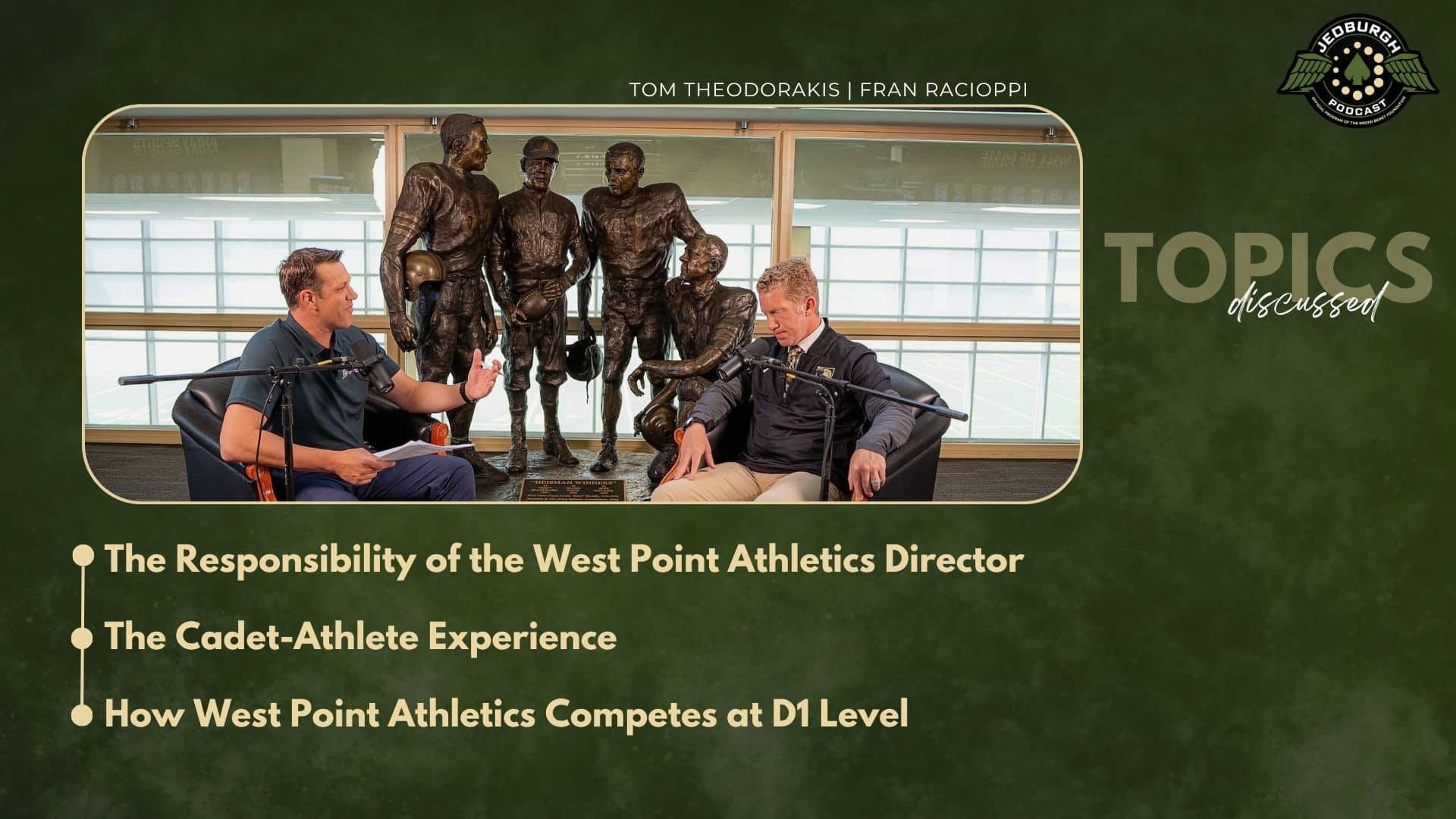
You said it perfectly. For me, it is very humbling. It is also a tremendous responsibility, to be honest with you. You talk about the future of our country. You talk about the future leaders of our nation. In so many ways, our athletic department’s job is to make sure they have the resources available to develop. When we say develop, what do we mean? It is the idea that they can continue to, we can recruit, we can educate, we can train, we can inspire, we can develop leaders of character here that are embracing the Army values that are going to go on to really do some amazing things in this world. In many ways, our athletic department’s job is to ensure they have the resources they need to develop.
How can we continue to have athletics be part of the curriculum in the overall mission of this institution to make sure that what they’re learning here is going to transform in other days and in other fields. For us, it is a tremendous responsibility. I will also take it a step further. The coaches that we hire here are around our cadets more than anybody. It is important who we are surrounding our cadets with. Almost every detail here plays such an important role in their development as future second lieutenants and more.
You have some priorities that have started to shape what athletics looks like here at West Point. There are four of them, primarily. The first one, I want to go over those one by one for a couple of minutes, because I think they’re really important. We caught them on the way in here. Number one, competitive success. We look at Army athletics. I was a Division I athlete at Boston University on the men’s rowing team. We rowed against the Army. Quite frankly, it was not that hard to win against them. You walk around here and see Army athletics in the last twenty-plus years, and I have to date myself, because it has been a while since I was in college.
It is okay to say you are old. Do not worry about that.
Unfortunately, I do not even have my glasses, so some of these things I cannot even see behind you. It has come so far. In all sports, football’s always been at the top there, but we look at lacrosse and the women’s sports and how far they have come over the last twenty-plus years. Competitive success in division one is very difficult. How are you recruiting athletes? It is not just about recruiting the athlete. For you, somebody who comes to West Point has to have the military discipline to know that, “This is what I want to do at least for the next eight years of my life.” Also, I am going to go one step further because if West Point is not hard enough, I am going to play a sport.
As far as recruiting, for us, there are still men and women out there who want to be challenged, who want that structure, who want to serve their country. It is our job to find them. On top of that, I will also say that with West Point, we need to continue to just recruit and honestly put ourselves on the biggest stage possible. Athletics can be the proverbial front porch of an institution. What do I mean by that? When people watch the Army-Navy game on CBS, you have seven million plus viewers watching that game.
That is an opportunity for us to wave the flag, to tell the story of West Point. When we won the American Conference two years ago in football, you had over two million people watching that game on ABC, and watching Army win the conference championships. Athletics can be that opportunity to introduce West Point to people’s lives. As we take the Army-Navy game and football on the road, there are different pockets and areas where admissions is important, and for us to tell the story of, “West Point might be an option for me.”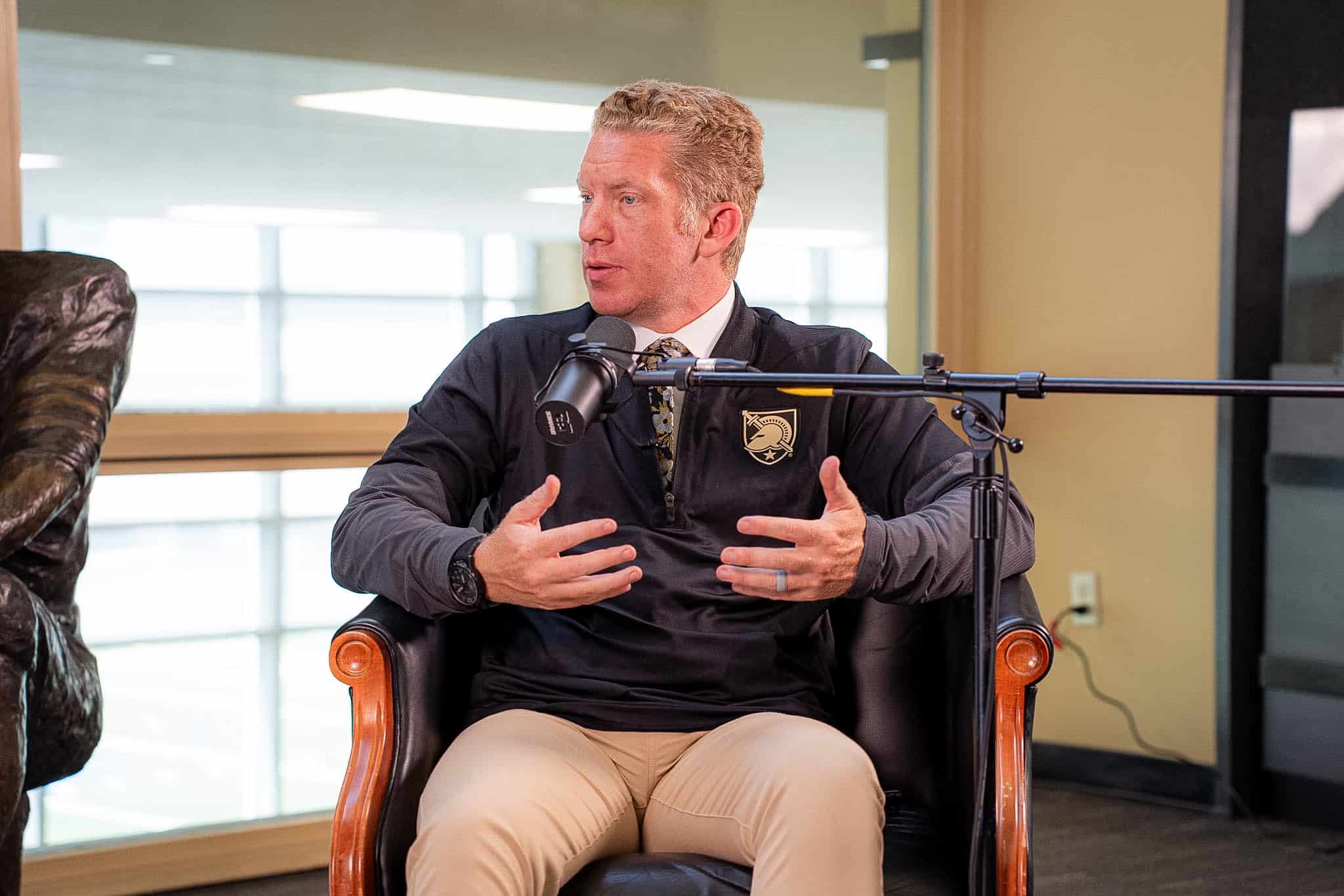
You guys have played, as you said, on huge stages and just shout out over here, hiding a little bit. He is the assistant athletic director here, whom we have had a chance over the last couple of years to get to know from his time at the Patriots, where you had the game at Gillette Stadium, and he was instrumental in getting that done over there.
Also, loaning us Coach A for the Stars and Stripes Classic, where Green Berets have taken on the Navy Seals two years in a row, the third year coming up. Navy, unfortunately, has gotten the best of our team so far. We’re working on that. I mean, you take a guy like Coach A, who is now taking former players, and as they’re serving now in the active duty, and some of the guys are retired now. We have got to field the younger crew, but still inspire those guys to get out there and work really hard.
How can we continue to find ways to just, on those stages, to tell our story and to showcase the amazing things these men and women decide to do to serve their country? It is a responsibility we all take, and Phil’s done an amazing job with them.
The second one of those is to have an extraordinary Division I athletic experience. We spoke for a second about being here, a 170-million-plus-dollar renovation going on here in the stadium. The facilities are top-notch, absolutely top-notch. Why is that Division I athletic experience so important?
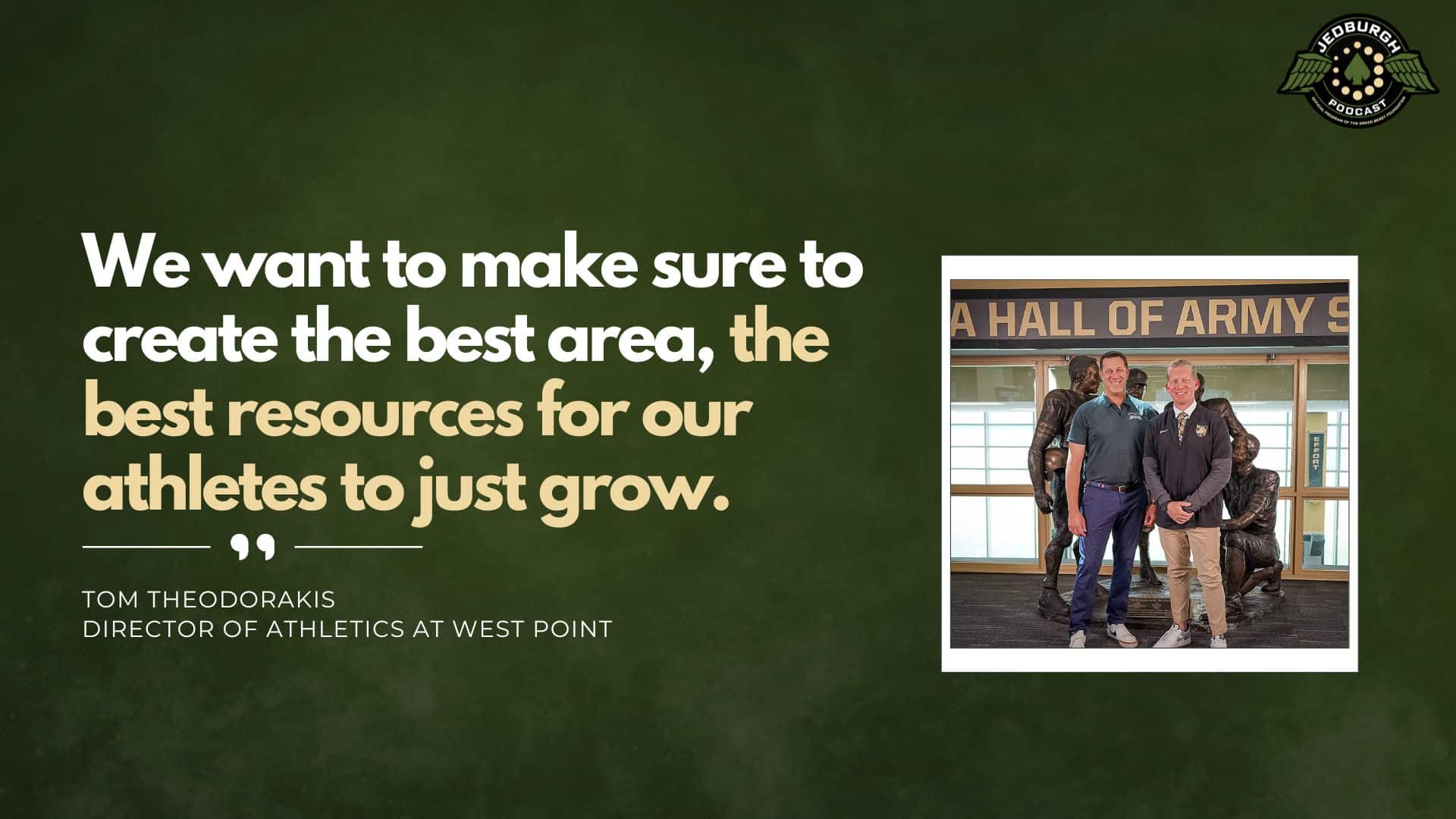
For us, we equate it to, let’s just say, a student who is a chemist. You want the best lab for them. For us, we want to have the best atmosphere for our cadet athletes to develop. A $170 million football stadium renovation, all privately funded. We want to make sure to create the best area, the best resources for them to just grow. Providing extraordinary Division I experience could be things like renovating our football stadium.
For that, it touches a lot of people, that renovation project. It is new seating for our corps of cadets. All of the corps of cadets will have new seating from end zone to end zone. The TV shot watching the game, you’ll see the whole corps. On top of that is hospitality. The way people absorb games now is different. The Stadium is a hundred years old, so they were not thinking about things like suites and hospitality areas.
We now have that. We have eighteen suites, all sold out. We have loge boxes, we have club space, all of that is sold out. There was a need and appetite for it from our fan base. Michie Stadium is already one of the top places to watch a football game, to watch a lacrosse game, to watch men’s and women’s lacrosse games. This is just going to take it up a level.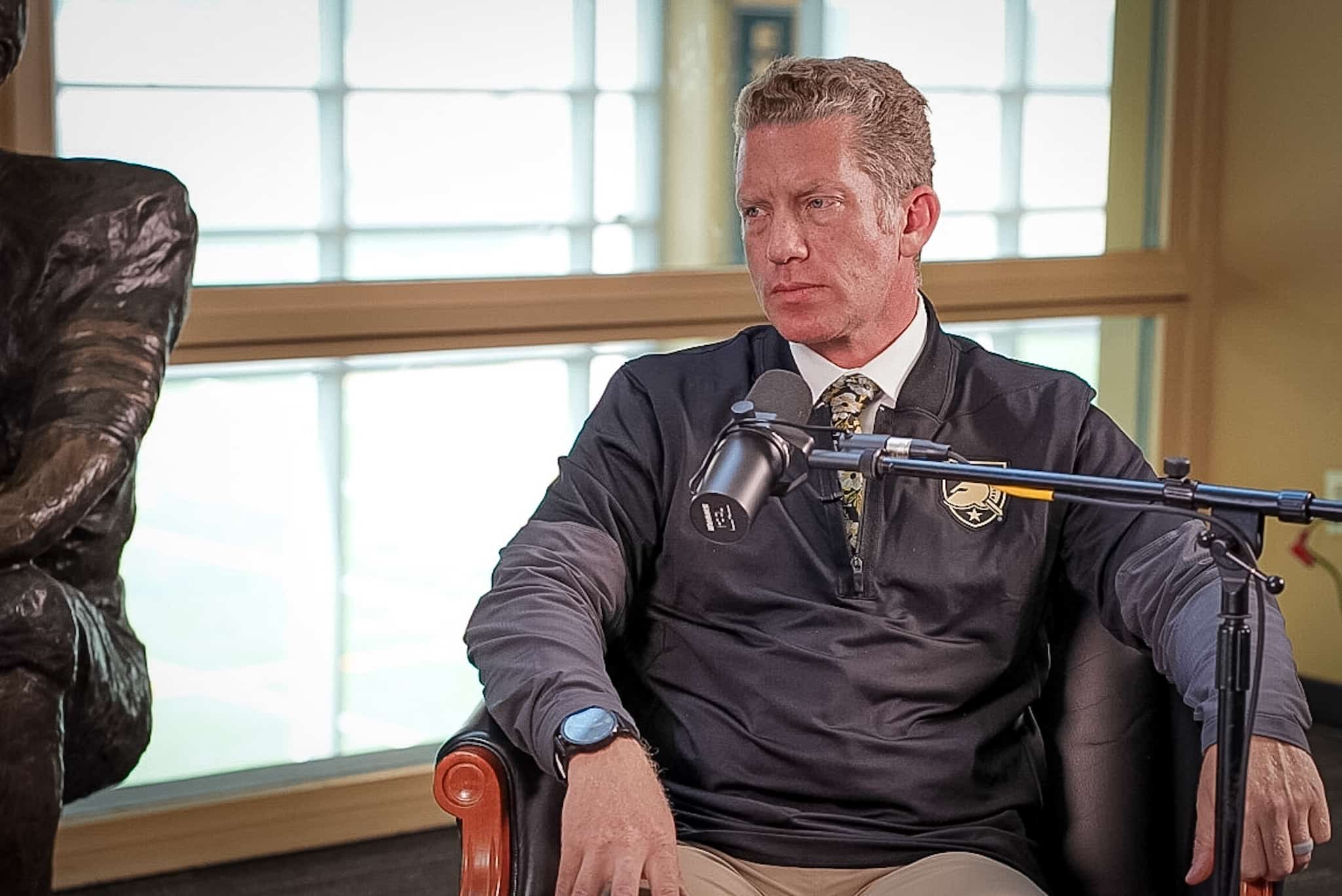
It is really going to open opportunities for us to host events, things like concerts and other live events. That is really exciting. I just say as a whole, all of our facilities are extremely important, whether it’s the weight room or it’s our opportunity for us on the medical side of things. They deserve that, they need that care, they need those resources to continue down a path of wellness and make sure they can continue to recover the right way.
It would be important in recruiting, too, because when you’re out there prospecting recruits to come in, and you want top division one athletes, these kids have a choice. They can go to Alabama, they can go to an SEC top-tier football school, and you’re trying to get them to come here. I have been in some of those facilities, and they’re amazing.
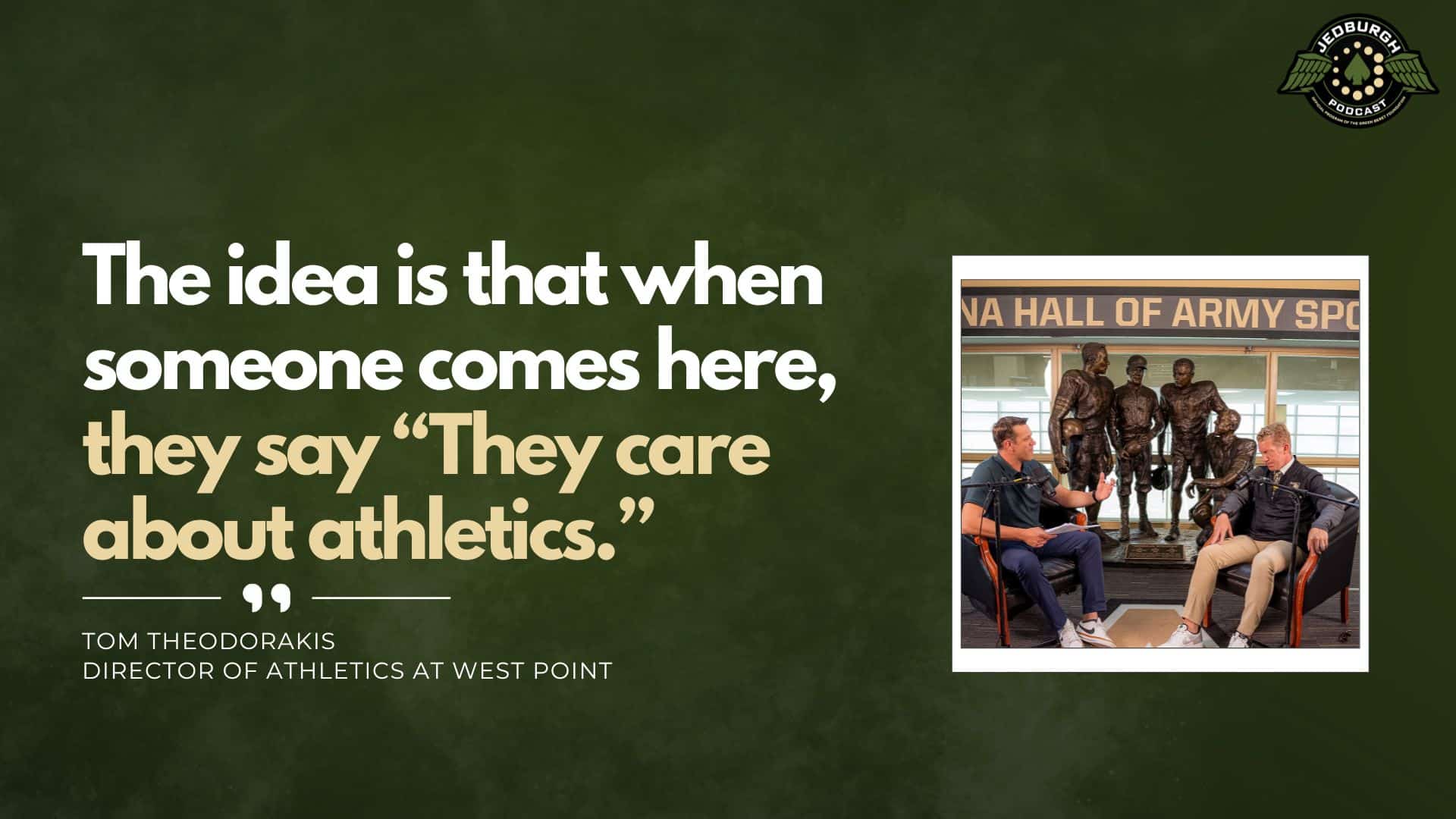
They are. The idea is that when someone comes here, they say, “They care about athletics, they value it.” That is one of the most important things when people come here. They say, “These types of facilities, I do think, showcase and tell a story that this institution is aligned.” They care about athletics, but it’s also really important to the mission of the institution. We’re just so aligned in that way that you can win here. You can have tremendous success on the field. You can also be a great officer. Those are not mutually exclusive. In so many ways that’s actually tethered together.
Number three is public engagement and revenue generation. One of the things that you mentioned a second ago is that the renovation of the stadium is privately funded. How does that work for the athletic department when you look at how you fund this whole program?
Our institution talks about being the most connected body in the country, and it should be. Over 50,000 graduates of this institution are living, but also those who served in the army, those who served in the armed forces. We want to make sure that we are representing them in the best way possible. We are fortunate enough in our modeling, as far as financially, that we do get support and grants from the government. Our institution aims to be the most connected body in the country—and it should be. With over 50,000 living graduates, including those who served in the armed forces, we are committed to representing them in the best possible way.
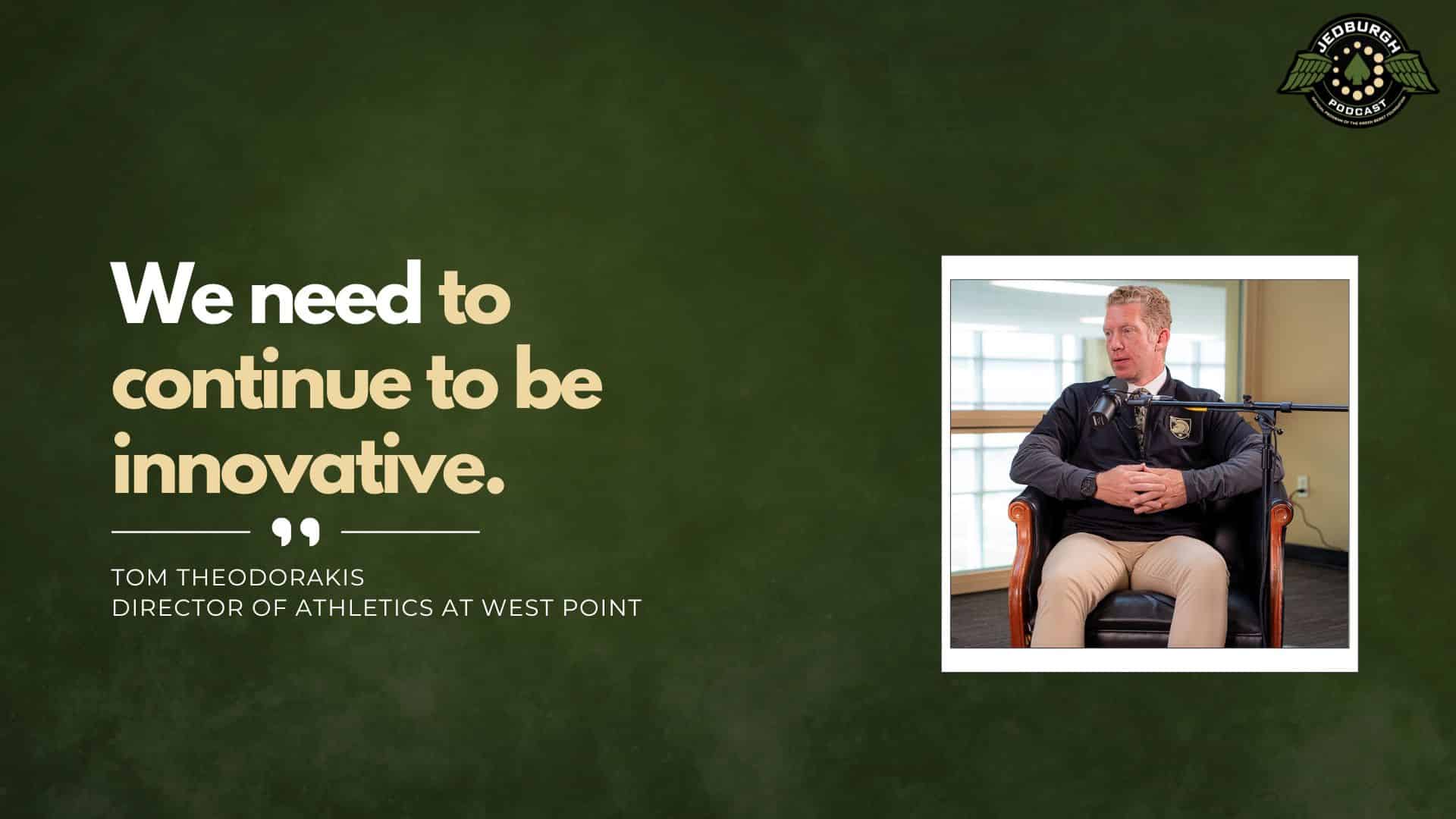
We also rely on philanthropy, we rely on ticket sales, and other revenue streams. We need to continue to be innovative in that way. As you know, what’s going on with college athletics right now, there are opportunities for us to continue to be aggressive in that way, so we can continue to do things like facility enhancements and more programmatic things to make sure we have initiatives that are putting our men and women in a good position to grow.
Does the NIL stuff affect the athletes here?
It does in the sense that we’re actually not allowed to do it. It is against the rules as far as military academies. I will tell you that what we sell here is not the transactional experience, but it’s the transformational experience. Try not to look at it in the short term, but look at it long term. You mentioned it earlier, but when individuals come here, you’re getting your degree in leadership. What does that degree mean? What does that path look like? There are so many ways to go from that.
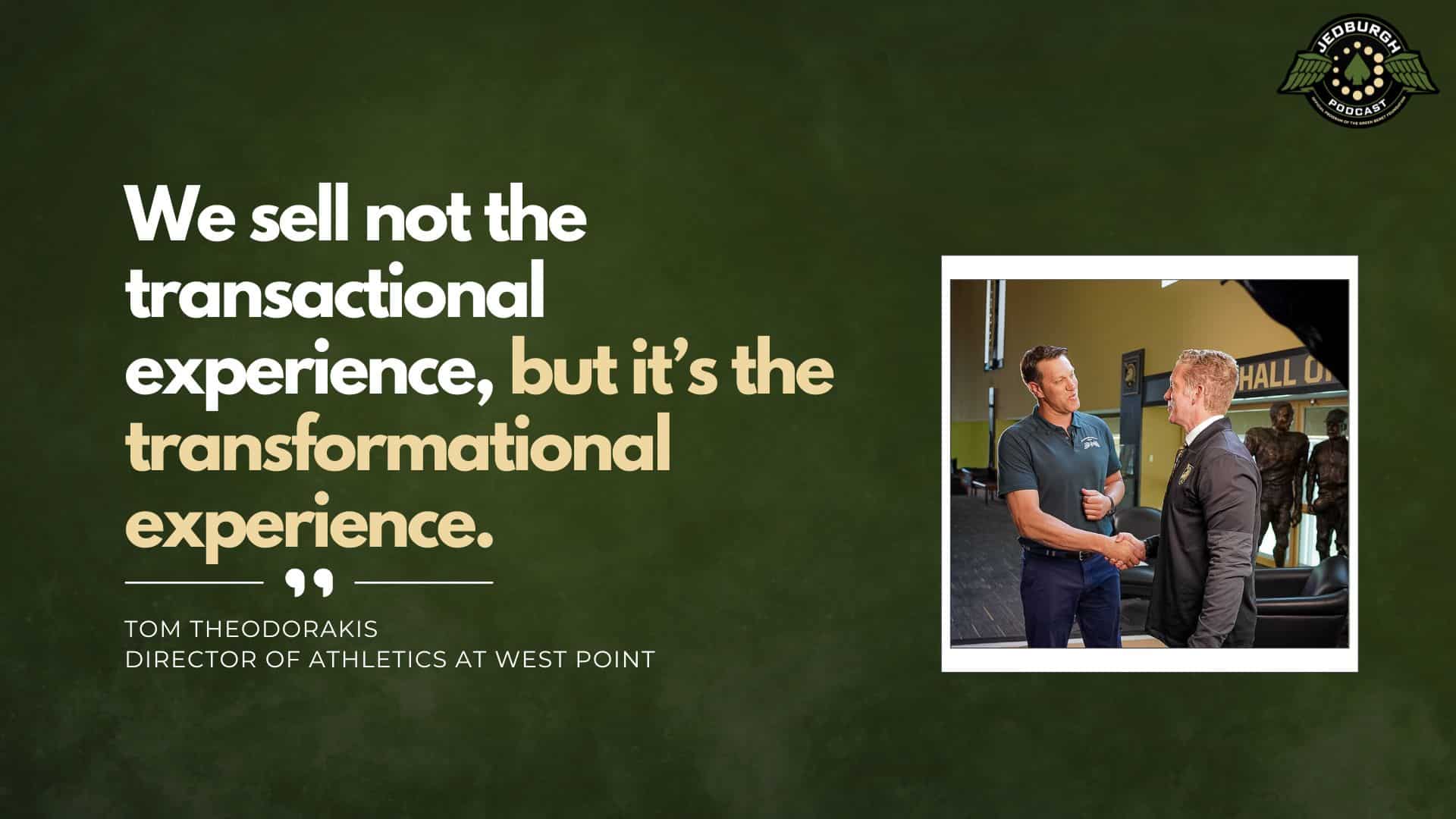
You could be a general officer one day, or you can own an NHL team, or you can be the CEO of SoFi. The sky’s the limit, and we have so many examples of that. It’s really trying to sell that long-term vision of if you go down this path, not just the 47-month experience, but really how it sets you up for life. That’s part of the recruiting process. That’s talking to mom and dad early on and getting them to visit. “Is this something that you’d be interested in? Do you want that challenge again? Do you want that structure? Long-term, you’re going to be in a very good position.”
The fourth pillar you have there is sustainability. When you talk about sustainability, what do you mean?
Meaning we have to sustain our athletic department. In this ever-changing landscape of college athletics, what are we doing now to make sure we’re in a good position for the future? Not only maintain, but also how are we thriving? I challenge our coaches and our staff on all these different rules and how college athletics continues to take shape. The best thing we can do is be the best version of ourselves. As we continue to think about the future of our department, let’s make sure that we’re not only preserving it, but we’re also being innovative and putting our department in a good position moving forward.
You said a second ago that when you come to West Point, you’re getting a degree in leadership. I would argue yes, probably first and foremost, and then you have like astrophysicists and chemists and all these other fields that definitely take a back seat when you’re like, you’re an infantry officer.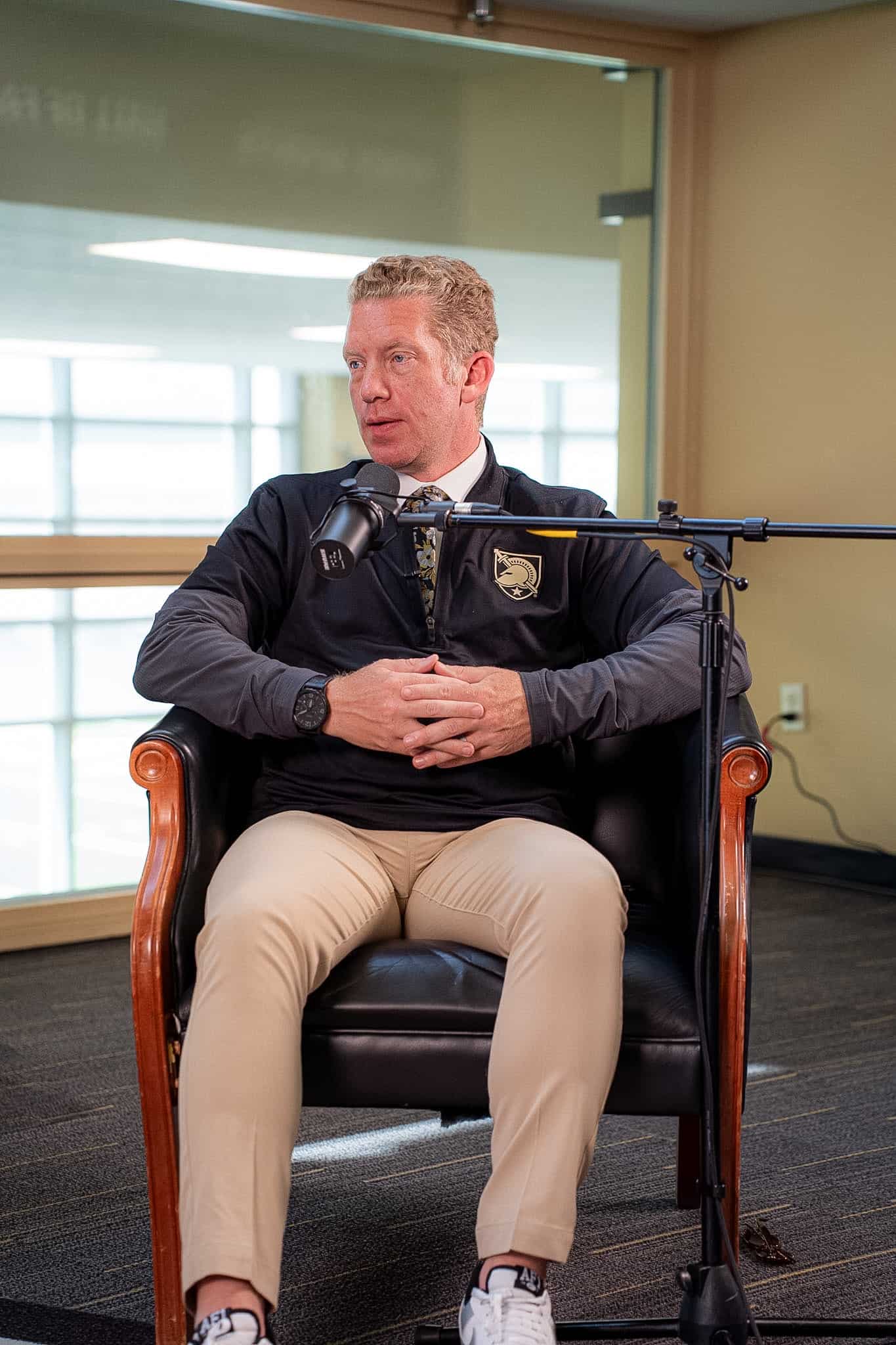
You study those things, but it’s rooted in leadership. 100%.
What is the experience like for a cadet athlete who comes into West Point? They’re freshmen. We have had so many West Point general officers come on the show. I ask them all about their West Point experience. General Votel was like, “It was the worst decision of my life.” He goes into how it became the best, but sitting here as a Plebe freshman year, it was like, “What did I do? I had to get out of here.” Talk about what that experience is like for someone to make that very difficult, and I would say very mature decision as a young adult to say, “I’m going to go to West Point. I’m going to devote the next 8 to 10 years of my life to the military. At the same time, I’m going to play this sport.” Nowadays, day one shows up, and what are they doing?
Candidly, I’m a civilian. I did not go to school here. I had not served. For me, it’s a constant learning process. I will tell you to your point earlier, a lot of alumni come back to West Point. Sometimes it is a process. It is like they wind up coming back and falling back in love with this place, because they lean back and they reflect and say, “What I learned here really did have a huge impact on my life, and it was the best decision I ever made.” It might take you a while to get there, but we hear that often, and I think from our position and our staff, we try to understand it as much as we can.
Our staff does a great job of actually participating in these activities and being with the cadets as much as possible. What do I mean by that? It’s everything from summer training. We participate with them sometimes. I have done the water obstacle course, I have done the gas chamber, I have done things like march back, but we try to be with them as much as possible, not only to see it, but to feel it with them and to let them know we support them. This place is about challenges. This place is about how we make things, because that’s what we grow in those circumstances.
We try to learn as much as we can. We also have what we call our student athlete advisory committee, which is all of our captains. We meet with them monthly, and we talk about how your experience is going and how we can best support you through this, and what ways our administration can help you. We want to hear that voice. We want to be with them when we can and support them through this journey because no one has success at West Point by themselves. It is whether it’s their teammates, it’s their coaches, or it’s our administration. How are we all working together to get the best out of them?
When you look at the life of the student athlete, how is it different from a cadet who comes here and does not participate in that?
It is a lot less sleep. Listen, I think everyone here has challenges in different ways. As far as cadet athletes, they have obviously practice and games and commitments that are above and beyond. What’s unique about West Point is that every cadet again is an athlete. It is not just whether these are NCAA sports we’re talking about, but every single cadet here has to participate in some sport in the sense of whether it’s clubs or intramurals. That goes back to talking about the mission of this institution and how important athletics is.
Whether it’s a corps squad, NCAA athletics, intramurals, or its club, it’s just a huge part of what we do. There is a finite amount of time here, and it’s very structured, no matter if you play NCAA athletics or not, but it’s challenging for everybody. As you mentioned earlier, there is a high level of academics here. It takes a lot of support, a lot of time management, which is a skill I did not have in college, and they learned it pretty quickly here. I always have such admiration for all of them for how they’re able to honestly, not only just do this, but do it at such a high level.
When you walk through the halls here, and even when you come up the elevator, and you come into the hallway, there are a number of banners, posters, and pictures of former Black Knights who have gone into professional sports and are now professional athletes, a lot of them in the NFL and a number of other sports as well. What is the path for someone who says, “I want to play at the professional level one day, but I also have this call to serve, and I want to go to West Point, but then maybe I do want to go play professionally?”
The keyword you said there is path. That’s part of the conversation from the beginning, once they’re recruited, that if you develop to that level, you have the ability to go to the NFL or play a professional sport or participate in the Olympics. We potentially have an example of that coming up in LA 28. From our perspective, it’s challenging in the sense that it’s not going to be available to everybody. There are standards, and you have to meet expectations. If you are at that high level, if you have the ability to meet these requirements, there is a path for you moving forward that you can still commission but also participate in each one of these types of areas. There are standards and expectations that must be met. If you are at that high level and meet the requirements, there is still a path forward where you can commission and participate in these opportunities.
We saw that the Navy kids got recruited this year.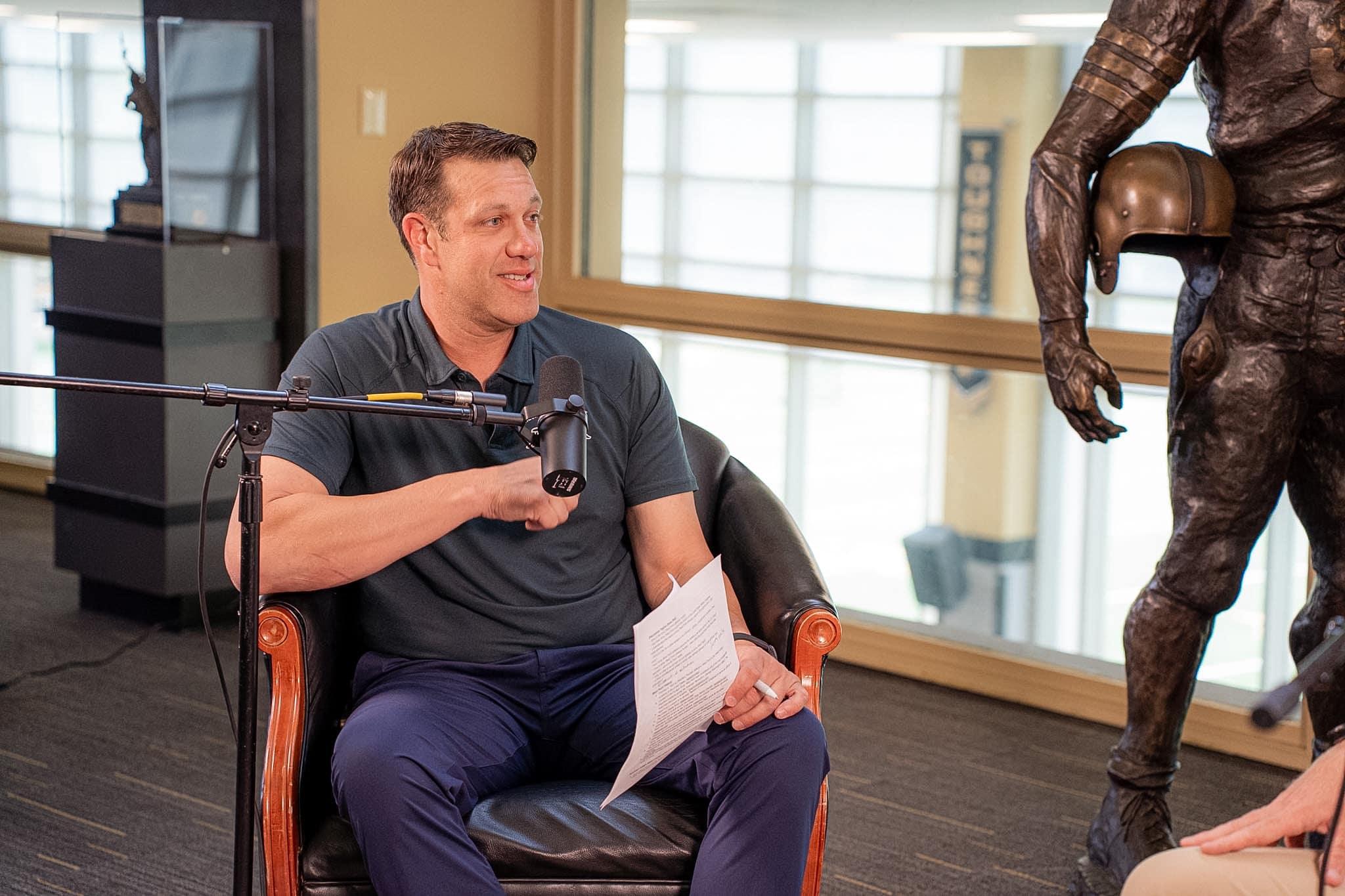
Unbelievable, yeah, they drafted.
That was pretty incredible. Those opportunities are pretty cool.
We look at it as a great opportunity just to tell our story again. You talk about the biggest stages possible, it’s saying, “I can do all these things, and I can go to an institution like this. I can serve my country, but I can also play at that high level.” As you mentioned, there are many examples of that.
Coaching here at West Point is not too different from being a cadet here at West Point, and it’s a rigorous selection process. You’re fully indoctrinated into the West Point world. When you look at what it takes to be a coach here and what you’re looking for in your coaching staff and support staff for various athletic programs, what are you looking for? What do you want to see? What does it take to do so?
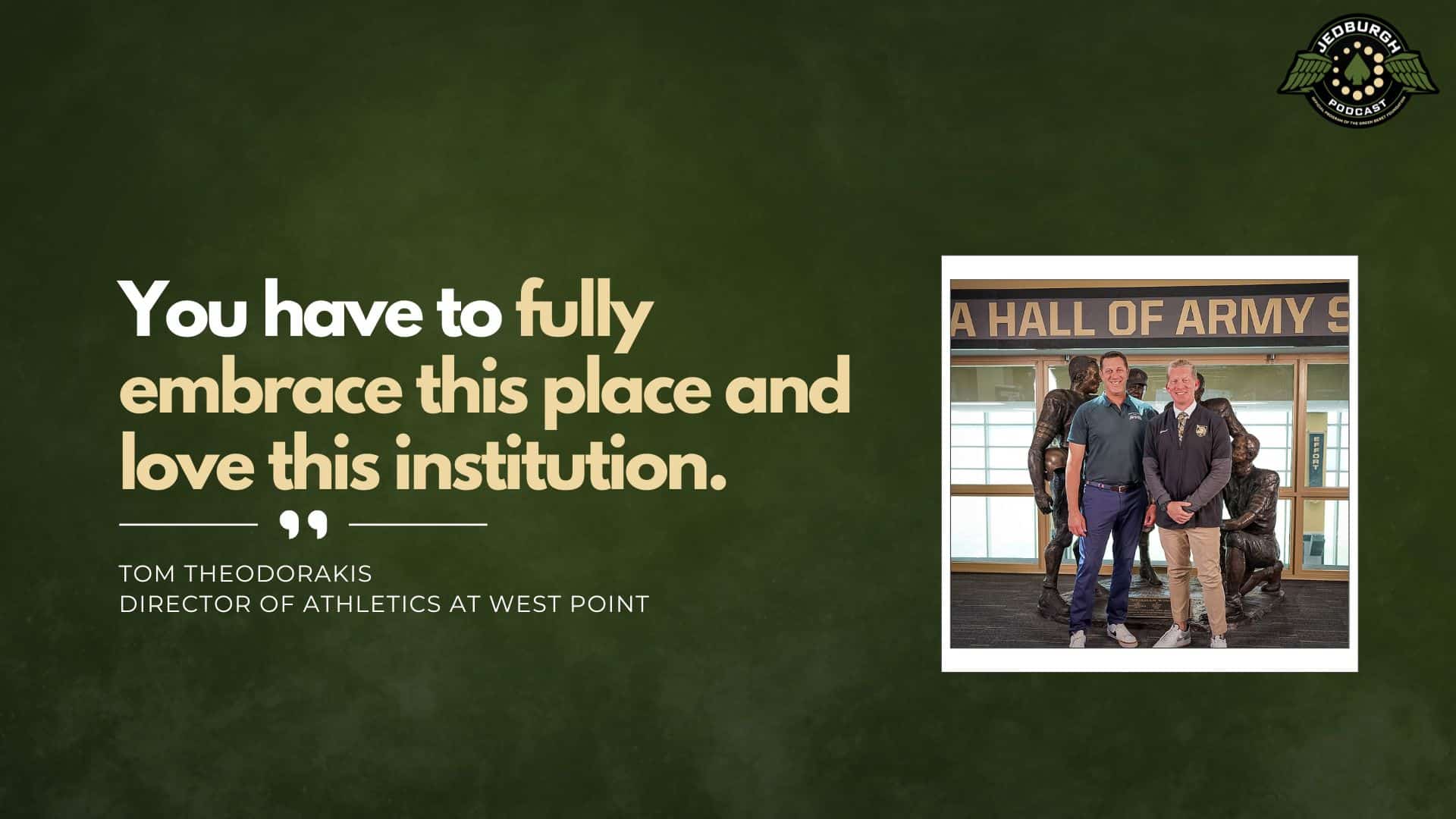
It’s an in-depth process, I can tell you that. For us, it starts with character. What kind of person are you? There are a lot of characteristics, there are a lot of soft skills, things we look at in individuals. The way I put it is you have to fully embrace this place and love this institution. If that’s not at the core of you working here, being a coach here, it’s just not going to work out. You either embrace the mission, you live the mission, or you do not cut corners. That’s what success at West Point looks like.
You can find that pretty quickly when you start interviewing with people and start hearing their stories. You either gravitate towards a place like this, or you say, “This is not for me,” and that’s okay. With our coaches, as I mentioned earlier, they’re around our cadets more than anybody. Our staff is around our cadets a ton. We want to make sure we surround them with individuals who are brought into this place, who live it, and who really care about it. We have been very fortunate, even much prior to me putting people amazing coaches surrounding our cadets that have had a tremendous impact.
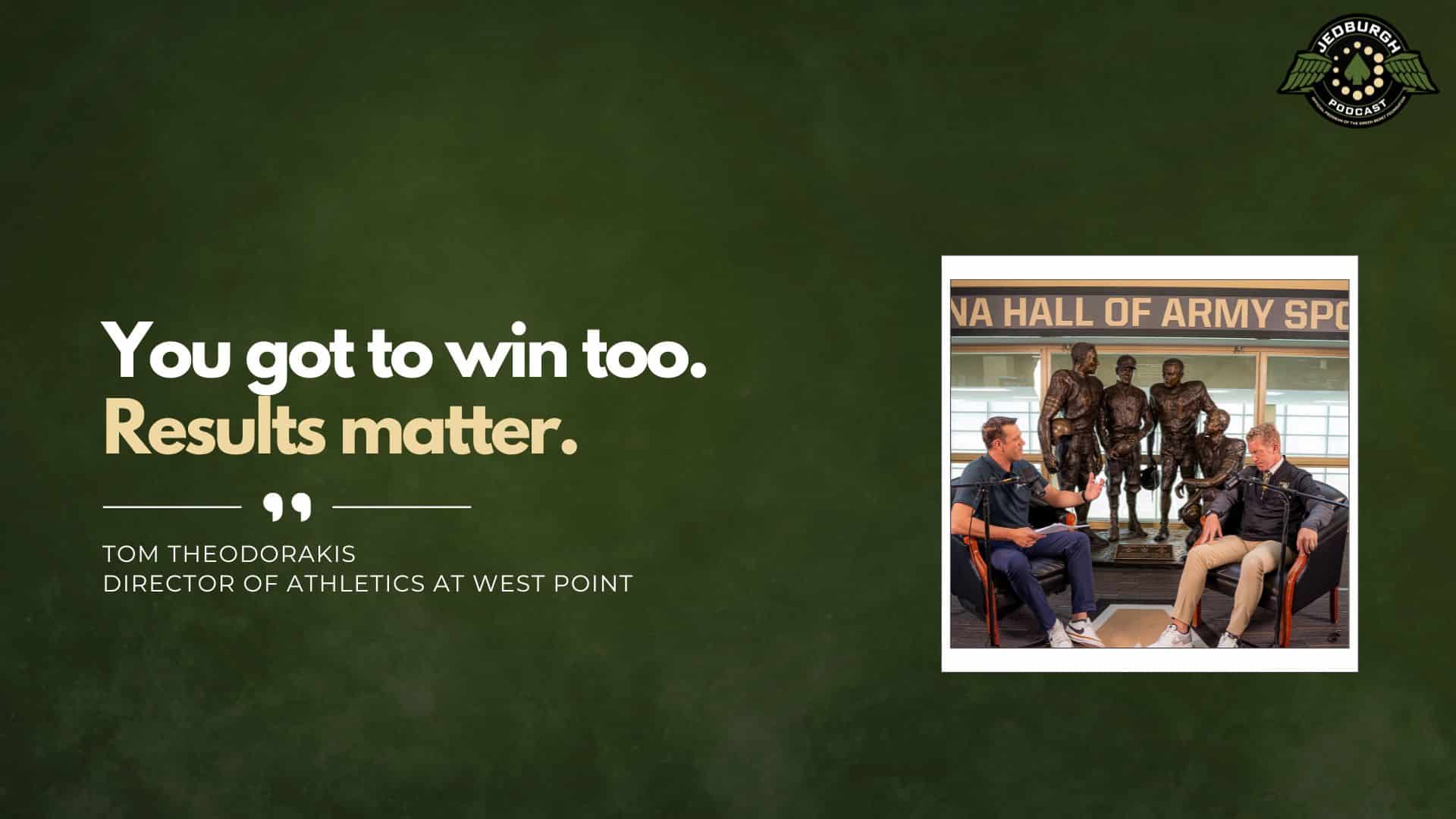
By the way, you got to win too. That’s important, right? I do not want to hide from that either. Results matter. Results matter. It’s that piece, but it’s also what is your track record? Let me tell you who’s coached here. Mike Krzyzewski, Bobby Knight, Red Blaik, Jeff Monken. Across the board, amazing coaches have gone here, Maggie Dixon, who have embraced the values of this institution, but have also won. There are a lot of people who, whenever we do have jobs open, say, “That’s a place that does it all and does it the right way.” It does not mean we’re perfect, but you feel good at night when you go to bed saying, “You’re making an impact and our country’s in a good place.”
We have had a great opportunity over the last couple of years to sit down with senior leaders in the Army, specifically, in this reference, I’m talking about the Sergeant Major of the Army, Michael Weimer, who has been a great partner of the show and has been doing great things up there in his position at the Pentagon.
You’re running out of people to interview, so I’m low on your list.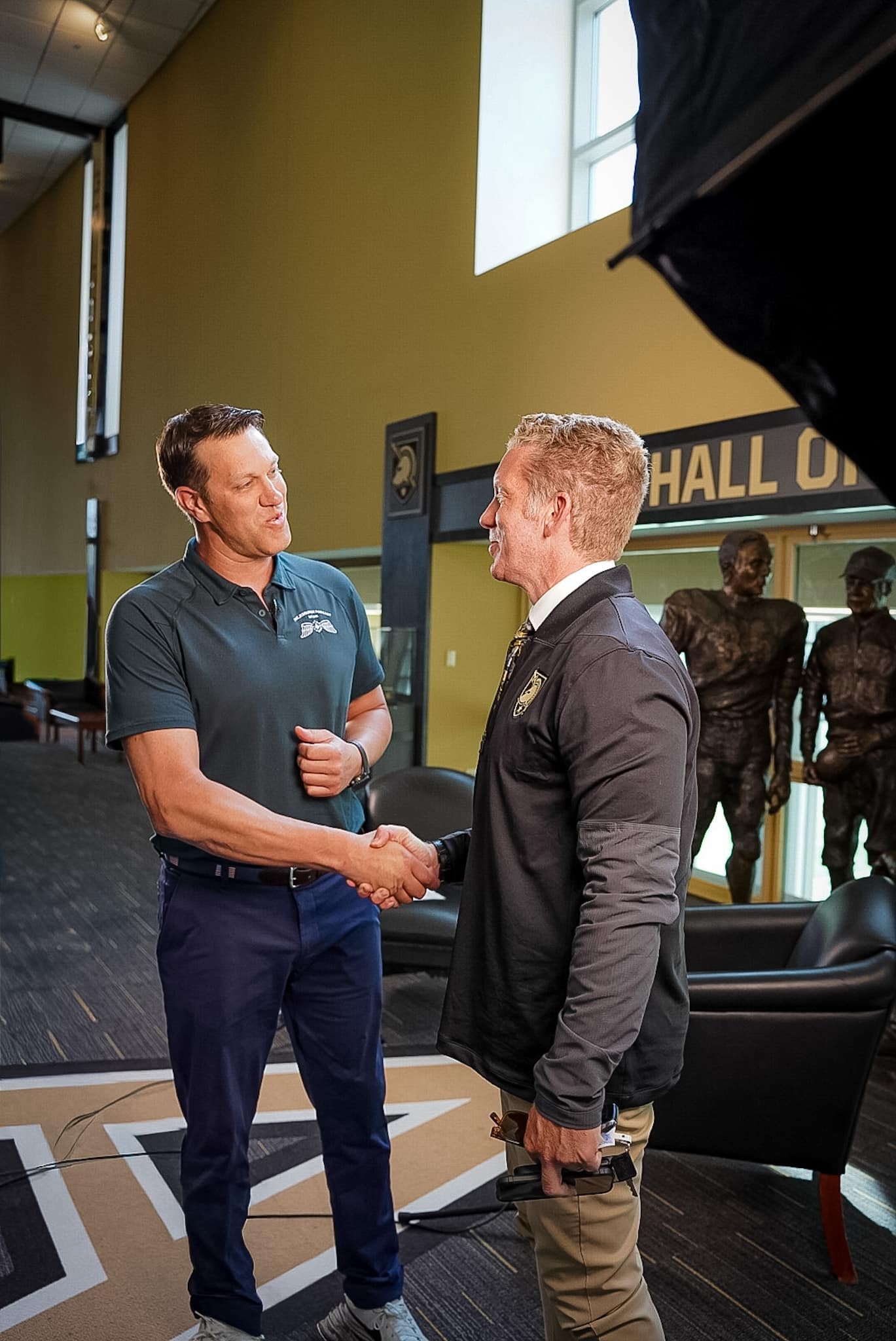
Unfortunately, we’re going to the dark side, and we’re going to interview the Sergeant Major of the Marine Corps. Next week, we will interview Troy Black, who was his predecessor. We’re branching out now. The other components are embracing us, which is great. Sergeant Major Weimer talks about developing warriors. When you come into the Army, you are at core a warrior. Your profession is war fighting. How does the athletic experience at West Point, whether you’re in an intramural club or NCAA level, prepare a cadet to be, number one, a leader of others first and foremost as a second lieutenant in the Army? Number two, a warrior who is proficient in the task of war fighting to win our nation’s wars?
I will tell you, I think athletics may be the best example of that to help prepare you. Look at football, you look at women’s rugby, those are some of the hardest hits you’ll ever see if you go to a women’s rugby match, what they’re doing. It is not just the combative part of it, but it’s the teamwork. It’s being able to, when you’re hit, lift each other up, being positive in hard situations, and being able to control your emotions.
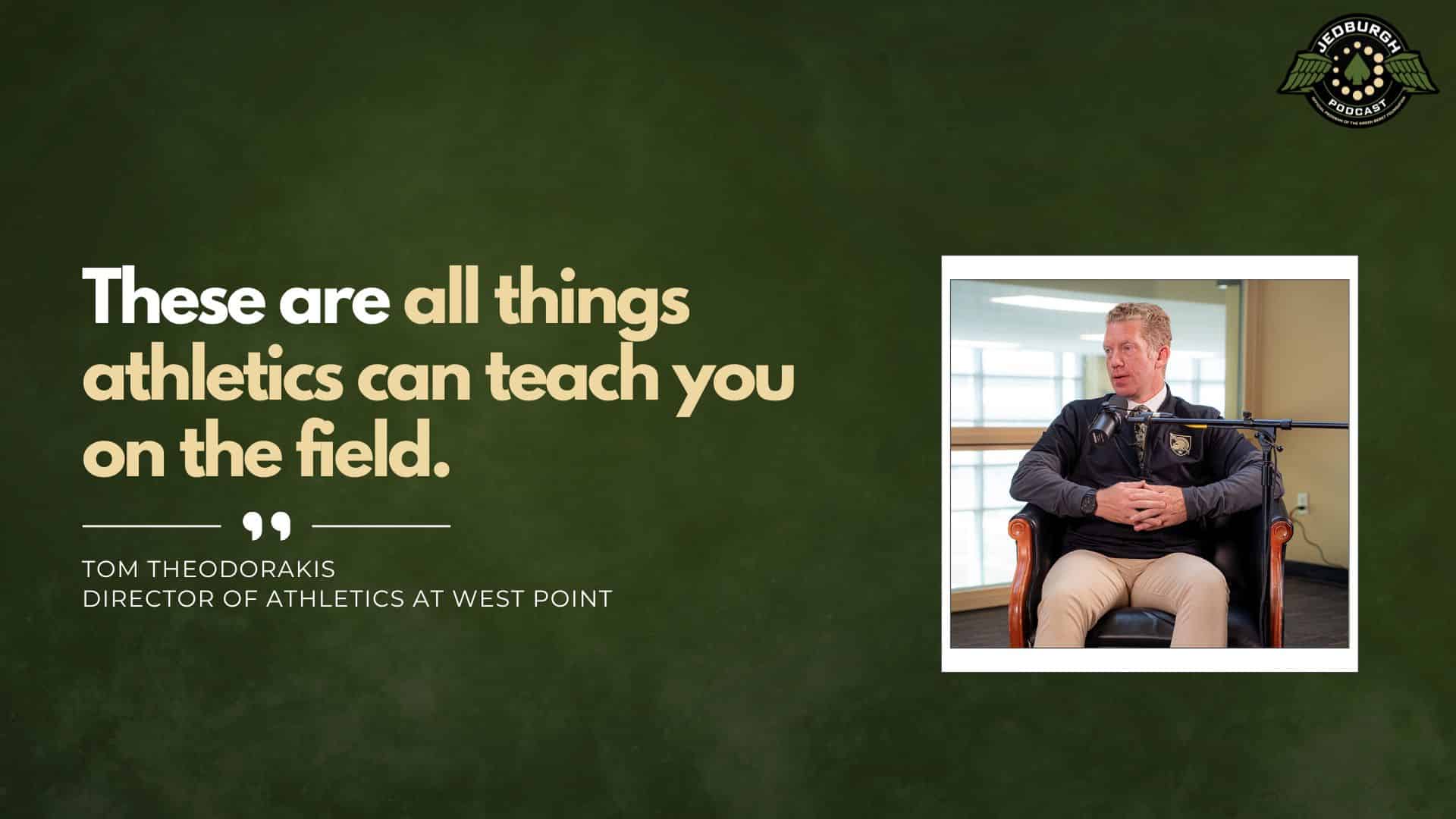
These are all things that I think that we know that athletics can teach you on the field. There is a saying you’ll see throughout here by General MacArthur, “Upon the fields of friendly strife are sown the seeds that on other fields, on other days will bear the fruits of victory.” Meaning what you learn in the field here, or it could be the pool or the track, is going to translate to other fields on other days. These lessons, I think, really are ingrained in whether it be the warrior ethos or lethality. All those things are baked into helping produce the very best officers. I think it really does prepare them for that next step.
We just started the summer of 2026. We’ve got them training in the weight room. We can hear the music in the background. It has been a nice undertone sitting here right above and looking down. We’ve heard some of the weights crashing on the floor. 2025 and 2026 were, for all intents and purposes, the last two years, and I will throw some things out that have been very successful. We won our 2024, 2025 Patriot League President’s Cup for the first time in twenty years.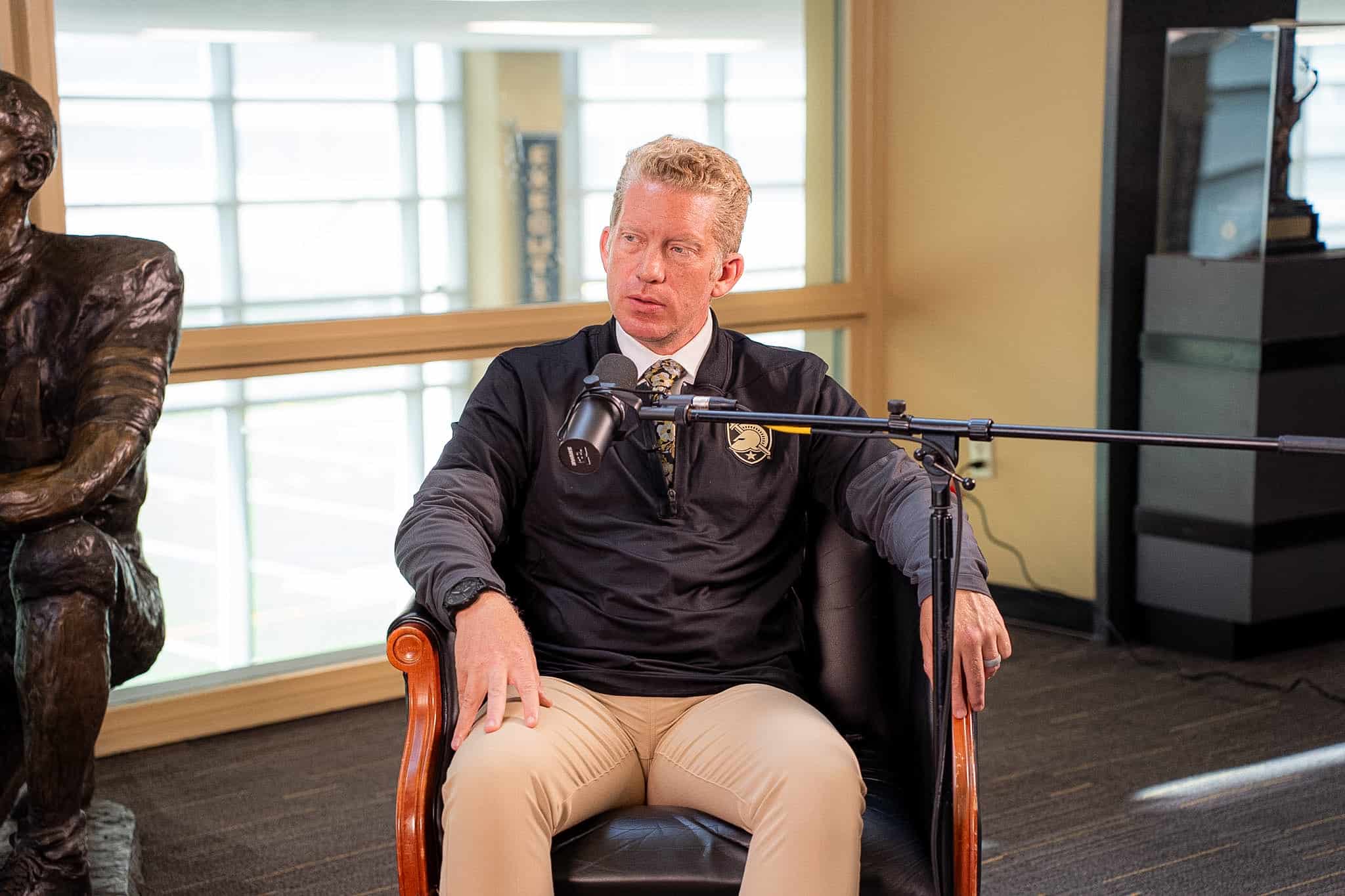
We’ve also finished second overall in 2025 and 2026. Patriot League championships recently in women’s soccer, women’s cross country, men’s lacrosse, women’s outdoor track and field, Army women’s program led the Patriot League in 2025, 2026, beating Navy and BU. Men’s lacrosse won the Patriot League title in 2026. I can go on here through a number of different accolades over the last two years, including baseball won last year, too. When you look into next year, what is your definition of success for Army athletics going into the next season?
On the field, it’s winning conference championships. It’s beating the Navy, it’s beating the Air Force. Those are our rivals. It’s competing in a subway tournament. Those are the expectations. I will also tell you off the field, over 40% of our cadet athletes are on the Dean’s List. Also, what are they doing in the summers for our summer training, and where are they branching out? All those things are how we measure success here. You mentioned some great accolades.
I will tell you that’s a testament to our amazing coaches. It’s obvious to our amazing cadet athletes. It just shows alignment that this is an opportunity where you can have success, you can grow here, but we’re not where we need to be. There are certain areas where we can continue to evolve and get better. What I’ve challenged again, our staff is in this ever-changing world of college athletics.
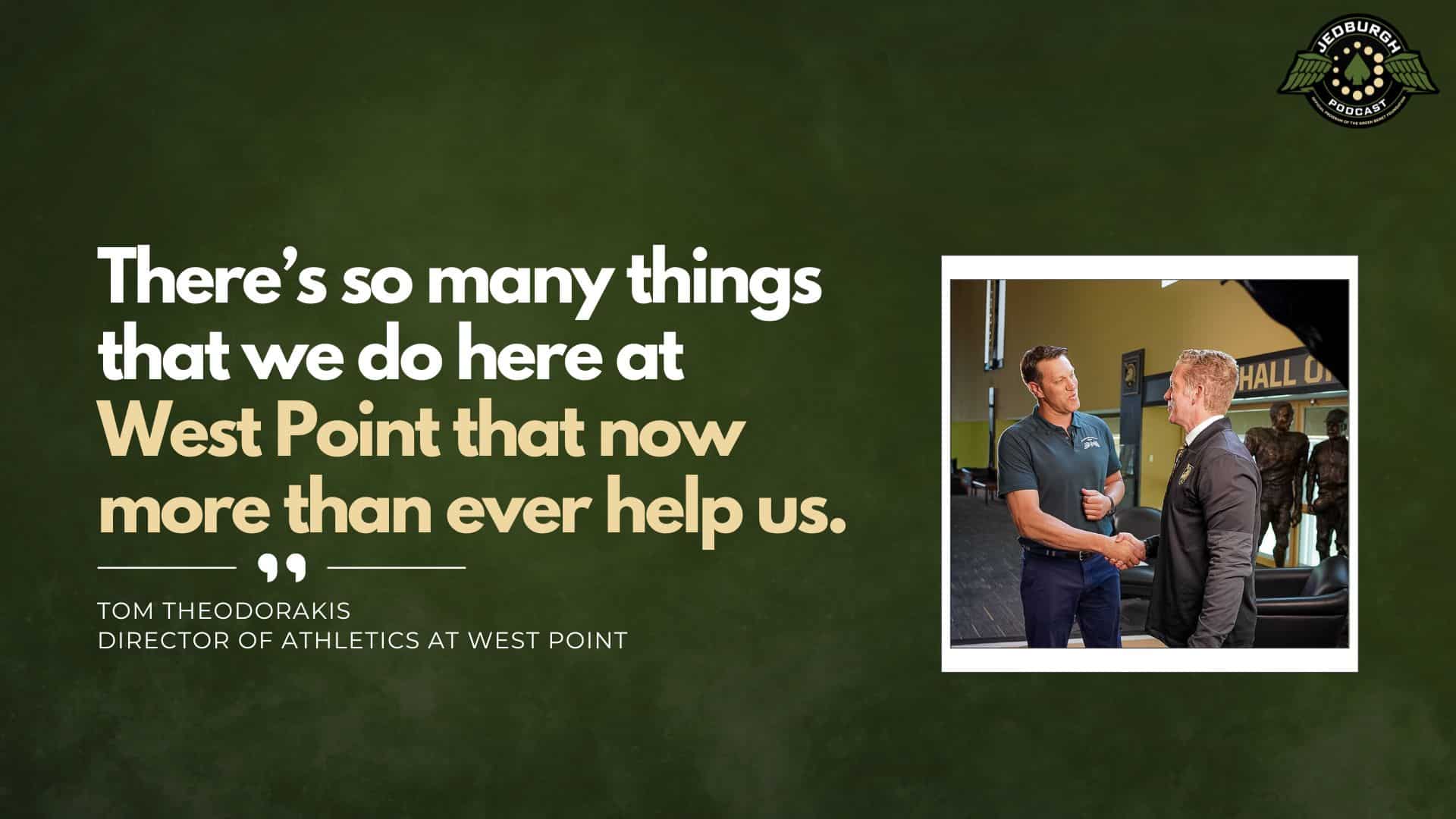
There are so many things that we do here, especially at West Point and within the Army, that I think actually now more than ever help us. That’s things like building teams, building a culture. You talk about the transfer portal and people going in and out. One of the benefits here is that you can develop people here. They’re here for a long time. Some of that success I do think has translated to on the field, and our hope is to continue to do that.
One last question for you. What’s the difference between an army cadet in their first year versus that second lieutenant who walks off that field?
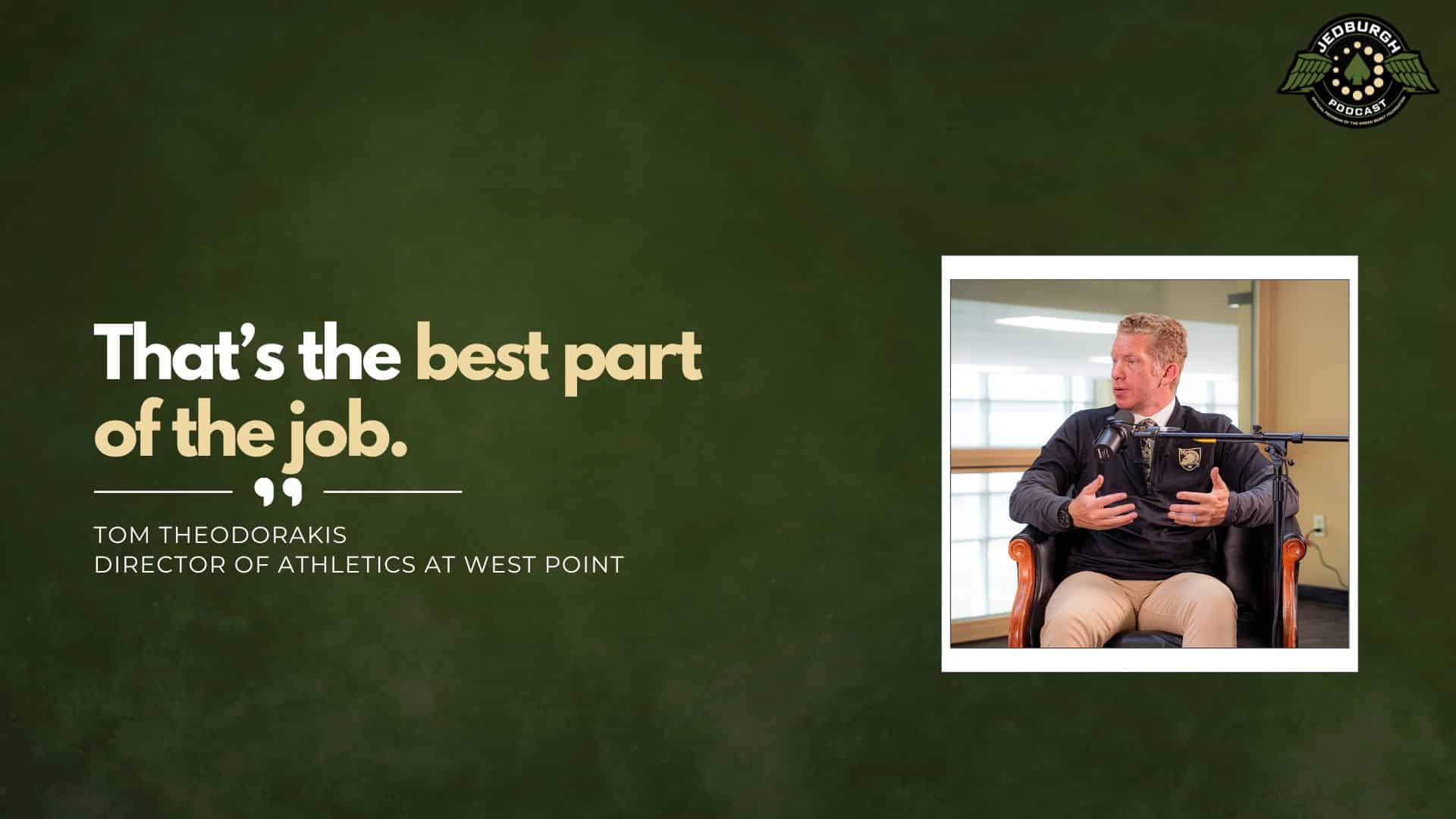
That’s the best part of the job. We’re going to have our day coming up here pretty soon. That’s when cadet candidates are here for the first time, and you see what they look like and you see their presence and maybe a bit of fear, I do not know if that’s the right term, but at least anxiety or a lot of emotion about what this experience is going to be like for them. Two weeks ago was graduation. I’m fortunate to sit on the dais. From my point of view, I could see the cadets walking up the ramp to shake hands, to salute, and grab their diplomas.
It’s one of the most satisfying things you could see, because you can see the smile, you can see the emotion that comes out that they made it. The best part is that’s not the finish line. They’re just beginning their career. You’re actually just seeing this process come to fruition. From my position, I can just see it develop. Every single year, there are some hard times, and there are lessons learned, but when you can see them grow as individuals and you can see them grow in their army profession and what they’re going to be, there is no better feeling. Just to wrap it up, I had the pleasure of going to Fort Benning this year. The best part is that graduation isn’t the finish line—they’re just beginning their careers. You’re watching the process come to fruition.
I had a speaking engagement in Alabama, and I stopped by Fort Benning, and I did not realize it was Ranger School graduation. I attended, and all of a sudden I heard, “Theo.” I looked to my left, and it was the captain of our army hockey team. I’m like, “Give him a big hug. He is about 40 pounds lighter.” I hear, “Theo,” and I looked to my right, it’s a bunch of guys that are playing on the lacrosse team from last year, and then a football player, and that got to me. That’s why we do what we do. To your point earlier, athletics helped build them to do things like Ranger school and put them on this path of embracing the hard. That’s what I love about it. How cool are we to be a part of this? Right. It’s nothing better.
This is an amazing place. It’s getting better. Watching the trajectory of Army athletics has been really inspirational throughout my time in the Army and now post-service. There’s always a good rivalry between West Pointers and everybody else, but at the end of the day, we’re all officers in the US Army, and we have a mission to go out there and defend our nation and win our nation’s wars. It starts here regardless of where you come from. Like you, I believe that being an athlete prepared me for all those things that the Army brought to me and allowed me to do.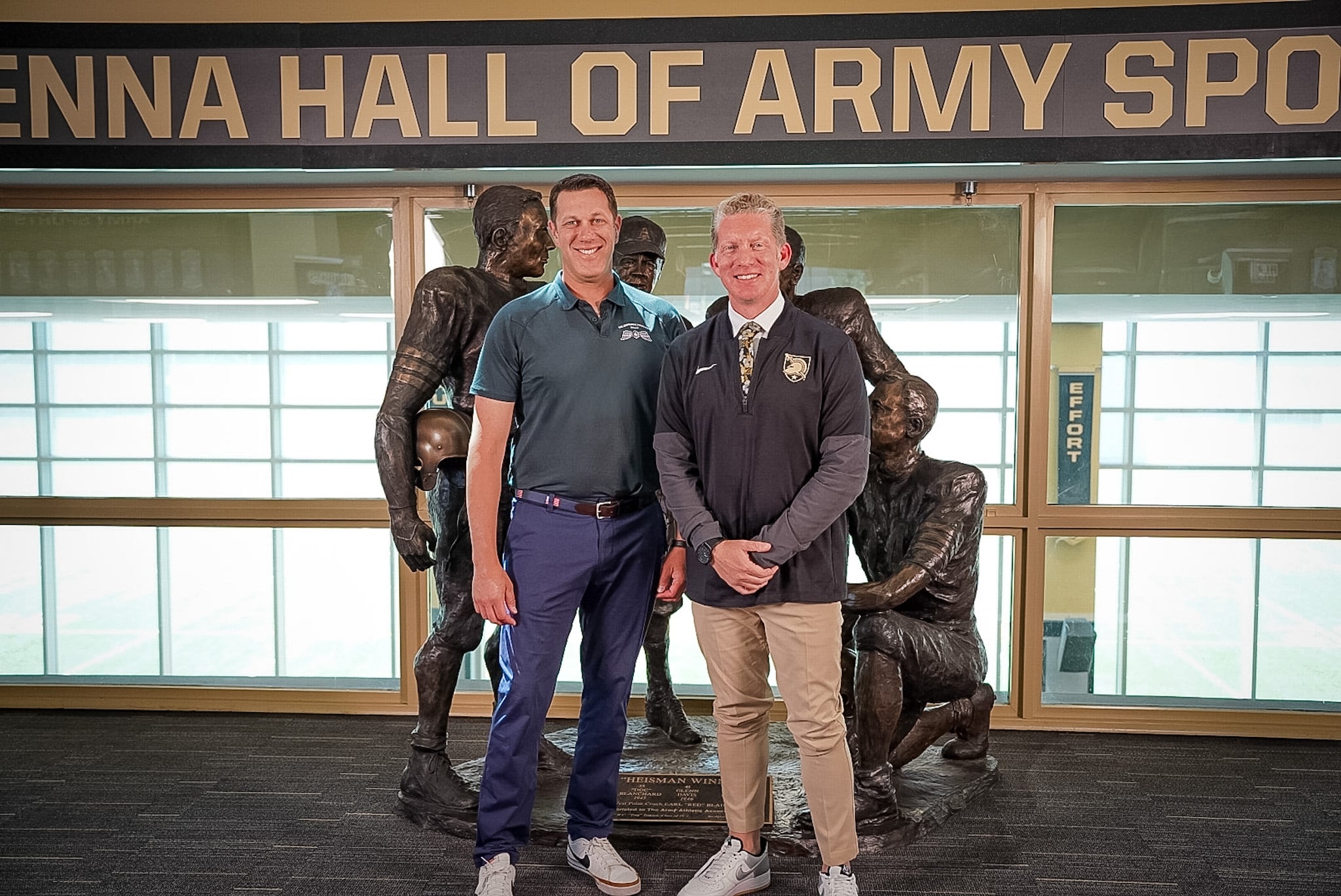
I do not believe that I would have been successful in places like Ranger School, places like the Special Forces Qualification Course, had I not been a collegiate athlete. I went to BU, so I definitely had a different life than these guys do here. In any case, that is an experience that I would encourage anybody to pursue, especially if they come here to West Point. I appreciate taking the time to sit down with us and welcoming us here to the post. I look forward to getting into that new stadium here and seeing some games.
That’s important. The former chief of staff in the Army, General McConville, once said, “When America looks to what’s right, it looks to West Point.” It’s important for us to have people like you and people who come to visit to see what this place is about.
Awesome. Good luck this season.
Thank you.
Green Beret Foundation
P.O. Box 25138
New York, NY 10087-5138
Note: Please use USPS mail or priority mail. Do not use FedEx.
Green Beret Foundation
10205 US Hwy 15-501, Unit 26-8
Southern Pines, NC 28387-4301
Call: at: (844) 287-7133