The title United States Marine is earned…never given. For over 250 years the Marine Corps has been front and center in the defense of America and our allies. But as technology and the battlefield have changed, the character and standard that define a Marine have never wavered.
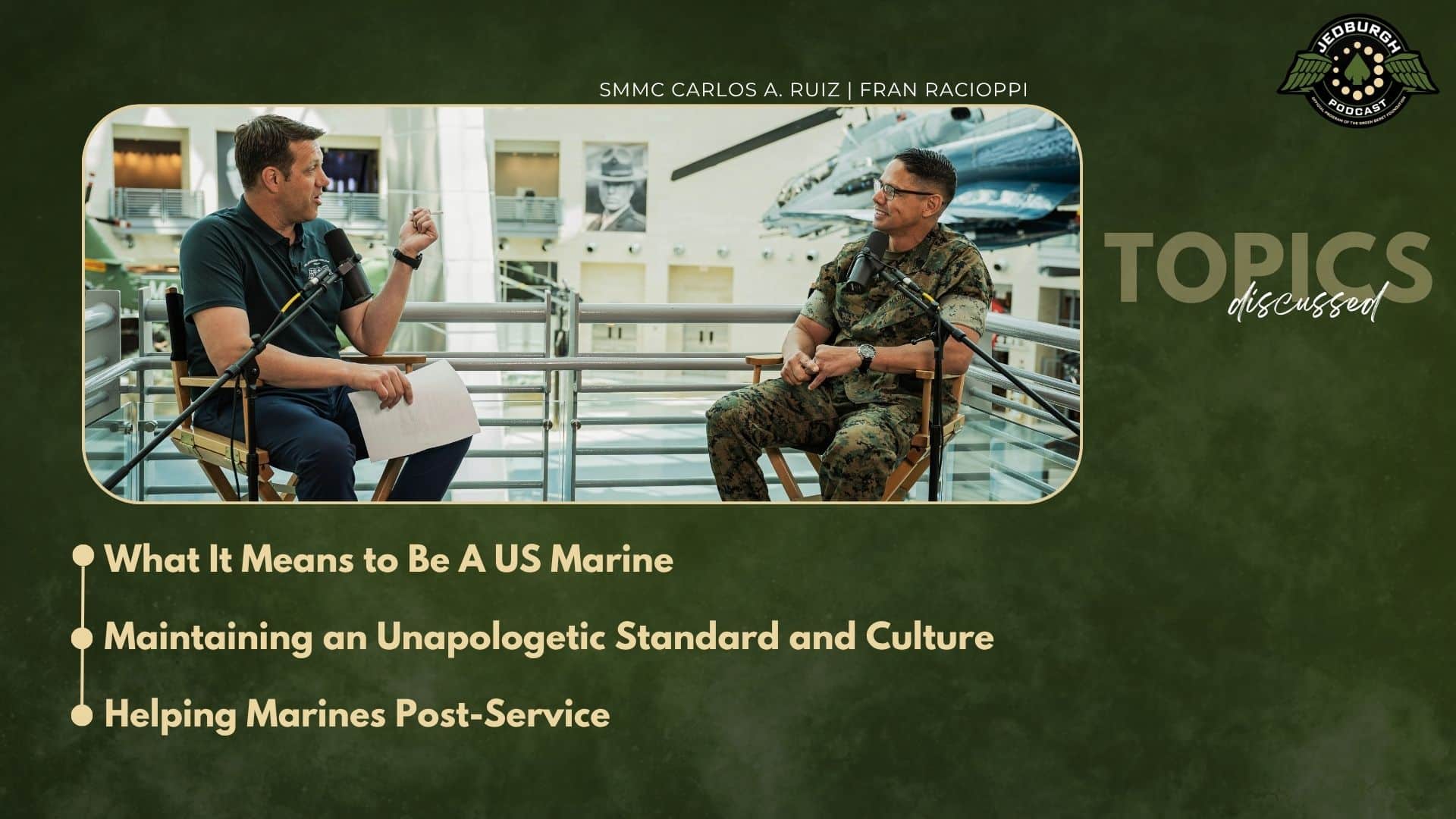
From the National Museum of the Marine Corps in Quantico, VA, Fran Racioppi sat down with Sergeant Major of the Marine Corps Carlos A. Ruiz, the 20th senior enlisted leader of the United States Marine Corps, to discuss what it takes to serve in one of the world’s most respected fighting forces.
Drawing on decades of service, SMMC Ruiz explains why the Marine Corps’ greatest weapon system has never been its aircraft, landing craft or tanks, but the individual Marine. We explore how the Corps develops leaders by instilling discipline, accountability, resilience, and a deep understanding of the history and traditions that connect today’s Marines to generations who came before them.
Our conversation also examines how the Marine Corps is preparing for today’s battlefield from large-scale combat operations and force modernization to their role in littoral defense.
The SMMC also shares his top priorities; improving quality of life for every Marine, investing in the physical and mental readiness of the Corps and preparing Marines for civilian life when the uniform comes off. From strengthening partnerships with industry, to building programs to train Marines in the trades, SMMC Ruiz remains as dedicated to the Marines whose service is ending as those who are getting off the bus.
America has changed a lot in 250 years, but the unabashed mission of the United States Marine Corps to fight and win our nation’s wars has not.
A special thanks to the National Museum of the Marine Corps for hosting our conversation and reminding every American that for Marines “Uncommon Valor Is A Common Virtue.”
The Jedburgh Podcast is brought to you by OneBrief; enabling military leaders to make innovative, informed and deliberate decisions faster than ever before. Superhuman command wins wars.
Follow the Jedburgh Podcast and the Green Beret Foundation on social media. Listen on your favorite podcast platform, read on our website, and watch the full video version on YouTube as we show why America must continue to lead from the front, no matter the challenge.
—
—
Sergeant Major of the Marine Corps, Ruiz. Thank you so much for joining the Jedburgh Podcast.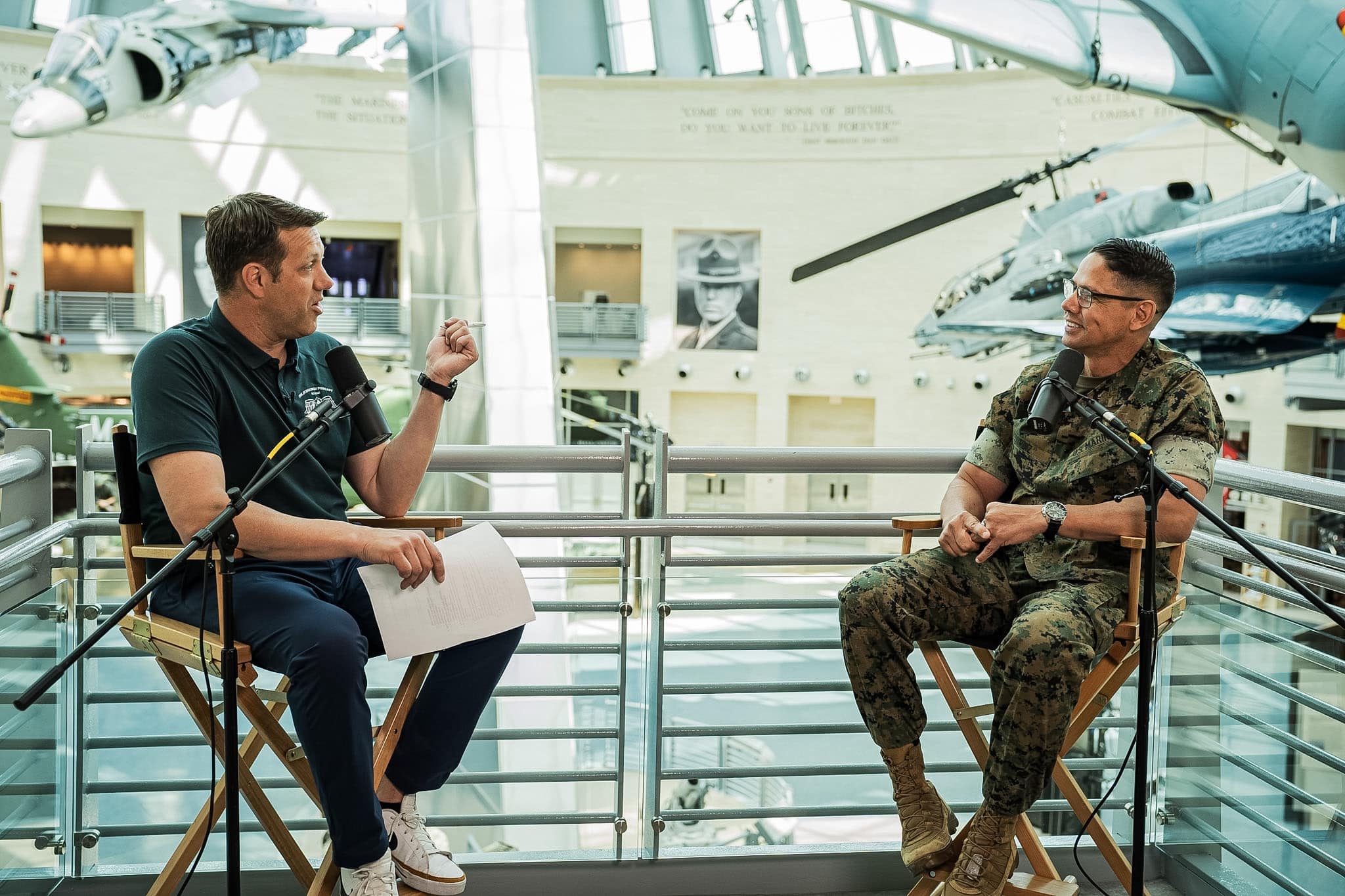
You’re in their house.
I am. I was a little nervous walking in. There were a couple of marines sitting at the door but the National Museum of the Marine Corps. We’re here in Quantico outside of Washington DC. What a setting and what a place.
This is an incredible place. You probably can’t see it, but maybe in your walk through you’ll be able to record it. Re-enlistments, promotions and retirements happen right here. We allow the Marines to come in this uniform as well. On lunch break or whatever it is and they want to come over and walk from across the base, they can’t do that in utilities.
There were a few standing at the door when it opened. It’s a Tuesday morning, in June and they’re over here. There’s so much history in this place and the exhibits. Everything here is top notch. When you walk in, you think we’re going to talk a lot about it but you think about what it means that being a marine?I get excited about what it means to be a marine, even though I have my army background. Others may think differently but there’s such a culture behind the Marines. When you think about land, sea, air, and all the mechanisms that the Marines have to take the fight to the enemy and the history behind what they’ve done over the 250 years of this country as we approach the anniversary. I got to ask you because you’re the one setting the tone for the entire Marine Corps. What does it mean to be a United States Marine?
To rewind, it doesn’t start here. What I mean by that is, just because you landed in Quantico or you come on a TD trip here, you get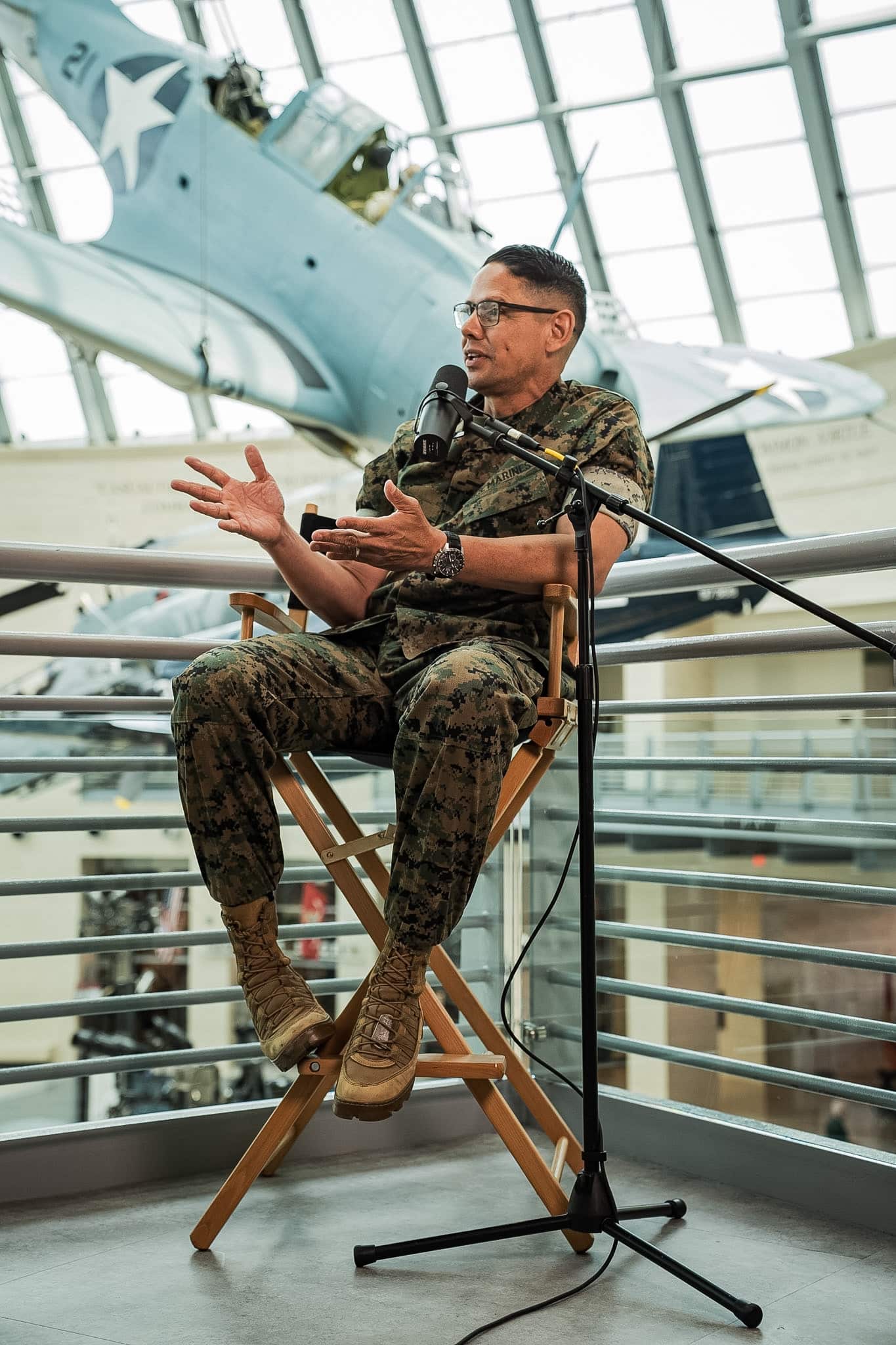
You got 17- and 18-year-olds, but for the most part inside of a career training seeing this Sergeant or staff sergeant coming dressed in the period and talking about the Battle of Belleau Wood or you name it and they are in it. They are submerged and all things history and names, who have gone before us. It makes it so that everything that you do for the moment that you step foot, you have a reputation. You have to earn your place. It’s never given. You have to earn it. You have to earn your title Marine. You have to earn to fight for your country. That’s crazy. You have to earn your way into this Marine Corps to fight for your country, and that’s pretty awesome. You have to earn your place. You have to earn the title of Marine. You have to earn the right to fight for your country—and that’s pretty awesome.
You get here and then you see the building that’s beautiful and the things inside of it are beautiful, but the dozens, those figures, those probably retired Colonels or Master Gunnery, Sergeant or Sergeant Majors who are still in it. All they want to do is just answer the questions that the young high school kid may have. For me, more importantly, we have the professional military education headquarters here. The Sergeant’s course, the staff and student leadership school, like these courses bring the Marines here.
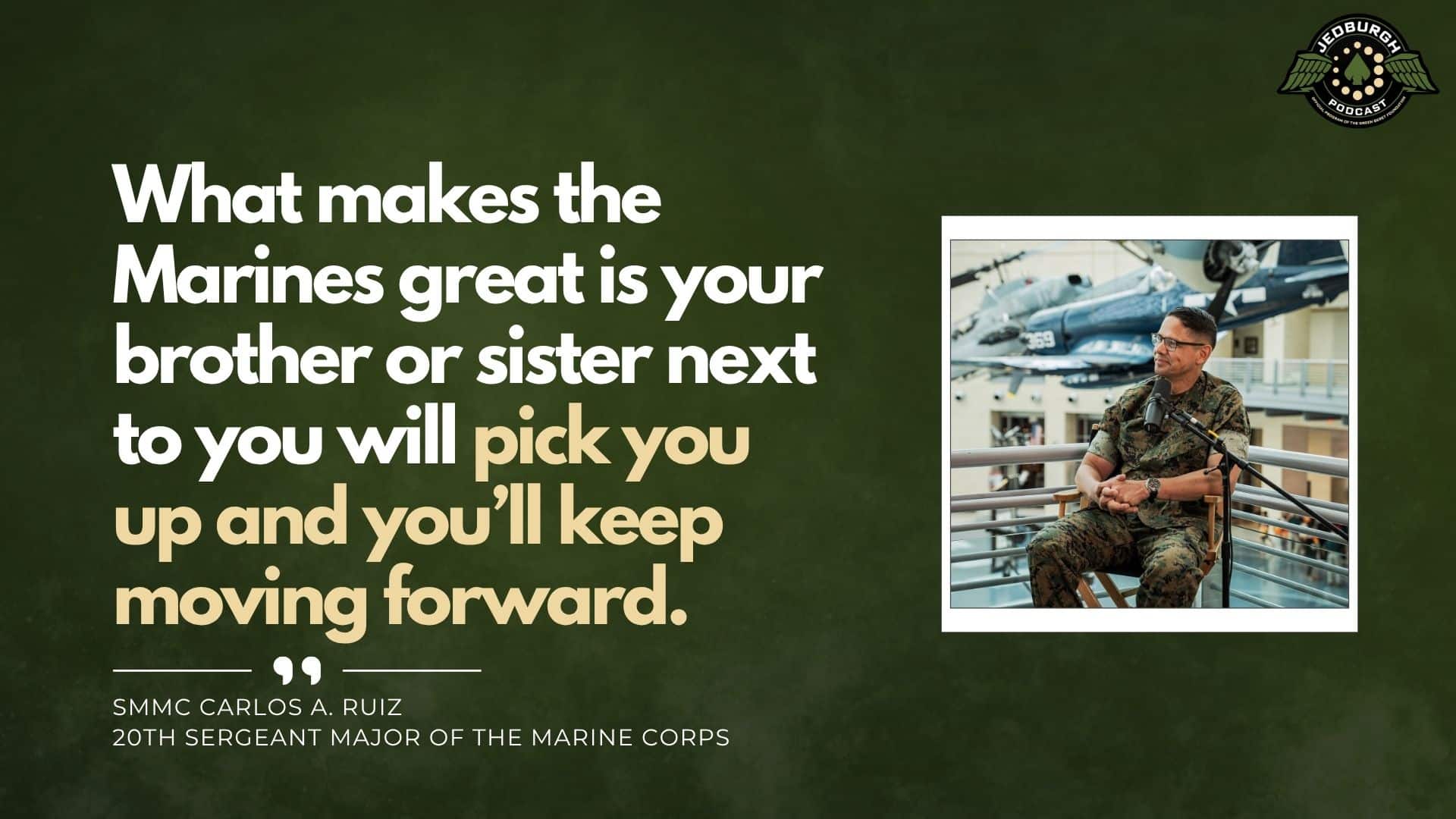
They get to walk around it. They get to hear different things but they get to listen to this gentleman who has gone before them and did it. For me, being a marine means embodying all of that. It creates this thing inside your soul that makes you want to get better every day so you never ever let down those who came before you. You’ll slip. You’ll fall. You’ll fall on your face. What makes the Marine’s great is that your brother or sister next to you will pick you up and you’ll keep moving forward. It’s 32 years of being a Marine. It’s flown by and I wouldn’t want to have done it any other way.
The word standards comes to my mind as you talk through that. There’s always conversation about standards. I won’t even say in the last couple of years. We’ve always talked about standards, whether you go back 32 years. I could go back to 2003, when I went into the army and everyone’s always talking about standards at every level of command. Whether that be at the platoon level, a company level, battalion, and so on, all the way up to the entire component. You always have in the back of your mind the standard. When you look at incoming Marines, those aspiring to earn the title Marine. What is that standard that you look for?
The Marine Corps is a unique place and it attracts certain kinds of individuals into this service. We are very upfront with you. We are very transparent. There’s nothing blocking social media. There’s no hidden agenda. We will show you what a Marine Corps drill instructor will generate inside of you and what the standards will be and life will be hard. You would literally turn over your cellphone in your whole life for maybe this generation. Turn over your baby. You are turning it over and you’re not going to see that thing until it’s over.
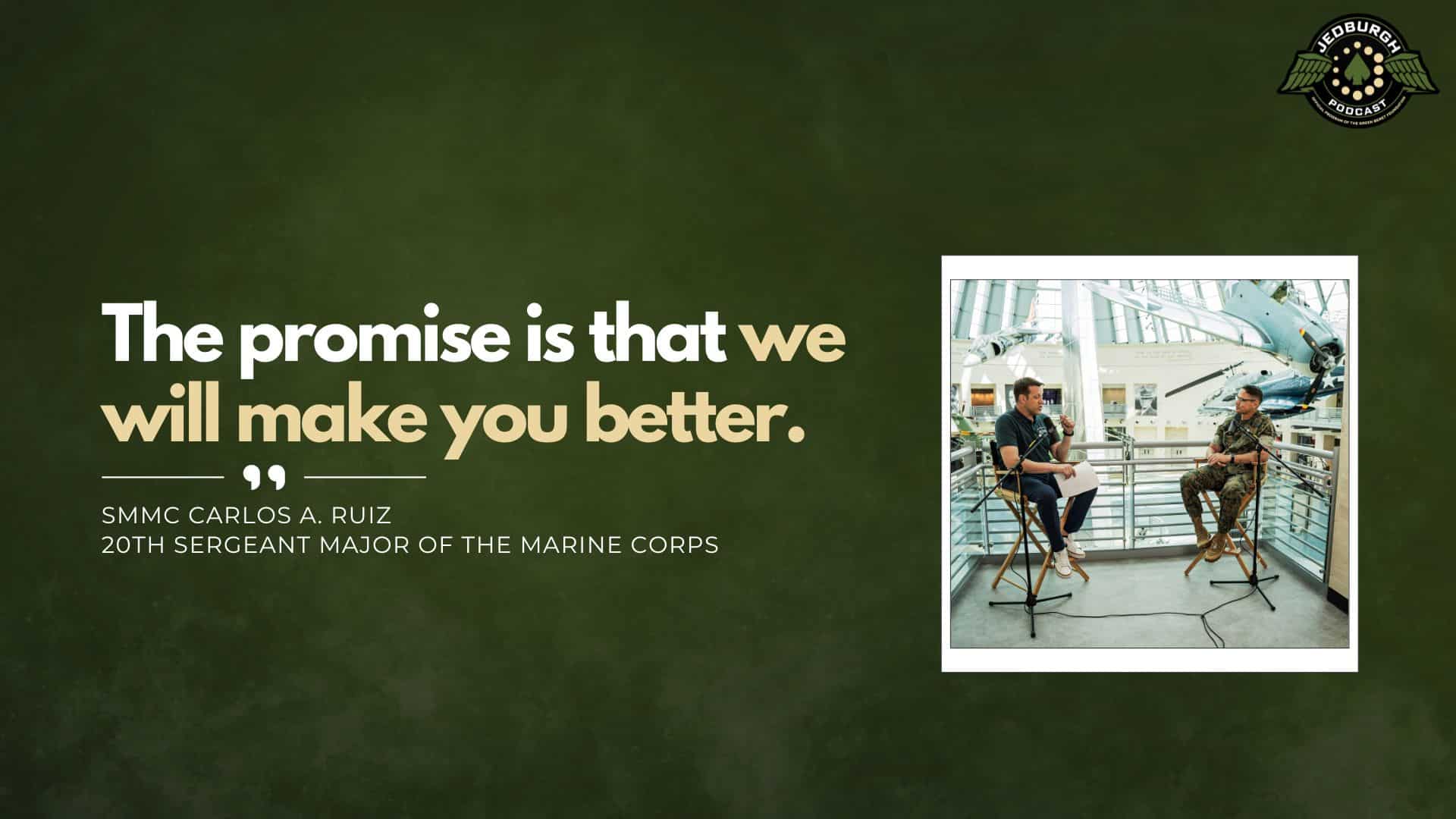
You are watching these young people commit. They understand what’s going to happen in the next three months and still, they give in and they give it all of it. They give every bit of their being to us with the promise that we will make you better. If you give over your soul to us, the contract is that we will make you better. The generation of now who’s coming into a Marine Corps that has very high standards and is unapologetic about it.
The Marine Corps is unique. It holds unwavering standards and makes no apologies for them. Every day is about elevating one another so no one has to fail. That’s why it’s been decades since we’ve missed our recruiting mission or our retention mission because it’s a way of life. It’s living your day’s insurance that you are doing enough to elevate each other so you never have to fail. When you do fail again, you pick each other up and you move forward. I love it. It’s pressure, but pressure creates certain things or beautiful things. It’s an interesting and awesome organization that is built by humans for humans to do very hard things.
When you look at the missions of the Marine Corps, we mentioned this land, sea, and air. There’s a lot that goes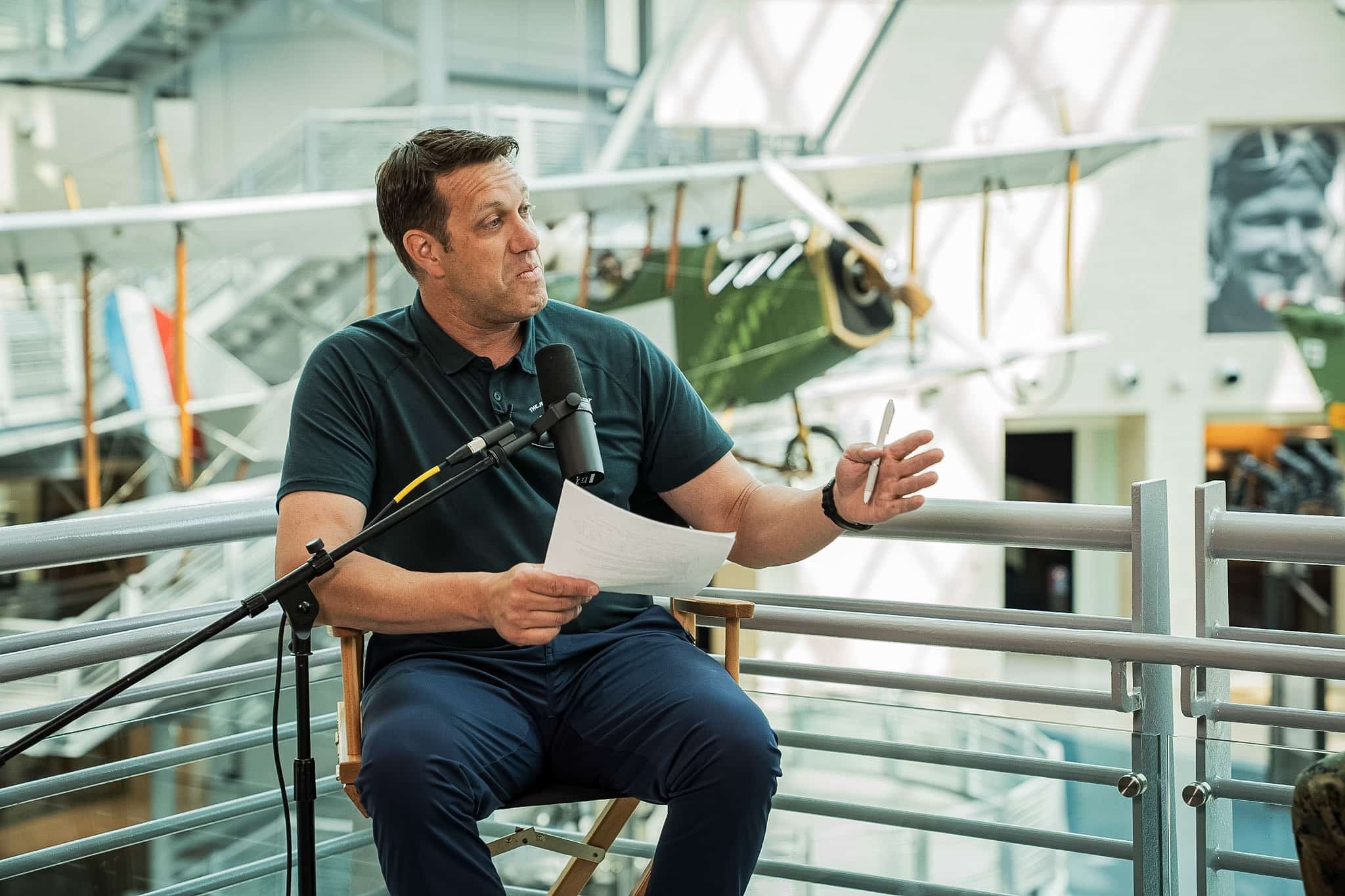
Air Force. I love the Air Force. I love it.
So do I. We couldn’t do it without them. These last couple of months have shown what the power of the US Air Force can bring to the combat formation, but it’s very difficult to look across the formation and think, “How are we going to be the world’s best in land, sea and air functionality?” From your perspective, when you start looking at readiness levels and training priorities, how do you balance between being combat ready in land, sea and air but also in multiple areas of operation? The Marines are not like we were in as Green Berets. I was in 10th grade. We focused on Europe and everyone is going to the Middle East. You have to be prepared as a Marine to go anywhere in the world.
Yes. The 31st Rain Expeditionary unit in the Indo-Pacific, the Marine sewer in that formation thinking that they were going to do all things in the Pacific, things like training and exercises, ended up in central CENTCOM. Not very quickly how the world changes but it is how we were built. We’re small enough and the training pipeline is flexible enough to create a certain marine that is brilliant in the basics.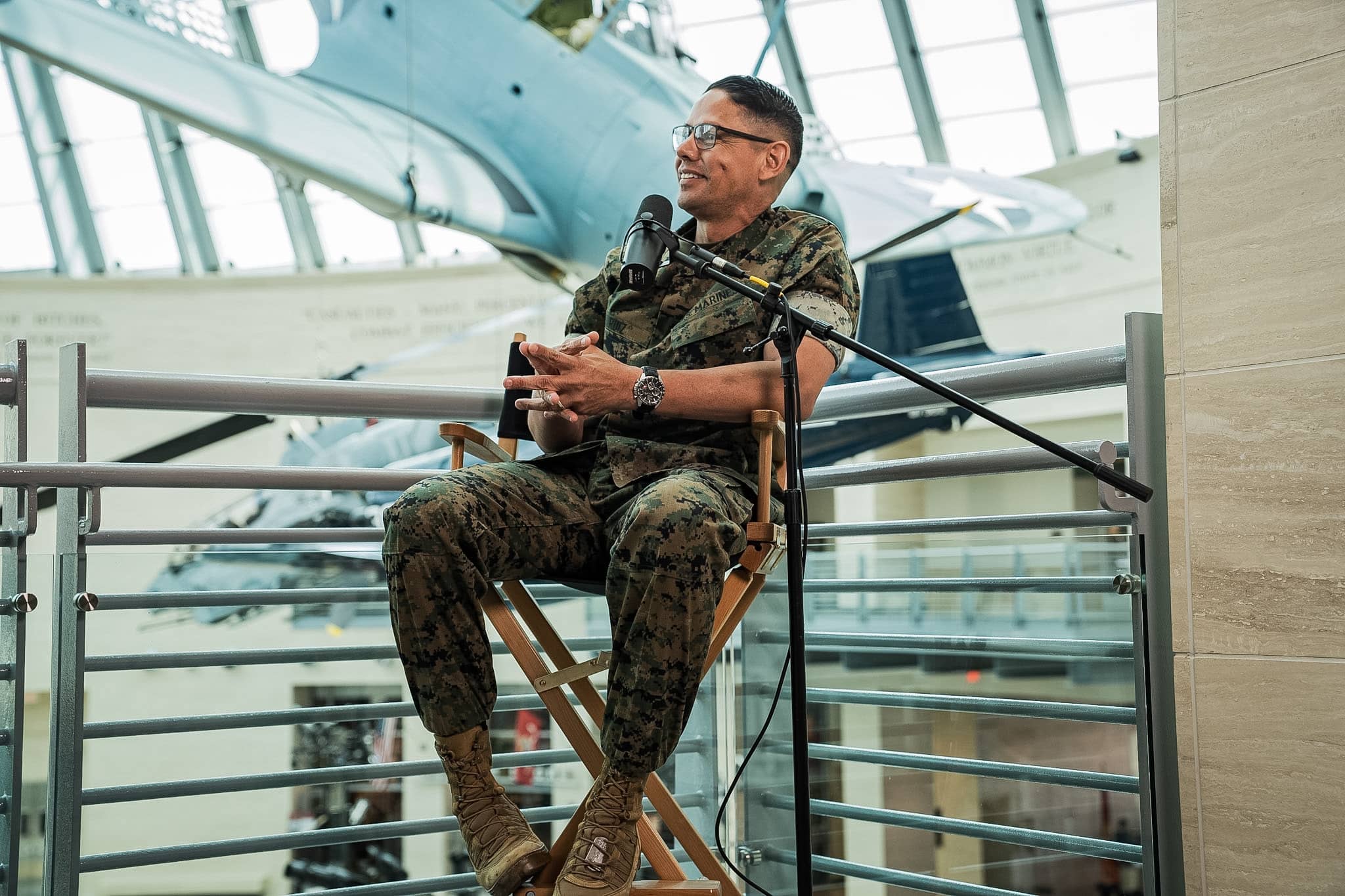
It is sometimes difficult for us not to create a type of beret that we want everything. An example would be a drill instructor who before they go and step into recruit training and train recruits. We want them to be martial arts instructors. We belt them all the way to black belts. We want them to be swimming structures. We get them all the way to the top tier of swim qualifications and on and on and then they can go see and train recruits.
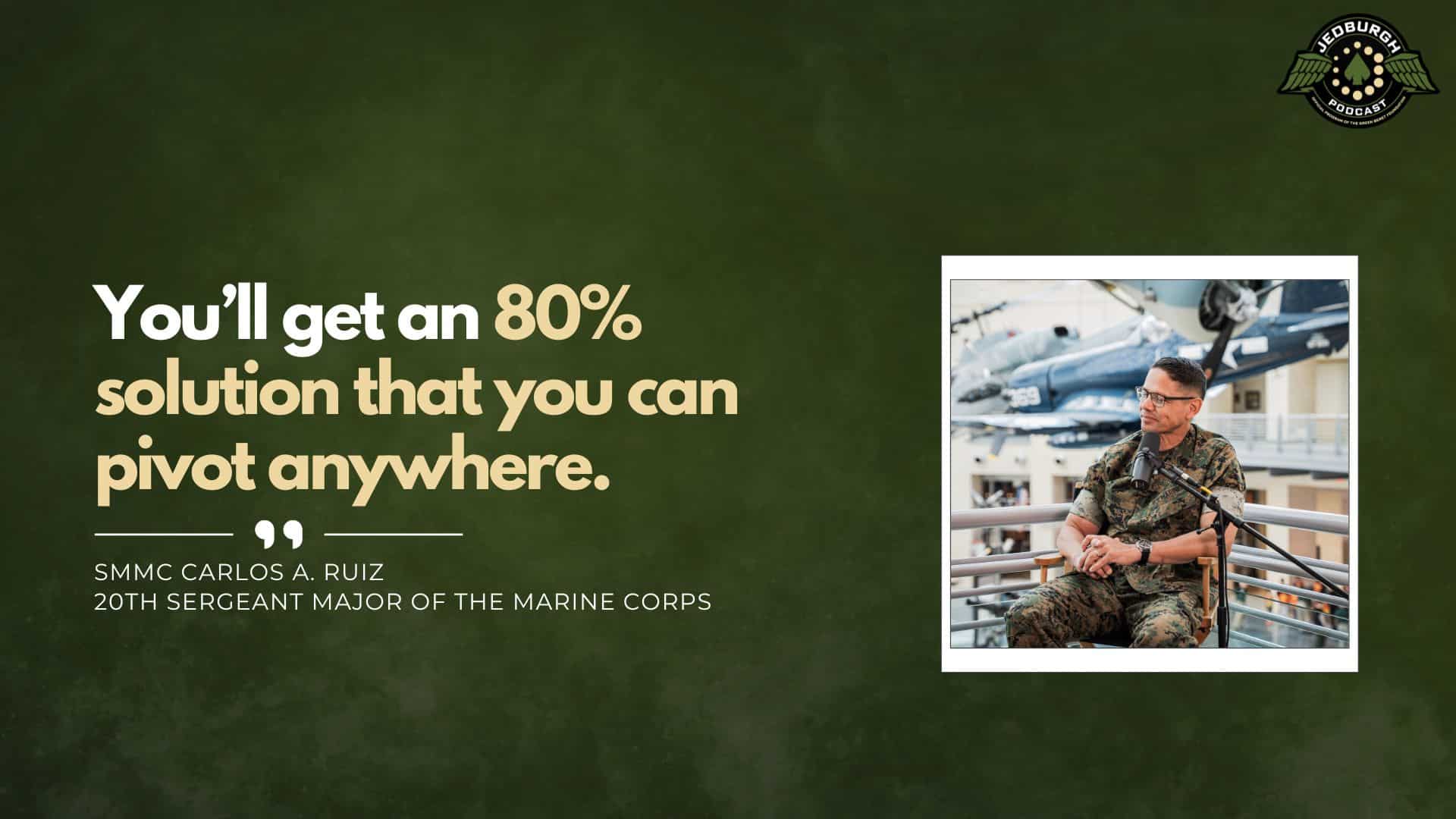
What we found is that when we try to over-specialize and create this perfect version it likely takes fifteen years to make. It’s like, what is good enough? What is the standard? What are we looking to create? How can we get the Marine to be flexible and adaptable? Do that. Do it quickly. Do it with quality. Do it with proper training equipment and proper instruction. What you’ll get as a result is, an 80% solution that you can pivot anywhere. I think you’ve seen it again and again throughout the world that you can be from the cold to the desert. It doesn’t matter for us, because that’s the mentality of the Marine Corps.
Mortuary operator or supply guy, it won’t matter. You have to perform the basics of a basic rifleman in order to belong. If you can’t write, then someone may say, “Your skill set as a cyber operator will overcome all the other deficiencies.” Tomorrow that cyber operator is going to be injected into a MARSOC team who now needs to get deployed and move on to this other thing. You better have been training. You better have all the other things that make a marine lethal. It is our belief that a basically trained Marine is better than an SME on this specific thing. We believe a basically trained Marine is more valuable than a subject matter expert in a single specialty. That’s not changing anytime soon.
I don’t think we’re going to change that anytime soon. We did get squirrelly for a little bit when we brought in a reserve marine. When he graduated recruit training, we promoted him to Gunnery Sergeant. To the Marine Corps that’s like not a thing. It’s like, “What are you talking about? Should he be a private or a private first class?”
This gentleman brought in this incredible expertise from the civilian sector after having served in the Air Force for a contract. He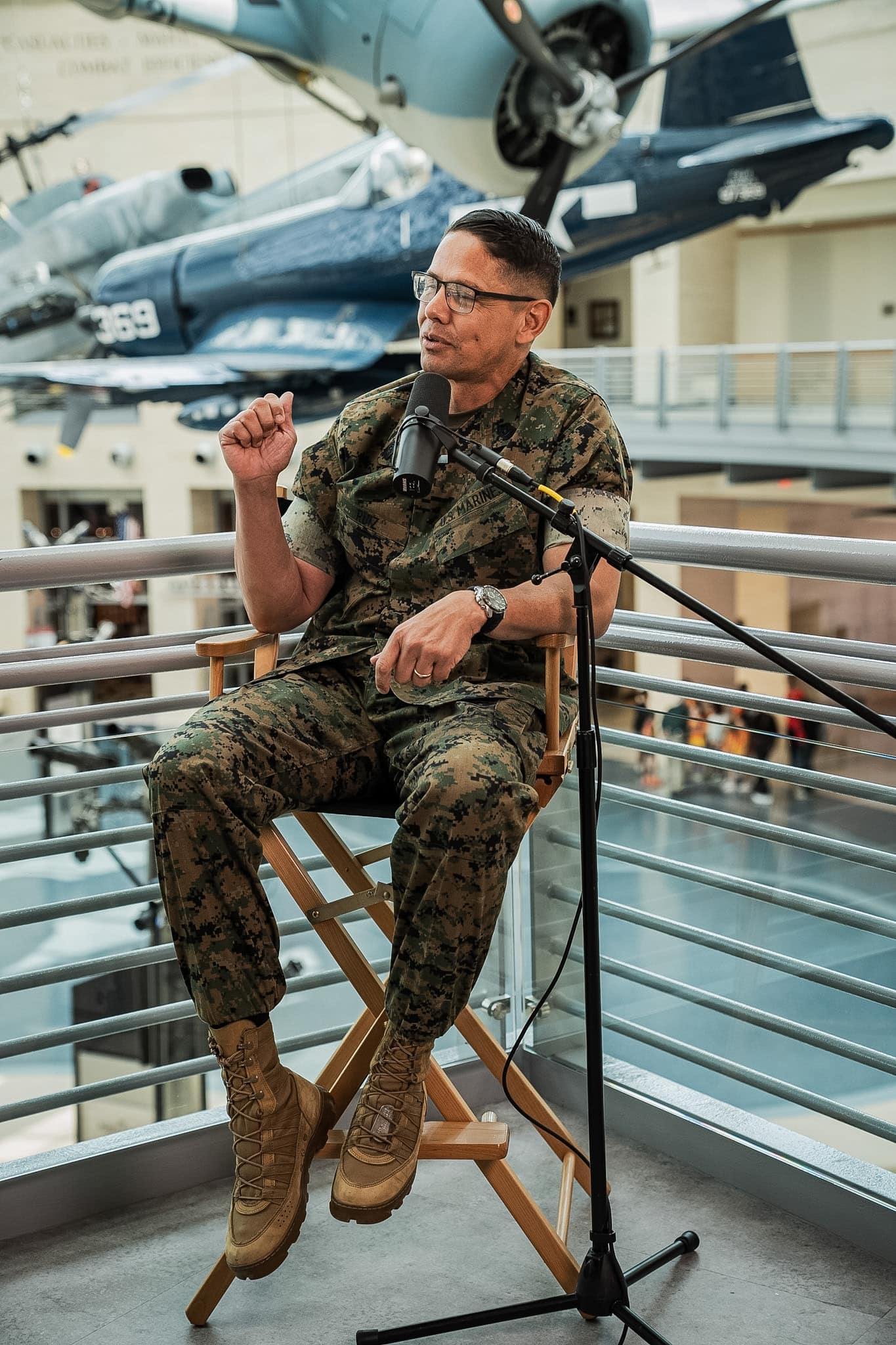
There’s a difference between those two boot camps I think.
He did. He’s a Gunner Sergeant. We got a lot of like, “What are we doing?” Everyone relaxed. We’ve done it before and we’ll likely do it again, but it is hands full. These special folks that can speed the development of our expertise by fifteen years by putting in a formation. Cut off his beautiful blonde hair. You probably lose money by serving with us, but it is these humans that exist in our formations. It’s just not just want to serve. It’s pretty awesome.
When you walk around this museum, there’s no pictures behind us on the walls. There’s a lot on the floor here. The Marines historically have had this littoral focus. You mentioned the MU. How do we take a couple thousand Marines? We load them up on a number of different ships. We put them off the coast somewhere and we have that stick that says, “If you want to keep messing around over here, we’re going to put these guys on a bunch of amphibious assault vehicles. We’re going to launch money or beach”
A lot of that changed in the global war on terror. It’s like the Army, we saw ground operations. We saw inland operations. We saw the, “I’m here for 6 months, 9 months, 12 months. I’ve done five deployments in 8 or 10 years.” The mission for all of us, not just the Marines, is skewed a bit. As we’ve come out of the global war on terror, we now are in this world. This list includes large-scale combat operations. We’re seeing that a bit with Iran.
How are you in the Marine Corps transitioning the mindset out because your senior leaders now are all global war on terror guys. We know counterterrorism. We kick indoors and we raid houses, then we go back to our chew and eat KBR and go to the gym for two hours. That’s not what littoral combat operations and large scale combat operations look like. How are you getting the force refocused on that very critical component of what we need Marines to do as the global war on terrorism?
It’s significant in that. You remember, we were giving our own out box in Iraq and Afghanistan and Marines own this and stay out of it. Marines will take care of business here. Meanwhile, as the comment on says, we neglected our Navy brothers and we stopped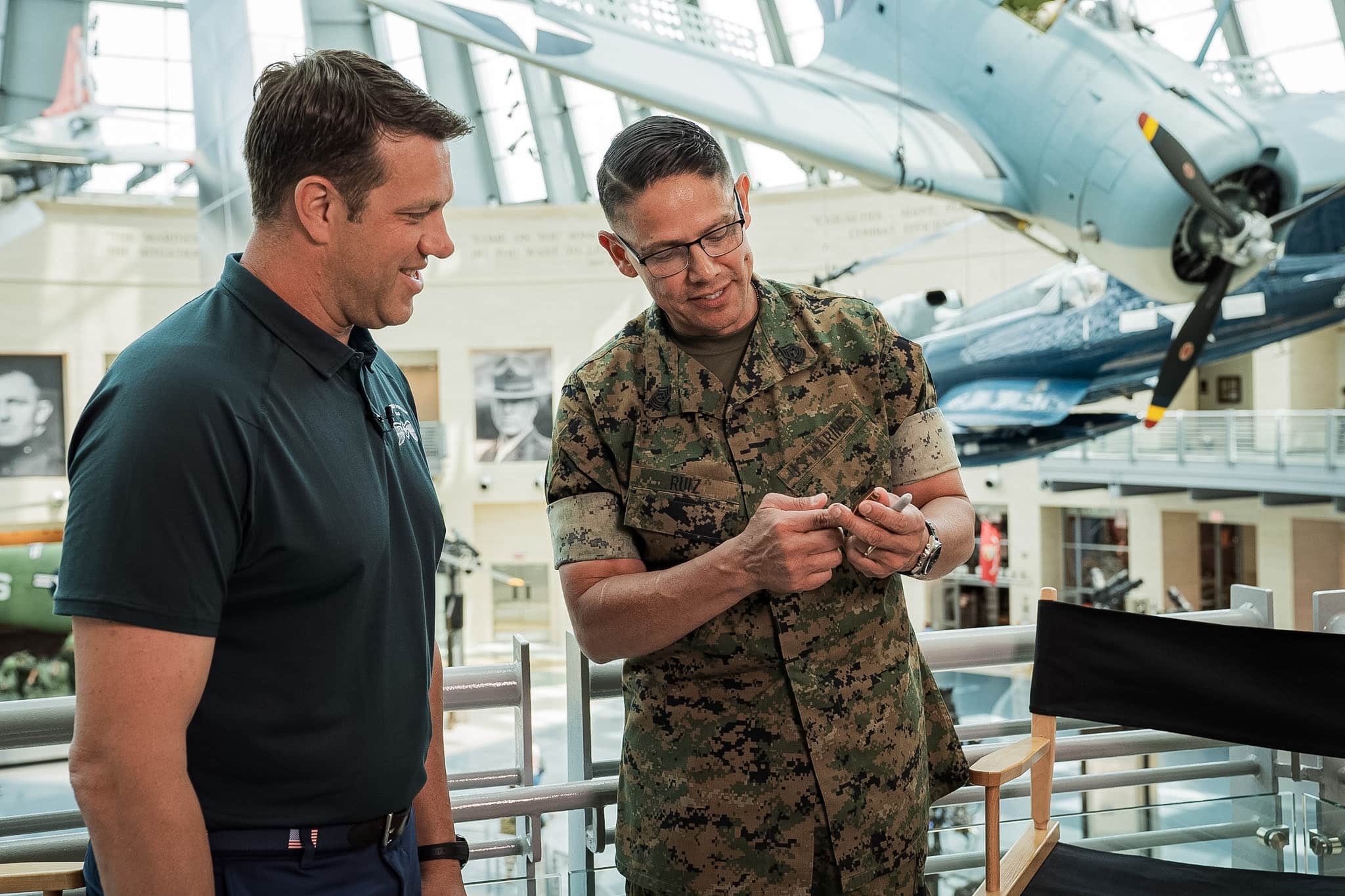
Now, as things say shifted, you hear the comment, you hear every general officer, and every Marine from private ownership up that it is the ark MEU. The Golden goose of the Marine Corps. That this is how we project power and this a purpose-built formation. We can do anything inside of that MEU. It is vital to us and to the nation as you have seen in the last few months. When you have a MEU in SOUTHCOM AOR, it gives that combat commander lots of options.
With the legislative side of things, the comment has become the requirement officer for lack of better words. He tells Congress what the number of ships the floor is going to be that the Marine Corps needs to get after all things. He works hand-in-hand with the CNO to try to figure out what that number of advances is going to be. How does the CNO and the command on two different budgets with the secretary of the Navy ensure to stop poking each other.
What I found a few years ago, the secretary of the Navy gets it. We have the Honorable Mr. Krumnow who is just moving 100 miles an hour, as he should. He understands the environment. He is ensuring that the Marine Corps has what it needs with the help of Congress to help us fund the next phase of amphibs. Meanwhile, at three math, with our folks, there is the building of the MLRs and the building of these special purpose built formations that are small enough that have the right capability to survive in those environments for the next fight.
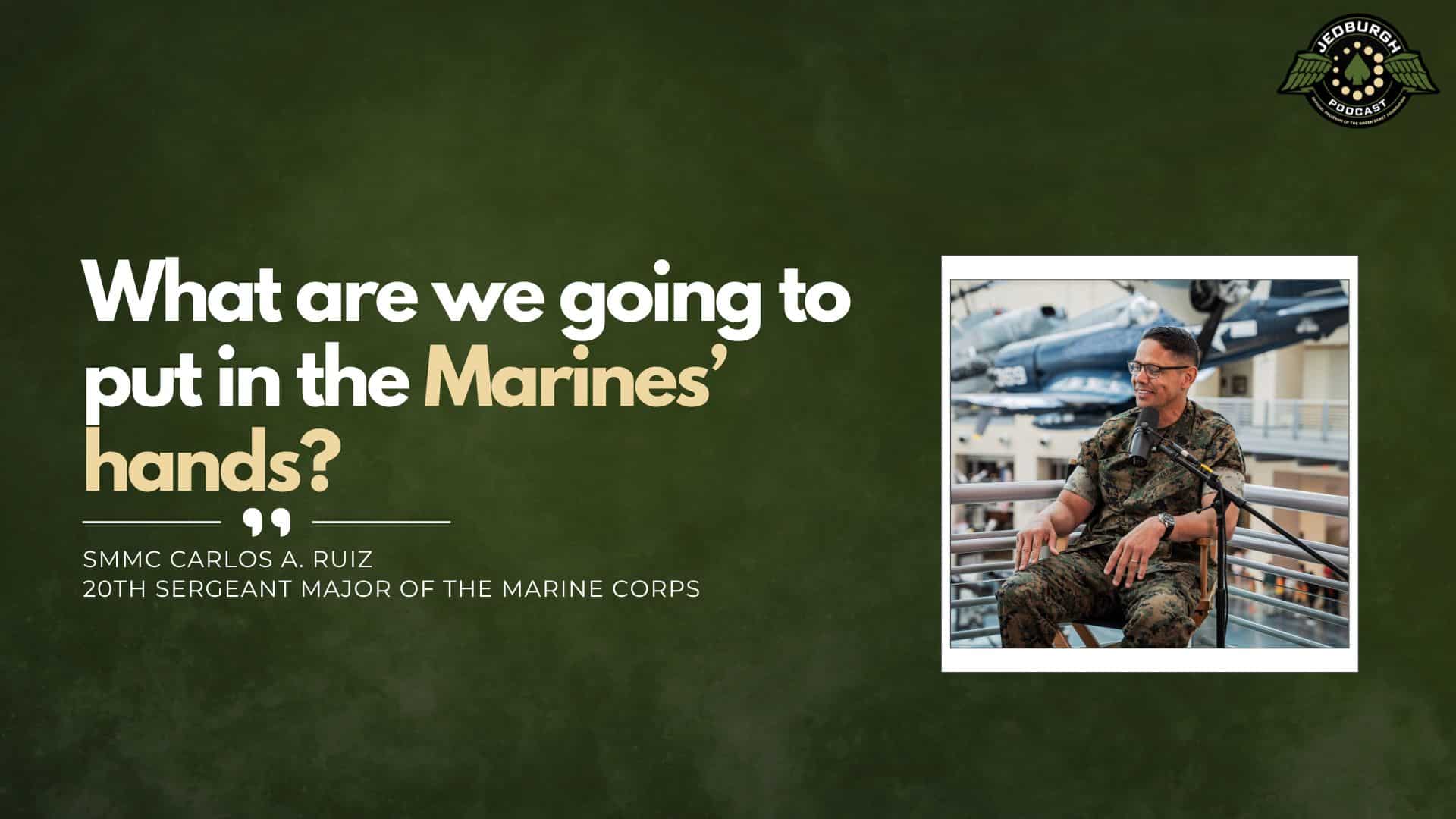
The planning of the next twenty years of the things that we want to inject into formations with things. I’ve sat in those rooms where they are just surgical about what we are going to put in Marines hands to use the drones and you name it. We have drone teams now. We’re just moving at the speed of light because the Marine Corps is small enough to do that. It’s a beautiful thing to see two, four stars, and three stars.
When the options are late to the table, the command stays that way. Everyone aligns and goes that way. They go really fast. We understand the environment. We’re making a Marine Corps that can compete and win on a large-scale. If we can build that, then all these other things, we can maneuver in that other space with the flexibility that’s needed from the skill sets that we’ve given those Marines. The way that we build them before they deploy, they are being built as you remember. They move and someone’s coming back. Marines are leaving. MEUmereanans are coming in and here we are, we’re building them again. It is that MEU that makes the Marine Corps very unique and wanted across the globe.
We could explore in depth the technology requirements that are needed to feel a combat ready Marine Corps. Before I ask you about that, no technology matters more than the person, the Marine, in your case, and special forces. SOCOM has soft truth number one. Humans are more important than hardware. We can throw everything at the person if the person’s trash.
There’s nothing we can do, but great people even take subpar equipment and make it great. You have had a focus of driving the culture of the Marine Corps to put the Marine at the center and say that the Marine is the most critical and important weapons system in the Marine Corps. Why is that so important to you?
It’s because they’re not pieces of furniture. For a Millennia, an officer was standing in front of a formation and said, “We are going that way. A lot of bad things are going to happen to a lot of you and we’re going to win, but this is why we’re doing it.” No one would ever question you. You had the information. Now, we’re at a time where you don’t have all the information. There’s a lance corporal in that formation that is eye wateringly good and talented and probably knows more about the subject than you or has more influence than you.
You must be so good as an officer now. You must be so good as a staff non-commissioned officer to lead this generation of Marines because when the AI model says, “4% chance of mission success here.” You better have built the force that says that’s pretty good. You better build that human to say, “4%, that’s good.” If we depend on that, “We’re not going to do anything until we at least get a 30% chance of survivability.” That’s not us. That’s not what we do.
For me, if I’m getting 17-year-olds or 18-year-olds from the streets of America. If the American family or Department of Education or whatever it is, is not delivering the quality of person that we want in this service but their desire is to be a better human being and be part of this group, then we will build you here. If that means that you’ve been locked up in the last four years playing video games and that’s your skill set. You haven’t ran a mile in four years, in all your high school career, you never ran a mile because that’s just not a thing anymore. You’re not an athlete, then we got to build you here.
Before I start throwing things at you with gear and making you do difficult things then breaking you. This costs me more once you are medically retired and you have a VA disability of 40% or more. The COMADs comments paying that bill for the rest of that young person’s life. Why not invest in the human from the beginning with the right individual combat equipment, teaching them about their body. Teaching them how to baseline them like a Division I athlete. The food must be adjusted, the way that they sleep, where they sleep, and the strength and conditioning coaches. What are they teaching? What are we providing for the families so they ensure that the Marine is focused?
When they step into the field from the barracks onto the field, they are ready to go and they’re not worried about things like, “I got to pick up my kid,” or all the other things that are distracting to a human being. For me, this is what’s different. The Marine Corps will decide in the same way that it decided what it wants for the F-35 program. Think of this as an institution. This is a program of record that we know exactly how many F-35 Charlie’s will be delivered by 2026. The Board of Governors and the executives sit at the table every few months and then they check on it. They make sure that the software is good. The weapon systems are good.
They’re on time, on and on the pilots. I want that same program for humans. I want to be a Marine 20/40. I want to decide what Marine you still look at, what they must be able to do, how fast, how strong, how resilient, on and on. What do we want to build? All the Marine Corps resources that we get from Congress, the taxpayer money. Align everything to get me that because if I can do, then I’m not spinning my wheels in silos getting after one thing here and one thing there. I want to define what the Marine of 2040 looks like—what they can do, how fast, how strong, and how resilient they must be—then align every Marine Corps resource to build that Marine.
I have high suicides. I have high whatever, then let’s drop 300 million on this. That’s not going to drop anything. It’s how we receive the marine and then how we develop them as all those other things like in your world, your previous world helps us develop a young person into a man or into a woman that is more mature, more confident and can handle the stress of a relationship, breakup or a finance thing because we’ve given them the tools along the way. Instead of, how many do I have, 44 in the platoon? Whatever it is. We’re going that way and don’t care about anything that’s happening here. They’re human beings and you better build them right.
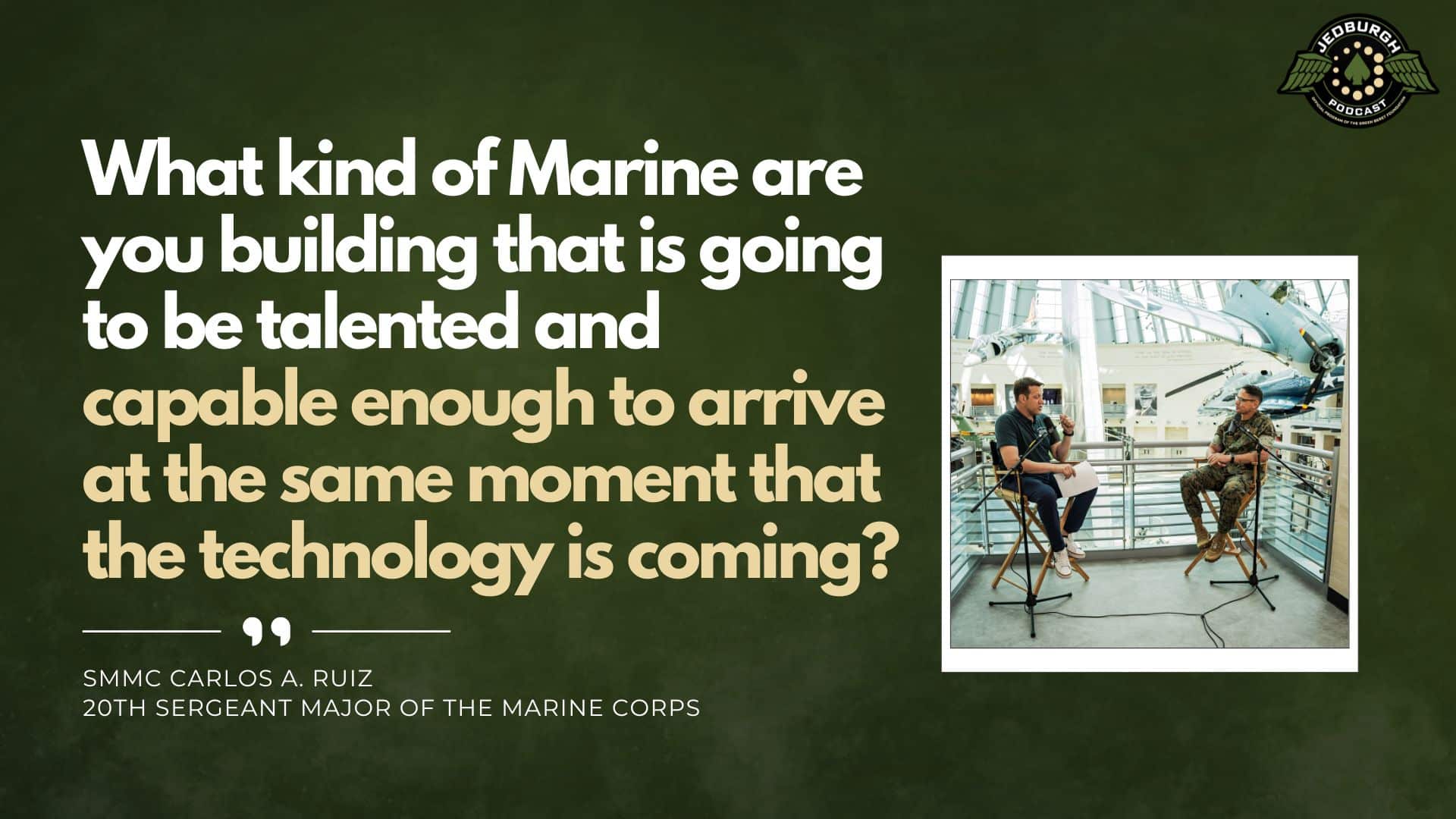
I don’t know if you saw that half marathon or marathon in China. On the side, they had the robots running the half marathon alongside humans. Some were made to run fast and some ones were little ones and silly ones. I see that, and I’m like, “Imagine 10,000 of these with weapon systems on them. Now what? What kind of Marine are you building that is going to be talented and capable enough to arrive at the same moment that the technology is coming?
That also means how we recruit them. How we recruit them is going to change in the Marine Corps. The ASVAB test that the person takes should not be the only measure that is taken to figure out if I’m a marine or a service member will succeed or not. What you have learned now doesn’t mean that you are not going to continue to grow.
For us, we want to know about personalities. What personalities are in the Marine Corps that are just successful, what personalities are coming in and can we screen for that to get us a better version of the yellow footprints. Therefore, the momentum continues and we build them. I am passionate about humans. Make no apologies about it. I better be competing with the F-35.
What replaces an ASVAB? I’m thinking about it now. If you look at college acceptance. A lot of schools now are what they’re calling test blind with no SAT or test optional. Students who are applying to college can decide to submit their scores or not. You’re right, we’re still reliant as a military institution to rely on standardized tests, which a lot of people don’t do well on.
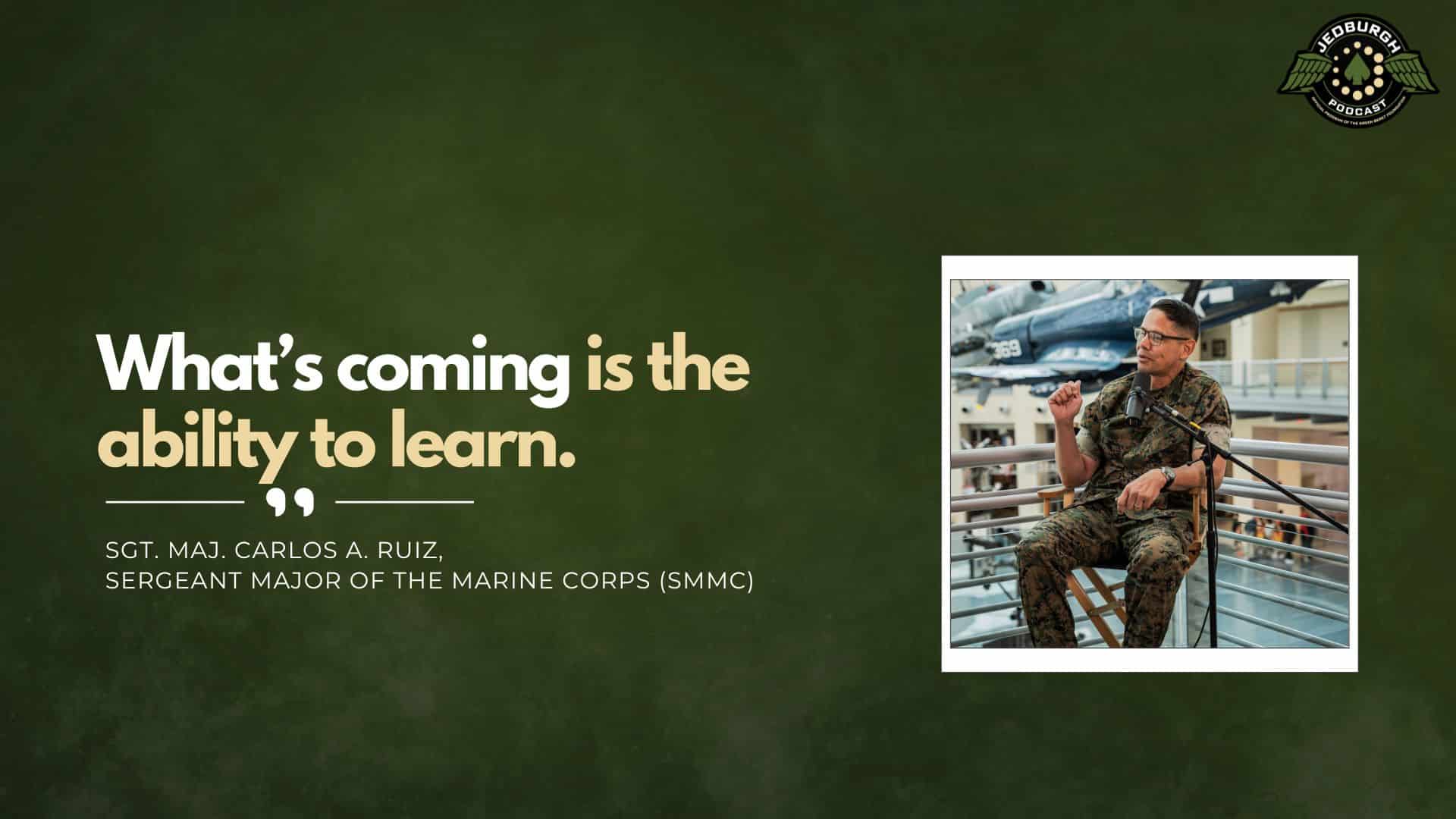
What’s coming will be your ability to learn. Can we test out? Yes. The ASVAB tested, but also this other version of an ASVAB can tell us that you have the ability to quickly learn more and that it exists in other places. Maybe you are an English second language or whatever it is. You just need a little time to get back to the language but the ability for you to learn exists. Therefore, maybe we should invest in you. I like to make like this little filter. You have to be careful with filters. If you filter too much, then it puts away or puts a block on someone who’s had maybe a harder life than most.
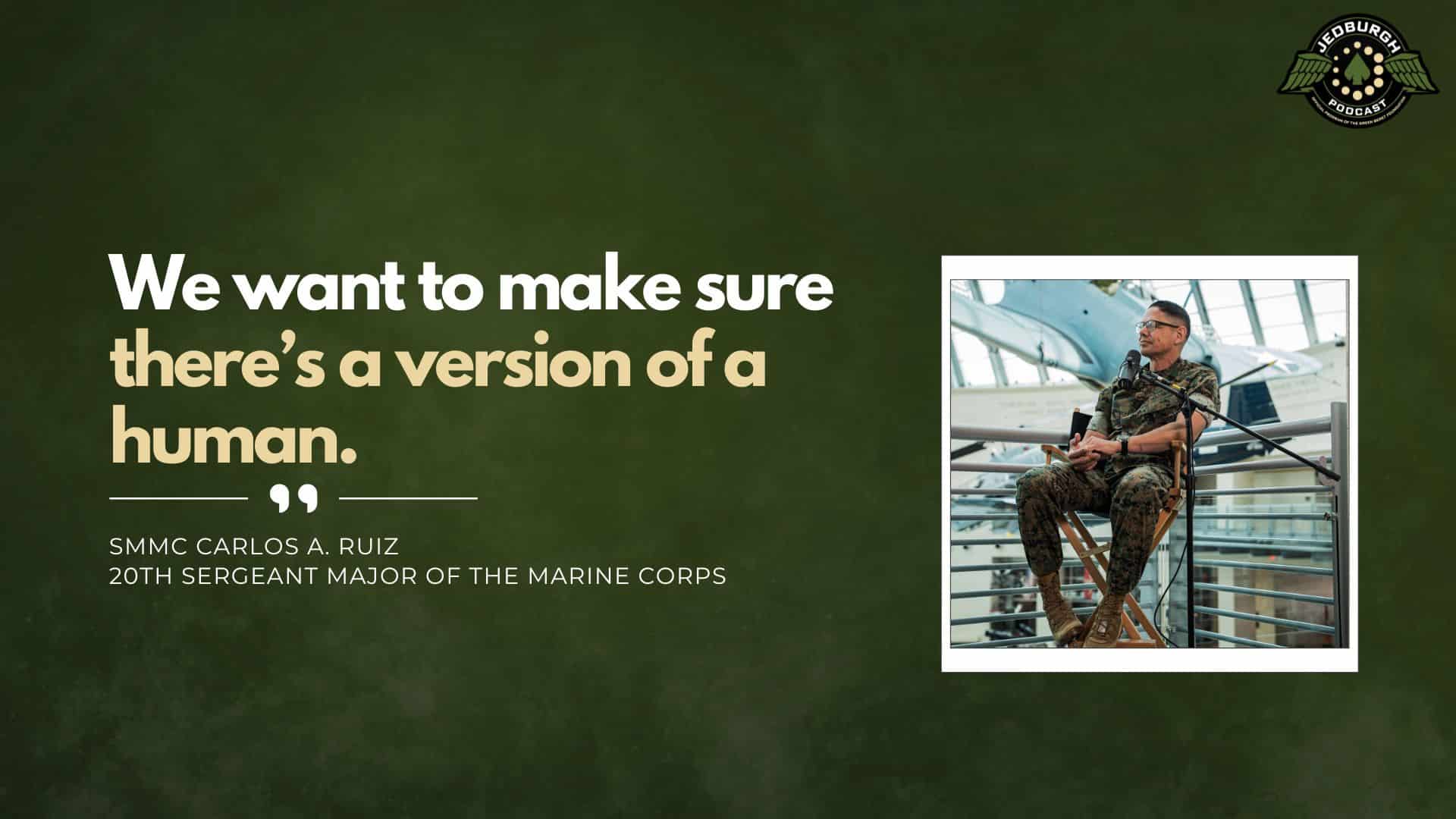
If they were to enter this environment, you are likely to rock it, but the filter filtered them out. We’re being super careful with that. The zero defect mentality should not take hold in the Marine Corps. You will make mistakes. You are young. You will do silly things, but we want to ensure that there’s a version of a human because we know your placement in your high school. We know a sport to play. We know that you came from a one-parent household or two parents or homeless or you came from drugs or you came from a perfect world in a perfect neighborhood. You’re in the States from Minnesota.
All this data can help me create a path for you. Even to the point where I can say, “You will be more successful going to recruit training in the month of November.” It’s because of all of these things, of how you were raised as a young person, I can get you to boot camp in November and you are more likely to succeed by starting a path here. It’s exciting. It is the future as the demographics of the pool keeps shrinking.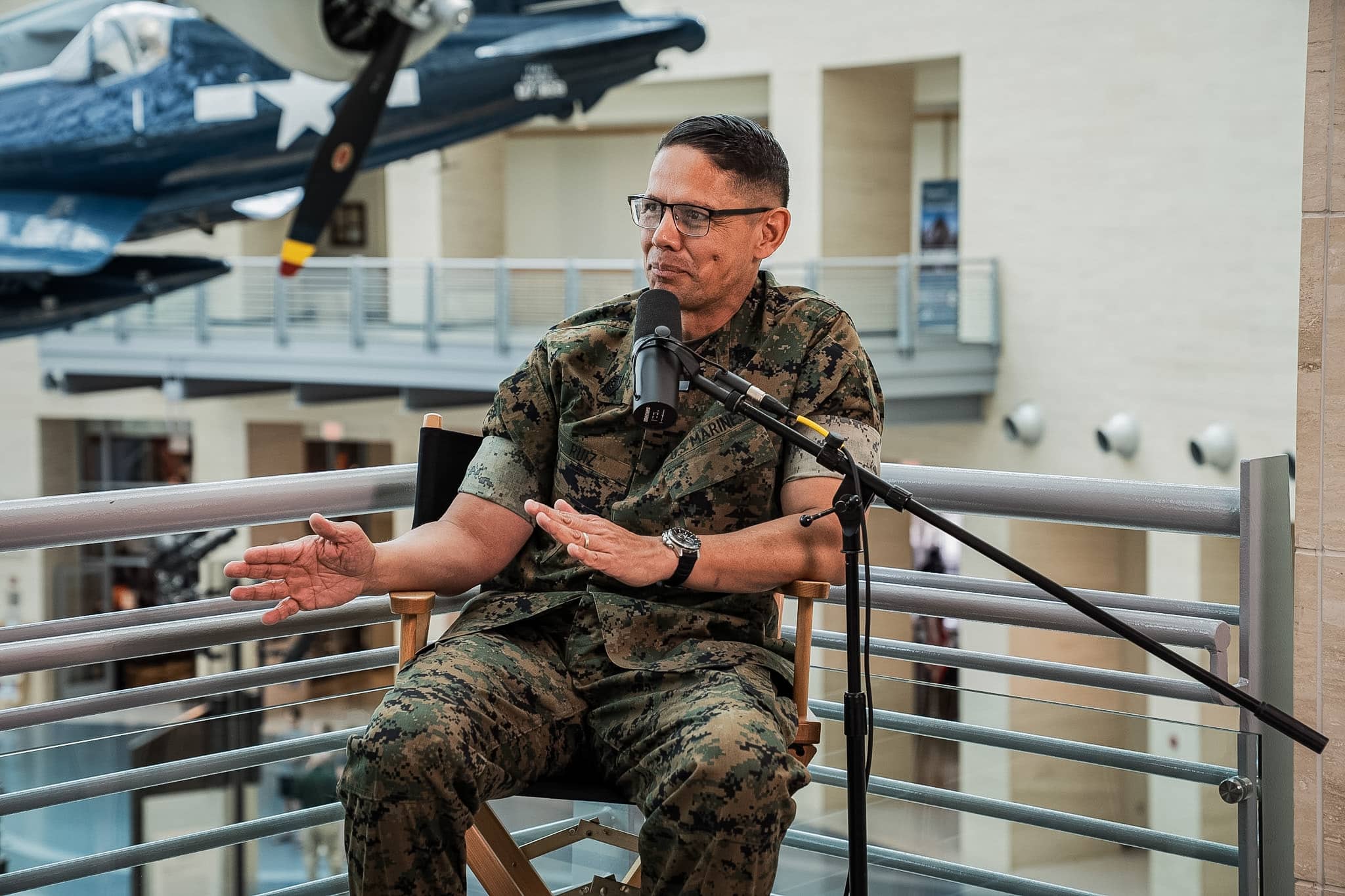
I read a study. I think 2031 with deaths will be more than births in this country. The population is shrinking with the eligible population to enlist. We better get a fair service and continue to be who we are. We better get that type of quality that we want because we will not lower the standard. We will just continue to elevate the standard. We think that that will continue to bring out the folks that want to belong in this club.
It all makes a lot of sense. You’re also in a competition when we talked about recruiting. As you said, there’s a limited pool of folks who have the desire to serve. Whether it be in the Marines or anywhere in the military. Number one, you get out of the desire of the eligible age-wise population. You have to have the competency in the evaluations, but you’re also competing against those who are going into the Marine Corps recruiting office and walking next door, and going into the Army and the Air Force.
When you look at your message to recruiters, what are you guiding and mentoring those young recruiters? You spend a good amount of time in your career leading recruiting commands. What are you telling them? How are you advising them when you’re sitting in front of a potential Marine who has to make a choice like, “I want to go to the Army?” How are you advising them to get somebody to come and be a marine versus go somewhere else?
I think most will agree, first of all, we allow them to volunteer. You can volunteer and come to be a recruiter before the Marine Corps picks you. If you volunteer then maybe you can say, “I’m volunteering, but I want to be in Texas. I want to be in this place where I feel comfortable and I know the area.” We established this recruit program that has been incredible because we are sending folks where they are not alone and afraid, but to places where they’re comfortable. They can operate and get off the ground a lot faster.
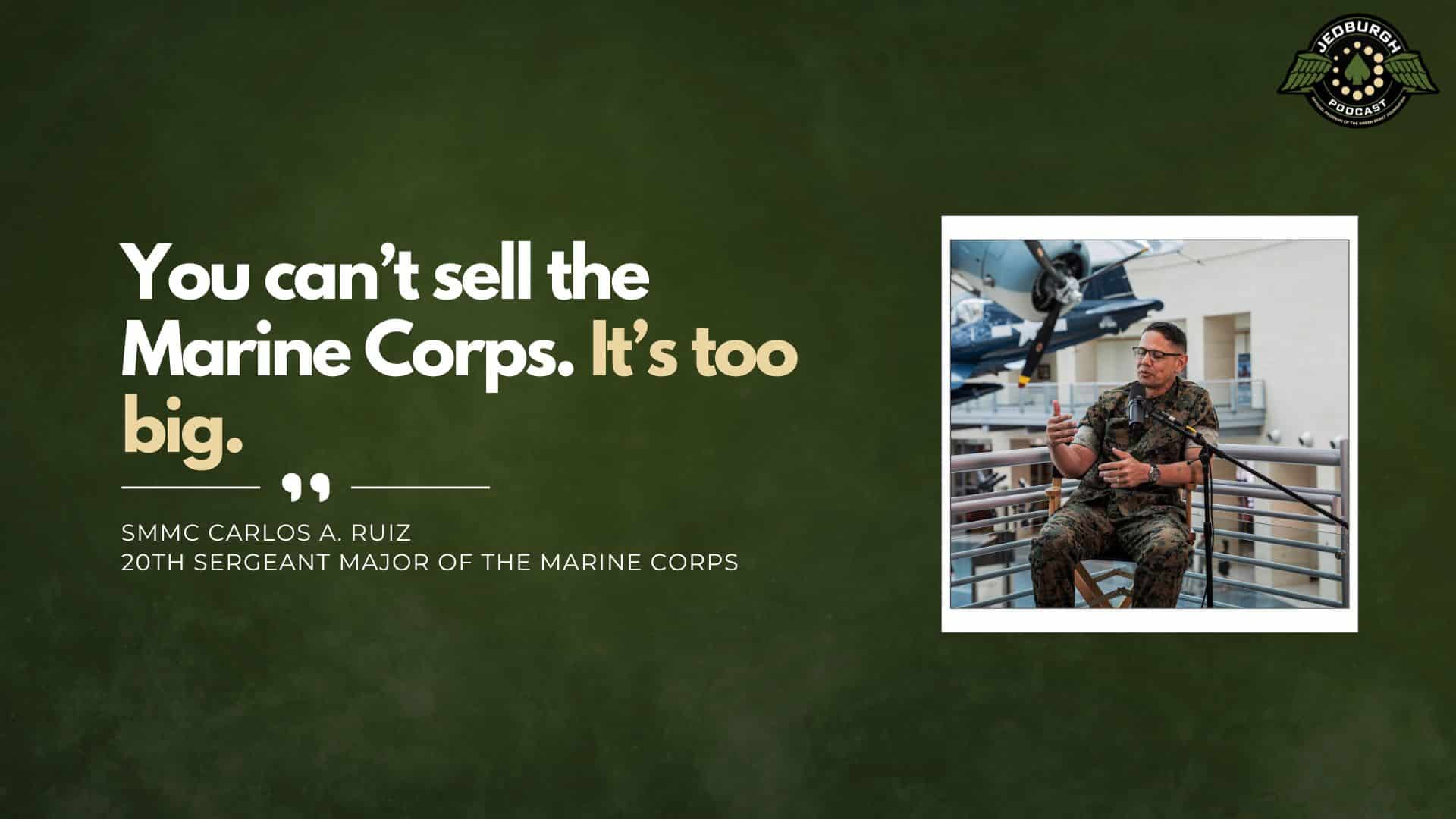
The school is pretty dynamic and it gets you out of your comfort zone. We are not de-Marine-ing you. We’re not making you into a civilian as a recruiter, but we are showing them that you must be able to communicate generationally to the folks that are coming in. In order to do that, you can’t sell the Marine Corps. It’s too big. They don’t understand chesty polarity. All the legends of the core are just black and white photos to them.
What you can do is tell your story and the dreams and aspirations that you had or what the core was going to change about you and what you were going to give to the Marine Corps. This contract that we had is still there for the taking. You have gone from this person, as a high school kid that was too skinny or too fat or you’re too shy, and the Marine Corps and the people around it have gotten you to a point now where you can give speeches in front of students. You have grown so much. Talk about that.
Talk about how you have grown as a person that has changed the trajectory of your family and you will never go back. If it’s a bad place, you will never go back there because now you’re moving this way. Your personal story, the standards of the Marine Corps will speak for themselves. It’s that young person that will give their trust to that recruiter. I did both. I was a recruiter and a drill instructor. Although I always wanted to be a drill instructor, I don’t remember my recruits. It’s just faces that pass by through time and they’re just blurred. They remember me, but I don’t remember them.
As a recruiter, you get to invest in that human being and your prep time says a lot about you as a sergeant and the staff sergeant. Our advice to them, our mandate to them is that you can’t send this young person to boot camp until you say that they’re ready. They may join and do zero pull-ups and unable to plank, unable to run the mile and a half, don’t send them. It is your responsibility to ensure that they are prepped and they are ready with the basics to endure the rigors of boot camp. Tell your story, first and foremost, and that will attract the young person. Walk the walk.
Be the example of a Marine. Three is, prep the young kid, the young person for the rigor reserve recruit training. That takes care of itself. And it’s the cycle. That makes them the Marine Corps good. That recruiter is going to see that Marine. They’re going to see them, so you might, as well as spend time with them. We’re very lucky and grateful to the recruiters because we have, in a lot of places, 4 to 5 months wait times to go to recruit training. You have to wait.
How are you keeping people in the Marine Corps? There’s a lot of options. You said it. You go on your cell phone now and you can find a million opportunities. How are you keeping people in the Marine Corps?
A couple of years ago, a general officer thought, “Why are we waiting until a certain timeline before we start pinging the Marine to reenlist? Sometimes, the Marine strikes Gold and they get in the MEU in the first two years of their career and are hooked. They’re all in, so why do we have to wait? If they’re interested now, let’s hit them and put them in quickly.” We have a CONOps retention campaign. We have another program where we are re-enlisted Marines two years at a time. Two fiscal years at a time is the way that we are good at getting after retention.
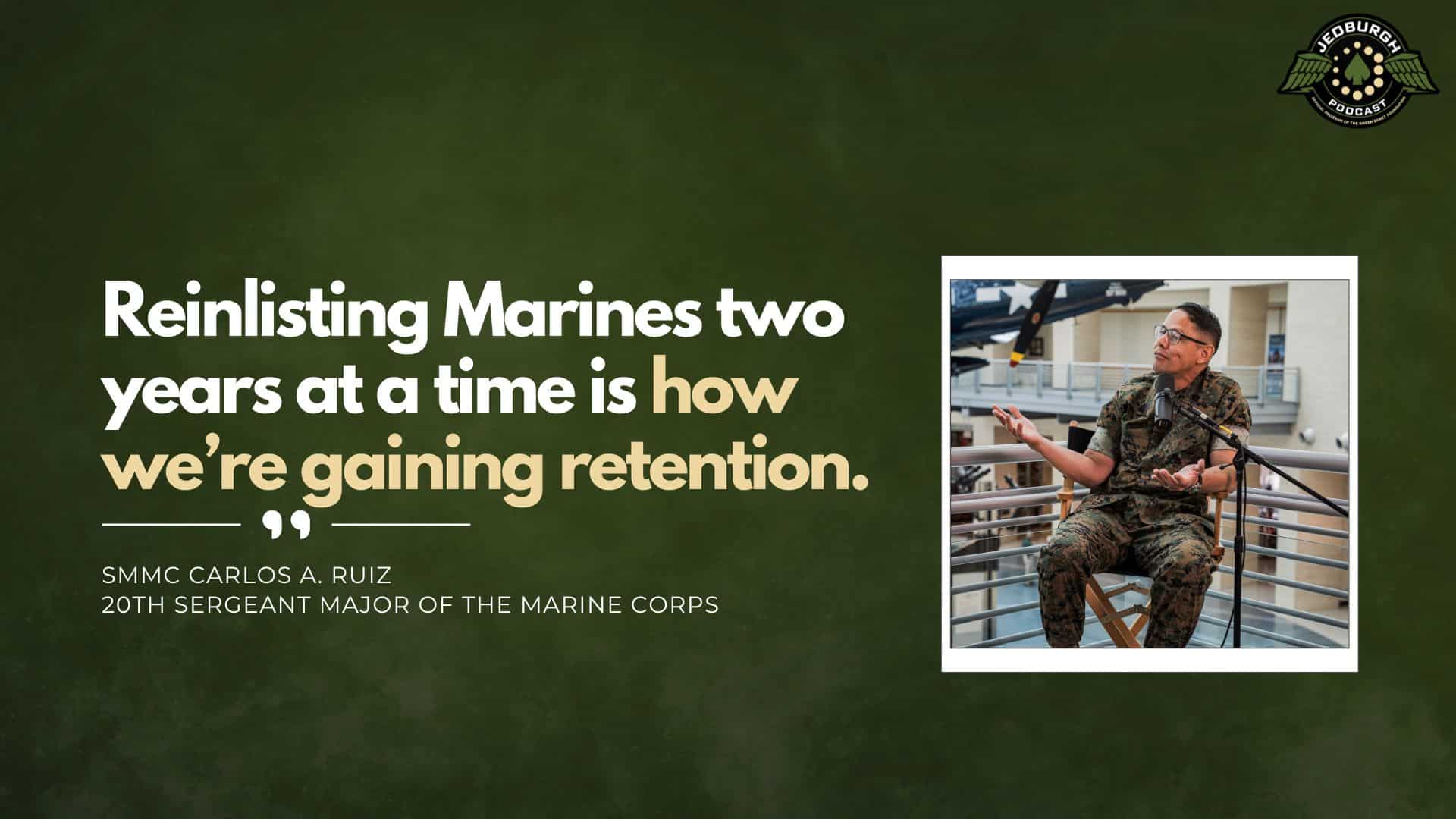
We are finding ourselves for the next fiscal year. It’s already 40% complete with that mission because Marines are doing Marine things. They’re in Southern command, Central Command, Indo-pacific, and Muse. These are the high times of our retention. When they’re the busiest, it is retention to the roof and then it becomes a waiting list, then they fight it out of what allocations we can allow those Marines to fight for.
If there’s 50 left and I got 200 in the queue. Now we have boards and we have to have a board to select those 50. We’re trying to figure out how to get the other ones to say, “You can’t be in 03 anymore or you can’t be this anymore. We have lateral move opportunities and we will pay to retrain you. If you want to stay a marine, then you can go this way.” We don’t have to lose them, because once you get them, like the command op says you have to do everything in your power to keep them. Otherwise, you got to make a whole new one and that recruiter’s got to go find the whole new one. Retention has been strong for several years. I worry about the other half. If 25,000 come in every year and I only keep ten every year, then what are we doing for the other 15,000? That’s what I worry about.
Who is getting out.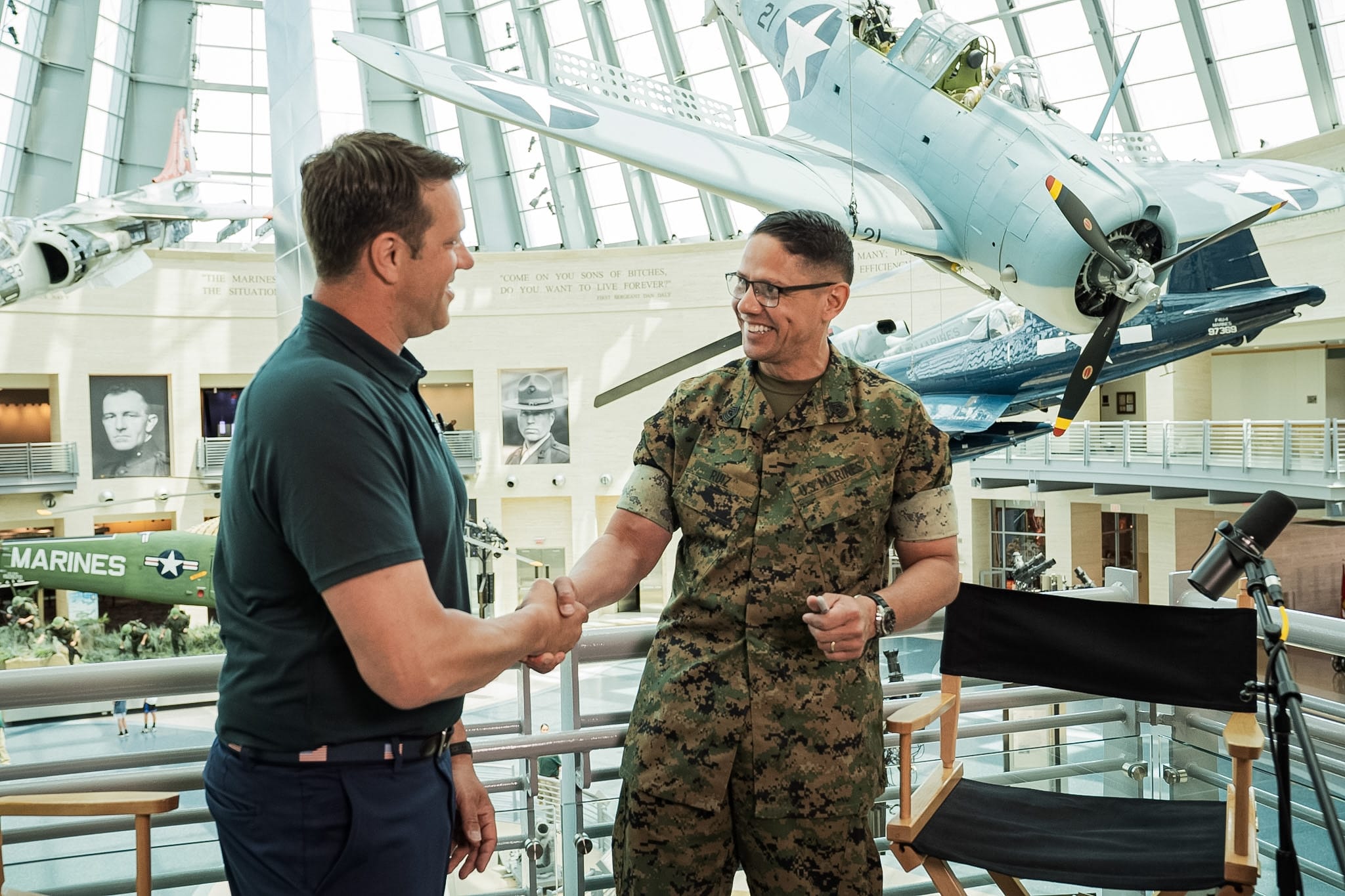
Yes.
Let’s talk about that because one of the initiatives that you have that you’ve been passionate about is how we return a marine back to civilian life. That’s something that we’ve talked a lot about on the show with your peers and other senior leaders. I truly do believe that the military has an obligation to get you back to civilian life. Now, the DOD, and we’ve talked about this with Secretary Doug Collins from the VA. Where does the Department of War end? Where does their mission end with a service member? Where does the VA pick it up? What does that handoff look like? Who ultimately is responsible?
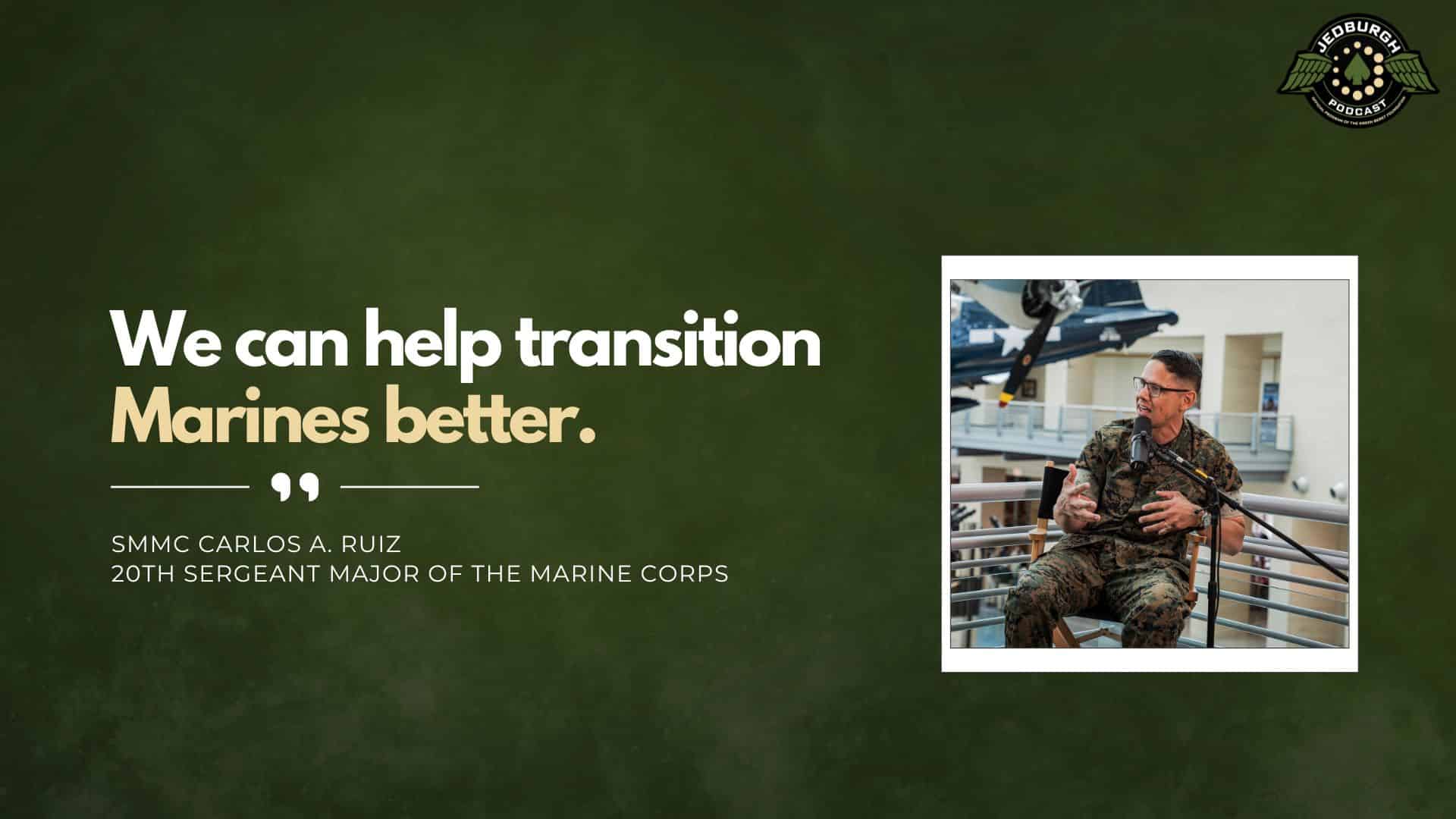
Does the Department of War responsibility end the day that they’re handed their DD214? They turned in their ID card and they walked out. Maybe or maybe not. When is the VA getting involved? It’s probably much earlier than when that person’s driving off base for the last time going, “What do I do with the rest of my life?” From your perspective, what are you doing for transition to being a marine? It will quantify that with, once Marine, always a marine. Transitioning Marines who are going out and they’ve got to enter that next chapter of their life.
I’m super passionate about this. I had a civilian someone that works in a certain influential place that told me to my face that it was only my responsibility to take care of the active duty Marines, to your point, right? Stop worrying about them as they exit. You need to worry about your barracks and those problems. I professionally disagree. If you don’t transition your Marines properly, if you don’t give them every opportunity, then your recruiting cycle will start sputtering and it will end. You’ll have a very hard time, but that’s not why I’m passionate about it. If you don’t help Marines transition successfully and give them every opportunity to thrive, your recruiting pipeline will eventually dry up.
I’m passionate because we can do better. What I mean by that is, it’s under the umbrella of the Patriot pipeline that the SEC Corps has come up with. The Marine Corps will be the pilot for that Patron pipeline. It’s called Project Mission Next. This is Marine Corps unique, and what I mean by that is that, a staff and CEO, a senior officer has the ability to go to a skilled mission program. Go to the command and say, “I’m 22 years in, 18 years in, skillBridge, please 30-90 or how many days,” and they disappear from the formations.
You’ve earned that. We want to give that back to your time to go get yourself ready and your family ready. I worry about the 22-year- old or the 23-year-old who won’t get a chance to go to skillBridge because they’re needed in the MEU. I challenged industry everywhere I go like the first responders, that you need to bring your hiring practices to the 21st century. That the Marine in their last year of their contract is available to you. You have to create the gates using 21st century technology to interview to do the forms.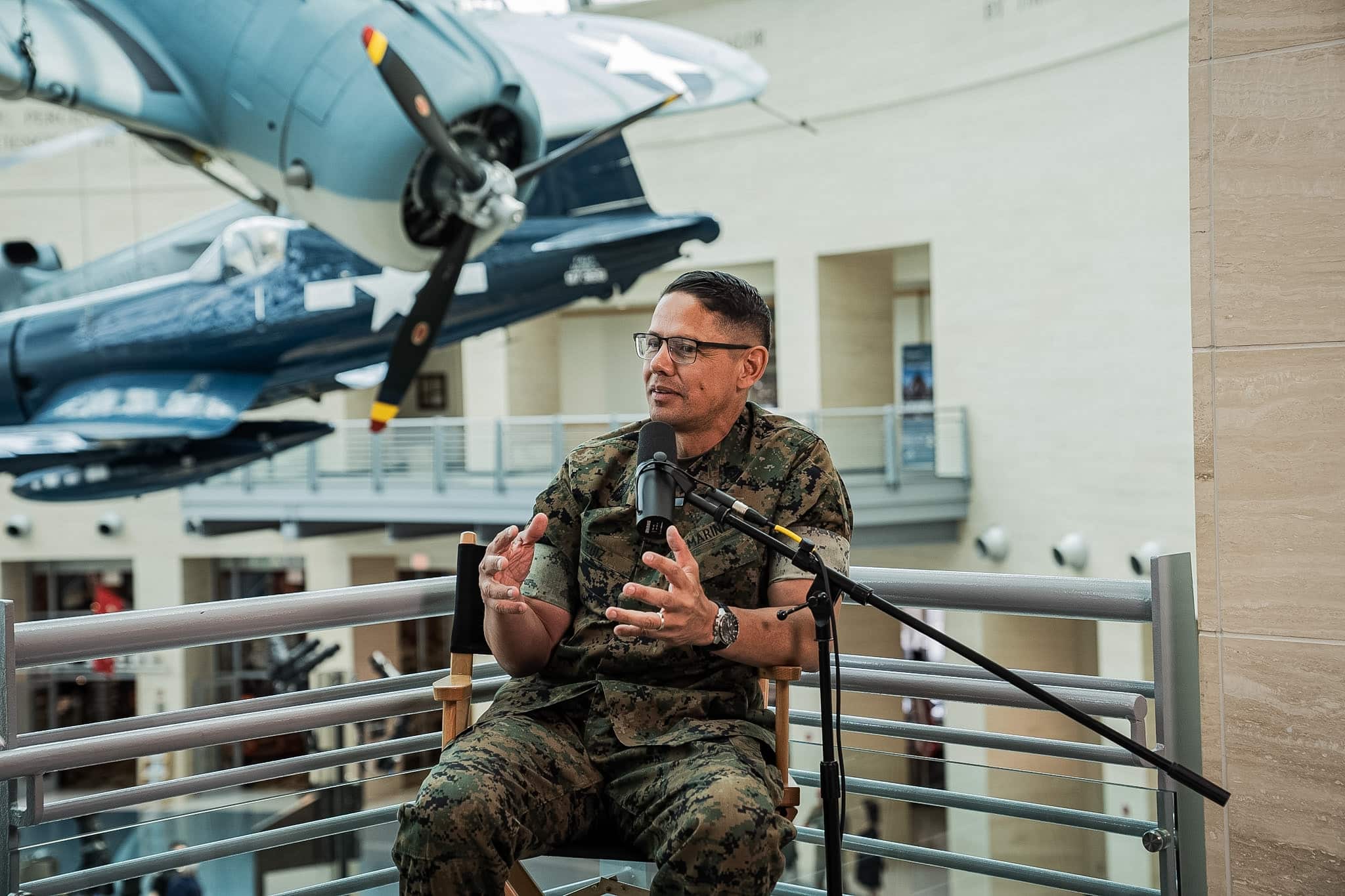
I go to Congress and I say, “I should have reciprocity with the clearances of the Marines and some of the training that the Marines do so they’re not waiting eighteen months for another type of clearance or the same clearance different process. Another school that the Marine ready did. Help me Congress get this into the NDAA to give reciprocity for some of the already received training and clearances that a Marine has so the time is shortened from their EAS to the school date or to whatever.”
You’re building schools to teach young people how to create ships, subs, and all these things. defense, industrial base, you got to leave your building. You got to travel to where the Marines are and the service members are and talk about it. You got to bring your Veterans who are in the industry making part of your recruiting effort and bring them to the transition or readiness seminar so the Marines and the Army and everyone else. Talk about how you were a Marine, a Corporal of Marine in 2018. From there, you became this and now you’re working here. These are the benefits. This is a very similar culture than the Marine Corps. We think that you fit well.
If you’re in Industry, you need to know what veterans are inside. What MOSs are inside your industry. Maybe you can come to me and say, “Sergeant Major, can we go to the schoolhouse of the welders and the fabricators, and then talk to them about this that is waiting for them in their future? Can we do that?” You need to know who’s inside your formations as a civilian industry, defense industry and then come out of my recommendation, come out of your holes and come recruit. I will give you access to the Marine, but if the Marine is in the MEU and they’re on ship.
For a little bit of two days, while the ship refits, they get the Wi-Fi turned on, then that’s your chance to Teams or whatever it is and do an interview. Do whatever it is that you need to do to move your hiring practices to the left. If it’s eighteen months for a school seat and you’re looking for quality service members to join your organization, it’s too long. If you’re twelve months, it’s too long. That young person should be walking into your job within 30 days of exiting their service.
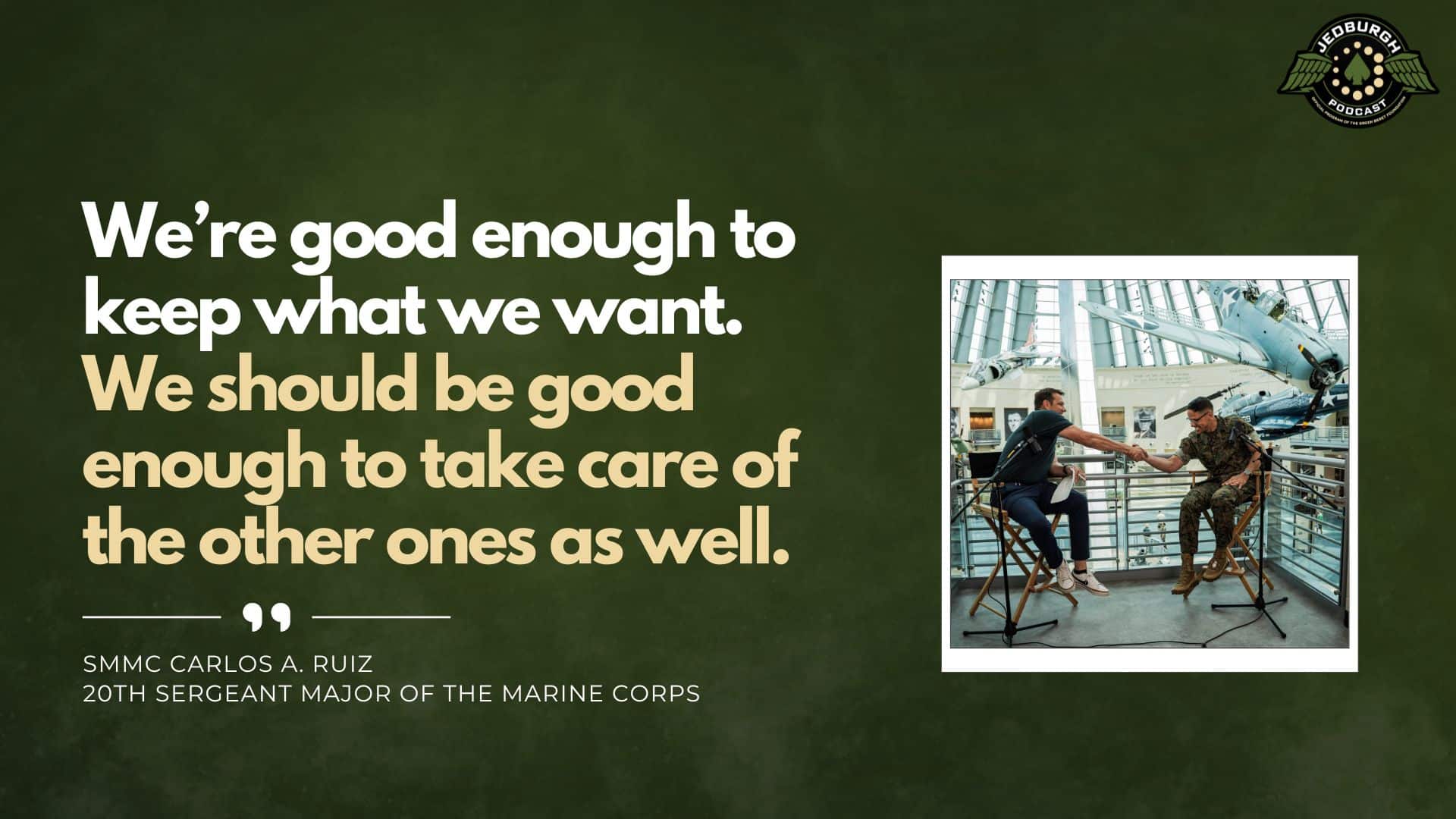
The industry, first responder community, you need to move forward and get after getting our service members in their last year of their contract. We’re good enough to keep what we want. We should be good enough to take care of the other ones as well. We can do both. People get nervous. It’s like, “Why are you setting things up for Marines to exit the service?” I’m not. I can only keep so many. What about the rest?
If they get a job, they get insurance, they get health insurance. The paychecks don’t stop. Momentum continues. They become productive members of society. They become civil leaders. They become who we thought they could be. They don’t enter a place of depression. No paycheck, broke and they feel that they can’t reach out because they are a Marine. I’m too good to have a starting job at Home Depot for $12 an hour. It’s okay to do that while you’re waiting for the next chapter of your life. Project Mission Next is what we’re doing in the Marine Corps too to help that out.
I need electricians. In my security company, we’re low voltage electricians. We need line voltage electricians, too, but CCTV access control and fire alarms all across the North East. We’re starting to do stuff in Florida and Colorado. We’ve talked about this internally. We’ve gone to a lot of the VSOs. This is important. I’m glad we thought about this because we’ve gone to a lot of VSOs and we’ve said, “This is the skill set we need.” What you have in a lot of the veteran transition programs, and I won’t name them, but there’s a bunch out there. They do great work, but they’re transitioning to the 20th year service member, the 22 years, the 28 year, ’06 or the major or the sergeant major.
Every once in a while, there’s an 88 in there. These guys are retiring and even the ones who don’t want the retirement job who want the next career. They are older. They want to “lead others.” They want to be managers. They want to be people leaders but there’s a big difference between those folks and what you’re talking about, the 2-year Marine, the 5-year soldier, the 7-year staff sergeant and 8-year staff sergeant who’s done one reenlistment but now has family problems and says, “I got to get out or I’m going to lose my kids. I’m going to lose my wife. Whatever it is.”
Creating opportunities for those people is absolutely critical. When I look at it as a business owner, those are the folks I need. Those are the folks I want to do all the things that you just said, because they’re still young, motivated, and super smart. They’re people of character, to your point about building the Marines. I hear we want people of character. We’ll teach you the hard skills. I’ve done that in our company. I said, “I got a couple of senior electricians. We’ll teach you how to run cable and terminate wires and connect the stuff. This isn’t rocket science.”
If you’re a good dude, you show up and you work hard, you’re going to learn it. There are also times where I’m like, “I need people who know what’s going on.” I had to get somebody. It has been very hard for us to find, and I’ve even gone on LinkedIn. I’ve searched New York, the Metro area, Electrician, Navy Marines, Army. There’s like two people that come up. What’s LinkedIn? It’s a professional network for guys who are retiring to join to go be a consultant. Not somebody who’s been a CV in the Marines who is probably a trained carpenter or plumber or coming out of these combat engineer roles who are certified in the trades.
That’s right. What makes this unique is that the gentleman that helped me get this off the ground is Mr. Delaporte. He works for the secretary and the Honorable Mr. Tata. Maybe you saw the Marine to Guard program. An example of the Marine to Guard program is when we divested of tanks. Where are the tankers going to go? We set up the guard to come to our bases and stations and interview and screen this young man and woman and say, “You’re not going to belong to the guard. We’re going to release you from active duty Marine Corps. Now, you’re going to go to the guard and do tanks there,” as an example.
He saw that and he built that for the guard. His first contract was a marine and spend the rest of his career in the guard. I love me Guardsmen. We gave them a lot of Marines over the years because he was a direct hire, to your point. I love the organizations that are coaching Marines. The Department of Labor has a project that has coaches inside of our bases for our Marines can go. They get coached into an interview, that could be coached into. It’s the third party getting a marine to the job but this is direct hire. So Mr. Delaporte was able to get the companies and you can name them. Maybe I won’t hear this but you’re the usual suspects of all things in this industry who says, “I want to direct your talent, Marine to guard, Marine to whatever.” What’s next is Marine to FBI, Marine to First Responders.
Marine to FRSix.
Direct hire the last year of the Marines. I think this is what’s next as well, because there are organizations that are mentoring a young person who’s just enlisting, and they stay connected to that person for all of their contract. If they can stay connected to them, they know that they’re going to gain this skill set and they’re going to be hired in four years. They are catching on. It’s better to grab them when they’re 17 or 18, because the Marine Corps makes them. They’re going to keep a skill set and have experience, then we’re going to hire them on the back end.
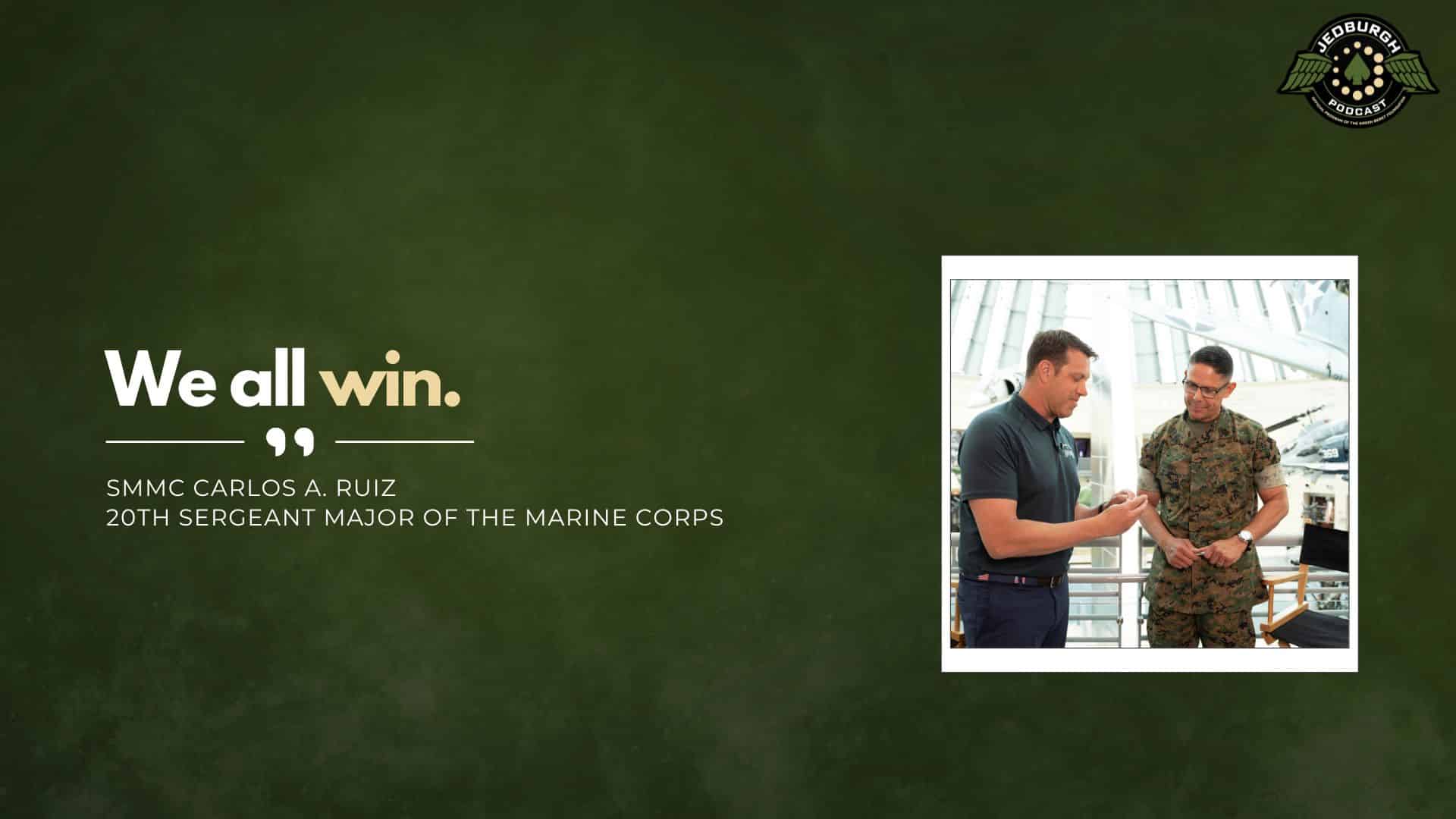
If the Marine wants to reenlist, then guess what? We’re going to negotiate. We’re negotiating the contract because now, we’re going to have eight years of experience. You got to pay me more because now I’m this. It’s both ways that this company is able to track their talent. That’s the future. If the Marine knows they’re going to transition to this great opportunity, not only they’re going to stay more focused and be a marine. Also, maybe not be as careless with their shenanigans because they know how important that clearances or that skill set is. That companies waiting for them should stay clean. We all win. That’s what’s next. The first responder thing is difficult because every state is just different. We’re trying to figure that out.
That’s also how we’re going to reduce suicide rates top. I do passionately believe that those numbers are too high. It’s because we think of this stuff after the fact, like, “Now, they’re done.” Now, what? Let’s give them a program so that they stay motivated and find their community.” It’s too late for a lot of folks by then. They’ve already gone down that dark or they’ve already returned to their small town in the middle of America and they’ve lost their community. They don’t know how to find their way out. I’m never going to find that guy who went back a couple of years in the MEU. Now they’re in rural Idaho. I’m never going to find a couple more for my company. We got to get them early.
They’re also 22. They’re excited. I see the transition already in seminars. We make them get dressed. They get tucked in. This is a tie. Put in your best pair of shoes. I asked this young man, this Sergeant of Marines, who is very popular with the Marine Corps. I said, “Tell me about your transition.” He said, “Sergeant Major, it felt like I was on a ‘96 and then the ‘96 came and went, then it felt like I was on leave. After a while, I felt like this is my new reality and I’m not going back to my life. This is my life.”
“You do a great job as Sergeant Major of resume building, the classes and all the hard things. You do a good job with that. Maybe not so good with the 80 year old telling you to pull up your pants or something. Maybe get rid of that person. For the most part, you do a great job of preparing us tactically. What you can do better for us, Sergeant Major, is how you are going to feel. That transition is just difficult.”
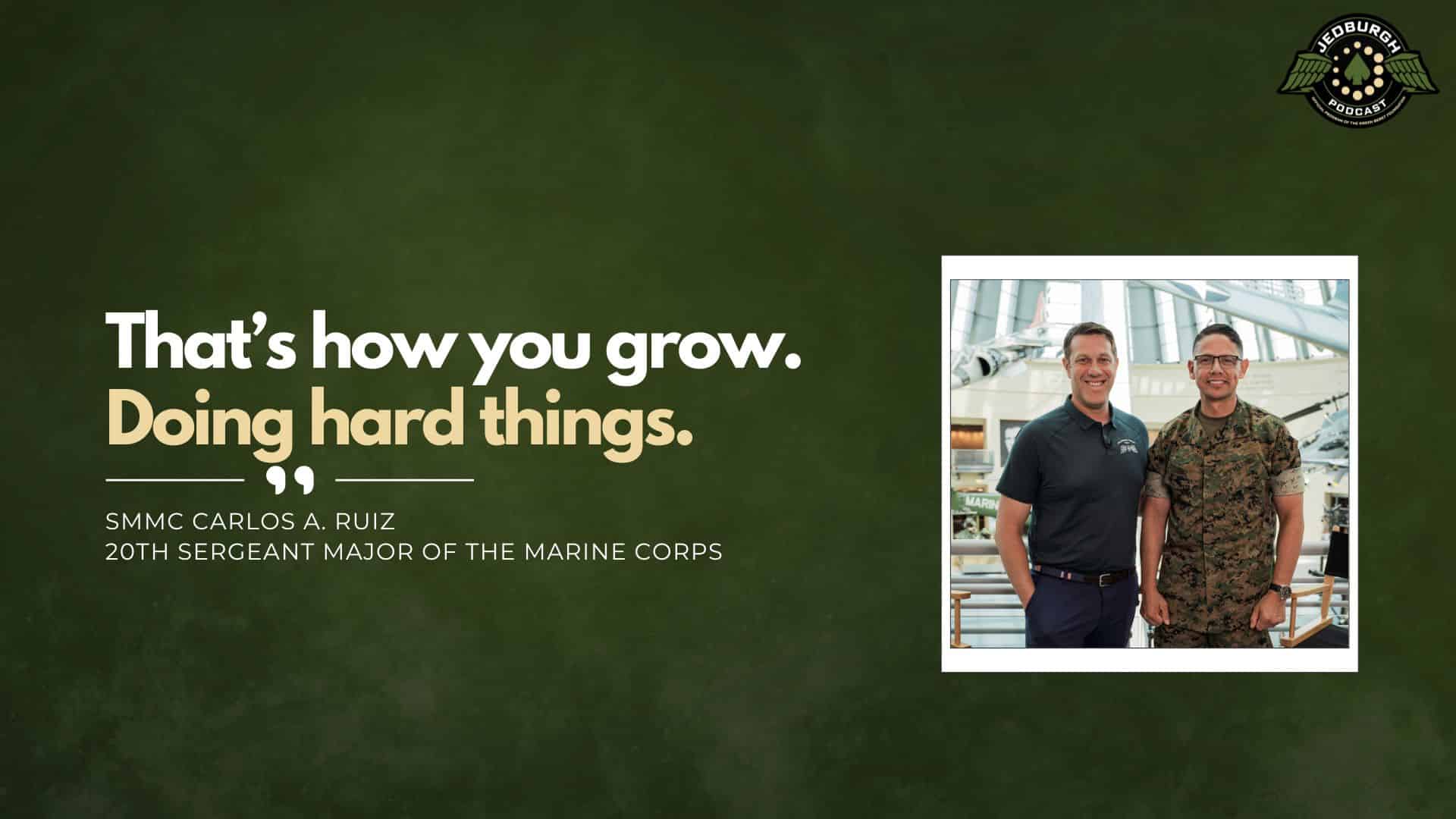
He gave me some great ideas that I’m going to try to inject into our transition about that ‘96 to leave. We do such a great job of telling you that pressure, hard work, and it’s living hard. It’s what’s going to make you a better human. That’s how you grow by doing hard things. You set yourself up very well for transition and you end up being a very smooth transition-like process. All of a sudden, it’s not hard and you’re not suffering like we want you to. You twist it and to the point where maybe you burn it all down because you want to do hard things. It is this, “I’ve never gone out. I have no idea what I’m talking about. It sucks.” Even when you have every opportunity in the world. It sucks.
What I can do when I’m in uniform for that young 23-year-old is that least say, “There are people that are looking for you. Here is a direct route. You don’t have to think very much. Make a decision. They’re going to hire you and figure out if that’s what you want to do. By that time, you have built some confidence, little savings and you got yourself up right and then you can move to what you want to do.” At least I can do that.
I tell you guys to get out of that all the time because like you, you come into the military. You always think, whether you do two years. A lot of people are like, “This is my career. I’m going to stay here for a long time.” I had it too when I got out. My first job out of the military is going to be the next 32 years of my life or 25 years of my life. The reality is, that’s not the reality. It’s okay to go to a place and stay there. For my first job, I worked at Merrill Lynch. I cried on day one in the Starbucks. I left it 2:00. I walked down. I almost punched a dude in the face in the office because he was swinging a putter on a headset and looked at me like I was a dirtbag.
I had thirteen years in the special forces and I’m like, “Two things are going to happen. I got to leave or this guy is going to get beat up with that putter.” I went to the Starbucks and I looked out the window, and, “I made a mistake,” I said. I told myself, “I never quit anything in my life. Today is not going to be the day where I quit for the first time in my life.” I went back, but I knew at the same time, I’m also not going to be here that long and I got to find the next thing. It’s okay to go do that. You don’t have to get out and say, “This first step is twenty more years.”
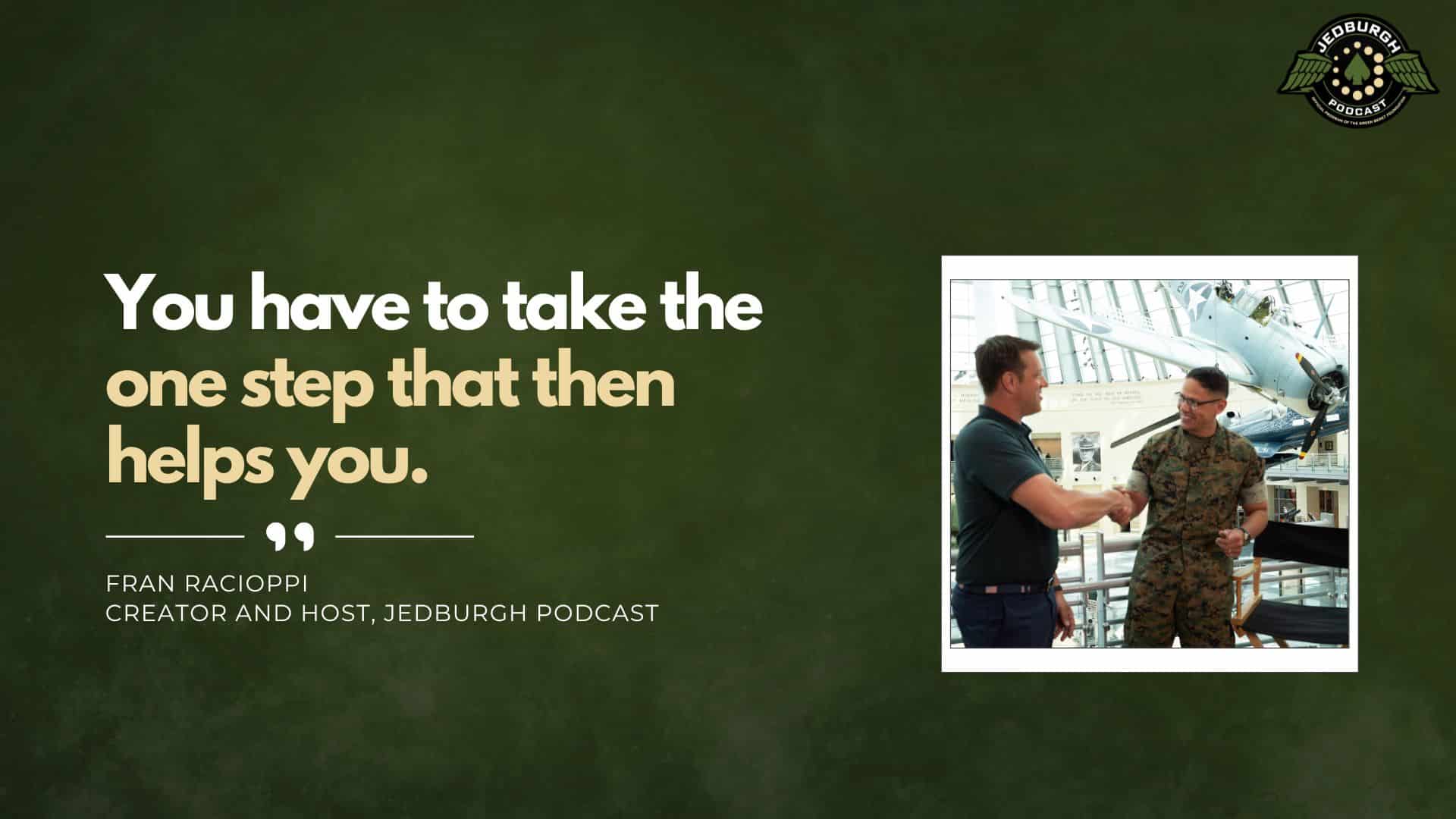
You don’t have to be perfect, but you have to take the one step that then helps you. I’ll tell you to this day, this show exists so many of the things I do and my company is this because of the relationships I made and the people I met in those first eighteen months where on day one I wanted to walk out. Getting guys to understand that is really important.
There was a story time but you know when someone’s going to boot camp when you’re in the airport because they have the big legal envelope. They have no backpack. No nothing. It’s just what they’re wearing, and they have this little yellow thing.
The terrified look on their faces.
It’s like 3 or 5 of them, or whatever it is. I’m in seat 28A or whatever, of whatever airline. I sit down and I’m watching. They come and I’m like, “I pray that one of them is right next to you.” The Gods answer my prayer and one of them sits right next to me. I’m sitting quietly and I said, “How are you doing?” He’s like, “Good, sir.” I was like, “Where are you headed to?” He’s like, “I’m going to Marine boot camp.” I go, “Is that right? Congratulations. What are you going to be?” He said, “I’m going to be a machine gunner.” I asked how long and he said, “Four years.” I asked, “How long do you think you’ll stay?” He goes, “I’m staying twenty.”
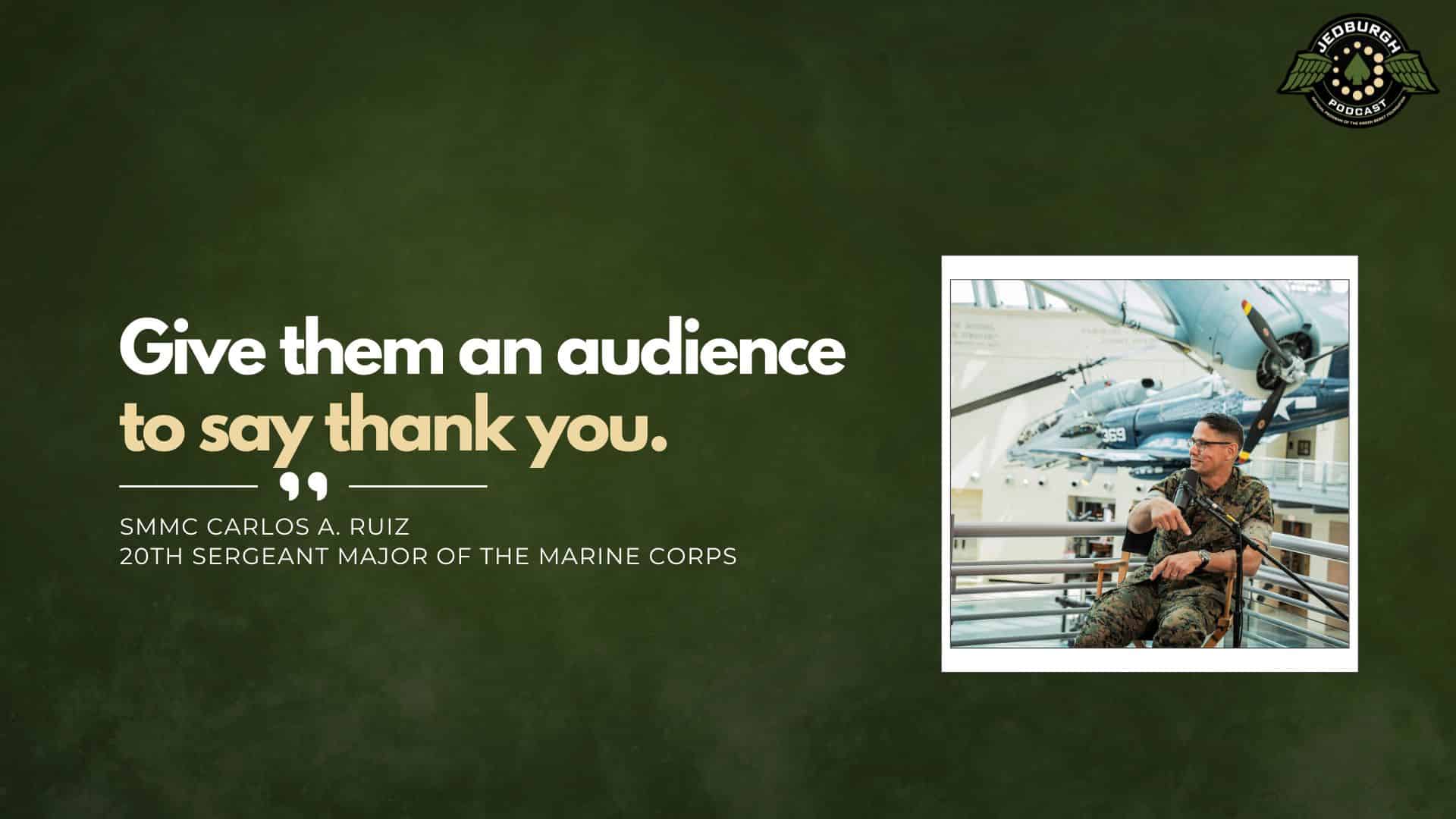
To your point, at that young age in their mind, “This is it. I’m going to do this for the next 20 to 30 years. It’s going to be my life.” What happens on the way is life and the seasons of life. I want our Marines to give credit and homage and take a moment as the Marines make a very hard decision to exit to get after a dream that you give them an audience to say thank you. It’s just a formation for dinner or lunch. Maybe you give him a little gift or maybe you pin a metal on their chest and have him say something of their time.
When they start a new career and they finish that career and the families are done. The kids are gone and they look at the closet and unzip that bag. It has their service alphas. They’re like, “I remember that uniform.” You take it out real carefully and then you try to put it on. Let’s not put it out. Let’s just admire it. You zip it back up and then you Google where the Marine Corps league is at and you start finding your way back to our tribe. You start wearing the Red hats, and you start going to the post or Travis Manion or the new version of the Legion and the BFW. You come back.
You spend the next fifteen years of your life trying to figure out how to give back. All I’m saying is you don’t have to wait that long. You can exit the service, have 4 or 5 or 8 years and you can stay connected throughout because we love you and we want you to stay connected because without you, we can’t do it.
I need you to come back and tell my new eighteen-year-old what it’s like to be broken up with, what’s it’s like to have a horrible moment, how to deal with losing a parent, how to deal with on and on life things. I need you to come back and teach our young folks that because when they go forward, they’re going to be focused. They’re going to do the hard things just like you did but it is keeping him in the fight. Keeping him focused in the formations moving forward with each other. That’s going to make the memories last a lifetime.
I was cleaning out a closet in my basement and then the same thing with the uniform. I pulled out the bag. Opened it up, lifted it, and then said, “That thing will never fit.” It’s never going to fit, but you do. You look back on that and so many memories come back. That’s what you want. That’s why what you’re doing is so important because we tell people in private industry all the time, you have two impressions on an employee, their first day and their last day.
They forget a lot about what happened in between on how they were treated on their first day and how they were treated on their last day. That will be the impression and what they tell people about that organization and how they’re going to go down to that closet. Open that bag up and what are they going to think? When they look at that uniform in 2 years, 10 years, or 20 years.
That’s right. We own a lot of when 9/11 happened and when COVID happened. All these things. The environment closed down the gates. It’s very hard for our veteran community to keep up with the new regulations, the new requirements to get on base. That’s why this place this special because the Marines can come right across the street and come here and see the veterans here.
In other places, veterans must be allowed to enter our bases and be part of the daily routine once a week or once a month and just go around. Let me tell you about the Drone of the day, which was the Kamikaze. I don’t know, but it’s just, how do you deal with that? That’s invaluable. That’s a human to human connection. The visuals that come from someone speaking. We have to do better in being more inviting for our veterans to come in and talk.
I got two more quick questions for you and then they’re going to give you the hook because I know you got a full schedule. One of the initiatives that’s big out there for the Marine Corps is Barracks 2030. Why is Barracks 2030 so important to the Marine Corps? How does that tie into your focus on quality of life?
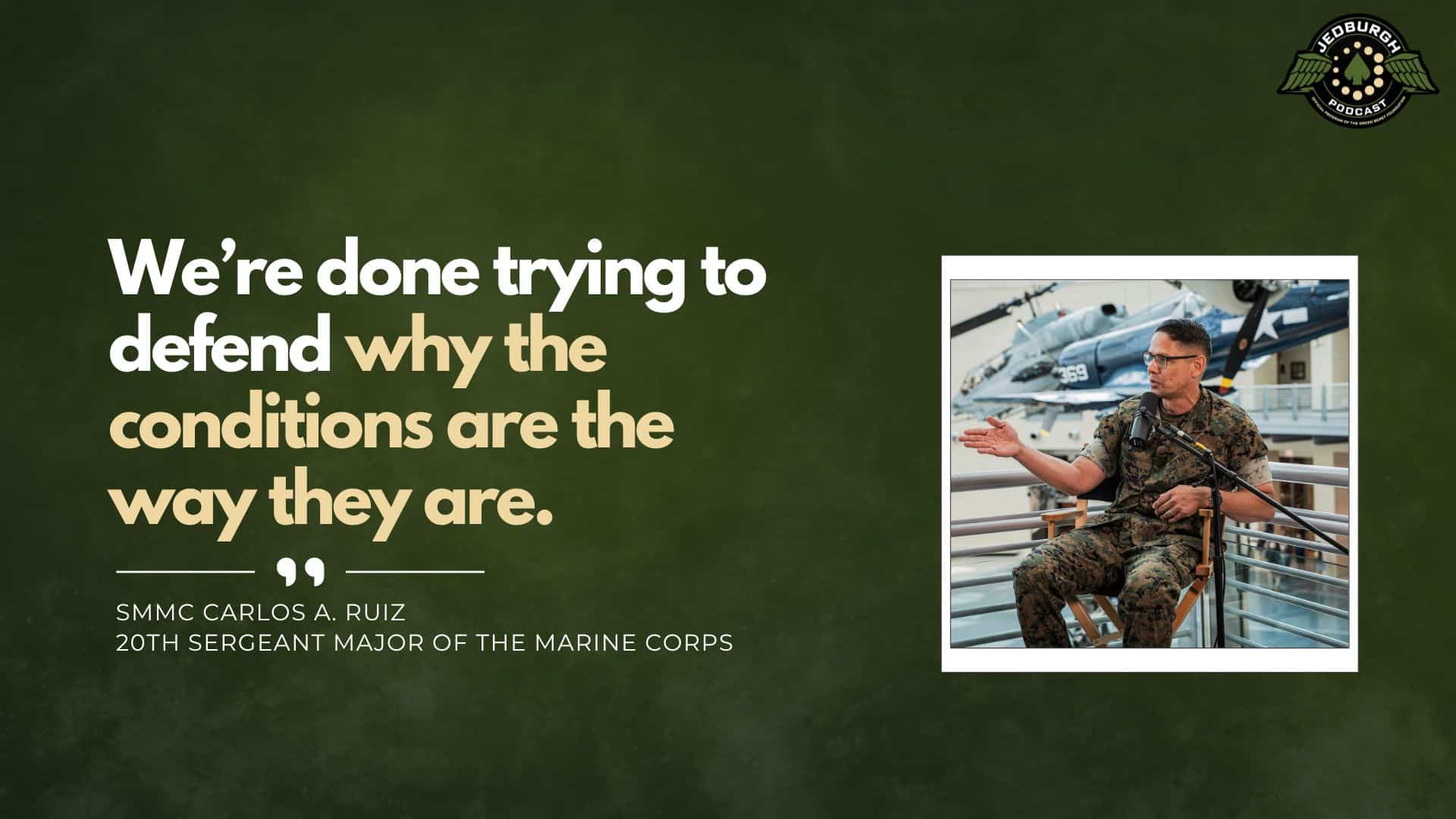
A few years ago, the comrades said enough. He looked at a three-star General and said, “We need to fix this. I know that the resources are limited. Give me the options of what I’m not going to do, what I’m not going to buy in order to make this right for the Marines.” It’s undefendable. We’re done trying to defend why these conditions are the way they are. In some places, the barracks are very good because the buildings are updated but in a lot of places it’s not. Let’s stop pretending. What do we want? We want a Marine to have a place to sleep because this is their home.
If they’re going to pivot from their home to the field, not home, office and field, then this place will be a recharging station with the right food and on and on. Now, you fast forward three years, Barracks 2030, all other things that we have going on, we find them to be in silos. If you hit negative press that the Marine Corps has not very good Barracks, we’re going to put some money on it. Negative press that the Marine Corps is doing this, then we’re going to put some money on it.
Let’s stop doing that. To my very original point, what do we want that Marine of 2040 to be able to do? That means Barracks, food, strength and conditioning, on and on. Let’s align all of that to get us that because it’s going to be part of the development of that human being and marriage with the platform. Can I get all the sensors? Me and Mike Weimar are always talking about the sensors. We can make a whole suit that can tell us your blood pressure, your respiration rates, and your blinking cycles.
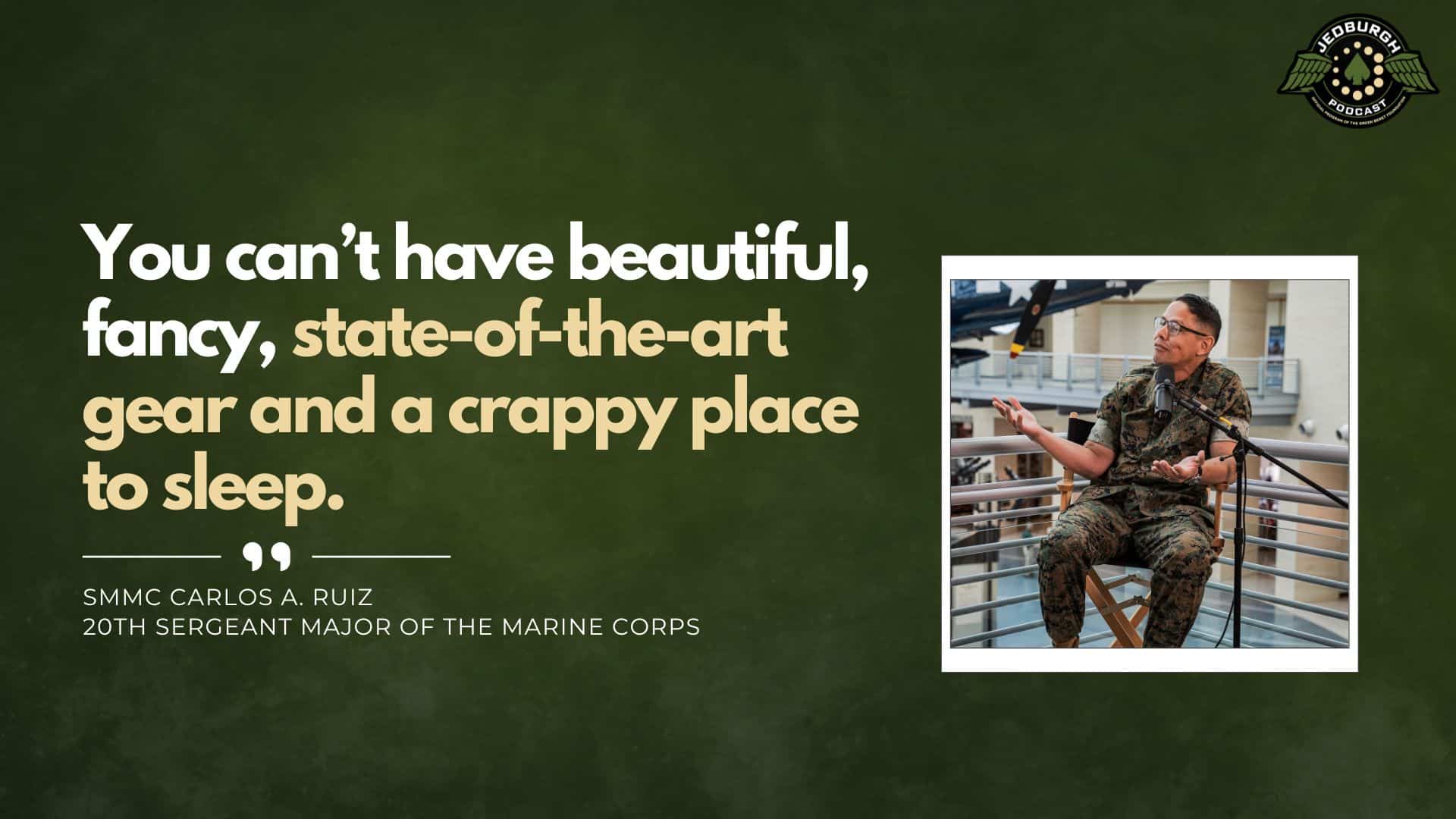
When stressful situations happen, you blink fast. This is your pattern. This is how your body is suggesting. This is how your body starts with sweating. Therefore, this is your baseline. The technology is here to do all of that. How do we inject all that technology into a human being? The human being needs to be. With Barracks 2030, you can’t have beautiful, fancy state-of-the-art gear and a crappy place to sleep. It’s just not going to work. It’s all connected. We want to answer that question of a future marine and then all those things were aligned. You can’t expect Marines to have state-of-the-art gear while giving them a substandard place to sleep. It’s all connected.
We’ll be flexible enough to adjust. More importantly, at the executive level, there will be a three-star that follows the three-star that handles combat arms that handles aviation. After they’re done talking about all the ACVs and F35s, the three-star will speak about the programming of the human, which will be a game changer. Barracks 2030 is long overdue. There isn’t a base that you go to that there isn’t some construction happening. It’s healthy for the young Marine and the old Marine to see each other come out serious.
We got some furniture and new mattresses. Every lock will have an ID card that unlocks the door. The Marine will be able to control their temperature and it’s not a b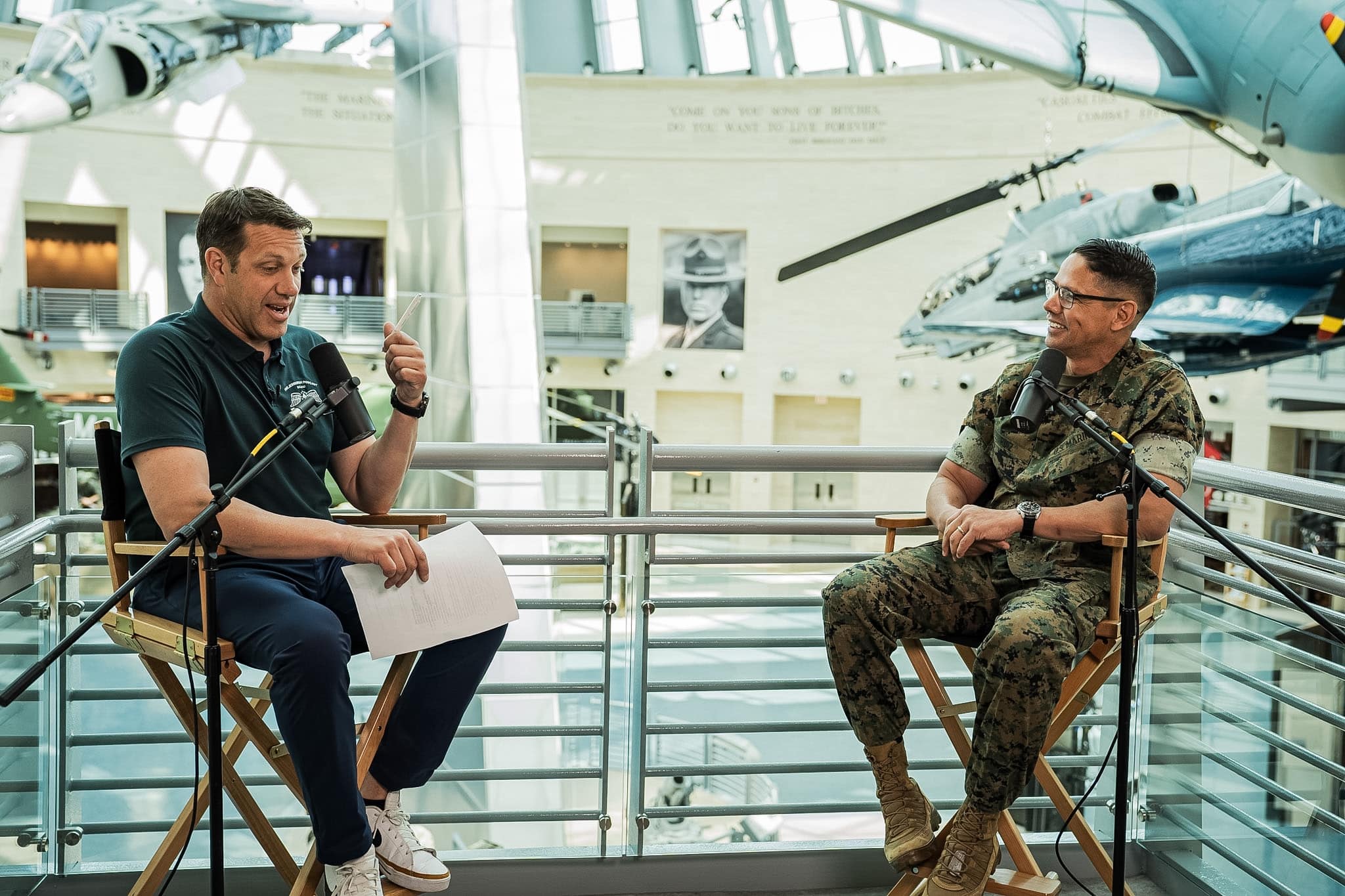
Many years ago, we used to have a computer room. No one updated it. No printer paper. The printers anymore and that was like the future. Now, we are asking Marines to be better but in popular opinion, put it in their pocket to do. We’re asking them to do more but you pay for it. To me, that’s crazy. If you want a certain type of marine, then give them what they need and they’ll run with it and on their own. They will always go the extra mile to make things even better, but that shouldn’t be the norm.
Habits form the foundation for our standards. I think about the Jedburgh’s of World War II. They had to do three things every day that continued through any service member’s life, but they had to be able to shoot, move and communicate. They did those things with precision so that then they could focus their effort and their attention on more complicated challenges that came their way. When you look out into the Marine Corps formation, what are the three things that you want every Marine to do every day to become the most proficient Marine land, sea and air that they can be?
A journey for a young person to figure out who they are because you’re young and you’re trying to figure out what works. That same question that you just asked me is something that must be coached, something that must be pushed for those leaders that stand in front of the formation who were in that box. The formation in 2025, all of a sudden, are outside that box leading Marines. What got you out of that box? The Command allows me to speak with him at the basic school. In that basic school, everyone’s very worried about the relationship between the senior enlisted and the officer. I get a lot of questions about that.
You can piss off the platoon. I don’t care how good of a lieutenant you think you are.
I usually challenged the lieutenants and they came in. You have to share your life. You can come in and pretend that you are a machine. Nothing gets to you. That’s only going to go so far. You won’t endear yourself into your Marines. Your Marines won’t respect you if you don’t share that you had three jobs. That you went into debt to get through college. It’s like, how did you get here?
First of all, you have to wake up early. You got to get some PT in. You got to be listening to something in your ears when you’re either on a concept two bike or you’re running. Maybe it’s not music all the time, but it’s a book. I make people do this all the time in crowds. I’m making faces at each other and making them say the first name and the city and state they were born in. Somehow, the stress of who’s who is gone and they know, just one more level of a human.
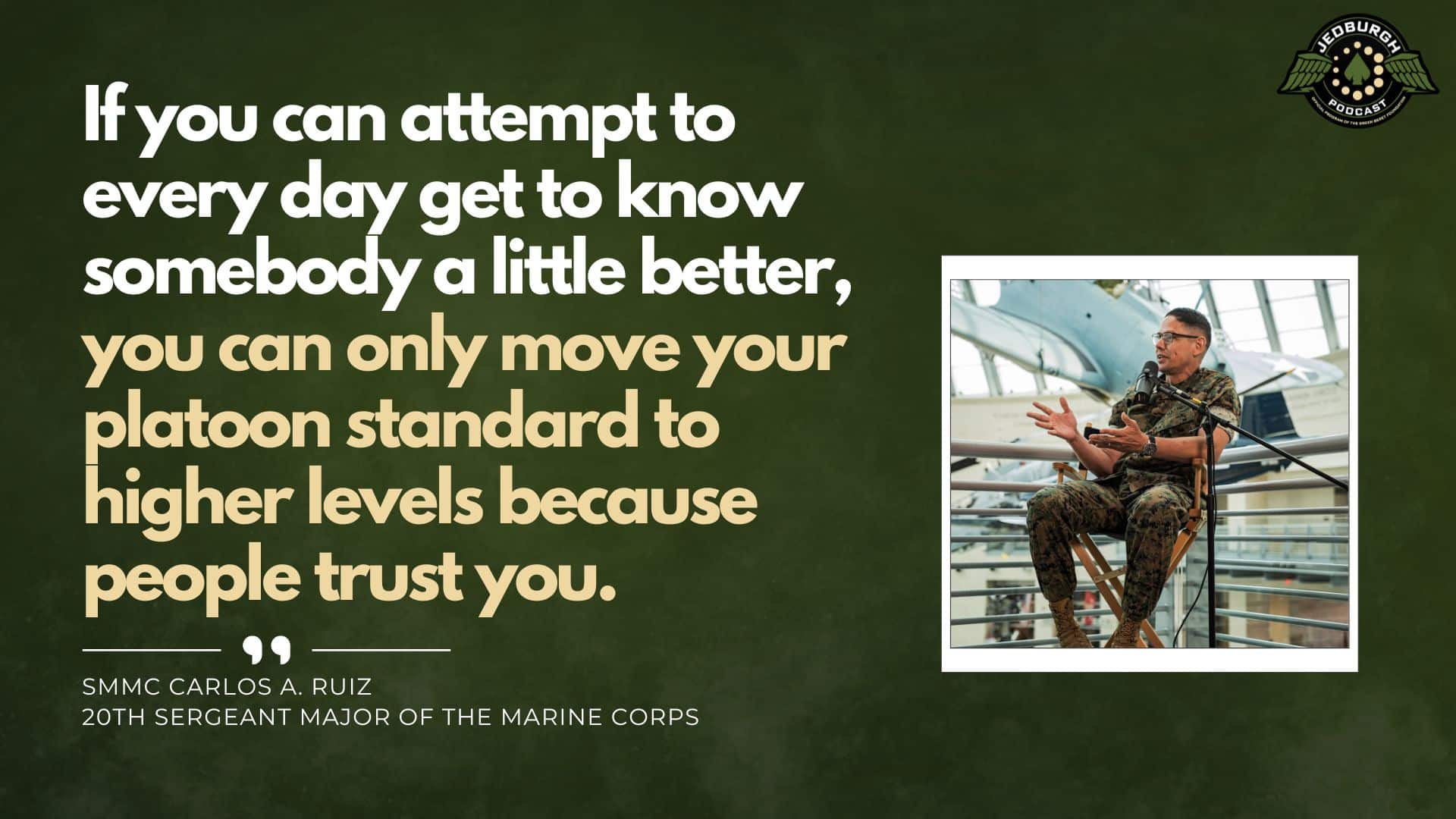
If you can do that and every day attempt to get to know somebody a little better by asking questions and you allow in the environment for questions to be asked. You can only move your platoon standard to higher and higher levels because people trust you. If they can earn that trust, they’ll run for you. The enlisted Marine will give the last metro of devotion off your order. You must be worthy of that. That’s how good you must be. Tell your story, stack on NCO to NCO, especially a young Marine officer, so the Marines can connect. That’s one of the biggest things that I push for.
I can’t sum it up better than that. Thanks for this.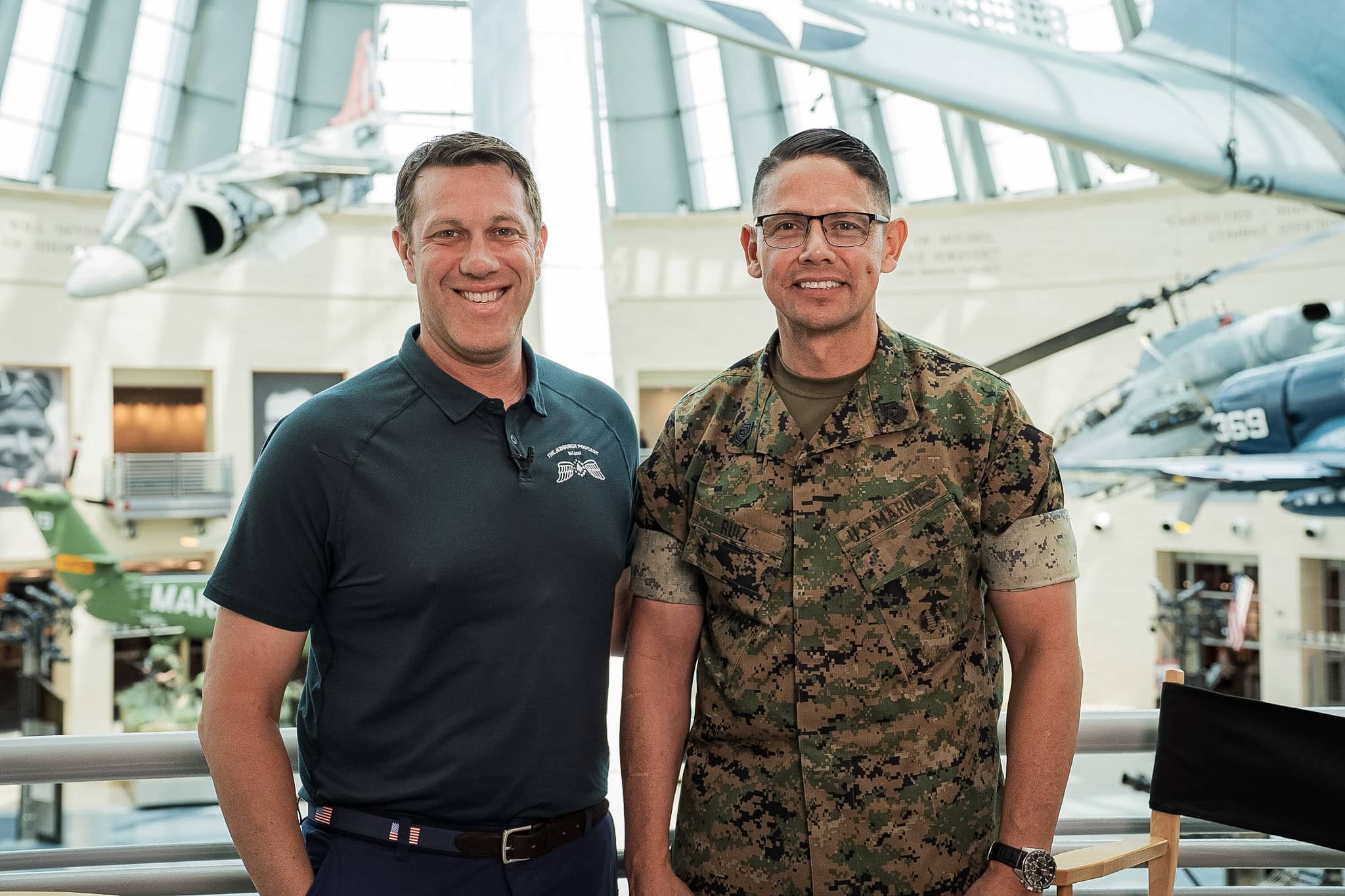
I appreciate taking the time to sit down with me and sharing your perspective on where the Marine Corps is just, your priorities in this beautiful place.
It’s an amazing building. Thanks for being here. I hope you have a chance to walk around.

Green Beret Foundation
P.O. Box 25138
New York, NY 10087-5138
Note: Please use USPS mail or priority mail. Do not use FedEx.
Green Beret Foundation
10205 US Hwy 15-501, Unit 26-8
Southern Pines, NC 28387-4301
Call: at: (844) 287-7133