Green Berets are trained to solve problems that don’t come with instructions. Green Berets build trust where none exists. Green Berets lead small teams in uncertain environments. Green Berets adapt when the plan falls apart. Those same qualities that make exceptional Special Forces soldiers also make exceptional entrepreneurs. For Green Berets their next mission begins the day they leave the Regiment.
In this episode, Fran Racioppi sat down with Retired U.S. Army Captain and Green Beret Ben Harrow during the 2nd Annual Stars and Stripes Classic to discuss transition from Special Forces to entrepreneurship and why so many members of the Regiment are uniquely equipped to build successful businesses after service.
Drawing from his experiences leading in combat, recovering from catastrophic injuries, and building businesses after military service, Ben explains how the qualities that define a Green Beret – adaptability, resilience, disciplined execution, and solving complex problems with limited resources are the very same traits required to succeed in business. We discuss the realities of building scalable organizations, developing repeatable systems, hiring the right people, and learning when to lead from the front and when to empower others to take ownership.
We also explore the changing landscape of the Special Forces Regiment as a new generation of leaders emerges without the combat experiences of the Global War on Terror. Ben shares why preserving the culture, brotherhood, and lessons learned from previous generations has never been more important, both inside the Regiment and long after service ends.
Finally, we discuss the importance of the Stars and Stripes Classic and why events like this help preserve the team room. The uniforms may come off, but the relationships, shared experiences, and commitment to one another remain. For Green Berets, that brotherhood becomes the foundation for new missions, new businesses, and new opportunities.
The Jedburgh Podcast is brought to you by OneBrief; enabling military leaders to make innovative, informed and deliberate decisions faster than ever before. Superhuman command wins wars.
Follow the Jedburgh Podcast and the Green Beret Foundation on social media. Listen on your favorite podcast platform, read on our website, and watch the full video version on YouTube as we show why America must continue to lead from the front, no matter the challenge.
—
‐‐‐
Ben, welcome back to the Jedburgh Podcast.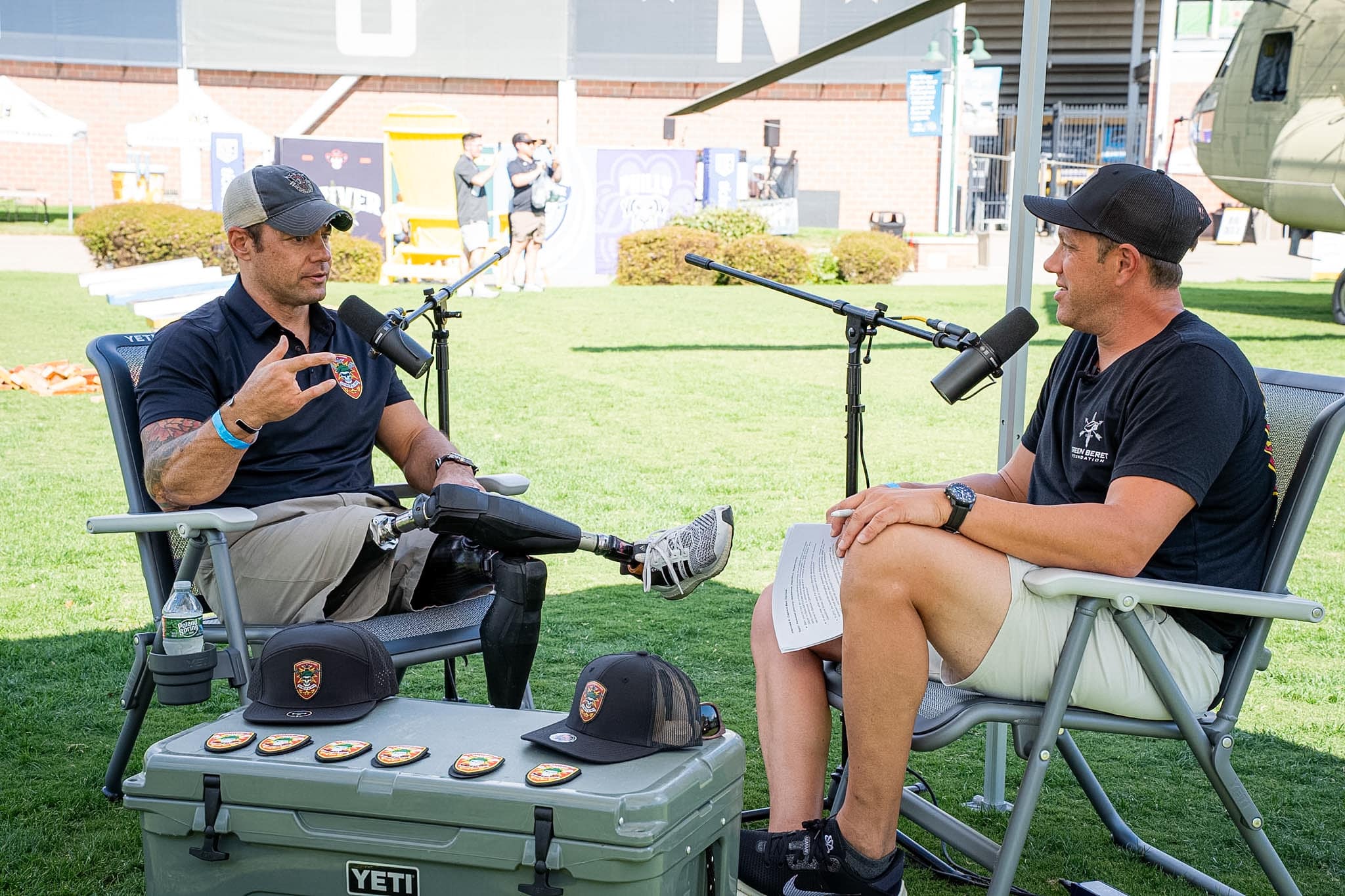
Thank you for having me. It’s great to be back here. I’m glad that we’re able to do this again. When you and I had our reunion, as we talked about, since it had been almost twenty years since I last saw you in Iraq, it was an honor to be on. I love chit-chatting with you. I’m glad we could do this more often.
This has been an exciting opportunity when we talk about the game writ large, the Stars and Stripes Classic, its ability to bring people together, its ability to have conversations about what it means to be a Green Beret, what it means to be in Special Operations and serve the regiment, but also serve each other, and then rekindle some of those relationships. Some things have changed for some of us. We were joking. Before that, your episode went out.
In time for the film Ben and Fran 2.0.
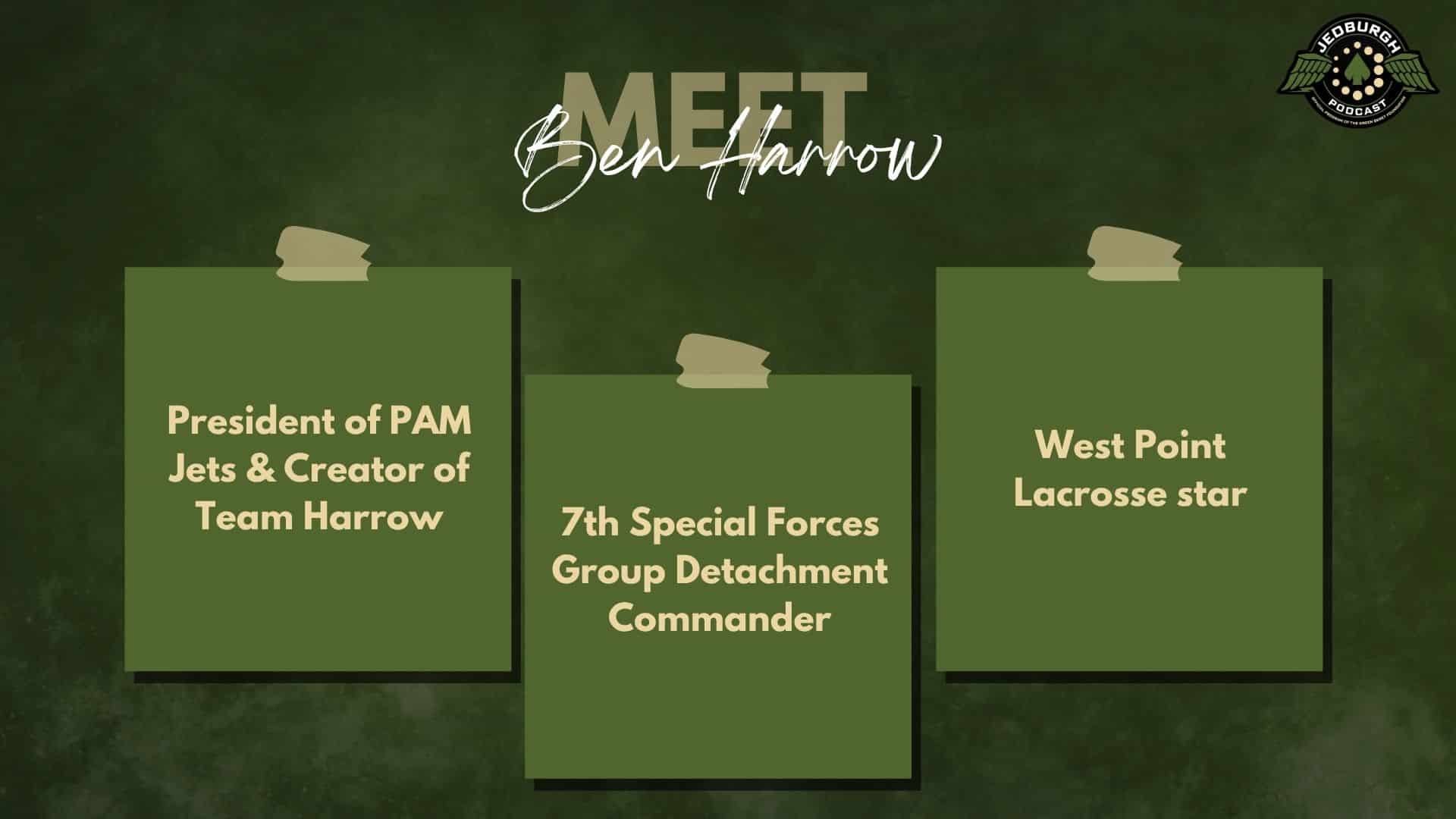
That was my design because we had to space those out. That was one of our teasers for coming into year two. I wanted to talk about entrepreneurism with you. We got into it in our last conversation after we told your story. We talked a lot about resiliency, adaptability, and your willingness yet unwillingness to have this life-changing experience that was then going to keep you down.
You went out and found your own way to regrow bone in your legs. You told doctors how this can be done. When we think about what our Special Forces are asked to do on a daily basis, they’re asked to do seemingly the impossible, often with very little guidance and direction, yet only an end state. I think about the career that you’ve built since your retirement as an entrepreneur in various industries.
I always go back to what I tell my team at FRsix, our security and operations company, which is, “We don’t do everything, but we can do anything. That means that you’re going to have to find solutions to complex challenges and stuff that you may not know how to do or what to do.” I figured we’d dig into that for a couple of minutes because we are at an inflection point as a regiment and as an army writ large where we have an entire GWOT generation that’s retiring.
It is very interesting to think about how it’s flip-flopped. I was talking to one of the guys on the team who I played lacrosse with at college. He’s playing. When we were team leaders in the Special Forces Regiment, for the most part, the leadership had never experienced combat like how we did on the ground. You have these leaders that are battalion commanders and group commanders, and they never experienced the same level of combat we in Iraq or even in Afghanistan had experienced.
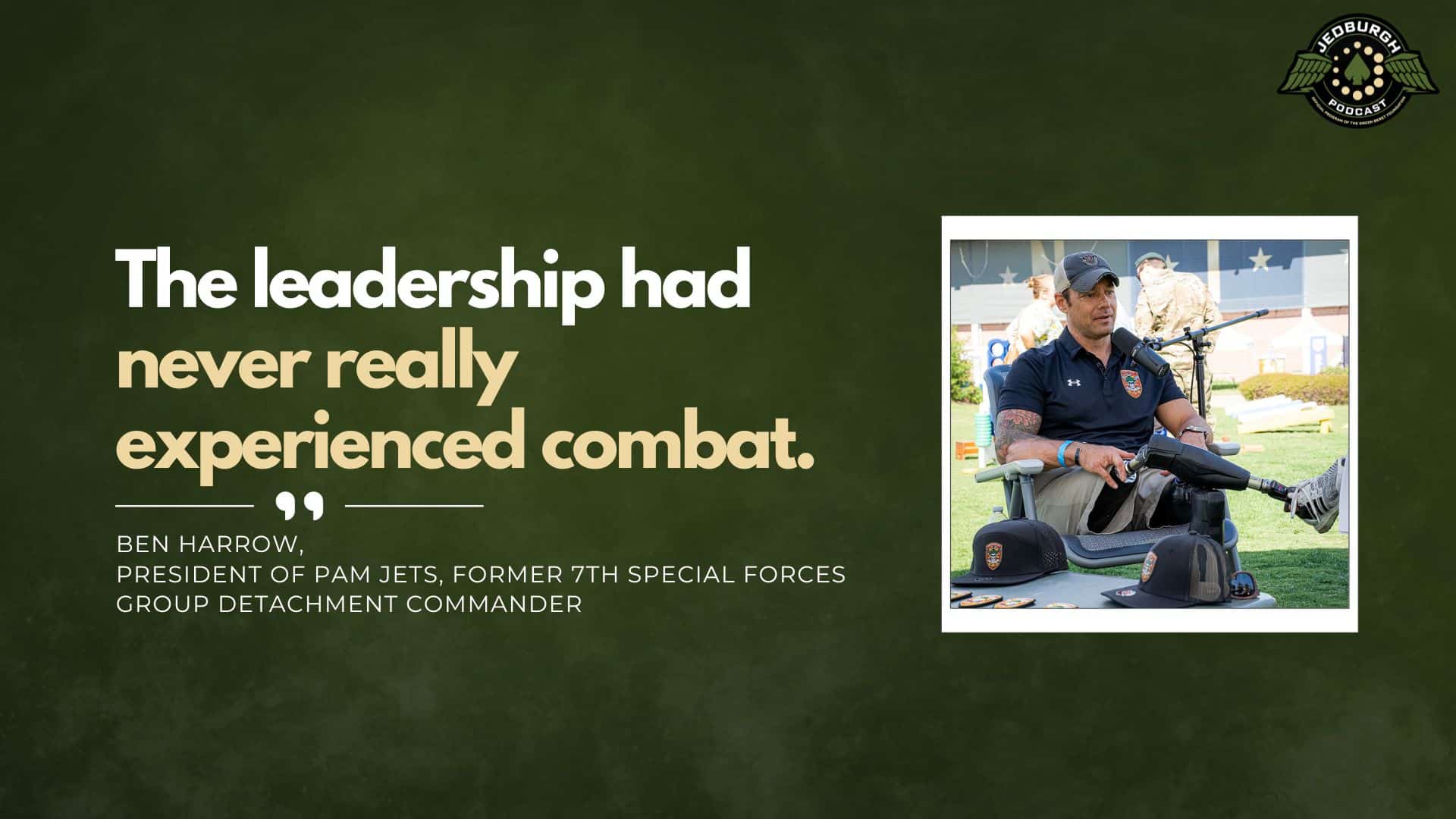
You have this inversion where the leadership in the SF regiment has all this combat and GWOT experience. Guys are coming through, and they’ve never fired their weapon in combat. They don’t know what it sounds like for something to snap over their head and realize that you’re getting shot at. It’s an interesting dynamic going on in the Special Forces Regiment.
You talk to guys in the infantry, and I’m like, “What do you mean you never shot a TOW missile in combat? It’s the first thing out.”
Maybe we talked about this before, but during our left seat, right seat ride, I was driving in your Humvee. While you were sitting shotgun, I was behind you in Iraq. The .50 cal was going off. You’re calling an Apache to rocket some IED emplacers. This is day two for me in Iraq. I’m like, “We’re doing it. This is it.”
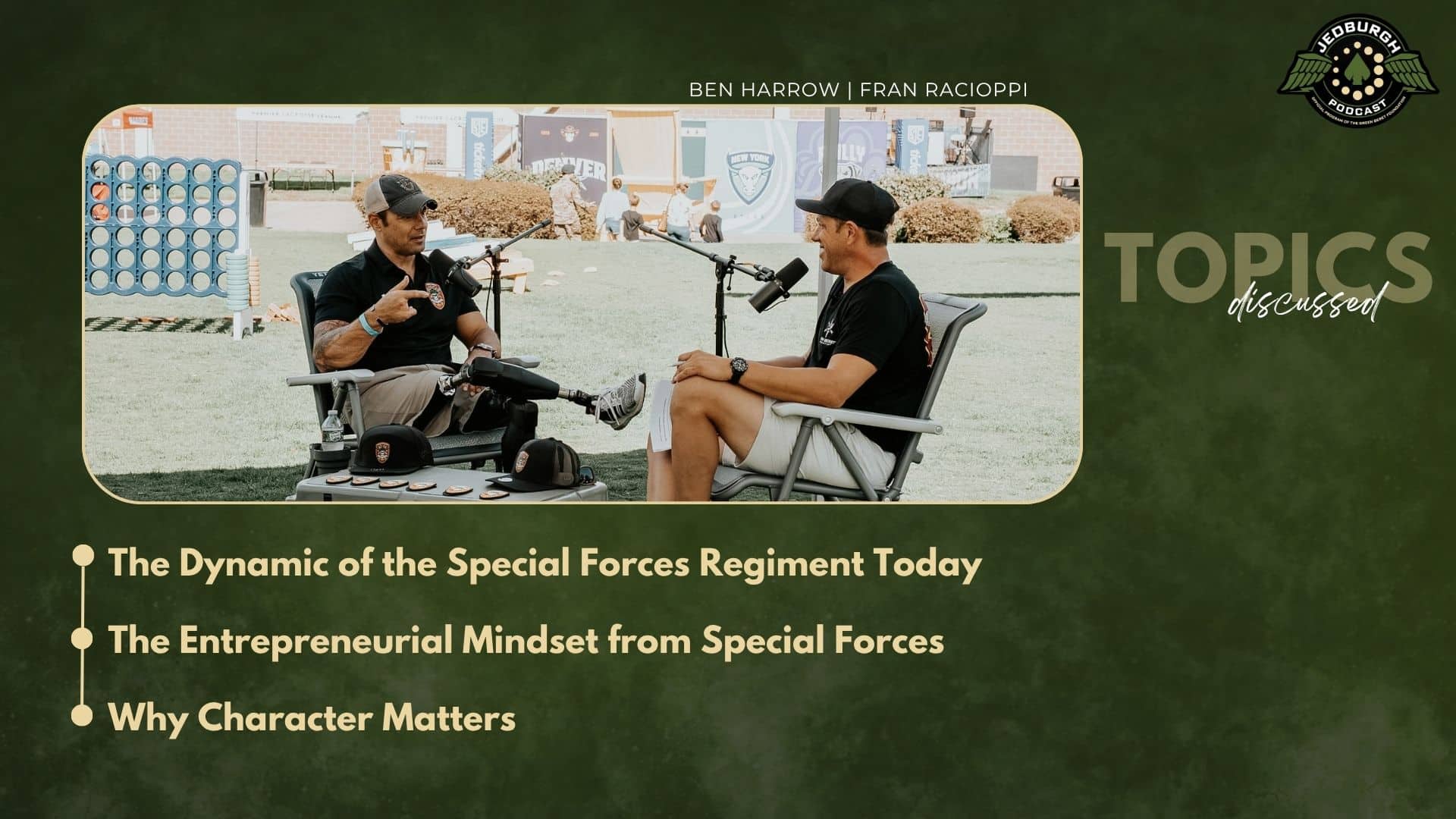
Welcome to the party.
It’s a different conflict. We could talk about this, too. It is a different type of warfare, so to speak, with drone warfare. I see that all the time on Instagram and think it is so different being an infantryman or even a Special Forces soldier with drones. That’s a whole other level to it. It’s an interesting dynamic with the regiment.
I want to circle back on something that you were talking about with there being the second annual Stars and Stripes Classic. It’s such an interesting dynamic of being a college lacrosse player and then also from the Special Operations community. Both worlds are so small where everybody knows everybody. To mesh those two together, it’s such a special event.
I was talking with two of the guys playing. One graduated from the Q Course. One is in the Q Course. They were talking to me and some of the older guys. It was such an interesting dynamic that we all know the same people. We’re playing the name game from the lacrosse world of, “You played at UVA? We played with your assistant coach,” and then still within the Special Forces world.
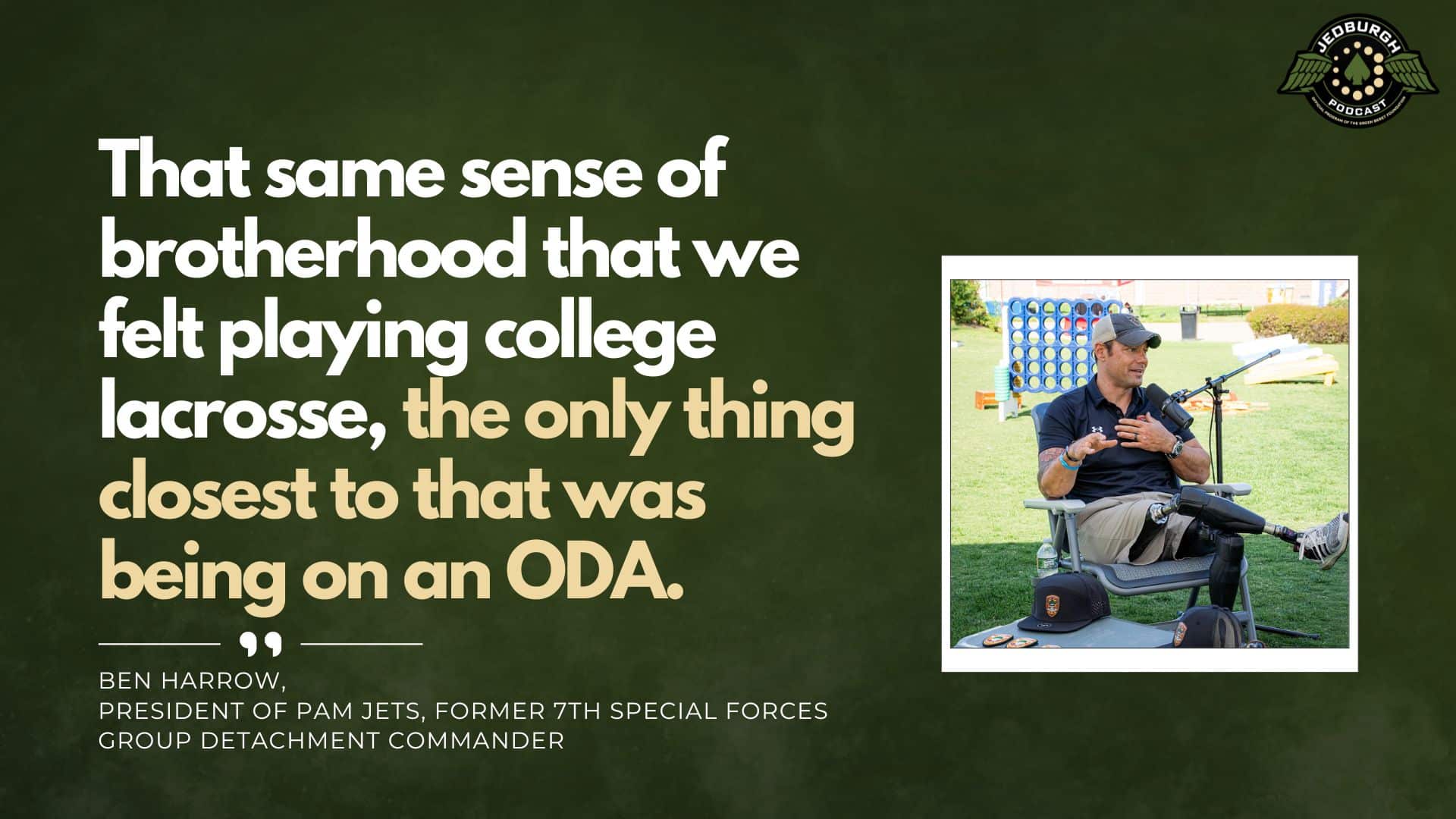
He was saying that he felt so lucky to be on this team and be chosen to play. That same sense of brotherhood that we all felt playing college lacrosse, the only thing closest to that was being on an ODA. For some of us that are out and some of us that are not in ODAs anymore, to still combine this lacrosse brotherhood, Special Forces feel, there’s nothing like that. It’s such a unique dynamic and experience. That was pretty cool to hear from their perspective.
It’s important that we maintain the bond post-service. Some of them are veterans, and they’re out. There are guys like us who are starting to build those next careers and those next phases in our lives. It’s going to end for all of them.
Everyone hangs the jersey up someday, sooner or later. For some people, it happens sooner than you planned. For others, maybe it happens on their timeline. Everyone hangs up the jersey eventually.
You have to figure out what’s next. When we look at our transition out of Special Forces, we do a good job in understanding that there are other opportunities. We can do a better job in coming together as a community. We have so many guys who get out, and they say things like, “I’m going to go hunting fish. I’m going to move in the woods, and I’m going to do nothing.”
They’re like, “I’m going to make leather goods and belts.”
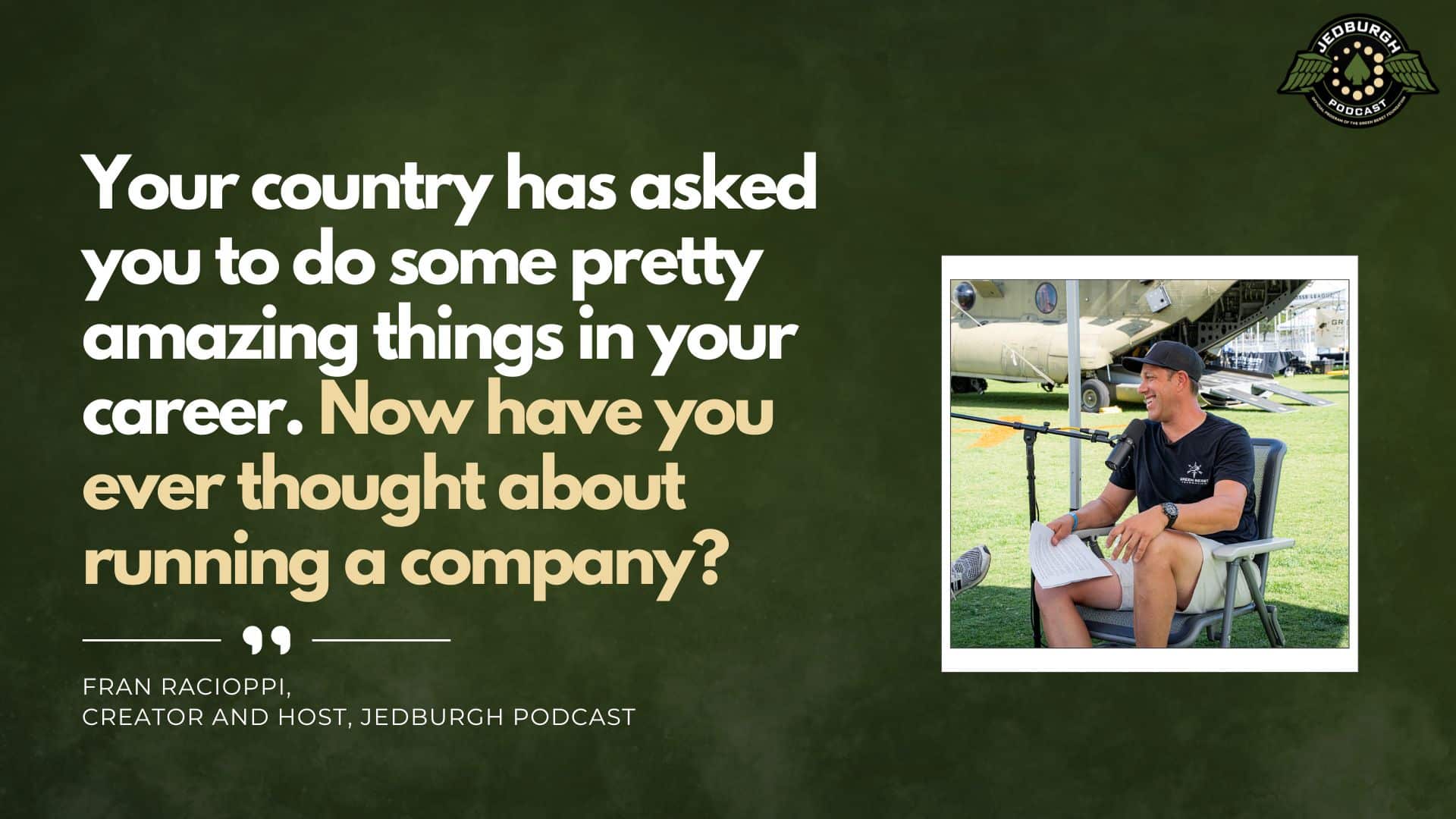
It’s like, “That’s great, but we can do more.” Your country has asked you to do some pretty amazing things in your career. Have you ever thought about running a company? You don’t have to be the next Steve Jobs, Mark Zuckerberg, or Jeff Bezos, where you’re going to have an idea that’s going to change the world. There are a lot of folks out there who can do what I call non-sexy businesses.
We work in security and facilities operations. We hang security cameras. We run cable through conduit and dig holes. We’re in a business that’s not that sexy, but everybody needs it, and it’s only getting bigger every single day. People are always going to need to run facilities and have mechanicals and plumbing. That’s where we’ve tried to get involved as a business.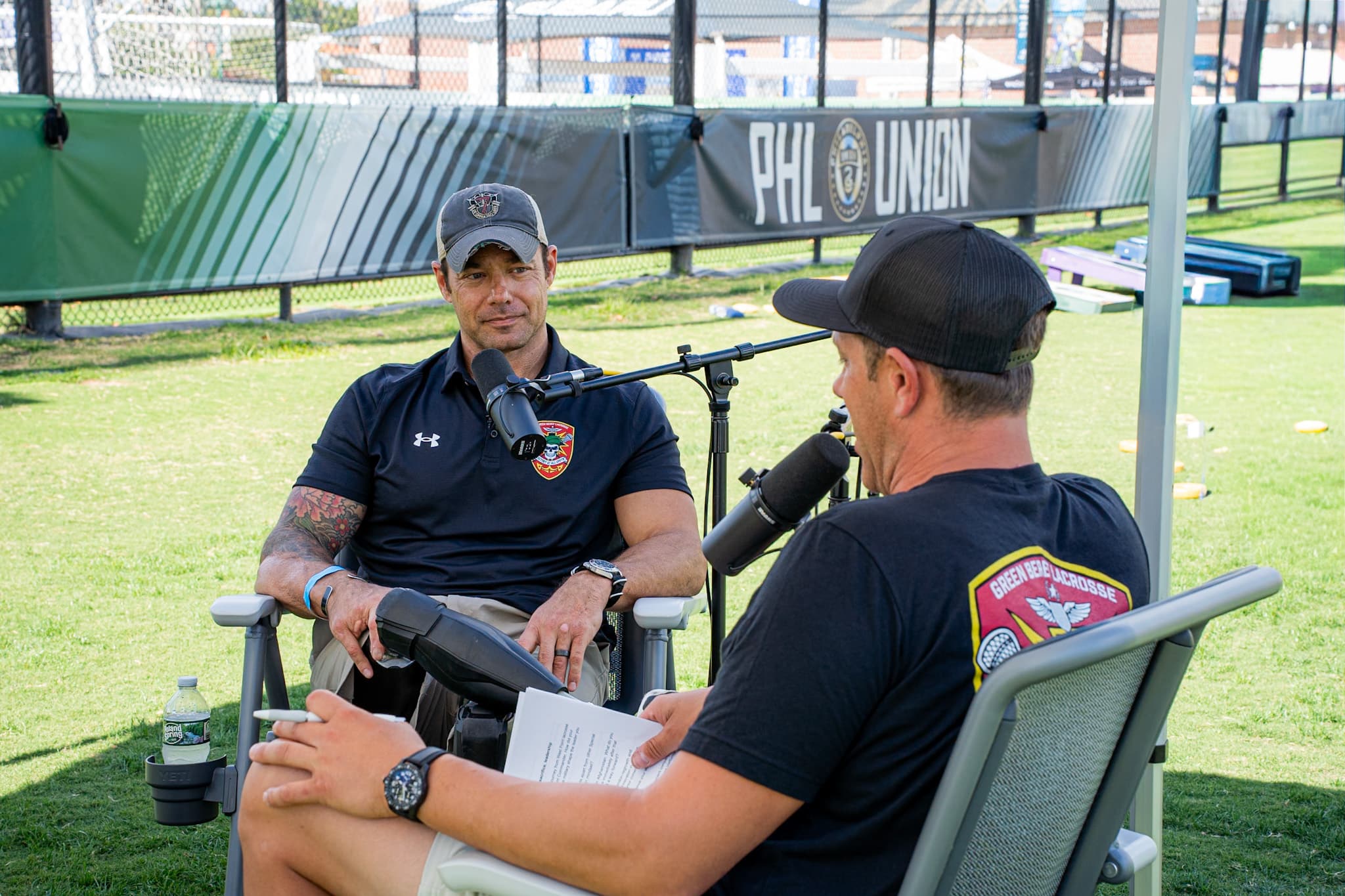
I tell guys, “You can run a construction company. You can run a lighting company. You could be an electrician and start a successful business doing that.” You’ve been spending the last couple of years running a jet company. In your opinion, when you look at the entrepreneurial mindset that comes out of Special Forces, what do you see? What’s required?
Maybe you and I were talking about this at practice, and I was talking to some of the other guys when it comes to transition. The entrepreneurial mindset, if you’re going to overlay that with what the Green Beret mindset is, it’s almost like a circle on circle of being an adaptive problem-solver, understanding, “Where do I need to go? What’s my end state? I’ll have to figure it out. I can figure out how to get there.”
We were joking with one of the guys. He’s doing a bunch of interviews. We were talking about being a problem-solver. You don’t want to be like an arrogant jerk saying it, but it’s like, whatever your problem is, I can solve it for you. Do you want me to start up a jet business? I can do that. Do you want me to create a security business? Sure, not a problem.
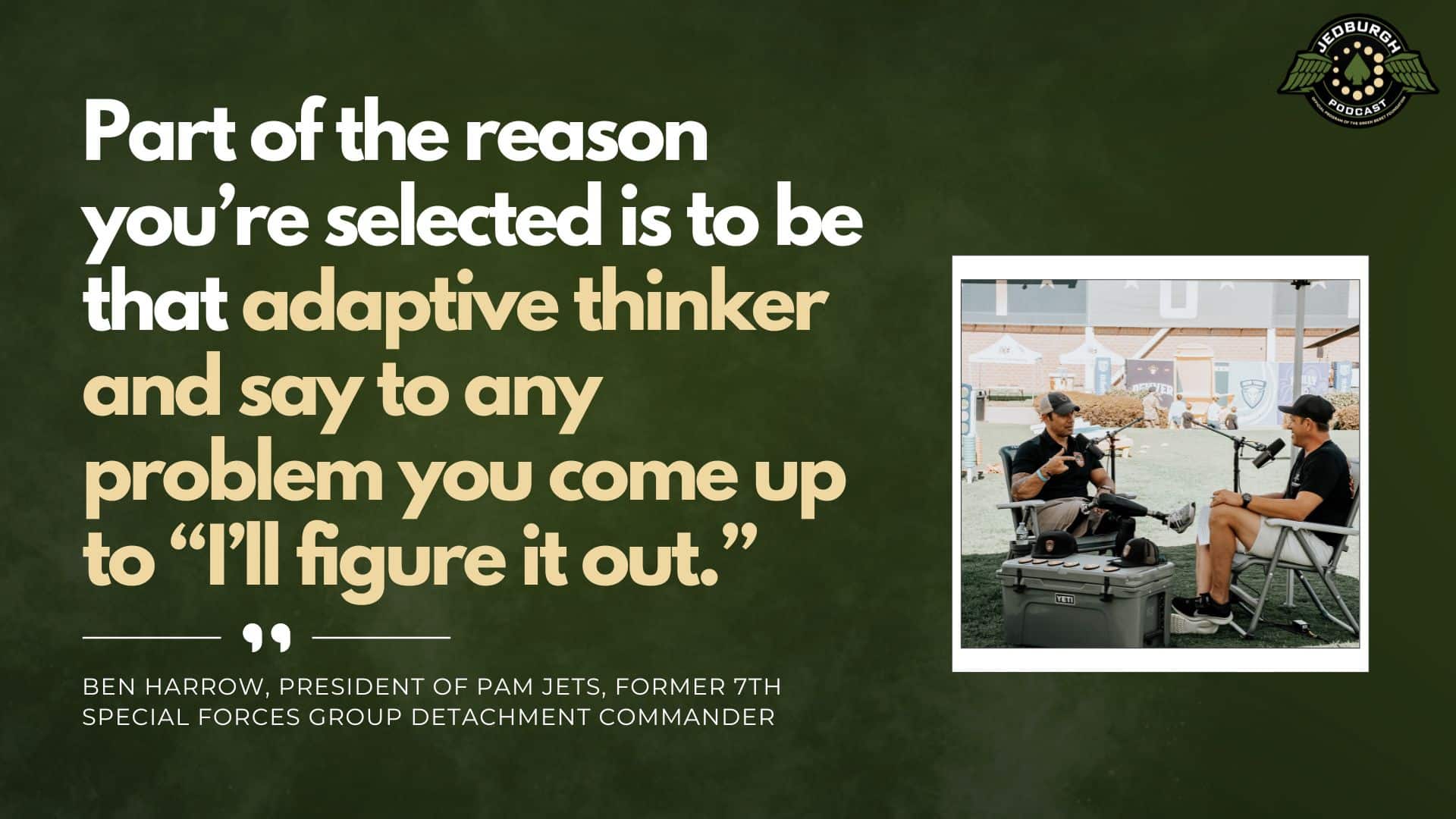
Do you want me to figure out business and mergers and acquisitions or be a consultant? Sure. Maybe there’s a little bit of a lead time to learn the lingo in the business, but I can do it. I’ll figure it out. As an SF guy, that’s part of the reason why you’re selected. Some of the training you get is to be that adaptive thinker to any problem you come up to. You’re like, “I’ll figure it out.”
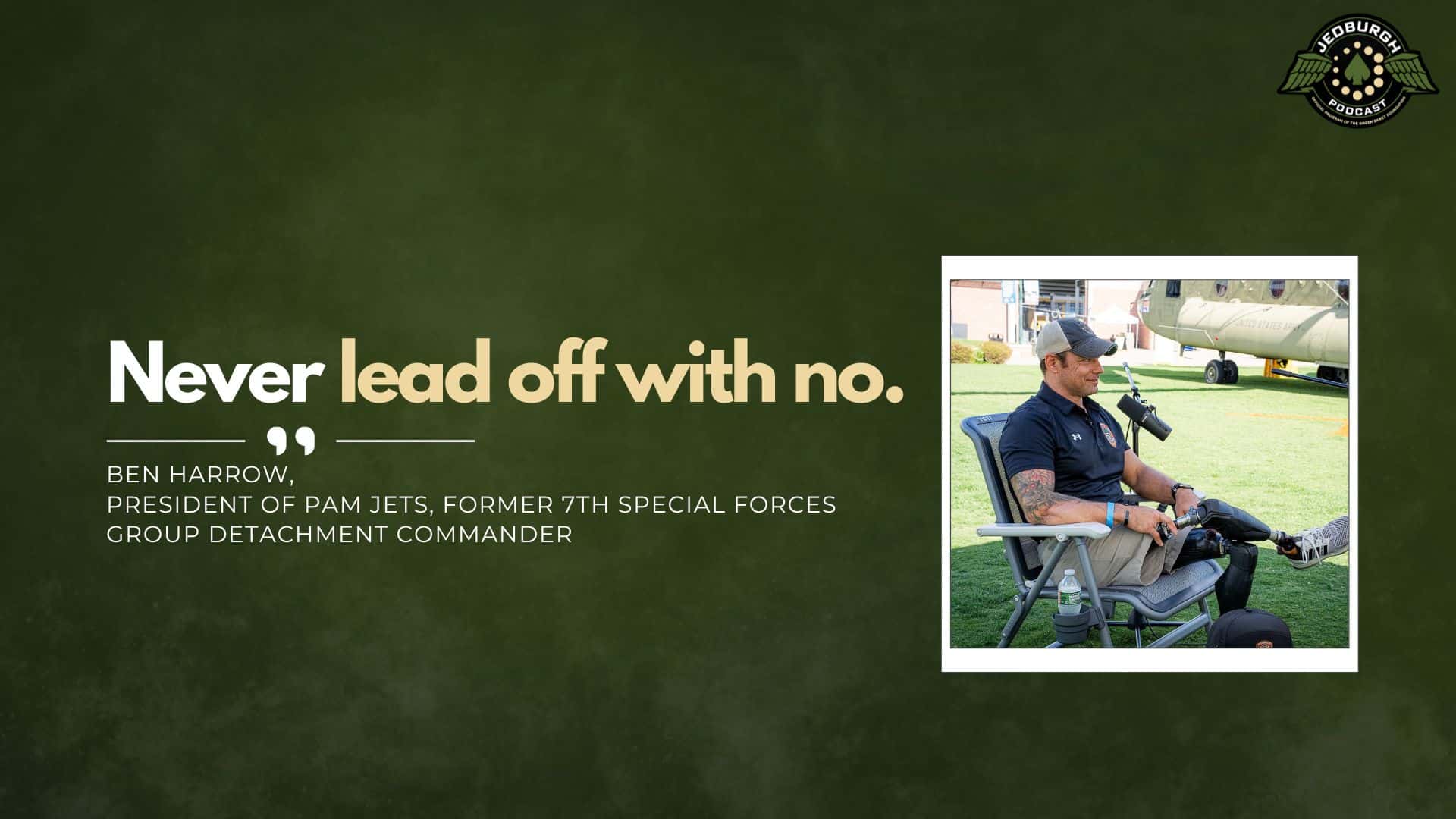
In our business, I’ve always said, “Never lead off with no. Your answer should never be no. If they want to fly into a no-name airport in the Dominican to go pick up a member of the wedding party,” which is something that I had to arrange, we’ll figure it out. Not, “I don’t know how we’re going to get the lights turned on and make contact with whoever’s running the airport.”
I speak a little bit of Spanish. The guy that I work with was Cuban. We were like, “We’ll figure it out. We’ll make this airport open.” That was something that was another day in the jet business, going to go pick somebody up in the middle of the DR for a wedding. It’s that Green Beret entrepreneurial mindset. It’s very similar when it comes to solving problems and mission planning.
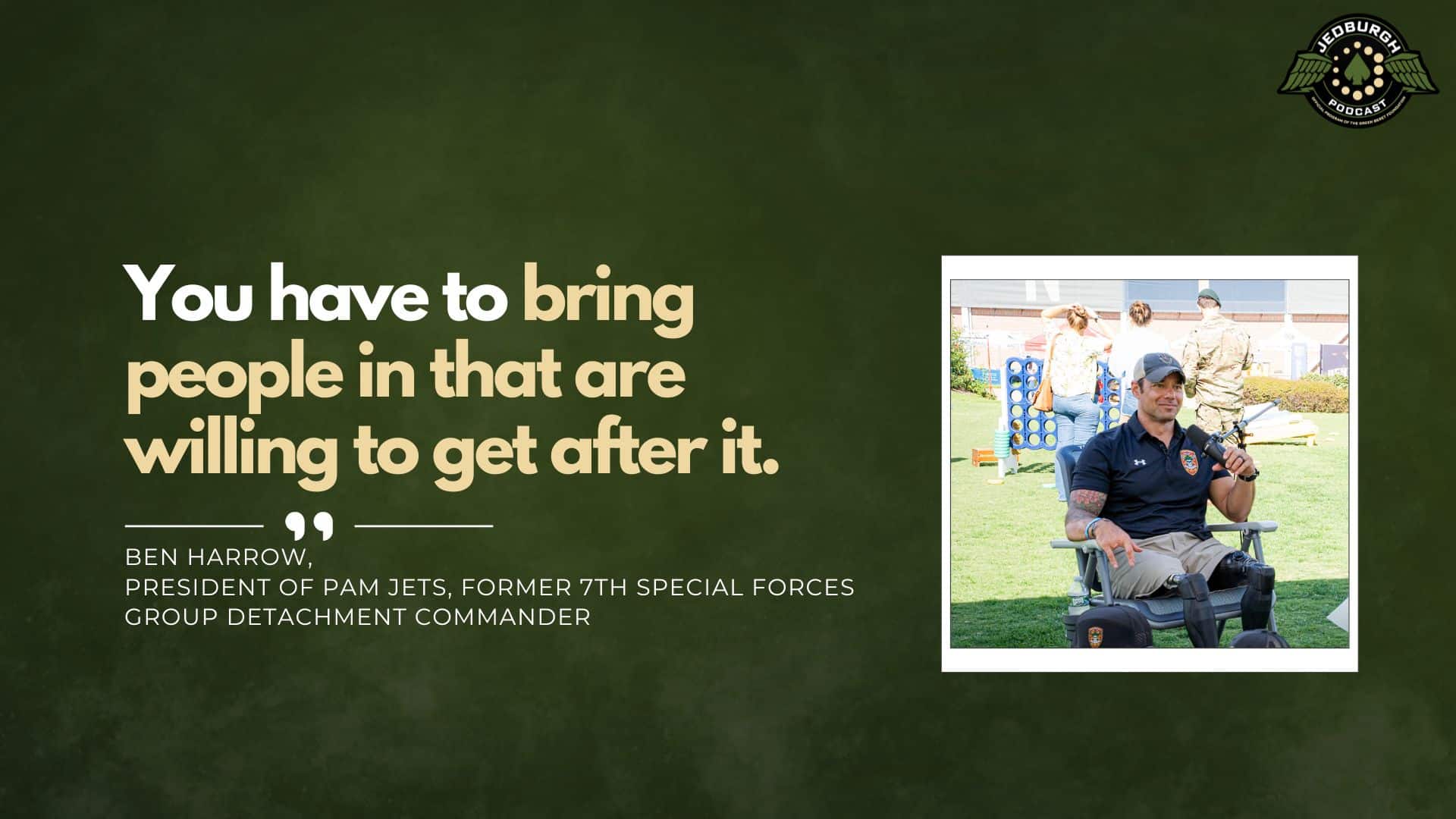
You’ve got to bring people in who are willing to get after it, too. When we talk about building our team, you get super spoiled being a Green Beret and, in a lot of respects, being in the Army.
You’re with other people that want to be there. It is a pain managing people. That is part of being a leader. The not sexy part of being a leader is managing employees day-to-day.
That’s the hardest thing we do.
Here’s the truth. You’re not dealing with the same caliber of person that you were as you were a team leader on an ODA. All twelve of us want to be here. All twelve of us want to suffer together. All twelve of us want to figure out the problem, solve the mission, and do great things. That’s not always the case on the civilian side.
You have great employees. I’ve experienced great employees and great leaders on the civilian side who want to be there with you and want to motivate you, lead you, and enable you. I have also experienced having employees that want to be there, want to listen to you, want to be led by you, and want to roll up their sleeves. It’s not as many of those as we experienced as SF guys or even in the Army.
It’s critically important to develop your own assessment and selection process when you start to build your own company or when you start to look for your team. You
Always be cognizant of where we are in our business life cycle. Where are our challenges? What is the type of person that I need to come in at the right time? Sometimes, you can take people in, and you’re not ready for them. It is always assessing that and understanding, as we did in Special Forces, “When is the right tool? What is the right weapon system for this application?” We’re still doing that.
Sometimes, the people that help you start the business are the people that should be there to help you run and continue the business. Something that we did as a company in the startup phase, when we had to go hire pilots for clients, was one interview, and then, “You’re hired.” As we continue to grow, falling back on some of my Military experiences, we created a board system and gates. The HR lady will have the initial conversation with them and reach out. That’s one gate.
After you pass her inspection, you go to a pilot panel. It will either be me, the chief pilot, and maybe another member of the executive team. We hear it out. We’ll put maybe the best three candidates that we found in front of the actual client and then have the discussion of who they like and who we like. We make it more of a formalized process.
The entrepreneurial mindset as an SF guy, in the beginning, is patching it together. Eventually, there comes a time where you need to standardize everything and have SOPs. I’m going to use a business term. Everyone understands KPIs. We call it task and purpose or end state. It’s very similar to combining the two.
When you talk about managing the operation, there are no better people to be able to do it. That’s one of the things that we’ve looked at. I can take somebody into the organization who generally understands how you build operating procedures, how you implement them, and how you hold people accountable.
These are all things that are transferable from your time, whether in the Army, the Military, or the Special Forces teams. You don’t need everyone to be in account. You don’t need someone to come in and understand, “This is how we do marketing. This is how we write a business plan.” We can Google some of that stuff, to be quite honest with you.
Nowadays, it’s called ChatGPT.
What we’ve got to be able to do is task-organize. How do you build a process that’s repeatable and scalable, where you can bring people into that process, and they can quickly come up to speed? Working through those challenges is all things that you learn when you’re sitting in front of an indigenous force on the other side of the world, trying to figure out, “How am I going to teach this person how to shoot and do basic combat lifesaver tasks?”
It’s like being in Afghanistan and trying to train the security force, but also understanding that maybe some people should be responsible for this task, and some people are responsible for this task. As we are as an ODA, you have your Alpha, your 180, your Fox, your Bravo, your Trolley, and your Delta. It is about understanding that everyone has a certain task.
At the end of the day, everyone is conducting themselves, conducting the operation, and doing their tasks in order to support the main effort, which is the commander’s intent. That goes back to knowing how to write a proper mission end statement and proper commander’s intent. In the business world, that’s called your business plan.
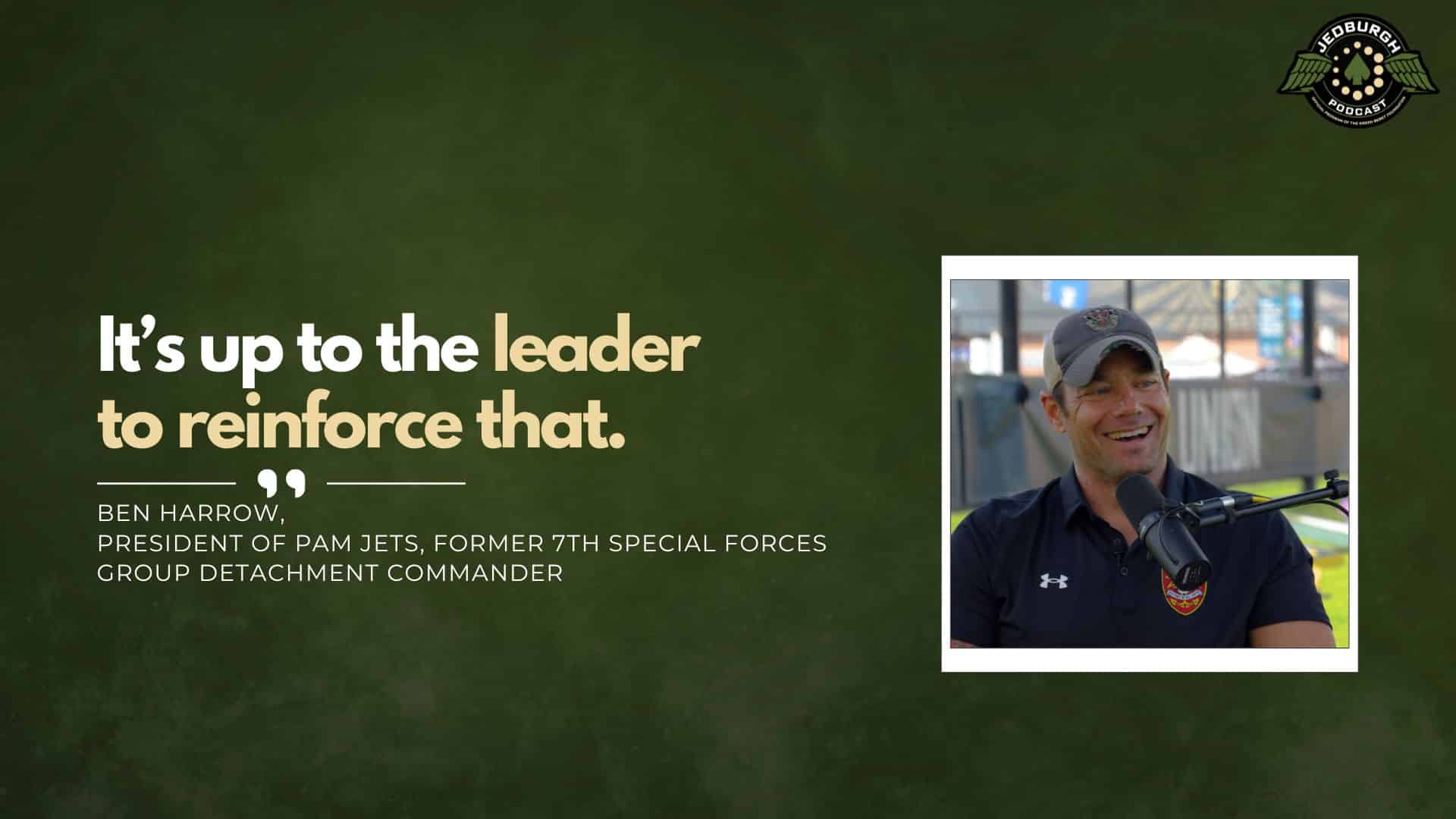
It is understanding that everybody understands the business plan, the company mission statements, and how we’re going to get there. It’s up to the leader to reinforce that every day, live that every day, show that every day, and ensure that every day, every member of the company knows, “This is a mission statement. This is the commander’s intent. This is where we want to go as a company,” whether that’s an aircraft company or a security company.
That mission and values become the foundation. Once you have everyone aligned to that, it’s easier to start to make progress, build accountability and ownership, and then empower others to go out there and do things. A few years ago, it was me and one dude. We’ve got nine people now who work for us every given day. It has been hard for me as the founder to relinquish certain things and understand that we might take a step back here while I have to invest in bringing people up to speed, training them, and dedicating time that I might not have necessarily, but I am willing to take a small step back to take a big step forward as we bring people up to speed.
That’s the strategic vision as a leader. It’s like, “Maybe I have to push pause on business development and bringing in new clients. I can still work on the day-to-day. I’m also going to train who I think is going to come up and relieve me in that position.” Once they’re up to speed, then we can push the gas pedal again and try to bring in more clients because you can handle more business development and meet prospects and potential clients. You’re very comfortable and can sleep well at night knowing that the guy that you brought in to help replace you for the day-to-day has got it.
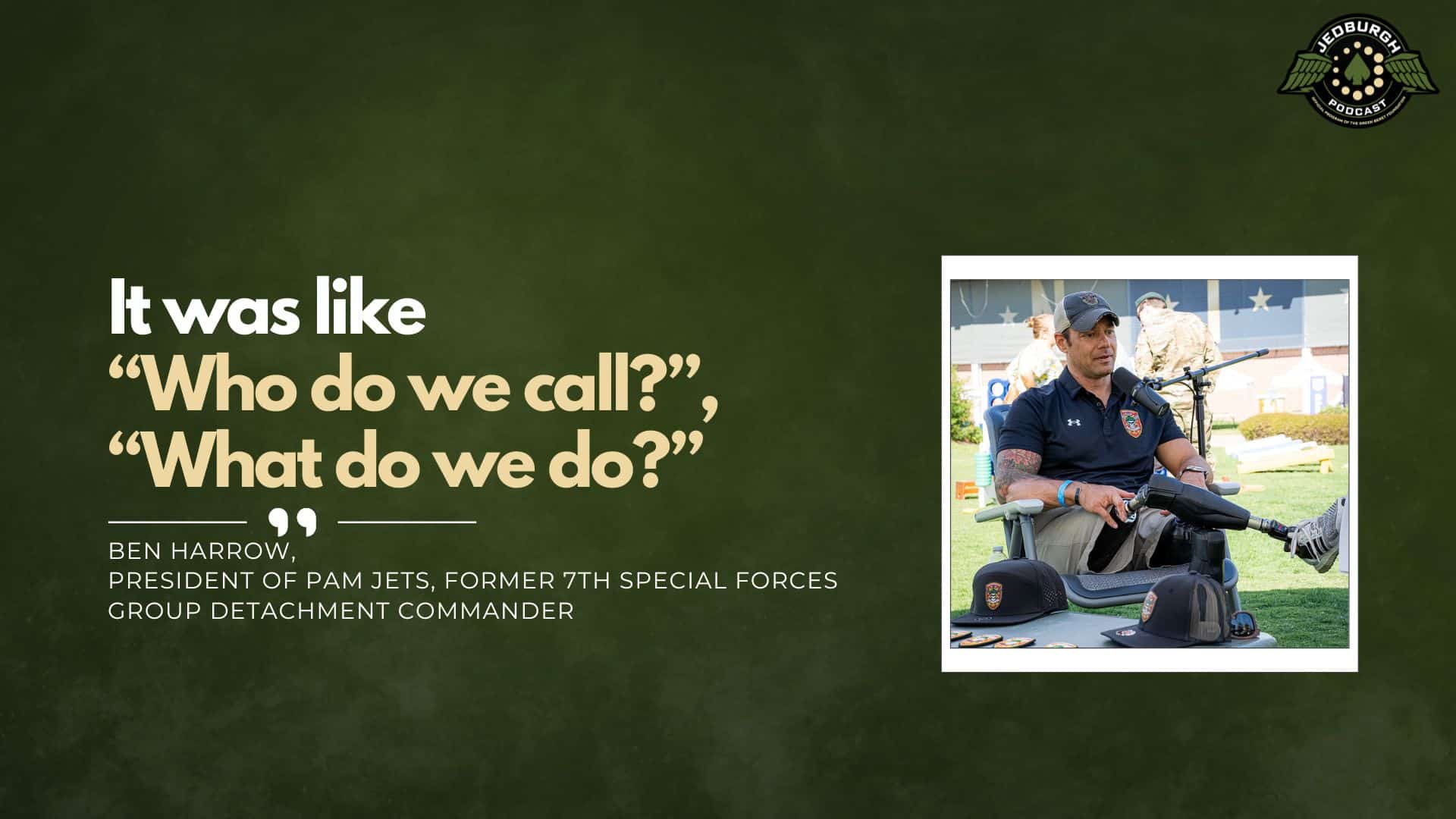
I remember the same thing for us when we started Pam Jets. There were four of us in this tiny, little room. We were leveraging another charter company to allow us to use the room. It was like, “Who do we call? You know, like, what do we do? Who do we reach out to with a jet?” Once we started to bring planes on, and we had to slowly build up the team, not only was I trying to bring in new business and do business development, but I was also typing up itineraries and proofreading flight plans. I was making sure this was good before it got blasted off to the chief of staff or the executive assistant of whoever.
Eventually, the right thing is that as a company, you grow, and you can scale. At the end of the day, the president of the company probably shouldn’t be doing that. He should know about it and should know what right looks like, but should he be constantly writing the flight plans and the itineraries and emailing the executive assistants? Probably not. Something’s wrong there. It’s the delegation piece that we know from the Military.
If it makes you feel better, I spent the summer digging holes to run conduit and pull cables.
You’re still in the growth phase.
I was on the phone, talking about RFPs and business development and directing how we’re going to go after it hits, while I was pouring concrete into a hole and putting buckets of water on it. I get it. The game’s going to kick off here in a couple of hours. We could have more of these. We should have more of these business classes from Ben. It could be good. We were out at practice. This team is a lot different than the team from before. When you look at the character of the guys who are here, what are you seeing?
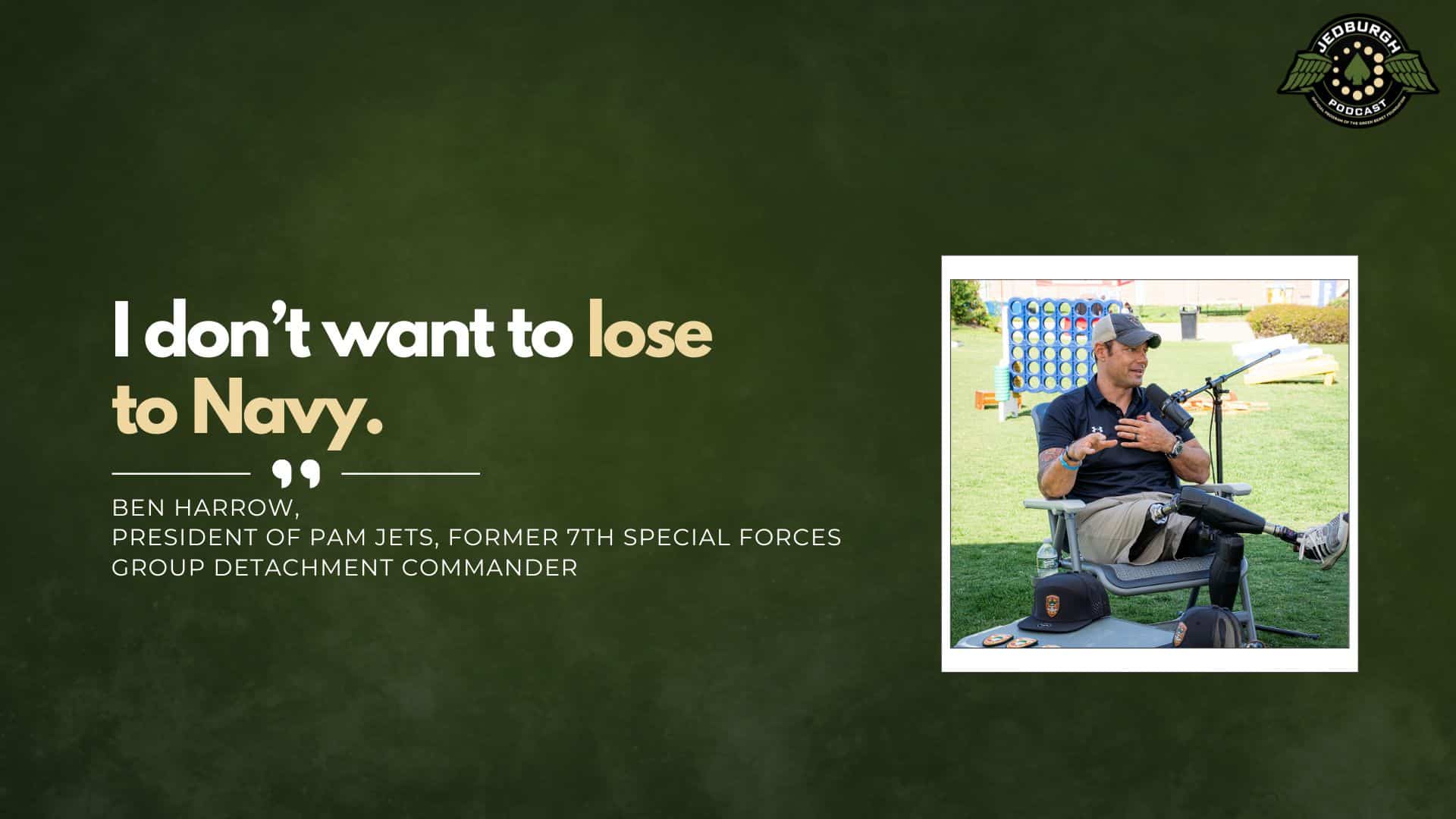
The character of the guys is the same. Guys that love playing the game all across wanted to come together and be part of this amazing event. Maybe the caliber and the quality of the player that we have now is a little bit higher than before. Part of that, too, is that we had more time to recruit. It was a bad taste in our mouth losing 9-7. I don’t want to lose to the Navy. I hate the Navy. I don’t want to lose to the SEALs. They remember that sting of getting punched in the face and losing 9-7.
I know that guys are playing back at Bragg a lot more seriously because they had the time to prepare. I know that we did a very good job of reaching out and having the ability to do more of a formal recruiting process of who played lacrosse. I was so surprised at how many lacrosse players we have in the Special Forces Regiment after the fact of people reaching out and saying, “I played college. How do I play next year?” I’m excited to see how we do versus Squids. I have high hopes for us. We’re a little bit younger, which is always great. We’re quick. We like to move the ball in transition from what I saw in practice. We move the ball well, so we’re going to have a good show.
I agree with you. Mike Rabil, the PLL Founder, I had a chance to sit down with him a little bit ago. I said, “They feel loose.” Before, there was a lot of tension. There was nervousness. Now, it’s like, “We got a job to do. Let’s go.”
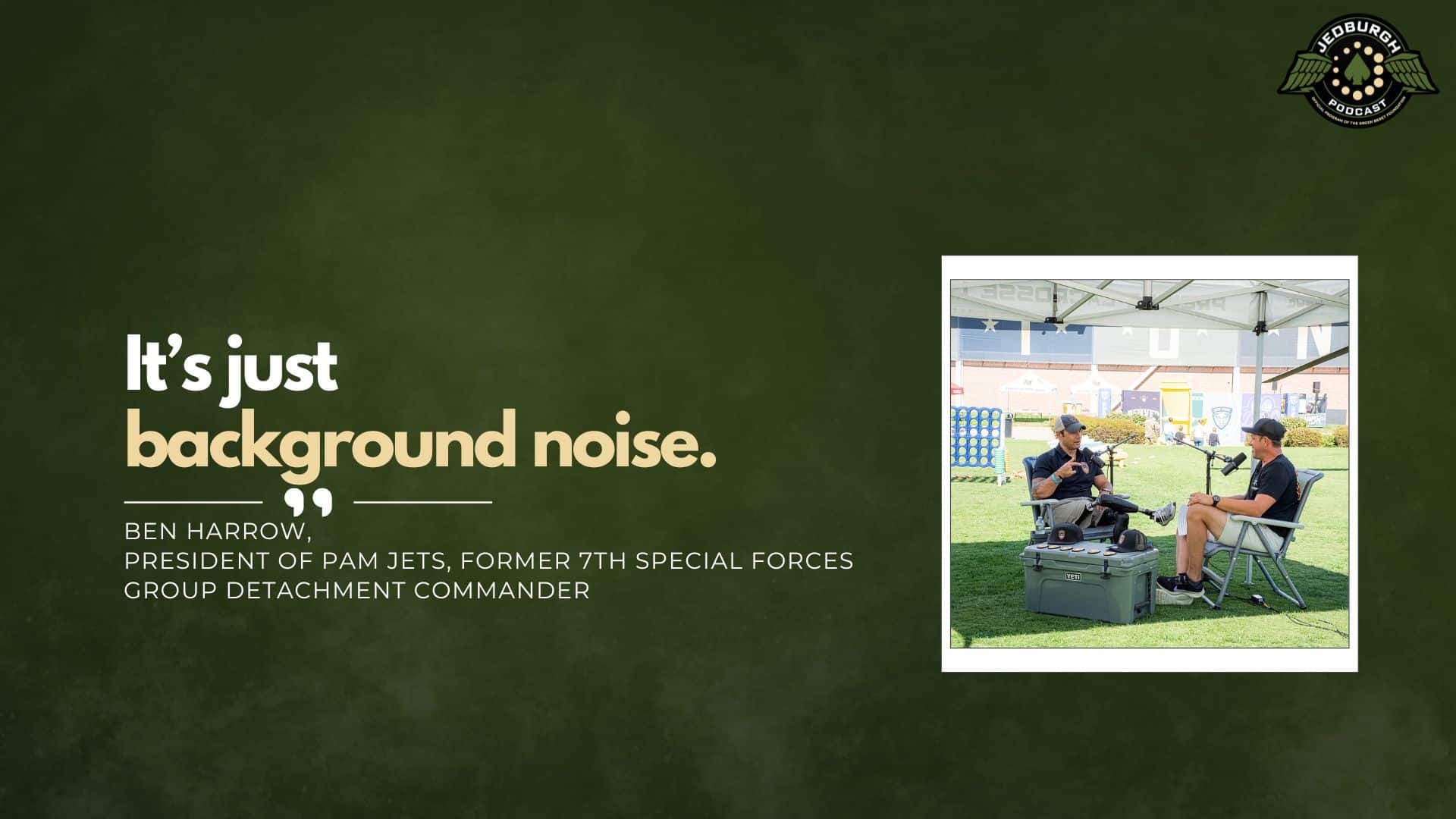
The good thing, too, is that there are a lot of veterans from before that are on this team. Being in the hubbub of the PLL and playing in the big stadium is amazing. I remember in college, playing in some of the big games, you can get caught up in the crowd. As you get more used to it and become a seasoned player, it’s background noise. You’re able to tune it out and focus on the game and the controllables. Putting out maximum effort, controlling the things you can control, and playing balls to the wall are things you can control. Do not focus so much on the crowd, the noise, and the spectacle of all of it.
You’re going to be out there on the sidelines. You’re going to have to help out the coach and staff for this game, so we’re going to let you get on your way. I appreciate you taking the time to sit down with me. It’s always awesome to catch up and get your insight. We’ve got a whole generation of guys who are looking at that transition pipeline. If we can do anything to support them, maybe a sit-down for every little bit and share some insight that we might have through some of the struggles that we continue to go through on a daily basis.
I would love to do something like that with you. It’d be great for us to do a roundtable or something. Being SF guys and starting businesses and running businesses, we are able to pass on some knowledge of, “I did a lot of stuff, and it didn’t work, but I did some stuff, and it did work. I’ll tell you what not to do and what to do.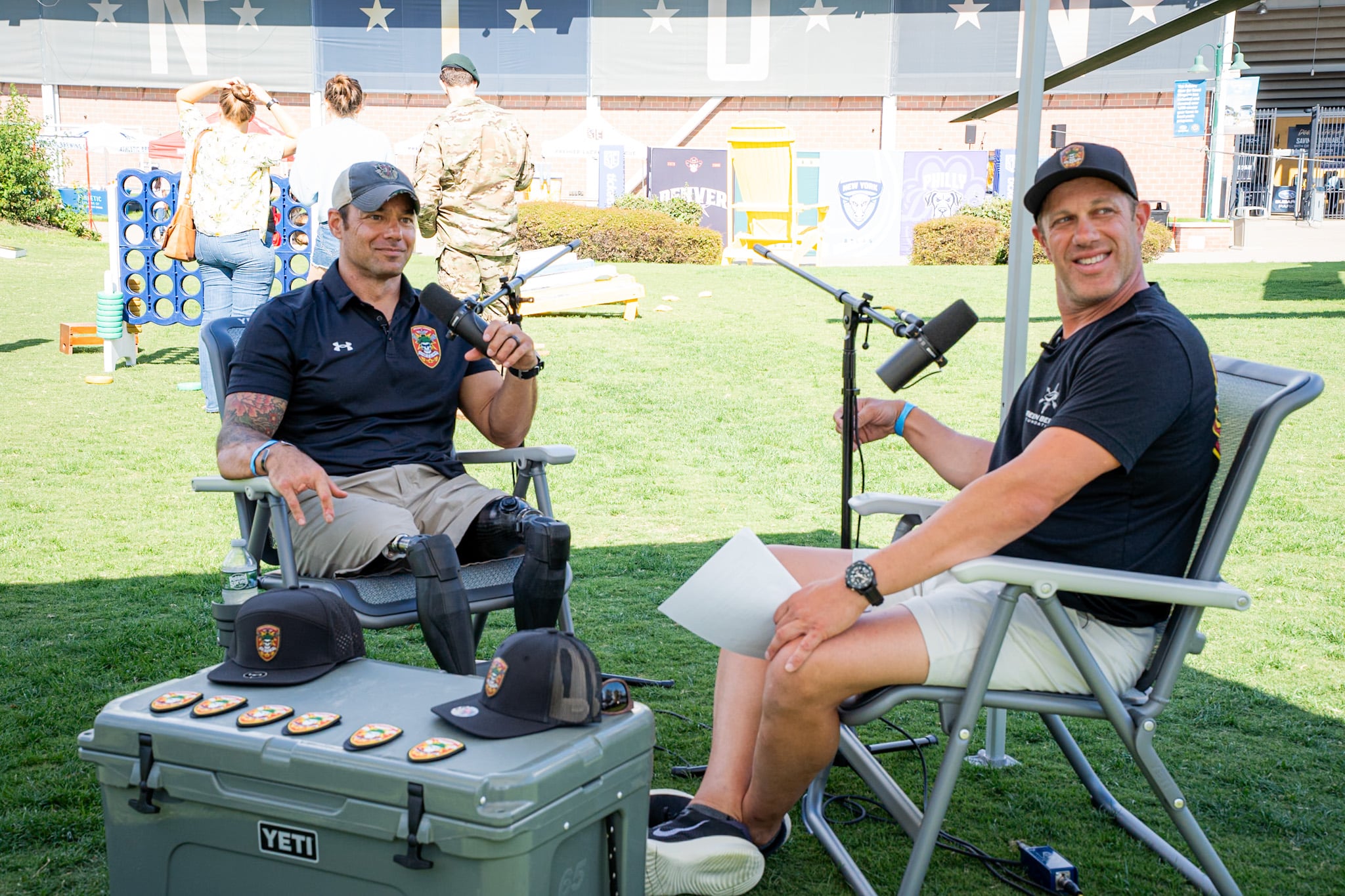
I’m still doing both of those on a daily basis.
I’m still learning every day.
Green Beret Foundation
P.O. Box 25138
New York, NY 10087-5138
Note: Please use USPS mail or priority mail. Do not use FedEx.
Green Beret Foundation
10205 US Hwy 15-501, Unit 26-8
Southern Pines, NC 28387-4301
Call: at: (844) 287-7133