How do we define success on the battlefield? While many have labeled America’s efforts in Iraq and Afghanistan failures, that narrative ignores some of the most remarkable successes ever achieved by U.S. Army Special Forces.
In this episode, Fran Racioppi sat down with retired Green Beret Colonel Frank Sobchak, professor at the U.S. Naval War College and author of Training for Victory, to discuss the principles behind one of Special Forces’ most enduring missions: building partner forces capable of securing their own future. Drawing on decades of operational experience and extensive historical research, Frank explains why success is rarely determined by firepower alone, but by trust, relationships, and leaders willing to invest in others.
We explore why language, cultural understanding, consistency, and strategic empathy are far more than soft skills – they are combat multipliers that determine whether an advisory mission succeeds or fails. Frank breaks down why partnering alongside allied forces in combat remains the gold standard for developing capable militaries, how advisor continuity builds the trust required for honest conversations, and why empowering local leaders from the very beginning creates lasting success long after American forces have departed.
Our conversation also challenges the conventional narrative surrounding Iraq and Afghanistan by highlighting overlooked success stories like the Iraqi Special Operations Forces, an organization built through years of patient advising and partnership. Finally, we examine what Frank calls “Cold War 2.0” and how the changing character of warfare—from drones and artificial intelligence to digital surveillance—only reinforces the enduring importance of the human domain.
The Jedburgh Podcast is brought to you by OneBrief; enabling military leaders to make innovative, informed and deliberate decisions faster than ever before. Superhuman command wins wars.
Follow the Jedburgh Podcast and the Green Beret Foundation on social media. Listen on your favorite podcast platform, read on our website, and watch the full video version on YouTube as we show why America must continue to lead from the front, no matter the challenge.
—
Frank, welcome to the Jedburgh Podcast.
Fran, thank you so much for having me on. I appreciate it.
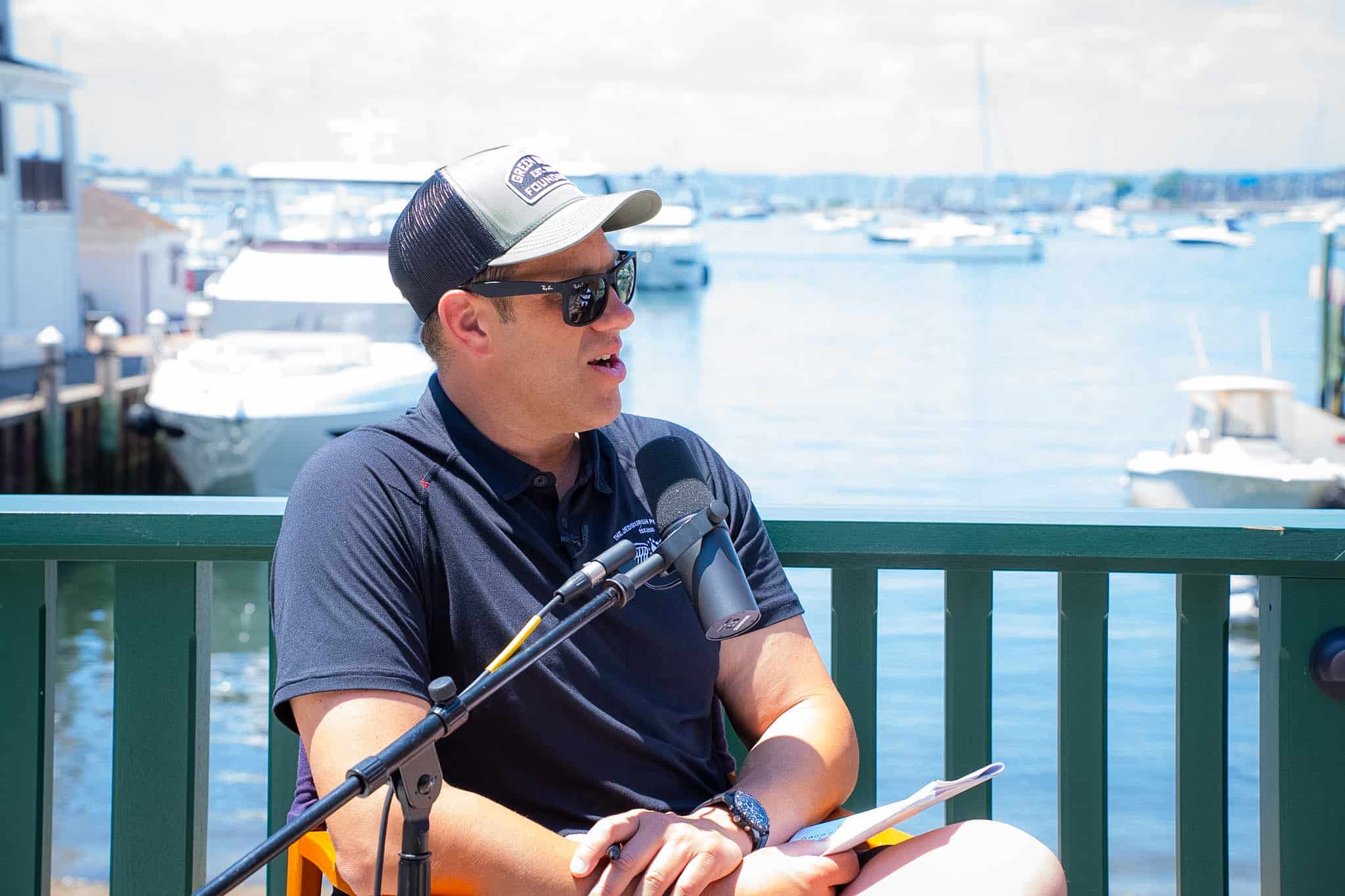
We’re going to talk about history. We’re going to talk about your book, Training for Victory, which was released where you chronicle some very well-known special forces missions over the last couple of decades. To set the scene, we had to start here and come down or up, for me, but down for you to Newport, Rhode Island. A special place for you and a special place for me. We’re honored to be here in the Sailing Museum and the Sailing Hall of Fame, who have very graciously given us their deck.
What a cool place. I appreciate them allowing us the opportunity to sit over here because this is where I grew up. I learned how to sail out here in this harbor many decades ago but I still come here. A lot of my family is still here. This is one of my favorite places on Earth. You’re here now at the Naval War College after your career as a Green Beret in Special Forces. You are educating, I would say the next generation, but the current generation of leaders serving among our ranks at the War College on what it takes to truly win in combat. Great setting. Great book. We’re going to talk about it all.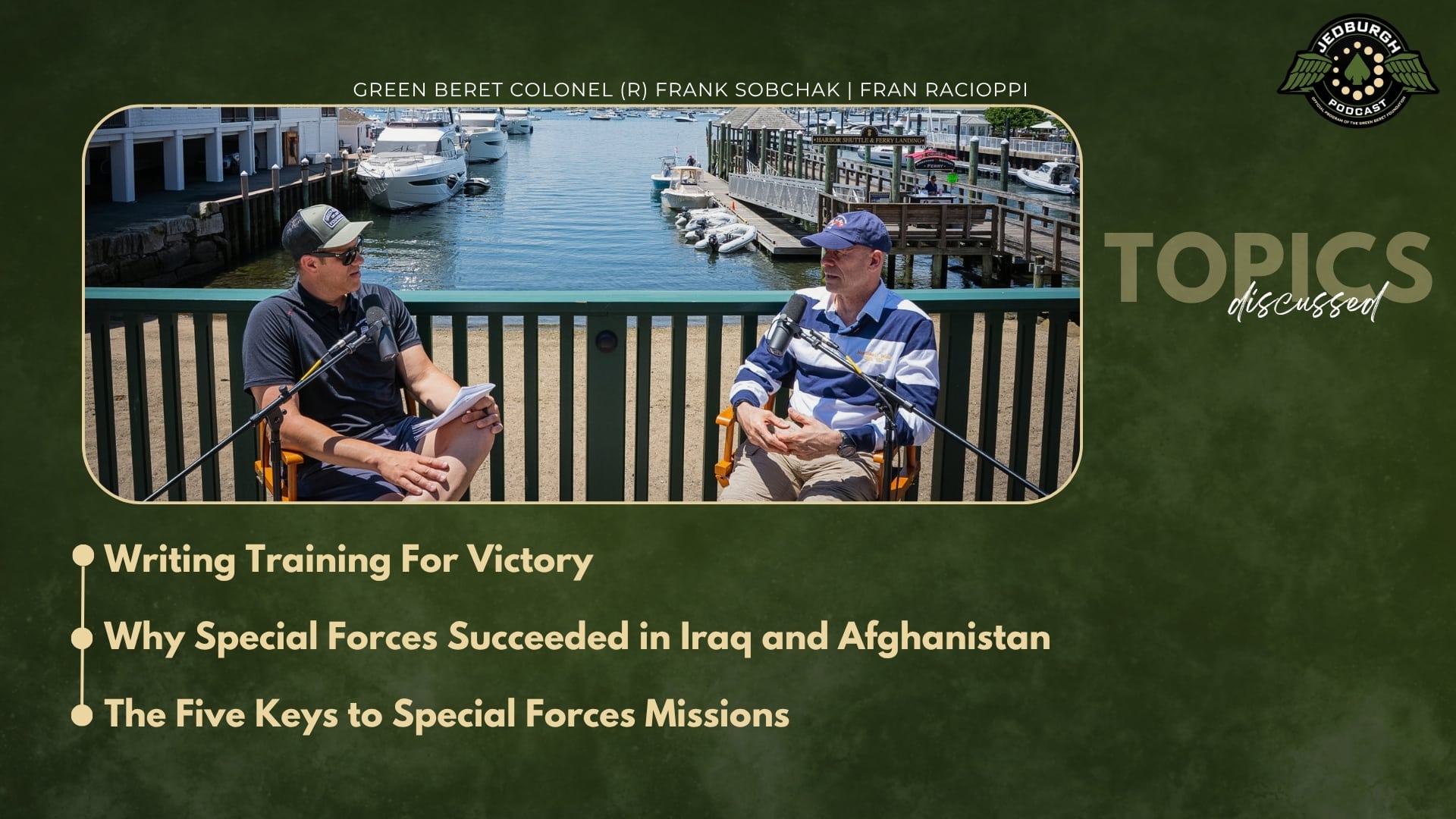
Thanks. It is an amazing setting. You got to pinch yourself being here.
Let’s talk about Training for Victory, though and a little bit about yourself. You spent the early days of your career in 5th Special Forces Group, spent time at SOCOM, worked in legislative affairs, helped write the history of the Iraq War which I want to ask you about. When you look at what it takes to be successful, how Special Operations, primarily Special Forces Green Berets, organize themselves in order to be successful in a variety of different combat and non-combat related activities? You laid out a couple of different principles. Language importance, security force assistance, the importance of JSATs or joint combined exercise for training.
What makes advisors effective? You define success and combat effectiveness but I want to start with language. As long as you’ve been in special forces, as long as I was in special forces, the guys in today and the guys before us all have had the, let’s call it, vigorous discussion that never ends about the importance of language. How come for you language sits at the core of the principles that lead to victory for special forces?
It’s such an important factor because a core component of special operations and particularly special forces’ identity comes from language. It comes from being able to work by, with, and through host nation forces. 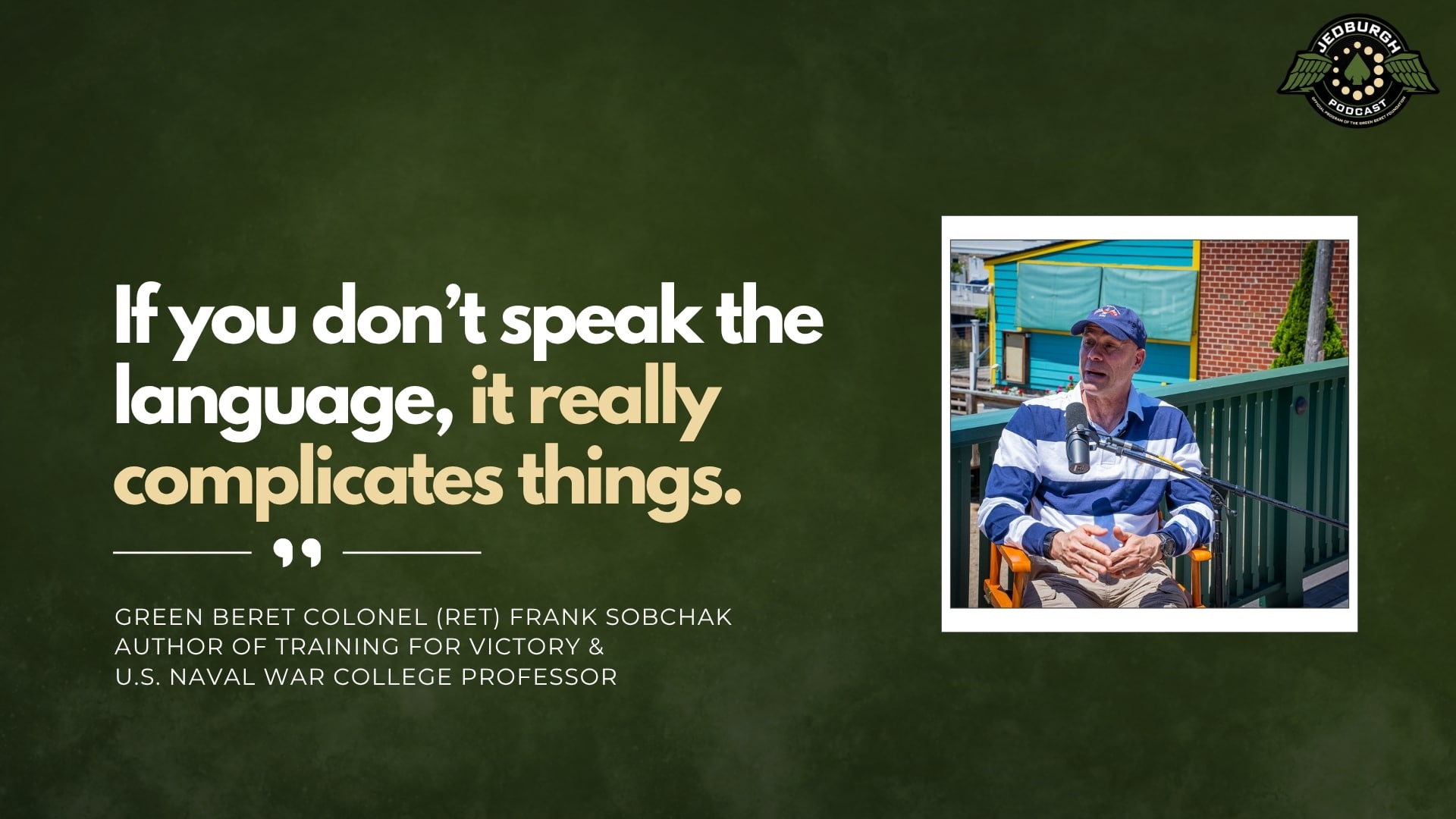
When I think about language, Special Forces put a lot of investment into our Green Berets when they’re going through the Special Forces’ qualification course. Depending on what your language is, it’s like 3 months, 4 months, or 6 months. I studied Russian. I went to the 10th group. My core language was Russian. Other guys who got Arabic spent six months in Arabic, then I went to 10th group and never spoke Russian one single time because we deployed to the Middle East. Which will bring up a later point and a principle that you have. There wasn’t a whole lot of Russian being spoken in Iraq. I went and spent a lot of time in Africa and we don’t speak Swahili or French and Arabic.
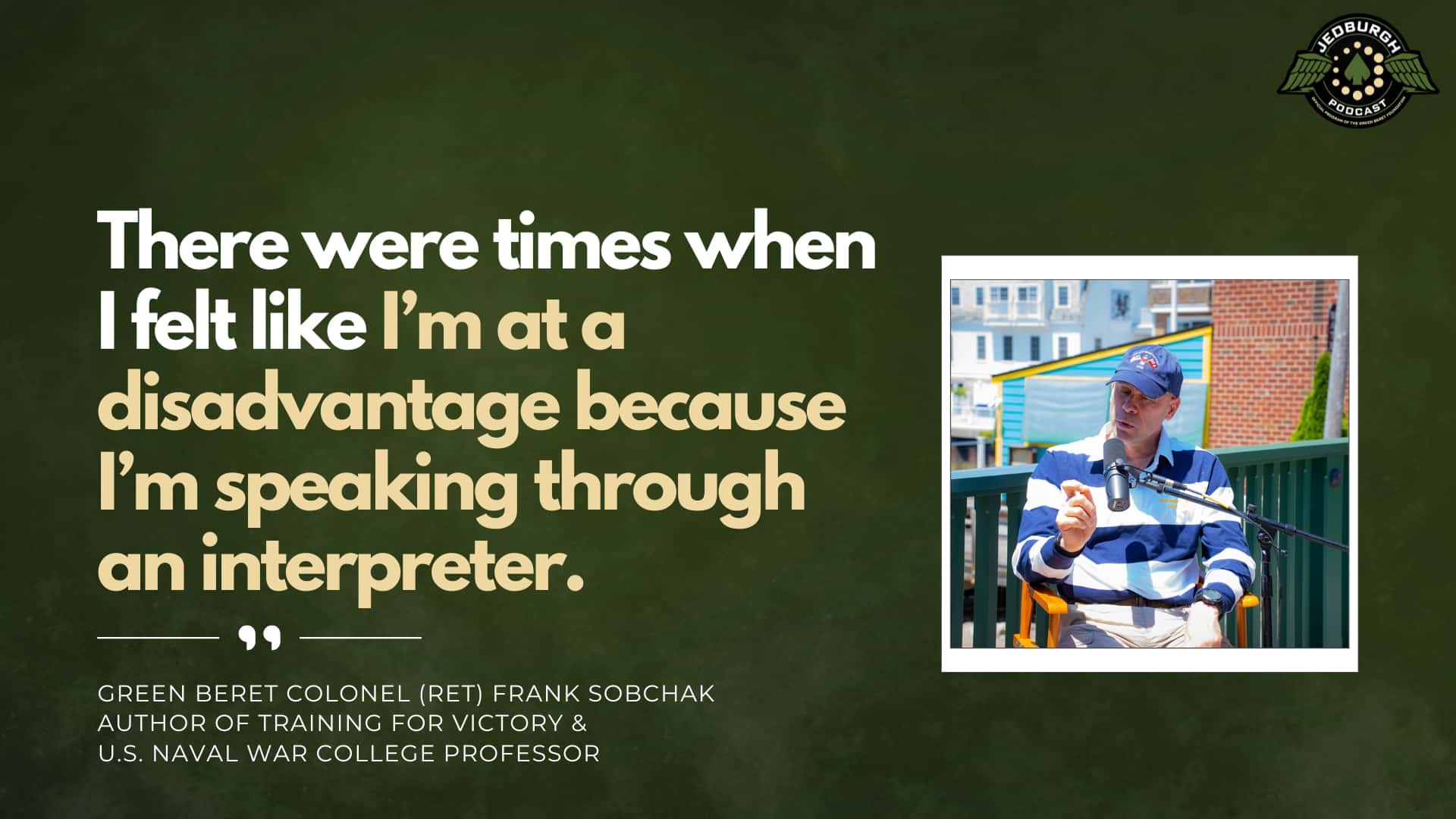
For sure. I did Arabic. I was two plus three in modern standard Arabic. I went back to Georgetown. There were like three of us in the 5th group with that skill level. I went back to Georgetown to the School of Foreign Service, Master of Arts in Arab Studies. We literally had five and a half hours of Arabic a day where we were hazed by the instructor. They would throw chalk and erasers at us if we made grammatical errors. It was an experience.
At the same point, one of the challenges is what you hit the nail on the head, is that in so many places that we deploy to, either that one country has 60, 70, or 100 languages spoken in that one country or across the AOR. For example, INDOPACOM. There are thousands of languages spoken. 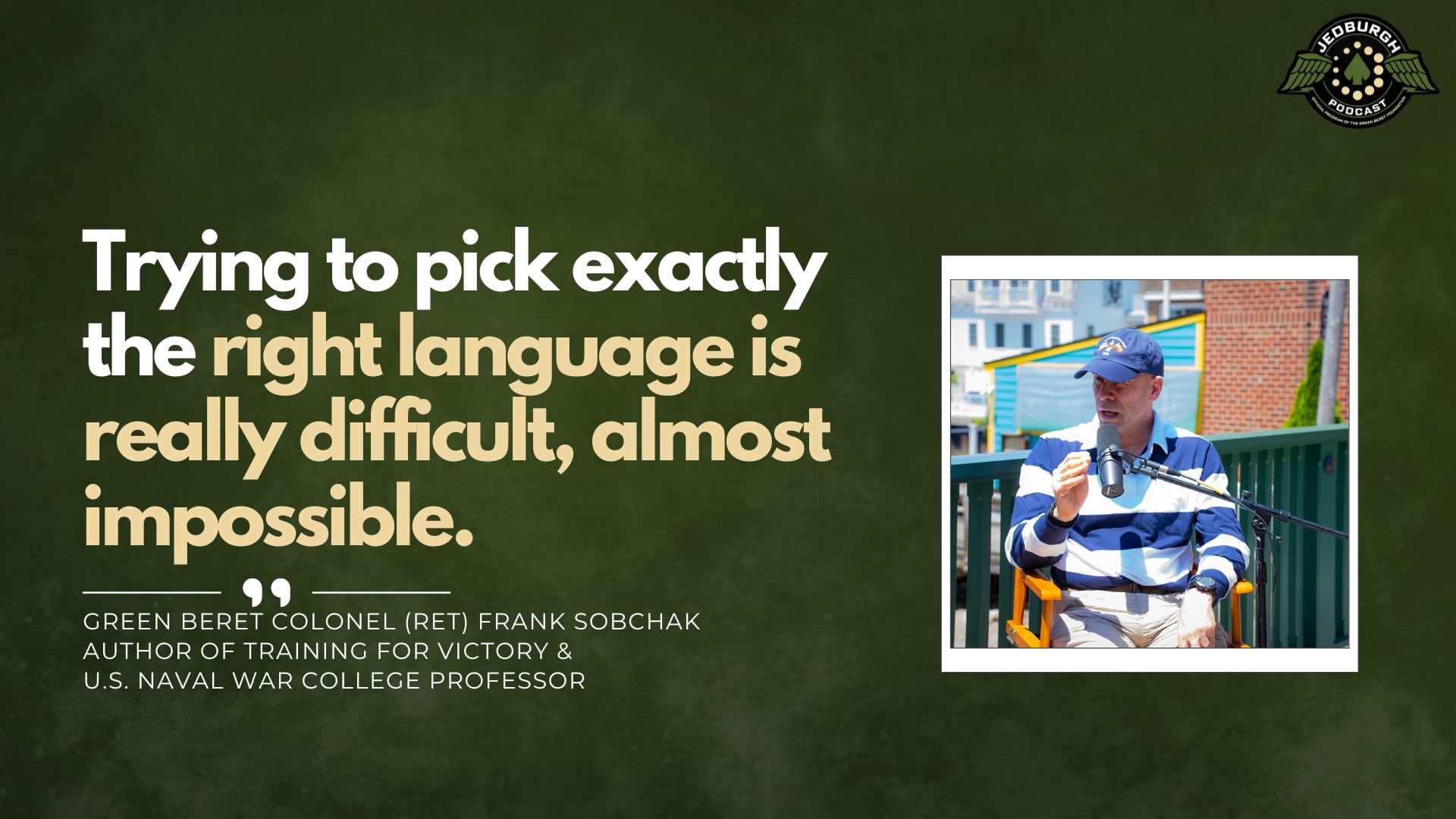
One of the things that I concluded through two and a half years of research was, if your aim is to build a partner force that is a tactical battalion or below unit that is designed to fight insurgencies, the focus should be more on making sure you have the right advisors and not stressing as much about making sure you have the right exact language. To a degree, it’s speaking a language and not the language. 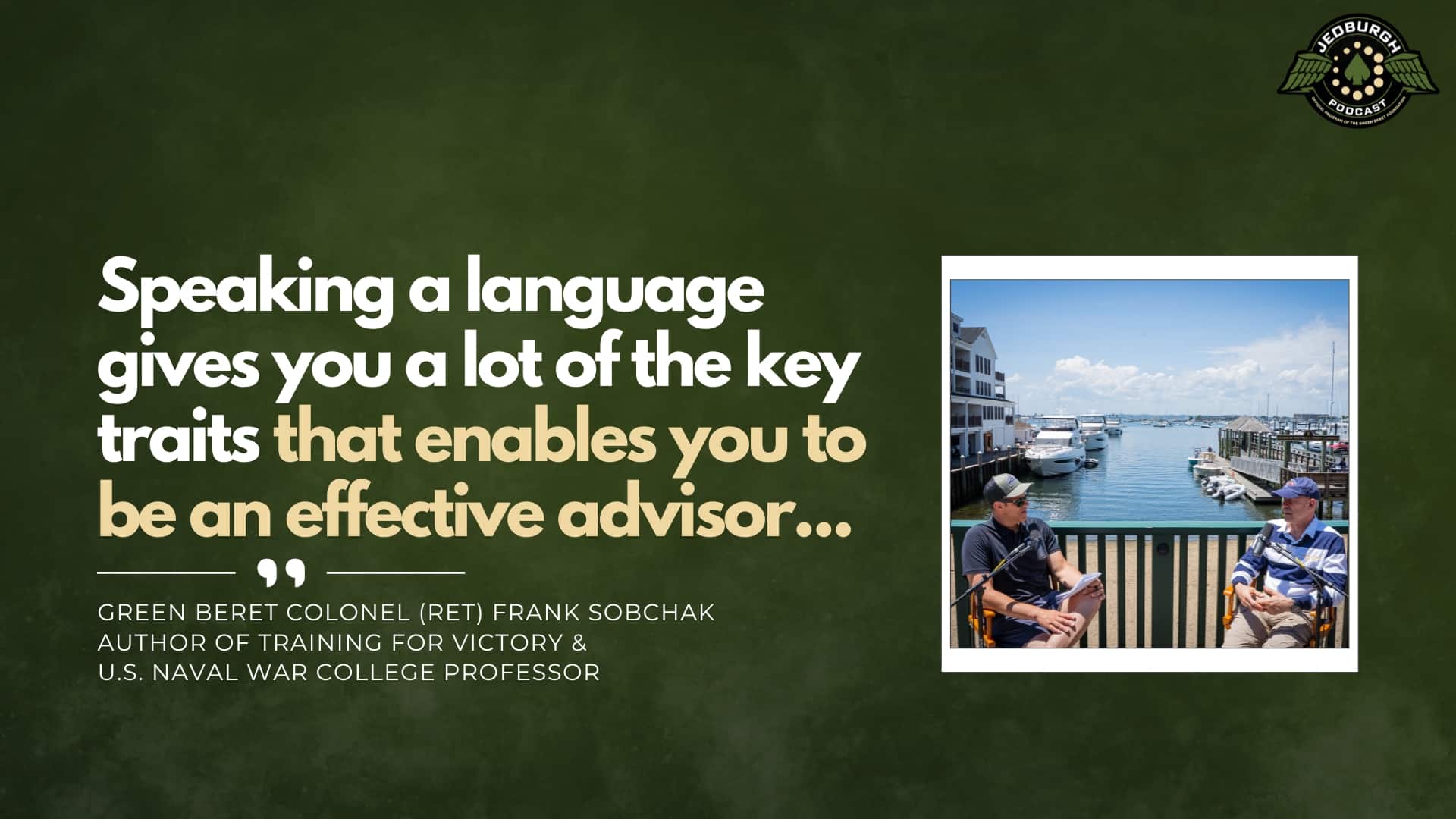
How does that tie into the cultural aspect? If you don’t know or understand, and you don’t have to be 3-3. You’ve got to have some understanding of a language to start understanding their culture. SF does a great job of instilling in special operators the importance of cultural astuteness, understanding your environment. One of those core principles of SF. Understand our operational environment.
As Americans, we’re not good historically as understanding that there is the rest of the world out there who does things differently than we do. Only because they don’t do it the same way we do doesn’t mean it’s worse. It’s just different and it works for them, but we have to be very conscious of how other countries do things. Why is that so critical for a Special Force Operator?
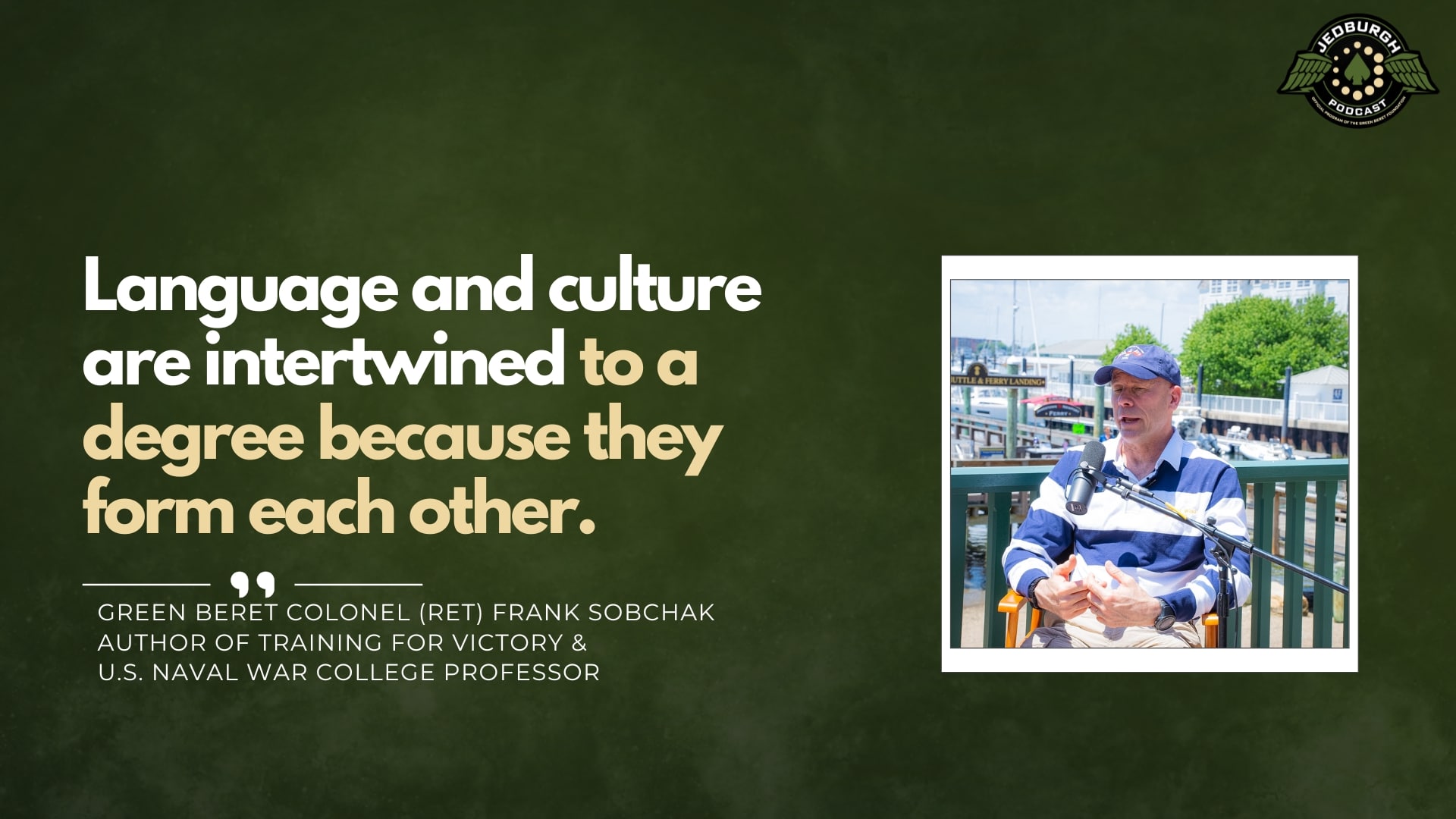
Cultural awareness is absolutely critical. It also enables you to be a better trainer, a better partner, it gives you patience.
I remember having, as so many of us did in Iraq and Afghanistan and wherever you deploy as a special operator. You have opportunities to sit down and get to know your partner. I was able, being the detachment commander, to sit down with the battalion commander of the ISOF. It was every night, I was there in the office. We had a standing meeting at 8:00.
If we didn’t have an operation, it was 8:00 at night. I was in his office. We were there till sometimes it was 30 minutes. Other times it was four hours, but every night you’re there. You learn about them and you learn about their families. You learn about, “Why do you have this Sunni-Shia divide? Why do you operate down here in Basra, but you live up in the North? What’s the drive like? What are you enduring? You have four wives. One is enough. How do you do four?
There’s all these things that you learn that make you better at your job because of what you see. 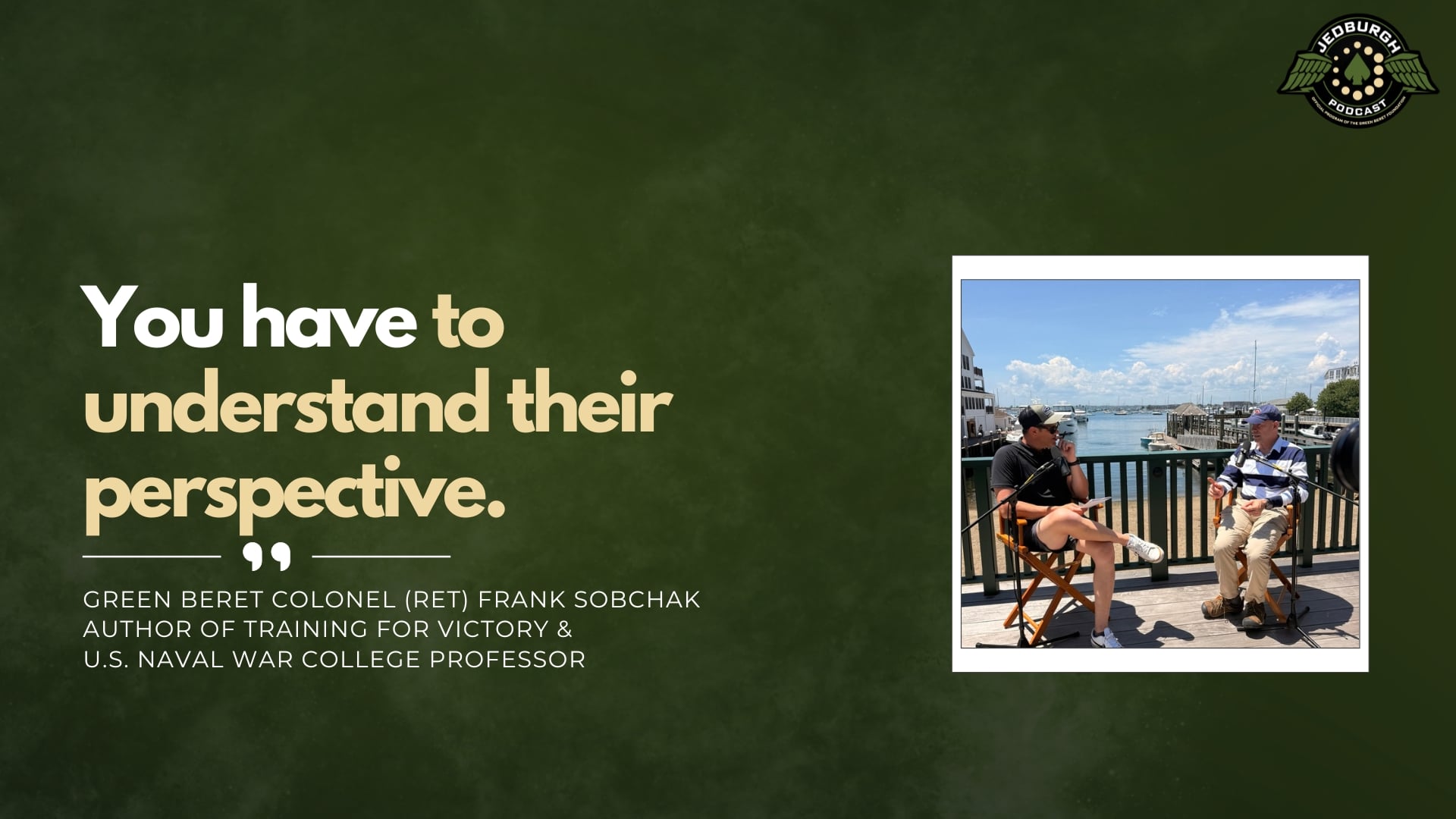
Positively. Multiple angles from it. One angle is the cultural awareness, cultural connection. It helps you understand them. Also, the consistency and advisor pairing, like having the same advisors come back to work with the same host nation forces pays tremendous dividends because the two work together to produce better results.
In some ways, what you see is that those interpersonal connections matter. In some ways, as Americans, we are very transactional. We think that you just go forward. You say this, you do this, and it’s going to happen. As you said, that’s not how most of the rest of the world works. 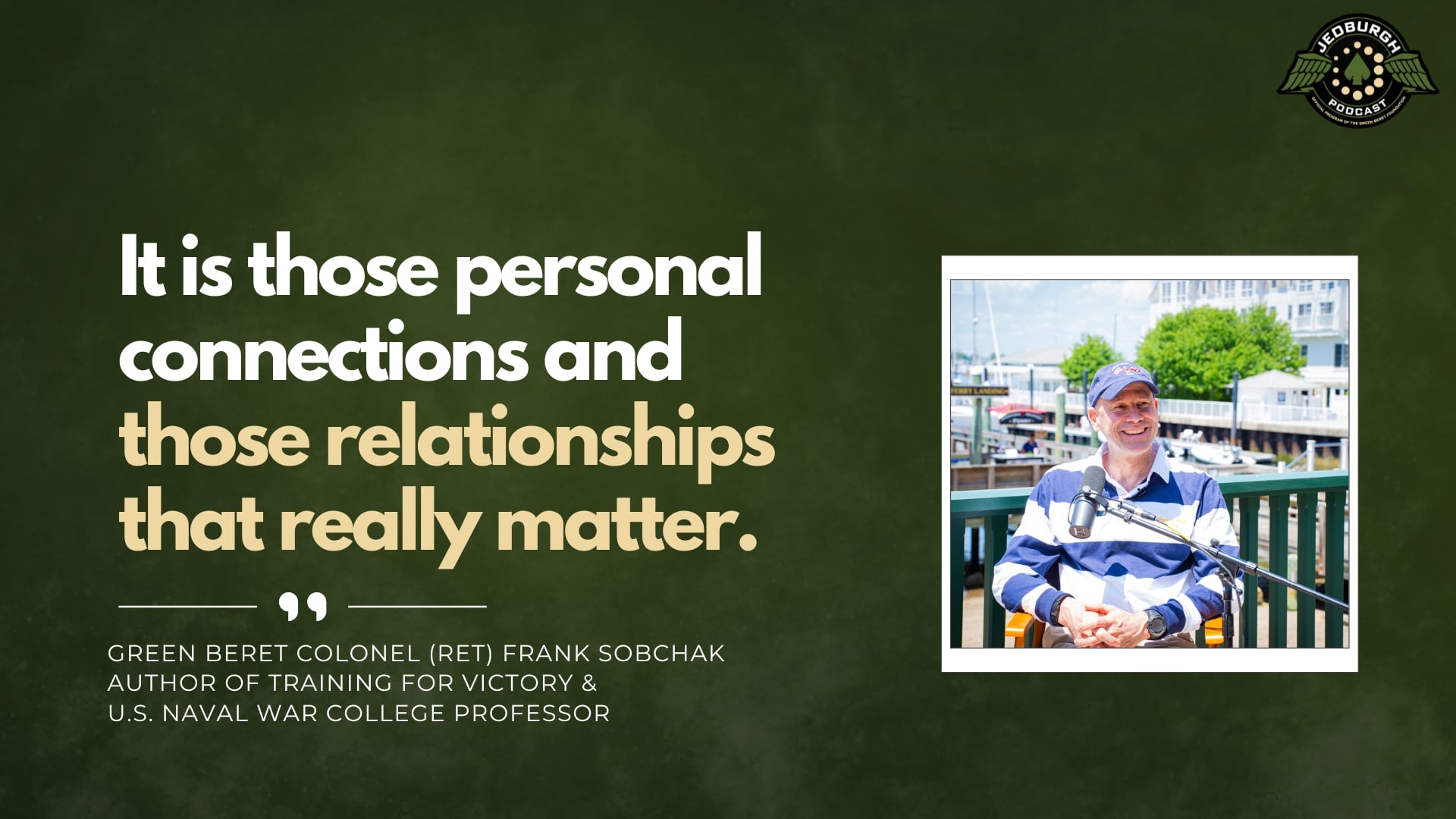
If you don’t have those interpersonal connections already built, it makes decisions a lot harder.
You brought up the second key to success that you talk about, which is consistency. Having the same advisors coming in to work with the same partner for us. Now, this is a big soft value proposition. We’ve been fortunate over the last couple of years to work with the Global Special Operations Foundation and Stu Braden and his team.
When you look at the, what we’ve called the global soft network, you’re a young captain on an ODA and you do and I have friends. Guys I worked with in Africa in the Italian Special Forces. Those guys are colonels now. We were captains together. We’re still on WhatsApp. We’re still talking to each other and seeing each other once a year at Global SOF events.
That Global SOF network is critical because you’ve worked with these guys over and over again. If you go to Iraq, we did rotations back-to-back with the 5th group, and you went to the same location. You fell back in on the same thing. I think about my time in the Infantry, and it was one year. I’m here for one year.
For better or worse, and no judgment on the leadership that I had in the past. There was an attitude a lot of times of, “I’m just going to get through this year because I’m never going to be here again. I’m never going to see these guys again. I’ve got to make sure that I bring home as many people as I came here with. I have to push the problem somewhere else.”
You lose that consistency aspect. You start questioning, “Why are we here?” Whereas, in our opportunities and guys in the 7th group in Columbia who’ve gone to Columbia 30 times will tell you the same thing. How do you as a Green Beret and a Special Forces team maintain that consistency? Why is it so important to be able to go back and work with the same people over and over again?
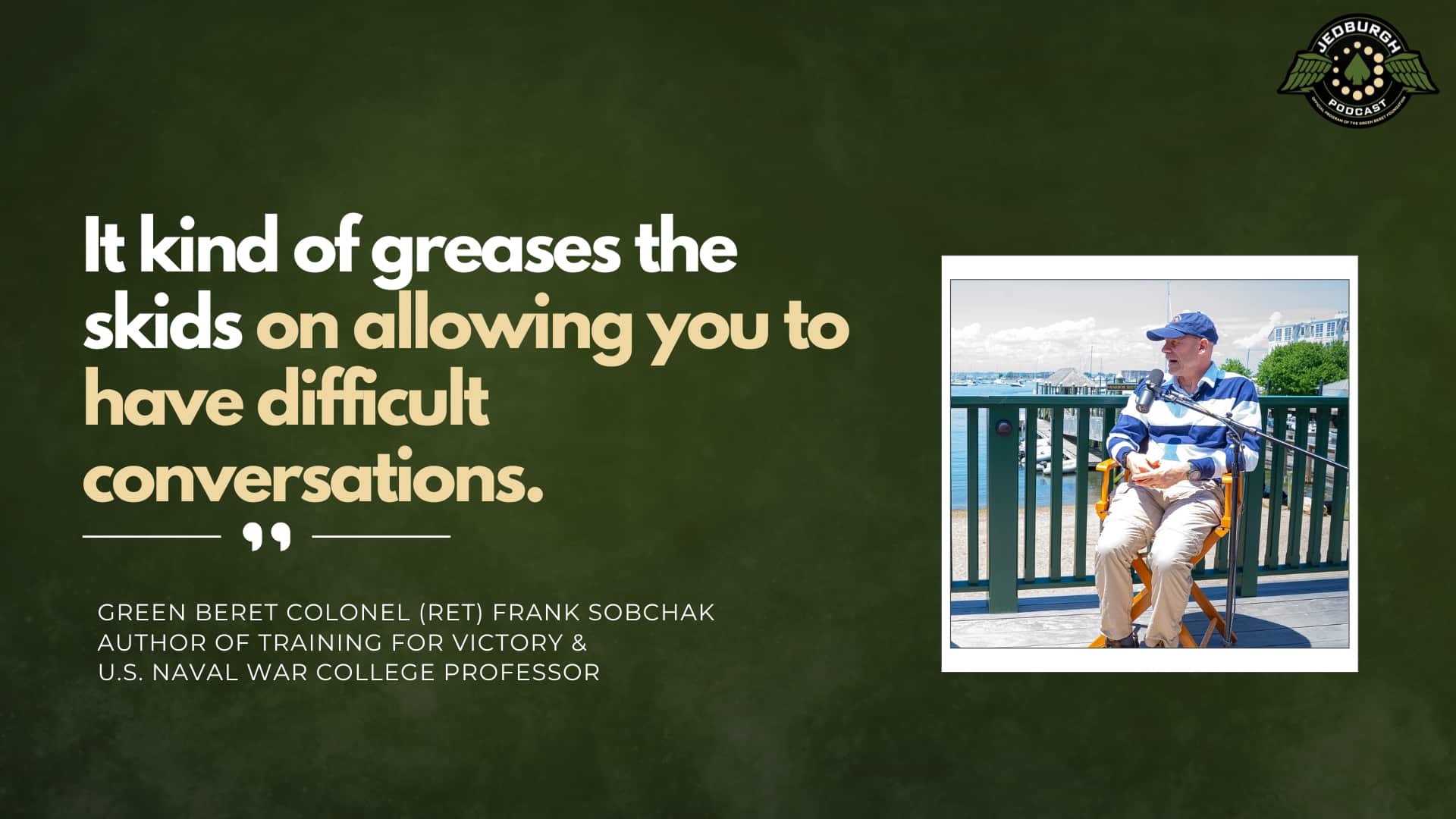
It’s so critical for multiple reasons. From one angle, it is those interpersonal connections. It’s when push comes to shove and you have, for example, Lieutenant Ali, working with Kataib Hezbollah working with Jaisal Methi. You have to go to the battalion commander and say, “Maybe Lieutenant Ali doesn’t need to be on this operation.” Those are hard decisions that a leader has got to make to break his sovereignty, to accept that their sovereignty is going to be violated.
If you don’t have those interpersonal connections already built, it makes those decisions a lot harder. Similarly, having discussions about all the tough issues that we have to deal with like corruption, graft, and insurgents infiltrating the organization. You just walk in on day one and you haven’t smoked shisha and you have built those relationships. It makes those conversations difficult to have.
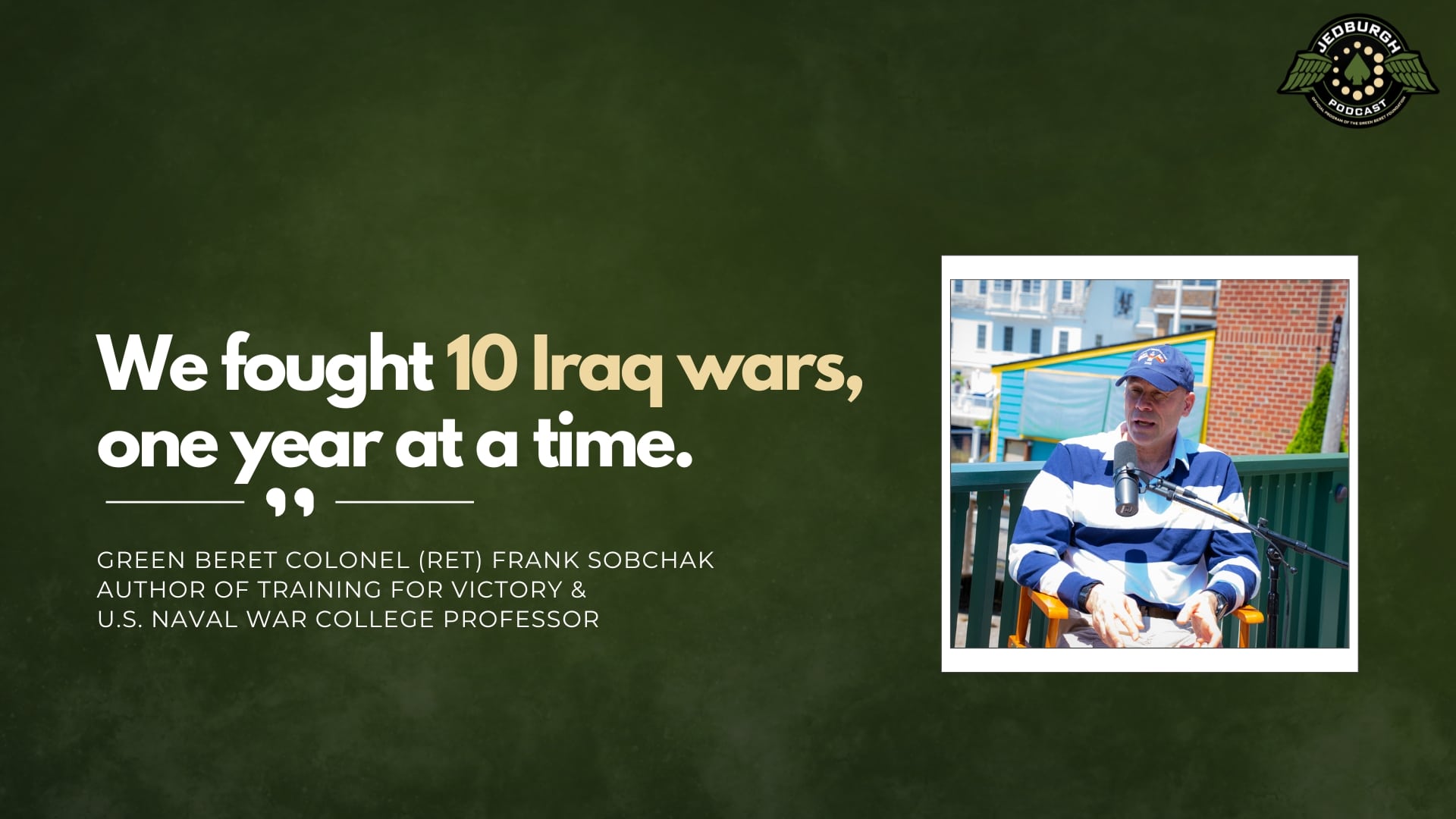
It requires the leadership to recognize the value of consistency because it didn’t happen in every single case study. It requires the leadership to recognize it so that forces end up going back to the same units with the same people, the same faces in the same places. That allows you to pick up where you left off rather than starting anew.
Two things that build upon what you’re saying. Number one, is there a negative to going back to the same area with the same partner force? You can become jaded and think that, “I can’t make a difference here. I can’t work with this guy.” What’s the negative of going back?
The negatives are, and what I’m more qualified at is risks. 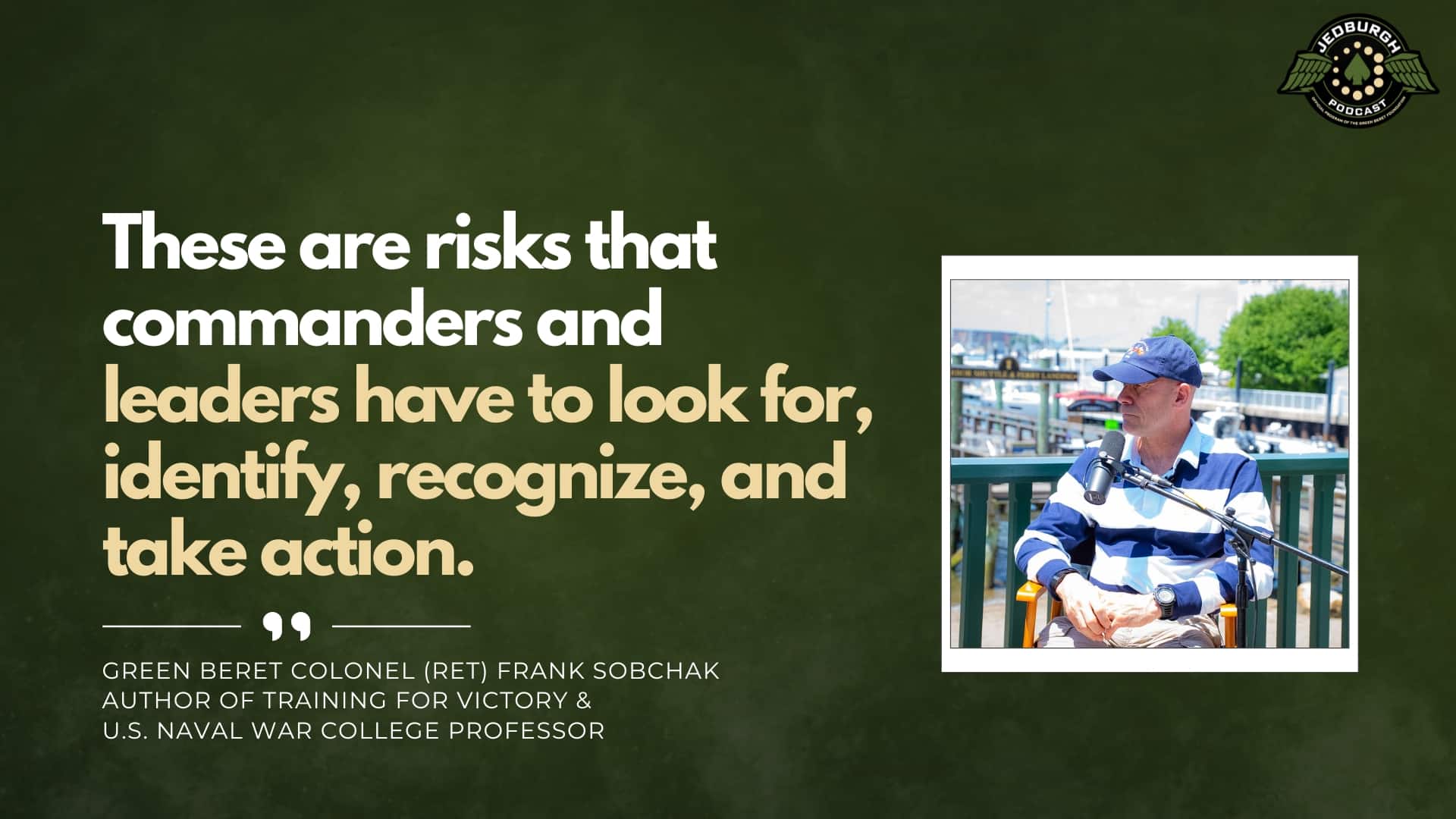
A second risk, this is complicated, but it gets to what is the objective. What is the overall objective and what is most important? That is obtaining the objective. The third risk is burnout. If you do return the same individuals to the same location and you’re not spreading the wealth to other groups. Often, you may end up burning out those individuals in that group. That has a follow-on impact on promotion, retention, and all sorts of personnel issues. I would posit, in my opinion, if leadership is properly watching that, when risks turn into problems and then acting, it can be managed effectively.
We tend to prop up special forces in all of our conversations, but I’d say at an operational level, not necessarily at a strategic level. On an operational level, there were times where SOF didn’t do this well. If we go back to Iraq and you’ve studied it, you’ve broken it down. You’ve understood what worked and what didn’t. One of the challenges that we had at that tactical level between the 10th and 5th group was that the 10th group would come in and we had a focus, build networks of influence, and combat the Iranian threat.
We need to go out there and we need to work through the Iraqi partners. The 5th Group would come in and we got to bang targets. You go there for 6 months and you spend 2 weeks going, these guys are all jacked up. Why did they do this? You spend 6-7 months putting in what you want. They come in, they smile, and tell you’re all jacked up.
They were doing it and then seven months later, you have the same conversation with the same dude. You ended up with the same people. From a tactical level, you’re like, “I got the same team. We’re going to the same place with the same partner. We all feel good about it.” At the higher level, you’re being given different guidance on what they want the tactical elements to do.
That’s an eternal challenge for the tribes within clans, within SOF and within Special Forces. Each one of the groups has its own identity and way of doing business. The joke of 5th group being the 5th ranger regiment being more conventional than the other groups. It is a challenge. At the tactical level, it does create problems. At the operational level,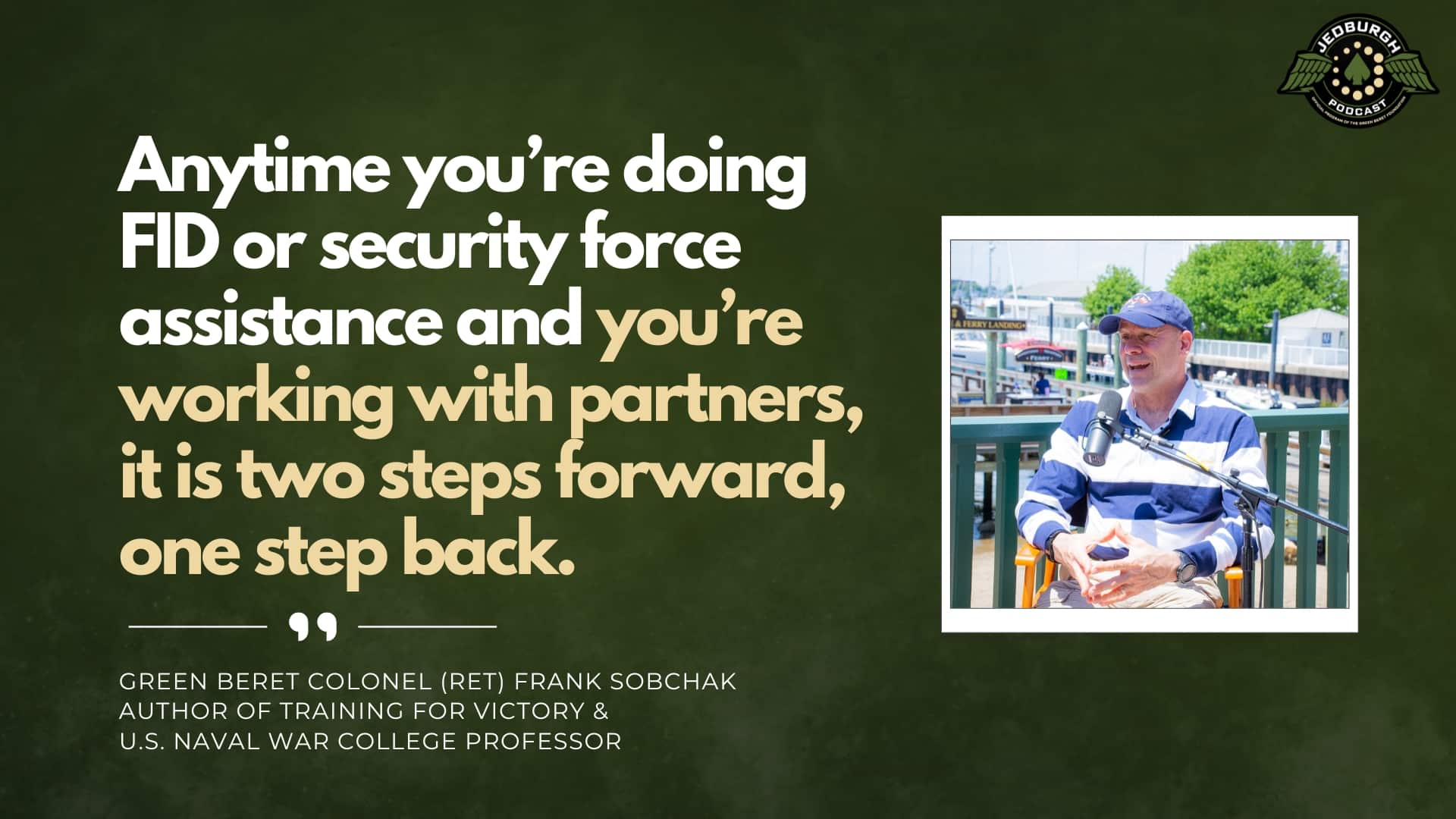
A lot of times, at the tactical level, particularly in my experience too, you do something for 2 years or 3 years, sometimes you get lost in just the minutiae and you aren’t able to step back and see the forest or the trees and the actual progress that has occurred over time. There is no question that frustration and that tack left, tack right, between different groups. It still results in a better process.
What about from the perspective of the host nation? On the other side of that coin, you have, you have a, let’s call it an ISOF battalion who has a battalion commander who’s been there for three years and their company commanders have been there for years and years on end. They’re watching us come through every 6 or 7 months. What’s their perspective? Are they, in any way like, “I’m got to get through the next six months and reset? What’s their mindset?
It depends. I was fortunate and I had a bunch of host nation forces. Some from the ISOF, some from the Afghan Commandos, and quite a few Colombians talked to me about their experiences. I’ll give you both the positives and the negatives. The positives is, they did like when the same people came back. These guys are here. I know who it is. I know how they think. I know what they’re going to be focused on. I know how they’re going to do business.
They were super frustrated when they had occasions where there was massive changeover. We did this at times in Colombia and in Afghanistan. There were occasions where the host nation guys told me, “It was so frustrating because we would have a different team or company come in every six months.” It was like Groundhog Day. We would start over with the same training, get issued the same equipment every six months. We were like, “Can we do something new, please?” They were frustrated when there was no consistency.
The other frustration from host nation forces would come at times when we would rotate different commanders through. Some commanders have a better strategic and operational perspective, and others are more focused tactically. Some, quite frankly, will change things just to change things because they want to do things differently because they’re the commander. This was a real frustration from a lot of the host nation forces in Afghanistan, where it appeared, in their words, US SOF focus changed every two years. Which surprisingly coincides with your time as a commander, change of command.
Where it would shift from, for example, the Commandos to then, “We’re not going to do the commandos anymore. We’re going to focus on the ANA Special Forces.” Two years later, “That’s old stuff. Now, we’re going to focus on the village stability concept, then on and on.” There was situationally dependent, depending on the case study. In some missions, there was much more consistency even though you would have that left tack, right tack. Some missions were better than others. Your mileage may vary.
Doctrine says the advisor to partner force ratio is a twelve-man ODA, and can advise a 400-ish person battalion. The third key to success that you lay out in the book is the partner force to advisor ratio. I’ll give you the thesis question. What is the proper advisor to partner force ratio?
If I was King for a day, I would probably put it at a company for an ODA.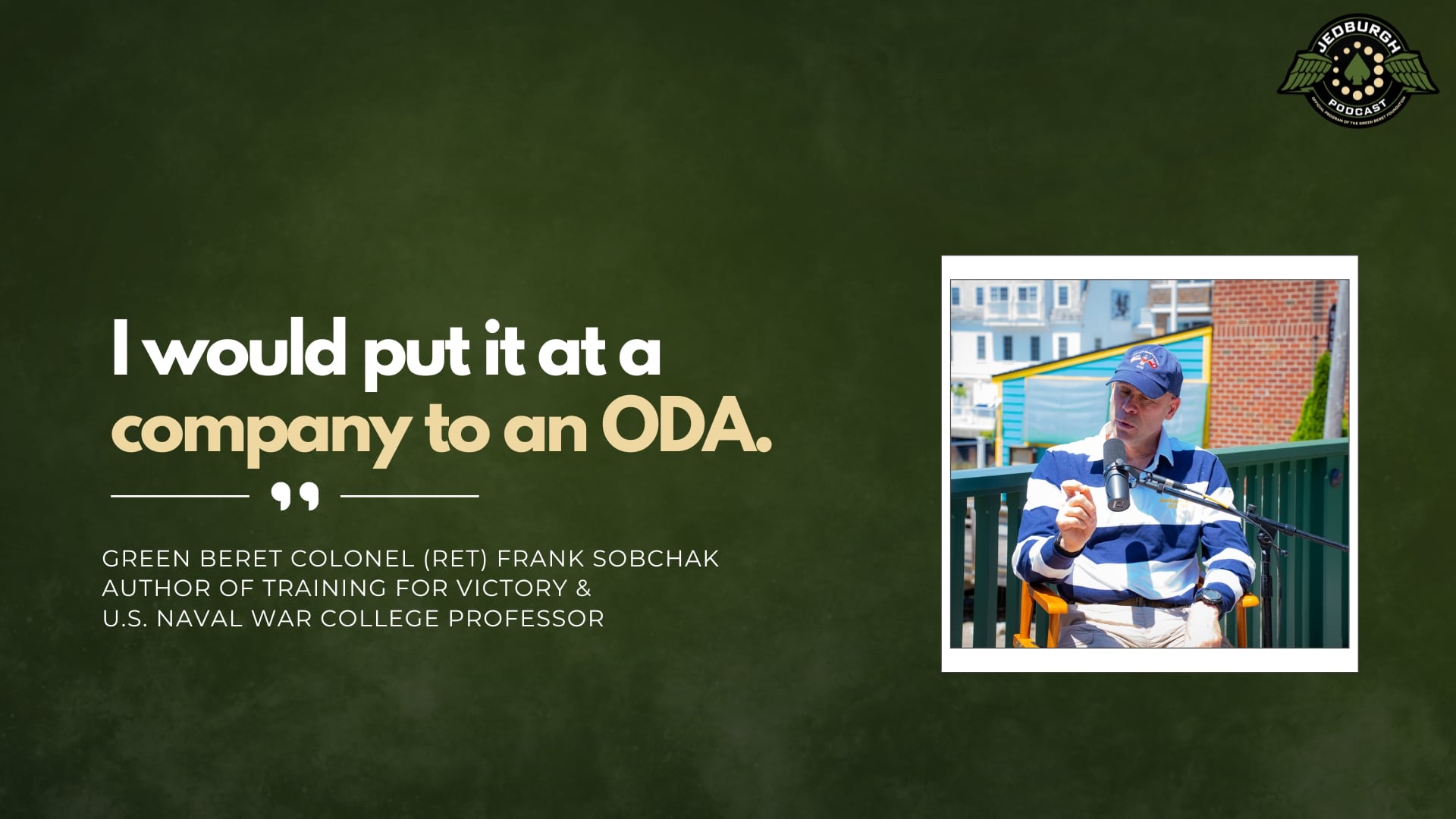
It goes to what we’re taught, whether it be ranger school, basic horse or whatever. It’s being controlled by twelve people. Even if you’re looking at 3 to 5 people each, that’s 70 people or 100 people. That’s about a company. Can they do a battalion? Yes, but in 4 of the 5 cases where we were effective, it was closer to a company.
As Green Berets, special operators, highly successful people, it doesn’t matter what you do. You want to see, what I call in my leadership courses, efficacy. You want to see results. You want to know you wake up every day, I do the thing, and at the end of the day, the things move forward.
You move the football field down the field.
The fourth key to success you put in here is the ability to affect change. There’s a lot of frustrating days in all partner force operations where you go back to your room at the end of the day and you think very long and hard about, did I move the needle or did I face this level of resistance from my partner force that either have to find a way to circumnavigate or we’re just not going to get there? Why is the ability to affect change so important to driving success?
That was one of the hardest ones. There are days that you do go back that you feel Linus trying to kick the football. Where the football gets moved on and you end up crashing down. They are tactically days where football has literally moved backwards. There’s two multiple components to it. One is, is it important to take more of an operational, long term, even years long focus. That’s one of the reasons why there’s value in returning people to the same mission a lot, because it does give them that broader focus.
Looking day to day, you’re going to have days where the football went backwards. To achieve efficiency, to move the ball down the field the most, you have the most chance in my research if you make changes early on in the mission. It can be an advisory mission. It’s almost like there’s a honeymoon period. Early on when a mission is stood up, when a new unit is organized, whether it be the ISOF, the Commandos, the BIRIs in El Salvador, the Light Reaction Regiment in the Philippines. Oftentimes early in the mission, the host nation forces are much more willing to cede sovereignty to allow us to pick and choose. 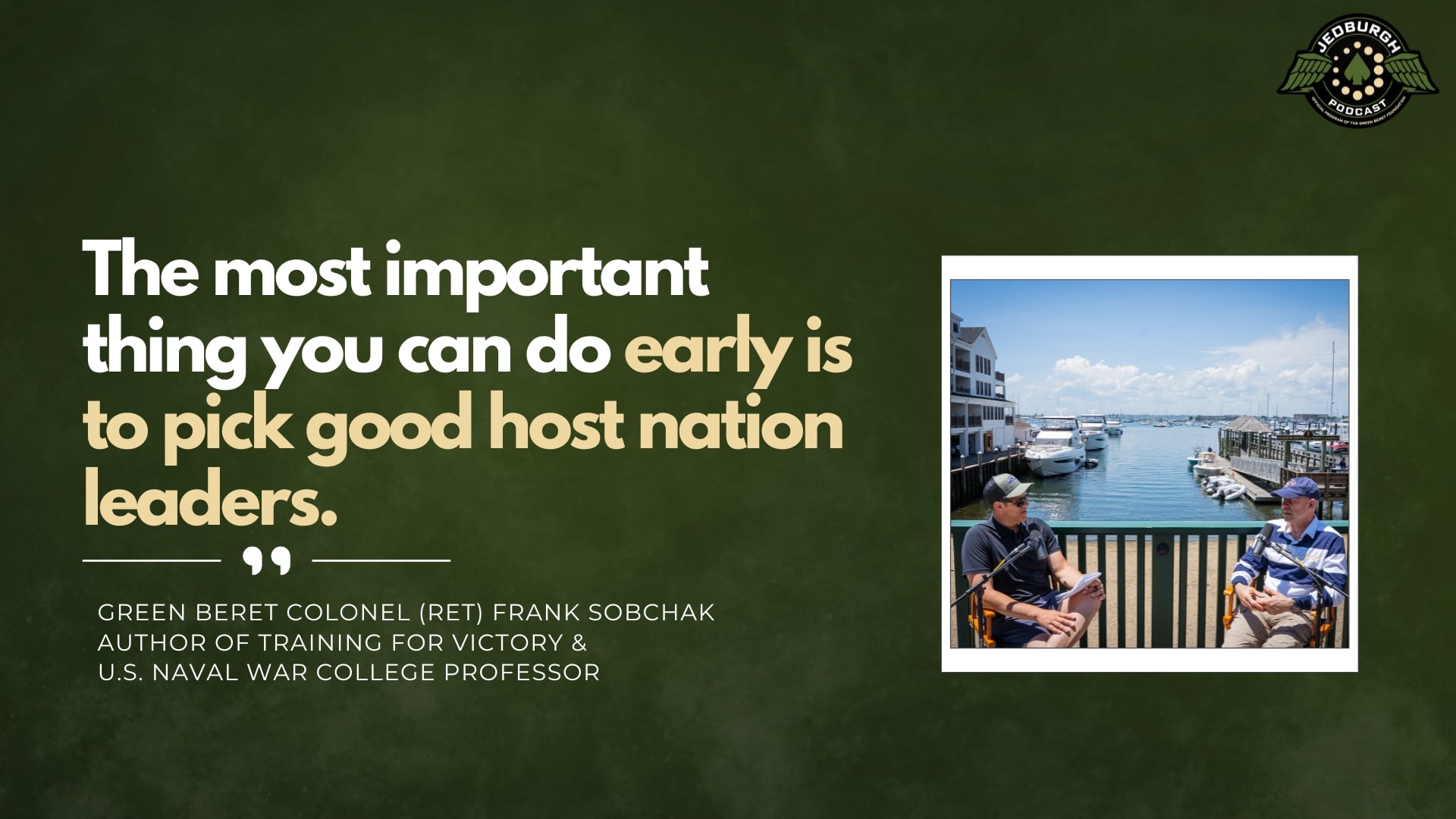
SOF truth, number one, people are more important than hardware. We have people in place in anything that we do, whether it’s in SOF, business, partner nation or advisory. How do you not get frustrated, though? We’re all human recruited, assessed, and selected to get shit done. You’re coming back every day and you’re like, “It’s not happening.” How do we find that resilience? Where have you seen where it’s gone wrong? We’ve all seen it. You’ve seen team leaders and team sergeants who are jaded. They’ve given up. They’ve had enough and then you’ve seen others where you got to get up and get to go back at it again.
That is one of the hardest things about our craft because, in some ways, most of our missions are not years long. They’re like decades long missions. If you want to have an impact. In some ways, you’re almost changing culture. That doesn’t happen overnight. To be successful, one of the things that is most important is to have a long-term focus. Accept that there are days that you aren’t going to move the ball down the field.
There will be days that it will move backwards, but try to focus more on, “What have we done since the beginning of this time we’ve been here? What we have been since the beginning of this unit, stood up. How is this unit doing now? It’s hard to have that longer term vision, particularly oftentimes how we do assignments.
The last one of these keys to success is you got to advise in combat. We’ve been there on both ends of this where we’ve been in the trucks in the stack. Behind it with our partner force. We’ve been there where we had to watch him go out the door and wait for him to come back. A lot of it had to do with authorities and the directive out of policy decisions. Why does that move the needle? Standing there, at the back of the stack with your partner force fully combined on those combat operations.
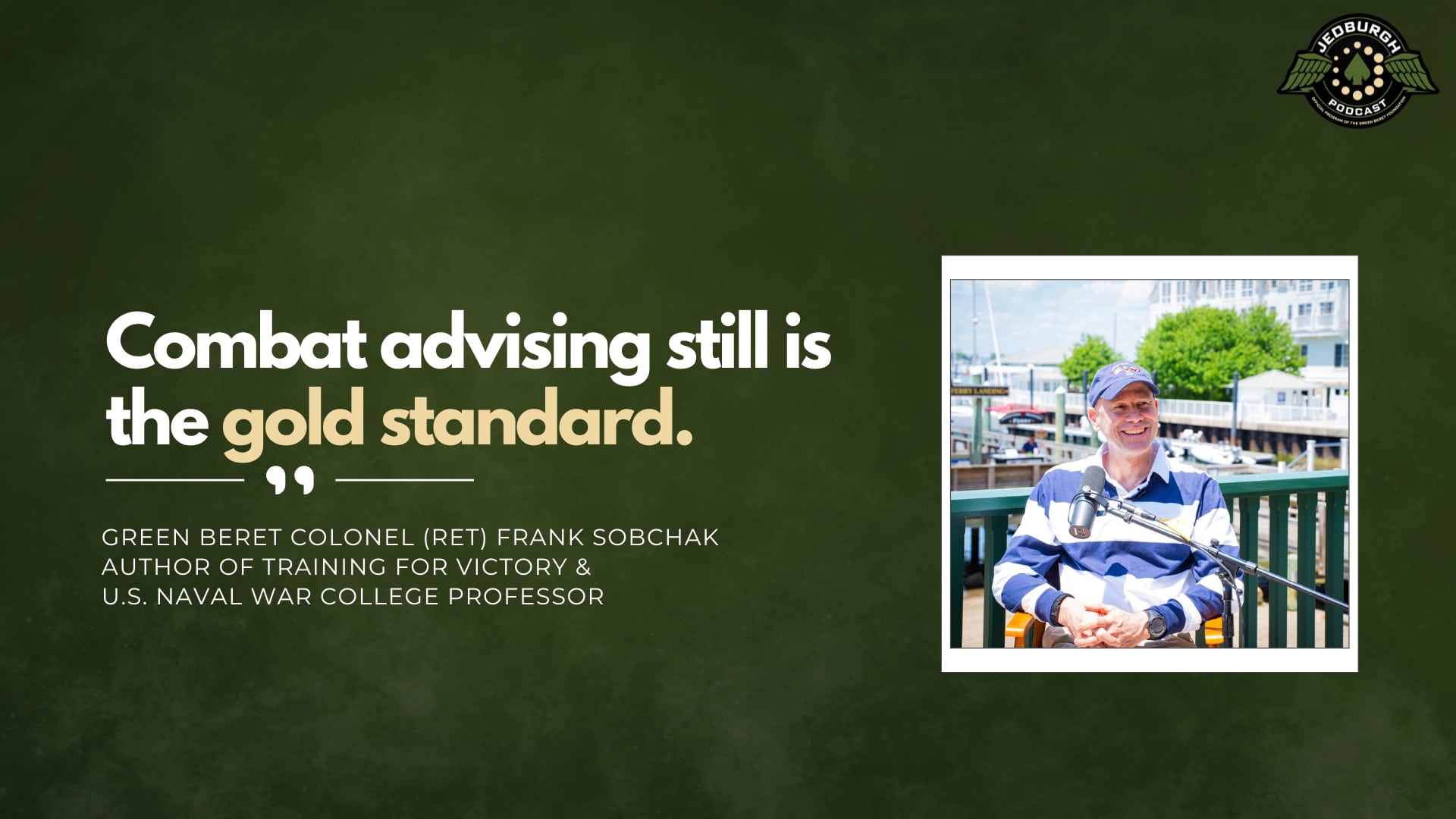
Those corrections hit harder when they’re in the heat of the moment rather than afterwards. Now, on the flip side, some of the missions that were the most successful, for example, Colombia. We were not allowed to advise in combat. In many ways, there were extensive barriers put for us to even be getting close to the battlefield. It’s a weird dichotomy because if you have other factors that align well, you can get by without advising the combat. Regardless, it is still absolutely the gold standard.
Do you think we lose credibility in the eyes of our partner force, though, when we can’t go with them? I’m sure at some level, they are astute to the policy decisions but at the tactical level.
One of the advisors in El Salvador described it as trying to coach an NBA game from the locker room. If the coach isn’t out there on the field sharing the same risks and dangers as the players, as the host nation forces, that has an impact on their willingness to take risks. 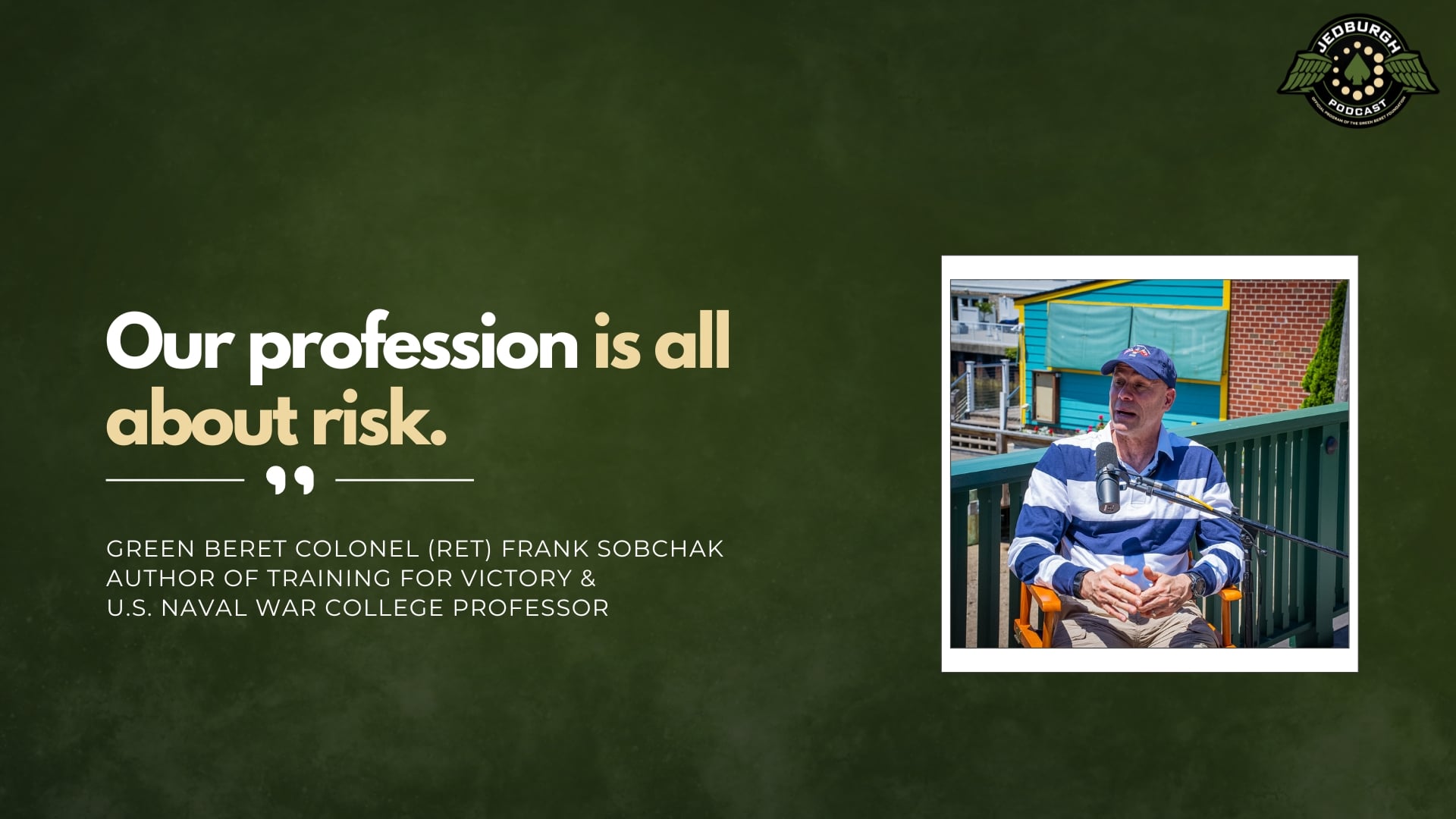
Advising without going into combat with them is trying to coach an NBA game from the locker room. The coach isn’t out there on the field, sharing the same risks.
Combat effectiveness is what you’re trying to achieve. Why do we deploy special forces teams all over the world? At the end of the day, it’s to build partner force, capability to build, to ensure combat effectiveness. I would say, as we evaluate past conflicts, as you have, that’s probably the metric you’re looking at for sure. Did we achieve strategically the aims we set out to do if those strategic aims were even defined?
The method by which we achieved those strategic results has to come down to some level of combat effectiveness. You’ve named five of those that you’ve evaluated in the book, and you’ve gone through these case studies as self-sufficiency, night fighting, multi-day operations, cohesion, and then ultimately battlefield success. How do you define it? Combat effectiveness in today’s world too?
To me, the partner force has to have all those ingredients. They have to be able to fight at night. If you can’t fight at night, you’re seeing half of combat operations to the enemy and more than half. You have to be able to conduct ops for 72 hours. To me, that is the ability to do logistics. That is to do combat resupply. It’s also to be able to take casualties and to have the unit cohesion to still function despite those casualties.
It is performance in battle. Are you able to defeat your enemy? Even if you’re meeting all the other characteristics, if you can’t beat the enemy, you’re going to lose strategically. Lastly, the ultimate goal is you want to work yourself out of a job. You want that your partner force is able to conduct operations unilaterally.
I had a chance to sit down with General Greg Anderson, who’s the commander of 18th Airborne Corps. One of the questions that I asked him that I want to ask you is, is it harder to be combat effective in this technological environment and operating environment of large-scale combat operations than it has been in the past?
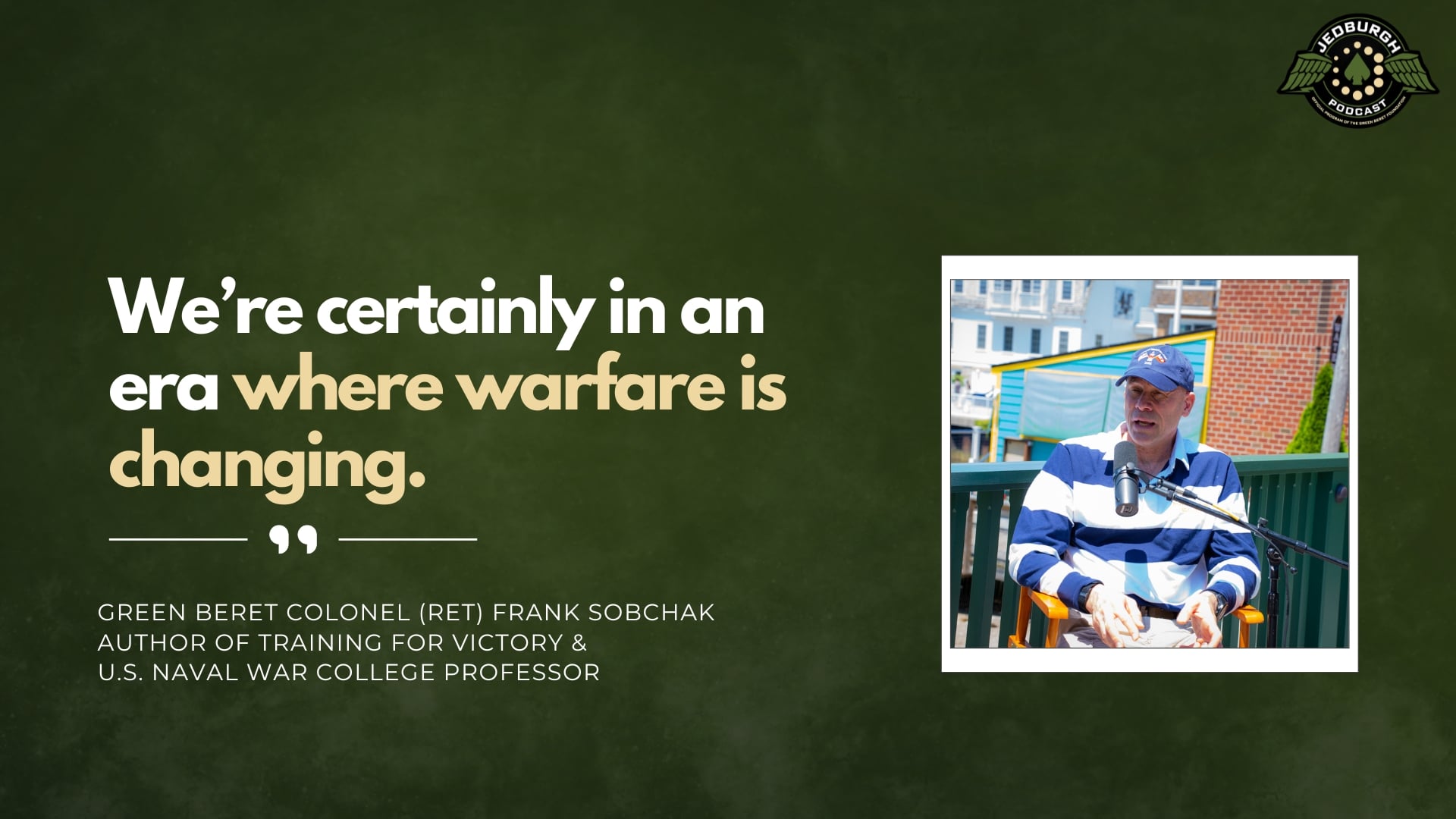
It is a different environment than I would argue even in 2021. At the same point, the fundamentals are still critical. Still, physical fitness matters. Cohesion matters. Training matters more than anything, and then being properly equipped is also critical. It’s a mixed bag, and I’m sorry to give you a little bit of a waffle answer, but the character of war is certainly changing, but the nature of war is immortal.
The character of war is certainly changing, but the nature of war is immortal.
Do we get to a point, because the world order is being challenged. We’re 82 years past D-Day now but that world order has been in place now for eight decades that was set. America has had supremacy. We’ve been challenged over the years but relatively, we’ve been able to maintain that. When we look at the elements of national power such as time, diplomatic information, military and economic levers that countries pull to affect national power and then, by and large, global power.
We’re seeing the challenges being put upon us by everyone. We tend to focus on the military aspect, but it’s there in every realm from our adversaries across the world. What does America have to do to maintain that global order? Certainly, I’m biased. We all are, probably but the world looks different if America is not the lone global superpower. What do we have to do to combat this global world order? We’re not seeing a de-escalation. We are certainly seeing an escalation.
For sure. First off, I’m biased like you. I firmly believe that the world is a far better place with America leading it.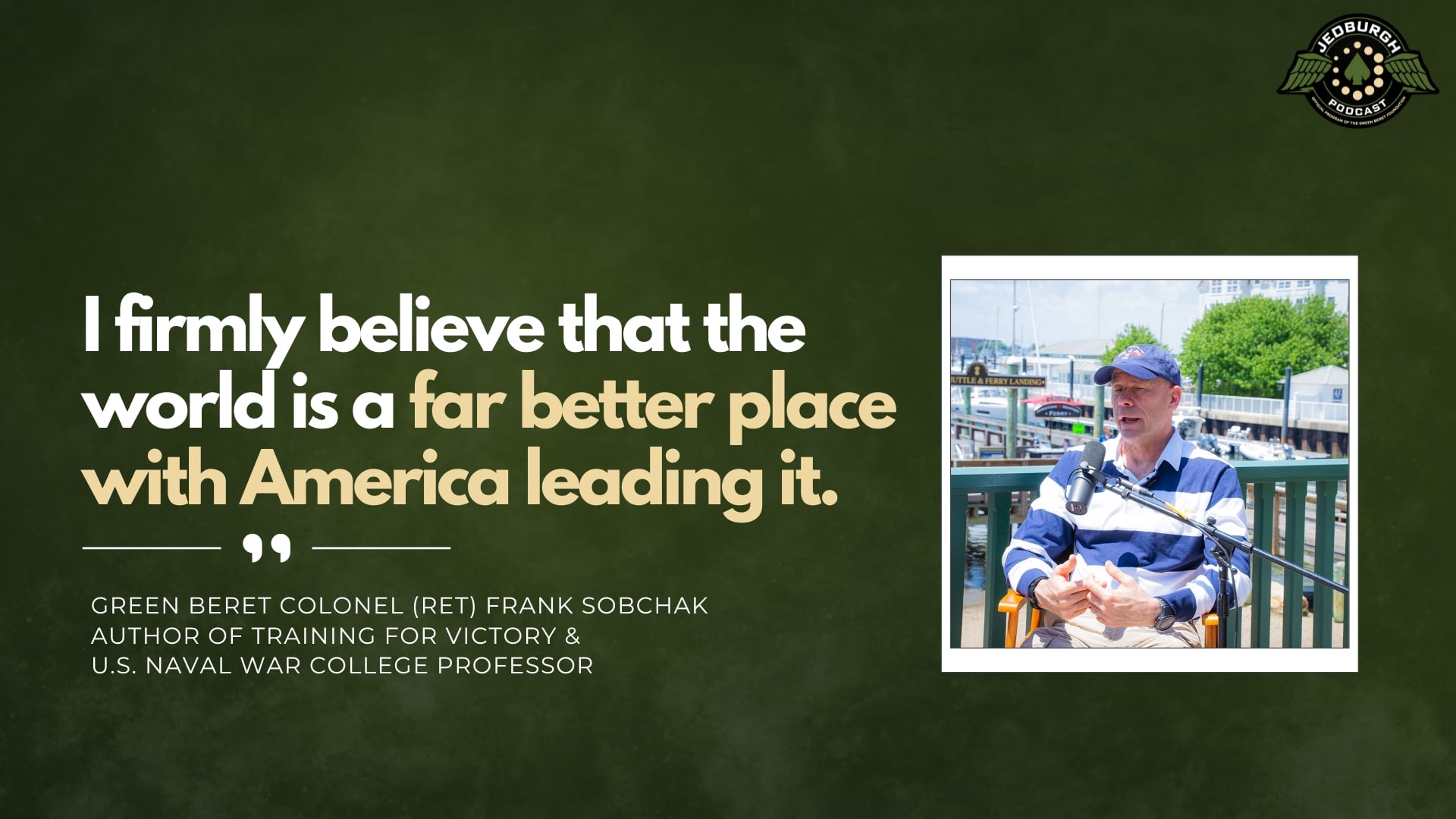
What we need to do, in my personal opinion, is maintain all of those elements of national power because they’re all intertwined. If America is not strong economically, the economic advantages that we gain to all the other elements of national power is almost like there’s a synergy. The economic strength gives us the ability, for example, to build a larger fleet. It gives us technological advantages over our foes.
It gives us an informational advantage because as the technological leader of the world, people look up to us. In some ways, being the world’s sole superpower is expensive. It is hard and it requires blood and treasure, but it is well worth committing to it because the world looks like a very terrible and dangerous place without it.
In my personal opinion, I don’t think their goal is to take over the United States, like a Red Dawn one or two, movie. I don’t see that as their goal. I think their goal would be if the United States is broken economically, militarily, and diplomatically. We are looked at as a second-rate power and that they have assumed our role as the world’s superpower.
They’re looked to for technological innovation, economic power, and cultural might. You go to Paris and all of the movie posters are American movies, Hollywood, the power of information. The power of the American dream is something that my family personally benefited from. I think they want to replace us in all of those across the board, rather than having conquered us, because that would be hard. That’s not going to happen.
The whole Russian, Chinese, North Korean army is over here. We still got more guns than you probably in the homes of this state alone.
We’re better armed than Yemen. No one is taking over the United States because Red Dawn will play out for real. That’s not possible. They recognize that and they recognize the cost that would take. Consequently, they want to bump us out of the first seat and they want to put us down to seat 6 or 7 where we don’t matter that much anymore.
We have to be students of history. It’s ingrained in you, not only as a Green Beret or a special operator, but as a leader in the military. You’ve got to be a student of history. You’ve got to understand what works and what hasn’t. Why did you choose now to write this book and choose these five historical examples of what victory looks like? Why is it important for the community at this point in time to truly understand those operations, what worked, what didn’t? More importantly, apply them?
I think the principal reason why I wrote the book and why I did the research was if you think about the Iraq and Afghan wars and you think about the effort to build a partner force, like the conventional wisdom. The first thing you think of when you think about it is like Churchillian. It’s like, this is a colossal, epic military disaster. That is like the conventional wisdom.
We spent $65 billion building partners in Afghanistan. They evaporated almost overnight. We spent $35 billion building partners in Iraq. They were barely able to hold off ISIS. The challenge with that narrative is that it misses a critical nuance. 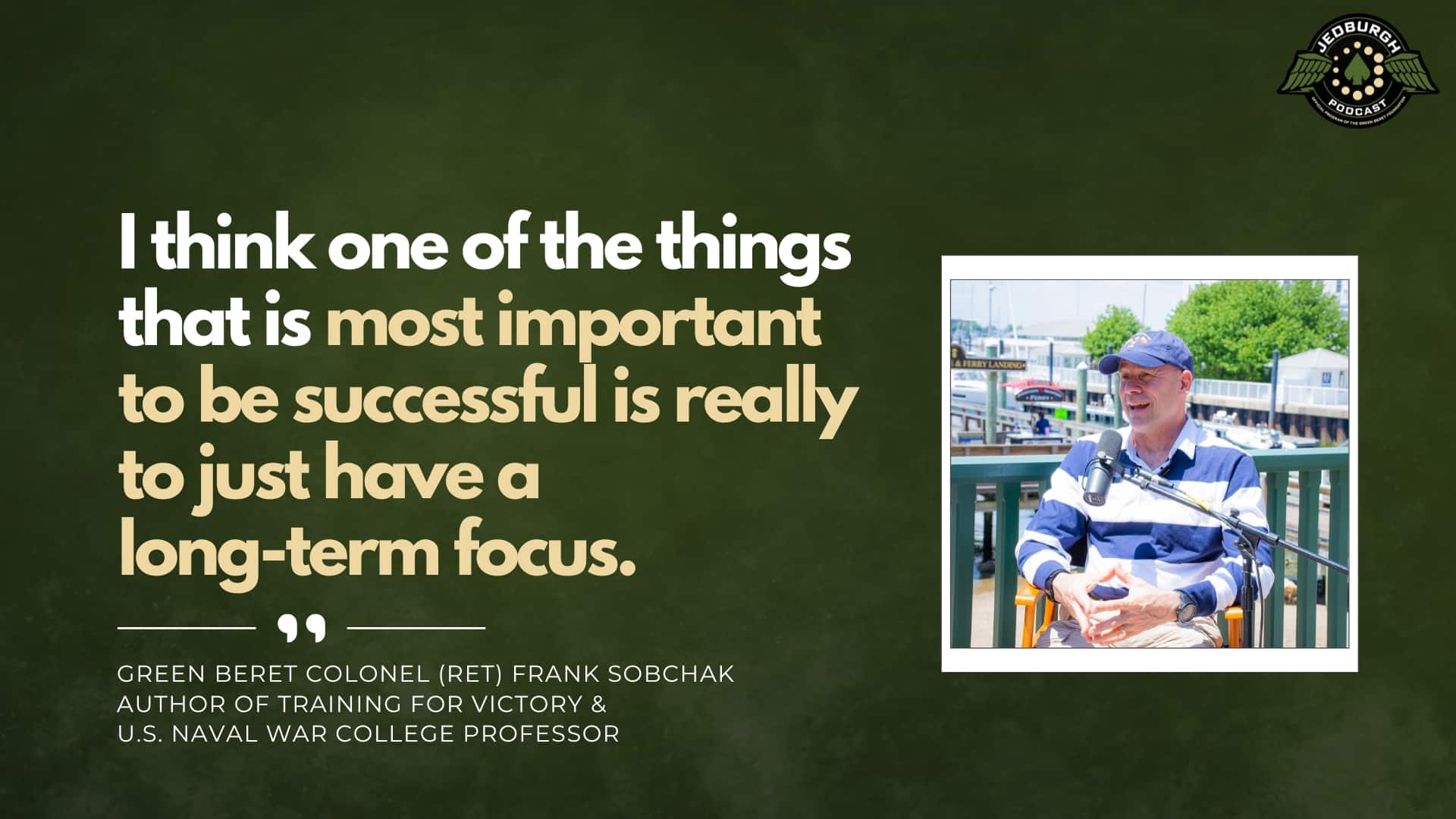
In both cases, despite the larger macro view, when you look at the nuance and you look specifically at the partners that we built. We, special forces, built. We had successful partners. In Iraq, the ISOF literally fought Daesh or ISIS every step of the way. In Mosul, the unit took 40% casualties, which, doctrinally, that unit should be combat ineffective. Yet it still kept fighting despite all the frustrations, despite all the glitches and challenges that we experienced building it over years.
When push came to shove, that unit fought Daesh and it fought well. It was the head of every offensive when we worked with partners to recapture to push them back. That is that nuance that is critical to capture and to look at what was the special ingredient or ingredients? What did we do to make them successful? In Afghanistan, elements of the commandos were literally fighting around the edges of Haman Karzai International Airport as their country was disintegrating around them. What did we do that helped build that?
It matters. History matters. The results of those operations matter. I encourage our entire audience to pick up Training for Victory. Take the time to go through those historical examples. It’s going to bring back, as it did for me, a lot of good and painful memories of what worked and what didn’t and it makes you think about how you might do it differently. There’s a lot of folks out there who will find themselves essentially portrayed having lived so many of the examples that you use.
We mentioned we’re here in Newport. You got a big week coming up as you’re going to hop on the boat and you’re going to sail down over to Bermuda in the Newport-Bermuda Race. I always wanted to do it. I’m going to put it out here now that you should lead, and I’ll help you, a Green Beret crew. I’ll get the Green Beret Foundation to sponsor this, but a Green Beret crew in the next couple of years on your boat. Let’s get in this race and take it down to Bermuda.
I would love to do that. How this all started, doing the Newport Cabrini race, this is our second race. It was a bucket list thing for me that I wanted to do like you. I grew up sailing. I grew up in Fort Lauderdale, Florida. Dad’s sailboat was right behind our house. I went to a friend of mine, Patrick Powers, another 10th Group guy. He is an awesome sailing racer. Far better than I will ever be.
He’s also the CEO of Gold Star Sailing, who takes Gold Star kids and teaches them to sail as a means to cope and develop strength. He put together a team in 2024 that was just phenomenal. We ended up winning the Finisterre Division, which is the Cruising Division, like the Cruising Racing Division. As I joke, it’s the round nose boats as opposed to the pointy nose boats. I would love to put together a team of Green Berets. That would be freaking awesome.
We said it on camera, now we have to make it happen or people will hold us to it. Frank, I appreciate you taking the time to sit down with us. Again, special thanks to the Sailing Museum here in Newport, Rhode Island. Pretty much your place of work and home, now my home. It’s always an honor to come here and experience this great place. Thank you for sharing your perspective. Thank you for putting this book together for the rest of us to learn from, because if America is going to maintain their position atop the global world order, we have to learn from the past. Thank you for doing that. We’ll see you on the water.
Thank you so much. I appreciate you having me on.
Green Beret Foundation
P.O. Box 25138
New York, NY 10087-5138
Note: Please use USPS mail or priority mail. Do not use FedEx.
Green Beret Foundation
10205 US Hwy 15-501, Unit 26-8
Southern Pines, NC 28387-4301
Call: at: (844) 287-7133