The battlefield is changing faster than ever before. Drones can find you. Technology can expose you. America’s adversaries are adapting in weeks instead of years. For U.S. Army Special Forces, rapid evolution while maintaining the people, partnerships, and culture that have made Special Forces effective for generations is the key to success on today’s battlefield.
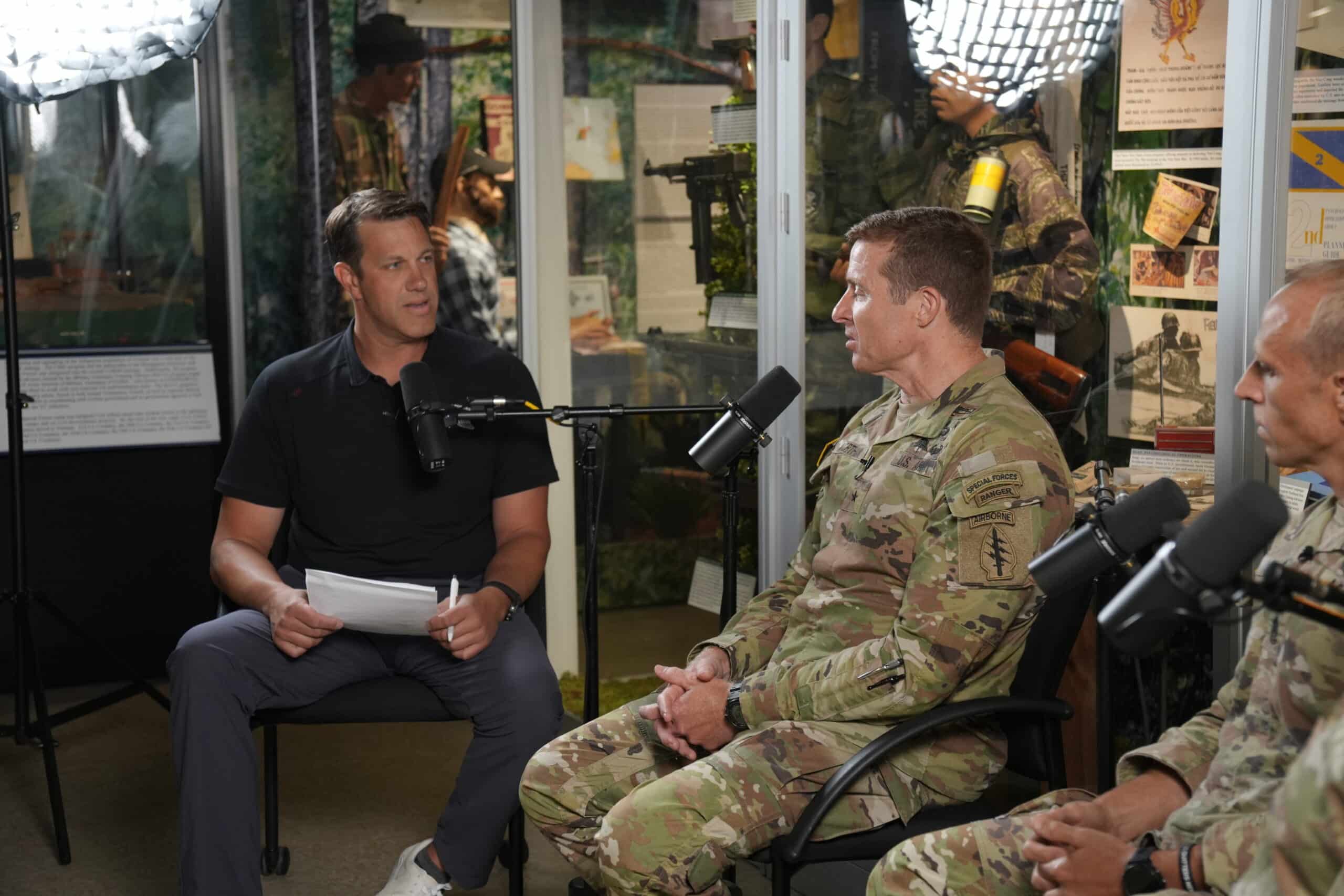
From the John F. Kennedy Special Warfare Museum at Fort Bragg, Fran Racioppi sat down with the command team of 1st Special Forces Command: Brigadier General Joseph Wortham, Command Sergeant Major LeeStrong, and Chief Warrant Officer 5 Jerry Brown. Together, they lead the US Army’s Green Berets, Civil Affairs, Psychological Operations, and the soldiers who enable them. Their mission – prepare, train and equip Army Special Operations Forces to win against an increasingly complex global threat.
We discuss whether the legendary 12-man ODA is still the right formation for the wars of 2030 and 2040, and why the future may not require changing its core, but building new capabilities around it. Robotics and unmanned systems are rapidly becoming part of that evolution, including the development of specialized technical expertise designed to keep pace with technology that can change in a matter of weeks.
But technology alone will never define Special Forces. We examine where Green Berets are supporting large-scale combat operations, how Special Forces can shape the deep fight for conventional commanders, and why Psychological Operations, Civil Affairs, and trusted partner forces become even more important against peer adversaries. The battlefield may look different from the one this generation fought throughout the Global War on Terror, but the requirement remains the same: create options, influence the fight, and give the joint force an advantage before the enemy ever knows we’re there.
The next generation of Army Special Operations will fight with tools its predecessors could never have imagined. But its greatest advantage will remain the same: exceptional people, trusted partners, and a culture built to take on the missions others cannot.
The Jedburgh Podcast is brought to you by OneBrief; enabling military leaders to make innovative, informed and deliberate decisions faster than ever before. Superhuman command wins wars.
—
—
General Wortham, CSM Strong, Chief Brown, welcome to the Jedburgh Podcast.
Thanks for having us. We’re super excited to be here. I know this is my first time on the show. I think you have a repeat offender beside me.
He was a star. A huge star from when the CSM was at SWCS, and so, we had a chance.
I didn’t hate you to say that either, then, of course, Jerry.
The boss owes whiskey because he’s a general. That’s the way it goes. I think General Lender taught me that.
We’re honored to sit down here with you. We’re back in the JFK Special Warfare Museum here at SWCS on Fort Bragg. We feel like this is home. We want to give a quick shout out to Roxanne and her staff here. They do such a great job. Every time we come in here, there’s so many new exhibits and how dedicated they are to telling the story of the regiment and all of our Army Special Operations Forces throughout history, I think, is unmatched. 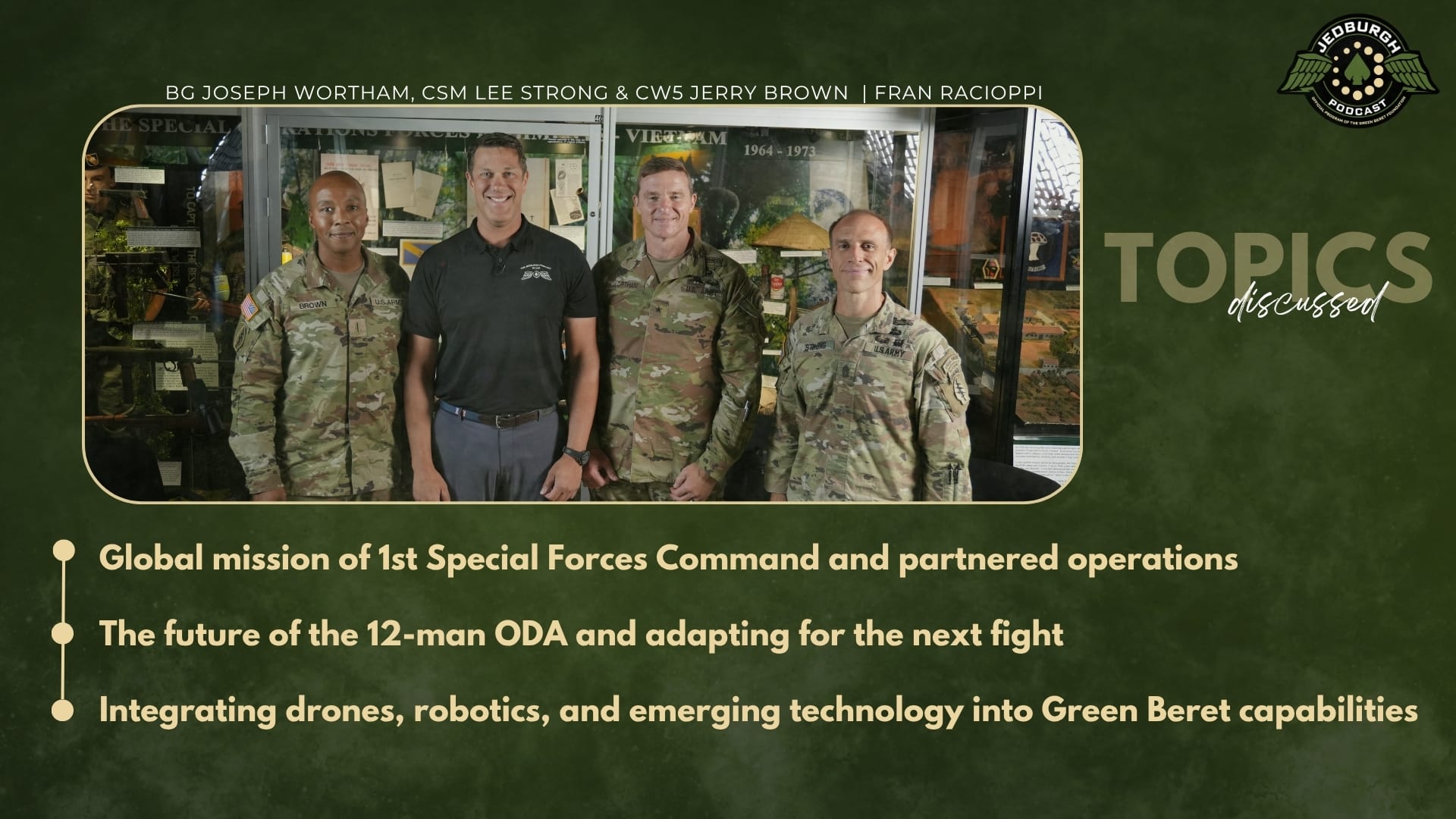
We appreciate them, and we appreciate the time to sit here with you guys because, first, Special Forces Command is at the center of it all. We. Have a lot of units in the Army Special Operations Command. For me, for you guys, this is home. Your organization sits front and center when we talk about Army Special Forces capability. When you look, Sir, across the formation, we’re going to talk a lot about the evolution of the current combat environment and our adversaries and what we’re facing. What is your guidance on the mission to First Special Forces Command?
First of all, what I think makes First Special Forces Command unique, not only in USASOC but also for SOCOM and the department. We don’t like to do anything by ourselves. 
When we look at our partner forces and our ability, as Green Berets primarily, and we have our CA and our Psyops units that we’ll talk about, that relationship that we forge with our partners is critical to force multiplication. Chief, you spent time at 110, so fellow 10th group here. As a forward deployed battalion, you have an opportunity at a greater scale sometimes than those who serve in 10th Maine to interact and build those relationships, especially across the European theater. Talk about the importance of those partnerships and throughout a career? I’m still talking to the Italians that I met in Africa.
Proximity is key. You’re there in Europe with them. It’s unlike traveling from conus to go and do small unit exchanges or J sets. That’s built on a legacy of those partnerships since the 10th group was first installed there in Germany in 1952. It’s building on those relationships and that legacy of partnerships with our adjacent, either like elements whether they’re SOF or even their conventional forces. You name a country, each one of them wants an opportunity to work with US SOF and with the United States Army.
CSM, when we look at the formation, there’s a lot of effort that we put on our language development, on understanding the culture of our partners. How are we instilling the importance of cultural awareness, understanding language capability, and being able to look at the problem set that’s been given to us by our higher headquarters and our senior leaders within the government? We got to look at that lens through our partner’s eyes to best get them to support what our end state is. How are we instilling?
Again, at the core of everything we do is partner an operation, and then how do we create a culture that truly sees the value of partnering? As we go and we deploy around the world, those partnerships have to be genuine.
At the core of everything we do is partnered operations. As you go forward, eating lunch with those folks and walking a mile in their shoes, you start to build genuine, authentic relationships.
That’s what’s in your mind as a student, it’s the emphasis on learning that language. The true value of our course is the cultural piece of it. Not the language. We’re baselining people to learn about empathy and appreciate the situations of these people. As you go forward, you go somewhere and you’re eating lunch with those folks. You’re living in their neighborhoods and walking a mile in their shoes, you start to build those real genuine relationships.
You see those play out over generations. At the last regimental first formation, CSM Dorsch was the guest speaker, and he gave a great example. They were trying to do something operationally down South. It was a CW5 in 7th group that had 10 or 20 years deploying to the same area and was able to pick up the phone. In one phone call with a relationship, eliminate friction and make things move fast. That’s the value of our relationship, but it starts by being just a genuine, authentic, good partner, not transactional.
When you look, Sir, at the command. You have the special forces groups. You have civil affairs and you have psychological operations as the three core components of the command. You serve as a force provider who has to man train and equip the organizations to then supply them in a sense to the TSOCs for employment. How do you balance that? When you look at readiness, what are your top priorities?
When I talk about readiness and we think about it, there’s three core things that when we think about our priorities. One is lethality. We think about war fighting. When I think about that, I think about what are the fundamental baseline tasks that are what makes an SFODA. We’re deployed in 70 plus countries around the world. Those people want our teams and our people there because we’re good at the basics.
They know that the US and what we do is we’re good at those baseline capabilities, and so they want to train with us. They want to be with us. When I think about lethality is what it means to be a great team and what it means to be, whether it’s a civil affairs detachment or a CA team or any of our other units of action. We’ve been on a great journey over this past year to be what should be common to all and raise the baseline expectations.
When those units do go out to a TSOC commander, a theater special operations commander, they can expect like this is the minimum that they’re able to do. That buys down their risk to mission because it’s less risk to force. Our people are more prepared. That means that they are easier and they’re more agile to be moved from what was an anticipated mission. It gives commanders, especially out in the COCOMs, the ability to take one unit that maybe had not trained for that specific mission but able to quickly allow them to pivot and do something completely different maybe. That’s what I’d say. First, it’s lethality. Lee talked a little bit about people and the language parts of that and what we do.
Humans are more important than hardware, and the people in our formation are what make us great. Investing in them and making sure they’re prepared to meet those challenges is really important.
We take those lessons learned and we apply those across the force, ensuring that we’re able to do those things and they’re survivable. Those three bends are the things that we think about at the command and we spend a lot of time. When they do go out the door and we give them to every geographic combatant commander, every TSOC that’s out in the globe, that we know and we can have confidence to tell all of those commanders that they are prepared for anything that you would ask them to do.
I’m going to ask you about something that was brought up. The CSM and I talked about it in the last interview we had when he was at SWCS, and then General Ferguson, your predecessor and now boss. We’re going to invoke him now. He brought up, and so did the CSM and General Beaupere during that conversation. The fact that we as a regiment have to question a couple of things. We have to question four structures and say, the organization, as Chief said, has been around since 1952. We’ve had 12-man ODAs.
We have to ask ourselves, is the 12-man ODA what we need in 2030 or 2040? Are we doing the hard analysis to make modifications that our MTO may not be exactly what we need it to be for the next round of our adversary? I’ll go to all three of you. As you look across the organization, is the 12-man ODA what we need? Are there still discussions about potentially having to make modifications to that? I’m then going to ask you about robotics.
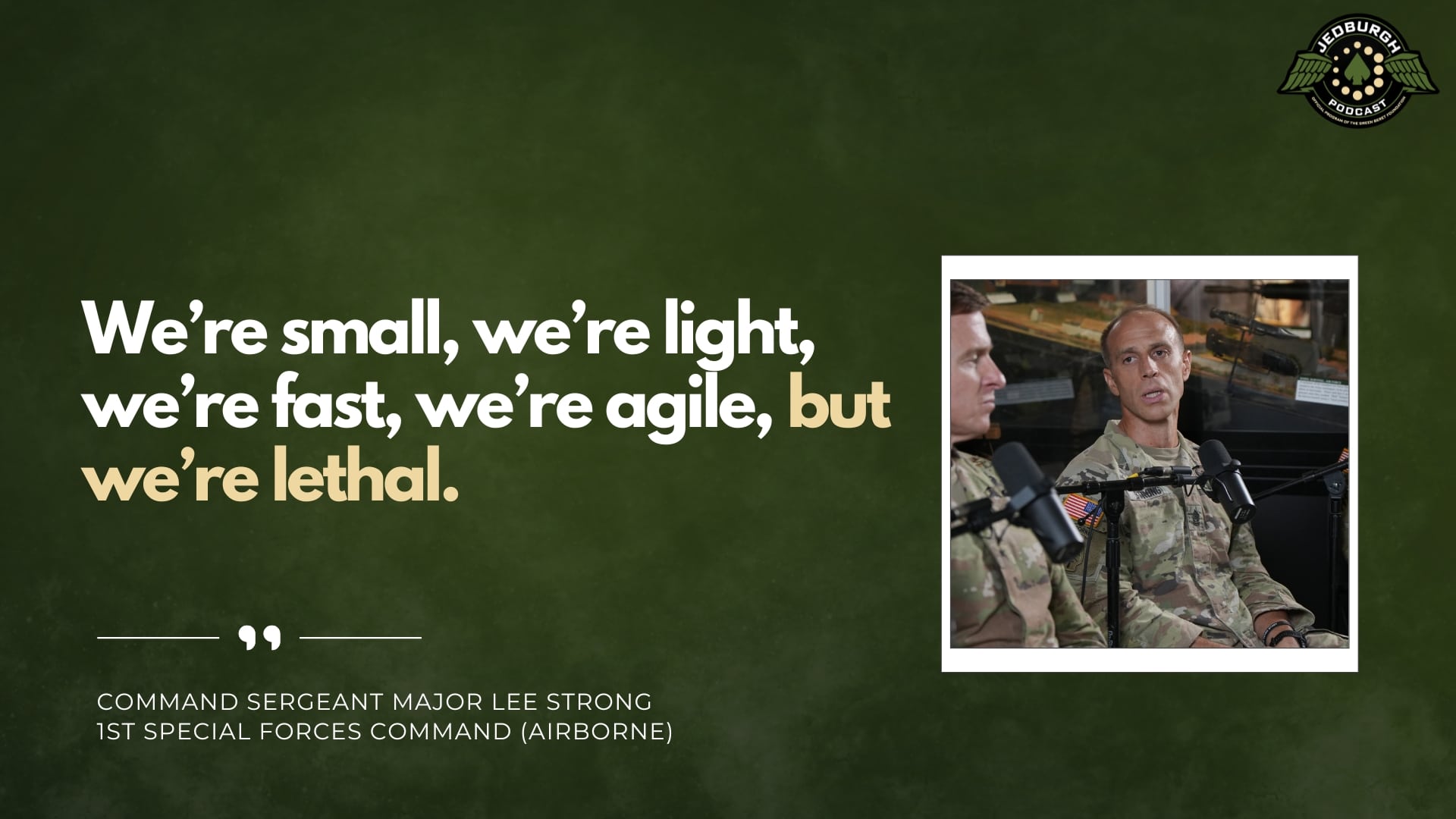
We’ve had the 12-man ODA. We haven’t always had a 12-man ODA for most people, if you look through our history and you go back to the JEDs. I know it’s been 16 or 15. It’s morphed and it’s changed. We have certainly settled on a 12-man ODA ever since Aaron Bank wrote it all down. We’ve had those conversations for probably the past 4 or 5 years. The parallel I’ll draw is the infantry squad. The infantry squad’s nine people. It’s been nine people for probably longer.
The approach that we’ve taken is, when you look at fundamentally what an ODA was built to do, when you look at what their purpose is. We talked about being able to partner. ODA was built, in general, to be able to employ roughly a battalion size worth surrogate, ally, partner and be that force to add to a joint force commander or an army commander another option. We look at the parts and pieces that are in there that do that. When we do the analysis, we think we’re pretty comfortable with the twelve people.
We think what they’re being trained on and the skills that those twelve people have certainly are probably the harder look that we’re looking at. That gets into the next topic that you want to talk about. You want to talk about unmanned systems. You want to talk about other things that we think those people should be able to do. The ODA, at least from my experience, is the most diverse organization at the team level than any probable unit of action in the Department of War.
Now I’m super interested because I don’t know how I answered the question the last time. Somebody’s going to watch the original video and then call me out but I’ll answer the question. In my role and how I see things, form follows function. What is it that we need an ODA to do now and in the future? As we define that mission and those requirements, we will task, organize, and structure the ODA and quite frankly, the SF group and the command to meet those demands for the nation. Regarding the 12-man ODA, do I know if the 12-man ODA is the right structure or the right solution?
I don’t think anybody can honestly answer that question. What I do know is we assess and select some amazing people that are above average intelligence, above average fitness, with extremely high levels of character. 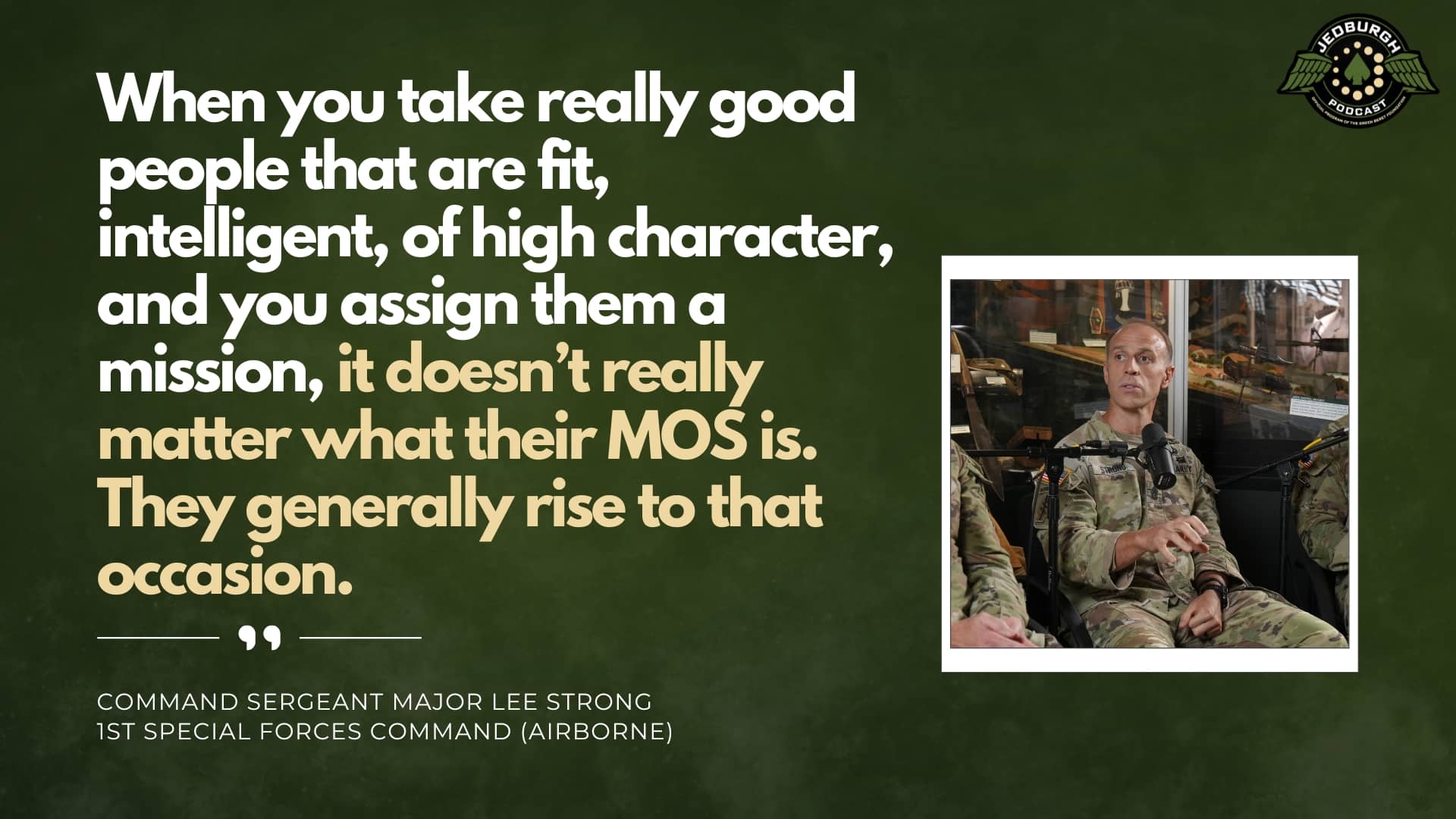
Now, the question is, how much demand can we put on them before they reach the point of saturation? We’ve all felt in our careers where one more rock was piled into that rucksack where you hit a point where, “For me to do this good, something else has to atrophy.” We, as a command leader, need to regulate that throttle too, are we asking too much of the ODA? If so, the mission still requires something different.
How do we seamlessly integrate other capabilities within our command to make them more capable, whether it’s space, cyber, or things like that, to make the ODA, the AOB, the SODIF more effective? What we’ll see in the future is an ODA and a CAT team are still the core of what we provide, but there’ll be additive capability of other functions that are bolted onto those at a moment in time when they’re needed the most. That is the secret sauce that our command uniquely brings compared to anybody else.
I don’t think it’s any different than our entire history. You can pick whatever special mission that we’ve done in the past or anytime we’ve asked teams to go do things. We’ve always built for purpose around a core. When you think about that, we think that the core is closed. Everybody has their own opinion and thoughts but I think the Corps is close. We’re going to focus on the things that we bolt onto the Corps.
The only thing I was going to add to that, Sir, is, again, we’ve talked about Colonel Aaron Bank, and we’ve talked about 1952 establishing the ODA as the unit of action. Now, keep in mind, when he first went to Germany, it was him, a warrant officer, and eight NCOs. It wasn’t the right size. What you’ve heard from CSM and from the CG is, we’re looking at a baseline capability and how do we do that with that structure that we have? Which is 12-man that enables us to do split team operations by doctrine.
You’ve got a requisite or two of each MOS per split team. That’s only going to increase their capability. What CSM is talking about is giving them the additional tools and capability for the modern fight to make them capable and effective in this era of warfare versus in the past. It’s always been this modular thing that we can always adjust as needed, as the CG said but then at its core, 12-man has been the right size since 1958.
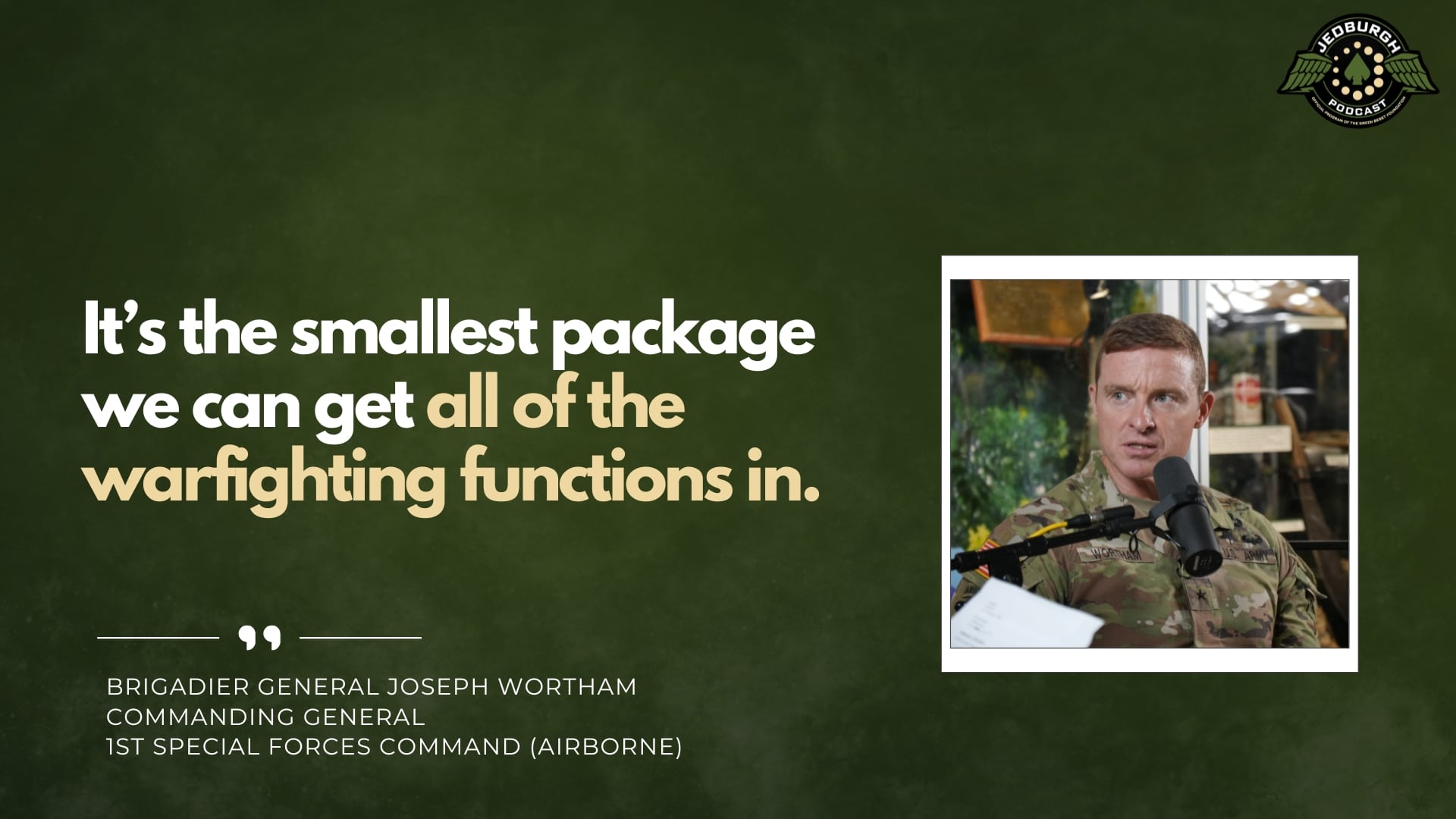
We’ve seen that in our history and are able to aim them in the right direction. To help do things for an army or a joint force. When you think about the breadth of what we ask, that core thing to do, I don’t think we can get it any smaller. We start looking at trying to break things up and do things that are smaller if you make it any bigger. Again, when you go back to the purpose, like what is an ODA built to do? You look at our history.
The core is good. We can debate, we can add each’s and or’s but we’re certainly gone back to the approach of adding built for purpose. If you ask Admiral Bradley, it was his guidance. Look at all of SOCOM and all of SOF, we weren’t going to redesign ourselves for just a new technology. We were going to take soft as it was designed to and then let the technology enable us.
The CSM said the last time we sat down with him, I think it made you famous. The quote made you famous. It was something along the lines of, “Good people make technology better.” If you field that to this core group of highly capable folks, whatever technology you’re going to throw to them is going to be enhanced to, even at times I think above its maximum capability.
Our warrant officer’s chief are our technical experts across the army. Not only in SF. We’ve had the opportunity to sit down with the 160th who are probably some of the most technical warrant officers that we have out there. Across the regiment, there’s been the discussion of robotics and how do we incorporate robotics, unmanned aerial vehicles, unmanned systems in and a lot of that’s come back to. Let’s have a warrant officer do it because they’re technical experts. I know that conversation, and we’re going to talk about it with General Slider and SWCS and some of the initiatives they’ve had around there.
When you look at the incorporation of probably what we would argue is one of the most critical enhancing technologies that we need to see at the most tactical level of the ODA is the incorporation of unmanned systems. Both probably in an offensive and a defensive capability. What are you looking at?
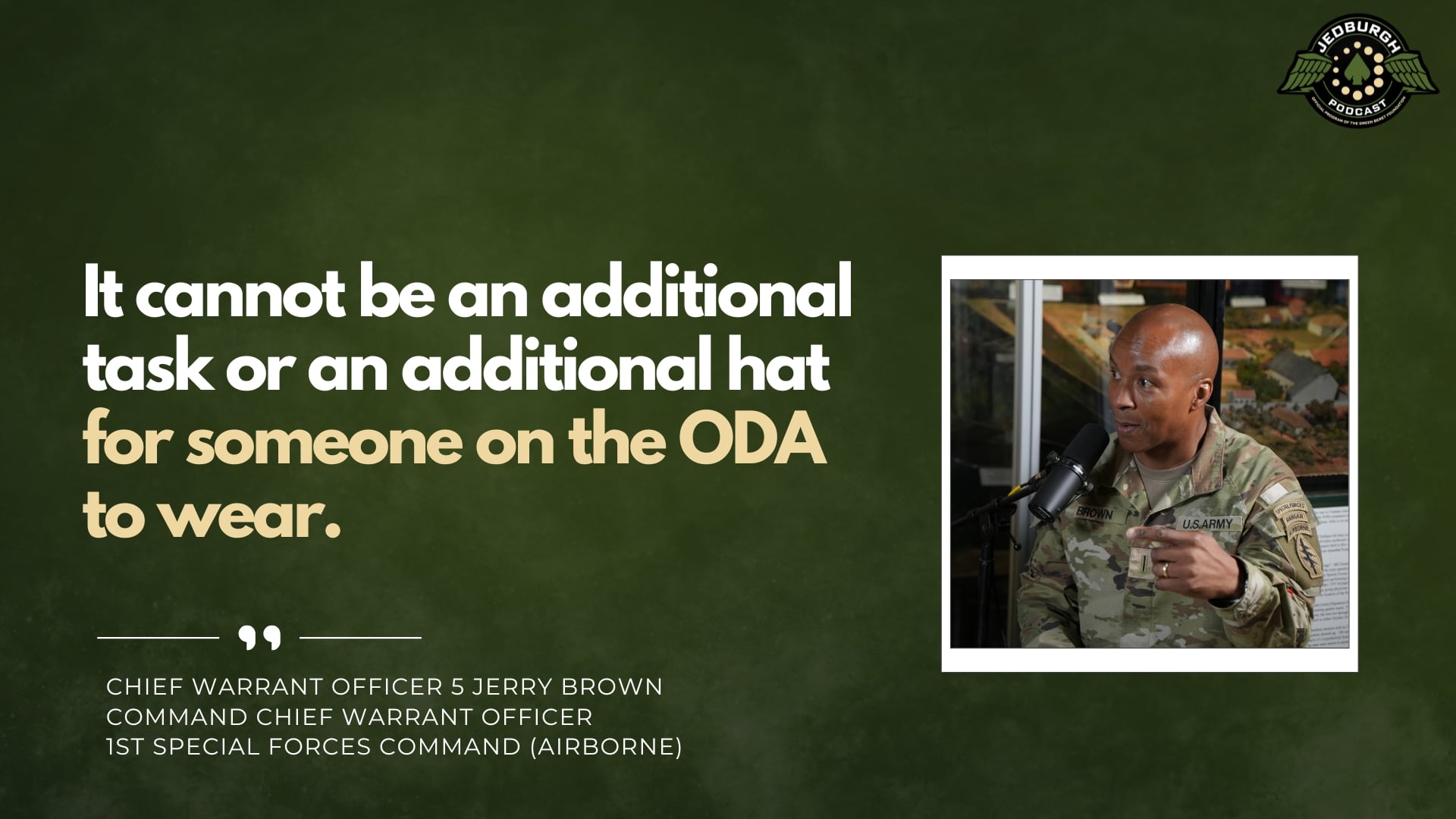
The amount of turnover and how quickly tech innovates requires someone to constantly train with industry, fuse military and civilian best practices, and provide the best capability on the ground.
To take an eighteen series as it exists and give them an additional feather in their cap or tool would be too difficult because they’ve got their already primary mission to focus on. We determine an additional MOS with someone who could focus on that specific tech capability. Whether it be ground, air, or just unmanned systems as a whole is the better approach to infusing or integrating what will be required of us in the future fight.
I’d add that in the model of, we talked about enabling, having tech enable a team. I think we will talk to the team about robotics. We are certainly integrating baseline, how to use unmanned systems just like we teach them how to use machine guns, anti-tank weapons. It’s a weapon system so there’s some baseline commonality and then we take and create, as the chief was talking about, these higher level experts to bolt onto them for specific missions.
We are not making it on a team. I’m making a technical MOS that resides at higher echelons just like you would see our historical EW or those things added to them for a specific mission. That’s where we see the value and then being able to help them not only from a technical standpoint as technology evolves quickly, but be able to advise commanders at echelon on the employment and capabilities of those, both for an offensive and defensive capability. We think it’s important.
Our forefathers made the SF warrant that preceded us being a branch. That was even before us, as being 18s. Before we were just MOSs. They saw the wisdom in being able to have a warrant officer and as the son of a SF officer lieutenant. If you go to my office, you’ll see a picture of my dad as an SF Lieutenant in Vietnam. We decided that didn’t bring the technical expertise and it didn’t bring the continuity that drove the capability and increased the capability at the detachment level. It’s like, “I have a lieutenant. That’s great,” but there’s a lot of things you have to teach your lieutenant.
The same thing if you apply that logic to unmanned systems. I have to be able to take that technical expert and be able to apply that and give that to them so it’s not a burden. They’re able to apply the technology at the pace and speed and integrate it. It is something that they can make them better, if that makes sense.
You mentioned the six-week cycle of required innovation that we’ve seen in the conflicts with Russia and Ukraine. Rapid advancement in a variety of different technologies. We’re learning a lot out of the current conflict with Iran as well about a lot of systems. How are you taking those lessons that are coming off the battlefield? We have the luxury now of near real time, which we didn’t have when we were younger. You’re taking those in near real time and being able to then incorporate them back in.
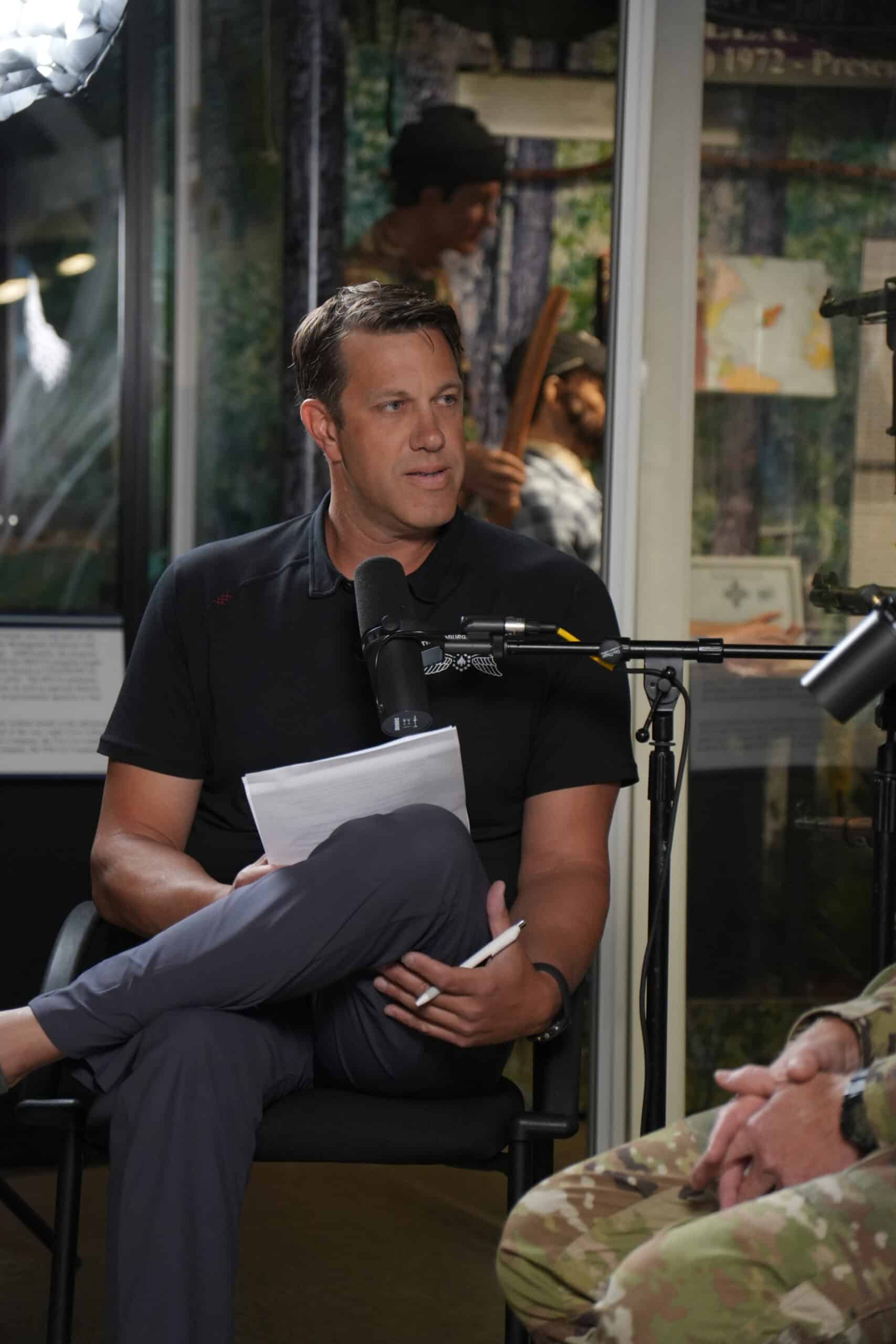
I’ll start and let the guys hop in. The approach that we’ve taken for the very reason that you said, we don’t have the time, is to focus it on how they are training. We talk about how they implement, and I’ll talk specifically in this case, unmanned systems because we’re talking about that fight. It’s putting it into the hands of all echelons at the lowest level. That’s one thing like you can’t train on something if you don’t have it. That was a challenge that we certainly have and we’re working through.
Getting the actual unmanned system, you pick the system, air, ground, water, that matter but you have to give it to them so that at least they know, “Sometimes what I do is thing one.” Thing two would be, alright, and then is making sure that they integrate that into what we call our baseline lethality standards. We went through every 03 unit of action, and to include not just our civil affairs, SIOP, and SF, but every, SEAD, EW, Space, and we baselined them.
We made sure that was a training task throughout their readiness cycle and their ramp up that they have to integrate those things. That’s thing two. Thing three, we’ve encouraged and asked the groups and the brigades to come back and help us see where not only have they changed their training pathway and ingested those. How are you changing your courses? Everybody knows that groups have their own advanced skills company that generates their own skills. Come back and show me the actual instructions and the things where you have changed how you’re doing those things. That layered approach. You first have to give them the systems.
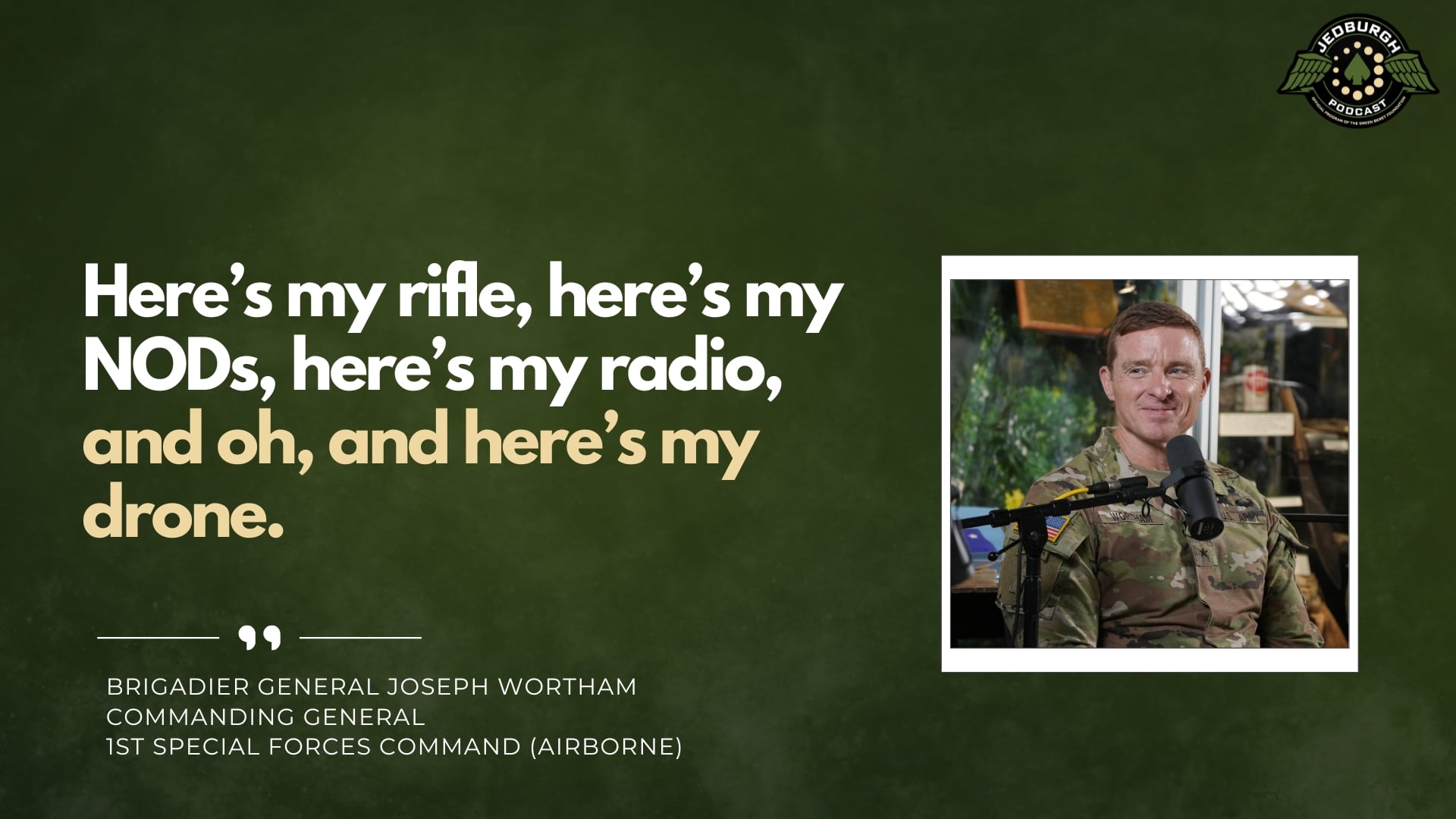
What basic TTPs have to change that we’ve done? An ORP can’t be out of sight and sound a couple hundred meters off the objective anymore. You have to incorporate and understand how some of those basic fundamentals of whether it’s patrolling or how you operate have fundamentally changed. We’re having a lot of those conversations and seeing it implemented in their training. Probably the best comment when we talk to team sergeants is, they’ll say, “The basics that us old people had to deal with is map, compass, and maybe had like a plugger if I’ll do it.”
You had a couple rifles and maybe a sniper rifle and the things that you were having to contend with. You weren’t worried about having an adversary that not only contested us in all domains. Some places are as good as us and some places are even better. How do you create a training environment that they feel like they are exposed to and feel the pressure, weight, and true capabilities of a peer adversary in a frequent venue? Those are the things that we’re creating for them. Those venues and giving them the resources or trying to get them to re-six in an environment against a peer adversary that truly would have those. Not only for them to use, but also that would be used against them.
I think our speed of innovation works at a couple of different paces, in my opinion. The first one is the speed of commands and communication. The second one is the speed of the industry, our training, and then there’s also at the bottom up, the ODA level. I’ll start with the speed of innovation at the command. What General Wortham has done a great job is he has created an environment where we communicate as fast and as flat as possible across the enterprise.
Information comes from the theater, whether it’s sit reps, O and Is or whatever, and we try to get that information out as fast and as flat as we can to the whole formation. That is as you would expect. There’s always a lag in communication. He does a really good job following it up with battlefield circulation. I’ve got to communicate, then I’ve got to circulate. What you see is, as we’re talking about things on the third floor of 1SFC. When you’re out on the ground at Fort Campbell or JBLM and you talk to a team or you go see a team on the range, you see the lags of that communication. You try to fill those gaps because it’s our job to resource them.
That’s where that connection to industry comes in, “Here’s where we’re at. How can we move faster and put some gas on this fire?” That has some issues as well. Where it works really well is like the ODA or the unit of action is the one that incurs the highest risk. First, they are programmed to want to use that stuff offensively. As they get on the range and they train and they realize they want to see sense and engage something as far and as fast as possible. They also start to think, “How do I protect myself from the same capability?”
You see a lot of great bottom-up innovation. I’ll give a great story or vignette of maybe somewhat intangible why we are changing. It’s impressive going back to the people we bring in. The guy who lives down the street from me, I first met him when he was a staff sergeant over a decade ago. He’s your stereotypical Green Beret. He’s 6 foot tall, 10% body fat. He’s got an applied physics degree. He does CrossFit workouts for fun. He’s everything he wants. He’s also a complete gun nerd.
When I would go to his house when he was a single eighteen Echo, I would be tripping over firing pins on the floor of his house. It was like IPSC targets and gun parts all over his house. He went to SIFC and then he nerded out on, “How do I kill somebody a mile away with a sniper rifle?” All the things you want from a great team guy. I went to his house and I walked into his nerd room. The firing pins have been replaced with diodes, wires and soldering.
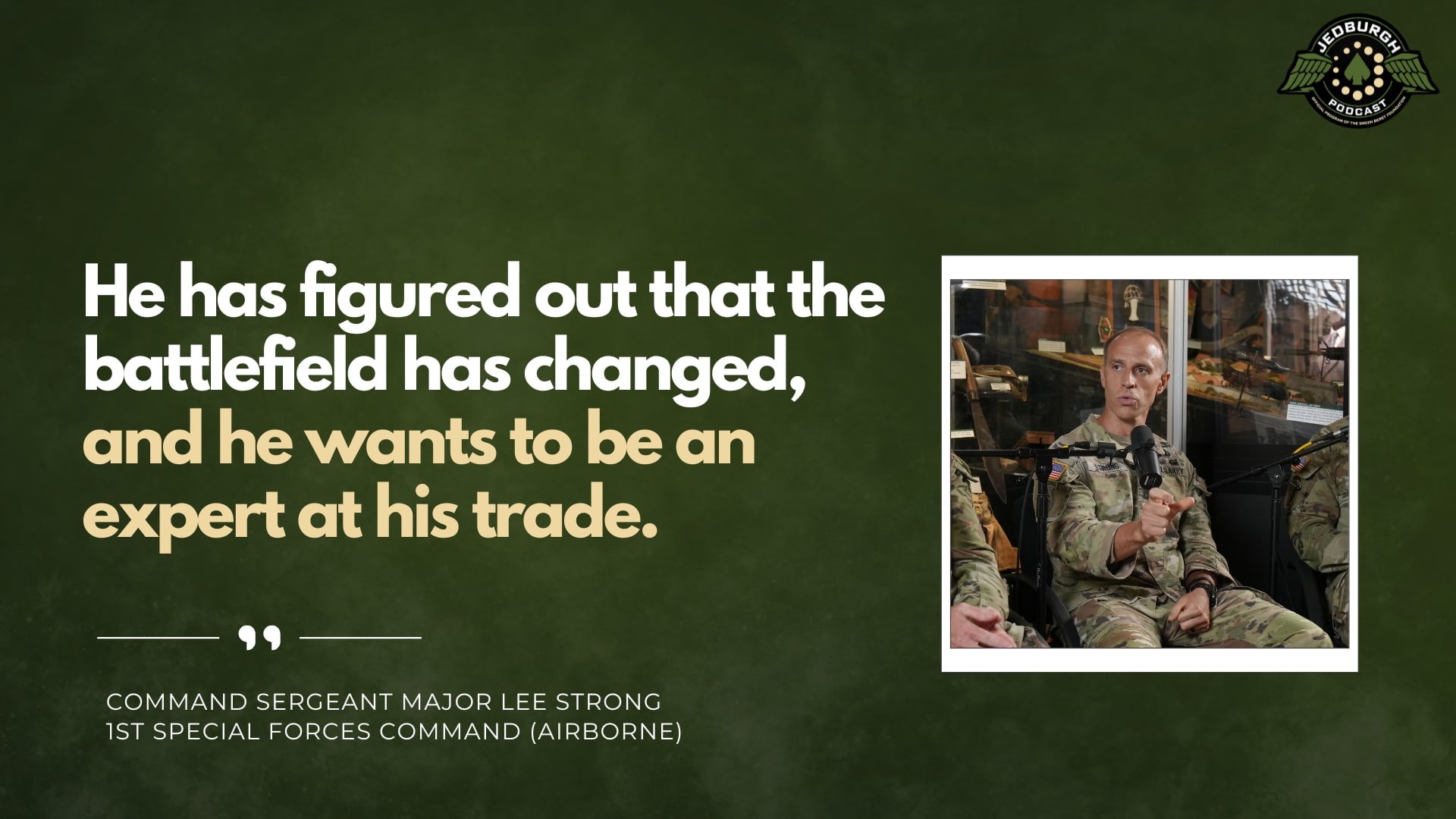
Listening to CSM and General Wortham talk, I’d circle back to your earlier question or comment about 180 alphas being the tech on a team. With that in mind, unlike any other warrant officer in the army inventory. We don’t have a system. If I think about a 915 Alpha, it’s a vehicle or it’s motor stables. If I think about a 420 Alpha, it’s all IPSA and admin actions. For a 180, that unit of action or that thing that we maintain is an ODA. In my mind, I distill it down to its basic form.
CSM, when you mentioned weapons, I think about an M4. Think about how long the M4 has been in our inventory and in existence. We’ve put different pieces on there, floating barrels, different rails, different hand grips. At its core, it is the same weapon system we’ve been using since Vietnam. We’ve just modified it over time to make it suitable for the modern-day battlefield or for what we need it to do currently. I think about that the same way that we talk about the ODA and adding capability to it. Whether it be unmanned systems and then giving them the tools that they need to be successful. I wanted to give you that little addition to your comment earlier about the 180s.
When we talk about the capabilities, the modernization, innovation, rapid fielding initiatives, the department of war and the army, I would say we are always talking about, how do we get things through industry faster? How do we cut the red tape? How do we get it into the hands of the warfighter? The environment we’re in now is vastly different from where we spent twenty-plus years in the global war on terror.
In a lot of ways, you referenced the Jedburgh’s and the capabilities they needed when they parachuted into occupied France on the night of June 5th and the 6th in 1944. What was their job? That was LSCO. They had to find a way to fit into LSCO. Where do our modern special forces capabilities fit into the large-scale combat operations that we’re seeing on the news every day?
That’s a great question. General Ferguson, when he was in this job, and now it’s his DCG. He started us on that, “Let’s think about how we do that.” We’ve been at this. What is our role in current modern conflict? We’ve been optimized, talked about over 20-25 years for the steady state counter-terrorism thing and we’ve really changed our structure, formation training, all of those things that I can think of. I’ll give you one that’s near and dear to every ODA, SLFC. It didn’t exist pre-9/11. We didn’t have the course. We didn’t see the need and we evolved the capability to do the thing. That’s just as I used to talk about training and adding a capability to all teams.
When we think about what our role is, we’ve gone specifically to a couple, and you’ve had one of the potential JTF commanders, General Anderson, on here as a Corps commander. We’ve talked to General McFarland, General Admiral and a couple of Corps commanders. We’re like, “What do you need us to do? How do we help you as a JTF or a Corps commander solve the problems that you have?” What we did with the Jedburgh’s or what we did in 1st to the 10th in the Cold War, some of those things have evolved. We’re having that evolution. What we think, what we’re hearing from and what we’re aiming the force at are three basic things.
A JTF or a core wants us to be focused on deep sensing and impacting their key things that they want to get after in their deep area. They’re focused on trying to shape the fight in the main battle areas where divisions, brigades conduct their fights or the Marines or whoever. If you think of us in what we would call the core deep is being able to shape those operations, everything from what you would see from the Jedburgh’s to sabotaging rail lines, fuel lines, and you watch the Ukrainians do this. They’re shaping that deep area for them. We can do that with a partner, without the partner.
Probably, what’s new for us, we talk about long range fires. You’re seeing that evolution of warfare. That’s something that we saw in the SF groups going to have organically in the next 2 to 3 years. It’s some things that we’re doing. Being able to shape that deep area for a JTF commander or a core commander so he can help control the timing and tempo of that fight, it’s important. That’s thing one. You can think of all the ways from your experience how we can do that by, with, and through.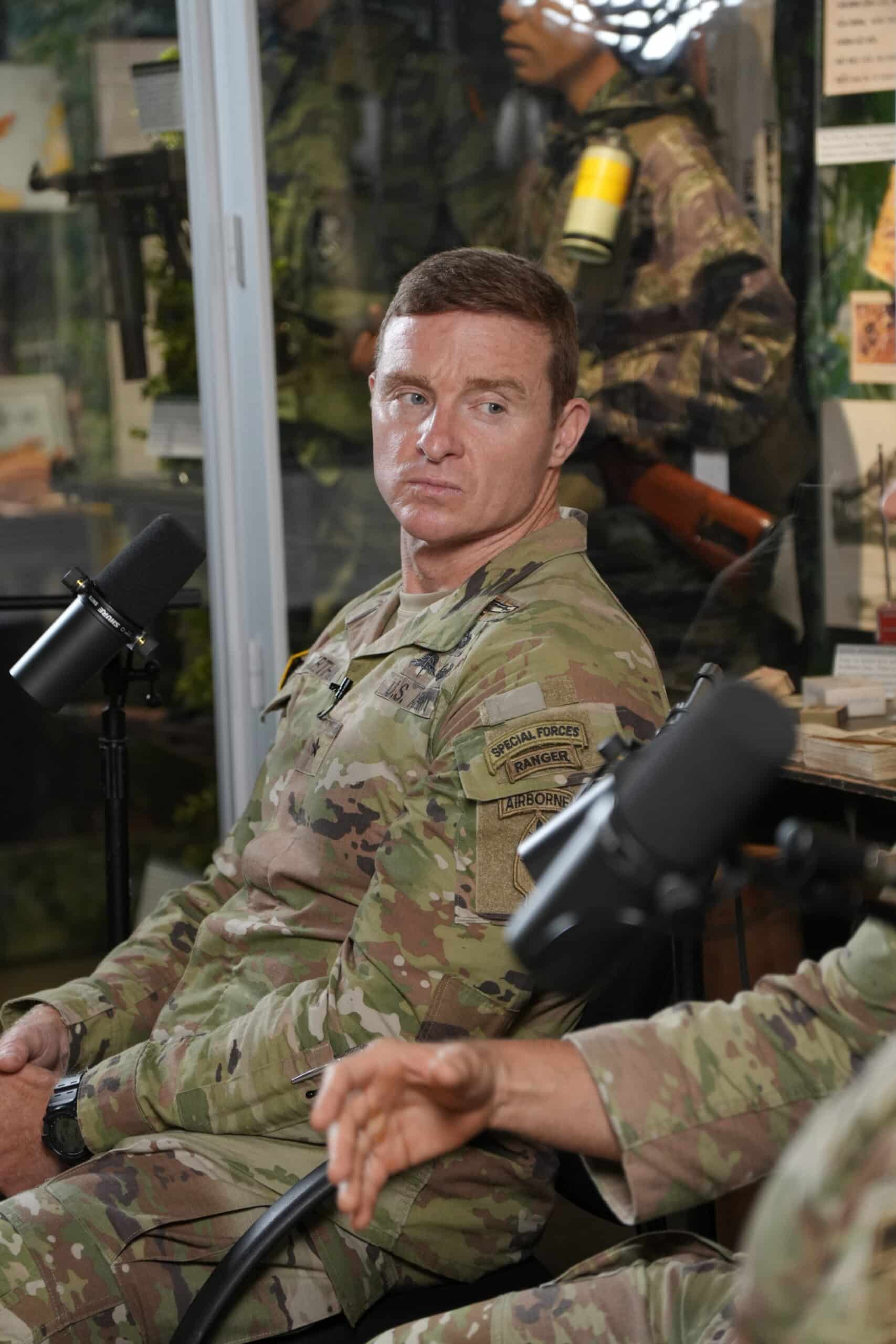
Thing two, we talk about psyop. You talk about influence. It’s taking our historic CT and campaigning influence operations and capabilities and focusing it on what we saw ourselves do in history. It’s focusing on what we’re hearing from the Corps commanders is, “We need to help us influence the decision-making of my adversary. Who’s the Red Force commander on the other side? Help me to influence how he makes decisions or she makes decisions so that we can buy them time in the operations.”
When we first asked 18th Airborne Corps Commander, General Anderson, he said, “It could be as simple as I need a fifteen-minute time window to move a force or do something.” If you can get them to see doubt, disbelief, and cause them to either send a resource or capability someplace else, then that helps them with their fight. That’s the thing two. Thing three that they think about when you think about our civil affairs capability, they ask us. They think about how we help them consolidate gains and how we help them bring in the civ mill infrastructure and help them to understand how to use that.
You can think of that just like you would in the example we talked about with the JEDs. Where are the bridges and the railroads? We’re out in front of the army corps that were moving across Germany afterwards. They wanted to know where all that stuff was so it helped with how they planned. More importantly, when you look at it from a partnered or allied perspective, how do we get our allies to free up some of their combat power so they can focus it forward on the main efforts. Those are the three bins as I’ve talked to those three commanders that they’ve asked us to do.
We’ve tried to focus those lethality baseline standards on answering that problem or that question. That could be applied to any modern-day ground commander. It could be a marine commander or whatever. It’s being ahead of them, being in their deep space, influencing an adversary commander’s decision-making process, getting inside their OODA loop, if you will, and then helping them with leveraging our partnerships to help them consolidate their games and conserve their combat power.
I think the best description I heard came from General Anderson. He came out to our Commander Decision Roundtable in 2025. We’ve read the doctrine, and it’s your interpretation, unless you’re familiar with the doctrine. As he described it, he talked a lot about pace, tempo and the values SOF could bring to attrit the enemy so that a core is not facing an enemy at full capacity. I’m a C average student, so he’s describing our own doctrine to us.
If we think of a boxing match, that core is in that twelve rounds, head-to-head opponent on opponent. Imagine our team gets to go back to the corner and get a drink of water and get touched up in between rounds. On the adversary side, there’s somebody in the corner just giving you a thousand jabs to the ribs, wearing down the body before you got to go back in the ring to fight the main opponent. I think we’re off in the corner giving somebody a thousand jabs to the ribs, giving the core an advantage as it gets to start the next round.
Your question led to industry and you talked a little bit about the rapid fielding initiative that we’re familiar with and GWAT offer. We didn’t start the way we finished it. We didn’t have everything that we needed when we first set foot into Iraq or Afghanistan. Over time, we adapted. Industry adapted to our requirements to meet the need of the warfighter on the ground. If you think about it, I recall driving down certain MSRs in a light-skinned vehicle, a Toyota Tacoma.
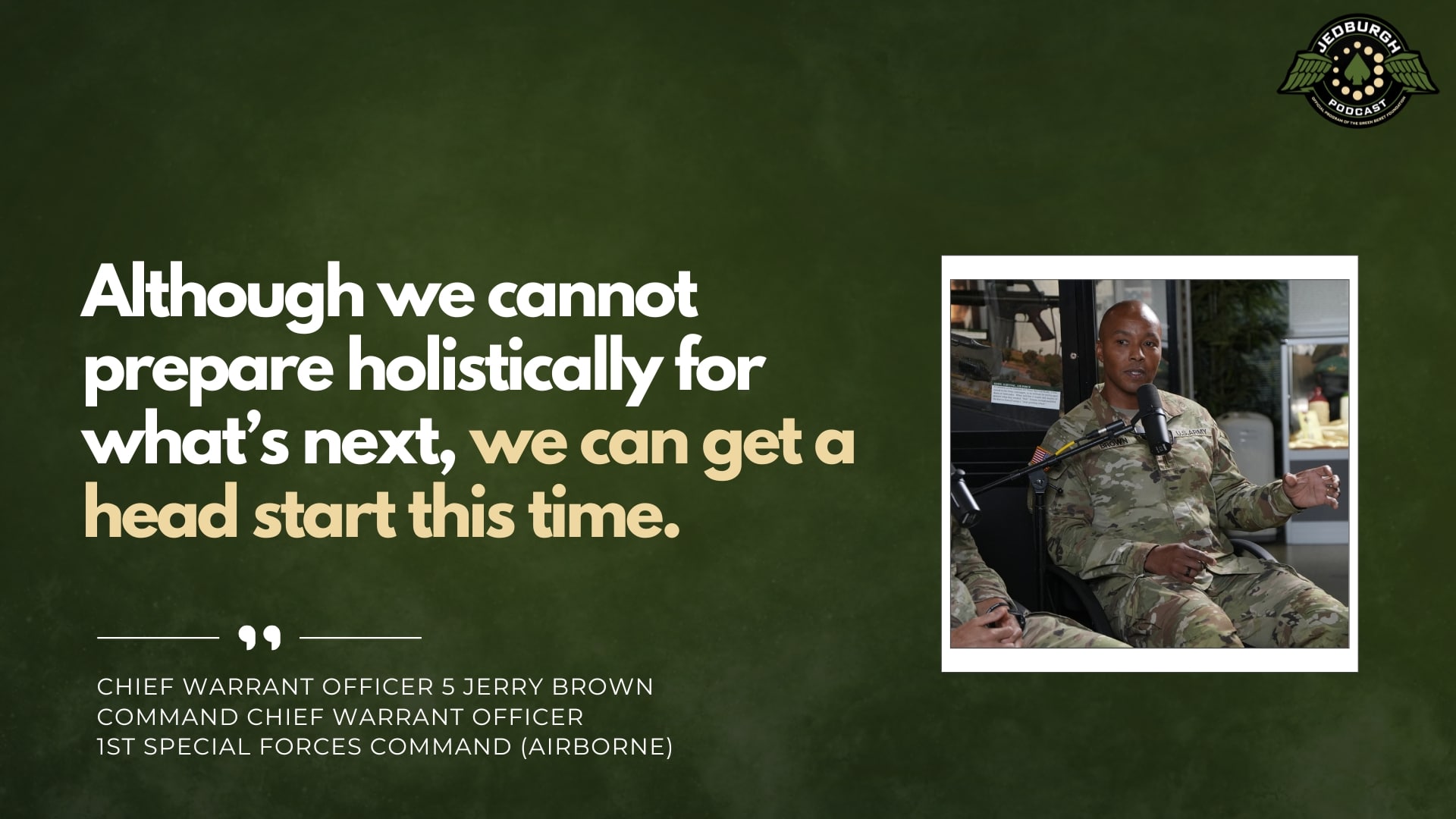
I think everything else will catch up with us in time, but we want to give the ODAs and our units that we put on the field a head start. We want them now to be looking forward to what they might have to do in the future fight. As we fast follow what’s happening in industry, it will continue to catch up with us and provide us what we need to be successful.
That’s good. We have a conversation about creating an environment for those units, the teams, the units at echelon so they can onboard the technology as it evolves. They don’t have to figure out what to do with it. How do you start to think about it now knowing that when you go to war with the army that you have? As you stay in it longer, the technology is going to come. You can give a bunch of historical examples.
He talked about the current fight. You can go back to WW2. The army that we deployed to Africa early on was not the army that hit the beaches in France from equipment to those things caught up with. Being able to create in their minds, “How would I use this? What are the TTPs?” Especially when you think about unmanned systems, because that’s new. When I talk to the formation, we talk about unmanned systems.
The closest comparison that I have that’s common to us in the military is the machine gun. When it’s invented, it’s invented at the end of our war in the States. It’s not fully adopted onto the next major theater in France in that conflict and in WW1. We didn’t know what to do with it. We put them in big machine gun battalions. They were in battalions. If you look at Ukraine, the parallel I personally draw is Ukrainians make battalion size, large sizes of unmanned systems battalions. That’s how they fight.
You fast forward from WW1 to WW2, there’s two machine guns in every squad. We went from, “This is a new technology. I don’t know what to do with it.” We put it in these units and it evolved in about 30 years to, “It’s in common in every squad. We got a bunch on a team.” We’re on that same journey with unmanned systems. How do you get them to be able to adopt those systems so that we can shorten the timeline between 1918 and the next war? How do you create that environment so they can onboard that technology quickly if we are asked to do that?
One of the things that I think we struggled with or at least felt the effects of at a very tactical level throughout the global war on terror was this. Everybody was synonymous, like, “We got a problem set.” Grab a SOF unit of action. A lot of times, it didn’t matter. It didn’t matter if that was a SEAL platoon or an ODA or MARSOC team. They just said, “Throw somebody in,” and they’ll do the same job.
The reality is, you’re responsible for force readiness and training of the special forces teams in the army. We do some things that Navy SEALs do. We do some things that a MARSOC team does, but your core capabilities are slightly different. How are we doing in today’s conflict in differentiating the tool that is required to then go to the fight?
I think, if you were to step back in, you wouldn’t see that anymore. As we’ve gone back and you look at the NDS and peer capabilities, it focused us respectively across SOCOM on the initial roles that we were born in. When I think about SOF, we were all born during combat. We do things in competition, certainly. We were born out of a need. When you look at our histories and all of our origins out of combat.
In those founding units, it was usually a very niche capability. You talked about NSW and the things that they do and all those things. When you go talk to them, I think when you look across, SOCOM at large, very much back to your core purpose. As Admiral Bradley’s guidance, focus back with our services. That’s been his guidance for like, “I need you to focus on how you can help your service.”
We’ve talked a lot today about how we help the army. Acknowledging that when we deploy, we deploy in support of the Joint Force. I would imagine when you have that conversation with the folks in NSW. They’ll be able to tell you a lot of their focus is back in what you would expect it to be in the water, in that domain, and how they support the force.
I agree. I think going back to our core purpose and our relationship with our services has helped guide that.
We got a couple minutes left, and I want to focus on the culture of the regiment. Everybody here referenced the importance of the people and the quality of the people and how we recruit, assess, and select our team members who come on. We tend to focus in these conversations on Green Berets, but our civil affairs and our Psyops folks are a critical part of what we do as an organization. When you look at the culture of the regiment from your perspective, 1) What do you see? 2) What do you want it to be?
That’s good. Your comment about it’s more than the SF regiment, where three regiments, but even much more than that. We know there are 23,000 people in the 1st SFC. A long way from the 2,300 slots that Aaron Bank got in 1952. We’re composed of every Army MOS. We have an MI battalion. We have a sustainment brigade. We have most of the groups. If you looked at an SF group, about probably 60% of them are non-18 series.
Everything that we do is a whole team, whole culture effort. That culture piece is important, just not for the SF regiment or the CA regiment or the psyop regimen. That group culture, that 1st SFC culture is really important because we can’t do any mission without all the parts. When you ask me what I think of our culture, the first thing that comes to me is, we think about us as a regiment. We are masters of the basics. Everything that we do, we focus on being excellent at the base. You’ve heard the SMA talk about that for a long time since it’s been in that seat.
When I think about our people, I think about how they want to be good at what they do.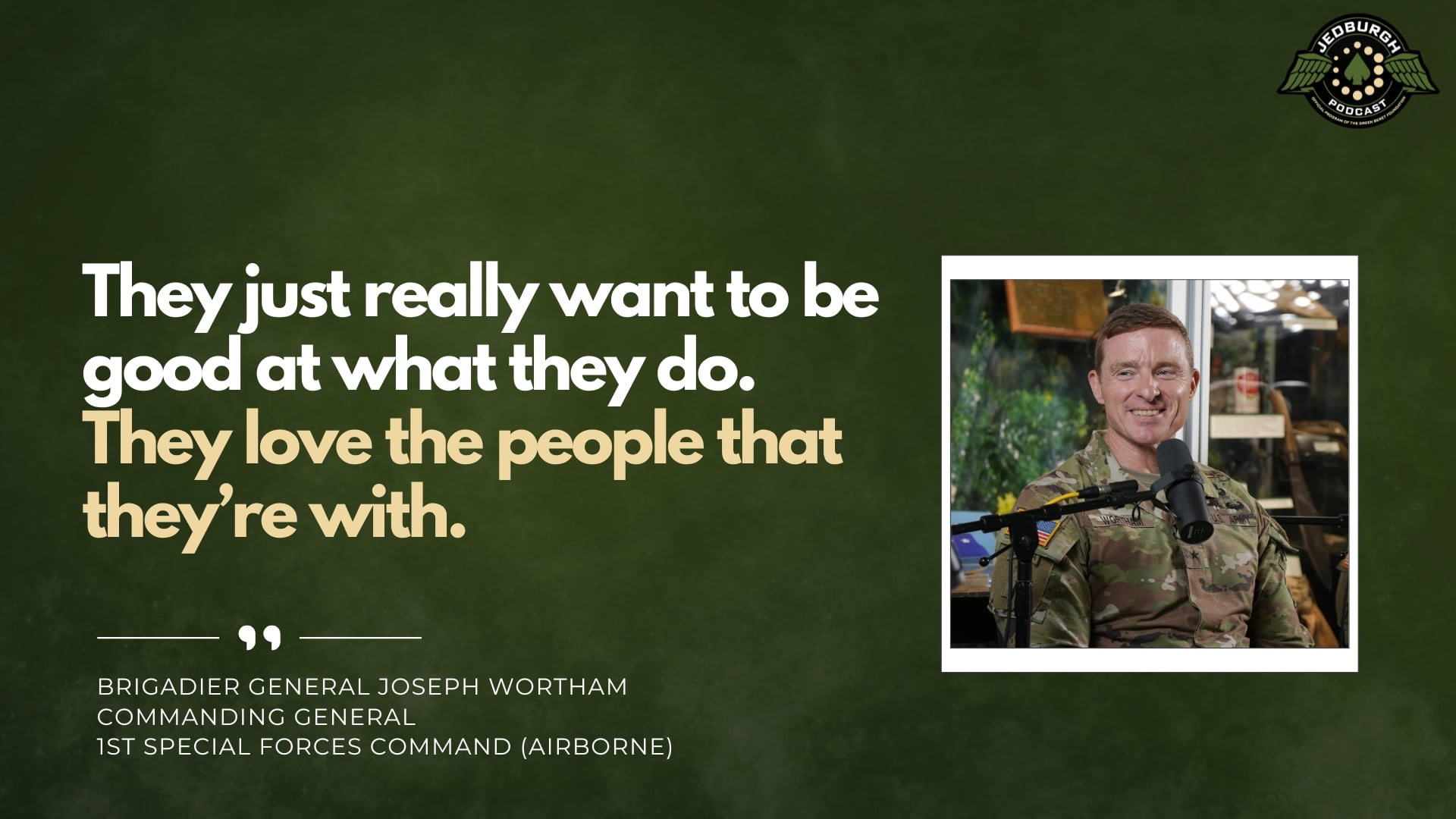
We are masters of the basics. Everything we do is focused on being excellent at the fundamentals, while maintaining genuine empathy and respect for our partners and allies.
When you think about what the nation has asked us to do over time, it is that culture that was formed during the first groups as they stood up from the people that started that team mentality. Even if I can go to any section in the building or I can go to an MI battalion. I can go to the sustainment brigade and that team collaborative culture about how they want to solve problems. Be really good at what they do and be good teammates. That’s how I think about it.
I think we have an awesome healthy culture, and it’s getting better every day, but that’s not to say we can’t make improvements. At the core, we all want to rally behind the beret and be the quiet professionals and live up to the Kennedy quote, “Symbol of excellence. Badge of courage. March of distinction.” What does that mean to each one of us? A while back, I think it was March. I did an offsite with all the CSMs.
We went down to Fort Benning, Georgia, and we did it intentionally. We spent the morning to remind ourselves of where our journey began because all of those guys at OSIT with their shaved heads in week eight of infantry basic training were all of us many years ago. It was me and all the group and some of the battalion CSMs. That was very eye-opening because it was a reminder of our own history, our own lineage as individuals, but also to our regiment.
At the same time, we were doing all the offsite conversations in the 75th Ranger Regiment headquarters. We were getting to see another unit’s very awesome, very strong culture. We asked the Rangers, a couple of their first sergeants, their S3 sergeant, me and a few others, to give us an outsider’s perspective of us because when we get in the room, we talk about ourselves. It’s all like, “We’re great,” and high fives. In some ways, I was very pleased with what another organization had to say.
If anybody has any doubt of what a strong, healthy culture is, go down to Fort Benning and visit the regiment. In some cases, they gave us some tough love, and it forced us to take a critical look at ourselves. What we found was, we identify a lot with what we do and our operational tempo, but we were leaving out some of the most important things of who we are and what our values are.
On the backside of that, two of our battalion CSMs, CSM Josh Thompson from 2nd Battalion 3rd Group and a CSM Roger Kassane from 210, have taken on a project. They’re going to better define what SF culture is and our values in some culture statement that all of us can rally behind the beret to help strengthen that culture. At the core of it, what we see is you visit any soldier at any one of our formations. Not just an ODA. They all want to be expert soldiers. They want to be the best at their job.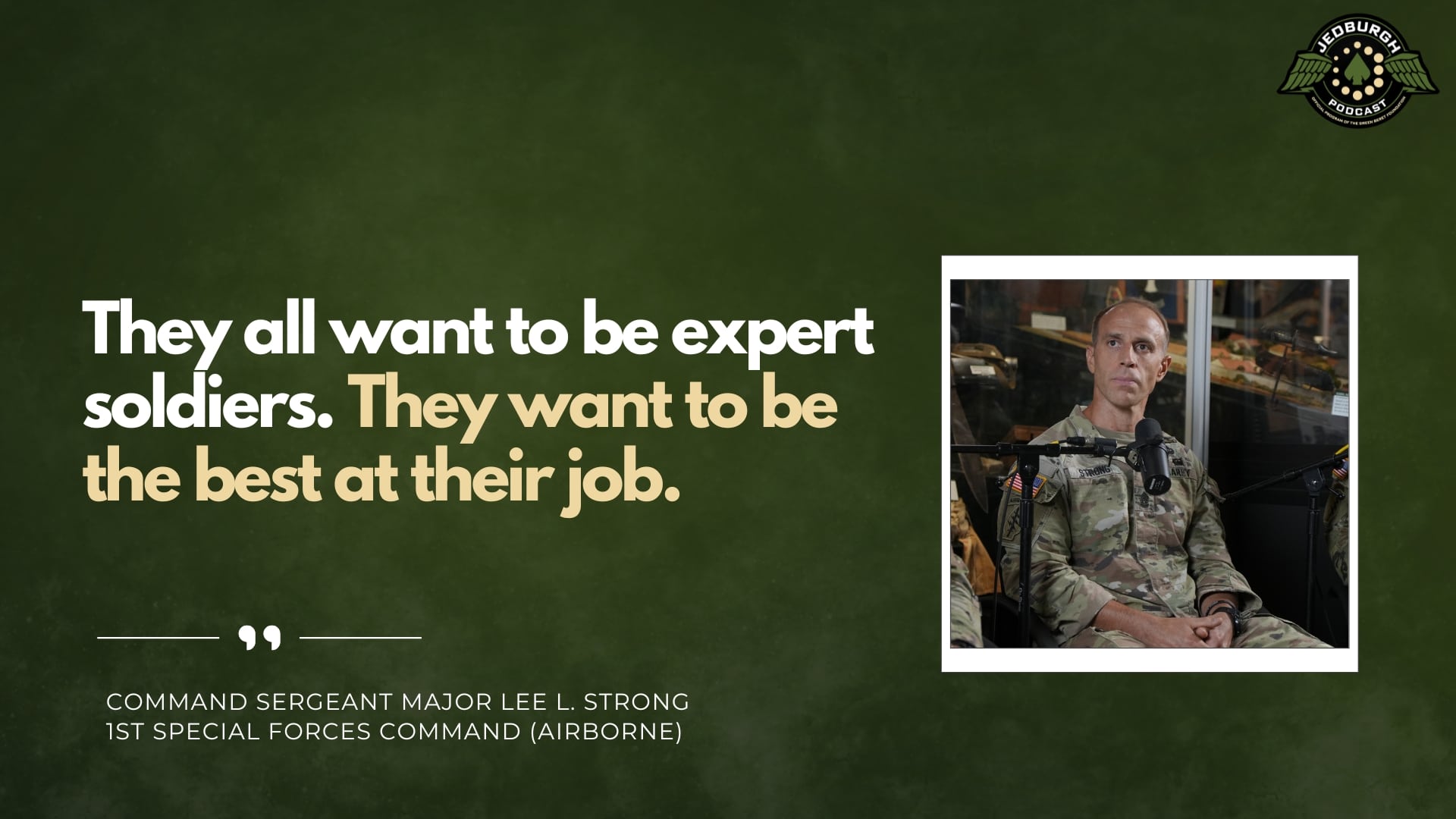
They know when they’re in this organization and these units, they’re going to be expected to go to the places and do the things that, quite frankly, not a lot of other people want to do. It’s hard places in the cold, in the wet, in the rain, in the trenches, in the grit and the grime. We’re uniquely positioned for that based on the people we bring in that are willing to do that fight. You go beyond that. They’re all here for a very similar reason, and that’s each other for that sense of service to their faith, their family, and each other. It’s super inspiring to be around. To answer your question, we have a great culture. It’s going to keep getting better every day.
In my opinion, our culture is the best it’s ever been. Let’s think about our day’s singular enemy, singular focus, whether it be Russia. Our national defense strategy would suggest that’s our pacing item. That’s who we’re up against. This generation of SOF, they have their hands full. You name a country and they present a threat or an emerging threat to us. Yet we have people that volunteer to continue to join our rings every day.
As a matter of fact, sometimes two and three times, they’ll go to selection if they’re offered the opportunity to do so. Once they arrive or get with it or are allowed to join our ranks, they stay. To CSM’s point, they stay for the people they get to work with to get the most challenging jobs, the most difficult work on the planet. They continue to strive and succeed at doing those things, the hardest job on our most difficult day.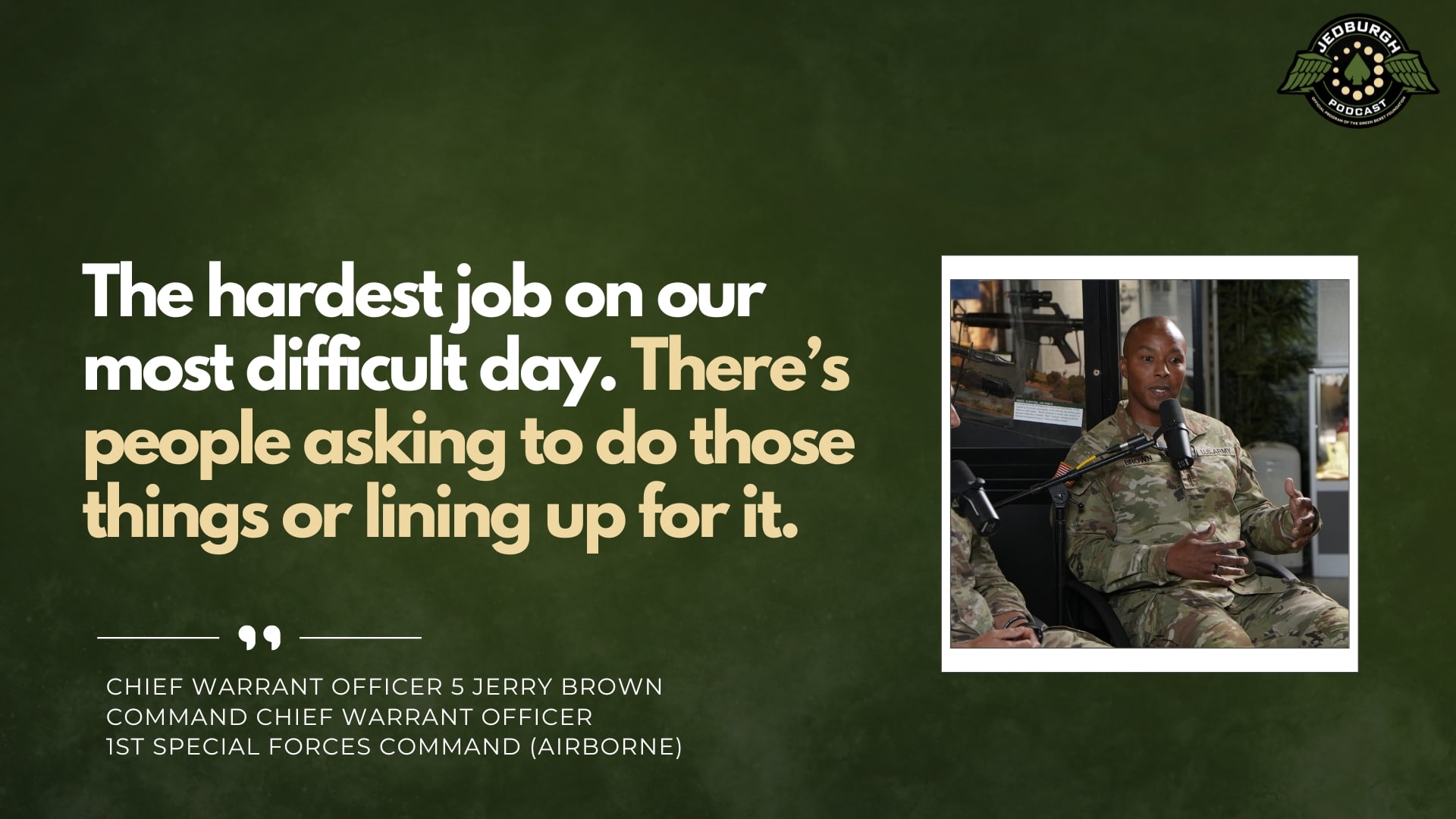
There’s people asking to do those things. They’re lining up for it. I would prefer that our culture throughout history has been something that people have been drawn to. They want to work with the best and they want to be given the most difficult tasks to accomplish. They will continue to do so. It’s our job to ensure that we give them the tools that they need to continue to be successful in the modern battlefield.
I’ll tell you, that culture exists or that culture doesn’t end when you leave the regiment and you take the beret off. You take the uniform off and be on the other side now. There’s a lot of days where I look at our team in FR6 and my security company and on the show, and I will. They’ll tell you I yell at them and probably opine on some of the cultural standards that I want to see amongst our humans.
We’re very fortunate in my company to have a bunch of SF guys. A couple guys out of 10th group, 19th group, and 20th group. We’ve done a good job of building that and then bringing everybody along. When I look at the organization, I look at the command, what is instilled in you having the opportunity and the honor to serve in this command, it sticks with you for the rest of your life. It becomes a pinnacle and something that you look back on as an honor.
I appreciate and say all that to thank you for spending more time with me here, getting this message out and showing all of those who are serving today, want to serve in the future, and those of us who are on the back end of service. The organization remains strong. It stands ready, and we have a lot of work to do out there because we have a lot of people who want to take away our freedoms and our ability to be the world’s sole superpower. With you guys there, I feel pretty good about it.
Thank you. We appreciate the opportunity to spend some time with you. We get the 80,000-foot view of the command. I’m glad you’re getting out to the other O6 commands that are out there to hear their stories, too. To hear from them is important. The benefit that we get to sit here is we get to see all of them. It’s like having eleven different kids.
Everybody loves all eleven. On others’ days, he’s your favorite or she’s your favorite. They’re all our favorites. Being able to tell it from our perspective is a perspective, is what I’m trying to tell you. We encourage you, and we’ll get to other folks. I know you’ve talked to some already, but getting their perspective is also important.
Thank you and I appreciate that support. We’ll get the intergroup rivalry going. Don’t worry.
Green Beret Foundation
P.O. Box 25138
New York, NY 10087-5138
Note: Please use USPS mail or priority mail. Do not use FedEx.
Green Beret Foundation
10205 US Hwy 15-501, Unit 26-8
Southern Pines, NC 28387-4301
Call: at: (844) 287-7133