On September 11, 2001, America was attacked. Nearly 3,000 lives were lost. As night fell, the world waited as America planned their response. Within weeks, a small force of Green Berets, CIA Paramilitary Case Officers, 160th Special Operations Aviation Regiment flight crews and Army Rangers would launch one of the most extraordinary unconventional warfare campaigns in military history.
The first Special Forces units who touched down in Afghanistan would forever become known as the Horse Soldiers.
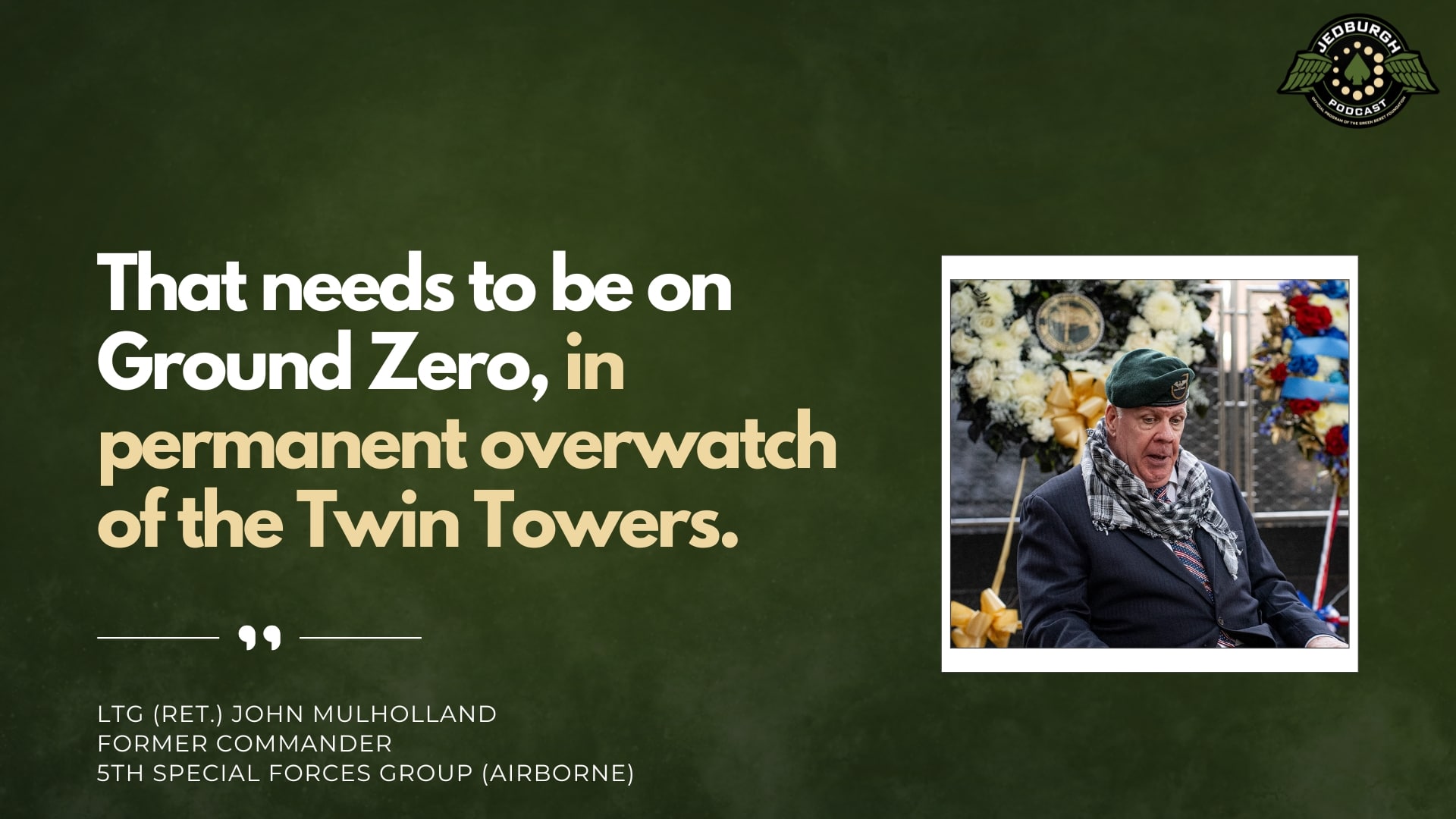
Twenty-five years later, their legacy stands at Ground Zero, where a lone Green Beret on horseback remains in permanent overwatch of the Twin Towers, their memory and the legacy of all those lost.
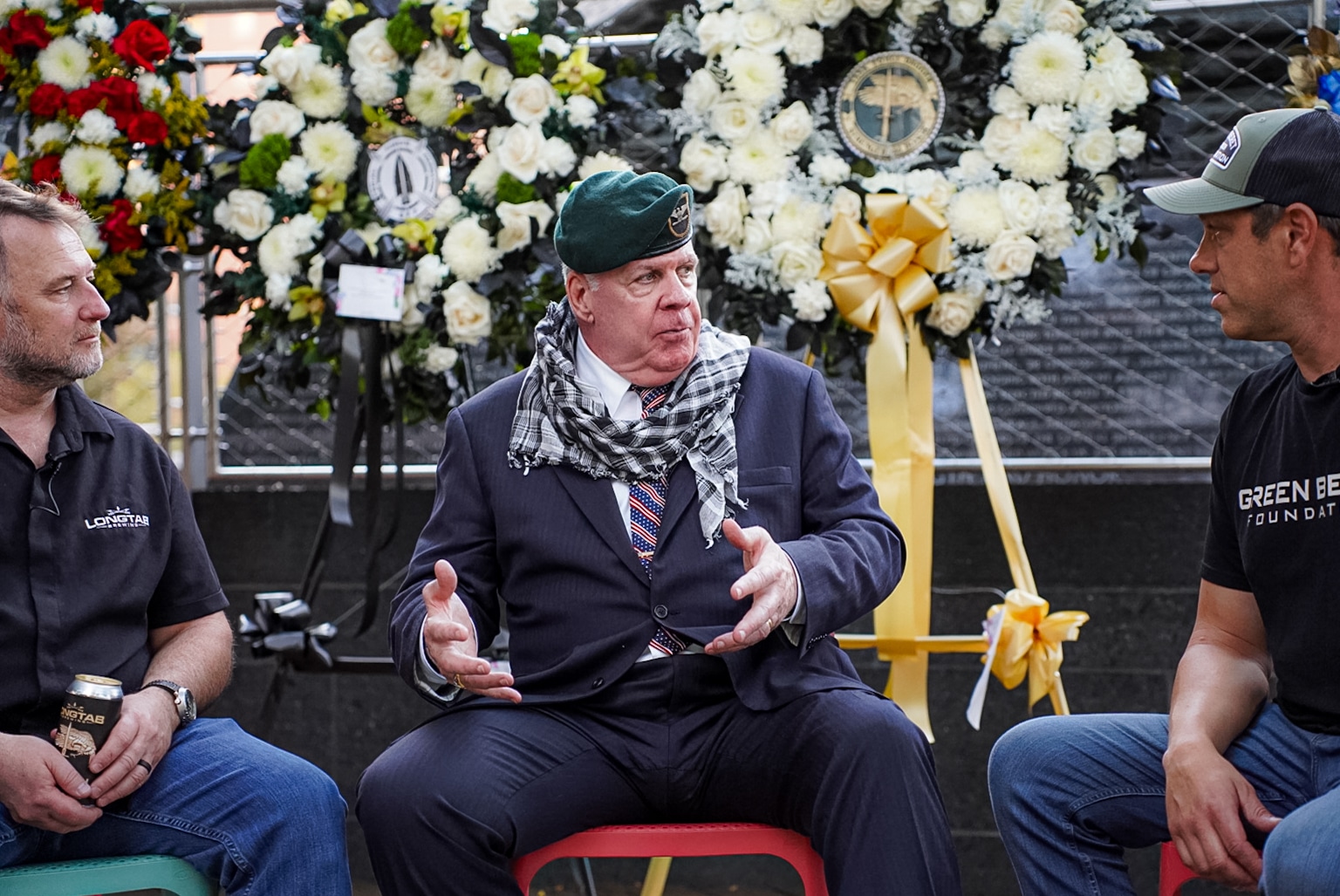
From the base of the Horse Soldier statue in New York City’s Liberty Park, Fran Racioppi sat down with retired Lieutenant General John Mulholland, who commanded 5th Special Forces Group on September 11 and led America into Afghanistan. LTG Mulholland shares his firsthand account of the attacks, the mission into Afghanistan, and the extraordinary effort to bring America’s Response Monument to Ground Zero.
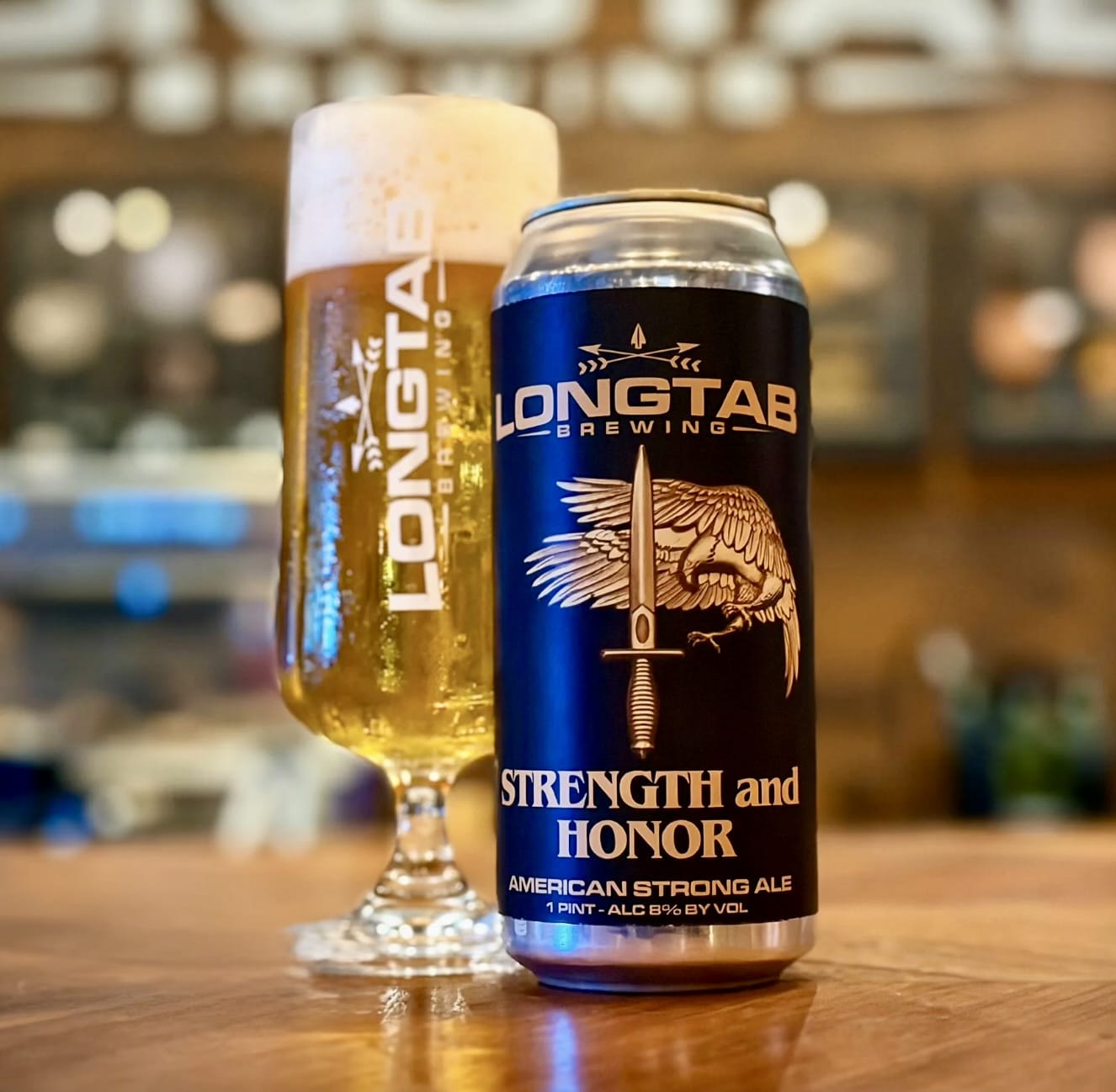
Also joining us is Dave Holland, Green Beret and founder of Longtab Brewing, whose personal connection to 9/11 and service in Afghanistan inspired Strength And Honor, an American Strong Ale honoring the Horse Soldiers and their legacy.
This is America’s response, a tribute to the men who achieved the impossible, and a promise that their service and sacrifice will never be forgotten.
Strength and Honor! De Oppresso Liber!
A portion of all proceeds from Strength and Honor is donated to the Green Beret Foundation, supporting America’s Special Forces Operators and their families of all generations.
—
—
General Mulholland, and Dave, we’re here at the Horse Soldier Statue, the tribute to America’s response to the 9/11 attacks. We just had a beautiful ceremony spearheaded by yourself and a number of other senior leaders from USASOC and the Special Forces community. You were in command of 5th Special Forces Group on 9/11 many years ago. Talk about that day.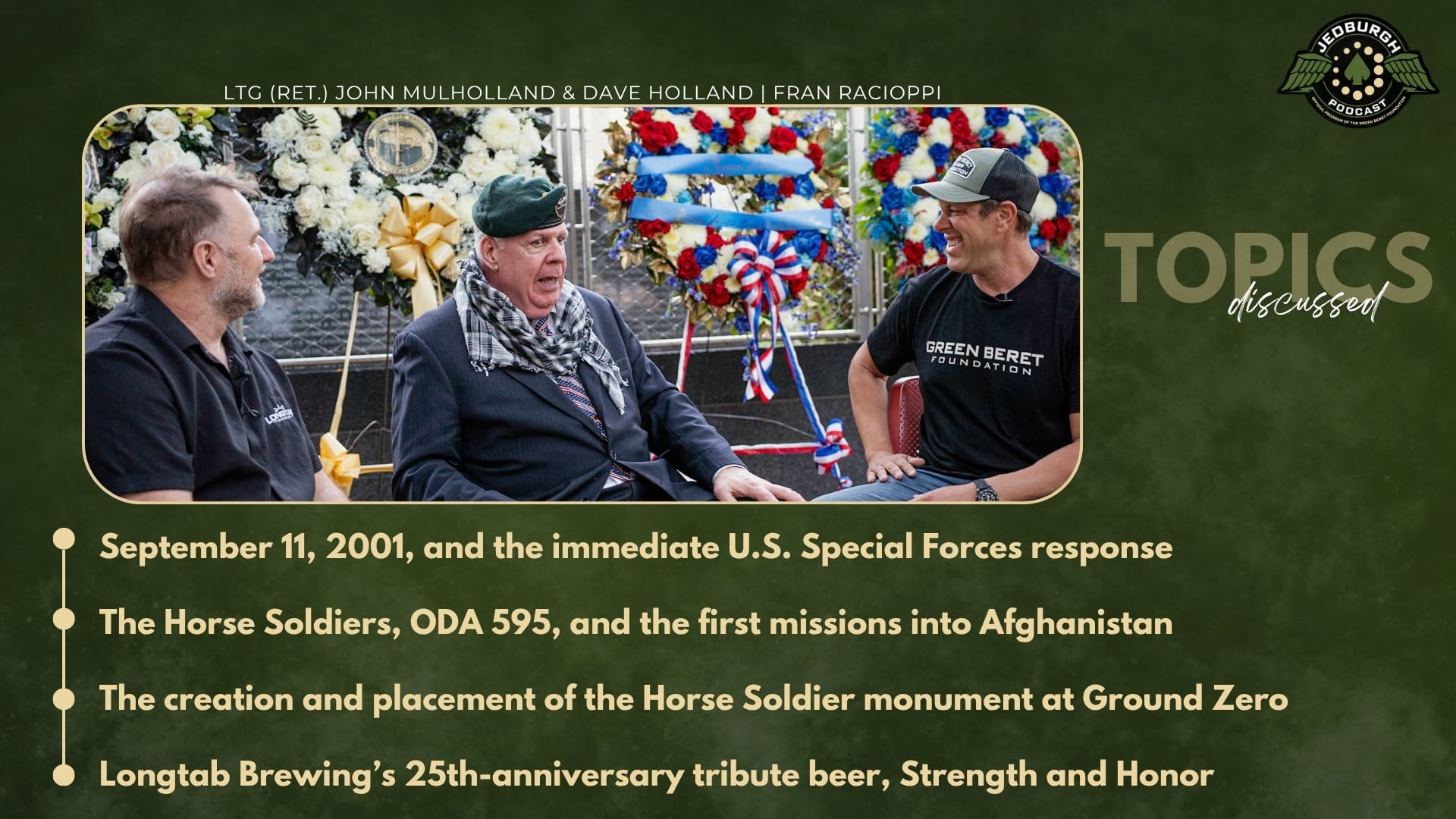
A hard day. A terrible day. I had just taken command of 5th Group that July. I was brand new to the group. I had been a team leader and company commander, B team commander in 5th Group, but I left in 1986. I had not been attached to the group since then. I didn’t know anybody. In those early days, I was still just trying to figure out who’s who, where are my strengths, where are my weaknesses, all the things a commander would want to go through, get to know his people.
My biggest challenge at the time was we had no money. SF was poorly resourced back then, terribly. I had already seen training deficiencies I wanted to get after. My major effort then was, how do I get money? Who do I have to go see? Do I have to go to Tampa or Bragg, where I get money? That day, I had finished doing PT. I had come home to get cleaned up. My wife, Miriam, because we’ve always had Good Morning America, I think, the news show she had on in the morning for her to watch.
When I started coming down the stairs, she said, “A plane’s just hit one of the Twin Towers.” I was still on the stairs. The thought that went through my head was, “That’s got to be a horrible mistake.” In my memory, I recalled that either during World War II or thereabouts, a B-25 Army bomber flew into the Empire State Building. A terrible accident.” That came to me for some reason, like, “It’s got to be a terrible accident.”
Before I can even finish that thought, because we’re looking at the TV, I’m on the stairwell, the second plane went into the towers. It was horrific. The first words literally out of my mouth were, “We’re going to war in Afghanistan.” I’m not even sure why I said that. We knew of bin Laden. We knew he was a threat, but we were primarily focused on the classic Middle East, where most of the terrorism was coming from then.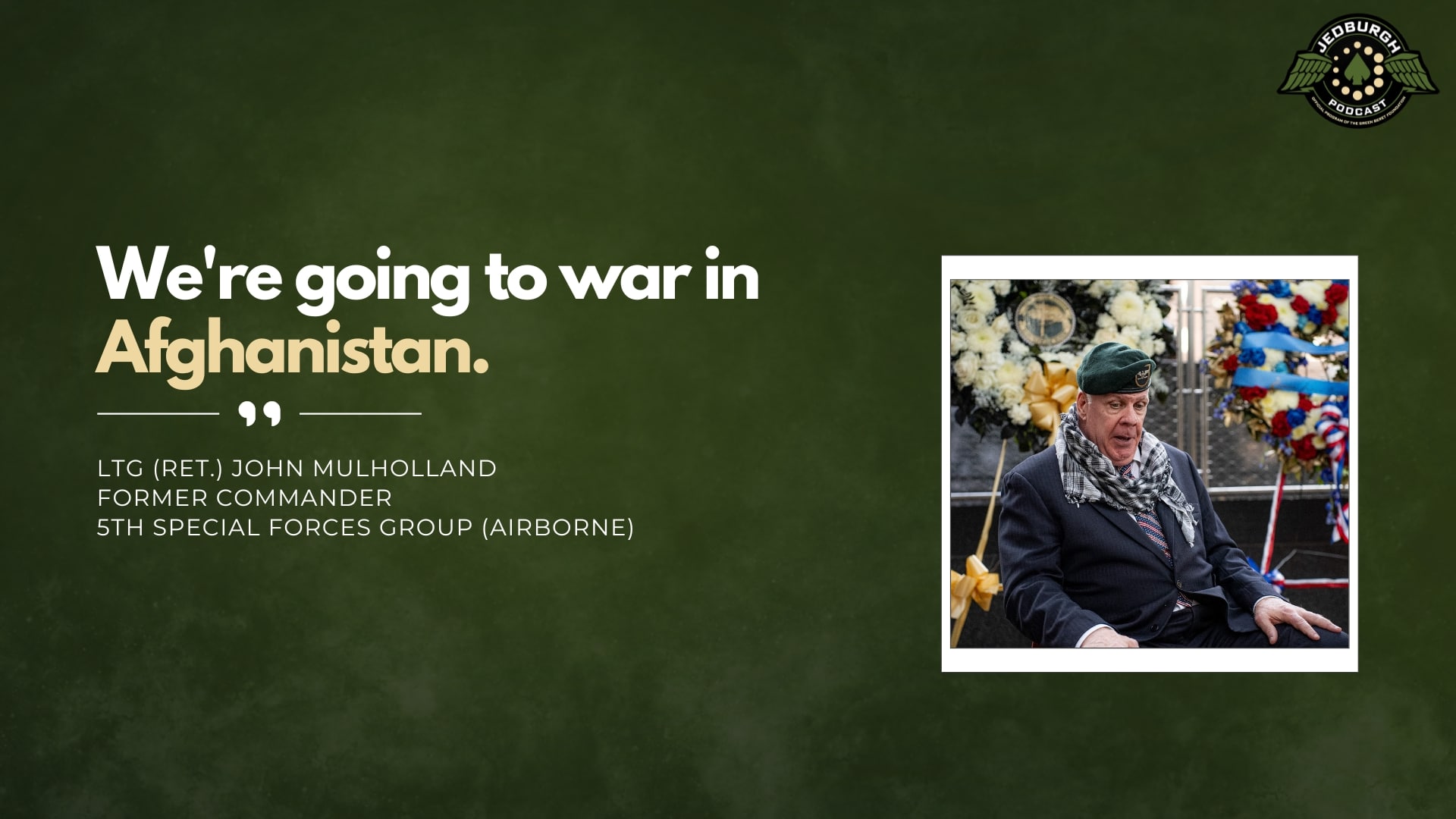
We weren’t focused on Afghanistan at all, but with what I had known from other assignments and about bin Laden, I thought, “That’s where we’re going.” The first thing I did was call the group headquarters, and said, “Get all the leaders together. We’re going to have a command group. Without waiting for anybody, we’re going to figure out what to do.” My biggest focus then was trying to find as much information as I could. Nobody knew anything but I wanted to figure out who the best four teams in the group were.
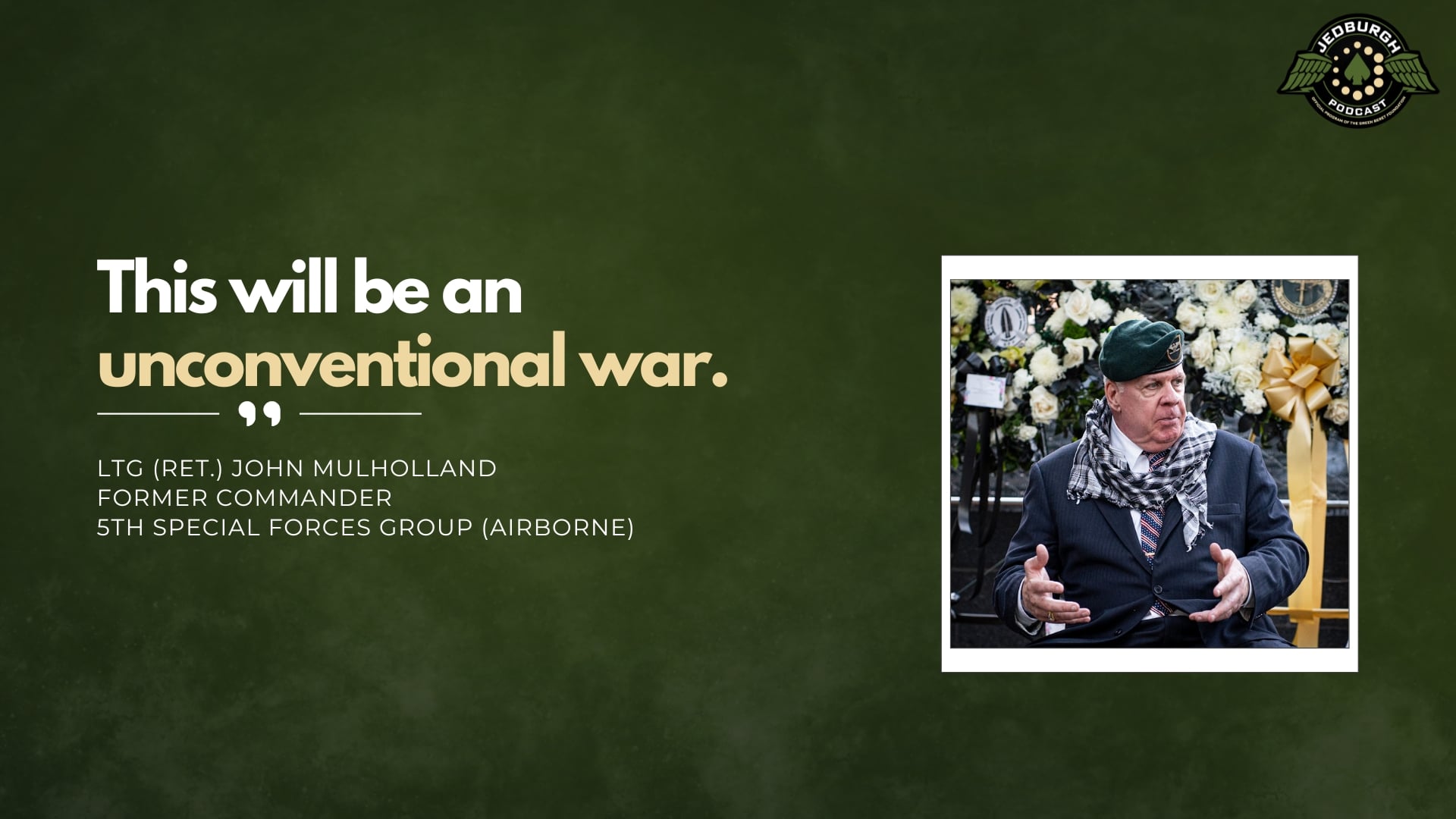
I called all of our leaders together, and we were having those discussions. We picked four teams, and I said, “I’m not going to wait for anything. I’m going to put four teams into isolation now.” I know there’s tons we can’t give you, but as we all know in SF, there’s a lot of admin and fundamental tasks even within isolation to get started. I wanted to get started. We didn’t want to be late in case, because in my heart, I honestly believed this would be the kind of war that we’re suited for. This will be an unconventional war.
You’ve got guerrilla groups. The different ethnic groups of Afghanistan, who are still holding out against the Taliban and Al-Qaeda. They were on their last ropes. They were losing. It made sense to me, but it was just a pure instinctive response. Maybe I was hoping that we’ll get the call. That was the focus in the early days.
You spent about 5 or 6 weeks in isolation. More information starts coming in. You have the interagency response effort, everyone’s coming together, October 19th, I believe.
October 16th is the first infiltration.
We get in the aircraft with the pilots of the great 160th Special Operations Aviation Regiment, and we drop a couple of teams into Afghanistan. Talk about that night and what went in.
That team went on the night of the 16th, one slick. The Defensive Armed Penetrator helicopters. We de-DAPped the DAPs because we had hooks, but the hooks were too big for the LZ. We took all the armament off the MH-60s, and they flew the infill. Everybody was really unhappy with us back at Fort Bragg, but that’s what we did. The night of the 19th was when the two first ODAs went in. Triple Nickel into the Panjshir Valley in the Far East, and 595 into basically the same area in the Hindu Kush, South of Mazar-e-Sharif with the Uzbeks and General Dostum as the commander. That began it all.
We then experienced a terrible, exactly seven days of the worst weather we’d ever seen. Even though we flew every night to get more teams in, they had to come back. It was heartbreaking for the Night Stalkers because they thought they’d failed. They were phenomenal.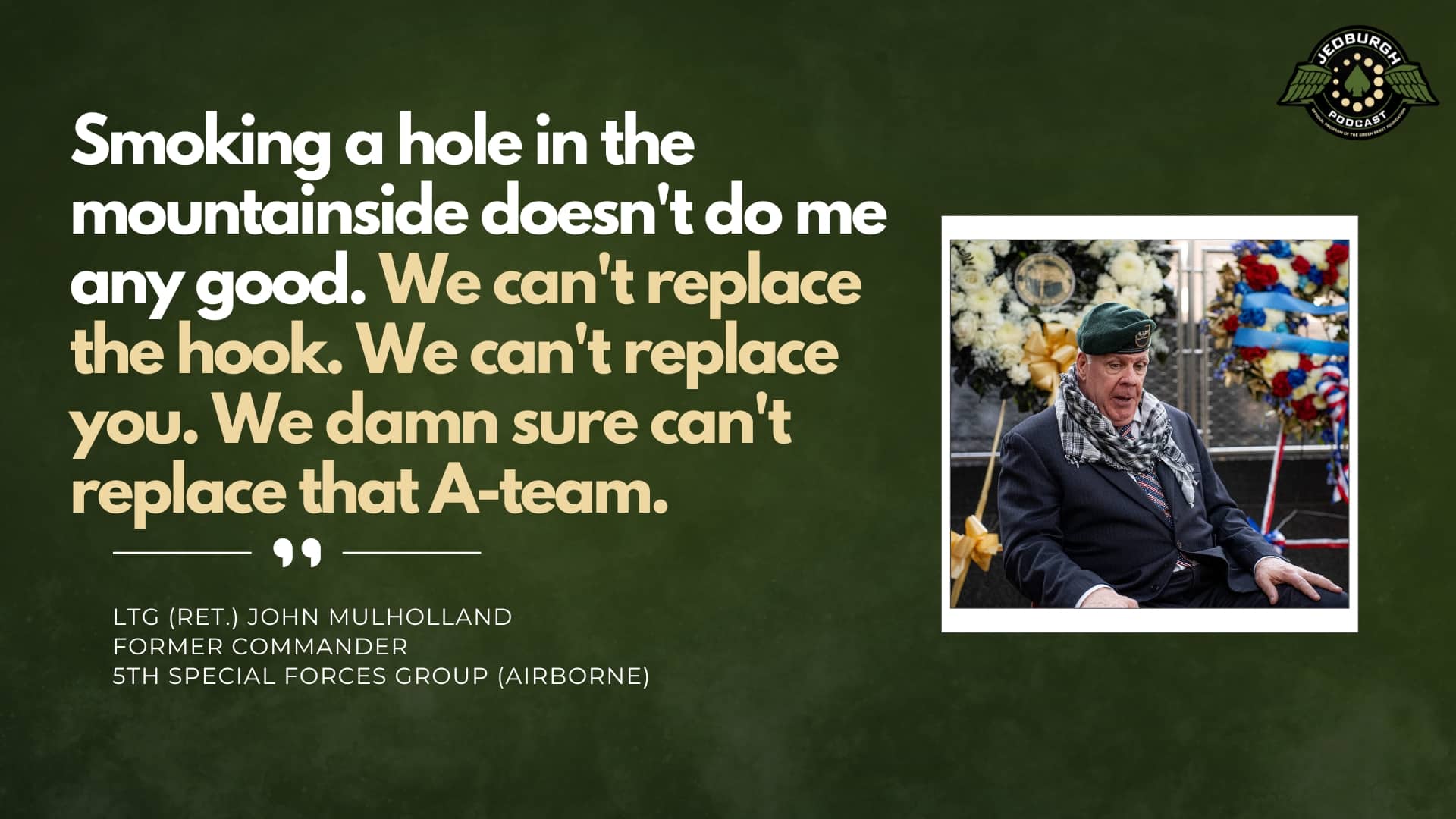
After a week of just horrible sandstorms upwards of 50,000 feet, just incredible conditions, the weather finally broke, and then we were able to start putting more teams in. That first week with those two ODAs on the ground, beginning to build rapport and trying to begin combat operations as soon as possible with the Tajiks in the East and the Uzbeks in the West. As it’s revealed in the movie, 12 Strong, General Dostum was very reluctant to let the ODA go forward because he was so afraid that if any of them got wounded, we’d quit. Mark Nutsch and his team were great at trying to convey to them, “We are here with you. Get us up there where we can do some damage.”
There’s a whole generation of guys like me who saw the pictures. We saw the pictures. I was a junior in college and said, “That is where I’m going. I’m not going to go be a journalist in Iowa anymore.” That was the plan. Not necessarily Iowa, but you got to start somewhere but it was, “I’m not going to be a journalist anymore. I’m going to the Army. I’m going to become one of those guys.” We watched guys like Mark, his team, initially on horses and then with the power of the US Air Force, dropping more teams in there.
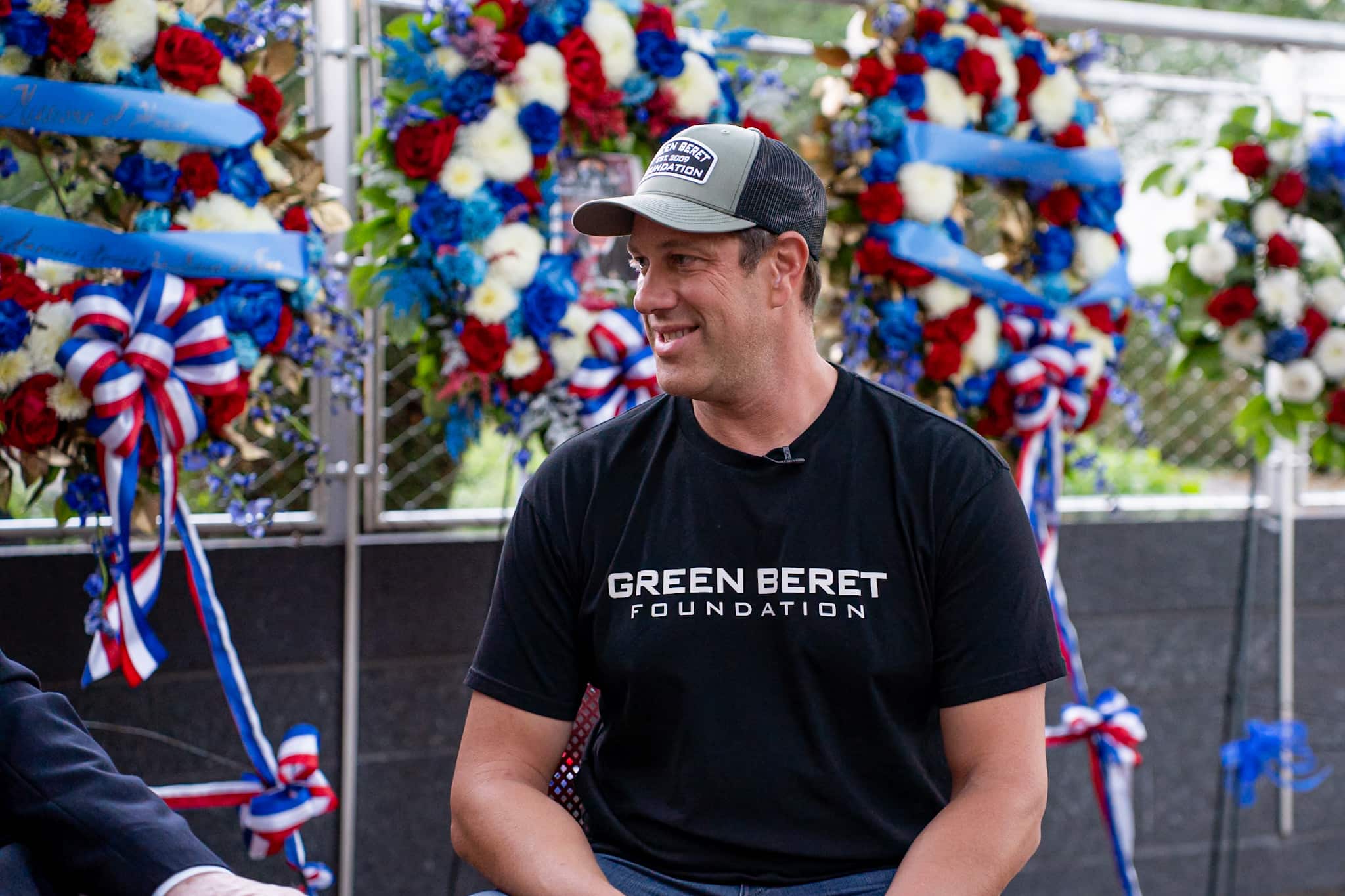
I live in New York. Now, I live right outside of New York. When people come to visit, I take them here, because this is a spot that’s not well known. Everybody knows over there, but there’s a reason the statue’s here. You were one of the driving forces behind getting this statue here. Not only getting made, but also being placed in this very spot. Can you explain for a second why this statue was so important to make and the significance of where it sits right here?
While we were still fighting, unbeknownst to us, the sculptor, Douwe Blumberg, who would do this, saw one of those pictures of guys on horseback. He’s a famous sculptor over many genres of sculpting, but his heart is an equestrian sculptor. He sketched a statue. The horse was perfect, but the GI on its back was abysmal, Kevlar helmet, M16 rifle. I’m like, “That’s terrible.” He sent it to my deputy commander, who was my rear detachment commander, Frank Hudson, a great Green Beret.
He was so mad at me for not taking him forward, but he was a stellar officer. Years with the group, I said, “Frank, I need you back here because we don’t know what’s going to happen and how bad it could get. I need someone back here who knows this group, knows the families, and knows what right looks like. I cannot worry about it to get that done.” Frank gets this image, and he sends it to me. 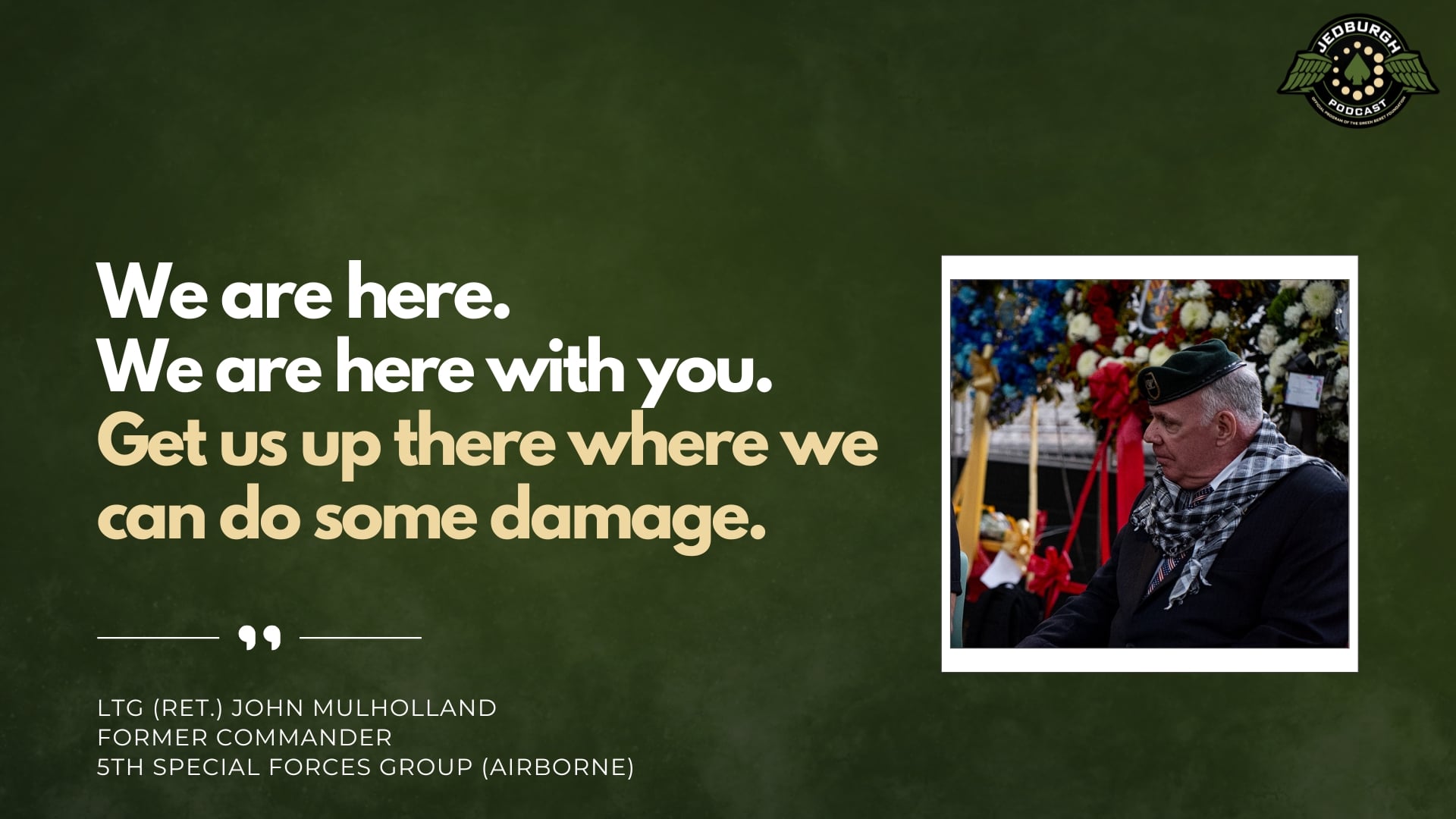
Time passes, we’re coming near the end of what turns out to be our rotation after the Battle of Anaconda. The teams are now starting to cycle back, and 595 goes back. We pick up that thread again, and we put the sculptor in touch with 595, with Mark Nutsch, Bob Pennington and the team. That evolves to basically an image that you see there, because now he knows what right looks like because that’s exactly what the guys were quickly kitted up like.
Knowing when to pull back during impossible conditions separates elite operators from reckless teams.
General Lambert, my good friend, who was then a two-star commander of Special Forces Command, started an effort to raise money to find someone to help do that, because you can’t do that in uniform. You can’t do that, but to try to find somebody willing to take this on to create a statue. Initially for Jeff that was successful, but then Iraq kicked off. All the air goes out of anything about Afghanistan, which is a shame.
It’s a shame, because from Mulholland’s perspective, the opportunity for us to win that war was lost because the attention got shifted away. Different story but relevant to the horse soldier. The energy kind of goes out of that. When I became the CG of SF Command, so now years later, my 595 brothers loved that iconic image because they think that’s about them. I’m like, “It’s not about you.” That iconic image is the whole regiment. That’s reflective of the creativity, the ingenuity, the relentless pursuit of victory of a Special Forces soldier.
More so, representing the entire task force, which included my CIA brothers, 160th, AFSOC, national intelligence team, intelligence professionals. This is for them, because the power of our victory was not just because of great ODAs who were central to it. It was the irreplaceable piece, but it took an entire team working together, focused on the agenda, which is why we were so powerful at winning our phase of the war.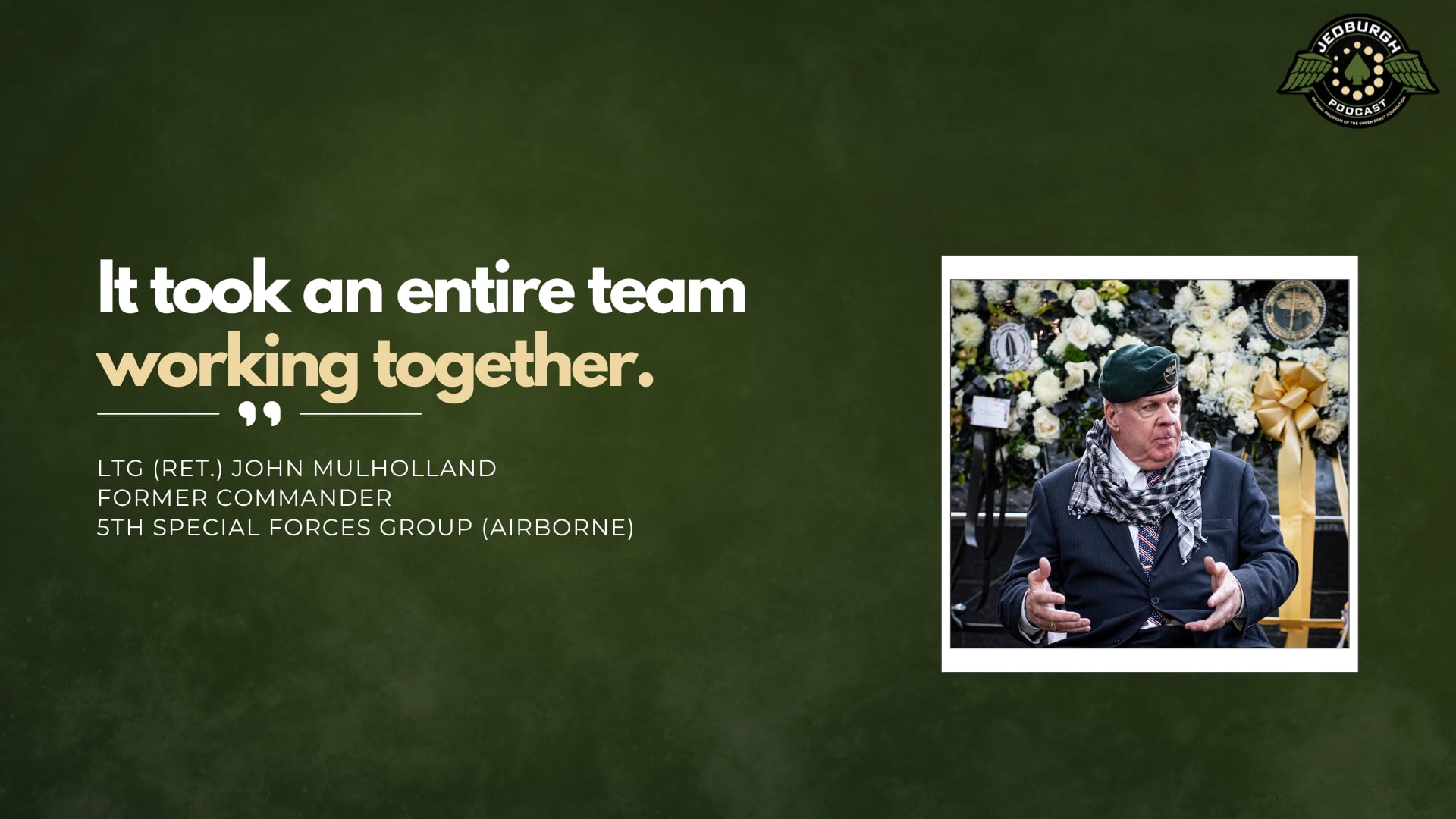
A man who’s become a dear friend of mine, the G-Chief for New York City, a man named John Brown, who was then working for a senior executive at UBS, a financial company, had come down to offer his services pro bono by veteran financial experts to help us with a problem that had emerged where some of our Gold Star families were being duped and taken advantage of by unscrupulous lawyers taking their money. Men who should burn forever. They were going to come down and offer pro bono assistance to our Gold Star families to help manage money.
In the course of that, I told him the story about the piece of the World Trade Center that we buried throughout Afghanistan, because he’s a native New Yorker. You know that story. I asked the teams to carry it in, bury it, send us the coordinates, and have a little ceremony. We took those coordinates, so I wanted to build a map, which we did, of where all those burial locations were to take back to the cops, the firemen, and the Port Authority Police Department, so they knew that we knew what we were there to do.
From that point on, I said he became my chief because he knows New York. When you talk about the tribes of Afghanistan, the tribes of Iraq, they’re awesome, but they don’t compare to the tribes of New York City, and you’ve got to know them. He knows it. That began. He took that for action. Another great retired SF colonel, Andy Anderson, my brother, a great 5th Group guy. We knew each other from the Q course on but now retired.
He became my go-between because he had the time to do that kind of stuff. John undertook a fundraising effort that was just phenomenal. Mostly New York businessmen who lost friends, saw friends coming out of windows. It was personal for them but others as well. Another great Gary Sinise is a donor. People saw the power of that image. The issue became, how do we get that on Ground Zero? No statues had been allowed to that point on Ground Zero. In fact, as far as I know, the third one just got added.
Historic victories happen when specialized units fuse capabilities into one singular operational front.
I told Mike Donovan, the guy who I told you is the auxiliary chief for the underground movement. He’s the head engineer for Ground Zero. He was also an Irishman. John Brown’s an Irishman and I’m Irish-American, so we got that going. Mike’s son, Tim, was in the Q course headed to 5th Group. I’m like, “We’re hitting on all the stars here. It’s got to be here. We don’t want the statue at Fort Bragg. We don’t want it at Fort Campbell. We get it. We want it where Americans are going to see this, where international visitors are going to see it, and take heart or take note, whichever one applies, every day.”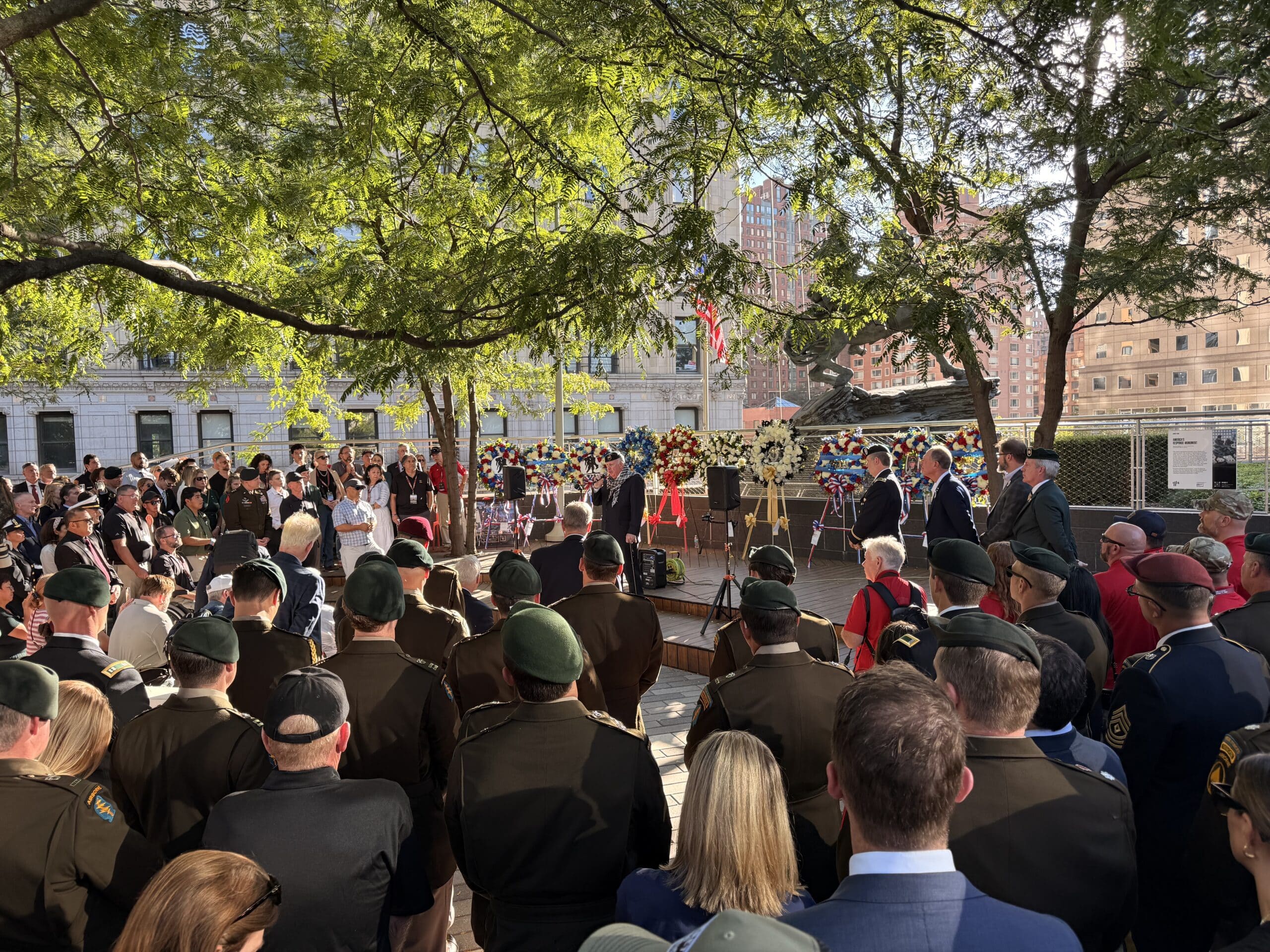
That’s what we hope. That’s the vision, and that guy’s always in overwatch over those two towers. Mike said, “We are going to make that happen.” It took ten years. The statue got put together in 2011, if I remember correctly. It went up in the famous Veterans Day parade in New York on 5th Avenue. It made its debut going up that parade. It lived in 2 or 3 other locations before this was ready. We had to get permission from the wonderful Greek Orthodox Church of America in New York, because the site that it’s on is the original site of the Greek Orthodox Church that was completely demolished by the towers.
They owned that land. We went to the patriarch, had a meeting with him and said, “Your Holiness, this is what we want to do. We would like your blessing on it.” He said, “With one condition. If you invite me to the dedication.” I said, “You will do the invocation.” With that, when this site was ready, it migrated between two different locations over the years. One night, John, Mike Donovan, and his team, sun came up the next day, and that thing was bolted in place right there. It was a done deal. Done.
Eventually, they brought the sphere back, which had been sitting here and damaged by the falling building, that’s why it’s ruptured, but they brought the sphere back up here as the second statue. As I said, there’s one down here by the Greek Orthodox Church, which they’ve rebuilt there at that end of Liberty Plaza here, which is the name of the plaza. That’s it. Ever since then, America’s Response Monument, its formal New York name, my formal naming of it was De Oppresso Liber, because we got to do our no-kidding mission for the first time ever, Liberate the Oppressed. That’s what we did. Colloquially, it’s the horse soldier it can’t help itself. It’s the horse soldier statue. That’s a lot.
It’s the coolest place in New York.
For me, it is.
For me, too. Dave Holland, longtime friend of the Jedburgh podcast and Green Beret Foundation and the Founder and Owner of Long Tab Brewing. You know as well as I do, that’s the top beer out there, especially the Jedburgh beer is my favorite. He sends me cases of it. Don’t believe him when he tells you he can’t ship beer. He can ship beer.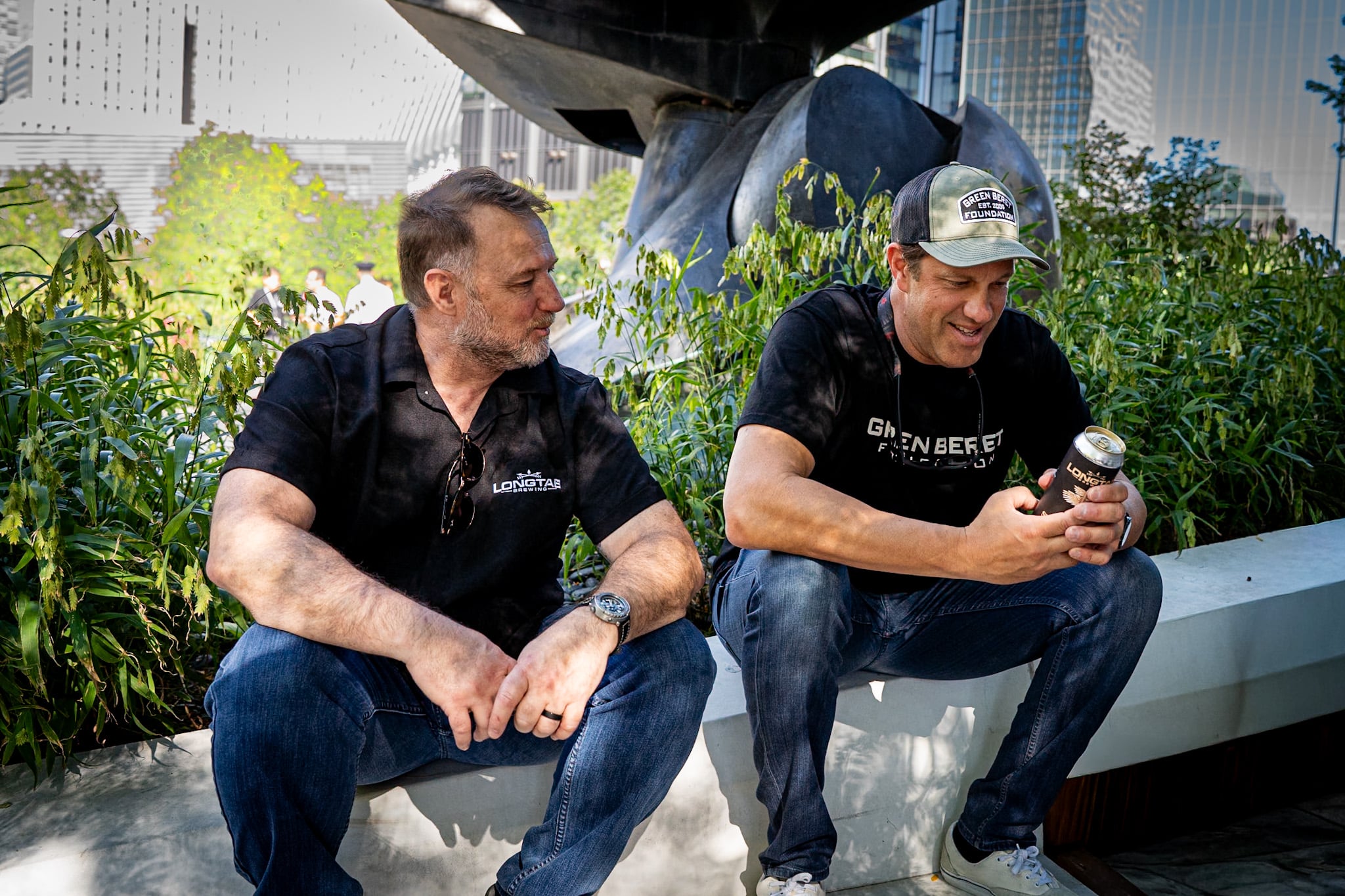
You’re on the hook now, bro.
The Jedburgh one’s good. Make sure the boss has some. Dave, you decided for the 25th anniversary of 9/11 that you were going to make a beer specific to this. It was going to be a tribute to General Mulholland, the 5th Group mission, and the Horse Soldier statue.
I’ve been thinking about this beer for a long time because I knew the 25th anniversary was coming up. This was something. Those events on 9/11 affected me personally because I was a Green Beret that went into Afghanistan the following year. Also, I don’t know if I ever told you this, but I went to architecture school. I studied those towers. When I saw them fall, it meant a lot to me. A couple of years prior to 9/11, I came here as an architecture student and went up, had the grand tour of the whole place.
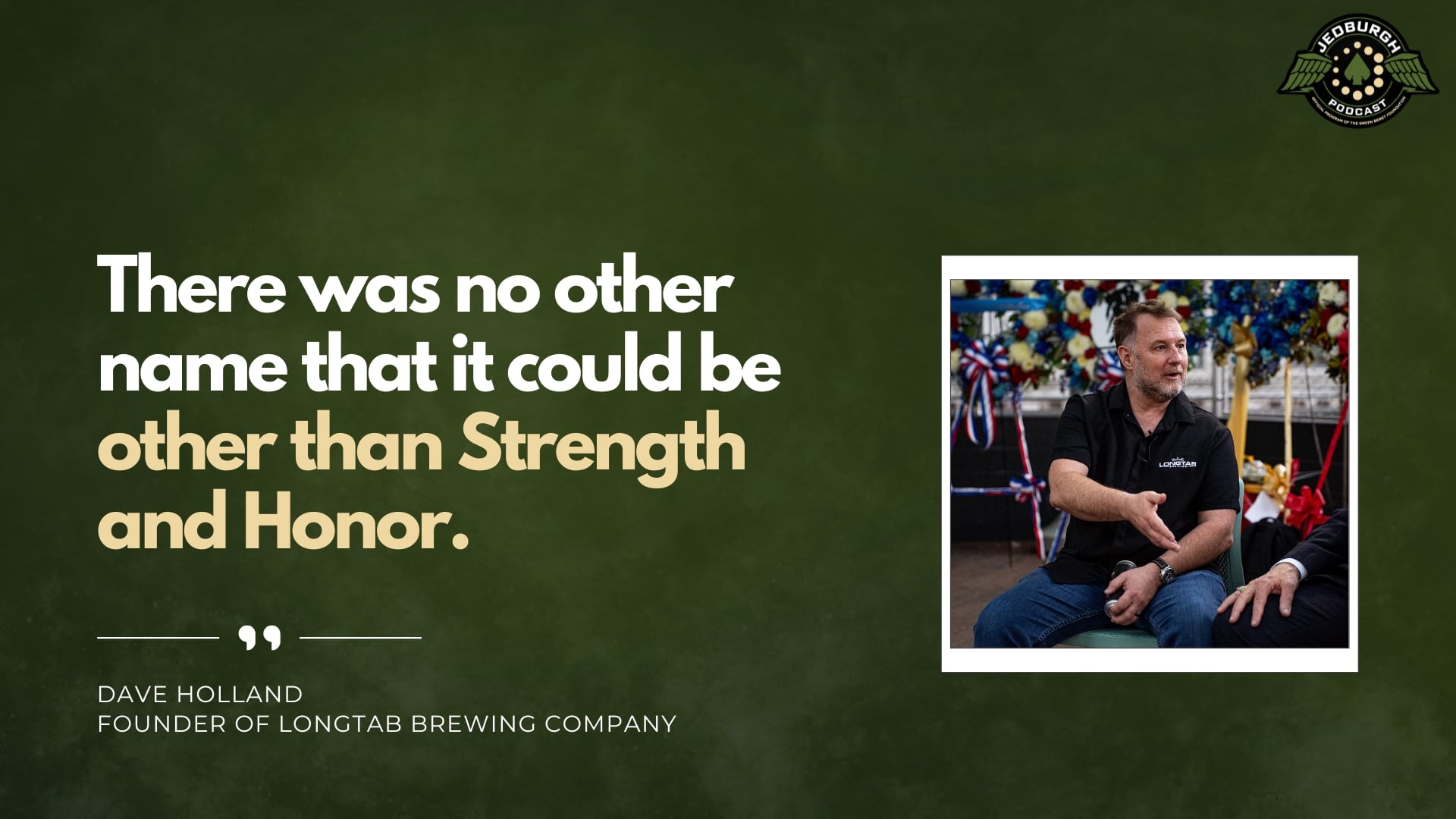
I had pictures of me at the top just a couple of years before they fell. There were so many layers of meaning for me to do this beer, especially because of the friendship that I’ve developed over the years with General Mulholland. I knew that I wanted to have a beer. I wanted to do something to commemorate the 25th anniversary of 9/11. We did a beer that was released at the taproom. We called it 25. It has a picture of the towers on it, or just the facade. I also wanted to commemorate a lesser-known fact that the general public doesn’t appreciate, I think, as much, is those first ODAs going into Afghanistan, which you were integral to it too.
Permanent monuments honor the warriors who charged into the unknown to protect our nation.
My honor. My pleasure.
The beer is coming out October 16th.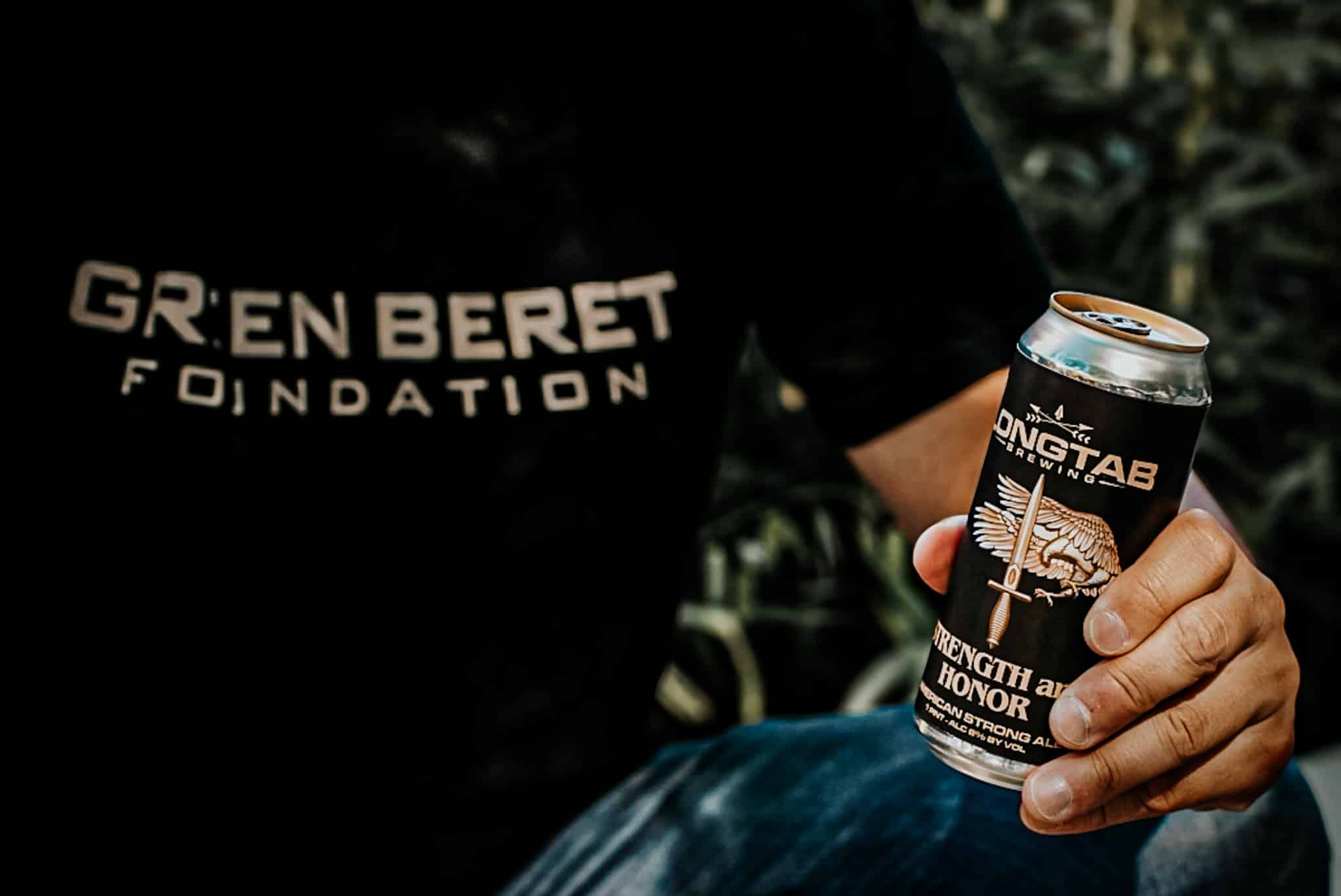
Which is a Friday in 2026, to commemorate America’s response. We’ve tried it. A lot of it.
I would expect nothing less.
Sir, I appreciate the opportunity to hear your story and sit down with you in this place.
My pleasure. Thank you.
Not long ago, when you were in one of your roles, and I was chasing General Linder around, which you know is not easy to do.
He’s hard to keep up with.
Still today, trying to do the same thing but we do look forward to talking to you again, coming down and talking more about your career, your perspective of where we are as a regiment, and the important aspect that this organization and Green Berets have played over the last 25 years in our nation’s history, and how important they’re going to be moving forward.
Amen. We’re happy to.
Enjoy the rest of your time in New York, sir.
Thank you.
One other detail I forgot to mention is that this is raising money for the Green Beret Foundation.
You’re going to get me in trouble with my boss. Proceeds from the sale of beer are going to the Green Beret Foundation.
Take care of our brothers and families.
Thank you guys for your support.
Green Beret Foundation
P.O. Box 25138
New York, NY 10087-5138
Note: Please use USPS mail or priority mail. Do not use FedEx.
Green Beret Foundation
10205 US Hwy 15-501, Unit 26-8
Southern Pines, NC 28387-4301
Call: at: (844) 287-7133