
28
#211: Influencing Human Behavior – US Army Special Operations Psychological Operations and Civil Affairs Colonels Steve Santucci, Jeff Uherka & Bob Cusick
Wednesday October 28, 2026


The battlefield is more than guns, aircraft, ships and vehicles. Sometimes the most important weapon is an adversary’s perception.
Since inception, US Army Special Forces have been central to shaping human behavior and enemy perspective; still the most important factors in military decision making.
The objective isn’t always to change what someone believes. Sometimes we only need to change what they do, where they go, or the decision they make long enough to create an advantage. That’s the battlefield of Psychological Operations and Civil Affairs.
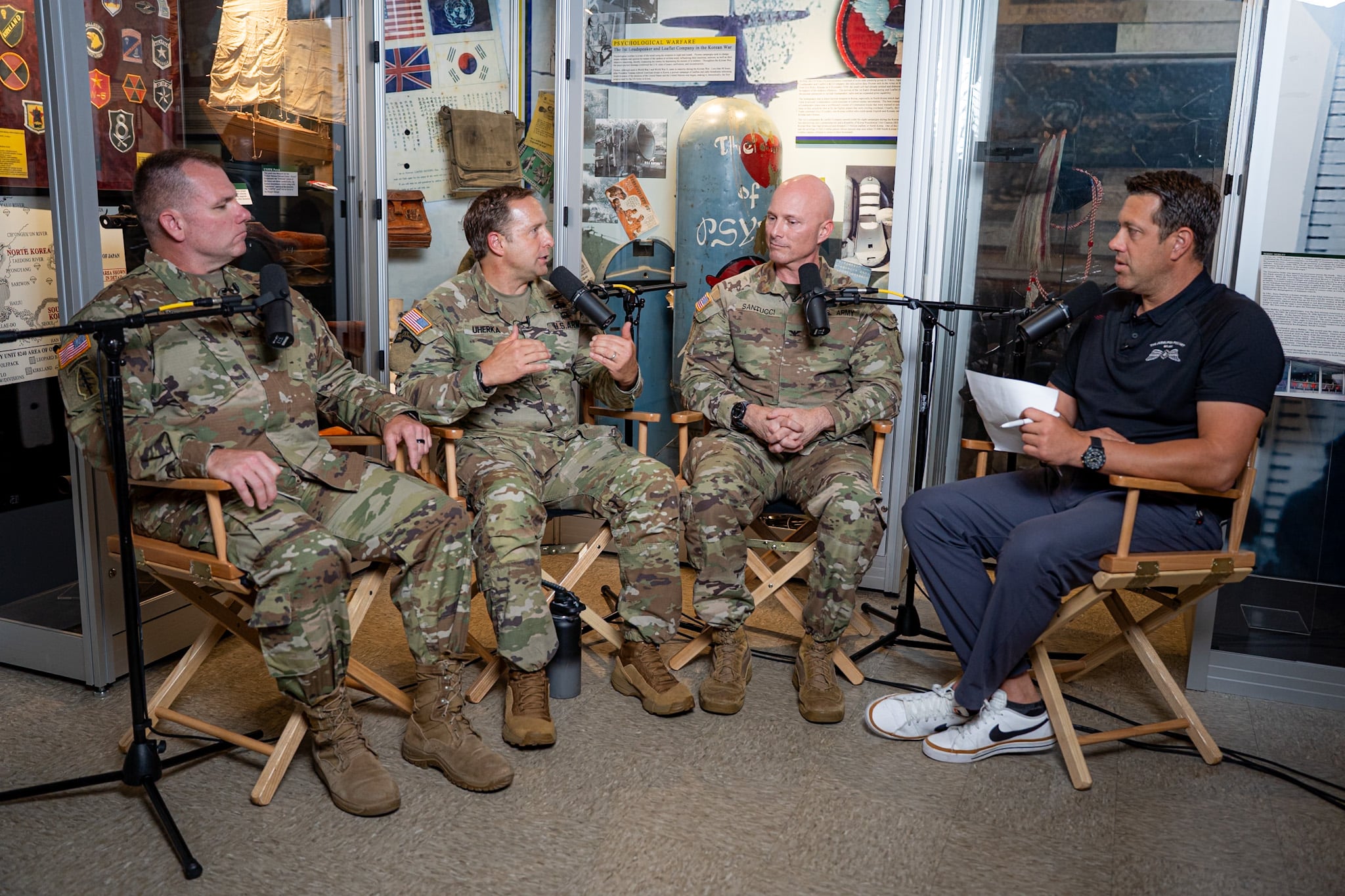
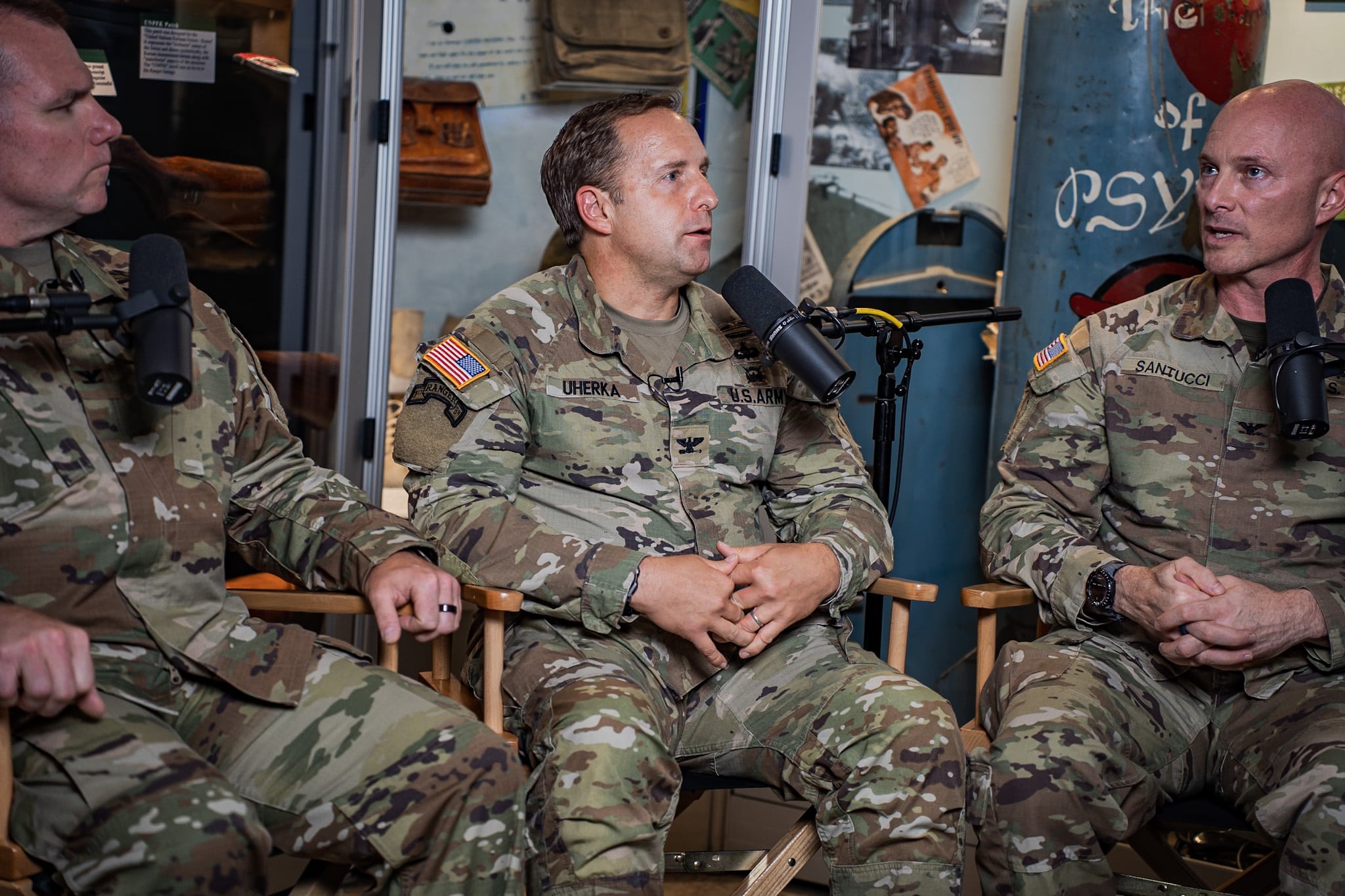
From the John F. Kennedy Special Warfare Museum at Fort Bragg, I sat down with Colonel Steve Santucci, Colonel Jeff Uherka, and Colonel Bob Cusick to go inside two of the most misunderstood capabilities in Army Special Operations and examine how Psychological Operations and Civil Affairs are shaping today’s battlefield.
For these units, the mission is about precision influence. Identify the decision maker. Understand how they think. Force a decision. Create time and space. Then give commanders an opportunity to exploit it.
Artificial intelligence, large language models, cyber capabilities, drones, and the digital information environment are creating new ways to understand and influence an audience. But on a battlefield where communications can be degraded and the electromagnetic spectrum contested, some of the answers may come from the past.
Information warfare is also being consolidated under Army Special Operations, and the Army is building a more unified approach to how it trains and employs information professionals across the force.
On today’s battlefield, destroying the enemy may not always be the most powerful option. If we can influence what they see, shape what they understand, and change the decisions they make, we may never have to fire a shot.
Follow the Jedburgh Podcast and the Green Beret Foundation on social media. Listen on your favorite podcast platform, read on our website, and watch the full video version on YouTube as we show why America must continue to lead from the front, no matter the challenge.
—
Listen to the podcast here
#211: Influencing Human Behavior – US Army Special Operations Psychological Operations and Civil Affairs Colonels Steve Santucci, Jeff Uherka & Bob Cusick
—
Redefining The Non-Kinetic Battlefield
Gentlemen, welcome to the Jedburgh Podcast. I’m in a flock of birds over here with a whole bunch of colonels. Colonel Santucci, Colonel Uherka, and Colonel Cusick, thank you so much for taking some time to sit down and talk to me. This is exciting because we have not spent any time focused on PSYOPs and civil affairs.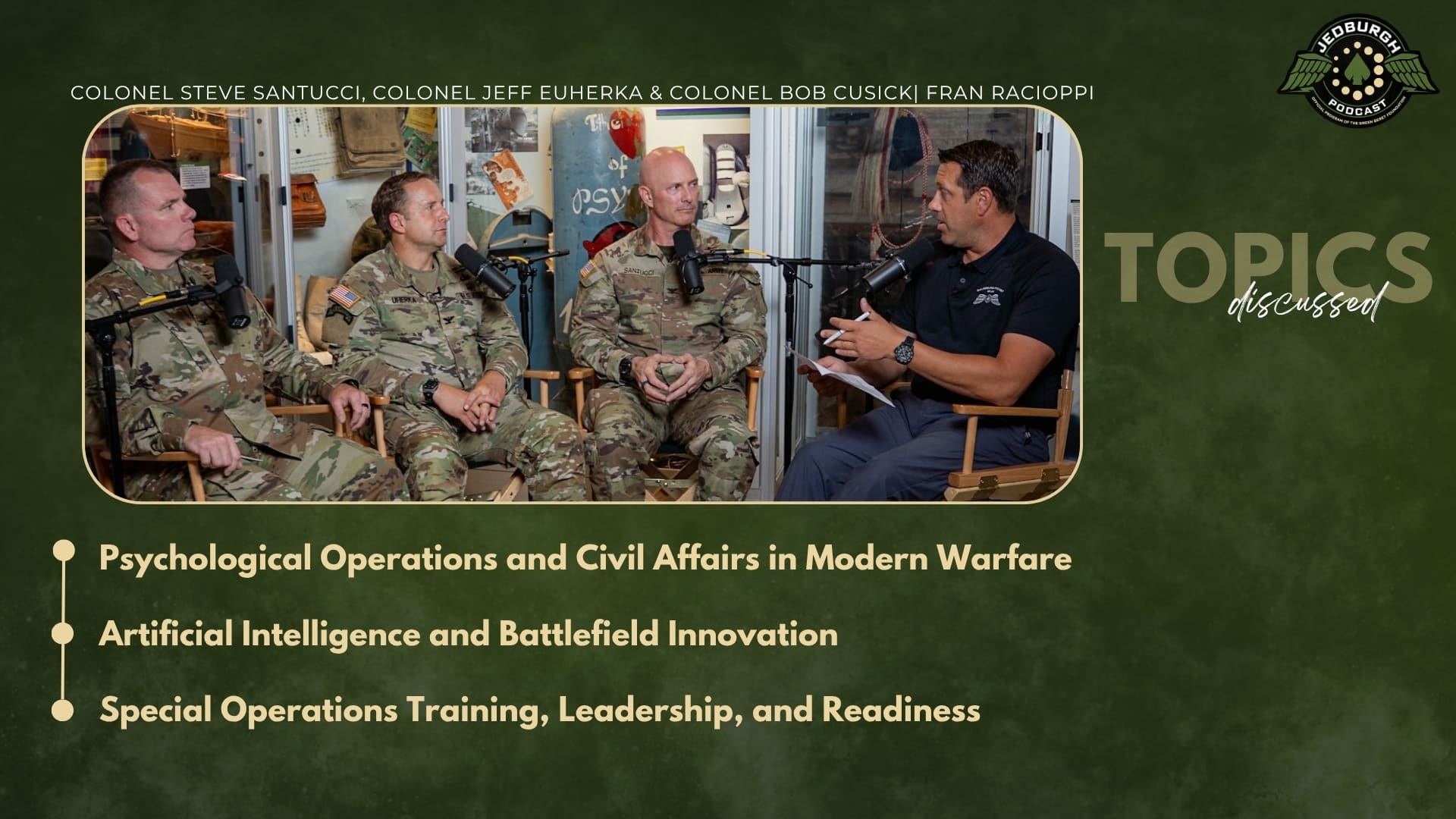
That is a capability that exists within the Army Special Operations Forces units that is impactful. It’s important and it is creating effects on the battlefield, and we tend to focus too much on the eighteen series guys within the formation. When we were putting this series together, this was an important part about and a story that we wanted to tell. We’re going to talk about all things civil affairs and PSYOP.
I look forward to it.
We got to start a little bit with talking about where the organizations have come from, what their missions are, and then where they’re going. There’s been some change in how we conduct civil affairs and PSYOP operations and psychological warfare. Before it was the Special Warfare Center, it was the Psychological Warfare Center. This is where it all started. In your own words, what is the mission of psychological warfare?
There’s so many. I had this conversation with General Ferguson and General Werther Moffin, between competition and crisis and the gray zone and the various customers from the general-purpose force to the joint force and RSOF. The mission varies. It does. That’s where it gets lost sometimes when we talk about capability.
For reference, you’re in command of the 4th Psychological Operations and about a year in.
Yes.
Colonel Cusick, you’re on the way out as 8th Psychological Operations is deactivated. You got to look back on some time and from your perspective, what have been some of those highlights over the last couple of years that have been critical to the advancement of psychological operations?
I don’t know if you know my background, but I grew up an SF guy, 3rd group, commanded a battalion and 3rd Special Forces group. General Braga, General Ferguson asked if I’d be willing to command a Psychological Operations Group. I’m doing that now. We’re inactivating admittedly. We’re just under a company’s worth of people left. The big change that I saw was Colonel Santucci talking about behavior change, time, and space, given the commander’s decision advantage.
I always started at the 100,000-foot level because I did not grow up in the SOB community. For me, it was all about non-kinetic space and SOB fills a critical void in that non-kinetic space, providing options to commanders, army commanders and joint force commanders. What have we done over the last two years? We’ve got an information warfare center now owned by Colonel Santucci. That information warfare center can provide options to commanders at SCAL from Fort Bragg, North Carolina.
It simply gives commanders the ability to reach back into a pool of professionals that can do some of the things that Steve just said, the advanced influence course. I’ve seen that. It started before I got in the seat, but we professionalized it. It’s precision targeting. How do I change Fran’s behavior? How do I get Fran to make a different decision today to change the way he’s either thinking or behaving? That’s our advanced influence course.
For me, it always started at the hundred-thousand-foot level. I did not grow up as a PSYOP as Steve did, but what a great capability. Now that I know it, I’ve been forced and told I own it. I’m giving all that capability to Steve here in the next three months. Steve’s going to own all the active SOB component capability.
I want to circle back in a second on behavior because both PSYOP and civil affairs are about behavior. First I want to talk a second about civil affairs. You’re fresh into the seat in command of 95th civil affairs. What is the mission of civil affairs?
Thank you for having me. In plain speak, the mission of 95th Civil Affairs is to understand targeted civil populations and then leverage those populations to support military objectives in a nutshell. We’re talking about the security capabilities of the civilian networks that can now be employed to enable military operations. That’s everything from a resistance capability to a foreign internal defense capability to combat a resistance.
Let’s talk about behavior first. We’ve been very fortunate over the last couple of weeks to sit down with senior leadership within Army Special Operations. We had General Ferguson and CSM Waldo from the USASOC level, then your boss and the command team from 1st Special Operations Command. We did touch on civil affairs, PSYOP and their role within the RSOF architecture.
This concept of behavior versus mindset, or changing your mind, or what I would call perspective, is important. If we go back, and all of us are fairly experienced and came up through the Global War on terror, you had these units out there. We always would talk about, “We got to change their mind. We got to get them to like us.” We could probably argue if that worked or not. We have some dedicated adversaries who it doesn’t matter.
They’re never going to like us. What we may have found over the years is that we are trying to change their mind or influence their behavior for a set period of time so that we can achieve an effect? How are you guys, from your different perspectives, thinking about the difference between the mindset and the perspective of a population who may or may not be adversarial to us versus influencing their behavior?
Precision Targeting Beats Mass Persuasion
The audience is probably the big thing that’s being changed or being asked to change. In the sense that it’s not so much about targeting large populations anymore as it is precision influence in targeting decision makers to try and create an effect that gives us that advantage we talked about. There’s obviously a time and place for populations as it relates to non-interference in the combat operations or demobilization or surrender type activities.
You don’t always need to change an adversary’s mind. Changing their actions long enough creates decisive advantage on the battlefield.
Maybe even recruiting for an underground or some kind of illicit force. What we’re being asked to do is to get into the minds and the thinking process of the folks that are making decisions on the threat side and create those opportunities for our commanders so we could exploit that time and space we’re continuing to talk about.
That can be done through deception. That can be done through, I call it blunt force information. If you do this, that will happen. There’s the subtle piece of it. What can you do over time to get somebody to change their mind or behavior? To what you asked Fran, it’s all about the time. Can we change their mind just for a couple minutes to divert, to deceive, to create opportunity for blue forces?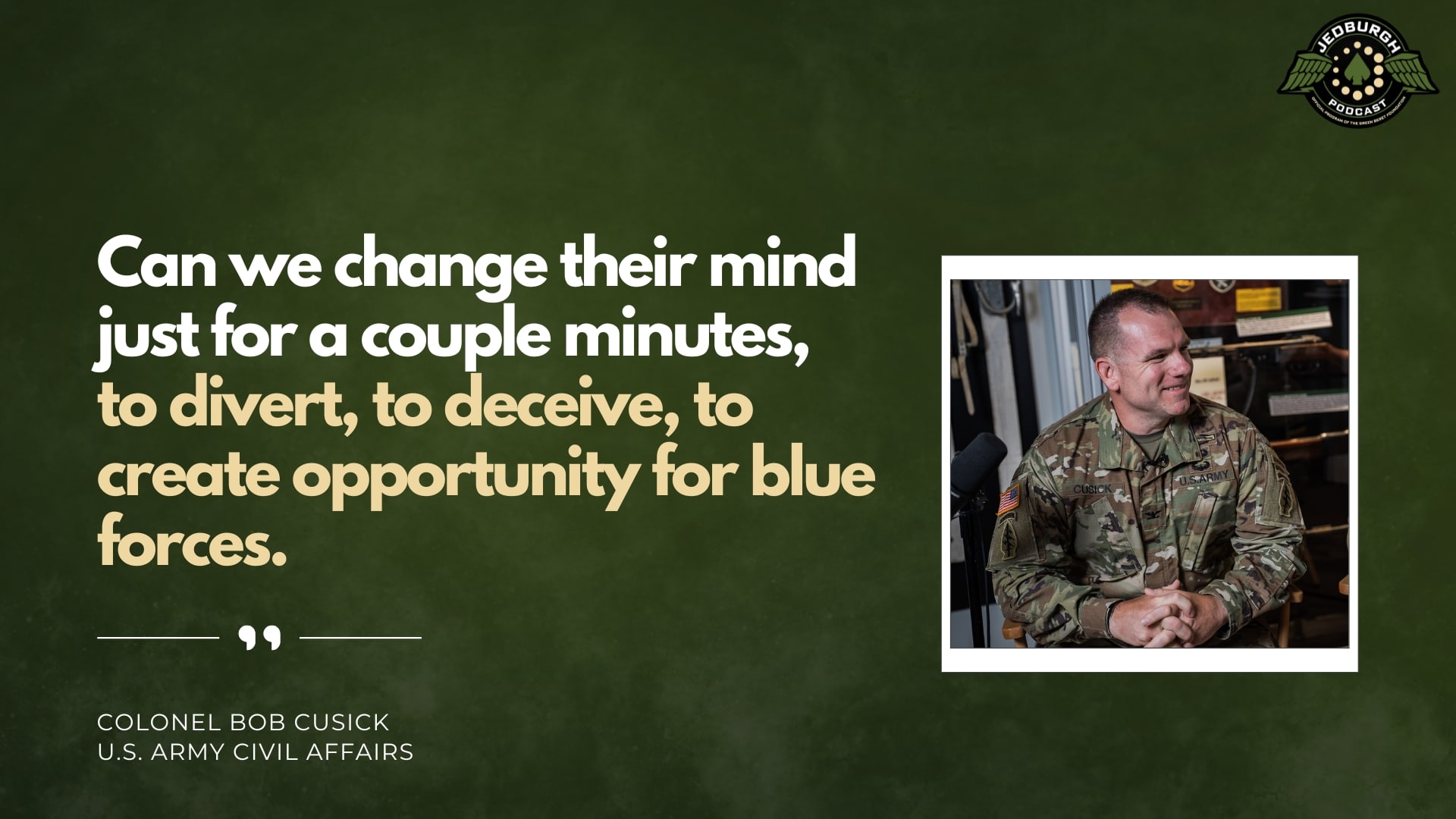
Another indigenous approach to that is, if you have a population that you want to influence or change their mind, who are the key leaders within that population that you might share common objectives with that you can get them to change the minds of that population for you? You influence the influencers and, through an indigenous approach, they are able to change the minds of the population for our mutual objectives.
What about the mechanisms that we use to do these things? I made the mistake of saying to General Ferguson that in the advancement of technology, it’s not just dropping leaflets anymore. He quickly corrected me and said that there might be a time to drop leaflets. I was like, “You’re right.” There might be but there’s a lot of mechanisms that we can use to affect the population. Each of your commands have these different mechanisms by which you seek to influence. Can you talk to what you can about what some of those mechanisms are and then how you’re getting in front of the population to affect behavior?
Blending High Tech With Analog Tactics
You started with what we’re looking at now, which is going back in time. We’ve been looking very closely at high tech and low-tech solutions for the last ten years. As we look at the fights and the threats faced, we realise we have to look back at the no tech and the analog type delivery capabilities. That’s going back to the stuff on the walls. It’s bombs and missiles. It’s leaflets. The th

ings that we did in World War II, it’s what the Ghost Army did. There’s a time and place for the delivery through social media potentially or cyber conduits.
We all realize that the future battlefields are going to be so degraded and the electromagnetic spectrum is going to be so contested. It’s going to be difficult to reach in with some of those exquisite delivery weapon systems. We have to pull back on the history machine and relearn the things that we’ve forgotten about over the years.
Are digging wells and building schools?
That’s interesting. If we are digging wells and building schools, it’s a targeted population that fulfills our military objectives. We need to get to that population for a reason. For us, we are using technology, AI-enabled technology to understand the populace. We are going to talk about it soon, but we are transforming a civil affairs team into an attachment model that allows greater access to the population. We are building team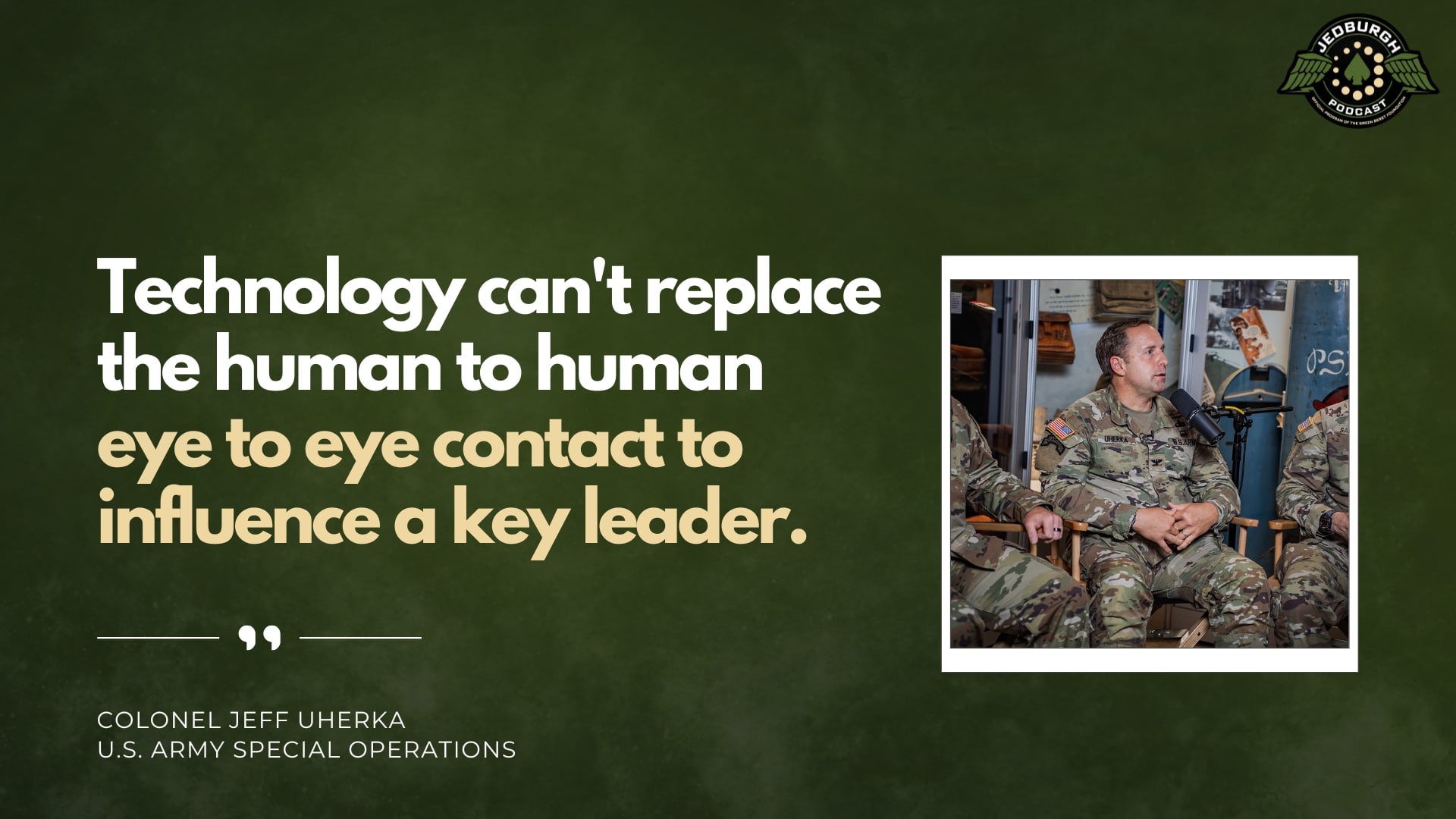
How are you each incorporating language capabilities? The language capability in the eighteen series roles is the core task. How are you incorporating the importance of language into each of the organizations?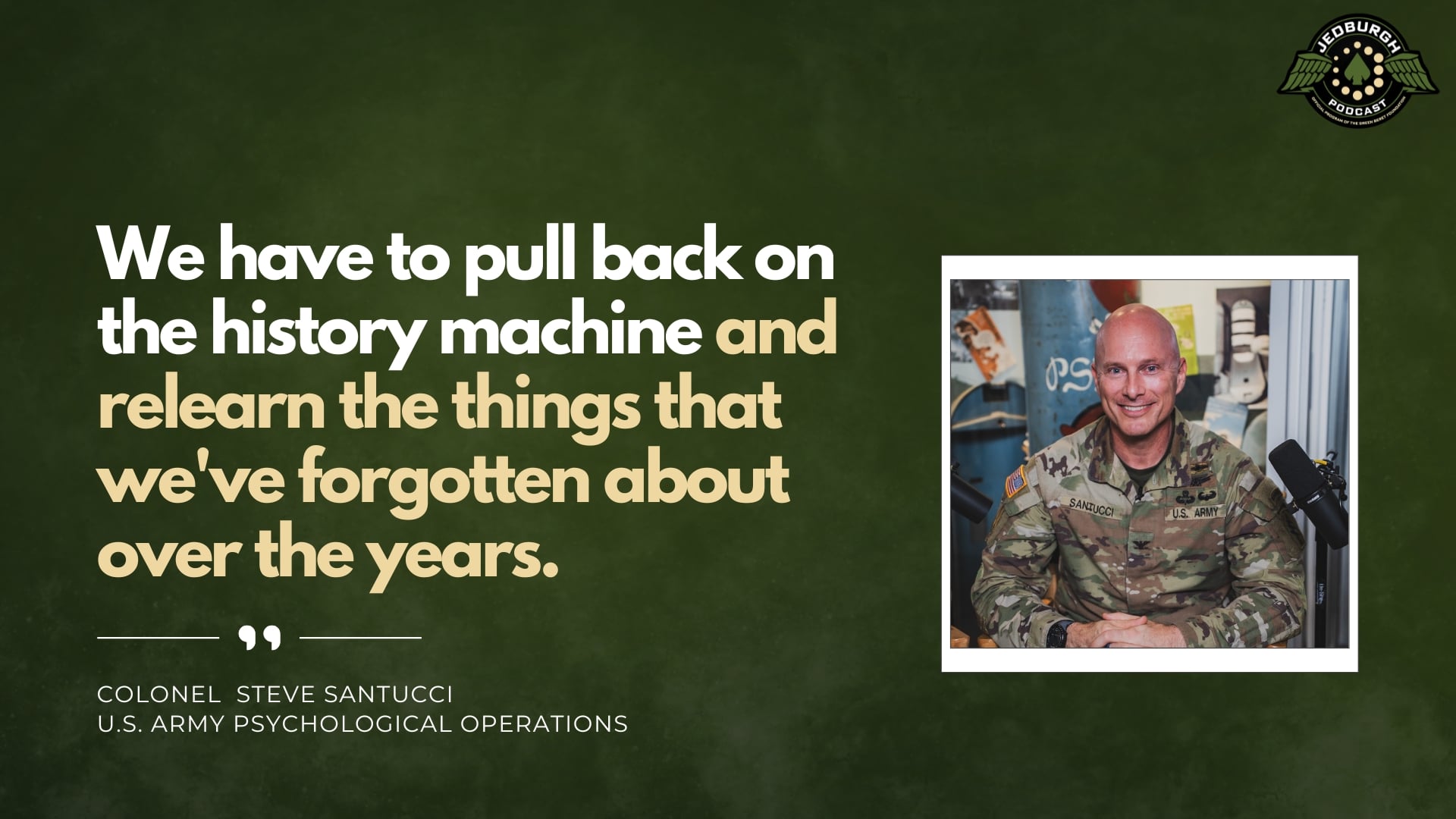
For us, language is similar to special forces. It’s important. The brigade historically takes pride in having the strongest language in the entire division. We take pride in that because that language to influence others is crucial. It’s a basic, standard, critical task.
Steve hit a key point earlier with language. We have hired professionals that work for us from that region because you can’t do psychological operations or behavior change or influence without having intimate knowledge of that target audience. It’s 4 or 5 civilians from that region, Lebanon, Japan, South America, name your country. We’ve got five. It has surged as high as twenty professionals that can help us with that refinement of whatever we’re trying to do.
Us sitting here in Fort Bragg, North Carolina, we can think we know everything about that population. We have people we can leverage either at the TSOC, the GCC, or here at Fort Bragg a little bit that can help us refine that narrative, “This is or is not going to work,” the minute you disseminate it through all the means that Steve highlighted.
I would argue that when we talk about cultural awareness and understanding who our target audience is, there’s probably a lot of times, areas where your ability in PSYOP or civil affairs to understand the culture and sentiment of the local populace may even outweigh the importance of an SF team who deploys there. As an SF team, by and large, certainly there’s an exception.
When we go to a foreign country, we’re usually partnering with a like-minded force, whether that be a military force or a paramilitary force or someone else who shares our similar offensive mindset. You need to understand language and you need to be culturally aware. At the end of the day, a warfighter is a warfighter, regardless of where you’re coming from. When you start talking about having to influence the civilian population, having to influence people who don’t necessarily know who you are, don’t even know they’re being influenced. That comes down to you having to understand that culture.
If I could add to that, also the most successful and influential dissemination mechanism is the partner. It is the resident. It is the person that we’re working by, with, and through. There’s a conversation to be had about the language aptitude and the responsibility for all of us. It is the culture that it boils down to and understanding how they speak, walk and talk, and how to use those influence agents as conduits to disseminate the message because that’s when it resonates.
There’s some pretty cool technological things we’re doing though. We’re using large language models from that region, from that target audience, backhauling them, and running our series against them to give us some fidelity if it’s going to even remotely scratch the itch on what we’re trying to do. In the technological space, aside from analog, we’re starting to look at companies and even vendors’ tools where we can backhaul large language models from that village, from that city, from that country and test SOB against those large language models to give us some degree of fidelity. Is this going to work or not work once we deliver?
With some risks associated with it so that a commander acknowledges that this pretest has gone through. It has a degree of risk associated with it as well as a degree of acceptability amongst the people we’re trying to target.
I want to ask about the pipeline coming in. We had the SWCC command team here and we talked
For context, Steve and I, and I think to ourselves now, we are going out to assess and select as presidents of the board. We certify that the board is appropriate. You’ll hear this a lot interacting with our bosses, leaving talent on the cutting room floor. By having us in the room, there’s probably a handful, 4 to 5 kids that otherwise would not have been selected that we simply say, “Let’s give him or her a chance.” Go ahead, Steve.
I wish I could say that it’s one type of person that comes in the regiment that’s successful. Having spent some time at SWCC, I could tell you that generally the folks that do the best do come from combat arms because they understand how maneuver works and how to talk a tactical terminology to the people that we’re generally working for. You look at folks like field artillery who live in the targeting cycle and they do equally as well.
Precision influence targets the decision-maker directly. Shape their choices and you control the operational environment.
When we think we’ve got it figured out, we’ll receive somebody from the intelligence or communication fields where they themselves understand how to pull from those former jobs and experiences they had to understand audiences as an intel person, for example, or how to create collection requirements to measure whether or not we’re being successful. What we generally see when you start talking to people, what the PSYOP regiment offers probably more so than any other crew fill in the army is creativity.
Prioritizing Deep Character Over Tactical Archetypes
The bottom line is a SOF attribute. When I went to Special Forces assessment selection, I remember it was three weeks. I’d be observing someone and be like, “I hope he doesn’t make it through like he’s not carrying his weight in team weakness or he’s cheating on this and that.” It worked. The system worked. They didn’t make it through. When I went to the 2-week, 10-day civil affairs system selection, it was similar, like those SOF attributes.
I was like, “That individual is not being honest or that individual is not carrying their weight. I don’t want to go into combat with them.” They weren’t in our bunk room at the end of selection. Rigorous and discipline are those SOF attributes. I would say if there’s one that’s more important for civil affairs, it is maybe adaptability. Being able to go into any room in any indigenous population and be able to understand the influencers in the room and then who to then engage and try to create effects with. Continuously adapting to new environments.
Post-selection, what does the pipeline look like? What’s the equivalent of the qualifier?
Perfect timing. I sat down with the RSOF Captain’s Career course. You get selected as an officer in NCO. You come here to Fort Bragg to start your all intents and purposes, your career in your SOF MOS. I met with a group of captains. We’re talking Civil Affairs, PSYOPs, Special Forces, all in a captain’s career course, which for us traditionally 10, 20 years ago would have been at the Maneuver Schoolhouse. You went to Benning. We no longer go to Benning. Good and bad associated with it, neither here nor there.
You have the captain’s career course now. They all come here together. My message to them was, “Learn from each other now. Learn what you do as PSYOPs Civil Affairs, and Special Forces now, and my charge to all of you at the end of this course that you’re about to enter is you all get together for coffee, beer, lunch, or dinner, and you talk about, and you murder board each other and what you just learned, and start the relationship now.”
For the officers, if you go to the captain’s career course, you immediately transition to the Civil Affairs of the PSYOP qualification course. I’ll let Steve and Jeff talk about what that entails, but it’s also great because you’re in a room of fresh, young blooded captains with a lot of questions. Some of them are like, “I’ll get back to you. What book are you reading? What podcast will you listen to? What do you expect of me as a captain coming to you?”
Once you get past the initial cursory question, it’s, “Sir, what do you expect of us as our RSOF?” My message was to talk to each other. Not just today. Not just now. Start the relationship now so that when you do run into Civil Affairs, SF, or into PSYOP, you can call Bill, Tom, Larry, Fran and say, “Do you guys do that thing? Do you guys do what you say this guy’s telling me you do?” Start that relationship now so it becomes easier later on the Q course or on the operational side here.
We’ve been in here the last couple of days and watching the groups go through, of all the guys who just graduated at selection and are waiting to start the Q course. I’m looking at them and I’m so jealous.
On degraded battlefields with contested spectrums, high-tech fails. Relearning analog, no-tech deception methods wins fights.
There’s a different twinkle in your eye when you’re in that position. It’s awesome.
They have no idea. They’re just looking at the wall. The whole group just left, so they can’t hear me talking about them. They’re looking at the walls, they’re listening to what they’re calling the gray beards. The guys taking them around. They’re not that much older than us. They’re so excited, and they have no idea the journey they’re about to go on. I’ve been very jealous the last few days watching that. What’s the respective qualification courses look like?
For Civil Affairs, let me back up. In 2014, when I went through the qualification course, everyone went through the same course. If I was the officer, the NCO, or the medic, for CA, we all went through the same course.
You were 18 Series before that.
I was. As an eighteen series, I knew that as an officer, you go through a specialized course, different from the Bravo, the Charlie, the Delta, and Echo. That threw me off like, “Why aren’t we creating that specialty?” We have over the last twelve years. We have three pathways in the Civil Affairs qualification course. First, the Romeo or the Civil Affairs Reconnaissance NCO.
We’re looking at those specific critical tasks so that you can do civil reconnaissance and civil network development engagement. We’re doubling down on those. That’s what they’re focusing on through the entire course. The same thing for the 38 Sierra or the SOF, Civil Affairs officer. It’s more of the up and out, the targeting, and the mission planning aspect of it.
The third is the 38 whiskey or the medic. They’ll do an in-depth medical training through the course around nine months and focus on medical training and how that can support the team and civil reconnaissance and network development engagement. We went from twelve years ago, one pathway to three specialized pathways. You have three separate MOSs and three separate capabilities within a detachment or a team.
Not too different in the sense that around that time that Jeff’s talking about, there was only one battalion within SWCC that covered both CA and PSYOP. We as well were integrated between the officer and NCO. They’ve since broken those apart. What’s unique though is that this is a joint course. It’s one of the only joint courses within SWCC. There are Marine Cadre as well as Marines, Navy, and all of these different services.
Not too different from the civil affairs, but that certification of tasks that has to be baseline across all of the different departments is relevant in the courses that they’re running at SWCC now. Heavy dose on deception, on anthropology and psychology, understanding how people work and think. Our rifle drill is the target audience analysis and what that process looks like for analyzing people. You could begin to think about how to manipulate or change their behavior.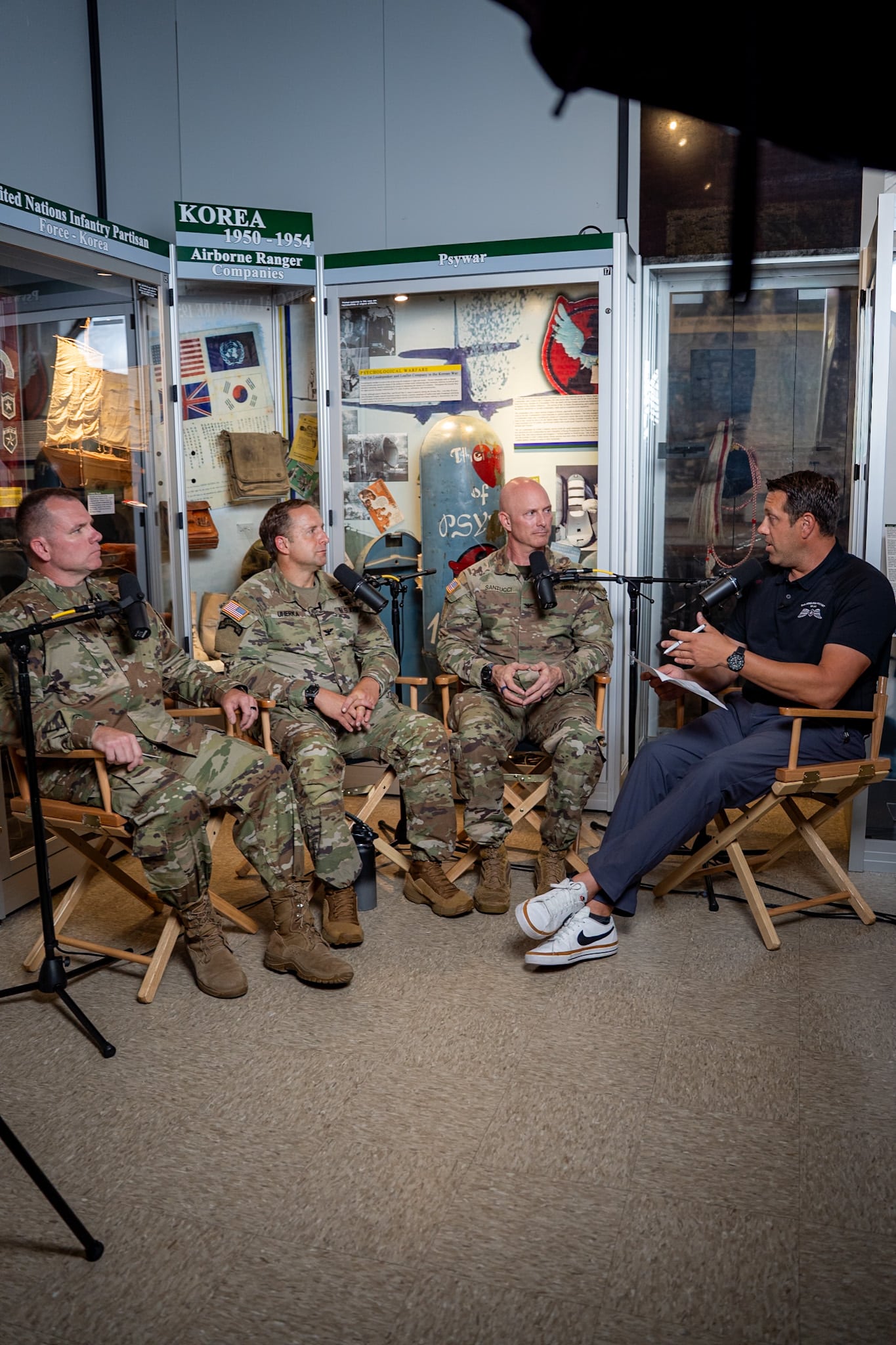
From there, they complete that course and the different audiences generally slip off. That’s our foreign partners, our Marines, Navy, so on and so forth. We bring it up to a higher classification for our special warfare side course, which is an additional ten weeks. That devs out for an internal defense and some of the higher end capabilities. Those weapon systems that would deliver our information payloads via what, I would like to say, our exquisite means.
After that, they roll into language all joint, all combined, where they form those relationships that Bob talked about. We could all probably attest that those relationships have carried all three of us through our careers. I’m close with almost every sitting Special Forces group commander because of touch points throughout my career. Some of them have started here in the schoolhouse. Some of them not, but those have created opportunities for a person not in my profession to call and ask questions that they need to understand to make decisions with someone they trust.
Over the last decade or plus, both the CA and the PSYOP teams have been centralized under the headquarters. They’ve been augmentees essentially to the groups as needed or the Army or wherever they’ve been called on. Some changes have occurred. Inevitably, there will probably be more changes. There’s a decentralization effort now to bring those capabilities down to the Special Forces group level. What has that looked like in terms of the logistics around assigning these PSYOP and civil affairs teams or battalions to each one of the groups?
It’s taken different shapes. It’s very easy for Jeff and I who own those organizations that have developed that new requirement, new relationship, to say that locally with the third group is very simple because of the proximity.
Did you have regional affiliation prior to?
Yes. I don’t want to speak for you Jeff, but our regional battalions had an easy transition to go down to the Yarber complex and spend time with a third group and get integrated across all of the equipment and the medical and all of the care and feeding that takes place. It’s created some challenges that we’re working through and we’ll continue to iterate and look at how integration works with those that are not co-located. The battalions that have to operate with first group, which is probably one of the more challenging locations because first groups hold conferences and meetings with people on this side of the states. As well as folks out in Okinawa and across their battle space.
When they’re manipulating or crossing those time zones, that creates some challenges and some logistical things that we’re working through. What’s important and where I think we all appreciate our commander’s support is that we’ve all acknowledged that we weren’t going to get this right at first. We’re going to continue to focus on ensuring that the people understand that they’re being cared for, that the mission is still going to continue, and that they have the support of the command. We’re still looking at how to make this better. It’s like a foxhole. We have to continue to improve it.
I don’t think it’s not only in Special Operations, but in the Army. Whenever we’ll make these changes, there’s always a learning curve that’s associated with it. What it looks like at first is never what it looks like. You’re two years down the road.
To touch on what Steve was saying. The same in 95th, our regional line battalions are now assigned to those groups. Definitely, the cross-functional integration has definitely improved. The art of it for us is how we maintain and preserve that capability. How do I preserve the civil affairs capability with the battalions that will be assigned to the groups? We’re working on how to certify a company through an exercise, but then validate that capability so that it is standardized. When you ask for a civil affairs team or an attachment, it’s going to be that same capability regardless of the group. That’s the challenge we’re working through and we got a good plan.
Integrating Influence Directly Into Tactical Formations
If I could add one thing, some of the real goodness that’s come out of it is just the integration at the highest levels. For example, we had a psychological operation. Operations O-6 that took a task force in Africa as a deputy commander for a 3d group. He was the release authority for kinetic fires. That’s not an opportunity that a PSYOP operator or a CA person would generally see. There are PSYOP and Civil Affairs O-6s or O-5 that are sitting as deputy commanders to Special Forces groups. Being able to advise a Green Beret on how to use these non-kinetic capabilities in a way that we haven’t explored before.
To Bob’s point earlier, he’s had to learn a lot over the last twenty months. The commanders we’re growing now understand it because their advisors or senior advisor is someone from our two regiments that’s sitting on their staff on the desk or the seat next to them on the right side. That’s a fantastic opportunity.
One of the big changes that we’ve seen from the army level, it was formalizing, as we started this conversation. Going back to the history and reverting back to the original mission of the Special Warfare Center, is now creating the Center of Excellence or making Army Special Operations the proponency for all army information operations.
That IO center has come back here to the Special Warfare Center. Now the conventional army is sending everybody here to be trained with and alongside the RSOF folks. What is it? First of all, what does it look like to have the information operations headquarters essentially here? How has that been going?
Let me go first, Steve, on where we were before the army made this decision. You had functional area 30 Information Operations. They would go get 6, 8, 10 weeks of training up in Virginia, then they would go out and be a subject matter expert for usually a geographic combat command or an army theater command. You had 37 PSYOP back here at Fort Bragg getting training also in some of the same capability. Admittedly, the PSYOP pipeline was a little bit longer. It all started just a few years ago when the Chief of Staff of the Army asked the question, what’s the difference in a reserve PSYOPer, an Information Officer and a psychological operations officer?
Him asking that question alone drove change. That wound up landing us where we are now is how we are defining that. It’s all one standard, then how we move forward together not in three disparate pipelines. If I rattled off for you, the training that the reserve component got, it didn’t look like the active components psychological operations and didn’t look like the information operations. If you’re an army maneuver commander, everything I just described to you, Fran, your head would explode like, “What just happened?”
The same capability we think of information warfare, psychological operation, and training in three different ways. The conversation started there a few years ago. Now Steve’s going to talk about what we’ve done to put all of that together and hopefully have one unified pipeline for the information professionals in the army.
To correct one thing, there were five different pathways. Not three. The product that a customer would get completely varied in their education, experience, their selection, and so on and so forth.
Fran, you’ve been deployed. Commanders don’t have the time to figure out what flavor of information you are. It’s like, “You’re the same.” You say, “We’re not, Sir.” What Steve’s describing, five different pathways to be trained in information warfare.
We discussed yesterday Colonel Ferguson and CSM Waldo, and again with the SWCC committee. When the operational force receives a special operations capability, the expectation of that combatant commander, that JTF commander, is that they are trained to a certain proficiency level. Their job is now not to micromanage and figure out who these guys are and what they can do. They are the total opposite, where their expectation is, “These guys are going to come in here, they are fire and forget. They are going to do the thing I need them to do and they are going to leave.”
I think I’ll go, but it would be a missed opportunity if Jeff didn’t explain how civil affairs broke apart their reserve MOS from their SOF MOS. We didn’t do that. A 37 is a 37 no matter where it sits.
Regardless of compo.
Reserve, National Guard, active component, is all the same, all the same CMF, all the same MOS. They broke it apart, and that it’s worked out well for them, but that’s probably an optic that I’ll defer to you. For us, an FA30 that would sit on these staffs and integrate all of these non-lethal fires was one pathway to a very unique position that sometimes, in a lot of cases, psychological operations also filled at the same level and competed for at the same grade plates.
Unifying Army Information Warfare Standards
We normally, as the traditional 37 career field, grew into these generalists. We’re able to consider all the non-lethal fires at the above core level positions. What I’ve understood is that the CSA asked the question that Bob pointed out. He wanted to upscale the information profession across the army and across the joint force. The best way to do it was to merge all this into one responsible center of excellence that can take all this, all these POIs and all these lessons and create something new to provide an equalized force that has the same or similar baseline.
For the Psychological Operations Regiment, the historic one before this merger, has created tremendous opportunity for us because we had about four positions that an six could grow into, both these commands being two of those. Now there’s 22 additional O-6s. Those are the combatant commands, the functional combatant commands, and some of the Pentagon and unique assignments. It’s opened up and broke the glass ceiling for us in terms of opportunities.
Quite frankly, it’s a fantastic thing for us to be absorbing. I look forward to seeing what it looks like. We haven’t received the first lot of them through the course. We’ve got a couple more months before they arrive and we’re able to explore what it’s that they bring that’s different from those before them. It’s all an opportunity as far as I’m concerned.
Is the conventional army keeping that and the reserve components keeping those MOSs? Is it now like, “If you come in here to do information operations, you’re going to 4th psychological operation?”
There is one career field now, and it’s 37. The number could change, but the branch name will remain psychological operations for all of those populations we just talked about. They’re still trying to work out whether or not there is an RSOF path. Maybe a conventional or planner path, like we’ve talked about over many years, whether or not there should be a command or planner path for our career fields. There is no way that we can’t have an RSOF pure of the same MOS, same training that does support the general purpose force and joint force requirements.
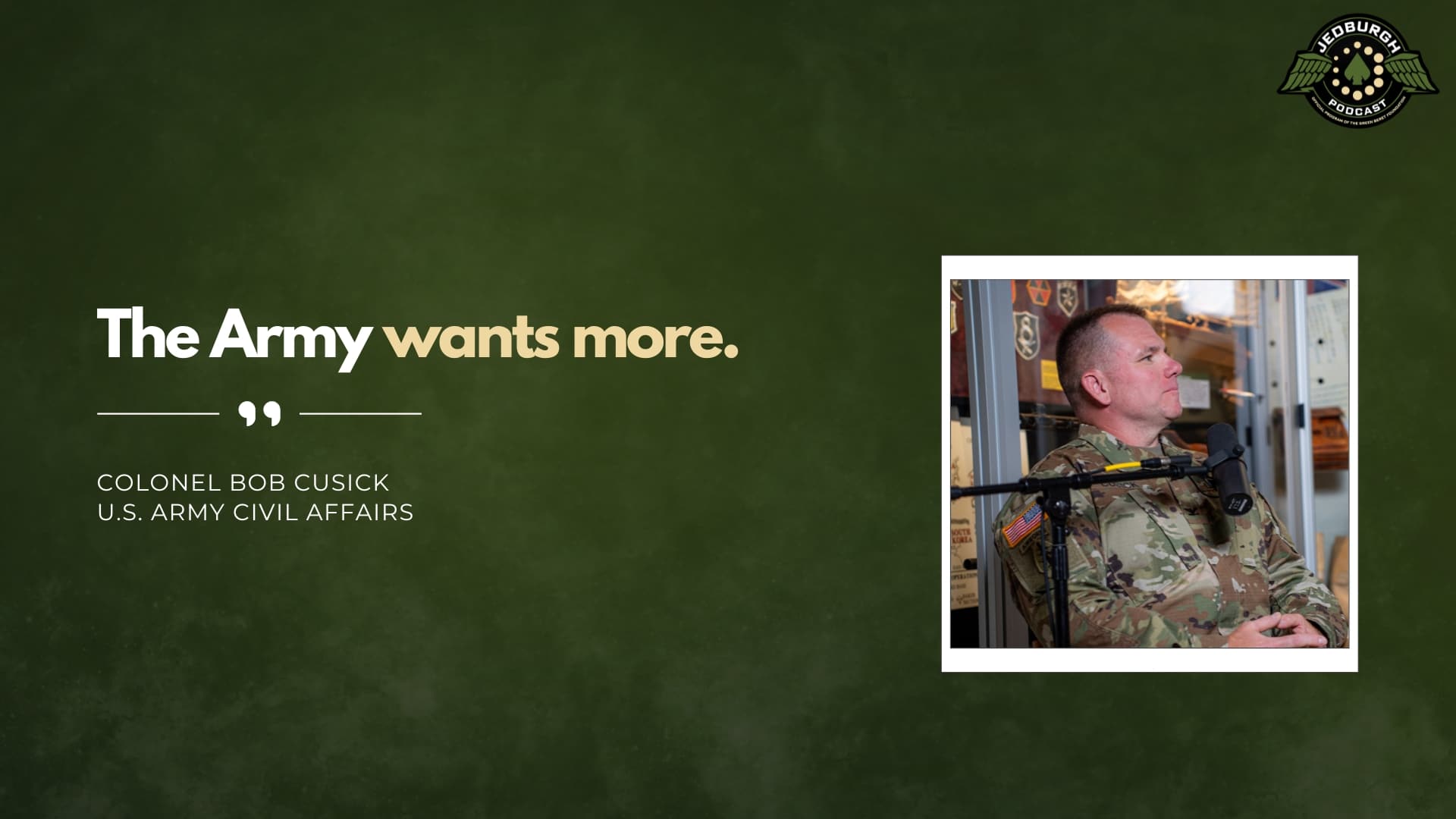
From the civil affairs perspective.
On the divorce of MOS, going back to myself serving in the 19th Special Forces Group, Active Guard Reserve. I saw for ten years how difficult it was to man, train, and equip, and keep those certifications for those specialty MOSs on an attachment and so forth. That’s just two groups. In the Reserve Civil Affairs, there are nine brigades. When we decided on the 95th, the switch from just one MLS for NCOs and one for officers to now specialized, three different pathways. One of those pathways becomes a Zulu, which is a team sergeant and higher within civil affairs.
They realize that the reserve and nine brigades is not scalable. It wasn’t feasible for them to transform in that same fashion. It’s just based on scale. There’s nine reserve brigades. They couldn’t create that type of specialty, and hence the reason. On that mark, there’s some phenomenal skills and capabilities that come out of the reserve civil affairs. We’re talking lawyers and doctors in their civilian role that when they get down range are huge value added. That’s the reason why, I believe, they had the divorce with the reserve component.
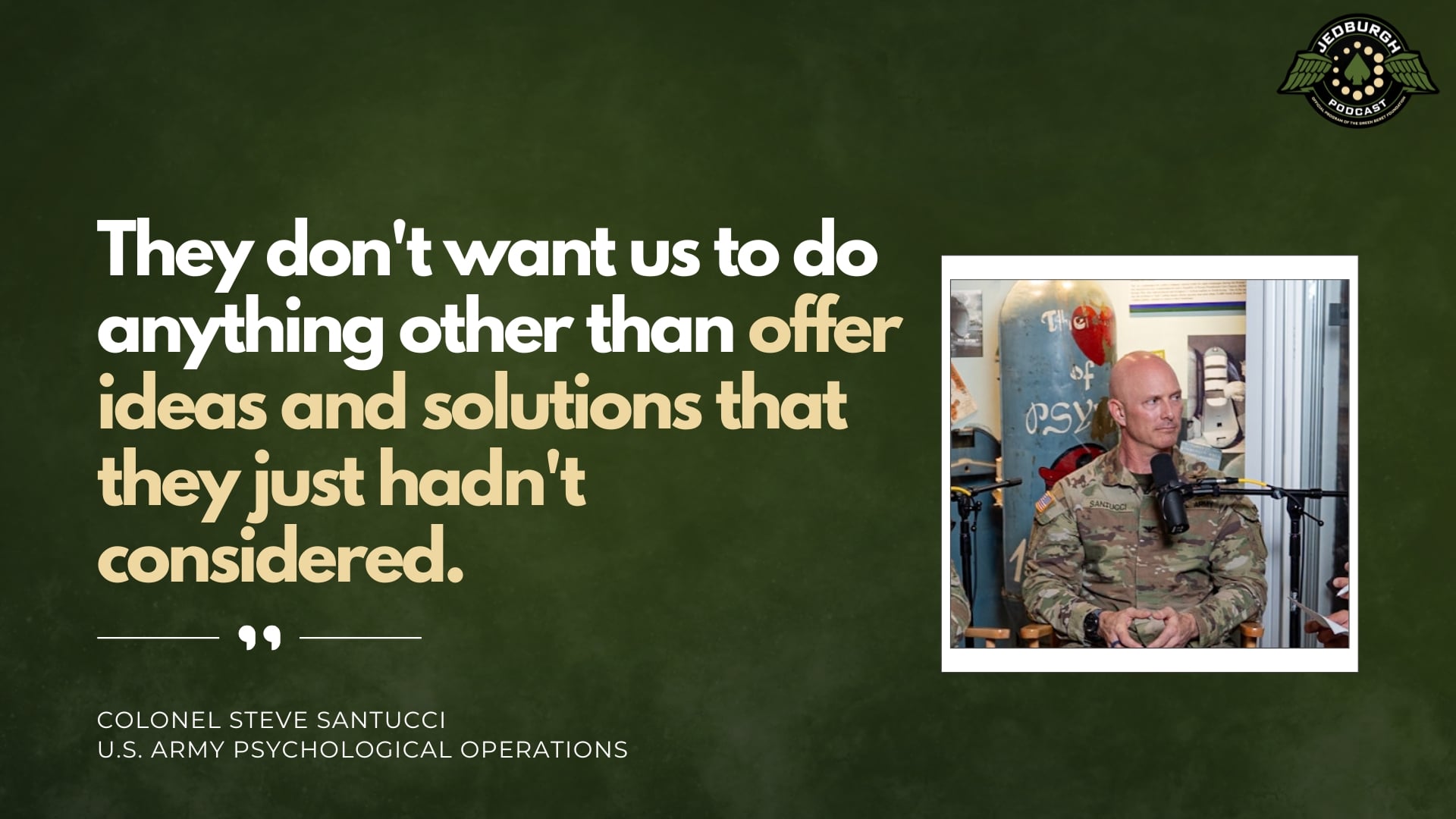
Elite capability demands creativity and emotional intelligence. The best operators solve problems leaders haven’t even considered.
Where are we going? We’ve spent a lot of discussion time talking about things like robotics, and the eighteen series. You’re now working on the robotics MOS enabler, Chief Gary Ostrander was talking about it again. You guys could be brothers, by the way.
I know. He’s got a great barber.
The battlefield is changing. When we look at the capability of UAS platforms and drones, how all of those things we never thought about. You used to be able to go on target with a cell phone like now you can. We had some great conversations with 18th Airborne core and their Joint Innovation Outpost and 18th Fires Brigade about some of the technology being used against us in terms of digital footprint.
These things are real and they’re here. Having done a similar series to this years ago on the other side of this wall, we talked a lot about large-scale combat operations. Every commander who sat in there, we said, “Large-scale combat operations.” It was this thing that was out there in the future. We knew it was coming and now we’re probably six months into the closest to large-scale combat operations that we’ve seen, which has been joint force heavy. We have to give credit to the Navy and the Air Force for some of the load these guys have carried over months. Incredible work. When you look forward into your respective specialties, what is the future of these organizations and their capabilities?
We’ve hit upon it a little bit, but if you look at the conflicts and the operations, the high-level stuff that we’ve executed or that the army, the Joint Forces executed under this administration. A lot of it’s been over the horizon. A lot of the deception and the influence and sleight of hand hasn’t been somebody on the ground in most countries delivering some kind of effect or even using a language. They’ve been using that creativity, that horsepower we talked about, and sitting from somewhere in the rear, integrating and layering all these different non-lethal effects to sell a believable story that allows our folks to get in and get out as quickly as possible.
It’s a hell of a mindset change that we’re trying to go through in the regiment. The guys want to fly drones, it’s exciting. As we look at the battlefield and the things we’ve talked about, it looks to me more like us giving some pod to some kind of larger drone operator and asking them to get those things into the environment for us or using the artillery or using some non-traditional means, but asking and tasking other conduits to get those things into the environment.
That’s different from what we’ve been doing all throughout GWAT. Where we were on the ground conversing with target audiences, handing out leaflets and handbills, and trying to persuade in that manner. It’s a big change to ask, and the boss has been very frank.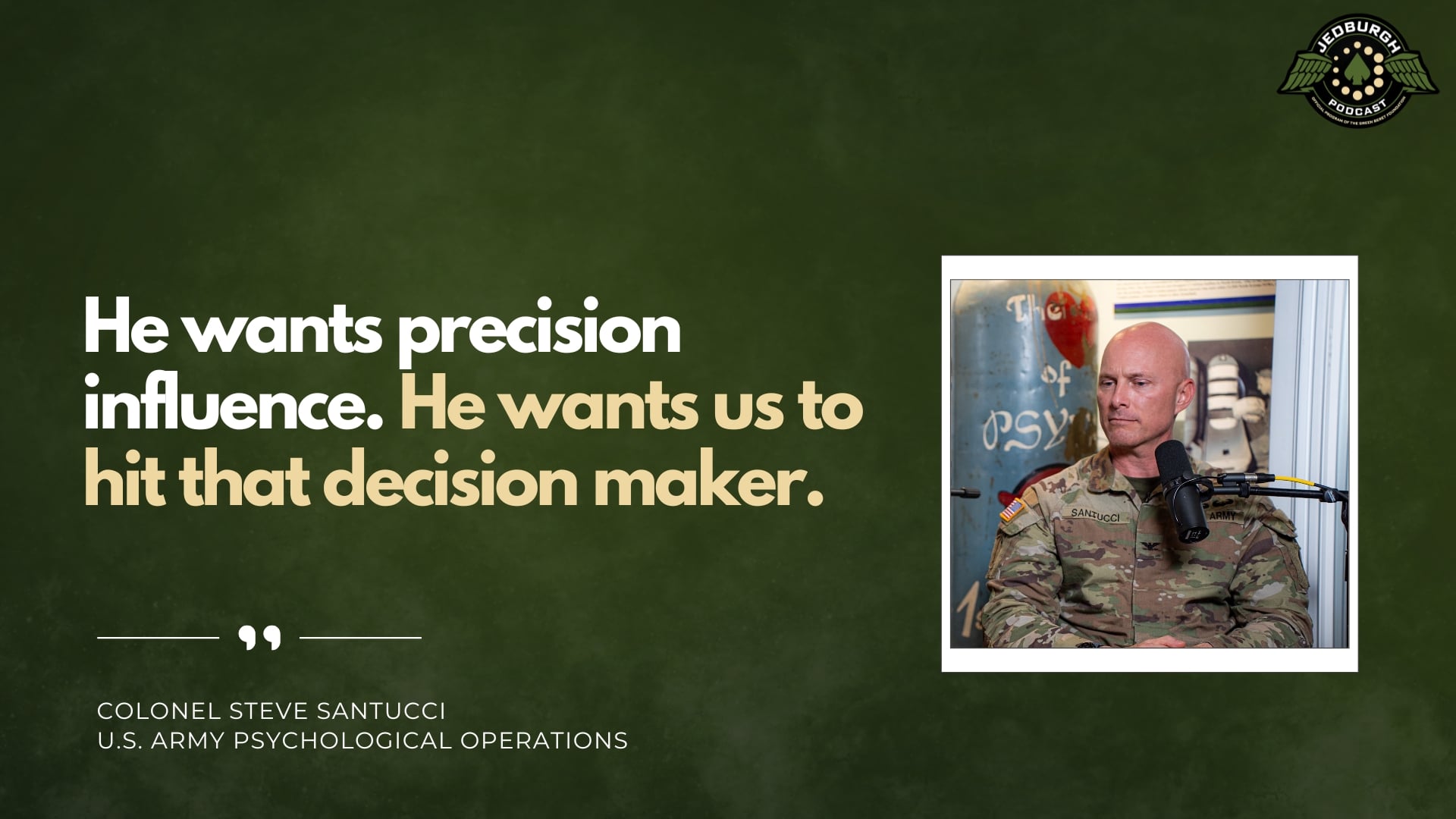
What’s old is new as well. Where are we going? Everything Steve just laid out, but don’t forget the Ghost Army, inflatable tanks, inflatable helicopters, deceit fake artillery tubes, just to give that sleight of hand or that decision space. Make no doubt. We’re dabbling in drone space. We’re messing around with AI. We’re looking at the latest technological things. Sometimes, what is old is new again. The Ghost 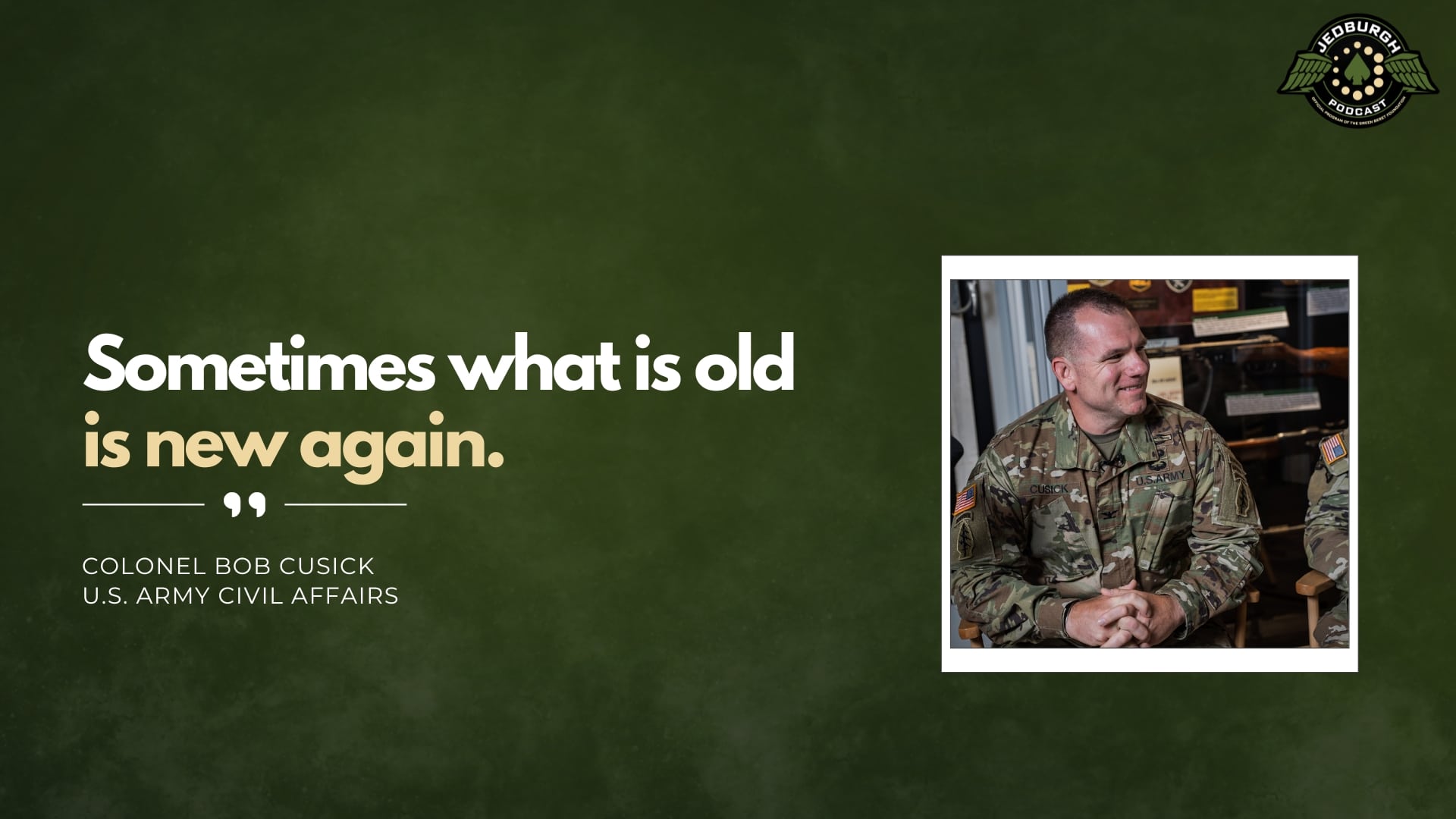
I completely agree. We see the future operating environment where our adversaries are continuously watching us. They have censorship and information dominance over us in many ways. It is keeping our old means of civil reconnaissance and network development of jumping into a truck and engaging people directly, but having multiple means to do it. It is using the digital space for civil reconnaissance. It is using UAS for civil reconnaissance. It is using our partners by with and through our partners for them to do civil reconnaissance. We’re looking at keeping the old ways because I have that flexibility, but building multiple modes of civil reconnaissance and engagement through multiple domains and dimensions.
Last question. Everybody’s been prepared for the test question. The word has gotten out. That’s the problem, then I got yelled at for not giving the test question to one group. As leaders, we’ve got to develop habits because if we have solid habits, our organizations have solid habits. They become our standards. They become our foundation. As soldiers in Army Special Operations, we have some that we’ve heard of our whole career. How well do we shoot, move, and communicate?
If we do those three things well, we don’t have to think about them when a more complex challenge comes our way because those are innate in us. We just know how to do them. What are the three things that you each do every day in order to be successful in your world, your habits, your foundations?
When I jumped into command, I asked the team. I said, “I don’t want any White space on the calendar. Outside of this one area where I need a little bit of time to think and decompress, the time needs to belong to the people.” I spend probably 50% of my day counseling and mentoring young soldiers and officers. It goes both ways. We all know this. It’s nothing mind-blowing, but listening to what they see at their level helps me be better in terms of how I operationalize or how I employ the staff to be better.
I’d say that’s probably the biggest thing that I believe I bring to the fight. The second is, listening. Talent management is an important thing that sometimes we neglect. A lot of the problems that Bob and I talk about, and I’m sure Jeff and I will talk about in the future, there’s structural issues. There’s equipment issues, but employment is the biggest issue. If the folks that were telling us what to do and where to go were more deliberate and took into consideration just how finite the capabilities are that we offer, that we’d be in a much better and more proficient space.
Making sure that we as the seniors identify those talented members and make the effort and the connection and the time to place them where they’ll be the best. Not necessarily where they want to go, but where we know they’re going to be successful and where we know that they’re going to be able to represent the equities of these formations and this tribe to the best of our ability. The third would be just challenging the staff. We have a big responsibility to the army as it relates to educating those members of our staff on how to be better future leaders. At the end of the day, we’re all going to walk away from these uniforms, whether or not it’s time or whether or not it’s just taken away from us.
If we could look back and say, we made ten versions of us that were going to be successful, whether they were low density or members of our staff, regardless of their career field, the investment, the talent management, the time with the people are probably all encompassing to what’s helped me. At the end of the day, we all know we just have to listen.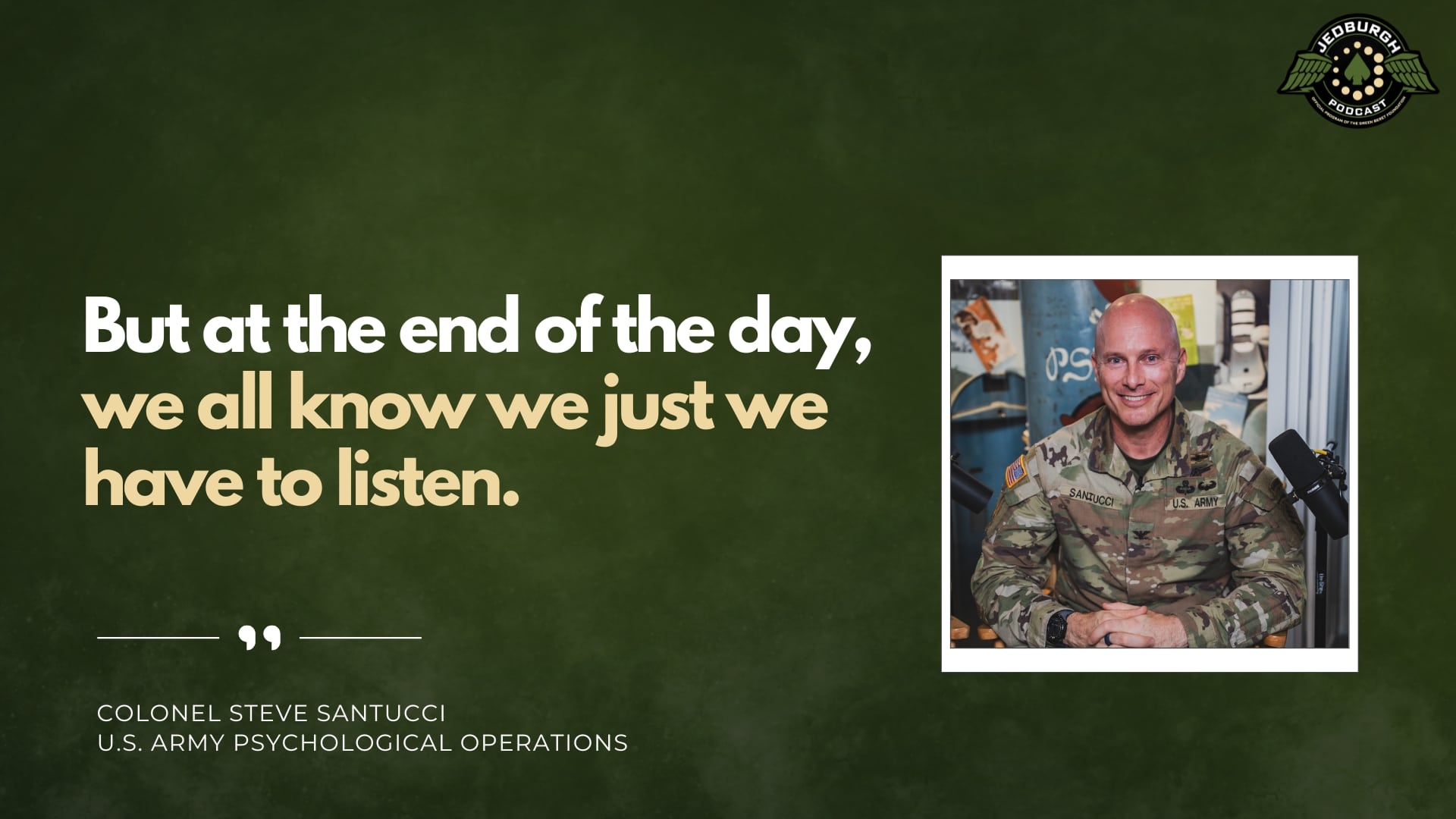
D minus on all your answers. They were not habits. I’m your best critic. Steve and I, in 2025 have been together. Your first one was a habit, but what do you do every day as a habit? I had time to think, so I got to sit back and criticize you. I get to sit back and think.
I can go and give Steve some time.
I thought your answers were excellent, by the way.
Steve quickly jumped into command mode. I mentor my people. I coach.
Thanks, Jeff.
If you’re always executing without pausing to think, you’ll never achieve your long-term operational vision. Protect your white space.
You’re welcome.
That’s tough love right there. It’s like, “You suck. Next man.”
I’m probably going to be an F. It’s okay.
My leadership development model starts off with the individual. If you’re at the company level, you’re focusing on individual and team. If you’re at the battalion leadership level, you’re focusing on the team and the company. If you’re at the brigade level, it’s the battalion and the company. If you’re looking at it like that, it all starts off with the individual. I’m a big believer in the newer holistic fitness manual. For the individual, like three habits that I recommend every day is investment in first a physical. I am not a morning person.
If I do not like to work out in the morning, I will be cranky. The physical is like the focus on what will keep you and your soldiers alive, downrange. Two, it’s an investment in the cognitive. That’s everything from, “My mentor told me I need to be reading Carl Sandburg’s biography and Abraham Lincoln six volumes. I’m doing that. I’m on volume three. Cognitive is also your language, your proficiency and invested in that.
The third that every individual needs to do and it depends on that individual is spiritual fitness. It could be family, God, or going out in nature bu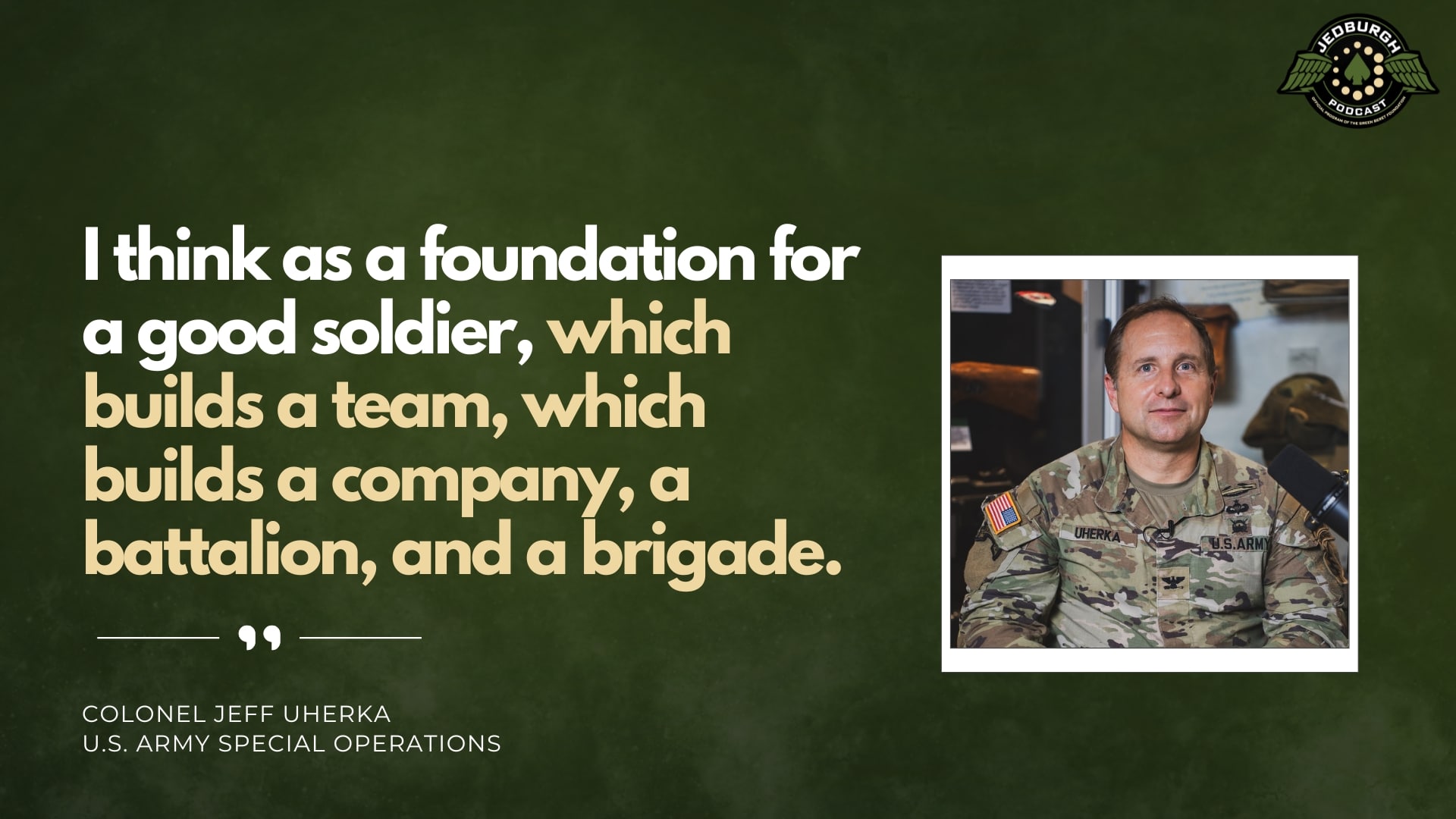
I blocked for two hours. I’m going to get an F here.
Are you going to grade him?
He did great.
Protecting White Space For Strategic Thinking
I’m always breaking their stones. Steve more than Jeff. For me, I have a bit of a green thumb. Habit, I get up every morning and I go out in the garden. I’ve got some monster watermelons in the backyard. Gardening is the first. My second Steve talked about it, time. Leaders need time to think. Leaders need time to prepare for coaching. Leaders need time to understand what’s going on around them, so they can issue clear sound guidance.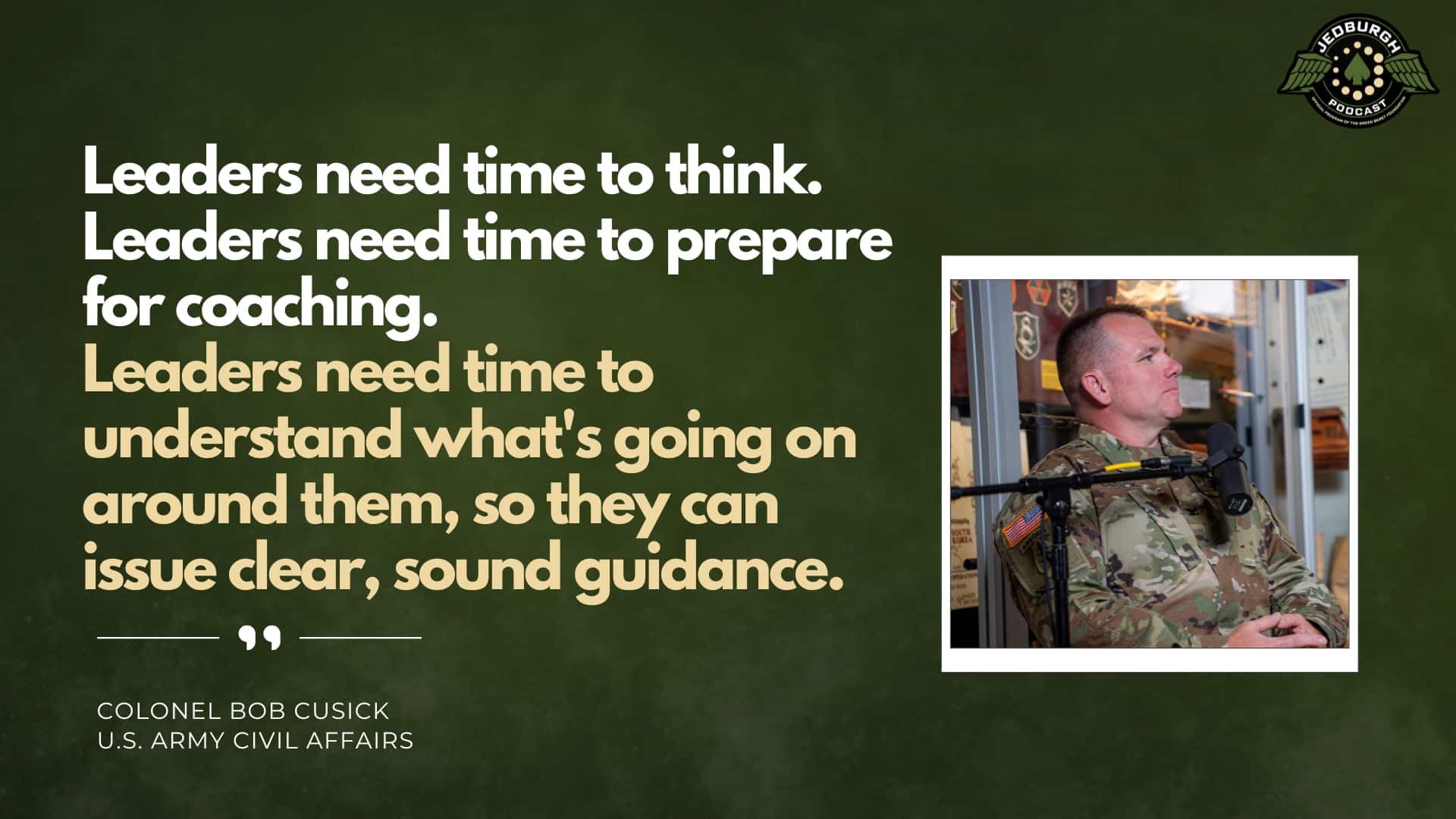
For me, third, is anybody you talk to that knows me, I’ll interact with the staff. Some of my best interactions are when I’m in civilian clothes and I go over to the barracks. The kids that live over there don’t know I’m a colonel. I’m like, “What’s going on in your world?” They just let it go but they’re the best conversations I have as a leader. Every day, I try to get somewhere I have not been or call somebody that I haven’t talked to in the last 30 days to see what’s going on. I always end the conversation, “What am I missing? What else can I do? What else did I not talk to you about?” To leave that door open for somebody to communicate.
I’ll tell you. There have been more times where I say, “What else?” That usually catches somebody off guard, and then something’s going on in their life or in their lives and you could then leverage the support that we provide to the men and women that we lead.
His third was your first.
If you think you’re convincing anybody that you’re not a colonel when you wear a civilian uniform in the barracks?
Sometimes I can figure it out.
First of all, it’s like, “Who’s this creeper?”
It’s true. Go over there and try it, though. Sometimes those kids will let loose, and then they’ll realize, “Who are you?”
Maybe because you’ve only been around for twenty months. I’ve been around this regiment for a while.
It worked when I first got here. This is much easier. The things I did say, I would say those are my habits. The people in this job are my habits. I’m a company man. This is what I’ve done my entire adult life, 30 years of it, and I love it. Now, I’d be wrong if I didn’t say that yes. Like Jeff, I do. I’ve got faith, and I have those conversations to make sure my mind is clear, which is part of that time space. As a family man, if I did not play basketball with my son or try to develop some kind of relationship with my teen daughters who don’t want anything to do with me, those things would all re-energize me. Those are my habits.
They’ll come back in a couple of years.
Placing psychological operations leaders at the helm of tactical groups expands how commanders employ non-kinetic combat power.
Any day now. I’m just happy to be here. I love being around soldiers, and this is my calling. Is that good enough for you?
I’ll give you a B plus.
I like it. A couple of themes where I got to spend time with our teams. They got to see leaders have to be present.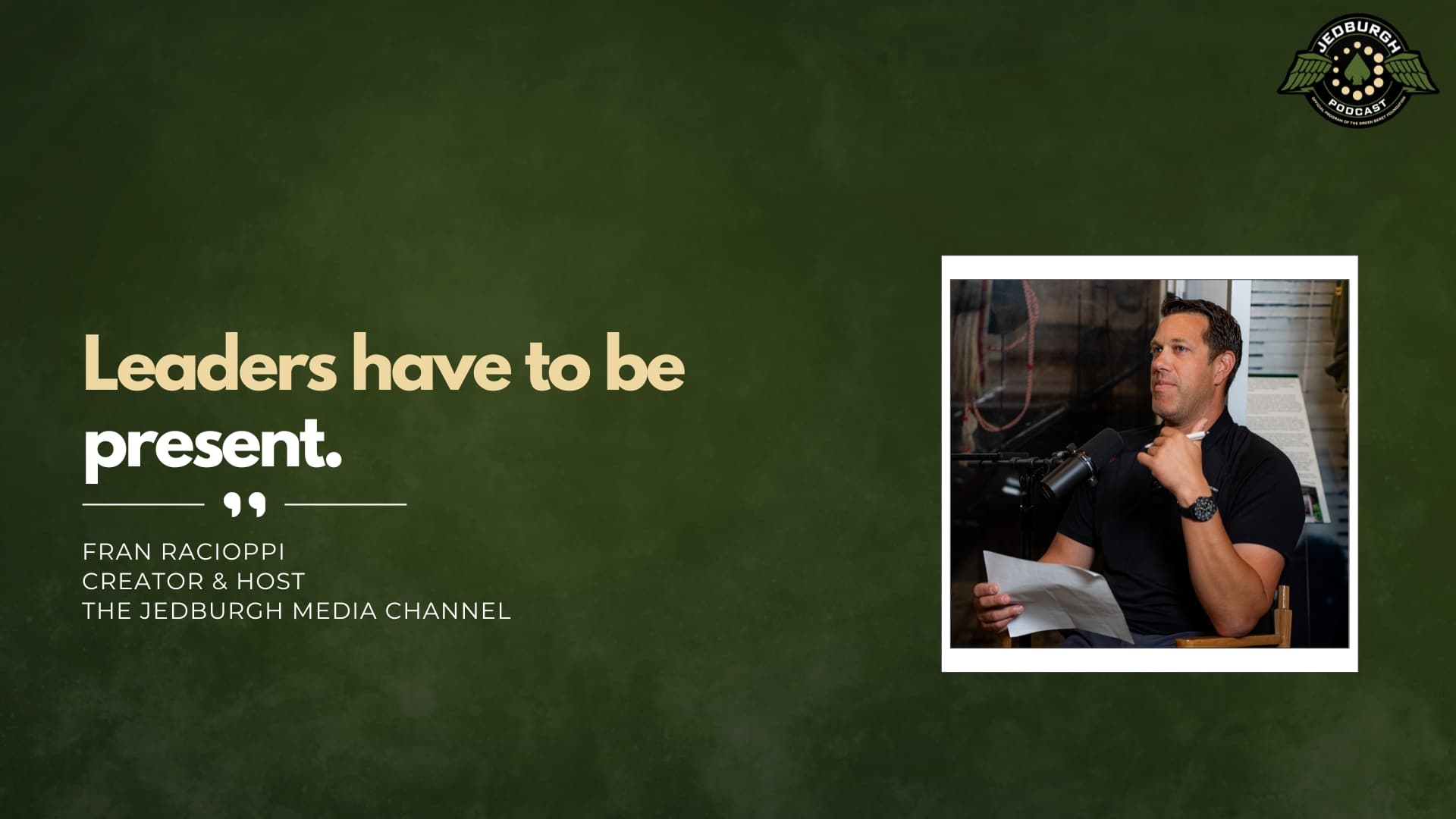
We talked about connecting with each other, but I want to say something about leaders who need time to think. There was a commander. When I was General Linder’s aide. We were rotating out and the incoming commander gave a talk and he said, “Leaders need time to think.” I was a captain and you know everything and nothing at the same time.
00:54:38 Was this a leader that replaced Linder, though? I know what you’re talking about.
It was, yes. I’m not going to say, because I don’t remember it.
Was it Buck Elton?
No, it was in South Africa. It starts with a B. He ran for Congress in New Hampshire. A good dude. You know what I’m talking about? What’s his name?
Policeman.
Don Bolduc. A good dude. Don Bolduc got out and said, “Leaders need time to think,” and I’m like, “What does that mean? That’s the dumbest I ever heard. Leaders need time to think. What are you talking about? Leaders need to do it.” I got out of the army and I was fortunate to have positions of increased responsibility. Honestly, greater than I did as a captain in the civilian world.
Fast forward to as a business owner, a scaling business, the biggest challenge, and my team will attest to this because I complain about it the most. The biggest challenge I have every day is that the phone doesn’t stop ringing and the action never ceases. That is because I need time to think, stop, take a step back, understand what’s going on and what is now my battle space. Think about my strategy, make a plan of action, and then focus my team on it.
If I’m constantly doing, we’re never getting to where we need to be based on the vision that I have and where I want to go. I think that we forget that because we’re assessed and selected, all of us because we’re doers. You’re always looking for work and you’re always going to make something happen but you have to be able to stop and think.
I 100% Agree.
There’s a lot of firsts in this conversation. Our first conversation about both civil affairs and PSYOP and the first argument we ever had about the three things that you do to be successful.
I couldn’t let the episode end without breaking Steve Stone. We have formed such a great relationship. I’ll tell you. I talked to Steve probably just as much as I talked to my wife and it was the same for Rusty Kim. We have to. Had we not talked, Steve told me coming in the job, and so did Rusty. There were times where just group commanders, I’ll leave it at that. MOS agnostics did not talk to each other. That’s a recipe for disaster. SF, Civil Affairs office, we got to communicate more.
I look back and I wish I had more communication with CA and SOF that I work with. I didn’t know for whatever reason. Different environment probably.
You always. You wish you knew now what you didn’t know then, or vice versa. I got that wrong, but I wish I knew then what I know now. I would have asked more of the SOF that were attached to me. I just think there’s a lot of goodness that can come out of communication. It’s starting at the captain, junior NCO level. Get to know each other. It’s a capability that can be employed across the force and it’s only better when it works in harmony. Steve’s heard me say that before.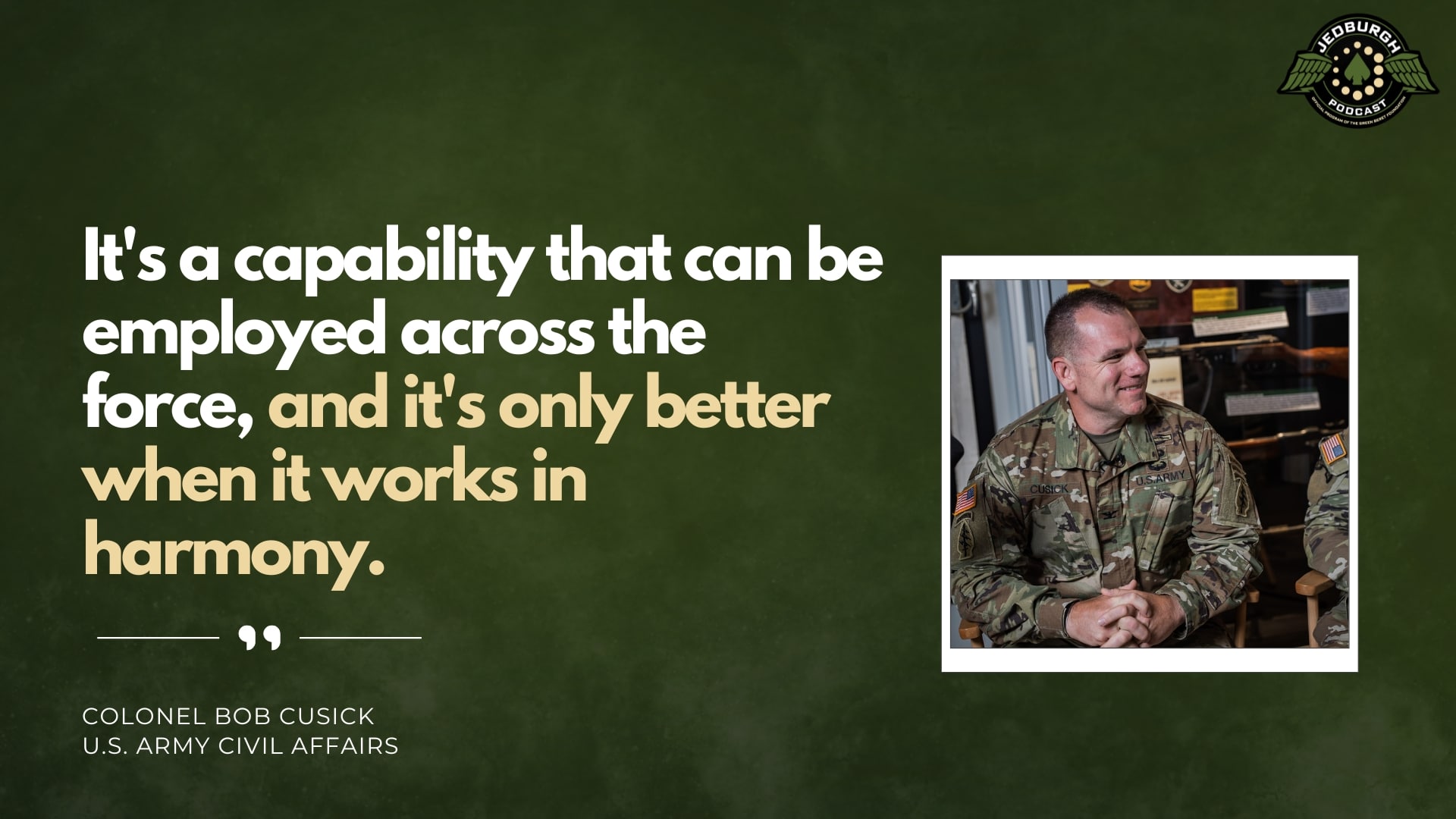
I appreciate your time. Thanks for sharing where you come from, where you’re going. It’s an important part of what this organization does. As we embark on what is today’s battlefield, and I won’t call it the modern battlefield, and all these other terms they’ve given because it is here now. We’re in it, and we need you guys.
Thanks.
Appreciate it. Thanks for having us.
Important Links


