For over three decades, retired Colonel Stu Bradin served on the front lines of some of America’s most critical Special Operations missions from Central America and the Balkans to Northern Africa and Afghanistan. He led Special Forces teams under fire, built NATO’s Special Operations Headquarters from the ground up, and ran multi-national, interagency fusion cells in the heart of combat zones.
But in 2014, Stu Bradin saw a different kind of threat emerging: disconnected allies, stovepiped intelligence, and fragmented Special Operations communities. He knew the next fight against cyberattacks, transnational crime, and terrorist networks would require something we didn’t yet have: a global SOF network. That’s why he created the Global Special Operations Forces Foundation (GSOF); the first nonprofit dedicated to uniting Special Operations military, government, and commercial partners across the world.
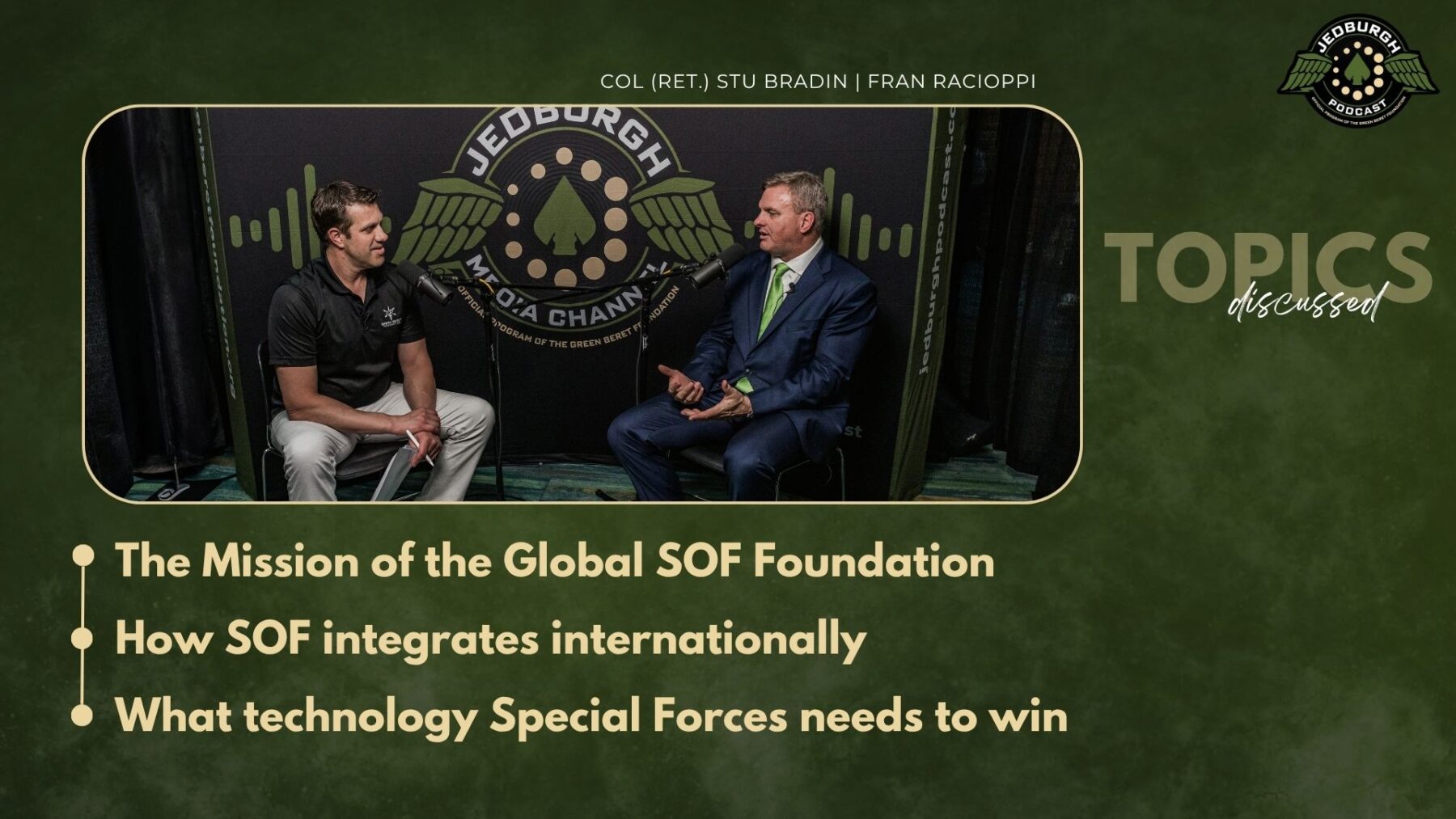
Fran Racioppi sat down with Stu during this year’s SOF Week to talk about why he founded GSOF, what it takes to bring together over 60 nations and 85 industry partners, and how his experiences building NATO SOF HQ and leading interagency teams shaped the Foundation’s mission. They explored what elite leadership really looks like at the global level, the danger of operating in silos, and why SOF must evolve its mindset as rapidly as its technology.
Stu also broke down how GSOF accelerates innovation, helps SOF units and partners connect in real time, and creates space for public-private collaboration that can meet the speed and complexity of modern threats to answer the hardest question of today; what must Special Operations become to win the next fight?
This episode is about global leadership, unity of effort, and how one Green Beret’s post-military mission is helping shape the future of Special Operations across the world.
The Jedburgh Podcast is brought to you by University of Health & Performance, providing our Veterans world-class education and training as fitness and nutrition entrepreneurs.
Our SOF Week 2025 Series is made possible in part by Accrete.ai; solving business’s most complex challenges today through technology of tomorrow.
Follow the Jedburgh Podcast and the Green Beret Foundation on social media. Listen on your favorite podcast platform, read on our website, and watch the full video version on YouTube as we show why America must continue to lead from the front, no matter the challenge.
—
—
Stu, welcome to The Jedburgh Podcast.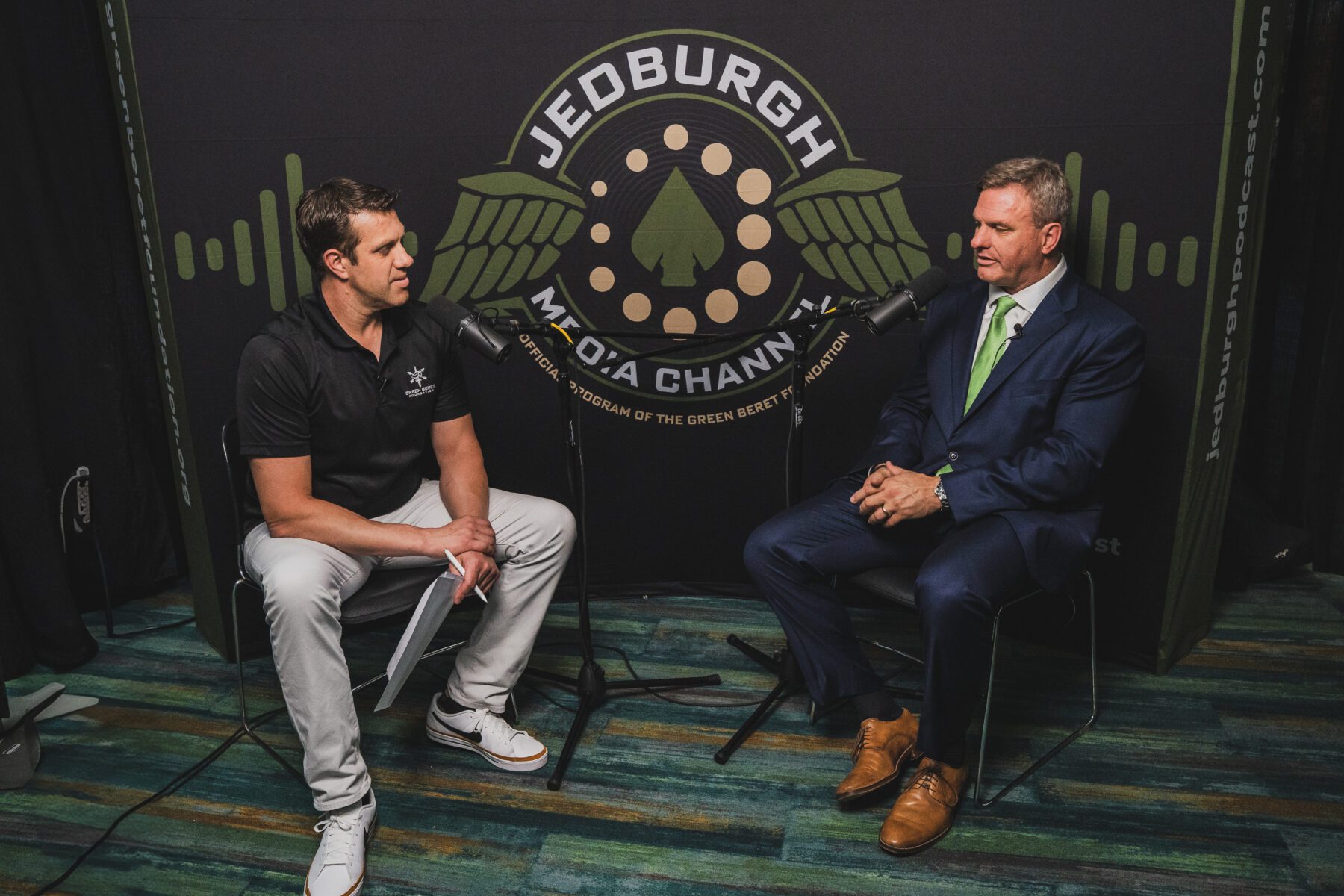
Awesome. Thanks for having me.
We’re on the floor at SOF Week. We’re in the Tampa Convention Center. This is the brainchild of the combination of SOCOM and the Global SOF Foundation, which you are leading and have been for the last several years. What an absolutely incredible event.
Thank you. Great team effort. We got a great team that put this together. A lot of folks are involved. There are probably 1,300 people involved in making this go.
We’re sitting underneath the escalators. We’ve commandeered what, as somebody informed me a few minutes ago, had been a storage room, and I said, “Actually, it looks a lot better as a podcast studio.” Put your storage stuff behind there, but Jason’s over here laughing.
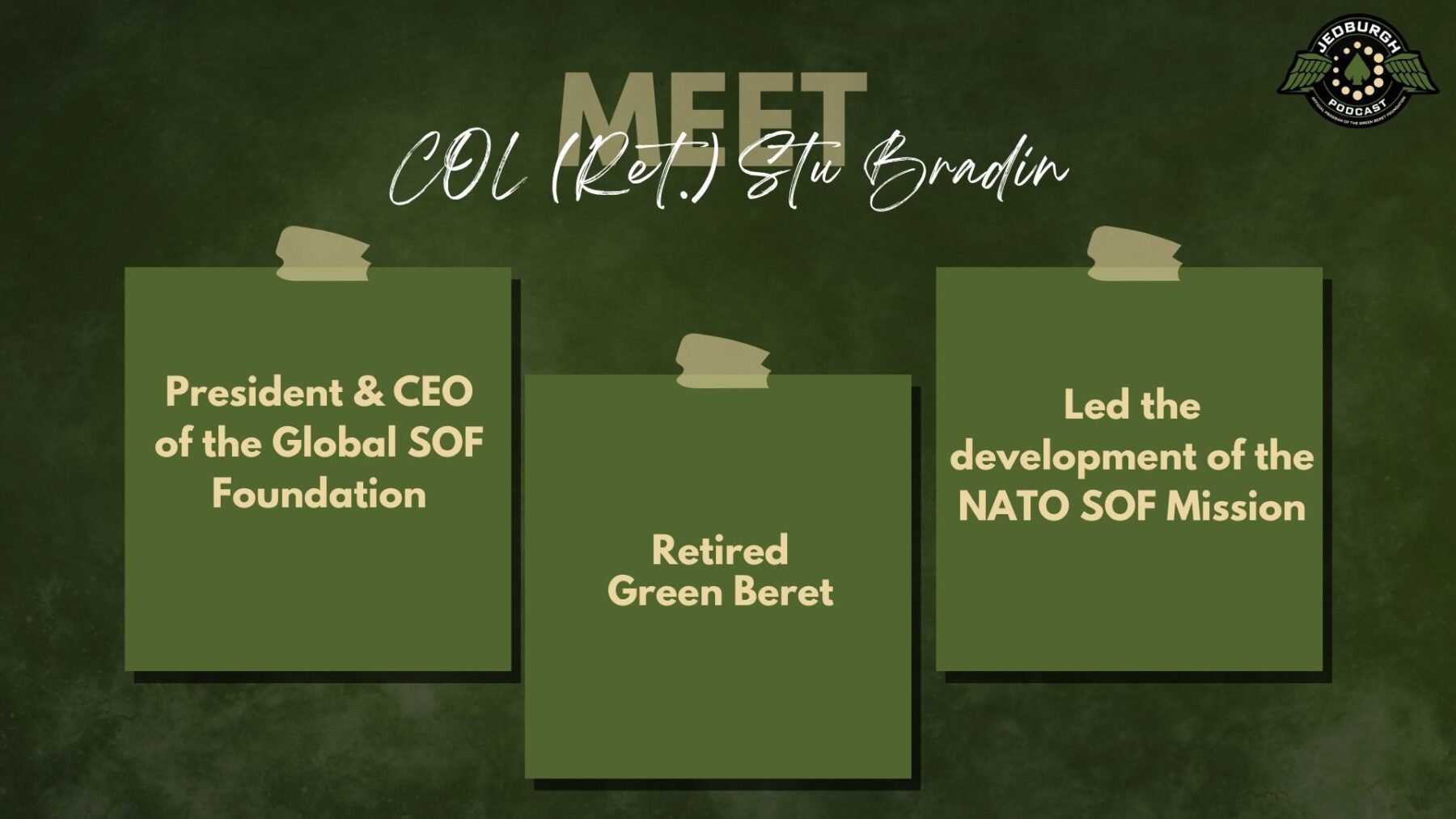
In 2024, you had over 19,000 people. You’re expecting to meet that. There are over 800 different vendors who are presenting out here on the floor, across multiple venues out here in the bay. They have multiple floors here in the convention center. The whole goal of SOF Week is to present to the global Special Operations community the capabilities that exist for their organizations. I want to start by asking you about the Global SOF Foundation, the importance of it, and why it’s so involved in bringing the global SOF community together.
I retired from SOCOM in 2014 with 32 years. I’m a quitter. I worked for Admiral Bill McRaven for the last few years that I was in the military. I ran an operational planning team firm at SOCOM, and one of the tasks we had was to support the US Geospatial Intelligence Foundation’s geo here in Tampa. Of course, nobody at SOCOM wanted to cooperate with them. Adam McRaven sent them to me and said, “Fix this.”
In the process of supporting them and getting geo in here in Tampa, which was awesome, we brought in operational commanders to talk about how they use geospatial products and change it. Not nerds talking to nerds, but operators talking to the engineers. It was really a good experience for me in the entire time. The folks at USGIF kept asking me, “Why doesn’t SOF have a professional association?” I’m like, “I don’t know.” I didn’t know what a 501(c)3 was. Every time I Googled it, I was more confused. We had something for SF, we had something for seals, but we didn’t have anything. We just didn’t have that.
I was getting a lot of very good offers from the private sector to come join it, and I just wanted to keep serving and so we created GSOF. We started in 2014. In 2020, we were designated by the US Department of Defense as a National Military Association. We’re on that short list with USAA or AUSA, Navy League, Air Force, Marine Corps Association, all those folks.
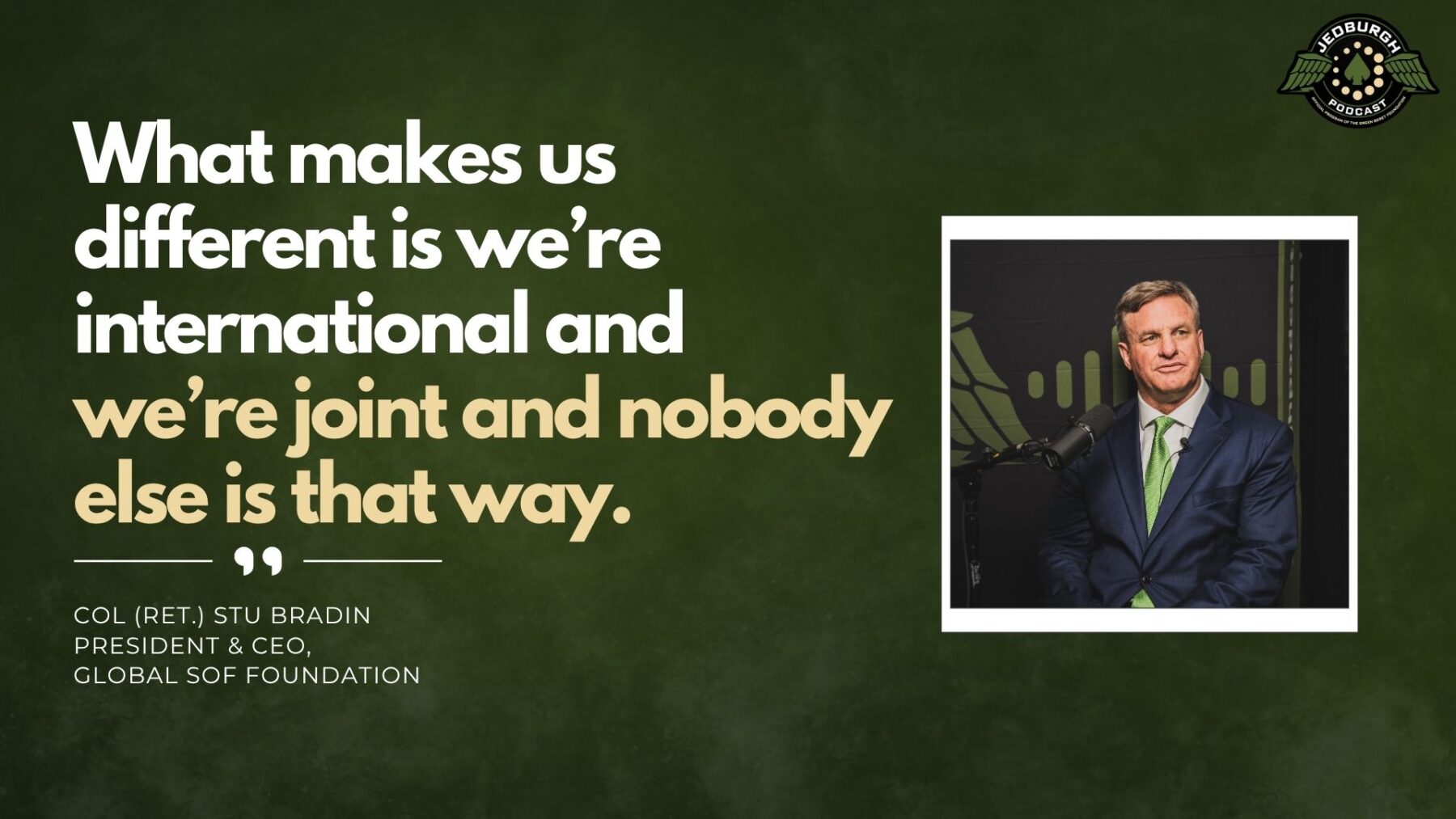
What makes us different is we’re international and we’re joint, and nobody else is that way. It’s pretty cool that we’re doing that. We’re also the new kids on the block. We have great interaction with all the other professional associations. We enjoy working together and with each other to help each other out. Not many people see that or know that behind the scenes.
One of the cool things about being a National Military Association is you get to support SOCOM and SOLIC with their national convention. We met with General Clarke and Master Chief Greg Smith at SOCOM. We pitched them and we had a lunch at the SOCOM headquarters. He said, “We think you ought change SOFIC to SOF Week.” We just made up SOF week. We could’ve called it anything else. It sounded cool at the time. It was easy. General Clarke liked the idea. He understood AUSA, he understood the whole national convention. Part of what you have to do as a SOF commander in a joint environment is you have to unite your tribes.
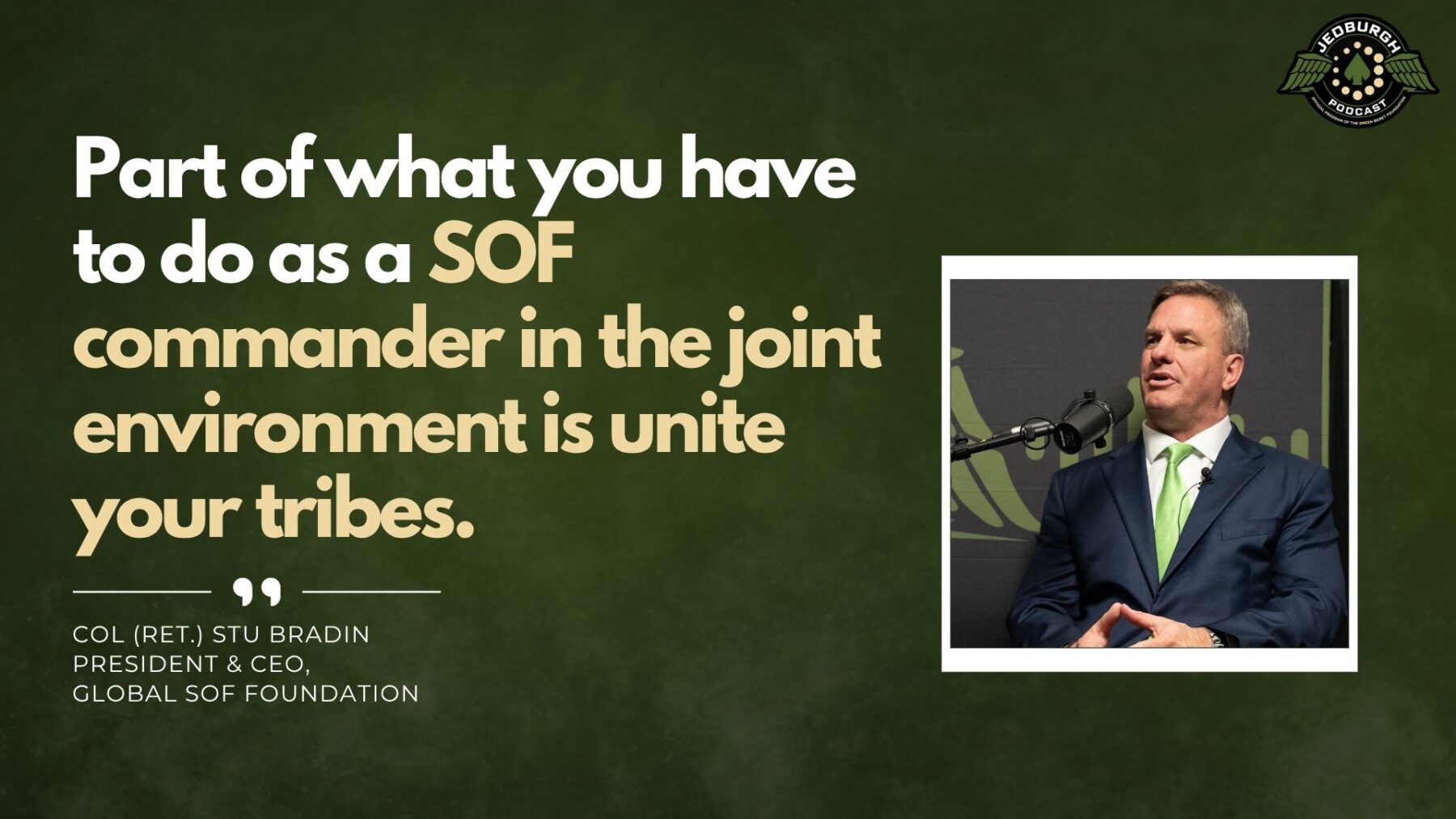
Sounds real easy, but we all know that you have all these Type A meat-eating personalities that are all rogue warriors at the heart of everything. For the SOCOM commander to convene his entire enterprise as well as the international community in a single location, that’s what it’s all about and stuff. SOCOM decided to go with SOF Week. We won the solicitation. We ran our first event in ‘23. I think we’re on track to hit close to 23,000 people, attendees that actually come in and attend the show. We have over 800 exhibitors. What I’m really proud of is, I can give you the statistic now, in 2024, we had 711 exhibitors. Of the 711, 509 did not exhibit in 2023.
You’re seeing new capability, new technology. You’re not seeing the same old stuff. We have 327 corporate partners in Global SOF Foundation, and we encourage them not to bring the things they’ve already sold to the government. We’re looking for new technology, we’re looking for a lot of new things. We’ve done pretty good. We’ve got a lot of new things that we’ve added to the event, and we’ve basically completely reorganized from top to bottom.
Talk about the small business forum. Sitting actually behind us are a number of different breakout rooms, and they’re all coded. The small business forum, small business rooms. There’s been a big push at the federal level and even and at the state level. My security and operations company, FRsix, focuses in the small business market and the service disabled set aside market in New England, and primarily in New York, but there’s been a lot of push in governments in order to get small businesses involved. How come that’s become a priority of the organization too?
Honestly, for SOCOM, Fran, it has been forever. You’re required to have about 30% of small businesses, but SOCOM is well above the 40% level on everything they do. If you’ve been around, I’ve been doing this for many years now, the innovation comes from small businesses. It’s some person in their garage, they’re coming up with the flux capacitor, whatever it is that’s awesome and neat and new and inspiring. At some point in time, they have to scale. That’s when the bigger businesses come in and they either partner with them or buy them. What you’re seeing now is most of your mergers and acquisitions for small businesses is with private equity because it’s lucrative.
There’s a lot going on in the national security world, the defense world. That’s a new player in the game, private equity. They come in with money, they can infuse the situation. Publicly traded companies can’t do that. They don’t have the same level of flexibility and stuff. The small business is really important because that’s where your innovation is. In GSOF, we have about 220 small business partners in our organization. You’re seeing a big push right now by senator Joni Ernst. She’s now the chair of the Small Business Committee in the Senate. She’s got huge legislation going.
Most people don’t know that about 78% of all the money goes to publicly traded companies. That’s not what Congress envisioned when they created the small business set aside. It’s taken a left turn. Senator Ernst has got a phenomenal coalition, a bipartisan coalition to fix that. You’re going to see it fixed and stuff. It’s good for big business. Our big corporate partners are very much in favor of having the small businesses. They’re very critical to their teaming and partnering on major contracts. They also buy them up.
It’s, why innovate when I can just buy you? That’s not that’s business. That’s good for everybody. That’s not a bad thing. A lot of the smaller businesses get awarded a contract and they can’t scale. They get bought up or they partner with a larger company that can actually do the scaling. Most small businesses fail because of catastrophic success, not catastrophic failure. They win a contract and they can’t produce the numbers and do the stuff. It’s a symbiotic thing, it’s a love-hate relationship, but they’re very important to SOCOM and they’re very important to GSOF. If you want innovation to keep happening, you’ve got to keep supporting small businesses. That’s just a fact.
I want to ask you about innovation, because as you mentioned, we’ve got over 800 vendors here out on the floor, and it’s a whole range of things from the most tactical MO pouches and kit to missile systems and USAVs and drones and all, all sorts of stuff out here on the floor. Innovation is always at the forefront of, when we talk about military readiness, preparing for the next conflict.
I’ve been very fortunate to sit down with Sergeant Major of the Army, Mike Weimer, the former Sergeant Major of the Army, Dan Dailey, sat down with General Braga and General Ferguson. We’ve spoken about innovation and technological advancement in every single one of those conversations, including my conversation with Colonel Gabe Szody at 5th Group, where we talked about what it looks like to change the MOS pattern in the ODA now to actually incorporate a robotics or a UAV technology-driven MOS. It’s a two-part question here. Number one, how do you define the next battlefield as we see it? Why is the technological advancement more critical now than we’ve seen in past conflicts?
I’ve been to Ukraine. I helped stand up their Special Forces in 2015, helped them build their joint SOF headquarters. The 10th group came in right after that and started partnering with them. They did a phenomenal job up until the point in time they got pulled out. If you go to Gaza, and if you look at Ukraine, and I’m not trying to fight the last war, but I’m just telling you what I saw that scared me, you can’t mass. If you’re wrapped in metal, you have zero probability of survival. You’ll be detected and you’re going to get hit.
Tanks and armor.
Everything. Helicopters, jets, everything. If you are wrapped in metal, you won’t make it and I watched it. The other thing is, EW, electronic warfare. I’ve never seen anything like it. I grew up in the 11th Armored Cav as a 19 Delta Cavalry Scout on the East-West German border, watching the Russians watch us. In the old days, their EW, they would just jam every band, shut down everything.
Now, it is extremely precise. It’s extremely sophisticated. I tell you right now, almost every drone that we send over there does not work after 30 days. Less than 30 days. I give it 30 days, but usually by the 14-day mark, they have figured it out and shut it down. What’s interesting is, in the old days, our engineers would sit back in the United States in an air-conditioned laboratory somewhere with great computing capacity, trying to figure out work abounds.
You can’t do that anymore. They’ve got to be forward, and they’ve got to be close to the operator because you don’t have weeks and months to do it. A lot of the innovation is happening, I’m not kidding you, at the flock. It’s crazy to see a bunch of nerds up there. It’s awesome, though. You want to see the entrepreneurial spirit, watching people just work through tremendous problems. Watch the Ukrainian Special Operations with the engineers. It’s amazing.
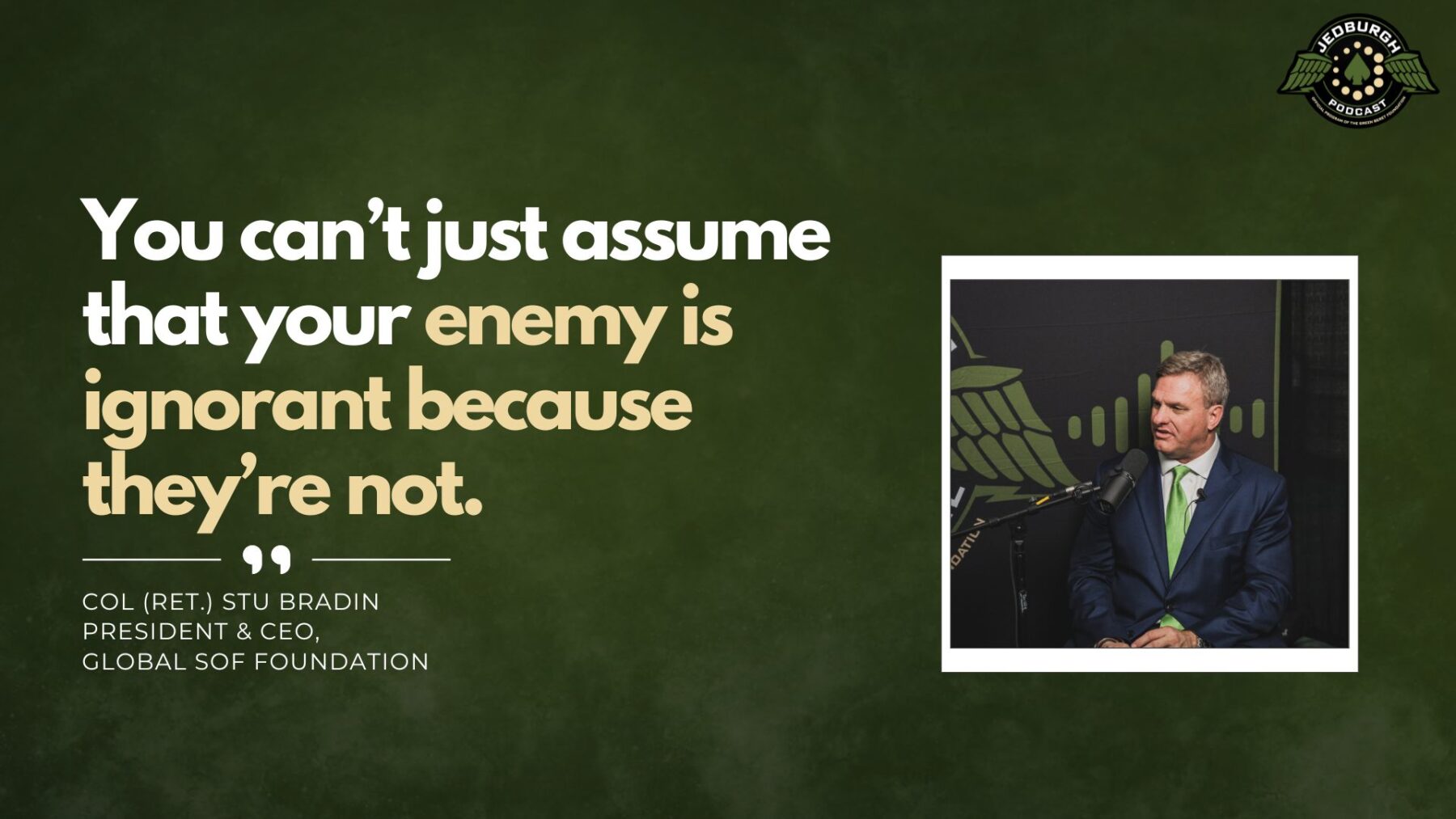
It’s the same situation in Israel. You can’t just assume that your enemy’s ignorant because they’re not. A lot of these technologies have proliferated everywhere. It’s evened up the battlefield quite a bit. You can’t mass anymore. In the United States of America, we have a problem because most of our military’s are nondeployable. It can’t deploy. It’s too big. It’s too heavy. It takes too long to get there. When it does, it has to do it in a permissive environment.
Who the hell is going to give you a permissive environment to do this in? Every doctrine in the world is to deny you permissive entry into the battle space. All these huge formations that we think we’re going to get in are not going to get in. Once you get in there, you can’t employ them because they’re too easy to detect. All these long-range fires, they’re popping you 1,000 miles out. Everything is precision. When General Berger was the Commandant Marine Corps, and he got rid of tube artillery and tanks in the Marine Corps, they called him everything but his Christian name. People hated him. All these old Marines wanted him dead and killed.
Now the guy looks like Nostradamus because everything is FMV, it’s precision. It can go a long way. It’s got endurance. It could stay on target. A lot of these precision fires is just so accurate now that it’s just hard to survive. One of the coolest things I saw in Ukraine was infantry guys on electric bikes at night with NVGs flying down the road. You think it’s crazy. The guy leans over to me in his Ukrainian accent and will tell you that they can probably get two of them, but you can’t get all of them. In a BMP or a BTR, you’d get all of them and you’re not doing that.
Folks are being innovative about how they approach the battle space and stuff. I just think you’re seeing a lot of things. The technology. You’re going to see more space-based stuff. AI’s going to change everything with predictive analysis. You’re going to be able to, within three years, plan operations within 80% to 85% probability of accuracy.
AI will change everything about combat power with predictive analysis. Within a few years, military operations will have 80% to 85 probability of accuracy.
You’re not going to need tons of stuff. Mass was designed to break formations, and now, you’ve got these long-range fires and stuff. You can be very precise. Especially, we are in a non-contiguous environment, for the Rangers, that means non-touching. We’ve fought in a non-contiguous environment for a lot of our war stuff. The space that’s between those contiguous entities is who governs it, who secures it. A lot of that’s going to be done through autonomous systems.
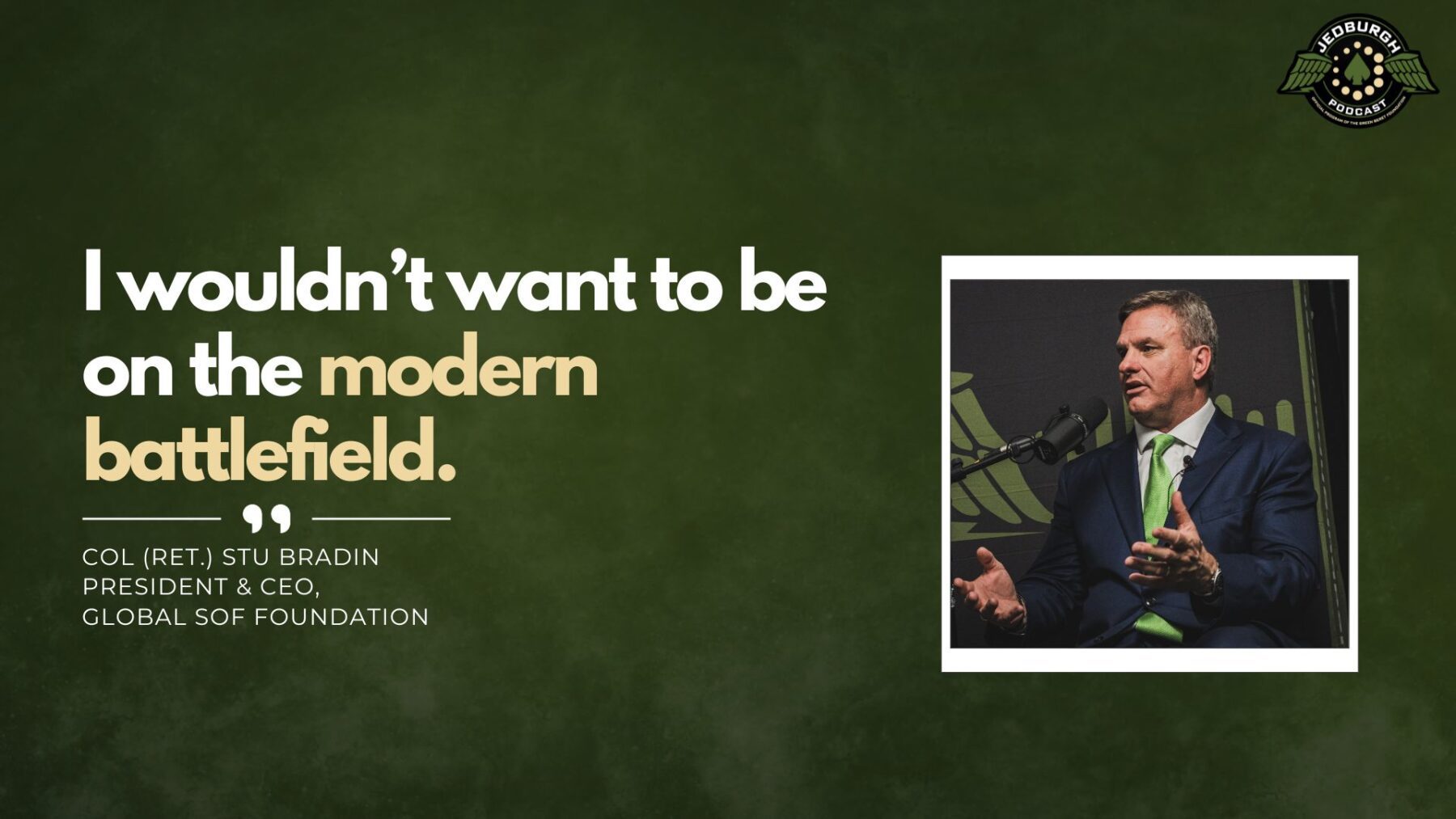
I wouldn’t want to be on the modern battlefield now with thermals and people being able to detect you. I don’t see stealth technology coming out in the way I think it should be. It’s out there, but it’s not being resourced. I think the value of Special Operations in all of this is AI can’t give you a personal relationship. It can’t do it. Only you can do that.
I think that matters tremendously. Personal relationships between people enabled by AI and all this technology is an incredible fighting force. AI can’t do crazy. If MacArthur went up to AI and said, “I want to do the Incheon Invasion,” the worst location in all Korea to invade, AI would’ve told him, “Don’t do it. You’re out of your mind,” and we’d never have the Incheon Invasion. Those are some of the things.
I think when you have personal relationships mixed with technology and people who think forward, look at this venue. Nobody does this. There’s no other service that does this. You bring in all these different countries, all these different technologies. Who does this? No disparaging, but only SOCOM can do this. I’ve told this 100 times, if I was Secretary of the Army or Secretary of Defense, I’d give him a line-item budget to run this every year.
I don’t know how many ministers of defense are here, chiefs of defense, they’re not here just to hang out in Tampa. They’re here because they know this is valuable to them. They understand the value of Special Operations to their formations, and then they know that this place is just jam packed with technology. Half the stuff I’ve never seen before is cool. I would like to take half of it home and play with it but they don’t let me do that.
You don’t have the right authorizations for that. There are a couple of lines that I want to pull a little deeper on. Number one, you talked about the partnership aspect of things. In the conversation in your explanation, we’ve heard the term and use it all the time. You have joint and combined. Joint being the interoperability between Green Berets, SEALs, Army, Navy, Marine Corps, Air Force and we got our Coast Guard brothers are out there on the water protecting.
 Now the Space Force too, which I’ve got to remember because there was no Space Force when I was in. You have the combined aspect of it. The combined aspect is the international partners. As SOF, we understand that our mission is to operate and work by with and through, because that’s our combat multiplier. That’s how we take a 12-man detachment, we put it forward and we partner with 400, 800 of our partners and we don’t have a 12-man force. We got an 812-man force.
You see that front and center here when you walk the floor and you see different uniforms and everybody walking around. You see that here in SOCOM, too. I think the numbers 26 or 27 LNOs or 28 liaison officers that sit in the headquarters here, whose sole job it is, is to coordinate SOF interoperability between US Special Operations and their host nations’ Special Operations capabilities.
Allies have been front and center in the national debate for years. We really saw NATO come back into the forefront of discussion with Russia’s invasion into Ukraine several years ago. You were an instrumental part of NATO in your 32 years of service, as well as your time serving at SOCOM and in JSOC, working hand in hand with our NATO partners.
Talk for a minute about the importance of NATO, why that’s an organization that America has to continue to put at the forefront of our national security policy and why SOF continues to put the interoperability with our SOF partners at the forefront of their strategy. You heard General Fenton talk about this in Congress.
I’ll give you a quick history of the whole NATO SOF headquarters, now called SOFCOM real quick. In 2004 at the Olympics at Athens, Greece, it was right after 9/11, and we really didn’t have anything SOF-wise because in those days we had a maritime land and air component in NATO. We did not have a SOF component. What we needed for that event was a SOF component headquarters.
In those days, only three countries could do it, US, UK and France. I love my French and British brothers, but for them to do it, they’d have to shut down every other operation they were doing worldwide, which is not feasible. The US could bulk up and do it. Thirty days out, Secretary Rumsfeld said, “NATO, the US will be the framework nation for the SOF component in Athens.” Of course, we did the Olympics, nothing bad happened. A bunch of staff officers came away from that and said, “We need a NATO component.”
That got built by General Jones, but the people behind that was Adam McRaven, General Adrian Bradshaw and General Benoit Puga, the French, the Brits. At that time, they said, “There’s only three countries that can do all this. We can’t survive if we don’t do it.” Fast forward to where we are now, there are seventeen countries that can now be the NATO SOF component.
They’re certified, they have the capability, they have the equipment. It’s not some hocus pocus crap. They can do the mission. When you look at partnerships and what you do to develop it, now you’ve got Europe as a very mature SOF environment. The real question now is that how do we get them to do things outside of Europe? The big focus right now is the Indo-Pacific. I tell the Europeans this every single day, that 40% of their GDP flows to or through the Indo-Pacific.
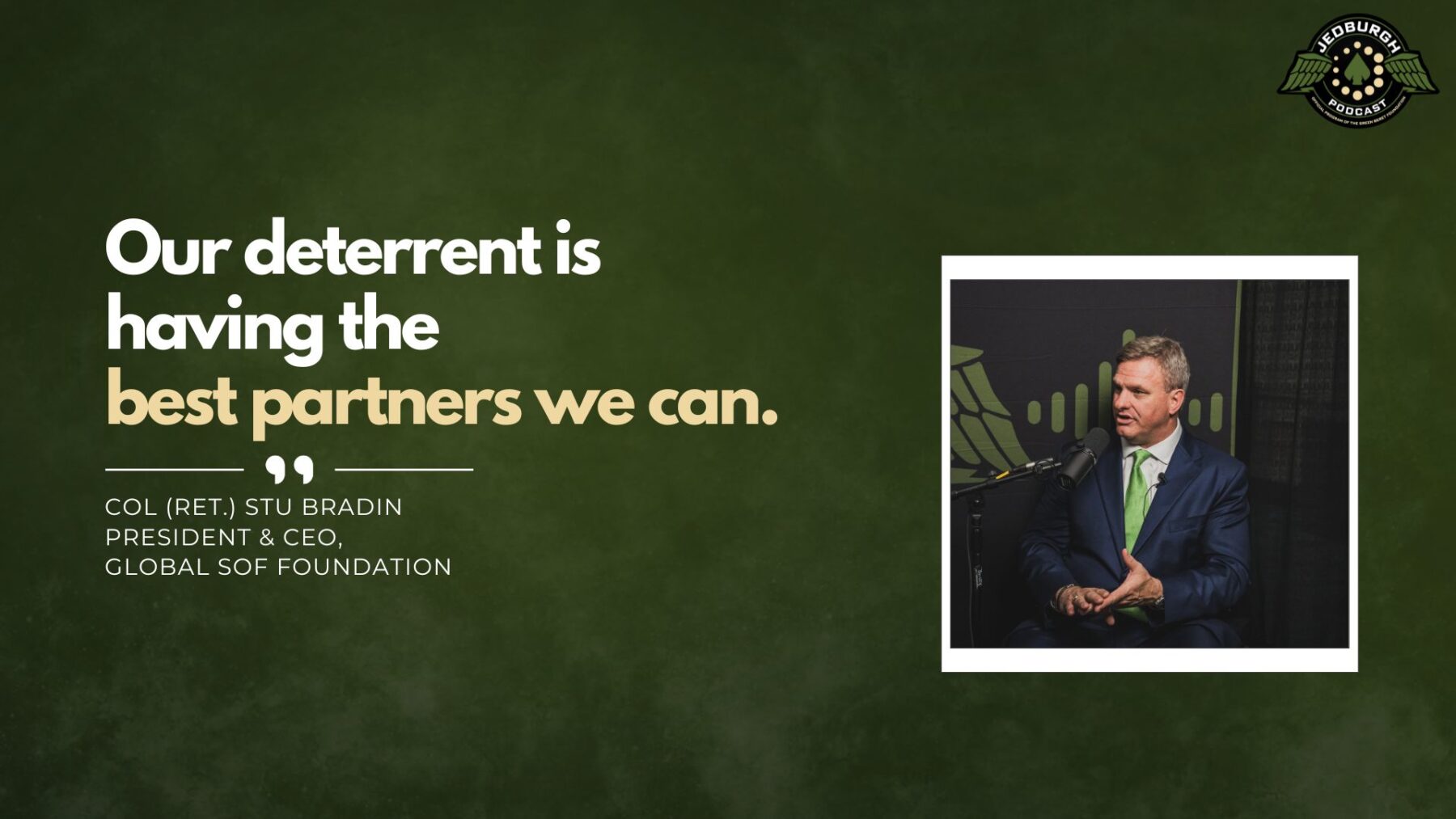
Most of them have no means of protecting their national interest in that region. Their SOF is fully capable of doing it. Their SOF is fully capable of going to the Indo-Pacific, working with partner nations and building those partner nations out. You can’t mass and you can’t deploy a force large enough to that region in a timely manner to be a deterrent. Our deterrent is having the best partners we can. I think having our European partners help us develop our Indo-Pacific partners is the only way. Have you ever flown there? I flew to Thailand three times in 2024. That will age you in dog years.
It’s eighteen hours.
It’s 30 from LA. It’s insane. We flew a Patriot battalion from Korea to the Middle East, and it took 73 C-17s to do one. You’re going to you’re going to fight with what you have. Our big focus needs to be on building out our partners so they have a credible defense, a deterrent. I’m also big in collective defense. That’s when a nation basically turns itself into a defense mechanism like Switzerland, Finland, Sweden, where everybody goes.
In Israel, you do your eighteen months, you go in the Reserves. If you attack the country, immediately, your ranks swell to trained personnel. Your calculus, when you look at a country that can do that, is totally different. They’re 150,000, but they can be 500,000 in 48 hours. Do you want to bite into that apple? I don’t. You have to think really hard about how you do that. I think the only way you do that is to have incredible partners, having the interoperability. That’s what you’ve got to focus on with our partners and stuff.
Do you think that, as America, and we’ve had a number of different conversations regarding a culture in America of what we’ve called a propensity to serve? There are different points of view when we talk about the next generation. You hear people who are say, “The next generation is soft. They’re weak. They can’t do it.” People said that about the World War II generation. Every generation says that, yet, everybody seems to always stand up as Americans and lead the nation. I think there’s an argument that can be made that it usually always takes some impetus, some big event that drives people into that service. Do you think that as Americans, we’ve lost a will or a propensity to serve and that we need some a mandatory service?
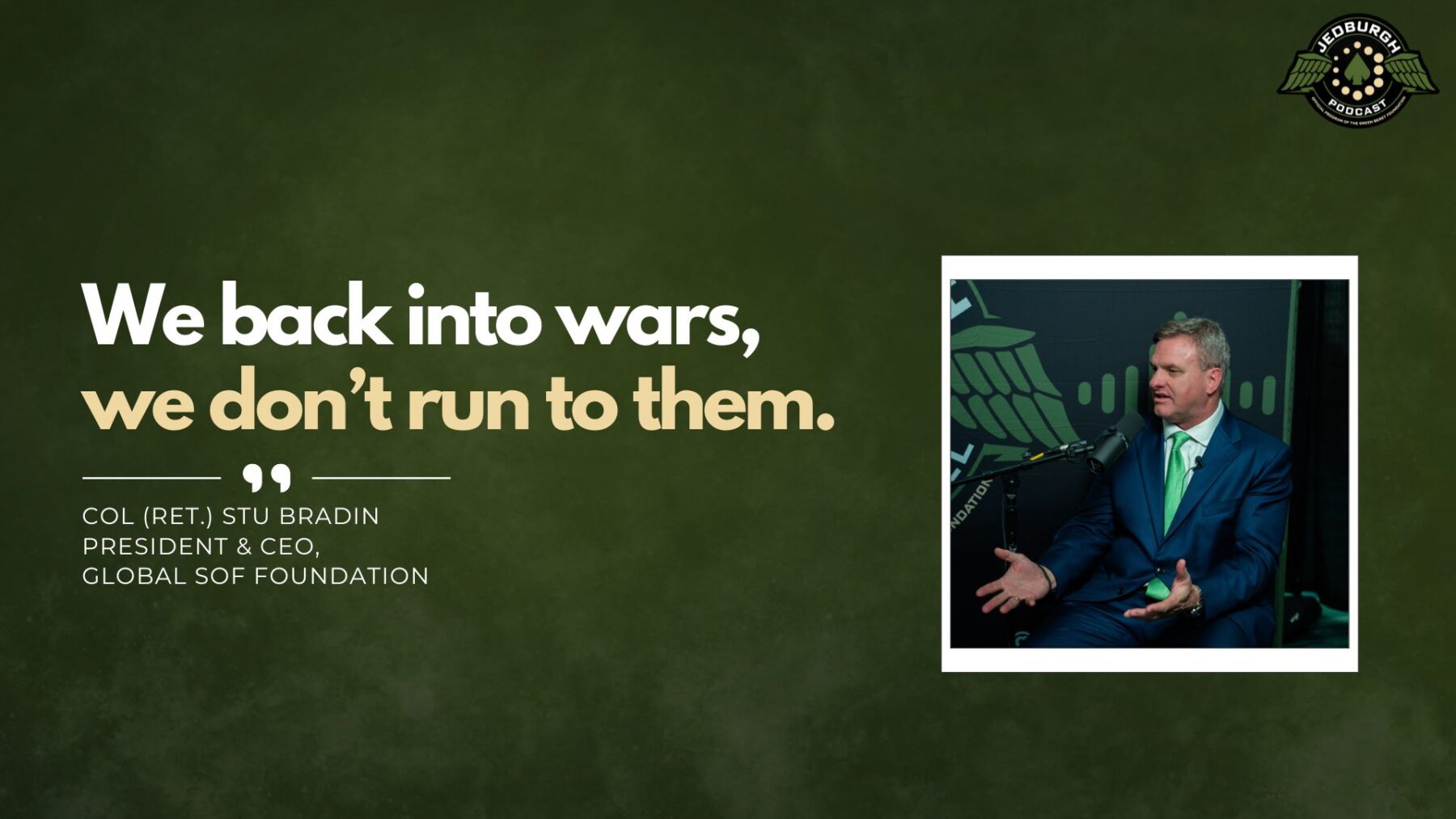
I think we’ve always had this in our history. You’ve got to remember, we back into wars. We don’t run to them. We do everything we can to avoid a war, and then we come staggering in at the last minute. Our reaction, it’s violent. It’s way more than it probably should be. I have three daughters, so I understand the young generation and I don’t think they’re weak.
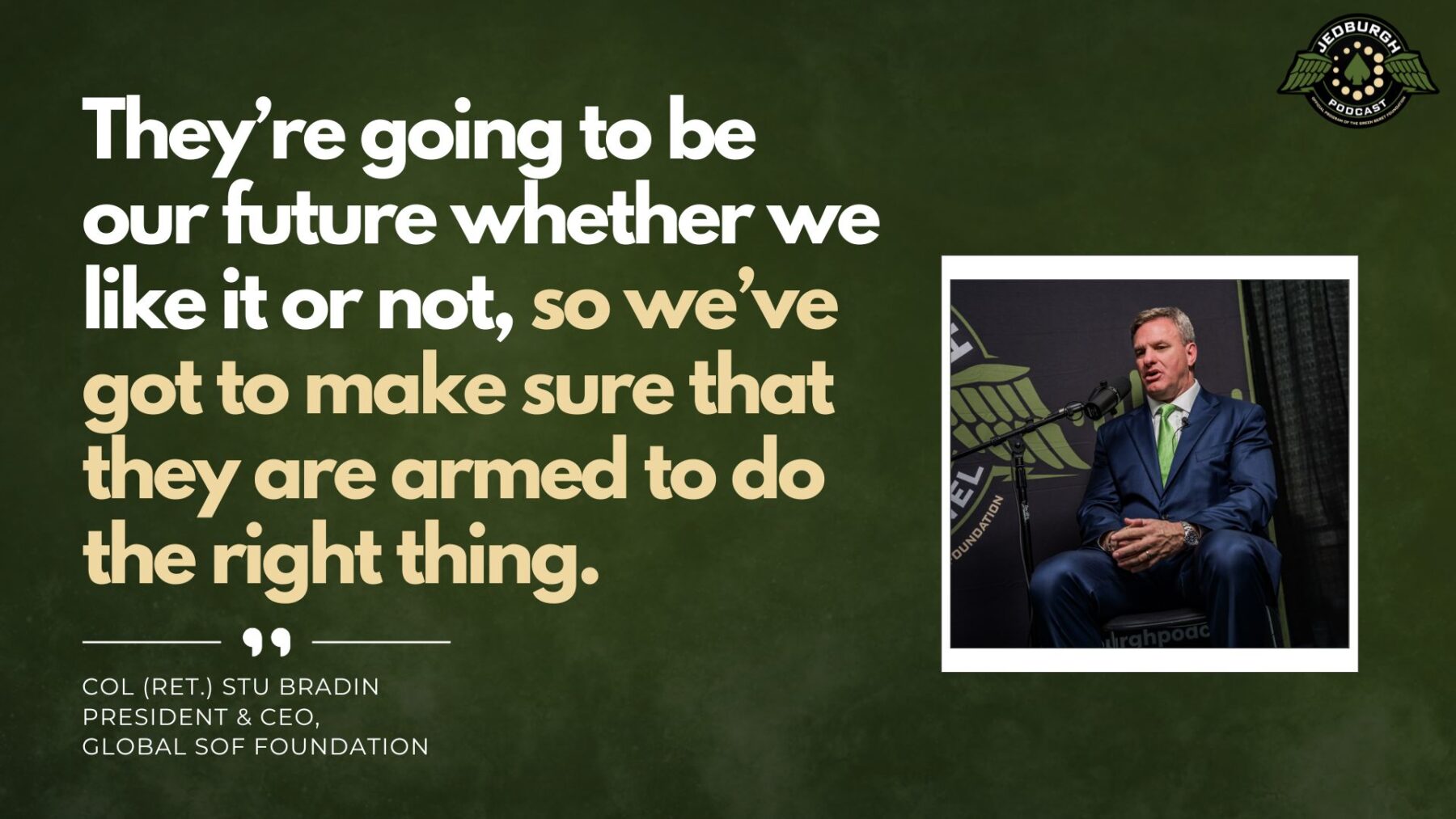
They’re smart. They take their information differently. They think differently, but they’re no different than we are. They’re physically fit. They’re smart as hell. I would not want to compete with them intellectually because I would just get annihilated quickly. I just think that they are going to do fine. Everything’s a function of leadership. If you give them good leadership and if you work with them, they’re going to do great things. They’re going to be our future, whether we like it or not, so we’ve got to make sure that they are armed to do the right thing. There’s always going to be people that don’t want to do squat. They’re just going to leech on society. You just ignore them and keep moving around them.
They’re not in this room, I can tell.
No. You asked me about the construct. You’ll get a lot of different people say different things, but the US military is the greatest social ladder in the world. You can be the biggest screw up. I tell everybody, if you just do what the sergeant tells you to do, you’re going to leave the middle class. Your family’s going to be taken care of. You’re going to have a phenomenal annuity. Your family will be taken care of.
You’re going to be in great shape if you just do what the sergeant tells you to do. Some people, it’s hard for them to do that. They’re a little hardheaded. Usually, the sergeants have patience and they’ll work with them. I would like to see more people in the military. I think some of our standards are ridiculous, to be honest with you.
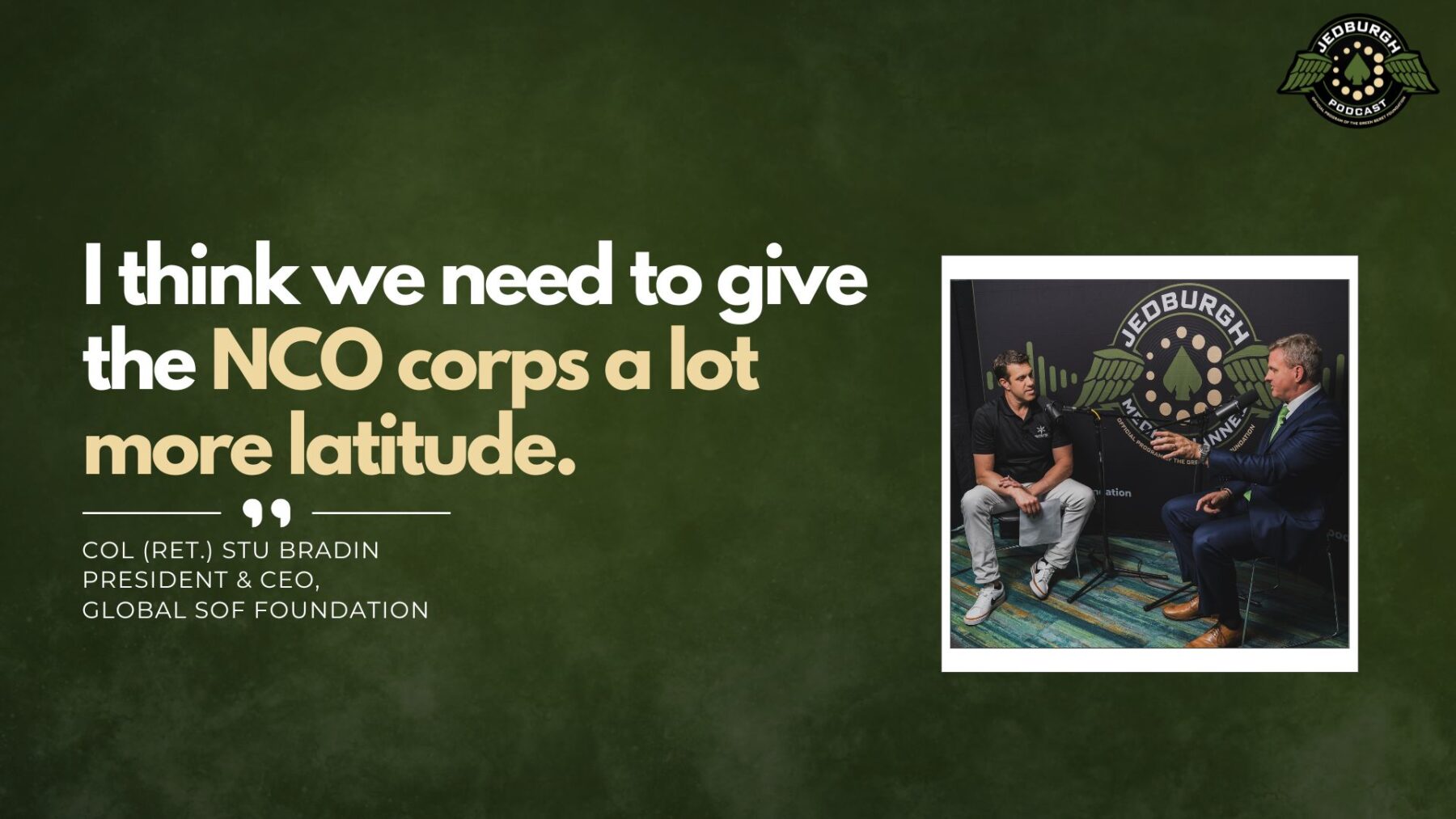
When I came in, we weren’t looking for choir, boys and girls. A lot of them had bad past but they were able to get into the military and they did what the sergeant told them to do. They became phenomenal, productive members of our society. I think we need to give the NCO Corps a lot more latitude. You can’t beat them up or everything, but we need to give them more latitude in building the force. They might have to be a little bit louder in how they approach things and a little bit more aggressive in how they do it. This generation responds. They love challenges. They love doing weird stuff, too, by the way. They’ll jump off a bridge. They’ll do all kinds of crazy shit if you let them.
They’re not scared, they’re not cowards but they are different and they receive information differently. I have faith in them. I’m not a woe-is-me. Just not that way. I think there’s a lot of goodness out there. I think if we got attacked and there was a catalyst, you would see people come from everywhere.
We talked about the upcoming generation. We’ve talked a bit about the technology that sits out here on the floor. When you look at the next fight, what do you think it is?
I think it’s small groups of well-equipped, intelligent human beings going at precise locations at precise times based on predictive analysis.
On behalf of nation states, terrorist organizations, who’s the threat?
The X doesn’t matter. The threat? We never get that. No one expected 9/11, but you’ve got to remember, when 9/11 happened, we just brought in the chairman because we were going to be space-based and Indo-China focused, Indo-Pacific focused. The towers came down and it looked like a land war in the middle of Middle East.
Look at us. We got called in Special Ops. Everybody goes, “You guys don’t know anything about near peer competition.” The hell, we don’t. We’ve been doing it for 50 years. When 9/11 happened, we transitioned to direct action because our country asked us to do that. It’s part of our mission set. Okay, Roger that. Direct action. The teams took off. That’s exactly what they did.
As all that tamped down, people are like, “What are we going to do with Special Operations?” They don’t really fit into the gray space, the competition. The hell, we don’t. Russia, China fighting through their surrogates all over the world. What the hell you think we did? JFK built SF and the Peace Corps to counter that stuff.
We’ve been doing this our whole lives. Just open up our history books. This is not new to us. This is what cracks me up. I don’t know what people’s history looks like or where they get their information from, but it’s obviously not deep. Anything about the special op community, it’s clear that we are really good at this stuff. We are really good at manhunt.
You saw Jimmy Reese, the guy who waved us in here, but those guys, JSOC, they basically formed the nucleus of manhunting. Manuel Noriega, we couldn’t find him. He’s running around going to the Papal nuncio, all that stuff. Nowadays, no. If you’re a bad actor, they have incredible means to find you. The counter-terrorism part is really refined and it’s industrialized.
I think everything else is meeting with our partners. We have to work harder at our language skills. When you’re in direct action, you don’t have to do as much of that, but you’ve got to do more of that. As I say the whole dancing with wolves, you got to get out there with them and find the buffalo. You’ve got to live with the host nation.
It is the deterrence piece. We create deterrence by having that forward presence with our partners.
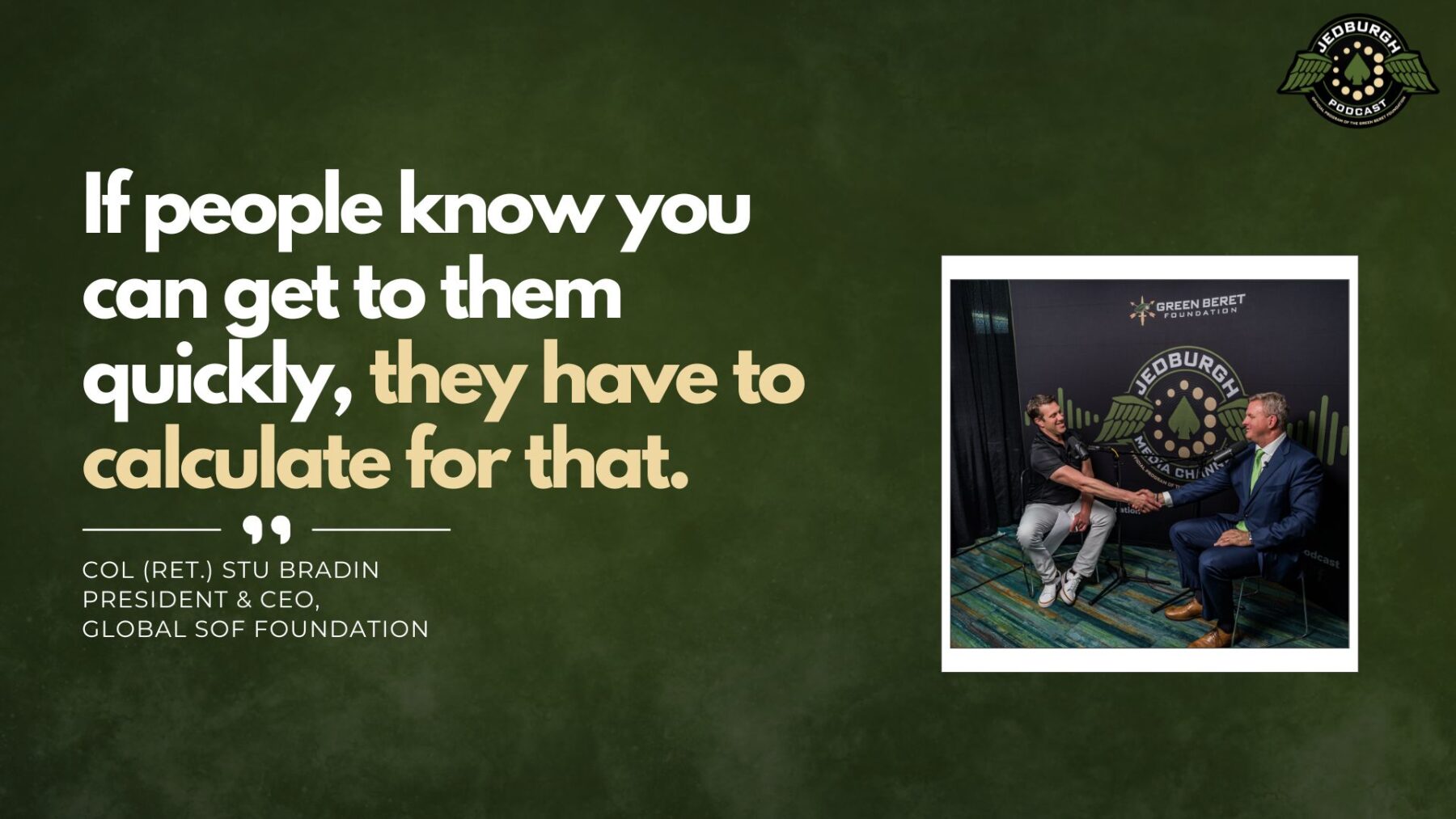
It doesn’t take a lot. If people know you can get to them quickly, they have to calculate for that. They have to calculate for what they can’t see as well as what they can see. If there’s a whole bunch of Special Ops dudes within reach that could strike you, you have to calculate for that. That takes a lot of assets. It will strip combat power away from all of their efforts just to counter that effort. Even if it doesn’t move on the chessboard, it will strip away combat power from them.
In a congressional testimony, General Fenton talks about the procurement process and the difficulty in the procurement process, and the need to fight the next battlefield that we’re talking about is going to require a more streamlined procurement process. I’ve heard that for many years. We’ve seen all of our senior leadership at every level that we’ve had over the last year or so say the same thing. How does that actually get done? How do we get the billions of dollars of equipment that sits out here behind us into the hands of the warfighter?
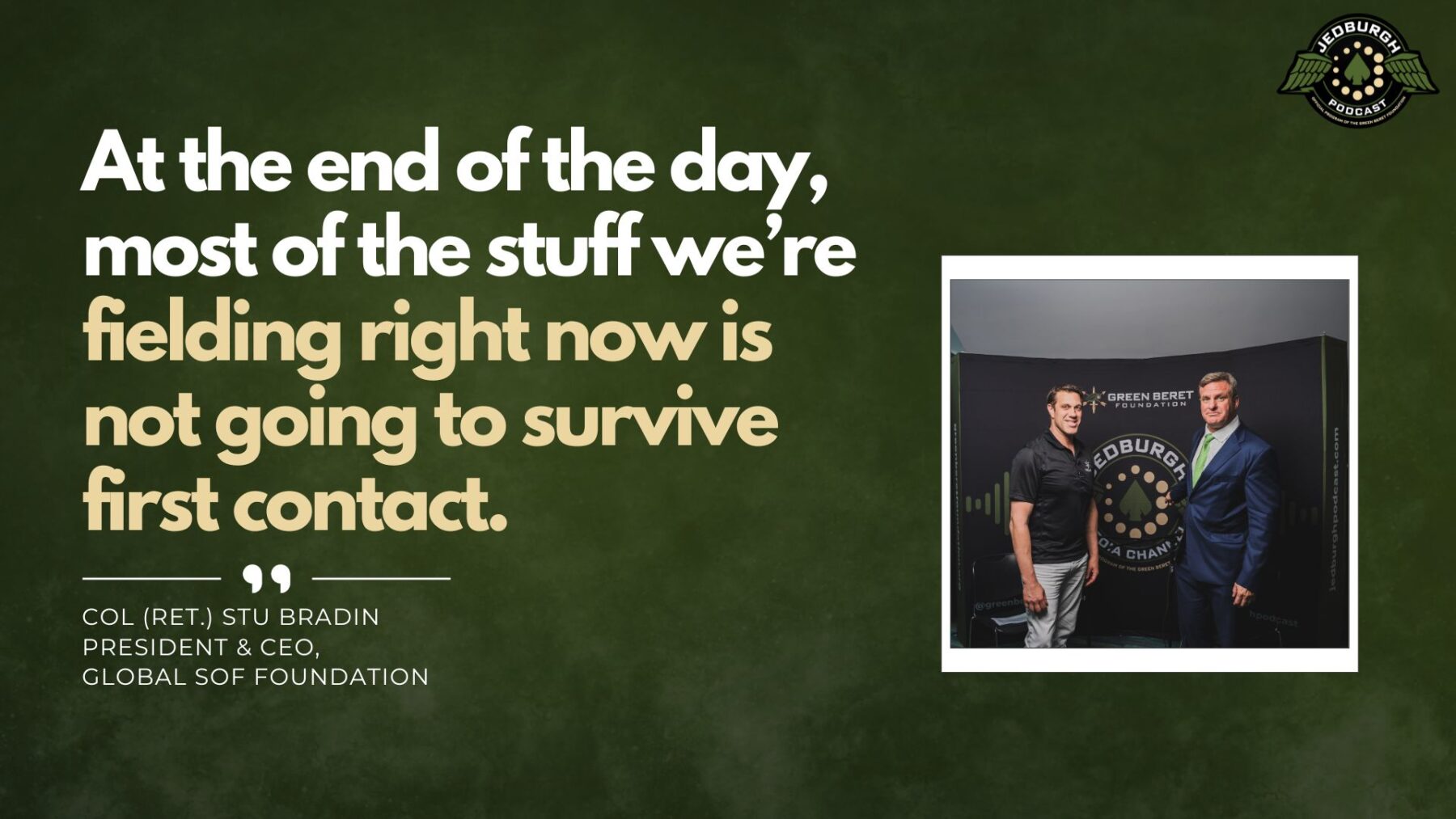
The only people that can do that is Congress. Article 1 of the Constitution, raise the army, maintain the Navy, that falls to them. The problem is once you have a program of record in their district, that thing will live forever. It’ll be obsolete, but they will not kill it. Won’t let it go because it’s voters. They’re in their district and stuff. You’ve got to take that away from Congress. You can’t let them. You’ve got to have multi-year things. You’ve got to move away from these huge programs like this. Some of them, you’re going to have to, but at the end of the day, most of the stuff we’re fielding right now is not going to survive first contact.
An aircraft carrier, you can’t get it in the inner islands. I don’t think you can get it in the second island chain. Now you got single-engine aircraft, how many refueling flights is it going to take to get to the target? You’re going to be flying tankers. That’s what’s going to have to happen.
In a denied area.
You’re going to move. You want to move an armor division from El Paso, Texas. You going to muster it, load it up on a railhead, drive it down to Beaumont, Texas, load it up onto railroads, ship it all the way across the ocean, take it to a point of demarcation, break it all down, load all the ammo, load all the fuel, and you’re going to do this in a permissive environment. Nobody’s going to bother you the whole time. This is all just a peaceful process. Absolute fantasy. If you read Chinese doctrine, they absolutely will deny us that.
Their goal is not to allow the big blue arrow to mass. We wouldn’t do it. Why would I let you mass? Why would I let you build your power to hit me? It’s not going to work like that. I’m not an advocate for less of defense spending. It’s just got to be different. You’ve got to educate Congress on, “We don’t need this product in your district. We need your product to make your district to make this product.” It’s tricky because it votes matter to them, but at the end of the day, they’ve got to have the moral courage to do it. I don’t see the leadership to do it right yet.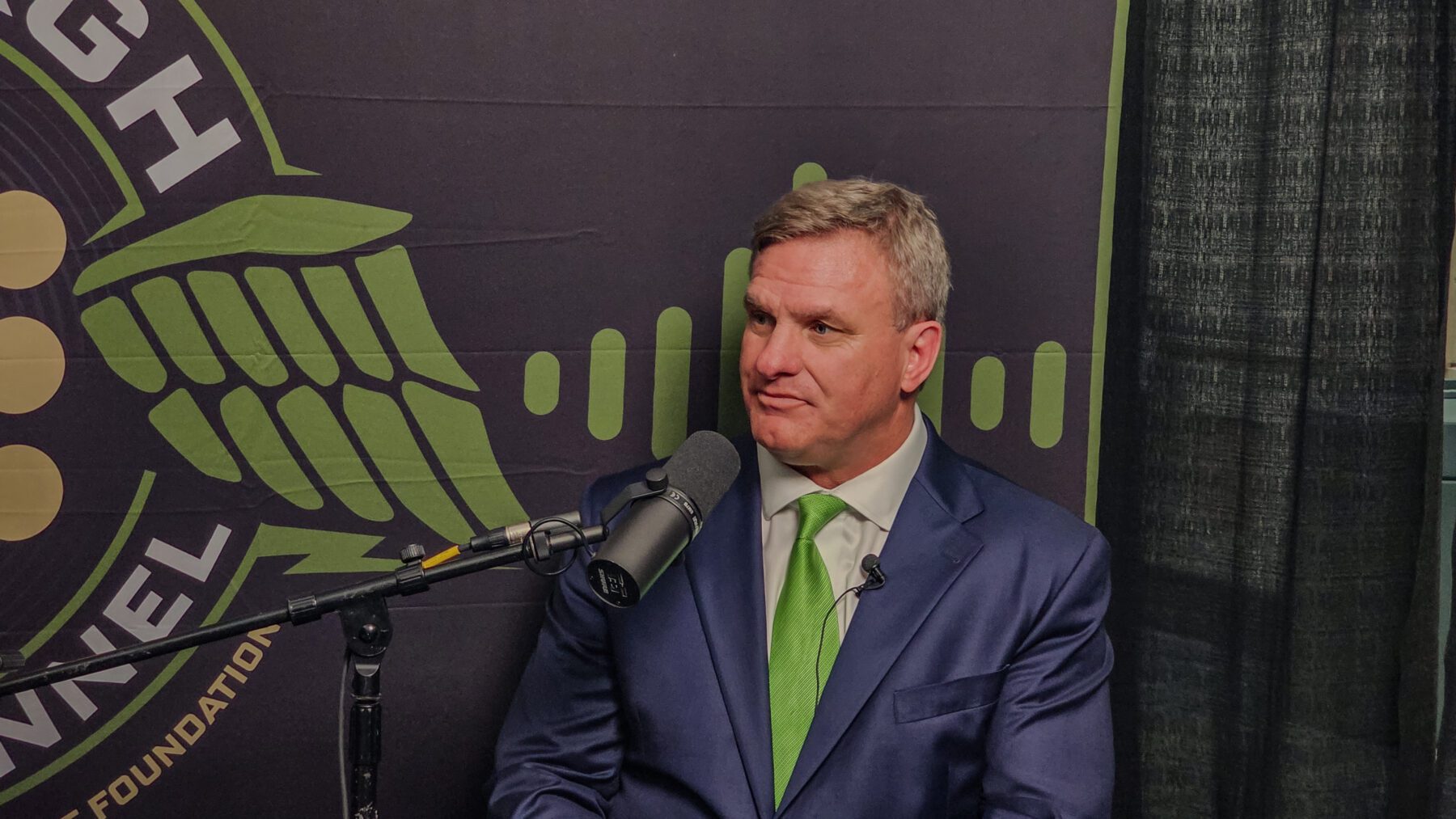
I love them. They’re all great people. The one thing about dealing with the Hill is national security, everybody is on board. We’re lucky. Nobody’s rooting for the other team. I met with them all. I was there. They’re all proud of this country and they all want to defend it but you’ve got to get a lot of different people to say yes to make something like that happen. The people on the national security side and all four of the defense committees, amazing. True patriots, love their country, love the military and everything. They’re due for it. When they turn to their colleagues, it’s an uphill fight.
We’ve had this appropriation discussion in detail on the Hill as we’ve gone and sat down with a number of representatives from both sides of the aisle. I agree with you. I think to a person, everybody is there and coming to work every day to do the right thing, invest in American defense. I think everybody shares the same perspective that we’ve got to do something differently, but I do think you talked about leadership earlier. It comes down to leadership. Who’s going to stand up and say, “This is what we’re going to do. This is what the next fight requires.” It might be a little painful right now, but it’s required in order to protect America.
SOCOM’s budget has been frozen since 2019.
Meaning getting the same amount of money every year since 2019.
In real dollars, it’s a different number. It’s 14% less just on top of it. Fuel’s gone up, O&M. What’s happened is SOCOM’s had to strip away money from training and readiness, as well as modernization to fund data. You heard the secretary, operations are up 200% contingency operations. Who’s paying for that? There’s no fund for that. All that SOCOM’s got to pull all that out of hide. What happens is you have less flight hours, less training hours, less ammo. That’s what happens.
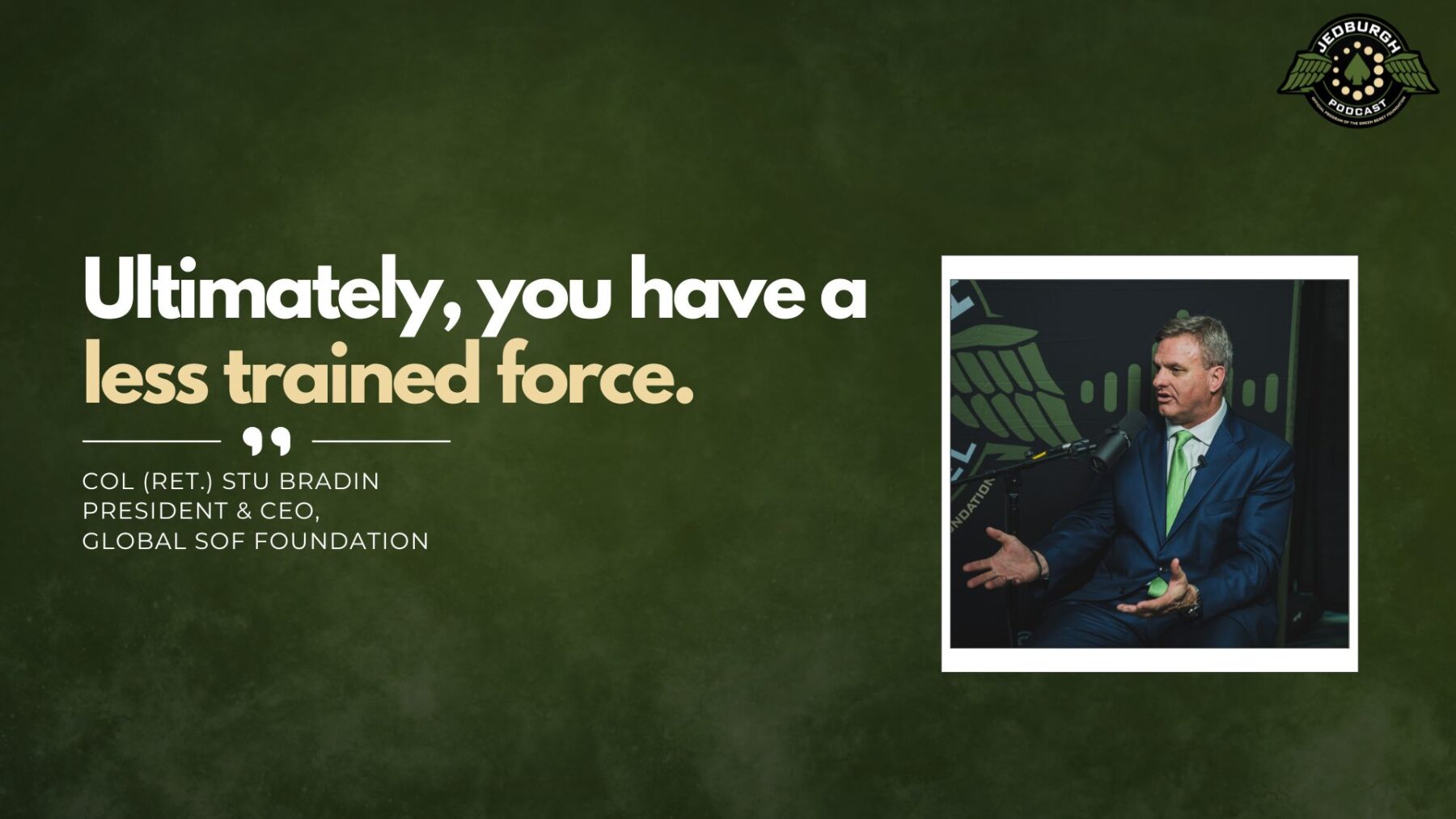
Ultimately, you have a less trained force, and you’ll end up getting people killed because of it. I just think that Congress has got to have the moral courage to fix SOCOM’s budget. I’d double it. I don’t mean overnight. I would definitely enable SOCOM much more. They’re your only deployable force right now. There are a few things out there that you can deploy, but it’s the strategic force that you can move around on the map and make people stay awake at night.
We’ve got to let you go here in a minute, because you got a long day, and I know there’s people waiting for you upstairs, but I want to ask you, as you look back, you walk through these halls here, you look around, you sit in the conversations with not only our US and American leaders, but our international partners. You reflect on your career. What does it mean to be a Green Beret?
My father was on active duty when I came on active duty. This is all I wanted to do. I was around Green Berets. My father served in Vietnam. He did two tours there. I knew exactly what it was all about. As a high school kid, I got the run around Camp McCall in the summer times out there, blowing up stumps with the engineers and stuff like that. I wanted to do this.
I’m inspired because this is our time. The Special Ops time. It may not be like this in twenty years. It may be more space-based, seriously. Right now, this is our time. I love serving. I’ve got a great team. They’re full of zealots. Everyone believes in our mission and believes in this cause. I also think we could lose this. What we’ve got is not a guarantee. I’m a huge believer in our international partners. We’ve got to bring them along. I’m a huge believer in the Special Ops community. I think it’s the best weapon we have.
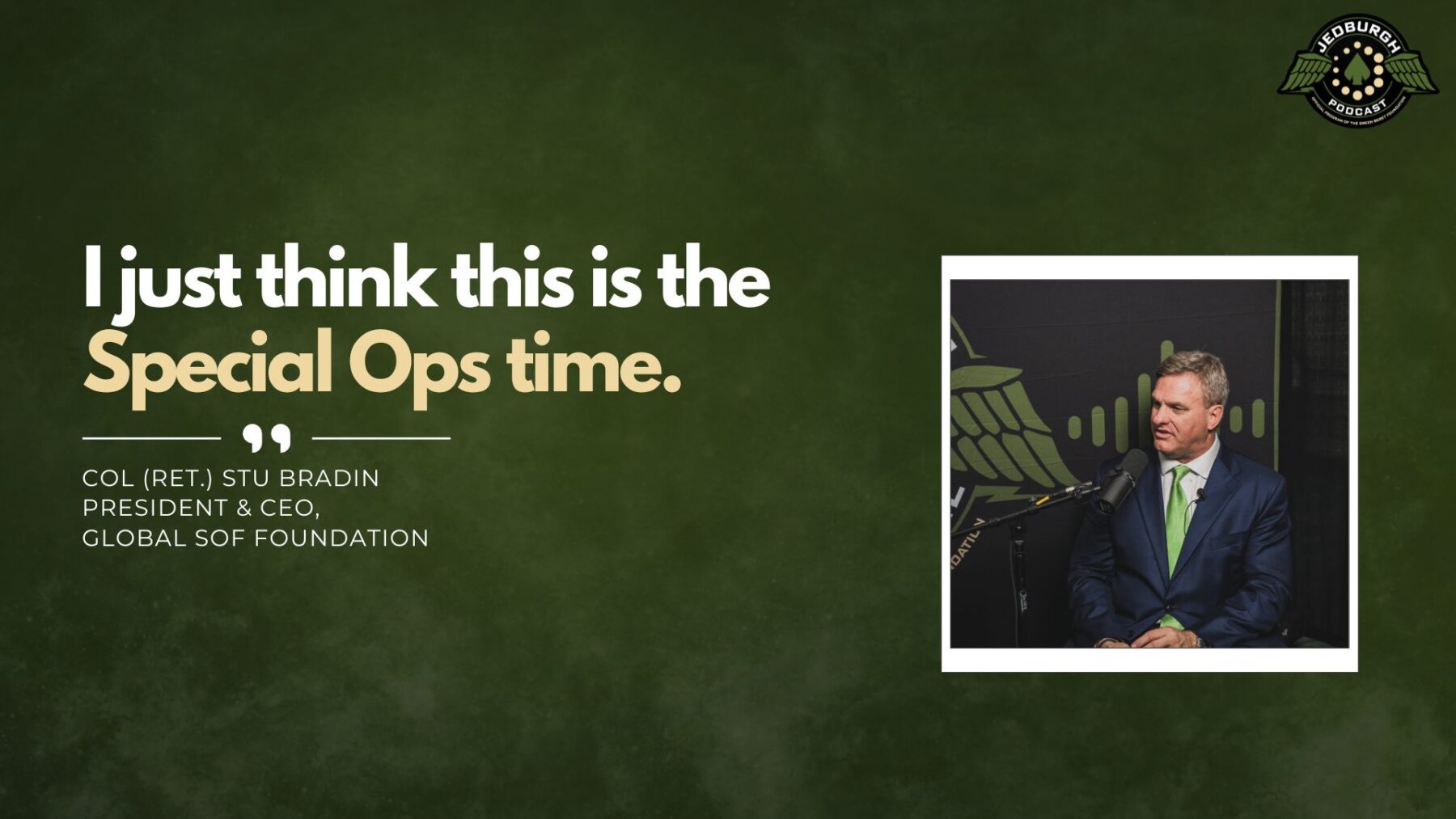
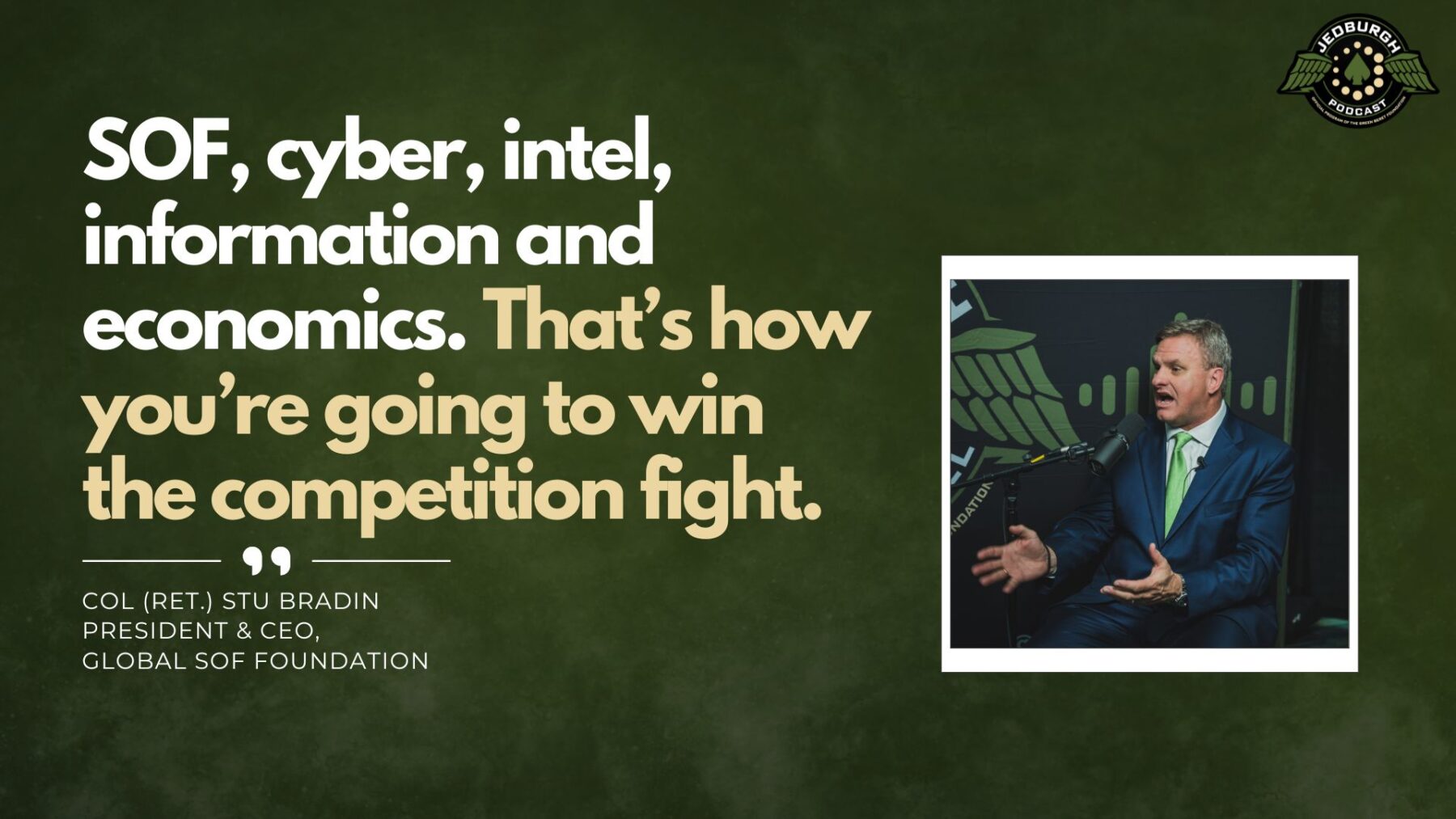
Right now, it’s SOF cyber intel information and economics. That’s how you’re going to win the competition fight. You’re not going to win it with armor divisions. I started out as an armor officer. Sorry for all you guys that are freaked out about that, but that is a fact. I’ve watched it burn. They burn if they’re 50 tons, they burn if they’re 70 tons. They cook the same. I just think this is the Special Ops time. I look back and I’m just proud of the whole formation and stuff. We could get better but right now we’re doing really well as a community and we just need to keep focusing on what we are good at.
It’s kicking ass. Getting ready for it. Stu, thanks for your hospitality. Thanks for welcoming The Jedburgh Podcast and the Green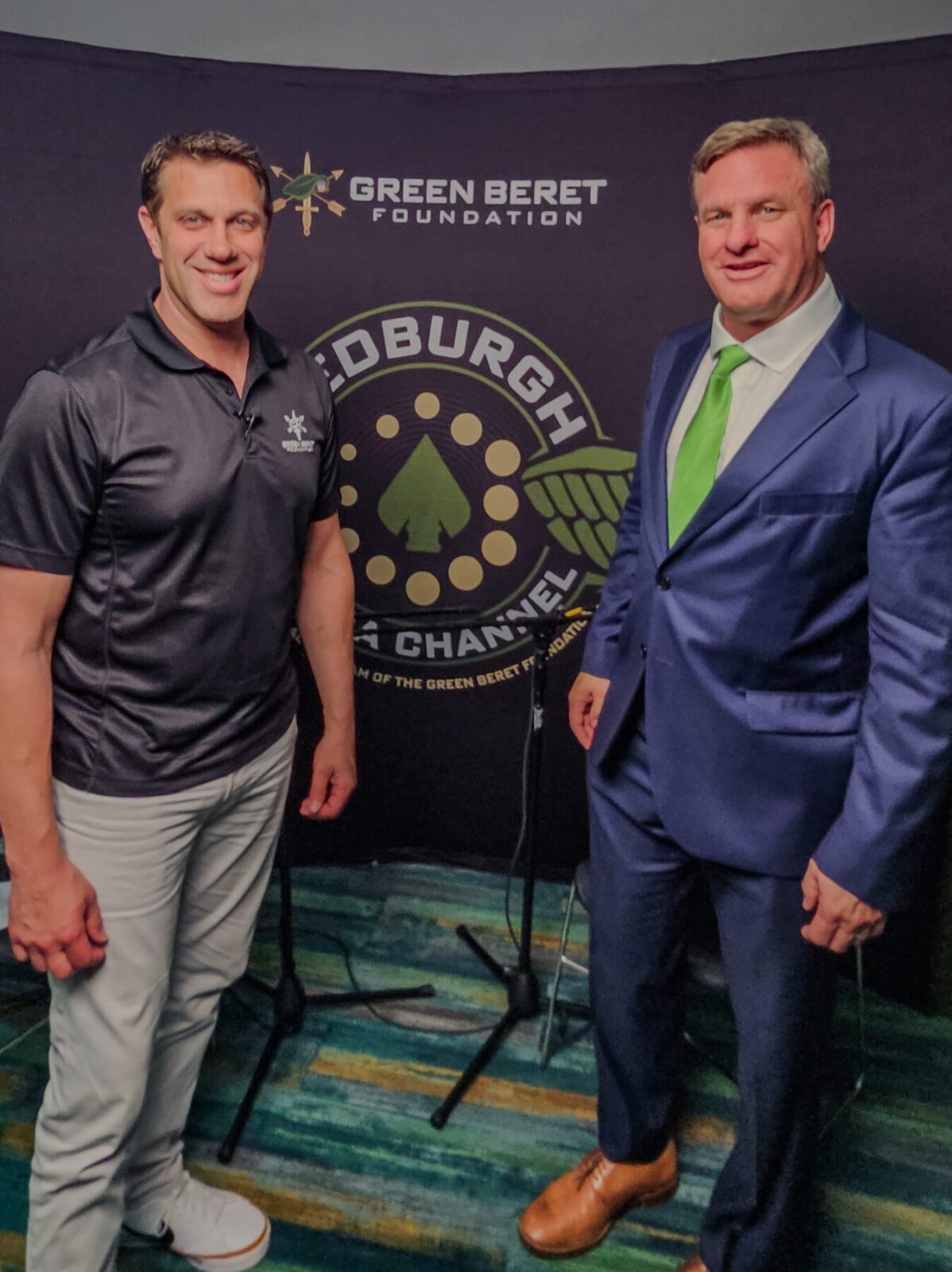 Beret Foundation. Absolutely incredible and insightful. Your perspective on where we sit as a SOF formation, where we’ve got to go, the threats that are out there and how we’re going to prepare our people to do it. We hear a lot about how people are more important than hardware. We see a lot of hardware out here. As we talked about, it does come down to the people. It comes down to leadership. Thank you.
Thank you, brother. I appreciate you.

Green Beret Foundation
P.O. Box 25138
New York, NY 10087-5138
Note: Please use USPS mail or priority mail. Do not use FedEx.
Green Beret Foundation
10205 US Hwy 15-501, Unit 26-8
Southern Pines, NC 28387-4301
Call: at: (844) 287-7133