The scoreboard may decide the winner, but it doesn’t tell the story of the game. The Stars and Stripes Classic pits America’s Green Berets against Navy SEALs, renewing Special Operations’ greatest rivalries. But beyond the game, every operator on the field, and family member in the stands, represents an unwavering commitment to something greater than themselves.
In this episode, Fran Racioppi sat down with the President and CEO of the Green Beret Foundation Charlie Iacono, and Chief Warrant Officer Nick Lavery, to discuss why the Stars and Stripes Classic is much more than just a game. It is an opportunity to strengthen the Special Operations community, honor the legacy of those who served before us, and introduce the next generation to the values that define Special Operations.
Charlie shares how the Green Beret Foundation continues to evolve beyond traditional support programs, placing families at the center of its mission and developing initiatives like Task Force Tatanka to deliver customized solutions for Green Berets, veterans, and their loved ones. Nick reflects on the mindset that carried him from catastrophic injury in Afghanistan back to an Operational Detachment Alpha, redefining resilience not as avoiding adversity, but as the willingness to confront it, adapt, and continue moving forward.
Our conversation explores the unique relationship between Green Berets and Navy SEALs – fierce competitors on the field, trusted teammates in combat. From military leadership and entrepreneurship to preserving the legacy of Special Operations, we discuss why sharing these stories remains critical to strengthening the community and inspiring the next generation.
The Stars and Stripes Classic is a reminder that while competition builds excellence, it is service, family, and the enduring bonds of the Special Operations community that define the legacy of the Green Berets and Navy SEALs long after the final whistle blows. Listen or watch this episode and don’t miss this year’s game; August 2nd from the Ohio State Lacrosse Stadium in Columbus Ohio and being broadcast on ESPN.
The Jedburgh Podcast is brought to you by OneBrief; enabling military leaders to make innovative, informed and deliberate decisions faster than ever before. Superhuman command wins wars.
Follow the Jedburgh Podcast and the Green Beret Foundation on social media. Listen on your favorite podcast platform, read on our website, and watch the full video version on YouTube as we show why America must continue to lead from the front, no matter the challenge.
—
—
Charlie, Nick, welcome to the Jedburgh Podcast, second annual Stars and Stripes Classic. We’re here at Subaru Park in South Philadelphia. Nick, happy birthday, man.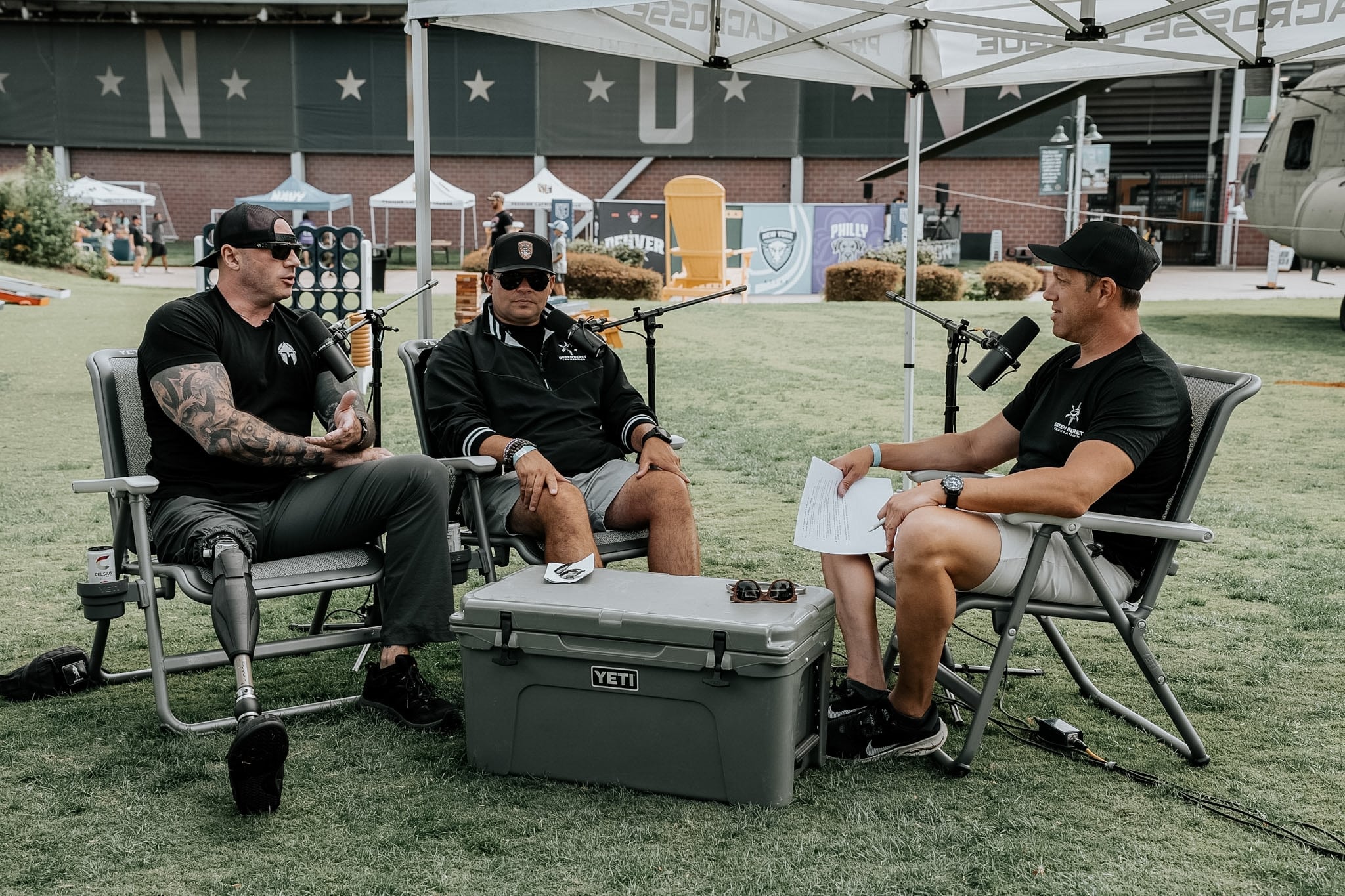
I appreciate you kicking us off with that. Thank you.
That is it. That is actually why we’re here. We brought you a helicopter, specifically on this day for you.
I appreciate it. It is one of those days that you can probably relate to, that as you get older, you start to forget about it more and more, and then all of a sudden you’re being inundated with happy birthday messages. I am like, “That is today.” That is a thing.
That is how my day started.
We have got to get a hashtag. Wish Nick a happy birthday. Let us get a trend.
We have got to get it up on the Jumbotron. That is the task for the team. We’re going to put it up on the Jumbotron. I love that. Super exciting day. We brought the CH-47 in last night. We have got the SORB behind us from the Special Operations Recruiting Battalion out of USAREC. Here in a little bit, this premiere zone around us is going to start to get really active as everybody comes in for the semifinal weekend. We all know there may be two PLL games, and I will be quiet because I know there are PLL people around here, but the main event is 6:00 PM tonight with the Stars and Stripes Classic under the lights.
Under the lights.
It is going to be huge. We have got Green Berets versus Navy SEALs. Charlie, talk about the second annual game. We were here last year when it was at Gillette Stadium. We were down by two, but it was a valiant effort. Every single person on that team went back into that locker room and said, “We’re going to analyze what happened, and we’re already looking at next year.” It was very Bill Belichick-like. We’re on to the next year. What are we seeing out there?

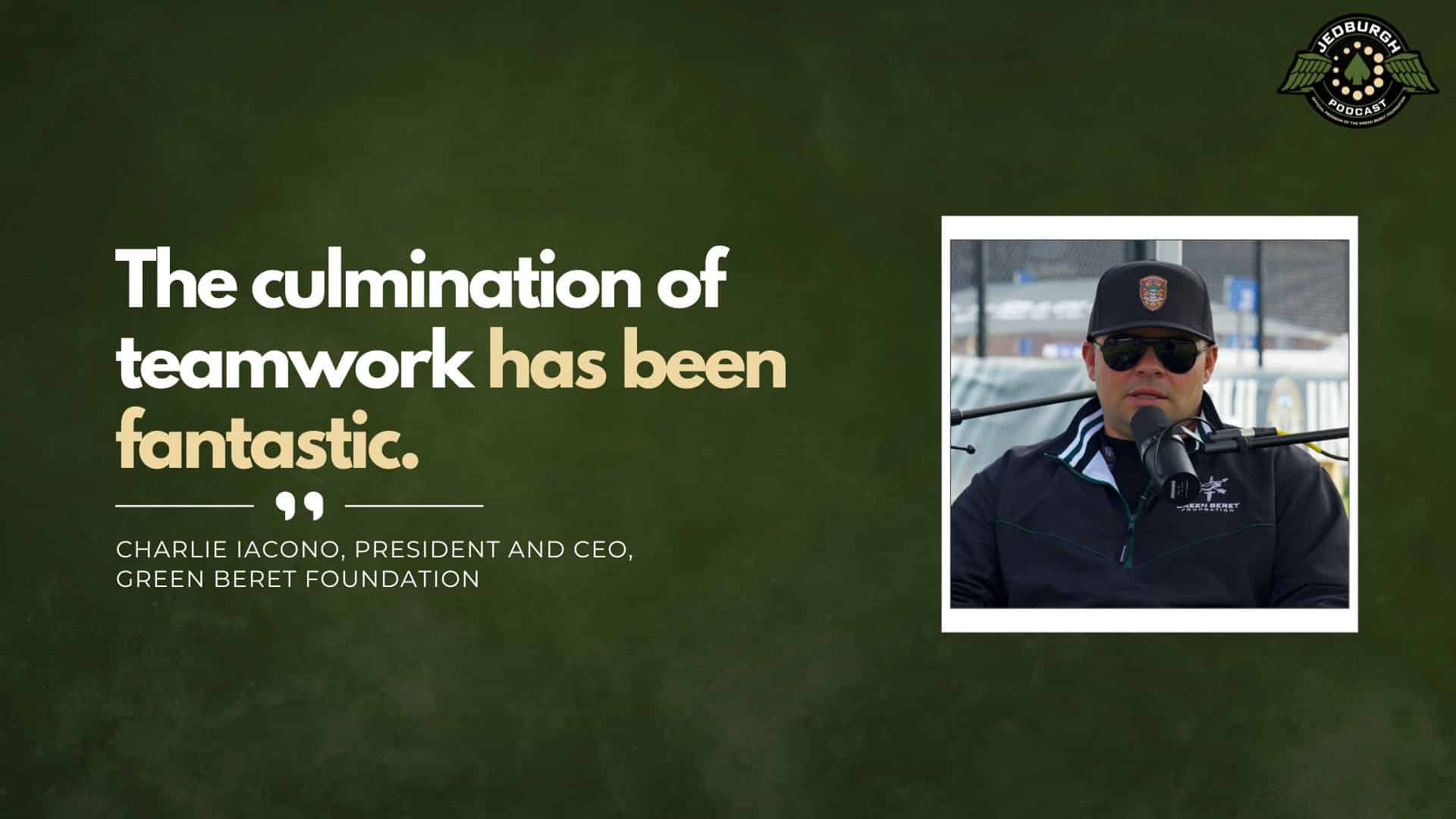
The culmination of teamwork over the past 365 days has been fantastic. Most of these guys went back and either started men’s leagues or joined men’s leagues. They have been playing a lot of lacrosse, and you can see it. One of the guys just showed up. I did not even know who it was because he has lost 20 pounds. He looks like he is twenty years younger and just moving like he is twenty years younger.
It has been fantastic to see the work ethic that these men have put into this game, the preparation of this game, probably in a very similar fashion that they prepare for missions. It is just all in, and they are committed not only to the foundation’s success of this game, but to represent the regiment that both of you have served in honorably to show the American public why they call Green Berets the tip of the spear.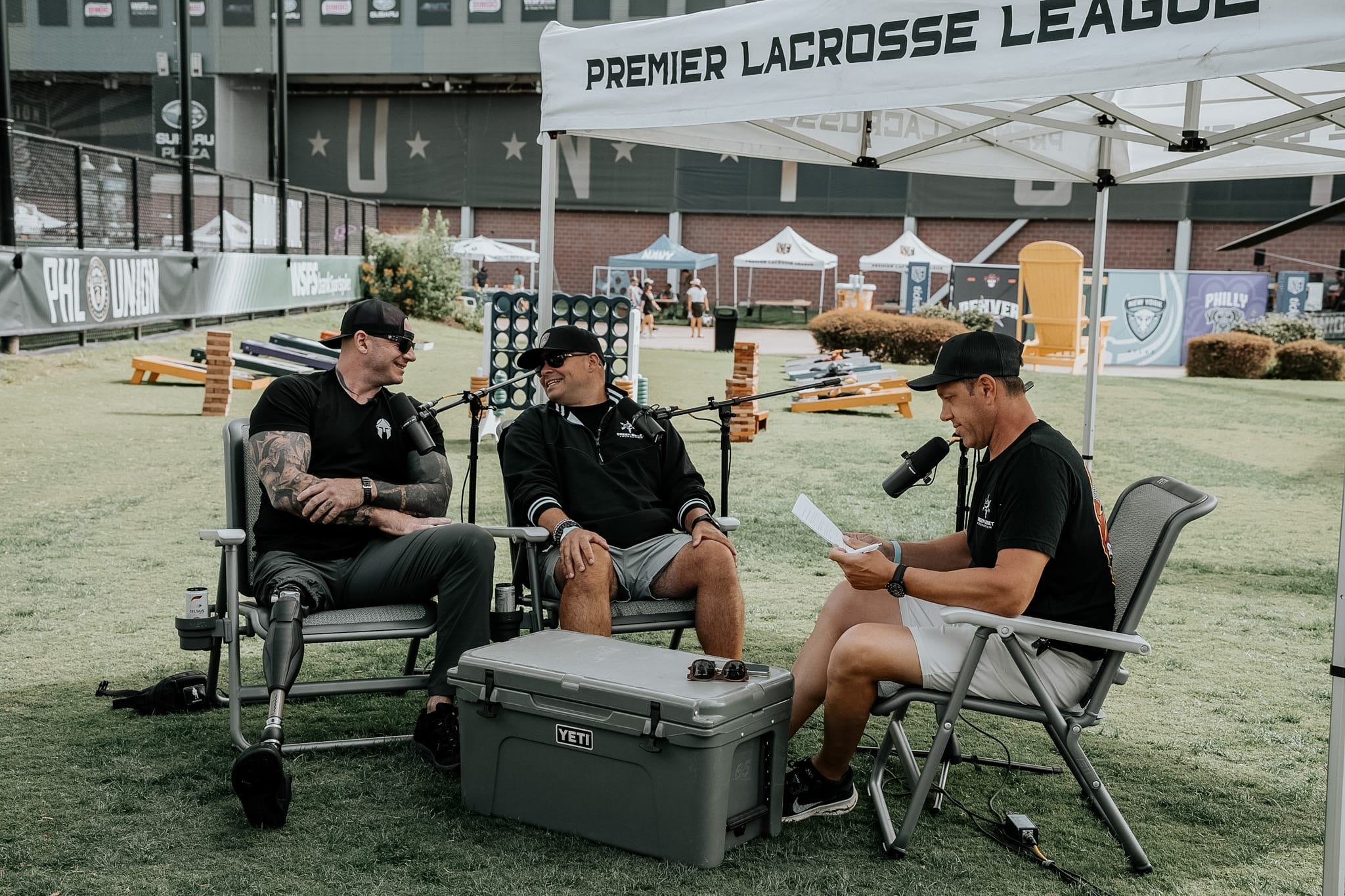
Nick, let us talk about that for a second because we have got some warriors behind us over here who are going to be really doing a fantastic job of spreading the message, something that you’ve been for the last several years, a staunch advocate of bringing more and more folks into the regiment, the call to serve. Why is it so important? We talk about it through the lens of lacrosse through this event, but character is what matters, and why does it matter out there on the field for our Green Berets?
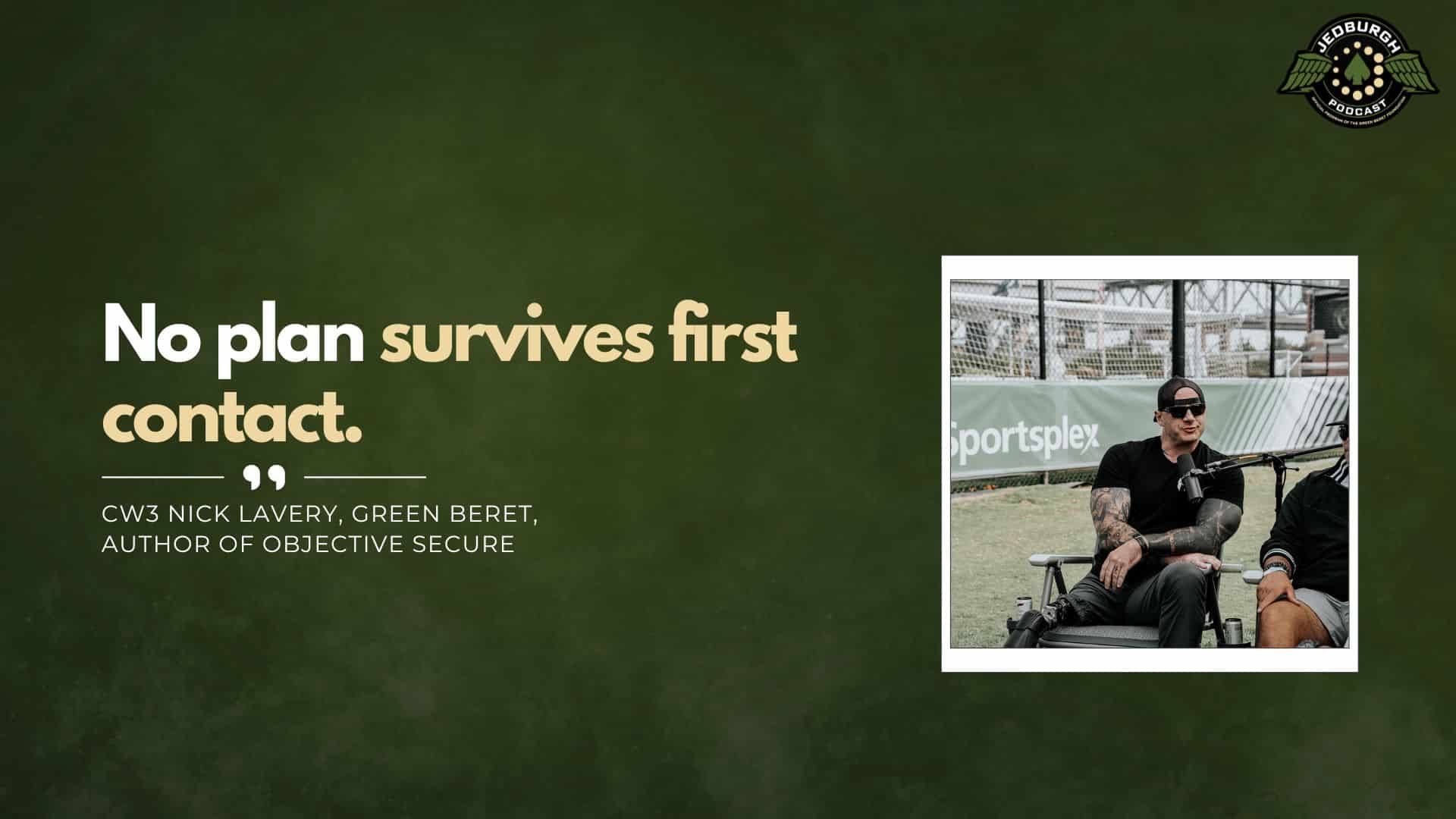
I would say it matters on the field similarly to the way it matters in an operational environment. As a Green Beret, you are entrusted to solve complex problems with unconventional solutions, and you have a game plan going into it. Whatever that planning process looks like, it could be months, it could be weeks, it could be days. As you and I both know, no plan survives first contact. When things start to get real and when challenges start to arise, that’s where the Green Beret really is able to rise to the surface and display why we exist, because we are those adaptable, flexible, analytical thinker problem solvers.
We see that in training. We see that in operations. You see that on the field. Our coaches have done a great job over the last few days with these guys to get them prepared. Everyone knows, all the boys know, like, when that whistle sounds, and it is game time, most of that plan is going to get derailed. Now we just have to figure out how to solve those problems and achieve the desired end state.
I want to take a second and talk about the enemy out there. That is our Navy SEAL brothers. Nick, you had some really great comments over the last couple of days about how we are super close with the SEALs. We share a lot of commonality with them, but they’re in the way. Talk about the relationship with the SEALs, what the difference is in your mind between a Green Beret and a Navy SEAL. I know it drives us crazy when someone says, “What are you doing in the Army?” “It was a Green Beret.” “That’s like a Navy SEAL.” Absolutely not.” For a second, what is the difference? Why are Green Berets better, I guess?
You can leave that part out. It is a fair question.
I do not see any Navy stuff around here.
It is all good, man. It is all love at the end of the day. That is a very common response from either a Green Beret or a SEAL is like, “You’re like a SEAL.” A lot of our younger, specialty team guys would take that response to it as like, not only no, but, F no, I’m a Green Beret. I think that’s great. There is a sense of pride to what we do and our culture and our lineage. That is a great thing. As you get a little older, like you and I, and I will just speak for myself when I get that question, my response is more like, “Yes, kind of. We’re more similar than we are different.”
There are absolutely differences culturally and operationally, but we are more alike than we are different, certainly compared to the masses. One of my good buddies, Andy Stumpf, described it this way when he said the difference between a Green Beret and a Navy SEAL is that a Green Beret decided to join the Army and the Navy SEAL decided to join the Navy. That might be it. That is a very basic way to look at it. There are certainly differences.

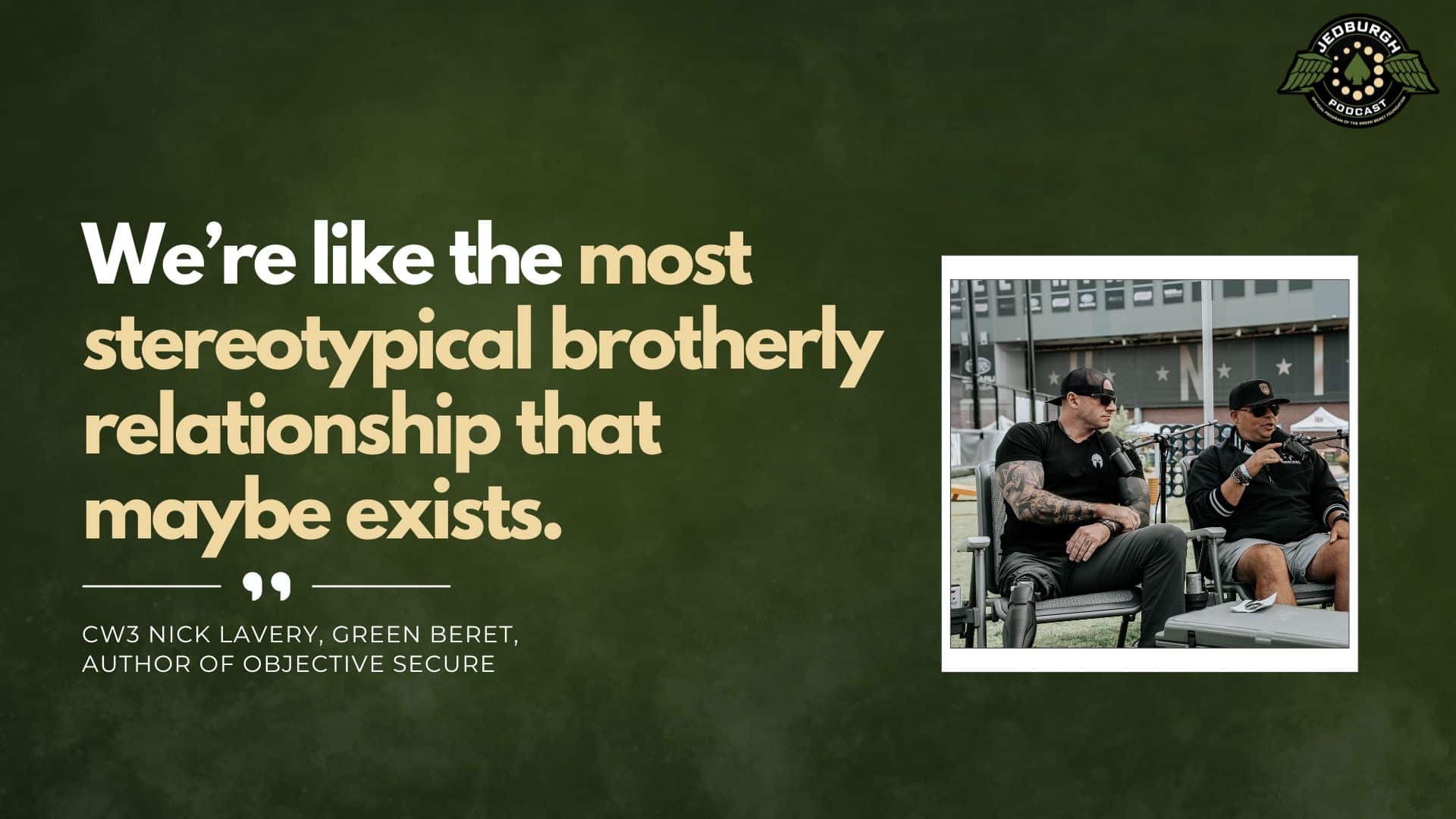
In today’s dynamic, uncertain environments that we’re operating in, there are not really that many hard-and-fast buckets that we fall into because we’re all having to evolve and figure out how to remain relevant and continue to solve the problems that are commanded for us to solve. I will close by saying we’re like the most stereotypical brotherly relationship that maybe exists, where we tend to talk a lot of shit about each other. We’re hyper-competitive. We want to be seen as the best. We want the mission. That is all great. Competition breeds effects and results.
At the end of the day, if you paired a bunch of Green Berets together with a bunch of Navy SEALs together, and there was a difficult problem that needed to be solved, you would see those two units meld almost instantaneously, learn each other’s SOPs, learn each other’s strengths, start to fill gaps, and then sometimes within minutes go to work as an effective cohesive unit.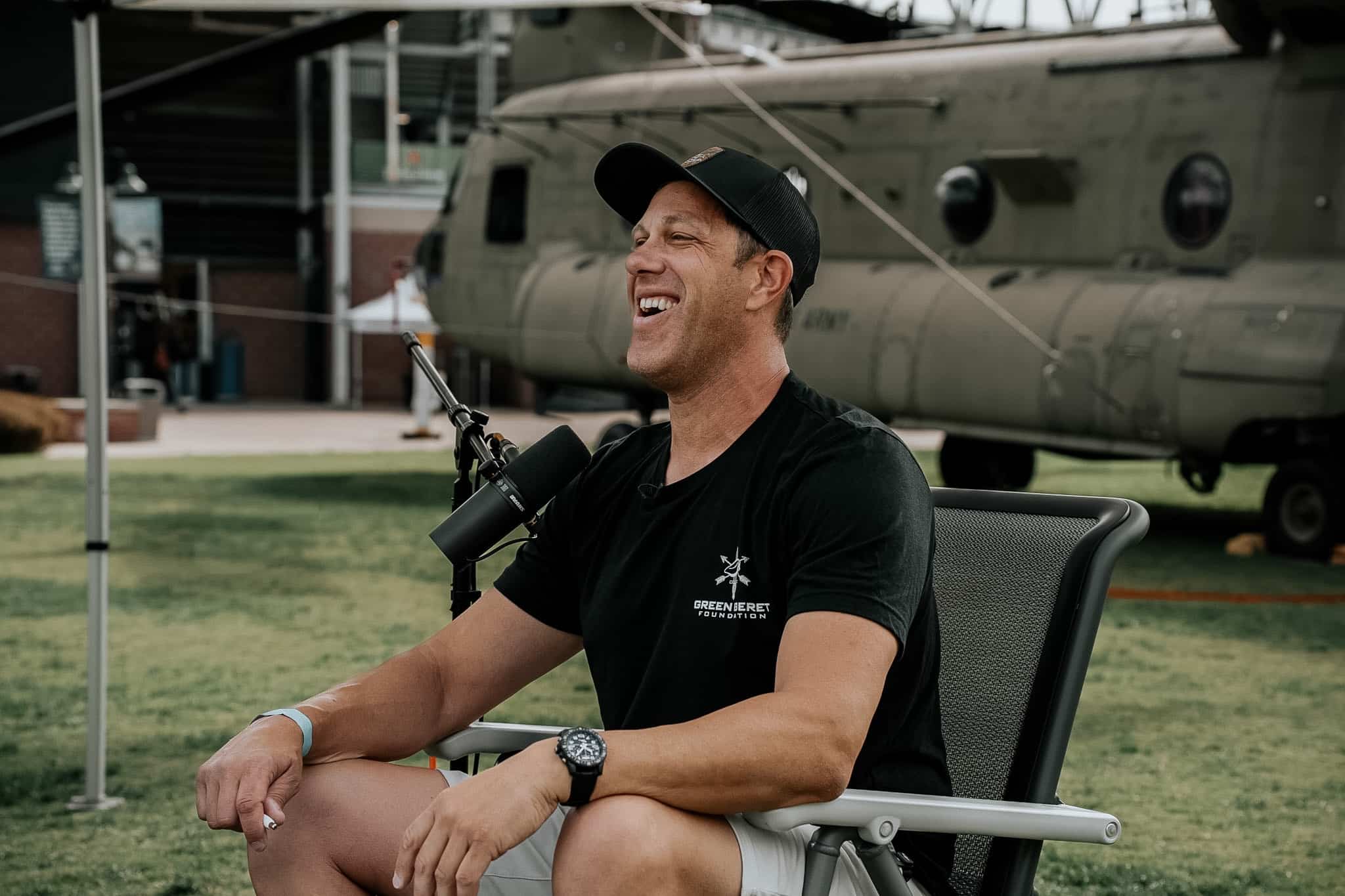
That, in the real world, is actually how it works. I spent two deployments as a special forces detachment commander with my higher headquarters being a Navy SEAL task unit. My sister unit was not an ODA. It was a Navy SEAL platoon, and we were completely embedded with them. I reported to the O4 commander, who was a SEAL. It was great. We worked hand in hand with those guys, and when it’s time to go to work, you get to work.
One of the things that has been, I think, front and center of this whole weekend too, is the fact that the foundation, Charlie, has been really adamant about bringing the families into this event. Bringing the kids, bringing the spouses into this event. We have had a chance over the last couple of days to get some comments from the kids and hear from their perspective and also sit down with some of the spouses and have them talk about what this game means not only to them as spouses and their children, but also their husbands and what it means and what they see from their husbands in this environment versus them going to work every day. Why was bringing the families into this so important for the foundation?
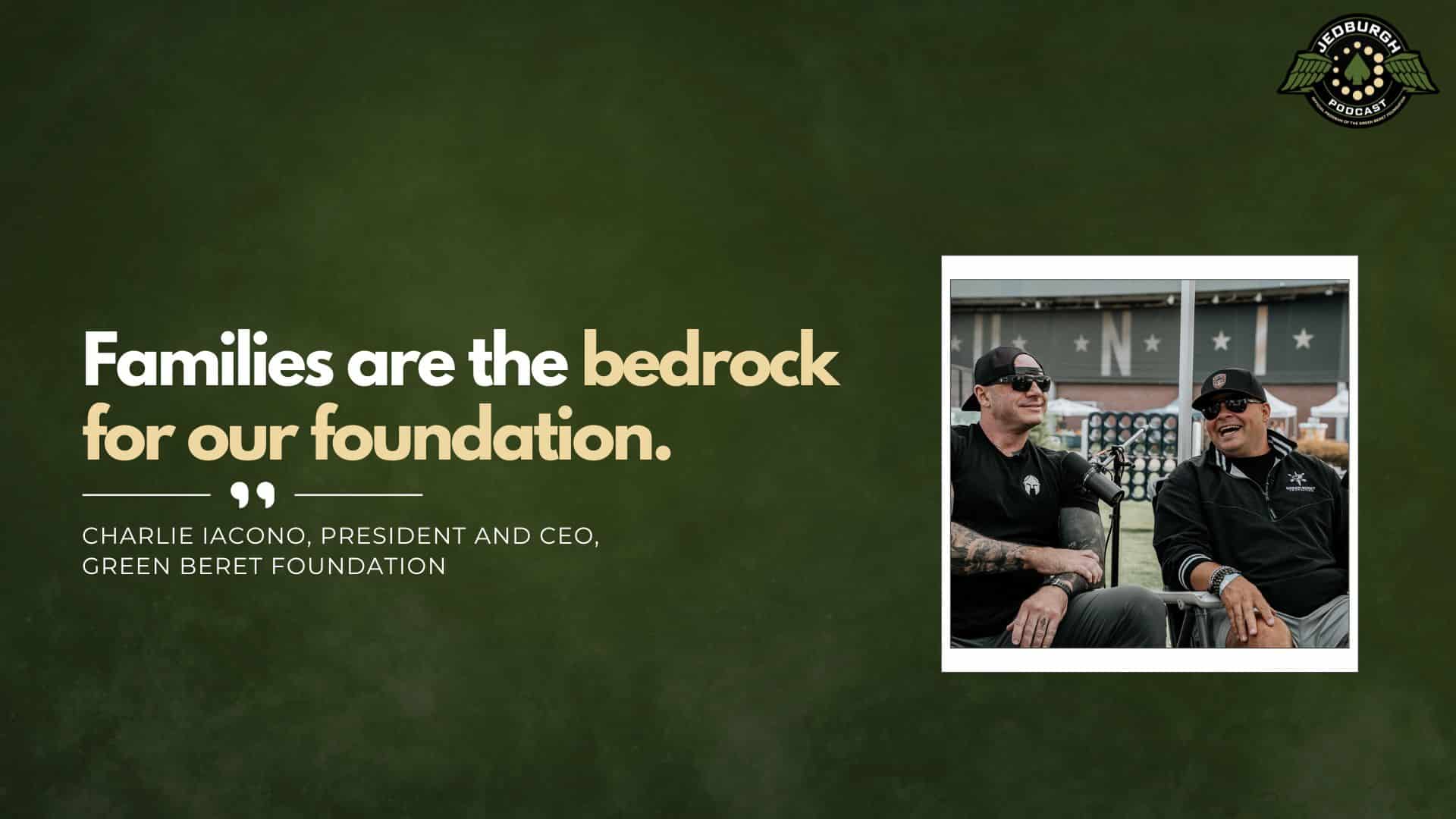
Families are the bedrock of our foundation, literally and figuratively. We operate from a position of making sure that not only the Green Beret is supported in times of service and post-service, but also that their family is supported. We fully recognize that the family bears the burden of deployments just as much as the service member. We recognize that kids are sometimes not with their dads for an extended period of time, and that wears on them. We understand that kids probably, particularly when they’re younger, have an idea of what their dad does, possibly like, “My dad’s in the Army,” but not really what the dad does each day when he goes to the team room or goes off on a mission.
That’s probably for the best, but we want to show them and provide them an opportunity to really see their dad do something they love and have a different uniform on, albeit a uniform that represents the heritage of the regiment, the MACV-SOG uniform, or last year the Jedburgh uniforms. Have that same pride that so many of us probably had when we were kids growing up, and if your father did not serve and he was off to work and you’re like, “That’s my dad.” You go to work with your dad’s day. You probably do not really get to do that when your dad’s going to a team room. This is that opportunity.
We like to create memories that are not only bonded in experiences and programmatic enrichment, but we like to create experiences for the families and programs for the families that become hardwired into their family ethos. I talk a lot about promoting strength in mind,body, and spirit. Not too long ago, I was on a panel, and somebody asked me, “What do you think the biggest threat to the future of the regiment is?”
It is not an enemy. It’s the breakdown of the nuclear family. We need to do a better job as benevolent organizations in bringing both the active duty warfighter and the former warfighter and their families together, creating experiences that form bonds that are unbreakable and that will come to this game 30 years from now. I remember when I used to watch my dad play this game, and who knows, maybe one of their kids will be playing in it. We’re trying to create a legacy of experiences and connection to ensure that it withstands the test of time.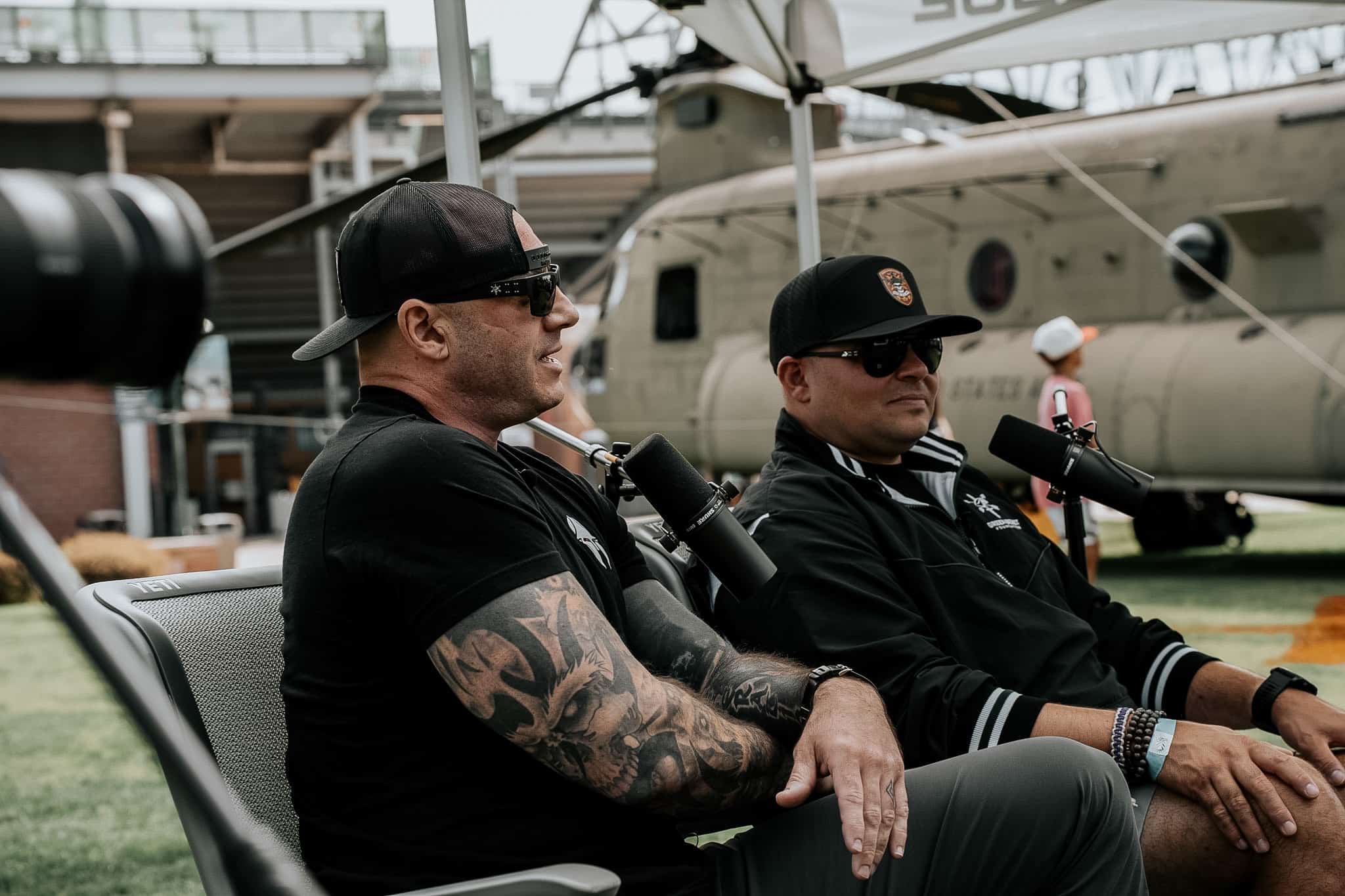
One of the spouses said to us yesterday, “I do not get to go to work with my husband. I do not get to deploy with my husband, but coming here gave me an opportunity to go to work with him and see him amongst his team,” even though he did not know anybody here. She got to see how he interacts with those other Green Berets, how quickly they come together, how quickly they work together, how important it is for all of them, and that was really meaningful and impactful to her.
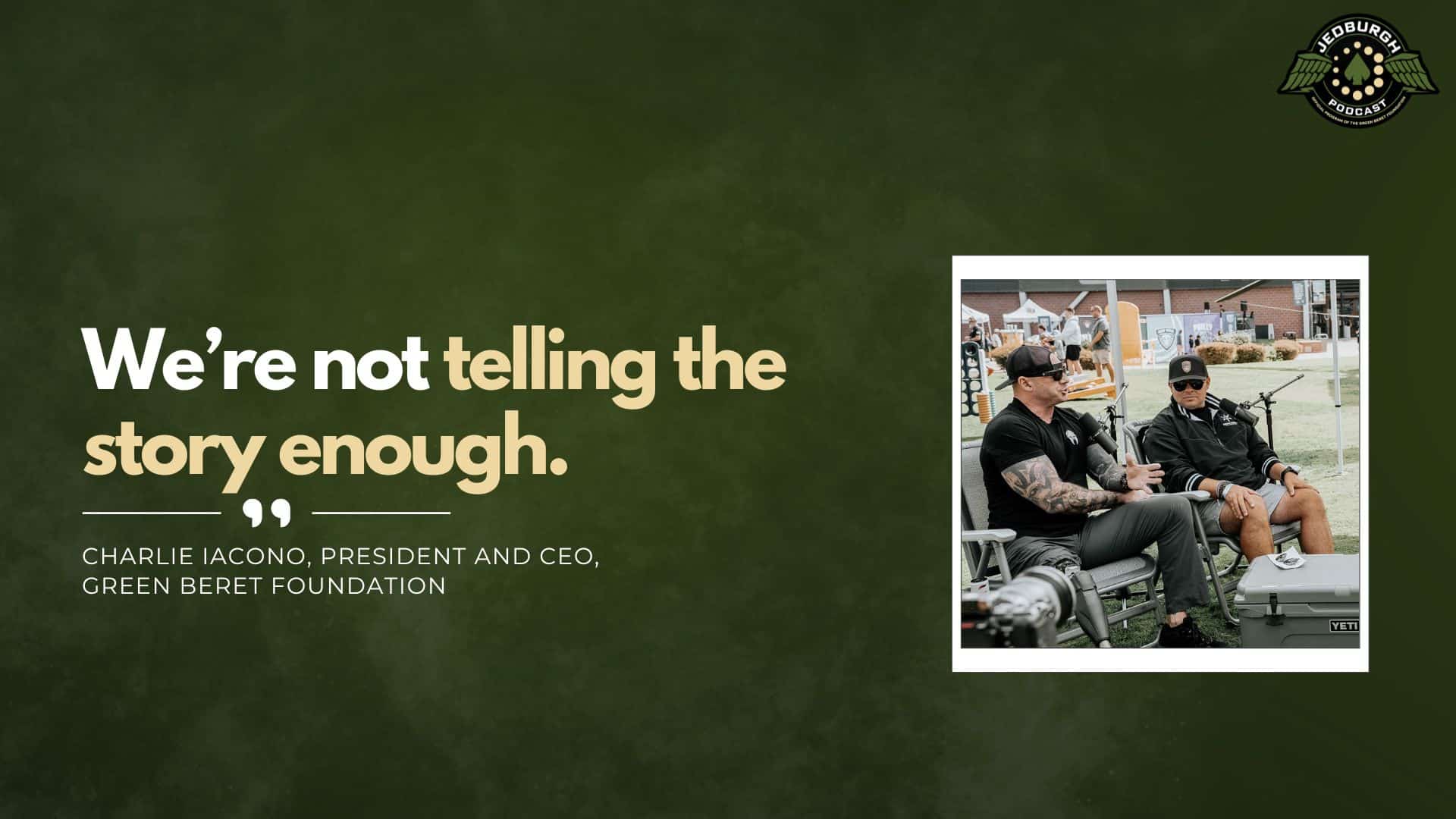
As an outsider looking in with recruitment and the work that you do and trying to get the awareness out there, there is such an incredible story to be told from a service perspective and all the branches, not just the Army and not just particularly the Special Forces. We’re not telling it often enough in different environments. You see a lot of great stories are told, and it’s within the community, and there’s connectivity and fellowship, but it’s not outside.
The whole premise of why we’re here, why the Jedburgh Media Channel exists is to bridge that gap, to bring the stories to the American public, to get them to understand and to say, “You know what,” as one guy said to me on the team, who has just recently gotten out of school and is now a new Green Beret, I said, “What prompted you to go SF?” I went to a great school. Probably could be working in finance right now, New York City.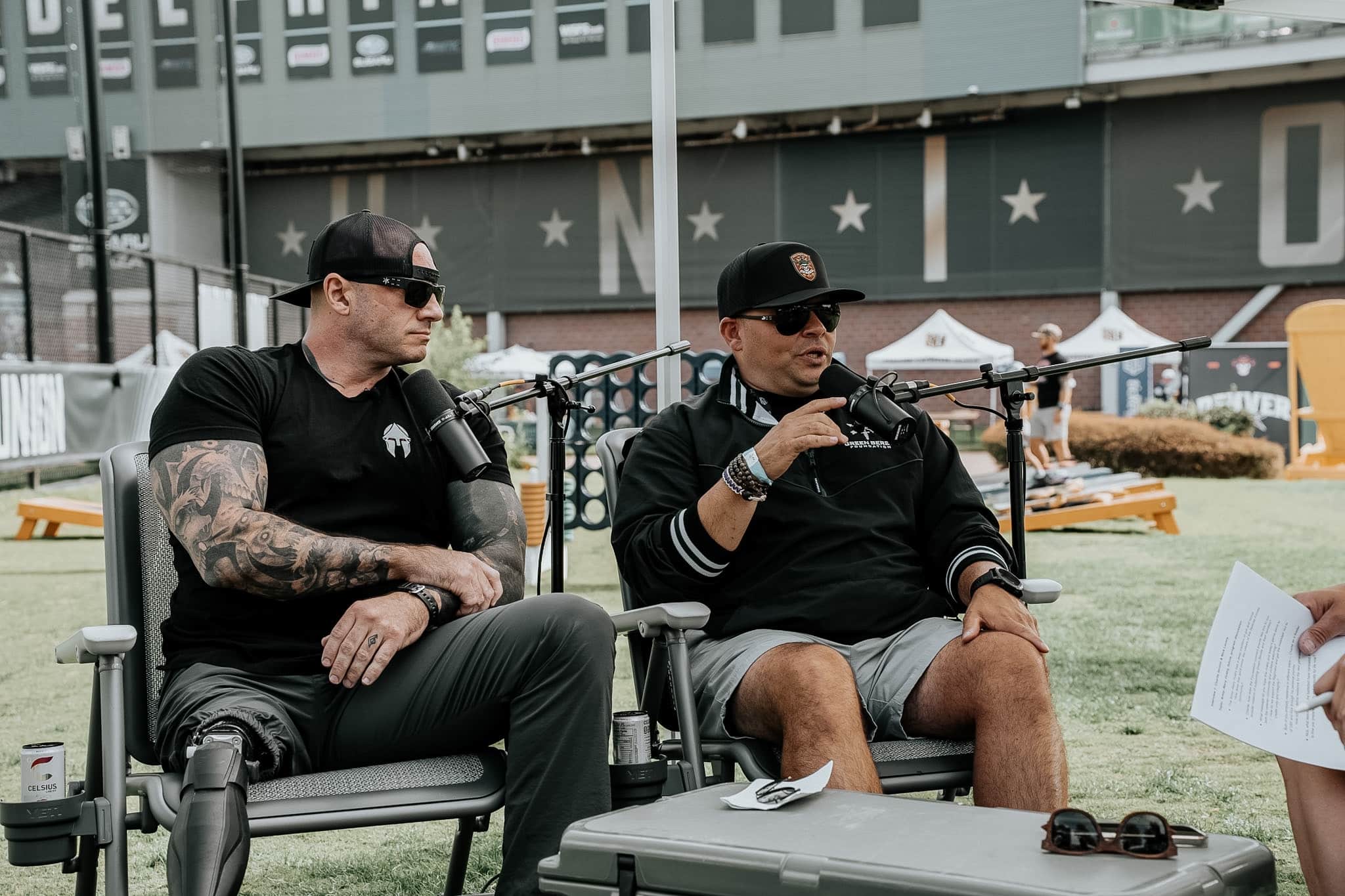
He said, “I was sitting in my locker room at the end of my senior year. This cannot be the last time I’m in a team room. This could not be the last test of my physical prowess and whether or not I am an elite athlete, elite operator.'” He says, “I made the decision. I’m going to do it.” This is an ample recruiting ground for all branches of service, but particularly for these two communities, the SF community and the NSW community.
When you talk about not wanting it to be your last time in a team room, the man sitting next to you right there had that same discussion with himself. Nick, I want to ask you about resilience because we’re going to see resilience displayed here on the field today. Every play is not going to go perfectly. Last year did not go perfectly. We talked about the preparation that went into this year for our team to come back out and take that field later on tonight. When we look at resiliency, and we really assess that at a very high level in special operations, special forces, Green Beret assessment and selection, so many of those tests are designed around testing a candidate’s ability to be resilient when things do not go well. Why is that so important for our Green Berets?
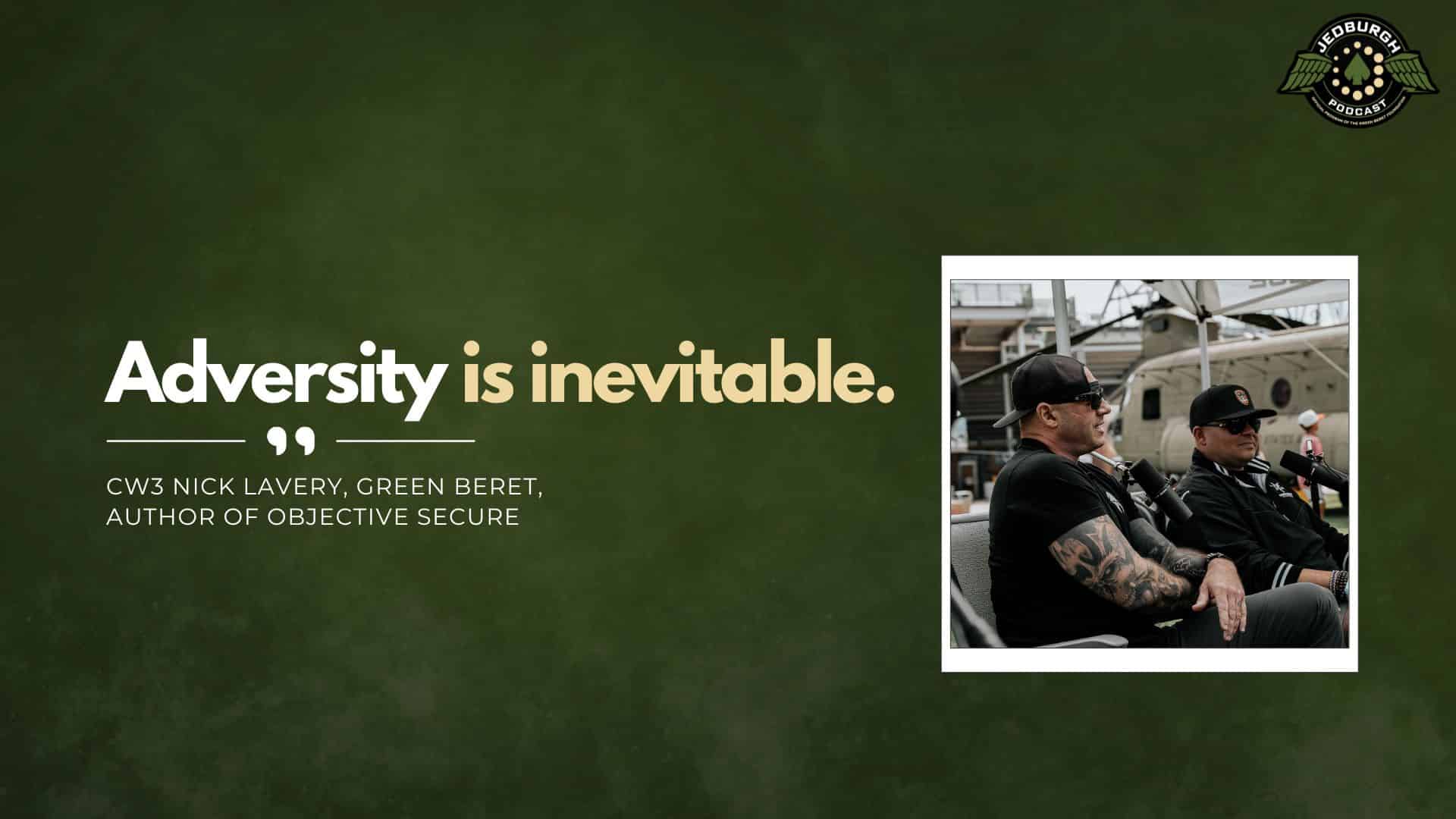
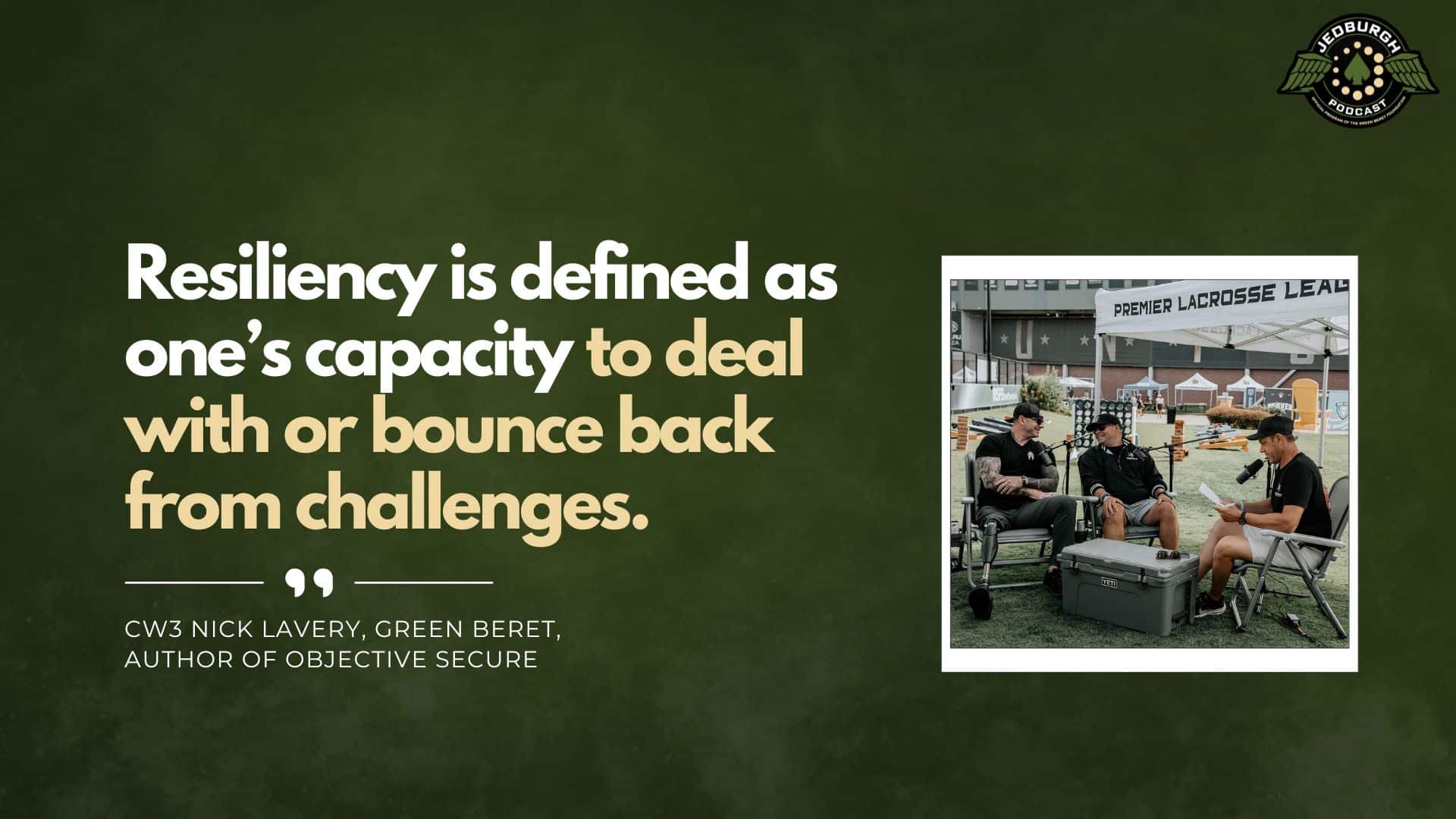
The world does not cooperate, man, and certainly the enemy or your adversary cooperates even less. Adversity is inevitable, brother, in life. I do not care what you do for a living or your hobbies, your lifestyle. Adversity is inevitable. Resiliency is defined as one’s capacity to deal with or bounce back from challenges. That is it. That is the game of life. In our world, in our lives, as team guys in the Special Forces Regiment, we are being intentionally thrust into highly challenging environments. Whether it’s a selection, you’re going through the Q course, you’re preparing for either of those two things, life on the teams, in training, in an operational environment, adversity is inevitable.
In our world, that’s going to get amplified by a factor of ten at a minimum. At the end of the day, you do have to have a different level of both mental and physical toughness to be an asset in this world, so this is not for everybody. This lifestyle, this profession, this is not for everybody. I would argue, however, that it is for anybody that is willing to put in enough work, enough sacrifice, enough discipline and dedication to build yourself into the machine that is necessary to make it to the teams and then to stay on the teams as that asset.
For anyone who does not know, you lost your leg in Afghanistan and then became the first Green Beret to return to an ODA and then redeploy back to Afghanistan with that mindset of it will not be my last day on that team, and you’re going to get back there.
Just as Charlie was talking about that with this kid you were talking to, I was getting flashbacks in my hospital room at Walter Reed going, “There’s just flat out no way this is how this chapter of my life is going to end.” I got stitched up by a dude who I taught how to use the machine gun he used on my friends and me, killed three of my friends next to me, wounded another seven.
There is no way this is how this ends. I knew that right there, and then I had no clue as to how I might get back into that lifestyle, but I did decide what I knew I was going to do. I just think, generally speaking, when you can answer that, what am I going to do question, which is something that all of us face sometimes countless times a day.
Whether it’s on the back end of a difficult day at the office or a conversation with your spouse that did not go all that great, it’s like, “What am I going to do?” That loop does not ever end until you answer the question and decide, “That is what I’m going to do,” and you plant a flag that serves as a beacon, as a target in the future to begin moving towards. Now you can revamp all your energy towards the how am I going to do question, which is an entirely different problem set.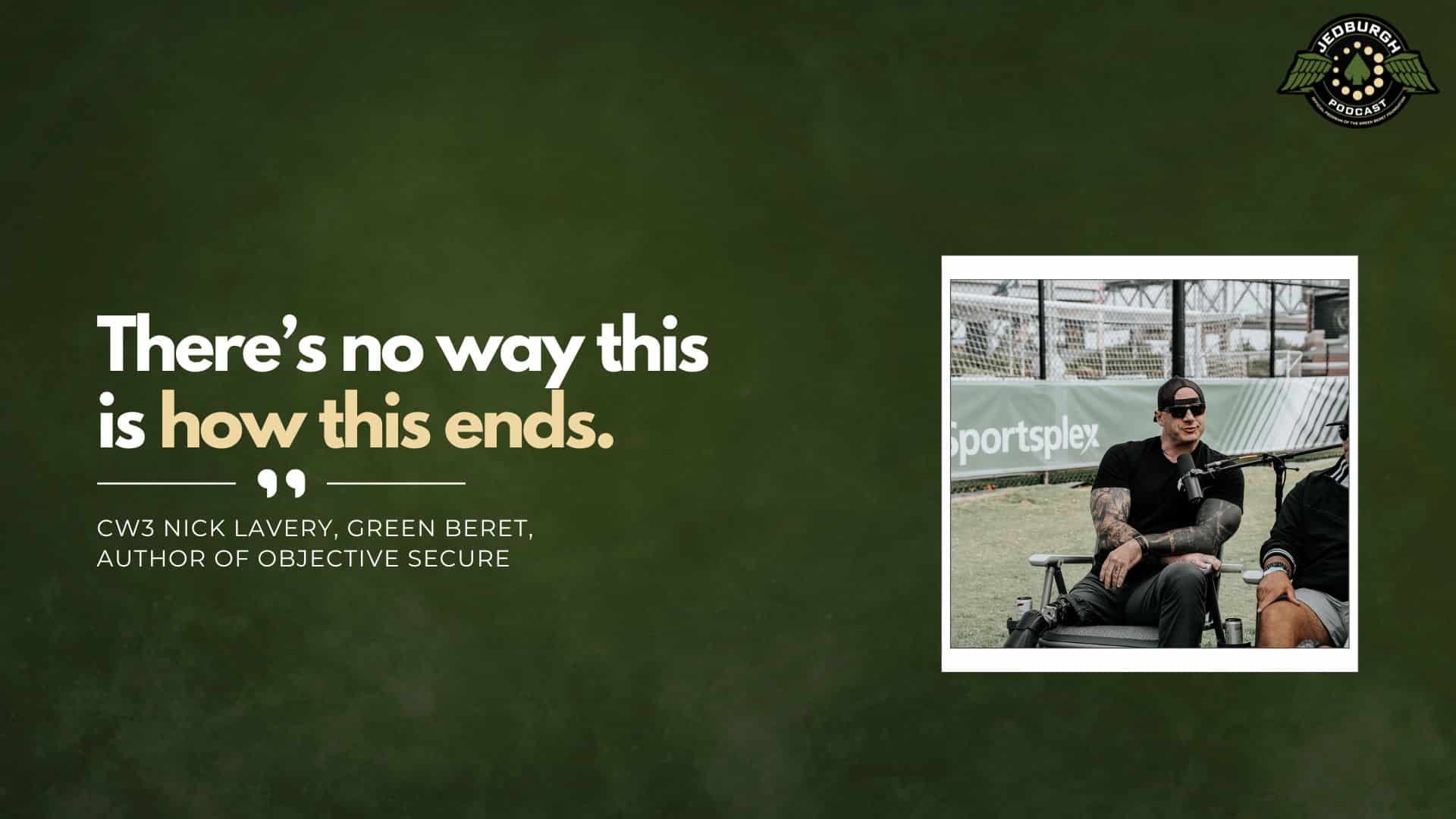
We’re talking about an equation here at the end of the day, man. That’s an equation, and you know the end state. You might have a couple constants in that equation. You probably have a whole shit ton of variables, and your job is to slowly and steadily turn variables into constants until you get to your desired end state. That’s really it, man.
It’s about the mission. We have got to set those missions for ourselves. When we do that, whether that be our military objective or our personal goals, whether it be nutrition or fitness, or our professional goals in our jobs as an entrepreneur and a CEO, you have got to set that vision, you have to set that mission, and then you have to build your team around you, starting with yourself, to be able to execute that every single day, day in and day out, really to the highest level. General Tovo said it best. A couple of weeks ago, we were at an event in my home state, where I grew up in Rhode Island, and we had about 60 guys or so that came out to learn about the regiment.
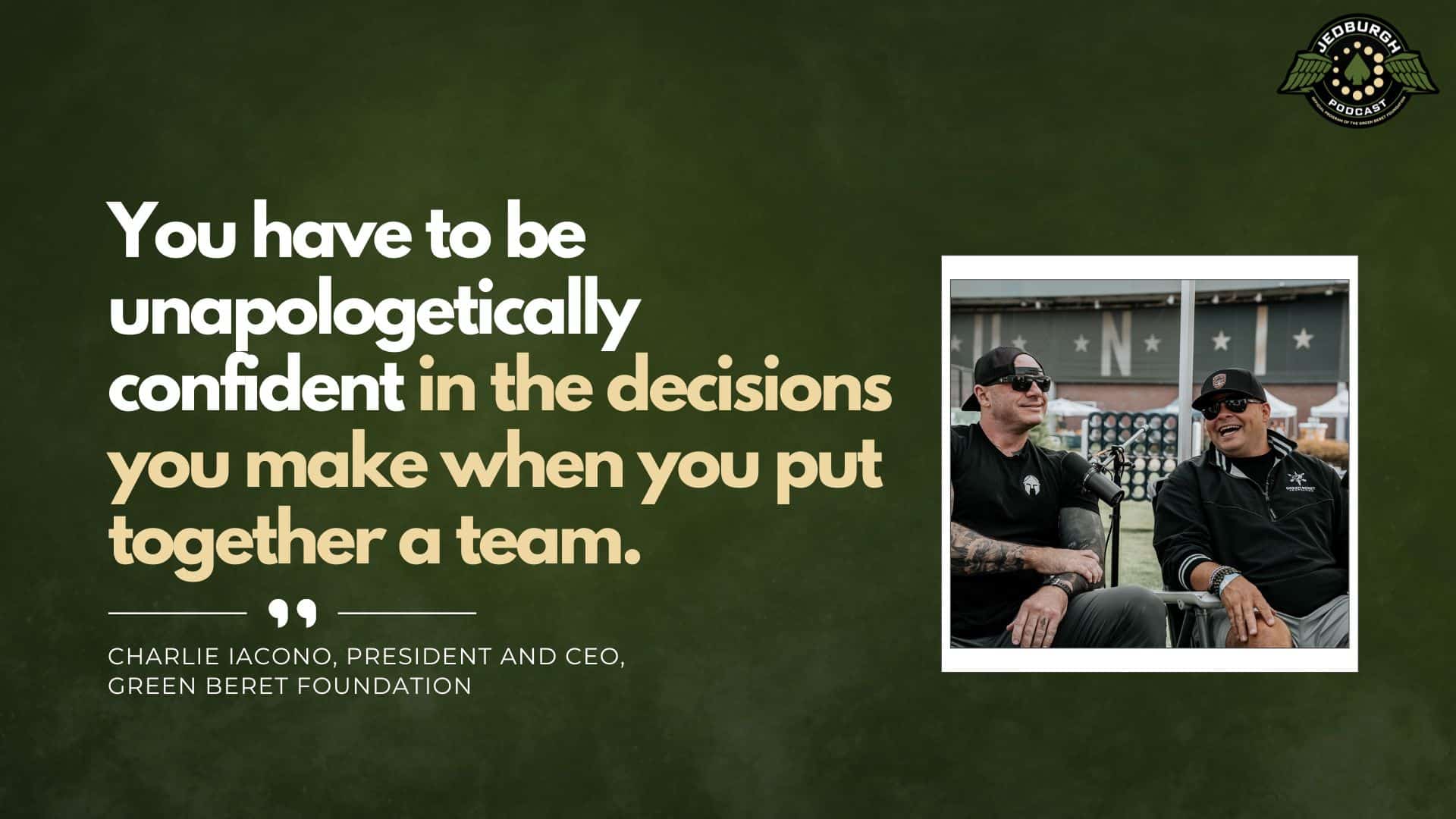
Hear from General Tovo and his experiences when he was overseas leading men, and a young man asked a question and identified, “I’m new to business and trying to build this sales team. What is your advice to me?” General Tovo paused and shared his incredible leadership wisdom, took a few seconds to think about it, and said, “You have to be unapologetically confident in your decisions when you put together a team.” That is something that I have had to say to myself over the last six or so weeks. We say that about this team that we assemble.
We have a tremendous amount of guys that wanted to play on this squad. They wanted to represent the regiment and had great qualifications to do so, but it’s hard to say, “Which ones? We have 30 spots.” When you have over a hundred that want to play, that’s a lot of roster trimming from an initial inquiry stage to the guys that are going to put on the uniform today. The way I look at it, whether it’s from a business perspective or from a perspective of athletics, is you have to assemble a team to win.
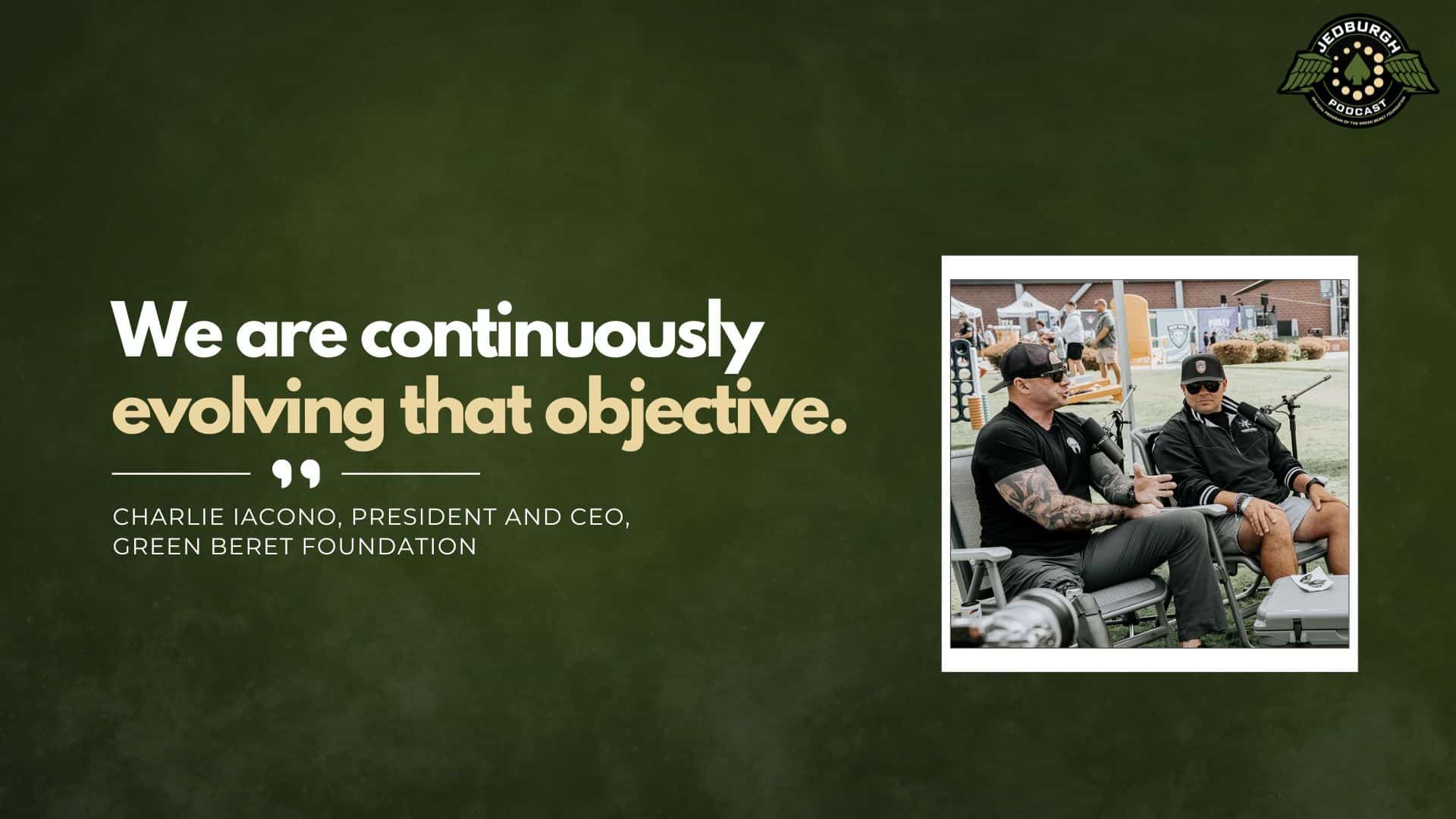
We play this game to win, whether it’s business, life, or sports. The confidence that we have in what we are doing and how we are evolving at the Green Beret Foundation is setting the stage, not just for the next year. It’s really the next 20 years, the next 30 years, the next 40, 50, 60 plus years. We were the first to market, and we will be the last to say our mission is done. We are continuously evolving that objective. We accomplish one, we secure it as Nick’s book talks about, and we move on to the next one. We have got a lot of really exciting things coming down the pipeline. The Stars and Stripes Classic is just a small micro piece of that larger puzzle.
One of the things we talked about when you and I sat down back at SOF Week was Task Force Tatanka. When we talk about identifying a mission and going after it, I think one of the most. I would say the motto that I would put behind this whole initiative is this opportunity from need. There are a lot of organizations out there who create programs. Green Beret Foundation has programs. Oftentimes what we see is somebody comes to the foundation, and they say, “You have X, Y, and Z programs, but I need, my problem is B.”
What we’re doing through Task Force Tatanka is saying, “That’s fine. We’re going to go out and find you a solution for B.” Just because we do not have a defined program today that says, “Yes, we do that,” does not mean that we cannot do it. We’re creating as a foundation that opportunity from the need that is presented to us. I tell my team in FR6, we do not do everything, but we can do anything. Just give us 48 hours, and we will call you. That is what we’re doing.
[00:22:04] The reality of it is opportunities; I do not like to call them needs because, quite frankly, needs is one of those things that word is so loosely thrown around. It actually makes guys into charity cases. It is, quite frankly, one of the reasons why we’re so proud of our name and the way we are set up. Nobody that we support is a charity case. They just need to be repositioned, given the tools to be successful in their next chapter, work on some mechanics and some things, and then redeploy them back into a setting that they feel comfortable and confident in.
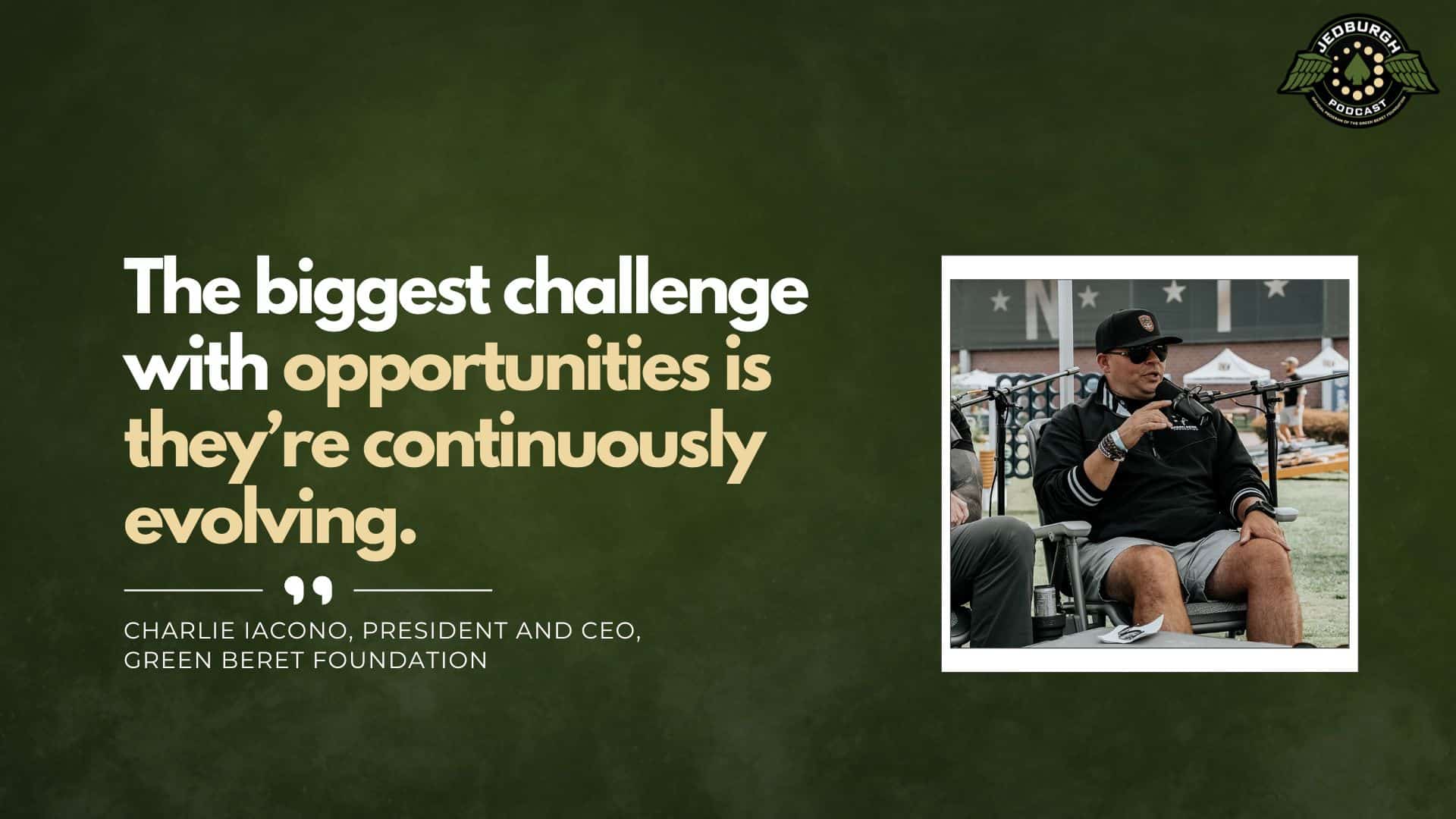
The biggest challenge with the opportunities is that they’re continuously evolving. Task Force Tatanka looks at that from a perspective of, like, we have got the four cornerstone initiatives that we’re always going to be in, and then we’re going to force multiply, build an extensive network, work with people like Nick to talk about it, to make sure that people out there are aware of the incredible resources that are out there. We’re going to also continue to consolidate the marketplace. The oversaturation of the nonprofit marketplace in the SF space alone or greater SOF is abundant, and that’s okay, but it is not sustainable.
We know that if you talk to the ultra-high-net-worth individuals, if you talk to leading executives that are leading the corporate charitable arms of a Bank of America or Penske, they tell you, “We want to give, but we do not want to have to give to 60 because we’re not going to be able to have and drive as much impact.” How do we do that?
Through a portfolio program, an official program, a consolidation effort, there are opportunities to ensure that all organizations have an opportunity to be at the table, to be able to showcase their support. We do not need to build just for the sake of building. That is, quite frankly, it’s a waste of time. Because if you’re going to build something right, it takes a long time. Our VSO program has been seven-plus years in the making and has had a huge impact.
With a massive investment from the community, from the board of directors at the Green Beret Foundation, and from John Armanzani, who founded the program, it has been a lot of work. I always like to say, “Before we jump, let us check the pack. Let us check the chute. Let us make sure everything is good.” If we still need to add things to it, great, we can add to it. Let us not just jump for the sake of jumping.
Being out here today, we’re going to get front and center with a whole new generation of folks who are going to see what we’re doing. We’re getting the shout-out here a second ago out here in the premiere zone. We have a couple of heckler kids already who are flexing their muscles behind us while you are talking, but that’s what we want. We want guys who may look like this behind us today and are going to look like these guys here, and then eventually, Nick, they’re going to look like us.
Hopefully with limbs intact.
Maybe more like your size, but more like me, something like that. That’s the goal, and that’s what we want. Charlie, appreciate everything the Foundation is doing. It is a great presence here, great partnership with the PLL, and we want to get everybody out there to GreenBeretFoundation.org, get involved, and then we have got to get everybody to really take the leadership lessons from Nick.
Check out Objective Secure, his book that he wrote, and I say that genuinely because I do not like a lot of books that people write about leadership. There is a lot of noise there, but this man, Nick Lavery, knows what he’s talking about, and I really did enjoy reading that. I put those lessons to use, and I spent a career in the military and built a company after that and still was like, “Damn man, Nick knows.” Think about that.
Just a kid from South Boston, brother.
That is it, brother, I’m trying to figure it out.
Obviously, you’re a big part of it. I do not think we thank you enough on a regular basis on the media channel. Your team. What the viewership does not see behind here is a ton of people that are committed to not only this media channel and the creative enterprise that you’ve created, that we’ve created with you at the Green Beret Foundation.
Honestly, just absolute dedication and bringing incredible stories to the public. This is not just talking to guys like myself and Nick. I am sure the viewership would probably rather listen to Nick than Charlie Lacono, but I will say, if you look at the catalog of guests that you’ve had on and the ones that we know are forthcoming, stay tuned. It is going to be a great season.
We’re just getting started.
I have got to add on to that real quick, man. You do what you want with this bit, but I’ve witnessed the beginning of this with you as a one-man task force.
That’s how it starts, brother.
That’s how the entrepreneurial vision begins. You’re a one-man task force. You’re doing all the things. You’re learning new equipment, strategy, and tactics, and you’re in the grind, and you’re cold calling and cold bumping. “I got this idea,” and no one gives a shit. No one believes in you. It is just like you’re a pain in the ass. You just stay on that grind. Just keep nurturing it and keep watering it and just keep taking those really hard steps forward.
Eventually it starts to gain a little bit of traction. You start to catch the attention of larger organizations that want to start to pull more resources into it. Look at you now, man, you have got a whole crew. It’s amazing. I’ve started to get to know your whole team, great people. You’re interviewing the Sergeant Major of the Army, which seems like on a weekly basis.
I just want to say to you as a fellow entrepreneur who’s still very much in the infantile stages and figuring things out and messing things up on what seems like a daily basis, it’s just great to see another Green Beret move into the private world and still have that same sense of determination to build something of your own that you can plant a flag behind and be proud of and continue to create impact. You’re doing just that, man. I appreciate you, man. Thank you both.
It has been a good journey. You have both been a big part of it.
The mission continues.
Yes, sir.
44 million views so far and 12 million.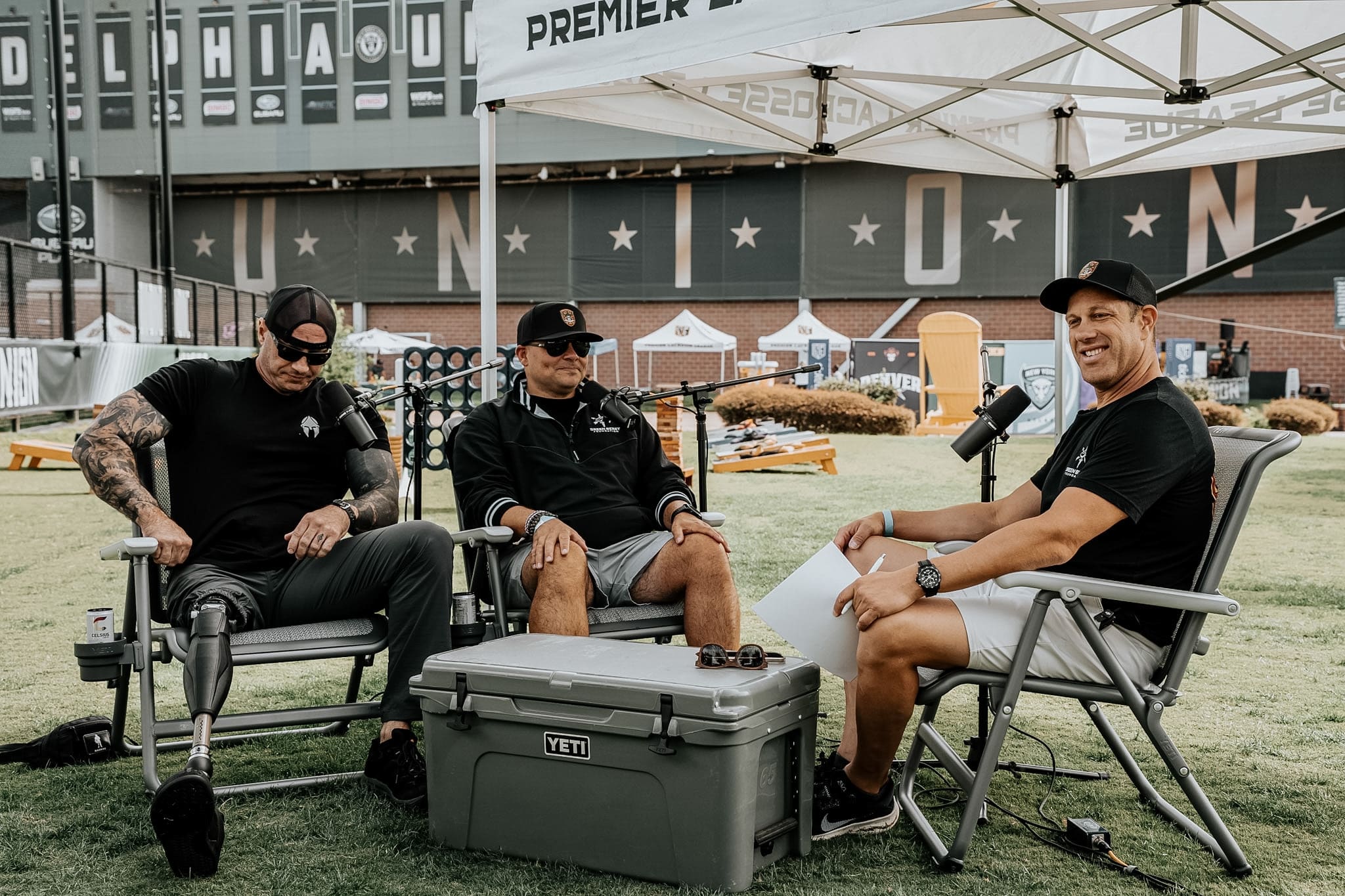
That is just in the last 15 or 16 months.
We’re going to talk about impact, right? Everybody starts a podcast. Come on. This is
It takes years. There you go.
Just like we were talking about. It gets back to that story. You need a storyteller, and you tell a great story. Thank you for everything you’re doing for the Green Beret Foundation, for our community, for the American public, quite frankly. It is going to be great.
Let us get those SEALs off the X.
Thanks, buddy.
Appreciate you, brother.
Green Beret Foundation
P.O. Box 25138
New York, NY 10087-5138
Note: Please use USPS mail or priority mail. Do not use FedEx.
Green Beret Foundation
10205 US Hwy 15-501, Unit 26-8
Southern Pines, NC 28387-4301
Call: at: (844) 287-7133